Rutherford Institute: Declare Your Independence from Tyranny, America

Just in time for Independence Day weekend, attorney John Whitehead of The Rutherford Institute writes Declare Your Independence from Tyranny, America.

Imagine living in a country where armed soldiers crash through doors to arrest and imprison citizens merely for criticizing government officials.

Imagine that in this very same country, you’re watched all the time, and if you look even a little bit suspicious, the police stop and frisk you or pull you over to search you on the off chance you’re doing something illegal.

Keep in mind that if you have a firearm of any kind (or anything that resembled a firearm) while in this country, it may get you arrested and, in some circumstances, shot by police.

If you’re thinking this sounds like America today, you wouldn’t be far wrong.

However, the scenario described above took place more than 200 years ago, when American colonists suffered under Great Britain’s version of an early police state. It was only when the colonists finally got fed up with being silenced, censored, searched, frisked, threatened, and arrested that they finally revolted against the tyrant’s fetters.

No document better states their grievances than the Declaration of Independence, drafted by Thomas Jefferson.

A document seething with outrage over a government which had betrayed its citizens, the Declaration of Independence was signed on July 4, 1776, by 56 men who laid everything on the line, pledged it all—“our Lives, our Fortunes, and our sacred Honor”—because they believed in a radical idea: that all people are created to be free.

Labeled traitors, these men were charged with treason, a crime punishable by death. For some, their acts of rebellion would cost them their homes and their fortunes. For others, it would be the ultimate price—their lives.

Yet even knowing the heavy price they might have to pay, these men dared to speak up when silence could not be tolerated. Even after they had won their independence from Great Britain, these new Americans worked to ensure that the rights they had risked their lives to secure would remain secure for future generations.

The result: our Bill of Rights, the first ten amendments to the Constitution.

Imagine the shock and outrage these 56 men would feel were they to discover that 246 years later, the government they had risked their lives to create has been transformed into a militaristic police state in which exercising one’s freedoms—at a minimum, merely questioning a government agent—is often viewed as a flagrant act of defiance.

In fact, had the Declaration of Independence been written today, it would have rendered its signers extremists or terrorists, resulting in them being placed on a government watch list, targeted for surveillance of their activities and correspondence, and potentially arrested, held indefinitely, stripped of their rights and labeled enemy combatants.

Read the Declaration of Independence again, and ask yourself if the list of complaints tallied by Jefferson don’t bear a startling resemblance to the abuses “we the people” are suffering at the hands of the American police state.

Here’s what the Declaration of Independence might look and sound like if it were written in the modern vernacular:

There comes a time when a populace must stand united and say “enough is enough” to the government’s abuses, even if it means getting rid of the political parties in power.

Believing that “we the people” have a natural and divine right to direct our own lives, here are truths about the power of the people and how we arrived at the decision to sever our ties to the government:

All people are created equal.

All people possess certain innate rights that no government or agency or individual can take away from them. Among these are the right to Life, Liberty and the pursuit of Happiness.

The government’s job is to protect the people’s innate rights to Life, Liberty and the pursuit of Happiness. The government’s power comes from the will of the people.

Whenever any government abuses its power, it is the right of the people to alter or abolish that government and replace it with a new government that will respect and protect the rights of the people.

It is not wise to get rid of a government for minor transgressions. In fact, as history has shown, people resist change and are inclined to suffer all manner of abuses to which they have become accustomed.

However, when the people have been subjected to repeated abuses and power grabs, carried out with the purpose of establishing a tyrannical government, people have a right and duty to do away with that tyrannical government and to replace it with a new government that will protect and preserve their innate rights for their future wellbeing.

This is exactly the state of affairs we are under suffering under right now, which is why it is necessary that we change this imperial system of government.

The history of the present Imperial Government is a history of repeated abuses and power grabs, carried out with the intention of establishing absolute tyranny over the country.

To prove this, consider the following:

The government has, through its own negligence and arrogance, refused to adopt urgent and necessary laws for the good of the people.

The government has threatened to hold up critical laws unless the people agree to relinquish their right to be fully represented in the Legislature.

In order to expand its power and bring about compliance with its dictates, the government has made it nearly impossible for the people to make their views and needs heard by their representatives.

The government has repeatedly suppressed protests arising in response to its actions.

The government has obstructed justice by refusing to appoint judges who respect the Constitution and has instead made the courts march in lockstep with the government’s dictates.

The government has allowed its agents to harass the people, steal from them, jail them and even execute them.

The government has directed militarized government agents—a.k.a., a standing army—to police domestic affairs in peacetime.

The government has turned the country into a militarized police state.

The government has conspired to undermine the rule of law and the constitution in order to expand its own powers.

The government has allowed its militarized police to invade our homes and inflict violence on homeowners.

The government has failed to hold its agents accountable for wrongdoing and murder under the guise of “qualified immunity.”

The government has jeopardized our international trade agreements.

The government has overtaxed us without our permission.

The government has denied us due process and the right to a fair trial.

The government has engaged in extraordinary rendition.

The government has continued to expand its military empire in collusion with its corporate partners-in-crime and occupy foreign nations.

The government has eroded fundamental legal protections and destabilized the structure of government.

The government has not only declared its federal powers superior to those of the states but has also asserted its sovereign power over the rights of “we the people.”

The government has ceased to protect the people and instead waged domestic war against the people.

The government has plundered our seas, ravaged our coasts, and destroyed the lives of the people.

The government has employed private contractors and mercenaries to carry out acts of death, desolation and tyranny, totally unworthy of a civilized nation.

The government through its political propaganda has pitted its citizens against each other.

The government has stirred up civil unrest and laid the groundwork for martial law.

Repeatedly, we have asked the government to cease its abuses. Each time, the government has responded with more abuse.

An Imperial Ruler who acts like a tyrant is not fit to govern a free people.

We have repeatedly sounded the alarm to our fellow citizens about the government’s abuses. We have warned them about the government’s power grabs. We have appealed to their sense of justice. We have reminded them of our common bonds.

They have rejected our plea for justice and brotherhood. They are equally at fault for the injustices being carried out by the government.

Thus, for the reasons mentioned above, we the people of the united States of America declare ourselves free from the chains of an abusive government. Relying on God’s protection, we pledge to stand by this Declaration of Independence with our lives, our fortunes and our honor.

In the 246 years since early Americans first declared and eventually won their independence from Great Britain, “we the people” have managed to work ourselves right back under the tyrant’s thumb.

Only this time, the tyrant is one of our own making: the American Police State.

The abuses meted out by an imperial government and endured by the American people have not ended. They have merely evolved.

“We the people” are still being robbed blind by a government of thieves.

We are still being taken advantage of by a government of scoundrels, idiots and monsters.

We are still being locked up by a government of greedy jailers.

We are still being spied on by a government of Peeping Toms.

We are still being ravaged by a government of ruffians, rapists and killers.

We are still being forced to surrender our freedoms—and those of our children—to a government of extortionists, money launderers and corporate pirates.

And we are still being held at gunpoint by a government of soldiers: a standing army in the form of a militarized police.

Given the fact that we are a relatively young nation, it hasn’t taken very long for an authoritarian regime to creep into power.

Unfortunately, the bipartisan coup that laid siege to our nation did not happen overnight.

It snuck in under our radar, hiding behind the guise of national security, the war on drugs, the war on terror, the war on immigration, political correctness, hate crimes and a host of other official-sounding programs aimed at expanding the government’s power at the expense of individual freedoms.

The building blocks for the bleak future we’re just now getting a foretaste of—police shootings of unarmed citizens, profit-driven prisons, weapons of compliance, a wall-to-wall surveillance state, pre-crime programs, a suspect society, school-to-prison pipelines, militarized police, overcriminalization, SWAT team raids, endless wars, etc.—were put in place by government officials we trusted to look out for our best interests.

As I make clear in my book Battlefield America: The War on the American People and in its fictional counterpart The Erik Blair Diaries, the problems we are facing will not be fixed overnight: that is the grim reality with which we must contend.

Yet that does not mean we should give up or give in or tune out. What we need to do is declare our independence from the tyranny of the American police state.

Out Front: You Are Not Prepared

Out Front with Mike Shelby

Intelligence analyst Mike Shelby of Forward Observer talks about preparation in his latest livestream and why 98-99% of even preppers are unprepared:

Mike says that America as we know it today is ending. The Layer one solutions below will get you through the short term, but for longer term sustainment, you must work on your layer two solutions:

US Supreme Court Rules in Favor of Bremerton Coach on Prayer

Then-Bremerton assistant football coach Joseph Kennedy, obscured at center in blue, is surrounded by Centralia players after they took a knee with him and prayed after their game against Bremerton, in Bremerton, Wash., on Oct. 16, 2015.Meegan M. Reid / Kitsap Sun via AP file

From The Deseret News, Supreme Court sides with football coach in school prayer case:

The Supreme Court on Monday sided with a praying football coach in a ruling that will add fuel to decades-old conflict over prayer in school. Conservative justices in the 6-3 majority said efforts to stop the coach from praying on the 50-yard line after games violated the free speech and free exercise clauses of the First Amendment.

“The Constitution and the best of our traditions counsel mutual respect and tolerance, not censorship and suppression, for religious and nonreligious views alike,” wrote Justice Neil Gorsuch in the majority opinion.

Justices Sonia Sotomayor, Elena Kagan and Stephen Breyer decried the ruling in their dissent, arguing that the majority was disregarding the school district’s significant concerns over how the coach’s actions affected his players.

“Official-led prayer strikes at the core of our constitutional protections for the religious liberty of students and their parents,” they wrote.

The case, Kennedy v. Bremerton, pitted Bremerton High School in Washington state against its former assistant football coach, Joe Kennedy. The two sides didn’t agree on whether the coach’s prayers after games violated previous Supreme Court rulings stating that schools could not coerce students into participating in group prayers or Bible reading.

Lower courts sided with the school, arguing that Kennedy’s prayer represented government speech rather than private speech and could, therefore, be regulated. The Supreme Court on Monday overturned those rulings.

“Kennedy’s private religious exercise did not come close to crossing any line one might imagine separating protected private expression from impermissible government coercion,” the majority opinion said.

In a statement released Monday morning, the coach’s law firm, First Liberty Institute, celebrated the ruling and said it would benefit all people of faith.

“This is a tremendous victory for coach Kennedy and religious liberty for all Americans,” said Kelly Shackelford, president, CEO and chief counsel for First Liberty. “Our Constitution protects the right of every American to engage in private religious expression, including praying in public, without fear of getting fired.”

Other faith leaders and religious freedom advocates issued similar statements, praising the court for drawing a distinction between private expressions of faith that take place in public and official expressions of faith that potentially harm students…(story continues)

Radio Contra Ep. 166 The Next Civil War

s/

In NC Scout’s Radio Contra episode 166, he dives into the unfolding situation with the Lake Mead drought threatening Las Vegas’ water reserves, and how this is a preview of future civil conflict here in the US. Related to that is the reality that civil conflict does not occur without a substantial economic interest behind it and the next war in the US will be no different.

Radio Contra Episode 166: The Next Civil War

US Supreme Court Overturns Roe v Wade

Wall Street Journal reports:

A deeply divided Supreme Court eliminated the constitutional right to an abortion, overruling the 1973 Roe v. Wade decision and leaving the question of abortion’s legality to the states.

The court’s decision in Dobbs v. Jackson Women’s Health Organization upheld a law from Mississippi that bans abortion after 15 weeks of pregnancy, roughly two months earlier than what has been allowed under Supreme Court precedent dating back to Roe.

In siding with Mississippi, the court’s conservative majority said the Roe decision was egregiously wrong in recognizing a constitutional right to an abortion, an error the court perpetuated in the decades since.

Even before the ruling, the DHS was warning of specific threats again pro-life organizations. ZeroHedge reports:

An internal document obtained by Newsweek outlines intelligence shared by the Department of Homeland Security with the Catholic Church of a planned “Night of Rage,” targeting churches and pregnancy centers over their opposition to abortion rights. The document sheds light on how law enforcement and the church are bracing for backlash after a leaked opinion showed the Supreme Court preparing to rescind federal abortion rights.

Two days ago, we detailed an initiative by the pro-abortion group “Jane’s Revenge” to widely distribute flyers in the D.C. are after recently declaring “open season” on pro-life groups and crisis pregnancy centers.

It appears there’s similar “planning” across various cities and states, particularly California, according to Newsweek, which details more from the DHS memo:

Labeled an “urgent memo,” the document is from the Diocese of Stockton, California, and is directed to all clergy, as well as parish and pastoral staff. The memo states that Jesse Rangel, a DHS agent, told the diocese that federal law enforcement has discovered a manifesto from an “extremist group” calling for attacks on churches beginning at 8 p.m. the evening the court issues its opinion.

The memo instructs churches which have active services during the eve and days following the Supreme Court decision to “Make sure you have ushers and or security available during your services and perhaps identify who among your volunteers and parishioners are law enforcement.”

Some national pro-life organizations have reported this week that they have been contacted by federal government officials, warning them to take steps amid threats of “extreme violence”

The Provident Prepper: Top 5 Antibiotics to Stock for Emergency Use

Shawn Rowland, M.D., at The Provident Prepper talks about the Top 5 Antibiotics to Stock for Emergency Use

As a family medicine physician, I treat infections of all kinds regularly. I depend on modern medicine to effectively treat a host of infectious causes, from bacterial, fungal, to viral. Even as a physician, I sometimes take for granted the incredible fact that just 100 years ago, the top five causes of death in America were all associated with infections.

Bacterial diseases were the most common cause of death from infection. Through the advent of medications like antibiotics and vaccines, we rarely worry that a cut finger will result in tetanus or a septic infection.

A urinary tract infection is effectively treated with a few days of antibiotics. Not long ago, such an infection would often end in severe kidney damage and even death. Indeed, in other less developed countries worldwide, the threat of bacterial infections is real, and things like diarrheal illnesses or cases of pneumonia are still top killers.

Below are some common questions I get from people concerned about being prepared for times when they might find themselves cut off from modern medical care.

What are the possible infections that may require antibiotics during a disaster?

The list of infections that may arise during a disaster is long. A few likely bacterial infections include:

  • Infected cuts
  • Animal or human bites
  • Various diarrheal illnesses
  • Urinary tract infections
  • Pneumonia
  • Ear infections
  • Sinusitis

During a disaster, lack of adequate rest and poor nutrition will lead to a weakened immune system and an increase in bacterial infections.

Some disasters will present specific challenges. In a bio-terror scenario, there are specific diseases and medications that the CDC has studied. The top threats identified are anthrax, plague, and tularemia. A pneumonia infection caused by these agents is nearly 100% fatal if left untreated. If possible, any individual suspected of anthrax, plague, or tularemia infection or exposure should seek treatment in a hospital.  Ideally, patients should be treated with a combination of IV and oral medications.

In a disaster scenario where individuals cannot receive prompt care, the second-best option is to start oral therapies immediately—specifically, oral ciprofloxacin or oral doxycycline. For more detailed dosing recommendations, you can download this free e-book.

What are the best antibiotics to stockpile for an emergency or disaster scenario?

Top Five Antibiotics to Stockpile for Emergencies

When considering safety and efficacy while using limited options, the following are my top five choices:

  1. Amoxicillin-clavulanate
  2. Azithromycin
  3. Ciprofloxacin
  4. Doxycycline
  5. Metronidazole

These are the antibiotics included in the emergency antibiotic case, The Jase Case, sold by Jase Medical. The ideal antibiotics to have on hand would be a selection that covers a variety of bacteria and even amoebas/protozoa. Unfortunately, there is not a perfect list, and each medication has its pros and cons. It is typically better to use a narrow-spectrum antibiotic that is targeted to treat a specific bacteria.

Other times, in medicine, we combine different antibiotics to ensure that we cover a variety of bacteria. Unfortunately, we likely won’t have access to an entire pharmaceutical collection of antibiotics in a disaster.

Which scenarios could prevent me from getting a prescription from my family physician and getting it filled when I need it?

Some reasons you may not be able to get a prescription from your doctor in time include being confined to your home due to a global pandemic, medication not being available due to a supply chain disruption, or a natural disaster causing a significant strain on your local health system.

If you are suffering from a bacterial infection and need antibiotics, any delay can mean serious consequences for your health. The above reasons represent only a few of the many potential scenarios where you may not be able to get timely medical attention.

Often, I will have a patient who is leaving for a trip come and ask about getting antibiotics “just in case.” Whether on vacation in Disneyland or overseas in a developing country, having access to medication to help with a severe case of diarrhea or a urinary tract infection can save your trip (and your health).

How do I know which antibiotics to use for an infection in an emergency?

Recent advancements in the availability and capability of telemedicine allow patients to consult with a health care provider and receive guidance about what kind of medication may or may not be appropriate for an infection.  Jase Medical includes such a service when patients buy their emergency antibiotic case.

When contacting a medical professional is not possible, it is important to be familiar with the medications you have on hand and the kinds of infections they can treat.

NOT ALL INFECTIONS ARE CAUSED BY BACTERIA. Therefore, not all infections should be treated with antibiotics. A trained professional can help you distinguish a viral or fungal infection from a bacterial infection. There are also medical books that can guide you.

A good medical book should explain which signs and symptoms to look for that may point to a bacterial cause of an infection and which medications to use. This free e-book is written to help people distinguish whether an infection is bacterial and which medications to use, and proper dosages.

What is the shelf-life of antibiotics?

This is a great question! The federal government has been stockpiling medications, including antibiotics, for many years and studies show that medications may be good for over 15 years.

The need to throw out unused expired medications caused them to look at the feasibility of keeping them beyond their regular expiration dates. Thus, the Shelf-Life Extension Program was born. What they learned through this program was very interesting. It turns out that many antibiotics, when kept in cool, dry, conditions retained 90% plus of their potency for more than 15 years!

Although the exact times depended on the specific antibiotic, all of them maintained sufficient strength for a minimum of 5 years. Some antibiotics degrade into toxic substances and can become lethal poisons. The antibiotics in the Emergency Antibiotic Case from Jase Medical were specifically selected due to their long shelf-life. None of them will degrade to toxic compounds.

You may have seen ads in your local newspaper or neighborhood pharmacy encouraging you to dispose of your expired medications through a drug “take-back” program. These are great community service programs to aid people in the safe disposal of expired or unneeded medications.

Many drugs like those containing opioids are hazardous and should not be kept around “just in case.” Antibiotics, however, can be given special consideration.

What are the ideal storage conditions for antibiotics?

All medications, including antibiotics, should be kept in a cool, dry environment. If possible, store medications in a water and airtight sealed container. Do not freeze! Heat causes the active ingredients to degrade more quickly, as does the humidity. For particularly humid environments, a water-absorbing pack can be used…(article continues)

Get your free Antibiotic Emergency Guide here.

US Supreme Court Upholds Right to Carry Outside the Home

In a 6-3 ruling, the US Supreme Court holds that the Second and Fourteenth Amendments safeguard Americans’ right to carry a handgun for self-defense outside the home.

From Reuters, US Supreme Court expands gun rights, strikes down New York law

The U.S. Supreme Court on Thursday declared for the first time that the U.S. Constitution protects an individual’s right to carry a handgun in public for self-defense, handing a landmark victory to gun rights advocates in a nation deeply divided over how to address firearms violence.

The 6-3 ruling, with the court’s conservative justices in the majority and liberal justices in dissent, struck down New York state’s limits on carrying concealed handguns outside the home. The court found that the law, enacted in 1913, violated a person’s right to “keep and bear arms” under the U.S. Constitution’s Second Amendment.

The ruling, authored by Justice Clarence Thomas, declared that the Constitution protects “an individual’s right to carry a handgun for self-defense outside the home.”

Democrat New York Governor Kathy Hochul, in an act of typically statist hysteria, that it is “absolutely shocking” that the court would take away states’ “right to reasonable restrictions”. The statement shows an astonishing lack of understanding of Constitutional concepts. Only individuals are acknowledged to have rights in the Constitution whereas states have powers.

Meanwhile President Biden claims the ruling “contradicts both common sense and the Constitution”.

Primal Survivor: How To Get Water From A Well Without Electricity

Nicky Hoseck at Primal Survivor writes How To Get Water From A Well Without Electricity. Please visit the original article for more photos and videos.

If you’re going off-grid, you’ll need a water source, usually in the form of a well or borehole.

That’s all well (excuse the pun) and good when you’ve got the power to pump water from it, but if the grid goes down, you’re effectively upstream without a paddle.

Don’t despair – there are several ways to get water from your well without electricity – it just takes a little preparation and forethought.

7 Ways To Access Your Well Water Without Electricity

#1 Generator

Although only 5% of American homes have backup generators, they are one of the best ways to ensure consistent power regardless of grid problems or extreme weather conditions.

While a dual fuel generator may provide the most cost-effective solution, few can produce the voltage needed for a deep well pump to operate.

For deep well pumps, a diesel generator will provide a more effective solution as they are both portable and powerful enough to produce the pump’s required 220v.

#2 Solar Pump

There are numerous different types of solar well pumps available, the best of which can pump water from depths of 600’ or more.

A surface solar pump is a viable option for shallow wells and to move water from your storage tank to your home. For deeper wells, you’ll need a submersible solar pump.

The best solar well pumps can run off batteries as well as sunlight, making them a suitable option for accessing water during extreme weather conditions, as well as during a power outage.

On our small-holding, a submersible solar well pump pushes water to a storage tank at the top of the hill; we then rely on gravity to transport that water down to the house.

The benefit of this two-pronged approach is that we’re not solely reliant on the solar pump, and therefore sunlight, but can get a consistent water supply straight to the house regardless of the weather or the national electricity supply.

#3 Wind-Powered Pump

A wind turbine isn’t something you can always rely on to provide water when you need it as you can be sure the wind will drop the instant you decide you need it, but you can use it to pump water to a holding tank which can then be transported to your home by gravity.

Many home wind turbines can be hooked up to solar panels, providing two alternative power sources for those inevitable emergencies. Read more about hybrid wind and solar systems.

Although you’ll need to invest a few hundred dollars in a good-quality wind turbine, once in place, it costs very little to run or maintain.

If you lack the funds to buy a wind turbine but have an abundance of DIY know-how, you could make your own out of PVC piping, and an old car fan as demonstrated in the video below.

#4 Hand Pump

Green Hand Cistern Pump

One of the simplest ways to get water from a well when the power’s down is via a hand pump. The best hand pumps can be alongside your electrical submersible pump, making it easy to swap from one.

Hand pumps are particularly effective for shallow wells and can draw water from a depth of 25’ or less without undue muscle fatigue on your behalf.

Accessing water that’s over 30’ down requires significantly more muscle power, which is why some deep well hand pumps can be linked to a windmill or operated via a foot valve.

A shallow well hand pump is simple to install and relatively affordable. It’s well worth paying that little bit extra for a high-quality pump, however, as you’ll be relying on it in your hour of need.

While you can pick up a pitcher pump for as little as $50, it’s more advisable to invest a few hundred dollars in getting a more reliable, better quality model, like the Pressurized Sealed-Top Water Pump from Lehman’s.

Deep well hand pumps cost considerably more, especially the Bison Stainless Steel Deep Well Hand Pump that can draw water up from depths of 300’. You may well need to be a potential contestant for the World’s Strongest Man competition to achieve this, but it is possible!

The best deep well hand pumps come with a lifetime warranty, require little maintenance and no priming, meaning that you can install them and forget about them until an emergency arises.

The main benefit of a hand well pump is that it requires nothing more than muscle power to operate it, which means you’ll have access to water in all weather conditions. If you opt for a solar pump, you’ll be reliant on sunlight whereas, with a generator, you need fuel.

The hand pump needs nothing at all, making it by far the most sustainable and reliable approach.

#5 Well or Sleeve Bucket

The sleeve bucket is the simplest and cheapest way to get water from your well without electricity. Also known as torpedo or cylinder buckets, the modern-day “well bucket is simply a long, skinny bucket that can be lowered into the narrow confines of a well casing to bring water to the surface.”

A high-quality sleeve bucket from Lehman’s costs less than $100, is made of galvanized steel, and can hold nearly 2 gallons of water. It has a handy device that enables you to discharge water from the bottom, rather than attempting to up-end it and empty it from the top.

If you’ve got access to some rope and PVC piping, you can easily make your own sleeve bucket which, while not as sleek or voluminous as a bought model, will still do the job effectively. Find out how to make your own PVC well bucket below.

The only problem with using a well bucket is that you’ll need to remove your submersible pump to get access. With most pumps, this is a fairly simple operation but it’s inconvenient nonetheless and not something you need to do if you have a hand pump.

#6 High Lifter Or Hydraulic Ram Pump

Depending on the topography of the land, you could use a hydraulic ram pump or a high lifter to access your well water. Both these pumps use downhill water pressure to push the water up to a higher point than the original source.

These gravity-fed water systems are easy to install and maintain but are only effective where there is a continuous supply of water and room to install the pump at least a foot and a half below that source.

While hydraulic ram pumps need a higher flow rate and can be rather noisy, high lifters can cope with as little as one gallon per minute and operate in virtual silence. As they are both self-powered, they don’t require any fuel, solar power, or electricity, so can operate regardless of power outages or severe weather conditions.

#7 Build An Emergency Pump

While I don’t feel my DIY skills would be up to the task of making a sleeve bucket, let alone an emergency well pump, there are plenty of people who’ve done just that and are willing to share their designs and methods.

The simplest type of pump to make is one that, like the pitcher hand pump, uses suction to draw water up. Designs like these are cheap and easy to make but will only work effectively on shallow wells.

For deeper wells, a vacuum pump is more effective and, although these are slightly more complicated and expensive to build, there are some informative online tutorials that give a complete list of materials and step-by-step instructions on how to complete the project.

Conclusion

If you’ve already got alternative energy sources, like wind or solar, on your property, getting water from your well when the grid goes down isn’t too much of a problem.

When severe weather conditions, like heavy rain or gale-force winds, disrupt your electricity supply, however, they’re liable to play havoc with those alternative sources as well, leaving you at the top of the well without any water.

The most reliable and sustainable ways of getting water from your well, therefore, are those that rely on gravity, like the hydraulic ram or high lifter systems, or those that need only muscle power.

While sleeve buckets are reliable and easy to use, in many cases, you must remove your submersible pump before you can start accessing the water, which is why the hand pump is the best method of getting water without electricity.

You can install a hand pump alongside your existing electrical pump so you can switch easily from one to the other without having to uninstall anything at all. A top-quality deep well hand pump can draw water from depths of up to 300’, keeping dehydration at bay whatever the weather.

Read more about the different types of well pump.

The Prepper Journal: Spare AR-15 Parts You Should Always Have on Hand

Cornelia Adams of The Prepper Journal writes Spare AR-15 Parts You Should Always Have on Hand

Do you have all the Spare AR-15 Parts you need in a disaster?

An AR15 rifle is considered by many to be their “go-to” rifle. Whether you are hiking and going hunting, keeping a gun with you for protection, or going to the range for practice or competition, there are a few spare AR-15 parts you should always have on hand for your AR-15. After all, there is an old prepper adage, that “one is none.” Redundancy should always be built into any preparedness plan to account for unexpected failures or events. From having the optics you desire to the upper receiver you need, there will always be something more you need to have on hand to keep you from having to back out of your operation. It is impractical in certain situations to always carry another primary weapon system in case of failure, but for limited cost and weight, you can pack parts that will help to keep your rifle functioning.

What types of spare AR-15 parts do you need to keep on hand? Are they heavy? Is it expensive to keep spare parts? We will tackle these questions and more in this article.

Bolts

Bolts are an integral part that you must have on hand to be able to operate your rifle. The bolt is the part of the weapon that grabs onto the rim of the cartridge, pushing it into the chamber, and locking the gun making it ready to fire. The upper receiver is what secures the barrel of the rifle and holds the bolt carrier, where the bolt is stored.

Bolts are light by themselves and are not difficult to travel with. They can cost about $100 to $130, but it is important to keep one on hand in case of emergency. While modern bolts are extremely durable, after tens of thousands of rounds, it is possible that they can crack where the cam pin is inserted. This is a common weak spot and some bolts have remedied this problem like the young manufacturing bolt. This cam pin slot on this bolt was not machined all the way through like on standard bolts making it significantly stronger. If you always have one with you, you do not have to worry about being stranded without a working rifle.

Extractor

The extractor in an AR-15 is in the bolt assembly (that which holds the bolt and its working parts). The extractor lives up to its name, as it is the part of the weapon that ensures the empty cartridges are extracted from the rifle. If this piece malfunctions, you will be unable to continue firing your weapon as the empty case cannot be extracted.

An alternative to keeping an entire extractor on hand may be to have extra extractor springs. The springs are what most often fail first in an extractor. It is in your best interest to buy an entire kit, as it only costs about $16. With the kit, you will have everything you need including the extractor pin, extractor spring, extractor spring black neoprene insert, and an O-ring dampener. With all of these on your person, you will not be weighed down, and you will not have to worry about a faulty extractor lessening the reliability of your AR-15.

Firing Pin

One of the most important spare parts you can have on hand is an extra firing pin. The firing pin is the piece that hits the primer of a cartridge, causing the compound to be detonated and the propellant to be ignited. In other words, the firing pin is the only thing that strikes the bullet cartridge, causing the bullet to fire through the weapon to your target. Without a firing pin, you are unable to use your rifle at all. See why having an extra firing pin on hand is unavoidable? They only cost about $8 to $12. They do not cost much and they weigh next to nothing, but firing pins are required to have a working firearm. Every marksman should have an extra!

Gas Rings

Gas rings in an AR-15 can sound like an odd thing to worry about, but they are a simple product needed to ensure reliability in the weapon. The gas rings seal the gap between the cylinder walls of the bolt carrier and the bolt itself. The gas rings should be checked each time you take the weapon apart to clean it, which should be after each time you go shooting. While you have the weapon taken apart, you will want to extend the bolt out of the carrier as far as it will go and place it on a table. While it is extended, if the carrier falls over the bolt with its own weight, then it is time to replace the gas rings. These rings do not cost much, so it should be easy to keep multiples of them in your bag. To get 3 gas rings, you will spend close to only $3. Who can beat that for a spare part?

Cam Pin

A cam pin is what locks the bolt after firing the weapon. Without the cam pin, the bolt would never lock or unlock from the barrel extension and would become stuck. The bolt would be stuck and the cartridge would not be able to be extracted. Firing an AR-15 without the cam pin would cause the weapon to come apart while trying to fire it. Not only is this an issue as to the function of your weapon, but it could be incredibly dangerous to attempt to operate without a proper cam pin. These important pieces of the weapon cost only about $5, keeping you from breaking the bank to keep a sense of safety and reliance.

All these items have to do with the Bolt Firing Group of your rifle. This is because that group of parts is what makes your weapon a weapon! Without these items functioning correctly, you will be in trouble. The price range may be an issue, but you may just opt in to always carry an extra complete Bolt Carrier Group with you since it is lightweight enough to not add significant weight to your bag.  A space-saving and cost-effective solution is to keep a bag with spare parts for your AR-15 just in case of any type of malfunction. You never know what could happen!

Magazines

Finally, one must always have extra magazines on hand. These are what hold your ammunition and keep you prepared for rapid-fire. If you need to reload quickly, extra magazines are a requirement, and they should be loaded. An AR-15 magazine costs only about $10 to $12 each, or you can buy them in bulk and save yourself a few dollars. Unloaded, the magazines will not add much weight to your bag. If you load them with extra ammunition, you may add some weight, but it would be worth it in the end if you need to quickly change cartridges and begin firing again. Magazines are classified as expendable components and after long-term use, they can become unreliable, so it is important to always have extras on hand.

S2 Underground June Intel Update

The following in the June 16 intelligence update from S2 Underground. It discusses food and fuel shortages, and recent US government actions on body armor and gun control among other topics.

Further to what S2 Underground mentions in the video above about Congressional testimony related to diesel fuel and DEF, below is a portion of that with a video of eight minutes of the testimony of the Pilot/Flying J CEO on diesel and DEF concerns.

Tactical Wisdom: Know Your Surroundings

In Know Your Surroundings, Joe Dolio of Tactical Wisdom talks about awareness, assessment and map studies.

An important part of personal safety and tactical awareness is understanding your surroundings and how to find help or refuge in an emergency. That’s our topic today.

What does the Ultimate Tactical Manual (The Bible) say about it? Before Joshua led his people over the River Jordan, he sent out a recon team, telling them:

…Go, look over the land…

…especially Jericho”

Joshua 1:1

Joshua knew that he shouldn’t just blindly rush into a location with no idea of what was already there, and neither should you. He wanted to know the general area, as well as his specific goal.

Think of the places where you normally go and ask yourself if you can honestly answer these basic questions:

1. How many emergency exits are there?

2. Where is the nearest hospital?

3. What police agency covers the location and where is the nearest station?

4. How do I get out of the parking lot if the main entrance is blocked and what road does that put me out on?

5. In the event of an active shooter, where is there a strong point with only one entrance that I could possibly defend myself and others from?

Knowing the answers to these questions doesn’t make you paranoid, it makes you SAFE. It really doesn’t take long to gather this information and it could easily save your life. In our age of handheld electronic devices, you can literally develop this information in seconds, even on the fly.

Start small; begin with your home, then move on to work and other places you frequent. As you develop the skills, it becomes a fun habit and you get faster at doing it.

Lets talk about how we do it.

MAP STUDY

The first step is called a Map Study. While it can be done on a cell phone, cell service may not be available in an emergency. I’m also not a fan of letting Google know where I am at all times, nor where I plan on going.

I’m a huge proponent of having paper maps. I keep a binder at home filled with paper maps, each opened and folded to an 8 ½ by 11 area of somewhere I frequent. I keep these in sheet protectors, so that they can be written on. This makes it easy for me to grab the applicable map and throw it into my Battle Board (and excellent product that lets you write on maps with dry erase markers – www.battleboard.us) or my clip board with a clear dry-erase cover.

I also recommend buying large-format “gazette” type map books, which are combined outdoor and street maps generally covering an entire state.

Another good source for maps is your local township or county clerk. They generally give free maps to residents of the township or county. I’m not advocating lying to a city official, but I’ve never been asked to produce identification proving that I live or work in a city when getting a free city paper map.

Using the map, learn at least 3 and preferably 4 routes into and out of every area that you frequent, or where you are going. At least one of these routes should avoid major roads and intersections, which will be clogged in an emergency.

While looking at the routes, note any hospitals, fire stations, and police stations along that route. In everyday travels, these are “safe havens” you can use to seek help. In an emergency, they are places where people will congregate and should be avoided.

Maps, especially paper maps, will tell you which police and fire departments respond to the area and where their stations are.

As far as hospitals, note their location and at least 2 routes to the nearest hospital from anywhere you go. Most people say, “An ambulance will take me, why would would I need to know that?”. Review the news coverage from the last few mass shooting incidents; most people arrived at the hospital by private vehicle. I’m not to willing to leave my life in the hands of a government employee, so I’ll ensure that I can get there myself or take others there myself if I have to.

Also study ways you could leave the immediate area on foot; you may have no choice but to leave on foot and come back to your car later.

THE DRIVE-AROUND

When you arrive somewhere, a quick drive around of the building only takes a couple of minutes and you can develop vital information on a drive-around.

First, you can note any graffiti in the rear alley, indicating roughly the propensity for criminal activity in the area.

You can also inspect the fence that surrounds most retail shopping centers – Not because we care about the fencing, but because if you have to escape an active shooter or other threat like fire, it’s good to know that you can get through the fence and not be trapped inside.

You will also see where emergency exits will let you out of the building at. If I escape through an emergency exit, only to be trapped in a locked utility space, I haven’t done myself any good.

You’ll also be able to determine the general security posture of a business by seeing if the back doors are locked & secure, or if they are standing open. You have to decide if you’ll patronize a business that doesn’t even care about their own safety, let alone yours.

Many retail strip centers also have more secure parking for employees in the rear with a walkway out to the main area, which may provide you with a safer place to park with less foot traffic.

PARKING LOT PAUSE

Before getting out of the car to head inside a business, do two things:

1. HANG UP THE PHONE – Also, put it away completely to resist the temptation to scroll social media while you walk, distracting you.

2. Look Around – take a quick panoramic look around the lot before exiting the vehicle. Be honest – you don’t do this right now.

ON SCENE ASSESSMENT

The on-scene assessment is very brief pause you can take anytime you enter a building; it only takes a couple of seconds and could save your life.

As you enter a building, step to the side of the doorway and glance quickly around your surroundings.

1. Note first what people are doing closest to you – people have walked in on robberies.

2. Note the emergency exits (look for the red signs).

3. Note any additional data – for example, in most businesses, a large red dot on a pillar or wall indicates the location of a fire extinguisher.

4. Locate restrooms immediately – not because you need one, but because they are strong points that have a single door, and the walls are generally tile on the inside, giving better protection than drywall.

Remain aware of changes the entire time you are in the location, especially if it’s open to the public.

REMAINING ALERT ON DEPARTURE

Before leaving a building, stop just inside the door and look outside first (there’s a reason the door is made of glass), to make sure that you aren’t blindly stepping out into a bad situation.

Try to see the entire route to your car.

While walking, resist the temptation to check your phone or make phone calls.

Remain alert the entire way to your car.

Stop in the driving aisle, before stepping between your car and the one next to it. Take a look between the cars before stepping in to that enclosed space. If you don’t and someone attacks you between the cars, you can only get away in one direction. Stopping in the aisle, you have many other escape options.

Once inside the car, lock the doors before doing anything else.

A side note on the remote unlock feature on your car – set it so that one press unlocks only the driver’s side door. Many default to unlocking all doors, but that’s unsafe, especially if you’re alone.

CONCLUSION

Planning ahead is smart, only takes a few minutes, and is a good habit to get into.

Take a few minutes to plan ahead, and you may well save your life.

The Center Square: Inslee Predicts ‘Blackouts, Destruction, and Death’ this Summer

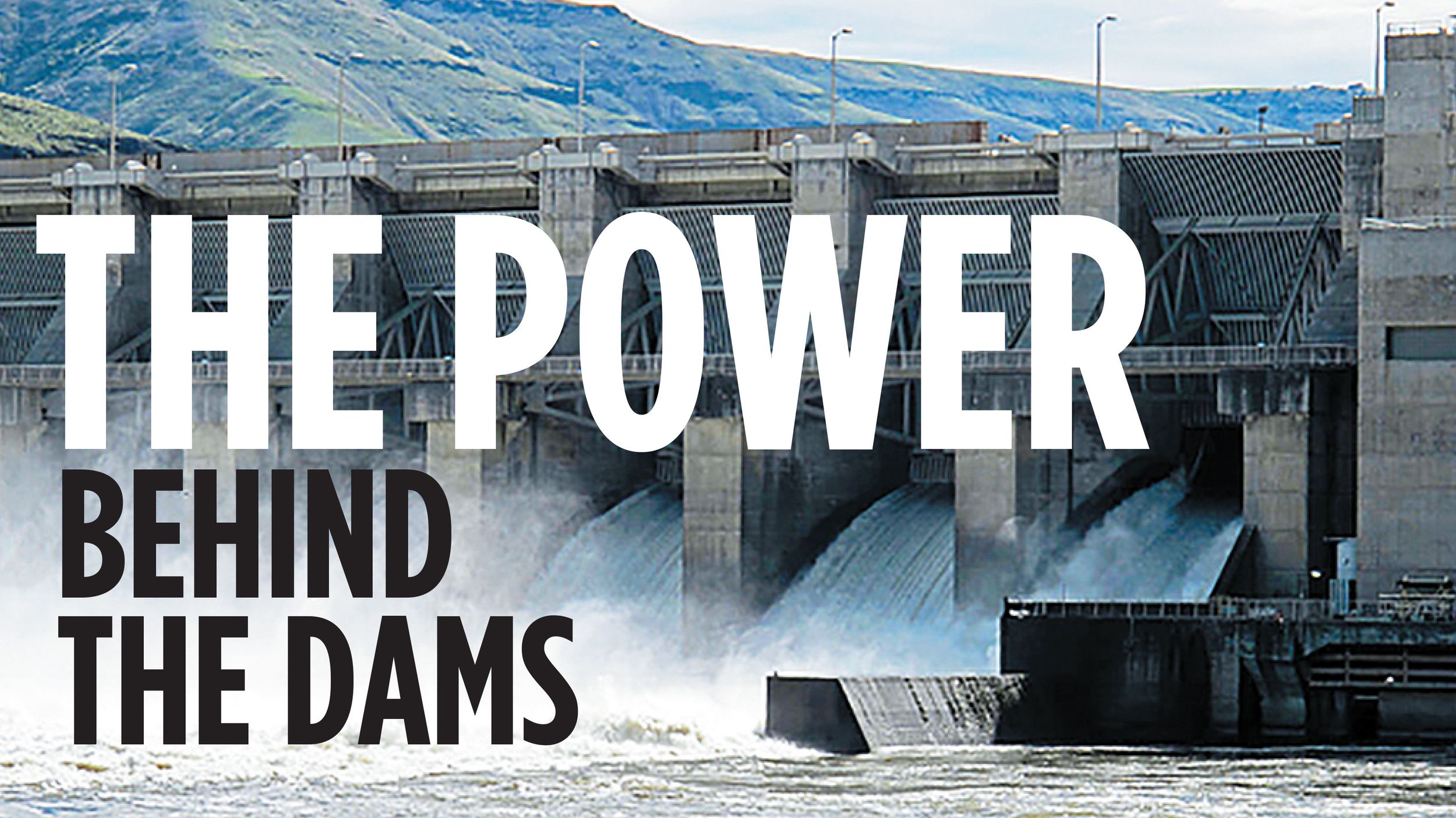
Gov. Inslee warns of deaths due to power shortages while proposing to create further power shortages. (photo: Spokeman)

The Center Square published Inslee predicts ‘blackouts, destruction, and death’ this summer on Wednesday. Inslee so predicted because of the possibility of power shortages this summer, but at the same time he supports removing dams which would further reduce power generation.

Todd Myers, director of the Center for the Environment for the free market Washington Policy Center, thinks Gov. Jay Inslee is being coy about his support for breaching four dams on the lower Snake River.

“Last week, @GovInslee gave implicit support to destroying the Snake River dams and 8% of Washington’s electricity generation. Today he sent an email warning about electricity shortages this summer. #waleg,” Myers tweeted Monday.

This was accompanied by an excerpt of an email from Inslee’s campaign.

“It’s shaping up to be a deadly summer,” the email reads.

“As the climate crisis worsens, we’re facing the most extreme weather in history. While Washington state faced the wettest start to the summer in over 70 years, other states are preparing for sweltering temperatures that will catastrophically disrupt our fragile electrical grid. That means blackouts, destruction, and death. Just look at the headlines.”

Myers’ observation was prompted by Thursday’s release by Inslee and U.S. Sen. Patty Murray, D-Washington, of a draft report that says breaching the dams would be the best way to remove Snake River salmon runs from the Endangered Species List, in addition to being the best way to maintain treaty and trust obligations with Native American tribes.

According to the report, finding other ways to provide electricity, irrigation, and enabling commerce would cost between $10.3 billion and $27.2 billion.

The release of the report kicks off a one-month public comment period running until July 11.

The debate over breaching the federally-owned dams has swirled for decades.

Proponents of removing the dams say doing so would bring back salmon runs to the benefit of sport, commercial, and tribal fishing communities, in addition to helping starving orcas dependent upon salmon as a food source.

Getting rid of the dams would negatively impact the provision of irrigation water for farmers, critics say, in addition to making the river system unnavigable for barges that move crops and other products to port for export. Recreation opportunities for locals and tourists would also be lessened, critics add.

Perhaps the most contentious issue raised by critics of breaching the dams is the negative impact it will have on the generation of electricity. Power grid workers have consistently said the back-up electricity provided by the Snake River dams is essential to preventing power shortages when energy demand is high.

It’s not the first time Inslee has said or done something that seems at odds with making sure Washington’s energy needs can be met.

Earlier this year, Inslee vetoed House Bill 1623 to address the “risk of rolling backouts and power supply inadequacy events,” even though the legislation unanimously passed both chambers of the Legislature.

In his March 31 veto letter to the Legislature, Inslee cited redundancy for his decision.

“Ensuring that our electricity grid continues to reliably provide power to Washingtonians is a priority for me as well, which is why we have multiple state agencies already working on this issue,” Inslee wrote.

The Center Square reached out to Jamie Smith, Inslee’s executive director of communications, regarding Myers’ comments about could be construed as a mixed message from the governor.

“The governor has been consistently clear that he has not made any decision on the question about the dams,” she said via email.

That language is similar to a joint statement released by Murray and Inslee on the draft report.

“We continue to approach the question of breaching with open minds and without a predetermined decision,” they said. “From the start, we have placed public and stakeholder engagement from communities across the Pacific Northwest as the foundation of any regional process.”

Nevertheless, there have been indications Inslee leans toward breaching the Snake River dams.

Earlier this month, Inslee cast doubt on a multi-agency 2020 Environmental Impact Statement on the Snake River dams because it was completed under the administration of former President Donald Trump. The report essentially said dams and fish can coexist.

Last summer, Inslee signaled support for a key plank in Idaho Republican Congressman Mike Simpson’s plan – dam breaching – outlining $33.5 billion in federal spending to remove the four Snake River dams in 2030.

The current draft report is the second such study initiated by the governor’s office on the Snake River dams in the last few years. The results of a 2019 study failed to deliver a clear result.

Yakima Abortion Abolition Conference, June 25, 2022

Sent to us from the Upper Valley Assembly, the event is organized by Abortion Abolition Washington:

SATURDAY, JUNE 25, 2022 AT 10:00 AM PDT

Yakima Abortion Abolition Conference 2022

Highland Community Church – 16000 Summitview Rd, Cowiche, WA

In the wake of the reversal of Roe, understanding the real Biblical response to abortion will be critically important.

Local pastors and national abolitionist leaders are coming to Yakima to teach you everything you need to know. Don’t miss this opportunity.

Schedule:

Morning (10am – noon)
Abortion and the Great Commission – Pastor John Smith
The Watchman on the Wall (Ezekiel 3) – Pastor Ryan Dammarell
Overcoming Apathy – Holden Diffner, Abolish Abortion Washington

Midday (noon – 1:00)
Abortion Ministry and Evangelism 101

Lunch (provided)

Afternooon (2:00 – 5:00)
The Five Tenets of Abolitionism – Pastor Eric Schonbachler
History of Abolitionism and Failures of the Prolife Movement – James Silberman, Free the States
Christ-Centric Politics and Immediatism – Holden Diffner, Abolish Abortion Washington
Q&A – All Speakers

If you would like to donate to help us produce this free conference, please click here: https://donorbox.org/aaw-2022

The Provident Prepper: Long Term Food Storage

This article from The Provident Prepper talks about calories and nutrition in your long term form storage and what sort of effects deprivation can cause. Long Term Food Storage: Creative Solutions to Build a Critical Asset

Long term food storage is a vital tool to help you conquer challenges that come your way in everyday life, as well as for emergency preparedness. This stockpile of life-sustaining long term storage foods should be built once you have a 3 month supply of foods that you eat everyday stashed in your pantry.

How do I build the perfect long term food storage plan for my family?

  1. Develop a plan that includes the number of people, unique dietary preferences, and takes into consideration minimum caloric needs.
  2. Prepare a cool, dry location to store your food supply.
  3. Search for reputable suppliers where you can purchase foods specifically packaged for long term storage at reasonable prices.
  4. Begin to implement your plan and consistently stock up on long term food supplies until you reach your goal.

We are going to begin by investigating important basic principles, looking at what the experts are recommending, and then taking a peek at how real people are using a bit of creativity to develop a long term food storage program that works for them.

Basic Caloric Requirements

USDA average caloric recommendations are 2000-2500 calories per day which is between 15-26 servings of food each day. We have been programmed to think that calories are bad. Calories are critical for energy and to maintain health. Let’s use the example of a 150 pound man. We have calculated to include physical activity and dietary thermogenesis. Generally the caloric requirements for a man to maintain a 150 pound weight is:

  • Inactive Male Adult – 2,360 calories
  • Average Male Adult – 2,722 calories
  • Active Male Adult – 3,176 calories

Depending on the scenario, a disaster may result in a normally inactive man having to significantly increase activity level resulting in a higher caloric requirement. When planning your basic longer term food storage, be sure to include enough supplies to meet the caloric requirements of each member of your family.

Minnesota Semi-Starvation Experiment

During World War II thousands of people died daily of starvation. The University of Minnesota conducted a clinical study to determine the physiological and psychological effects of severe and prolonged dietary restriction. They wanted to simulate a severe famine in a controlled laboratory environment and be able to assist famine victims.

36 Civilian Public Service male volunteers were selected to enable a detailed study of the physical and psychological effects of prolonged, famine-like semi-starvation on healthy men and their ability to recover from the experience. During the 24 week semi-starvation period, the caloric intake was cut to 1,560 calories a day consisting of a diet including; potatoes, rutabagas, turnips, bread and macaroni. The diet was rich in carbohydrates and poor in proteins. Subjects were required to walk 22 miles per week.

The results of the study clearly demonstrate that a male adult that consumes only 1,560 calories a day will have significant physical and psychological difficulties. They consistently found the following symptoms in test subjects;

  • Increased depression, hysteria and hypochondriasis
  • Severe emotional distress
  • Preoccupation with food
  • Social withdrawal
  • Decline in concentration, comprehension and judgement capabilities
  • Reduction in body temperature, respiration and heart rate
  • Edema in extremities
  • No energy
  • Always cold

One interesting thing noted is that all food was reported to be delicious with no evidence of diet fatigue. Many of the subjects would add water to the food to make it more like a soup to help make them feel full.

Calorie Calculations

One of the take home messages from this study is to make sure you factor basic caloric requirements into your basic food storage plan. Not all grains are equal when it comes to calculating calories. Wheat at 1520 calories per pound has less calories than white rice at 1650 calories per pound. It doesn’t look like a big deal until you multiply it out and see the difference

  • 300 lbs wheat = 456,000 calories = 1,249 calories a day for 1 year
  • 300 lbs white rice = 495,000 calories = 2,007 calories a day for 1 year
  • 300 lbs black beans = 461,400 calories = 1,264 calories a day for 1 year

Boxes of #10 cans can easily fit under a twin bed. We have found that 12 cases of 6 cans will fit nicely. That 72 cans of dry goods will come close but will probably not have quite enough calories to feed one person for an entire year without supplementation.  However, if it is used to supplement a 3 month supply of everyday foods stored in a pantry, or garden fresh fruits and vegetables, it would be perfect and bring the total caloric intake in line with basic requirements.

Continue reading “The Provident Prepper: Long Term Food Storage”