The Organic Prepper: How to Start Planning Your Garden

It may be just starting to get into the season season, but it’s not too early to start thinking about your garden. If seeds are as scarce as last year, hopefully you’ve already been making some plans. Here is Joanna Miller at The Organic Prepper with Growing Vegetables Is Back in Style: Here’s How to Start Planning Your Garden to get your thoughts moving in the right direction.

Whether you celebrate St. Bridget’s Day, Candlemas, Imbolc, or Groundhog Day, February 2 is coming up. For those of us active in gardening and raising animals in the Northern hemisphere, this means it’s time to think about spring. And that means garden planning!

The pandemic has caused one very positive resurgence: growing food is back in style and no longer the purview of hippies or those crazy preppers.

Last year saw a record amount of people start gardens

Between the cost of food, grocery shortages, and sheltering in place, it comes as no surprise that many Americans have turned to gardening. And they’re doing it not only to keep themselves busy, but also to keep themselves and their families fed during these turbulent times. More people than ever are learning that not only does gardening produce food, but it also soothes the soul.

However, as the Wall Street Journal pointed out in an article about wannabe homesteaders, many people found out that gardening was a little more complicated than Michael Bloomberg said. ( “I could teach anybody, even people in this room, to be a farmer. It’s a process. You dig a hole, you put a seed in, you put dirt on top, add water, up comes the corn.” 2016-Bloomberg)

Thousands of quarantined Americans planted vegetables last spring, striking a blow for hope just as their World War II-era forebears did with home-front Victory Gardens.

Six months later, many are admitting defeat.

“My tomatoes look like a Dr. Seuss plant,” said Doni Chamberlain, a 64-year-old blogger in Redding, Calif. “It might not have helped that I planted them in a kiddie pool.”

Daisy has an article about the year she and a friend tried to raise a homegrown Thanksgiving, and some other tips for what you can do if the garden you’re relying on fails.

Garden planning varies widely based on your location.

I have gardened with varying degrees of success in the Chicago suburbs, Houston suburbs, and now on the High Plains in Colorado. What works in one area will often not work in another, and the first thing to do is to ask yourself what will grow well in your area.  

For example, some tomatoes will grow just about anywhere, but timing and varieties will vary greatly between regions. In Illinois, you start tomatoes from seed in March, then plant them out sometime between Mother’s Day and Memorial Day. We grew all kinds of tomatoes in Illinois. We could grow cherry tomatoes or those big beautiful slicing tomatoes.

I soon realized I needed to change my view when it came to tomatoes

When I moved to Houston, the tomatoes I planted in May didn’t produce a darn thing the first year. I did some reading and found that tomatoes won’t set fruit if the temperature is above 95 degrees Fahrenheit during the day and doesn’t drop below 75 at night. Well, in Houston, that’s at least from May to October.

So the next year, I started the seeds in January and put them out on Valentine’s Day. Sure enough, the fruits set in March and April, before the heat hit, and we spent June and July picking tomatoes.

I found that I needed to explore different varieties and experiment

I tried both cherry and slicing tomatoes. The cherry tomatoes exploded; I’m not sure if I ever grew a slicing tomato. While living in Houston, I assumed it was too hot to grow the slicing tomatoes and contented myself with the cherries.

I gardened for five years in Houston before moving to Colorado and became very proficient. We only had a little suburban lot, but it was quite productive. When we moved to Colorado, I wondered if I’d be able to grow bigger tomatoes, like I had growing up in Illinois. I planted the same cherry tomato variety I’d grown in Houston, and also some Brandywine tomatoes. The cherry tomatoes did okay, but I didn’t get one Brandywine.

I went back to online searches and gardening books.

It turns out bigger tomatoes need relatively constant temperatures to set fruit. The 85 degree days and 65 degree nights in Illinois were perfect; the 90 degree days and 55 degree nights in Colorado, not so much. A certified organic vegetable gardener lives two miles away from me, and she grows beautiful large tomatoes, but she grows them in a hoop house, which moderates the temperature.

It took me a few years of experimenting to find that Principe Borghese are the tomatoes for me to grow. They do well in the hot, dry weather and are perfect for sun-drying. I now get plenty of tomatoes every year, but it didn’t happen right away. It took some research in the form of flipping through books and asking neighbors. It took a lot of patience.

Gardening is a skill learned by trial and error.

It takes time to find what works in your area, and even then, disaster can strike.

We had a warm, wet spring in 2020. Our last freeze was in April, and we didn’t get one May snowstorm. I had plenty of fruit set throughout June and thought the year would be great. Well, early in July, we had twenty minutes of marble-sized hail and 50 mph winds. My garden was in tatters. The hailstorm knocked my tomatoes and cucumbers off the vines and tore my corn and squash to ribbons.  

I say this not to discourage anyone, but to show that gardening always turns into more of an adventure than people expect. If you stick with it and find what works, you will usually come out ahead in terms of food and fun versus time and energy. But like any sincere endeavor, there will be occasional spectacular failures.

However, I have had occasional unexpected successes as well

This year, the hailstorm didn’t affect a new plant I had tried. I had read about ground cherries in the Laura Ingalls Wilder books. Ground cherries are native to North America, and they look kind of like tomatillos though they taste very sweet. The fruit grows underneath thick leaves in a papery husk. So while the hail bruised the thick leaves, they protected the fruit underneath. I didn’t lose fruit in that hailstorm and was pleasantly surprised later in the season by the plants’ heavy production.

Gardening is a worthy endeavor. If you felt the urge to garden last year and it just didn’t come together the way you envisioned, now is the time to revisit what worked and what didn’t.

Where should you plant your garden?

Decide where to plant your garden first. You will need to check your local rules and regulations. (Here are some tips for growing food when you”can’t” have a garden.) Wherever you intend to plant, make sure there is enough direct sunlight.

If you live in a place like Texas and find it is too sunny for some of your plants, it’s a lot easier to put burlap over your plants to provide partial shade than it is to trim tree branches overhead if the garden isn’t getting enough sun. So start by finding a sunny spot, and go from there.

If you use containers, read the instructions. Many larger pots will recommend placing a layer of rocks or pea gravel in the bottom to assist drainage. If you live in an area with a high water table, it may be worth your time to build a raised bed. It doesn’t have to be super expensive. When we lived in Texas, we just bought cinder blocks and tore up the grass inside, then added some compost. I want to conserve as much moisture as possible in Colorado, so I haven’t raised the beds. The water drains just fine on its own.

What kind of soil do you have?

When I lived in Illinois, we had just about perfect soil. It was black and rich and loamy, and we had productive gardens without adding much in the way of specific soil amendments. In many other parts of the country, however, that is not the case. 

What you decide to do depends on how much money you have available. It may be worth your time to get a soil test. In Colorado, this costs about $30, and it is useful. You send in your soil sample, and they tell you not only the pH but also any nutrient deficiencies your soil may have.  

If you have some money to spend and are confident in your ability to add the proper amendments to your soil, the soil test is worth your time and money. It can save you a few seasons’ worth of trial and error. However, if you are distressingly tight on cash, don’t despair. If you eat, you can still improve your soil.  

What can you do to improve the soil?

Many useful guides exist on composting. All you have to do is enter “How to make compost” into your favorite search engine, and plenty of sites and videos will pop up. Much of your food waste can be used for compost. Lawn trimmings and downed leaves can go in as well. If you want to build up a lot of soil, you can ask neighbors for their leaves and other yard waste.

My kids and I volunteer at a park, and we took their Christmas tree home after the holiday to feed our goats. Organic waste is all over the place. Your neighbors might tease you for being a hippie with all the compost and garbage collecting; tell them sticks and stones. Building your soil with compost alone will take time, but it’ll be free.  

Remember to do your research first

A green bean that grows well in New York will not necessarily grow well in East Texas, which won’t necessarily grow well in South Texas, which won’t necessarily grow well in Oregon.

Don’t just grab whatever they have at the hardware store. The major chains usually source from large nurseries that ship nationwide; if you don’t know what you’re looking for, you may find something inappropriate for your area. If you have a smaller, locally-owned nursery, browse that instead. They may sport higher prices, though not necessarily. But staff at locally owned nurseries have often gardened in that specific area and can offer a great deal of information.  

Once you’ve picked out varieties, look carefully to find when and how to plant. For example, I plant peas and potatoes in April. We usually have freezes into May, but peas and potatoes survive if they have a thick layer of mulch. Peas prefer cooler weather and come out of the garden at the end of July. Tomatoes don’t go outside until all danger of frost has passed. In my area, that’s usually mid to late May. Corn doesn’t go in until the soil has warmed in June.

You can’t just toss seeds into the ground whenever, wherever, and expect them to thrive. Take time to figure out your gardening zone and read the seed packages carefully. This Garden Planning Calculator from Seeds for Generations provides you the following for 46 types of crops:

  • Germination timelines for all crop types
  • Germination temperatures for optimal results
  • For plants that need to be started as seedlings, then transplanted into the garden, the Indoor Start Date
  • For plants that are direct seeded, the earliest date to plant them outdoors
  • For seedlings, the earliest transplant date relative to the last frost
  • AND, it provides you with forecast earliest harvest dates based on the days to maturity for each crop

TIP: Now that more people are gardening, it’s a good idea to order your seeds early to ensure the best selection. Last year, many sources ran out of seeds quickly so do not delay your purchase. Seed shortages could occur again.

Gardening is ultimately responding to the needs of other living things

It requires patience, willingness to get dirty, and the ability to recover from failure. These are not skill sets that our society typically values. I found the stories of successful professionals who couldn’t keep a plant alive for a few months disturbing. 

The nation that won the World Wars was the same nation that produced over 40% of its produce in the backyard and rooftop Victory Gardens. I suppose it’s not shocking that the nation that now cannot wait three days for a package from Amazon cannot be bothered to learn about where its food comes from, but I don’t think it’s a sign of its progress. I think it’s a sign we all need to do some soul-searching.

Of course, the nation that grew Victory Gardens was also much closer, generationally, to a society of mostly farmers. Most people 80+ years ago still had relatives in the country to whom they could turn for advice. More people kept livestock. Parenting was typically more hands-on. In general, more people spent more time in their lives as caregivers...(continues)

The Federalist: Biden Intelligence Agencies To Investigate Pro-Trump ‘Bigots’ And ‘Libertarians’

The Federalist reports John Brennan: Biden Intelligence Agencies To Investigate Pro-Trump ‘Bigots’ And ‘Libertarians’

Obama-era CIA Director John Brennan said federal intelligence agencies’ top priority, under the leadership of President Joe Biden, is seeking to root out people in pro-Trump “insurgency” groups filled with “white supremacists.”

“I know, looking forward, that the members of the Biden team who have been nominated or have been appointed are now moving in laser-like fashion, to try to uncover as much as they can about what looks very similar to insurgency movements that we’ve seen overseas, where they germinate in different parts of the country and they gain strength, and it brings together an unholy alliance frequently of religious extremists — so authoritarians, fascists, bigots, racists, nativists, and even libertarians,” Brennan said on MSNBC.

The decision to target these groups, Brennan admitted, stemmed from the recent riot at the Capitol and the administration’s belief that then-President Donald Trump incited an insurrection among his supporters that could continue to be a “threat to our democracy and our republic.”

“Unfortunately, I think there has been this momentum that has been generated as a result of unfortunately the demagogue of rhetoric of people that just departed government, but also those who continue in the halls of Congress,” Brennan continued. “And so I really do think that the law enforcement, Homeland Security Intelligence, and even the defense officials are doing everything possible to root out what seems to be a very, very serious and insidious threat to our democracy and our republic.”

Despite repeatedly insisting that Obama’s intelligence agencies conducted “no spying on Donald Trump’s campaign,” a claim contradicted by inspector general reports, a two-year special counsel probe, congressional inquiries, and continued investigation, Brennan has repeatedly lied about the role Christopher Steele’s dossier played in the FBI and CIA’s review of disproven collusion between the Trump campaign and Russia. He is also well-known for other public lies on TV and to Congress while under oath.

Off Grid Ham: Transfer Switch

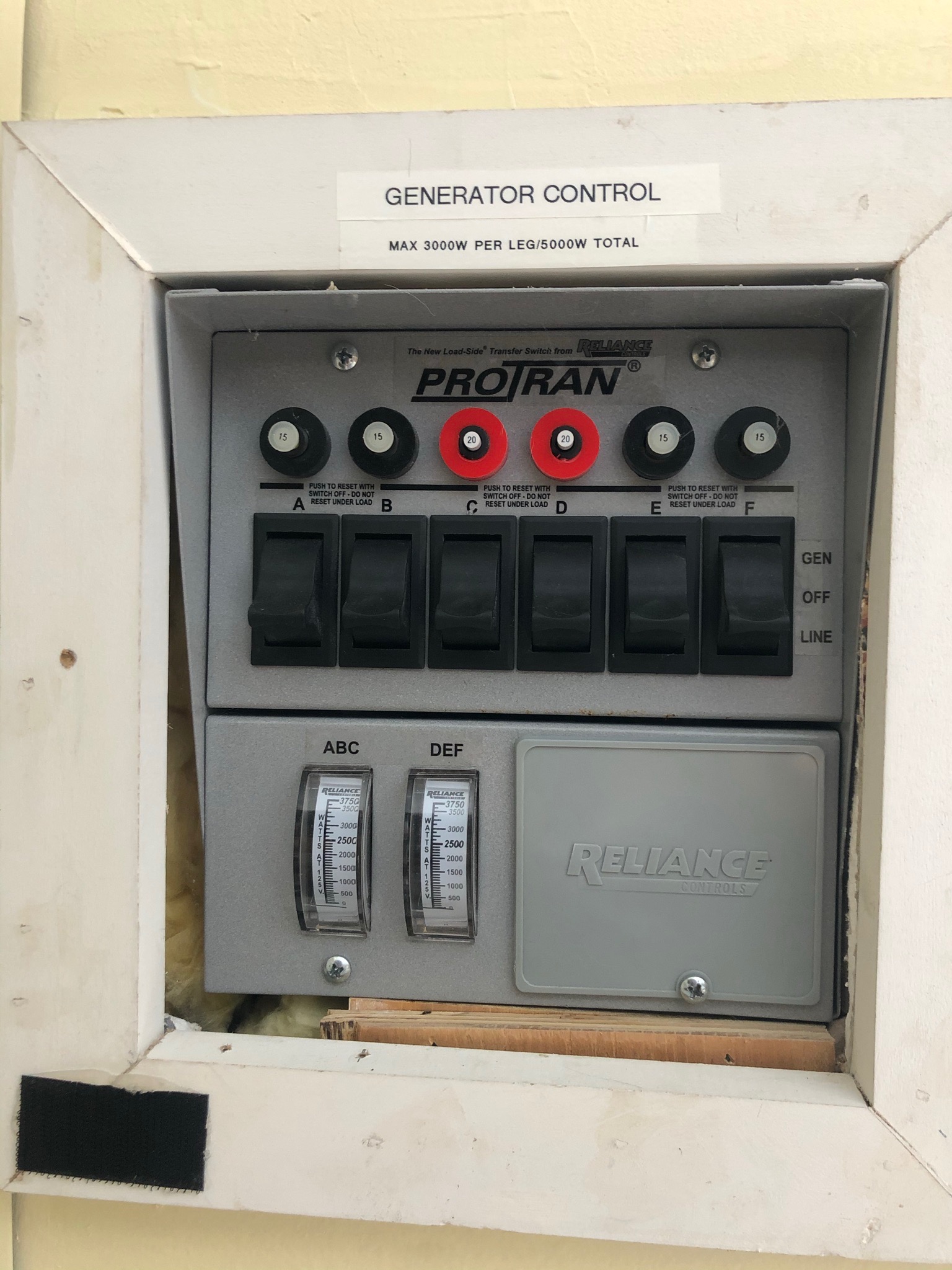
Transfer switch. offgridham.com original photo ©2021

Chris Warren of Off Grid Ham talks about generators and the Transfer Switch.

Transfer switch 101.

Have you ever wanted to run more than just a few devices from your generator? Maybe you want the convenience and safety of connecting your existing home AC wiring to an off grid source? Maybe you don’t like the idea of running extension cords all over the house? Most gas generators can do much more than power a few radios. A transfer switch is the safest and best way to get power to where you need it.

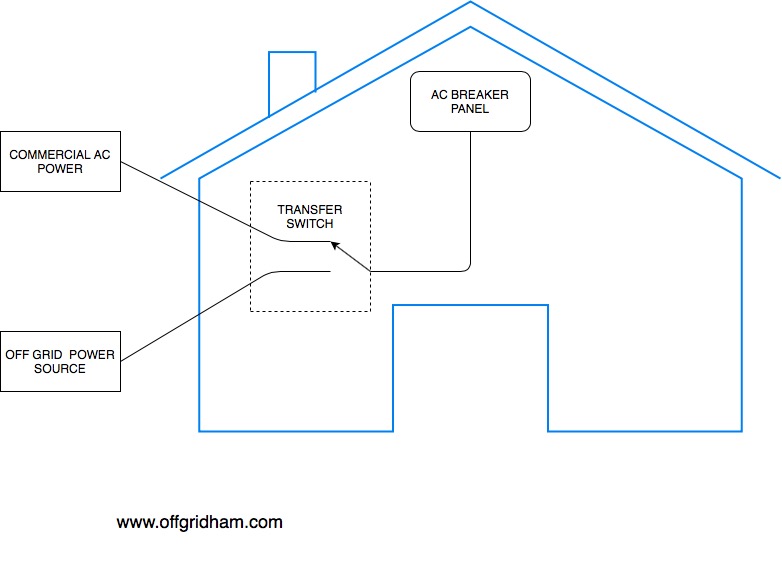
A transfer switch is permanently installed in a home or other structure. It allows you to switch between commercial grid AC power and a backup source. AC outlets, lights and appliances connected back to the transfer switch will then work normally. You do not have to run temporary cords or physically disconnect and then reconnect individual devices.

What happens inside the box.

The internal functioning of a transfer switch is fairly simple. A switch allows the load to be connected to either commercial AC power, or the backup source. It will never allow both at the same time. Some versions are actually several small transfer switches that move individual circuits between power sources. Retailers also offer transfer switches that automatically move the load from main to backup power when the main power fails.

transfer switch

offgridham.com original graphic ©2021

Choosing a transfer switch.

Wow, there are a lot of choices out there! Very basic manually operated switches sell for under $150.  Automatic switches with internet connectivity can go well past $1000. For my own home, I went with a Reliance Controls 30216A. It can transfer individual circuits and includes watt meters for load balancing. Reliance Controls is probably the most popular switch on the market; they are available almost anywhere. I’ve had my switch in service for about ten years with excellent performance.

The Reliance 30216A and others like it come with an added bonus. Because it switches individual circuits, there is no need to disconnect the main feed to your house. This design feature makes installation barely more complex than changing a breaker.

Another factor to consider is materials needed to install your transfer switch. Reliance Controls sells their products as a kit. You get everything you need, including a cable to connect your generator. If you go with the cheapie $139 switch, you’ll have to buy extra items to make everything work. When you add everything up, expect to spend at the low end $300-$500.

The 240 volt question.

Most mid-sized and up generators have a 240 volt outlet that will connect to your transfer switch. So what do you do if your generator does not have a 240 volt outlet? This is common on smaller generators, such as the immensely popular Honda eu2000i. I located adapter cables for sale on line, but they are rare. Finding one that’s compatible with your application might be difficult. The other option is to make your own cable.

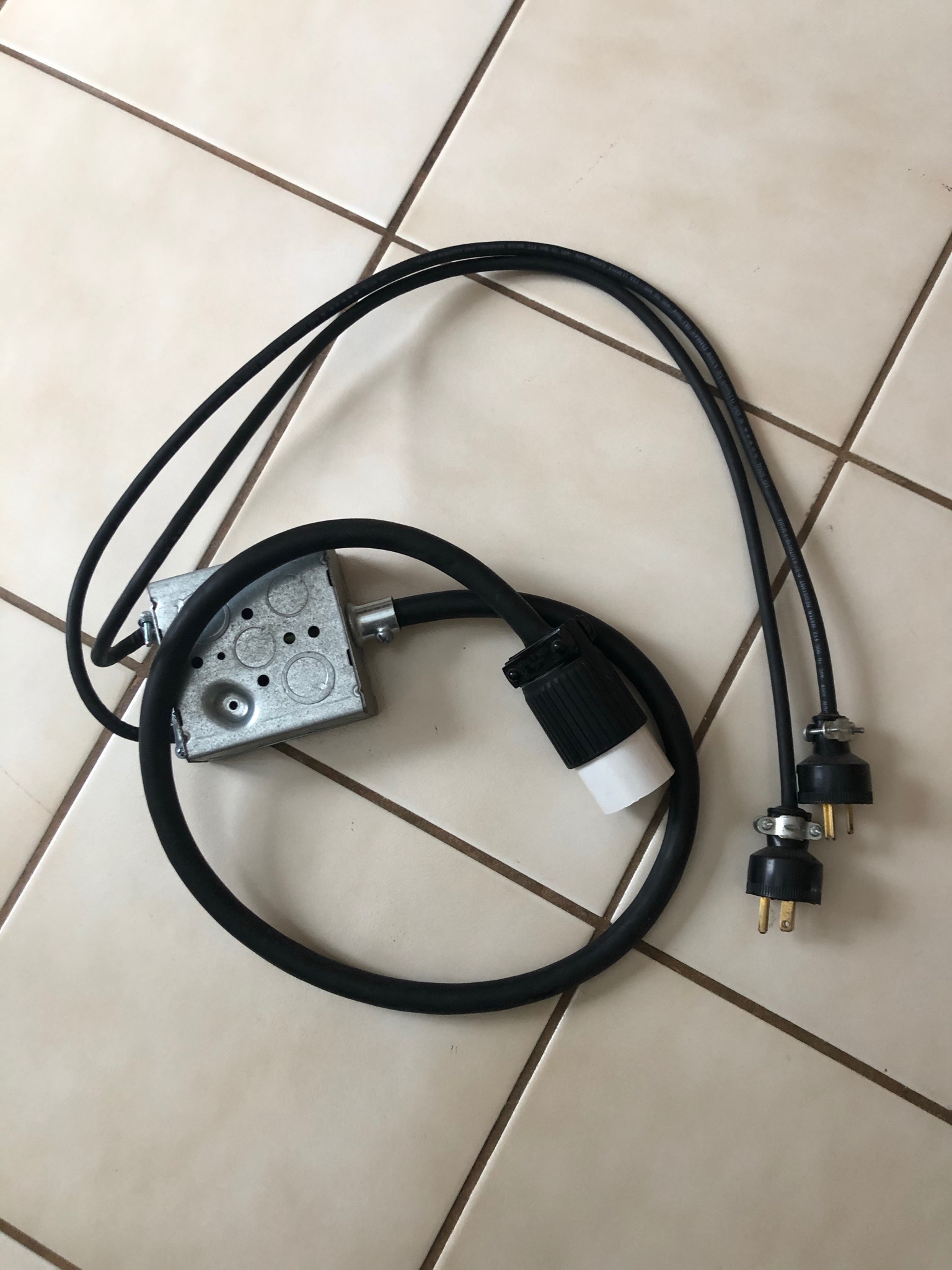
Using a converter cord I made myself, if needed I can connect any 120 volt generator to my 240 volt transfer switch. Making your own adapter is actually super-simple but dangerous if you mess it up. Since the safety consequences of doing it wrong are so serious, I decline to give instructions on this blog.

The photo below is my converter cord. The two standard male 120 volt connectors plug into the small generator. On the other end is a female L-14-30 plug that goes to the transfer switch. Keep in mind that you still cannot exceed the capacity of the generator.

transfer switch

offgridham.com original photo ©2021

Safety considerations.

To say the least, installing a transfer switch is not for beginners. Having a thorough knowledge of home electric systems and being confidant working near exposed live conductors is an absolute must. There are many instructional YouTube videos, but not all of them give good advice. If you have even the slightest doubt about your abilities, listen to that inner voice and get competent help even if you have to hire a pro. I did my own work, with a skilled assistant, and it took a weekend. This included cutting a wall open, cosmetic finishes, and running 40 feet (12 meters) of wire to a new generator tap on the outside of my house. Simpler installs can probably be done in one day.

When operating your generator, always have a fire extinguisher nearby. Always run the generator outdoors (not in the garage, even with the door open). Always have working carbon monoxide detectors in your home.

The internet is full of dubious tricks to connect a generator to your home wiring. Some hacks involve clamping automotive jumper cables in your breaker box. Others employ a “cheater cord”: a cable with a male AC plug on both ends. All of these lame ideas are dangerous and illegal. Don’t play games; do it right. If a dumb shortcut results in property damage or personal injury, you could find yourself on the wrong end of a lawsuit. Your insurance carrier may not help you either.

Code compliance & permits.

Building codes and ordinances regulating transfer switches vary by locality. You may need a permit, depending on where you live. The National Fire Protection Association document NFPA-70 is the nationwide standard for all electrical work. Many state and local governments have codes that are stricter than what is in NFPA-70. Do your due diligence!

In general, you need a permit if your proposed off grid system meets one or more of the following criteria:

  • The backup generator or power source is greater than 15 kilowatts.
  • The generator starts and transfers the load automatically.
  • Your generator is permanently wired to the transfer switch.
  • The generator is fueled by commercial natural gas or a non-portable fuel tank (this would include large propane tanks).
  • The generator itself is permanently mounted/not portable.

Also, generators greater than 15 kW require a manual disconnect “easily visible and accessible from the generating device”. In some situations more than one disconnect is required (NFPA-70 445.18, 445.18D, 702.12A). Generators less than 15 kW do not require a manual disconnect (NFPA-70 702.12B). Wiring to the transfer switch and all related conductors must be rated for 115% of the maximum power capacity of the generator (NFPA-70 445.13).

In most situations, generators less than 15 kW that are not permanently wired and are started/transferred manually do not require a permit. This would cover most applications an off grid ham would encounter.

I must stress again that these are general guidelines. Your locality can and probably does have different and/or more rigorous standards.

Load balancing.

If your generator has a 240 volt output, keep in mind that it’s two 120 volt AC sources combined. The generator achieves this by spinning two separate coils that produce 120 volts each. The off grid ham must be careful not to overload one side of the generator while placing little or no demand on the other.

On most consumer-grade generators, the total rated output equals the sum of the two 120 volt sections. In other words, your “7000 watt generator” is really two 3500 watt generators integrated into one physical unit. Therefore, you cannot pull more than half of the total capacity from either side of the generator.

With a transfer switch load balancing is somewhat simplified. Each half of the 240 volts is directed to its own side of the switch. All you need to do is assign your loads evenly between the two sides. In the photo of my Reliance switch above, notice that it is divided into two banks of three circuits each, A-B-C and D-E-F, with corresponding watt meters.  When I’m on my 5000 watt generator, I must not exceed 2500 watts on either side.

The 120 volt standard outlet on the front of your 240 volt generator is probably split internally so each plug is wired to a different coil. This allows you to tap both coils for load balancing, but do not pull more than 50% of the total from either plug.

When installing your transfer switch, be careful not to assign all your high power demand circuits to the same side of the switch. Distribute them as equally as possible between both sides so you’ll get the most benefit from your generator.

Resources.

Here is a link to the complete NFPA-70 document (free registration required).

Reliance Controls makes some excellent transfer switches. Their documentation is top notch and they even have instructional videos with accurate information.

This very cool website gives a concise listing and specifications for numerous AC plugs used with generators and transfer switches.

This Off Grid Ham article from April 2018 discusses NFPA-70 in detail.

Rutherford Institute: The Deep State’s Stealthy, Subversive, Silent Coup to Ensure Nothing Changes

Constitutional law attorney John Whitehead writes about DC corruption in The Deep State’s Stealthy, Subversive, Silent Coup to Ensure Nothing Changes

“You have such a fervent, passionate, evangelical faith in this country…why in the name of God don’t you have any faith in the system of government you’re so hell-bent to protect? You want to defend the United States of America, then defend it with the tools it supplies you with—its Constitution. You ask for a mandate, General, from a ballot box. You don’t steal it after midnight, when the country has its back turned.”—Seven Days in May (1964)

No doubt about it: the coup d’etat was successful.

That January 6 attempt by so-called insurrectionists to overturn the election results was not the real coup, however. Those who answered President Trump’s call to march on the Capitol were merely the fall guys, manipulated into creating the perfect crisis for the Deep State—a.k.a. the Police State a.k.a. the Military Industrial Complex a.k.a. the Techno-Corporate State a.k.a. the Surveillance State—to swoop in and take control.

It took no time at all for the switch to be thrown and the nation’s capital to be placed under a military lockdown, online speech forums restricted, and individuals with subversive or controversial viewpoints ferreted out, investigated, shamed and/or shunned.

This new order didn’t emerge into being this week, or this month, or even this year, however.

Indeed, the real coup happened when our government “of the people, by the people, for the people” was overthrown by a profit-driven, militaristic, techno-corporate state that is in cahoots with a government “of the rich, by the elite, for the corporations.”

We’ve been mired in this swamp for decades now.

Every successive president starting with Franklin D. Roosevelt has been bought lock, stock and barrel and made to dance to the Deep State’s tune.

Enter Donald Trump, the candidate who swore to drain the swamp in Washington DC. Instead of putting an end to the corruption, however, Trump paved the way for lobbyists, corporations, the military industrial complex, and the Deep State to feast on the carcass of the dying American republic.

Joe Biden will be no different: his job is to keep the Deep State in power.

Step away from the cult of personality politics and you’ll find that beneath the power suits, they’re all alike.

Follow the money.  It always points the way.

As Bertram Gross noted in Friendly Fascism: The New Face of Power in America, “evil now wears a friendlier face than ever before in American history.”

Writing in 1980, Gross predicted a future in which he saw:

…a new despotism creeping slowly across America. Faceless oligarchs sit at command posts of a corporate-government complex that has been slowly evolving over many decades. In efforts to enlarge their own powers and privileges, they are willing to have others suffer the intended or unintended consequences of their institutional or personal greed. For Americans, these consequences include chronic inflation, recurring recession, open and hidden unemployment, the poisoning of air, water, soil and bodies, and, more important, the subversion of our constitution. More broadly, consequences include widespread intervention in international politics through economic manipulation, covert action, or military invasion

This stealthy, creeping, silent coup that Gross prophesied is the same danger that writer Rod Serling envisioned in the 1964 political thriller Seven Days in May, a clear warning to beware of martial law packaged as a well-meaning and overriding concern for the nation’s security.

Incredibly enough, almost 60 years later, we find ourselves hostages to a government run more by military doctrine and corporate greed than by the rule of law established in the Constitution. Indeed, proving once again that fact and fiction are not dissimilar, today’s current events could well have been lifted straight out of Seven Days in May, which takes viewers into eerily familiar terrain.

The premise is straightforward.

With the Cold War at its height, an unpopular U.S. President signs a momentous nuclear disarmament treaty with the Soviet Union. Believing that the treaty constitutes an unacceptable threat to the security of the United States and certain that he knows what is best for the nation, General James Mattoon Scott (played by Burt Lancaster), the head of the Joint Chiefs of Staff and presidential hopeful, plans a military takeover of the national government.  When Gen. Scott’s aide, Col. Casey (Kirk Douglas), discovers the planned military coup, he goes to the President with the information. The race for command of the U.S. government begins, with the clock ticking off the hours until the military plotters plan to overthrow the President.

Needless to say, while on the big screen, the military coup is foiled and the republic is saved in a matter of hours, in the real world, the plot thickens and spreads out over the past half century.

We’ve been losing our freedoms so incrementally for so long—sold to us in the name of national security and global peace, maintained by way of martial law disguised as law and order, and enforced by a standing army of militarized police and a political elite determined to maintain their powers at all costs—that it’s hard to pinpoint exactly when it all started going downhill, but we’ve been on that fast-moving, downward trajectory for some time now.

The question is no longer whether the U.S. government will be preyed upon and taken over by the military industrial complex. That’s a done deal, but martial law disguised as national security is only one small part of the greater deception we’ve been fooled into believing is for our own good.

How do you get a nation to docilely accept a police state? How do you persuade a populace to accept metal detectors and pat downs in their schools, bag searches in their train stations, tanks and military weaponry used by their small town police forces, surveillance cameras in their traffic lights, police strip searches on their public roads, unwarranted blood draws at drunk driving checkpoints, whole body scanners in their airports, and government agents monitoring their communications?

Try to ram such a state of affairs down the throats of the populace, and you might find yourself with a rebellion on your hands. Instead, you bombard them with constant color-coded alerts, terrorize them with shootings and bomb threats in malls, schools, and sports arenas, desensitize them with a steady diet of police violence, and sell the whole package to them as being for their best interests.

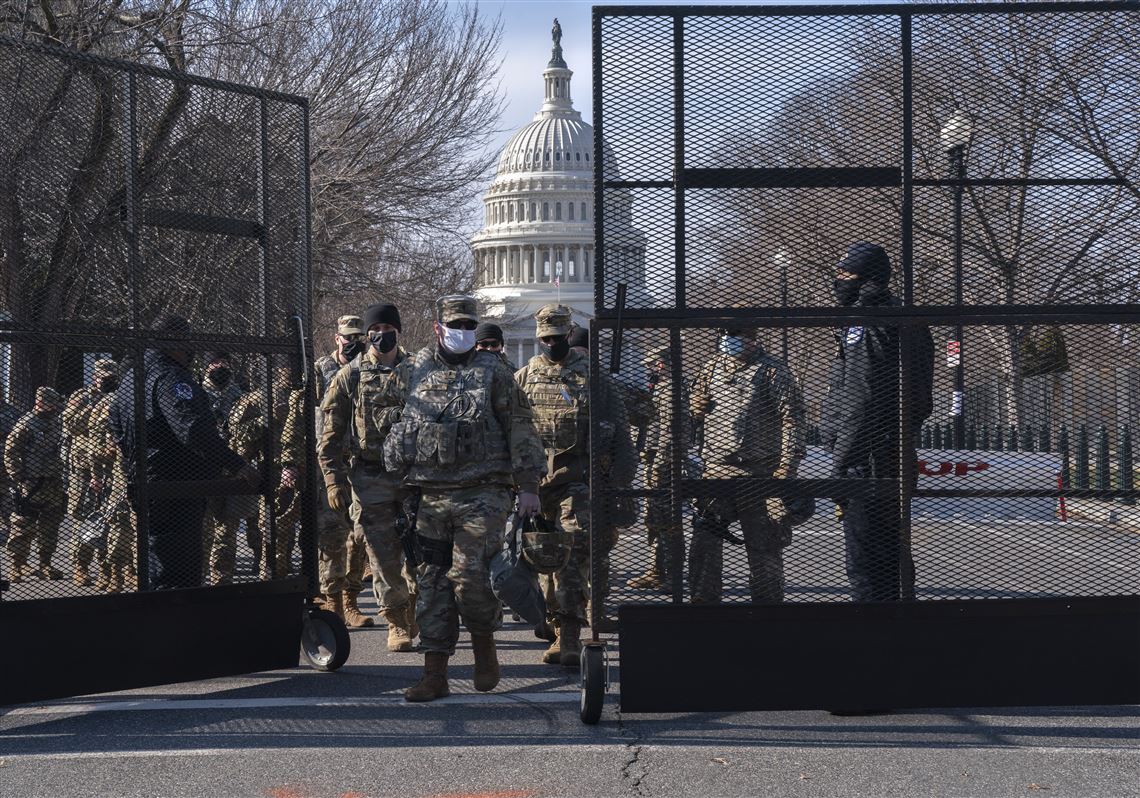
This present military occupation of the nation’s capital by 25,000 troops as part of the so-called “peaceful” transfer of power from one administration to the next is telling.

This is not the language of a free people. This is the language of force.

Still, you can’t say we weren’t warned.

Back in 2008, an Army War College report revealed that “widespread civil violence inside the United States would force the defense establishment to reorient priorities in extremis to defend basic domestic order and human security.” The 44-page report went on to warn that potential causes for such civil unrest could include another terrorist attack, “unforeseen economic collapse, loss of functioning political and legal order, purposeful domestic resistance or insurgency, pervasive public health emergencies, and catastrophic natural and human disasters.”

In 2009, reports by the Department of Homeland Security surfaced that labelled right-wing and left-wing activists and military veterans as extremists (a.k.a. terrorists) and called on the government to subject such targeted individuals to full-fledged pre-crime surveillance. Almost a decade later, after spending billions to fight terrorism, the DHS concluded that the greater threat is not ISIS but domestic right-wing extremism.

Meanwhile, the police have been transformed into extensions of the military while the nation itself has been transformed into a battlefield. This is what a state of undeclared martial law looks like, when you can be arrested, tasered, shot, brutalized and in some cases killed merely for not complying with a government agent’s order or not complying fast enough. This hasn’t just been happening in crime-ridden inner cities. It’s been happening all across the country.

And then you’ve got the government, which has been steadily amassing an arsenal of military weapons for use domestically and equipping and training their “troops” for war. Even government agencies with largely administrative functions such as the Food and Drug Administration, Department of Veterans Affairs, and the Smithsonian have been acquiring body armor, riot helmets and shields, cannon launchers and police firearms and ammunition. In fact, there are now at least 120,000 armed federal agents carrying such weapons who possess the power to arrest.

Rounding out this profit-driven campaign to turn American citizens into enemy combatants (and America into a battlefield) is a technology sector that has been colluding with the government to create a Big Brother that is all-knowing, all-seeing and inescapable. It’s not just the drones, fusion centers, license plate readers, stingray devices and the NSA that you have to worry about. You’re also being tracked by the black boxes in your cars, your cell phone, smart devices in your home, grocery loyalty cards, social media accounts, credit cards, streaming services such as Netflix, Amazon, and e-book reader accounts.

So you see, January 6 and its aftermath provided the government and its corporate technocrats the perfect excuse to show off all of the powers they’ve been amassing so assiduously over the years.

Mind you, by “government,” I’m not referring to the highly partisan, two-party bureaucracy of the Republicans and Democrats.

I’m referring to “government” with a capital “G,” the entrenched Deep State that is unaffected by elections, unaltered by populist movements, and has set itself beyond the reach of the law.

I’m referring to the corporatized, militarized, entrenched bureaucracy that is fully operational and staffed by unelected officials who are, in essence, running the country and calling the shots in Washington DC, no matter who sits in the White House.

This is the hidden face of a government that has no respect for the freedom of its citizenry.

Brace yourself.

There is something being concocted in the dens of power, far beyond the public eye, and it doesn’t bode well for the future of this country.

Anytime you have an entire nation so mesmerized by the antics of the political ruling class that they are oblivious to all else, you’d better beware.

Anytime you have a government that operates in the shadows, speaks in a language of force, and rules by fiat, you’d better beware.

And anytime you have a government so far removed from its people as to ensure that they are never seen, heard or heeded by those elected to represent them, you’d better beware.

As I make clear in my book Battlefield America: The War on the American People, we are at our most vulnerable right now.

All of those dastardly seeds we have allowed the government to sow under the guise of national security are bearing demon fruit.

The gravest threat facing us as a nation is not extremism but despotism, exercised by a ruling class whose only allegiance is to power and money.

The Federalist: How A Threatened Swamp Fulfilled Trump’s Doomed Dream To Crack Down On Riots

The Federalist talks about how the government went overboard, responding to the protest of January 6th in The Ultimate Irony: How A Threatened Swamp Fulfilled Trump’s Doomed Dream To Crack Down On Riots. When the left was protesting last year, political leaders downplayed the violence, but if one conservative protest gets out of hand they call to purge the insurrectionists.

For six months, President Donald Trump pushed for a harsher crackdown on the riots raging across the United States, facing constant pushback from officials worried that would further inflame the chaos and lead to needless death. As Joe Biden takes the oath of office and Trump exits Washington, the outgoing president’s dream is finally realized — ironically, too late to change a thing.

Over the past week, somewhere between 15 and 25,000 troops have taken to the streets of Washington. Together with the police, they have formed an approximately 11-mile perimeter around the president-elect and members of Congress, even blockading the bridges to Virginia (although it’s unclear what happens if the rebel army takes the open roads from Maryland). Checkpoints are manned, guardsmen are vetted, and panickedinsurrectiondisinformation is bandied about the corporate media like so many sparkles in the wind.

This is what a state of emergency looks like. Except when it isn’t.

This is not what it looked like in the streets of Kenosha, where rioters terrorized residents and business owners for four straight nights. Nor is it what it looked like in the streets of Chicago, where police drew up the bridges to the once-glittering Magnificent Mile.

Twenty-five thousand troops did not descend on St. Louis, where four policemen were wounded and retired Police Chief David Dorn was gunned down. Little help came for the 140 federal officers who were injured while the federal courthouse was besieged in Portland, Oregon.

The ironies of Inauguration Day’s show of force stack high. Speaker of the House Nancy Pelosi, for example, thanked Guardsmen for their “commitment to our American democracy” during a recent photo-op — just six months after she called called federal agents fighting the courthouse riots “unidentified stormtroopers” whose deployment shamed “a democratic republic.”

The New York Times reported unblinkingly on the number of Guardsmen in the Capitol just eight months after Editorial Page Director James Bennet and his deputy were forced to resign for running a senator’s call to “send in the military” to restore order.

The most striking of all ironies, however, is the one befalling our outgoing president. Unable to convince his deputies to clamp down on disorder while in power, he now leaves a city occupied to cheers in honor of his successor (and his successor’s Army).

Law and order is an issue Trump campaigned on. The elites, he told voters, have walls and security yet seek to take guns and police protection away from the citizenry. He was right. Yet since late May, America has been subjected to images of burning cities and besieged federal officers while accusations of fascism blow forth like bubbles from media and Democratic microphones. Law and order, it seems, this administration was not.

The long fight between Trump, who demanded a muscular federal response to the unrest, and his top advisers, led by Attorney General Bill Barr, is documented in a Monday article by Johnathan Swan:

From his seat behind the Resolute Desk, an agitated Trump told Barr to go and do something, and to do it right away — make an announcement, send in the troops, something. Just go in and resolve it, the president ordered. He wanted a devastating and provocative show of strength.

Barr disagreed. He thought the heat in the protests was gradually easing. He explained law enforcement strategy and his opinion that military intervention would backfire. Federal investigators were already hunting for the ringleaders in the protests.

Barr was mainly concerned the troops would have two choices: act (and people might die) or stand down (and authorities would look weak). Neither, he believed, was desirable.

His concerns were not foolish ones. Antifa and Black Lives Matter intentionally provoke authorities, seeing it as win-win for their cause. If no reaction comes, it shows the rioters are in charge. If authorities execute a crackdown, the riot’s leaders bet they can use the crackdown to prove the police are oppressing them; and there’s little doubt deploying force would have led to death.

But when riots go unpunished, violence reigns anyway. Between George Floyd’s death and Election Day, 25 American lives were extinguished in the chaos.

Over those six months, the rioters (or are they insurrectionists now?) attacked the White House, federal courthouses, police stations, a U.S. senator, and a mother trying to drive home with her child, and even killed an eight-year-old. Corporate media did their part, romanticizing it all as a “protest for racial justice.”

All that romance and talk of fascism ended with the Jan. 6 riot, when more than half a year of intensifying political street violence culminated in a right-wing assault on the U.S. Capitol.

While the sergeant at arms and Democratic mayor of D.C. had turned down repeated requests for National Guard reinforcements, they escaped blame for the the Capitol Police’s ineptitude in repelling the deadly riot, and tearful BLM rioters took to the airwaves to talk of how their crime sprees were oppressed while the MAGA rioters were treated with kid gloves. Nevermind the dead woman or the dozens of nationwide arrest warrants issued after Jan. 6 — if the rioters had been black, activists claimed, even more would be dead.

As tens of thousands of soldiers deployed to protect Biden, the media applauded, Pelosi took pictures, and Washington was pleased with itself. This, you see, was an emergency. Finally, things could be normal.

It’s easy to imagine the law-and-order women of the suburbs who abandoned the president’s re-elect in droves nodding along in contented agreement at capital streets cleared of “insurrection.” The Capitol was no mere White House or federal courthouse, no entrepreneur’s life dream or loving grandfather left to bleed out in the street. This was a sacred symbol of America, and Biden will protect it for us.

It’s a pity it took an attack on America’s elites in their own offices to finally get here. The inauguration — and its participants — might look very different if Trump’s orders had been carried out in the first place.

KREM2: Spokane Valley Reps introduce bill to create ‘Liberty State’ in Eastern Washington

This article comes from KREM2 – Spokane Valley Reps introduce bill to create ‘Liberty State’ in Eastern Washington

Two Representatives to the State legislature out of Spokane Valley introduced a bill on Monday to create “Liberty State,” which would separate Eastern and Western Washington.

Liberty State’s western border would be along the “crest of the Cascade mountains and the western 8 borders of Okanogan, Chelan, Kittitas, Yakima, and Klickitat counties,” according to the bill. The eastern, northern and southern borders would remain the same.

The bill also outlines transition committees that would aid in the new state’s creation and set up representation for the new government.

Representatives Bob McCaslin and Rob Chase wrote the bill…

Both the Washington State Legislature and Congress would have to approve of the creation of the new state.


From libertystate.org:

The Liberty State Movement is an effort to create a new state from Washington State based upon political and geographic lines. Since the formation of Washington State in 1889, people of the eastern and rural parts of Washington State have felt separate from the western capitol in Olympia. As our economies and beliefs grew in separate directions, the chasm has deepened and left Western Washington holding all of the political representation, with little regard or accountability to eastern residents. The current proposal to create Liberty State would draw the boundary down the Cascade Crest. Those counties to the west would remain Washington State, and those counties to the east would be a new state…

Recently, the state legislature has shown a willingness to operate without regard for the powers given, or rights protected in, the Washington State or United States Constitution. The east side is predominantly rural and the west is predominantly urban, with vastly different cultures. There is nothing wrong with either. However, this population disparity has allowed the urban majority to determine nearly every vote. Thus, the rural side of the state is failing to be represented on every major issue in the last thirty years. On the other side, legislation dear to the urban majority has been hampered to the consternation of many in Seattle. Tax limitations have been passed, also hampering mass transit and raising the ire of many in the urban core. The Founders believed that the best representation was closest to the people. Indeed, with a new state, both east and west would be better represented.

Sovereign Man: Everything’s Fine, There’s Absolutely Nothing to See Here

This is fine.

Simon Black, the Sovereign Man, writes Everything’s fine, there’s absolutely nothing to see here about normalcy bias and the failure to see the oncoming truck.

In the darkest corners of our human instincts lies a psychological phenomenon that is the result of millions of years of evolutionary biology.

It’s called “tonic immobility”. And it refers to a form of paralysis that occurs when we’re terrified and facing extreme mental or emotional trauma.

Tonic immobility is common in nature. Animals in the wild will often freeze in place when confronted by a predator; the idea is that making no movement, and doing absolutely nothing, increases their chances of survival because the threat will simply go away.

But as anyone who has ever been on safari or seen a nature documentary knows, the danger seldom goes away on its own.

This instinct to ‘do nothing’ in the presence of danger runs very deep in our instincts; and it’s related to a cognitive quirk within our brains that psychologists call ‘normalcy bias’.

We’ve discussed this before. Normalcy bias is what causes human beings to believe, even in the face of obvious perils, that everything is going to be just fine.

Humans are creatures of habit. We easily fall into routines—waking up, going to work, stopping by the coffee shop on the way, spending time with the family in the evening, etc. And those routines define ‘normal’ for each and every one of us.

When the routine is disrupted, we often have a difficult time coping—even with little things. If the bakery down the street is out of the croissant flavor that we order every morning on the way to work, we’re irritated by it and don’t want to break routine by trying something new.

And major disruptions to our ‘normal’ are met by severe psychological backlash. Our brains simply refuse to acknowledge it.

This is normalcy bias. It’s one of the reasons why denial is the first stage of grief. We cannot accept the loss of a loved one who has been part of our routine– our brains won’t allow it.

Or occasionally we might find out someone has passed, and our first reaction is, “But I just saw them last week!” Again, our brains have an extremely difficult time grasping the concept that our deeply entrenched ‘normal’ is about to change.

And that’s why, when faced with something obvious that threatens our ‘normal’, it’s common for us to instinctively do nothing. Our brains are hard wired to believe that the danger will resolve itself and everything will go back to ‘normal’.

Many of us felt this way in 2020.

When the pandemic struck, it was terrifying. No one really understood anything about it; the media practically made it out to be a flesh-eating superbug that would vaporize everyone immediately.

And in the face of this threat, it was easy for politicians to convince people to literally do absolutely nothing: stay home, and shelter in place.

The idea was that if we waited long enough—if we froze in fear long enough—then the danger would pass.

And people maintained a belief throughout the year that life would eventually return to normal, no matter how crazy the world became.

When we were locked down in our homes, we believed that life would return to normal.

When mostly peaceful protestors were rioting and raging in the streets, torching private businesses that had absolutely nothing to do with their cause, we believed that life would return to normal.

When angry Marxists political candidates raged that they want to confiscate private property and nationalize entire industries, we believed that life would return to normal.

Today there are literally tanks lining in the streets of Washington DC and attack helicopters roaming the skies. A new US President is set to be inaugurated tomorrow with more than 20,000 troops guarding him.

They have already announced sweeping legislative and policy changes, ranging from substantially higher taxes to Green New nonsense to debilitating business regulations that will likely frustrate an already weakened economy.

There is absolutely zero fiscal or monetary restraint in government; there’s hardly a single policy initiative that doesn’t carry at least a trillion dollar price tag.

No one cares about the national debt—which is set to reach $30 trillion within the next few months, or the fact that the central bank balance sheet will likely pass $10 trillion this year.

Their solution to everything is to squash productivity and print money.

Yet still, countless people believe that life will return to normal. For them, part of their ‘normal’ is that America is safe, stable, and powerful… and always will be.

Their brains simply cannot accept a reality in which the country they love so dearly has changed. And it’s not going back.

This is normalcy bias, and it compels countless people to do absolutely nothing in the face of obvious threats.

When you see a government racking up trillions of dollars a year in wasteful new debt, and a central bank printing trillions of dollars of new money, a rational person would take steps to preserve his/her savings.

When the Treasury Secretary states in black and white that the Social Security trust funds will run out of money in a few years, a rational person would take steps to safeguard his/her retirement.

When the nation has become so fractured in conflict that it takes tanks and 20,000+ troops to hold a ceremony in the capital, a rational person would create a Plan B and have some backup options.

But normalcy bias makes us believe that everything is going to back to normal. So we freeze in place and do nothing.

There are plenty of solutions to mitigate these threats. But the most important thing to do right now is overcome normalcy bias.

Pluralistic: Censorship, Parler and Antitrust

Today’s post – Censorship, Parler, and Antitrust – by Cory Doctorow of Pluralistic found its way to us through Kyle Rankin of Purism article/sales pitch Parler Tricks. Both talk about some recent deplatforming, especially of social media application Parler.

As Parler disappears from the Android and Ios app stores and faces being kicked off of Amazon’s (and other) clouds, people who worry about monopolized corporate control over speech are divided over What It Means.

There’s an obvious, trivial point to be made here: Twitter, Apple and Google are private companies. When they remove speech on the basis of its content, it’s censorship, but it’s not government censorship. It doesn’t violate the First Amendment.

And yes, of course it’s censorship. They have made a decision about the type and quality of speech they’ll permit, and they enforce that decision using the economic, legal and technical tools at their disposal.

If I invited you to my house for dinner and said, “Just so you know, no one is allowed to talk about racism at the table,” it would be censorship. If I said “no one is allowed to say racist things at the table,” it would also be censorship.

I censor my daughter when I tell her not to swear. I censor other Twitter users when I hide their replies to my posts. I censor commenters on my blog when I delete their replies.

Dress is up as “content removal” or “moderation” if you’d like, but it’s obviously censorship.

That’s fine. Different social spaces have different rules and norms. I disagree with some censorship and support other censorship. Some speech is illegal (nonconsensual pornography, specific incitements to violence, child sex abuse material) and the government censors it.

Other speech is distasteful or hateful (slurs, insults) and the proprietors of different speech forums censor it. This legal-but-distasteful speech is a mushy, amorphous category.

I’m totally OK with hilarious dunks on the insurrectionists who stormed the capitol. Tell jokes about Holocaust victims and I’ll throw you out of my house or block you.

And when I do, you can go to your house and tell Holocaust jokes.

I’m not gonna lie. I don’t like the idea of anyone telling Holocaust jokes anywhere. Or rape jokes. Or racist jokes. But I have made my peace with the fact that there are private spaces where that will happen.

I condemn those spaces and their proprietors, but I don’t want them to be outlawed.

Which brings me back to Parler. It’s true that no one violates the First Amendment (let alone CDA 230) (get serious) when Parler is removed from app stores or kicked off a cloud.

But we have a duopoly of mobile platforms, an oligopoly of cloud providers, a small conspiracy of payment processors. Their choices about who make speak are hugely consequential, and concerted effort by all of them could make some points of view effectively vanish.

This market concentration didn’t occur in a vacuum. These vital sectors of the digital economy became as concentrated as they are due to four decades of shameful, bipartisan neglect of antitrust law.

And while failing to enforce antitrust law doesn’t violate the First Amendment, it can still lead to government sanctioned incursions on speech.

The remedy for this isn’t forcing the platforms to carry objectionable speech.

The remedy is enforcing antitrust so that the censorship policies of two app stores don’t carry the force of law; and it’s ending the laws (copyright, cybersecurity, etc) that allow these companies to control who can install what on their devices.

https://locusmag.com/2020/01/cory-doctorow-inaction-is-a-form-of-action/

I got into a good discussion of this on a private mailing list this morning and then I adapted them and published them in the public “State of the World 2021” discussion on The WELL.

https://people.well.com/conf/inkwell.vue/topics/510/State-of-the-World-2021-page04.html#post82

There are three posts: the first deals with Apple and Google’s insistence that they removed Parler because it lacked an effective hate-speech filter. Given that there is no such thing as an effective hate-speech filter, this is obvious bullshit.

The second addresses the fundamental problems of moderation at scale, where you are entrusting a large number of employees to enforce policies against “hate speech.”

https://people.well.com/conf/inkwell.vue/topics/510/State-of-the-World-2021-page04.html#post83

The biggest problem here is that “almost-hate-speech” is emotionally equivalent to “hate speech” for the people it’s directed at. If tech companies specify hate speech, trolls will deploy almost-hate-speech (and goad their targets into crossing the line, then narc them out).

And if tech companies tell moderators to nuke bad speech without defining it, the mods will make stupid, terrible mistakes and users will be thrown into the meat-grinder of the stupid, terrible banhammer appeals process.

The final post asks what Apple and Google should do about Parler?

https://people.well.com/conf/inkwell.vue/topics/510/State-of-the-World-2021-page04.html#post84

They should remove it, and tell users, “We removed Parler because we think it is a politically odious attempt to foment violence. Our judgment is subjective and may be wielded against others in future. If you don’t like our judgment, you shouldn’t use our app store.”

I’m 100% OK with that: first, because it is honest; and second, because it invites the question, “How do we switch app stores?”


FFF: The Real Constitutional Crisis

Laurence Vance at the Future of Freedom Foundation talks about the ever-spreading Constitutional crisis in the US.

According to the Merriam-Webster dictionary, a crisis (plural: crises) is:

All federal programs that are not explicitly authorized by the Constitution should be eliminated.
[Click to Tweet]

1a: the turning point for better or worse in an acute disease or fever

b: a paroxysmal attack of pain, distress, or disordered function

c: an emotionally significant event or radical change of status in a person’s life; a midlife crisis

2: the decisive moment (as in a literary plot); The crisis of the play occurs in Act 3.

3a: an unstable or crucial time or state of affairs in which a decisive change is impending; especially: one with the distinct possibility of a highly undesirable outcome; a financial crisis, the nation’s energy crisis

b: a situation that has reached a critical phase; the environmental crisis, the unemployment crisis

And likewise in other dictionaries.

The Constitution

Regardless of any flaws or problems that the Constitution had or has (the countenance of slavery, the assumption of the right of eminent domain, ambiguous clauses, the income tax), it is the supreme law of the land that the federal government is supposed to follow. The Constitution is neither a long nor an obscure document. Any American with a computer or smart phone can access it in a matter of seconds. Yet most Americans are woefully ignorant about the Constitution.

The Constitution was drafted in 1787, ratified in 1788, and took effect in 1789. It established the United States as a federal system of government where the states, through the Constitution, granted a limited number of powers to a central government. As James Madison, the father of the Constitution, so eloquently explained in Federalist No. 45,

The powers delegated by the proposed Constitution to the Federal Government, are few and defined. Those which are to remain in the State Governments are numerous and indefinite. The former will be exercised principally on external objects, as war, peace, negotiation, and foreign commerce; with which last the power of taxation will for the most part be connected. The powers reserved to the several States will extend to all the objects, which, in the ordinary course of affairs, concern the lives, liberties and properties of the people; and the internal order, improvement, and prosperity of the State.

There are about thirty enumerated congressional powers listed throughout the Constitution. Most of those powers are found in the eighteen paragraphs of Article I, Section 8. Six of them concern the militia and the military. Four of them concern taxes and money. The rest relate to commerce, naturalization, bankruptcies, post offices and post roads, copyrights and patents, the federal courts, maritime crimes, and the governance of the District of Columbia. The last paragraph gives Congress the power “to make all laws which shall be necessary and proper for carrying into execution the foregoing powers.” The Bill of Rights (the first ten Amendments to the Constitution) was added to the Constitution in 1791. The first eight Amendments protect civil liberties and fundamental rights. the Ninth and Tenth Amendments make it clear that all rights and powers not delegated to the federal government are retained by the people and the states.

The ignorance that most Americans have of the Constitution is exceeded by the ignorance of the Constitution that most congressmen have. Members of Congress swear to uphold the Constitution. Article VI, Clause 3, of the Constitution requires that senators and representatives be “bound by oath or affirmation, to support this constitution.” U.S. law requires that members of Congress be sworn in before they can take their seats. The congressional oath of office begins, “I do solemnly swear that I will support and defend the Constitution of the United States against all enemies, foreign and domestic; that I will bear true faith and allegiance to the same.” One would think that members of Congress — most of whom have at least a bachelor’s degree and many of whom are lawyers — would have a firm grasp of what the Constitution says. Yet they are often the worst offenders when it comes to violations of the Constitution.

The crisis

It was called a constitutional crisis.

After the death of a black man, George Floyd, while in the custody of a white Minneapolis police officer on May 25, anti-police demonstrations erupted in large, predominantly black cities across the country. Yet, Portland, Oregon, which is about 77 percent white and 6 percent black, became the epicenter of anti-police demonstrations this past summer. Some of the demonstrations were peaceful, but others not so much. Protesters shut down streets, broke windows, set fires, committed acts of vandalism and looting, and clashed with police. Then, on July 10, it was reported that armed federal forces were making arrests and using tear gas against the demonstrators.

Writing in the Guardian, Trevor Timm, the executive director of the Freedom of the Press Foundation, mentioned the Constitution in his report about Portland: “A remarkable and nightmarish scene playing out in Portland should terrify anyone who cares about the US constitution: unmarked vans full of camouflaged and unidentified federal agents are pulling up next to protesters on street corners, then snatching and arresting them with no explanation.” Writing for the Associated Press, journalist Gillian Flaccus is the one who termed the events in Oregon a “constitutional crisis”: “Federal law enforcement officers’ actions at protests in Oregon’s largest city, done without local authorities’ consent, are raising the prospect of a constitutional crisis — one that could escalate as weeks of demonstrations find renewed focus in clashes with camouflaged, unidentified agents outside Portland’s U.S. courthouse.” In a lawsuit filed against the Department of Homeland Security, the United States Marshals Service, Customs and Border Protection, and the Federal Protective Service, the Oregon Attorney General, Ellen Rosenblum, accused the federal agencies of violating the constitutional rights of Oregon residents.

According to the Constitution (Article I, Section 8, Paragraph 15): “[Congress shall have power to] provide for calling forth the militia to execute the laws of the union, suppress insurrections, and repel invasions.” The Insurrection Act of 1807 requires state legislatures or governors to request help from the federal government. It empowers the president to call into service the U.S. Armed Forces and the National Guard to address “an insurrection, domestic violence, unlawful combination or conspiracy, in any state, which results in the deprivation of Constitutionally secured rights, and where the state is unable, fails, or refuses to protect said rights.” The armed federal forces that descended uninvited on Portland were not members of the Militia, U.S. Armed Forces, or the National Guard. Under the guise of “protecting” federal property and maintaining “law and order,” they were functioning as de facto secret police — wearing military fatigues, sporting all manner of weapons, driving unmarked vehicles, compiling dossiers on journalists, grabbing people indiscriminately off the streets without regard to their lawful presence or personal behavior, assaulting people who weren’t engaged in criminal activity, detaining people who weren’t near federal property, and holding people for hours without charge.

But according to acting Department of Homeland Security (DHS) Secretary Chad Wolf, “I don’t need invitations by the state, state mayors, or state governors, to do our job. We’re going to do that, whether they like us there or not.” According to attorney and chronicler of the police state John Whitehead, “Just about every nefarious deed, tactic or thuggish policy advanced by the government today can be traced back to the DHS, its police state mindset, and the billions of dollars it distributes to local police agencies in the form of grants to transform them into extensions of the military.”

Constitutional scholar and senior judicial analyst at Fox News Judge Andrew Napolitano well explained the constitutional crisis in Portland:

The only constitutional role for armed federal forces in Portland, Oregon, was to assist U.S. marshals in protecting federal property and personnel there.

Under the U.S. Constitution, the feds have no lawful role in policing streets unless requested to do so by the governor or legislature of any state.

The feds’ activities are unconstitutional because they are using government force to arrest people without probable cause or arrest warrants. We know there is no legal basis for these “arrests,” as they have not charged anyone.

The First Amendment to the Constitution requires the government to protect speech, not assault those who exercise it. If these indiscriminate beatings and kidnappings are intended to deter folks from publicly dissenting, it is profoundly unconstitutional, counterproductive and will be costly to the federal government.

Under the Constitution, the ability to regulate for health and safety belongs to the states and local governments. The feds simply do not have the lawful authority to fill in gaps in local law enforcement, no matter how offended they may be.

This last point is why Sen. Rand Paul (R-Ken.) commented about the situation in Portland, “We cannot give up liberty for security. Local law enforcement can and should be handling these situations in our cities but there is no place for federal troops or unidentified federal agents rounding people up at will.”

Past constitutional crises

There have been other constitutional crises since the adoption of the Constitution in 1789.

The Constitution wasn’t even ten years old when the first constitutional crisis took place. In 1798, in the name of “national security,” the Federalist majority in Congress passed, and President John Adams signed into law, four pieces of legislation known collectively known as the Alien and Sedition Acts. The Naturalization Act, the Alien Friends Act, and the Alien Enemies Act targeted noncitizens (who were perceived to be political opponents of the Federalists) by extending the residency period for aliens seeking citizenship, allowed the president during peacetime to imprison or deport aliens considered “dangerous to the peace and safety of the United States,” and authorized the president to imprison or deport any male citizen of a hostile nation above the age of 14 during times of war. The most egregious piece of legislation was the Sedition Act. It authorized fines or imprisonment for persons who, in speech or print, criticized “the government of the United States, or either house of the Congress of the United States, or the President of the United States.” (The office of the vice president, which at the time was held by Adams’s nemesis, Thomas Jefferson, was not mentioned.) Critics of the Sedition Act argued that it blatantly violated the freedom of speech and freedom of the press clauses of the First Amendment. Federal courts prosecuted many Jeffersonian newspaper editors for violating the Sedition Act.

The so-called Civil War was itself a constitutional crisis. According to Thomas J. DiLorenzo, author of The Problem with Lincoln (2020), Abraham Lincoln ruled as a de facto dictator. He essentially “resurrected the Sedition Act,” imprisoned judges, suspended the writ of habeas corpus, authorized government officials to read Americans’ mail, imprisoned “tens of thousands of Northern state citizens” for “criticizing the government,” and “shut down more than three hundred opposition newspapers in the Northern states.”

The Sedition Act was actually resurrected in 1918 while the United States was fighting World War I. The Espionage Act of 1917 made it a crime for any person to convey information intended to interfere with the U.S. war effort. The Sedition Act amended and broadened the Espionage Act. It effectively criminalized speech and expression that criticized the government. Whoever “shall willfully utter, print, write, or publish any disloyal, profane, scurrilous, or abusive language about the form of government of the United States, or the Constitution of the United States, or the military or naval forces of the United States, or the flag” could receive a $10,000 fine and twenty years in jail. Under the Sedition Act, Americans were arrested for reading aloud the Declaration of Independence or singing German beer-hall songs. Although World War I ended in 1918, the Sedition Act was not repealed until 1921.

More recently, there is the USA PATRIOT Act, passed in the aftermath of the September 11 attacks. It vastly expanded the federal government’s authority to spy on Americans, while at the same time reducing checks and balances on those powers. It is an assault on both the First and Fifth Amendments. Napolitano terms sections 215 and 505 of the PATRIOT Act as “fatal to freedom,” “weapons of mass surveillance,” and “instruments of a totalitarian government that defy the Constitution.”

The real constitutional crisis

There is currently a constitutional crisis in America, and it has existed since long before the Portland protests and the PATRIOT Act. It is a crisis that has been perpetrated by both political parties in the Congress, approved by the president, sanctioned by the Supreme Court, and carried out by the bureaucrats who administer the myriad departments, bureaus, agencies, corporations, endowments, commissions, administrations, authorities, and boards of the federal government.

The existence of Social Security is a constitutional crisis. Not only is Social Security immoral because it takes money from those who work and gives it to those who don’t, the Constitution nowhere authorizes the federal government to have a retirement program, a pension plan, a forced savings account, or a disability plan.

The existence of Medicare and Medicaid is a constitutional crisis. Not only should no American be forced to pay for the health care of any other American, nowhere does the Constitution authorize the federal government to subsidize any American’s health insurance or health care, pay for anyone’s prescription drugs, have health-care programs, or have anything whatever to do with health insurance, health care, or medicine.

The existence of the war on drugs is a constitutional crisis. Not only is the drug war a failure and a colossal waste of the taxpayers’ money, nowhere does the Constitution authorize the federal government to regulate, monitor, or restrict Americans’ consumption, medical, or recreational habits; what Americans put in their mouths, noses, veins, or lungs; or Americans’ eating, drinking, or smoking habits.

The existence of federal aid to education is a constitutional crisis. Nowhere does the Constitution authorize the federal government to have a Head Start program, student loans, Pell Grants, teacher-education or certification requirements, school accreditation, math and science initiatives, a Department of Education, an Elementary and Secondary Education Act, a Higher Education Act, special-education mandates, or national standards, or to have anything to do with the education of anyone’s children. Education should be a service obtained on the free market just like any other service.

The existence of the welfare state is a constitutional crisis. Nowhere does the Constitution authorize the federal government to have food stamps, refundable tax credits, Section 8 housing vouchers, or entitlement programs. Nowhere does the Constitution authorize the government to fight poverty, maintain a safety net, provide public assistance, or guarantee income security. All charity should be private and voluntary.

The existence of foreign aid is a constitutional crisis. Article I, Section 8, Paragraph 1 of the Constitution says that the Congress shall have power “To lay and collect taxes, duties, imposts and excises, to pay the debts and provide for the common defence and general welfare of the United States.” It does not say that taxes should be collected to provide for the general welfare of people in other countries. Like domestic charity, foreign charity should be entirely voluntary.

The existence of federal subsidies for art, culture, and the humanities is a constitutional crisis. Government funding for them is basically providing welfare for cultural elitists. It is always immoral for the government to take the resources from some Americans and redistribute them to other Americans. And the Constitution nowhere authorizes the federal government to subsidize them. Although the Constitution does authorize the national government to issue patents and copyrights, it does not follow that that entails giving subsidies to inventors and writers.

The existence of the Transportation Security Administration (TSA) is a constitutional crisis. The TSA provides security for private entities — the airlines. But not only is the security provided not paid for, not asked for, and just security theater, the Constitution nowhere authorizes the federal government to provide security for the airlines or any other private business.

The existence of the National Railroad Passenger Corporation (NRPC) is a constitutional crisis. Amtrak, as the NRPC is more commonly known, is a government corporation that has relied on government subsidies every year it has been in operation. But since when does the Constitution authorize the federal government to have a corporation, be a stockholder in a corporation, appoint and confirm a board of directors, or operate a passenger rail service?

The existence of the Equal Employment Opportunity Commission (EEOC) is a constitutional crisis. The existence of the EEOC is predicated on the idea that the federal government should prevent and punish acts of discrimination in employment that it considers to be unjustified. But not only is discrimination not aggression, force, coercion, or violence — and therefore, as far as the law is concerned, not the concern of government — the Constitution nowhere authorizes the federal government to have an EEOC or oversee any employer’s hiring or firing practices.

The existence of the National Organ Transplant Act (NOTA) is a constitutional crisis. It outlaws the selling of one’s body organs. Aside from the obvious fact that if you own your own body, then you certainly own the organs in your body, the Constitution nowhere authorizes the federal government to be concerned in the least with what Americans want to do with the organs in their body.

What is so perplexing and frustrating about the massive constitutional crisis that the United States is in is that it could quickly and easily be fixed. All federal programs that are not explicitly authorized by the Constitution should be eliminated. All federal departments, bureaus, agencies, corporations, endowments, commissions, administrations, authorities, and boards that carry out functions not explicitly authorized by the Constitution should be shuttered. Doing that would reduce the federal government by about 95 percent. And therein lies the problem. Not only do the Congress, the hundreds of government agencies and programs, and the entrenched bureaucracy resist a reduction in the government of any size, most Americans receive some kind of payment, benefit, or subsidy from the federal government.

Seed Starting Class, Jan. 23rd, 2021


Seed Starting Class

Saturday, Jan. 23, 2021  1:00-3:00 pm

Bill and Julie Michener’s house

Text 509-830-5431 to RSVP


Class content: seed sources, what kind and how much to order for your household, sprouting methods, hardening off, transplanting, seed saving, storage and more.

There will also be a garden tour to look at the instructors’ 14’×37′ poly tunnel and cold frames to see what all we are growing and harvesting right now with no heat.

Imprimis: Orwell’s 1984 and Today

The following is a written adaptation for Imprimis of a speech given by Hillsdale College president Larry Arnn last November – Orwell’s 1984 and Today.

On September 17, Constitution Day, I chaired a panel organized by the White House. It was an extraordinary thing. The panel’s purpose was to identify what has gone wrong in the teaching of American history and to lay forth a plan for recovering the truth. It took place in the National Archives—we were sitting in front of the originals of the Declaration of Independence and the Constitution—a very beautiful place. When we were done, President Trump came and gave a speech about the beauty of the American Founding and the importance of teaching American history to the preservation of freedom.

This remarkable event reminded me of an essay by a teacher of mine, Harry Jaffa, called “On the Necessity of a Scholarship of the Politics of Freedom.” Its point was that a certain kind of scholarship is needed to support the principles of a nation such as ours. America is the most deliberate nation in history—it was built for reasons that are stated in the legal documents that form its founding. The reasons are given in abstract and universal terms, and without good scholarship they can be turned astray. I was reminded of that essay because this event was the greatest exhibition in my experience of the combination of the scholarship and the politics of freedom.

The panel was part of an initiative of President Trump, mostly ignored by the media, to counter the New York Times’ 1619 Project. The 1619 Project promotes the teaching that slavery, not freedom, is the defining fact of American history. President Trump’s 1776 Commission aims to restore truth and honesty to the teaching of American history. It is an initiative we must work tirelessly to carry on, regardless of whether we have a president in the White House who is on our side in the fight.

We must carry on the fight because our country is at stake. Indeed, in a larger sense, civilization itself is at stake, because the forces arrayed against the scholarship and the politics of freedom today have more radical aims than just destroying America.

***

I taught a course this fall semester on totalitarian novels. We read four of them: George Orwell’s 1984, Arthur Koestler’s Darkness at Noon, Aldous Huxley’s Brave New World, and C.S. Lewis’s That Hideous Strength.

The totalitarian novel is a relatively new genre. In fact, the word “totalitarian” did not exist before the 20th century. The older word for the worst possible form of government is “tyranny”—a word Aristotle defined as the rule of one person, or of a small group of people, in their own interests and according to their will. Totalitarianism was unknown to Aristotle, because it is a form of government that only became possible after the emergence of modern science and technology.

The old word “science” comes from a Latin word meaning “to know.” The new word “technology” comes from a Greek word meaning “to make.” The transition from traditional to modern science means that we are not so much seeking to know when we study nature as seeking to make things—and ultimately, to remake nature itself. That spirit of remaking nature—including human nature—greatly emboldens both human beings and governments. Imbued with that spirit, and employing the tools of modern science, totalitarianism is a form of government that reaches farther than tyranny and attempts to control the totality of things.

In the beginning of his history of the Persian War, Herodotus recounts that in Persia it was considered illegal even to think about something that was illegal to do—in other words, the law sought to control people’s thoughts. Herodotus makes plain that the Persians were not able to do this. We today are able to get closer through the use of modern technology. In Orwell’s 1984, there are telescreens everywhere, as well as hidden cameras and microphones. Nearly everything you do is watched and heard. It even emerges that the watchers have become expert at reading people’s faces. The organization that oversees all this is called the Thought Police.

If it sounds far-fetched, look at China today: there are cameras everywhere watching the people, and everything they do on the Internet is monitored. Algorithms are run and experiments are underway to assign each individual a social score. If you don’t act or think in the politically correct way, things happen to you—you lose the ability to travel, for instance, or you lose your job. It’s a very comprehensive system. And by the way, you can also look at how big tech companies here in the U.S. are tracking people’s movements and activities to the extent that they are often able to know in advance what people will be doing. Even more alarming, these companies are increasingly able and willing to use the information they compile to manipulate people’s thoughts and decisions.

The protagonist of 1984 is a man named Winston Smith. He works for the state, and his job is to rewrite history. He sits at a table with a telescreen in front of him that watches everything he does. To one side is something called a memory hole—when Winston puts things in it, he assumes they are burned and lost forever. Tasks are delivered to him in cylinders through a pneumatic tube. The task might involve something big, like a change in what country the state is at war with: when the enemy changes, all references to the previous war with a different enemy need to be expunged. Or the task might be something small: if an individual falls out of favor with the state, photographs of him being honored need to be altered or erased altogether from the records. Winston’s job is to fix every book, periodical, newspaper, etc. that reveals or refers to what used to be the truth, in order that it conform to the new truth.

One man, of course, can’t do this alone. There’s a film based on 1984 starring John Hurt as Winston Smith. In the film they depict the room where he works, and there are people in cubicles like his as far as the eye can see. There would have to be millions of workers involved in constantly re-writing the past. One of the chief questions raised by the book is, what makes this worth the effort? Why does the regime do it?

Winston’s awareness of this endless, mighty effort to alter reality makes him cynical and disaffected. He comes to see that he knows nothing of the past, of real history: “Every record has been destroyed or falsified,” he says at one point, “every book has been rewritten, every picture has been repainted, every statue and street and building has been renamed, every date has been altered. And that process is continuing day by day and minute by minute. . . . Nothing exists except an endless present in which the Party is always right.” Does any of this sound familiar?

In his disaffection, Winston commits two unlawful acts: he begins writing in a diary and he begins meeting a woman in secret, outside the sanction of the state. The family is important to the state, because the state needs babies. But the women are raised by the state in a way that they are not to enjoy relations with their husbands. And the children—as in China today, and as it was in the Soviet Union—are indoctrinated and taught to spy and inform on their parents. Parents love their children but live in terror of them all the time. Think of the control that comes from that—and the misery.

There are three stratums in the society of 1984. There is the Inner Party, whose members hold all the power. There is the Outer Party, to which Winston belongs, whose members work for—and are watched and controlled by—the Inner Party. And there are the proles, who live and do the blue collar work in a relatively unregulated area. Winston ventures out into that area from time to time. He finds a little shop there where he buys things. And it is in a room upstairs from this shop where he and Julia, the woman he falls in love with, set up a kind of household as if they are married. They create something like a private world in that room, although it is a world with limitations—they can’t even think about having children, for instance, because if they did, they would be discovered and killed.

In the end, it turns out that the shopkeeper, who had seemed to be a kindly old man, is in fact a member of the Thought Police. Winston and Julia’s room contained a hidden telescreen all along, so everything they have said and done has been observed. In fact, it emerges that the Thought Police have known that Winston has been having deviant thoughts for twelve years and have been watching him carefully. When the couple are arrested, they have made pledges that they will never betray each other. They know the authorities will be able to make them say whatever they want them to say—but in their hearts, they pledge, they will be true to their love. It is a promise that neither is finally able to keep.

After months of torture, Winston thinks that what awaits him is a bullet in the back of the head, the preferred method of execution of both the Nazis and the Soviet Communists. In Koestler’s Darkness at Noon, the protagonist walks down a basement hallway after confessing to crimes that he didn’t commit, and without any ceremony he is shot in the back of the head—eradicated as if he were vermin. Winston doesn’t get off so easy. He will instead undergo an education, or more accurately a re-education. His final stages of torture are depicted as a kind of totalitarian seminar. The seminar is conducted by a man named O’Brien, who is portrayed marvelously in the film by Richard Burton. As he alternately raises and lowers the level of Winston’s pain, O’Brien leads him to knowledge regarding the full meaning of the totalitarian regime.

As the first essential step of his education, Winston has to learn doublethink—a way of thinking that defies the law of contradiction. In Aristotle, the law of contradiction is the basis of all reasoning, the means of making sense of the world. It is the law that says that X and Y cannot be true at the same time if they’re mutually exclusive. For instance, if A is taller than B and B is taller than C, C cannot be taller than A. The law of contradiction means things like that.

In our time, the law of contradiction would mean that a governor, say, could not simultaneously hold that the COVID pandemic renders church services too dangerous to allow, and also that massive protest marches are fine. It would preclude a man from declaring himself a woman, or a woman declaring herself a man, as if one’s sex is simply a matter of what one wills it to be—and it would preclude others from viewing such claims as anything other than preposterous.

The law of contradiction also means that we can’t change the past. What we can know of the truth all resides in the past, because the present is fleeting and confusing and tomorrow has yet to come. The past, on the other hand, is complete. Aristotle and Thomas Aquinas go so far as to say that changing the past—making what has been not to have been—is denied even to God. Because if something both happened and didn’t happen, no human understanding is possible. And God created us with the capacity for understanding.

That’s the law of contradiction, which the art of doublethink denies and violates. Doublethink is manifest in the fact that the state ministry in which Winston is tortured is called the Ministry of Love. It is manifest in the three slogans displayed on the state’s Ministry of Truth: “War is peace. Freedom is slavery. Ignorance is strength.” And as we have seen, the regime in 1984 exists precisely to repeal the past. If the past can be changed, anything can be changed—man can surpass even the power of God. But still, to what end?

Why do you think you are being tortured? O’Brien asks Winston. The Party is not trying to improve you, he says—the Party cares nothing about you. Winston is brought to see that he is where he is simply as the subject of the state’s power. Understanding having been rendered meaningless, the only competence that has meaning is power.

“Already we are breaking down the habits of thought which have survived from before the Revolution,” O’Brien says.

We have cut the links between child and parent, and between man and man, and between man and woman. No one dares trust a wife or a child or a friend any longer. But in the future there will be no wives and no friends. Children will be taken from their mothers at birth, as one takes eggs from a hen. The sex instinct will be eradicated. Procreation will be an annual formality like the renewal of a ration card. . . . There will be no loyalty, except loyalty toward the Party. There will be no love, except the love of Big Brother. There will be no laughter, except the laugh of triumph over a defeated enemy. . . . All competing pleasures will be destroyed. But always—do not forget this Winston—always there will be the intoxication of power, constantly increasing and constantly growing subtler. Always, at every moment, there will be the thrill of victory, the sensation of trampling on an enemy who is helpless. If you want a picture of the future, imagine a boot stamping on a human face—forever.

Nature is ultimately unchangeable, of course, and humans are not God. Totalitarianism will never win in the end—but it can win long enough to destroy a civilization. That is what is ultimately at stake in the fight we are in. We can see today the totalitarian impulse among powerful forces in our politics and culture. We can see it in the rise and imposition of doublethink, and we can see it in the increasing attempt to rewrite our history.

***

“An informed patriotism is what we want,” Ronald Reagan said toward the end of his Farewell Address as president in January 1989. “Are we doing a good enough job teaching our children what America is and what she represents in the long history of the world?”

Then he issued a warning.

Those of us who are over 35 or so years of age grew up in a different America. We were taught, very directly, what it means to be an American. And we absorbed, almost in the air, a love of country and an appreciation of its institutions. If you didn’t get these things from your family you got them from the neighborhood, from the father down the street who fought in Korea or the family who lost someone at Anzio. Or you could get a sense of patriotism from school. And if all else failed you could get a sense of patriotism from the popular culture. The movies celebrated democratic values and implicitly reinforced the idea that America was special. TV was like that, too, through the mid-sixties.

But now, we’re about to enter the [1990s], and some things have changed. Younger parents aren’t sure that an unambivalent appreciation of America is the right thing to teach modern children. And as for those who create the popular culture, well-grounded patriotism is no longer the style. . . . We’ve got to do a better job of getting across that America is freedom—freedom of speech, freedom of religion, freedom of enterprise. And freedom is special and rare. It’s fragile; it needs protection.

So, we’ve got to teach history based not on what’s in fashion but what’s important—why the Pilgrims came here, who Jimmy Doolittle was, and what those 30 seconds over Tokyo meant. You know, four years ago on the 40th anniversary of D-Day, I read a letter from a young woman writing to her late father, who’d fought on Omaha Beach. . . . [S]he said, “we will always remember, we will never forget what the boys of Normandy did.” Well, let’s help her keep her word. If we forget what we did, we won’t know who we are. I’m warning of an eradication of the American memory that could result, ultimately, in an erosion of the American spirit.

American schoolchildren today learn two things about Thomas Jefferson: that he wrote the Declaration of Independence and that he was a slaveholder. This is a stunted and dishonest teaching about Jefferson.

What do our schoolchildren not learn? They don’t learn what Jefferson wrote in Notes on the State of Virginia: “I tremble for my country when I reflect that God is just,” he wrote in that book regarding the contest between the master and the slave. “The Almighty has no attribute which can take side with us in such a contest.” If schoolchildren learned that, they would see that Jefferson was a complicated man, like most of us.

They don’t learn that when our nation first expanded, it was into the Northwest Territory, and that slavery was forbidden in that territory. They don’t learn that the land in that territory was ceded to the federal government from Virginia, or that it was on the motion of Thomas Jefferson that the condition of the gift was that slavery in that land be eternally forbidden. If schoolchildren learned that, they would come to see Jefferson as a human being who inherited things and did things himself that were terrible, but who regretted those things and fought against them. And they would learn, by the way, that on the scale of human achievement, Jefferson ranks very high. There’s just no question about that, if for no other reason than that he was a prime agent in founding the first republic dedicated to the proposition that all men are created equal.

The astounding thing, after all, is not that some of our Founders were slaveholders. There was a lot of slavery back then, as there had been for all of recorded time. The astounding thing—the miracle, even, one might say—is that these slaveholders founded a republic based on principles designed to abnegate slavery.

To present young people with a full and honest account of our nation’s history is to invest them with the spirit of freedom. It is to teach them something more than why our country deserves their love, although that is a good in itself. It is to teach them that the people in the past, even the great ones, were human and had to struggle. And by teaching them that, we prepare them to struggle with the problems and evils in and around them. Teaching them instead that the past was simply wicked and that now they are able to see so perfectly the right, we do them a disservice and fit them to be slavish, incapable of developing sympathy for others or undergoing trials on their own.

Depriving the young of the spirit of freedom will deprive us all of our country. It could deprive us, finally, of our humanity itself. This cannot be allowed to continue. It must be stopped. 

Black Man with a Gun: Beautiful Loser

David Cole at Black Man with a Gun talks about something which, hopefully, most of us have all realized about politicians in general, not just pseudo-republicans — namely that they only care about maintaining their place at the trough — in Beautiful Loser.

“He’s your oldest and your best friend
If you need him, he’ll be there again
He’s always willing to be second-best
A perfect lodger, a perfect guest”

The recent events in Washington have highlighted a recurring thought of mine. As we watch Republican after Republican run away from President Trump and his agenda, I keep hearing political commentators saying that “Republicans don’t know how to win.” I don’t think that’s true at all. After all, you don’t maintain a seat in the U.S. Senate for 35 years if you don’t know how to win. You’ve actually been winning for some time.

The problem is that when you and I think of winning, we’re thinking of advancing conservative principles as they pertain to government. And in that sense, we can all agree that they are huge losers. But to the modern Vichy Republican, winning means maintaining their position as DC elite, not preserving the Constitution or the Republic it created. Consider these words by South Dakota Governor Kristi Noem:

“There are a lot of Americans whose frustration has been building for many years. Republicans have had opportunities to fix our healthcare system, reform immigration, and get our fiscal house in order, among many other things. Republicans have had chances to deliver for the American people. But we haven’t followed through…Republicans have not been disciplined enough to do the hard work. The American people need us to fight for them on a daily basis, not just 30 to 60 days before an election.”

She’s not wrong. But unfortunately, to these Vichy Republicans it is not only acceptable to come in second place, it is actually preferable. As the minority party, they aren’t expected to produce any results. All they need to do is shake their fists at the sky, and mouth some conservative words until they inevitably lose to the Democrat majority. Then they take the video of their “fiery takedown” of the Democrats and weave it into their next campaign ad, so they can tell you how they “fought the good fight” and how they’ll keep fighting for you (against insurmountable odds) if you’ll just vote for them one more time.

Republican chair of the Congressional Second Amendment Caucus, Thomas Massie. Voted NO on reciprocity then, doesn’t support it now.

Take the current iteration of H.R. 38, the national concealed carry reciprocity bill. If it sounds familiar, it’s because it keeps getting recycled every Congress, where it fails to pass every single time…yet is used as cover for Vichy Republicans to bolster their pro-2A bona fides without having to produce any real change. Even in 2017, when Republicans held both houses of Congress and the Oval Office, our own Republican “leadership” couldn’t find the cojones to pass it; after repeated badmouthing* from Congressman Thomas Massie (Republican founder and chair of the Congressional Second Amendment Caucus) Republican Senate Majority Leader Senator Mitch McConnell folded right up and let it die in committee.

If the GOP had any intention of advancing the conservative agenda, they’d have passed that bill. But that would have landed them on the bad side of people they want to stay in good with…and that’s not you. It’s the other politicians’ good graces they need to keep winning, and that means they need to lose. They know you’ll be there for them come election day, because where else are you going to go? Sure, there will be some voter pushback, and some Republicans will lose some elections. But not all of them. There will still be Vichy Republicans enjoying the good life in DC, so who are you calling loser?

The Trumpet: Nancy Pelosi’s Coup D’état

Stephen Flurry of The Trumpet talks about the strangeness of the current impeachment proceedings in Nancy Pelosi’s Coup D’état

House Speaker Nancy Pelosi is leading a coup d’état against the United States government. Last week, she called Joint Chiefs of Staff Chairman Mark Milley to ask what she could do to prevent President Donald Trump from accessing nuclear launch codes. Then she attempted to coax Vice President Mike Pence into invoking the 25th Amendment to have President Trump removed from office. When neither effort succeeded, she introduced articles of impeachment to Congress.

Why is she so desperate to remove President Trump from office if he is going to be gone in about a week?

The impeachment articles introduced to Congress yesterday have more than 200 Democratic co-sponsors. They charge President Trump with “incitement of insurrection,” saying that he “gravely endangered the security of the United States and its institutions of government” by calling on his supporters to stage a “Make America Great Again Rally” in Washington, D.C., last week. Even though the president condemned the violence at this rally and reaffirmed that the Republican Party is the “party of law and order,” Democratic lawmakers still plan to hold an impeachment vote in the House of Representatives tomorrow.

Even liberal law professor Jonathan Turley says this snap impeachment is unconstitutional. Senate Majority Leader Mitch McConnell says the Senate would not have time to hold a trial until after the president has left office. So why hold the vote?

Pelosi is either the most impatient woman in America or scared of what President Trump might do in the next eight days.

Some Democrats are even talking about impeaching President Trump after he has left office, which probably isn’t even possible. But that does not matter to the radical left. The rules, the Constitution, the law—none of that matters. Pelosi even called the military to see if she could trigger a military coup d’état.

So who are the real authoritarians in America? Who are the tyrants today?

Radio personality Rush Limbaugh says the real reason Pelosi and the Democratic Party are unwilling to wait for President Trump to leave is that they are terrified he will expose their political corruption by declassifying confidential information. “Pelosi has called the military and put them on standby in case Trump launches the nuke codes. Whom are we going to nuke?” Limbaugh said last Friday. “What are they terrified of? They are terrified that Trump is going to unleash classified documents. You know he has a bevy of them, folks. He has classified documents about the hoax, the four-year coup. … There are all kinds of people who broke the law; all kinds of people who are quaking in their boots. They are worried silly that Trump is going to unleash some of these classified documents.”

In a 60 Minutes interview that aired Sunday night, Pelosi admitted that a significant motivation for President Trump’s impeachment is to eliminate any chance he has of being elected again.

The Democrats fear Donald Trump because he exposes them. They want weak-willed Republicans like Mitch McConnell and Ben Sasse who will stand by and let them destroy the Constitution.

We are witnessing the most astonishing attack on free speech in American history: President Trump and tens of thousands of his supporters have been banned from social media. Now the Washington establishment is doubling down in its efforts to ensure that the president cannot expose any more of their corruption.

My father drew particular attention to Nancy Pelosi when she was first elected speaker of the House in 2007. “The new speaker of the House is a Democrat from San Francisco, Nancy Pelosi,” he wrote in the January 2007 Trumpet. “This woman, who is now second in line for the presidency after Vice President Dick Cheney, is pro-abortion and pro-homosexual ‘marriage’; she wants to allocate federal spending for stem-cell research, which involves experimenting on unborn babies. Democrats are excited by the fact that endorsements of ‘San Francisco values’ now echo through Washington’s halls. Is this what America needs? … What did God think of these elections? … This election marks the final chapter for the United States. We mourn to see America’s downfall. We are about to see a tsunami of problems sweep over the world!”

These statements have turned out to be dead right. The radical-leftist takeover that started in 2006 has advanced to the point where liberals can steal elections and then silence anyone who dares criticize them for it. If these people get full control, they will utterly destroy America’s constitutional republic.

2 Kings 14:26-27 describe a crucial moment in Israel’s ancient history that is prophecy for modern Israel (for proof, read my father’s article “Why Donald Trump Will Remain America’s President”). That passage reads, “For the Lord saw the affliction of Israel, that it was very bitter: for there was not any shut up, nor any left, nor any helper for Israel. And the Lord said not that he would blot out the name of Israel from under heaven: but he saved them by the hand of Jeroboam the son of Joash.”

America today is suffering grievous affliction. These verses show that there is no one left who can help the nation—no one in Congress, no one in the courts, no one in the Trump administration. That is why God has to personally intervene and save America by the hand of an end-time type of King Jeroboam ii. If He did not, then the radical left’s coup d’état would succeed.

We are still in the final chapter of America’s downfall, but God is going to intervene in such a way as to allow His warning message to go out to the nation one last time (Amos 7:1-8). My father’s conclusion to his 2007 article rings truer now than ever: “We live in the midst of the most eventful moment in human history! God’s warning must be delivered before this tidal wave of catastrophes descends.”

Raconteur Report: Good Luck With That Plan

Aesop at Raconteur Report gives his opinion on DC shenanigans in Good Luck with that Plan.

Meme from Sal the Agorist

For reference, in Iraq and A-stan, Uncle’s guys only had a few tens of thousands of insurgents with which to contend. IIRC, the number that comes to recollection is around 50K or so. Britistan, from 1969-1999, was never confronted by more than a few thousand active Provos in the IRA, and it bled them and tied them up handily for three decades before everyone knocked off by mutual consent.

His Fraudulency is potentially facing millions.

Seems legit.

Forget the happygas: I suspect the next few years are likely to be some of the worst times seen in these parts in 150 years and more.

BTW, proof that no insurrection was ever intended earlier this month: they have upwards of 30K troopies from the Notional Guard in DC, now.

We had 400,000 people on the National Mall on the 6th. That would have been 6 complete D-Day invasions-worth of American troops. Eisenhower didn’t have that many troops in France after the Normandy D-Day Invasion until July, a month later. If the MAGA crowd had actually wanted or intended to go all seize-the-government, (besides obviously not bringing a shit-ton more guns, nor any intent to hurt anyone) they could have conquered DC, Virginia, and Maryland, and held it indefinitely, with an army that size. (For reference, 400,000 people is approximately twice the size of the Marine Corps, anytime since the Vietnam War.) “Insurrection” my ass. That was a staged photo op co-opted by BLM/Antifa, for DNC propaganda gaslighting purposes, as we’ve seen non-stop every day since it happened. There aren’t enough cops east of the Appalachian Mountains to contend with a crowd that size were same intent on misbehaving, even if the po-po had been as inclined to murder as was one trigger-happy Barney Fife, determined to go all Tiananmanen Square on unarmed marchers, from safely behind a barricaded door.

If that crowd had been actually and truly hostile, those cops would have been found with their badges shoved up their asses, their severed jangly bits in their mouths, and their decapitated heads mounted as decorations on the spiked tips of the metal fence around the Capitol, and a few thousand marchers would have been wearing sweatshirts afterwards that said “Now I have a machinegun. Ho-Ho-Ho”

That crowd was no such vengeful mob, or the lists of dead PD the next day would have looked like the crawls on TVs after 9-11. These were clearly not the revolutionaries the gaslighting media and deranged Democommunist leadership keeps trying to invent.

“Revolt” my ass. That was a Sunday church picnic, kicking sand in the faces of a pack of shitweasels. No more, no less. To those thinking things will ever again be that peaceful this side of their appointments with a gibbet and noose, my only reply is

“Yippee Ki Yay, m*****f*****s.”

Meanwhile, the mainstream “conservative” broadcast punditry, and much of the online versions as well, seems content as a pig in sh*t to cuck-cuck-cluck about how they’re going to “Get ’em next time!” and “Vote Harder!” at them in 2022 and 2024, as if we didn’t just watch that ship sail right into an iceberg and kill everyone on board, twice, in the last two months. Everyone babbling bullshit about solving this at the ballot box is entirely delusional, and has suffered a psychotic break with reality. They should be locked up somewhere with soft food, soft music, and soft walls, until they die, or come to their senses, and I don’t particularly care which, at this point. They’re worse than worthless, and contribute nothing but active disinformation 24/7, which inarguable truths are the only reason why they’re still permitted to broadcast their tiddly twaddly codswallop on the public airwaves. That assessment is true for the entire goddamned LOT of them, BTW, lest there be any misunderstanding.

Yesterday, guy I was talking to about whether/when things go frisky noted “Nobody wants to be the one to go first.”

True enough.

But the thing you need to remember, given the numbers of us versus the number of them, is that once it does kick off, no one will want to be left out before there’s no more minions and/or Democommunists to shoot.

Ponder on that.

Then remember that in any group, there’s an absolute minimum number of short bus window-lickers that can’t be controlled. Just like with Kung Flu, those Gilligans – from either side – are going to be what sparks the fuse on the powder keg on which we’re all sitting.

Doubt me?

Okay. Tell me please, who fired that first shot on Lexington Common 245 years ago… I’ll wait over here while you’re working out that answer.

Oh, BTW, those 30K guys in D.C.? Mostly NG MP units (per Big Country Expat’s info). Who are, overwhelmingly, civilian LE types in their day jobs. So Team Fraudulent has essentially stripped the entire Eastern seaboard cities and counties near those units of a good number of their regular police officers.

That shouldn’t have any downside, should it…?

Me, I’m going shopping this weekend, at a couple of GI surplus haunts.

You never know what useful items you might find in nooks and crannies until you look.