Riot and protest instigators plan to “make sure Trump leaves the White House” by any means necessary after the Nov. 3 election, according to website posts from the group Shut Down DC and their allies. “[W]e’re making plans to be in the streets before the polls even close, ready to adapt and respond to whatever comes our way,” the group says on its website currently.
“Trump has shown that he will stop at nothing to maintain his grip on power. Trump will not leave office without mass mobilization and direct action,” an Oct. 13 version of the same web page reads, according to Internet Archive records.
The group linked to protests at the homes of Trump administration officials tells its DC-area supporters to “Come to Black Lives Matter Plaza” on election night “to create serious disruption if Trump really tries to steal the election!” Black Lives Matter Plaza is the site of repeated anti-Trump summer rioting and defacement of the historic Saint John’s Church one block away from the White House.
On the page, Shut Down DC sketches out its plans for election night and immediately following. On Nov. 4-7, the group says it plans to “do whatever it takes”:
In the days following the election we’ll continue to come out into the streets every day to respond to rapidly changing events. We may be waiting for votes to be counted or we may be responding to major attacks on democracy. Over the next few weeks we’ll use our Spokes Council process to plan actions that are flexible and can scale to respond to a lot of different scenarios.
Then, on Nov. 8-11, the group’s plan is to meet members of Congress returning to Washington DC for the lame-duck session. “If Trump is trying to launch a coup, that’s no time for business as usual. We’ll meet them at the train station or the airports or if they drive into town we can meet them at their homes,” the website says.
A slide deck posted on the group’s website from an “organizing call” claims this group is working in concert with leftist groups around the nation to prepare for President Trump to “steal the election” and attempt a “coup.” The slides pinpoint now as the time these groups are “gathering gear” to respond.
The post-election plan of action links to the group’s advice about taking “appropriate precautions” for security. This includes forming “affinity groups” “that will go into more detail and possibly engage in higher risk actions.”
“Keep in mind that not everyone needs to know every detail of your plans,” says the post-election plan about “taking appropriate precautions.” “We don’t! Feel free to only share what people outside your [affinity group] need to know, and keep the specific action details close to the vest.”
What kinds of actions these might be are stated in a “Strategic framework for action following the 2020 election” that sketches out their plans for rioting and attacking American institutions and life until Biden is installed as president. It claims if Trump declares victory that will mark “the start of the coup.”
“At some point in the days following the election Trump will almost certainly either attempt to declare outright victory or attempt to invalidate the results of the election. That is the start of the coup,” it claims. “…Trump can only seize power if the world believes that he has the power. That’s why we’re starting this phase of the election in the streets… We need to show that we’re ungovernable under a continued Trump administration…That can mean blocking traffic at major intersections and bridges, shutting down government office buildings (why should ICE or the FBI be able to keep doing Trump’s bidding when he’s leading with a coup?!?), or blockading the White House.”
The document bases its action plan upon the scenarios projected by the establishment leftist “Transition Integrity Project” for election night and sketches these activists’ response to each, explicitly rejecting the possibility that Trump could legitimately win. It continues:
We’ll keep it going until Trump concedes. We could be in the streets throughout the fall and into the winter– maybe as lots of rolling waves of action or possibly as a few major tsunamis! In other parts of the country, as vote counts conclude, our focus will turn from protecting the vote counts to themselves being ungovernable.
As it becomes clear that Trump’s coup is failing, institutions and the elites will start to abandon him – or we will approach them as part of the problem. Either Amazon will shut down AWS for the Trump loyalists in the government or we’ll shut down their fulfillment centers. Either governors will tell their national guards to stand down or we’ll shut down their state capitals as well. Over time, Trump will grow increasingly isolated and his empire will crumble down around him.
Then — and this is the important part — Biden will move into the White House and be sworn in as the 46th President of the United States.
On its Facebook page, the group recently posted a picture of a mob arriving at Sen. Lindsey Graham’s house at 6 a.m. to harass him for following the Constitution. In the picture, one protest sign reads, “We can’t sleep so neither should Lindsey.”
“Preventing Donald Trump from stealing the election and remaining in office is likely to take mass, sustained disruptive movements all over the country,” the group’s website posted on Oct. 7.
“Puting [sic] pressure on the media and social media agencies to refuse to declare a victor, resisting demands to call the vote in forvor [sic] of Trump, physically protecting the vote count from counter-protestors, federal agents, or white supremacist militias are all potential actions in this moment,” says the group’s “Disruption Guide for 2020.” The guide, a Google document, had 61 viewers at the moment it was reviewed for The Federalist.
This article at The Survivalist Blog caught my eye because I’ve been adding rice variety to my food storage. Previously I mostly just stored jasmine rice as it was our go to staple for regular (non-emergency) cooking. Jasmine rice can be purchased rather inexpensively from various local and remote sources. Recently I’ve been exploring more Japanese cooking and was impressed with the flavor of some short-grain rice varieties and, because we now use it more day-to-day than the Jasmine rice, have added some to storage. Here’s Rice Storage: How to Store Large Amounts.
As the saying goes… Rice is nice!
The world uses rice. The world needs rice. In some parts of the world, the majority of a person’s calories come from rice. This is their main food and they use extensively. Or it’s their only food.
In times of need, rice is the first food brought by aid workers. They do this because it is calorically dense, good for delicate diets, and it stores and transports well.
Preppers love rice. It’s one of the perfect prepper storage foods. Put simply it’s cheap, it stores, and it’s an absolute chameleon in the kitchen. For these reasons, rice is one of the first bulk foods preppers add first to their kitchen cupboards. Then to their deep pantry. Then to their long-term storage.
It seems that the most difficult thing about rice is taking that first step into storing large quantities of it. As you will see in this article there’s nothing to fear about taking that step!
At the risk of over-glamorizing rice, we first need to understand why rice. What makes it such a great survival food? Why should it form the foundation of your long-term food storage?
Rice (Oryza sativa) was domesticated by humans around 10,000 years ago. Rice was such an important grain; humans began the process of understanding ways to control its growth rather than leave the valuable harvest up to chance and mother nature.
Today the world produces over 700 million tons annually. With it, we feed our ever-growing population. Many cultures depend on it as a staple of their diet.
Nutritionally, rice is approximately 80% carbohydrates by weight. The grains are mostly starch and are flush with calories. The result is that 1 cup of uncooked rice has 700 calories. At 6.5 ounces per cup of uncooked rice that equates to 1600 calories per pound of uncooked rice.
1 cup of uncooked makes between 3 and 4 cups of cooked rice. That’s a pretty big serving. From this, it’s easy to see how a bag of rice keeps bellies full.
It’s not just the calorie count that makes rice attractive to preppers, although it helps. The second benefit is how long it stores. Properly packaged, white rice has a shelf life exceeding 30 years.
Next, is rice’s price. Pound for pound, calorie for calorie, it doesn’t get much cheaper than rice. At about $0.06 per ounce or $0.96 per pound, rice is affordable on any budget.
Adding a 5-pound bag to the grocery cart each week is obtainable to any prepper. That 5-pounds adds up quickly over the months. Especially considering at that rate you’re adding 32,000 calories per month (16 – 2,000 calorie days) to your panty.
Finally, you must consider the flexibility of rice. Breakfast, lunch, and dinner all have a spot on the plate for rice. We all know it as the traditional side dish. A little salt and butter and there it sits. It gets more exciting than that though.
How about rice porridge aka congee? Boiled low and slow with extra water until silky smooth is the foolproof recipe for Congee. Congee forms the base of a savory side with the addition of chicken or pork. It can be breakfast if you stir in an egg. It can even be dessert if you boil it in sweetened milk or coconut milk.
As rice is normally bland – it absorbs the flavor of whatever it is cooked with. Growing up it was used as a meat extender. My mother added it to chili, meatballs, and several soups.
In my house, we use it as a thickener for chicken soup. A bit of rice allowed to boil for a while transforms soup into a rib-sticking stew.
When more exciting food is at a premium, rice will be the ultimate addition. A large portion of the world lives on it and so can you. With the benefit of a few spices or protein, you can add rice in infinite variety to your prepper meals.
How Much Rice to Stockpile?
So how much should you store? Let’s start with calorie counts. A pound of uncooked rice has about 1600 calories. Note: I prefer to estimate low when working with food. I’d rather be pleasantly surprised than starve. Let’s look at a quick recommendation.
I realize that every person and every case is unique. If you want to get an exact break out, a basal metabolic calculator and fine-tune these estimates.
Assuming a daily requirement of 2,500 calories it is recommended that half of that comes from carbohydrates. This is 1,250 calories from carbs. That equates to about 12.5 ounces of uncooked rice per day. This assumes that rice is your only carb.
Depending on your storage goals we now get the following:
30 days – 25 pounds (rounded up from 23)
6 months – 150 pounds (rounded up from 140)
1 year – 300 pounds (rounded up from 285)
Assuming a 4-person family, that’s 1200 pounds of rice for a year of carbs. Naturally, you will be reducing it based on your other long-term storage items.
Just as a side note wheat berries, pasta, oatmeal, and beans all have about 1600 calories per pound. This makes the math easy. If you have a combined 300 pounds per person of these staples then you have your carbs covered. Next, you must focus on fats and protein. But that’s another article.
Rice Selection
For your bulk storage, you also need to consider the selection of rice for the longest available term. First, let’s look at the rice that should be avoided for long-term storage.
Brown rice for all its flavor, complexity, and nutrition is not a good candidate for long-term storage. The same goes for wild rice. Each of these retains an amount of the natural oils. These oils eventually turn rancid. As a result, their shelf life is measured in months, not decades.
The next option is instant rice. Instant rice is pre-cooked and then dehydrated. Cooking times are greatly reduced (only a few minutes compared to 20-45 with other rice varieties).
The biggest benefit is the fuel needed to cook instant vs normal rice. While you can store it for the long-term there are several disadvantages.
First is the cost. Instant rice can cost up to three times as much as white rice. Shop around, you may find deals. Secondly, instant rice can have fewer nutrients as a result of the cooking process.
Finally, the cooking process can lead to an inferior cooked product. I’m not sure you’ll be judging post-apocalyptic meals based on the number of broken rice kernels, but it is a consideration.
Your attention should therefore turn to good old fashion white rice its variants. Long grain white rice is the prepper staple. It can be found in bulk and cheap. Considering variety, you can also add jasmine, basmati, and sushi rice.
No matter how you treat it, rice can get a little monotonous. The subtle differences in taste and texture of jasmine and basmati can help to avoid food fatigue when relying on your long-term storage goods. It costs very little extra to add 25-30 pounds of each in the name of diversity.
Sourcing Rice in Bulk
Rice, being one of the staple crops of the world, is widely available in bulk. While the biggest package you get from your local grocery store may only be 5-pounds. Don’t fret. There are numerous other places to source this valuable grain.
First are the big box stores. Costco, BJ’s, and Sam’s are the first that come to mind. My local Sam’s carries several varieties of white, basmati, and jasmine, all in 25 and 50-pound bags.
Then check local ethnic stores. Look for Asian and Hispanic specialty stores. Both cultures use rice heavily in their cooking. They are sure to have 50-pound bags as well as a much greater variety.
Asian cuisine is known for its use of specialty rice for dishes. Make use of their variety for adding change up to your own shelves.
The next option is restaurant supply stores. These stores cater to the hospitality community. They carry food mostly in bulk.
If you need 40 pounds of chicken or 50 pounds of cabbage, this is the place for you. They also carry rice. Lots of it and in many different variations. They also tend to be the most economical.
One warning, they may require a membership. Most, however, have open days where anyone can come in and purchase. Keep your eyes open and stock up.
The final option is the ubiquitous Amazon. A quick search yielded several options at good prices.
Enemies of Rice Storage
There are several enemies to look out for when putting up large quantities of rice for the long-term. Namely light, heat, oxygen, moisture, and critters. Let any of these variables into your storage equation and you are bound to lose food.
Light and heat will eventually rob stored food of flavor, nutrients, texture. Oxygen leads to rancidity and associated spoilage. In bad cases, moisture contributes to mold. Finally, insects and rodents can wreak havoc on food stores.
The last thing you want is to open a bucket of rice after 15 years to find if filled with weevils or half-empty from rats. Let’s look at ways to manage these risks.
Light and Heat
First, light is easy to manage. With the proper container (e.g. 5-gallon bucket) then light is kept to a minimum. Heat is straightforwardly overcome if you have a basement or other climate-controlled storage area.
Oxygen
Oxygen can either be removed or displaced. The most common method is removal via oxygen absorbers. These small packets contain iron powder that, during the rusting process, absorbs oxygen out of the atmosphere.
In a sealed container the process also creates a vacuum. They are sold by the volume of oxygen they absorb. We will talk a lot about 5-gallon buckets in the next few sections.
Here’s a little math to help out with your O2 absorber calculations. The volume of a 5-ballon bucket is about 19,000 cubic centimeters (cc). With our air being about 20% oxygen, that means an empty bucket will contain about 3,800 cc of O2 to remove.
By placing O2 absorbers rated at a total of 4,000 cc you will remove all the O2 and have room to spare. That’s two 2,000 cc absorbers per bucket. The fact that your food will take up significant volume also gives you room to spare in your calculations.
The displacement method is a little more complicated but just as effective. To displace oxygen in a container you must push it out, generally with something heavier. This includes Nitrogen and Carbon Dioxide (CO2).
Unless you have a ready supply of Nitrogen, skip right to Carbon Dioxide. The easiest method is to place a few chips of dry ice (solid CO2) into the bottom few inches of your rice. Then fill up the bucket within a few inches of the top and wait.
As a test, you can place a tea light candle on the rice. When the flame goes out ,you know it has been robbed of oxygen and that the bucket is full of CO2. Make sure that the dry ice has fully sublimed before you seal the bucket. Otherwise, you may have an overpressure explosion on your hands.
Moisture
Water promotes mold and mildew growth as well as a host of other nasty outcomes. The good news is that as long as you are not repackaging your food in a very humid environment you are probably OK.
If you have flexibility, pack your food when it is dry. For example, in northern climates, the best time is usually in the winter.
If you don’t have the luxury of time add a few silica gel desiccant packets. The silica in each packet absorbs water vapor out of the air making the environment dry and safe from mold.
The packets linked here are good for approximately 600 cc of volume. For our 5 gallon buckets, we can assume that 90% of the volume is taken up by rice which leaves 1,900 cc of air space. Three to four packets per bucket should be sufficient.
Pests Big and Small
Unless you are sourcing your rice from a pretty sketchy supplier it is doubtful that you will have visible insects in your rice. If so – change suppliers.
More likely you will have eggs within the rice. This is normal, they are everywhere, in everything, and 99% innocuous. Occasionally they will hatch, eat, and make more insects. To be honest, these bugs are more psychological than physical. That being said, I’m not a fan and therefore prevent them.
If you plan on packing with O2 absorbers you are removing the critical component to the insect’s survival. They won’t hatch without air. Problem solved.
If you are not using O2 absorbers you can utilize a second method. Freezing. Storing your grain in the freezer for 5-7 days will kill off all the eggs in your rice. As long as you immediately package them, they will be free from re-infection.
Finally, you can add Diatomaceous Earth to your rice. Diatomaceous Earth is simply the fossilized remains of diatoms. Diatoms are microscopic creatures that died and fossilized a few million years ago. Their fossilized skeletons are murder on insects.
The saying goes something like “death by a thousand paper-cuts.” The Diatomaceous Earth cuts then dehydrate any insects it contacts.
Diatomaceous Earth is a powder and does not affect humans unless you inhale tremendous amounts of it. Mix it in with your rice before packaging. If you wish, you can quickly rinse your rice before cooking.
Diatomaceous Earth is perfectly healthy to eat, and may even help eradicate intestinal parasites. While you do not want to breathe it in, as it may irritate your lungs.
The next concern is vermin outside your containers. This includes ants, mice, and rats. Ant’s are easy to prevent. Seal your package, and if you happen to see ants in the area, wipe any containers down with Clorox wipes. This removes traces of rice as well as the scent trails left by ants leading others to the food source.
Mice and rats are a different matter. Once they get it in their head that they have found food, little will stop them. Rats especially can chew through a plastic bag, bin, or bucket.
The best course of action is prevention. Sealing properly limits scents that attract rodents. Secondly, store your long-term supplies in rodent-free areas. This means to seal up any access points and set ample traps to immediately kill any that get in.
5-Gallon Bucket Primer
I’m talking about your standard 5-gallon utility bucket from your local big box store. Buckets are a modern wonder in the prepper world. They are sturdy. They can have a remarkable seal. They take a substantial amount of abuse.
For rice storage, you want to use clean food-grade buckets. You can tell a food-grade bucket by the recycle symbol on the bottom. The triangular recycle symbol for a food grade bucket has a 2 printed inside the triangle:
Usually, these buckets are High Density Polyethylene, or HDPE and also labeled with HDPE above or below the triangle. These are your best bet!
While you can order these at Amazon, there are much cheaper and readily accessible options.
If you want new buckets, I highly recommend Home Depot. Their buckets are everything a bucket should be: heavy-duty, well made, and orange. For about $4 per bucket and another $2 for a lid, you will be able to store about 30 pounds of rice.
If you are on a tight budget or want a little color variety I recommend heading to your local baker. They receive icing in 5-gallon buckets. A quick wash and rinse, as well as a new lid and they are good as new:
A note about buckets and color selection. I have found that I can take advantage of different colored buckets. White are for bulk goods. Orange are for freeze-dried components. Blue are for complete meals. It makes identification quick if I need to “grab and go.”
I honestly would avoid the lids sold at Lowe’s. Nothing against the company, just their lids. They are too flimsy and don’t have a good lock around the edged for my long-term storage goods.
Regardless of where you source buckets, give them a good wash. If you are not using Mylar (we will touch on that in a few paragraphs) wash the inside with a 10% bleach solution. When you are done packing them place a label on the outside.
Method #1: Storing Rice in Bags and Totes
The first method for storing large amounts of rice is relatively simplistic. Use totes with well-fitting lids. Before packing them away place each bag of rice in the freezer for a week, and then stack the bags in your tote. No need to repackage. Fill the tote, then start on a second.
If you want a little extra protection, place each bag of rice in a giant zip lock bag. Add a few desiccant packs to each bag before you zip them up.
This is a great way to store large amounts of rice, however, you may only get 4-5 years of storage. This is a better solution for periodic rotating. Check your rice each year, and look for failures of the totes, Ziploc bags, and original packaging. Replace or recharge your desiccant packs each year during the inspection.
Method #2: Storing in Buckets with Diatomaceous Earth
Our second long-term storage method for bulk rice is 5-gallon buckets and Diatomaceous Earth. Add Diatomaceous Earth to the rice to destroy eggs and kill any insects that happen to hatch or wander through. You’ll need ½ cup of Diatomaceous Earth for 5-gallons of rice.
First, add a thin layer of Diatomaceous Earth to the bottom of the bucket. Then add 4 inches of rice and another layer of Diatomaceous Earth. Repeat until the bucket is within an inch or two of the top then hammer on your lid and add a label.
It’s best to roll the bucket around about to distribute the Diatomaceous Earth. Alternatively, you can dedicate a bucket to mixing and fill it ½ way with rice and ¼ cup Diatomaceous Earth. Mix thoroughly, then pour into your storage bucket. Remember to wear a mask as Diatomaceous Earth can be irritating to your lungs.
This method is not airtight as a 5-gallon bucket doesn’t form a perfect seal. This type of preparation gives a little more than 5 years of storage.
Rice with oxygen absorbers in Mylar bag
Method #3: Buckets and O2 and Mylar, Oh My
Time for the prepper-approved method for long-term storage of bulk grains. Mylar, O2 absorbers, and 5-gallon buckets. The buckets provide durable storage. Mylar bags provide an airtight seal, and O2 absorbers provide the environment for long-term preservation.
Mylar bags are the perfect prepper accompaniment. They are non-porous, flexible, yet tough. This allows them to when sealed, hold a vacuum for a long time without the risk of failure. The metallic coating also adds additional light blocking above and beyond that provided by your bucket.
Finally, they seal with a little heat. I’ll cover that in a minute.
To prepare your perfect long-term storage bucket put a Mylar bag into your clean 5-gallon bucket. Drop in an O2 absorber and start filling with rice. Add your other absorbers as you fill.
One bucket should hold about 30 pounds of rice. When filled within 2 inches of the top of the bucket, fold over the Mylar and press out as much air as possible.
To seal the Mylar bag, you have two options. The first is to use a food saver or other impulse sealer. You may not be able to cover the entire width at once. In that case make two diagonal seals (one on the left, one on the right).
Then make one last seal bridging the gap between the two. I always make 3 seals in each direction for a little added protection:
3 seals on one Mylar bag
In 20 years of prepping I have yet to lose a bag to this method.
The second option is to lay the bag over a dowel, small square wooden stake, or metal level then run your iron (on low setting) over the bag.
The ideal temperature is about 400 degrees Fahrenheit. You can measure this with a thermometer, or just make a few practice passes on a scrap section of Mylar.
Once you are done packaging add labels both inside and out. Make sure to include the contents (rice), the method (Mylar and O2), and the date.
Given a good seal, you will see the bag collapse and pull into the rice in a day or so. Once the O2 absorber has done its job, the bag will be completely pulled in. If this doesn’t happen after 3-4 days, open the bag, add a new absorber or two, then reseal.
Expect more than 20 years with this method. You may even get many more. Periodically pop the lid and check for seal failures or other damage.
I have used this method for years, and have yet to see a bag fail. Every few years I pick up another 100 pounds of grains or pasta and fill up three new buckets.
Store O2 absorbers in sealed glass jars for later use.
Conclusions
Rice is cheap. Rice is flexible. Rice stores for ages. If there are three better reasons to store large quantities of rice, I can’t think of them. Rice should be the center of your long-term food storage plan. Over the ages, it has earned its place there.
Storing large amounts of rice is not only cheap but it’s easy. Regardless of the best method for your situation, there is little reason not to put up many, many pounds of it.
Even if you just put the bags in totes today and then move to Mylar and orange buckets later, there is no time to start like right now!
The issue of censorship by major tech companies is a precarious one, and I’m becoming increasingly suspicious of the nature of the debate. There are some complexities, but it can all be boiled down to this:
Big tech social media conglomerates argue that their websites are like any other private business and that they are protected from overt government interference by the US constitution. In other words, they have a right to platform or deplatform anyone they choose. Of course, this is the exact OPPOSITE of what most leftist groups have argued in the past when it comes to private businesses refusing to cooperate with people they disagree with on basic principle, such as LGBT activists, but let’s set that hypocrisy aside for now.
Social media companies have decided that the people they want to deplatform most are conservatives, along anyone else who disagrees with hard left ideologies such as social justice or the handling of the pandemic situation. Statements or content that run contrary to leftist philosophies are simply labeled “hate speech” or “conspiracy theory” and are erased.
Conservatives argue that big tech is a monopoly with far too much power, that social media should be treated more like a public resource or “town square” and that these companies are violating the free speech rights of conservatives by specifically targeting them for censorship. Many conservatives are also demanding that Donald Trump and the government step in to regulate or punish such companies for these actions.
The truth is that both sides are right, and both sides are wrong. The real solution to the problem requires a radical change in how we view the institution of corporations and how they interact with government, and it’s a solution I doubt ANY political official will consider, and that includes Trump.
Let me explain…
Social media and big tech do in fact represent a monopoly, but not in terms most people are familiar with. Instead of acting only as an economic monopoly controlling market share, big tech is also a political monopoly controlling the majority of communication platforms. If only one political and social ideological group dominates every major social media and digital information outlet, this in my view represents a completely unbalanced power dynamic that does indeed threaten the free speech rights of the populace.
Rabid censorship of the Hunter Biden laptop scandal, a scandal that is supported by facts and evidence that big tech has chosen to bury because it’s inconvenient to them rather than a violation of their community guidelines, is just one more example of the incredible danger that social media monopolies present.
Obviously, there is the issue of private property rights to consider. I fully support and defend private property rights and I do believe that a business has the freedom to refuse service to anyone for any reason. Just because you open your doors to the public does not mean the public now owns your labor. You should have the right to refuse labor whenever you wish.
If a business refuses a customer based merely on personal bias, then word is going to get around quickly and that business may lose a large number of potential buyers in the future (this is happening right now with multiple alternative social media companies on the rise). The free market should determine the fate of that business, not state or federal governments.
Government itself is an untrustworthy entity that craves a monopoly of power, and by handing government the authority to micromanage the policies and internal practices of web companies we might be trading the big tech monster for an even more dangerous governmental monster.
Who is to say that the government will stop with sites like Facebook or Twitter or Google? Maybe they will exploit their newfound powers to go after smaller websites as well. Maybe they will attempt to micromanage the entire internet. Maybe they will start dominating and restricting conservative websites instead of the leftist conglomerates we intended, and then we will be doubly screwed.
If you value freedom and the Bill of Rights, then this debate leaves us at an impasse. Both sides (perhaps conveniently) lead to a totalitarian outcome. The thing is, the publicly presented argument is a contrived one, a manipulated discussion that only presents two sides when there are more options to consider. The narrative is fixed, it is a farce.
The public has been led to believe that government and corporations are separate tools that can be used to keep each side in check. This is a lie. Big government and big corporations have always worked together while pretending to be disconnected, and this needs to stop if we are to ever defuse the political time bomb we now face.
To solve the social media censorship debacle we need to examine the very roots of corporations as entities. First, corporations as we know them today are a relatively new phenomenon. Adam Smith described the concept of a corporation as a “joint stock company” in his treatise ‘The Wealth Of Nations’, and stood against them as a threat to free market economics. He specifically outlined their history of monopoly and failure, and criticized their habit of avoiding responsibility for mistakes and crimes.
Joint stock companies were chartered by governments and given special protections from risk, as well as protection from civil litigation (lawsuits). But, they were supposed to be temporary business entities, not perpetual business entities. The point was to allow for the creation of a joint stock company to finish a particular job, such as building a railroad, and once the job was finished the company was dissolved and the government protections were no longer needed. Smith knew that if corporations were ever allowed to become permanent fixtures in an economy, they would result in disaster.
This is exactly what happened in 1886 when the Supreme Court allowed companies like Southern Pacific Railroad to use the 14th Amendment, which was supposed to protect the constitutional rights of newly freed slaves, as a loophole to declare corporations as “legal persons” with all the protections of an individual citizen. Not only that, but with limited liability, corporations actually became super-citizens with protections far beyond normal individuals. Corporations became the preeminent force in the world and it was their relationship with governments that made this possible.
This fact completely debunks today’s notion of what constitutes free markets. Corporations ARE NOT free market structures. They are, in fact, government chartered and government protected monopolies. They are SOCIALIST creations, not free market creations, and therefore they should not exist in a free market society at all.
The alternative option to corporations was for businesses to form “partnerships”, which did not enjoy protection from government, limited liability or the ability to form monopolies. When the owners of a partnership committed a crime, they could be personally held liable for that crime. When a corporation commits a crime, only the company as a vaporous faceless entity can be punished. This is why it is very rare to see company CEOs face prosecution no matter how egregious and catastrophic their actions.
Today, certain corporations continue to enjoy government protections while also enjoying government welfare. Meaning, these companies get a legal shield while also basking in the advantage of tax incentives and taxpayer dollars.
For example, Google (Alphabet and YouTube) has long received huge tax breaks and is rarely if ever forced to pay in full for the massive bandwidth the company uses. In fact, YouTube was facing bandwidth affordability issues until it was purchased by Alphabet and Google, then it no longer had to worry about it – Google gets over 21 times more bandwidth than it actually pays for because of government intervention.
The same rules apply to companies like Twitter, Facebook, Netflix, Apple, etc. All of them enjoy extensive tax breaks as well as cheap bandwidth that makes it impossible for small and medium sized businesses to compete, even if they operate on a superior model or have superior ideas. Many times the corporations pay no taxes whatsoever while smaller businesses are crippled by overt payments.
A true free market requires competition as a rule, but the current system deliberately crushes competition. Again, we live in a socialist framework, not a free market framework.
Now that we understand the nature of big tech and what these companies actually are (creations of government), the debate on social media censorship changes.
How? Take for example the fact that public universities in the US are not legally allowed to interfere with free speech rights because many of them survive by consuming taxpayer dollars. They are PUBLIC institutions, not private. Why then are we treating major corporations that survive on endless taxpayer infusions and incentives as if they are private businesses? They are not – They are publicly funded structures chartered by the government and therefore they should be subject to the same rules on free speech that universities are required to follow.
Said corporations will surely argue against this and will attempt to use legal chicanery to maintain their monopolies. Trying to dismantle them could take decades, and there are no guarantees that government officials will even make the attempt? Why would they? The relationship between government and corporations has been an advantageous one for establishment elites for decades.
Instead of challenging the corporate model in the Supreme Court, an easier option would be to simply take away all welfare and tax incentives for any big tech companies that refuse to allow free speech on their platforms. If Google had to pay normal price for the bandwidth it uses, the corporation would either implode or it would be forced to break apart into multiple smaller companies that would then compete with each other. More competition means lower prices for consumers along with better products. The threat of losing tax incentives would mean more large companies would refrain from censorship.
Donald Trump as president could conceivably make this happen, but he will not, and neither will any other political official. The partnership between government and corporations will continue, I believe, because there are other agendas at play here. The establishment WANTS the public to argue in favor of tech totalitarianism on one side and in favor of government totalitarianism on the other side. They aren’t going to allow any other solutions to enter the discussion.
The only available strategy left for fighting back against big tech is to continue leaving their platforms and building our own. This will take many years to accomplish. The point is, there is a more permanent option, but it requires a complete deconstruction of the socialist government/corporate framework now in place. To confront the power dynamic between governments and major conglomerates is to confront one of the fundamental sources of corruption within our society, which is why it won’t be allowed. And when the system refuses to police itself, public upheaval becomes inevitable.
The Mises Institute has published a book review of Michael Anton’s The Stakes: American at the Point of No Return. Some people could learn a bit about their country just from reading the review.
…In one of the best sections of the book, Anton sets forward his understanding of the Constitution. He says, “Our founders sought to establish the weakest possible federal government capable of performing its essential functions, for three fundamental and intertwined reasons. First, government is inherently dangerous, so the less power it has, the better. Second, the states—being closer to the people and more responsive to regional differences and needs—are better equipped to handle most matters than a far-off centralized administration. Third, the states were prior to the federal government; the people, through their states, created the latter to serve them, not the other way around.”
Anton continues: “According to the parchment [the Constitution], the federal government is supposed to field and fund an army and navy, protect the borders, make treaties, regulate foreign trade and interstate commerce, maintain a sound common currency…and that’s about it. But if you haven’t noticed, there is almost nothing today that the federal government doesn’t do—or try to. The fact that it fails embarrassingly at most of the tasks it sets itself never circumscribes its ambitions, which seem to multiply by the year.”
Again sounding like a supporter of the free market, Anton says about the federal budget: “That leaves about a trillion for means-tested welfare—which, like Social Security, Medicare, and Medicaid, are not constitutionally authorized; they are also of dubious and uneven effectiveness at best.”
Anton notes that the founders believed that the American Revolution was grounded in universal truths, “but they did not expect their declaration to revolutionize the world—nor were they under any illusion that it, or they, had the power to do so….America is—in the words of John Quincy Adams—‘the well-wisher to the freedom and independence of all’ but also ‘the champion and vindicator only of her own.’”
Those who wish to restore these principles face a challenge of unprecedented severity. Anton argues that an elite based in certain blue states disdains ordinary Americans. “The core message of the meta-Narrative is that America is fundamentally and inherently racist, sexist, homophobic, xenophobic, Islamophobic, transphobic, and so on. The flaws and sins of America derive directly from those of its founding stock, who are natural predators, inherently racist, and malevolent.”
Elite policy is at its worst in California, now under the near-total domination of the left wing of the Democratic Party. “In modern California, hypocrisy and double-standardism aren’t merely part of the business climate; they’re endemic to the whole society….Sam Francis dubbed this system ‘anarcho-tyranny’: complete freedom—even exemption from the gravest laws—for the favored, maximum vindictive enforcement against the pettiest infractions on the disfavored.” Anton fears that if President Trump isn’t reelected, the Democrats will seek actively to suppress whomever in the red states challenges them, and they will prove very difficult to dislodge from power.
Who are the ordinary Americans the elite disdains, and who are the elite? The ordinary Americans are those whom Hillary Clinton called “deplorables,” i.e., white males who value their family, their religion, and their property, including their guns. “Funny thing, too: a core tenet of modern liberalism is supposed to be the sanctity of ‘one man, one vote.’ Except, you know, not really. The barely concealed presupposition of denouncing Republicans as ‘racists’ simply because whites vote for them is that all votes are not created equal. Votes of color are morally superior to white votes, which are inherently tainted. Which is why the left holds any election won by a Republican to be morally if not (yet) politically illegitimate.”
The elite consists at its core of wealthy financiers and business interests allied with government. It is buttressed by professionals who have attended top universities, especially those of the Ivy League. In a way that readers of Hunter Lewis on “crony capitalism” will recognize, Anton writes: “So-called ‘public-private cooperation’ will increase. This benign-sounding phrase—who could object to ‘cooperation,’ to government and business ‘solving problems together’? —masks a darker reality. What it really describes is the use of state power to serve private ends, at private direction. Hence foreign policy…will be further reoriented around securing trade, tax, and labor ‘migration’ patterns and paradigms that benefit finance and big business.”
If elite dominance continues, Anton predicts that those of us who dissent will be rigidly restricted. “Free speech as we have known it—as our founders insisted was the bedrock of political rights, without which self-government is impossible—will not survive coming leftist rule. The playbook is already being expanded to include banking and credit. Getting on the wrong side of elite-woke opinion is increasingly to find oneself locked out of the financial system: no bank account, no credit card, no ability to get a loan or pay a mortgage. Pay cash? The move to a ‘cashless society’…will obviate that option right quick.”
Anton cites an especially chilling instance of the policy of suppression. “A new regulation in the United Kingdom—which we must assume will be proposed here sooner or later—would allow Britain’s National Health Service to deny non-emergency care to those deemed ‘racist, sexist, or homophobic.’ Government bureaucrats, naturally, will be the ones doing the deeming.” Small wonder that Anton has had enough…
NC Scout of Brushbeater has an article on Directional Antennas for the Small Unit. Using directional antennas for radio communication can increase the range of communication and decrease signal interception outside the beam path.
One of the biggest misconceptions behind communications security revolves around misunderstanding not just the role of the equipment but also how it functions. A big part of that is the basics of antenna theory. For most radio seems to be a plug and play kinda deal- it either works, or it doesn’t. Antennas are a type of voodoo magic and the solution to security is electronic encryption. Except it isn’t, and doesn’t do anything except mask what you’re saying, but not the fact you’re saying it. Guerrillas must rely on not being detected- and no matter how high tech you think you are, it’ll not solve a tradecraft issue.
The reality is that we’ll be working with equipment that is common and off the shelf- no matter how much we want those microwave NSA-encrypted troposcatter radios made of unobtanium, a big part of local networking is done via plain old VHF and UHF amateur and commercial gear that’s common. Guerrilla communications have to be harder to detect. And at the strategic level when building an underground network, you have to understand how to plan. Even with the cheap equipment most of you likely have, incorporating a level of planning into your local communications will yield a much higher level of security and success. Knowing and understanding directional antennas becomes a key part of that planning, and as we cover in the Advanced RTO Course, there’s several options that each get the job done.
Directional Antennas such as this Yagi seen here offer security by ‘beaming’ our transmission in the direction its pointed.
Directional antennas accomplish two goals for us. First, generally speaking, if you’re not in the direction of the transmission you’re not going to hear the traffic. Because of this it offers a big advantage in the security department. If two directional antennas are transmitting toward one another, they’ll be able to communicate with the only people hearing the full conversation being in the middle of the two people. The second advantage is that instead of all our energy going in all directional at once, as with an omnidirectional antenna, a directional antenna sends the same amount of radiated energy in one direction- greatly increasing our range and signal strength in that direction, so we won’t need nearly as much power to accomplish to reliably communicate over a distance you might not have thought otherwise possible.
Antenna Theory For Non-Technical People
Radio waves travel at the speed of light. So with that said think about your antenna as a type of lightbulb. The more efficient your antenna, the brighter the light (your signal). The more power plus efficiency, the brighter the light and the more range you get. While we measure light in terms of candle power, we’ll measure our signal strength in decibels (db) and our efficiency in terms of gain. Here’s where it gets tricky, but we’ll break it down simple.
A light in the darkness- it the same visual as you would see if an omnidirectional antenna emitted light. That light is a lot like your signal.
Picture yourself in a dark room with no windows. What most people consider antennas could be thought of like lightbulbs in the center of that room. They light it up, but there’s shadowy corners and nothing is as bright as it could be. Where that light goes is just like your signal. And everyone in that room with a set of eyes will immediately know where the lightbulb is. So maybe you don’t want a bright light in the middle of the room, maybe you just want a flashlight to see one corner- to “see” the person you’re trying to communicate with. You’d want a flashlight- and that light directed in one direction will go much further with the same amount of power (or much less) while not lighting up everyone else in the room. That flashlight is a directional antenna.
The antenna you see here is really only half of the picture- the body of the vehicle serves as its groundplane, otherwise known as a reflector. Being in the center of the roof it provides an equal reflection in all directions.
Now let’s explore antenna theory a bit more, now that we have a frame of reference. What most consider an antenna- that thing sticking out of the top of your HT or off the top of your truck, for example, is actually half of an antenna. It is the radiating element- where the signal energy from the radio actually comes out. You could also call this the “hot” side. That radiating element is exactly one half of your antenna. The other half is what’s called the ground plane, which reflects the radiated signal. This would be the “cold” side. So if you’re looking at a flashlight, you’d see the bulb and the mirror behind the bulb. Just as the mirror is a type of reflector, so is that cold side of your antenna. And now the trick is to get that reflector to reflect in the direction we want the signal to go.
Tying the Concepts Together
A directional antenna’s signal would look like this, versus the lightbulb example above.
So just as our flashlight takes a small amount of radiated light and sends it much further than a simple lightbulb in the center of a room would, so does our directional antenna. A lot of folks frequently ask “how much range will this thing get?” when asking about individual radios, and with line of sight gear such as the basic Baofeng, you’re going to get a heck of a lot more in one direction than you would with omni-directional antennas, while greatly improving your own communications security. If you can master the basics while thinking a little bit outside the box, you’ll be surprised at what can be done.
In the seventh month of the virus pandemic, New York City is still in shambles, with more than half a million residents unemployed as the small business collapse continues. Broadway is closed, Manhattan offices are empty as remote work dominates, violent crime is surging, and an exodus of people from the city has created a perfect storm of economic chaos that will hunt many New Yorkers for years.
A byproduct of the virus-induced economic downturn is food and housing insecurity for millions of people in the Tri-state area. Deep economic scarring produced by permanent job loss has left many people in a bind; some working-poor may never recover while others could take years.
Food and housing insecurity will be, or should be, a hot subject as millions in the Tri-state area are suffering ahead of the holidays. Readers may recall in early October, the Community FoodBank of New Jersey warned that more than one million New Jerseyans were expected to suffer food insecurity by the end of the year.
Now the problem is becoming more widespread. At least one million New Yorkers are expected, or will soon, experience food insecurity, according to FOX 5 NY.
Alexander Rapaport, the executive director of Masbia soup kitchen network, said, “We have done disasters before, but nothing is even close to what we are doing now,” referring to the long lines at food banks across the city is all too common.
Masbia is a nonprofit soup kitchen network and food pantry, with Borough Park and Flatbush locations in Brooklyn and Forest Hills in Queens. Rapaport said there had been a 500% increase in demand.
In a separate report, NYT estimates the number of New Yorkers who are going hungry could be upwards of 1.5 million.
Denise Allen, a mother who visits one of Masbia’s food banks, said:
“I’m on a limited income. I visit every two to three weeks,” said Allen.
Rapaport said, “there is so much need. So much so that for the last three days, Rapaport, his staff, and volunteers have been operating around the clock. All three locations are now open 24/7, feeding 1,500 families a day, but it is still not enough.”
With demand high for food banks in the city, he said long lines have developed, which forced him to create an entirely new system in what he calls digital food bank lines.
“You now have to make an appointment to pick up your box of food,” Rapaport said.
Meanwhile, it’s not just the Tri-state area that is in economic distress, with millions going hungry while others are at risk of eviction; Feeding America, one of the nation’s top food banks, recently warned that it may run out of food in the next twelve months as demand has overwhelmed its network.
Food and housing insecurity for millions of people across the country signals the transmission mechanism of stimulus, if that was through fiscal or monetary, has failed to support the working poor.
Over the past few weeks, I have been writing articles regarding a coming food shortage. I’ve been pointing out that the food shortage is going to hit the United States hard but that it is also going to hit the rest of the world.
A worldwide fit of hysteria over COVID, resulting in the shutdown of the world’s economy, interruption of the supply chain, and the destruction of food products, as well as international trade wars and natural disasters, are going to collide with one another and make this winter one of the toughest on record.
China is publicly acknowledging a coming food shortage.
But while many have dismissed my claims, I’d like to draw your attention to the fact that China is now publicly acknowledging a coming food shortage. (And as noted in this article, when they admit there’s a problem, it’s a BIG problem. ) In fact, China even has an anti-food-wasting campaign going on across the country right this minute encouraging people to eat half portions or at least make sure to finish their plates.
On the surface, China’s campaign to encourage mealtime thrift has been a cheerful affair, with soldiers, factory workers and schoolchildren shown polishing their plates clean of food.
But behind the drive is a harsh reality. China does not have enough fresh food to go around — and neither does much of the world.
The pandemic and extreme weather have disrupted agricultural supply chains, leaving food prices sharply higher in countries as diverse as Yemen, Sudan, Mexico and South Korea. The United Nations warned in June that the world is on the brink of its worst food crisis in 50 years.
“It’s scary and it’s overwhelming,” Arif Husain, chief economist of the United Nations World Food Program, said in an interview. “I don’t think we have seen anything like this ever.”
Those are strong words, to say the least.
Right now, the food products in China that are facing the toughest situation are corn and pork. China’s pork industry was hit hard by African Swine Fever (at least we are told) and flooding ruined a large portion of China’s corn crops. But it’s not just those two products that are at risk. Fresh food of every kind is in short supply for the same reasons as the United States, i.e. insane shutdown policies.
China is claiming that it is not in a food crisis currently and it is attempting to reassure the population that it has enough wheat in reserve to feed everyone for a year. But the reality is different from the claims, as China’s pork prices rose 135 percent in February, and floods killed so many vegetable crops.
You may wonder how this shortage in China affects us.
Ironically, China is dependent on the United States to bridge its corn shortfall. Despite the fact that we are allegedly in a trade war with China and the fact that Americans will soon be facing a shortage of food of their own, it’s likely that the good ol’ USA will tell its citizens to take one for the team yet again and help stabilize the brutal Communist dictatorship that Americans built by shipping their jobs overseas with Free Trade.
Political unrest goes hand in hand with food insecurity.
And it’s true that China’s government may not view the food crisis as the biggest concern. Instead, it views political unrest as the biggest threat. Political unrest, unfortunately for the Chinese Communist Party, is a direct result, especially in China, of food insecurity.
Both of its major political disruptions – the 1950s and 1980s – came at a time when food was in scarce supply.
But, for now, China is attempting to convince its population to embrace austerity voluntarily and through social shaming (like America’s masks) in order to stave off the crisis a little longer. Dou describes the “Clean Plate’ push in her article by writing,
Beijing’s solution has been a sunny “Clean Plate Campaign” launched in August, with the aim of curbing food use without prompting public alarm. Like the American Victory Gardens of World War II, the campaign is as much about trying to unite the country around a patriotic mission in a time of hardship as it is about securing the food supply.
Restaurants across the nation are dishing out “half-servings” in line with the drive. Some, such as the upscale Peking duck chain Quanjude, have instructed servers to nag diners not to waste. Other restaurants are fining people for leaving too much on their plates.
At one elementary school in southern China, students must send teachers short videos of their dinner each night to verify they are cleaning their plates, according to the state-run People’s Daily. A number of university canteens are giving away fruit and other small gifts to students who finish their lunches.
Even billionaire Jack Ma, founder of the online retail giant Alibaba, has been filmed trying to save food. A recent viral video shows him asking for his unfinished crab and lobster to be boxed up to go.
“Pack it up, pack it up, pack it up!” he says in the video. “I will eat it on the plane.”
Government officials are, of course, forbidden from holding lavish banquets during this period.
This is a global problem.
World Food Program economists have already estimated that 270 million people globally are suffering from hunger this year. That’s more than twice last year’s amount. That number does not include China, the United States, and Europe as they are all considered food-secure countries.
This article at The American Mind discusses what happens to the Presidency if no one clearly wins the election – What Happens if No One Wins?
The Constitution provides for election crises—and its provisions favor Trump.
*This article was co-written with Robert J. Delahunty, a law professor at St. Thomas University.
Conservatives and liberals agree on few things, but one of them is that the country may well see an election crisis this year. All of the ingredients seem to be present: a closely and bitterly divided electorate; the threat of violence and disruption on Election Day or after; and the unusual circumstances of the Covid-19 pandemic.
In this essay we provide a short roadmap through the main legal and constitutional issues that could arise if Election Day fails to result in a clear winner of the presidency, identify opportunities for political mischief, and explain why the weight of the constitutional structure favors President Donald Trump in a contested election.
Unusual Circumstances
A crucial fact in this year’s election is that, largely because of COVID, an unprecedented number of voters will vote by mail. According to the Washington Post, 84% of the electorate, or 198 million eligible voters, will be able to vote by mail this year. In the 2016 election, roughly 25% of the votes were cast by mail. This year, as many of half the ballots may be mailed in.
Republicans tend to prefer voting in person while Democrats tend to prefer absentee balloting. In the swing state of North Carolina, Democrats requested 53% of the absentee ballots and Republicans 15%. A July poll reported that 60% of the Democrats in Georgia, but only 28% of the Republicans, are likely to vote by mail.
Counting mailed votes could make a decisive difference on Election Day. In the 2012 election, Barack Obama bolstered his winning margins substantially in swing states like Florida, Michigan, Ohio and Pennsylvania through overtime votes. Hillary Clinton picked up tens of thousands of overtime votes in 2016, though not enough to win. Last April, over 79,000 Wisconsin ballots arrived after election day (and were counted by court order) in a state that Trump carried in 2016 by about 23,000 votes. In Michigan’s August primary, 6,405 ballots missed the deadline and were not counted; Trump carried that state by 10,000 votes.
In one plausible scenario, Trump appears to be the winner on the morning after Election Day, but a “blue wave” begins in the days and weeks after, and Biden claims a belated, overtime victory.
Both Democrats and Republicans have sought either to enlarge or restrict the opportunities for absentee voting. A massive amount of litigation is already taking place. At last count, 279 Covid-related election cases are currently underway in 45 states, the District of Columbia, and Puerto Rico—and that tally does not include other litigation over other election issues.
Vote-counting problems—and the litigation they will generate—do not end once deadlines are decided. States must match signatures on ballots to those on voter rolls and verify that each ballot is valid. Although some key states permit pre-Election Day verification, others do not. Pennsylvania, Wisconsin, and Michigan were among the latter. “Real problems will emerge here,” Karl Rove has warned, “especially when there’s a big increase in mail-in ballots over 2016.”
In Pennsylvania, for example, 84,000 people voted by mail in the 2016 primaries; in 2020, 1.5 million did. In the best of circumstances, matching signatures on mail-in ballots to those on file with the state (from voter registration, ballot applications, or the DMV) is not, to the untrained eye, an easy task. Repeated and time-consuming challenges to the verification process will delay a final, official count.
The Electoral Count
Delayed election results could mean much more than the inconvenience of waking up on November 4 and not knowing who is President. They could trigger a constitutional crisis that would shake the country to its foundations.
An old federal statute, the Electoral Count Act of 1887, establishes deadlines for the states to report their official results and for the 538 members of the Electoral College to meet. The latter date this year is December 14, or 41 days after Election Day. The state deadline this year is December 8. The date is a safe harbor: if a state reports in time, Congress will accept its electors. The Act provides that if “any controversy or contest” remains after December 8, Congress will decide which electors—if any—may cast their state’s votes in the Electoral College.
Delays in counting the votes could well encroach on the December 8 deadline. State legislators and governors might come under mounting pressure to designate electors on their own if the popular vote remains incomplete, especially if there are allegations of fraud or abuse. Article II of the Constitution provides that “each state shall appoint, in such manner as the Legislature thereof may direct, a number of electors, equal to the whole number of Senators and Representatives to which the State may be entitled in the Congress.” The time when state legislatures directly appointed electors themselves are long gone: since the 19th century, states have delegated that power to their voters. But as the Supreme Court noted in Bush v. Gore, a state “can take back the power to appoint electors.”
The constitutional question is not whether but how a state legislature could reclaim the appointment of electors. States have provided by statute for the selection of their electors by their voters; therefore it one might argue they may only resume that power with a second, superseding statute. On the other hand, the Constitution specifically designates state legislatures, rather than the executives or a combination of the two, to choose the electors. A state legislature might argue that a past legislature-and-governor cannot constrain its discretion to choose electors today. Is it likely that state legislatures in battleground states could reclaim their constitutional power before the December 8 deadline looms? Probably not.
While Republicans control the state legislatures in six key battleground states, only two of those states also have Republican governors (Arizona and Florida). In four other contested states Republicans control the legislature, but Democrats control the executive: Michigan, North Carolina, Pennsylvania, Wisconsin. Only if the Constitution allows state legislatures, acting without the governor, to choose the electors, could those states cast electoral votes in a disputed popular election.
But there is another scenario in which the state legislatures could designate electors if litigation held up a definitive accounting of the popular vote. This requires a closer look at the Electoral Count Act.
The Act contemplates a post-election period in which states have the opportunity to resolve any “controversy or contest” in accordance with their pre-election law through “judicial or other methods or procedures.” Once this process has reached a definitive conclusion or “final ascertainment,” the governor is then to certify the electors. But the Act presupposes that all such controversies or contests have run their course before the governor submits the certified list of electors. What if December 8 is at hand and the controversies are still going on?
Another provision of the Act could come into play. If a State has held an election on November 3 “and has failed to make a choice” by the December 8 deadline, the Act declares that “the electors may be appointed on a subsequent day [after Nov. 3] in such a manner as the legislature of such State may direct.” That failure could arise from fraud, uncertainty, ongoing recounts or litigation. In those circumstances, a state could be said to have “failed” to make a choice, and its legislature could pick the electors.
That analysis presumes, however, that the Act is constitutional. The founders anticipated the possibility that the Electoral College would fail. In fact, they may not have foreseen political parties that would present the same presidential candidates in every state. Instead, several Founders seem to have thought that the states would often propose local favorites, that the Electoral College would reach no majority in the face of multiple candidates, and that the election would have to go to a backup procedure.
No candidate may win in the Electoral College for less noble reasons as well. Suppose states send electoral votes that—even if certified by the governor—remain under question, whether because of fraud in the vote, inability to count the ballots accurately under neutral rules, or a dispute between branches of a state government.
While the Electoral Count Act appears to create safe harbors for a state’s report of its Electoral College votes, the Act itself might prove unconstitutional. Under the 12th Amendment, “the President of the Senate [i.e., the Vice President] shall, in the Presence of the Senate and House of Representatives, open all the certificates [of the electoral votes of the states] and the votes shall then be counted.” Left unclear is who is to “count” the electors’ votes and how their validity is to be determined.
Over the decades, political figures and legal scholars have offered different answers to these constitutional questions. We suggest that the Vice President’s role is not the merely ministerial one of opening the ballots and then handing them over (to whom?) to be counted. Though the 12th Amendment describes the counting in the passive voice, the language seems to envisage a single, continuous process in which the Vice President both opens and counts the votes.
The check on error or fraud in the count is that the Vice President’s activities are to be done publicly, “in the presence” of Congress. And if “counting” the electors’ votes is the Vice President’s responsibility, then the inextricably intertwined responsibility for judging the validity of those votes must also be his.
If that reading is correct, then the Electoral Count Act is unconstitutional. Congress cannot use legislation to dictate how any individual branch of government is to perform its unique duties: Congress could not prescribe how future Senates should conduct an impeachment trial, for example. Similarly, we think the better reading is that Vice President Pence would decide between competing slates of electors chosen by state legislators and governors, or decide whether to count votes that remain in litigation.
The Role of the House
If the electoral count remains uncertain enough to deprive either Trump or Biden of a majority in the Electoral College, then the 12th Amendment orders that “the House of Representatives shall choose immediately, by ballot, the President.” Our nation barely avoided that outcome 20 years ago in the 2000 Florida recount and has only used twice it in our history (in 1800 and 1824). So if the disasters described above occur, then the Constitution gives the power to choose the President to the House.
So it seems like Nancy Pelosi and the Democrats would get to pick the winner. But not so fast, said the framers, who feared congressional control of the executive. Rather than allow a simple majority vote, the Constitution requires that the House choose the President by voting as state delegations. If the House decides the Presidency, Delaware would have the same number of votes as California.
This unusual process makes sense in light of the larger constitutional structure. The Framers rejected the idea that Congress should pick the President, which they believed would rob the Chief Executive of independence, responsibility, and energy. They wanted the people to have the primary hand in choosing the President, but mediated through the states, because they also feared direct democracy.
Thanks to Republican advantages among the states (rather than the cities) the current balance of state delegations in Congress favors Republicans by 26-23 (with Pennsylvania tied). If today’s House chose the president, voting by state delegations, Trump would win handily.
But there is another twist. The 20th Amendment to the Constitution seats a new Congress on January 3, but does not begin the term of a new president until noon on January 20. The new Congress chosen in the 2020 elections, rather than the current Congress, would choose the President. Even though Republicans currently have a majority of delegations, Democrats have narrowed the gap—after the 2016 elections, Republicans had held a 32-17 advantage in state congressional delegations. If Democrats can win one more congressional seat in Pennsylvania and then flip one more delegation, they could achieve a 25-25 tie in the House. Then the election would require political bargaining of the most extreme kind for the House to resolve a disputed presidential election.
First Constitutional Backup
Suppose the House cannot agree, which could well happen given the polarization of our politics. The Constitution even provides for this. If the House splits 25-25 between Trump and Biden, then the 20th Amendment elevates the Vice President-elect to the Presidency.
Under the 12th Amendment, when the Electoral College fails, the Senate chooses the Vice President. Unlike the House procedure, the Senators each have one vote, meaning that under the current balance in the upper chamber, 53 Republicans would choose Mike Pence to effectively become the next President. But, as with the House, it is the Senate chosen by the 2020 elections, rather than the 2018 elections, that will choose the Vice President. On November 4, we may well learn who will win the Presidency—because control of the Senate is also at stake.
Suppose that this November, Democrats take three Senate seats—those in Arizona, Maine, Colorado, and North Carolina, while losing Alabama—and the Senate divides 50-50. Could Pence, as the sitting President of the Senate on January 3, break a tie in the Senate in his favor to make him Vice President on January 20, 2021, and hence President due to the inability of the House to break its own deadlock? It appears that this is the case; Article I, Section 3 of the Constitution says the Vice President “shall have no Vote, unless [Senators] be equally divided.” It does not restrict the Vice President’s tie-breaking vote to some functions of the Senate but not others. In those extreme circumstances, Pence might recuse himself, but the Constitution would not require it.
Second Constitutional Backup
Suppose then the House, Senate, sitting President, and even Vice President Pence decide that he should not use that tie-breaking power. Then the Constitution’s backup system for the Electoral College will have failed.
That still leaves a second backup system. Article II of the Constitution states that in “the Case of Removal, Death, Resignation or Inability” of both the President and Vice President, Congress can declare “what Officer shall then act as President” until the disability ends or a new President is elected. Don’t forget that word, “Officer,” because it may make all the difference.
Under the current federal succession statute, Congress decided that congressional leaders should assume the Presidency. Speaker of the House Nancy Pelosi sits first in line, followed by the President pro tem of the Senate, currently Chuck Grassley. From there, the line of succession continues to Secretary of State Mike Pompeo, and then the other cabinet members.
But, as Yale law professor Akhil Amar persuasively argued in 1995 (at the prospect of Newt Gingrich becoming President should Congress impeach Bill Clinton!), this part of the federal succession statute likely violates the Constitution. Notice that Article II requires that the Presidency pass down to an “Officer.” The Constitution generally—but not always—refers to “Officers” as members of the Executive Branch. Further, the Incompatibility Clause of the Constitution prohibits Members of Congress to hold executive office. Neither Nancy Pelosi nor Chuck Grassley can become President. Mike Pompeo would become President—an outcome so unusual, so unexpected, it just might fit our bizarre times.
About four years ago when I started this report, I began looking for indications of increasing capabilities among both armed and unarmed Leftist groups. Although it’s rather obvious in hindsight, I hypothesized that as operational support capabilities increased, so would the intensity and volume of their actions.
It was a slow few years, and then boom — George Floyd went viral at the end of May. And Leftist groups have likely made more progress in the past four months than they have in the past four years.
The development is actually impressive. It’s far more than what’s being developed by the Right.
Affinity groups and cellular compartmentalization have long been the preferred method of Leftist organizing, but what’s developed over the summer is far and above what was traditionally included in the doctrine.
One anarchist group in the Pacific Northwest provides the best illustration. In a recent missive, the group outlined how their personnel are organized.
In addition to 4x direct action cells, they had:
1x logistics and transportation cell
2x medical aid cells
1x intelligence cell
This is operational support.
In order to keep direct action cells in the field, some level of support needs to be provided. The direct action cells need food, water, medical supplies, transportation, and information to continue their operations. Absent those, demonstrations become unsustainable and break down.
Historically, direct action cells have been forced into self-funding and self-supply. Over the summer, we’ve seen a concerted effort to develop support classes so that direct action cells can focus on their activities, while being supplied with food and water, medicine, real-time information, and other materials.
In the Army, this is what we called a “tooth to tail ratio”. In other words, how many support personnel are required for every trigger puller? Doctrinally, it’s something like 1:7, or seven support personnel required to field every one combat arms soldier. In Iraq and Afghanistan, it was as high as 1:20 or 1:30 (!).
Our team has observed both armed and unarmed Leftist groups develop their own tooth to tail ratio, which is now greater than 1:1. This signifies a boost in operational capacity because the more active support personnel they have, the higher they can push their operational tempo. Portland’s 100 days of rioting would not have happened without the development of operational support capability.
What we’re seeing happen with Leftist activist groups in metro areas across the country is similar to what the Portland insurgency has developed. These indicators are pointing to even more disruptive protests and additional political violence in many cities between November and January.
The US is the most observed country in the world. Since it’s the world’s current empire (and since it is beginning its death throes as an empire), it’s fascinating to watch.
Those of us outside of the US watch it like Americans watch TV. It’s like a slow-motion car wreck that we observe almost daily, eager to see what’s going to happen next. We criticise the madness of it all, yet we can’t take our eyes off the unfolding drama. It has all the excitement of a blockbuster movie.
The national debt is, by far, the highest of any country in history.
The economic system is a house of cards, getting shakier every day.
The government has become mired in progress-numbing fascism and increasing collectivism.
The government is aggressively creating the world’s most organized police state.
The majority of the population have become wasteful, spendthrift consumers who apathetically hope that their government will somehow solve their problems.
The media consistently misrepresents international events, prodding the citizenry into accepting that the ongoing invasion of multiple other countries is essential.
The most popular candidates for president (both parties) are the candidates that are the most egotistical, out-of-control blowhards who preach provocative rhetoric rather than real solutions.
Still, most Americans retain the hope that, somehow, it will all work out.
Hope Is a Desire, Not a Plan
There are growing numbers of Americans who have accepted that the US is unravelling rapidly and is headed for a social, economic, and political collapse of one form or another.
Some talk of a new revolution (but hopefully a peaceful one, of the Tea Party sort). Some imagine that, if they can store enough guns and ammunition in their homes, they might be able to make a stand against government authorities. Others mull over the idea of organised secession by some of the states. A small, but growing, number are quietly leaving for more promising destinations.
Except for the last of these, most of the “hopes” are understandable, but any attempt at a “Second American Revolution” is unlikely to succeed.
Why? Well, just for a start,
The power of the US state is far greater than that of King George III in the late eighteenth century.
The present US state would be fighting on its own ground, not some continent thousands of miles across the ocean.
The US state is committed to the concept that it dealt definitively (and forever) with the concept of secession between 1861 and 1865.
But, for the sake of argument, let’s say that a breakup of the union, or complete removal and replacement of the government were possible in the US. What then?
Well, unfortunately, here comes the really bad news for those who hope that the US could start over as the free nation it was in its infancy:
In the late eighteenth century, America was a largely agrarian collection of colonies. Colonists had to work hard just to survive, so the work ethic and self-reliance were paramount in the colonists’ makeup. They were a brave people who were accustomed to providing for themselves and physically fighting off those who would challenge them.
Colonists received no significant largesse from the British or local governments. No welfare, no social security, no Medicare or Medicaid, no benefits of any kind.
Colonists made their own daily decisions. They had no government schools or media telling them what to think or what choices to make. They relied on common sense and self-determination to guide their decisions and actions.
Today, of course, the opposite is true. Less than 2% of Americans are involved in agriculture. A mere 9% are actually employed in the production of goods. They are rarely directly involved in their own physical protection (Most, if not all, combat is overseas and fought by defence contractors or those who voluntarily serve the military).
Most Americans receive benefits of one type or another from their government. Most recipients regard these benefits as “essential” and could not get by without them.
Most Americans receive their opinions from the media. Although this is not apparent to many Americans, it’s glaringly clear to those outside the US who can only shake their heads at the misinformation proffered by the US media and the wholesale acceptance of this “alternate reality” by so many Americans.
But what bearing does this have on what the future would be for Americans if they were to become determined enough to either remove their entire government or, alternatively, for some states to secede?
There have been many revolutions in the history of the world, both peaceful and otherwise. In the case of the American Revolution of 1776, the colonists themselves were largely self-contained as a people and possessed the ideal ethos to succeed as a productive country.
But this has rarely been true in history. Whenever a people have been heavily dependent on the State in one way or another, they had become accustomed to receiving largesse at the expense of others. This is a major, major factor. Such a group is unlikely in the extreme to either produce or elect a Washington or a Jefferson. They almost always choose, instead, to fall in behind someone who promises largesse from the State. In choosing such leaders, the people are more likely to receive a Robespierre or a Lenin. Out of the frying pan and into the fire.
The pervasive difficulty here lies in the erroneous concept that there can be a return to freedom whilst maintaining the dependency upon largesse from the State. The two are mutually exclusive. Those who seek a return to greater freedom must also accept that “freedom for all” means an end to the State being empowered to steal from one person in order to give to another.
Or, as stated by Frédéric Bastiat in the mid-nineteenth century, “Government is the great fiction, through which everybody endeavours to live at the expense of everybody else.”
Whether the US continues on its present downward progression, or if it breaks free in a bid for greater freedom, the eventual outcome is likely to have more to do with the collectivist mindset of the majority than with the libertarian vision of a few.
Editor’s Note: Right now, the US is the most polarized it has been since the Civil War.
If you’re wondering what comes next, then you’re not alone.
The political, economic, and social implications of the 2020 vote will impact all of us.
Imprimis has published an adapted speech by Brian Kennedy, president of the American Strategy Group, titled Facing Up to the China Threat.
We are at risk of losing a war today because too few of us know that we are engaged with an enemy, the Chinese Communist Party (CCP), that means to destroy us. The forces of globalism that have dominated our government (until recently) and our media for the better part of half a century have blinded too many Americans to the threat we face. If we do not wake up to the danger soon, we will find ourselves helpless.
That is a worst-case scenario. I do not think we Americans will let that happen. But the forces arrayed against us are many. We need to understand what we are up against and what steps must be taken to ensure our victory.
Our modern understanding of Communist China begins during the Cold War, with President Nixon’s strategic belief that China could serve as a counterweight to the Soviet Union. This belief seemed to carry with it two great benefits. First, the U.S. wouldn’t have to take on the Soviet Union by itself: Communist China was a populous country that bordered the Soviet Union and shared our interest, or so we thought, in checking its global ambitions. Second, by engaging with China—especially in terms of trade, but also by helping it develop technologically—we would help to end communism as a guiding force in China. This second notion might be called the China dream: economic liberalism would lead to political liberalism, and China’s communist dictatorship would fade away.
At the end of the Cold War, pursuing the China dream appeared a safe course of action, given that the U.S. was then the world’s preeminent military power. The 9/11 Islamic terrorist attacks reinforced the notion that superpower conflict was a thing of the past—that our major enemy was now radical Islam, widely diffused but centered in the Middle East. Later that same year, China was granted “Most Favored Nation” trading status and membership in the World Trade Organization. Little changed when the Bush administration gave way to the Obama administration. The latter’s “pivot to Asia” was mostly rhetorical—a justification to degrade our military capabilities vis-à-vis China, integrate even further the U.S. and Chinese economies, and prioritize the Middle East above all else.
Under both administrations, the U.S. failed to build a military that could challenge Communist China’s aggression in the Pacific—specifically its building of a modern navy and its construction of military installations on artificial islands in the South China Sea—and acquiesced in the export of much of the U.S. manufacturing base to China and elsewhere.
History will record that America’s China policy from the 1970s until recently was very costly because it involved a great deal of self-deception about the nature of the Chinese regime and the men who were running it.
Communist China Today
The People’s Republic of China (PRC) has a population of 1.4 billion. They are governed by the Chinese Communist Party, which has 90 million members, and by an elite class of approximately 300 million additional Chinese who are deeply invested in the regime’s success. Not all of them may believe in every aspect of what the party calls “socialism with Chinese characteristics”—an admixture of Maoist, Marxist, and Leninist communism—but they actively support the regime. The system benefits these elites, whose businesses, mostly state-owned enterprises, are privately run with active participation by the CCP. Once a business reaches a certain size, it will take on board a cadre of party members who serve as a direct liaison between the business and the government.
However inefficient this may sound, understand that the CCP operates a massive global intelligence network through its Ministry of State Security. This network does its part to assist Chinese business and industry through industrial espionage, cyber warfare, and economic coercion. This type of state capitalism or neo-mercantilism has led to the creation of a modern economy that rivals that of the U.S. We might like to believe that communism in China cannot be sustained and will lead to the collapse of the regime. And it well may someday. But the CCP has proven extremely capable in building an empire that can govern 1.4 billion people. This required the conquest of a large number of peoples who were not willingly subjugated, as well as the physical mastery of a territory not easily managed. Doing this in such a short period of time and in such a ruthless and determined way is an achievement unparalleled in the known history of the world.
Today the PRC has a military of two million men, including the world’s largest navy. This military may not be qualitatively on par with the U.S. military, but quantity has a quality of its own. In the last five years of U.S. naval war game simulations, in which the U.S. is pitted against China, the U.S. has failed to come out victorious. We do not have enough ships and munitions to defeat China’s navy absent the use of nuclear weapons. And while it is often said that the Chinese do not have a nuclear arsenal to challenge the U.S., the fact is we don’t know what the Chinese possess. We know they are capable of building nuclear weapons and advanced missiles and rocketry. We know they stole or otherwise obtained advanced U.S. technology involving warhead miniaturization and guidance systems and that they have had the industrial capacity to build these for nearly two decades.
On our side, we know that the U.S. has not tested a nuclear warhead since 1992 and has not built the kind of advanced arsenal that might be required to deter China. And we know that Chinese President and CCP General Secretary Xi Jinping adheres to the beliefs of Mao Tse-tung, who held that the U.S. was a “paper tiger” that possessed nuclear weapons but would not use them. There is also the rather disturbing belief, also a favorite of Mao, that even if we did use our nuclear weapons, we could not kill all of them. Such is the way a nation at war thinks.
As for China’s air force, it possesses and is building today advanced fighter aircraft that rival anything the U.S has built. They may not yet have the quantity, but that will come with time. As for proficiency in war fighting, that is something that likewise can be acquired. For all of our nation’s military superiority, we have not been in combat with a peer competitor for half a century. As good as we may be, history contains many examples of militarily inferior nations developing military superiority. If we think that this is not what Communist China is seeking to do today, we are mistaken.
Unrestricted Warfare
There is a famous book, Unrestricted Warfare, written in 1999 by two People’s Liberation Army colonels. It argues that war between the PRC and the U.S. is inevitable, and that when it occurs China must be prepared to use whatever means are necessary to achieve victory. This includes economic warfare, cyber warfare, information warfare, political warfare, terrorism, and biological warfare, in addition to conventional and nuclear warfare. The book’s purpose was not only to shape Chinese policy, but also to plant the idea in the minds of U.S. policymakers that China will consider nothing out of bounds. The book itself is an act of information warfare. Understanding the lengths to which the PRC is willing to go, might the U.S. prefer some kind of accommodation in lieu of building a military capable of challenging China’s strategic designs?
In thinking about the implications of the word unrestricted, it is useful to look at the CCP’s treatment of its own people.
Estimates put the number of those killed at the hands of the CCP—whether through war, starvation, or execution—at roughly 100 million. The mass murder committed by the party and its Red Guards during the Great Leap Forward (1958-1962) and the Cultural Revolution (1966-1976) alone resulted in some 70 million dead. And these numbers do not even take into account the forced abortions stemming from China’s one-child policy. That number is conservatively estimated to be 500 million—500 million children murdered in the womb.
The Chinese government today is perfecting a system of social credit scoring that relies on constant monitoring of its people using the tools of social media, with the aim of grading each individual based on his or her support of the regime. This exerts a chilling effect on the people, who seem to have decided to go along with their communist masters lest they be excluded from whatever benefits they might enjoy from China’s economic modernization.
Many of us have heard of the CCP’s imprisonment in concentration camps of one to two million Muslim Uyghurs in Xinjiang province. Fewer of us are aware of how the Chinese government facilitates the abduction of Uyghur women for sexual use by Chinese soldiers—or even worse, if that were possible, how the government harvests the organs of the Uyghur population for sale both in China and abroad. This latter atrocity has become a multi-billion dollar industry: the Uyghur organs, since they are uncorrupted by alcohol or pork, are especially desirable to wealthy Muslims in the Middle East and elsewhere.
The ability of Westerners to avert their eyes from such abject horrors is clearly illustrated by the new Disney movie Mulan, parts of which were filmed mere miles from some of these camps. Disney went so far as to thank the Turpan Municipal Bureau of Public Security, responsible for imprisoning the Uyghurs, for its help during filming.
As an indication of the CCP’s treatment of Christianity, Chinese school textbooks are now promoting a false account of Christianity and of Jesus’s life and teaching. In the Chinese version of the story from the Gospel of John about the adulteress threatened with stoning, for example, Jesus explains that he too is a sinner and then stones the woman to death after the crowd disperses. Despite this and the CCP’s long history of persecuting Christians, Pope Francis will be renewing his agreement with the CCP that gives it effective control over how the Catholic Church, or what passes for it, is run in China.
The CCP operates a vast intelligence network in the U.S as well. It is made up not merely of intelligence operatives working for the Ministry of State Security, but also a myriad of business and industry officials, Chinese scholar associations, Confucius Institutes operating on American campuses, and 370,000 Chinese students attending American universities. Every one of these Chinese citizens is subject to Article 7 of the PRC’s National Intelligence Law of 2017, which requires that “any organization or citizen shall support, assist, and cooperate with state intelligence work.” Students and others must report to handlers in Chinese consulates and embassies about who they meet, the research they’re working on, and whatever else is demanded.
It should not be surprising that a combination of the efforts of this network and of China-based cyber criminals yields $500 to $600 billion of intellectual property theft annually. Also aiding the effort is China’s Thousand Talents Program, which seeks to recruit the brightest Chinese and American professionals to support Chinese science and industry. This has proved to be a real problem for the U.S.—consider the recent arrest of Harvard chemist Charles Lieber for not disclosing his ties to the Chinese government and the firing of the Chinese-American CIO of the California Public Employees’ Retirement System, who had invested CalPERS funds in Chinese corporations tied to the People’s Liberation Army.
Perhaps the greatest threat to the U.S. posed by the CCP is its corruption of America’s business and financial elites, who view the economic benefits of dealing with China as more important than America’s national interests. If there is a single group committed to the globalist project and the delusory China dream, it is Wall Street. Our great investment banks are now selling trillions of dollars in debt and equity in Chinese corporations to American investors and retirees. They are literally betting on the success of China at the expense of the U.S.
The People’s War
Over the past decade alone, the PRC has stolen almost $6 trillion of U.S. intellectual property, including tech innovations coming out of Silicon Valley and Seattle, entertainment coming out of Hollywood, and medical research and development coming out of New England and elsewhere. Properly understood, this is China stealing the wealth and future wealth of the American people. It is only recently that our government began trying to combat this theft in a serious way. At the same time, the U.S. has begun a strategic military buildup—including the creation of a new branch of our armed services, the U.S. Space Force, sending a signal that the U.S. would not cede the strategic high ground of space to China, which is already active in militarizing space.
In response, on May 13, 2019, the PRC, through the Xinhua News Agency—which is controlled by the CCP—declared a “People’s War” against the U.S. This was specifically in response to U.S. tariffs on Chinese goods, which themselves were a response to restrictions of access to Chinese markets and China’s failure to negotiate in good faith on the theft of intellectual property.
What was meant by this declaration of a People’s War? Was the phrase essentially rhetorical or did it signal a fundamental shift or escalation in Chinese thinking?
I would not go so far as to say that the COVID-19 virus that originated in the Wuhan Institute of Virology was part of this People’s War. But the virus did set into motion a radical reorientation of American society that had grave economic and political consequences...(continues)
The practice of storing eggs in lime water goes back centuries, and it’s still one of the best ways to preserve eggs without refrigeration.
Anyone whose kept chickens knows that egg production doesn’t always line up with demand.
In the spring months, you’ll be buried in fresh eggs, right when you’re excited to be outdoors planting the garden and couldn’t care less about baking. Production stays strong all summer when it’s too hot to run the oven and you’re too worn out in the evenings to bother anyway.
Then in the fall, right as cozy weather starts, production starts to slip. By winter, when the days are short and you’re ready for some comfort food baking, they may have stopped laying altogether.
These days, industrial chicken operations turn on banks of lights to keep the ladies cranking out eggs year-round (and just replace the chickens at 2 years old as they wear out from laying nonstop). That’s a relatively new thing though, and the option of a steady year-round egg supply has only really existed for the past few decades.
Historically, how did people preserve eggs to ensure a steady winter supply?
The answer is, they had literally dozens of methods to preserve eggs. They stored them in wood ash, wheat bran, and straw, or coated them with butter or lard, or kneaded them into homemade pasta that was hung to dry.
Most of the methods rely on a few simple principles:
Start with clean, fresh eggs.
Don’t wash the eggs at all. That removes their natural “bloom” that prevents bacteria from entering through pores in the shell.
Keep the eggs cool, but not too cold. An egg is a living thing, and it’ll stay fresh best unwashed and at around 50 degrees (root cellar cool).
If possible, seal the pores off further to prevent contamination within the egg. Oil, ash, and lime are the most popular choices.
Simply storing fresh, unwashed eggs in a cool environment (around 50 degrees) will buy you a lot of time. We’ve taken our fresh eggs and stored them in the basement dependably for up to 4 months, and occasionally as long as 6 months, no treatment required (so long as they’re not washed).
If you’d like to dependably store eggs for longer than 4 months, like if you’re trying to store an overabundance of spring eggs for the next winter’s baking, you’ll need a bit of help to get them to keep that long.
While many different methods work, most have drawbacks. Storing in ash, for example, makes the eggs taste a bit musty and smokey. Storing in salt draws water out of the egg, and makes them taste a bit salty.
Storing eggs in sodium silicate, known as “Waterglassing” was really popular for a time. Incredibly dependable, the eggs didn’t spoil for years…but they changed.
Sodium silicate is used for sealing tile these days, and it softened the shells and penetrated the eggs…changing their flavor, and even their structure. Waterglassed eggs whites won’t whip, and there’s never really been any testing on the impacts of eating a boatload of sodium silicate for breakfast.
The calcium solution seals the eggshells and effectively preserves the eggs for a year or more.
Though it’s called “pickling lime” it doesn’t make pickled eggs. The process keeps the eggs in their same state, and once you pull them out of the solution they can be used just like a fresh egg. They fry up beautifully, and the white still whip to stiff peaks.
It’s called “pickling lime” because it’s used to firm up veggies before pickling, namely dill pickles, and old fashioned watermelon rind pickles. It works the same way to firm up the eggshells and seal them at the same time.
Don’t believe me? Here’s someone cooking with eggs after a full year in lime water:
How to Preserve Eggs in Lime Water
Preserving eggs in lime water starts with making a lime/water solution. The ratio is one ounce of lime powder (by weight) to one quart of water.
(That’s about 28 grams per quart of water or about 2 heaping tablespoons.)
I’ll measure out the solution in a quart mason jar, and one quart of the solution is just about right for filling a half-gallon mason jar once the eggs have been added.
Give the jar a shake, and you’ll have a milky white liquid. Much of the lime will settle out to the bottom over time (that’s normal), but what you’re doing here is making a saturated lime solution.
Some sources say that as little as 1 part lime to 700 parts water creates a saturated solution, but other sources say that the lime may not be completely pure and you need to use a bit more to be sure. Still, others recommend as much as 1 part lime to 2 parts water.
At a rate of one ounce to a quart, there’s a lot that settles out of solution, and it’s a good middle ground that ensures that the solution is saturated (without wasting a boatload of lime in the process).
Carefully select eggs that are super fresh and clean, without cracks or issues, pulled from clean nesting boxes that day.
Fill a clean jar with the eggs, and then pour the lime-water solution over the eggs. Be sure that the eggs are completely submerged and then cap up the jar.
Cap up the jar, and store in a cool place, like a basement, pantry, or cool closet on the north side of the house.
A half-gallon mason jar will hold roughly 14 to 18 eggs, depending on size. You can also use something like these one-gallon glass jars, which will hold about 3 dozen eggs.
Historically, they would have been stored in wooden barrels or ceramic crocks (like this one that I use to make sauerkraut a gallon at a time). Alternately, a food-safe plastic bucket will work if you want to store them in bulk.
Once you’re ready to use the eggs, simply remove them from the solution and give them a rinse before cracking. Rinsing ensures that the lime solution doesn’t get into the egg as it’s cracked, which will impact the flavor.
Then, just cook with the eggs as you otherwise would…(continues)
Recently there has been a spate of calls to prepare for food shortages from a variety of fronts. These videos are 3-4 weeks old, but the news articles after are all within the last week and don’t include all the news about potential famines in several African nations and N. Korea.

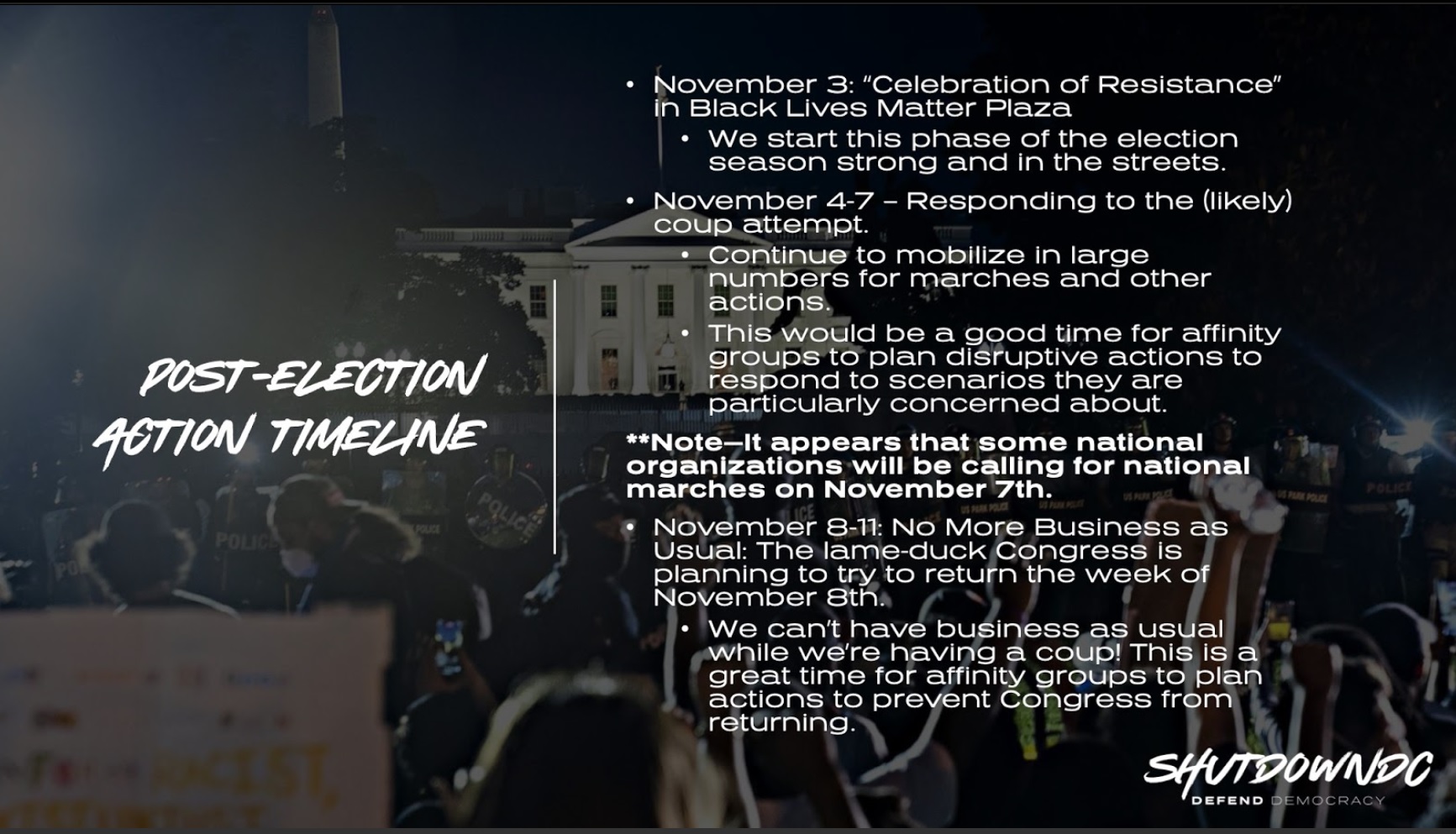



 Brandon Smith at Alt-Market writes



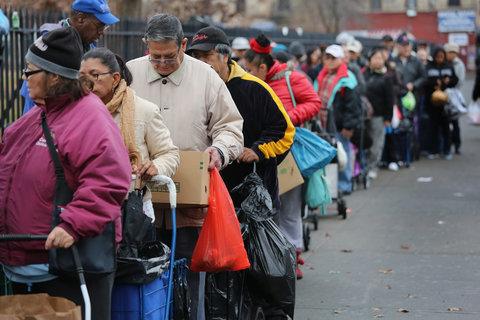


 Lower Valley Assembly