
This Offgrid article is dated back to the beginning of the invasion, but still has some useful things to think about when making your own plans. This article focuses on military threats. You can find many articles and videos that talk about why the USA is nearly invulnerable to invasion, but that just means that someday someone is going to say, “Hey, they’ll never expect it, so they won’t be ready.” Other more general preparedness related articles on the war follow below the excerpt.
Preparedness Lessons from the Invasion of Ukraine
Humans have a natural tendency to assume events we have experienced in the past are a good reflection of events we will experience in the future — psychologists call this normalcy bias. Unfortunately, this leads us to believe that events we haven’t experienced (yet) are unlikely to occur. It’s the driving force behind all the disaster survivors who look back and say, “I never thought it would happen to me!” Don’t let that be you.
Don’t assume the enemy is bluffing.
If warning signs begin to crop up prior to a potential disaster, your preparedness should ramp up proportionally. Hope for the best and plan for the worst.
[T]he highest-value targets should have been predictable to anyone with an adversarial mindset…However, some high-value targets are less obvious… What should this mean to you? If you live in a major city that is likely to be a significant target, your threat awareness should be elevated. You should prepare escape routes with waypoints and discuss them with your family — failure to do so could leave you stuck in gridlock, as many Ukrainians were. This is especially true if your city borders directly with a hostile nation or its allies (e.g. Belarus), or lies on a coastline that is readily-accessible. If your escape plan includes air travel, keep in mind that airports are typically a top priority in warfare, and you won’t want to be there when bombs start to fall.
Cyberattacks will be a significant factor
…We’re not suggesting you abandon technology and everyday conveniences, but you should certainly establish contingency plans in case cyberattacks affect the electrical grid, internet service providers, cell phone towers, or banking/point-of-sale systems. Consider learning how to use ham radio for emergency communications, set aside cash, buy a generator, stockpile important medications, and purchase paper maps of the surrounding area. If we’re ever set back to a world without reliable technology, you’ll be more prepared to cope with it.
Training
Ask yourself: how would you respond if you faced an invasion and had to join the fight, whether by mandatory draft or moral obligation? Would you be able to fall back on a solid foundation of training, not just in shooting skills but also small unit tactics, concealment, communication, navigation, medical, and sustainment skills? Would your spouse and children be prepared to contribute to the fight, or to escape to safety without you?
This brief post at The Prepared just talks about bugging out, and there are some decent posts in the comments as well.
What can we learn from the war in Ukraine?
One of the main lessons I’ve seen so far is the need to reassess my bug out plan. There was a 6 mile (10km) long traffic jam of refugees fleeing to Poland.
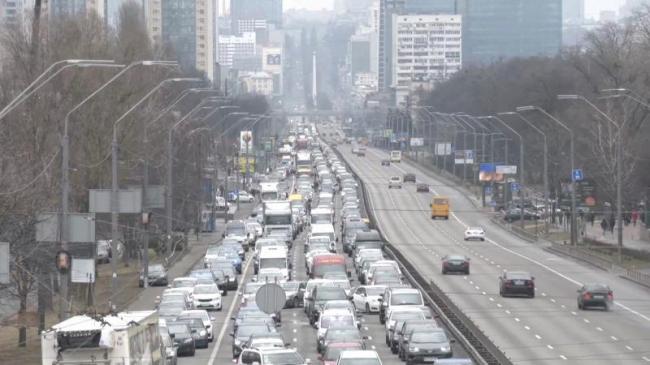
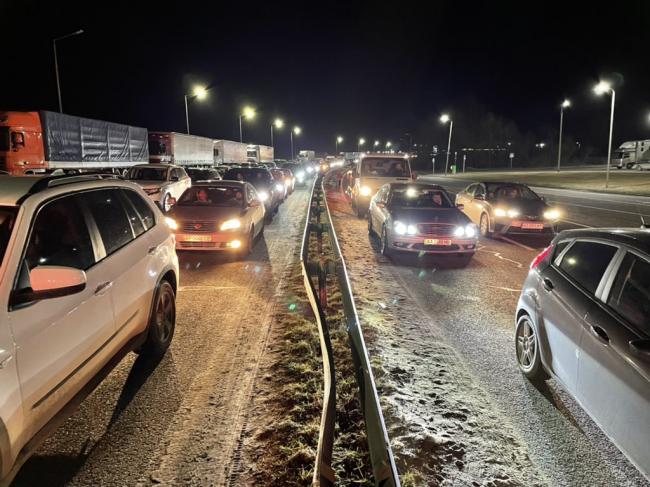
At what point do you abandon your vehicle and trek it on foot? Is going on foot any better?
Another thought I had was having enough water, food, and fuel on hand. You don’t want to run out of food during the middle of an invasion and try to go through a war zone to buy groceries.
My heart goes out to all those affected. Even to the Russian soldiers who may not like what they are doing but have to.
Let’s learn from what is going on and prepare for the future.
A comment on the post from sewknot:
Things I’ve learned from the news reports & interviews
1 have your documents ready – passport/visa/birth certificates
2 cash – have cash on hand so you don’t have to queue at the atm when you could be on the road
3 have your bag packed! Reports of people waking up at 3 am to missile strikes and deciding to pack THEN
4 your journey will take longer than you expect – make sure you have everything you need to make it to your destination and leave as soon as you can
5 mental fortitude – plan for the worst hope for the best
Some of the above lessons are summarized in an article at Survival Kompass titled 10 Things You Can Learn as a Prepper from the Ukraine Invasion.
- 1. Keep a stockpile of water and food for evacuation
- 2. Always have access to cash
- 3. Prepare for your medical care
- 4. Always have a full tank
- 5. Check the infrastructure around you
- 6. Do not stay longer than necessary
- 7. Prepare your family
- 8. Have your bug out bag ready
- 9. Learn survival skills
- 10. Always have a plan B and stay flexible
- Conclusion: Early preparation and flexible execution of plans give you an advantage and significantly increase your chances of survival!


 Daisy Luther at The Organic Prepper has a good article up on making sure that your vehicle is ready for emergency situations –
 and a smaller 10-gallon tote, with individual components in small containers within them.


 is not the Taj Mahal of tents. But it fits easily into a backpack and would be sufficient for day-to-day emergencies in warmer weather. In the winter, and anytime we are going further from home, we have a bigger sturdier tent that we put in the vehicle. This would be used in the event that we were stranded but for some reason, unable to use the vehicle for shelter. Generally speaking, your vehicle will provide better shelter and safety than a tent.

 Lower Valley Assembly