
 NC Scout of the Brushbeater blog will be holding his RTO course in Hamilton, MT (south of Missoula), on Sept. 8-9, 2018
 and again Sept. 15-16. There will also be an advanced class held on Sept. 13-14.
EDIT: The 15-16th class has been cancelled because of a lack of sign-ups.
Click here for registration information.
The Radio Telephone Operator (RTO) Course is designed to take the individual of any and every experience level and teach them the basics of effective small unit communications in a field environment. Students will learn what it takes to set up a plan and implement communications in an improvised setting be it anything from a retreat to a security patrol to regional communications networking groups. A heavy emphasis of the course is on improvisation and antenna building- each student will construct antennas from improvised materials which they keep. This is NOT a “ham radio” class. No equipment or previous experience is required; only a notebook and a good pair of shoes. It is the only course of its kind offered anywhere, in a friendly, laid back and respectful environment.
This class will teach students the basics of communications at the Team or Squad Level in the field. Topics of instruction include:
- Identifying Equipment Requirements
- Writing a Signals Operating Index
- PACE Planning for Communications
- Basic equipment capabilities
- Traffic handling
- Improvised antenna types, uses and construction
- Setting up and running an NVIS HF station
- Message Formats
- Setting up and communicating from a Hide site
Two day course will culminate in an field training event running a TOC station and Hide site in the field. Students will each build an antenna and demonstrate competency in team communications basics during the field exercise. Amateur Radio license qualification is helpful, but not required. This is NOT a ‘ham radio’ class but each student will come away with a basic understanding of a team’s communications needs in a tactical environment and how to best meet them under less-than-ideal circumstances. No equipment is required for this course; however, if students want to get field practice with their own gear, it is highly encouraged but done so at their own risk. Instruction is completely off-grid.
RTO Course: $300 per Student in advance or $350 at the door
The Advanced Course picks up where the RTO Basic Course leaves off, with training focused on:
- Advanced SOI/CEOI Planning
- Planning & Coordinating Transmitting Sites/Directional Transmitting
- Uses of Resistors and Constructing Directional Wire Antennas
- Data Bursts
- Advanced HF techniques
- Basic Signals Mapping and Communications Intelligence
Advanced RTO Course: $300 per Student in advance or $350 at the door
$50 deposit required for the in advance class prices by August 15th.
RELATED:


 In training we first establish a baseline and then create standards to meet them. If it’s small unit tactics, that begins with individual skills including quiet movement, observation, land navigation and marksmanship graduating to team formations and battle drills. If it’s communications, we first create competent operating skills then move into basic radio theory. With survival, it’s focusing on individual sustainment skills to keep you alive and successfully rescued. No matter what your fantasy is about ‘bugging out’ , the reality is you’re not going to last long in the wild without a prior skillset, a few basic items, and someone there to eventually recover you. If the world has become upside down and you find yourself in a real-deal survival situation, the first goal is rescue and everything you do between the time of the incident and getting rescued is geared towards keeping you alive.
 The cornerstone of any survivalist, prepper or primitive living-type kitchen is a healthy rack of cast iron. Once nearly extinct in the late 20th Century, cast iron is experiencing a rapid and very welcome resurgence amid people slowly but surely rejecting modernism in lieu of a simpler and more sustainable life. But re-learning the ways of yore comes with challenges. Cast Iron is not plug and play; it takes a bit of care and preparations in order to gain the best results and in the case of grinders, not damage the tools themselves.
 Cast Iron requires a decent amount of attention before being used, but once done properly, will last your lifetime and most likely that of your kids, probably longer. I’m not a fan of “non-stick” junk or tools that otherwise are meant to be used for a while then thrown away. Aside from being potentially dangerous, they typically don’t hold up long when used anywhere other than a home kitchen. To me, it’s a waste of resources and promotes materialism. Cast Iron in many places is considered a family heirloom- often times at least one generation old. Today’s households are having to often buy new as they’re rediscovering the value of Cast Iron cookware. Every family should have at a minimum one Large Pan, one Small Pan and a Dutch Oven. The Large Pan for general purpose frying, the Small for smaller meals or making cornbread, and the Dutch Oven for deep frying, cooking chicken, pot roasts, etc, or making huge pots of chili or stew in the winter.
 If finding one used, sometimes a great bargain can be found if not in a good condition, such as a rusty one seen here. The easiest way to clean them, as I did two very old belted kettles I inherited, is to first rough the rust up with course sand paper, then soak them in a cola and lime juice mix. The acidity of the liquid will remove the rust after a few days. Allow it to dry, then go through the seasoning process I detailed above. You’ll have a perfectly serviceable piece of cast iron made new once again to last a lifetime.
 With that said I’ll state up front that buying a bunch of stuff and putting it in a bag or box and then never using it does you no good. You have to use your gear, whatever it is. Everything I own is used hard and heavy- not abused, mind you, responsible people care for their equipment– but used. I know the ins and outs of what I own, and you can be darn sure that if I suggest it, I not only use it, but I can show you the results. So for the folks that buy a case of Baofengs on Alibaba and then never take them out of the box, you’re doing yourself a disservice. Whether you’re buying a $20 Baofeng, a $200 Yaesu, or something somewhere in between, use your stuff and if it fails, you’ll know its limits. The next thing I’ll say is I definitely don’t require anyone to ‘be a ham’ or have any prior knowledge before coming to class. But having people to talk to is the most important part of the learning process, and like land navigation, marksmanship, and basically anything else, its very much a perishable skill. There is a learning curve to communications, especially emergency and field expedient uses, so having stuff just sitting around ain’t doing much for anyone.
 Rugged Individualism doesn’t negate the need for others. I think of myself as a fairly well rounded individual. I can build anything from a lean-to shelter to a radio shack. I can keep a person alive from trauma long enough to get them to a higher tier of care. I can communicate around the world with basic equipment, I can make accurate shots with a 7.62×51 past 1k meters, lead a combat patrol, fix my diesel truck, brew my own beer, hunt any game out there, and can make it into the best smoked sausage you’d want to eat. But those skills at a basic level only serve me. What of my family? What of yours? I have to sleep sometime. Who watches over you when the body or mind shuts down?
 …[O]ne of the common questions I get is regarding the length of the reports when they’re sent. If interception is a concern, and it always is, how do we shorten this up or obscure it to the point of being useless to listen to? There’s a few answers to this question, including going high tech/more complicated/more expensive with equipment, more efficient antenna construction for directivity, and finally, creating a BREVMAT.
 Tactical BREVMATs are created and included in your Signals Operating Index (SOI), they are recycled each time the SOI changes (which is usually a set period of time, and for missions, mission-specific). This information can then be encoded into a
 I was in between deployments somewhere around a decade ago and…




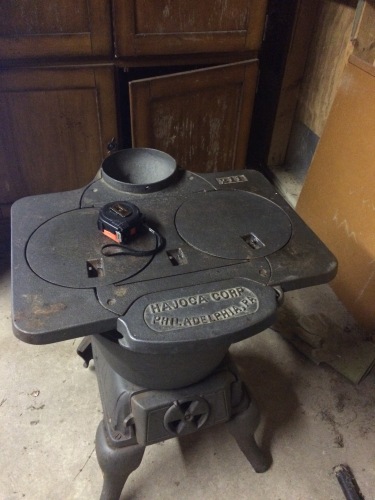 Get out there and do it, whatever it is. Stop making it a hobby and start making it a lifestyle. Take care of home and hearth along with your close ones, and don’t forget those close by. Even if you think they’re a lost cause, people will surprise you, with a lot more folks into this preper thing than you realize- with a lot of folks not calling it that. You can learn from them, and they you. And with every hurricane, earthquake or human disaster, more good people wake up. Those late to the game tend to prep even harder, because they’ve got even stronger motivation. Go drop a deer or two this fall, learn how to skin game, make sausage and fill a freezer without spending a bunch of money. Teach your kids the joy of eating wild. And while you’re at it, start figuring out ways to work independent of a grid- find out how folks did stuff back in the days before consistent power.
 Lower Valley Assembly