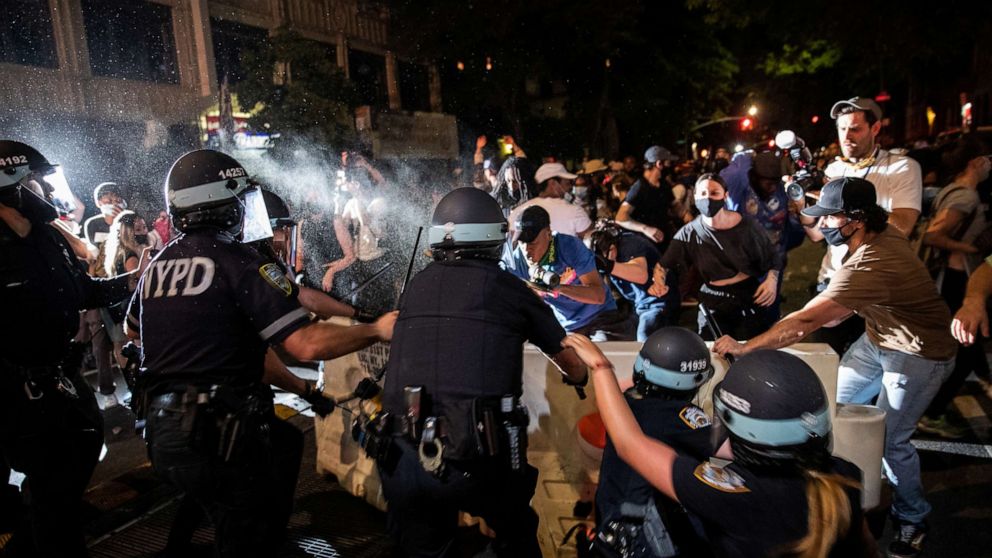
Forward Observer: Where Do We Go from Here? Riot Edition

Intelligence analyst Sam Culper at Forward Observer discusses riots and low intensity conflict in Where to we go from here?

Are these protests and riots the beginning of something larger in our country’s low intensity conflict?  I’m going to try to answer that question here in a few points…

First, let’s start with a simple fact: These riots are what we consider “low intensity conflict,” which exists below the threshold of conventional war (tanks and bombers) but above routine, peaceful competition. This is a gray zone between the black and white of war where we see both violent and nonviolent activity that fails to meet the definition of declared war.

The United States is in a low intensity conflict and has been since at least 2016, if not 2008.

Second, these riots are a continuation of a broader conflict. While many were rather pure in their desire to protest the death of George Floyd, there were other elements using the opportunity to take other action.

Those who committed violence over the past several days can be separated into four categories.

1. Opportunistic actors who sought personal gain.

2. Social conflict actors who expressed their anger over the death of George Floyd and used violence as a means to coerce the political class into making desired changes.

3. Class conflict actors who committed acts of violence in their class struggle against the capitalist system. As one professor recently put it, “[L]ooting is an expression of power.”

4. And, yes, I’ve seen plenty of criticism over some of law enforcement’s heavy handed tactics. This violence should not go unnoticed, because police forces are a part of this conflict, too.

(I’ve also seen some claims that “white supremacists” were in some way responsible for the violent rioting, which comes as no surprise when one considers the outlets pushing that narrative. Pressed on that claim, Minnesota Attorney General Keith Ellison said over the weekend that “nobody really knows” the political motivations behind the violence. It didn’t stop him from making that claim prior to the interview. I’ll wager a guess: those responsible for the violence weren’t doing it on behalf of white supremacy.)

Third, it’s important to note the development of soft power. Some on the Right minimize the capability of the Far Left because the Far Left is largely unarmed. This is a mistake.

Aside from hard power — the ability to project force — there’s soft power, which exists on the moral and information plane of conflict.

Over the weekend, we saw much of mainstream media excuse the behavior of the rioters and deflect responsibility for what’s happening.

CNN’s Don Lemon complained on his show that America’s power class weren’t coming to the defense of the protestors and rioters.

“Why aren’t they helping these young people? These young people are out there standing on a platform at the edge of an abyss by themselves… Get on television or do something and help these young people instead of sitting in your mansions and doing nothing. And have some moral courage and stop worrying about your reputation and your brand,” Lemon begged.

That’s soft power. Money and funding, influence, moral support and framing the moral authority — these are the elements that enable hard power. And Don Lemon pleaded with celebrities and the donor class to help develop this soft power.

Finally — let’s look at where we could go from here because the worst might still be ahead for at least two reasons.

First, over the past few days, I’ve seen numerous examples of protestors and rioters saying they want to go to the suburbs next.

With the exception of the one video that was linked to the Drudge Report, the evidence has been on social media, with organizers and influencers putting out these suggestions to those who want to continue the protest outside of urban areas.

I read most of these comments with some skepticism, but I’m completely open to the possibility that protests and violence do migrate in some instances. That would be a mistake, in my opinion.

Today (Sunday), Attorney General Bill Barr published a press release in which he warned that the Department of Justice and the states will “reestablish law and order” through a large scale presence of police and the National Guard.

Barr also threatened that federal law enforcement is out for “violent radical agitators,” and labeled the antifascists as engaging in acts of domestic terrorism. The Department of Justice is working with all 56 regional Joint Terrorism Task Forces (JTTF) to facilitate this action.

The risk in either of these cases is that violence is escalated.

For one, some suburbs might make easy targets in the beginning, but just as we saw militias forming to protect businesses, the suburbs are likely to become harder targets for would-be rioters and looters. If it develops, this scenario obviously brings a likelihood of violence.

And two, law enforcement actions, to include arrests or raids on the homes of “violent radical agitators,” are going to aid the argument that the United States has descended into fascism. That could spark more protests and more unrest.

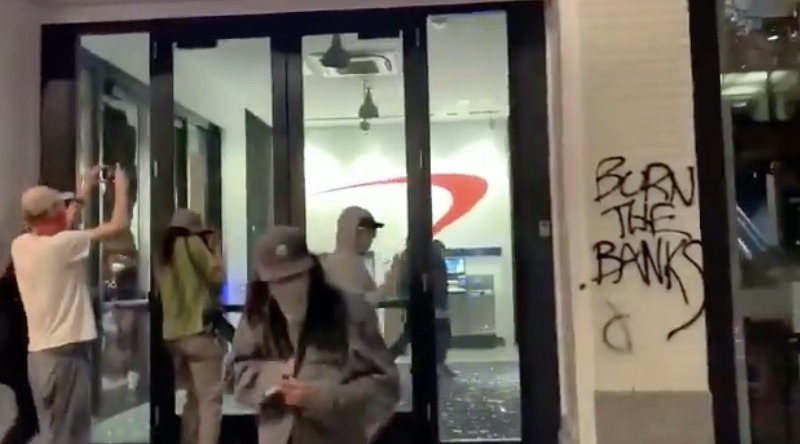
James Kunstler: That Change You Requested…?

Author James Howard Kunstler gives his opinion on recent events in That Change You Requested…?

All the previous incidents of white cops killing blacks were just too ambiguous to seal the deal. Michael Brown in Ferguson, Missouri (a murky business); Tamir Rice in Cleveland (waving the BB gun that looked like a .45 automatic); Trayvon Martin (his killer George Zimmerman was not a cop and was not “white”); Eric Garner, Staten Island (black policewoman sergeant on the scene didn’t stop it); Philando Castile, Minneapolis (the cop was Hispanic and the vic had a gun). Even the recent February killing of jogger Ahmaud Arbery in Brunswick, Georgia, had some sketchy elements (did Arbery try to seize the shotgun?) — YouTube has scrubbed the video (?) — and then it took months for the two white suspects (not cops) to be arrested.

The George Floyd killing had none of those weaknesses. Plus, the video presented a pretty much universal image of oppression: a man with his knee on another man’s neck. Didn’t that say it all?  You didn’t need a Bob Dylan song to explain it. The Minneapolis police dithered for four days before charging policeman Derek Chauvin with Murder 3 (unpremeditated, but with reckless disregard for human life). The three other cops on the scene who stupidly stood by doing nothing have yet to be charged. Cut it, print it, and cue the mobs.

The nation was already reeling from the weird twelve-week Covid-19 lockdown of everyday life and the economic havoc it brought to careers, businesses, and incomes. In Minnesota, the stay-at-home order was just lifted on May 17, but bars and restaurants were still closed until June. Memorial Day, May 25, was one of the first really balmy days of mid-spring, 78 degrees. People were out-and-about, perhaps even feeling frisky after weeks of dreary seclusion. So, once the video of George Floyd’s death got out, the script was set: take it to the streets!

Few Americans were unsympathetic to the protest marches that followed. Remorse, censure, and tears flowed from every official portal, from the mouth and eyes of every political figure in the land. The tableau of Officer Chauvin’s knee on Mr. Floyd’s neck was readymade for statuary. Indeed, there are probably dozens of statues extant in the world of just such a scene expressing one people’s oppression over another. And yet the public sentiments early-on after the George Floyd killing had a stale, ceremonial flavor: The people demand change! End systemic racism! No justice, no peace! How many times have we seen this movie?

What is changing — and suddenly — is that now it’s not just black people who struggle to thrive in the USA, but everybody else of any ethnic group who is not a hedge fund veep, an employee of BlackRock Financial, or a K-Street lobbyist — and even those privileged characters may find themselves in reduced circumstances before long. The prospects of young adults look grimmest of all. They face an economy so disordered that hardly anyone can find something to do that pays enough to support the basics of life, on top of being swindled by the false promises of higher education and the money-lending racket that animates it.

So, it’s not surprising that, when night falls, the demons come out. Things get smashed up and burned down. And all that after being cooped up for weeks on end in the name of an illness that mostly kills people in nursing homes. Ugly as the ANTIFA movement is, it’s exactly what you get when young people realize their future has been stolen from them. Or, more literally, when they are idle and broke and see fabulous wealth all around them in the banks’ glass skyscrapers, and the car showrooms, and the pageants of celebrity fame and fortune on the boob tube. They are extras in a new movie called The Fourth Turning Meets the Long Emergency but they may not know it.

Hungry for change? You won’t have to wait long. This society may be unrecognizable in a few months. For one thing, there’s a good chance that the current violence in the streets won’t blow over as it has before. There hasn’t been such sudden, massive unemployment before, not even in the Great Depression — and we’re not even the same country that went through that rough episode. Just about every arrangement in contemporary life is on-the-rocks one way or another. Big business, small business, show business… it’s all cratering. The great big secret behind all that is not that capitalism failed; it’s that the capital in capitalism isn’t really there anymore, at least not in the amounts that mere appearances like stock valuations suggest. We squandered it, and now our institutions are straining mightily to pretend that “printing” money is the same as capital. (It’s just more debt.) Note, the stock markets are up this morning at the open! Go figure….

Change? We’re getting it good and hard, and not at a rate we were prepared for. It’s hugely disorienting. It produces friction, heat, and light, which easily becomes violence. There’s, for sure, plenty we can do to make new arrangements for American life without becoming communists or Nazis, but a lot of activities have to fail before we see how that could work. The overburden of obsolete complexity is crushing us, like Derek Chauvin’s knee on George Floyd’s neck. They were both, in their way, common men, caught in the maelstrom of metaphor. That proverbial long, hot summer we’ve heard about for so long…? It’s here.

Liberty Blitzkrieg: We’re in the Thick of it Now

Michael Krieger of Liberty Blitzkrieg writes about recent rioting and government tyranny in We’re in the Thick of It Now – What Happens Next?

It’s with an extremely heavy heart that I sit down to write today’s post. Although widespread civil unrest was easy to predict, it doesn’t make the situation any less sad and dangerous. We’re in the thick of it now, and how we respond will likely determine the direction of the country for decades to come.

If the combination of peaceful protesting, looting and violence witnessed across American cities over the past few days completely caught you off guard, you’re likely to come to the worst possible conclusion about what to do next. The knee-jerk response I’m already seeing from many is to crush the dissent by all means necessary, but that’s exactly how you give the imperial state and oligarchy more power. Power it will never relinquish.

The pressure cooker situation that erupted over the weekend has been building for five decades, but really accelerated over the past twenty years. After every crisis of the 21st century there’s been this “do whatever it takes mentality,” which resulted in more wealth and power for the national security state and oligarchy, and less resources, opportunities and civil liberties for the many. If anything, it’s surprising it took so long to get here, partly a testament to how skilled a salesman for the power structure Obama was.

The covid-19 pandemic, related societal lockdown and another round of in your face economic looting by Congress and the Federal Reserve merely served as an accelerant, and the only thing missing was some sort of catalyst combined with warmer weather. Now that the eruption has occurred, I hope cooler heads can prevail on all sides.

On the one hand, you can’t pillage the public so blatantly and consistently for decades while telling them voting will change things and not expect violence once people realize it doesn’t. On the other hand, street violence plays perfectly into the hands of those who would take the current moment and use it to advocate for a further loss of civil liberties, more internal militarization, and the emergence of an overt domestic police state that’s been itching to fully manifest since 9/11.

It’s my view we need to take the current moment and admit the unrest is a symptom of a deeply entrenched and corrupt bipartisan imperial oligarchy that cares only about its own wealth and power. If people of goodwill across the ideological spectrum don’t take a step back and point out who the real looters are, nothing’s going to improve and we’ll put another bandaid on a systemic cancer as we continue our longstanding march toward less freedom and more authoritarianism.

While we aren’t going to solve everything at once, something should be done as soon as possible to at least partially address current anger and frustration.

Clearly there’s a major problem when it comes to policing in America, particularly in poor inner-city communities. Let’s start by ending qualified immunity.

Qualified immunity, created by the Supreme Court in the 1970s, shields police and other government officials from liability in civil rights lawsuits when the illegality of their actions was not “clearly established” at the time of the offense.

Attorneys representing the families of Floyd, Ahmaud Arbery, and Breonna Taylor called for policing reforms—including rolling back qualified immunity—at a press conference today…

While it may seem like George Floyd’s right to not be choked to death by a police officer would be rather obvious, the fuzzy phrase “clearly established” has evolved over time to become a pedantic and unforgiving standard. Plaintiffs are often required to go fishing for cases that match their exact circumstances, lest their lawsuit get tossed. Last year, a 9th Circuit Court of Appeals panel granted qualified immunity to an officer who, without warning, shot a 15-year-old holding an airsoft gun. 

Ending qualified immunity may seem like a small thing, but it’s an important step toward adding some accountability to those in positions of power. As it stands, power at all levels in our society largely operates above the law. This applies to politicians, national security state operatives, CEOs, Wall Street, the police, and of course, Jeffrey Epstein. Those in positions to do the most damage to society are simultaneously most immune from the consequences of their actions. This is a core systemic problem in our country, so let’s take a small step and start with qualified immunity for police officers while the opportunity exists. From there we can turn our attention to the bigger fish.

I understand my message will likely fall on deaf ears, and I’m used to things not going the way I want them to. I have no idea where society will go from here, but I know we’re at a key inflection point in our nation’s history. We can begin to turn this thing around, or we can go totally off the deep end. Try to be as creative, constructive and conscious as possible during these trying times.

See also Michael Snyder’s The Horrifying Civil Unrest We Have Been Warning You About Is Here, And America Is Literally Coming Apart At The Seams at TMIN.

For a very long time, many of us have been loudly warning the American people that this was coming.  The mainstream media and many of our national leaders have been fanning the flames of hatred, anger, frustration and division on a daily basis for many years, and it was just a matter of time before we witnessed an eruption of violence of this magnitude.  Over the last week, we have seen protests in at least 145 different U.S. cities, and reports of rioting, looting and violence are coming in so fast that it is literally impossible to keep up with them all.  So far, at least 40 U.S. cities have imposed curfews, the National Guard has been activated in at least 15 states, and at least 4,100 people have been arrested.  On Sunday night, the violence in Washington D.C. became so alarming that President Trump was actually rushed to a secret bunker under the White House

The Organic Prepper: How to Survive Riots and Civil Unrest

Photo courtesy Reuters

Daisy Luther at The Organic prepper writes about How to Survive Riots and Civil Unrest.

As the world seems to be on fire in countries across the planet, the threat of civil unrest and riots certainly feels like it’s increasing. People are responding with rage to perceived injustices, and whether that rage is warranted or not isn’t the point of this article.

Often when I write about surviving events like mass shootings or riots, people scoff and say, “That was a false flag perpetrated by government operatives” or “Those people got paid by [insert evil billionaire here.]” The simple fact you must understand is that it doesn’t matter who started it, who paid for it, who instigated it, or who is taking part in it. If you find your city or town under siege by irate protesters, none of those things matter at the moment. These are things to be sorted out later.

What matters is how to survive and how to keep your loved ones safe. What we witnessed via social media of the riots in Chile should be enough to make anyone want to be prepared.

The idea of an angry mob appearing in your neighborhood is a frightening one but understanding more about the patterns of civil unrest can make it feel a bit more manageable.

It happens fast

It’s extremely important to understand how speedily riots can occur. In his newsletter, Simon Black of Sovereign Man wrote of his ties to Chile. He shared an eyewitness account.

…this past Friday was a particularly beautiful day. By lunchtime, people were out in the parks enjoying the weather. It was calm, peaceful, and joyful.

Within a matter of hours the city had turned into a war zone. Hours.

One of my team members told me on the phone yesterday, “If you had said on Friday afternoon that Santiago would be in chaos by nightfall, I would have laughed… And then it happened.” (source)

Never underestimate the power, rage, and motivation of a mob. Never think it can’t happen where you are.

There’s a distinct pattern to civil unrest.

Civil unrest can be predicted to some degree. Jose shared some of the warning signs he has observed and they all share their part in this pattern.

Here’s how a protest turns into a riot:

  • A perceived outrage occurs.
  • Good people react and protest the outrage.
  • Sometimes there are not-so-good people in the group, those who want to see violence.
  • Those perpetrating the outrage try to quell the protest because they don’t think that the outrage was actually outrageous.
  • Others react to the quelling and join the protest.
  • A mob mentality erupts. Thugs say, “Hey, it’s a free for all. I’m gonna get some Doritos and while I’m at it, beat the crap out of some folks for fun.”
  • All hell breaks loose.
  • The police and military get called in.
  • The city burns, and neighborhoods get destroyed, and no one in the area is safe.
  • Cops act preemptively, out of fear, and for a time, there is no rule of law.
  • If you happen to be stuck there, know this: you’re completely on your own.

Tess Pennington wrote about societal breakdowns in more detail – read her excellent article for more information on these predictable scenarios.

The mob mentality and Freud

Some people are just waiting for the opportunity to behave in this fashion. They’d love to act like that every single day, but they don’t want to spend the rest of their lives in jail. But when a verdict gets rolled out, when a storm takes out the power, when a disaster strikes, they delight in the chance to rob, pillage, loot, and burn.  Who can forget the day before Superstorm Sandy hit the East Coast, when thugs were coordinating looting rampages via Twitter?

I remember learning about “sublimation” in a high school psychology class.

Sublimation is a defense mechanism that allows us to act out unacceptable impulses by converting these behaviors into a more acceptable form. For example, a person experiencing extreme anger might take up kickboxing as a means of venting frustration. Freud believed that sublimation was a sign of maturity that allows people to function normally in socially acceptable ways. (source)

If you believe Freud’s theory, then it’s easy to see that many people look for an excuse to revert to their true natures.  In a situation where “everyone” is doing something, they are able to cast off the normal control of their impulses without much fear of reprisal. The number of looters and thugs far outstrip the number of arrests in most situations, so there’s a very good chance that someone swept up in that mentality can go burn somebody else’s home or business and completely get away with it.

In his course, One Year in Hell, Selco recounts how quickly and shockingly the SHTF in his Bosnian city. He explains that any time a group of people becomes violent, it’s possible for it to turn into a longer-term event than just a few rough days.

Never think “it can’t happen here.”

Remember in 2015 when Baltimore, Maryland was a war zone? It may have given you a sense of deja vu, flashing back to the fall when Ferguson, Missouri was under siege. We’ve seen riots in Sacramento, California; Milwaukee, Wisconsin (which the media lied about); Charlottesville, Virginia; Portland, Oregon; and all over the nation after the presidential election in 2016.

And it didn’t slow down after the election. Portland has been the site of numerous protests that were really just all-out street fights and the police were ordered to stand down.

Some of the following information appears in my book, Be Ready for Anything, which has an entire chapter dedicated to surviving civil unrest.

How to survive a riot or unrest event

When you understand the patterns discussed above, you can make your plan with a bit more authority. But remember that no plan is engraved in stone in the survival world. You’ve got to be ready to pivot to Plan B in the blink of an eye if information arises that makes Plan A no longer the safest.

This article is about the safest ways to survive civil unrest. It’s not about making a stand or teaching those punks a lesson.  There’s always someone who chimes in with a snide remark about how cowardly it is to lockdown with your family in order to stay safe.

Blah, blah, blah. If you want to go get involved in a battle to make a political point, that’s certainly your prerogative. If you want to fight the police enforcing martial law, it’s your call.

However, if your priority is your own safety and the safety of your family, the goal should be to avoid engaging altogether. This article is about surviving, not about How Things Should Be.

Get everyone together

If your area is beginning to devolve, the first thing you’re going to want to do is to get everyone in the family home or to a safer secondary location.)

In a perfect world, we’d all be home, watching the chaos erupt on TV from the safety of our living rooms.  The reality is, family members are likely to be at work or school when things start to break down. You need to have a plan laid out in advance to get everyone together and you need to be flexible enough to know when to move on to Plan B.

  • Devise an efficient route for picking up the kids from school.  Be sure that anyone who might be picking up the children already has permission to do so in the school office.
  • Find multiple routes home. Map out alternative backroad ways to get home as well as directions if you must go home on foot.
  • Find places to lay low along the way.  If you work or go to school a substantial distance from your home, figure out some places to lay low now, before a crisis situation.  Sometimes staying out of sight is the best way to stay safe.
  • Avoid groups of people – it doesn’t take much to turn a peaceful protest into a riot.
  • Keep in mind that in many civil disorder situations the authorities are to be avoided every bit as diligently as the angry mobs of looters. The police won’t stop to ask you questions nicely in a tense situation. You’ll be treated as a threat.

Know when to abandon the plan to get home. Sometimes, you just can’t get there. Going through a war zone is not worth it. Find a different place to shelter. Pay attention to your instincts…(continues)

Organic Prepper: What Preppers Can Learn from Chile Riots

This article at the Organic Prepper talks about some lessons learned surviving the ongoing riots in Chile. Civil unrest has been spreading around South America. Will it continue to spread? Could we see these levels of unrest in the USA?

…Much worst was once the tear gas started to get into our patio. Our house is entirely open. Even the dogs were having a hard time. Vinegar spraying in the face was quickly started.

Get more information on surviving civil unrest and riots.

It´s a good moment to remind you all: adding a good gas mask (one for each family member) and after bought, everyone must learn how to wear it in a hurry, and do it properly. This can make an important difference.  Small children are going to be the most severely affected. Seen it happening in Caracas. Guards attacked a hospital. Jeez. If you´re hunkering down adults must take turns to monitor the surroundings (AND. DON´T. OPEN. THE. CURTAINS).

A face covered with a gas mask sticking out an apartment window is very likely to be targeted. So don´t do that. “Regular” “Normal” people do not have gas masks. But we know this is a good tool. Perhaps some drops of Valerian herb essence in a cup of water will help with those nerves, something I strongly recommend. Just put some music, and grab a book while installing yourself in an observation post that allows you to check to see what´s happening outside. If you have (as I indeed have recommended in some previous articles) to have an array of 2 or 3 remote cameras to see what´s happening outside without sticking the nose outside of a window, this is the moment to use them. Quietly and unnoticed. This will work as a means to calm down yours, too.

Don´t leave your place unless it´s extremely necessary.

I´m sure someone thinking they´re smart cookie will call me Mr. Obvious and other stupidities. But try to dialogue with your (non-prepper) wife once the food is gone and her rattle is shaking as if there´s no tomorrow. Trust me, the streets are not going to be safer once this rattling starts. Jokes apart, not because you don´t see anything from your window doesn´t mean something is NOT coming your way.

If you feel the need to make it to the supermarket 4 miles away with the best prices, maybe you can get there. Maybe you could even buy your stuff if the place hasn´t been looted. And maybe, too, a turmoil gets between you and your home and can´t be surrounded. You could get yourself into trouble just because. No need to do it. Keep your place supplied, be creative and use your brains. What I mean is, if the water, power or phone gets cut off, it´s stupid to leave the place believing that you´re going to make it to their offices to make a claim. I know there is plenty of people that would do this. So don´t call me Cap. Obvious. You´ll be underestimating the endless human potential for dumbness.

OK now, let´s elaborate a little bit. Suppose you are in your apartment in downtown Chile. On the second floor. Going higher in one of the countries of the Fire Belt is not wise. Anyway, tear gas is starting to feel. You pull out your gas masks, or even your swimming glasses and a cloth soaked in vinegar over your mouth. The 3 supermarkets nearby have been looted. Not just looted, they have been destroyed. Cashier machines, transport belts, even the shelves island have been demolished. Some reports have told that even factories have been burned. Senseless, irrational violence. And you don´t have where to buy fresh vegetables, nor fruit. You have still water and power.

But it´s here where our preppings are going to shine and your kids will learn that it pays off to play squirrel, at the end of the day.

Your horizontal freezer is filled up with supplies. Your pantry is stocked from floor to roof with canned vegetables, beans, pasta and whatnot, enough for six months. You have toilet paper to wipe off an entire primary school battalion for one year (if you have children under 10 you know how they go through toilet paper FAST). Toothpaste, shampoo, and soap? No problem. That couple of cases of beer is still safe under your bed.

Depending on your level of preparedness, defined according to your real needs, you could leave once you find it´s safe and make it to your bug out location.

One of my friends informs me that in Chile his job was not affected. He could attend to his office, just walking carefully…and a cab every now and then. The train is not functional. There are massive demonstrations. When these start, people just leave the office and go home. Usually, the turmoil starts when these people reach a certain point…

Click here to read the entire story at the Organic Prepper.