Forward Observer: Why the Battlefield Is Everywhere

Intelligence analyst Sam Culper of Forward Observer talks about China and cyber warfare in Why the Battlefield Is Everywhere.

Good morning. It’s Sam Culper with this week’s Forward Observer Dispatch.

Last week, I wrote about the reasons why conflict is virtually certain to escalate with China, leading to either a shooting war or a financial, monetary, and cyber conflict, which could lead to a shooting war. The history lesson is that monetary wars lead to military wars.

Either way, this is going to be a messy 10-20 years.

I’m picking my way through another chapter of Unrestricted Warfare, the 1999 essay/manual written by two People’s Liberation Army officers.

I want to share a key takeaway from the chapter:

The authors discuss how technology is changing the nature of warfare, from a “line” to an “area” and eventually to the entire world. Here’s the money quote:

“Just think, if it’s even possible to start a war in a computer room or a stock exchange that will send an enemy country to its doom, then is there [a] non-battlespace anywhere?”

“Where is the battlefield?” the authors ask. “The answer would be: Everywhere.”

The authors go on to write that, in light of this, the future protagonist of war is not the professional soldier, but the hacker.

This is exactly the kind of mindset and activity we’re seeing today, re: Chinese hacking campaigns.

At some point in the next four years, perhaps coinciding with the 2024 election, the U.S. could be forced to decide and act on going to war with China over Taiwan. I’m not advocating for or against it, but simply pointing out that a decision will be made.

This is one reason why Trump tried to pull U.S. Forces from the ends of the Earth.

Chinese military leaders privately say they’re within two years of being able to invade Taiwan.

The commander of U.S. Indo-Pacific Command is requesting missiles be deployed to Taiwan, Japan, and the Philippines to counteract what he describes as a shifting balance of military power that has become “more unfavorable” for the United States.

I want to encourage you, if haven’t already, to consider how prepared you are for systems disruption. If we go to war with China, we’re going to feel the effects here at home: disruptions to power, internet, communications, transportation, the stock market and financial services, etc.

According to Unrestricted Warfare, the key to beating the United States is to make them prioritize self-preservation ahead of geopolitical goals. Prepare accordingly.

Always Out Front,

Samuel Culper

See also, Yahoo!’s ‘We’re going to lose fast’: U.S. Air Force held a war game that started with a Chinese biological attack

Financial Times Admiral warns US military losing its edge in Indo-Pacific

Colion Noir: S.736 Feinstein Introduces Bill To Ban All Commonly Owned AR-15s & Magazines Over 10 Rounds

We posted on this a few days ago, before the bill had been given a number. Here’s Colion Noir talking about S. 736, the Assault Weapons Ban of 2021, or officially “A bill to regulate assault weapons, to ensure that the right to keep and bear arms is not unlimited, and for other purposes.” They just want to save you from your rights; that’s all.

The Organic Prepper: How Preppers Have Adapted to These Uncertain Times

Daisy Luther at The Organic Prepper talks about Here’s How 30 Preppers Have Adapted and What They Foresee Happening Next. With various food and supply shortages during the pandemic and extended lockdowns, it is harder to stock up on essential items and individual financial situations may have worsened.

There’s a lot more crazy and a lot less money than usual, and as I’ve written before, the face of prepping has changed. It’s a lot more difficult (and expensive) to go out and stockpile as we did a few years ago, and the event we’ve faced has been a slow-burning SHTF event that has slowly and insidiously taken away financial security from hundreds of thousands of Americans.

I wondered how others have changed the way they prep to adapt to these times so I asked the folks in our Me-We group if they’ve changed how they prep and if so, what changes they’ve made. If you are interested in joining the group, go here, answer four questions, and be sure to change your profile picture from the Me-We basic images. We don’t care what you change them too, we’re just trying to avoid “bot” traffic from prowling through our group.

Here’s how readers have changed the way they prep.

With some of the comments, I’ve added a comment or a link in italics for more information.

Eileen:

I am working on doing even more with even less. I was laid off at the beginning of Covid. Hubby’s paycheck is down a bit. We have been watching the cost of regularly used items skyrocket, yet again. Teaching myself to grow more long term food items this year. At this point, Daisy, just not giving up feels like prepping, even if it’s just to get up tomorrow and try again.

Here’s an article on how to keep going when things feel hopeless.  ~ D

Lynn:

We are getting ready to move. I am using my food preps to see what we really need and what has been hard to use up. Mostly pertaining to food and household essentials. Saving the money to buy fresh preps after the move. We moved a year ago and I had a huge stockpile that had to be moved twice in two months. I think it is better to use it up than move it and then replace it with fresh food and water.

This is a great way to rotate your stock and always have fresher products available. Just pay attention to the things that are in shortage or difficult to acquire. You may not want to go through that supply just yet. ~ D

Jeff:

I have been building up at least a year’s supply of essential items like laundry detergent, shampoo, hand soap, toothpaste, etc. I will be using the stimulus check to add to my freeze-dried food inventory (mostly protein) since I have 1k lbs of dry food stored away. I don’t know if hyperinflation, war, or another pandemic may hit but if it does the goal is to be able to go at least a year without leaving the house.

This is a fantastic goal!

Tami:

After the Texas snowstorm, I’m prepping mainly for life without electricity. I’ve lived off the grid before but had stopped so I’m going back to it. I also realized my need for more stored water .

Here’s an article about preparing for longer-term power outages. It’s a great place to start if you’re new to prepping or if you simply need to make sure you have the things you need. ~ D

Christina:

Prepping mainly for economic upheaval. We kicked up food storage (have a working pantry) January 2020, but it wasn’t an issue to grocery shop in my area, so I slacked off a bit. August of 2020, we put together 6 months of food (again a working pantry I use and replenish), paying off debts, saving money, buying silver, ammo, guns, etc. Anything that will aid us as food and fuel prices goes up or our income goes down. So far, our income has increased since last year, but you never know. I’ll add my pantry includes HH / personal items too.

Stocking up on things other than food is really important. Here’s a list of non-food stockpile items that may inspire you to add to your own supplies. ~ D

Vicki:

We are prepping for civil unrest and skyrocketing inflation. I’ve been watching the groceries I normally buy going up a lot. We are planning to grow more veggies and put in some more fruit trees. We are also making sure we have extras of the tools we use, and enough supplies to fix things(tools, machinery, plumbing, electrical, etc.) that might break. Lumber has also gone up a huge amount, so we are buying extra of that too.

Having spare parts for tools and essential equipment is a vital and often overlooked prep. ~ D

Diane: Everything I can think of from food to security.

Keeping your preps balanced and not focusing too specifically on just one aspect is advised. Toby talks about the vital balance in this article. ~ D

Max:

Building out networks and relationships. Human terrain not “stuff”.

Here’s advice on building community even during a pandemic and be sure to check out Selco’s on-demand webinar about community building. ~ D

Susan:

I think hyperinflation and the possible dollar collapse is more possible now than ever. I am adding canned and dried food stocks to my preps especially items that are predicted to become exorbitantly expensive like corn and coffee. I am also eagerly watching my garden waiting for it to thaw out. Most of the snow and ice is gone except in the woods.

Here are some things you can do right now to get ready for garden season and here’s some advice on how to start planning your garden. ~ D

Sheri:

I’m turning more of my yard into vegetable/herb gardens and will preserve most of the produce. Adding to non-perishables when I see a good sale. Learning basic survival and self-sufficiency skills. Moving toward a simpler lifestyle, so living without modern conveniences will be less of a shock.

This is precisely why my preps are low-tech. ~ D

Stacy:

Survived Texas without blaming the governor or president for leaving me in the cold. We need more stored water. Had enough but saw that I needed more for cleaning. Need larger pots. Fed 7 people easy as my house was only one with gas cooktop. Need cookware to feed 20…and preps to make my own soup kitchen. Need back up potty! Do I have 100 candles? More lamp oil. The little tealight under flowerpot did help to make room cozier. Store for this. A way to wash clothes. A way to take warm shower and wash hair. Prepare a menu, recipes, and storage for meals on the stove top. Prep to share with family. (I live on 20 member family compound.) A way to charge phone. Size c batteries to listen to CDs….more CDs. Hootch. OTC

Awesome learning experience. I can definitely help with instructions for this off-grid kitty litter potty for humans. ~ D

Ezra:

We are working on paying off debts (Dave Ramsey) and materials for life without electricity. We lost power for 4 days during the winter storm here in Texas

Here are a couple of articles you may find helpful regarding debt (one is directly from Dave’s strategies) and here’s an ebook about dealing with power outages. ~ D

Lynn:

We are focusing on our garden this year. Our goal is to be as self-sufficient as possible in regard to produce. I want to save seeds from the garden for the future. We aren’t growing grains, wheat, and oats, though. That is a future project.

Here’s our favorite source for seeds – you can also get a free garden planner at that link and it is a small, family-run business. ~ D

Rob:

The money hasn’t changed for me in the Great White North. I’ve realized, though, that prepping for an event like an EMP is trying to play apocalypse lottery; better to consider the consequences of whatever it is you worry about and prepare for those. It stops you from making assumptions. (Makes an ass of U and umptions). I.e. instead of prepping for an EMP, I’m prepping for a collapse of communication and transportation of goods like food, no matter the cause. I’m expanding my EMP-proof storage still but I’m more prepared to handle, say, a food shortage whereas before my food plans only involved getting out of the city and joining a full farm.

I think there’s a lot of wisdom to what you said there. A lot of folks hyperfocus on just one thing when in fact most disasters are an entire series of bad things. Some useful links might be this one about making a Faraday cage, this one about a communications collapse, and this one about the strain on our transportation system for goods.

Bestsmall country:

Hi Daisy, I’ve been watching everything since early 2018, and the most striking thing is the correlation between Q and the Bible!! I did most of my prepping back then. Long-life food, seeds (I learned how to grow veg). All done under the radar, especially Crypto and PMs. Skills will be the REAL asset. I’m hoping a local viewer of my channel will ‘kidnap’ me because the idiots that wouldn’t listen will be banging on my door

OpSec is more important than ever! Here’s an article that might help others who are thinking like you about doing things under the radar. ~ D

Kamay:

Not much change, if any. Been prepping for the collapse of society, food shortages, and the possibility of a grid failure. We try to do all farming, gardening, preservations without the use of electricity and fancy gadgets. We recycle, upcycle, make do and live outside the box.

Simplicity is key! I like your style :). ~ D

Letia:

I need to get ready for a garden! Strawberries will come back, and I’ll start canning again. I need to check my jars. I have some cases but need to check in case folks are back to normalcy or still canning. I need to practice shooting! I need to work on security with more cameras and change the button lock on my back door. 🙄

DEFINITELY practice shooting. It’s a perishable skill. Here’s an article about creating a safe room at a reasonable price that might be helpful for the security aspect. ~ D

Kris:

Taking care of my animals and plans to raise more meat chickens – so more to feed. Buying feed in bulk and pricing out different feed options, etc.

Have you checked out the fodder method? I took a class on it when I lived in California, but did not set up my own system because we were moving. Here’s a really good article about it. The guy I took the course from had chickens strictly on fodder and free-range. ~ D

Roxanne:

We’re pretty much preparing for our retirement. Then we’ll be on a much lower income. We’ve paid off all our debt except what we use on our credit cards which we pay off every month. We’ve sold off a lot of things which we didn’t need to get rid of the debt. We’re thinking we could be looking at another depression or some other economic troubles. I’ve been trying to grow different vegetables to learn how to do it well. I also have been dehydrating what I can and vacuum sealing them in large mason jars. I plan to learn to pressure can this year so I can take advantage of any sales at the stores on meats and vegetables which don’t grow here.

Here’s an easy how-to for pressure canning, and if you happen to have a glass top stove, some pressure canning options that will work for you.

Heather:

We of the Down Under are keenly aware that we no longer matter with your particular ruling family’s politics. China is now a far more serious threat in the Pacific area. We also no longer refine fuel here, much of it comes from Singapore. We are prepping for blockade/ interruption to supply lines as this would pretty much cripple the country. We have gardens, fruit trees, and are stocking up a bit more on canned goods. We aren’t allowed to store more than a couple of jerry cans of fuel. Also, I have been sure to keep medical checkups and dental checkups very up-to-date for the family as you never know when these things just won’t be available.

You bring up an excellent point with regard to medical and dental care. During the past year of Covid restrictions many people saw health issues getting far worse because they were unable to seek preventative care, or even take care of conditions that arose.  Handling these things while we an is vital. ~ D

Shannon:

I prep for hyperinflation, power grid issues, (due to natural disasters), and civil unrest. I live in the PNW, so we’ve had our share of rioting, unrest, and fluke weather. Prepping food, supplies to deal with no electricity, trying to learn how to cope without electricity. We sold property in Ca. and moved up here and bought property with land.

With the changes you’ve made, you are most likely looking for some suggestions on becoming more self-reliant with the land and new resources you have available. Check out the self-reliance manifesto here. (Some links are no longer working – we’re striving to keep up!) ~ D

Kate:

We’re planning to buy a house/property in the next few years, so we’ve been saving wherever possible. Luckily the covid didn’t affect our income. Cutting back on trips to town. Waiting for the garden to dry out and also waiting for my seeds to arrive. Going to grow mostly for cellar storage this year….potatoes, squashes, carrots, turnips, etc. Jar lids are really hard to find here on Vancouver Island…hopefully, by the fall, I’ll be able to can sauce and V8. Keeping up with buying hard copy books on natural medicine, crafts, foraging.

I’ve really lucked out and gotten some used books on those topics at yardsales. I once spent $100 at a yardsale buying every book the person was selling because her deceased relative had been into food preservation and herbalism. Talk about a motherlode. Another potential goldmine for you is Thriftbooks, which has millions of used books for sale. If you are new to root cellaring, this article may be helpful. ~ D

K:

I’ve spent the last year really focusing on smaller potential SHTF situations (a week to a month type). I feel like I’m in decent shape as far as that goes. Now my focus is more long-term. I want to get sustainable food production set up and keep hounding my kids about the likely change to digital currency in the next few years along with a rise in inflation. I have preached for years that our reliance on food from outside of our areas is going to be a problem in the future. That’s my focus now.

A couple of articles on two topics you mentioned are this one about how our everyday lives would change in a cashless society and this one about why preppers need to localize their food sources. ~ D

James:

Economic misfortune, (job loss, economy downturns) civil unrest, power grid/natural disasters. I am set for two years monetarily, approximately 6 months for comestibles, and a decent self-defense set up although still working on hardening the house. I am also to a lesser extent prepared to bug out home if things really go to s**t, however as I am currently OCONUS I am probably screwed on that part.

That definitely makes things difficult. I think what I would focus on in your shoes is making certain that your family members are able to hang in there for a period of time while waiting for you to make it home. You don’t want them to be in a situation where only you know how to do something important. Redundancies are essential. ~ D

Rita:

We have concentrated more on being self-contained and self-sufficient. We source our needs locally as much as possible. A LOT quieter about accomplishments and acquisitions. For the most part, we no longer have strong public opinions about much of anything. We are becoming more internalized and grey. As we get older, the fighting spirit is still there, but reality says to stock up and shut up. We see civil unrest, and difficult times, if not out and out economic collapse and civil war. The USA is a powder keg right now and some dumba** is going to light the match

Surviving this crazy time does have a lot to do with keeping your thoughts more private. And sometimes the fight you win is the one you don’t participate in. ~ D

Valerie:

Economic collapse is my greatest concern. We are planting a larger garden and stocking up on nonperishable food. I plan to can more this year. In fact, today I scored a lightly used All American 910 canner at the goodwill. $5.99. Scratch that off my bucket list!

Oh my gosh, what a SCORE!!!!!! I’m sure a lot of us reading that are positively green with envy. And the good thing about the All American is there are no parts or gaskets that might need to be replaced. ~ D

Rosemary:

I can’t shake the feeling that we will have a grid-down situation in the near future, so getting prepped for that has been my top priority. Next is food shortages and hyperinflation. Bigger garden & more canning is on my list for this season. I wanted to buy heating mats & lights too this year but didn’t have the extra funds, so I am trying Winter Sowing in gallon water & milk jugs. I have 20+ jugs done so far with lots more to do. Fingers crossed it’s a success!

I’ll be really interested to hear how your Winter Sowing goes! Please keep us posted. Here’s a link to my book on Amazon, Be Ready for Anything. It goes into a lot of detail about long-term power outages in both summer and winter. ~ D

Martha:

Although my area doesn’t normally see really low temps, it does get cold in the winter, and after seeing what happened in Texas, I’m adding a portable heater (either propane or kerosene) to my list of supplies  ASAP.  Just wish AC was as easy to prep for if the grid goes down.  Looking at doing solar with battery backup to keep fridge, freezer running too, and even 1 window ac unit to keep the house at least bearable when it 115 in the summer.

Wow, that sure sounds like some miserable weather to lose power in. Here’s an article about handling hot weather power outages, an article about how to calculate how much power you need to be able to generate, and the off-grid heater I recommend. ~ D

Laura:

In light of the recent hacking into MULTIPLE national security systems, I think the grid down is the biggest threat. Financial collapse would be second after that. I’m using some of the stimulus funds to buy larger ticket items. A respirator/gas mask is next on my list. Additionally, I bought heating pads and fluorescent lights for seed planting this year-going well. Also just bought five 55-gallon water barrels that need washing and set up. Busy time for me trying to keep up with all this.

Here are some thoughts on preparing for a major cyber attack and an article on respirators and gas masks – I hope you find them helpful. ~ D

Daisy:

Yep, it’s me. The thing that I have changed over the past year about my preparedness is paying attention to the local governments and how they’ve responded. I’ve lived in 3 different places over the course of the lockdowns and each place has managed the response to covid very differently. It’s important to understand how your own local government reacts to things because once you do, you can begin to predict what they’ll do in a different situation. I’ve also gotten a lot better at getting information from others without them realizing I’m doing it, and making friends who can be helpful in a variety of events. (Read more in this article.)

Traveling from place to place, I’ve learned to prep fast and I’ve learned how to make due with what’s available, instead of being so choosy. I plan to continue working on my adaptability levels, for I believe that is my most important skill. My primary goal is to avoid trouble in the first place and my secondary goal is to survive if I can’t. I foresee more restrictions after a brief reprieve and a lot more difficulty for those who just want to be left alone to do so without jumping through hoops…

Washington Policy Center: Risk of Texas-style Blackouts in Washington Is Real and Growing

The Washington Policy Center reports that the risk of Texas-style blackouts in Washington is real and growing based on soon-to-close coal-fired electrical generators and projected increases in demand, among other reasons.

Key Findings

1. The recent blackouts in Texas have increased awareness of the need for reliable sources of electricity.

2. The risk of a power shortage in Washington is already slightly above the acceptable standard of 5 percent for Loss of Load Probability (LOLP).

3. That risk increases dramatically in the upcoming years, reaching 26 percent in 2026.

4. A new assessment being completed by the NW Power and Conservation Council could find the risk is even higher than that.

5. Removing the four Lower Snake River dams would cause that already high risk to increase even more.

6. Reducing the LOLP to an acceptable level in our state will be challenging given the limits on building new dispatchable energy sources like hydro and natural gas.

Introduction

The recent electrical blackouts in Texas have sparked a great deal
of discussion about how society can provide a predictable supply of
electricity while reducing the environmental impact of producing energy.
The costs of getting policies wrong, as has been demonstrated in Texas
and California, can lead to expensive and deadly outcomes.

Although Washington State has a very different energy mix and utility
system, the experience in Texas is a good reminder of how state leaders
should assess the resiliency of our electricity generation and the grid’s
ability to withstand a serious winter storm.

What is the outlook for the stability of Washington’s electrical supply?
Currently, the risk of blackouts is slightly higher than is acceptable and
the danger will get much worse in the near future. The high risk is a
warning that the state’s energy policy should not ignore reliability.

Power outages in Texas

Several factors contributed to the outages in Texas.

The basic cause of the outages was a storm that caused winter demand
to hit an all-time high during the night of February 14, 2021. Soon after
midnight on February 15th the electrical system could not meet demand
and rolling blackouts were initiated by the grid manager, a Texas state
agency known as ERCOT, causing the big drop in natural gas generation
and a smaller drop in coal generation. Home heating has priority over
electrical generation for supplies of natural gas, so a loss of fuel could
have contributed to the reduction in natural gas generation. With high
demand and struggling supply, the frequency of the alternating current
dropped below 60 Hertz to a level that required some facilities be shut
down to prevent equipment damage.

Additionally, once the winter weather moved in, the amount of wind energy
available declined significantly. In the week before the storm, variable wind
generation ranged from 3,000 megawatt hours (MWh) to 21,000 MWh. When the
storm moved in, that range narrowed to a maximum of 9,000 MWh to below 1,000
MWh. Some have noted that ERCOT only planned for about 6,000 MWh of wind,
so the reduction was not unexpected. That is true, but that left nuclear, coal, and
(mostly) natural gas – i.e. dispatchable electricity (because it can be dispatched
when needed) – to meet the extremely high demand for power.

Rising risk of blackouts in Washington State

Could a similar situation, with dispatchable energy unable to keep up
with demand, happen in Washington State? The chances of that scenario are,
unfortunately, increasing.

To estimate the chance that outages or electricity shortfalls could occur, the
Northwest Power and Conservation Council (NWPCC) calculates the annual Loss
Of Load Probability (LOLP), which is the “the likelihood (probability) that system
demand will exceed the generating capacity during a given period.”

It is important to keep in mind that a loss of load could simply mean that grid
managers ask major industrial users of electricity to shut down or reduce demand.
It does not necessarily mean what we saw in Texas. Additionally, reducing the risk
that electricity supply falls short can mean adding generating resources that may
be idle much of the time. Generation that is only used when demand is very high
means the cost of the electricity will be very high. So, while we could, theoretically,
push the LOLP to near zero, doing so would be very expensive…(continues)

Click here for PDF of report.

Atlas Obscura: Qurt – Long-lasting, Ancient Road Snack of Central Asian Nomads

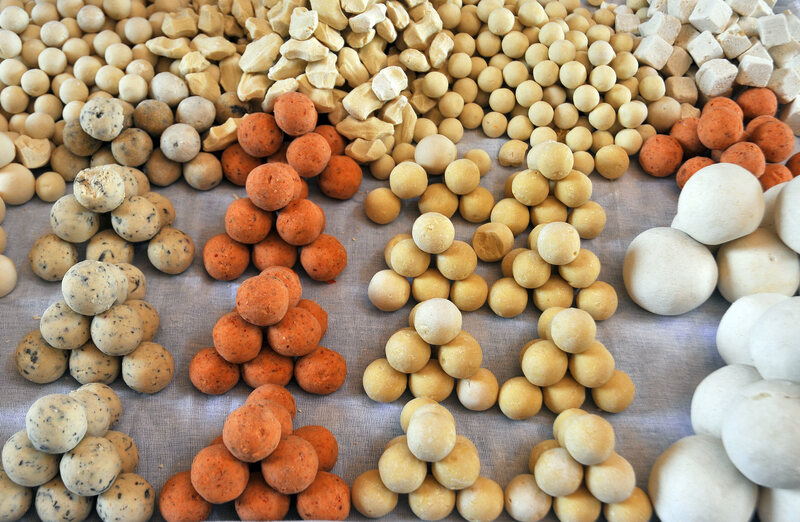
Qurt at the Osh Bazaar in Bishkek, Kyrgyzstan. JACKIE ELLIS / ALAMY STOCK PHOTO

Atlas Obscura has a recipe for qurt, a dried, dairy product, which when hardened can last for years without refrigeration, though a thirteenth century friar said it was “hard as iron slag.” The hardened qurt can be softened with water and mixed with jerky and flour to make a sort of stew. Here is Make the Ancient Road Snack of Central Asian Nomads.

ONE WINTER MORNING, PRISONERS AT the Akmola Labor Camp for Wives of Traitors to the Motherland, part of the Soviet gulag system from the 1930s to 1950s, trudged to a nearby lake. As they began gathering reeds to heat their frigid barracks, children and elders from the neighboring community approached the shore. The kids hurled small, hard white balls toward the women, and the camp guards cackled: Their charges weren’t hated only in Moscow, but here in remote Kazakhstan as well, recalled Gertrude Platais, who had been arrested in 1938 and sent to serve her sentence there.

While it initially seemed like an insult, the villagers had the opposite intent. One of the prisoners tripped on the projectiles, got a whiff of milk, and suspected they were edible. Back in the barracks, Kazakh prisoners explained that it was qurt, a traditional dried dairy product that had sustained nomads across Central Asia for centuries. Long-lasting, easy to carry, and packed with protein and calcium, the balls—described as “precious stones” in a poem about the incident by Raisa Golubeva—provided a much-needed supplement to the sparse prison rations.

Qurt, also called qurut or kurt, derives from the word for “dry” in many Turkic languages and is made by straining fermented milk from a sheep, goat, cow, camel, or mare until it’s thick enough to be rolled into balls and dried in the sun. In a 13th-century report from the Mongol empire, the Flemish Franciscan missionary Friar William of Rubruck described the result as “hard as iron slag.” Different variations exist throughout Central Asia, the Caucasus, and the Middle East, including the Persian kashk, Jordanian jameed, and Armenian chortan.

Kurdish women preparing the dried dairy balls in Turkey, where they're known as kashk.
Kurdish women preparing the dried dairy balls in Turkey, where they’re known as kashk. BABLEKAN/CC BY-SA 3.0

Qurt’s portable nature and long shelf life made it an ideal road food for Central Asia’s nomadic peoples. According to Kazakh historian Moldir Oskenbay—who likens the taste of qurt to “a dried and salted feta cheese”—it dates at least as far back as the seventh century B.C., when the Scythians roamed the Eurasian Steppe. Kazakh, Kyrgyz, Turkmen, Uzbek, and other groups of herders took along versions as they moved to graze their animals. “Qurt was a really good way for them to preserve yogurt so they could eat it while they traveled,” says Malika Sharipova, a food blogger from Uzbekistan who has written about making traditional Uzbek cuisine. Hardened qurt is also highly versatile: It lasts for years without refrigeration and can be eaten straight, dissolved in boiling water to create a beverage, or mixed into traditional soups and dishes like Tajik qurutob.

Qurt even gave nomads a strategic military advantage in the 12th and 13th centuries A.D. by allowing them to ditch cumbersome kitchen supply carts and travel light, Oskenbay explains in her paper “Fermented Dairy Products in Central Asia: Methods for Making Kazakh Qurt and Their Health Benefits.” Balls of qurt dissolved in water with flour and jerky made for quick camp dinners: “No need to search for fuel for the fire, or take time for cooking,” she writes.

Various flavors at the Chorsu Bazaar in Tashkent, Uzbekistan.
Various flavors at the Chorsu Bazaar in Tashkent, Uzbekistan. LBM1948/CC BY-SA 4.0

Centuries later, freeze-dried qurt nourished Soviet cosmonauts in space. Today, it’s still hailed as a source of longevity, said to improve digestion, ward off osteoporosis, and support the health of children as well as pregnant and lactating women. Kept in a dry place, it will remain edible for several years, and some say close to a decade. “It won’t spoil, but it will get really, really hard,” Sharipova says. (If exposed to humidity, however, it can become moldy.) While qurt is traditionally made at home in rural areas and bought by city-dwellers at markets, mass-produced versions are now available at grocery stores and online.

Central Asian markets like the Chorsu Bazaar in Tashkent, Uzbekistan, showcase the vast array of qurt available: softer “new” qurt; rock-hard “stone” qurt, which may have been dried for years; light brown smoked qurt, which Sharipova recommends pairing with beer; qurt with red pepper, coriander, dill, mint, or basil; and shapes ranging from tiny spheres to apple-sized balls.

The author's homemade qurt.
The author’s homemade qurt. SUSIE ARMITAGE FOR GASTRO OBSCURA

“People are getting crazy and creative about making different kinds of qurt,” she says. “You can play with the texture, you can play with the taste … you can make it less salty, you can make it really salty.” Sharipova prefers the classic white variety and doesn’t like it to get too hard, so she keeps it in a paper bag in the fridge.

You can make your own qurt at home, the way it’s done in Central Asian villages. However, it’s a multiday process and if you don’t have access to the sunny, dry weather of the Eurasian Steppe, you’ll need to employ a few hacks to “cheat nature,” as Max Malkiel—a home cook born in Tajikistan who now lives in Germany and posts recipe videos on YouTube—puts it.

Homemade Qurt

Adapted from recipes by Malika Sharipova, Max Malkiel, and “Recipes from an Uzbek”

Note: Methods and terms for the various dairy products below may vary by culture and location.

Ingredients
2 liters of whole or low-fat milk
6 tablespoons of plain Greek yogurt
Salt to taste
Dried herbs and spices to taste (optional)

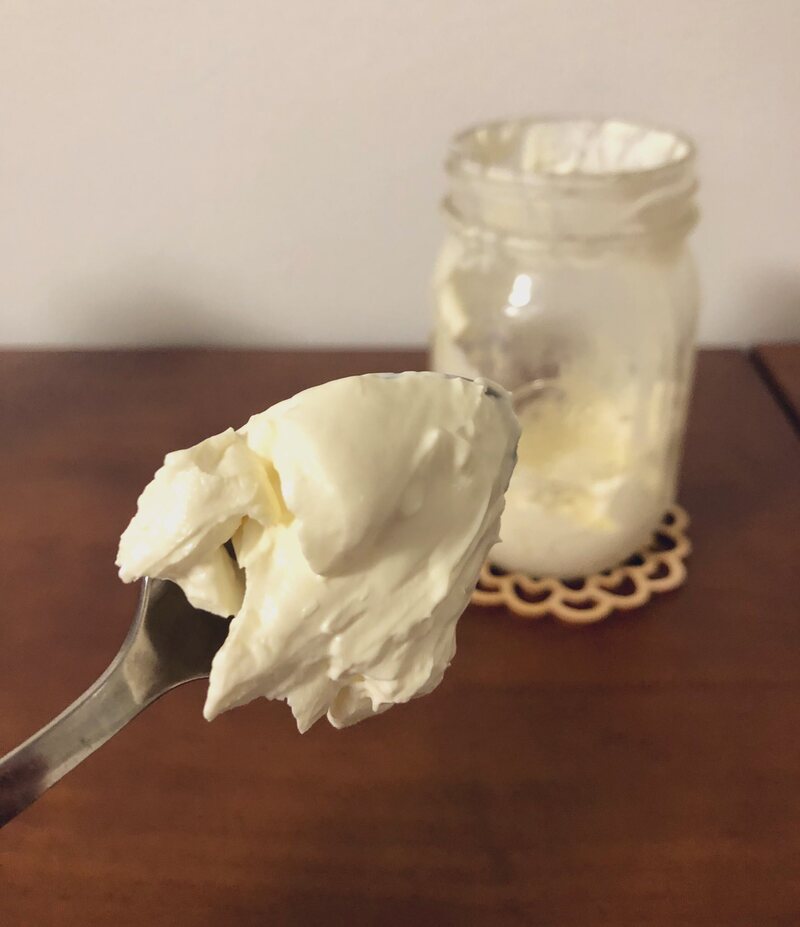
The finished suzma should have a nice, spreadable consistency.
The finished suzma should have a nice, spreadable consistency. SUSIE ARMITAGE FOR GASTRO OBSCURA

Step 1

To make qurt, first you need to make suzma, a creamy drained yogurt with a spreadable consistency. To make suzma, you need to make qatiq, a natural (and also delicious) drinkable yogurt. If you’d like to speed up the process, and you can find suzma for purchase in your area, you can also start there and skip to Step 3. (If you don’t have a Central Asian bazaar at your disposal, you may be able to buy suzma at a Central Asian shop like Brooklyn’s Tashkent Supermarket. Some recipes also describe how to make qurt from tvorog, a farmer’s cheese widely available at Russian grocery stores; I did not test this, but if you go this route, you’ll also want to start with Step 3 and ensure that your cheese is well drained before attempting to roll it.)

To make the qatiq, heat the milk in a pot to about 122° F (50° C). (If using unpasteurized milk, boil it first, then let it cool to this temperature.) If you don’t have a thermometer, turn the heat off when the milk is noticeably warm, but you can stand to hold your finger in it for 10 seconds without discomfort. Then stir in the yogurt. At this point, the contents of your pot will still be milky in consistency. Pour the mixture into glass jars and wrap them with towels to keep them warm; Sharipova suggests using three thick ones. (I wrapped my jars in dish towels, topped with hand towels, then covered them with a large bath towel and a blanket.) Leave the wrapped jars in a warm place and let them ferment for eight hours. Then enjoy a glass of creamy qatiq; it will be a drinkable but noticeably thicker liquid.

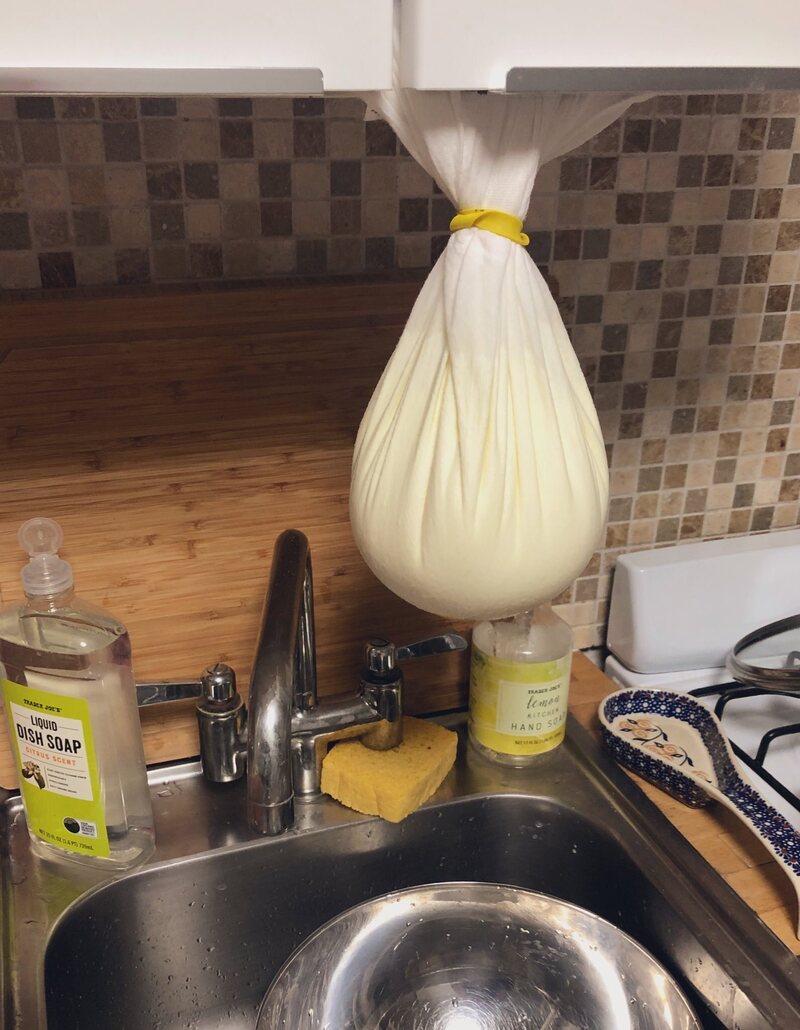
To turn into suzma, the qatiq must drain for about eight hours.
To turn into suzma, the qatiq must drain for about eight hours. SUSIE ARMITAGE FOR GASTRO OBSCURA

Step 2

Now, it’s time to turn your qatiq into suzma. First, add salt to taste. Then carefully pour your qatiq into a flour sack towel. I found it easiest to do this by laying the cloth over a colander first. Secure the top of the towel with a rubber band and hang it over a bowl or your sink to drain. You can also use a cheesecloth, but make sure it’s not too gauzy. The qatiq should drip steadily as it drains, but you don’t want it to gush through all at once. Leave it for about eight hours as the whey separates.

Step 3

Now we have suzma; set some aside to eat on bread or as a dip for vegetables. If you’ve purchased your suzma, it may be thick enough to begin rolling into qurt (Step 4). However, if you made your own, you may need to let it drain in the cloth for another few days to reach the optimal consistency. (I learned the hard way by trying to roll suzma that wasn’t thick enough and wound up with sticky, yogurt-covered hands.)

There is no exact timeline, but Sharipova says the suzma is ready to be rolled when you can stand a spoon in it. Mine took about two days to get there.

Step 4

Once your suzma is nice and thick, add salt to taste and any additions, like ground red pepper or dried herbs. Roll it into balls, keeping in mind that smaller ones will dry quicker. (Mine were about the size of small to medium gumballs.)

Step 5

Put your qurt balls on a wooden cutting board, cover them with a clean dish towel, and leave them in a warm, sunny place to dry for several days, depending on how hard you’d like them to be.

If warm and sunny is not in the cards where you live, you can use Max Malkiel’s method. (I discovered his advice after my first batch of qurt started to grow mold as it dried.) Set your oven on the lowest possible temperature—he uses 50° C, which is approximately 122° F—and place your qurt inside on a baking sheet lined with parchment paper for an hour. Do not preheat the oven first.

Your qurt should now be a bit rubbery. Dry the balls with a hair dryer on full power for about 10 minutes. Set aside to dry further at room temperature. Repeat the oven and hair dryer steps three days in a row. For harder qurt, leave to dry for a few more days at room temperature.

Enjoy your qurt and go slowly. A little bit of the salty stuff goes a long way! Store in a breathable cloth bag in a dry place or in a paper bag in the fridge.

CSLewisDoodle: Faith


C.S. Lewis as an atheist used to ask himself ‘How on earth can faith or belief be a virtue? What is there moral or immoral about believing or not believing a set of statements?’ Now as a Christian he explains what a good many people do not see about faith…
During WWII C.S. Lewis broadcast two talks on Faith entitled ‘Faith as a Virtue’ and ‘The Problem of Faith and Works’. These were cut down from their original scripts for the radio broadcasts, but the original talks ended up being printed in full and expanded in the book version of the talks which later became the book ‘Mere Christianity’.
(0:35) C.S. Lewis talks about four kinds of faith.
Faith A1 – Simply belief – accepting or regarding as true the doctrines of Christianity.
Faith A2 – The art of holding on to things your reason has once accepted, in spite of your changing moods.
Faith B1 – Trust that Christ will somehow share with you the perfect human obedience which He carried out from His birth to His crucifixion: that Christ will make you more like Himself and, in a sense, make good your deficiencies.
Faith C1 – Adherence to God, and His Christ, that is no longer proportioned to every fluctuation of the apparent evidence.
The first three types are covered in the book ‘Mere Christianity’. The last one in Lewis’ other essays.
(1:23) More on reason and authority here: https://youtu.be/k2xY2k26HFo. See also comment section on this video.
(4:57) “Blessed is he who is not offended/tripped up because of Me.” https://www.biblehub.com/matthew/11-6…
(5:19) “Do not be yoked together with unbelievers. For what do righteousness and wickedness have in common? Or what fellowship can light have with darkness?” https://biblehub.com/2_corinthians/6-… (Exception: 1 Corinthians 7:12). This is the Old Testament picture of an ox yoked to a donkey rather than to another ox, i.e. the combination of different species in work creates special pressures on each creature. This principle applies to the unequal pairing of believers with unbelievers in marriage relationships.
“Do not lie to one another, since you have put off the old man with his deeds” https://biblehub.com/colossians/3-9.htm
“Instead, you ought to say, ‘If it is the Lord’s will, we will live and do this or that.’ But now ye rejoice in your boastings: all such rejoicing is evil.” https://biblehub.com/james/4-16.htm
Also 2 Corinthians 10:17 “Let the one who boasts boast in the Lord” https://biblehub.com/jeremiah/9-24.htm
“Anyone who has been stealing must steal no longer, but must work, doing something useful with their own hands, that they may have something to share with those in need” https://biblehub.com/ephesians/4-28.htm
(7:33) The sermon here is on https://biblehub.com/matthew/15-5.htm
(10:08) https://biblehub.com/niv/luke/4.htm, https://biblehub.com/niv/matthew/4.htm “The more opportune” mentioned here being the leadup to and carrying out of the crucifixion where Christ would be tested with the same three temptations as in the desert at the start of His ministry.
The original broadcast had the following words italicised which add to our understanding: “and leaves HIM unsupported in the water”, “if Christianity were NOT true”, “any real new REASONS”, “the fact that you HAVE moods”, “simply DRIFT away?”, “give ME sixpence to buy YOU a birthday present”.
The bombing sounds were actually recorded during the London blitz. The closing music is based on the credits of the Churchill film ‘The Darkest Hour’.

Bear Independent: Family That Won’t Prep

In this video from Bear Independent, TJ Morris (Bear) talks about what you can do when you believe in being prepared, but your family does not. Family could be your spouse, or kids, or parents, or in-laws, brothers, sisters, cousins, whomever you are worried about whom you consider family but is for some reason against taking steps to be prepared, though in the case of this video Bear is mostly discussing family outside of your immediate household.

Breitbart: Feinstein Introduces Assault Weapons Ban of 2021

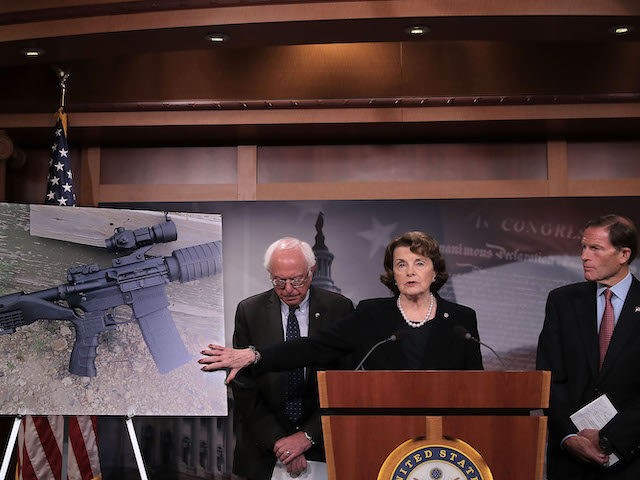
From Breitbart, Dianne Feinstein Introduces Ban on 205 Different ‘Assault Weapons’. It doesn’t look like a bill number has been assigned, yet.

Following Thursday’s House passage of a Democrat gun control bill, Sen. Dianne Feinstein (D-CA) introduced a ban on 205 “assault weapons.”

The legislation, called the “Assault Weapons Ban of 2021,” is co-sponsored by 34 Senate Democrats. It would also ban ammunition magazines holding more than ten rounds.

Feinstein’s ban would allow current owners of “assault weapons” to retain possession of them, but if the gun is transferred, a person must undergo an FBI background check before receiving the firearm.

Her “Assault Weapons Ban” also bans bump stocks, which have been illegal since March 26, 2019.

Feinstein announced her ban stating:

It’s been 17 years since the original Assault Weapons Ban expired, and the plague of gun violence continues to grow in this country. To be clear, this bill saves lives. When it was in place from 1994-2004, gun massacres declined by 37 percent compared with the decade before. After the ban expired, the number of massacres rose by 183 percent.

In contrast, the Department of Justice’s National Institute of Justice (NIJ) issued a report indicating the 1994 “assault weapons” ban did not reduce crime.

The Washington Times quoted University of Pennsylvania professor Christopher Koper, author of the NIJ report, saying, “We cannot clearly credit the ban with any of the nation’s recent drop in gun violence. And, indeed, there has been no discernible reduction in the lethality and injuriousness of gun violence.”

The NIJ report continued, “The ban’s effects on gun violence are likely to be small at best and perhaps too small for reliable measurement.”

HRCC: Explaining Tactical Communications With Mike Glover Fieldcraft Survival

Ham Radio Crash Course has an interview up with former US Army Special Forces SGM, former Office of Global Affairs and founder of Fieldcraft Survival Mike Glover wherein they are Explaining Tactical Communications. The interview begins with an overview of SF communications and gear, but the moves in communication planning, PACE (primary, alternate, contingency, and emergency) planning, direction finding, comms preparedness and more. Mike Glover is also behind American Contingency, an organization designed to create a trusted network of support and teach people training they might need to survive in today’s uncertain times.

AYWtGS: How to Get FREE to Low-Cost Five-Gallon Buckets for Food Storage

In this post, A Year Without the Grocery Store talks about How to Get FREE to Low-Cost Five-Gallon Buckets for Food Storage as well as types of lids.

When people talk about what you need to buy as a prepper, I once heard it boiled down to: “Beans, Bullets, Bandaids.”  I believe it was James Wesley Rawles of The Survival Blog that coined the phrase.  The “Beans” in the saying represent your food storage.  And if you have food storage……you probably have or use five-gallon buckets (or sometimes six-gallon).

***There are links in this post.  Some of the links may be affiliate links. My promise to you is that I will only recommend the most economical version of the best quality of items to serve you. All of these are the items that I have bought for my own family.  If you click on a link, your price will remain the same.  If you make a purchase, we may make a small commission that aids in the cost of the running of this website.***

How to Get FREE to Low-Cost Five-Gallon Buckets for Food StorageFive-gallon buckets have become expensive!

But those can be stinking expensive!  Have you looked at prices for them?  Amazon has 5-packs of buckets WITH lids for $53.99.  This makes the buckets $10.80.  If you’re wanting to purchase a single 5-gallon bucket from Amazon, the best price that you’ll find is $13.99.

Another place that I’ve had friends purchase five-gallon buckets from is Wal-Mart.com.  On Wal-Mart.com, you can purchase a 10-pack of five-gallon buckets WITH lids for $120.99.  This makes them $12.00 each.

I personally have purchase five-gallon buckets WITHOUT lids through Azure Standard.  A 10-pack of buckets WITHOUT lids for $72.55.  So the cost per bucket works out to be $7.26.  But then you will need to purchase additional lids.  A regular ‘clamp on’ lid costs $3.25 each. For specialized lids called Gamma Seal lids (I’ll cover these lids later), it’s an additional $8.02.  So the cost per bucket for clamp-on lids is $10.51.  Your cost per bucket for Gamma Seal lids is $15.28.

You Can Get Buckets Cheaper!

A friend of mine recently talked about Covid Scalping.  One of the reasons that buckets (and canning jars, and canning lids, and so many other things) are so expensive is because the demand for them has gone up exponentially because of Covid.  So this – in many ways – is an example of that Covid scalping that was mentioned.

But there is another alternative to paying exorbitant rates for buckets!  You can get buckets for either FREE or very cheap.  Today while I was at Wal-Mart, I swung by the bakery.  When I was greeted by a bakery worker, I asked if they had any empty five-gallon frosting buckets.  They had three.  It took her a few minutes to find them and bring them out.  Now before today, when I had gotten these buckets from Walmart, they were free.  Today, however, when she brought them out, they had a $1 price tag printed for each of them.

What I have discovered to this point is that while you can still get buckets for free at some places, some places have begun charging a marginal amount.  In our area, we can still get buckets free at Kroger and Schnucks.  Walmart now charges $1, and Costco charges $2 locally.

The best way to figure out if a store charges and how much they charge is to call them.  It’s also the best way to find out if they have any buckets to sell/give away so that you don’t drive there to find out that they don’t have any to give you.

Bucket Lids

I know that this sounds a little unusual when talking about getting buckets for free.  But these things actually tie together.  There are three main types of bucket lids that I’ve come across.  Some of them are better for food storage than others.  So if you get your buckets for free, you may still need to purchase lids depending on what you’re using your buckets for and what type of lid came with your free (or cheap) buckets.

How to Get FREE to Low-Cost Five-Gallon Buckets for Food StorageShallow snap-on lids

When I got my lids from Walmart today, this is the type of lid that came with the buckets.  These lids have a lip that measures about 3/4″ deep.  These lids are fine for long-term food storage.  In other words, if you’re going to put food into mylar bags and use oxygen absorbers, this is a fine lid.  If, however, you plan just to use the bucket for short-term food storage of large quantities of foods, don’t use this lid.

Deep snap-on lids  How to Get FREE to Low-Cost Five-Gallon Buckets for Food Storage

These are the type of lids that you can purchase from Azure Standard and they measure just about 1″ all the way around.  First off, these lids will fit on the same buckets as the 1/2″ deep lids do.  This means that if you get free or cheap buckets with the 1/2″ deep lids and you want to do short-term food storage of large quantities of foods like oats or wheat, you can use these lids to do so.  You can get your buckets free and purchase your lids from somewhere like Azure.

Gamma Seal Lids

These lids cost the most of any of the lids, but there is a reason for it.  These lids come in two pieces.  The outer ring snaps down on your five-gallon bucket – or even your six-gallon bucket.  The inside part of the lid screws into the part that snaps onto the bucket.  Why these bucket lids are so amazing is that you can easily use them for short-term or long-term food storage.  These will keep the air and critters out, but will allow you access to your short-term food storage very easily.  That is part of the reason that these lids cost so much more.

If you purchase Gamma Seal lids from Amazon, these lids cost $68/6 or $11.33 each.  Azure Standard, however, has these same gamma seal lids in a 12-pack for $79.45 or $6.62 each.

Cleaning Your Buckets

Before you can use the buckets that you get for free or cheap, you will need to make sure that you clean them.  When I get buckets, I go through a two-step process to clean them out properly.

First off, you want to make sure that you clean out your buckets with warm soapy water.  I like to use Dawn dish soap as it removed the frosting residue from the buckets very well.

After I’ve cleaned the buckets out with dish soap and water, I then clean it out with a solution of bleach and water.  The dish soap will clean out the residue, but the bleach solution will take care of any bacteria.  I use 1 T of bleach and enough water to cover the bottom of the bucket and then use a rag that you don’t mind getting bleach on and wipe down the entire inside of the bucket.

Once you have done that, dry the bucket out and it’s ready to use whether you are using it for long-term food storage or short-term food storage.

Why Would You Use Buckets for Short-Term Food Storage?

I’ve mentioned several times that you may want to use these same five-gallon buckets for short-term food storage, but why might you want to do it?

Purchasing foods in bulk makes sense not just for long-term food storage, but for short-term food storage as well.  We purchase items like oats in 25 – 50-pound bags because it’s cheaper than buying the canisters of oatmeal.  We can store these items short-term in buckets and save ourselves money because we are storing our food in five-gallon buckets…

FEE: Roger Ver on Cryptocurrency, Human Liberty, and Economic Education

The Foundation for Economic Education interviews bitcoin.com founder Roger Ver on Cryptocurrency, Human Liberty, and Economic Education.

It can help us have freer markets than we have ever had before and to do this faster than lobbying the government for political change. People shouldn’t need a social security number, an ID, and a bank account in order to participate in the economy, and cryptocurrencies like Bitcoin Cash that are fast, cheap, and reliable can make that possible.

Hal Finney, who is the first person we know of other than Satoshi Nakamoto to run the Bitcoin code, wrote in an email back in the 90s that we can’t just fade into cyberspace and expect technology alone to give us freedom.

“I believe we will have the kind of society that most people want. If we want freedom and privacy, we must persuade others that these are worth having. There are no shortcuts. Withdrawing into technology is like pulling the blankets over your head. It feels good for a while, until reality catches up.”

For all the good that cryptocurrency like Bitcoin Cash can do, it isn’t enough. Bitcoin won’t stop tax collectors showing up at your door demanding 30% of your income and it won’t stop the state putting people in cages for victimless crimes. At least it can’t do it alone. We stop those by winning the battle of ideas too and making people care about being free.

I used to think it was the government and regulators who would try to make it difficult for people to use it, and that is still a threat, but the people in cryptocurrency are also a threat. We’ve seen over and over just how hard it is to scale a blockchain project so that it can actually be used by people around the world. A lot of people have their own ideas about what Bitcoin should be, and these are totally different than what Satoshi Nakamoto wanted or what got so many people like me excited about Bitcoin to begin with. So we see today projects like Bitcoin and Ethereum that are experiencing unsustainable transaction fee levels that are going to push people onto custodial services or keep them out of the cryptocurrency economy altogether.

That’s the big threat, I think—that we never get a project that is actually allowed to grow without being rate limited by the people involved. Cryptocurrency can’t help people be more free if they can’t use it. Fortunately, Bitcoin Cash is one of the few projects working towards solving that, and anyone in the world can send any amount of money for less than a penny.

I wouldn’t be where I am if it weren’t for reading people like Mises, Rothbard, and Bastiat. If you’re a student today who hasn’t read them, chances are you think economics is all about boring numbers and figures, but that’s not it at all. It’s really about understanding individual human action in a world of scarcity, opportunity cost, and incentives. You need that in business, investing, in your career, in anything you might want to do.

Politically, I saw this quote by Isaac Morehouse, who has written a lot of good stuff for FEE.org, which I loved: “good intentions combined with no understanding how an economy works leads to hell on earth.” I don’t think I can put it better.

I read The Freeman in high school and it helped get me started down a path that led to reading people like Mises, Rothbard, Bastiat, and Hazlitt. People are not going to get any of this material in school today, and organizations like FEE are some of the only places that young people can go to get quality introductions and instructions to these thinkers and ideas.

FEE is consistent. One of the things I think about when I support people, causes, and organizations like FEE is whether or not they can be relied upon to continue their work with as much energy and principle as they had when they first caught my eye. Sadly this is not always true. I’ve built several businesses and invested in many more and I can’t tell you how hard it is to build and maintain a team of people who are committed to the vision. I think this is even harder to do in the liberty space where there is so much pressure to compromise and make tradeoffs that serve the organization and the people in it, but water down the message and its impact. In the nearly three decades I’ve been a fan of FEE, I haven’t seen that. You can have a lot of trust in FEE that your investment is going to be used to advance freedom today and tomorrow.

Washington Policy Center: Relationship status with ESSB 5172 – It’s complicated

Washington Policy Center updates us on SB5172, which is titled “Concerning the retroactivity of overtime claims in exceptional cases” and supposed to stabilize the state’s agricultural workers and economy, in Relationship status with ESSB 5172: It’s complicated.

Legislation (ESSB 5172) that would protect Washington farmers from a potentially catastrophic court ruling on retroactive pay, passed out of the Washington State Senate by a vote of 37-12 at the 11th hour last night with some significant changes to its language. Democratic State Senators hailed it as a victory for modernizing agriculture by ushering in a 40-hour work week. Republican Senators expressed concerns during the floor debate on the revisions to the bill.

What does the bill do now?

The bill as passed last night provides “that the safe harbor provision applies to all dairy employers, except members in the class of plaintiffs in Martinez-Cuevas v. DeRuyter Bros. Dairy, 196 Wn.2d 506 (2020).” It also provides protection from overtime lawsuits to all other agricultural employers.

The bill also removed provisions for compensatory accounts that would have provided $5,000 payments to any farmworker who had logged 1,300 working hours on a farm during any 12-month period between 2017 and 2024.

What is next?

The bill moves to the Washington State House where it will likely be assigned to the Labor and Workplace Standards Committee for consideration and refinement.

What needs to be refined?

The Senate debate highlighted some concerns about the bill that can be worked through in the House.

The notion of a 40-hour work week is difficult to imagine for most people in agriculture. The shift has already occurred in the dairy sector and has caused some unintended consequences that have hurt dairy employees. In some cases, hours have been capped at 40, leaving dairy employees with no overtime hours and less income than when they were working 55 hours a week.

There was little dispute about a phased in approach to paying time-and-a-half to farmworkers throughout the agricultural community. However, lowering the threshold for when that time-and-a-half is triggered to 40 hours simply cuts overtime pay out of the equation for most employers.

A better solution would be to either raise the threshold for when overtime wages are paid for all industry sectors with the exception of dairy, where the decision was made by the court, or create exemptions for seasonal needs. There are six other states in the U.S. with agricultural overtime wage provisions, all of them have hours thresholds that are 48 hours or more or grant exemptions during growing and harvest seasons.

In addition to concerns about the time-and-a-half threshold, some issues of non-wage compensation were raised during the Senate floor debate. In a food-centric community, it is not uncommon for employers to gift employees with Thanksgiving meals to feed their entire families or the equivalent of half a cow in frozen beef. These gifts to employees are not considered official wages but they are considered business expenses. So, how then, do agricultural employers rectify bonuses of that nature when the resources previously used to make such purchases will likely need to be set aside for time-and-a-half payments should they arise?

The same question must be raised for housing. Some farms offer on-site housing as part of a wage package. Offering housing to farmworkers is mutually beneficial. Farmworkers are not commuting and saving money that would otherwise be spent on rent. Agricultural employers are maintaining a workforce closer to their farm or ranch and ensuring their employees have access to a safe place to live. How does one calculate time-and-a-half on a W-2 when providing a home to an employee and his or her family?

There are several questions yet to be answered about ESSB 5172. But yesterday’s vote was not about presenting a perfect bill on the floor of the Senate; it wasn’t even about having all the answers. Yesterday’s vote was about keeping the hope of the original intention behind SB 5172 alive.

Now it is time to put our proverbial boots back on and get the next round of questions answered before bills from the opposite chamber can no longer be considered on April 11.

The American Mind: America Must Replace Its Failed Elites

From The American Mind comes America Must Replace Its Failed Elites.

Conservatism, Inc. will say anything to avoid revitalizing our movement. We’re here to do it anyway.

Ed Note: The young founders of American Moment are committed to making vital changes in the conservative movement and injecting new energy into our coalition. We at The American Mind agree this must be done—and fast. Unfortunately, National Review, once a crucible for the best conservative thought, has become so  defensive of its own position that it attacks any organization (including ours) which threatens to overturn the failed Republican leadership class. We are glad to host American Moment’s response to National Review’s ill-informed hit piece against them.

The old order that has dominated the Right for at least the last three decades is desperate to force its agenda on the country: endless foreign wars, cultural weakness, porous borders, corporate solicitude, and general apathy in the face of civilizational crises.

Fortunately, many are pushing back. Like many of our fellow citizens, we are determined not to go back to the failed consensus. That’s why we launched American Moment. Its mission is to forge a cadre of aligned and dedicated young people to serve in government and public-policy organizations to support strong families, a sovereign nation, and prosperity for all.

We are seeking to complete the long-overdue realignment of the conservative movement that President Trump jumpstarted. Unlike the multinational corporations that have captured the Right, we are striving to champion the legitimate interests of the American people.

An editor at National Review is not impressed with—and is apparently confused by—our effort. He writes: “the founders [of American Moment] do not disdain the idea of a Swampy elite, nor do they reject the predicates of the administrative state on which such an elite depends. Their main resentment seems to be that they are not the ones on top.”

In any presidential administration, there are thousands of appointed positions across the federal bureaucracy. Often collectively referred to as “the Swamp,” these officials wield enormous power over public policy of national import, including immigration, economics, trade, and foreign affairs. The constellation of advisors that surround a president and cabinet officials set the policy agenda of any new administration.

Even if the Administrative State were decimated tomorrow, restoring the constitutional order of the founders’ design, the majority of presidentially-appointed positions would remain intact. The question then remains: who will fill these thousands of positions? Ideally, young people who understand the great challenges of our time and are prepared to meet them. Making sure this happens is our primary goal at American Moment.

That is why we are launching initiatives like our Fellowship Program, which empowers young people without “connections” or rich parents—as well as those who do not have a college degree—to serve their communities and their country. An influential class of leaders, policymakers, and staffers is an inevitable reality of modern politics. We must fill these roles with engaged, committed people whose allegiance is with the majority of the American people and the preservation of the republic.

If we don’t act, the hawks who took us to ruinous war in Iraq, the free-trade absolutists who gutted our manufacturing base, and the utopians who continue to push for open borders will all waltz into the next Republican White House by boasting the “credentials” and “expertise” to lead. It is a shame that National Review seems so averse to new energy, so dedicated to disparaging and delegitimizing any initiative to revitalize the conservative movement.

The same National Review editor, in another piece, attacks New York Post Opinion Editor Sohrab Ahmari:

Whatever legitimate grievances of which Ahmari speaks, actually doing something about them cannot merely be a matter of wish-casting and fan service. It must be a patient, persistent matter of mind-changing, coalition-building, and policy-enacting—in other words, politics, in which the prospect of winning “decisively” is elusive at best.

We reject this characterization of Ahmari’s project, but we agree that patience and persistence are necessary in order to create the conditions for substantive change. Our incumbent ruling class has substantially destroyed American society. Now we must build anew.

We won’t achieve our goals overnight. Identifying, educating, and credentialing young leaders will take time. But we are persistent. With the hundreds of prospects that we’ve already identified, we can start to create a new cohort constantly fed by new talent—that is eager to serve our nation and serve it well. If that means throwing an occasional social event for them, so be it. The biggest problem with Georgetown cocktail parties has never been the cocktail parties themselves. It’s the indifference and unwillingness of most attendees to take responsibility for how they have failed the American nation.

Who will replace them? President Trump was a prominent outsider. That was key to his success. Now we need an entire cadre of young Americans motivated by the same values he represented to rise to the occasion and lead. Our mission is to build and equip this movement, and we will remain focused on it regardless of the old order’s circular firing squad.

Scragged: Samizdat Strategies

Samizdat copies

Scragged has a series of three articles on Samizdat Strategies or how to survive in a trending police state. Samizdat is a Russian term which referred to self-published articles designed to spread truth under an oppressive communist regime. With Big Tech’s censorship of voices which dissent from the government approved narratives, people in the US may very well need to receive truth from sources other than the mainstream.

The US has a rich history of creation; we pioneered concepts such as innocent until proven guilty, structured as a democratic republic run for the people.  We’ve crated many tangible things such as cars, computers, the internet, etc.  Our use of fossil fuels has freed most of us from slavery to back-braking toil needed to scratch enough food out of the ground to survive. These benefits have been the result of the creativity enabled by the freedom of thought and expression of ideas given to us by our government.

Today, our reality has changed, and not for the better.

All America is in the process of learning many harsh lessons that our forefathers fought and died to avoid us having to repeat.  Perhaps the most severe lesson is this: Given that we have proved ourselves incapable of keeping a functional representative republic, as Ben Franklin feared, it’s now time to take serious, inconvenient action to conceal any of your activities that the cancel mob might consider to be at all controversial either now or in the unforeseeable future.

Government is like fire – a necessary but untrustworthy servant and a fearsome master.  People who seek power over others will do pretty much whatever increases their power.  That’s why it’s said that eternal vigilance is the price of liberty – a price we have signally failed to pay in convenient monthly installments for lo these many years, and now the accumulated bill has come due with interest.

As soon as someone’s elected to office, he or she figures out that there’s only so much power to go around.  Any power citizens have over their own lives means that elected officials have less power.  Thus, regardless of party, elected officials have a powerful incentive to take power from us and give it to themselves and to their friends.

That’s what politics is all about – gaining and using power.  If  freedom-loving people take their eyes off the ball for even a moment, we end up with tyranny.  Joe Biden is the President because his side understands the effective usage of power: his side controlled the counting of votes, controlled the adjudication of challenges of both the count and the votes, controls the reporting of all of the above, and today, bids fair to control your and my ability even to talk about anything they don’t want discussed.

That is power, pure and simple – truth, justice, and the American way factor in not at all, but that doesn’t make the power any less real or effective in causing grief to dissenters.

Tyranny is always based on fraud, fear, and force.  Since no regime can directly control all of the people all of the time, the majority are kept in line by lying to them or keeping them too fearful to resist.  Force is used against those who refuse to believe what they’re told to believe and become vocal about it; as long as their number is in a small enough minority, they present no threat to those in power.

Truth Finds a Way

During the era of Stalinist tyranny in the Soviet Union, people who saw through the communist fable engaged in a practice known as “samidzat“, a Russian word meaning “self-publishing” to spread whatever truth they could.

When the entire MSM and the Tech Lords colluded to make it impossible for the New York Post, the 4th largest newspaper in America, to spread its story about the Biden crime family’s lucrative connections to Ukraine and China, we realized that we had arrived at the “total fraud” stage of our slide into tyranny.  During the pre-Internet samizdat days, the Russian government tried to register all typewriters to prevent people from spreading the word.  People caught with unregistered typewriters they’d smuggled in from abroad or using registered typewriters in forbidden ways faced jail or worse – sometimes a lot worse.

Similarly, even mentioning the well-attested 2020 vote fraud or claiming that the Capitol riot was organized by Democrats to make Trump supporters look bad will get you canceled from social media and in some cases fired from your job, unless, of course, you’re a Democrat luminary.  AOC, for example, blames Facebook for the Capitol riot because, she says, it let the rioters organize.

Doesn’t she realize that if it was organized, as we all believe it to have been, it couldn’t have been caused by Mr. Trump’s speech, given that the riot had already started before he’d even gotten well underway?  We don’t know what she knows or believes – but we do know that she won’t be criticized for exonerating Mr. Trump of the Democrats’ latest bogus charge against him because Democrats are above criticism.

You can’t possibly keep up with what woketivists can say, must say, and what they can’t say unless you spend hours per day on Twitter.  We don’t have time for that, so it’s time to figure out how to communicate securely and how to minimize the visibility of your now-unacceptable ideas, while still making them visible to those who might still have ears to hear them.

It’s Mushrooming

Once our Tech Lords revealed their true colors by canceling President Trump’s Twitter and Facebook accounts, stopping his campaign from sending email, and lowering his Google page ratings, others are piling on.  Harvard students are circulating a petition to revoke the degrees granted to White House Press Secretary Kayleigh McEnany, Sen. Ted Cruz, and Rep. Dan Crenshaw.  The petition describes these three as “violent actors” who need to be held accountable for their actions.

Not to be outdone, Yale law school students and alumni are demanding that Sens. Josh Hawley (R-Mo.) and Ted Cruz (R-Tex.) be disbarred over what it says were their “efforts to undermine the peaceful transition of power after a free and fair election.”

Hawley and Cruz led efforts in the U.S. Senate on Wednesday to stop the counting of electoral votes certifying the victory of Democrat Joe Biden over President Trump in the November election.

If nothing else, these Ivy-league students reveal what liberals mean by “free and fair election” – it means their candidate won, no more and no less.  This isn’t surprising: they’ve been saying for years that “free and fair elections” can only result in elected Democrats.

Twitter has “not yet begun” to censor, per its CEO.  Project Veritas has published information about Twitter founder Dorsey saying, “This is going to be much bigger than just one account”:

“We know we are focused on one account right now,” Dorsey said, in reference to his company’s decision to ban President Trump. “But this is going to be much bigger than just one account and it’s going to go on for much longer than just this day, and this week, and the next few weeks and go beyond the inauguration. We have to expect that, and we have to be ready for that.”

The New York Post wrote a long article describing the many, many ways Democrats plan to deplatform, demonize, demonetize, and destroy anyone who ever supported Mr. Trump.  One wonders how long their printing press will survive.

That is not an idle concern.  Amazon is the largest bookseller in the world and has used its market power to ban books which contradict the current woketivist dogma.  Searching for “amazon book ban” on duckduckgo.com will get you quite a list – on Google, though, not so much.

The Washington Post told us how Amazon had reversed a ban on an e-book “Unreported Truths about COVID-19 and Lockdowns: Part 1: Introduction and Death Counts and Estimates,” which argued that the mainstream media overstates the threat from the virus.  An hour after Mr. Biden was inaugurated, the WHO announced that they’re changing the sensitivity of the covid test “which will result in large reductions in the numbers of positive cases.”  This confirms our belief that the covid threat was overstated from the beginning, just as we and many others had said.

Why did Amazon ban a book which seems to have told the truth?  Is Amazon on the side of truth and debate?

Amazon also banned a book discussing the health hazards which are inherent in the gay lifestyle, and a book arguing that it’s not a good idea to let a 12-year-old girl decide that her desire to be a boy is so strong that her breasts should be surgically removed.  Trying to talk her out of this irreversible surgery is called “conversion therapy,” which has been banned in some US jurisdictions.

In addition to selling books, Amazon also offers Amazon Web Services (AWS), one of the largest cloud facilities on the planet.  When Google and Apple pulled the Parler smartphone from their app stores and made it disappear from many if not most subscribers’ phones, AWS ended their hosting agreement and threw Parler off their platform on the grounds that Parler had refused to delete some posts which AWS regarded as unacceptable.

The concept of a business which rents server capacity having the right to tell customers what they may and may not store on their servers is as new as Twitter and Facebook banning the President of the United States from communicating.  AWS also provides servers to Twitter, which saw Parler as a potential competitor, particularly if all of Mr. Trump’s supporters abandoned Twitter for Parler.  We’re looking forward to hearing what comes out of discovery as Parler sues AWS, though it isn’t going well so far.

The fact that Mr. Bezos is stepping down as head of Amazon to pursue other interests has been in the news lately.  We know pretty much what to expect from his successor, Andy Jazzy, who was the driving force behind the growth of AWS which provides nearly half of Amazon’s operating profit – he accused the Louisville police of murdering Brianna Taylor and he’s the executive who made the decision to dump Parler.  How can any small business stay on AWS, knowing that they may be thrown off the platform at any moment for political reasons?

On the grounds that it’s silly to send money to your enemies, some people we know have stopped buying from Amazon.  That’s a major pain because no other service provides nearly as convenient a mechanism for finding products.  Others have suggested to carefully order only one thing at a time to at least maximize their shipping expenses – but we’ve found that Amazon’s computers are usually smart enough to pick up on this and combine them anyway.

Even if you don’t oppose Amazon because of its political stance, life won’t be pleasant if they put most other retailers out of business and create an effective monopoly.  There’s no reason to cancel your Prime subscription because that will be noticed, but you could stop buying and let Prime expire.

Blocking Advertisements

Google recently blocked ads from an organization opposed to packing the supreme court and took down videos taken in the US Senate(!) of doctors testifying about their experience treating covid.  Banning such forms of free speech is the thin edge of the wedge.

Educrats who are wedded to the idea that kids should always be promoted to the next grade regardless of whether they’ve mastered the material, because being held back damages their self-esteem, have believed for decades that the Christian practice of teaching kids they’re sinners in need of salvation harms their self-esteem and should be banned.

Back before the 2016 election, we quoted the Washington Post which quoted Hillary Clinton as saying that longstanding religious practices would have to “be changed.”  The context of her statement makes it plan that she advocated use of force to bring about such changes.

That notion has led to our “cancel culture” which seeks to ruin anyone who isn’t sufficiently woke, and has led to murder in several cases.

Lest you take comfort in the prominence and visibility of the victims of these wrongful attacks, be assured that cancellation is not limited to prominent persons.  Innocent nonentities such as retired Chicago firefighter David Quintavalle have been falsely accused of participating in storming the US Capitol, and all but driven from his home by ignorance-based abuse.

Mr. Quintavalle presented receipts as proof that he was in Chicago at the time, but false accusations are still all over Twitter and he has received death threats.  TV crews staked out his house and police dispatched a patrol car to keep watch.

Our Department of Injustice

Cancel culture started in the federal government.  You’ve read about their attack on Gen. Flynn.  This was one of many violations of law by the Obama administration.  Now that we know how they shafted him, we know that the FBI is not the good guys.

On the bright side, at least we know how they operate.  Deep State perjury traps depend on most citizens thinking the FBI is seeking truth.  Now that you know that government employees don’t care about truth at all, there’s no excuse for letting them trap you.

It’s simple.  Suppose you tell the feds you had lunch with 2 “friends” on Wednesday.  They lean on your “friends” to get them to say it was Thursday.  Unless you can prove it was Wednesday, they can charge you with lying to them, which is a crime even if you weren’t under oath, and bankrupt you by forcing you to pay for lawyers.

Having a lawyer won’t help you – Gen. Flynn’s first law firm betrayed him to the feds.

Why would they so blatantly violate the fundamentals of legal ethics?  Lawyers have to be members of the bar to practice. Liberals are already calling for the lawyers who defended Mr. Trump to be disbarred. When push comes to shove, will “your” lawyer defend you or defend his career?

King George Rides Again” shows how our bureaucrats are creating a great many “crimes” that can send you to jail.  Prosecutors get rated on the amount of jail time they inflict which is easy to measure.  It gives examples and tells you part of how to protect yourself.

Injustice” tells the story of an innocent man who spent $2 million on lawyers and finally copped a plea for 6 months in club fed as opposed to 150 years if he’d gone to trial.  It gives more detail how they work you over and tells what you need to get from them before telling them anything at all, not even your name.  You can justify that – during WW II, Japanese-Americans were locked up because of their names.  Japanese girls who had married Americans were left alone because they no longer had Japanese names.

There’s no doubt that we are in a position that has been unfamiliar to Americans for centuries: one where, like residents of any totalitarian land, we must watch what we say – or else!  The American mindset is not oriented toward operating in this kind of environment, but necessity breeds invention, which we’ll explore in upcoming articles in this series.

Given that liberals won’t like what we’re telling you and Internet service providers have shown their willingness to take down sites they do not like, ours may disappear.  You’d be best off pasting this article and the rest of this series into a Word doc, or even printing it out, for later reference and samizdat-style sharing.

But, maybe we aren’t to that point yet.  There is much further to fall, as we’ll see in the next article in this series.

See also Part II and Part III.