
Heritage Foundation: Law, ICE Are “Irrelevant” to Biden Administration

From the Daily Signal and the Heritage Foundations comes this article detailing how the current administration is actively working to remove border security – Law, ICE Are “Irrelevant” to Biden Administration
President Joe Biden has been functionally abolishing Immigration and Customs Enforcement from his first day in office.
A year and a half into his presidential term, Biden’s administration is getting bolder and more strategic, gutting ICE resources and funding, doing everything it can to stop immigration enforcement, and directing ICE lawyers to close tens of thousands of illegal aliens’ cases.
Biden and Department of Homeland Security Secretary Alejandro Mayorkas continue to welcome record numbers of illegal immigrants at the border every day and refuse to protect the homeland (causing states such as Texas to take unprecedented measures to protect their residents).
Then, they take it a step further by refusing to detain or deport illegal immigrants once they are here. (Mayorkas has told ICE “that unlawful presence is not grounds for removal.”)
They have no problem stating their intentions:

From Day One, Biden got to work demoralizing the ICE workforce. The Washington Post reported in May of 2021:
‘It’s a weird, frustrating time,’ said one ICE official, who is not authorized to speak to reporters, describing a climate of distrust. ‘It feels like the administration doesn’t have our backs.’
Just as quickly, the administration largely defunded ICE, making it next to impossible for the agency to do its job.
And despite a federal court last month vacating Biden and Mayorkas’ latest attempt to radically limit lawful immigration enforcement, it’s hard to believe the administration will comply and not push back. It has a well-documented track record of ignoring court orders and acting as though it’s above the law.
To make matters worse, Biden’s DHS is on track to let 1 million deportable illegal immigrants off the hook through “de facto amnesty.” This irresponsible direction not only compromises public safety, but also leaves illegal aliens without any sort of official determination of status or directions for how to proceed.
Most recently, Biden’s U.S. Citizenship and Immigration Services issued June 24 policy guidance reinterpreting the law and, in effect, waiving explicit language in the Immigration and Naturalization Act stating that illegal aliens who were previously “unlawfully present” for at least six months are barred from returning to the U.S. for three or 10 years after “departure or removal.”
In short, U.S. Citizenship and Immigration Services will approve of prior lengthy illegal presence.
What’s more, the Biden administration is sending the message that if deportable illegal aliens have willingly left or been removed from the United States, they can enter again unlawfully and stay in the interior of the U.S. as many days as they wish.
It also opened the door for illegal aliens whose applications were previously denied on these inadmissibility grounds to submit a motion to reopen their case any time before Dec. 27. (Normally, a motion to reopen must be filed within 30 days of a decision.)
One of the highlights in the Citizenship and Immigration Services policy alert states: “a noncitizen’s location during the statutory 3-year or 10-year period and the noncitizen’s manner of return to the United States during the statutory 3-year or 10-year period are irrelevant (emphasis added) for purposes of determining inadmissibility under INA 212(a)(9)(B).”
You read that right: The written law is “irrelevant” to the Biden administration.
Meanwhile, the administration continues to refuse to release the congressionally required ICE Enforcement and Removal Report for fiscal year 2021.
The most obvious conclusion is that the Biden administration wants to effectively do away with ICE and immigration enforcement, hide the glaring issues that come along with nonenforcement policies, make it appear that all is well at the border, and dodge all responsibility by escaping congressional oversight and the criticism of the American people.
Although the president himself says he’s “working on” abolishing ICE, actions speak even louder than words.
Biden’s border policies and directives are some of the clearest examples proving that he bows to the demands of far left, open-borders activists. Day in and day out, this administration’s actions reveal nothing but disregard for national security and public safety, and disdain for the enforcement of the rule of law in this country.
Meeting Change for July and August
Here’s just a heads up that the July and August meetings will be moved to the third Thursday of each month instead of the usual second.
CSG: GroundRod 2 Course, CDA, ID, Aug 6-7

Combat Studies Group will be holding their Ground Rod Level 2 course in Coeur d’Alene, ID on August 6-7, 2022.

We have a GroundRod Level 2 coming up in CDA, Idaho AUG 6-7.
Contact us at: comstugrp@protonmail.com to register.
GroundRod 2 covers the following:
– Review of GroundRod Primer skills
– Discussion of current events as they relate to privacy, security and liberty
– In depth study of the Invisible Internet Project / I2P
– Setting up anonymous mail service via I2P
– Exploration of Zeronet and other distributed networking systems
– Setting up and using Retroshare with extra anonymity
– The latest in encryption techniques, including ECC
– Setting up open source router firmware
– Metadata analysis
– Testing secure alternatives to Skype and other mainstream teleconferencing software
– The latest in crypto-currency trends, techniques and software
– Real-world tradecraft application
– Setting up resilient, “Ministry of Truth” proof websites
– Hands on training for SEPIO laptop owners
– and tons more………
The American Mind: The Purposeful Degradation of America’s Schools

Christina Villegas of the Independent Women’s Forum writes at The American Mind of The Purposeful Degradation of America’s Schools by radicals with money.
In the wake of school shutdowns, distance learning, and widely publicized school board battles, two trends have become increasingly difficult to conceal. The first is the failure of many of America’s primary and secondary schools to educate children competently—a failure marked by distressingly low levels of student proficiency and widening achievement gaps in core subjects like math and reading. The second is the growing prominence of radical ideology in the nation’s K-12 classrooms.
Equally disturbing is evidence that these trends are largely correlated and that an iron triangle of self-interested actors is contributing to their acceleration in school districts across the country—even those esteemed for high achievement.
Over the past decade, local school districts have proved easy targets for radical ideologues seeking to acquire cultural power. Though prolonged distance learning and draconian mandates have shaken the pre-pandemic confidence that many parents had in edu-crats to put the well-being of their children first, local districts and school boards have historically enjoyed a high level of public trust. Until recently, little attention was paid to union politics, school board decision making, classroom curriculum, or teacher training. As a result, activists and special interest groups bankrolled by far-left foundations have inundated primary and secondary education with radical race, gender, and queer theory, usually under the guise of innocuous sounding phrases like equity-based education, culturally responsive teaching, and social and emotional learning. While children are increasingly being taught that western institutions are systemically and irredeemably racist, sexist, etc., they are not adequately learning to read or do math. The districts most vested in radical ideology often have the worst results in terms of academic achievement and racial disparities. Seattle has embraced left-wing initiatives for decades and has one of the worst black-white achievement gaps in the nation.
Many people concerned about the perversion of children’s minds by radical theories still believe that the poisoners are animated by the good intentions of promoting racial sensitivity, tolerance, and advancement of the vulnerable and less privileged. More attention, however, ought to be paid to the monetary and other interests motivating those facilitating such initiatives and how these actors directly gain by betraying the interests of children.
In his new book, investigative journalist Luke Rosiak highlights pocket lining by captured interests. In the name of “equity” (a code word for forcing equal outcomes and making reparations for real or alleged past injustice, even by lowering the bar and rigging the stats), school districts have hired an army of extravagantly paid bureaucrats and consultants. Even as children were barred from attending schools, newly installed equity officers continued to bring in six figure salaries. School districts across the nation, including many that are financially struggling, frequently dole out hundreds of thousands to cover the extravagant fees charged by “anti-racism” consultants, sometimes having to lay off teachers as a result.
These highly paid hustlers are not the only ones who profit from the lucrative “equity” and “anti-racism” racket. Union leaders, superintendents, and others seeking to conceal responsibility for failure have a vested interest in maintaining the charade. Rather than working to fix the problem and admitting that they are failing children, tax paid activists promulgate the idea that attendance requirements, performance standards, and other criteria used to measure merit and success are rigged to preserve white cis-gender privilege. Low and high performing educators alike are pressured to drastically lower the bar. Practically speaking, this has resulted in wide-spread grade inflation, eliminating testing and attendance requirements, and graduating students from high school who are functionally illiterate. This enables self-interested parties to cook the books and claim success even when the situation has worsened.
All of this dysfunction is funded by elite foundations, staffed by radicals and stuffed with billions of tax-free dollars. “It doesn’t occur to most people that the Ford Foundation is a villain,” Rosiak says. “The people behind CRT are the foundations I named, they are profoundly radical and profoundly powerful. And so it’s like a lot of things in the school’s world. Radicals escape accountability through anonymity.”
This shameful coverup for the abysmal performance of government schools hurts poor, minority, and other vulnerable students most. Furthermore, the bigotry of low standards, which has only aggravated disparities, is used to justify expansion of the same initiatives that contributed to the problem in the first place. In the end, the destructive cycle further advances the interest of radical ideologues. Children who aren’t prepared academically, who are told that they are either victims or perpetrators of racism, and who are constantly pressured to question their identity, are more easily groomed into disgruntled activists. Lacking the skills required for upward mobility and the capacity to critically evaluate what they have been taught, they become useful serfs in the Left’s cultural revolution.
It’s time for lawmakers who believe that education should be directed towards academic achievement and preparing American children from all backgrounds to live responsible, meaning-filled lives to stop funding radical, destructive interests. Instead, they should vest power, influence, and options directly into the hands of parents—the only group across race and class whose self-interest is based simply on a desire to see their children thrive.
Radio Contra Ep 167 & 168 – Digital Communications and James Wesley, Rawles
Here we are with another entry from NC Scout and his Radio Contra podcast, episode 167. His content is often too good to miss.
I cover the predicted election victory of Gustavo Petro in Colombia and the brewing issues as a result, then dive into some of the lessons learned from the RTO Course in Wyoming and what the students were able to achieve in a way we’ve never been able to accomplish in the past. Chief among them was the implementation of digital communications with inexpensive Baofengs over an incredible distance while using improvised antennas the students built. Last I dive into a ridiculous article coming from Slate labeling anyone with an interest in radio as being a ‘right wing extremist’, blatantly ignoring what the radical violent Left actually is doing.
There is also episode 168, which is an interview with preparedness writer and blogger James Wesley, Rawles.
I’m joined by James Wesley, Rawles of Survivalblog.com to break down the developments from Davos and the World Economic Forum, the looming disaster in the Eurozone and the growing economic hegemony looking to supplant the US Dollar as the world reserve currency. We then break down some of the lessons in guerrilla warfare from Ukraine and training tips people need to focus on now for an uncertain US future.
NC Scout on The Hrvoje Morić Show
NC Scout of Brushbeater and American Partisan was recently interviewed on The Hrvoje Morić Show. Hrvoje Morić is a Geneva School of Diplomacy graduate, former Professor of International Relations, proud Croatian-American-Mexican, and founder of The Geopolitics & Empire Podcast. With the assistance of experts from around the world, Morić seeks to critically analyze global affairs. Much of the interview deals with national and international level events.
The interview with NC Scout begins around the 6:15 mark.
Mises Wire: To Avoid Civil War, Learn to Tolerate Different Laws in Different States
Ryan McMaken at the Mises Institute discusses limits on federal power in relation to the Supreme Court’s Dobbs decision, overturning Roe v Wade. To Avoid Civil War, Learn to Tolerate Different Laws in Different States
Most commentary on the Supreme Court’s decision in Dobbs v. Jackson Women’s Health Organization—which overturns Roe v. Wade—has focused on the decision’s effect on the legality of abortion in various states. That’s an important issue. It may be, however, that the Dobbs decision’s effect on political decentralization in the United States is a far bigger deal.
After all, the ruling isn’t so much about abortion as it is about the federal government’s role in abortion. State governments are free to make abortion 100 percent legal within their own borders. Some states have already done so. The court’s ruling limits only the federal government’s prerogatives over abortion law, and this has the potential to lead to many other limitations on federal power as well. In this way, Dobbs is a victory for those seeking to limit federal power.
The decentralization is all to the good, and there’s nothing novel about it. Historically, state laws in the US have varied broadly on a variety of topics from alcohol consumption to divorce. This was also true of abortion before Roe v. Wade.
Moreover, decentralizing abortion policy in this way actually works to defuse national conflict. This is becoming even more important as cultural divides in the United States are clearly accelerating and become more entrenched. Rather than fight with increasing alarm and aggression over who controls the federal government—and thus who imposes the winner’s preferences on everyone else—people in different states will have more choices in choosing whether to live under proabortion or antiabortion regimes. In other words, decentralization forces policymakers to behave as they should in a confederation of states: they must tolerate people doing things differently across state lines. This will be essential in avoiding disaster, and laissez-faire liberals (i.e., “classical liberals”) have long supported decentralization as a key in avoiding dangerous political conflicts. Ludwig von Mises, for example, supported decentralization because, as he put it, it “is the only feasible and effective way of preventing revolutions and civil … wars.”
The Impulse to Use Federal Power to Force Policy on Everyone
Law has never been uniform across state lines in the United States, although this was not for a lack of trying on the part of the federal government. As the power of the federal government grew throughout the twentieth century, the central government repeatedly sought to make policy uniform and put it under the control of federal courts and regulatory agencies. Prior to Roe v. Wade, abortion was a state and local matter only. Before the drug war, the federal government did not dictate to states what plants they should let their citizens consume. Before the Volstead Act, “dry” states and “wet” states had far different policies on alcohol sales. Some states had lenient divorce laws. Some did not. Some states allowed gambling. Even immigration was once the domain of state government. Although some federal law enforcement agents existed in the nineteenth century, “law and order” was overwhelmingly a state and local matter prior to the rise of agencies like the FBI.
The cumulative effect of making all these areas the prerogative of federal regulators, agents, and courts has been to convince many Americans that the United States government ought to federalize most areas of daily life. In the modern way of thinking, only less important or trivial matters are to be left up to the state and local governments. For many Americans, they learned to just think that it was abnormal for the state next door to have different gun policies or drug policies than one’s home state.
Drugs, Alcohol, and Guns
In the past decade, this impulse to intervene in neighboring states has been highlighted by the de factoend of nationwide marijuana prohibition in the United States. Beginning in 2012 with Colorado and Washington State, recreational marijuana use has become essentially legal in nearly two dozen US states. This means a resident of one state can travel to a neighboring state to consume a drug that is illegal in his or her home state. Some state governments have a hard time dealing with this. Politicians in antimarijuana states complained that their citizens had too much access to prohibited substances. Not surprisingly, attorneys general in Nebraska and Oklahoma sued Colorado in federal court in an attempt to force Colorado to reimpose marijuana prohibition on its citizens. Fortunately, these lawsuits—which if successful would have greatly expanded federal power over states—failed.
Alcohol prohibition grew out of the same desire to force some states’ preferences on all other states. In 1917, only twenty-seven states embraced statewide prohibition. It took a constitutional amendment to impose prohibition on all the rest.
Moreover, laws governing the purchase and carry of firearms vary broadly from state to state, with “constitutional carry” allowing permitless carry in some states. Some states allow for private gun sales without any background checks. Other states greatly restrict these activities. Naturally, policy makers who oppose the freedom to carry firearms have sought for many decades to impose uniform gun policy nationwide.
Federal Centralization Run Amok: The Fugitive Slave Acts
The most notorious case of using the federal government to impose nationwide uniformity is likely the Fugitive Slave Acts (passed in 1793 and 1850). Contrary to the myth that slave owners hated a strong federal government and wanted only local control, slave drivers enthusiastically and repeatedly invoked the federal fugitive slave laws. This was done in order to force Northern governments to cooperate with Southern states in kidnapping runaway slaves and returning them to their “owners.” The Dred Scott decision extended federal protections of slavery even further, and the ruling allowed many slave owners to argue they could even take their slaves into nonslave states and territories, regardless of state and local laws prohibiting slavery.
Many abolitionists refused to acknowledge federal prerogatives and actively opposed federal agents who attempted to enforce federal laws extending slavery beyond the slave states. Some Northern governments explicitly refused to cooperate with the Fugitive Slave Acts. So successful were these efforts to undermine federal law that South Carolina secessionists listed the failure of federal slave laws as a reason for secession in 1860. Slavery advocates were enraged by the idea that their neighbors in other states weren’t being forced to help prop up the slave system.
After Roe, States Are Quickly Decentralizing American Abortion Law
In all of these cases, the perceived “answer” offered by proponents of legal uniformity was to bring in the federal government to force people in state A to do the bidding of people in state B. Thanks to the overturning of Roe, however, many states are moving in exactly the opposite direction.
Some states have moved toward prohibiting abortion within their own borders. But proabortion states are also taking some key legal steps toward further decentralizing policy. Policy makers in Massachusetts have moved to protect the state’s citizens from extradition to antiabortion states for abortion-related crimes. The state’s governor also signed an executive order prohibiting the state’s agencies “from assisting another state’s investigation into a person or entity” for abortion-related activities. New York’s governor has signed legislation “that shields [abortion] providers and patients from civil liability” in abortion-related claims. The message here: “Those laws in antiabortion states have no power here.”
Centralization Breeds Conflict
This is the way the system was designed to work. People can choose to live in state A, where abortion is illegal. But should some of those people travel to state B to get an abortion, state B ought to be under no obligation to help state A enforce its laws either inside or outside the state. To demand anything more than this inevitably ends up involving the federal government to impose new obligations on every state. (This strategy of centralizing power should not be confused with trying to directly change laws within those states. It is, of course, a good thing to pressure governments to end unjust laws from within, but such efforts are totally different than calling in the federal government to end abortion by federal fiat.)
As we have seen with abortion, slavery, drugs, and guns, when the feds are involved, every national election ends up being a referendum on whatever issue is deemed so important that the federal government must impose one way of doing things on everyone. This only makes national politics even more nasty.
The end of Roe v. Wade may end up emphasizing the political and cultural divisions in America by forcing many Americans to recognize that the United States is not one place. It is many places. This is not a problem, however, if we relearn that rather than employ federal coercion to “solve” the world’s problems, it’s perhaps better to tolerate others doing things differently in other parts of the world. On the other hand, if Americans can’t shake the idea that the regime must force one way of life on everyone, we can expect national political divides to grow ever more bitter.
Colion Noir: Top 5 Reasons You NEED An AR-15
Attorney and second amendment advocate Colion Noir provides answers to the popular question “Why does anyone need an AR-15?”
Happy Independence Day

From an old article at Wallbuilders:
This year marks over 230 years since our Founding Fathers gave us our National Birth Certificate. We continue to be the longest on-going Constitutional Republic in the history of the world. Blessings such as these are not by chance or accidental. They are blessings of God.
On July 2, 1776, Congress voted to approve a complete separation from Great Britain. Two days afterwards – July 4th – the early draft of the Declaration of Independence was signed, albeit by only two individuals at that time: John Hancock, President of Congress, and Charles Thompson, Secretary of Congress. Four days later, on July 8, members of Congress took that document and read it aloud from the steps of Independence Hall, proclaiming it to the city of Philadelphia, after which the Liberty Bell was rung. The inscription around the top of that bell, Leviticus 25:10, was most appropriate for the occasion:
“Proclaim liberty throughout the land and to all the inhabitants thereof.”
To see the turmoil in other nations, their struggles and multiple revolutions, and yet to see the stability and blessings that we have here in America, we may ask how has this been achieved? What was the basis of American Independence? John Adams said “The general principles on which the Fathers achieved independence were the general principles of Christianity.” Perhaps the clearest identification of the spirit of the American Revolution was given by John Adams in a letter to Abigail the day after Congress approved the Declaration. He wrote her two letters on that day; the first was short and concise, jubilant that the Declaration had been approved. The second was much longer and more pensive, giving serious consideration to what had been done that day. Adams cautiously noted:
“This day will be the most memorable epic in the history of America. I am apt to believe that it will be celebrated by succeeding generations as the great anniversary festival.”
It is amazing that on the very day they approved the Declaration, Adams was already foreseeing that their actions would be celebrated by future generations. Adams contemplated whether it would be proper to hold such celebrations, but then concluded that the day should be commemorated – but in a particular manner and with a specific spirit. As he told Abigail:
“It ought to be commemorated as the day of deliverance by solemn acts of devotion to God Almighty.”
John Adams believed that the Fourth of July should become a religious holiday – a day when we remembered God’s hand in deliverance and a day of religious activities when we committed ourselves to Him in “solemn acts of devotion to God Almighty.” Such was the spirit of the American Revolution as seen through the eyes of those who led it, evidenced even further in the words of John Quincy Adams, one who was deeply involved in the activities of the Revolution.
In 1837, when he was 69 years old, he delivered a Fourth of July speech at Newburyport, Massachusetts. He began that address with a question:
“Why is it, friends and fellow citizens, that you are here assembled? Why is it that entering on the 62nd year of our national existence you have honored [me] with an invitation to address you. . . ?”
The answer was easy: they had asked him to address them because he was old enough to remember what went on; they wanted an eye-witness to tell them of it! He next asked them:
“Why is it that, next to the birthday of the Savior of the world, your most joyous and most venerated festival returns on this day [the Fourth of July]?”
An interesting question: why is it that in America the Fourth of July and Christmas were our two top holidays? Note his answer:
“Is it not that, in the chain of human events, the birthday of the nation is indissolubly linked with the birthday of the Savior? That it forms a leading event in the progress of the Gospel dispensation? Is it not that the Declaration of Independence first organized the social compact on the foundation of the Redeemer’s mission upon earth? That it laid the cornerstone of human government upon the first precepts of Christianity?”
According to John Quincy Adams, Christmas and the Fourth of July were intrinsically connected. On the Fourth of July, the Founders simply took the precepts of Christ which came into the world through His birth (Christmas) and incorporated those principles into civil government.
Have you ever considered what it meant for those 56 men – an eclectic group of ministers, business men, teachers, university professors, sailors, captains, farmers – to sign the Declaration of Independence? This was a contract that began with the reasons for the separation from Great Britain and closed in the final paragraph stating “And for the support of this Declaration, with a firm reliance on the protection of Divine Providence, we mutually pledge to each other our lives, our fortunes, and our sacred honor.”
Dr. Benjamin Rush, the father of American Medicine and a signer, recorded that day in his diary. In 1781, he wrote to John Adams:
“Do you recollect the pensive and awful silence which pervaded the House when we were called up, one after another, to the table of the President of Congress to subscribe to what was believed by many at that time to be our death warrants? The silence and gloom of the morning was interrupted, I well recollect, only for a moment by Colonel Harrison of Virginia (a big guy) who said to Mr. Gerry (small in stature) at the table: ‘I shall have a great advantage over you, Mr. Gerry, when we are all hung for what we are now doing… From the size and weight of my body I shall die in a few minutes, but from the lightness of your body you will dance in the air an hour or two before you are dead.’ This speech procured a transient smile, but it was soon succeeded by the solemnity with which the whole business was conducted.”
These men took this pledge seriously. Robert Morris of Pennsylvania is an example of the highest level of integrity. He was chosen as the financier of the American Revolution. What an honor, except that there was no bank willing to give any loans to help fund the revolution. It was three years and the Battle of Saratoga before America got any kind of funding at all. After winning that battle, foreign nations like France, Holland, and others decided maybe we weren’t such a bad risk and began loaning us money. So where did we get money for the first three years? Congress, at that time, could not have obtained a loan of one thousand dollars, yet Robert Morris effected loans upon his own credit, of tens of thousands. In 1781, George Washington conceived the expedition against Cornwallis, at Yorktown. He asked Judge Peters of Pennsylvania, “What can you do for me?” “With money, everything, without it, nothing,” he replied, at the same time turning with anxious look toward Mr. Morris. “Let me know the sum you desire,” said Mr. Morris; and before noon Washington’s plan and estimates were complete. Robert Morris promised him the amount, and he raised it upon his own responsibility. It has been justly remarked, that:
“If it were not demonstrable by official records, posterity would hardly be made to believe that the campaign of 1781, which resulted in the capture of Cornwallis, and virtually closed the Revolutionary War, was sustained wholly on the credit of an individual merchant.”
America couldn’t repay him because there was no money and yet Robert Morris never complained because he had given his word.
You see the same thing in the life of John Hart. He was a strong Christian gentleman and Speaker of the House of Representatives in New Jersey. He promised to help provide them with guidance and leadership. There were three things that were important in his life; his Savior, his family and his farm. Because of his signature on the Declaration, the British were seeking him (and the rest of the signers) to execute as traitors. John Hart fled his home after which his farm was ravaged, his timber destroyed, his cattle and stock butchered for the use of the British army. He did not dare to remain two nights in the same location. After Washington‘s success at the battle of Trenton, he finally returned home to find that his wife had died and his children scattered. He lost almost everything that was important to him but kept his word.
John Hancock, a very wealthy individual lived in a mansion reflecting his princely fortune – one of the largest in the Province of Massachusetts. During the time the American army besieged Boston to rid it of the British, the American officers proposed the entire destruction of the city. “By the execution of such a plan, the whole fortune of Mr. Hancock would have been sacrificed. Yet he readily acceded to the measure, declaring his willingness to surrender his all, whenever the liberties of his country should require it.” A man of his word, he demonstrated his integrity.
The 16 Congressional proclamations for prayer and fasting throughout the Revolution were not bland (i.e., the acknowledgment of Jesus Christ, the quoting of Romans 14:17, etc.); however, this is not unusual considering the prominent role that many ministers played in the Revolution.
One such example is John Peter Muhlenburg. In a sermon delivered to his Virginia congregation on January 21, 1776, he preached verse by verse from Ecclesiastes 3 – the passage which speaks of a season and a time to every purpose under heaven. Arriving at verse 8, which declares that there is a time of war and a time of peace, Muhlenburg noted that this surely was not the time of peace; this was the time of war. Concluding with a prayer, and while standing in full view of the congregation, he removed his clerical robes to reveal that beneath them he was wearing the uniform of an officer in the Continental army! He marched to the back of the church; ordered the drum to beat for recruits and nearly three hundred men joined him, becoming the Eighth Virginia Brigade. John Peter Muhlenburg finished the Revolution as a Major-General, having been at Valley Forge and having participated in the battles of Brandywine, Germantown, Monmouth, Stonypoint, and Yorktown.
Another minister-leader in the Revolution was the Reverend James Caldwell. His actions during one battle inspired a painting showing him standing with a stack of hymn books in his arms while engaged in the midst of a fierce battle against the British outside a battered Presbyterian church. During the battle, the Americans had developed a serious problem: they had run out of wadding for their guns, which was just as serious as having no ammunition. Reverend Caldwell recognized the perfect solution; he ran inside the church and returned with a stack of Watts Hymnals – one of the strongest doctrinal hymnals of the Christian faith (Isaac Watts authored “O God Our Help In Ages Past,” “Joy to the World,” “Jesus Shall Reign,” and several other classic hymns). Distributing the Watts Hymnals among the soldiers served two purposes: first, its pages would provide the needed wadding; second, the use of the hymnal carried a symbolic message. Reverend Caldwell took that hymn book – the source of great doctrine and spiritual truth – raised it up in the air and shouted to the Americans, “Give ’em Watts, boys!”
The spiritual emphasis manifested so often by the Americans during the Revolution caused one Crown-appointed British governor to write to Great Britain complaining that:
“If you ask an American who is his master, he’ll tell you he has none. And he has no governor but Jesus Christ.”
Letters like this, and sermons like those preached by the Reverend Peter Powers titled “Jesus Christ the King,” gave rise to a sentiment that has been described as a motto of the American Revolution. Most Americans are unaware that the Revolution might have had mottoes, but many wars do (e.g., in the Texas’ war for independence, it was “Remember the Alamo”; in the Union side in the Civil War, it was “In God We Trust”; in World War I, it was “Remember the Lusitania”; in World War II, it was “Remember Pearl Harbor”; etc.). One of the mottos of the American War for Independence directed against the tyrant King George III and the theologically discredited doctrine of the Divine Right of Kings (which asserted that when the king spoke, it was the voice of God speaking directly to the people) is based on a quote from Reverend Power’s sermon: “We own no other prince or sovereign but the Prince of Heaven, the great Sovereign of the Universe.” Another motto (first suggested by Benjamin Franklin and often repeated during the Revolution) was similar in tone: “Rebellion to Tyrants is Obedience to God.”
Preserving American liberty depends first upon our understanding the foundations on which this great country was built and then preserving the principles on which it was founded. Let’s not let the purpose for which we were established be forgotten. The Founding Fathers have passed us a torch; let’s not let it go out.
S2 Underground: July 3 Intel Update
The S2 Underground provides an intelligence update on goings on around the US.
The Burning Platform: Will Backyard Chickens Be Banned?
The Burning Platform discusses several recent news and research pieces which are raising fears over backyard chickens by painting them as disease vectors for the spread of the next pandemic. They’re coming for your backyard chickens…
Since the “bird flu outbreak” first hit the headlines OffG has been predicting how the inevitable agenda would unfold.
The first impact was as obvious as it was predictable – the price of chicken and eggs went up, this was just another front in the war on food.
The second planned impact was less immediate, but just as predictable if you know how to read the media, and potentially far more harmful in the longterm – clamping down on alternative chicken farming. This includes both organic farms and individuals keeping their own chickens in their garden.
It didn’t take long for the media to prove us right. In fact the Guardian has done it twice in the last ten days.
Firstly, last Thursday, the Guardian ran this article: “Spread of ‘free-range’ farming may raise risk of animal-borne pandemics – study”
Sponsored by the NGO Open Philanthropy, this piece reports that organic and free-range farming could increase the risk of a zoonotic disease outbreak, and quotes the authors of this new study:
If we can’t dramatically cut meat consumption then intensive ‘factory farming’ may be comparatively less risky
…yes. they’re actually arguing that the corporate mega-farms are better at preventing pandemics than free-range or organic farms because they have “tighter biosecurity controls” (meaning their animals never go outside or interact with nature in anyway whatsoever).
Then, in this piece from June 19th, The Guardian asked…
Bird flu is on the rise in the UK. Are chickens in the back garden to blame?
Which quotes the head of virology at the government’s Animal and Plant Health Agency (Apha):
The more humans are in contact with birds in an uncontrolled way, the greater is the theoretical risk that people can get infected,”
“Uncontrolled” is very much the key word there.
This scare campaign is not new. Three weeks ago an outbreak of salmonella in the US was blamed on people keeping their own chickens.
Back in January, when there were barely any bird flu cases to report, The Conversation was already hosting articles claiming…
Bird flu: domestic chicken keepers could be putting themselves – and others – at risk
And calling for a new policy on backyard chickens:
This is why it will be important in the future for Defra and APHA to provide specific policy for backyard chicken keeping.
It’s pretty easy to see where this is going, isn’t it?
But why take aim at ordinary people keeping a handful of chickens in their back garden?
Well, partly because they simply want to cut the amount of natural food people eat – most especially meat, but also eggs and other dairy produce. They want people entirely reliant on mega-corporations for their processed cubes of “food”.
But they also want people entirely reliant on the state for permission to do…almost everything. And in, some ways, the Covid pandemic narrative was counterproductive in that cause.
One of the unintentional effects of Covid in general and lockdown specifically was re-awakening in people an urge to go their own way. The powers-that-be are keen to reverse that trend.
As the above Guardian article points out [emphasis added]:
This may be due to the growing number of people keeping chickens or ducks, Brown said. Many of these keepers do not have to register with any authority because of the small numbers of birds involved.
During lockdown there was a spike in people keeping their own chickens.
Under UK law, it is illegal to keep a flock of fifty or more chickens without obtaining a license from the Poultry Register (yes, that’s a real thing) – but the vast majority of private flocks are much less than fifty birds, and therefore totally unregistered.
This scare-mongering on “spreading disease” is preparing the ground for “regulation” of these small private flocks.
Will that mean an outright ban? Maybe. But at the very least, I would expect the minimum number requiring a license to begin dropping from 50, and the cost of obtaining a license to rise.
We have already seen an example of this process with homeschooling.
Nations all over the world saw huge spikes in homeschooling through 2020-2021, this surge continued even after schools re-opened.
Tens of thousands more people are homeschooling in the UK than were before the lockdown started. The government response has been to re-open their years-old war on homeschooling by creating a national register of homeschooled children, and threatening parents with fines or unspecified “sanctions” for refusing to sign-up for it.
The same exact process will likely be seen with backyard poultry.
That’s the specific and practical part of it.
More poetically put, the state resents them because they are free.
Keeping a few chickens in your garden may be a small, fragile, kind of freedom…but its freedom nonetheless, and power structures are easily petty enough to destroy even that modicum of independence.
At its heart, self-reliance of any kind is the antithesis of everything driving us toward the “new normal”.
No freedom. No independence. No living outside the carefully controlled machinery of the state. That’s their aim.
As we phase out of “Covid time” and career towards “world war 3 times” or “climate change times” or whatever the next stage of the grand narrative is, the gears of the state are intent on grinding up those pockets of resistance their relentless overreach has accidentally cultivated.
The good news here is that their ever-more tyrannical efforts to control people will only end up driving more and more people away.
To quote the philosopher Lucas, the more they tighten their grip, the more people will slip through their fingers.
ABC: Supreme Court says several gun cases deserve a new look
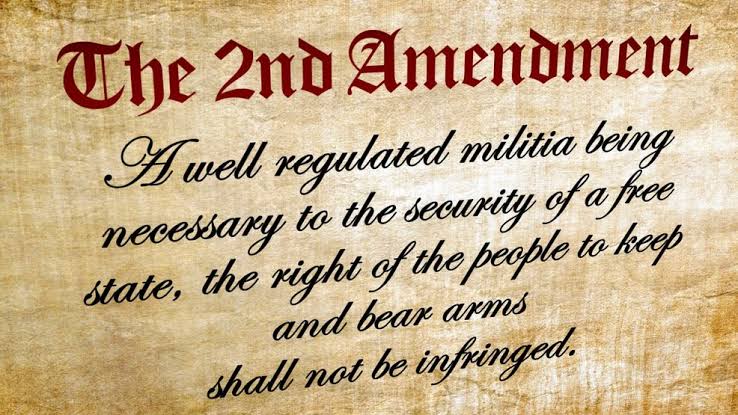
The Supreme Court has remanded several cases back to lower courts to decide in light of their recent decision in Bruen. As you’ll see below, two of the cases involve bans on standard-capacity magazines — magazines that hold more than ten rounds — which could impact the Washington state ban that goes into effect today (July 1st, 2022).
The Supreme Court said Thursday that gun cases involving restrictions in Hawaii, California, New Jersey and Maryland deserve a new look following its major decision in a gun case last week.
In light of last week’s ruling — which said that Americans have a right to carry a gun outside the home — lower courts should take another look at several cases that had been awaiting action by the high court, the court said. Those cases include ones about high-capacity magazines, an assault weapons ban and a state law that limits who can carry a gun outside the home.
The justices, in a 6-3 decision, last week struck down a New York law that required people to show “proper cause,” a specific need to carry a gun, if they wanted to carry a gun in public. Half a dozen states have similar laws that were called into question by the ruling.
In the New York case, the court’s conservative majority gave lower courts new guidance about how to evaluate gun restrictions. The justices rejected a two-step approach appeals courts had previously used as having one step too many. They said courts assessing modern firearms regulations should just ask whether they are “consistent with the Second Amendment’s text and historical understanding.”
Sending other gun cases back to lower courts gives them the opportunity to apply that new guidance.
One of the cases the justices sent back to a lower court Thursday involved a Hawaii statute similar to New York’s. In that case, a panel of 11 judges on the 9th U.S. Circuit Court of Appeals had ruled in 2021 that the right to “keep and bear arms” in the Constitution’s Second Amendment “does not guarantee an unfettered, general right to openly carry arms in public for individual self-defense.” But the high court said in its latest gun case that the Constitution protects “an individual’s right to carry a handgun for self-defense outside the home.” A lower court will now have to revisit the Hawaii ruling.
The high court also told federal appeals courts to revisit cases involving laws in California and New Jersey that limit the number of bullets a gun magazine can hold. A 2018 New Jersey law limits most gun owners to magazines that hold up to 10 rounds of ammunition instead of the 15-round limit in place since 1990. A lower court upheld the law.
California law also bans magazines holding more than 10 bullets. A panel of 11 judges on the 9th U.S. Circuit Court of Appeals ruled 7-4 last year to uphold California’s ban.
The justices also sent back for further review a case from Maryland that challenged the state’s 2013 ban on 45 kinds of assault weapons. The high court had in 2017 turned away a previous challenge to the law.
Rutherford Institute: Declare Your Independence from Tyranny, America
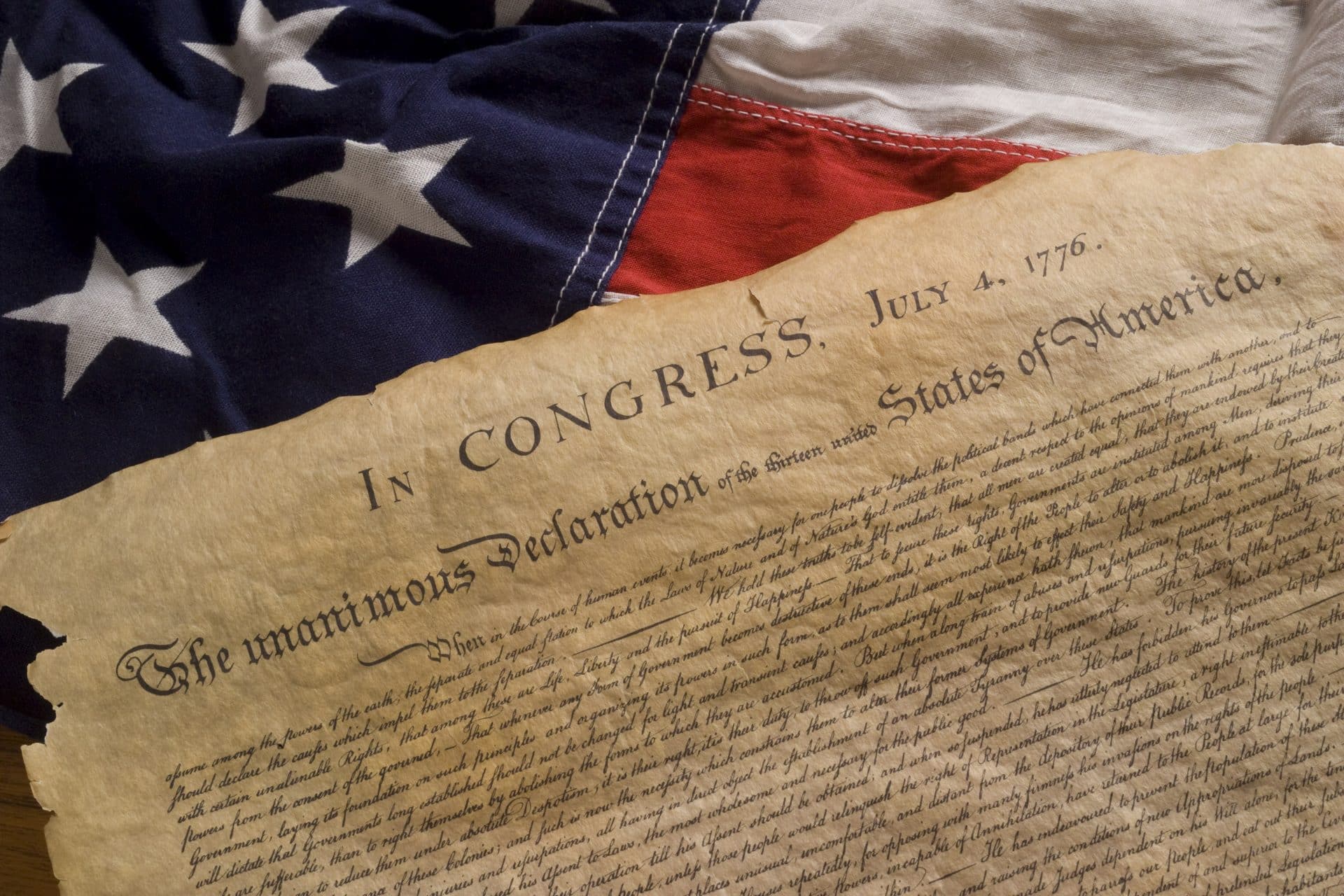
Just in time for Independence Day weekend, attorney John Whitehead of The Rutherford Institute writes Declare Your Independence from Tyranny, America.
Imagine living in a country where armed soldiers crash through doors to arrest and imprison citizens merely for criticizing government officials.
Imagine that in this very same country, you’re watched all the time, and if you look even a little bit suspicious, the police stop and frisk you or pull you over to search you on the off chance you’re doing something illegal.
Keep in mind that if you have a firearm of any kind (or anything that resembled a firearm) while in this country, it may get you arrested and, in some circumstances, shot by police.
If you’re thinking this sounds like America today, you wouldn’t be far wrong.
However, the scenario described above took place more than 200 years ago, when American colonists suffered under Great Britain’s version of an early police state. It was only when the colonists finally got fed up with being silenced, censored, searched, frisked, threatened, and arrested that they finally revolted against the tyrant’s fetters.
No document better states their grievances than the Declaration of Independence, drafted by Thomas Jefferson.
A document seething with outrage over a government which had betrayed its citizens, the Declaration of Independence was signed on July 4, 1776, by 56 men who laid everything on the line, pledged it all—“our Lives, our Fortunes, and our sacred Honor”—because they believed in a radical idea: that all people are created to be free.
Labeled traitors, these men were charged with treason, a crime punishable by death. For some, their acts of rebellion would cost them their homes and their fortunes. For others, it would be the ultimate price—their lives.
Yet even knowing the heavy price they might have to pay, these men dared to speak up when silence could not be tolerated. Even after they had won their independence from Great Britain, these new Americans worked to ensure that the rights they had risked their lives to secure would remain secure for future generations.
The result: our Bill of Rights, the first ten amendments to the Constitution.
Imagine the shock and outrage these 56 men would feel were they to discover that 246 years later, the government they had risked their lives to create has been transformed into a militaristic police state in which exercising one’s freedoms—at a minimum, merely questioning a government agent—is often viewed as a flagrant act of defiance.
In fact, had the Declaration of Independence been written today, it would have rendered its signers extremists or terrorists, resulting in them being placed on a government watch list, targeted for surveillance of their activities and correspondence, and potentially arrested, held indefinitely, stripped of their rights and labeled enemy combatants.
Read the Declaration of Independence again, and ask yourself if the list of complaints tallied by Jefferson don’t bear a startling resemblance to the abuses “we the people” are suffering at the hands of the American police state.
Here’s what the Declaration of Independence might look and sound like if it were written in the modern vernacular:
There comes a time when a populace must stand united and say “enough is enough” to the government’s abuses, even if it means getting rid of the political parties in power.
Believing that “we the people” have a natural and divine right to direct our own lives, here are truths about the power of the people and how we arrived at the decision to sever our ties to the government:
All people are created equal.
All people possess certain innate rights that no government or agency or individual can take away from them. Among these are the right to Life, Liberty and the pursuit of Happiness.
The government’s job is to protect the people’s innate rights to Life, Liberty and the pursuit of Happiness. The government’s power comes from the will of the people.
Whenever any government abuses its power, it is the right of the people to alter or abolish that government and replace it with a new government that will respect and protect the rights of the people.
It is not wise to get rid of a government for minor transgressions. In fact, as history has shown, people resist change and are inclined to suffer all manner of abuses to which they have become accustomed.
However, when the people have been subjected to repeated abuses and power grabs, carried out with the purpose of establishing a tyrannical government, people have a right and duty to do away with that tyrannical government and to replace it with a new government that will protect and preserve their innate rights for their future wellbeing.
This is exactly the state of affairs we are under suffering under right now, which is why it is necessary that we change this imperial system of government.
The history of the present Imperial Government is a history of repeated abuses and power grabs, carried out with the intention of establishing absolute tyranny over the country.
To prove this, consider the following:
The government has, through its own negligence and arrogance, refused to adopt urgent and necessary laws for the good of the people.
The government has threatened to hold up critical laws unless the people agree to relinquish their right to be fully represented in the Legislature.
In order to expand its power and bring about compliance with its dictates, the government has made it nearly impossible for the people to make their views and needs heard by their representatives.
The government has repeatedly suppressed protests arising in response to its actions.
The government has obstructed justice by refusing to appoint judges who respect the Constitution and has instead made the courts march in lockstep with the government’s dictates.
The government has allowed its agents to harass the people, steal from them, jail them and even execute them.
The government has directed militarized government agents—a.k.a., a standing army—to police domestic affairs in peacetime.
The government has turned the country into a militarized police state.
The government has conspired to undermine the rule of law and the constitution in order to expand its own powers.
The government has allowed its militarized police to invade our homes and inflict violence on homeowners.
The government has failed to hold its agents accountable for wrongdoing and murder under the guise of “qualified immunity.”
The government has jeopardized our international trade agreements.
The government has overtaxed us without our permission.
The government has denied us due process and the right to a fair trial.
The government has engaged in extraordinary rendition.
The government has continued to expand its military empire in collusion with its corporate partners-in-crime and occupy foreign nations.
The government has eroded fundamental legal protections and destabilized the structure of government.
The government has not only declared its federal powers superior to those of the states but has also asserted its sovereign power over the rights of “we the people.”
The government has ceased to protect the people and instead waged domestic war against the people.
The government has plundered our seas, ravaged our coasts, and destroyed the lives of the people.
The government has employed private contractors and mercenaries to carry out acts of death, desolation and tyranny, totally unworthy of a civilized nation.
The government through its political propaganda has pitted its citizens against each other.
The government has stirred up civil unrest and laid the groundwork for martial law.
Repeatedly, we have asked the government to cease its abuses. Each time, the government has responded with more abuse.
An Imperial Ruler who acts like a tyrant is not fit to govern a free people.
We have repeatedly sounded the alarm to our fellow citizens about the government’s abuses. We have warned them about the government’s power grabs. We have appealed to their sense of justice. We have reminded them of our common bonds.
They have rejected our plea for justice and brotherhood. They are equally at fault for the injustices being carried out by the government.
Thus, for the reasons mentioned above, we the people of the united States of America declare ourselves free from the chains of an abusive government. Relying on God’s protection, we pledge to stand by this Declaration of Independence with our lives, our fortunes and our honor.
In the 246 years since early Americans first declared and eventually won their independence from Great Britain, “we the people” have managed to work ourselves right back under the tyrant’s thumb.
Only this time, the tyrant is one of our own making: the American Police State.
The abuses meted out by an imperial government and endured by the American people have not ended. They have merely evolved.
“We the people” are still being robbed blind by a government of thieves.
We are still being taken advantage of by a government of scoundrels, idiots and monsters.
We are still being locked up by a government of greedy jailers.
We are still being spied on by a government of Peeping Toms.
We are still being ravaged by a government of ruffians, rapists and killers.
We are still being forced to surrender our freedoms—and those of our children—to a government of extortionists, money launderers and corporate pirates.
And we are still being held at gunpoint by a government of soldiers: a standing army in the form of a militarized police.
Given the fact that we are a relatively young nation, it hasn’t taken very long for an authoritarian regime to creep into power.
Unfortunately, the bipartisan coup that laid siege to our nation did not happen overnight.
It snuck in under our radar, hiding behind the guise of national security, the war on drugs, the war on terror, the war on immigration, political correctness, hate crimes and a host of other official-sounding programs aimed at expanding the government’s power at the expense of individual freedoms.
The building blocks for the bleak future we’re just now getting a foretaste of—police shootings of unarmed citizens, profit-driven prisons, weapons of compliance, a wall-to-wall surveillance state, pre-crime programs, a suspect society, school-to-prison pipelines, militarized police, overcriminalization, SWAT team raids, endless wars, etc.—were put in place by government officials we trusted to look out for our best interests.
As I make clear in my book Battlefield America: The War on the American People and in its fictional counterpart The Erik Blair Diaries, the problems we are facing will not be fixed overnight: that is the grim reality with which we must contend.
Yet that does not mean we should give up or give in or tune out. What we need to do is declare our independence from the tyranny of the American police state.
Out Front: You Are Not Prepared
Intelligence analyst Mike Shelby of Forward Observer talks about preparation in his latest livestream and why 98-99% of even preppers are unprepared:
Mike says that America as we know it today is ending. The Layer one solutions below will get you through the short term, but for longer term sustainment, you must work on your layer two solutions:

 Lower Valley Assembly