Activist Post: How the FBI Is Identifying, Tracking and Rounding Up Dissidents

From Constitutional lawyer John Whitehead come the article at Activist Post titled Digital Trails: How the FBI Is Identifying, Tracking and Rounding Up Dissidents

“Americans deserve the freedom to choose a life without surveillance and the government regulation that would make that possible. While we continue to believe the sentiment, we fear it may soon be obsolete or irrelevant. We deserve that freedom, but the window to achieve it narrows a little more each day. If we don’t act now, with great urgency, it may very well close for good.”—Charlie Warzel and Stuart A. Thompson, New York Times

Databit by databit, we are building our own electronic concentration camps.

With every new smart piece of smart technology we acquire, every new app we download, every new photo or post we share online, we are making it that much easier for the government and its corporate partners to identify, track and eventually round us up.

Saint or sinner, it doesn’t matter because we’re all being swept up into a massive digital data dragnet that does not distinguish between those who are innocent of wrongdoing, suspects, or criminals.

This is what it means to live in a suspect society.

The government’s efforts to round up those who took part in the Capitol riots shows exactly how vulnerable we all are to the menace of a surveillance state that aspires to a God-like awareness of our lives.

Relying on selfies, social media posts, location data, geotagged photos, facial recognition, surveillance cameras and crowdsourcing, government agents are compiling a massive data trove on anyone and everyone who may have been anywhere in the vicinity of the Capitol on January 6, 2021.

The amount of digital information is staggering: 15,000 hours of surveillance and body-worn camera footage; 1,600 electronic devices; 270,000 digital media tips; at least 140,000 photos and videos; and about 100,000 location pings for thousands of smartphones.

And that’s just what we know.

More than 300 individuals from 40 states have already been charged and another 280 arrested in connection with the events of January 6. As many as 500 others are still being hunted by government agents.

Also included in this data roundup are individuals who may have had nothing to do with the riots but whose cell phone location data identified them as being in the wrong place at the wrong time.

Forget about being innocent until proven guilty.

In a suspect society such as ours, the burden of proof has been flipped: now, you start off guilty and have to prove your innocence.

For instance, you didn’t even have to be involved in the Capitol riots to qualify for a visit from the FBI: investigators have reportedly been tracking—and questioning—anyone whose cell phones connected to WiFi or pinged cell phone towers near the Capitol. One man, who had gone out for a walk with his daughters only to end up stranded near the Capitol crowds, actually had FBI agents show up at his door days later. Using Google Maps, agents were able to pinpoint exactly where they were standing and for how long.

All of the many creepy, calculating, invasive investigative and surveillance tools the government has acquired over the years are on full display right now in the FBI’s ongoing efforts to bring the rioters to “justice.”

FBI agents are matching photos with drivers’ license pictures; tracking movements by way of license plate toll readers; and zooming in on physical identifying marks such as moles, scars and tattoos, as well as brands, logos and symbols on clothing and backpacks. They’re poring over hours of security and body camera footage; scouring social media posts; triangulating data from cellphone towers and WiFi signals; layering facial recognition software on top of that; and then cross-referencing footage with public social media posts.

It’s not just the FBI on the hunt, however.

They’ve enlisted the help of volunteer posses of private citizens, such as Deep State Dogs, to collaborate on the grunt work. As Dinah Voyles Pulver reports, once Deep State Dogs locates a person and confirms their identity, they put a package together with the person’s name, address, phone number and several images and send it to the FBI.

According to USA Today, the FBI is relying on the American public and volunteer cybersleuths to help bolster its cases.

This takes See Something, Say Something snitching programs to a whole new level.

The lesson to be learned: Big Brother, Big Sister and all of their friends are watching you.

They see your every move: what you read, how much you spend, where you go, with whom you interact, when you wake up in the morning, what you’re watching on television and reading on the internet.

Every move you make is being monitored, mined for data, crunched, and tabulated in order to form a picture of who you are, what makes you tick, and how best to control you when and if it becomes necessary to bring you in line.

Simply liking or sharing this article on Facebook, retweeting it on Twitter, or merely reading it or any other articles related to government wrongdoing, surveillance, police misconduct or civil liberties might be enough to get you categorized as a particular kind of person with particular kinds of interests that reflect a particular kind of mindset that might just lead you to engage in a particular kinds of activities and, therefore, puts you in the crosshairs of a government investigation as a potential troublemaker a.k.a. domestic extremist.

Chances are, as the Washington Post reports, you have already been assigned a color-coded threat score—green, yellow or red—so police are forewarned about your potential inclination to be a troublemaker depending on whether you’ve had a career in the military, posted a comment perceived as threatening on Facebook, suffer from a particular medical condition, or know someone who knows someone who might have committed a crime.

In other words, you might already be flagged as potentially anti-government in a government database somewhere—Main Core, for example—that identifies and tracks individuals who aren’t inclined to march in lockstep to the police state’s dictates.

The government has the know-how.

It took days, if not hours or minutes, for the FBI to begin the process of identifying, tracking and rounding up those suspected of being part of the Capitol riots.

Imagine how quickly government agents could target and round up any segment of society they wanted to based on the digital trails and digital footprints we leave behind.

Of course, the government has been hard at work for years acquiring these totalitarian powers.

Long before the January 6 riots, the FBI was busily amassing the surveillance tools necessary to monitor social media posts, track and identify individuals using cell phone signals and facial recognition technology, and round up “suspects” who may be of interest to the government for one reason or another.

As The Intercept reported, the FBI, CIA, NSA and other government agencies have increasingly invested in corporate surveillance technologies that can mine constitutionally protected speech on social media platforms such as Facebook, Twitter and Instagram in order to identify potential extremists and predict who might engage in future acts of anti-government behavior.

All it needs is the data, which more than 90% of young adults and 65% of American adults are happy to provide.

When the government sees all and knows all and has an abundance of laws to render even the most seemingly upstanding citizen a criminal and lawbreaker, then the old adage that you’ve got nothing to worry about if you’ve got nothing to hide no longer applies.

As for the Fourth Amendment and its prohibitions on warrantless searches and invasions of privacy without probable cause, those safeguards have been rendered all but useless by legislative end-runs, judicial justifications, and corporate collusions.

We now find ourselves in the unenviable position of being monitored, managed and controlled by our technology, which answers not to us but to our government and corporate rulers.

Consider that on any given day, the average American going about his daily business will be monitored, surveilled, spied on and tracked in more than 20 different ways, by both government and corporate eyes and ears. A byproduct of this new age in which we live, whether you’re walking through a store, driving your car, checking email, or talking to friends and family on the phone, you can be sure that some government agency, whether the NSA or some other entity, is listening in and tracking your behavior.

This doesn’t even begin to touch on the corporate trackers that monitor your purchases, web browsing, social media posts and other activities taking place in the cyber sphere.

For example, police have been using Stingray devices mounted on their cruisers to intercept cell phone calls and text messages without court-issued search warrants. Doppler radar devices, which can detect human breathing and movement within a home, are already being employed by the police to deliver arrest warrants.

License plate readers, yet another law enforcement spying device made possible through funding by the Department of Homeland Security, can record up to 1800 license plates per minute. Moreover, these surveillance cameras can also photograph those inside a moving car. Reports indicate that the Drug Enforcement Administration has been using the cameras in conjunction with facial recognition software to build a “vehicle surveillance database” of the nation’s cars, drivers and passengers.

Sidewalk and “public space” cameras, sold to gullible communities as a sure-fire means of fighting crime, is yet another DHS program that is blanketing small and large towns alike with government-funded and monitored surveillance cameras. It’s all part of a public-private partnership that gives government officials access to all manner of surveillance cameras, on sidewalks, on buildings, on buses, even those installed on private property.

Couple these surveillance cameras with facial recognition and behavior-sensing technology and you have the makings of “pre-crime” cameras, which scan your mannerisms, compare you to pre-set parameters for “normal” behavior, and alert the police if you trigger any computerized alarms as being “suspicious.”

State and federal law enforcement agencies are pushing to expand their biometric and DNA databases by requiring that anyone accused of a misdemeanor have their DNA collected and catalogued. However, technology is already available that allows the government to collect biometrics such as fingerprints from a distance, without a person’s cooperation or knowledge. One system can actually scan and identify a fingerprint from nearly 20 feet away.

Developers are hard at work on a radar gun that can actually show if you or someone in your car is texting. Another technology being developed, dubbed a “textalyzer” device, would allow police to determine whether someone was driving while distracted. Refusing to submit one’s phone to testing could result in a suspended or revoked driver’s license.

It’s a sure bet that anything the government welcomes (and funds) too enthusiastically is bound to be a Trojan horse full of nasty, invasive surprises.

Case in point: police body cameras. Hailed as the easy fix solution to police abuses, these body cameras—made possible by funding from the Department of Justice—turn police officers into roving surveillance cameras. Of course, if you try to request access to that footage, you’ll find yourself being led a merry and costly chase through miles of red tape, bureaucratic footmen and unhelpful courts.

The “internet of things” refers to the growing number of “smart” appliances and electronic devices now connected to the internet and capable of interacting with each other and being controlled remotely. These range from thermostats and coffee makers to cars and TVs. Of course, there’s a price to pay for such easy control and access. That price amounts to relinquishing ultimate control of and access to your home to the government and its corporate partners. For example, while Samsung’s Smart TVs are capable of “listening” to what you say, thereby allowing users to control the TV using voice commands, it also records everything you say and relays it to a third party, e.g., the government.

Then again, the government doesn’t really need to spy on you using your smart TV when the FBI can remotely activate the microphone on your cellphone and record your conversations. The FBI can also do the same thing to laptop computers without the owner knowing any better.

Drones, which are taking to the skies en masse, are the converging point for all of the weapons and technology already available to law enforcement agencies. In fact, drones can listen in on your phone calls, see through the walls of your home, scan your biometrics, photograph you and track your movements, and even corral you with sophisticated weaponry.

All of these technologies add up to a society in which there’s little room for indiscretions, imperfections, or acts of independence, especially not when the government can listen in on your phone calls, monitor your driving habits, track your movements, scrutinize your purchases and peer through the walls of your home.

These digital trails are everywhere.

As investigative journalists Charlie Warzel and Stuart A. Thompson explain, “This data—collected by smartphone apps and then fed into a dizzyingly complex digital advertising ecosystem … provided an intimate record of people whether they were visiting drug treatment centers, strip clubs, casinos, abortion clinics or places of worship.

In such a surveillance ecosystem, we’re all suspects and databits to be tracked, catalogued and targeted.

As Warzel and Thompson warn:

“To think that the information will be used against individuals only if they’ve broken the law is naïve; such data is collected and remains vulnerable to use and abuse whether people gather in support of an insurrection or they justly protest police violence… This collection will only grow more sophisticated… It gets easier by the day… it does not discriminate. It harvests from the phones of MAGA rioters, police officers, lawmakers and passers-by. There is no evidence, from the past or current day, that the power this data collection offers will be used only to good ends. There is no evidence that if we allow it to continue to happen, the country will be safer or fairer.”

As I point out in my book Battlefield America: The War on the American People, this is the creepy, calculating yet diabolical genius of the American police state: the very technology we hailed as revolutionary and liberating has become our prison, jailer, probation officer, Big Brother and Father Knows Best all rolled into one.

There is no gray area any longer.

Forward Observer: Why the Battlefield Is Everywhere

Intelligence analyst Sam Culper of Forward Observer talks about China and cyber warfare in Why the Battlefield Is Everywhere.

Good morning. It’s Sam Culper with this week’s Forward Observer Dispatch.

Last week, I wrote about the reasons why conflict is virtually certain to escalate with China, leading to either a shooting war or a financial, monetary, and cyber conflict, which could lead to a shooting war. The history lesson is that monetary wars lead to military wars.

Either way, this is going to be a messy 10-20 years.

I’m picking my way through another chapter of Unrestricted Warfare, the 1999 essay/manual written by two People’s Liberation Army officers.

I want to share a key takeaway from the chapter:

The authors discuss how technology is changing the nature of warfare, from a “line” to an “area” and eventually to the entire world. Here’s the money quote:

“Just think, if it’s even possible to start a war in a computer room or a stock exchange that will send an enemy country to its doom, then is there [a] non-battlespace anywhere?”

“Where is the battlefield?” the authors ask. “The answer would be: Everywhere.”

The authors go on to write that, in light of this, the future protagonist of war is not the professional soldier, but the hacker.

This is exactly the kind of mindset and activity we’re seeing today, re: Chinese hacking campaigns.

At some point in the next four years, perhaps coinciding with the 2024 election, the U.S. could be forced to decide and act on going to war with China over Taiwan. I’m not advocating for or against it, but simply pointing out that a decision will be made.

This is one reason why Trump tried to pull U.S. Forces from the ends of the Earth.

Chinese military leaders privately say they’re within two years of being able to invade Taiwan.

The commander of U.S. Indo-Pacific Command is requesting missiles be deployed to Taiwan, Japan, and the Philippines to counteract what he describes as a shifting balance of military power that has become “more unfavorable” for the United States.

I want to encourage you, if haven’t already, to consider how prepared you are for systems disruption. If we go to war with China, we’re going to feel the effects here at home: disruptions to power, internet, communications, transportation, the stock market and financial services, etc.

According to Unrestricted Warfare, the key to beating the United States is to make them prioritize self-preservation ahead of geopolitical goals. Prepare accordingly.

Always Out Front,

Samuel Culper

See also, Yahoo!’s ‘We’re going to lose fast’: U.S. Air Force held a war game that started with a Chinese biological attack

Financial Times Admiral warns US military losing its edge in Indo-Pacific

CSG: Introduction to Systematic Politics Classes, April 2021

The Center for Self Governance is holding three different Introduction to Systematic Politics courses in April. The live classes are taking place in various places in Missouri, but they are all also available online at the same time.

April 7th, Morning, Cape Girardeau, MO, Live/Online

April 7th, Evening, Jackson, MO, Live/Online

April 9th, Washington, MO, Live/Online

In Block 1 you will distinguish Partisan from Systematic Politics, learn the origins of Systematic Politics, and identify the Systematic Politics of Layer and Marble Cake Federalism.

Colion Noir: S.736 Feinstein Introduces Bill To Ban All Commonly Owned AR-15s & Magazines Over 10 Rounds

We posted on this a few days ago, before the bill had been given a number. Here’s Colion Noir talking about S. 736, the Assault Weapons Ban of 2021, or officially “A bill to regulate assault weapons, to ensure that the right to keep and bear arms is not unlimited, and for other purposes.” They just want to save you from your rights; that’s all.

The Organic Prepper: How Preppers Have Adapted to These Uncertain Times

Daisy Luther at The Organic Prepper talks about Here’s How 30 Preppers Have Adapted and What They Foresee Happening Next. With various food and supply shortages during the pandemic and extended lockdowns, it is harder to stock up on essential items and individual financial situations may have worsened.

There’s a lot more crazy and a lot less money than usual, and as I’ve written before, the face of prepping has changed. It’s a lot more difficult (and expensive) to go out and stockpile as we did a few years ago, and the event we’ve faced has been a slow-burning SHTF event that has slowly and insidiously taken away financial security from hundreds of thousands of Americans.

I wondered how others have changed the way they prep to adapt to these times so I asked the folks in our Me-We group if they’ve changed how they prep and if so, what changes they’ve made. If you are interested in joining the group, go here, answer four questions, and be sure to change your profile picture from the Me-We basic images. We don’t care what you change them too, we’re just trying to avoid “bot” traffic from prowling through our group.

Here’s how readers have changed the way they prep.

With some of the comments, I’ve added a comment or a link in italics for more information.

Eileen:

I am working on doing even more with even less. I was laid off at the beginning of Covid. Hubby’s paycheck is down a bit. We have been watching the cost of regularly used items skyrocket, yet again. Teaching myself to grow more long term food items this year. At this point, Daisy, just not giving up feels like prepping, even if it’s just to get up tomorrow and try again.

Here’s an article on how to keep going when things feel hopeless.  ~ D

Lynn:

We are getting ready to move. I am using my food preps to see what we really need and what has been hard to use up. Mostly pertaining to food and household essentials. Saving the money to buy fresh preps after the move. We moved a year ago and I had a huge stockpile that had to be moved twice in two months. I think it is better to use it up than move it and then replace it with fresh food and water.

This is a great way to rotate your stock and always have fresher products available. Just pay attention to the things that are in shortage or difficult to acquire. You may not want to go through that supply just yet. ~ D

Jeff:

I have been building up at least a year’s supply of essential items like laundry detergent, shampoo, hand soap, toothpaste, etc. I will be using the stimulus check to add to my freeze-dried food inventory (mostly protein) since I have 1k lbs of dry food stored away. I don’t know if hyperinflation, war, or another pandemic may hit but if it does the goal is to be able to go at least a year without leaving the house.

This is a fantastic goal!

Tami:

After the Texas snowstorm, I’m prepping mainly for life without electricity. I’ve lived off the grid before but had stopped so I’m going back to it. I also realized my need for more stored water .

Here’s an article about preparing for longer-term power outages. It’s a great place to start if you’re new to prepping or if you simply need to make sure you have the things you need. ~ D

Christina:

Prepping mainly for economic upheaval. We kicked up food storage (have a working pantry) January 2020, but it wasn’t an issue to grocery shop in my area, so I slacked off a bit. August of 2020, we put together 6 months of food (again a working pantry I use and replenish), paying off debts, saving money, buying silver, ammo, guns, etc. Anything that will aid us as food and fuel prices goes up or our income goes down. So far, our income has increased since last year, but you never know. I’ll add my pantry includes HH / personal items too.

Stocking up on things other than food is really important. Here’s a list of non-food stockpile items that may inspire you to add to your own supplies. ~ D

Vicki:

We are prepping for civil unrest and skyrocketing inflation. I’ve been watching the groceries I normally buy going up a lot. We are planning to grow more veggies and put in some more fruit trees. We are also making sure we have extras of the tools we use, and enough supplies to fix things(tools, machinery, plumbing, electrical, etc.) that might break. Lumber has also gone up a huge amount, so we are buying extra of that too.

Having spare parts for tools and essential equipment is a vital and often overlooked prep. ~ D

Diane: Everything I can think of from food to security.

Keeping your preps balanced and not focusing too specifically on just one aspect is advised. Toby talks about the vital balance in this article. ~ D

Max:

Building out networks and relationships. Human terrain not “stuff”.

Here’s advice on building community even during a pandemic and be sure to check out Selco’s on-demand webinar about community building. ~ D

Susan:

I think hyperinflation and the possible dollar collapse is more possible now than ever. I am adding canned and dried food stocks to my preps especially items that are predicted to become exorbitantly expensive like corn and coffee. I am also eagerly watching my garden waiting for it to thaw out. Most of the snow and ice is gone except in the woods.

Here are some things you can do right now to get ready for garden season and here’s some advice on how to start planning your garden. ~ D

Sheri:

I’m turning more of my yard into vegetable/herb gardens and will preserve most of the produce. Adding to non-perishables when I see a good sale. Learning basic survival and self-sufficiency skills. Moving toward a simpler lifestyle, so living without modern conveniences will be less of a shock.

This is precisely why my preps are low-tech. ~ D

Stacy:

Survived Texas without blaming the governor or president for leaving me in the cold. We need more stored water. Had enough but saw that I needed more for cleaning. Need larger pots. Fed 7 people easy as my house was only one with gas cooktop. Need cookware to feed 20…and preps to make my own soup kitchen. Need back up potty! Do I have 100 candles? More lamp oil. The little tealight under flowerpot did help to make room cozier. Store for this. A way to wash clothes. A way to take warm shower and wash hair. Prepare a menu, recipes, and storage for meals on the stove top. Prep to share with family. (I live on 20 member family compound.) A way to charge phone. Size c batteries to listen to CDs….more CDs. Hootch. OTC

Awesome learning experience. I can definitely help with instructions for this off-grid kitty litter potty for humans. ~ D

Ezra:

We are working on paying off debts (Dave Ramsey) and materials for life without electricity. We lost power for 4 days during the winter storm here in Texas

Here are a couple of articles you may find helpful regarding debt (one is directly from Dave’s strategies) and here’s an ebook about dealing with power outages. ~ D

Lynn:

We are focusing on our garden this year. Our goal is to be as self-sufficient as possible in regard to produce. I want to save seeds from the garden for the future. We aren’t growing grains, wheat, and oats, though. That is a future project.

Here’s our favorite source for seeds – you can also get a free garden planner at that link and it is a small, family-run business. ~ D

Rob:

The money hasn’t changed for me in the Great White North. I’ve realized, though, that prepping for an event like an EMP is trying to play apocalypse lottery; better to consider the consequences of whatever it is you worry about and prepare for those. It stops you from making assumptions. (Makes an ass of U and umptions). I.e. instead of prepping for an EMP, I’m prepping for a collapse of communication and transportation of goods like food, no matter the cause. I’m expanding my EMP-proof storage still but I’m more prepared to handle, say, a food shortage whereas before my food plans only involved getting out of the city and joining a full farm.

I think there’s a lot of wisdom to what you said there. A lot of folks hyperfocus on just one thing when in fact most disasters are an entire series of bad things. Some useful links might be this one about making a Faraday cage, this one about a communications collapse, and this one about the strain on our transportation system for goods.

Bestsmall country:

Hi Daisy, I’ve been watching everything since early 2018, and the most striking thing is the correlation between Q and the Bible!! I did most of my prepping back then. Long-life food, seeds (I learned how to grow veg). All done under the radar, especially Crypto and PMs. Skills will be the REAL asset. I’m hoping a local viewer of my channel will ‘kidnap’ me because the idiots that wouldn’t listen will be banging on my door

OpSec is more important than ever! Here’s an article that might help others who are thinking like you about doing things under the radar. ~ D

Kamay:

Not much change, if any. Been prepping for the collapse of society, food shortages, and the possibility of a grid failure. We try to do all farming, gardening, preservations without the use of electricity and fancy gadgets. We recycle, upcycle, make do and live outside the box.

Simplicity is key! I like your style :). ~ D

Letia:

I need to get ready for a garden! Strawberries will come back, and I’ll start canning again. I need to check my jars. I have some cases but need to check in case folks are back to normalcy or still canning. I need to practice shooting! I need to work on security with more cameras and change the button lock on my back door. 🙄

DEFINITELY practice shooting. It’s a perishable skill. Here’s an article about creating a safe room at a reasonable price that might be helpful for the security aspect. ~ D

Kris:

Taking care of my animals and plans to raise more meat chickens – so more to feed. Buying feed in bulk and pricing out different feed options, etc.

Have you checked out the fodder method? I took a class on it when I lived in California, but did not set up my own system because we were moving. Here’s a really good article about it. The guy I took the course from had chickens strictly on fodder and free-range. ~ D

Roxanne:

We’re pretty much preparing for our retirement. Then we’ll be on a much lower income. We’ve paid off all our debt except what we use on our credit cards which we pay off every month. We’ve sold off a lot of things which we didn’t need to get rid of the debt. We’re thinking we could be looking at another depression or some other economic troubles. I’ve been trying to grow different vegetables to learn how to do it well. I also have been dehydrating what I can and vacuum sealing them in large mason jars. I plan to learn to pressure can this year so I can take advantage of any sales at the stores on meats and vegetables which don’t grow here.

Here’s an easy how-to for pressure canning, and if you happen to have a glass top stove, some pressure canning options that will work for you.

Heather:

We of the Down Under are keenly aware that we no longer matter with your particular ruling family’s politics. China is now a far more serious threat in the Pacific area. We also no longer refine fuel here, much of it comes from Singapore. We are prepping for blockade/ interruption to supply lines as this would pretty much cripple the country. We have gardens, fruit trees, and are stocking up a bit more on canned goods. We aren’t allowed to store more than a couple of jerry cans of fuel. Also, I have been sure to keep medical checkups and dental checkups very up-to-date for the family as you never know when these things just won’t be available.

You bring up an excellent point with regard to medical and dental care. During the past year of Covid restrictions many people saw health issues getting far worse because they were unable to seek preventative care, or even take care of conditions that arose.  Handling these things while we an is vital. ~ D

Shannon:

I prep for hyperinflation, power grid issues, (due to natural disasters), and civil unrest. I live in the PNW, so we’ve had our share of rioting, unrest, and fluke weather. Prepping food, supplies to deal with no electricity, trying to learn how to cope without electricity. We sold property in Ca. and moved up here and bought property with land.

With the changes you’ve made, you are most likely looking for some suggestions on becoming more self-reliant with the land and new resources you have available. Check out the self-reliance manifesto here. (Some links are no longer working – we’re striving to keep up!) ~ D

Kate:

We’re planning to buy a house/property in the next few years, so we’ve been saving wherever possible. Luckily the covid didn’t affect our income. Cutting back on trips to town. Waiting for the garden to dry out and also waiting for my seeds to arrive. Going to grow mostly for cellar storage this year….potatoes, squashes, carrots, turnips, etc. Jar lids are really hard to find here on Vancouver Island…hopefully, by the fall, I’ll be able to can sauce and V8. Keeping up with buying hard copy books on natural medicine, crafts, foraging.

I’ve really lucked out and gotten some used books on those topics at yardsales. I once spent $100 at a yardsale buying every book the person was selling because her deceased relative had been into food preservation and herbalism. Talk about a motherlode. Another potential goldmine for you is Thriftbooks, which has millions of used books for sale. If you are new to root cellaring, this article may be helpful. ~ D

K:

I’ve spent the last year really focusing on smaller potential SHTF situations (a week to a month type). I feel like I’m in decent shape as far as that goes. Now my focus is more long-term. I want to get sustainable food production set up and keep hounding my kids about the likely change to digital currency in the next few years along with a rise in inflation. I have preached for years that our reliance on food from outside of our areas is going to be a problem in the future. That’s my focus now.

A couple of articles on two topics you mentioned are this one about how our everyday lives would change in a cashless society and this one about why preppers need to localize their food sources. ~ D

James:

Economic misfortune, (job loss, economy downturns) civil unrest, power grid/natural disasters. I am set for two years monetarily, approximately 6 months for comestibles, and a decent self-defense set up although still working on hardening the house. I am also to a lesser extent prepared to bug out home if things really go to s**t, however as I am currently OCONUS I am probably screwed on that part.

That definitely makes things difficult. I think what I would focus on in your shoes is making certain that your family members are able to hang in there for a period of time while waiting for you to make it home. You don’t want them to be in a situation where only you know how to do something important. Redundancies are essential. ~ D

Rita:

We have concentrated more on being self-contained and self-sufficient. We source our needs locally as much as possible. A LOT quieter about accomplishments and acquisitions. For the most part, we no longer have strong public opinions about much of anything. We are becoming more internalized and grey. As we get older, the fighting spirit is still there, but reality says to stock up and shut up. We see civil unrest, and difficult times, if not out and out economic collapse and civil war. The USA is a powder keg right now and some dumba** is going to light the match

Surviving this crazy time does have a lot to do with keeping your thoughts more private. And sometimes the fight you win is the one you don’t participate in. ~ D

Valerie:

Economic collapse is my greatest concern. We are planting a larger garden and stocking up on nonperishable food. I plan to can more this year. In fact, today I scored a lightly used All American 910 canner at the goodwill. $5.99. Scratch that off my bucket list!

Oh my gosh, what a SCORE!!!!!! I’m sure a lot of us reading that are positively green with envy. And the good thing about the All American is there are no parts or gaskets that might need to be replaced. ~ D

Rosemary:

I can’t shake the feeling that we will have a grid-down situation in the near future, so getting prepped for that has been my top priority. Next is food shortages and hyperinflation. Bigger garden & more canning is on my list for this season. I wanted to buy heating mats & lights too this year but didn’t have the extra funds, so I am trying Winter Sowing in gallon water & milk jugs. I have 20+ jugs done so far with lots more to do. Fingers crossed it’s a success!

I’ll be really interested to hear how your Winter Sowing goes! Please keep us posted. Here’s a link to my book on Amazon, Be Ready for Anything. It goes into a lot of detail about long-term power outages in both summer and winter. ~ D

Martha:

Although my area doesn’t normally see really low temps, it does get cold in the winter, and after seeing what happened in Texas, I’m adding a portable heater (either propane or kerosene) to my list of supplies  ASAP.  Just wish AC was as easy to prep for if the grid goes down.  Looking at doing solar with battery backup to keep fridge, freezer running too, and even 1 window ac unit to keep the house at least bearable when it 115 in the summer.

Wow, that sure sounds like some miserable weather to lose power in. Here’s an article about handling hot weather power outages, an article about how to calculate how much power you need to be able to generate, and the off-grid heater I recommend. ~ D

Laura:

In light of the recent hacking into MULTIPLE national security systems, I think the grid down is the biggest threat. Financial collapse would be second after that. I’m using some of the stimulus funds to buy larger ticket items. A respirator/gas mask is next on my list. Additionally, I bought heating pads and fluorescent lights for seed planting this year-going well. Also just bought five 55-gallon water barrels that need washing and set up. Busy time for me trying to keep up with all this.

Here are some thoughts on preparing for a major cyber attack and an article on respirators and gas masks – I hope you find them helpful. ~ D

Daisy:

Yep, it’s me. The thing that I have changed over the past year about my preparedness is paying attention to the local governments and how they’ve responded. I’ve lived in 3 different places over the course of the lockdowns and each place has managed the response to covid very differently. It’s important to understand how your own local government reacts to things because once you do, you can begin to predict what they’ll do in a different situation. I’ve also gotten a lot better at getting information from others without them realizing I’m doing it, and making friends who can be helpful in a variety of events. (Read more in this article.)

Traveling from place to place, I’ve learned to prep fast and I’ve learned how to make due with what’s available, instead of being so choosy. I plan to continue working on my adaptability levels, for I believe that is my most important skill. My primary goal is to avoid trouble in the first place and my secondary goal is to survive if I can’t. I foresee more restrictions after a brief reprieve and a lot more difficulty for those who just want to be left alone to do so without jumping through hoops…

Washington Policy Center: Risk of Texas-style Blackouts in Washington Is Real and Growing

The Washington Policy Center reports that the risk of Texas-style blackouts in Washington is real and growing based on soon-to-close coal-fired electrical generators and projected increases in demand, among other reasons.

Key Findings

1. The recent blackouts in Texas have increased awareness of the need for reliable sources of electricity.

2. The risk of a power shortage in Washington is already slightly above the acceptable standard of 5 percent for Loss of Load Probability (LOLP).

3. That risk increases dramatically in the upcoming years, reaching 26 percent in 2026.

4. A new assessment being completed by the NW Power and Conservation Council could find the risk is even higher than that.

5. Removing the four Lower Snake River dams would cause that already high risk to increase even more.

6. Reducing the LOLP to an acceptable level in our state will be challenging given the limits on building new dispatchable energy sources like hydro and natural gas.

Introduction

The recent electrical blackouts in Texas have sparked a great deal
of discussion about how society can provide a predictable supply of
electricity while reducing the environmental impact of producing energy.
The costs of getting policies wrong, as has been demonstrated in Texas
and California, can lead to expensive and deadly outcomes.

Although Washington State has a very different energy mix and utility
system, the experience in Texas is a good reminder of how state leaders
should assess the resiliency of our electricity generation and the grid’s
ability to withstand a serious winter storm.

What is the outlook for the stability of Washington’s electrical supply?
Currently, the risk of blackouts is slightly higher than is acceptable and
the danger will get much worse in the near future. The high risk is a
warning that the state’s energy policy should not ignore reliability.

Power outages in Texas

Several factors contributed to the outages in Texas.

The basic cause of the outages was a storm that caused winter demand
to hit an all-time high during the night of February 14, 2021. Soon after
midnight on February 15th the electrical system could not meet demand
and rolling blackouts were initiated by the grid manager, a Texas state
agency known as ERCOT, causing the big drop in natural gas generation
and a smaller drop in coal generation. Home heating has priority over
electrical generation for supplies of natural gas, so a loss of fuel could
have contributed to the reduction in natural gas generation. With high
demand and struggling supply, the frequency of the alternating current
dropped below 60 Hertz to a level that required some facilities be shut
down to prevent equipment damage.

Additionally, once the winter weather moved in, the amount of wind energy
available declined significantly. In the week before the storm, variable wind
generation ranged from 3,000 megawatt hours (MWh) to 21,000 MWh. When the
storm moved in, that range narrowed to a maximum of 9,000 MWh to below 1,000
MWh. Some have noted that ERCOT only planned for about 6,000 MWh of wind,
so the reduction was not unexpected. That is true, but that left nuclear, coal, and
(mostly) natural gas – i.e. dispatchable electricity (because it can be dispatched
when needed) – to meet the extremely high demand for power.

Rising risk of blackouts in Washington State

Could a similar situation, with dispatchable energy unable to keep up
with demand, happen in Washington State? The chances of that scenario are,
unfortunately, increasing.

To estimate the chance that outages or electricity shortfalls could occur, the
Northwest Power and Conservation Council (NWPCC) calculates the annual Loss
Of Load Probability (LOLP), which is the “the likelihood (probability) that system
demand will exceed the generating capacity during a given period.”

It is important to keep in mind that a loss of load could simply mean that grid
managers ask major industrial users of electricity to shut down or reduce demand.
It does not necessarily mean what we saw in Texas. Additionally, reducing the risk
that electricity supply falls short can mean adding generating resources that may
be idle much of the time. Generation that is only used when demand is very high
means the cost of the electricity will be very high. So, while we could, theoretically,
push the LOLP to near zero, doing so would be very expensive…(continues)

Click here for PDF of report.

Atlas Obscura: Qurt – Long-lasting, Ancient Road Snack of Central Asian Nomads

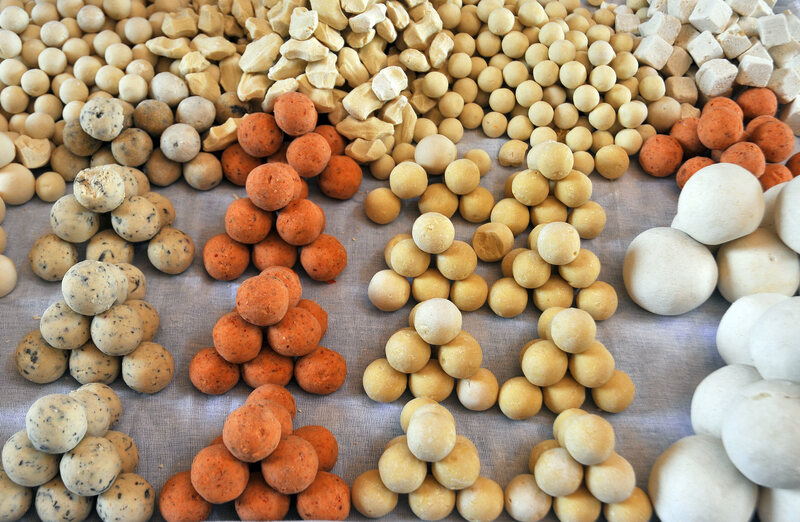
Qurt at the Osh Bazaar in Bishkek, Kyrgyzstan. JACKIE ELLIS / ALAMY STOCK PHOTO

Atlas Obscura has a recipe for qurt, a dried, dairy product, which when hardened can last for years without refrigeration, though a thirteenth century friar said it was “hard as iron slag.” The hardened qurt can be softened with water and mixed with jerky and flour to make a sort of stew. Here is Make the Ancient Road Snack of Central Asian Nomads.

ONE WINTER MORNING, PRISONERS AT the Akmola Labor Camp for Wives of Traitors to the Motherland, part of the Soviet gulag system from the 1930s to 1950s, trudged to a nearby lake. As they began gathering reeds to heat their frigid barracks, children and elders from the neighboring community approached the shore. The kids hurled small, hard white balls toward the women, and the camp guards cackled: Their charges weren’t hated only in Moscow, but here in remote Kazakhstan as well, recalled Gertrude Platais, who had been arrested in 1938 and sent to serve her sentence there.

While it initially seemed like an insult, the villagers had the opposite intent. One of the prisoners tripped on the projectiles, got a whiff of milk, and suspected they were edible. Back in the barracks, Kazakh prisoners explained that it was qurt, a traditional dried dairy product that had sustained nomads across Central Asia for centuries. Long-lasting, easy to carry, and packed with protein and calcium, the balls—described as “precious stones” in a poem about the incident by Raisa Golubeva—provided a much-needed supplement to the sparse prison rations.

Qurt, also called qurut or kurt, derives from the word for “dry” in many Turkic languages and is made by straining fermented milk from a sheep, goat, cow, camel, or mare until it’s thick enough to be rolled into balls and dried in the sun. In a 13th-century report from the Mongol empire, the Flemish Franciscan missionary Friar William of Rubruck described the result as “hard as iron slag.” Different variations exist throughout Central Asia, the Caucasus, and the Middle East, including the Persian kashk, Jordanian jameed, and Armenian chortan.

Kurdish women preparing the dried dairy balls in Turkey, where they're known as kashk.
Kurdish women preparing the dried dairy balls in Turkey, where they’re known as kashk. BABLEKAN/CC BY-SA 3.0

Qurt’s portable nature and long shelf life made it an ideal road food for Central Asia’s nomadic peoples. According to Kazakh historian Moldir Oskenbay—who likens the taste of qurt to “a dried and salted feta cheese”—it dates at least as far back as the seventh century B.C., when the Scythians roamed the Eurasian Steppe. Kazakh, Kyrgyz, Turkmen, Uzbek, and other groups of herders took along versions as they moved to graze their animals. “Qurt was a really good way for them to preserve yogurt so they could eat it while they traveled,” says Malika Sharipova, a food blogger from Uzbekistan who has written about making traditional Uzbek cuisine. Hardened qurt is also highly versatile: It lasts for years without refrigeration and can be eaten straight, dissolved in boiling water to create a beverage, or mixed into traditional soups and dishes like Tajik qurutob.

Qurt even gave nomads a strategic military advantage in the 12th and 13th centuries A.D. by allowing them to ditch cumbersome kitchen supply carts and travel light, Oskenbay explains in her paper “Fermented Dairy Products in Central Asia: Methods for Making Kazakh Qurt and Their Health Benefits.” Balls of qurt dissolved in water with flour and jerky made for quick camp dinners: “No need to search for fuel for the fire, or take time for cooking,” she writes.

Various flavors at the Chorsu Bazaar in Tashkent, Uzbekistan.
Various flavors at the Chorsu Bazaar in Tashkent, Uzbekistan. LBM1948/CC BY-SA 4.0

Centuries later, freeze-dried qurt nourished Soviet cosmonauts in space. Today, it’s still hailed as a source of longevity, said to improve digestion, ward off osteoporosis, and support the health of children as well as pregnant and lactating women. Kept in a dry place, it will remain edible for several years, and some say close to a decade. “It won’t spoil, but it will get really, really hard,” Sharipova says. (If exposed to humidity, however, it can become moldy.) While qurt is traditionally made at home in rural areas and bought by city-dwellers at markets, mass-produced versions are now available at grocery stores and online.

Central Asian markets like the Chorsu Bazaar in Tashkent, Uzbekistan, showcase the vast array of qurt available: softer “new” qurt; rock-hard “stone” qurt, which may have been dried for years; light brown smoked qurt, which Sharipova recommends pairing with beer; qurt with red pepper, coriander, dill, mint, or basil; and shapes ranging from tiny spheres to apple-sized balls.

The author's homemade qurt.
The author’s homemade qurt. SUSIE ARMITAGE FOR GASTRO OBSCURA

“People are getting crazy and creative about making different kinds of qurt,” she says. “You can play with the texture, you can play with the taste … you can make it less salty, you can make it really salty.” Sharipova prefers the classic white variety and doesn’t like it to get too hard, so she keeps it in a paper bag in the fridge.

You can make your own qurt at home, the way it’s done in Central Asian villages. However, it’s a multiday process and if you don’t have access to the sunny, dry weather of the Eurasian Steppe, you’ll need to employ a few hacks to “cheat nature,” as Max Malkiel—a home cook born in Tajikistan who now lives in Germany and posts recipe videos on YouTube—puts it.

Homemade Qurt

Adapted from recipes by Malika Sharipova, Max Malkiel, and “Recipes from an Uzbek”

Note: Methods and terms for the various dairy products below may vary by culture and location.

Ingredients
2 liters of whole or low-fat milk
6 tablespoons of plain Greek yogurt
Salt to taste
Dried herbs and spices to taste (optional)

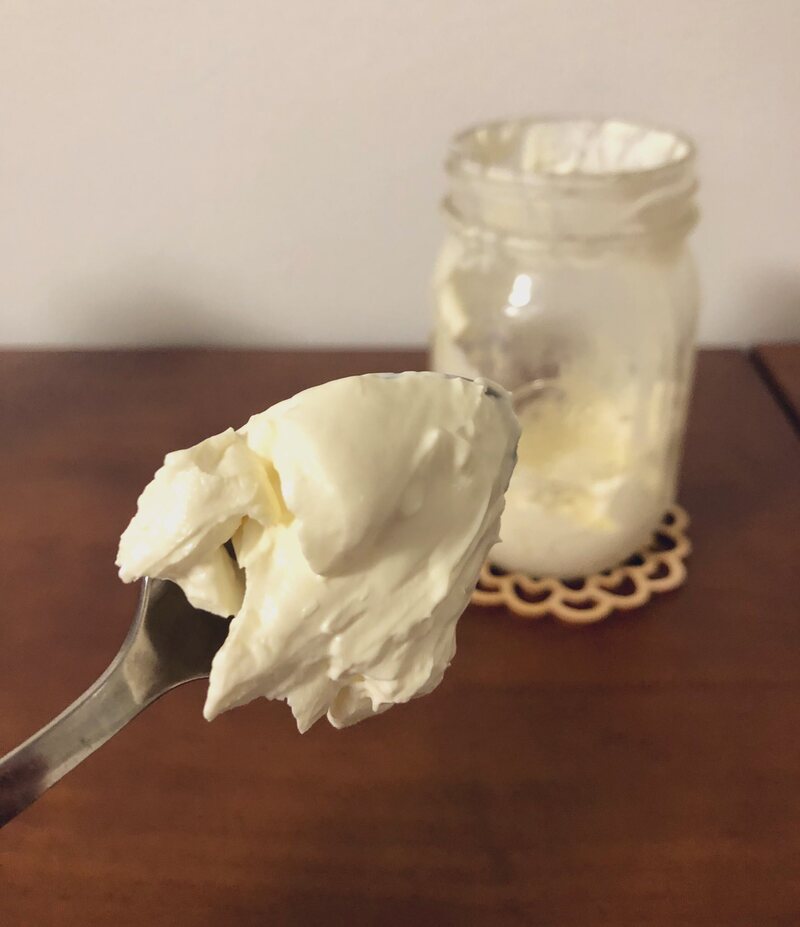
The finished suzma should have a nice, spreadable consistency.
The finished suzma should have a nice, spreadable consistency. SUSIE ARMITAGE FOR GASTRO OBSCURA

Step 1

To make qurt, first you need to make suzma, a creamy drained yogurt with a spreadable consistency. To make suzma, you need to make qatiq, a natural (and also delicious) drinkable yogurt. If you’d like to speed up the process, and you can find suzma for purchase in your area, you can also start there and skip to Step 3. (If you don’t have a Central Asian bazaar at your disposal, you may be able to buy suzma at a Central Asian shop like Brooklyn’s Tashkent Supermarket. Some recipes also describe how to make qurt from tvorog, a farmer’s cheese widely available at Russian grocery stores; I did not test this, but if you go this route, you’ll also want to start with Step 3 and ensure that your cheese is well drained before attempting to roll it.)

To make the qatiq, heat the milk in a pot to about 122° F (50° C). (If using unpasteurized milk, boil it first, then let it cool to this temperature.) If you don’t have a thermometer, turn the heat off when the milk is noticeably warm, but you can stand to hold your finger in it for 10 seconds without discomfort. Then stir in the yogurt. At this point, the contents of your pot will still be milky in consistency. Pour the mixture into glass jars and wrap them with towels to keep them warm; Sharipova suggests using three thick ones. (I wrapped my jars in dish towels, topped with hand towels, then covered them with a large bath towel and a blanket.) Leave the wrapped jars in a warm place and let them ferment for eight hours. Then enjoy a glass of creamy qatiq; it will be a drinkable but noticeably thicker liquid.

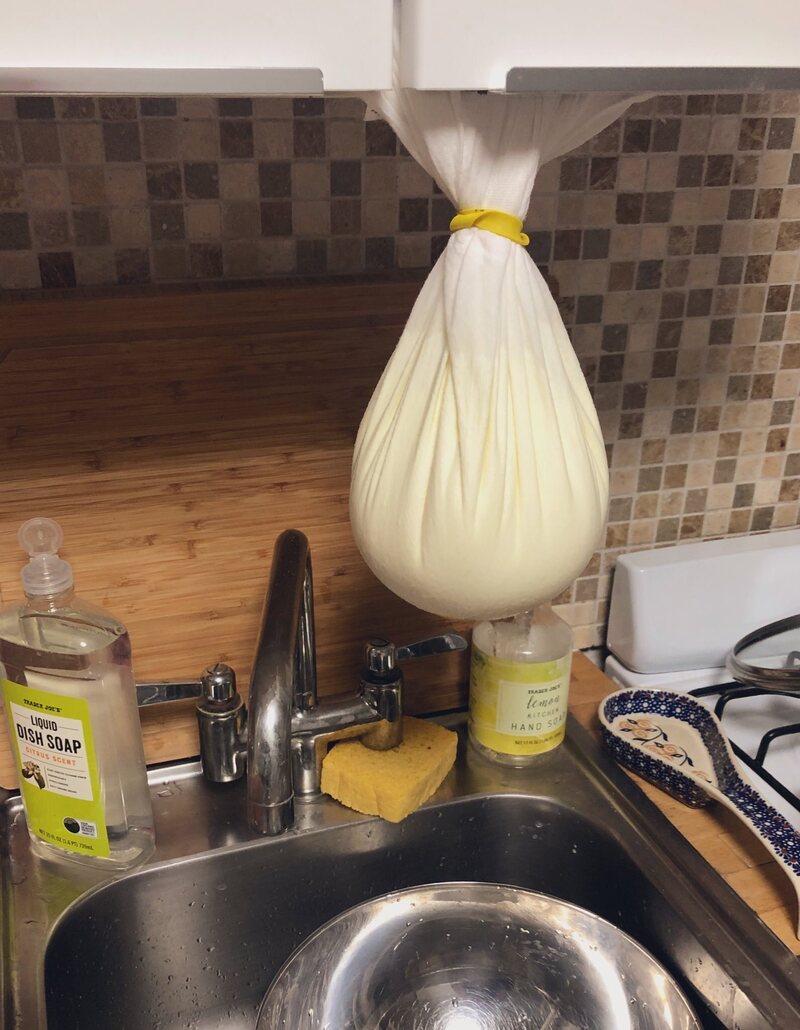
To turn into suzma, the qatiq must drain for about eight hours.
To turn into suzma, the qatiq must drain for about eight hours. SUSIE ARMITAGE FOR GASTRO OBSCURA

Step 2

Now, it’s time to turn your qatiq into suzma. First, add salt to taste. Then carefully pour your qatiq into a flour sack towel. I found it easiest to do this by laying the cloth over a colander first. Secure the top of the towel with a rubber band and hang it over a bowl or your sink to drain. You can also use a cheesecloth, but make sure it’s not too gauzy. The qatiq should drip steadily as it drains, but you don’t want it to gush through all at once. Leave it for about eight hours as the whey separates.

Step 3

Now we have suzma; set some aside to eat on bread or as a dip for vegetables. If you’ve purchased your suzma, it may be thick enough to begin rolling into qurt (Step 4). However, if you made your own, you may need to let it drain in the cloth for another few days to reach the optimal consistency. (I learned the hard way by trying to roll suzma that wasn’t thick enough and wound up with sticky, yogurt-covered hands.)

There is no exact timeline, but Sharipova says the suzma is ready to be rolled when you can stand a spoon in it. Mine took about two days to get there.

Step 4

Once your suzma is nice and thick, add salt to taste and any additions, like ground red pepper or dried herbs. Roll it into balls, keeping in mind that smaller ones will dry quicker. (Mine were about the size of small to medium gumballs.)

Step 5

Put your qurt balls on a wooden cutting board, cover them with a clean dish towel, and leave them in a warm, sunny place to dry for several days, depending on how hard you’d like them to be.

If warm and sunny is not in the cards where you live, you can use Max Malkiel’s method. (I discovered his advice after my first batch of qurt started to grow mold as it dried.) Set your oven on the lowest possible temperature—he uses 50° C, which is approximately 122° F—and place your qurt inside on a baking sheet lined with parchment paper for an hour. Do not preheat the oven first.

Your qurt should now be a bit rubbery. Dry the balls with a hair dryer on full power for about 10 minutes. Set aside to dry further at room temperature. Repeat the oven and hair dryer steps three days in a row. For harder qurt, leave to dry for a few more days at room temperature.

Enjoy your qurt and go slowly. A little bit of the salty stuff goes a long way! Store in a breathable cloth bag in a dry place or in a paper bag in the fridge.

Forward Observer Tactical Intelligence Course, Tacoma, WA – June 6-7, 2021

Intelligence group Forward Observer is holding a Tactical Intelligence course in Tacoma, WA on June 6-7, 2021. Cost is $400.

This Tactical Intelligence Course is two days of instruction and exercises to prepare students to gather and analyze information in emergency situations. Each training day begins at 0900 and ends approximately 1700 (5pm).

We begin by exploring and analyzing the threats we’re likely to face during an emergency scenario, and then we get into how we should configure our intelligence section. This is the ‘brain’ of community security. We work on understanding our mission and conduct some threat analysis to identify what we should be preparing for. Then we build our intelligence team around the mission.

You’ll have the opportunity to do group or individual work where you’ll navigate the Intelligence Cycle and complete relevant intelligence products for your situation. We discuss Intelligence collection and then we collect. Then we discuss Intelligence analysis and we analyze incoming information in order to produce intelligence.

What we do over these two days is train students to become the ‘intelligence officer’ during an emergency scenario. The student will have an understanding of his/her roles and responsibilities, be able to direct collection and then produce threat intelligence. That’s our number one goal for any scenario — produce early warning and threat intelligence.

This training course is taught by intelligence professionals, so please arrive prepared and ready to engage. You’ll receive a link to begin the online training portion of this course upon receipt of your deposit.


Course Syllabus:

Introduction to Intelligence
Understanding the Operating Environment
Understanding the Intelligence Cycle
Intelligence Preparation of the Battlefield
Threat Intelligence
Area Study Production
ACE Operations
Practical Exercise

Register here

CSLewisDoodle: Faith


C.S. Lewis as an atheist used to ask himself ‘How on earth can faith or belief be a virtue? What is there moral or immoral about believing or not believing a set of statements?’ Now as a Christian he explains what a good many people do not see about faith…
During WWII C.S. Lewis broadcast two talks on Faith entitled ‘Faith as a Virtue’ and ‘The Problem of Faith and Works’. These were cut down from their original scripts for the radio broadcasts, but the original talks ended up being printed in full and expanded in the book version of the talks which later became the book ‘Mere Christianity’.
(0:35) C.S. Lewis talks about four kinds of faith.
Faith A1 – Simply belief – accepting or regarding as true the doctrines of Christianity.
Faith A2 – The art of holding on to things your reason has once accepted, in spite of your changing moods.
Faith B1 – Trust that Christ will somehow share with you the perfect human obedience which He carried out from His birth to His crucifixion: that Christ will make you more like Himself and, in a sense, make good your deficiencies.
Faith C1 – Adherence to God, and His Christ, that is no longer proportioned to every fluctuation of the apparent evidence.
The first three types are covered in the book ‘Mere Christianity’. The last one in Lewis’ other essays.
(1:23) More on reason and authority here: https://youtu.be/k2xY2k26HFo. See also comment section on this video.
(4:57) “Blessed is he who is not offended/tripped up because of Me.” https://www.biblehub.com/matthew/11-6…
(5:19) “Do not be yoked together with unbelievers. For what do righteousness and wickedness have in common? Or what fellowship can light have with darkness?” https://biblehub.com/2_corinthians/6-… (Exception: 1 Corinthians 7:12). This is the Old Testament picture of an ox yoked to a donkey rather than to another ox, i.e. the combination of different species in work creates special pressures on each creature. This principle applies to the unequal pairing of believers with unbelievers in marriage relationships.
“Do not lie to one another, since you have put off the old man with his deeds” https://biblehub.com/colossians/3-9.htm
“Instead, you ought to say, ‘If it is the Lord’s will, we will live and do this or that.’ But now ye rejoice in your boastings: all such rejoicing is evil.” https://biblehub.com/james/4-16.htm
Also 2 Corinthians 10:17 “Let the one who boasts boast in the Lord” https://biblehub.com/jeremiah/9-24.htm
“Anyone who has been stealing must steal no longer, but must work, doing something useful with their own hands, that they may have something to share with those in need” https://biblehub.com/ephesians/4-28.htm
(7:33) The sermon here is on https://biblehub.com/matthew/15-5.htm
(10:08) https://biblehub.com/niv/luke/4.htm, https://biblehub.com/niv/matthew/4.htm “The more opportune” mentioned here being the leadup to and carrying out of the crucifixion where Christ would be tested with the same three temptations as in the desert at the start of His ministry.
The original broadcast had the following words italicised which add to our understanding: “and leaves HIM unsupported in the water”, “if Christianity were NOT true”, “any real new REASONS”, “the fact that you HAVE moods”, “simply DRIFT away?”, “give ME sixpence to buy YOU a birthday present”.
The bombing sounds were actually recorded during the London blitz. The closing music is based on the credits of the Churchill film ‘The Darkest Hour’.

Bear Independent: Family That Won’t Prep

In this video from Bear Independent, TJ Morris (Bear) talks about what you can do when you believe in being prepared, but your family does not. Family could be your spouse, or kids, or parents, or in-laws, brothers, sisters, cousins, whomever you are worried about whom you consider family but is for some reason against taking steps to be prepared, though in the case of this video Bear is mostly discussing family outside of your immediate household.

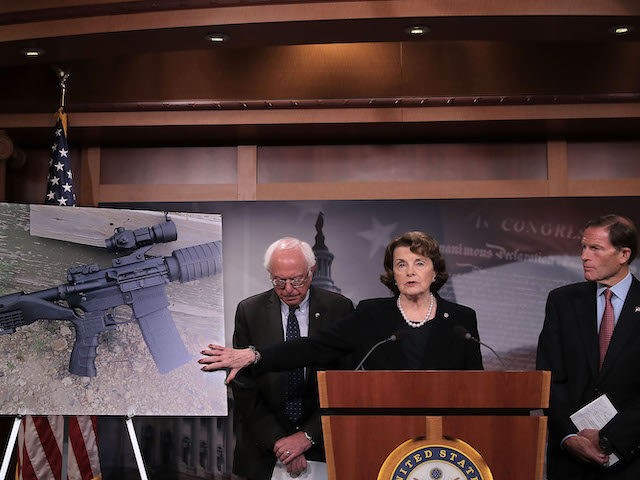
Breitbart: Feinstein Introduces Assault Weapons Ban of 2021

From Breitbart, Dianne Feinstein Introduces Ban on 205 Different ‘Assault Weapons’. It doesn’t look like a bill number has been assigned, yet.

Following Thursday’s House passage of a Democrat gun control bill, Sen. Dianne Feinstein (D-CA) introduced a ban on 205 “assault weapons.”

The legislation, called the “Assault Weapons Ban of 2021,” is co-sponsored by 34 Senate Democrats. It would also ban ammunition magazines holding more than ten rounds.

Feinstein’s ban would allow current owners of “assault weapons” to retain possession of them, but if the gun is transferred, a person must undergo an FBI background check before receiving the firearm.

Her “Assault Weapons Ban” also bans bump stocks, which have been illegal since March 26, 2019.

Feinstein announced her ban stating:

It’s been 17 years since the original Assault Weapons Ban expired, and the plague of gun violence continues to grow in this country. To be clear, this bill saves lives. When it was in place from 1994-2004, gun massacres declined by 37 percent compared with the decade before. After the ban expired, the number of massacres rose by 183 percent.

In contrast, the Department of Justice’s National Institute of Justice (NIJ) issued a report indicating the 1994 “assault weapons” ban did not reduce crime.

The Washington Times quoted University of Pennsylvania professor Christopher Koper, author of the NIJ report, saying, “We cannot clearly credit the ban with any of the nation’s recent drop in gun violence. And, indeed, there has been no discernible reduction in the lethality and injuriousness of gun violence.”

The NIJ report continued, “The ban’s effects on gun violence are likely to be small at best and perhaps too small for reliable measurement.”

HRCC: Explaining Tactical Communications With Mike Glover Fieldcraft Survival

Ham Radio Crash Course has an interview up with former US Army Special Forces SGM, former Office of Global Affairs and founder of Fieldcraft Survival Mike Glover wherein they are Explaining Tactical Communications. The interview begins with an overview of SF communications and gear, but the moves in communication planning, PACE (primary, alternate, contingency, and emergency) planning, direction finding, comms preparedness and more. Mike Glover is also behind American Contingency, an organization designed to create a trusted network of support and teach people training they might need to survive in today’s uncertain times.

AYWtGS: How to Get FREE to Low-Cost Five-Gallon Buckets for Food Storage

In this post, A Year Without the Grocery Store talks about How to Get FREE to Low-Cost Five-Gallon Buckets for Food Storage as well as types of lids.

When people talk about what you need to buy as a prepper, I once heard it boiled down to: “Beans, Bullets, Bandaids.”  I believe it was James Wesley Rawles of The Survival Blog that coined the phrase.  The “Beans” in the saying represent your food storage.  And if you have food storage……you probably have or use five-gallon buckets (or sometimes six-gallon).

***There are links in this post.  Some of the links may be affiliate links. My promise to you is that I will only recommend the most economical version of the best quality of items to serve you. All of these are the items that I have bought for my own family.  If you click on a link, your price will remain the same.  If you make a purchase, we may make a small commission that aids in the cost of the running of this website.***

How to Get FREE to Low-Cost Five-Gallon Buckets for Food StorageFive-gallon buckets have become expensive!

But those can be stinking expensive!  Have you looked at prices for them?  Amazon has 5-packs of buckets WITH lids for $53.99.  This makes the buckets $10.80.  If you’re wanting to purchase a single 5-gallon bucket from Amazon, the best price that you’ll find is $13.99.

Another place that I’ve had friends purchase five-gallon buckets from is Wal-Mart.com.  On Wal-Mart.com, you can purchase a 10-pack of five-gallon buckets WITH lids for $120.99.  This makes them $12.00 each.

I personally have purchase five-gallon buckets WITHOUT lids through Azure Standard.  A 10-pack of buckets WITHOUT lids for $72.55.  So the cost per bucket works out to be $7.26.  But then you will need to purchase additional lids.  A regular ‘clamp on’ lid costs $3.25 each. For specialized lids called Gamma Seal lids (I’ll cover these lids later), it’s an additional $8.02.  So the cost per bucket for clamp-on lids is $10.51.  Your cost per bucket for Gamma Seal lids is $15.28.

You Can Get Buckets Cheaper!

A friend of mine recently talked about Covid Scalping.  One of the reasons that buckets (and canning jars, and canning lids, and so many other things) are so expensive is because the demand for them has gone up exponentially because of Covid.  So this – in many ways – is an example of that Covid scalping that was mentioned.

But there is another alternative to paying exorbitant rates for buckets!  You can get buckets for either FREE or very cheap.  Today while I was at Wal-Mart, I swung by the bakery.  When I was greeted by a bakery worker, I asked if they had any empty five-gallon frosting buckets.  They had three.  It took her a few minutes to find them and bring them out.  Now before today, when I had gotten these buckets from Walmart, they were free.  Today, however, when she brought them out, they had a $1 price tag printed for each of them.

What I have discovered to this point is that while you can still get buckets for free at some places, some places have begun charging a marginal amount.  In our area, we can still get buckets free at Kroger and Schnucks.  Walmart now charges $1, and Costco charges $2 locally.

The best way to figure out if a store charges and how much they charge is to call them.  It’s also the best way to find out if they have any buckets to sell/give away so that you don’t drive there to find out that they don’t have any to give you.

Bucket Lids

I know that this sounds a little unusual when talking about getting buckets for free.  But these things actually tie together.  There are three main types of bucket lids that I’ve come across.  Some of them are better for food storage than others.  So if you get your buckets for free, you may still need to purchase lids depending on what you’re using your buckets for and what type of lid came with your free (or cheap) buckets.

How to Get FREE to Low-Cost Five-Gallon Buckets for Food StorageShallow snap-on lids

When I got my lids from Walmart today, this is the type of lid that came with the buckets.  These lids have a lip that measures about 3/4″ deep.  These lids are fine for long-term food storage.  In other words, if you’re going to put food into mylar bags and use oxygen absorbers, this is a fine lid.  If, however, you plan just to use the bucket for short-term food storage of large quantities of foods, don’t use this lid.

Deep snap-on lids  How to Get FREE to Low-Cost Five-Gallon Buckets for Food Storage

These are the type of lids that you can purchase from Azure Standard and they measure just about 1″ all the way around.  First off, these lids will fit on the same buckets as the 1/2″ deep lids do.  This means that if you get free or cheap buckets with the 1/2″ deep lids and you want to do short-term food storage of large quantities of foods like oats or wheat, you can use these lids to do so.  You can get your buckets free and purchase your lids from somewhere like Azure.

Gamma Seal Lids

These lids cost the most of any of the lids, but there is a reason for it.  These lids come in two pieces.  The outer ring snaps down on your five-gallon bucket – or even your six-gallon bucket.  The inside part of the lid screws into the part that snaps onto the bucket.  Why these bucket lids are so amazing is that you can easily use them for short-term or long-term food storage.  These will keep the air and critters out, but will allow you access to your short-term food storage very easily.  That is part of the reason that these lids cost so much more.

If you purchase Gamma Seal lids from Amazon, these lids cost $68/6 or $11.33 each.  Azure Standard, however, has these same gamma seal lids in a 12-pack for $79.45 or $6.62 each.

Cleaning Your Buckets

Before you can use the buckets that you get for free or cheap, you will need to make sure that you clean them.  When I get buckets, I go through a two-step process to clean them out properly.

First off, you want to make sure that you clean out your buckets with warm soapy water.  I like to use Dawn dish soap as it removed the frosting residue from the buckets very well.

After I’ve cleaned the buckets out with dish soap and water, I then clean it out with a solution of bleach and water.  The dish soap will clean out the residue, but the bleach solution will take care of any bacteria.  I use 1 T of bleach and enough water to cover the bottom of the bucket and then use a rag that you don’t mind getting bleach on and wipe down the entire inside of the bucket.

Once you have done that, dry the bucket out and it’s ready to use whether you are using it for long-term food storage or short-term food storage.

Why Would You Use Buckets for Short-Term Food Storage?

I’ve mentioned several times that you may want to use these same five-gallon buckets for short-term food storage, but why might you want to do it?

Purchasing foods in bulk makes sense not just for long-term food storage, but for short-term food storage as well.  We purchase items like oats in 25 – 50-pound bags because it’s cheaper than buying the canisters of oatmeal.  We can store these items short-term in buckets and save ourselves money because we are storing our food in five-gallon buckets…