From Breitbart, Texas Sues Georgia, Michigan, Pennsylvania, and Wisconsin at Supreme Court over Election Rules. Texas argues that the defendant states “usurped their legislatures’ authority and unconstitutionally revised their state’s election statutes. They accomplished these statutory revisions through executive fiat or friendly lawsuits, thereby weakening ballot integrity.”
The State of Texas filed a lawsuit directly with the U.S. Supreme Court shortly before midnight on Monday challenging the election procedures in Georgia, Michigan, Pennsylvania, and Wisconsin on the grounds that they violate the Constitution.
Texas argues that these states violated the Electors Clause of the Constitution because they made changes to voting rules and procedures through the courts or through executive actions, but not through the state legislatures. Additionally, Texas argues that there were differences in voting rules and procedures in different counties within the states, violating the Constitution’s Equal Protection Clause. Finally, Texas argues that there were “voting irregularities” in these states as a result of the above.
Texas is asking the Supreme Court to order the states to allow their legislatures to appoint their electors. The lawsuit says:
Certain officials in the Defendant States presented the pandemic as the justification for ignoring state laws regarding absentee and mail-in voting. The Defendant States flooded their citizenry with tens of millions of ballot applications and ballots in derogation of statutory controls as to how they are lawfully received, evaluated, and counted. Whether well intentioned or not, these unconstitutional acts had the same uniform effect—they made the 2020 election less secure in the Defendant States. Those changes are inconsistent with relevant state laws and were made by non-legislative entities, without any consent by the state legislatures. The acts of these officials thus directly violated the Constitution.
…
This case presents a question of law: Did the Defendant States violate the Electors Clause by taking non-legislative actions to change the election rules that would govern the appointment of presidential electors? These non-legislative changes to the Defendant States’ election laws facilitated the casting and counting of ballots in violation of state law, which, in turn, violated the Electors Clause of Article II, Section 1, Clause 2 of the U.S. Constitution. By these unlawful acts, the Defendant States have not only tainted the integrity of their own citizens’ vote, but their actions have also debased the votes of citizens in Plaintiff State and other States that remained loyal to the Constitution.
Texas approached the Supreme Court directly because Article III provides that it is the court of first impression on subjects where it has original jurisdiction, such as disputes between two or more states…
Ashley Adamant at Practical Self Reliance writes about 60+ Unique Fruits & Nuts for Cold Climates (Zones 3-5) More photos through the link at the original article. Where we live is a bit warmer than this around zone 6, but we have aronia, elderberry, chestnut, goji berry, blue/black/rasp-berry, currants, rhubarb, and silverberries at home. And, of course, several of these are grown commercially in the area. We’ve tried some cold hardy figs, but I think it’s just a little too cold for them. We’ve also got a couple of kiwi vines which do well as vines, but so far no fruit. We still hold out hope for them, though.
Cold climate gardening can seem limiting, and you just can’t grow many common supermarket fruits. That just means you have to get creative because there are literally dozens of delicious cold hard fruits you’ve probably never tried.
One of the things I really love about permaculture is how the design manuals really think outside the box when it comes to perennial plant varieties.
Alongside apples, pears, and raspberries, you’ll find mention of Cornelian cherries, lingonberries, beach plums, and spicebush —all manner of food forest crops to keep things interesting in the kitchen year-round.
Our permaculture homestead is in a cold zone 4, with temps that occasionally dip as low as -27 F in the winter. While we won’t be harvesting mangoes anytime soon, there are still plenty of options for temperature climate permaculture food forest plantings.
The plants listed below are well suited to grow in zone 3, 4, and 5, providing good yields with minimal effort for a well-planned diverse permaculture homestead.
Aronia Berries (Aronia melanocarpa)
Currently gaining popularity as a new age super food, Aronia berries are actually a wild edible native to much of the US. They come in two main varieties, black Aronia and red (though there’s also a “purple” Aronia, thought to be a hybrid of the two).
They’re easy to grow and resistant to disease, preferring wet soils and tolerating partial shade. Once established, bushes are highly productive and can grow 6 to 8 feet tall.
Hardy in zones 3 to 9.
Apples & Crabapples (Malus sp.)
The vast majority of apple varieties are hardy to zone 4, if not zone 3, and there are hundreds of varieties to choose from.
Don’t just go with the grocery store types you know, branch out and try some really unique varieties by reading through a few well-stocked nursery catalogs. Make sure you plant a mix of summer apples, along with late fruiting good keepers for a solid supply of year-round fruit.
Don’t forget to add in a few crabapples, both for pollination and amazing fruit. Dolgo crab, in particular, is a good choice, as it’s a profuse bloomer with delicious fruit.
Hardy zone 3 to 9, depending on the variety.
Apricot (Prunus armeniaca)
Many apricot trees are hardy to zone 3, but they’re still not common here in Central Vermont. I asked a nurseryman why, and he told me they don’t do well here because of our wet summers. Apricots are susceptible to fungal diseases, and they do better with less humidity and heavy rains. Nonetheless, we’re trying a few out.
The past few years have been hit or miss for rains, and we had one summer with an epic drought and no rain for more than 6 weeks straight. You never know what the weather will throw at you here in New England, and we might just get lucky.
Growing up in California’s high desert, we were often buried in apricots (literally), and we’d make ourselves sick gorging on them. If you have dry summers, they’re a good option, even in cold climates.
Some varieties hardy zone 3 to 9.
Apricot, Manchurian Bush (Prunus mandshurica)
Native to colder regions in Asia, the Manchurian bush apricot is very hardy. The trees naturally stay small, growing about 12 feet high and 12-18 feet across at the widest point.
Though the trees are hardy to zone 3, late frosts can damage the buds and prevent fruiting in the coldest regions. Plant in a micro-climate that melts out late or protects the trees during late frosts.
We planted three near our pond, which moderates temperatures and helps create a more stable micro-climate. Everything I’ve read says they’ll bear fruit in 2-3 years. I’ll let you know how it goes!
Hardy zone 3 to 9.
Autumn Olives (Elaeagnusumbellata)
Another wild edible, autumn olives, are actually considered invasive in some parts of the country. They’re profuse, easy to grow, and birds easily spread the small soft fruit. I’ve seen two varieties, red and gold.
I’m particularly excited about these, but it’s hard to find a source of plants. From what I’ve read, autumn olives grow readily from hardwood cuttings, so if you’d like to mail me a bundle of sticks in late winter or early spring, I’d really appreciate it.
Once common in coastal regions from the mid-Atlantic states to Canada, Beach Plums have been wiped out by coastal development and population explosions. It is rare in many states.
In spring, Beach Plum trees are covered in white-petaled flowers that turn pink once pollinated. By late summer and early fall, blue-purple plums cover the plant. Wildlife loves these plums, but at one time, so did humans living near these trees.
While tart, Beach Plums are rich in antioxidants and can be turned into delicious jams. Some use these fruits in cordials and wines.
Hardy in zones 3-8.
Beech Trees (Fagus grandifolia)
Though not often thought of as a food source these days, beechnuts were a historically significant source of calories. The nuts are very high in protein and part of Native Americans and early settlers’ diet.
They’re abundant in our woods already and quite productive, though it’s hard to beat the squirrels to them.
Beech trees grow in zones 3 to 8.
Black Walnut (Juglans nigra)
Often overlooked because the nuts have a slightly more bitter taste than English walnuts, black walnuts can be delicious if appropriately handled. It’s important to get them out of the green outer husk quickly because that husk contributes to the bitter flavor.
Black Walnuts are hardy from zones 4 to 9; some say even to zone 3.
Blackberries (Rubus fruticosus)
Blackberries aren’t as popular as blueberries or raspberries, but they’re an easy berry bush to add to your backyard. I grew up with fresh blackberries from my grandmother’s backyard. She would give me a bowl of blackberries with milk and a sprinkle of sugar – such a good snack.
Once planted, blackberries are easy to grow and do exceedingly well in these USDA zones; they’re native to the area. You don’t need to plant more than one bush because they’re self-fertile, but a few bushes will give you a large yield.
Hardy to zones 4-9.
Blueberries (Cyanococcus)
Everyone has heard of blueberries, and they’re some of the easiest berry bushes to grow. Blueberries take time to grow; it can take up to 10 years for a blueberry bush to reach a mature size, but that means they have a long lifespan.
After planting, expect it to take 2-3 years before you receive any sizable harvest, but they’re worth the wait. While waiting, blueberry bushes are attractive, with leaves turning several shades in the fall.
After establishing, blueberry bushes need simple care, including watering, fertilization, and yearly pruning. Aside from that, you don’t need to worry too much; they handle themselves well.
Their hardiness depends on the variety selected. You can find varieties hardy from zone 3-9.
Buffalo Berries (Shepherdia argentea)
Sometimes called rabbit berries, Buffalo berries are a hardy shrub that reaches between six and 20 feet tall. They’re commonly found along streams throughout the Great Plains in North America.
Fruit appears on the shrubs between August and September in abundance. Buffalo berries are scarlet-red or golden-yellow and have a tart flavor that tastes great when used in relishes or jelly. Besides fruit production, adding buffalo berries to your property gives you a winter hardy and drought tolerant plant that can also fix your soil’s nitrogen issues.
Buffalo berries prefer to grow in zones 3-9, but with adequate protection, they might grow in zone 2 as well.
Butternut Trees (Juglans cinerea)
When I first heard of butternuts, I immediately thought of the butternut squashes I grow in my garden, but these are a type of tree that belongs to the walnut family. Butternut trees are native to the eastern United States and Canada, growing wild in some regions.
Sometimes referred to as white walnuts, butternut trees produce their harvest in late October, developing buttery-flavor nuts. These nuts are popular for baking, fresh eating, and confections due to their unique butter flavor.
Growing butternut trees require well-draining soil and full sunlight, but they adapt well to most conditions. They reach up to 60 feet wide, so space everything else around your trees appropriately.
Hardy in zones 3-7.
My two year old son holding a few wild foraged butternuts (husked, cured and dried)
Canadian Buffalo Berry (Shepherdia canadensis)
Cousin to the above-listed buffalo berries, Canadian buffalo berries grow in colder climates. These shrubs are typically found in Newfoundland, Alaska, Oregon, and parts of the Rocky Mountains.
These fruits are edible, but some say that the flavor isn’t as desirable as the original buffalo berries. The yellow flowers that cover the shrub eventually produce red berries.
This variety produces dry sites and handles the occasional drought, but they don’t like excessive heat. Production dramatically declines when the temperatures rise too high.
Canadian buffalo berries grow in zones 2-6.
Carolina Allspice (Calycanthus floridus)
These are rarely a common plant you’ll find in your landscape, but Carolina Allspice is a fragrant plant with maroon to brown flowers. The foliage is also fragrant when crushed. These bushes grow well in most soils and climates.
After the flowers, Carolina Allspice shrubs grow fruit that looks like a brown seed pod.
You can let these dry out or use the oven at a low temperature if you don’t want to wait. Once dried, smash and dry them and use them just like cinnamon.
Hardy from zone 4-10.
Carpathian English Walnut (Juglans regia var. carpathian)
Carpathian walnuts belong to the English walnut family, but these trees handle cold temperatures and weather better. They grow further north than other cultivars and produce a steadier harvest in areas with variable winter.
When growing Carpathian walnut trees, give them plenty of space to grow. They grow up to 60 feet tall and 60 feet wide. Expect fast growth; the trees can grow more than two feet per year, especially in ideal conditions, growing best in full sunlight with at least six hours of sunlight.
The nuts are thin-shelled and easy to open, maturing 1-4 weeks before the hull opens. Expect yields of nuts starting in the middle of fall. The nuts are oval and measure up to two inches in diameter. It takes between 4-8 years for the tree to produce any nuts.
Carpathian English walnuts grow in zones 4-7.
Cherry Trees (Prunus avium)
Homegrown cherry trees give you delicious fruit without too much work. Cherries are broken down into two categories: sweet cherries and sour cherries.
Sweet cherries are what you see in the supermarket for fresh eating. It takes between 4-7 years to bear fruit.
Sour cherries are used for cooking, in particular, pies and preserves. Some people call these tart cherries because their flavor isn’t as sweet. These trees take 3-5 years to bear fruit, depending on the variety.
Sweet cherries are hardy in zones 5-7, and sour cherries are hardy in zones 4-6.
Cherry Plums (Prunus cerasifera)
Cherry plums are a particular group of Asian plum trees, and some are a hybrid between plums and cherries. Prunus cerasifera is a native tree typically grown as a small, ornamental tree that produces fruit if there is another pollinator nearby…(continues)
In a recent essay in The New Republic, Chris Caldwell predicts the coming crackup of the Blue coalition. Since I argued something very similar in my recent book, The Stakes, I naturally agree with the thrust of his thesis.
Except, I think, with the conclusion. Caldwell notes in the last paragraph that
in the 1860s, three major Western countries—Germany, Italy, and the United States—each fought similar wars of national unification, in which the more dynamic part of the country subjugated the more bucolic (or backward) part. In our time, Democrats are the party of relatively greater technological and demographic dynamism, Republicans the party of relatively less. This is not the same type of relationship as the one that obtained until half a century ago, when Republicans were (roughly speaking) the party of capital, and Democrats the party of labor. Capital and labor need each other in a way that dynamism and tradition do not. One fears the present conflict will differ accordingly.
The point about the three great examples of the advanced part of a nation subjugating the backward part is insightful and chilling. I do believe that is what Blue America intends for Red.
But Caldwell further says that dynamism does not need tradition in the same way that labor needs capital and vice versa. I suppose the qualification “in the same way” makes that statement true, but Caldwell’s implication seems to be that they don’t need each other at all. Is that really true?
I doubt it, for a number of reasons. In our specific context, “dynamism” is not what it was in the 1860s, when “dynamism” was quite materially, physically productive. Contemporary “dynamism” is productive on paper but not in the physical world. Blue elites have bet their entire project, and all their status and wealth, on the proposition that this distinction doesn’t matter. No, even more: they’re entirely convinced that “knowledge” productivity is inherently superior to physical productivity. But what if that bet doesn’t pay off? What if physical productivity is inherently more valuable economically, socially and politically, more conducive to civic life? What if virtual productivity depends decisively on its physical counterpart?
To what extent, also, is our paper productivity simply fake? I’m no expert on high finance, but our whole economy seems to me to be jury-rigged, smoke-and-mirrors—dependent as it is on debt, fiat currency, etc.
The Blue Economy
Mass financialization seriously drives the Blue economy. This seems to be based on a few factors, all of which are inherently unstable. The first is a reliance on monetary policy, which is mostly chicanery—zero interest rates for more than a decade now?—and which depends on the dollar’s status as a reserve currency, on the willingness of foreigners to lend us money, and on our ability not necessarily to pay them back (we almost certainly can’t, and even more certainly won’t) but to meet the interest payments.
All of these are interconnected and will go on until they don’t, or can’t. But they seem to have much less staying power than the massive economic expansion from roughly the middle of the 19th century to the middle of the 20th, which was driven by concrete innovation and delivered real gains in standards of living for all classes.
A related but hardly irrelevant point: financialization seems to amount in large part to creating new “products” and markets at the high end, which enrich elites based on…what? Rents excreted out of government monetary policy, outsourcing, immigration, globalization, etc.—all of which make the middle and the heartland poorer. In particular, financialization means finding new ways to stoke consumerism from people who can’t really afford “stuff” like they (or their parents) used to and so must pay for with debt, which obviously benefits banks, in two ways. They make money on the front end through “market-making” and financing the global expansion of big business, and on the back end by lending (and charging usurious interest rates and late fees) to consumers. This is, of course, parasitic.
The other major pillar of the Blue economy is Big Tech, the actual rewards accruing to which appear to be wildly out of proportion to the benefits conferred. When you think back to what the Industrial Revolution accomplished in the transportation sector and manufacturing alone, all of it was vastly more “concrete” than what tech is doing. And the earlier expansions’ benefits were far more transformative and widespread. 1900 looked far less like 1860 than 2020 looks like 1980. Tech is powerful today because of how it can throttle information flows, but information flows are as old as writing. Tech is an effective instrument of tyranny but it does not yet provide benefits for most people that aren’t merely frivolous or enstupefying. Which is in itself a problem for the “dynamic” coalition.
The last element of the Blue economy is media, broadly understood, which either doesn’t make money but is subsidized by Tech or Techies, or does make money but only through its tight alliance with Big Tech, to which it is an appendage. Media (to be more specific, propaganda) is the pillar of the Blue regime, in the sense that it is in effect its army and police force. But as such, it is fundamentally a cost center, not a profit generator.
Perhaps most important, those most emblematic of Blue America, and of the Blue economy—coders, app developers, financiers, VCs, senior managers, foundation grant-makers, professors, vice chancellors for diversity, bloggers, Vox editors, sous chefs, hairstylists, interior decorators, handbag designers, etc.—do not constitute a majority, or even close, of Blue America. They are in fact a minority—and a small minority.
The Blue coalition is something like a layer cake in which the only visible part is the frosting. But underneath that veneer is a light, airy, spongy, not very filling mass that constitutes (spit-balling here) something like 80% of the cake. It doesn’t contribute much to Blue America’s self-congratulatory wealth or “dynamism.” It is, like Blue America’s propaganda arm, a cost center—only much, much more costly. The one thing it contributes is votes. But those votes, even when obtained lawfully, are very expensive. It is at the very least an open question how long “productive” “dynamic” America can generate enough wealth to fund the accustomed lifestyle of the frosting and enough to cover the subsistence of the crumbs sufficiently to keep them turning out to vote the “correct” way.
Blue Subjugation
All of this suggests that the “dynamic” Blue part of the country needs the “backward” Red part a lot more than Caldwell estimates, for a few fundamental reasons. One, the latter are consumers of the stuff the Blues are selling: pixels, bytes, and debt. Second, to the extent that anything gets made any more in this country (other than, perhaps, motherboards), Red people make them. Third, they grow all or most of the food. Fourth, they do the lion’s share of so-called “dirty jobs” or grunt work. Granted, they aren’t hotel maids in Blue cities. But all kinds of other things get done by them and only by them—both Red people in Blue areas and Red people in Red areas, whose work product gets transported into Blue areas also by Red people.
More fundamentally, “dynamism” is inherently parasitic on stability, which is to say virtue. Yes, I know Red America with its opioid crisis, obesity epidemic, welfare usage, etc., is not as virtuous as it used to be. And in some ways—high divorce and illegitimacy rates—it’s in worse shape than the Blue upper and upper-middle classes. But it is also more religious, patriotic and tradition-minded. These traits provide some measure of continuity to a society that is otherwise continually in the process of upheaval owing to the “dynamic” half of the country. What happens when that brake on dynamism is gone, or becomes so weak that it can no longer slow down the car?
Dynamic America has a few ways to address this problem. It can subjugate, as Caldwell says, Boring America. Or it can try to import or develop a Boring class of its own that it can boss around within the confines of Blue America. But the latter solution presumably will, sooner or later, lead to the same problem. “Blue helots” will still be helots. Eventually they will see themselves as such and develop similar interests and political impulses. At which point they will have to be subjugated, too.
Subjugation—whether of a Red class within Blue borders or of Reds where they live now—carries the same risks. One is a reaction that breaks the system and ends the subjugation. That end could take the form of a new settlement that keeps the whole together, perhaps via a kind of radical federalism and regionalism. Or it might lead to a formal separation. Or it might simply end the United States altogether, to be replaced by God-only-knows-what. Barring overt rebellion, the other likely outcome is a kind of implicit general strike in which the Reds’ output and contributions decline.
Aren’t we already seeing at least nascent signs of both? Isn’t the Deplorable support for Trump a sign of rebellion, while the opioid crisis, etc., are signs of apathy and despair?
No one—at least not I—can say which reaction will prevail. But it seems to me that one eventually must if Blue subjugation continues. Which it surely will. The Blues have all the power now, with precious few exceptions, and I see no sign of moderation or circumspection in any of them whatsoever.
Blues sense, at a deep if subconscious level, their need for Reds. Much of their talk about the superiority of their society, economy, and way of life is cant. They may not want to think about where their grubby necessities come from, but they know it’s not from themselves and hence intuit that it must come from somewhere—and someone.
Then there is the unpleasant fact that Blue America wants to rule Red in a way that the latter does not want to rule Blue. To borrow from Machiavelli, in the present-day United States, these two diverse humors are found, which arises from this: that the Blues desire to command and oppress the Reds, while the Reds wish to be neither commanded nor oppressed. Machiavelli offers two solutions to this perennial, inherently irreconcilable conflict. To a prince (sitting or would-be), he recommends becoming the leader-vindicator of the backward or bucolic or less dynamic side and sticking it to the dynamos. To the founder of a republic, he urges the creation of institutions through which both sides harness their mutual enmity to team up and wring the good life out of foreigners.
The problem with the latter solution Machiavelli partly illuminates in another passage where he describes Ferdinand and Isabella’s expulsion of the Jews from Spain as an act of “pious cruelty,” that is, cruelty allegedly in the service of God. Pious cruelty is perhaps the animating impulse of the average Blue’s outlook and behavior toward the average Red: the spirit of the Grand Inquisitor, who, as he flogs you for heresy, really believes he is saving your soul. This, too, is not a recipe for long-term stability. Even—especially—if the Blues win.
In sum, my contention is that dynamism needs tradition more than the reverse, and that tradition may not need dynamism at all—if it’s willing to live a little poorer and with slow or no WiFi.
I leave to the reader to decide for himself whether this short missive has ended on a hopeful note or gives cause for alarm.
This article from the Mises Institute discusses the gun control policies from Joe Biden’s Presidential platform, including the buyback program and alternative $200/firearm tax and registration in Joe Biden Wants a Huge New Tax on Gun Owners
Joe Biden’s gun policy platform offers support for almost all conceivable forms of government restrictions on the Second Amendment. This includes bans and restrictions on sales, expansion of registration and background checks, expansion of buyback programs and gun-grabbing statutes, and the closing of all sorts of “loopholes.”1
While we are only at the policy platform stage, where proposals are grandiose and imprecise, Biden’s legislative agenda will clearly be anti–Second Amendment and not a program to reduce crime and violence. First, he wants to stop the “gun violence epidemic” with restriction on rifles when it is handgun shootings, not rifles, that are a problem and one that is mostly confined to big cities controlled by leftists. Second, he wants to go after “assault weapons” and “weapons of war” when he should know that rifles like the AK and AR “sporters” are not military-grade fully automatic weapons. Third, he would like to hold gun manufacturers civilly liable for criminal acts committed with guns, a move which would shut down the industry, the true goal.
In support of the government’s buyback program, i.e., the carrot, Biden has added a gun tax for anyone who wishes to keep their rifles and high-capacity magazines. If you want to avoid the buyback and keep your guns and high-capacity (greater than ten rounds) magazine, you would have to register both under the National Firearms Act, which triggers a $200 tax for each rifle and magazine—the stick. The stick behind the stick is a penalty of up to ten years in federal prison and a $10,000 fine. Registration involves filling out a thirteen-page registration form and providing fingerprints and a photograph of yourself.This is certainly bad enough for gun owners and Americans in general, but if history is a teacher the end results could be much worse, potentially catastrophic.
Joe Biden was sold to the American voter in 2020 as a moderate of the Democrat Party. He was not a conservative, but neither was he an AOC progressive or a Sanders socialist. His image as a white moderate male was also used to help sell the voters on Barack Obama.
There was also a time when Biden was actually a pragmatist on Second Amendment rights. As the ranking member on the Judiciary Committee, he helped pass the 1986 Firearm Owners Protection Act, which overturned decades of anti-gun court rulings and regulations to restore most gun owner rights and reexpanded commerce by eliminating restrictions on how and where guns could be sold. The legislation’s passage helped lay the foundation of the modern gun rights movement. According to Biden the pragmatist circa 1985:
During my 12.5 years as a Member of this body, I have never believed that additional gun control or Federal registration of guns would reduce crime. I am convinced thata criminal who wants a firearm can get one through illegal, nontraceable, unregistered sources, with or without gun control. In my opinion a national register or ban of handguns would be impossible to carry out and may not result in reductions in crime.2
Despite his recognition of the futility of using gun control to reduce crime and gun violence, the “pragmatist” turned to the dark side when it became politically expedient to do so. In 1993 he helped pass the Brady Handgun Violence Prevention Act, which required background checks through a new national checking system (the National Instant Criminal Background Check System [NICS]). The next year he helped obtain a ten-year ban on assault weapons and high-capacity magazine sales.
As vice president, he was President Obama’s point man in developing legislative proposals and executive orders to shore up gun control at the national level, and yet even that administration admitted that gun control is almost a futile endeavor and that their efforts amounted to little more than feel-good measures.
While no law or set of laws will end gun violence, it is clear that the American people want action. If even one child’s life can be saved, then we need to act. Now is the time to do the right thing for our children, our communities, and the country we love.3
Indeed, with more than a century of experience we know that gun control does not reduce crime but rather increases it, as John Lott has demonstrated. According to Lott’s evidence and that of independent researchers, no form of gun control has positive effects and most forms have negative effects on crime, murder, and mass shootings. Indeed, the most noteworthy policies that improve these problems are the elimination of gun-free zones and the expansion of concealed carry laws.4
With respect to Biden’s proposed gun tax, what are the expected outcomes? The tax is certainly not designed to raise revenue, as it would raise little and entail a good deal of bureaucratic spending. It would no doubt encourage gun buybacks and reduce gun ownership at the margin, but to what end? It would mostly impact responsible gun owners economically impacted by the lockdowns and unemployment. These are the gun owners who reduce crime rates because of the deterrence factor they provide. The gun tax would also encourage the diversion of guns and high-capacity magazines to the black market.
Most importantly, would the gun tax reduce access to guns and in turn reduce crime and violence? Biden has already admitted that the answer is no: “a criminal who wants a firearm can get one through illegal, nontraceable, unregistered sources, with or without gun control.” Efforts to reduce gun violence through policies of red tape and taxes are doomed to fail and only lead to further inroads of enhanced policies of restrictionism and even outright prohibition.
For example, in order to address the real and imagined problem of narcotics addiction, which was already in decline at the end of the nineteenth century, the Harrison Narcotics Tax Act was passed in 1914 to regulate and tax the production, importation, and distribution of opiates and cocaine products.
However, the courts interpreted the legislation to mean that doctors could prescribe these drugs in the course of normal treatment, as a dental anesthetic or for short-term pain management, for example, but not as a treatment for addiction. This turned regulation into prohibition and quickly turned the imaginary crimes of blacks and Asians into very real crimes all across the country. Desperate addicts were willing to pay high prices and commit crimes to satisfy their addictions, and smugglers and drug dealers quickly developed a black market.
Similar negative consequences resulted from the Marijuana Tax Act of 1937, which started as a tax to reduce imagined crimes by minorities, i.e., Reefer Madness, only to quickly devolve into an outright prohibition. Fortunately, we as a people have recognized this mistake and are moving to legalize cannabis and hemp, i.e., marijuana, in a state-by-state process that works in the face of federal and international law.
As horrific and far-reaching as the consequences of the war on drugs have been, the consequences of “commonsense” gun control laws are potentially much greater in the long run. In a very important contribution, Stephen Holbrook demonstrates that the Nazis used gun registration information instituted and collected by the Weimar Regime to rapidly disarm the Jews and other political adversaries. This in turn greatly facilitated the Holocaust.5 A disarmed American population would similarly be much more vulnerable to political repression.
But putting this possibility aside, Biden’s gun control proposals, including the gun tax, offer no possibility of improved security, while most of them will make us less secure and more prone to crime and violence. Most importantly, they are all an affront and threat to our liberty as enshrined in the Second Amendment to the Constitution.
5. Stephen P. Halbrook, Gun Control in the Third Reich: Disarming the Jews and “Enemies of the State” (Oakland, CA: Independent Institute, 2013); Audrey D. Klein, review of Gun Control in the Third Reich: Disarming the Jews and “Enemies of the State,” by Stephen P. Halbrook, Quarterly Journal of Austrian Economics 17, no. 2 (Summer 2014): 264–70, https://cdn.mises.org/qjae17_2_9.pdf.
This month is the 400th anniversary of the Pilgrims’ arrival in New England. The story of how the pilgrims fled religious persecution in England, established the Plymouth Colony in Massachusetts, and celebrated the first Thanksgiving is repeated annually in America. This story tells how 102 pilgrims arrived in Plymouth in the middle of winter. It tells how 45 of those pilgrims starved to death before spring. Then it tells how the pilgrims befriended the Native Americans Samoset and Squanto, learned to grow corn, and gave thanks to God for their blessings during a Thanksgiving feast that autumn.
If you have heard that story, you have not heard the whole truth.
The pilgrims gave thanks to God in a three-day Thanksgiving feast in 1621, but their harvest was not bountiful. They only grew a fraction of the food they needed to survive the coming winter, so the Wampanoag tribe provided much of the food they ate during the first Thanksgiving. Many pilgrims starved the following winter.
In his History of Plymouth Plantation, the governor of Plymouth Colony, William Bradford, wrote that many pilgrims became so desperate the following winter that they sold their clothes and bed coverings for food. Others became servants of the Wampanoag tribe, cutting their wood and fetching them water in return for a cap full of corn. Still, others stole from their fellow pilgrims and from the Wampanoag.
The pilgrims had to learn a lesson about the Bible before God blessed them with abundance.
Something most people do not know about the pilgrims is that they were communalists. The communalist movement was a form of socialism that taught that communities should pool their resources and share their production. Those more capable were to do what they could, and those less capable were to take what they needed. As the atheist Karl Marx later phrased this way of thinking, “From each according to their ability, to each according to their needs.”
It did not take Governor Bradford long to realize that something was seriously wrong. In his History of Plymouth Plantation, he wrote that the young men resented having to work for other men’s wives and children without any recompense. Meanwhile, the old men resented having to accept equal rations as those who had not served the community as long. And the women resented having to cook and clean for men who were not their husbands. The end result of all this resentment was that many refused to work and the food supply dwindled because “much was stolen both by night and day, before it became scarce eatable.”
After three years of scarcity, Governor Bradford rectified the situation by abolishing communalism. After discussing the matter with the leaders of the community, Bradford assigned every family a parcel of land and arranged for all the young boys to be assigned as members of some particular family. He then told each household that they could keep whatever they produced, or trade it away as they saw fit.
The change was startling!
Governor Bradford noted that “the women now went willingly into the fields, and took their little ones with them to plant corn, which before would allege weakness, and inability; whom to have compelled would have been thought great tyranny and oppression.” The pilgrims produced so much food during the summer of 1623, that there actually was great abundance during the Thanksgiving feast they celebrated that autumn. The next year, the pilgrims actually had a surplus of food they could sell to surrounding settlements.
Governor Bradford repented of his role in establishing Plymouth as a commune.
He wrote in his History of Plymouth Plantation, “The experience that was had in this common course and condition, tried sundry years, and that amongst godly and sober men, may well evince the vanity of that conceit of Plato’s and other ancients, applauded by some of later times—that the taking away of property, and bringing in community into a common wealth, would make them happy and flourishing; as if they were wiser than God. For this community (so far as it was) was found to breed much confusion and discontent, and retard much employment that would have been to their benefit and comfort.”
In other words, Bradford and the other pilgrim leaders had to repent of espousing the socialist ideas of the ancient Greek philosopher Plato above the laws of God. Plato rejected the concept of family and private property in his book Republic, but God considers the family unit to be the basic building block of the economy.
The Apostle Paul wrote that “if any provide not for his own, and specially for those of his own house, he hath denied the faith, and is worse than an infidel” (1 Timothy 5:8).
The pilgrims had to learn the hard way that a godly economy is built on a foundation of strong families that produce enough to take care of themselves and give to others. After they learned this important lesson, they were undoubtedly more thankful during the third Thanksgiving than they were during the first Thanksgiving. This is because they learned to be thankful for more than the food the Native Americans gave them; they learned to be thankful for the law of God that taught them how to build a prosperous society.
The British historian Paul Johnson wrote an article in the Sunday Telegraph titled “No Law Without Order, No Freedom Without Law” in 1999. In it, he wrote: “[B]oth in Virginia and in New England to the north, the colonists were determined, God-fearing men often in search of a religious toleration denied them at home, who brought their families and were anxious to farm and establish permanent settlements. They put political and religious freedom before riches …. Thus took shape the economic dynamo that eventually became the United States—an experiment designed to establish the rule of God on Earth ….”
But these colonists had to learn that establishing the rule of God on Earth means keeping the Ten Commandments—the basis of all righteous law. This is the true lesson of the first Thanksgiving; a lesson lost on most Americans today, who give little thought to why they have been blessed with such abundance. At a time when the rule of law in America is under constant attack, Americans need to relearn this hidden lesson of the first Thanksgiving.
Reading Bradford’s History of Plymouth Plantation is a great way to learn about the pilgrims’ experience. And reading Character in Crisis, by Trumpet editor in chief Gerald Flurry, puts the Founding Fathers’ quest to establish the rule of God on Earth in prophetic perspective.
In the spring of 1941, guests of the Allerton House in New York City descended 45 feet below ground to check out the hotel’s newly completed air raid shelter. The shelter boasted an auxiliary lighting system in case the building lost electricity. Watching the German bombing campaign over London terrified Americans, and led the government to form civil defense preparations. Photograph via Bettmann/Getty
here’s a reason “preppers,” people who plan for the worst-case scenario, like to talk about the zombie apocalypse. The idea of an army of walking dead swarming the country pervades their thoughts because, says Roman Zrazhevskiy, “If you prepare as if a zombie apocalypse is going to happen, you have all the bases covered.” That means: an escape route, medical supplies, a few weeks’ worth of food.
Zrazhevskiy has been thinking about this for decades. He was born in Russia a few months after the nuclear meltdown at Chernobyl. At the dinner table, his family often talked about the disaster and what went wrong. Then, after they relocated to New York, Zrazhevskiy stood on the waterfront outside his Brooklyn high school on September 11, 2001, and watched the World Trade Center towers collapse. Even then, he had a small go-bag prepared with disaster supplies.
Now, he’s the guy who has a kit and a checklist for every occasion, including taking his toddler to the beach. Zrazhevskiy lives in Texas and runs survival outfitters Ready to Go Survival and Mira Safety. In 2019, with protests in Hong Kong, wildfires in Australia, and the threat of war with Iran, business boomed. But when the CDC announced the U.S.’s first confirmed coronavirus case last January, business reached “a whole new level,” says Zrazhevskiy. His companies spent the next couple of months scrambling to fill backorders. The flood of new customers had so many questions that he hired seven full-time staffers just to answer emails. “It’s kind of a customer service nightmare,” he says. “People are really flipping out.”
In a public imagination fueled by reality TV, preppers are lonely survivalists, members of fanatical religious groups, or even wealthy Silicon Valley moguls who buy luxury underground bunkers and keep a getaway helicopter fueled. But in reality preppers range from New Yorkers with extra boxes of canned goods squeezed in their studio apartments to wilderness experts with fully stocked bunkers.
Eight months into the coronavirus pandemic, something has shifted in our collective psyche as we remember empty aisles and medical supply shortages. Firearm sales are up, bread baking and canning are trendy, and toilet paper stockpiles are common. Are we all preppers now?
A forgotten American tradition
The coronavirus pandemic is the epitome of what preppers call a “s*** hits the fan” event. As the country braced for lockdowns and began seeing shortages of crucial supplies last March, people found themselves woefully unprepared. But there was a time in American history when many more civilians were ready for disaster.
In 1979, when Alex Bitterman was in second grade, Sister Mary Jane gathered her students in the gym of their Catholic school. In front of her sat a three-foot-tall gray barrel and she asked the students to guess what was inside. A clown, they thought. Or snakes? The nun opened it and pulled out a wool blanket, a plastic water container, and a large tin of saltines. These items would save them, she said, if the Soviet Union dropped a nuclear bomb on the town of Cheektowaga, New York.
For decades, a barrel like this was no surprise to American schoolchildren. A stockpile sat in the back of Bitterman’s school gym, and a yellow binder in the administration office held a set of hyper-local contingency plans for various disasters. So when COVID-19 reached the U.S., Bitterman, now an architecture professor at Alfred State College in upstate New York who studies how extreme events shape communities, remembered that barrel. Forty-one years later, he realized the country has lost its collective preparedness. “Why are we sitting in our houses waiting for someone to come save us?” he says. “No one’s coming.”
But there was a time when the nation felt that someone would come. The Great Depression birthed the New Deal, which gave Americans a safety net—Social Security, federal housing, and federal unemployment insurance—and instilled the belief that the government would step in when they needed a hand. Helping them prepare for a disaster or attack was part of the deal.
In 1941, after Americans watched British civilians take shelter in the London Tube during German bombardment in World War II, President Franklin Roosevelt formed the Office of Civilian Defense with the aim of helping Americans prepare for a military attack on a local level. A variety of government-mandated civil defense agencies operated from World War II through the Cold War and provided communities with guidelines and resources to keep emergency response local.
This effort manifested in the barrel and binder Bitterman remembers from childhood, as well as things like a national emergency alert system. Starting in the 1950s, designated civil defense radio channels would broadcast information in case of a Soviet attack. For decades, every radio and TV station was required to test the system weekly. The civil defense bible—the 162-page, government-issued “Blue Book”—laid out strategy and instructions for an emergency that often kept the responsibility hyperlocal.A family unit, the authors stressed, was the “basis for organized self-protection.” Soon, the need to be prepared seeped into all aspects of life, from architecture (basement bomb shelters) to education (the infamous classroom “duck and cover” drills).
Two decades later, the Cuban Missile Crisis delivered another wake-up call. A nuclear arsenal aimed at the U.S. from 90 miles off the coast, Bitterman says, eroded the idea that the country was safe from outside threat. The agency’s name would change over the years, but civil defense adapted to the evolving threats of the 20th century. It was, says Bitterman, “the one time in our shared American history when we had a unified, coordinated effort to prepare for disasters of all different kinds.”
As the Cold War thawed, the threat of natural disasters took its place: hurricanes on the east coast, tornados in the Midwest, earthquakes in California. Such problems were too large for local communities to manage on their own. Massive environmental contamination required federal clean-up, and disasters like the 1979 Three Mile Island reactor meltdown in Pennsylvania spooked the public….(continues)
A lot of people just parrot things they hear without really thinking about it. If they did carefully consider what they were saying, they probably wouldn’t say it. This is particularly true when it comes to mass, warrantless surveillance.
The Lexington Police Department covertly uses two cameras that can be hidden in streetlights and one that is disguised as a utility box. Coupled with the fact that documents released by the LPD during legal proceedings reveal lax policies that could be interpreted to allow surveillance virtually any place at any time, I find the use of these cameras troubling.
But I’ve been told I have no basis to oppose the use of these cameras because, “You have no expectation of privacy in a public place.”
This is true in a technical, legal sense. But just because something is legal doesn’t make it just or ethical. And legality has virtually no bearing on how we live our lives.
And when you really did deep, most people don’t really believe this nonsense.
Based on the “expectation of privacy” doctrine, you can stand on the sidewalk in front of my house and take pictures of my daughter playing in the yard all day every day. You can even take pictures of my wife getting dressed through the window if she forgets to pull the curtains closed. Now, I may not have any legal expectation of privacy in my front yard or through my open blinds, but in the real world, I damn sure expect my daughter to be able to play in the yard and my wife to be able to get dressed free from your video-voyeurism.
And I think most reasonable people have the same expectation. It may not be a valid legal expectation, but it is certainly a reasonable human expectation.
The legal notion of “no expectation of privacy” in public is really meant to apply to incidental observation. I can’t come after you for taking a photo of a bird in my yard even if you happen to capture my daughter in the frame. I can’t demand police arrest you if you happen to glance up and see my wife through an uncovered window. I can’t get angry if I start dancing in a public park and you film me and stick it on YouTube.
But even from a legal standpoint, you can’t spy on me. At some point, your behavior crosses the line from incidental observation to stalking. I’m pretty sure if you saw me standing on the street taking pictures of your kids for hours on end, my insistence that you have “no expectation of privacy” would fall on deaf ears.
Government surveillance is more akin to stalking than incidental observation. If a cop positions a camera in such a way as to capture everything that happens in your yard, that’s a little creepy. It may be legal, but that doesn’t make it right.
In fact, government is held to a higher standard than everyday folks. The Fourth Amendment and privacy protections in every state constitution make this clear. For instance, Section 10 of the Kentucky State Constitution declares:
“The people shall be secure in their persons, houses, papers and possessions, from unreasonable search and seizure; and no warrant shall issue to search any place, or seize any person or thing, without describing them as nearly as may be, nor without probable cause supported by oath or affirmation.”
If government agents are going to watch me, they should have probable cause and get a warrant. Otherwise, they should leave me alone.
The issue of privacy was one of the flashpoints that led to the American War for Independence.
Prior to the Revolution, the British claimed the authority to issue Writs of Assistance allowing officials to enter private homes and businesses to search for evidence of smuggling. These general warrants authorized the holder to search anyplace for smuggled good and did not require any specification as to the place or the suspected goods. Writs of assistance never expired and were considered a valid substitute for specific search warrants. They were also transferable.
Electronic surveillance is the 21st-century version of writs of assistance. They allow police to go on fishing expeditions and watch our every move. They empower law enforcement to track us, document us and monitor us until they find a reason to come after us.
George Orwell’s 1984 was meant to warn us about ubiquitous government surveillance, not serve as an instruction manual.
People who roll out arguments like “you have no expectation of privacy” or “if you have nothing to hide you have nothing to fear” are really telling me they simply don’t believe the government would ever target them with surveillance. This mostly comes from conservatives who value law and order. But you should ask yourself a question: who is going to get targeted by surveillance when the government decides it wants to enforce a mask mandate? Or arrest people for attending a church service? Or when they come after a certain kind of gun? You are only one policy-shift away from having the digital crosshairs on your back.
Never forget, the power you give government over others — it also has over you.
The American Mind talks about the widening chasm between liberal and conservative Americans in A House Dividing? The piece includes links to other essays which further discuss the issues.
We do not publish this feature lightly. Nor do we intend to take a firm editorial stance in the debate. But it is past time to bring the discussion Americans are now having in private into public light. The longer it stays underground and forbidden, the more we risk serious and sudden shocks to our political and cultural life together. Only by having this debate out in public can we hope to resolve the current crisis.
When we can’t agree as a people on the purpose of government, or even about what human nature is, the next logical question is: how can we stay together as citizens? What truths, in other words, do we still think self-evident? What is the basis of our shared citizenship? Where is the growing divide in America leading us, and what is the best path forward?
The best book on the topic has been written by our colleague Michael Anton, who explores these questions in The Stakes, which we encourage you to read. Examining the contemporary scene, we find those, like Geoffrey Vaughan, who acknowledge the deepening divide yet hold that the structure of American government stands. In “Madison Wins, Factions Lose,” he argues that “Madison has continued to outwit the ideologues and factionalists.” And, after all, even Democrats who support packing the Supreme Court and adding Puerto Rico as a state are operating within the Constitutional framework. Republicans now eye the Constitution’s requirement that state legislators ultimately choose their state’s electors to the Electoral College.
Yet one must also note that changes to the Constitution’s Electoral College and the apportionment of the U.S. Senate are being openly proposed by mainstream Democrats. Further, while the Constitution at least partially holds, the question is how long it can continue to keep a house divided together. In the midst of the growing divide in America, red counties are growing increasingly eager to leave blue states and reconstitute red ones even as blue states have been saber-rattling for four years about federalism and state prerogatives. This week, we present the visions of two pseudonymous authors pointing toward a national separation in the interest of preserving the union.
It is not only young radicals who are thinking though a potential balkanization and breakup of the nation. Many engaged citizens are talking about such things in private. It is particularly worth noting that many highly competent professionals throughout the country—notably those in finance and tech whose livelihoods are tied to judging reality as it is and not as they’d like it be—quietly believe that America is headed towards an even deeper divide. Many are silent readers of this website, and in private they often offer dark thoughts about the state of our financial system, Big Tech, and our political culture.
In “2020: A Retrospective from 2025,” Professor “Tom Trenchard” provides an account of what might happen if red counties began to act as a unified front against the blue cities that propelled Joe Biden’s vote count. This is not merely a fantasy: red county repartition movements have been picking up steam, and Trenchard’s account identifies the real divide in American political life between rural and urban areas.
Finally, in the essay of the week, “Rebecca” presents an extended argument for the depth of the divide, proposing that the only way to resolve it is a more radical form of federalism. This “proposal for a renewed America” is not an argument for secession, but a peaceful process whereby both sides are allowed some measure of self-governance, with an eye to reunification. As the author says, “The two Americas avow their disagreements. The Separation respects reality and seeks peaceful co-existence.”
Such thoughts are no longer wild-eyed fantasy. Both pseudonymous essays vaguely echo Angelo Codevilla’s thoughts at the end of Revolution 2020 and “Our Revolution’s Logic.” These voices now represent those of many thoughtful Americans concerned about the fate of the nation. We welcome more to the discussion.
In recent decades, many have claimed that advances in communications and transportation would eliminate the different political, economic, and cultural characteristics peculiar to residents of different regions within the United States. It is true the cultural difference between a rural mechanic and an urban barista is smaller today than was the case in 1900. Yet recent national elections suggest that geography is still an important factor in understanding the many differences the prevail across different regions within the US. Urban centers, suburban neighborhoods, and rural towns still are characterized by certain cultural, religious, and economic interests that are hardly uniform across the landscape.
In a country as large as the United States, of course, this has long been a reality of American life. But even in far smaller countries, such as the larger states of Europe, the problem of creating a national regime designed to rule over a large diverse population has long preoccupied political theorists. At the same time, the problem of limiting this state power has especially been of interest to proponents of “classical” liberalism—including its modern variant, “libertarianism”—who are concerned with protecting human rights and property rights from the grasping power of political regimes.
The de facto “answer,” to the this problem, unfortunately, has been to empower national states at the expense of local self-determination and institutions which had long provided barriers between individual persons and powerful national states. Some liberals, such as John Stuart Mill, have even endorsed this, thinking that mass democracy and national legislatures could be employed to protect the rights of regional minorities.
But not all liberals have agreed, and some have understood that decentralization and the maintenance of local institutions and local power centers can offer a critical obstacle to state power.
The Growth of the State and the Decline of Local Powers
Among the best observers and critics of this phenomenon are the great French liberals of the nineteenth century, who watched this process of centralization unfold during the rise of absolutism under the Bourbon monarchy and during the revolution.1
Many of these liberals—Alexis de Tocqueville and Benjamin Constant in particular—understood how historical local autonomy in cities and regions throughout France had offered resistance to these efforts to centralize and consolidate the French state’s power.
Alexis de Tocqueville explains the historical context in Democracy in America:
During the aristocratic ages which preceded the present time, the sovereigns of Europe had been deprived of, or had relinquished, many of the rights inherent in their power. Not a hundred years ago, amongst the greater part of European nations, numerous private persons and corporations were sufficiently independent to administer justice, to raise and maintain troops, to levy taxes, and frequently even to make or interpret the law.
These “secondary powers” provided numerous centers of political power beyond the reach and control of the centralized powers held by the French state. But by the late eighteenth century, they were rapidly disappearing:
At the same period a great number of secondary powers existed in Europe, which represented local interests and administered local affairs. Most of these local authorities have already disappeared; all are speedily tending to disappear, or to fall into the most complete dependence. From one end of Europe to the other the privileges of the nobility, the liberties of cities, and the powers of provincial bodies, are either destroyed or upon the verge of destruction.
This, Tocqueville understood, was no mere accident and did not occur without the approval and encouragement of national sovereigns. Although these trends were accelerated in France by the Revolution, this was not limited to France, and there were larger ideological and sociological trends at work:
The State has everywhere resumed to itself alone these natural attributes of sovereign power; in all matters of government the State tolerates no intermediate agent between itself and the people, and in general business it directs the people by its own immediate influence.
Naturally, powerful states are not enthusiastic about having to work through intermediaries when the central state could instead exercise direct power through its bureaucracy and by employing a centrally controlled machinery of coercion. Thus, if states can dispense with the inconveniences of “local sovereignty” this enables the sovereign power to exercise its own power all the more completely.
The Power of Local Allegiance and Local Customs
When states are dominated by any single political center, other centers of social and economic life often arise in opposition. This is because human society is by nature quite diverse in itself, and especially so across different regions and cities. Different economic realities, different religions, and different demographics (among other factors) tend to produce a wide range of diverse views and interests. Over time, these habits and interests supported in a particular time and place begin form into local “traditions” of various sorts.
Benjamin Constant, a leading French liberal of the nineteenth century, understood these differences could serve as effective barriers to centralized state power. Or, as noted by historian Ralph Raico: “Constant appreciated the importance of voluntary traditions, those generated by the free activity of society itself….Constant emphasized the value of these old ways in the struggle against state power.”
In his book Principles of Politics Applicable to All Governments, Constant complains that many liberals of his time, having been influenced by Montesquieu, embraced the ideal of uniformity in laws and political institutions.
This, Constant warns, is a mistake and tends to create more powerful centralized states, which then proceed to violate the very rights that Montesquieu thought could be preserved through uniformity.
But political uniformity can lead down very dangerous paths, Constant insists, concluding, “It is by sacrificing everything to exaggerated ideas of uniformity that large States have become a scourge for humanity.” This is because large politically uniform states can only reach this level of uniformity by employing the state’s coercive power to force uniformity on the people. The people do not give up their local traditions and institutions easily and therefore, Constant continues,
It is clear that different portions of the same people, placed in circumstances, brought up in customs, living in places, which are all dissimilar, cannot be led to absolutely the same manners, usages, practices, and laws, without a coercion which would cost them more than it is worth.
This may not be “worth it” to the people, but it appears to be worth it to the regime. Thus, states over the past several centuries have expended immense amounts of time and treasure to break down local resistance, impose national languages, and homogenize national institutions. When this process is successful, a nation’s laws end up reflecting the preferences and concerns of those from the dominant region or population at the expense of everyone else. When it comes to these large centralized states, Constant writes:
one must not underestimate their multiple and terrible drawbacks. Their size requires an activism and force at the heart of government which is difficult to contain and degenerates into despotism. The laws come from a point so far from those to whom they are supposed to apply that the inevitable effect of such distance is serious and frequent error. Local injustices never reach the heart of government. Placed in the capital, it takes the views of its surrounding area or at the very most of its place of residence for those of the whole State. A local or passing circumstance thus becomes the reason for a general law, and the inhabitants of the most distant provinces are suddenly surprised by unexpected innovations, unmerited severity, vexatious regulations, undermining the basis of all their calculations, and all the safeguards of their interests, because two hundred leagues away men who are total strangers to them had some inkling of agitation, divined certain needs, or perceived certain dangers.
For Constant, the diversity among communities ought not be seen a problem to solve, but rather as a bulwark against state power. Moreover, it is not enough to speak only of individual freedoms and prerogatives when discussing the limits of state power. Rather, it is important to actively encourage local institutional independence as well:
Local interests and memories contain a principle of resistance which government allows only with regret and which it is keen to uproot. It makes even shorter work of individuals. It rolls its immense mass effortlessly over them, as over sand.
Ultimately, this local institutional strength is key because for Constant state power can be successfully limited when it is possible to “skillfully combine institutions and place within them certain counterweights against the vices and weaknesses of men.”
Unfortunately, it appears even the last few institutional vestiges of localism are under attack from the forces of political centralization. Whether it is attacks on Brexit in Europe, or denunciations of the electoral college in the United States, even limited and weak appeals to local control and self-determination are met with the utmost contempt from countless pundits and intellectuals. Two centuries after Tocqueville and Constant, regimes still recognize decentralization as a threat. Those who seek to limit state power should take the hint.
1. Murray Rothbard also viewed the rise of French absolutism as an attack on local control and local prerogatives. See Ryan McMaken, “Medievalism, Absolutism, and the French Revolution,” Mises Wire, July 12, 2019.
Here is NC Scout of Brushbeater talking about Ontario’s Ranger Assault Knife: The Best Of All Worlds? Perhaps I’m a little biased because I have one of these knives and enjoy it myself. NC Scout mentions getting a better sheath, and I have a kydex sheath made by someone who doesn’t appear to be making them any more, but here’s a photo of the sheath. There are similar kydex sheaths sold by others available online.
What would be that ‘one knife’, that if the rest of the world went to hell, that you could strap on your side and do just about everything you’d need a fixed blade to do?
That’s a tough question and one I bet more than a few of you battle on a regular basis. I do, and I’ve carried knives I picked into hell with me, only to later find something that fit the bill just a bit better. It seems like with each wilderness trip, class, or hunt I end up with new wants in a blade. It hasn’t got any better since I got that first Air Force Survival Knife (aka the Jumpmaster knife) I borrowed from an AWOL kid’s kit so long ago. Doubt he missed it. That knife did everything I ever asked it to, is easy to sharpen, and doubles as a combat effective fighting knife. And for a long while it served me well, and still absolutely could had I not retired it when I returned from Afghanistan. But would it be my first choice today? Probably not; designs have evolved and I’ve got a number of knives that fit the general purpose bit a lot better, and one of them is Ontario’s Ranger Assault Knife.
Combat knives are always a fun topic of discussion and one that’s often highly personal. That old USAF design was meant to be a jack of all trades and it excelled at a few. Like most of its contemporaries, it is a stick tang short Bowie-type with an integrated handguard to prevent the user’s hands from slipping up the blade during a stab but also to protect against glancing blows. Mine slayed MREs, 550 cord and tubular nylon just like everyone else’s- even skinned a goat we picked up from a local village in Afghanistan. Its also made notches, battoned wood, made fire and processed domestic game with the best of them.
I’ve always loved tactical knives and fighter-type blades. But the reality is that most often a tactical knife, with many serrations, odd grind angles and ultra-hard steel is more a hindrance than an enabler for most mundane survival tasks. What’s basic and simple, at least in my experience, has become the preferred blade to a lot of the more tactical-oriented types. It’s a view that’s neither good or bad, its just personal choice based on what we call on our tools to do. Some of these tasks include:
Lets look at the list. Any knife can skin and process game- in fact I’ve skinned more animals with my decade-old Buck-Strider folder than any other knife I’ve owned. And likewise for feather stick making, any sharp knife with decent edge geometry can do that. But for the heavier duty tasks a good fixed blade is what’s needed. For battening through limbs, a full-tang knife is really the best option. I’ve done it with the old USAF knife, but a full tang construction is best. And when striking ferro rods, high carbon steel and a squared spine gets the job done without having to use the knife’s edge. Speaking of, the ability to bring back a good working edge in the field is paramount. S30V, 154CM and the like are excellent for edge retention, but what happens if your edge does take some damage during use? 1095 is easier to bring back even from severe damage while using a small field stone or diamond plate like we use in the First Line Course, along with a small piece of leather as a strop.
So that brings us to Ontario’s Ranger Assault Knife (RAK). Justin Gingrich, founder of Ranger Knives and Green Beret, partnered with Ontario Knife Company several years back to mass produce his tactical and survival blade designs. I’ve used an RD-7 for a number of years now as a general purpose woods blade and its a highly functional design. His knives are a no-frills, hard use utilitarian types over the elegance of say, a Randall Made or Blackjack. These are not exactly lookers, but they will do everything asked of them and probably much more. The Ranger Assault Knife was something of a crossover design; combining the attributes of a functional fighting weapon and qualities you’d want in a simple survival knife.
Even batoning through this large knotty pine, which is generally a no-no, is no problem for the RAK.The design sports a sabre grind that starts 2/3 of the way up the blade. Even after heavy use, including batoning, there’s no visible damage to the edge.
Looking over the design you’ll notice the spear point of the 6 inch blade. It’s as great for stabbing as it is choking up on the knife and making finer cuts with the tip. Being 3/16in thick and having the full width go to the tip, its very strong for any prying task you might be called on to do in the wild. Fortunately choking up on that blade is made easy by the very large (yuuuge!) choil. It allows you to control the blade for power cuts but also to accommodate the guard as part of the design. It’s one solid piece of 1095 steel, hardened to 53-55rc, which is hard enough to retain an edge a reasonable amount of time while still soft enough to flex when prying or batoning to prevent chipping. And the knife has no issues batoning- hard wood, soft wood, anything reasonable it breaks down pretty easily.
The blade itself sports a thick saber grind with a short, flat secondary bevel. I prefer a full flat grind for pretty much everything I do with a knife, but on this blade it works to the advantage of the design by maintaining the knife’s strength. Since the parameters of the intended use include aircrew survival, that strength is required when possibly cutting through aluminum airframes or punching out glass. The pointed pommel serves as a glass breaker also, the same way the older RAT 5 and ESEE 5 knives do. And that leads me to my only real complain with it; that spike pommel is borderline obnoxious. Everything else about the knife is excellent, and since I don’t plan on needing to egress from an aircraft anytime soon, I’m thinking of grinding it down a bit. And the stock sheath is a flimsy nylon piece of junk. I threw it in the trash and had a kydex one made. But that’s it; the steel, the heat treat, the edge retention, and the flat out utility of this knife is excellent.
My Final Thoughts
The RAK pictured next to a RAT 5. Compare the glass breaker bevels on both.
For what this blade costs, around $65, it’s an excellent buy and well worth picking up a couple. You’ll need a better sheath but honestly I’m rarely happy with most stock sheaths. The design is definitely a jack of all trades and well thought out as a utility blade for those going into harm’s way. And as easily as it can be used in combat, it finds itself at home with a wide variety of survival tasks. Would it be that ‘one knife’ to use if the world went to hell? I think it could be. You could spend a heck of a lot more money and not come close to what you get out of this blade.
Recently on TVW’s show Inside Olympia, Austin Jenkins interviewed state superintendent Chris Reykdal about the COVID-19 school shutdown and the upcoming legislative session.
Surprisingly, Superintendent Reykdal admitted his own son is “struggling mightily” under remote instruction. He called for a vocational program based on school choice, so students can attend a vocational school or take apprenticeship training.
This is similar to the popular Running Start choice program, under which students take their funding to a community college. He said high school students should be able to control their own education funding.
Reykdal also said he won’t be asking the legislature for a “ton” more money for the public schools. He admitted the way schools spend money is more important than the amount of money the system gets, and shared a personal story about the impact of the COVID school shutdown on his own family.
Here are the key exchanges:
Austin Jenkins:
“What are you hearing about this, and how alarmed are you, that [middle and high school] kids are literally flunking out, failing, because of this remote learning situation?” (At 17:45)
Chris Reykdal:
“I am bothered by it. I am living it right now as a parent of two teenagers, who have historically been very successful academically, taking advanced courses, including AP courses and college level courses while in high school. And I have one of them who is struggling mightily in classes, that never would have been the situation if they had been face-to-face. So how did this happen? Number one, we gave very clear advice to districts to limit the number of learning standards ….and a lot of great educators made that transition, and I think some of them didn’t, and still try to cover too much content…..I would never design a school system around remote learning.” (At 18:23)
Austin Jenkins:
“What will the 2021 session look like for your agency?” (At 23:10)
Chris Reykdal:
“….We [the state] spend $25,000 per child over the last two years of high school, about $12,500 each year. We need to give students a lot more ability to grab those resources and go find a pathway that works for them. Which means, great full-time Running Start, that works, but what about the student who wants to be a fabricator, a welder, a plumber, an electrician, they need to go find a program full-time for those last two years….but the entire high school system in the U.S. is a broken system…we have to rethink this completely…” (At 24:26, emphasis added.)
Austin Jenkins:
“Any specific budget asks of the legislature?” (At 25:38)
Chris Reykdal:
“…It’s remarkable that we are going to return money because we didn’t transport kids around, but we are desperate to have one-to-one learning supports for students who are struggling…. It isn’t that we need a ton of new money, it’s that we need flexibility with the money we do have…. . “(At 26:01, emphasis added.)
Superintendent Reykdal is right. The schools do not need more money.
He is also right that students and parents should have more control over education dollars (should “grab those resources” as he puts it). That way families, not rigid education bureaucracies, could access the learning resources that work best for them.
Lawmakers in Idaho are more forward-looking in this regard. A few years ago the legislature there started giving every seventh-grade student over $4,000 in public money to help plan for high school. The response has been enthusiastic, with parents seizing the chance to make good education choices for their kids.
Idaho is not alone. Leaders in 29 states and the District of Columbia provide over 67 education choice programs, giving families direct access to scholarships, learning vouchers, tax-free Education Savings Accounts and tax credits to pay for tuition at private schools, and to hire tutors, learning coaches and other skilled educators for their children.
These choice programs are very popular, especially with low-income and minority families who are badly underserved by the traditional system.
By the way, the $12,500 Superintendent Reykdal proposes is only state-level funding. Local and federal money add more. Statewide that’s an average of $15,700 per student. In Seattle alone, taxpayers spend $20,200 per student.
Perhaps a silver lining of the COVID-19 school shut-down is that top leaders like Superintendent Reykdal are finally experiencing first-hand the poor public education choices most families face every day. He may be opening his mind to the idea that many students can “find a pathway” that works for them, by giving families “more ability to grab those [educational] resources.”
He’s right. If lawmakers let students and parents control more of their own public education dollars to access better learning programs after a year of locked-down schools, it will be a big step in the right direction.
In this article, Lisa Vargas at I Need That to Prep gives a pretty thorough discussion on Canned Meat Survival Food. While it is pretty common in our area for people to have experience raising or hunting meat animals, there are still a large number of people who do not. The human body needs protein every day to produce essential acids and will die without them. While proteins can also be found in lentils, beans, and whole grains, meat is what most people think of first for protein. In order to get all of the required essential acids that your body needs, you must consume what is referred to as a “complete protein.” Foods that contain the nine amino acids which a body must consume are called complete proteins. All animal proteins are complete proteins. A very few plant foods contain complete proteins — soybeans, quinoa, buckwheat, hempseed, and blue-green algae. Other than those, you need to combine incomplete proteins, like whole grains with beans (i.e. beans and rice, beans and tortillas, etc). Meat is more difficult to store long term than dry foods like beans, rice, and whole wheat berries, which is why most long term food storage plans focus on vegetable matter proteins than meat. That said for variety and psychological health/comfort it’s good to store what meat you can.
In our community there is this strange idea that we are going to transform from burger eating desk job dawdlers to hunters and trappers that feast primarily on wild food.
I think if you are not currently eating lots of wild food, you killed or raised, then you will really struggle in becoming a hunter or farmer that survives off of these kinds of animals. That is the reason canned meat for survival is such an important topic.
In this article, we will dive into the subject of canned meat. Whether you realize it or not there is a wide range of canned meats to choose from and some are better than others.
Why You Should Stock Up on Canned Meat for Survival
Protein is key to any preppers pantry and it is also what most pantries are lacking. Some of us keep chickens and hunt to assure we have access to protein outside of the home. These are both great answers to the protein issue, but you can also stock your pantry with great protein options if you know what canned meat to stockpile.
Canned meat for survival does not eat, it doesn’t need to be killed and it is always in the same place. You cannot say that about other sources of meat protein. You do not want to depend on the outside world for all of your meat for this very reason.
Canned meat has a long shelf life and if you know what to buy you can add these meats to meals or even eat them straight from the can! The landscape of the canned meat market is a lot wider than you think. From things like quality canned fish to something as obscure as canned pork brains, it’s all out there!
The canning process is pretty flawless and removes air from the can that prevents bacteria from growing. This is why you can have such a great shelf life out of canned meats. Industrial canning is an incredible technology that changed the world! Why not take advantage of this in your own prepper pantry.
Keys to Look for in Quality Canned Meats
Canned meats are quite possibly one of the widest ranging canned products on the market. Perhaps soup would be the only meat product to compare. Meats are varied and really are broken down between two main categories.
Meat – These meat items are those which are still, mostly, in their original form.
Force Meat – Force meat is a category of meat that is highly processed and reformed into something either resembling meat or takes the shape of the can itself.
If we are talking about quality canned meats, you are looking for those that have been minimally processed. Things like canned salmon, canned chicken and canned mackerel are all minimally processed.
Meats that are highly processed like Spam and Vienna Sausages are tasty, but they are loaded with salt, sugar, and nitrites. While it is not a bad thing to have these on the shelf, you would not want them to be what you eat each and every meal.
Another good tell is to look at the ingredients list on the canned meats you enjoy. Canned meats with the smallest ingredient list are going to be the best.
Shelf Life of Canned Meats
To understand the shelf life of canned goods you have to know what makes them go bad. You see, canned goods are fully cooked, processed with salt and citric acid, placed in sterilized cans, and then vacuum sealed. The cans feature a lining that protect the food from direct contact with the metal.
Overtime the can takes damage from moving around and this can allow micro punctures in the can to allow air inside. Once air gets inside you are going to have bacterial growth. You could also have an acidic food that will wear out the inside lining of the can. This will create a heavy metal poisoning issue over time.
The wonderful thing about canned meats is that they are a non-acidic canned food. Unless they are canned in a tomato sauce you are safe with canned meats.
In the survival community we hear a lot about use by dates and there is much debate about how long you can keep food. Having worked in the food banking industry for 5 years, as a food safety manager, I became an expert on quality and use by dates on canned goods. You see, we had to be able to tell what was useable and what had to be discarded for safety reasons.
Our guidelines were to keep canned meats for 5 years past the best buy date! This low acidic food has no problem extending an already generous best by date by as long as 5 years. That is pretty impressive and gives you one more reason to store canned meat for survival.
Safety of Canned Meats
The canning process is incredibly safe and has a tremendous benefit. There is a reason it has been so widely accepted and we still have cans in every home in America, nearly. However, the process is not flawless and there are some things that we need to consider.
When you remove oxygen from an environment it stops the growth of bacteria. That is why this process is so effective. However, there is one bacterium, Botulinum Clostridium, that really enjoys the low oxygen environment.
The bacteria make the botulinum toxin that can be extremely dangerous to the nervous system. This bacterium likes a low sugar, low acid, low oxygen environment and thus canned meats make for a perfect home.
In the worst cases a person can experience muscle paralysis as the nervous system is affected. It is best to react to symptoms of an infection early.
Symptoms can include the following:
double vision
blurred vision
drooping eyelids
slurred speech
difficulty swallowing
difficulty breathing
a thick-feeling tongue
dry mouth
muscle weakness
At home you can avoid botulism by practicing safe canning practices and using a pressure cooker when canning low acid foods, like canned meats. However, when you are buying already canned meats it is hard to know what has happened to that meat in its own process.
There is one telltale sign when it comes to identifying canned meats that could pose a threat from botulism: SWELLING.
When you see a swollen can where the top or sides are bulging there is some kind of bacterial growth affecting the contents of that can and you should avoid any canned meats that have this kind of bulging. You may notice this at the store or at home in your own prepper pantry. Either way, that can should be discarded.
How to Properly Store Canned Meats
A canned meat is just like any other canned food when it comes to storage. There are optimal conditions for storing canned goods and you want to be sure that all of the items in your prepper pantry are in those conditions.
You want to avoid extremes of temperature at all cost. Tin and metal alloys that are the base of these cans can expand and contract rapidly in extremes of temperature. This could compromise the seal on your canned food. Once air gets inside bacteria will begin to grow.
Store your canned goods off the ground and in an area that will not experience a lot of movement. When cans fall the damage can be minimal on the surface but, again, if your seal is compromised then you will have a better chance of opening a can and finding it spoiled.
How to Cook with Canned Meats
Cooking with canned meats is quite simple. There are two things to consider when you add canned meats to your meals.
Canned meats are cooked all the way through. That means that you do not need to cook them for a long time. They should be added at the end of the process and just warmed through. The only exception here is if you are using canned meat to make a meatball or stuffing of some kind.
Canned meats flake and breakup easily. When you add them to a dish you do not want to mix or stir it excessively after the meat has been added. Too much stirring and you will wind up with meat flecks in your meal rather than pieces.
Consider these two important principles when using canned meats in your cooking food.
Facts About Dehydrated Meat Products vs. Canned Meat Products
There are lots of questions when it comes to dehydrated meat products versus canned meat products. Most people are still up in the air about dehydrated foods. They just haven’t eaten them and don’t really know much about the process and its effect on food. To be honest, the process of dehydration is very gentle on meat and preserves a lot of its integrity and nutritious makeup.
Even if you have eaten many dehydrated meals you may be eating TVP or textured vegetable protein, so you need to go after freeze-dried meat to really understand the flavor and texture of dehydrated meat.
Canned meats are rapidly heated and cooled and this affects the quality of the meat. However, these meats are easier to eat and prepare. They are also cheaper and easier to stock up on because of their location at your local market.
DEHYDRATED MEAT
It lasts longer
It is more nutritionally sound
It can be stored as part of other meals that are easy to store and rehydrate
It is lighter and can be stored more effectively
CANNED MEAT
Easier to buy
Exponentially more affordable
Quicker to eat
People are simply more comfortable with it
Nutrition Facts of Canned Meats
All forms of canned meats are nutritious in some ways. However, some are better for you than others. Again, don’t forget that preference is a huge part of food storage and while canned sardines are much healthier than canned Spam, if you hate fish you are still going to be hungry!
Canned fish is probably your most healthy option and has the lowest sodium content. Salmon is going to provide you with 23 grams of protein per serving and that is impressive. Of course, fish are going to give you the most bang for your buck in terms of Omega 3s in canned form.
Canned chicken is very low in sodium, when it is not canned in salty broth, and contains a whopping 30 grams of protein in a 5oz serving. Its deep in B vitamins, Selenium and Niacin.
Canned beef is king when it comes to protein and you are going to get 88 grams in a 14.5oz serving. That is just a serious punch and why people turn to beef. You will also get some great b vitamins and a nice iron boost, as well.
Eating meat is massive uptake of nutrition no matter what type you choose. Having a variety of canned meat will give you access to easy digest protein in large amounts and the nutrients attributed to those meats.
Packaging
When it comes to canned meats you are dealing with a few different kinds of packaging. Most are canned but the canning can be a little different. You will be dealing with thick mylar for some tuna and salmon options, too.
The absolute best option is the sturdy cylindrical can. It is designed for stacking and durability. Most meats can be found in this kind of packaging and it the very best for long term storage. These types of cans can only be opened using a can opener and that is how you know the most durable of all the other options.
Some canned fish, like sardines, are packaged in the rectangular can. These are designed to be opened by hand which means they are less durable and less reliable. If they are stacked to heavily or sustain a fall the thin top could open from the damage. Worse yet, it could open a little and you wouldn’t know it.
I still store things like canned sardines and mackerel in this kind of can, but I just keep them separate and understand we have to be careful with them.
The final type of packaging is the Mylar bag that contains tuna and salmon. These are typically 4oz packages and are zip top after you eat them. This type of packaged meat is tasty and convenient but not something you would store for the long term. They are too small to feed a family and are really designed to feed one person away from home.
Stick with the traditional tin can for the bulk of your canned meat packaging.
Meat Canned in Oil or Water: Which is Better?
Canned meats can be canned in all kinds of things from sauces to mustard to spring water. Remember, if your canned meat is packed in tomato sauce or some other acidic sauce than it will cut short the shelf life of your canned meats.
However, certain meats are delicious when they are canned in oil and other meats are better just canned in water. You should also look at this choice based on how you plan to eat and use the canned meat. Are you going to eat the meat right out of the can, or will it be an ingredient in something else?
Consider this: If you are adding canned meat in oil to a soup you are going to create an oil slick on the top of your soup. That could be a problem for you. You should also consider the type of oil the meat is canned in.
Canned meat in extra virgin olive oil is a much different food than canned meat stored in soybean oil. Know your oils!
That said, one of my very favorite canned meats is a canned mackerel that is packaged in olive oil. I will bite into that any day of the week, right out of the can! So, when it comes to meat canned in oil or water much of it has to do with use and preference.
Canned Meat Survival Food
While the supermarket shelves are filled with a wide range of canned meat products there is one company that stands out as THE canned meat for survival headquarters. They are called Survival Cave Food and they do one heck of a job with canned meat.
While the supermarket features 8oz, 4oz cans and some 1lb cans of meat Survival Cave Food offers a higher quality meat in larger portions. They offer all meats in 14oz and 28oz cans!
Survival Cave Food can provide you with options in the following meat categories:
Beef
Chicken
Turkey
Pork
Ground Beef
Mixed
The mixed 12 can option is a great way to kickstart your canned meat stockpile. This will put 21lbs of ready to eat canned meat on your shelf!
If canned meat is a concern, do yourself a favor and look into Survival Cave Food.
Final Thoughts
You cannot substitute the nutritional value and morale boosting effects of meat in a survival situation. Like all things in preparedness you should have a tiered approach to solving the problem of meat and protein in a disaster or emergency. Canned meat for survival should play a huge roll.
Canned meat is a high quality survival food that lasts a very long time and can be purchased in a wide variety of forms. Do your best to buy quality canned meats that are minimally process but you can have some forcemeats around, too!
While food safety and product quality are essential to a good, canned meat stockpile don’t forget about preference. There is no point in storing a bunch of canned tuna if you hate it! Even though it can be cheap.
Find the meats you really like to eat from companies like Survival Cave Food and build out a stockpile that works for you and your family.
In this audio-only video, intelligence analyst Sam Culper of Forward Observer talks about a Toronto police action and what it means in an insurgent context as well as how it makes him anticipate further unrest.
NC Scout at Brushbeater has another short article on boots, this time inspiration taken from an American guy who converted to Islam and fought in various places around the world. A Guerrilla’s Experience in Boot Selection. You can check out NC Scout’s previous boot post here.
I was sorting through some old stuff cleaning out a building- an odd collection of crap, mostly junk, from a stack of toughboxes holding my old gear from sometime in between deployments to the middle east. Its crazy just how much junk one bubba can collect, how you instantly are reminded of certain thoughts and feelings when you last used whatever it was, but most important, you come back to old gear with a different perspective.
Digging up a tattered old copy of Aukai Collins’ book My Jihad I had that feeling. Its been a couple of years since I last read it and that copy sits on my bookshelf. But this copy is different. Its a hard cover and was given to me by a pubic affairs guy I was drinking buddies with way back when, who knew Aukai through Robert Young Pelton’s Dangerous Places forum and had stuck up a friendship after living in southern Arizona near him. Back then I was fascinated by the story of a guy who, probably as a product of a rough upbringing and a renegade attitude against the world, converted to Islam in a California youth prison and took up arms in Bosnia, Afghanistan, and then Chechnya. Despite the religious aspect, he didn’t go fight for anything other than himself. He just didn’t know it at the time. And maybe that was the part that intrigued me the most. The story sounded familiar then and far more so now.
Even still, Aukai’s story is a telling one. despite his bungling across eastern Europe and Central Asia culminating in the Caucasus, its full of valuable lessons for a anyone reading it. It is a brutal yet entertaining tale of lessons learned in an asymmetric conflict. A big one is footwear. A man can go without a lot of things but proper footwear is the one thing that will either keep you going in miserable conditions or make you miserable in decent ones. And as anyone who’s trained with me knows, what’s on my feet is what I’ll always recommend.
Aukai died four years ago, but he left an interesting blog behind from about twelve years ago that I skimmed through after dusting off that old copy of My Jihad. And funny enough, he wrote about boots in one of the first posts.
For those of you browsing my website or blog who hail from the San Diego County area I have an interesting side note for you. In my book I mentioned that during one of my original adventures overseas I had to hike up a steep, muddy ravine that would allow us to by pass one of the bad guy’s firebases. This turned into an all night ordeal, hiking/crawling up steep ravines in the dark and mud. Upon exiting the ravine this was followed by another hike through a thick muddy field until we crossed the border and realitive safety.
Our guide took us to the first of a series of safe houses. Keeping with the local custom we took our boots off before entering the “home” (it was actually a man and his wife and four children living in a Conex shipping container because their house had been blown into a pile of rubble). My associates that had made the trek with me took of their wet boots caked in mud and then their socks had to come off also because these too were soaked. Although there were far greater problems to come during the war, like for example out of the four associates who had made the muddy trek with me that night, I am the only one left alive, at that moment soaking wet cold feet with blisters seemed to be quite a catastrophe.
I on the other hand was in relative luxury. My feet were bone dry and didn’t have a blister on them. I actually said a silent little thank you to the man that had sold me my beautiful Danners. My feet would continue that way on through the rest of the war until the day shrapnel from a POM-50 directional mine would tear through the boots like swiss cheese making holes in my legs that would eventually lead to the amputation of the right one.
Sounds awful familiar. Experience may be a cruel mistress but she is a good teacher. Danner is good to go and a pair of Elk Hunters are what’s on my feet as I type this. But then again I also have former Marine Raiders who brings a deer he killed in the back of his truck to my Alumni weekend and am trying to find time to get in the woods to kill my own this year…so it shouldn’t come as a shock.
Spend the coin and get a good pair of boots- its the lone deficiency that you can’t make up for in other ways in the field.


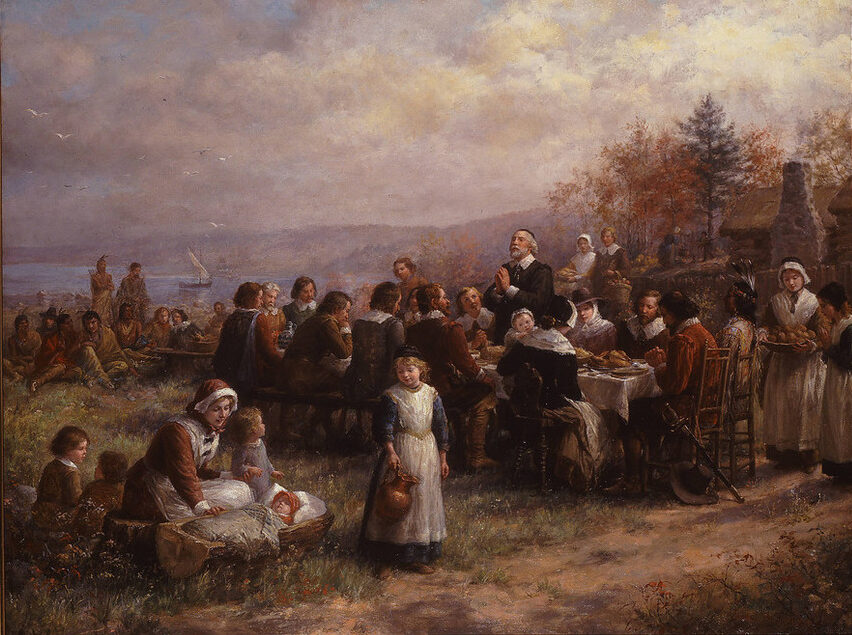






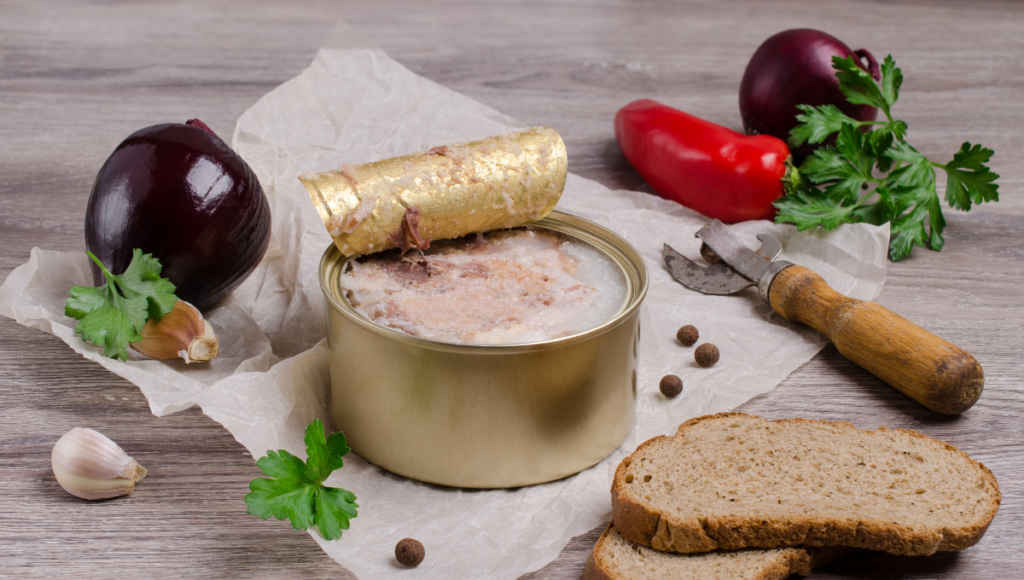
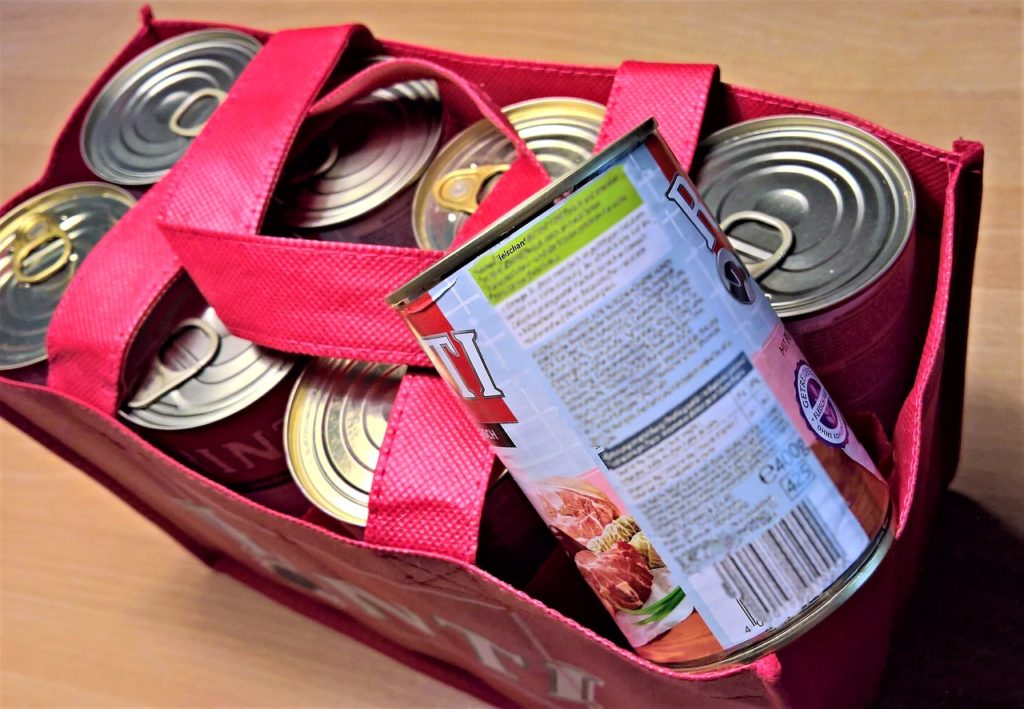



 Lower Valley Assembly