Raw Story: Cold War-style Preparedness Could Help Fight Future Pandemics

There is an article over on Raw Story about how local preparedness could be a more effective way of dealing with disasters and pandemics rather than a reliance on top-down response. Who woulda thunk?

Cold War-style preparedness could help fight future pandemics

A key group of allies is missing in the U.S. effort to face the coronavirus pandemic: the American people.

In the wake of World War II and during the Cold War, the U.S. was the world’s best at planning and preparing for mobilizing the citizenry to take action in an emergency. In those days, the anticipated emergency was a nuclear attack on the U.S., likely resulting in a loss of national leadership that required local governments and members of the public to step up.

Every American was asked to help prepare for that possibility, storing extra supplies, planning to communicate with family members and developing survival skills.

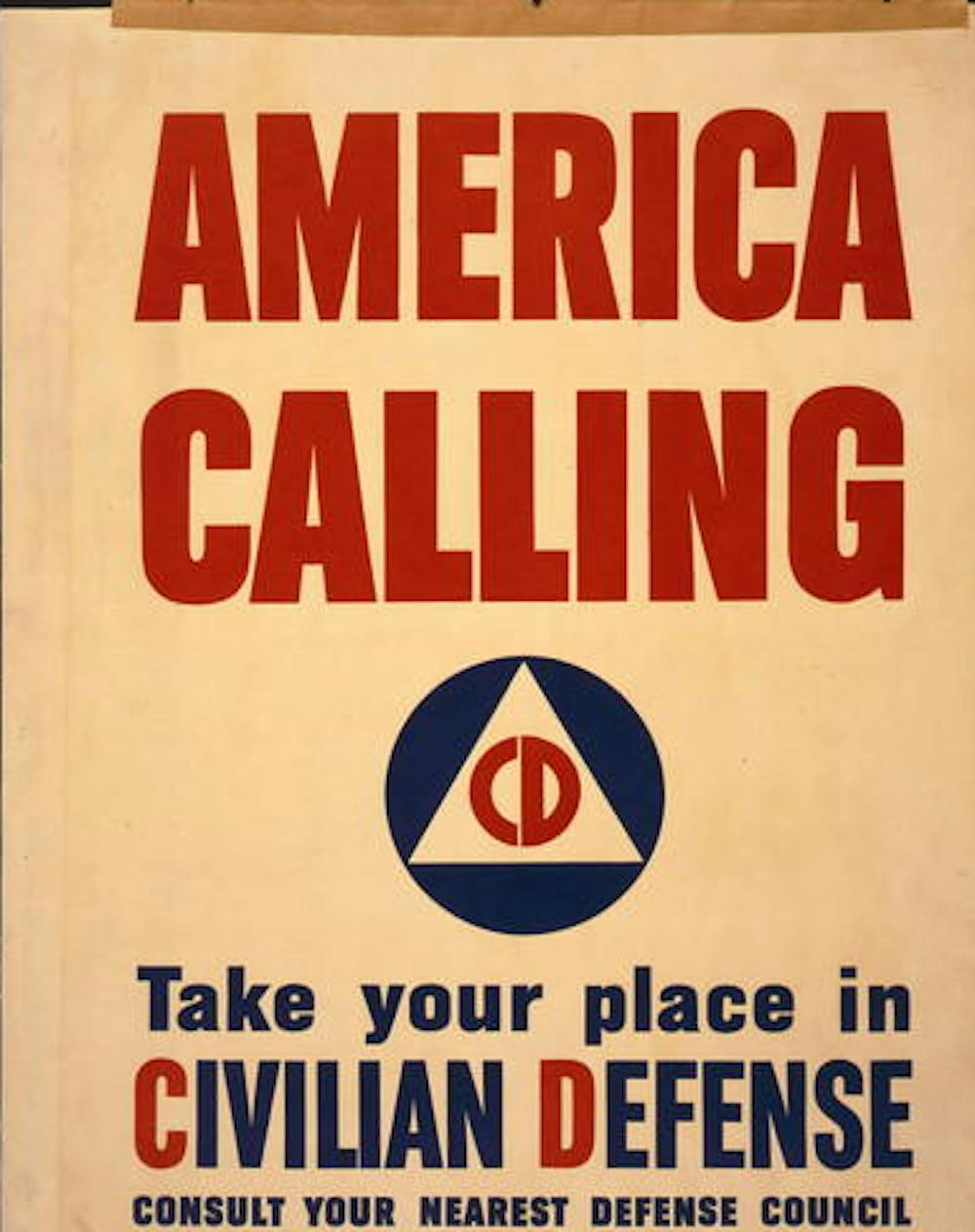
A poster from 1941 urged all Americans to contribute to community preparedness for emergencies.
Government Printing Office, 1941/Library of Congress

Eventually, this type of “civil defenseplanning grew to incorporate responses to other extreme events, such as hurricanes, tornadoes and earthquakes.

Over the latter half of the 20th century, the U.S. civil defense effort encouraged all Americans to be prepared to respond actively to a national emergency.

In recent years, however, Americans’ expectations have shifted from being ready to respond to passively waiting for help from a centralized, bureaucratic federal effort – usually led by the Federal Emergency Management Agency…

…Small organizations are able to adapt: Many have quickly shifted to fill the immediate need. Small wineries, microbreweries and distilleries are making hand sanitizer. Garment and uniform companies are making masks. Schools are using 3D printers to produce face shields.

These examples demonstrate that small-scale approaches can be effective in producing big results. In contrast, larger organizations are more bureaucratic and slower to respond. These inverse economies of scale mirror civil defense efforts: Many working collectively but independently are sometimes more effective than a larger centralized effort.

When facing an unexpected crisis, some amount of disorganization is probably inevitable. But other countries, such as Estonia, Sweden, Finland, Nigeria and Australia, actively work to engage all citizens in disaster preparedness, first aid training and other efforts that give people clear and productive tasks to accomplish.

Following their example – and indeed the United States’ own history – could help create a system of federal oversight and coordination complemented by prepared and trained local responders. That could better prepare the public to pull together as a collective civic community when disaster next strikes.

Click here to read the entire article at Raw Story.

Pat McNamara: AR Weapon Malfunction Training

This video comes via American Partisan  who found it on the 10th Mountain Division Youtube channel. Knowing how to clear your weapon after a malfunction is a critical task.

I stumbled across this video by accident while meandering through the halls of YouTube and thought that everyone would benefit from it. This is a 20 minute video from Pat McNamara. He spent 22 years in Special Operations and now has his own training company alongside a few books, like Sentinel and T.A.P.S.

In this video, he is demonstrating the various malfunctions of the AR platform and how to clear them with members of the 10th Mountain Division.

Practical Self-Reliance: Pasta from Scratch

Ashley Adamant at Practical Self-Reliance has a good write up on How to Make Homemade Pasta from Scratch. The last grocery run I made to the smaller, local store before things locked down, they had stocked up with some large, bulk bags of pasta. If you didn’t stock up on pre-made pasta, but you did get a lot of flour, or if you prepared with bulk wheat berries to grind yourself, then you can use that flour to make pasta. I’ve made pasta from scratch many times, and while it is less convenient than pre-made it is always tasty and really pretty easy to make. The excerpt below omits a great deal of useful of information (like variations, the difference using various flour types makes, photos of the process, and more).

Homemade pasta is absolutely incredible and infinitely better than store bought dried pasta.  Learn how to make pasta from scratch and craft exceptional homemade meals for your family.

Homemade Pasta

I’d been staring at that antique pasta maker at the top of the pantry since I was 5 years old.  At that point, it’d been up there collecting dust for some time already.  My grandmother passed it on to my mother when she moved from a sprawling household into a small retirement community.

They say a passion for scratch cooking skips a generation, and that pasta maker sat at the top of my mother’s pantry for nearly two decades.

When my husband and I bought our first house, my mother asked me if I wanted anything for our kitchen, and I answered without hesitation.

“That old thing?” She said,  “I don’t know if it even works, I’ve never opened it…”

She shipped it across the country later that week, and it arrived in that same dust-covered box I’d stared at since my youth.  My mother’s name still scrawled across the top, as my grandmother had wanted her to have it.

Now I use it to make pasta with my own daughter, and she has a real passion for cooking.  It may have skipped my mother’s generation, but I have faith that this pasta maker will see heavy use in my daughter’s kitchen once it’s left mine.

Only time will tell…

Homemade Pasta Recipes

I’ve been making homemade pasta on this antique pasta maker for the past decade, and I’ve learned that homemade pasta recipes are less about the ingredients and more about the process.

All in all, most recipes are quite simple, and most contain 3-4 simple ingredients.  The proportions in different recipes vary slightly and many start with vague measurements like “put enough flour on the counter, then add eggs.”

The recipe included in my Atlas Pasta Machine from the 1960s is pretty simple, and only includes eggs and flour, plus a little optional olive oil:

“Here is the way to prepare a good homemade pasta: pour the necessary quantity of flour on a plane (we propose 400 grams for 4 people) and make a hole in the middle.  Put an egg for every 100 grams of flour in the hole.  Start kneading the flour with the eggs.  To soften the dough, some olive oil can be added. 

Go on kneading, until after about ten minutes, you get a homogenous paste.  At that point, if you are not in a hurry, you should form a ball and wrap it in a napkin, and let it rest for a few minutes. 

Divide the dough into fist-sized parts and put each portion between the kneading rolls of the machine in position ‘1’ (widest gap).  Fold the pasta sheet and repeat several times, reducing the thickness by changing the gap position until it reaches the desired thickness.”

Regardless of the recipe, the process is the same.  Knead the wet ingredients (eggs, water, oil, etc) into the flour and then begin stretching the dough.  It’s easier if you use a pasta maker, but you can also just roll the pasta dough out on the counter, fold it over on itself and then repeat.

Eventually, the repeated rolling will yield a smooth pasta dough that can be left in sheets for lasagna or ravioli, or sliced into noodles…

Ingredients

  • 2 1/4 cups flour (preferably “00”, but all-purpose works too)
  • 3 large eggs
  • 1 Tbsp Olive Oil
  • 1/2 tsp salt (see note)
  • Semolina Flour for Rolling Out

Instructions

    1. Mix the flour and salt on a clean counter (or in a large bowl), and make a well in the center.
    2. Add the eggs and oil into the well, and beat with a fork. Slowly incorporating the flour.
    3. As the dough becomes thicker, switch to kneading by hand.
    4. Knead the dough for 4-6 minutes, until all the flour is incorporated.
    5. Cover the pasta dough and allow it to rest for 30 to 60 minutes.
    6. Pasta Maker: Set the machine to the widest setting and pass the dough through the rollers. Fold it in half and repeat until the dough is smooth, around 4-6 passes. Then reduce the thickness and roll the dough to your desired thickness using the dial settings on the pasta maker.
    7. Rolling Pin Method: Without a pasta maker, roll the dough out on a clean counter. Fold it in half and roll it out repeatedly until the dough is smooth.
    8. Shape into the desired shape.
    9. For noodles, dust both sides of the dough with semolina flour (or a small amount of regular flour) and roll the dough up like a rug. Cut pinwheels with a sharp knife and then unroll.
    10. For Immediate Use: Prepare a pot of boiling water with a tablespoon of salt. Add fresh pasta to the water and cook 2-3 minutes, until the pasta floats. Drain and serve immediately.
    11. Drying: Hang the pasta to dry in an area with good airflow. It should take 12-24 hours, depending on temperature and humidity. Be sure the pasta is completely dry before storing it in an airtight container.

Stay Calm and Shop Local

In this time of quarantines and stay at home orders, many businesses are struggling and some are closing their doors permanently. At least one chamber of commerce in the valley has put together a Facebook page listing the local delivery, carry out and drive through restaurants in order to help them out. Some have no contact pickups. Others have curbside pickup.

The Prosser Chamber of Commerce says:

We have started a group page/directory to create awareness on which local restaurants and wineries offer curbside, take-out, drive thru, and/or delivery services while the closures associated with COVID-19 are in place. This is a public group, please request to join as we think of creative ways to support local businesses.

Click here to go this Facebook page.

TACDA: Strategies for Coping with Isolation and Loneliness During the Pandemic

From The American Civil Defense Association, Strategies for Coping with Isolation and Loneliness During the Coronavirus Pandemic:

Contributors: Dr. Russell Fulmer, Dr. Michele Kerulis, Alexandria Widener, Lauren Brdecka, Ali Haji, Colbertson Kreger, Zemzem Amme, Sue Tao

Loneliness is not a phase

– Layne Staley, lead singer of Alice in Chains in the song Angry Chair

People respond to a world crisis in different ways. Some, including first responders, doctors, sanitation workers, and those in food preparation, must continue going to work to maintain essential functions in our communities. Others who are under stay-at-home orders have responded with stress, anxiety, and despair; they likely feel lonely and isolated. However, some people see a silver lining, have faith in humanity, and believe that, together, we can do our part to contain the COVID-19 pandemic.

The coronavirus pandemic has worried many people who already are anxious. We live in the Age of Anxiety. For those who experience the turbulence of anxiety, loneliness, panic, or existential angst in the best of times, a global pandemic may further trigger the underlying sense of existing uncertainty.

If you are lonely and anxious, we–members of the Counseling@Northwestern community https://counseling.northwestern.edu/–want to share how we are managing isolation and social distancing with the hope you may learn how to address the situation from different perspectives.

Our purpose is to:

  • Identify common types of isolation. Identification may be the first step toward lessening some of the pain. We draw from existential theory and philosophy, notably the work of Irvin Yalom.
  • Provide tips from students who deal with each type of pain, so that you might use their coping strategies. You will see that some students embrace isolation or otherwise identify positives from its onset.

Types of Isolation

There are three types of isolation: interpersonal, intrapersonal, and existential.

INTERPERSONAL ISOLATION is akin to loneliness. The often-repeated phrase that “it’s not the quantity of your relationships that matter, it’s the quality,” is relevant here. Certain personality styles may crave interactions with people more than other styles. Group identity is also relevant, including whether you belong to a group that society has traditionally shunned or oppressed.

INTRAPERSONAL ISOLATION is to disavow of part of the self. Have you ever said, “A part of me has died?” Do you recall a time you felt whole, but after a traumatic event, you felt fragmented? Maybe you have felt fragmented ever since. Or, did parts of you never have a chance to develop, maybe due to dysfunction in the home during your upbringing? If so, you know intrapersonal isolation.

EXISTENTIAL ISOLATION, as described by Yalom, is “a vale of loneliness which has many approaches. A confrontation with death and with freedom will inevitably lead the individual into that vale.” The existential form of isolation refers to the inherent gap that exists between people, no matter how close the bond. For example, your experience about an event—like the coronavirus scare—is unique to you, and your feelings about it, perceptions toward it, and exact encounters you have because of it will live only within you. Other people may have similar attitudes and experiences, but the unbridgeable gap remains.

Eight Tips for Managing and Thriving in Isolation During the COVID-19 Pandemic

1Accept the reality of the situation. Acknowledging an unpleasant reality may help to reduce stress and enable you to think through the best way to move forward.2Embrace your feelings. Acknowledging uncomfortable feelings can give you power over those emotions. Tend to feelings of danger and insecurity.3Don’t think about feelings as positive or negative. Feelings can represent how you connect to your environment and signal what actions you should take to make yourself comfortable.4Be mindful of how loneliness can manifest in physiological sensations like elevated heartbeat. Recognizing alarming sensations in the moment and allowing them to pass may help neutralize them.5Use isolation as an opportunity to better get to know and understand yourself outside of who you are when interacting with other people. Rediscover your uniqueness.6Focus on the opportunities isolation provides, rather than the things you have lost. Take advantage of extra time to make positive changes or pursue goals you may have put off.7Find ways to stay relaxed and connect to your social networks. Maintaining pre-pandemic routines as much as possible can help, but give yourself leeway to make adjustments.8Practice self-care. Receiving constant news updates can create more stress. Plan how you want to receive important information and take mental and physical breaks.

Learning to Accept Your Feelings While Experiencing Existential Isolation


Alexandria Widener

For me, experiencing existential isolation isn’t necessarily a bad thing, even though it does add another layer to my depression. Granted, I didn’t always view it in this manner. I used to fear the voice in my head that told me life was meaningless and nothing would change. I resorted to self-destructive measures in a desperate attempt to silence it. Nothing worked; I was always left alone with that voice in my head to keep me company. The only way to conquer it was to embrace it.

My main tip for anyone struggling with existential isolation or depression if it occurs as a result of isolation is to accept your feelings. Once you accept feelings of depression as a part of yourself, you gain autonomy over it.

However, there is a thin line between acceptance and concession. Acceptance places the power in your hands because it indicates you are acknowledging the discomfort and choosing to “sit with it” as opposed to running away. For me, accepting my depression means recognizing I interpret and feel things differently from others. I’m not always happy, and that’s OK. Embracing this knowledge frees me from pretending to be something I am not.Once you accept feelings of depression as a part of yourself, you gain autonomy over it.

Obviously, my experience will not be the same as yours. I can’t list coping skills to help you because what works for me might not work for you. People can accompany you on your journey to offer guidance and support, but ultimately, you arrive at the final destination alone. I’m genuinely enjoying the current social distancing and stay-at-home orders imposed by state leaders due to the coronavirus. Getting to choose when I interact with people has been refreshing. Once I accepted that whatever will be will be, it alleviated a lot of stress and anxiety. I’m not saying that I don’t think I can play a role in helping, nor am I saying that I have surrendered to complacency. I think we should come together and do what we can to flatten the curve. I just recognize that regardless of our efforts, what’s going to happen will happen. All we can do is our best. What that means for me is helping those who are most vulnerable, chilling with my dog, and binge watching The Good Doctor as I do my part to slow the spread by staying inside.

Tending to Yourself in Intrapersonal Isolation


Lauren Brdecka

Many of us, myself included, are familiar with intrapersonal isolation. At one time we felt whole and circumstances, events, and people took away that sense of wholeness. Circumstances such as the COVID-19 outbreak can trigger intrapersonal isolation. In a time like this, life is very limited, life-altering choices are being made for us, we have physical limitations, there is an acute sense of danger and caution, some of us may become hypervigilant, and the looming danger and fear may exist without the words to fully articulate the larger scope of your feelings and circumstances.

Intrapersonal isolation, very simply put, is isolation of parts of yourself. During this time of literal isolation, I have reflected on varying parts of myself and my once full life—my loving and rewarding relationships with my nieces and nephews (7 months old, 3, and 7 years old), my sober community, and serving and supporting my clients’ mental health—have become starkly narrowed. Being ordered to isolate has, if nothing else, ensured my physical safety and given me clarity on important aspects of my life and things I can live without.Intrapersonal isolation, very simply put, is isolation of parts of yourself.

I can live without fast food, but in the long run, I will struggle to live happily without seeing members of my family. Amid these unique times, I make sure to tend to the parts within myself that are longing for security. When I feel threatened or unsafe, I always lean into those parts of myself and hear what they have to say and make certain I am not dodging or shushing them. I “re-parent” the parts of myself that feel lost. Re-parenting allows people to give ourselves what we didn’t receive as children, such as positive reinforcement, someone who will listen to me, unconditional love, etc. I engage in re-parenting to heal the younger parts of myself that show up in adulthood.

For me, taking action to relax and stay grounded really helps. These things include yoga, stretching, cooking, taking a hot shower or bath, and meditation. Also, I ask myself, are there parts within me that believe being able to leave the house will make this easier? In fact, I am seeking more control in my life because the truth of it is, I am safer at home. On a daily basis, I FaceTime people I know, and I have reached out to friends to ask if we can go on walks together while standing far apart. The global pandemic requires me to be flexible in ways we have never had to be, and that is not inherently bad, although it may be uncomfortable.

Above all, I know that most of the literal world is having to face these uncertain and uncomfortable times and, although I am physically alone, I, by no means, am alone, which has actually helped me to feel even more united to people and parts of the world I will never meet or see. Stay well for the time being all, and this, too, shall pass.

Reframing Your Feelings Related to Interpersonal Isolation


Ali Haji

With social distancing becoming the buzz phrase of 2020, and for good reason, understanding the ramifications of interpersonal isolation on our mental health is important. All of us have likely felt the effects of interpersonal isolation and perhaps the one with which we are most familiar. Interpersonal isolation is defined as a person-person isolation. In other words, isolation from other beings. It is important to note that this does not always have to take a physical form. Interpersonal isolation can exist amid group gatherings whereby the way we relate to others is not ideal for what the group setting requires. Given the current state of society, I will focus most on the more literal, physical separation from others with which most of us are currently coping.Interpersonal isolation is defined as a person-person isolation. In other words, isolation from other beings.

As with most things in our life that render us out of control, knowing how to cope with the resulting feelings can make or break us. In my experience, interpersonal isolation and the subsequent loneliness that can result is a challenge. With any difficult feeling, I find it important to understand how the loneliness that I experience is unique to myself. I ask myself questions like “Where do I feel this feeling in my body?” and “What physiological sensations can I associate with it?” This process brings a mindful attention to our present moment, allowing us to observe the arrival and departure of uncomfortable feelings, thereby helping us to objectify them. The process of objectification and being mindful of our visceral sensations can allow us to reframe thought processes like, “I am lonely,” with “that’s loneliness.” In my experience, allowing the feeling to pass rather than holding on to it and using our thinking minds to “figure it out” proves most effective, albeit most difficult as it requires an attention to our present moment and felt experiences. Loneliness, like most other feelings, can often be paired with concrete physiological sensations like our hearts pounding, heavy breathing, or muscle tension. The onset of these feelings can be quite alarming and noticeable but in bringing a mindful attention to our state of being, we notice that the aforementioned sensations are not permanently lodged in our system but rather able to neutralize and dissipate as time passes. For example, maybe after a few minutes, we notice our breathing return to normal and our muscles beginning to relax.

We might also consider why we deem loneliness a negative feeling. Our feelings guide us and perhaps these feelings of loneliness are a gentle reminder that we need to reach out to those around us in the ways that we can. The energy that loneliness brings might be applied to poetry, music, writing, or creating in some capacity. At the end of the day, removing the duality of positive and negative is our best bet at seeing our feelings for what they are—our visceral and honest connection with the environments and surroundings in which we find ourselves. Perhaps they are not things that we need to avoid and push away and more so a highly personalized teacher that we have 24/7 access to, informing us of our limits and boundaries. We have a greater capacity to neutralize and feel our feelings than we give ourselves credit and sometimes reminding ourselves to have mastery of our feelings rather than be slave to them is the push we need. And hey, a Zoom-based social hour can always help.

Using Isolation to Encourage Acceptance of Your Authentic Self


Colbertson Kreger

In a society that promotes conformity while shunning originality, it is hard to find our place within the maelstrom of social self-acceptance. The person I am behind closed doors is my authentic self, whereas when the door opens, I become a performer. I am performing for the masses and myself a certain standard of human interaction, while at the same time wildly fantasizing about the feeling of authenticity. Taking the step toward an authentic experience with others, and most importantly, yourself, is to take a step into the unknown. We have performed since our birth, and now is a time to learn who we really are. Your uniqueness may be overshadowed by anxiety and internal critique, but that shadow can only be cast if you stand behind your angst instead of finally taking that fabled step toward the light of self-authenticity.

I have taken that step. I have shouldered the burden of being unique and all the notions that are attached, and I have felt the warm sun upon my face for the first time. Our purpose here has been constructed into spending our time to benefit a culture and society that does nothing more than break people down. Our time is for growth and taking the steps toward discomfort. Growth will only occur during a period of discomfort, and in a world of lies and fear mongering, we all owe it to ourselves to put down the mask, and to finally act as who we are.

Embracing Growth in the Face of Interpersonal Isolation


Zemzem Amme

With so many limitations now in place due to the ever-changing circumstances of the coronavirus, it is nearly impossible to still have your pre-pandemic routine. Sudden change commonly brings a period of mourning and anxiety that occurs when navigating through your new reality.

During these moments, I find Viktor Frankl’s words fitting: “Between stimulus and response there is a space. In that space is our power to choose our response. In our response lies our growth and our freedom.”Sudden change commonly brings a period of mourning and anxiety that occurs when navigating through your new reality.

This is the time where I challenge myself by finding new ways to still enjoy my time at home. It can be easier to focus on what we have lost, rather than seeing what we now can explore. Just like any growth, we are never truly ready. This is something new and it creates an opportunity—if you choose to seize it—for change. Whether you are reconnecting with individuals, better organizing your house, or doing the daunting task of confronting your internal conflicts, there is a chance of coming out of isolation changed for the better.

Even though we are bombarded with many new ways of communicating, it doesn’t replace what we are used to. As human beings, we are constantly communicating with people, whether verbally, through sign, or something as simple as eye contact. There is no right way to handle communication and connection disruptions during this situation, but there are ways to assuage the loneliness that we feel. For me, this is the time for reflection, when I can truly focus on what matters most. Though I may take this as a time for growth, the reality is that most of my growth happened around a community. Even though we all may experience this uncharted territory differently, one thing that doesn’t change is that we are experiencing this phenomenon together.

Generating Meaning from the Reality of Isolation


Sue Tao

Week two into social distancing, I have mastered a daily coping routine to keep myself active, both mind and body, and to keep from feeling isolated. I’ve taken advantage of this time that I call “a break from the world” to realign my personal agendas that have been pending due to the lack of time I had before the pandemic, such as studying for my national counselor exam. I recently integrated hosting a daily social hour with friends on Zoom, which has been a great hit with new friends dialing in, and group walks every other day for fresh air and live conversations with friends who are not exposed to COVID-19 and have complied with social distancing/isolation the past couple weeks. Lastly, I engage in daily mindfulness techniques, a skill set I am enhancing so I can teach my clients in the counseling arena about the benefits of mindfulness with competence and confidence.

I was determined at the start of the COVID-19 pandemic to not let the news and media affect my mental health well-being, because so often, stress and anxiety can be accumulated from consuming excessive news and media (which I have personally witnessed among my family and friends). No pun intended, but anxiety is a strand of virus that feeds the fear in us. All in all, I think that isolation is subjective, and it is my responsibility to generate a meaningful and productive day, one day at a time.

Living in Isolation as an Extrovert


Dr. Michele Kerulis

I am a social butterfly so having a mandated stay-at-home order feels very confining for me as an extrovert. I feel very fortunate that I am used to working from home. This experience allows me to feel 100% confident in my ability to work from home for prolonged periods.

What is difficult for me during this time is having my stress management tools taken away without advance notice. Part of my self-care routine is attending yoga classes, going to the gym, and participating in sporting events, many of which have been canceled. My gyms are closed so the routine of separating myself from work and going into a different environment to wind down from my day is no longer an option.

Each year, I look forward to seeing my colleagues at counseling conferences where we come together as a community and celebrate our amazing mental health field. Like falling dominos, we watched our community conferences canceled, one after another. I was devastated to learn I would not be able to see my fellow professors and counselors, as we frequently share ideas about how to continue providing for our students and clients. I was looking forward to providing a keynote address to my colleagues and helping to decrease the stigma related to seeking counseling services.

Like many helpers, I was shocked at the magnitude of the pandemic and I wanted to know what I could do to help. I know that I must care for myself if I want to be effective at caring for others. What I have done during the stay-at-home order is committed to a daily schedule to help create a sense of normalcy during these chaotic times. I suggest that people continue as if they were going on with their pre-pandemic routines as best they can. For me, this includes completing morning hygiene tasks, making a cup of coffee or tea, attending to work responsibilities online, and exercising. I take breaks throughout the day and connect with people. I call, text, and have Zoom video chats with friends, colleagues, and loved ones. I enjoy simple things like watching animal videos online, participating in home workouts from Pinterest, and looking at beautiful photos. I find that these simple, enjoyable things help decrease stress.I know that I must care for myself if I want to be effective at caring for others.

I have also turned off the TV and have asked specific people in my life to inform me of pandemic updates if/when my community status changes. I believe the oversaturation of media coverage is not healthy for society. Instead of overindulging in repetitive media posts and stories, I think it is more effective for people to come together as a community (while maintaining social distance) and to follow the recommendations of trusted health authorities like the World Health Organization and Centers for Disease Control and Prevention. Until the pandemic subsides, we must have faith in ourselves to keep living our day-to-day lives so we can be effective counselors and teachers.

Citation for this content: Counseling@Northwestern https://counseling.northwestern.edu/, the Online Master of Arts in Counseling Program from The Family Institute at Northwestern University

Easter

Lord God,
You loved this world so much,
That you gave your one and only Son,
That we might be called your children too.

Lord, help us to live in the gladness and grace
Of Easter Sunday, everyday.
Let us have hearts of thankfulness
For your sacrifice.

Let us have eyes that look upon
Your grace and rejoice in our salvation.
Help us to walk in that mighty grace
And tell your good news to the world.
All for your glory do we pray, Lord,

Wilder, Wealthy, and Wise: Eight Phases of Crisis – Covid-19 Edition

John Wilder at Wilder, Wealthy, and Wise has written a someone what long, and maybe slightly rambling but still good, piece on crisis stages that we may see with Covid-19. Eight Phases of Crisis – Covid-19 Edition is a couple of weeks old, now, but still germane.

…Here are, as near as I can determine, Eight Stages of a Crisis™, a level at which each crisis can be evaluated compared to the other – this is my modification of work originally done by Zunin and Myers.  This is like the Kübler-Ross five stages of grief, but with the apocalypse in mind.  Why settle for one death, when you can have millions or billions on your mind?  It’s so nice and cheery.  The nice part of using this model is that you can gauge where we are in the current COVID-19 mess.

The Warning

This is the opening stage of a crisis.  It may be short, as in 9/11, or it may be a slow-motion collapse like the gradually increasing troop buildups and mobilizations that led to World War I.  Everyone wanted to stop it, but no one was sane enough to say “no.”  The Warning before the first Civil War was literally decades in length.

In the current COVID crisis, The Warning came during and just after the December impeachment.  With the focus of the country elsewhere, who cared about the flu?  We don’t trust the media very much.  Why?  They don’t seem trustworthy.  Example:  when Trump shuts down air transport to China, CNN® says it’s racist.  When China shuts down air transport from the United States, CNN™ says it’s a wise and prudent move by China’s benevolent leadership…

The Event

The Event is generally not long, but it can be.  It’s the Shot Heard Round the World at Lexington and Concord in the Revolutionary War.  The Event is when the rules change forever, and nothing can ever make the world go back to the way it was.  It’s the spark that lights the fire.  When people look back, everyone can see The Event.

Nothing is ever the same afterwards – The Event changes everyone that it touches, and often ends up changing systems permanently.  It is disruptive.  It may not be the reason that everything fails, it might just be a small event toppling an already unstable system.  In a crisis like 9/11, the event is obvious and instant.  COVID-19 has led to a slow-rolling avalanche across the economy.  Was it poised for a fall anyway?  Possibly…

Disbelief

When things have changed, and changed drastically, people refuse to believe it.  When the power is out because a tree fell on the power lines, I will walk into a room an automatically flip the light switch.  Why?  Habit, partially.  But there’s a part of my mind that is existing in Disbelief, perhaps, that doesn’t believe that the power could ever be gone.

Disbelief isn’t a coping strategy, and it’s not an attempt of the mind to protect itself, at least in a healthy person.  It’s more inertia.  You’re used to the world being a certain way, and when it isn’t, part of your mind isn’t quite ready to process it…

Panic

At some point, the mind is confronted with the new reality and forced to accept it.  But the rules are new, and unknown.  What to do?  One could take a deep breath, and review the situation and think logically or?  One could PanicPanic is easier, and doesn’t require a lot of thought.

Panic is the natural reaction when your brain realizes that it has done zero to prepare for the new reality…

Heroism

While the Panic is ongoing, the first glimmer of Heroism starts to show.  Brave men and women working in the medical field are the first signs of Heroism.  Donald Trump talking with Al Sharpton to address the problems he sees is Heroism – realizing that there is a greater good, and that sacrifice is required.  Heroism is embodied throughout the response to the crises where a few have an opportunity to save many, and where enemies put aside squabbles for a time because it’s the right thing to do…

The Cliff

Keeping order requires energy.  Some part of the energy of the system is put into keeping order.  In a time of significant social cohesion, like World War II, the United States didn’t face The Cliff, even though virtually every other developed nation did.  Instead, the energy that the crisis took was replaced by people working together.

Most of the time in a real crisis, however, there’s The Cliff.  I wrote about it here: Seneca’s Cliff and You.

We have not fallen off The Cliff.  Is it certain that there is one?  No.  But every single leader, elected or appointed, is acting like it’s there.  I believe we will see it.  The new normal will be grow from events moving quickly.  Already at Wilder Redoubt, we’ve had nothing but home cooked meals for the last week, with a couple of store-bought sandwiches being the exception.

Will home cooked food, family dinners, and homeschooling be the legacy of COVID-19?

I expect that we’ll see The Cliff soon enough…

Disillusionment

After the fall, things suck.  We had heroes, but the time for Heroism is over.  Disillusionment sets in when things don’t snap back to normal.  Things will seem rosy, only for failure to crush hope.  The more government “helps” during this phase, the worse recovery will be.  Roosevelt “helped” so much during the Great Depression that he extended it for years.

But politicians will take drastic steps, because they can’t help themselves.  The length of time Disillusionment lasts?  Months to years…

Rebuilding

This is the other side of The Cliff.  Whereas, as Seneca said you go down a cliff pretty quickly, you only build up slowly.  Rebuilding the economy will take years.  If we do it right, we’ll build a stronger economy, less dependent upon foreign supply lines, that guarantees freedom while preserving the traditional values that built the wealth in the first place.

If done poorly?  The system is controlled, oppressive, and coercive…(continues)

Click here to read the entire article at Wilder, Wealthy, and Wise.

FFF: Monetary Destruction in America

Jacob G Hornberger at the Future of Freedom Foundation has a well written article detailing Monetary Destruction in America. It’s a bit of a long read, but worth the Constitutional and monetary education.

The Constitution made it crystal clear what the official money of the United States was to be when it called the federal government into existence. That money was to be gold coins and silver coins, not paper money.

Article 1, Section 10, of the Constitution, which is a restriction on the power of the states, states, “No State shall … coin Money; emit Bills of Credit; make any Thing but gold and silver Coin a Tender in Payment of Debts….”

What were “bills of credit”? That was the term used at that time for paper money. Through that provision in the Constitution, the Framers expressly prohibited the states from issuing paper money. It prohibited them from making anything but gold coins and silver coins legal tender or official money. It prohibited the states from issuing their own coins, leaving that power and responsibility to the federal government.

With respect to the federal government, Article 1, Section 8, states, “The Congress shall have Power …To coin Money, regulate the value thereof, and of foreign Coin…. To provide for the Punishment of counterfeiting the Securities and current Coin of the United States.”

Why wasn’t there an express prohibition on the power of the federal government to emit “bills of credit” or paper money? The reason is that the Constitution established a government of limited, enumerated powers. The federal government’s powers were limited to those listed in the Constitution. If a power wasn’t enumerated, it couldn’t be exercised. Since there was no power to issue paper money given to the federal government, it couldn’t exercise such power.

It was different with the states. Under the Constitution, they were to have whatever powers they wished to exercise, unless there was an express restriction on a particular power within the Constitution. That was why the Framers deemed it necessary to restrict the powers of the states when it came to money: no printing of paper money, no coining of money, and no making anything but gold coins and silver coins official money.

The federal government, on the other hand, was given the power to coin money, not print money, and to regulate the value of such money. It was also given the power to punish people for counterfeiting “the Securities and current Coin of the United States.”

Article 1, Section 8 of the Constitution also gave Congress the power “To borrow Money on the credit of the United States.” That’s what counterfeiting “the Securities” of the Constitution was referring to — debt instruments of the United States, such as bills, notes, and bonds.

There is something important to realize about the federal government’s debt instruments: It was understood that they were not money or “legal tender” but rather promises to pay money — i.e., promises to pay gold coins and silver coins.

When we consider all of these constitutional provisions, it is easy to see that the Framers intended to establish a monetary system in which gold coins and silver coins were to be the official money of the United States. And, in fact, that is precisely what happened after the federal government was called into existence. The Coinage Act of 1792 established the first mint in Philadelphia for the purpose of issuing coins. The silver dollar was the first unit of money issued. That would be followed by the silver half-dollar, quarter-dollar, dime, and half-dime. Gold coins consisted of the $10 gold Eagle, $5 Half-Eagle, and $2.50 Quarter-Eagle.

That gold-coin, silver-coin system remained the monetary system of the United States for more than 125 years. It turned out to be the most stable monetary system in history, one that, along with no income taxation, no welfare state, no warfare state, no immigration controls, and very few economic regulations, played an important role in the tremendous rise in economic prosperity and rising standards of living in the United States throughout the 19th and early 20th centuries.

It is often said that America’s “gold standard” was a system in which paper money was “backed by gold.” Nothing could be further from the truth. There was no paper money. There were only debt instruments promising to pay gold and silver. The system was one in which gold coins and silver coins were the official money of the United States.

Paper money

Why did our American ancestors have such a deep antipathy toward paper money? They knew that throughout history public officials had plundered and looted people through the use of paper money. To finance their ever-burgeoning expenses, public officials, of course, would first resort to tax increases. At some point, however, taxes would get so high that people would begin to resist, cheat, or, in extreme cases, violently revolt. That’s when kings and other regimes would resort to the printing press to finance their expenditures. They would simply crank up their printing presses, print whatever amount of money they needed, and go spend it.

The result would be a devaluation of everyone’s else’s money…(continues)

Click here to read the entire article at the Future of Freedom Foundation.

Hello Homestead: Cooking with Dried Beans

Sam Schipani at Hello Homestead has an article that explains how you should prepare your dried beans, storage, soaking, cooking – Here’s what you need to know about cooking with dried beans. If you are seasoned at using your storage foods, then there may be nothing new here, but if this is your first time pulling out that food that you got “just in case” or recently picked up some dried beans as desperately sought out foods for lockdown, then this is for you.

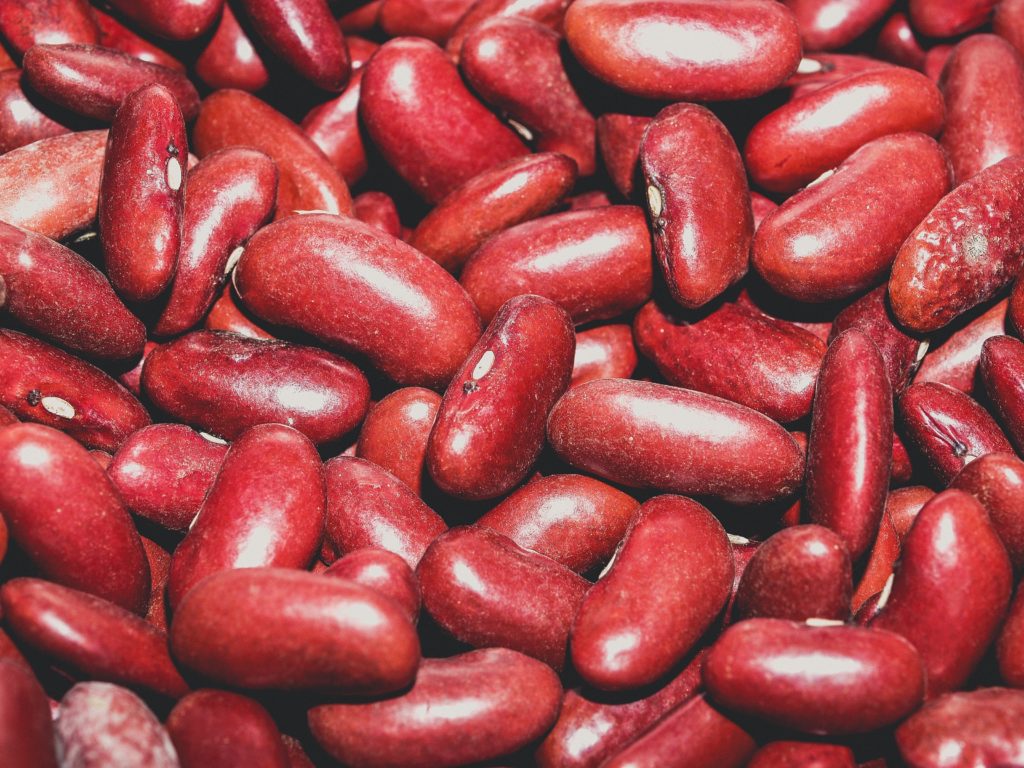
Red kidney beans. | Photo from Pexels

As the number of positive coronavirus cases continues to climb, citizens around the country have started stockpiling foodstuffs in preparation for the recommended social distancing, self-quarantine and self-isolation. A few nonperishables, in particular, have been popular in grocery stores — among them, canned beans.

Luckily, dried beans are generally available in bulk supply, in both conventional grocery stores and health food stores. If you purchased a bag of dried beans to stand-in for your usual canned counterparts, you may not know what to do with them.

Consider this an opportunity to open yourself up to the wonderful world of dried beans. Dried beans are cheaper, healthier and more sustainable than their canned counterparts. Plus, dried beans usually come in much more fun and tasty heirloom varieties than the canned offerings.

To make tasty, tender beans while avoiding any uncomfortable gas, here’s what you need to know about preparing dried beans from scratch.

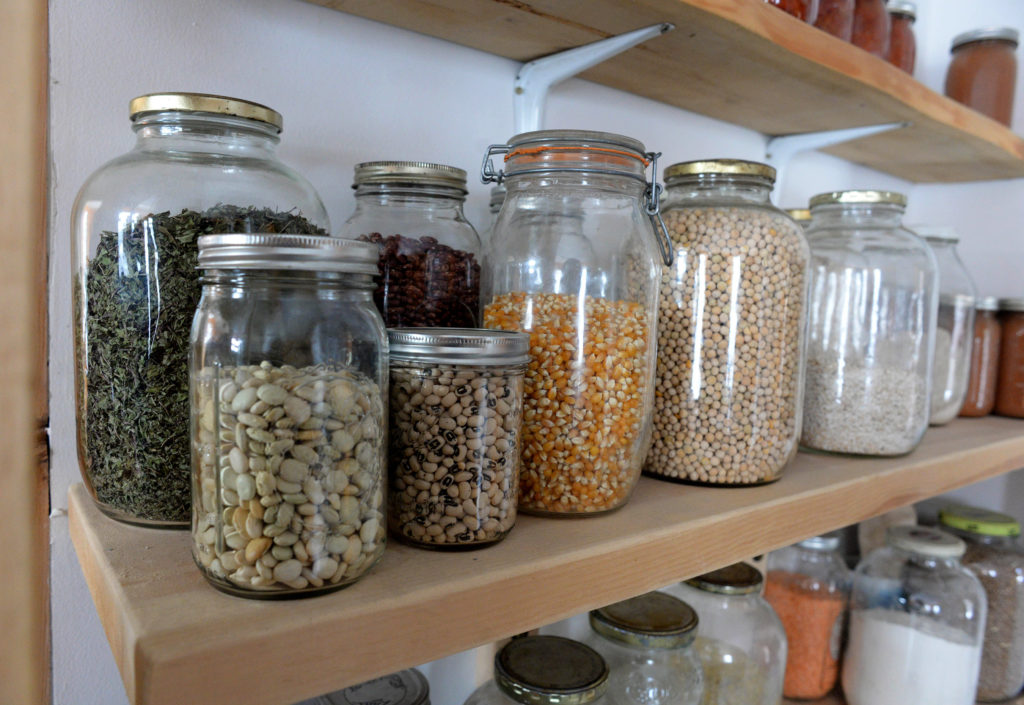
Stored dried beans at Songbird Farm in Unity, Maine. | Photo by Linda Coan O’Kresik

1. Store them

First, make sure you properly store your dried beans leading up to the moment you use them. Dried beans left in their original grocery store packaging — generally, a thin plastic or paper bag — will dry out faster. Instead, store them in food-safe storage containers with a tight-fitting lid. Dried beans should also be stored out of direct sunlight in a dry spot kept at a cool temperature between 50 and 70 degrees Fahrenheit. A cool pantry will work best.

2. Soak them …

Many dried beans need to be soaked before they are used to dissolve the starches that cause intestinal discomfort. The exceptions to the bean soaking rule include smaller and softer legumes, such as lentils, split peas, black-eyed peas and adzuki beans.

For all beans, pick through the beans and discard any discolored or shriveled beans, as well as any foreign matter such as stray pebbles or twigs. Rinse the beans well.

To soak, put the dried beans in a pot and cover them in a few inches of water. Let sit overnight in the refrigerator.

If you don’t have all night, you can also quick soak beans and get a similar effect. Put those beans in a pot, cover them with water and bring them up to a boil. Let the beans boil for a few minutes, then cover the pot and turn off the heat. Let the beans sit for at least half an hour in the hot water.

… or, maybe, don’t soak them

There are kitchen gadgets that can help you get around the soaking if you really want to. You could make your beans in a slow cooker in just a few hours without soaking overnight, or you could prepare dried beans in a pressure cooker (but don’t skip the olive oil — this helps reduce foam during cooking, which could clog the pressure valve).

The exception to these workarounds, though, is red kidney beans, which should always be soaked. They require a different cooking method to break down toxins in the bean. To make them more digestible, always soak first and then boil for 20 minutes before preparing in the slow cooker or pressure cooker.

3. Cook them

If you have chosen to use the regular soaking method, now it’s time to make those beans nice and creamy. First, drain and rinse your soaked beans, whatever method you wound up using.

Transfer them to another pot, then cover them in a few inches of water (the exact amount isn’t important). Bring them to a simmer, avoiding a boil (which will make them fall apart), with a dash of salt.

You may have heard that dried beans shouldn’t be salted until the end of cooking to avoid toughening the beans, but this is an oversimplification of the truth. In fact, some chefs swear that salting beans at the beginning of cooking and ending up with flavorful, tender beans. As a general rule, keep early salting light — most of the salt will be added at the end, after the beans have cooked through.

To give your beans a little more flavor, add aromatics such as onions, shallots, garlic, chiles or fresh herbs. The Bean Institute recommends a whole, quartered onion, a few cloves of garlic, and a sprig or two of fresh herbs like rosemary, thyme or a bay leaf, but you can experiment with your own mix of flavors. Lightly salt again after about an hour of simmering.

After another 30 minutes to an hour, your beans will be tender and edible (a quick taste test will help to make sure, but be careful not to burn your tongue). Turn off the heat and fish out any aromatics you used (keeping them in a cheesecloth bag is one easy way to do this). Then, season the cooking liquid to taste with salt and add any acidic ingredients such as tomatoes, vinegar or lemon juice… (continues)

Read the entire article at Hello Homestead by clicking here.

Yakima County Emergency Mgmt Seeks Donations of Protective Gear

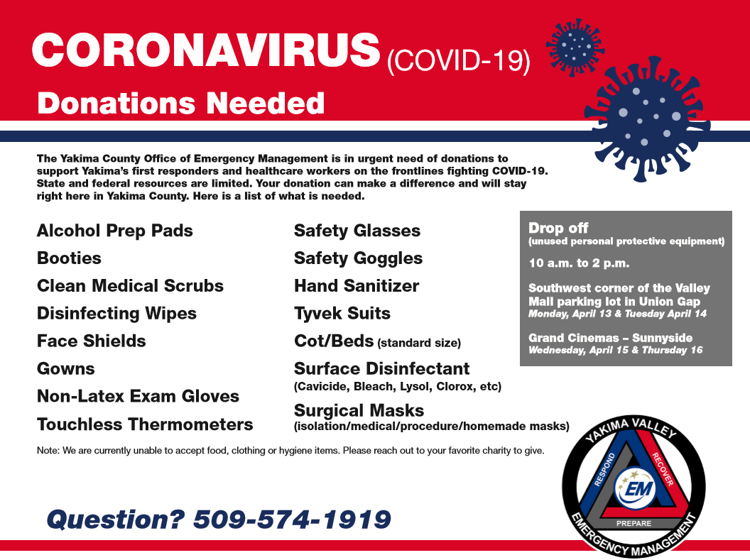
From KNDO/KNDU in support of Yakima first responders and healthcare workers:

Yakima County Office of Emergency Management asking public for donations of protective gear for frontline workers during COVID-19 outbreak

The Yakima County Office of Emergency Management urged the public this week to donate protective gear to frontline workers during the OCIVD-19 outbreak.

The organization stated there continues to be a shortage of supplies and are asking the public to provide homemade gowns, gloves, masks, face shields and more.

People can drop off donations at the following locations:

Valley Mall/2529 Main St, Union Gap, WA 98903 from Monday, April 13th to Wednesday, April 15th.

Grand Cinemas/3400 Picard Pl, Sunnyside, WA 98944 from Thursday, April 16th to Friday, April 17th.

Management stated people donating have to stay in their cars at each donation drop off as a staff member will pick up the items.

The Christian Century: Thinking about Good Friday during a pandemic

From The Christian Century, Thinking about Good Friday during a pandemic

“…I think about the Solemn Reproaches a lot these days. A virus that looks like a crown of thorns is multiplying uncontrollably, and our collective anxiety about it has left us alternating between language of reproach and language of pleading.

The pleas have been fairly straightforward, even as they’ve increased in ur­gency and intensity: Wash your hands. Stay home if you’re sick. Don’t hoard face masks. Cancel all large gatherings. Pass legislation that guarantees paid sick leave. Shut down schools. The reproaches have been more complicated, as we’ve struggled to understand the causes of the pandemic. I’ve heard people blame globalization, secretive governments, un­equal access to health care, an unregulated market that made it easy for a virus to jump across the animal-human barrier, the narcissism and denial of world leaders, people who don’t cough into their elbows, climate change, delayed test kits, cruise ships, handshakes, pangolins, political appointments motivated by loyalty instead of competence, overcrowded prisons and detention centers, open work spaces, communion by intinction, and asymptomatic carriers.

Reproaches can be useful—particularly if we direct them toward ourselves, naming our sins and striving to correct our errors as we move forward. But as resources become scarce and panic increases, it can be easy for our reproaches instead to turn outward and morph into violence—whether that means overtly xenophobic mob actions or just the cumulative harm caused by millions of small decisions made out of anxiety.

Christians have responded to past pandemics in a variety of ways. In February 1349, with the plague looming, the municipal authorities of Strasbourg in Alsace rounded up the city’s Jewish people, accused them of poisoning the Christians’ wells, demanded that they convert on the spot, and burned about 1,000 of them alive.

But it’s also true that in the third century, when a plague nearly wiped out the Roman Empire, Christians became known for performing unsolicited acts of compassion and self-sacrifice. Cyprian, who was the bishop of Carthage at the time, wrote these words:

How pertinent, how necessary, that pestilence and plague which seems horrible and deadly, searches out the righteousness of each one, and examines the minds of the human race, to see whether they who are in health tend the sick; whether relations affectionately love their kindred; whether masters pity their languishing servants; whether physicians do not forsake the beseeching patients; whether the fierce suppress their violence. . . . These are trainings for us, not deaths: they give the mind the glory of fortitude; by contempt of death they prepare for the crown.

Being forced to envision our own mortality can strip us bare of all pretenses and reveal who we really are.

That Good Friday morning when Dan and I rehearsed the Solemn Reproaches in the empty church, a complex beauty emerged. The sanctuary, built in a midcentury architectural style that I can only describe as urban stark, was already stripped of all adornment. Everything soft—paraments, linens, cushioned kneelers, flowers, candles, books—had been removed during the Maundy Thursday service the night before. In that somber space, Dan’s voice and mine resonated only with stone, bricks, concrete, and wood.

It was a rehearsal, but it was as real as any act of worship ever is. There were only two of us, and yet we were confessing the sins of all Christians across the centuries. The heaviness of our guilt—as individuals, and as the body of Christ in a world marred with violence and in­equity—was palpable. The need for God’s mercy felt thick.

But just as thick was the presumption that God would indeed grant that mercy. We knew even as we were pleading for it that it was already ours. We remembered that we were singing to a God who had jumped across the divine-human barrier in order to be able to bleed and sweat and catch viruses and weep and ache and die. That’s why Dan and I kept singing, hesitant to stop.

But it was Good Friday, and we worked at a church. We had a lot to do. Before too long, we went back to our offices so we could complete all of the Holy Week tasks that still needed to be done.

This year, many churches may be empty on Good Friday because of the pandemic. But I’d like to think that the chanting of prior generations will resonate even in those stark, still sanctuaries: “Holy God, holy and glorious, holy and immortal, have mercy on us.”

Alt-Market: How To Protect Yourself From Long Term Pandemic Lockdown

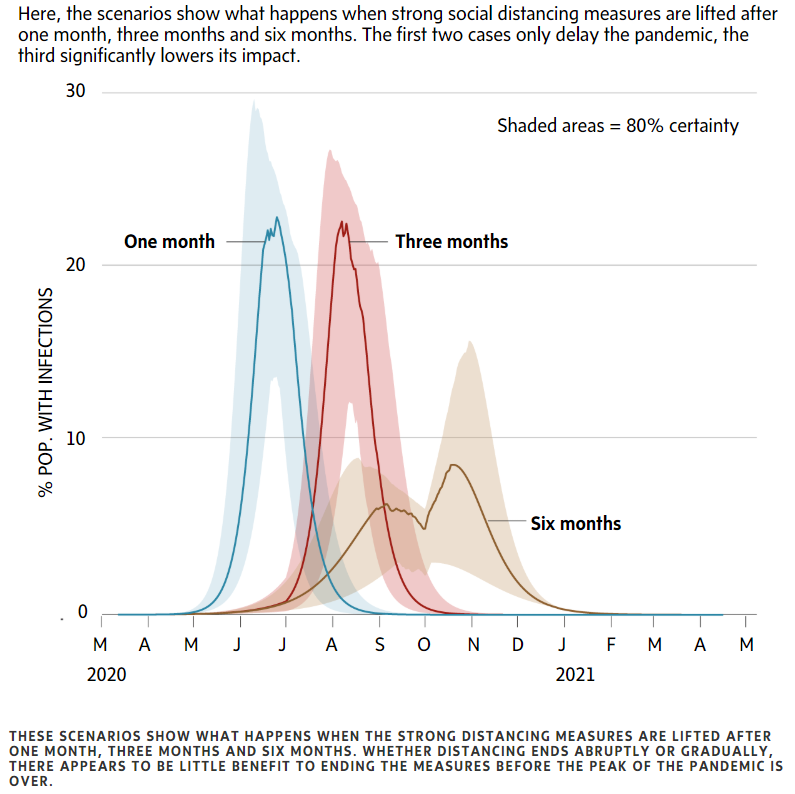
How long with the lock downs last? Hint: X-axis is in months, not weeks.

Brandon Smith at Alt-Market has an article on protecting yourself during what he believes is sure to become a long term pandemic lockdown – How To Protect Yourself From Long Term Pandemic Lockdown. Certainly he is not the only person to express that this will not be over in just a couple of weeks, and there is much to back him up.

It has been only two weeks since widespread pandemic lockdowns were implemented in the US and as expected the public is not handling the idea very well. Within one week there were already frantic demands for the economy to reopen by Easter (spurred on by Donald Trump), and mass delusions have developed that this is still going to happen despite the fact that lockdown guidelines have been extended to at least April 30th. People desperately want to believe that this will all be over in a matter of weeks.

Many governments continue to perpetuate this fantasy by using very carefully worded terminology. For example, the phrase “two weeks of hell” is being consistently repeated by the media after Trump uttered the notion a few days ago. In Italy, a Milan official sees lockdowns now continuing for 2-3 more weeks. In Spain, the public was left with the impression that two solid weeks of quarantine and lockdowns would help stave off infections, yet the government extended the restrictions for…yes, you guessed it…another two weeks.

Why are these announcements always in two week intervals? I suspect it is because this the maximum amount of days before the average person begins to register the passage of time in their minds in a new situation. After two to three weeks of going without certain comforts and habits, people tend to adapt and find different ways of doing things. And, after two to three weeks of crisis, they might wake up and recognize the situation is not going to get better…

Are we just supposed to sit back and become slaves, dependent and clamoring for a meager UBI check every month?  I think not.

So, the question is, what can we do about it? As I have been saying for well over a decade, the solution is to decouple from the system and build our own. But what does this mean specifically?

Step 1: Start Providing Your Own Essentials

Essentials include water, food, shelter and security. Without these four things no human can live for very long. If a person can provide these things for himself, then he will never be beholden to anyone, including a domineering government.

I suggest starting small and expanding. Build a water collection source, or drill a well if you own property. Turn your yard into a garden, even if you live in the suburbs. In fact, your entire neighborhood should be growing gardens right now, and anyone who tries to tell you otherwise should be dissuaded from their attempts to control what you do on your own property. This means establishing neighborhood security and no longer relying on local law enforcement.

It’s one thing to store essentials in case of emergency, it’s another to become a producer and ensure your survival for the long term.

Step 2: Organize For Mutual Aid And Defense

Each neighborhood or town should be working together for security as the system continues to collapse, which means establishing radio communications and small patrols to ward off looters. In New York alone, major crimes are up 12% as the lockdowns ramped up.  In many municipalities in the US, law enforcement is not responding to most calls involving assaults, break-ins and robberies.  Organization at this time is paramount; the more organized you are the more of a deterrent you represent to people who would seek to take what you have. Most predators are cowards; when given the choice between a strong target and a weak target, they will invariably choose the weak target.

The common argument against organization is that the “nail that sticks up will be hammered down”. I would remind people that the nails that are willingly hammered down will be stepped on forever. Nobody wants to step on a nail that sticks up. That hurts.

Predators, including predatory and totalitarian governments are, at bottom, weaklings. And their weakness will become apparent the moment they face an opponent that actually refuses to back down due to fear.

Step 3: Establish Barter Markets And Black Markets

As noted in previous articles, the primary goal behind this pandemic is to use it as a rationale for controlling all commerce. If you do not have the proper “green code” from the government indicating you are “free from infection”, then you are not allowed to participate in the economy. No job, no grocery stores, no public gatherings, etc. This is happening right now in places like China and South Korea and according to elitists like Bill Gates and others it is coming to the US soon, make no mistake.

The only way to counter such control is to not need the mainstream system at all. Localized barter markets need to be established, and if they outlaw those, then you need to set up black markets. Trade and production must continue or humanity as we know it will die. It will be replaced with a centralized socialist hive system that will crush all liberty, and this is unacceptable. Localization is the key to our survival.

This means that the public must make and active effort to save themselves through their own innovation instead of waiting around for government to save the day…(continues)

Click here to read the entire article at Alt-Market.

TIWIKB: Lessons Learned in the Time of Coronavirus

Lessons Learned in the Time of Coronavirus comes from the Things I Wish I Knew Before blog. The article relates some lessons learned in the earlier phase of the pandemic growth in the US.

I’m home with my family this morning, following guidelines for self-isolation and social distancing. It is so surreal, but here are the actionable items that I’ve learned so far from living in the time of coronavirus. Most of us will survive the coronavirus, and this is why these learnings are important to me.

Photo credit: forbes.com

#1 Respond at the first hint of trouble, not at panic time

Determining what constitutes as “the first hint of trouble” is open to debate, but I will say that I responded somewhere in the middle between “the first hint of trouble” and “panic time.”

I went to Costco two weeks ago and decided to purchase some stocking supplies. It was more crowded than usual and I could see a number of carts filled with an irregular amount of certain supplies. However, it was still a manageable crowd. I should have thought of precautionary preparation when the first case of coronavirus was diagnosed, rather than when I actually did. After all, there’s no downside to acting earlier.

A few days ago, I went back to Costco for some allergy medicine and it was panic time. The parking lot was almost full before the store even opened. The allergy medicine I wanted was out of stock, as were all of the panic items (paper towels, toilet paper, rice, pasta, disinfecting wipes, rubbing alcohol). Shoppers were elbow to elbow (great for our minimum 6ft social distancing requirement) and I am now hearing online reports from our neighbors of the continual crowds at all the local grocery stores.

#2 Always have 3 months worth on hand

Why 3 months worth? Well, I’m not sure that’s the correct number, but basically you want to be self-sufficient for some period in the event that you become isolated (due to say coronavirus, store closures, insufficient stock, or a major disaster renders everything unavailable to you except for your home (don’t forget to pack your emergency bag for when your home isn’t an option either).

Here’s what I should have had 3 months worth of:

  • Food (that we would actually eat – not random cheap stuff for emergencies)
  • Household supplies (paper products, cleaning, and disinfecting supplies)
  • Toiletries (soap, shampoo, toothpaste, etc.)
  • Medications (common OTC items like cold and allergy medicines and prescriptions)
  • Protection supplies (disposable gloves, garbage bags, plastic bags, N95 masks, face masks )

I wasn’t able to get some of these items during the current panic time. What I should have done is just gradually amassed 3 months worth of the above items like a regular consumer in the months/years prior and thereafter, just replenish stress-free any items that dipped below the 3-month threshold.

If you don’t have enough room where you live, stockpile whatever amount is realistically maintainable in your available space. If organized purchasing is not your strong suit, use an inventory list – there are many online options to help…(continues)

Keep reading at Things I Wish I Knew Before by clicking here.

Off Grid Ham: Everything But the Ham (Non-Amateur Radios)

Chris Warren at Off Grid Ham has another good article up, this one describing the various radio services apart from ham radio which are available for use and their advantages and disadvantages – Everything But the Ham.

It’s about ham-less options.

I’m going to assume that everyone who reads this blog is either a currently licensed ham, or at least vaguely interested in becoming one. With that kind of a demographic, why should I even entertain the idea of covering non-ham radio communications? Well, it’s all about having options. Furthermore, there are some pretty good reasons why even licensed hams might want to consider other services. unlicensed radio communications

The king of communications. unlicensed radio communications

For non-commercial personal communications without reliance on a network or a grid, amateur radio isn’t just at the top of the pyramid, it’s about 95% of the entire pyramid. Without ham radio, your choices are very limited, but they’re not zero. What about that other five percent? Maybe you’re not a ham and don’t want to become one. Maybe you are a ham and want to expand your capabilities. What is out there? What is possible?

The good news is that there are several choices for non-ham communications. All of them are inexpensive and relatively easy to deploy. None of these options will allow you to communicate over long distances.

Multi-Use Radio Service (MURS).

MURS operates on five FM channels in the VHF band around 151 mHz. No license is required. Two watts is the maximum transmit power. The antenna cannot exceed 60 feet above ground or 20 feet above the structure on which it is mounted (whichever is higher). Non-voice communications such as motion sensors and security systems also use MURS. With only five channels, there is a possibility of competition for limited band space.

There’s one more hangup: MURS used to be part of the VHF business band. Commercial business licensees assigned to MURS frequencies were grandfathered in, meaning, they can still use the band even though their equipment may far exceed MURS technical requirements. Grandfathered business users have priority use over unlicensed MURS stations.

MURS-specific radios tend to be more expensive than those in other services. Many radios intended for licensed amateurs will operate on MURS frequencies. This is legal, but be sure to observe transmitter wattage restrictions as most amateur equipment by default exceeds two watts unless manually set to a lower power. unlicensed radio communications

General Mobile Radio Service (GMRS).

unlicensed radio communications

STOCK PHOTO

GMRS operates on thirty FM channels between 462 and 467 mHz. You will need a license in the USA; it costs $70 and is valid for ten years. GMRS shares 22 channels with the Family Radio Service (FRS). GMRS allows a maximum transmitter output of 50 watts, except for channels 8-14 where the limit is one-half (0.5) watt. Operators may use repeaters with GMRS if the input and output frequencies conform to established splits. Frequencies in between channels 1-7 may be used for simplex communications, but are limited to five watts. On interstitial frequencies between channels 8-14, simplex is also allowed but the transmit power limit is still 0.5 watts. unlicensed radio communications

True GMRS equipment can be costly. Be aware that manufacturers often market FRS radios as “GMRS radios”. This is technically true since the two services share frequencies, but read the fine print and know you are really buying. FRS radios are generally inexpensive and therefore poorly made.

Family Radio Service (FRS). unlicensed radio communications…(continues)

Click here to read the entire article at Off Grid Ham.

Rainier Redoubt: Prepare For At Least Six More Months of Social Distancing

As the virus spread has appeared to slow in Washington state, it’s easy to begin thinking that things may return to normal soon. Here’s Rainier Redoubt talking about why that may not be so, Prepare For At Least Six More Months of Social Distancing and Stay-At-Home Orders.

On March 24, 2020 we asked the question COVID-19, When Will It End? In this blog post we suggested that it pays to start planning for strong social distancing for at least the next six months.

On April 2, 2020 Washington State Governor Jay Inslee extended end date of the state’s “stay-at-home” order from April 6th to May 4th.

On April 6, 2020 the Govenor and the state Superintendent of Public Instruction, Chris Reykdal, announced that both public and private schools in Washington would remain closed for the remainder of the school year. The school year in Washington normally ends in mid-June, so this adds an additional six weeks of school closuers beyond the current end date for the state’s stay-at-home order.

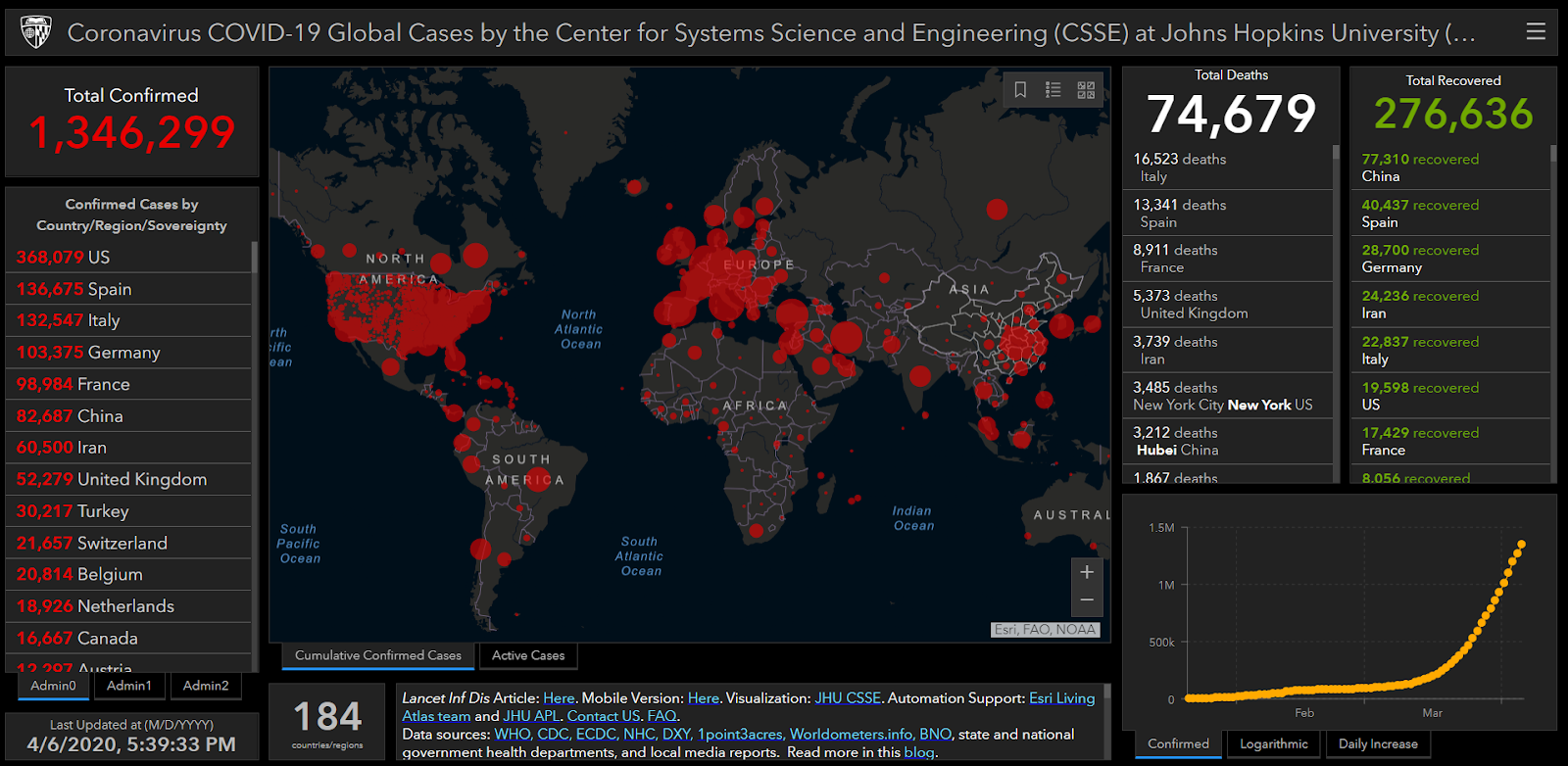
As of April 6, 2020 there were 1,346,299 confirmed cases of COVID-19 world-wide, with at least 368,000 of those cases being in the United States. State and Federal governments must weigh the risks of the spread of the COVID-19 virus and perhaps a million deaths, against a complete collapse of the economy with millions of people out of work and small businesses never being able to recover from the financial loss.

The government must decide at what point it is medically safe to allow businesses to reopen and to lift restrictions on social distancing. Even if the government removes these restrictions prior to October 2020, we still strongly recommend caution in your social interactions through at least the end of the year.

COVID-19 is not going to just suddenly disappear. Until an effective vaccine and treatment are developed and distributed there will be a significant health risk from the virus.

In the absence of a vaccine, cure, or massive testing and quarantine, lockdowns and stay-at-home orders will need to last for months. However, the US faces a unique challenge because only half the states have adopted aggressive intervention, and done so at varying times. Even if these states achieve control or containment, they may be vulnerable to contagion from other states that were late to do so. (SSRN)
According to an article in Business Insider, Ultimately, experts say that social-distancing measures will be necessary until we have a vaccine, and that’s 12 to 18 months. But that doesn’t necessarily mean we’re all in our homes for 18 months, it means maybe we’re avoiding public gatherings for that amount of time or limiting the amount of travel internationally, but it’s not necessarily as restrictive as what we’re seeing now.

Click here to read the entire article at Rainier Redoubt.

See also The Organic Prepper – We Won’t Be Getting “Back to Normal.” Not Soon. Not Ever.