The Medic Shack posted Escape! last summer after the Maui fires as a bit of a lessons learned and “what should you do to prepare to bug out.” Below is only and excerpt, but the entire article is worth a read.
…For decades you all have heard people like me tell you. “You need a BOB, Bug Out Bag” And you need X amount of food, water and change of clothes. Also need Y type of weapons and reloads. You need this brand of radio and you need need need. Mostly we tell you the things you need, is well, you need them. And to be perfectly transparent. We make a little bit of money off purchases you make from the links we research and share with you. Today we’re going to diverge (somewhat) the you need to buy this. To you need to PLAN and RESEARCH this. Folks like me sometimes forget we need not tell you to buy something, When we should be telling ideas on how to find your own answers. This post starts that trend here.
Getting the heck out of Dodge
According to the news articles a lot of people died in their homes and automobiles.
Lets take the sacrifice those people made and learn from them.
So our first bit of planning and research is to put down the computer, phone and tablet. (Well after you read this. Please! ) And GET OUT. By that I mean get out of your home and explore. Really explore. Find those over grown logging roads and dirt tracks. The back alleys side streets and weed choked vacant lots. Take your GPS. You will get lost. And that’s part of this exercise, And get maps. Lots of maps. As was found out in Maui\.
LAHAINA, Hawaii (AP) — Hawaii emergency management records show no indication that warning sirens sounded before people ran for their lives from wildfires on Maui that killed at least 55 people and wiped out a historic town. Instead, officials sent alerts to mobile phones, televisions and radio stations — but widespread power and cellular outages may have limited their reach.
Without cell service your phone GPS won’t work. Stand alone GPS like Garmens will. But batteries die, A protected laminated map will last forever. Learn to read a map and use a compass. If anyone says again “My phone ALWAYS works for Google Maps” read again the above article. Get maps. You can even download and print maps for free from National Geographic. https://www.natgeomaps.com/trail-maps/pdf-quads. Print them. Protect them. And learn to use them. Hmmm, note to self. Looks a good old fashioned land navigation class is in order here.
Moving out. When?
When is it time to move out? That is something you’d have to answer for yourself. IN the above links, the major issue was no warning. And the major reason was power, land line and cellular service was down. A NOAA radio with battery backup is ESSENTIAL. NOAA stations have alternate power and keep broadcasting alerts. Get one like this https://amzn.to/3OPOm9e. That runs normally on household power, but has battery backup. NOAA broadcasts not only weather but disaster inforamtion. It can give size and location of whatever is heading your way. Now when. First most of us preppers are borderline horders. Remember. DO. NOT. TAKE EVERYTHING YOU OWN! Take what you need to survive. And you did remember to place cache’s here and there? If not do so. NOW! …(article continues)
S2 Underground has a quick video on responding to an incident in your area.
“What do I do when X happens?” is a question we get fairly often. While no one can answer that for each specific event, there are basic steps one can take if located outside the general area of an incident, but still need to be involved. This is our attempt to create a very basic, stop-gap solution to this when it comes to communications. There will be more to come on this topic later, but in the interest of expediency, this is what we have for now.
Classes this year in Idaho Falls won’t begin until July, because I’ll be calving from mid-April through mid-June.
13/14 JULY—Clandestine Carry Pistol
Idaho Falls, ID
Cost of class is $500. Deposits for this class are due no later than 1JUN.
17/18 AUG—Practical Horse Packing for Pedestrian Preppers
Idaho Falls, ID
This is a new class. It will cover basic horse care and equipment for the inexperienced with horses or folks who don’t have much horse experience beyond arena riding lessons or day rides on trails. It will cover basic field care and first aid, as well as methods of securing horses in the absence of corrals and barns. We will discuss and practice different methods of packing loads on horses, including the use of panniers and mantied loads, and the use of different types of pack saddles, including using riding saddles as pack saddles.
If you have zero experience with horses, or think the idea of using horses in a post-grid world is ridiculous, this is a class you need to take. This is NOT a riding class. There will be no riding in the class, although we will discuss setting up riding saddles for riding as well.
This is not a field class. It will take place outdoors, but in an outdoors classroom environment. While camping is available on site, you don’t need to feel like you’re required to camp out.
There’s no basic gear requirement for the class, except long-sleeved shirt, long pants, and closed-toes shoes, but students are encouraged to bring go-bags/GHB/rucks of choice for illustration purposes with loading.
Whether you know nothing about equines, or are an experienced rider, you’re going to learn a lot in this class.
Cost of class is $500. Deposits for this class are due no later than 1JUL.
14/15 SEP—General Preparedness Rifle
Idaho Falls, ID
Cost of class is $500. Deposits for this class are due no later than 1AUG.
This Offgrid article is dated back to the beginning of the invasion, but still has some useful things to think about when making your own plans. This article focuses on military threats. You can find many articles and videos that talk about why the USA is nearly invulnerable to invasion, but that just means that someday someone is going to say, “Hey, they’ll never expect it, so they won’t be ready.” Other more general preparedness related articles on the war follow below the excerpt.
Humans have a natural tendency to assume events we have experienced in the past are a good reflection of events we will experience in the future — psychologists call this normalcy bias. Unfortunately, this leads us to believe that events we haven’t experienced (yet) are unlikely to occur. It’s the driving force behind all the disaster survivors who look back and say, “I never thought it would happen to me!” Don’t let that be you.
Don’t assume the enemy is bluffing.
If warning signs begin to crop up prior to a potential disaster, your preparedness should ramp up proportionally. Hope for the best and plan for the worst.
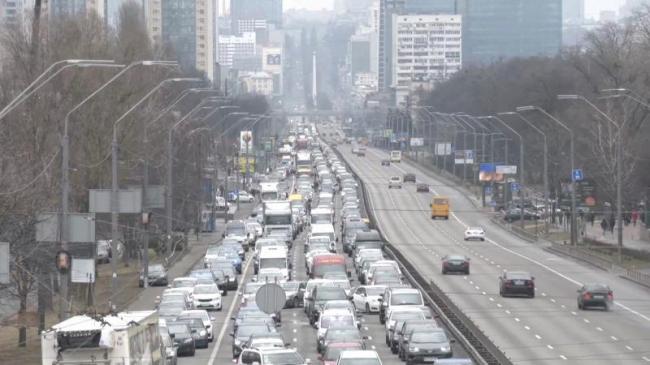
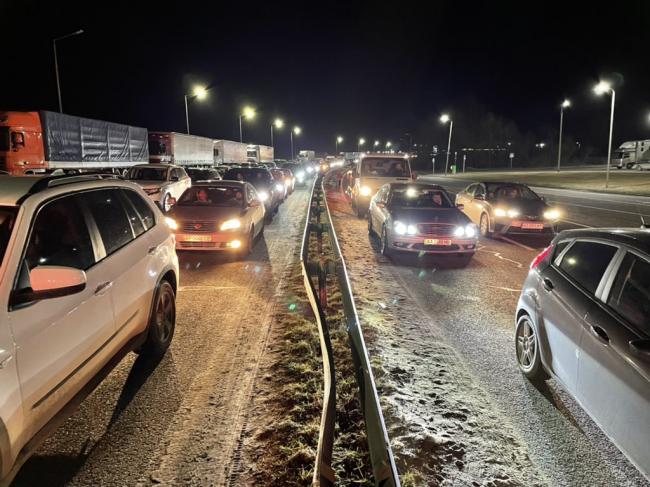
[T]he highest-value targets should have been predictable to anyone with an adversarial mindset…However, some high-value targets are less obvious… What should this mean to you? If you live in a major city that is likely to be a significant target, your threat awareness should be elevated. You should prepare escape routes with waypoints and discuss them with your family — failure to do so could leave you stuck in gridlock, as many Ukrainians were. This is especially true if your city borders directly with a hostile nation or its allies (e.g. Belarus), or lies on a coastline that is readily-accessible. If your escape plan includes air travel, keep in mind that airports are typically a top priority in warfare, and you won’t want to be there when bombs start to fall.
Cyberattacks will be a significant factor
…We’re not suggesting you abandon technology and everyday conveniences, but you should certainly establish contingency plans in case cyberattacks affect the electrical grid, internet service providers, cell phone towers, or banking/point-of-sale systems. Consider learning how to use ham radio for emergency communications, set aside cash, buy a generator, stockpile important medications, and purchase paper maps of the surrounding area. If we’re ever set back to a world without reliable technology, you’ll be more prepared to cope with it.
Training
Ask yourself: how would you respond if you faced an invasion and had to join the fight, whether by mandatory draft or moral obligation? Would you be able to fall back on a solid foundation of training, not just in shooting skills but also small unit tactics, concealment, communication, navigation, medical, and sustainment skills? Would your spouse and children be prepared to contribute to the fight, or to escape to safety without you?
This brief post at The Prepared just talks about bugging out, and there are some decent posts in the comments as well.
One of the main lessons I’ve seen so far is the need to reassess my bug out plan. There was a 6 mile (10km) long traffic jam of refugees fleeing to Poland.
At what point do you abandon your vehicle and trek it on foot? Is going on foot any better?
Another thought I had was having enough water, food, and fuel on hand. You don’t want to run out of food during the middle of an invasion and try to go through a war zone to buy groceries.
My heart goes out to all those affected. Even to the Russian soldiers who may not like what they are doing but have to.
Let’s learn from what is going on and prepare for the future.
A comment on the post from sewknot:
Things I’ve learned from the news reports & interviews
1 have your documents ready – passport/visa/birth certificates
2 cash – have cash on hand so you don’t have to queue at the atm when you could be on the road
3 have your bag packed! Reports of people waking up at 3 am to missile strikes and deciding to pack THEN
4 your journey will take longer than you expect – make sure you have everything you need to make it to your destination and leave as soon as you can
5 mental fortitude – plan for the worst hope for the best
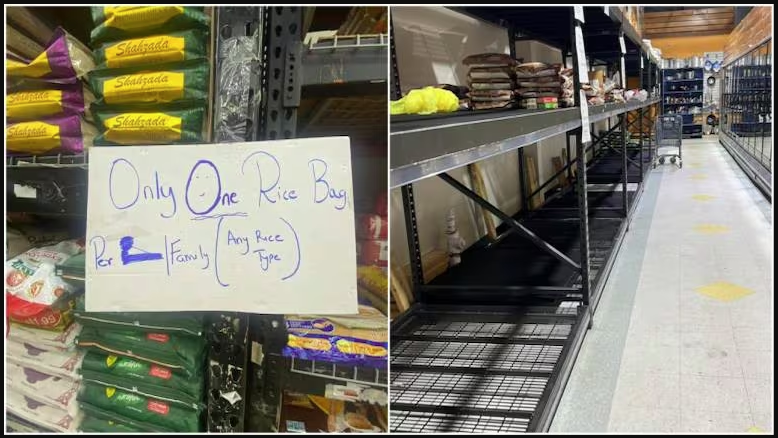
On July 20th the government of India banned the export of non-basmati white rice to “ensure adequate domestic availability at reasonable prices”. India is the world’s largest exporter of rice, accounting for around 40% of global rice trade. Approximately half of that trade is non-basmati rice. Rice is a very popular preparedness staple for food storage. It is then perhaps no surprise that the ban had led to rising pricing, stockpiling, and empty store shelves.
India’s decision to ban the export of non-basmati rice has led to consumers panic-buying and stockpiling Indian rice around the world, driving up prices in the process.
In Canada, the U.S. and abroad, reports of panic-buying are flourishing on social media, with stores that cater to South Asian communities implementing caps on the amount that any customer can buy, and adjusting prices.
Sriram Ramamurthy, the manager of Iqbal Halal Foods in Toronto, told CBC News in an interview Monday that he saw an immediate increase in demand for rice once word of the ban spread on Thursday of last week.
“They started coming in here and they wanted to buy more and more,” he said. He soon implemented a limit of one bag per customer, but that quickly proved futile as customers would come back with more family members, “each one trying to pick two or three at a time.”
Some customers would even approach other customers in line who were not buying rice, trying to get them to purchase it on their behalf, he said.
In order to stave off a food shortage at home, India has banned the export of all rice except for the export-focused basmati variety, which has led some to worry about skyrocketing prices and the potential for further bans in the future.
Ramamurthy says he carries more than 40 different brands of rice in his store, mostly from India, but the majority of what he sells is basmati rice, a premium grade of rice that isn’t even included in the export ban.
But that hasn’t stopped customers from trying to buy up every grain they can, of basmati and varieties included in the ban, just in case, he said.
raj Mohammed said he heard about the ban, so decided to come “down to the grocery store expecting that this is not gonna be the case in Canada. But I guess the worst happened,” he said. He prefers one specific type of basmati rice, one that the store doesn’t have any more of right now. “Now I’m not going to be able to get my hands on it, I guess.”
Ramamurthy says he hasn’t raised his prices yet, but he’s expecting his suppliers to soon. Stores that cater to the South Asian market elsewhere in Canada are reporting similar scenes, including Savor Supermarket in Saskatoon, where purchases are being limited.
Stores in the U.S., Australia and elsewhere are also seeing unprecedented demand, Bloomberg and others reported Tuesday, although CBC News has not been able to independently verify the authenticity of videos showing hoarding and panic buying.
Prices up sharply
India has taken the extraordinary step in order to ensure domestic supply, and bring down prices, which have soared due to excess rains and drought in rice-producing regions.
According to government data, the domestic price of non-basmati rice has increased by almost 10 per cent this month. In September of last year, a metric tonne of non-basmati rice in India would cost about $330 US. Today it tops $450, according to pricing in the most-traded Indian rice futures contract.
Sophia Murphy, executive director for the Minneapolis-based Institute for Agriculture and Trade Policy, says rice is such a staple for India and its 1.2 billion people that the government manages supply closely. Unlike other food commodities, she says the global rice market is very domestically oriented, as less than 10 per cent of all the rice in the world ever crosses a border.
While India is far and away the world’s largest exporter of rice, with more than 40 per cent of international trade in it, their primary concern is maintaining domestic supply, which is why they have had export bans in the past, she says.
“If they ban or someway limit the exports, it should keep more production in the country and it should reduce the inflation pressure that is there on food prices,” she said.
Canada imported about $650 million worth of rice last year, according to government data. Within that, about $140 million came from India — and only a tiny percentage of that is of the small- and medium-grain varieties of non-basmati rice that the ban applies to.
Murphy says while supply of basmati may also be strained, the government did not move to ban exports since it is a more premium product. Local concern is on the other staple varieties, which is why the government used the dramatic step of halting exports.
“Bans are easy to explain to the public,” she said, “we’re not selling food abroad, we’re looking after people at home. It’s often a pretty blunt — not necessarily very effective — instrument but it has domestic political capital associated with it.”
India’s move to ensure domestic supply is the second major announcement from a major exporter this year, as in May Vietnam announced plans to limit its own exports to four million tonnes a year by 2030. That’s down from more than seven million tonnes a year right now, and it’s aimed at “ensuring domestic food security, protecting the environment and adapting to climate change,” the government said in a release.
Combat Studies Group posted this back around New Years Day, but it bears repeating. Here’s Become More Dangerous.
New Years resolutions….I’ll be honest, I have never been a big proponent of them. I mean we have all seen the people around us make the same resolutions every year…with the same result…being that they fizzle out within a few weeks. But, if we are going to talk resolutions, might I offer this:
In 2023, become dangerous.
What do I mean by that? It should be abundantly clear to anyone paying attention at this point that our way of life in the West and in America in particular, is being deliberately and systematically destroyed. From “in your face” voting fraud to bio-engineered viruses to genocidal gene therapy shots to wide open borders to the fleecing of the public to fund engineered foreign conflicts to the governmental targeting of “traditional Americans” as “domestic terrorists” and I could go on and on. As the saying goes – The threat is real….and we are in danger.
For the sake of yourself, your family and your way of life – become more dangerous!
– Get into fighting shape
– Hike every morning
– Lift weights
– Practice or learn combatives of some kind
– Stop eating processed food
– Take nutritional supplements as needed
– Cut back or stop drinking alcohol
– Practice / Learn tactical skills
– Shoot on a regular basis
– Get certified in TCCC and remote medical skills
– Practice tactical problem solving (dry runs clearing your home and your friend’s homes)
– Attend at least two training courses this year
– Land navigation (without GPS aid)
– Escape and evasion skills
– Counter surveillance skills
– Tactical / High threat driving skills
– Learn how to run a security patrol
– Learn basic INFOSEC skills
– Food independence
– Start growing something, even if it’s just some herbs in the house
– Learn to can and preserve food
– Get a couple chickens or goats
– Have a backup water source and the means to purify it
– Start composting
– Have a minimum of a year’s worth of non-perishable food for your household
– Homestead
– Invest in a solar system or at least a backup system
– Stockpile various tools and supplies for plumbing, electrical, structural repairs
– Fire extinguishers in every room
– Develop and drill a family plan for fire, home invasion, natural disasters
– Have ample supplies of needed medicines
– Have a backup for every item of importance in your garage, work shed and tactical den.
– Learn amateur radio / HAM skills and practice (VHF, UHF, HF/NVIS)
– Establish a “safehouse” with a trusted friend
– Lay in some emergency supply caches (off your property)
This is an extremely simplified break down, but covers what I would consider the bare bones approach most folks should take. I realize some reading this are already able to check most or all of these boxes already, good for you but you’re not off the hook. Continue to expand or add to this list. No matter how prepared you are, how well trained you are, how experienced you are – I challenge you to become MORE dangerous. Dangerous to those that would try to bring harm to you, destroy your liberties and bring ruin to your way of life.
Article by Dr. Jenifer Nadeau, UConn Equine Extension Specialist
Sean Flynn/UConn Photo
When it comes to disasters, a lot of us think about wildfires. However, we also picture catastrophic flooding. Flooding is the most common type of natural disaster. About 40% of all natural disasters worldwide involve flooding. According to National Flood Insurance, in a 30-year mortgage, a home has a 26% chance of being damaged by flood versus a 9% chance of being damaged by fire. Flooding is a year-round threat. River flooding is the most common type of flood in the United States. Flash flooding is the leading cause of weather-related deaths per year, causing approximately 200 human deaths per year and an unknown number of horse-related deaths or injuries. The leading cause of death in large animals during Hurricane Andrew in 1992 included animals killed in collapsed barns, electrocution, kidney failure secondary to dehydration and animals hit and killed on roadways or tangled in barbed wire after escaping from their pasture. Hurricanes, tornadoes, snowmelt, and thunderstorms all contribute to flooding.
Disaster preparedness involves reflecting on hazards that threaten your family’s safety and that of your animals and developing a plan on how to prepare for these hazards. There are four phases of emergency management: mitigation, preparedness, response, and recovery. Mitigation is preventing future emergencies or minimizing their effects. Preparedness is preparing to handle an emergency. Response is responding safely to an emergency. Recovery is recuperating after an emergency.
The foundation of emergency management is personal responsibilities. That is the familiarity with the potential for disaster in your community and the creation of your own emergency plan to care for your animals. The next step is local government responsibilities that include emergency response planning, response, and assessment to protect your community. You can think here of the text messages that notify you of the hazards present in your community such as a severe thunderstorm or your local Community Emergency Response Team (CERT). State government responsibilities include protection from statewide disasters, provision of financial assistance to underfunded communities, and review of local emergency plans. The Statewide Animal Response Teams (SART) are an example of this. Federal government responsibilities are at the top of the pyramid and include protection from and declaration of national disasters, provision of financial assistance if needed and coordination of disasters through the Federal Emergency Management Agency (FEMA).
Flooding results when heavy or continuous rainfall exceeds the absorptive capacity of the soil and the flow capacity of rivers, streams, and coastal areas causing the watercourse to overflow its banks onto adjacent lands. There are two types of floods – slow rising floods and fast rising floods. Slow rising floods move down a river or stream and can be predicted to reach a certain height. Fast rising foods are flash floods that usually result due to extreme heavy rain, melting snow, dam failure or levy failure, and occur suddenly.
Things to consider in the short term are:
You may not have much time to react, so you need to have a plan in place.
You should have a disaster kit on hand in case of emergency.
You should know how you will evacuate your horse and have a trailer ready or one you can borrow if needed.
You should have a way to identify your horse in case you get separated.
Here is what you should have in your disaster kit:
Feed – at least a week’s supply in airtight, waterproof container, rotate feed every three months
Extra feeding bucket for each horse
One week of water for each horse, you can use 50-gallonbarrels, store in a cool, dark location
Extra water bucket for each horse
One week’s supply of shavings/straw
Extra pitchfork
Extra wheelbarrow/muck bucket
First aid kit
Grooming supplies including shampoo, sweat scraper, etc.
Antibacterial soap
Antibiotic ointment
Sterile gauze sponges and pads
Two to four disposable diapers or wrapped sanitary napkins
Bandages – Ace, 2 ½” gauze bandage roll, leg bandages
Adhesive tape – 1” and 2” rolls
Two to four quilted or padded wraps
Household scissors and/or knife
Tweezers
Ice bags or chemical ice pack
Rubbing alcohol
Veterinary or human rectal thermometer
Lubricant
Stethoscope
As mentioned, you should also have ways to identify your horse and there are several options. Use a livestock crayon to write your name, phone number and address on the horse. Use clippers to shave your name, address, phone number into the horse’s coat. Braid an identification tag with your name, address, and phone number into your horse’s mane. Have at least 10 recent photos of your horse including some with you in it – keep them in sealable plastic baggies in your disaster kit with other important documents, medications, and insurance papers. Keep a copy of the Bill of Sale for your horse or other documentation that can prove ownership with your disaster supplies. Have your horse microchipped, branded, or tattooed.
There are also some long-term considerations. You need to know what you will do if you cannot return to your home/property and have a place that you can stay for a while until you can return to your home/property. You should have a way of identifying your animals in case you need to set them free (worst case scenario) or reclaim them from a shelter. You should write on a piece of paper the name, address, and phone number of your regular veterinarian, and keep it with your other important documents for your horse since you may not have access to a cell phone or charger. Locate a mobile equine veterinarian you can use in event of a disaster if you don’t already have one in case your horse is too injured to be moved for treatment. Write out a release form authorizing another party to give medical treatment for your injured or sick horse and keep it on file with your regular vet and an alternate vet. Give a copy to your neighbor or whomever will take of your horse if you are away.
By being prepared for a disaster, you will keep your horse and yourself safe and hopefully save money as well on any bills that may arise from serious issues. I hope that you have fun with your horse this summer. Stay safe! Please call (860) 486-4471 or email jenifer.nadeau@uconn.edu if you have any questions. Also, visit my web site s.uconn.edu/equine-extension for more information on upcoming horse specialist events and other information. Thanks, and have fun with your horses!
The American Civil Defense Association is holding an online webinar on the topic of Psychology of Civil Defense on Saturday, Nov. 12, 2022 at 5pm Pacific time. The meeting is scheduled to last 45 minutes with 15 minutes for questions.
Psychology of Civil Defense Fear, panic, and sheer terror overwhelm the masses during and immediately after major disasters.
Our survival is dependent upon a change of attitude and the acknowledgment that we are at risk!
Topics of discussion: ▪ Assessing Your Risk ▪ A Change of Attitude ▪ Neighborhood Emergency Plan (for more information see below links): ▪ Psychological Preparation for Life in a Shelter ▪ Plan of Action in the Event of a Disaster
Neighborhood Emergency Preparedness Plan handout: Click HERE
Recorded meeting from June 2022 Are We Ready? Neighborhood Emergency Preparedness: click HERE
HOPE TO SEE YOU THERE!
Saturday, November 12 2022 | 6:00 pm MST
TACDA is inviting you to a scheduled Zoom meeting.
Topic: Psychology of Civil Defense (Ch. 1, TACDA Academy) Time: Nov 12, 2022 06:00 PM Mountain Time (US and Canada)
One tap mobile +17193594580,,89634802393#,,,,855196# US +12532158782,,89634802393#,,,,855196# US (Tacoma)
Dial by your location +1 719 359 4580 US +1 253 215 8782 US (Tacoma) +1 346 248 7799 US (Houston) +1 408 638 0968 US (San Jose) +1 669 444 9171 US +1 669 900 6833 US (San Jose) +1 646 876 9923 US (New York) +1 646 931 3860 US +1 689 278 1000 US +1 301 715 8592 US (Washington DC) +1 309 205 3325 US +1 312 626 6799 US (Chicago) +1 360 209 5623 US +1 386 347 5053 US +1 507 473 4847 US +1 564 217 2000 US
In Radio Contra Episode 193, NC Scout of Brushbeater talks to Brent Weir of Project 22:3 Preparedness Podcast. They talk faith, community building, practical preparations, and overcoming adversity in the world to come in the face of covid, war, and economic disaster.
Radio Contra Ep. 193: Brent Weir of Project 22:3 Preparedness Podcast
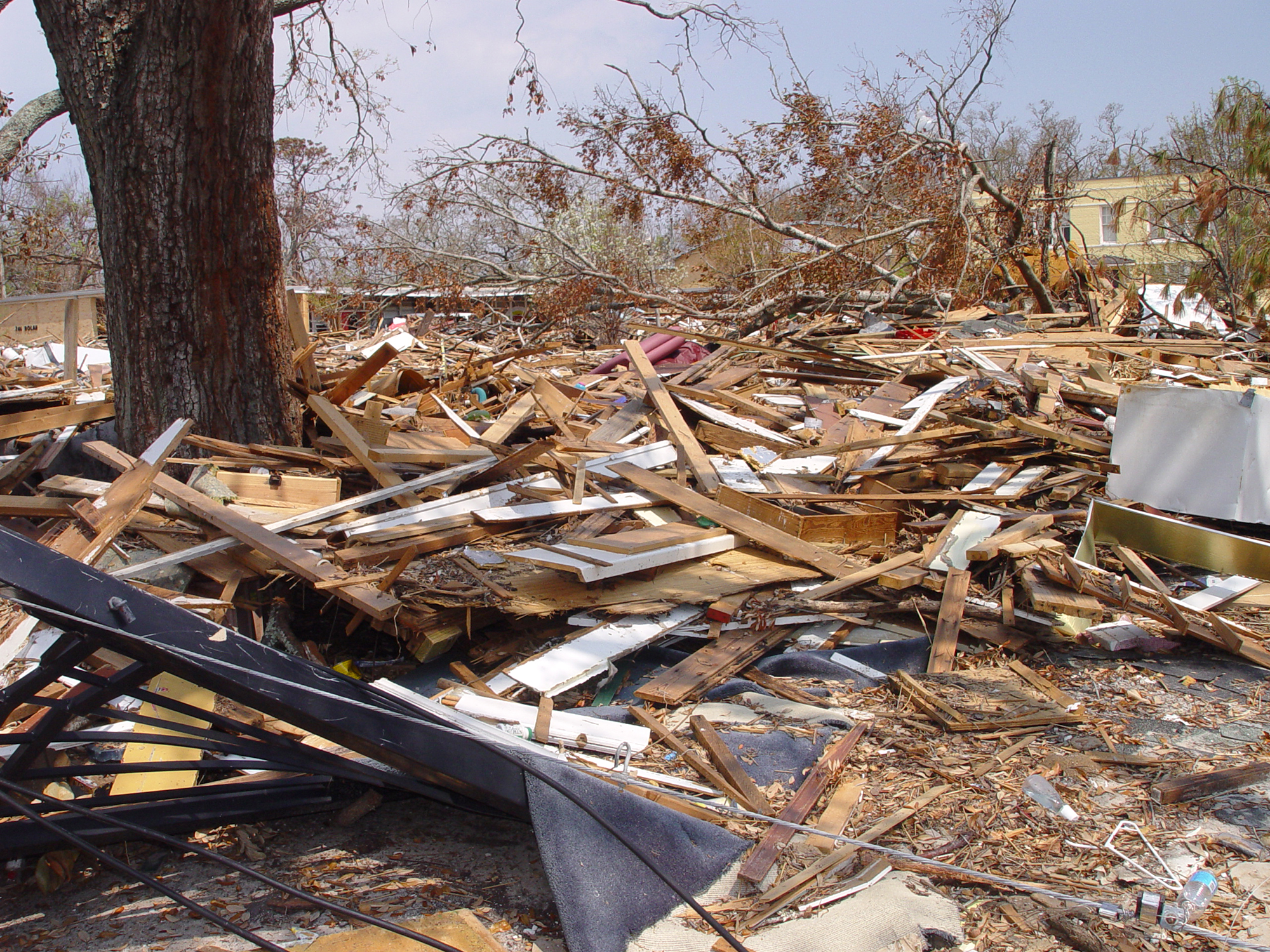
A killer hurricane makes landfall in your area, causing widespread devastation. The once familiar neighborhood outside your doors now resembles an apocalyptic wasteland. Thanks to solid planning, preparations, and maybe a little luck, you survived. But what now? Although these storms can be tremendously destructive; the hurricane aftermath can often be just as challenging.
After any major storm, roads, streets, and highways will be covered with incredible amounts of disaster debris, making even short-distance travel dangerous, or downright impossible. Under these conditions it’s best to stay put. But when circumstances require you to leave the relative safety of your home, having the right gear, supplies, and the proper mindset can mean the difference between a safe journey and getting stranded in the middle of a very ugly situation.
This isn’t about bugging out and fighting your way out of Dodge, it’s about essential mobility in the aftermath of a crisis. Whether it’s getting to a hospital or reaching a friend/relative who’s in trouble, getting from point A to point B will be far easier if you know what to expect, what to do, and what gear to have in your kit.
WHAT TO EXPECT AFTER THE STORM
Severe Flooding Tropical cyclones can bring lots of rainfall in a short amount of time, resulting in widespread flooding. Standing water can conceal deep potholes, tree branches, downed power lines, and other dangerous vehicle-damaging debris. Driving through standing water is never a good idea, but after a storm it could be fatal.
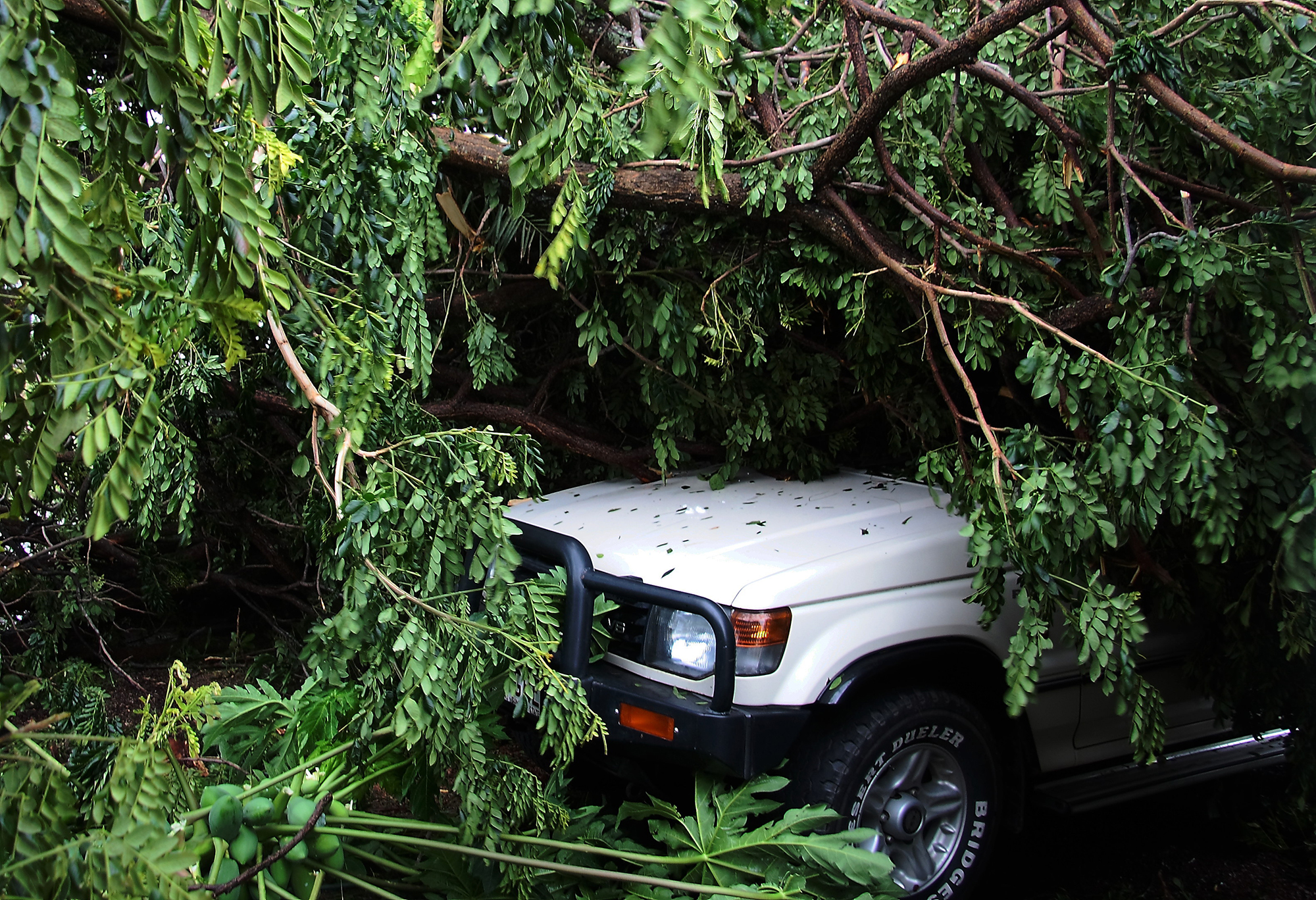
Hazardous Road Conditions The roads may be covered with all sorts of plant debris, but what’s underneath that blanket of vegetation may be much more dangerous. Expect sharp, twisted metal, and other jagged objects that can easily puncture or slash tires. Post-hurricane, many roads will be choked with construction debris, roofing nails, fallen trees, dangerous rubble, and downed power lines — all have the potential to abruptly shut your trip down.
Out-of-Control Motorists Hurricane-force winds can destroy, or severely damage, traffic lights and signs. Expect chaotic driving conditions, as the rules-of-the-road are replaced by the every-man-for-himself mentality. Add to this distracted, stressed-out, panicked drivers trying to navigate through some very difficult circumstances.
Grid-Down Conditions It’s not unusual for the power to be out for days, maybe even weeks, after a major storm. This means closed gasoline stations, blacked-out traffic and streetlights, and possibly a larger number of pedestrians trying to make their way around all the debris. Overnight, this reality will change the way you live and require drastic changes in what you do and how you do it.
Slow Cleanup Over the past 20 years, urban centers have been expanding, and weather-related disasters have been increasing in intensity and frequency. Powerful debris-generating storms can easily overwhelm solid waste management facilities, and delay recovery efforts. Expect to see entire communities drowning in storm debris and piles of rotting garbage overflowing onto the streets. If previous storms are any indication of what to expect, don’t anticipate a quick cleanup.
Altered Traffic Patterns Roads may be closed, and traffic redirected to bypass damaged infrastructure. If you need to travel, plan on using alternate routes away from overcrowded main traffic arteries. But be prepared for adverse road conditions since these lesser-used roads will typically be the last to be cleared of storm debris, and major obstacles. The first priority for cleanup crews will be to clear a path for emergency vehicles and utility repair workers.
VEHICLE PREPARATION
Most vehicles on the road today were designed to be driven on relatively smooth, flat pavement. After a tropical cyclone, many a “daily driver” will not be up to the challenge. Anticipate a high number of abandoned vehicles, as motorists leave their damaged rides on the side of the road and continue on foot. To help reduce the chances of you becoming an unwilling pedestrian, here are some areas to focus on.
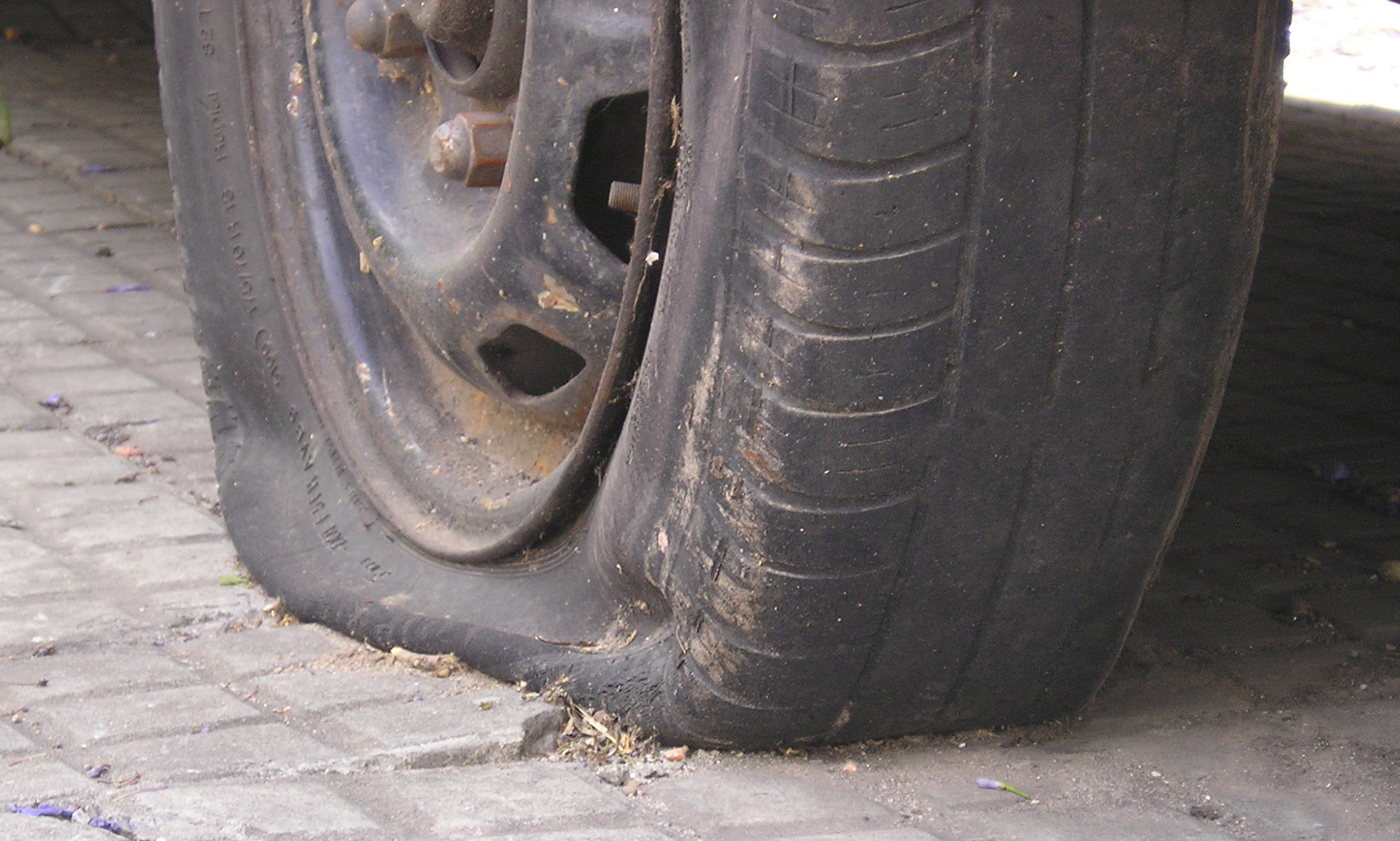
The most vulnerable part of your vehicle are probably the tires. Normally, a flat or damaged tire is an annoyance; in the aftermath of a storm, however, it can stop you dead in your tracks. Just having a spare tire is not enough, especially if it’s one of those anemic small spares. You’ll need a full-size spare (preferably more than one), and the ability to repair and re-inflate damaged tires.
Here are some tips and suggestions:
Multiple Spare Tires Under normal circumstances, the thought of lugging around more than one spare tire may seem absurd. After a hurricane, however, you’d be crazy to go anywhere without at least two full-size spare tires. The idea is simple — having multiple tires pre-mounted on simple, inexpensive rims will ensure a quick tire change, and avoid time-consuming, dangerous roadside repairs.
If you plan on driving in a post-hurricane environment, severe tire damage is an absolute certainty; the idea is to resolve the problem quickly, even under the most difficult circumstances. Having multiple spares, is a practical solution that can’t be beat.
Put a Plug In It Normally, a flat requires nothing more than a trip to the tire shop for a quick repair, or replacement. During an emergency, you’ll need gear to handle it yourself. A temporary tire repair can usually be made by removing the foreign object from the puncture site, reaming the hole, and inserting a sticky, self-vulcanizing plug.
The Speedy Seal tire repair kit from ARB includes all the necessary components to repair tubeless tires. Hard plastic…
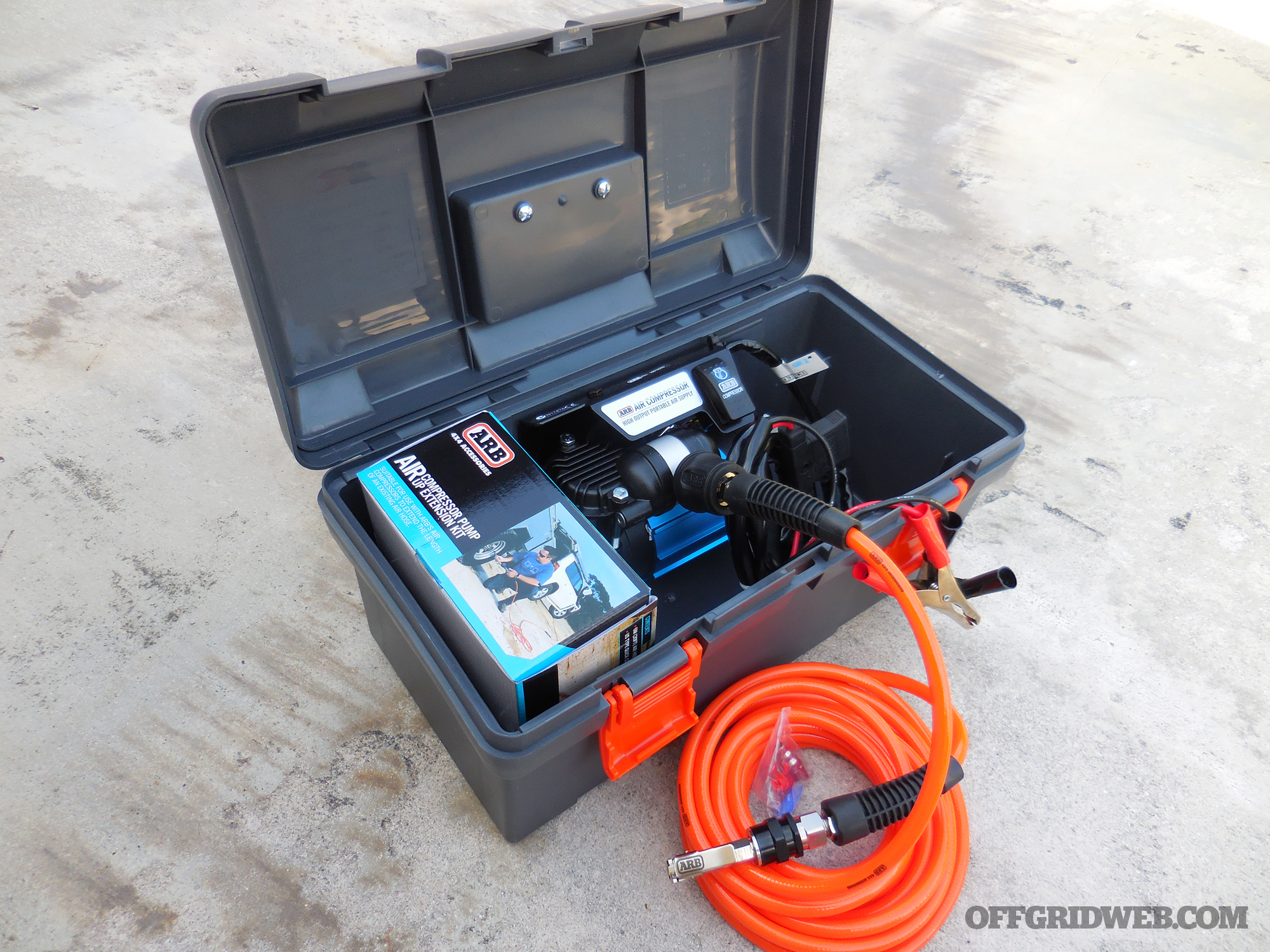
The ARB Speedy Seal Tire Repair Kit contains all the necessary components for making emergency repairs on tubeless radial or cross-ply tires, without having to remove the tire from the rim — this is a huge plus. But plugging the hole is only one part of the repair; you’ll also need to re-inflate the tire(s). The ARB High Performance 12V Air Compressor is a portable, self-contained unit that operates using your vehicle’s 12-volt battery to quickly re-inflate tires.
The ARB Portable 12V Air Compressor, (CKMP12) comes in a durable carrying case, includes a 19-foot air hose, and all…
Run-flat Tires Run-flat, or self-supporting tires have sidewalls that are heavily reinforced to support the vehicle, and to withstand deflation over limited distances, usually 100 to 300 miles, depending on road and driving conditions. While this is an advantage, blowouts are still possible, and sidewall damage can take the tire completely out of service. When you do get a puncture, it’s not always easily repaired, sometimes requiring an expensive tire replacement. While these tires do offer some valuable advantages, they do have limitations and you’ll still need a backup plan.
Self-Sealing Tires These bad boys have a layer of sealant inside the tire that helps maintain air pressure when punctured. Not bad, but, this feature only works if the puncture is no larger than 5mm, and is near the tread center. Larger punctures, slashes, and tears can still flatten the tire. As with run-flats, self-sealing tires are more expensive than conventional tires, and you’ll still need a plan to replace or repair damaged tires.
Also make sure to have a quality jack to lift your vehicle safely and securely. After a storm, security will be a big concern, and you’ll want to spend as little time as possible exposed on the roadside. Plan and prepare to resolve potential problems quickly and efficiently.
EMERGENCY TOOLS
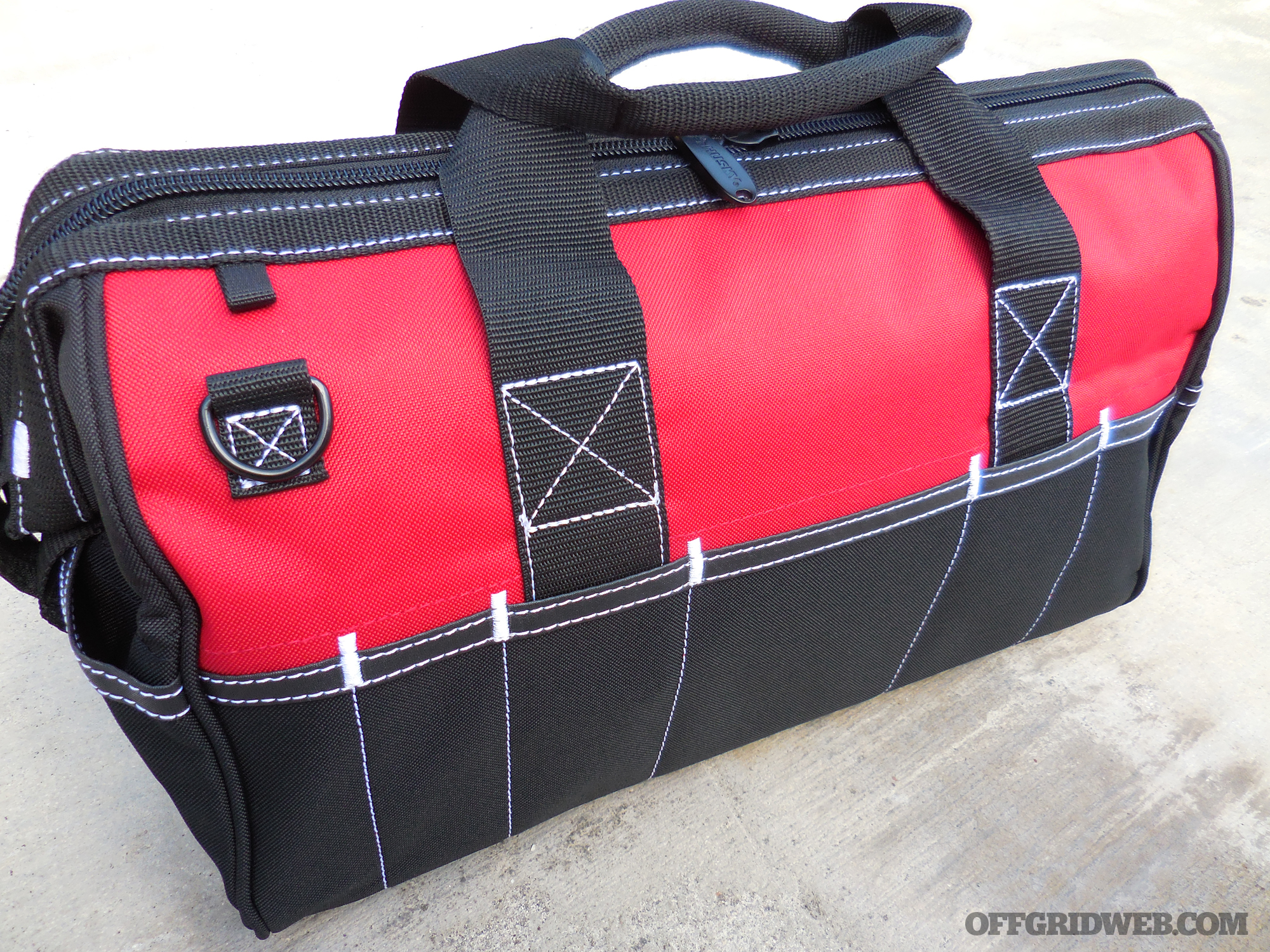
A good bag is the foundation for building your toolkit. Look for sturdy handles, well-reinforced corners, and…
Emergency roadside repairs can often be made with simple hand tools. Sounds easy enough, unless those tools are sitting in your garage. In the aftermath of a crisis, you’ll need to pack the right gear, even for short trips. While a generic tool kit is better than nothing at all, consider putting together your own toolkit. Include multipurpose tools, in the sizes you’re most likely to need for your make and model vehicle. (See the checklist below for basic toolkit suggestions.)
Note: Avoid the all-in-one, roadside emergency tool kits commonly built around useless filler items. Always buy solid tools that won’t fall apart the first time you use them. Test your tools under real-world conditions well in advance of any crisis.
Self-Rescue Gear Fallen trees, utility poles, fences, signs, even dislodged roadway guardrails can block roads and create serious hazards, causing you to make your way around the obstacles. But leaving the paved surface brings the risk of getting stuck in mud, sand, or loose dirt. MAXTRAX is a lightweight vehicle recovery device designed to be safely deployed and used by one person. It provides serious traction in wet or dry conditions, and can even be inverted and used as an improvised shovel to clear debris from around the tires.
MAXTRAX is a lightweight vehicle extraction tool for safe, quick, and easy recovery in mud, sand, or standing water….
Note: It’s also a good idea to pack a small shovel, axe, bolt cutters, handsaw, and machete to help in clearing away small debris, branches, or other obstructions. Flashlights, lanterns, and headlamps with extra batteries should always be in your vehicle, along with an emergency vehicle kit containing flares, jumper cables, gloves, etc., all the stuff you’d need for routine road hazards.
Navigating Checkpoints Checkpoints are not something we see a lot of here in the USA, but after a crisis, it’s something we need to anticipate and prepare for. After a storm, access to certain areas may be managed by law enforcement checkpoints. If you encounter these checkpoints, be prepared to identify yourself and to explain the purpose of your trip. You may be asked for a valid driver’s license or some other government-issued photo identification.
Also be ready to explain the visible contents of your vehicle. (A word to the wise: pack your gear discreetly and don’t dress like Rambo.) The less attention you call to yourself, and your vehicle, the better. Even though checkpoints are usually set up long after the affected neighborhoods have been stripped clean by looters, ironically, innocent people can get jammed-up for lack of proper ID, or for having the “wrong” look.
Fuel
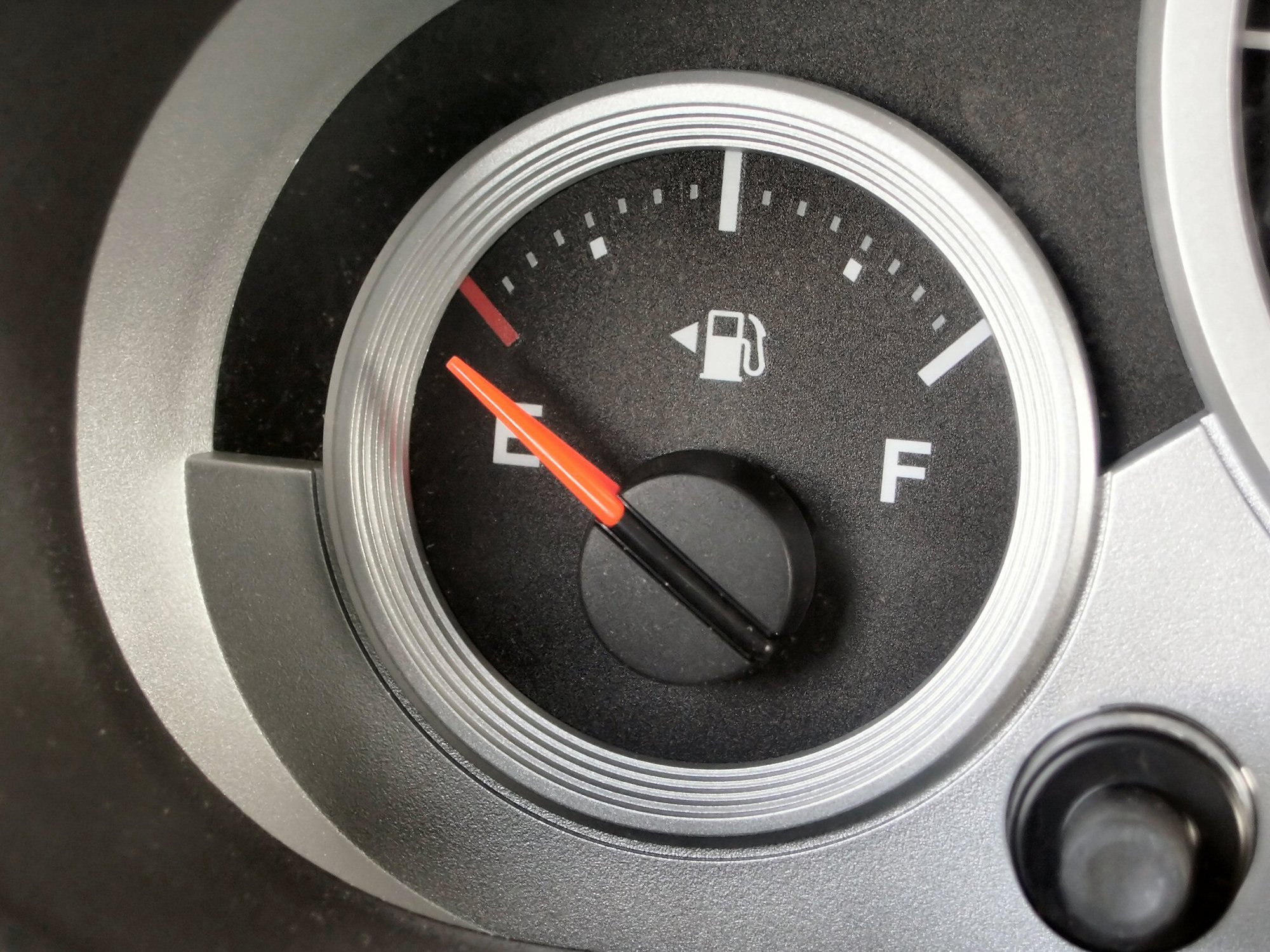
You should expect gasoline stations to be closed, completely dry from the pre-storm run, or at best unable to process any form of credit or debit cards. If you’re caught short on gas, or simply want to top-off the tank and you’re lucky enough to find a functioning station, expect long lines and to pay in cash. If you’re looking to fill gasoline containers, make sure to bring your own. After a storm, gasoline containers are almost impossible to find, at any price.
Mindset During any crisis, some people will be at their best, while others will unfortunately be at their worst, especially if rescue efforts don’t arrive as quickly as expected. Getting through this chaos, and adjusting to the new (although temporary) normal is never easy, but having the right mindset will help you get through the madness.
It’s really important that you understand and accept that, at least for a while, you’ll be on your own. Don’t expect any outside help. Accepting this reality and planning for it, is possibly one of the most important things you can do for yourself, and your family. Take the time to acquire the necessary knowledge and skills, to take care of your own problems. Real-world practice will help you develop confidence and expose weaknesses.
ROOKIE MISTAKES TO AVOID
Driving a Storm-Damaged Vehicle Perform a throughout inspection of your vehicle, including the undercarriage, the engine compartment, and any portions of the vehicle exposed to the effects of the storm, before taking the vehicle on the road. Look for water, wind, and flying debris damage. If in doubt, don’t take the risk of driving an unsafe vehicle.
No Survival Supplies Setting out, on even a short trip, without essential survival supplies, is asking for trouble. Pack water, calorie-dense energy food, a first-aid kit and daily medications, communications, spare clothes, and extra shoes.
Failing to Leave a Trail If things go badly during your trip, will others know where to start looking for you? Draw out a map showing your anticipated route and itinerary. If you don’t arrive at your destination, at least others will know where to start their search.
Underestimating the Dangers Just because the storm has passed doesn’t mean it’s safe to venture out. We all know that storms kill people, but many of us are surprised to learn that there are often more fatalities and serious injuries in post-storm related incidents. The period immediately after a storm is usually the most dangerous, and an excellent time to shelter in place and avoid the chaos. If you must go out, do so with extreme caution, and never by yourself.
BASIC TOOLKIT CHECKLIST
Pack quality tools that you’re most likely to need for your vehicle during an emergency. At minimum, your kit should contain the following items:
Set of socket wrenches
Screwdrivers — full set
Open and adjustable wrenches
Adjustable, Lineman’s and Diagonal pliers
Multitool
Bolt cutters, crowbar, and hammer
LED lantern, flashlight and extra batteries
Duck and electrical tape, tie wraps
SPEAKING FROM EXPERIENCE
In the early morning hours of August 24, 1992, Hurricane Andrew tore a destructive path through South Florida, causing more than $26.5 billion in property damage (in 1992 dollars), and leveling more than 100,000 houses in Miami-Dade County. Overnight, this Category 5 storm transformed a thriving community into terrifying piles of rubble.
At first light of day, the true extent of the devastation became painfully obvious — our family home was completely destroyed, and we were forced to evacuate. Using the rear bumper of my Jeep as a battering ram, I pushed the jammed garage door off its tracks, and began a long and difficult journey. It would take many hours of painfully slow travel, over roads blanketed by storm debris, fallen trees, toppled utility poles, and tangled power lines, to get to safety.
As I look back today, I realize just how lucky we were. Despite the loss of our home, and most of our personal property, it could have been much worse. Since Andrew, I have weathered many more storms, but one constant remains — there is no substitute for skills, planning, gear, and the proper mindset. It also doesn’t hurt to be lucky.
WRAP-UP
Hitting the streets after a hurricane, even for a short trip, requires skills, gear, supplies and the right mindset. Understanding the challenges, and knowing how to manage the situation will dramatically increase the odds in your favor, and help you safely overcome the obstacles. When the time comes you will either be prepared, or you may find yourself among the many victims, waiting for help to arrive. Now is the time to give yourself every possible advantage. Stay safe, and be prepared.
When the Jews returned to Jerusalem with Nehemiah, they were returning to a destroyed city, completely surrounded by enemies. The lessons taught in the Book of Nehemiah are just as valid today in either a Without Rule of Law (WROL) situation, or even in everyday life.
Nehemiah 4:23 says “Neither I, nor my brothers, nor my men took off our clothes, each had his weapon; even when he went for water.”
This isn’t bad advice, no matter what century.
The point of the advice is to remain aware and ready to defend yourself at all times. This was referred to by the legend Jeff Cooper as “Condition Yellow”. It means remaining engaged and being aware of the people around you, your environment, and potential issues that may develop, rather than being distracted by your phone or daydreaming.
When I approach a commercial building, like a store or gas station, I glance through the door or windows first, then as soon as I enter I take in the whole scene, noting all potential exits. It only takes two seconds and could potentially save your life.
In a true WROL situation, this becomes even more important. Nehemiah’s admonition to always be armed takes on special significance in the wake of a natural disaster, mass quarantine, power grid failure, or economic collapse.
In urban areas, the average house has about 48 hours worth of food in it. After the ability to quickly restock food from the corner store has gone away, hungry people will get desperate and remaining armed at all times can be the difference between safety and injury, or worse.
In that situation, you and your team should be fully armed and in “full kit” (sidearm, fixed blade knife, long gun, spare ammunition, and RADIO) at all times. When sleeping, be clothed, like Nehemiah suggests, with all your gear within arms reach. Luke 11:21 says “When a strong man, fully armed, guards his house, his possessions are safe.”
I also recommend highly the “3 Blade Rule”. You should always have available in everyday carry (EDC) and on your body in a WROL situation, 3 blades. First, a folding blade knife, which can be carried in a pocket for EDC or on your gear otherwise. Second, some type of multi-tool. For EDC, my Gerber Suspension and my Gerber M600 are in my laptop bag and in WROL, they have pouches on my web gear. The third blade is a full-size fixed blade knife. For EDC, the fixed blade knife is in my “Emergency Egress” backpack in the rear of my SUV (I carry either a Gerber LMF Infantry or my trusty USMC Ka-Bar). With these three blades, you can solve nearly any emergency, self-defense, or survival need.
As far as EDC carry of a firearm, Nehemiah said they carried their weapons everywhere, even to get water and it’s solid advice. There is no purpose is obtaining a Concealed Pistol License and then not carrying a pistol. I recommend carrying whatever your EDC gear is, whether it’s a handgun or a knife (and it should be both) everywhere that you legally can. You can’t possibly predict when evil or flawed ideology will touch your life, so it’s your responsibility to always be ready.
One more point about EDC: Whether or not you choose to arm yourself for EDC, you should ALWAYS carry a first aid kit. If you do choose to lawfully carry a firearm or knife, you MUST carry a first aid kit. Carrying first aid supplies really isn’t hard and can save lives in any emergency. I’ll do a full post on these, but here’s a recap of what I carry and where:
Laptop bag: Ziploc bag of various band-aids, some gauze, a pressure bandage (for gunshot wounds or any penetrating trauma), a tourniquet, and a CPR mask/gloves.
Emergency Egress Backpack: Full kit with band-aids, wipes, antibiotic, gauze, pressure dressings, triangular bandage, Cellox, EMT shears, gloves, CPR mask.
Trunk of SUV: Full Size med kit with multiple pressure dressings, tourniquet, band-aids of every size, combine pads, gauze, triangular bandages, tape, wipes, antibiotic, conforming bandage, EMT shears, minor medications, CPR mask, and gloves.
IFAK (moves between bags): Full kit like above, but also with Cellox for blood clotting.
The first aid kits may seem to be a bit much, but I’ve been blessed to be able to help injured people at accident scenes many times in my life. Having the right gear and never needing it is FAR better than needing the gear and NOT having it.
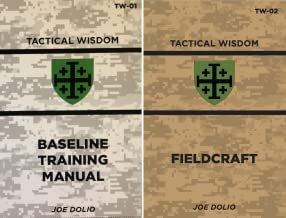
Jack Lawson is the author of Civil Defense Manual and co-author of the older and now out of print A Failure of Civility. Here he gives a review of Joe Dolio’s Tactical Wisdom, another preparedness book series. All of the works above are worth your time. Jack’s books have a larger format with many photos and diagrams, while Joe’s are smaller with only text, but also may be written in more easy to read style.
Rare does a book catch my attention like Tactical Wisdom. It could have been authored by my alter ego. But the Author, Joe Dolio, has created what I consider a companion and must-read book to my book the Civil Defense Manual. His book “Tactical Wisdom TW-01 Baseline Training Manual” has almost every procedure in it that my book has… presented in a concise and superb manner. He also has a great writing style.
The man clearly must be a genius, if by his definition of the word, we think alike. For those unaware of what I’m talking about, you’d have to read Joe’s opening line in his review of my book. But Joe and I, regardless of our level of intelligence and I’m definitely not a genius, agree on the way to Preparedness, Survival and organizing with others for Strength Through Numbers for protection.
This review is not a ‘trade off’ knee jerk evaluation of the Tactical Wisdom Series from me because Joe wrote a generous review for me… because anyone who knows me well, knows that I won’t praise a poor presentation, incompetence and or misinformation for any reason. The fact is that this Marine Corps Veteran has written a classic in writing the “Tactical Wisdom Base Line Training Manual.”
I know that Joe is more intelligent than me by one item… as he quotes The Ultimate Base Line Book… the Bible… in his book. That incredible Guide Book that I’ve seemed to wandered away from… despite being brought up by it. Some people that know me would say… “Lawson, you reading the Bible!?”
Well, I am drifting back to the Bible and Christianity… probably from the insanity of what illogic is bringing our society. I am not reading it because “I’m looking for a loophole” for my transgressions, like W.C. Fields said when one of his friends questioned him astounded that he was reading the Bible on his death bed. I have a pretty good idea where I’m going… and it won’t be pretty… but I still hold out hope for Valhalla.
That being said, I believe our exclusion of God, his Son and the Holy Spirit by many ‘enlightened’ and ‘elite’ people is the basis of the on-going destruction of the fabric of society, decency, the family, Free Enterprise (instead of Fascist Corporations), Individual Rights and Constitutional America.
When the huge egos and twisted values of those who become legends in their own minds represents the aggregate essence of a world of peoples… in lieu of the righteousness and principles of an Immortal and Benevolent Higher Power… mankind is well on the way to catastrophe… if not extinction.
I have read just about every survival book out there. Good ones… and bad ones. Fiction and non-fiction… handbooks, manuals and riveting fiction plots… some with excellent common-sense survival information and storylines… and then there are those with the ‘expert’s fantasy’ on how to survive.
What started me off was the late British Author John Christopher’s 1957 science fiction novel “No Blade of Grass,” first published as “The Death of Grass,” and made into a movie in 1970. A post-apocalypse story where food crops fail, and the world descends into chaos.
But novels cannot convey to you all the necessary methods and explain all the critical information on Preparedness and Survival no matter how good a story they are. However, novels will get you thinking in the right direction and sometimes point out stark issues that imaginations cannot conceive of in normal civility.
A case in point… William Forstchen’s “One Second After.” I said bull shytte when his story had 90% of Americans dying within one year after a High-altitude Electro Magnetic Pulse event (HEMP or EMP) happened. I retracted my words after reading the story and understanding why he would be correct in his assessment.
All the books you will read on apocalyptic events, Preparedness and Survival will give you basic, and in some cases extensive, information necessary to survive disaster and Catastrophic Events… however some will also give you and yours an early meeting with your Maker for inaccurate and erroneous information. Deadly.
But both fiction and non-fiction books on Preparedness and Survival create in you something critical… a valuable thought process that gives you a different perspective and understanding of the frailty of we humans on this planet.
And regardless… almost every book you read leaves you knowing something you didn’t know before you picked it up, if you check the accuracy of the information. Life is a process of learning… up to the second you pass from this world into the next.
What you’ll get in Tactical Wisdom Series is the solid information and procedures on what you must do to prepare for calamity and how to survive it. We both tell people what and how to do it, but Joe brilliantly puts a synopsis and summary at the end of each of his chapters called Base Line Standards.
I look at his Base Line Standards summary at the end of each chapter as the “get up and go… do it if you’re for real…” or don’t… if you’re an arm chair commando and couch potato. When I write a new edition of the Civil Defense Manual… I’ll do the same… put a summary of what people must do in ‘one-line sentences’ at the end of each chapter. A true motivator. A “Shytte… or get off the pot!” motivator.
I was astounded page by page in the similarity of Tactical Wisdom Base Line Standard ‘TW-01’ to the Civil Defense Manual. I haven’t finished Tactical Wisdom Fieldcraft TW-02 yet, but I will and will review that also.
This Marine Corps Veteran has also seen the boogeyman. That ‘qualification’ of combat experience alone does not convey a super mythical power that enables an author to write Preparedness and Survival books… but it does make you hyper-vigilant towards obvious and hidden threats… and creates a “what if mindset” from all the butt puckering of war like going through a hamburger grinder. Some people get this mental state without combat… but most people never do.
Like Robert Preston said in “The Music Man…” “There’s trouble in River City!” Only this trouble coming is real and is not a con job. You will live in exciting times in the next decades… make sure you have water to drink, food to eat and neighbors and friends to help protect you and your family… as well as you, them. Your “Tribe.”
Buy Tactical Wisdom and learn. I am excited that Joe plans to put out more in his series, as he indicates he will… books that will compartmentalize what each facet of Preparedness and Survival skills should teach you. I bought them and am learning from them… you should too.
Joe’s definitely a ‘get up and go’ type of guy with a visionary approach to Preparedness and Survival…
…so, my Base Line Standard advice to you is to ‘get up and go…’
First… get Joe’s books… read his “Tactical Wisdom Base Line Training Manual TW-01” …and start putting together your plan… but with his books’ guidance.
TACDA is holding a webinar on Thursday, June 9th, 2022 at 5:00 pm Pacific (6pm MDT) on the topicAre We Ready? Neighborhood Preparedness. There are 45 minutes for the presentation and then fifteen minutes for questions.
Topic: Are We Ready?
Presenter: Sharon Packer
Sharon Packer has a bachelor’s degree in mathematics with a minor in physics, and a master’s degree in Nuclear Engineering. She has served on the TACDA board of directors for over 20 years in several different capacities. Sharon is an expert in civil defense and in NBC (Nuclear, Biological, Chemical) shelter design.
Date: June 9, 2022 6pm (Utah time)
Link: Click HERE to join the meeting. (Everyone invited to this meeting. No subscription required!)
Sharon will give us an overview of Neighbor helping Neighbor with the basics of emergency preparedness:
Nuclear threat
Food storage
Evacuation
First Aid
Power outages
Emergency Communications
Water storage
Sanitation
Neighborhood Watch
Alternative Energy
Live Zoom presentation will be on Thursday June 9th, and the recording will be available to watch by the following Monday.







 Lower Valley Assembly