NC Renegade vs Raconteur Report: Stand Up and Fights vs Hold Your Horses

We’ve shared posts from both NC Renegade and Raconteur Reports in the past. Both sites are worthy of reading. NC Renegade recently posted the article Americans Need to Find Their Spine and Fortitude to Stand Up and Fight. It’s Time We Cut This Evil Out From Our Society. A few days later Raconteur Report posted a response titled Hold Your Horses: Crawl, Walk, Run. Again, both are worth a gander. Below is from RR’s response article:

Wes at NC Renegade has some thoughts. That’s today’s lesson topic.
Go read it. I’ll be here when you come back.
At his site, I replied:
Thanks for recapping Why.
At this point:
1) Stand up to Whom?
2) With What and Who?
3) Where, When, and How?
Most people reading this couldn’t write a 5 Paragraph Order, let alone grasp one, and about 90% of them would have to google it to even know what I’m talking about.
They have, on avg., 1/2 a weapon apiece, little ammunition, no time, funds, support, friendly forces, and for 90+% of them, zero training in any meaningful way.
We didn’t invade Normandy on December 8th, 1941.
And we didn’t get here in a day, so we won’t be getting out of it in one either.
I absolutely share your frustration, but one cannot grow a crop faster by pulling on the green shoots.
Now is a time for gathering and preparing, not taking any direct action, and making the most of temporal and financial opportunity while we have it.
“Boy, I wish we’d spent less time in training, and been less prepared and supplied” said no one ever in world history, least of all those entering a battle or embarking upon an entire war.
The first thinning of the herd will be those willing to invest the time and money to get ready for the conflict. That’ll probably move the decimal point of available forces one place to the left, automagically.
One’s time should be spent in
a) being that guy
b) doing the work
c) finding other guys doing the same
d) figuring out what to do, to whom, and when to do it
Unless you’re already a former JSOC ninja with a file cabinet full of CARVER-rated objectives, and a tight-knit vetted cadre of like-minded and capable folks, with an existing support matrix, doing anything more than that is simply a recipe for a short, interesting, and ultimately futile life.
Change my mind.

I’ve posted links to military manuals any half-dozen times for a reason, dammit, and it isn’t nostalgia.

Most of you (95%, by all polling data, though the blog stats here may skew a wee bit higher) never got any closer to a military formation than lining up outside for phys ed classes in school. And that was great in a free country but not so much for a burgeoning banana republic, with all the trimmings, which is what we are, right this minute.

So let’s talk turkey:

There are three undeniable truths operating right now in America.

I. Elections are pointless, worthless, and futile.

If you didn’t get that memo despite what happened in November, and again in GA in January, sorry to break it to you, but it’s nevertheless gospel truth.

Anyone yakking about “We’ll get ’em next time!”, “Vote Harder!”, or any variation on “MOAR Elections!” is an unredeemed delusional jackass suffering a psychotic break from reality. They should be placed in a room in a quiet glen, featuring soft music, soft lighting, soft food, and soft walls. They’re fucking nuts. Don’t waste any further breath on them until they wake up, if ever.

TINVOWOOT: There Is No Voting Our Way Out Of This.

Learn it, Live it, Love it.

Should you still pull a lever ever again? Hell yes. Enjoy whatever simulacrum of freedom you can, and maximize the time and minimize the gradient of the decline, if such be within your power. Primary out RINOs. Use it as a weed-out for whom to ever listen to, and whom to discount, forever. And a platform to shitpost, meme, rabblerouse, and generally send raspberries at TPTB, while you can. But minimize the time, energy, and funds you spend waste on electoral activities going forward, knowing the entire process is as fake as TV News and pro wrestling.

II. We’re at war, within this country, with those who hate fundamental America.

Not a debate. Not an argument. Not a fight. A W-A-R.

They want you dead. They want you rounded up and obliterated, and they want to kill your unborn babies, kidnap your living children, and poison their minds against you. In the interim, they want you unemployed, broke, dispossessed of your goods, lands, and chattels, and treated like sub-human scum, which is what they think of you, to their marrow. And they’ll stop at nothing to do exactly that. When your enemy tells you his true feelings, believe it. Mein Kampf was a blueprint for the Holocaust. Das Kapital was the blueprint and excuse for the Holodomor, the Great Leap Forward, and the Killing Fields.

Scapegoats and counter-revolutionaries will not be tolerated. You are both.

If you’re reading this, that means YOU, to a metaphysical certainty.

But there is a difference between being AT war, and warfare.

Your fight, at this point, is theoretical, philosophical, and moral.

III. You aren’t ready to fight any other kind of actual war. Yet.

As I noted to Wes, above, I share his frustration that this is so. Some of us have been trying to edumacate folks about this for years. As you might have noticed, to date, it hasn’t helped much, other than as a pressure relief valve for those of us watching the trainwreck, transfixed, aghast, and infuriated.

Which brings us to the Teachable moment, and the Action/Implementation Phase.

AIP: Get yourself ready for a war.

A) It’s going to be a shooting war, so you’d better have something to shoot with, and something to load into it. And you’d better get damned good with it. The good news is, even for GED-holding high school dropouts, that only takes a few hours a day for a couple-three weeks, even for Army Rangers and Marines. And a grand total of 260 rounds. Folks, that’s nothing, in the grand scheme. Competence is not mastery, but start with bare competence. If you’re looking for recommendations, there are plenty of good options, but the AR platform is where to start. You’ll do just fine if you pick up a Smith and Wesson MP-15, which is just a civvie M4gery. YMMV, but it’ll get anyone over the age of 12 off on the right foot. Pistol? Learn how to run a Glock. You can upgrade from all of this, (and I hope you do) but that’s the floor.

B) Once you’ve scratched the itch of your inner Gear Whore with that rifle and/or pistol, get your (overwhelming majority of Americans) fat @$$ in shape. PT. 3-5 times/week. Upper body, lower body, aerobic endurance exercise, strength-building. The shorthand for that is push-ups, pull-ups, sit-ups, and running 2-3 miles. Running. Not walking, pedalling, driving, slow jogging, or anything else. Start with less distance, and slower, sure. But get to where you can run 8-minute or less miles, for at least 3 of them. That’s the standard. Two minutes of sit-ups. Max effort, and increase over time. Max push-ups and pull-ups. Lather, rinse, repeat.

C) Get healthy. Stop eating sh*t. Balanced meals, wipe out the sugar, fat, and junk food. Get your teeth fixed. Get anything else you need to taken care of. Get your booster shots for tetanus, etc. Cut back on the alcohol, and junk the nicotine habit. Spend the money you save from those vices on more important supplies. Like stored food, medical supplies, ammo, tools. You can party when you’re using the skulls of your enemies for cups. Until then, self-discipline. Medical care may not be around much longer, and healthy people fight harder, and they’re harder to kill. I repeat, get healthy.

D) Learn what an unconventional warrior needs to know. I don’t know you, or your area, or what you’re up against. You should. Then learn what you’ll need to deal with that. At a minimum, you should be focusing on what the ground forces (Army, Marines) teach their basic recruits. We may have pounded that home with a 2×4 a time or twelve on this very blog. Repetition is a teaching technique. Even if you’re too old/brokedick to participate, you should still have the knowledge in your brainpan. And if that’s the case, learn tradecraft skills: scouting, spying, information-gathering, recording, encryption/decryption, transmission, collection, and analysis. Too scared? Focus on supporting activities: caching, sheltering, running a safe house, supply, small-scale manufacturing, finance, medical support, feeding, transportation (all means: truck/rail/waterborne/pack animal), repair, communications, construction, field engineering (anything from shovels to heavy equipment), and so on. If the Army has an occ field that you could do, you can be useful. On average, it takes 10 people to put one insurgent, supplied, fed, and equipped, into the field. And you’re going to need some of that tradecraft I mentioned above to not be scooped up for aiding and abetting, and winding up dead, or in prison.

E) Find (and VET!!!) other people doing A-D, above. {Hint: Over 50% of those in the @$$clown show that was Malheur were federal CIs. If you get to where your main strategy to avoid prison is jury nullification because you were a jackass about vetting, you’ve screwed the pooch beyond repair, and you deserve to die in prison. Whether or not you do is up to a merciful Deity, because TPTB will have no sense of humor, and Fate is set to Zero Fucks Given when you’re stupid.} Take your time. Sniff around. Check them out, overtly and covertly. Due diligence or die. No one will tell your story alongside that of Patrick Henry. You’ll just be the next Timothy McVeigh. Remember, you’re picking people into whose hands you’re entrusting your own life, and the fate of your family. So are they.

F) As Sam Culper has said, and taught, and teaches (take his classes!) do an Area Study. Look the term up online, find an example, and then wipe out the info paragraphs and pages for the sample you select, and refill the info with the same thing for your town/city, and county at a minimum. If it’s small enough, do your entire state, and push outward if neighboring states are closer to you, for example, than your own state capitol. E.g., New Mexico (and Mexico!) info is going to be a helluva lot more relevant in El Paso than info about Dallas, Houston, and/or Austin. Just saying. If you’re in Rhode Island, you should be looking at all of New England. For a good guideline, stick a pin in a map where you are. Scribe a circle to the limit of a tank of gas – say, 400-500 miles – and look hardest at that. That’s your “area of interest”. Same pin, then a circle of the 20 miles in any direction you could walk in a day: that’s your “area of concern”. You should know both intimately, for all topics in your sample Area Study. This is what Sun Tzu meant when he said “know your enemy” and “know the ground”.

That’s already five more things than most people out there have done, and it’s enough to get you started.

Provided you start getting started.

Whatever you haven’t done, above, is where you are. Get busy with that, FIRST. Leviathan isn’t going to wait all day before taking an interest in you.

The Organic Prepper: How to Prep in Short-Term Locations

Daisy Luther at The Organic Prepper describes How to Prep in Short-Term Locations for people who are traveling, homeless, living in RVs and campers, etc. If you’re interested in the concept of mobile preparedness, you might check into the book Locusts on the Horizon by Plan B Writers Alliance, which talks about the MASH concept – or Mobile Adaptable Sustainable Homestead.

More and more people are living in temporary or mobile locations as the economy continues to falter. As the moratoriums on evictions end, the United States could soon see a wave of homelessness the likes of which has not occurred since the Dustbowl. People will be seeking shelter in temporary locations, in their vehicles, in RVs, and in campers. Many will not be leaving their homes by choice, but due to dire economic circumstances.

While you’re in for a shocking change if a nomadic lifestyle is suddenly thrust upon you, it doesn’t mean that you can’t still be prepared.

I deliberately chose to be a nomad myself. After my youngest daughter left the nest, I decided to sell or give away most of my things and set out to live a nomadic lifestyle. Over the past two years, I’ve been fortunate enough to briefly live in Greece, Northern Macedonia, Montenegro, and Mexico, and I have visited Kosovo, Albania, Austria, Canada, Bosnia, and Croatia, as well as many states in the US. My goal has always been to see the world and immerse myself in other cultures. Despite Covid shutting down many options, I’ve still been able to embrace my wandering spirit and am currently in a sublet in Mexico.

And this has a lot of folks asking me, “Have you given up on prepping?”

You can still prep in temporary locations.

It seems that every interview I do and in at least a couple of emails a day, someone asks me whether I still practice what I preach – preparedness. The answer is absolutely YES.

Prepping looks a lot different when you are in a temporary location or living in an RV/van but it can – and should – still be done.

One very important factor in living a nomadic lifestyle is that if you pay attention, you can avoid a lot of problems. If you live in your RV and you hear that a hurricane or a massive ice storm is coming in a few days, there’s a strong possibility that you can drive to a different location and avoid it altogether. If I was living in Europe when Covid hit, I could have relocated to a different country rapidly with more tolerable lockdown measures or, as I did, return to the US and stay with one of my kids to help her with the bills when she was unable to work. Location independence can really work in your favor.

As mentioned, I’m currently in Mexico, not because I’m trying to avoid a situation in the US, but because it’s very affordable and I get to stay in a place that is relatively warm right on the beach, something I could never afford if I was in the US. Since I’m here for about six months, I have more food stashed away than I would if I was only planning to be here for 4-6 weeks. But even if I was staying a shorter period of time, I’d have enough on hand to keep myself and my pets fed and hydrated for a minimum of one month.

How do you prep when you live in a temporary location?

You prep in a temporary location much like you would in a stationary location, except you pay more attention to space and transportability.

Depending upon space, money, and the length of your stay, your options may be rather different than what you’d choose if you lived in a home with a large pantry or storage room. I find that the fact my expenses are far lower than in the US allows me to donate food that I haven’t eaten without feeling like I just blew a whole bunch of money. For example, here in Mexico, a can of vegetables costs the equivalent of 12 cents US on sale.

When I was traveling around Europe from one country to another, I did not have a vehicle, so everything had to fit in my luggage. Items I always had with me were those little packets of just-add-water soup and oatmeal, nuts, dried fruit, and other lightweight, uncrushable items. With those and a water filter, I could keep myself fed for a few days without heading out to the grocery store. Is that an ideal diet? Of course not! But the point here is to have things on hand regardless of your situation.

Now that I have a place I’ll be staying at for a few months, as well as a vehicle, I have some larger, heavier items. I also bought an inexpensive dehydrator that is running nearly all the time because the fresh produce here is so incredible and I can’t get through my weekly farmer’s market basket before things spoil.

Keep in mind that when living nomadically, you may not have access to the same kind of gear that you would in a temporary location. I don’t have my Mr. Buddy heater, a generator, a Big Berkey, a pressure canner, or buckets and buckets of emergency food. However, I’ve devised workarounds for the things I need and I believe it’s made me a far more adaptable person.

Gear substitutes for mobile preppers

Here are some things I don’t have and what I use instead.

Camp stove: When I went to Selco’s Urban Survival Course in Croatia, I discovered that a lot of those little stoves are not what they’re cracked up to be. It’s very easy to create a makeshift camp stove if you only need to boil water with it. You can find two bricks or two rocks of a similar size, build a little fire between them on a fireproof surface, and set your cooking vessel on top of your rocks/bricks.

I have a cement balcony at my current location and two concrete blocks sitting innocuously on the end of it that could be quickly pressed into duty. Because I’m near the beach there isn’t a whole lot of wood, so I grabbed one bundle of wood sold for firepits from the grocery store and shoved it in the closet to keep it dry. Between that and dry plant material, I can easily build a fire and boil water right on my little patio. Other places I’ve stayed have had more access to wood or other materials I could burn so there, I didn’t need to buy a little bundle of wood.

Heater: The lows here are really not that cold – I think the coldest evening we had got down to 43. Central heating is extremely rare here in coastal Mexico. People use either electric space heaters or propane heaters similar to a Mr. Buddy with a tank the size of the ones you use for your barbecue.

I opted to spend this winter without heat and see if I could toughen up a little. Most days here in the winter range from low 50s to high 60s, so it’s not extreme. I just layer my clothing and use the dryer and oven in the mornings to take off the evening chill. I open the curtains on the southeast side of the house for solar gain and by early afternoon it’s sometimes so warm I need to open a window to cool things down a little. The floors here are tile, so slippers or shoes are a must to keep my feet warm.

On really cold days or during power outages, I take the layering further with fingerless gloves, a stocking hat pulled down over my ears, and I go into my bedroom and shut the door. I get under the covers and snuggle up with my two dogs and we stay cozy that way. When I had Covid, I did borrow an electric space heater from a neighbor because of the chills and fever.

Gravity-fed water filtration device: I’m not going to lug a Big Berkey around with me because it simply takes up far too much space in my vehicle. I have numerous portable options, such as a Sawyer Mini, a Lifestraw, and a Lifestraw water bottle. The one I use the most is the water bottle because I can take it anywhere and it doesn’t scream “prepper.” It just makes me look environmentally friendly.

I also store water. Here in Mexico, the big 5-gallon jugs are popular and they only cost a couple of dollars. I keep 30 gallons on hand and when I empty one jug, I refill it with tap water for my dogs. I also have other beverages on hand, as well as little drink packets. One thing that a lot of preppers don’t realize is that filtered water doesn’t necessarily taste like it came from a fresh mountain stream. Some powdered lemonade mix can help cover a less pleasant flavor.

Generator: I’ve written many times that instead of investing in expensive generators, I prep low-tech, and this has not changed being on the road.

I have a solar charger that is enough to power my laptop and my phone, as well as a portable charger that’s good for a few phone recharges. I can also recharge my devices using the USB ports in my Jeep (and I keep extra fuel on hand.)

Aside from this, I have a few different flashlights, a headlamp in both my backpack and my vehicle, an assortment of batteries, cooling cloths (these came in handy when my Jeep nearly overheated in the desert), a winter rated sleeping bag, and some winter cold weather gear even though I’m in a southern climate. As they recently learned in Texas, you never know when unusual weather might strike, and being prepared for those extremes can be as minor as keeping you comfortable or as major as keeping you alive.

When I’m not traveling in my vehicle, my kit is even smaller. You can check it out here.

What’s in my nomad pantry?

Now that we have the gadgets covered, what about food? When you are nomadic or living in a short-term location, you probably won’t have the same ability to stash away a year’s worth of supplies. I focus on at least a month and I pay attention to my surroundings.

Back when Covid struck the US, I rebuilt a food supply with a couple of trips to the store and about $500. Was it the same supply I would have had back when I had kids at home and a fixed location? Definitely not. I relied on food that didn’t require long cooking times and items I could acquire quickly. Because I did my shopping about a month before the shelves were emptied in the US, I had plenty of options and was able to get a good variety without major limitations. If I noticed an emerging crisis where I was and could not avoid it, I would stock up quickly. Remember, one of the most important parts of being a prepper is your awareness that puts you ahead of the crowd.

I have two different types of food supplies – items for consumption or back up while I’m in transit and items that I stock up on during my stay.

My In-Transit Pantry

When I’m moving more often or traveling lightly, my pantry looks different. I have the following as the basis of my mobile pantry.

  • Flavored instant oatmeal packets
  • Almond or coconut milk (shelf-stable)
  • Dry soup mix
  • Noodle bowls
  • Dried fruit
  • Nuts
  • Peanut butter
  • Crackers
  • Granola bars
  • Tea
  • Instant coffee packets
  • Sugar packets

I can carry all of the above items in my luggage with no issues whatsoever. They’re lightweight, small, and easily portable. Aside from the crackers, none of these things are easily crushed by your other gear, either.

The quality you purchase of the above items depends upon your location and your budget. In some areas, you might be able to easily access organic versions, and in others, you may be looking at Mr. Noodle and Peanut M&Ms. Obviously, this is not a diet to sustain you for a long time, especially if you’re expending a lot of calories, but it would get you through a few days to a week. Your mileage may vary.

My Short-Term Location Pantry

When I arrive at an Airbnb or rental, I sometimes have a meal from the items above on the first night before I go out and search for heartier fare. Once I’m settled in, then I add perishables like fresh produce, bread, and meat. As well, if I’m going to be there for more than a few days, I pick up some inexpensive shelf-stable items at those locations that are too heavy or too fragile to carry around, like some of the items in the list below.

While living in Mexico, the area where I’m staying went “Red” (they have color codes for the level of coronavirus restrictions.). I went to the store the first day and stocked up on a few additional items because here they have checkpoints where you’re asked about your destination, and I was not confident enough in my Spanish to relish such an interaction. So, I’ve gone more than a month on my supplies here without another trip to the store and didn’t feel that I was deprived, although I probably would have chosen different food if going to stores had been viable.

My pantry here is similar to the quick pantry I bought during my covid quarantine prep, just with Mexican versions of the foods.

  • Canned goods
  • Tortillas
  • Pouches of refried beans
  • Crackers
  • Peanut butter
  • Condiments
  • Tuna
  • Cookies or chocolate (If I can’t leave my condo, I need some joy in my life)
  • Long-lasting produce like potatoes, onions, carrots, squash, and cabbage
  • Rice
  • Pasta
  • Meat and veggies for the freezer
  • Seasonings to make everything taste better
  • Coffee
  • Almond milk tetras

Keep in mind that these items do not make up the majority of my diet. These are the things that I have put aside in case I have to hunker down – which certainly paid off here during the lockdown. I still visit the farmstand and bakery weekly and dine out to enjoy the local cuisine. Depending on your situation, you might hit the grocery store to supplement your basic supplies.

It’s all about being adaptable.

One of my major takeaways from my nomadic lifestyle is that adaptability and the willingness to be flexible are essential. And if these traits are essential just traveling, imagine how much more so they are when you’re going through difficult times.

While most folks prefer a full spice rack, a wealth of kitchen implements, and a giant storage room, the reality is that it might not be possible for everyone, particularly as the economy continues to wreak havoc on personal finances and the supply chain continues to erode. As I wrote earlier this year that prepping would look a lot different than before.

There are big changes ahead for many people and surviving may look different than you expected it to. Selco has written about leaving everything behind to survive. Fabian has written about the survival lessons to be learned from the homeless and from the Great Depression. Hopefully, we won’t see anything as extreme as these examples, but just know that even if the way things go is different than you had planned, you can still be adaptable, prepared, and resilient.

Rural Revolution: A Year of Testing

Patrice Lewis of Rural Revolution talks about lessons learned and general preparedness over the course of the past year in A Year of Testing

…If the last year has done nothing else, it has tested a whole lot of people. That testing is still going on today, everything from the hundreds of thousands of small business either closed or struggling, to the current catastrophic situation in Texas (and to a lesser extent, Oregon).

As a result of the myriad issues America has faced in the last year, being prepared is more important than ever. I think we can all agree on that. What’s questionable is whether it’s possible, since so many people are struggling financially. (For those in compromised financial straits, Daisy Luther at The Organic Prepper and its sister site The Frugalite writes a lot about this issue. Her material is well worth reviewing.)

So when I saw an article this morning on Natural News entitled “Fifteen HARD lessons I learned from the ‘Texageddon’ blackouts and collapse of critical infrastructure,” I read it with interest.

I often get impatient with Natural News because it tends toward the “We’re all gonna die!” mindset, but this one was fairly good. The bulk of the advice is in the form of a podcast I didn’t bother listening to, but here are the 15 points synopsized down. My comments are italicized and (in parentheses).

  • Survival is very physical. Expect to exert a lot of physical effort. (Agreed. We had a massive windstorm and subsequent power outage back in 2015, and it was very hard work indeed to maintain livestock, water, etc.)

    • Culture matters. Don’t end up in a community without morals or ethics when it all hits the fan. (Easy to say, not necessarily easy to do. Not everyone can afford to move.)

    • Convergence of two “black swan” disasters can wipe out your best plans, even if you have successfully prepped for any one (standalone) disaster. (Agreed. I’ve always maintained preparedness doesn’t make you immune to disaster; it just gives you a fighting chance.)

    • Some of your preps will FAIL. It’s difficult to consider all possible scenarios, so count on failures striking without warning. (Agreed.Three is two, two is one, etc.)

    • You need LAYERS of preparedness and “fall back” systems that are very low-tech and require nothing more than the laws of physics (gravity, chemistry, etc.). (That’s why I’ve always preferred low-tech options for preparedness.)

    • No one is coming to help you. In many situations, no one can get to you even if they wanted to.

    • Containers (buckets, barrels) are extremely important. Have lots of pre-stored water and fuel at all times.

    • Bitcoin and crypto were all completely valueless and useless during the collapse, since they all rely on electricity. Gold, silver and cash worked fine, on the other hand. (Yay, at last someone gets it! I’ve always thought tangible assets were the way to go. Personally I prefer the “stock” market such as cattle and chickens.)

    • You will likely experience injuries or mishaps due to new, unusual demands on your work activities. Practice safety and be prepared to deal with injuries yourself.

    • Having lots of spare parts for plumbing. Standardize your pipe sizes and accessories. I have standardized on 1″ PEX pipe and all its fittings because PEX is very easy to cut, shape and rework. Plus it’s far more resistant to bursting, compared to PVC. (I take exception to this. We should all have “lots of spare parts” for plumbing? Really? Why not just have an extra house you can keep in your back pocket for any spare parts you need? What happened in Texas was unprecedented, and the whole plumbing issue is vastly more complicated than just what’s under your sink. In other words, while spare plumbing parts are great, this is a “hindsight is 2020” recommendation that seems a little too pat and smacks of blaming the victim.)

    • Investment in food is always a good investment, as prices will continue to climb. No one ever said during an emergency, “Gee, I wish I had less food here.”

    • You can’t count on any government or institution or infrastructure to solve anything. Usually they just get in the way.

    • You MUST have good lights and many backup batteries, or you will be sitting in the dark. You’ll need a good headlamp (I use the PETZL Nao+) and some good 18650-battery flashlights such as Nitecore. (I’m also a big proponent of kerosene lamps.)

    • Guns and bullets are not needed in some survival scenarios, so balance your prepping. Don’t put all your money into ammo and fail to cover other important areas like emergency first aid. (Totally agree! There are too many “Rambo” preppers out there who think that because they have a bristling arsenal, that’s all they need to be prepared. What are they going to do – shoot their way into a closed convenience store to steal what they need whenever the power goes out?)

    • Think about what are stores of energy: Wood, diesel, gasoline, propane, water elevation, etc. Survival is a lot about energy management. (Agreed. To a minor extent, we’re facing that now in our new home. We’re still without the backups we need to stay comfortable during a grid-down situation.)

Anyway, that’s about all the rambling musings I have at the moment. Sorry to sound so incoherent…

Christian Prepper Gal: From the 2020 Pandemic to the 2021 Polar Vortex

Christian Prepper Gal wonders What Have We Learned? From the 2020 Pandemic to the 2021 Polar Vortex.

Have we learned anything yet? With the 2020 pandemic a lot of people realized that preppers were not really all that crazy. They learned that it was pretty smart to have enough food and household essentials on hand to last, at a minimum, a month or so. Even our government(s) started pushing preparedness. Then, just one year later, the Polar Vortex of 2021 hit. Both incidents causing shortages of food and essentials on the shelves. Have we truly learned anything yet?

Okay, so maybe I was a little bit motivated to write this article by the fact that when I placed my grocery order for Walmart Pickup just a couple of days ago, there was no Diet Pepsi (in bottles) available. Can you imagine that?!? No Diet Pepsi? At Walmart?!? I was crushed! (I don’t know if they had cans of Diet Pepsi, as I don’t drink from cans.) Then my daughter came to my rescue and found some bottles of Diet Pepsi for me at another store in our small town. What a hero she was!! She literally saved my day!!

Not my local store, just a photo of soda shevles with no Diet Pepsi for emphasis.

But, the fact that this Diet Pepsi shortage affected me so much made me realize something. Even though I’ve known it for years…I am addicted to Diet Pepsi. Oh, I’ve tried breaking the addiction a few times over the past couple of decades, but to no avail. Then in acknowledging this addiction, I also realized that I am not truly prepared. But, I’m a prepper! Some might say I’m a “die hard” prepper! How can I not be prepared?!? Well, it kind of hit me right in the gut. The realization of it was pretty heavy. I mean, I’ve known it for quite a while now, but it was always in the back of my head…way in the back. You know, something you know, but you just want to ignore and so you do.

You might ask, how does my addiction to Diet Pepsi affect my prepping? Well, it doesn’t really. Not in the literal sense anyway. But yet, it does. How can it not affect it and affect it at the same time? I’ll try and explain. You see, I do not stockpile Diet Pepsi. Therefore, it must not be important to me as a prepper. Yet, when my grocer was out of Diet Pepsi (in the bottles) I pretty much panicked. Ugh. I guess what I’ve deduced from this small and yet very large inconvenience in my life is that I need to stock up on Diet Pepsi. Pronto! No! No! That’s not what I’ve deduced. It’s what I wish I could have deduced. But, it’s not what I deduced.

You see, there would be no way in the world I would have enough room to stock up on enough Diet Pepsi to get me through a long term SHTF situation. And, that’s what I personally prep for…long term SHTF. I would need a warehouse to be able to do that. A very large warehouse. So, what I need to do is wean myself off of this Diet Pepsi addiction. It just seems there’s always something more we need to do in order to be prepared to face and endure whatever this world throws at us.

Wow, that was a very long bunny trail I took! Okay, now to get back on subject. When the coronavirus turned into a world wide pandemic, some very important essentials became unavailable to us. For example, toilet paper. And, food. And, cleaning products. And, garden seeds. And, canning jars and lids. Things that we need in our every day lives to stay alive and well. That’s when the world realized that preppers weren’t so crazy! Well, at first we were accused of hoarding food, and that we were keeping others from being able to buy food. But, then “they” soon realized that we weren’t the ones out grabbing food and essentials off the shelves!! Not us real and bonified preppers. We already had everything we needed right and home. And, we stayed home (or at least we didn’t have to go out and scramble for food) so that those who did not have could have. It was those who had panicked that were hitting the shelves and taking everything they could get their hands on! Without a thought or concern for others. Now, I’m not saying that’s wrong, because it is human instinct. However, I am thankful that many who did that learned that it was better to have extra food on hand at home to ensure that if anything like that ever happened again, they would be prepared. Thus, they became preppers! Yay!!

Then, more recently, we have the 2021 Polar Vortex that hit our country (the U.S.A.). We are still in the middle of that and it’s repercussions as I sit here writing this. This was the reason that I had that Diet Pepsi crisis. I’m pretty sure it was the result of trucks not being able to travel and deliver food on time to many stores. Even UPS and the USPS had to stop deliveries. Once again, food is sparse on the grocery shelves along with necessary essentials. In fact, there were people, down in Texas, standing in lines outside in the cold (that they are not accustomed to) in order to purchase propane because they had no power. Millions of people all across the southern and lower mid western states have been without power for up to 3 days now. In temperatures they are not accustomed to nor were they prepared for. In other words, they did not have the necessary clothing for cold climates, they were not prepared to cook or heat their homes without power, and most were not prepared to dig themselves out of the snow. I’m not blaming them. They do not live in climates where these things are normal. In fact, I’m praying fervently for all who were affected by this polar vortex. They knew it was coming, but they did not know how to prepare for it. That’s why it’s important NOT to wait until the last minute to be prepared.

I am sure that many who have lived through this 2021 Polar Vortex have learned from it. At least, I hope they have. Even if we do not live in a certain type of climate, we need to be prepared for any type of climate. This world has gone crazy, and not just the people! I don’t mean being prepared by just having enough food. Even if those who live in the South did have enough food on their shelves, there are so many other things they need to survive this polar vortex. In fact, there are so many different things that could happen to cause us to be without electricity, water, sewer, and gas for extended amounts of time; not just the weather. You see, prepping is more than just storing up food. (See one of my first articles, There’s More to Prepping Than Food.) It’s about being ready for whatever circumstance may come our way. Whether it be weather related (heat waves or polar vortexes), natural catastrophic events such as fires, hurricanes, tornadoes, volcanic eruptions, flooding; or job loss, unexpected illness, unexpected accidents (such as car accidents), pandemics, EMPs, etc. As a result of the 2021 Polar Vortex, many utility companies, across our great nation, in areas that have not experienced power outages, are having to affect manual blackouts or brown outs in order to prevent complete power outages (which could take several months to repair). The electrical grid cannot handle the stress of these states that are not normally cold climate states. They are using more power than normal to heat the homes. I can’t stress this enough…prepping is more than just food! (See an article I wrote a couple of years ago, A World Without Electronics and Electricity.)

First we had the pandemic, which taught us (or at least should have taught us) the necessity of having shelf stable foods stored up. Then, the polar vortex which is teaching us to be ready to live without electricity, water, sewer, and gas utilities. I can’t help but to wonder what’s next? Maybe it won’t take an EMP to shut down our power grid. Maybe our power grid is already weak and crumbling. Maybe it’s just a matter of time. And, maybe, just maybe, that time isn’t far off.

If we have learned anything from these two occurrences, it should be that we need to be preppers – in every sense of the word.

Here is the dictionary’s definition of a prepper:

prep·per:

a person who believes a catastrophic disaster or emergency is likely to occur in the future and makes active preparations for it, typically by stockpiling food, ammunition, and other supplies.

“there’s no agreement among preppers about what disaster is most imminent”

We all most likely know what it means to stockpile food and ammunition. What might those “other supplies” consist of? Well, that is a topic for another discussion (article). So, stay tuned for that upcoming article. In the meantime, if you are interested in learning and growing as a prepper take the time to browse through my other articles. There’s a lot of information to be gleaned from them.

Thank you for spending a few minutes of your time with me! If you have any questions on this article or prepping in general, please feel free to comment below, or send me an email message by going to the About/Contact page and filling in the contact form there. It is my prayer that you will heed the warnings that God has been sending us with these two incidents, and if you are not already doing so, that you will do all that you can to be prepared; and if you are prepping that you will push forward and keep on keeping on.

Until next time…happy prepping, and God bless!

1 Peter 5, 8-9, “Be sober, be vigilant; because your adversary the devil, as a roaring lion, walketh about, seeking whom he may devour: Whom resist stedfast in the faith, knowing that the same afflictions are accomplished in your brethren that are in the world.” (KJV) 

Economic Collapse Blog: Why Are So Many Americans Stockpiling Guns, Silver And Food Right Now?

Michael Snyder at the Economic Collapse blog asks Why Are So Many Americans Stockpiling Guns, Silver And Food Right Now?

We were told that 2021 would be the year when everything starts to get back to normal.  But that hasn’t exactly been the case, has it?  It has been just over a month, and there is still chaos everywhere.  We have seen a wild riot at the U.S. Capitol, civil unrest has been erupting in major cities from coast to coast, millions of people have filed for unemployment benefits, a president was impeached, and a crazy ride on Wall Street made “GameStop” a national phenomenon.  That would normally be enough for an entire year, but we are still in the first week of February.

All throughout history there have been critical turning points when events have greatly accelerated, and it appears that we have reached one of those turning points.

In fact, this may be turn out to be the biggest turning point of them all.

Millions upon millions of Americans can sense that big trouble is ahead.  For many, it is like a “gut feeling” that they just can’t shake.

Just a few days ago, my wife met a woman from the west coast that just moved here.  This woman and her husband were desperate to leave California, and they felt very strongly that they should move somewhere safe.

What makes her story remarkable is the fact that my wife and I have heard similar stories from others countless times over the past 12 months.

Our nation is being shaken in thousands of different ways, and so many of us can feel that things are building up to some sort of a grand crescendo.

So that is why so many Americans are stockpiling guns, silver and food right now.

They want to be ready for what is ahead.

2020 was a record year for U.S. gun purchases, but instead of slowing down in January, gun sales went even higher

According to the FBI’s National Instant Criminal Background Check (NCIS) data, 4.3 million firearm background checks were initiated in January. That’s the highest number on record, and up over 300,000 in comparison to December 2020. Three of the top 10 highest weeks are now from January 2021.

The National Shooting Sports Foundation’s adjusted background check figure of 2 million, reached by subtracting out background code permit checks and permit rechecks and checks on active concealed carry permits, was a jump from its adjusted figure of 1.1 million in January 2020.

One of the biggest reasons why people feel a need to be armed right now is because crime rates have been absolutely skyrocketing.

In particular, murder rates in our major cities rose by an average of 30 percent last year…

Murder rates in nearly three dozen American cities exploded in 2020, rising 30 percent over the previous year, resulting in 1,200 more deaths from murder last year when compared to 2019, according to a new study examining possible connections between crime, the coronavirus pandemic and protests against police brutality.

‘Homicide rates were higher during every month of 2020 relative to rates from the previous year. That said, rates increased significantly in June, well after the pandemic began, coinciding with the death of George Floyd and the mass protests that followed,’ states a report from the National Commission of COVID-19 and Criminal Justice (NCCCJ), titled Pandemic, Social unrest and Crime in US Cities.

We have never seen an increase of that magnitude from one year to the next, and the brutality of some of these murders has been off the charts.

For example, the recent murder of two women in California deeply shocked people all over the nation

A brother of up-and-coming rapper Uzzy Marcus was arrested in California following an eight-hour standoff with police and charged with murdering two women, whose lifeless bodies were captured in an Instagram Live video.

Raymond Weber, 29, was taken into custody by police in Vacaville at around 8.30am on Saturday and was then booked into the Solano County Jail on two counts of first-degree murder and multiple other felonies, including domestic assault.

In addition to the straight up crime we have been witnessing, endless political violence has also made some of our largest cities almost unlivable at this point.

I honestly do not know why anyone would want to live in downtown Portland or downtown Seattle now.  Of course conditions are not much better in the core areas of many of our other major metropolitan areas.

Meanwhile, our economy continues to be greatly shaken and recent volatility in the financial markets caused a massive run on physical silver

U.S. bullion broker Apmex warned of delays in processing silver transactions because of surging volumes.

Other U.S. dealers, including JM Bullion and SD Bullion, warned customers of shipping delays of five to 10 days. Everett Millman at Gainesville Coins in Florida said they were expecting shipping delays, perhaps until perhaps mid-March, for some products like Silver Eagles and Silver Maples.

Things have calmed down a bit after the craziness of the past few days, but people are going to continue voraciously buying silver.

Precious metals have been a safe haven all throughout human history, and that is especially true during highly inflationary times.

And as I have written about extensively, we are moving into very highly inflationary times.

In addition to gold and silver, Americans have also been feverishly stockpiling food

Wise Company estimated in 2018 that Americans were buying between $400 million and $450 million worth of emergency food supplies per year. And, while Wise declined to release any specific revenue figures, Eriksson tells CNBC Make It that the company saw its food sales surge by “probably five or six times” in 2020 amid the pandemic.

In the long run, I would argue that food is more important than guns or silver, because you can’t eat guns or silver when you are hungry.

And yes, things will eventually get that bad.

Most people don’t understand the specifics of what is coming, but what they do know is that they have a gnawing feeling deep inside that they can’t shake that really bad things are on the horizon.

I would strongly encourage you to use this current period of relative stability to get prepared for the very uncertain times that are ahead of us.

Everything that can be shaken will be shaken, and our society will soon be turned completely upside down.

Christian Prepper Gal: Back to the Past?

Christian Prepper Gal talks about staying on track for spiritual and physical preparedness in Back to the Past?

We need to learn from history!


It is often said that history repeats itself. There are those in today’s society who are trying to erase our history. They want to pretend that it never existed. But the wise know that history is there for us to learn from.

When I was growing up history was boring to me. I had absolutely no interest in it. So, I can sort of see why those people in today’s society would want to ignore it, erase it, and pretend it never happened. But, as an adult I have come to understand why it is important for us to know our history.

Hosea 4:6, My people are destroyed for lack of knowledge: because thou hast rejected knowledge, I will also reject thee, that thou shalt be no priest to me: seeing thou hast forgotten the law of thy God, I will also forget thy children.

What does this verse have to do with history? Well, with history comes knowledge. Knowledge of how to handle a situation, knowledge of what not to do, knowledge of what to do, knowledge of consequences for our actions (or lack thereof), etc. Not having that knowledge could destroy us, both physically and spiritually.

Even many Christians ignore history. They say we don’t need to store up food to be prepared for what is to come. They say that God will provide. While it is true that God will provide our needs, it is also true that in His providing he has often told His people to prepare themselves for what is to come. A huge example of that in our history is the story of Noah (Genesis 6-8). God warned His people of what was to come but only one man listened to what He was saying. And look what happened. Those who did not listen to God’s warning perished. The one who listened to God’s warning and did what God told him to do to prepare himself and his family lived. How can Christians argue that we do not need to be prepared?!?

As Christians, most of us believe that we are living in the End Times. And sadly, almost as many Christians are not prepared for what will actually happen in the “End Times”. It’s like we are the opposite of the world when it comes to being prepared. We prepare spiritually, but do near to nothing to be prepared physically. Whereas the world (those who are wise enough) will prepare physically, by storing up food and essentials, but do nothing to be prepared spiritually. But, if we look back on the history of our world, we would know that we need to be prepared both spiritually and physically.

If we do not need to also prepare physically by storing food and other provisions, then why did God have Noah prepare food and provisions for his family? Why didn’t God just provide what Noah and his family needed? Wait. He did! By telling Noah what he needed to do to be prepared! This really is deep. Please take a moment to think about it.

Do you remember what happened when the 2020 Coronavirus Pandemic broke out? How the toilet paper disappeared from the store shelves? Quickly followed by hand sanitizers, antibacterial cleaning products, paper towels, flour, yeast, garden seeds, some food products, most survival/emergency foods, and even canning jars and lids? To some that’s already a distant memory. But to me, it is forefront in my mind. Why is that? Because I do not want to forget what happened. I want to remember so that I remember to be prepared in case something like that ever happens again! We experienced and lived through a true SHTF scenario and many people did not even realize it or acknowledge it as being that. It happened so suddenly! And, those who were not prepared were affected the most. While those who were prepared were barely affected by it. Some areas were worse than others. Some countries were worse than others. It could have been worse everywhere. And I thank God it wasn’t. But, we are not out of possible danger from it yet. We are still in the midst of it.

I personally believe that this pandemic was/is a warning of things yet to come. For if we are truly living in the End Times as many believe, there will be many more things that have to happen before our Lord returns to this earth. And, someone will have to live through it. I’m not trying to put fear into anyone by saying this. But, I am doing what God has told me to do and that is to prepare and warn others to do so also. For if we are warned and we listen to and heed said warning then we will be prepared and we will get through whatever it is to come with less suffering. God does not want His children to suffer. But, just as parents warn their children to do or not do something that could harm them, so does our Father in heaven. And in the same way, when our children don’t listen to our warnings they sometimes end up getting hurt, so do we when we do not listen to God’s warnings. And, He’s warning us that we need to be prepared. We need to stock our homes just as Noah filled and stocked the Ark. We need to be prepared physically, just as Noah and his family were prepared physically. Noah was already prepared spiritually, just as many of us are. But, if you are not yet prepared spiritually, then you need to do so. Without being prepared spiritually, all of the preparedness in the world will do no good.

Where was I going with this? That is not a rhetorical question, lol. I got a little sidetracked in my mind. Oh yes…some of us have already forgotten those early days of the pandemic when things were no longer stocked on the shelves of our grocery stores. In our striving to get “back to normal” our minds want to forget what got us in the predicament in the first place. But, please do not forget. Because it was just an example of how we need to be prepared and how things can happen literally overnight.

I know I’ve written this type of blog before. Many times. But, that’s because we need to be reminded often of the need to stay on track with our prepping. It’s easy to forget when things are going well in our lives. Just like it’s easy for some to forget history. But, let’s don’t let history disappear. Let’s be wise and learn from history. Let us be prepared in every way possible for what is yet to come. Because if we truly believe that we are living in the End Times, it will come.

Deuteronomy 31:8, And the LORD, he it is that doth go before thee; he will be with thee, he will not fail thee, neither forsake thee: fear not, neither be dismayed.

So, just as we know that there are things yet to come that we don’t know what they will be, let us also know that if we put our trust in Him, He will guide us and direct us in the way He would have us to be prepared. It is my prayer that you are able to hear him Him when He does.

In the Bible, Jesus tells us that the End Times will be “as in the days of Noah” (Matthew 24:37). So let us be as prepared as Noah was; both spiritually and physically (prepping). Let us learn from history, this time by repeating what was done! No, you don’t need to go build an ark. I meant to be prepared by having food and necessities stored, and getting closer to God. 😊

If you have questions about prepping, or just need to talk, I’m here for you. Just fill out the contact form here and I will get back to you via email.

Until next time…happy prepping, and God bless!

John 16:33, These things I have spoken unto you, that in me ye might have peace.

In the world ye shall have tribulation: but be of good cheer; I have overcome the world.  

AYWtGS: Survival Applications and Everyday Uses for Activated Charcoal

This article at A Year Without the Grocery Store talks about the Survival Applications and Everyday Uses for Activated Charcoal

Old Wives’ Tales?

There are so many old wives’ tales about health.  Your grandmother’s chicken soup for a cold.  Feed the flu, starve a fever.  Drink chamomile tea to help you sleep.  Upset stomach?  Try peppermint tea.

But several of those things have more than a shred of truth to them.  Did you know that chicken broth is one of the best items to soothe your digestive tract and give your immune system – which many people believe is centered in your gut – a boost.  Chamomile tea has been proven to help aid in sleep.  And while “Feed a cold and starve a fever came into being in the 1500s, there’s very little truth to it.  But Peppermint tea has been shown to help digestive issues.  In a former article, I discussed eight OTC’s that could save your life.  Activated Charcoal is one of those.

Another Well-Known Remedy 

But there’s another natural remedy that many people tout as almost a cureall – Activated Charcoal.

Activated charcoal was first used by the Egyptians for medicinal purposes as early as 1500BC.  But it was also used by the Phonecians by 400 for its antiseptic properties.  By 50 AD was used by Hippocrates and the Greeks.  But it was lost for a long time during the dark ages.  It re-emerged in the 1700s as a medicinal treatment for many things.

But today, not only does activated charcoal have a ton of every-day applications.  It also has many survival applications.  So let’s jump in!

***There are links in this post.  The FCC wants me to tell you that some of the links may be affiliate links. My promise to you is that I will only recommend the most economical version of the best quality of items to serve you. All of these are the items that I have bought for my own family.  If you click on a link, your price will remain the same.  If you make a purchase, we may make a small commission that aids in covering the cost of running this website.***

Pertinent Info and Cautions

If you are on medicines, Activated Charcoal will nullify any medicines that you’ve taken in the last 4-6 hours.  So if you do decide to use it and you’re on medicines, make sure that you don’t take it with the medicines or even near the time when you took the medicines.

Activated charcoal is NOT the same thing as the charcoal that you find at the grocery store and that you use in your grill.  Not only will they not work the same, but charcoal briquettes have chemicals in them which are harmful.  Please do not mistake the one for the other.

What is it?

Activated charcoal is created when organic materials like wood, bamboo, coconut husks, or coal are burned at temperatures of 600-900 degrees celsius to create a charcoal powder.  Between that and charring it with chloride salts and exposing it to steam, a vast network of pores is created.  It’s this network of pores that gives activated charcoal it’s properties.

So much additional surface area is created during the activation process that 50 grams of activated charcoal (which is about the weight of 20 U.S. pennies) has 17.5 times more surface area than a full-size football field, according to a 2016 study in the British Journal of Clinical Pharmacology.

Forms of Activated Charcoal

I personally purchase activated charcoal in two forms.  I purchase it in a powder and in a pill form.  Each has its uses.

Powder form

As you read below, you’ll find that activated charcoal can be used to make poultices for various medical applications.  In order to use activated charcoal in this manner, having a powder form on hand is more than helpful.  This is the one that I personally choose.  It’s USDA Certified organic and food grade.

Pill Form

But at the same time, you may not want to try to drink activated charcoal mixed with water in a powder form because it will temporarily discolor your teeth and mouth.  If you have somewhere to go quickly, but you want to take some activated charcoal, having it if pill form is much more convenient.

So if you’re looking for a convenient pill form of activated charcoal that is highly rated, I’d recommend this one.

Survival Applications 

Before we jump right into this.  I need to remind you all that I am NOT a doctor.  I’ve researched these treatments, but I don’t understand 100% of everything I’m writing about.  Please make sure that you do your own research before you commit to any course of action.  I’m also not suggesting that anyone should use activated charcoal instead of heading to see a doctor.  Survival applications are just that – these are for a time where you can’t get to a doctor either because there are none around that you can find or you’re in a SHTF situation where you can’t leave your house.

1.) Poisoning and Overdose

Activated charcoal has been used to treat poisonings or overdoses since the 1700s.  It’s one of the oldest documented medicinal uses of Activated Charcoal.  Even here in the United States, activated charcoal is used in hospitals to treat poisoning and accidental overdoses.  As far as survival goes, having a way to treat an overdose or accidental poisoning is more than important.

There are certain types of poisonous substances that activated charcoal cannot counteract.  Anything caustic – something that burns on contact, poisonous gasses, lye, petroleum products, metals such as lithium and iron.

2.) Bites/stings

Making a paste of activated charcoal will help draw out the toxins.  I had a friend whose fairly young child (around 3) had gotten a bite, but because it was on the inside of his thigh, she didn’t find it right away.  When she did, it was a weekend, and she didn’t feel it warranted a trip to the ER, so she made a thick paste of activated charcoal and wrapped his leg in saran wrap to keep the moisture in.  It drew out the toxins and left a bit of a crater in his leg – until it filled in, but he healed just fine!

If you’re not living through a survival situation, if you have a snake bite or something else serious, please do seek medical help, though.

3.)  Skin abscesses

Activated charcoal poultices don’t only work on stings and bites, but they also work on other skin problems like abscesses and cysts.

You make a poultice by starting with the dry activated charcoal powder, drip enough water into it to make a wet paste.  Apply the paste to the skin and cover it with something like saran wrap to keep the paste wet.  Change it every 12 hours.

Survival and Everyday Applications for Activatec Charcoal4.) Water filtration

Because activated charcoal has so much surface area and so many pores, it makes a great water filter.  Many companies that make water filters used activated charcoal in the filters – Including Brita.  Just go to Amazon and search activated charcoal water filters.  You’ll find a ton of them.  Brita uses charcoal filters in their pitchers.

5.)  Can improve kidney function in people with kidney disease

Activated charcoal is able to remove excess phosphorus, urea, and other toxins from the blood.  Some patients in end-stage renal disease use it to lessen the time that they have to be hooked up to a dialysis machine.  Since it removes excess urea from your blood, it may also improve/prevent gout.

6.) Digestive issues

These would vary from vomiting to diarrhea to bloating to stomach cramps to gas/flatulence.  Because activated charcoal is able to adsorb (yes, that is the correct word) various contaminants in your digestive system, it is a great way to help quell and calm digestive upset throughout your digestive tract.  When my children have an upset stomach or start throwing up, I will mix 1 capsule (about 1/4 tsp of activated charcoal with some water.  For my littlest one, I will add a packet of stevia.  Then I have them drink the concoction through a straw.  If you don’t use a straw, they’ll have to brush their teeth as you’ll leave your teeth stained by the activated charcoal.

7.)  Lymes disease

Lymes patients often suffer from die off reactions also called herxheimer reactions.  It’s where dying bad bacteria give off toxins as they die.  In research for this article, I went to article, after article, after article which talked about how people with Lyme’s disease benefit from using activated charcoal.

8.)  Mold toxicity

We’ve had several families that used to attend our church that suffered from mold toxicity reactions. We had mold removed from the church, but apparently, the toxins are persistent even if the mold is removed. One of these families said that whenever they left the church building, they would experience reactions to being exposed to these mold toxins.  One family would take activated charcoal every time they left the building.  They said that it helped immensely.

But don’t take my word on their word.  There are studies that have been done that discuss the benefits of taking activated charcoal for mold toxicity.

Survival and Everyday Applications for Activatec Charcoal9.) Deodorant

Activated Charcoal doesn’t just adsorb toxins, it is able to adsorb unpleasant smells.  Besides being able to be used in a refrigerator to remove persistent stenches, it can also do the same with your underarms.  Want to give it a try?  Here’s a DIY recipe for activated charcoal deodorant.

10.)  Plant Poisons

I’m not talking about poisonous plants that you ingest.  I’m talking about plants like poison ivy, poison oak, stinging nettle.  This is another instance that you can create a poultice using activated charcoal and cover the affected area with it.  Wrap it in something that will keep the moisture in (plastic wrap works well) and change it every 6-12 hours…(continues)

National Geographic: Disaster ‘Prepping’ Was Once an American Pastime. Today, It’s Mainstream Again.

In the spring of 1941, guests of the Allerton House in New York City descended 45 feet below ground to check out the hotel’s newly completed air raid shelter. The shelter boasted an auxiliary lighting system in case the building lost electricity. Watching the German bombing campaign over London terrified Americans, and led the government to form civil defense preparations. Photograph via Bettmann/Getty

National Geographic talks about the past, present and possible future of American preparedness in Disaster ‘prepping’ was once an American pastime. Today, it’s mainstream again.

here’s a reason “preppers,” people who plan for the worst-case scenario, like to talk about the zombie apocalypse. The idea of an army of walking dead swarming the country pervades their thoughts because, says Roman Zrazhevskiy, “If you prepare as if a zombie apocalypse is going to happen, you have all the bases covered.” That means: an escape route, medical supplies, a few weeks’ worth of food.

Zrazhevskiy has been thinking about this for decades. He was born in Russia a few months after the nuclear meltdown at Chernobyl. At the dinner table, his family often talked about the disaster and what went wrong. Then, after they relocated to New York, Zrazhevskiy stood on the waterfront outside his Brooklyn high school on September 11, 2001, and watched the World Trade Center towers collapse. Even then, he had a small go-bag prepared with disaster supplies.

Now, he’s the guy who has a kit and a checklist for every occasion, including taking his toddler to the beach. Zrazhevskiy lives in Texas and runs survival outfitters Ready to Go Survival and Mira Safety. In 2019, with protests in Hong Kong, wildfires in Australia, and the threat of war with Iran, business boomed. But when the CDC announced the U.S.’s first confirmed coronavirus case last January, business reached “a whole new level,” says Zrazhevskiy. His companies spent the next couple of months scrambling to fill backorders. The flood of new customers had so many questions that he hired seven full-time staffers just to answer emails. “It’s kind of a customer service nightmare,” he says. “People are really flipping out.”

In a public imagination fueled by reality TV, preppers are lonely survivalists, members of fanatical religious groups, or even wealthy Silicon Valley moguls who buy luxury underground bunkers and keep a getaway helicopter fueled. But in reality preppers range from New Yorkers with extra boxes of canned goods squeezed in their studio apartments to wilderness experts with fully stocked bunkers.

Eight months into the coronavirus pandemic, something has shifted in our collective psyche as we remember empty aisles and medical supply shortages. Firearm sales are up, bread baking and canning are trendy, and toilet paper stockpiles are common. Are we all preppers now?

A forgotten American tradition

The coronavirus pandemic is the epitome of what preppers call a “s*** hits the fan” event. As the country braced for lockdowns and began seeing shortages of crucial supplies last March, people found themselves woefully unprepared. But there was a time in American history when many more civilians were ready for disaster.

In 1979, when Alex Bitterman was in second grade, Sister Mary Jane gathered her students in the gym of their Catholic school. In front of her sat a three-foot-tall gray barrel and she asked the students to guess what was inside. A clown, they thought. Or snakes? The nun opened it and pulled out a wool blanket, a plastic water container, and a large tin of saltines. These items would save them, she said, if the Soviet Union dropped a nuclear bomb on the town of Cheektowaga, New York.

For decades, a barrel like this was no surprise to American schoolchildren. A stockpile sat in the back of Bitterman’s school gym, and a yellow binder in the administration office held a set of hyper-local contingency plans for various disasters. So when COVID-19 reached the U.S., Bitterman, now an architecture professor at Alfred State College in upstate New York who studies how extreme events shape communities, remembered that barrel. Forty-one years later, he realized the country has lost its collective preparedness. “Why are we sitting in our houses waiting for someone to come save us?” he says. “No one’s coming.”

But there was a time when the nation felt that someone would come. The Great Depression birthed the New Deal, which gave Americans a safety net—Social Security, federal housing, and federal unemployment insurance—and instilled the belief that the government would step in when they needed a hand. Helping them prepare for a disaster or attack was part of the deal.

In 1941, after Americans watched British civilians take shelter in the London Tube during German bombardment in World War II, President Franklin Roosevelt formed the Office of Civilian Defense with the aim of helping Americans prepare for a military attack on a local level. A variety of government-mandated civil defense agencies operated from World War II through the Cold War and provided communities with guidelines and resources to keep emergency response local.

This effort manifested in the barrel and binder Bitterman remembers from childhood, as well as things like a national emergency alert system. Starting in the 1950s, designated civil defense radio channels would broadcast information in case of a Soviet attack. For decades, every radio and TV station was required to test the system weekly. The civil defense bible—the 162-page, government-issued “Blue Book”—laid out strategy and instructions for an emergency that often kept the responsibility hyperlocal. A family unit, the authors stressed, was the “basis for organized self-protection.” Soon, the need to be prepared seeped into all aspects of life, from architecture (basement bomb shelters) to education (the infamous classroom “duck and cover” drills).

Two decades later, the Cuban Missile Crisis delivered another wake-up call. A nuclear arsenal aimed at the U.S. from 90 miles off the coast, Bitterman says, eroded the idea that the country was safe from outside threat. The agency’s name would change over the years, but civil defense adapted to the evolving threats of the 20th century. It was, says Bitterman, “the one time in our shared American history when we had a unified, coordinated effort to prepare for disasters of all different kinds.”

As the Cold War thawed, the threat of natural disasters took its place: hurricanes on the east coast, tornados in the Midwest, earthquakes in California. Such problems were too large for local communities to manage on their own. Massive environmental contamination required federal clean-up, and disasters like the 1979 Three Mile Island reactor meltdown in Pennsylvania spooked the public….(continues)

Brushbeater: Ontario Ranger Assault Knife – Best?

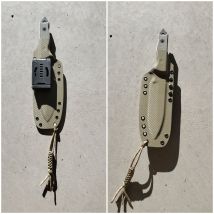
My Ontario RAK in a third-party kydex sheath

Here is NC Scout of Brushbeater talking about Ontario’s Ranger Assault Knife: The Best Of All Worlds? Perhaps I’m a little biased because I have one of these knives and enjoy it myself. NC Scout mentions getting a better sheath, and I have a kydex sheath made by someone who doesn’t appear to be making them any more, but here’s a photo of the sheath. There are similar kydex sheaths sold by others available online.

What would be that ‘one knife’, that if the rest of the world went to hell, that you could strap on your side and do just about everything you’d need a fixed blade to do?

That’s a tough question and one I bet more than a few of you battle on a regular basis. I do, and I’ve carried knives I picked into hell with me, only to later find something that fit the bill just a bit better. It seems like with each wilderness trip, class, or hunt I end up with new wants in a blade. It hasn’t got any better since I got that first Air Force Survival Knife (aka the Jumpmaster knife) I borrowed from an AWOL kid’s kit so long ago. Doubt he missed it. That knife did everything I ever asked it to, is easy to sharpen, and doubles as a combat effective fighting knife. And for a long while it served me well, and still absolutely could had I not retired it when I returned from Afghanistan. But would it be my first choice today? Probably not; designs have evolved and I’ve got a number of knives that fit the general purpose bit a lot better, and one of them is Ontario’s Ranger Assault Knife.

Combat knives are always a fun topic of discussion and one that’s often highly personal. That old USAF design was meant to be a jack of all trades and it excelled at a few. Like most of its contemporaries, it is a stick tang short Bowie-type with an integrated handguard to prevent the user’s hands from slipping up the blade during a stab but also to protect against glancing blows. Mine slayed MREs, 550 cord and tubular nylon just like everyone else’s- even skinned a goat we picked up from a local village in Afghanistan. Its also made notches, battoned wood, made fire and processed domestic game with the best of them.

I’ve always loved tactical knives and fighter-type blades. But the reality is that most often a tactical knife, with many serrations, odd grind angles and ultra-hard steel is more a hindrance than an enabler for most mundane survival tasks. What’s basic and simple, at least in my experience, has become the preferred blade to a lot of the more tactical-oriented types. It’s a view that’s neither good or bad, its just personal choice based on what we call on our tools to do. Some of these tasks include:

  • Skinning and processing game
  • Light Chopping
  • Making feather sticks and tinder bundles
  • Striking of Ferro Rods
  • Batoning through small limbs
  • Be easily re-honed in the field

Lets look at the list. Any knife can skin and process game- in fact I’ve skinned more animals with my decade-old Buck-Strider folder than any other knife I’ve owned. And likewise for feather stick making, any sharp knife with decent edge geometry can do that. But for the heavier duty tasks a good fixed blade is what’s needed. For battening through limbs, a full-tang knife is really the best option. I’ve done it with the old USAF knife, but a full tang construction is best. And when striking ferro rods, high carbon steel and a squared spine gets the job done without having to use the knife’s edge. Speaking of, the ability to bring back a good working edge in the field is paramount. S30V, 154CM and the like are excellent for edge retention, but what happens if your edge does take some damage during use? 1095 is easier to bring back even from severe damage while using a small field stone or diamond plate like we use in the First Line Course, along with a small piece of leather as a strop.

So that brings us to Ontario’s Ranger Assault Knife (RAK). Justin Gingrich, founder of Ranger Knives and Green Beret, partnered with Ontario Knife Company several years back to mass produce his tactical and survival blade designs. I’ve used an RD-7 for a number of years now as a general purpose woods blade and its a highly functional design. His knives are a no-frills, hard use utilitarian types over the elegance of say, a Randall Made or Blackjack. These are not exactly lookers, but they will do everything asked of them and probably much more. The Ranger Assault Knife was something of a crossover design; combining the attributes of a functional fighting weapon and qualities you’d want in a simple survival knife.

Even batoning through this large knotty pine, which is generally a no-no, is no problem for the RAK.
The design sports a sabre grind that starts 2/3 of the way up the blade. Even after heavy use, including batoning, there’s no visible damage to the edge.

Looking over the design you’ll notice the spear point of the 6 inch blade. It’s as great for stabbing as it is choking up on the knife and making finer cuts with the tip. Being 3/16in thick and having the full width go to the tip, its very strong for any prying task you might be called on to do in the wild. Fortunately choking up on that blade is made easy by the very large (yuuuge!) choil. It allows you to control the blade for power cuts but also to accommodate the guard as part of the design. It’s one solid piece of 1095 steel, hardened to 53-55rc, which is hard enough to retain an edge a reasonable amount of time while still soft enough to flex when prying or batoning to prevent chipping. And the knife has no issues batoning- hard wood, soft wood, anything reasonable it breaks down pretty easily.

The blade itself sports a thick saber grind with a short, flat secondary bevel. I prefer a full flat grind for pretty much everything I do with a knife, but on this blade it works to the advantage of the design by maintaining the knife’s strength. Since the parameters of the intended use include aircrew survival, that strength is required when possibly cutting through aluminum airframes or punching out glass.  The pointed pommel serves as a glass breaker also, the same way the older RAT 5 and ESEE 5 knives do. And that leads me to my only real complain with it; that spike pommel is borderline obnoxious. Everything else about the knife is excellent, and since I don’t plan on needing to egress from an aircraft anytime soon, I’m thinking of grinding it down a bit. And the stock sheath is a flimsy nylon piece of junk. I threw it in the trash and had a kydex one made. But that’s it; the steel, the heat treat, the edge retention, and the flat out utility of this knife is excellent.

My Final Thoughts

The RAK pictured next to a RAT 5. Compare the glass breaker bevels on both.

For what this blade costs, around $65, it’s an excellent buy and well worth picking up a couple. You’ll need a better sheath but honestly I’m rarely happy with most stock sheaths. The design is definitely a jack of all trades and well thought out as a utility blade for those going into harm’s way. And as easily as it can be used in combat, it finds itself at home with a wide variety of survival tasks. Would it be that ‘one knife’ to use if the world went to hell? I think it could be. You could spend a heck of a lot more money and not come close to what you get out of this blade.

Survivalist/Prepper/Outdoorsman Auction – Naples, ID – Nov. 19-21

JKern Auction Group in Naples, ID is holding an auction of survivalist, prepper, and outdoors gear.

The huge Survivalist, preppers and outdoorsman auction is finally here!! We will be open from 9 a.m. to 5 p.m. today, Thursday, November, 19 for you to come walk through to view all the items and to pre-register for tomorrow and Saturdays auction. There are some Buy It Now items available for purchase today such as: books, clothing, blankets and holiday items. See you today at 138 Latigo Lane, Naples, Idaho. (Moose Valley Nursery on Highway 95 between Sandpoint and Bonners Ferry).

Preview and registration: Thursday, Nov. 19, 9 a.m. to 5 p.m.
Auction days: Friday, Nov. 20 and Saturday, Nov. 21, 9 a.m. to 5 p.m.

Seattle Times: Toilet Paper Shelves Bare, as Shoppers Worry about Washington Restrictions

At the Costco in Seattle on Sunday, shoppers waited in a long line and a whiteboard listed out-of-stock items: toilet paper, paper towels, disinfectant wipes, all Kleenex products. (Paige Cornwell / The Seattle Times)

The Seattle Times has a story about people in the state once again caught unprepared as new COVID-19 restrictions were announced yesterday. Toilet paper shelves again left bare, as grocery store shoppers worry about Washington restrictions

In announcing new statewide restrictions aimed at reducing the spike in COVID-19 cases, Gov. Jay Inslee on Sunday urged people not to hoard “supplies.”

“Buying up everything really hurts everybody,” Inslee said, “and there’s no necessity of it right now.”

But while the man didn’t specifically call out toilet paper, the toilet paper sure did call to shoppers.

At some Seattle stores on Sunday, in a throwback to earlier days of the pandemic, people were already buying up stacks of bathroom tissue, which seems to turn to spun gold when things look grim.

Costco ran out of the stuff over the weekend, and there was none to be found Sunday at the Safeway on Madison Street in Seattle, or the QFC on Rainier Avenue South.

(The Costco on Fourth Avenue was also out of paper towels, disinfectant wipes and all Kleenex products, according to a whiteboard posted outside).

There was still some left at the Safeway just down Rainier — but it was going at a steady clip. Angel Soft, Charmin. Quilted, cotton or mega. Didn’t matter.

“Is there a limit?” asked a woman named Pat.

Pat didn’t want to give her last name, which makes a certain kind of sense. Much as we talk about the stuff — how much we need for how many people and for how long — toilet paper is still a very personal thing.

“There’s only two of us,” Pat said, grabbing a package of 12 rolls of Charmin, then dropping her voice. “But my daughter goes through it quite fast.”

OK. Understood. No judgment.

“When I was growing up, my Dad, his rule was one sheet,” she continued. “We may have to go to Grandpa’s rule.”

She stopped, scanned the semi-bare shelves and grabbed another package.

“Maybe I’ll try for three,” she said. “Put them under my bed.”

AYWtGS: How My Christianity Affects My Prepping In Positive Ways

This morning’s article comes from A Year Without the Grocery Store – How My Christianity Affects My Prepping In Positive Ways.

I believe in preparedness.  I know.  It’s shocking coming from a preparedness author who runs a preparedness blog.  But I think that sometimes Christians fall into onto of two categories.  One group believes that being prepared is lacking faith.  The other group understands that preparedness flows out of their Christianity.  I fall into the latter category.  And today, I want to talk about how my preparedness flows out of my Christianity.

I will be using Bible verses to prove my point.  If you will be offended, please just close this post now.  I really don’t want to offend anyone.

***There are links in this post.  Some of the links may be affiliate links. My promise to you is that I will only recommend the most economical version of the best quality of items to serve you. All of these are the items that I have bought for my own family.  If you click on a link, your price will remain the same.  If you make a purchase, we may make a small commission that aids in the cost of the running of this website.***

But first a funny.

Optimistic Outlook

Now, I am Presbyterian, and in general, we do have an optimistic view of future things sometimes known as Post-millennialism.

Do things look bleak here in America right now – Oh my goodness – YES!  However, did you know that there are almost 8 billion people on the planet?  Two billion of those claim the name of Christ.  And, did you realize that the Christian population in South America, Africa, and Asia rival that of North America and Europe?  And the number of Christians is growing in South America, Africa, and Asia, while the Christian population of North America and Europa is shrinking.  Just because when we look around and see what looks like everything around us crumbling down HERE, doesn’t mean that it is everywhere.

I believe that the Lord is still working and growing his kingdom.  Part of my preparedness should be to witness to those around me.  I want people to love God and worship Him out of a heart full of praise.  Why?  Because in doing so, their joy will be full.  And because their joy is full – mine will be more so.

How my Christianity affects my preparedness?

My Christianity Affects My Prepping in Positive Ways1.)  I believe that we’re given the example in scripture to be prepare

Where do I believe the Bible gives us the command to prepare? This example comes from Christ himself in Matthew 25:1-10.

Then the kingdom of heaven shall be likened to ten virgins who took their lamps and went out to meet the bridegroom.

Now five of them were wise, and five were foolish. 

Those who were foolish took their lamps and took no oil with them, 

but the wise took oil in their vessels with their lamps. 

But while the bridegroom was delayed, they all slumbered and slept.

“And at midnight a cry was heard: ‘Behold, the bridegroom is coming; go out to meet him!’

Then all those virgins arose and trimmed their lamps. 

And the foolish said to the wise, ‘Give us some of your oil, for our lamps are going out.’ 

But the wise answered, saying, ‘No, lest there should not be enough for us and you; but go rather to those who sell, and buy for yourselves.’ 

And while they went to buy, the bridegroom came, and those who were ready went in with him to the wedding; and the door was shut.

Five wise virgins prepared.  Five foolish ones didn’t.  The first five entered the kingdom.  The second five didn’t.  And, yes, I get that the picture of the kingdom really is discussing being ready for meeting our King.  But there’s also a secondary meaning.  Be prepared.

2.) Because of my Christianity, I believe that my preparedness will be effective.

Will it be perfect?  No, but I believe that it will be effective.  Like the oil for the widow of Zarephath in I Kings 17:7-15, I believe that my efforts will be multiplied.

But that doesn’t mean that I sit on my laurels.  I can go “A Year Without the Grocery Store.”  I also have worked on preparing our house.  Right now, we’re working on preparing our house for winter.  We’re stocked on wood and propane for the cold season as well. I’ve also worked on getting our vehicle in order to take care of us if something happens while we’re on the road or out and about.

We’ve also worked a lot as we’ve learned about “Homesteading in the Burbs” on .24 acres.  We’ve planted apple trees, peach trees, grapevines, black raspberry vines.  We’re working on water barrel towers.  We’ve got a clothesline put up.

So I haven’t been lax, but because I’ve worked at this, I do believe that that Lord will bless it.  Psalm 37:25 says, “I have been young, and now am old; Yet I have not seen the righteous forsaken, Nor his descendants begging bread.”

3.)  Because of my Christianity, I prepare because I have the responsibility of some taking care of others.

Acts 2:44-45 says, “ Now all who believed were together, and had all things in common, and sold their possessions and goods, and divided them among all, as anyone had need.”  This isn’t a verse that supports socialism.  These people sold what they had of their own accord and helped people of their own accord.  

And if things go poorly, I had a responsibility to help take care of others.  I don’t just prepare for myself.  My husband and I are hoping to purchase acreage so that we can help others if things go poorly.   The hope is that we’ll have enough acreage to help people – starting with people in our family and then moving to people in our church.  Then we’ll see who else we would help.  I can’t speak to more than family and church yet.

4.)  Because of my Christianity, if things fall apart, I believe that if I survive, I have the responsibility to rebuild.

Those who survive should embrace the responsibility of rebuilding – even if it is incredibly hard.   And it’s something that we really need to start talking about now.  On what principles do we want to rebuild society?  What will be the basis for governmental structure and law?

There’s a lot to talk about and think about.  Do you have a preparedness group?  Discuss this with them.  Get their thoughts and input.

I would highly recommend this book – sometimes you’ll see it broken down into a three-book series.  It’s called God and Government by Gary Demar.  It’s a great read to understand how our government could be.  The American Vision website describes this book by saying, “Relying on clear historical and biblical research, author Gary DeMar demonstrated how America had been great and how she could be great again.”

So What About You?

Are you a Christian who is preparing?  What drives your preparedness efforts?  Where do you root them?  I’d love to hear. Share with us in the comments below so that we can all be better prepared.

Together let’s Love, Live, Practice, and Overcome!

Economic Collapse Blog: More than half “plan to stockpile food and other essentials” for the months ahead

Michael Snyder at The Economic Collapse says that More than half of all Americans “plan to stockpile food and other essentials” for the chaotic months ahead

There was a time when preppers were relentlessly mocked, but nobody is laughing now.  Today, most Americans are thinking about stockpiling food, and this massive shift in our national mindset has been sparked by concern about what is going to happen in the months ahead.  Many Americans believe that another wave of the coronavirus pandemic is coming, others believe that our ongoing economic depression will get even deeper, and yet others are convinced that the upcoming election could produce widespread violence.  Of course there have always been people that have been deeply alarmed about future events, but we have never seen anything quite like this.  In fact, a brand new survey has found that over half of all Americans are currently planning “to stockpile food and other essentials”

Slightly more than half of Americans in a recent poll from Sports and Leisure Research Group say they already have or plan to stockpile food and other essentials. The chief reason: fears of a resurgent pandemic, which could lead to disruptions such as new restrictions on businesses. On Oct. 2, the number of COVID-19 cases in the USA was its highest in almost two months.

People still remember the shortages that we witnessed earlier this year when the coronavirus pandemic first erupted in this country, and those that ended up being stuck at home without enough toilet paper would rather not repeat that experience.

So as the mainstream media continues to hype a new wave of the pandemic, we should expect to see Americans hitting the grocery stores really hard.  And according to data company Envestnet Yodlee, there is evidence that this is already happening

Already, there’s some evidence that grocery sales are rising, according to data from industry sources. The typical bill for a trip to the grocery store rose to $72 for the week ended October 6, or 11% higher from the week before, according to data company Envestnet Yodlee.

“That’s the highest we’ve seen since the first week of June and the second-highest since we started tracking this in January,” said Bill Parsons, group president of data and analytics at Evestnet.

Fortunately, many grocery store chains anticipated a spike in demand in advance and started stocking up ahead of time.  The following comes from CNN

Grocery stores across the United States are stocking up on products to avoid shortages during a second wave of coronavirus.

Household products — including paper towels and Clorox wipes — have been difficult to find at times during the pandemic, and if grocery stores aren’t stocked up and prepared for second wave this winter, runs on products and shortages could happen again.

During a time when other retailers all over the nation are failing at a pace that we have never seen before, many grocery store chains are actually experiencing booming sales.

And of course I have been warning that this would eventually happen for a very long time.  During a time of crisis, demand for food and other essentials tends to go up and demand for non-essential items tends to go down.

Needless to say, this is something that is not just happening in the United States.  All over the world we have seen demand for food on the rise, and this comes at a time when global food production has become increasingly stressed.

As a result, food prices all over the world are starting to escalate quite aggressively

Food prices continue rising during the coronavirus pandemic, jeopardizing food security for tens of millions worldwide.

On Thursday, the Food and Agriculture Organization (FAO) of the United Nations said world food prices rose for the fourth consecutive month in September, led by surging prices for cereals and vegetable oils, reported Reuters.

FAO’s food price index, which tracks the international prices of the top traded food commodities (cereals, oilseeds, dairy products, meat, and sugar), averaged 97.9 in September versus a downwardly revised 95.9 in August.

Sadly, this is just the beginning.

Global food supplies will continue to get even tighter, and global demand for food will just continue to shoot higher.

So I would stock up while you still can, because prices will never be lower than they are right now.

Meanwhile, our society continues to unravel right in front of our eyes.  You would think that the Lakers winning the NBA title would be a time to celebrate for the city of Los Angeles, but instead large crowds of young people used it as an opportunity to riot and attack police officers

A crowd of more than 1,000 revelers descended into the area around Staples Center after the game. Unruly individuals mixed within the crowd began throwing glass bottles, rocks, and other projectiles at officers. That is when an unlawful assembly was declared, and only a limited number of people complied and began to disperse. A larger portion of the group broke off and began vandalizing businesses while continuing to engage in violent behavior, some aimed at responding officers.

In Portland, protesters just toppled statues of Teddy Roosevelt and Abraham Lincoln during a “day of rage”, but the mainstream media didn’t seem to think that this was any sort of a problem.

And in the middle of the country, the violence never seems to stop in the city of Chicago

Five people were killed and 48 others were injured by gunfire this weekend in Chicago. Five of those wounded were teenagers.

Last weekend saw 37 people shot throughout the city, five of them fatally.

Of course things could soon get a whole lot worse.

According to one recent survey, 56 percent of all Americans expect “an increase in violence as a result of the election”.

Isn’t that incredibly sad?

Many are still hoping that such a scenario can be avoided if one of the candidates is able to build an extremely large lead on election night.  A large enough lead could potentially cause the candidate that is behind to concede fairly quickly, and that may ease tensions.

But I wouldn’t count on that.

At this point we are about 500 hours away from the election, and both sides are indicating that they are prepared to fight until the bitter end.

And the side that ultimately ends up losing is likely to throw a massive temper tantrum, and that won’t be good for our country at all.

So it makes sense that so many Americans are making extra preparations for the months that are ahead, because it definitely appears that they could be quite rocky.

Organic Prepper: A Personal Letter to Stressed Out Preppers

Daisy Luther at The Organic Prepper writes A Personal Letter to Stressed Out Preppers Who Are TIRED of This Apocalypse

Dear Friends:

2020 has certainly been quite a year so far, and a defining one for the preparedness movement. No longer are our stockpiles of rice, beans, and hand sanitizer objects that make us strange. Our stashes of TP would make us the envy of the neighborhood if, of course, anybody knew we had it.

So many of the things and beliefs that made us figures of mockery in the past are now proving their value. We’re learning, with a mixture of relief and perhaps dismay, that we weren’t so crazy after all.

When the first lockdown began, we weren’t out there emptying the shelves in the frenzied throng (even though we’re the ones who got blamed for it.) We were watchful but for the most part, comfortable with our preparations. We understood before things went sideways that extended events can result in civil unrest, crime sprees, and chaos. We realized that we could be facing shortages.

And then time went on.

And on.

And on.

This has been a year in which so many things have occurred that proved preppers have things right that it’s positively exhausting. We’ve had a pandemic, civil unrest, food shortages, increases in crime, exorbitant unemployment, and we’re facing an economic collapse, or at the very least, an economic crisis.

And we’re tired.

Maybe everyone doesn’t feel this way. Maybe you’re perfectly fine and you live on your back 40 and have been completely untouched by any of the above-mentioned crises. Maybe your finances are just fine, you never got out much anyway, and you’ve still got 8 years’ worth of food socked away to supplement the things you grow. Maybe you’re reading this as you spin goat hair into yarn from which you’ll make this year’s mittens. Maybe you have no relatives, friends, or loved ones in the path of danger. Maybe your area isn’t prone to a single natural disaster.

If this is the case, I salute you. I really do. Good for you.

But for most of us, this is not the case. A lot of us are tired.

And I mean tired.

I’m sure there will be plenty of folks in the comments who say, “Daisy Luther is such a whiner” but whatever. I’m just going to come right out and tell you how I feel about this.

This year has been difficult.

My life changed completely. The lives of people I love changed completely. I lost some people I cared for deeply to the virus. I watched people in my family frolic around blithely ignoring the virus for which they’re in a peak risk group for death. I watched my country get torn asunder by everything from the pandemic response to racial injustice to perceived insults or losses of rights. I have a family member who lives in a riot zone but due to work and finances, can’t just relocate. (Although those folks on the internet always make it sound so damned easy to just quit your job then up and move to the boondocks to raise sheep.)

I have friends who have developed such extreme political views on either side that I don’t even know what to say to them anymore. I still love them. I still know they’re good people or we wouldn’t have been friends in the first place. But what the heck, y’all?

Then we’ve got hurricanes and the worst wildfires ever in history and floods and droughts and snow in September and murder hornets and the Olympics got canceled and there was some radiation leak in Russia and police brutality, which you will say is alleged or real, depending on your personal perspective. Oh yeah, and the US Postal Service has gone to heck, a lot of kids can’t go back to school so they’re surfing the net while they’re supposed to be “distance learning” online, and Netflix is playing a child porn movie to prove that kids are getting sexually exploited. Our system is going downhill on a greasy slide.

Our presidential candidates are (in my humble opinion) like a choice between your favorite sexually transmitted infection, syphillis or gonhorrhea. And regardless of whether syphilis or gonorrhea wins, all hell’s going to break loose (or break looser because it’s already pretty freakin’ bad in a lot of places) before and after the election that may not even happen the regular way because of the pandemic.

And we preppers who were ready for an emergency are sitting here scratching our heads thinking, “Heck fire, I wasn’t actually prepared for ALL OF THE EMERGENCIES AT ONCE.”

And it’s going on and on and on.

And that’s the other thing.

This stuff is going on and on and on forever. Ad infinitum. We are still in the middle of a global viral outbreak that we don’t completely understand and lots of places are still under major restrictions. A lot of folks don’t have their jobs back and a lot never will. We have been dealing with this particular disaster since at least February and the mental toll of dealing with the restrictions, the loss of income, the isolation, and the loss of freedom has been harsh for many people. There are folks who are just plain mad that they didn’t get the apocalypse they signed up for and they haven’t gotten to shoot any marauders and quite frankly, lockdown is boring as heck.

Lots of us have family members and people in our inner circles who are chomping at the bit to get back to “normal” when things simply are not normal. We’ve got loved ones who want to head out to parties and who want to throw caution to the wind and who flat don’t give a hoot what they bring home to Grandma. We’ve got loved ones who are using this entire scenario to say how we’ve overreacted. We’ve got loved ones who still get aggravated when we bring home more toilet paper.

When we were prepping for all this stuff most of us never expected that our families who were also prepping for this stuff might not be on board with this specific scenario. We never thought we’d have to argue with children and spouses and friends and lovers about things like quarantines and masks and not eating all five years’ worth of the good snacks like Oreos in the first 6 months. We didn’t consider that we might not be able to replace our Bluetooth headsets or that we’d need them for work or that we’d have to have our offices in our homes or that our kids’ teachers might see their BB guns in their bedrooms and send the SWAT teams after us.

We can’t go to church but we can go to riots. We aren’t supposed to travel yet mysterious busloads full of “protesters” show up in other states and that’s just hunky-dory. The borders are closed except they’re not really and the restaurants can’t serve you except they can sort of and we can’t go to the beach but we can line up for a vaccine once the promised injection, untested for long-term side effects, is ready.

This is the worst apocalypse ever because it’s so dad-gum boring and it’s going on for-freaking-ever. That’s the thing that nobody warned us about. This monotony just goes on and on and on. It would be one thing if we were out there fighting for resources but in reality, we’re all just standin’ in line at Wal-Mart with our masks on waiting for our turn to get zapped with a thermometer to see if we are allowed to go inside. If it weren’t for wifi we’d all be crazy by now. Or – let’s be real for a moment – maybe it’s because of wifi so many people are crazy right now. Social media is a jungle – an outright vicious and bloody jungle – and may the most audacious mofo win because those of us who still retain our human decency are not going to be able to hang with the people out there flinging wild ungrounded insults like poop in the monkey cages at the zoo.

And folks – I hate to say it but we’re still on Round One.

We’re going to be dealing with this bizarre altered reality for quite some time. This virus ain’t over yet or if you don’t believe in the virus, then consider that this government response isn’t over yet. We’re never “getting back to normal” and we’re going to have to adapt. We’re going to have to hope our children who are going to school in personal bubbles aren’t going to have OCD and chronic anxiety for the rest of their lives. We’re going to have to learn to make do without all the imports that no longer seem to be populating stores.

We never really expected that a huge part of survival would just be waiting and adapting to the new world around us. Not this new world anyway. This isn’t one we can shoot our way out of or buy our way out of or wait our way out of.  We have to adapt to the new economy, the new precautions, and the new suspicions. We have to adapt to a different type of supply chain.  We have to move into survival mode as we watch civil unrest and riots break out in the most unlikely places, although it’s not really the survival mode we ever expected. We have to adjust to the nearly constant state of offense and unrest. We’re going to have to teach our children to be bold and fearless despite a system that wants them to be afraid. We’re going to have to forge a path through a labyrinth that is nothing like the one we expected when we began prepping for serious events because this event was so wildly unpredictable that nobody could have seen it happening the way it did.

But this is what we do.

We’re preppers. Preparing for the unexpected is our thing. Even when the unexpected is long-lasting, monotonous, boring, and stifling. Even when our family thinks we’re overreacting. Even when everything changes and things don’t get back to “normal.” Even when we’re just sitting there right on the edge of chaos wondering if today is the day that things will erupt in our neck of the woods.

Every.

Single.

Day.

For.

Months.

The way this unfolded isn’t the disaster any of us expected but it’s the hand we’ve been dealt. How well we’re able to handle it will tell us a lot about how mentally prepared we actually are. How we manage our friends, families, and expectations will help us determine how things might go in a future, more Mad-Max variety of apocalypse.

Take this as the learning experience that it is. And don’t be lulled by the boredom into a false sense of security.

Because this is not over. Not by a long shot.

Hang in there, my friends. Whether we have to pull our loved ones along by their collars, whether we have to buy our supplies and stash them away on the sly, whether we have to prepare all on our own, we have to deal with the apocalypse we’ve been given, emotionally and physically.

It’s going to be a long haul, but we’ve got this. I don’t know if you’re feeling the same way that I am, but just in case you are, I wanted you to know – you’re not alone.

Daisy