The Alton’s at Doom and Bloom Medical has up an article discussing the infectiousness of Covid-19, and they also announce that their new book Alton’s Pandemic Preparedness Guide: Emerging and Current Viral Threats is now on sale.
If you’ve paid any attention to the worldwide pandemic of COVID-19 or watched movies like Contagion, , you’ve heard the term “R-nought”.
Alfred Lotka
The R-nought (or reproduction number) is the 100-year-old brainchild of a public health expert in demographics named Alfred Lotka. A disease’s R-Nought, he said, is the number of cases that will occur in a population if an infected person is placed in the middle of it. Not just any population, however; one that hasn’t been exposed to the infection in the past.
In the 1950s, epidemiologist George MacDonald used it to describe the contagious potential of malaria. He suggested that, if the R-nought is less than 1, the infectious person will transmit to fewer than one other person and an outbreak will eventually peter out. On the other hand, if the R-Nought is greater than 1, the disease will spread. Seasonal flu carries an R-Nought of 1.28, while the current COVID-19 is probably closer to 3.
Probably? Certainly, the R-Nought represents important data regarding an infectious disease. Why, then, probably? Because different sources may report different R-Noughts for the same disease based on a number of factors. It’s not just the nature of the virus itself.
Estimation of the R-nought primarily relates to 3 parameters:
how long a person is contagious
the likelihood that contact with a susceptible person will end in transmission of the disease
the frequency of contact between the infected individual and the susceptible population.
Let’s take them one-by-one. The first is how long a person is contagious. Certainly, you want to quarantine someone during their infectious period, but, with COVID-19, that period is not known for certain.
For SARS, it was about 14 days, so that’s what they’re using for the related SARS-COV2 (the name for the virus that causes COVID-19). There are outliers, however, that range from 20-37 days. With a range that wide, how do they figure out when you’re no longer contagious?
If COVID-19 testing is available, they have determined three criteria for considering release from isolation:
• You no longer have a fever without using fever-reducing drugs.
• Symptoms like cough or shortness of breath have improved significantly.
• you have received two negative tests in a row, 24 hours apart.
• You have had no fever for at least 72 hours without using fever-reducing drugs.
• Symptoms like cough or shortness of breath have improved significantly.
• At least 7 days have passed since your symptoms first appeared (I was surprised at that last one; perhaps 14 days is more prudent).
Pneumonia (circled)
Aside: Recovering COVID-19 patients might be surprised when they feel better but are told that the X-ray still shows signs of pneumonia. This is because the x-ray appearance of pneumonia commonly seems to lag behind the patient’s clinical appearance.
The second parameter is how likely is it that contact with a susceptible person ends up in infection. That depends partially on the characteristics of the virus itself, but It might also depend on a person’s age, general health, lifestyle, or even bad habits.
Older folks may get it as often as younger folks, but seem to do worse across the board. In one study, if you were in your twenties and got COVID-19, your chances of dying was 0.2 percent. If you were in your eighties, it was closer to 22 percent.
What about bad habits? Consider smoking: Most COVID-19 victims are men. in China, 50% of men smoke there as opposed to about 5% of women. Therefore, you can probably conclude that women have healthier lungs, on average, than men.
Cultural differences might also play a role. In Iran and certain other countries, most men work or spend a good amount of time outside. From this, we can infer that they might be exposed more often than women, who probably spend more time at home.
The third parameter is the frequency of contact between the infected individual and the susceptible population. For example, there are people that are known as “super spreaders”. A super-spreader is an individual who is more likely, for one reason or another, to infect others. 20% of infected individuals are responsible for 80% of transmissions to others.
Although South Korea is held out as a model of success in the containment of COVID-19, that wasn’t always the case. In mid-February, confirmed cases of SARS-CoV-2 infection suddenly jumped in that country. The Korean CDC attributed the increase in cases to “Patient 31“, who had participated in a mass religious gathering in the city of Daegu.
In New York, a lawyer contracted the illness and then spread it to at least twenty other individuals in his community in New Rochelle. In the early going, he was thought to account at one point or another for more than half of coronavirus cases in the state
Super-spreaders aren’t confined to viral disease, 100 years ago, a woman named Mary Mallon worked as a cook in New York. She was an asymptomatic carrier of the bacteria Salmonella Typhi, and passed that disease to more than 50 other people, giving her the nickname “Typhoid Mary“.
Terminating Typhoid Mary’s employment and quarantining super-spreaders and their contacts helps, but only if it’s done rapidly. In South Korea, it can be said to be successful. In New York, well, not so much.
There’s more to R-noughts than those 3 parameters, like testing issues, the availability of personal protection equipment to a community, and much more. It’s interesting to think about what the R-Nought of the 1918 Spanish Flu would have been if it occurred today with commercial air travel so common.
More updates on issues relating to the pandemic in the near future.
Oh, and if you were wondering where we’ve been lately, we’ve been personally packing medical kits seven days a week as well as writing our latest book, Alton’s Pandemic Preparedness Guide: Emerging and Current Viral Threats. You can find it on Amazon.com and, soon, at doomandbloom.net.
A few people I know have not been able to find yeast in the store recently. There is no knead to despair if you want to bake bread, but have no yeast. There are other options. Here is Ashley Adamant of Practical Self Reliance, writing Potato Yeast Starter for Baking Bread
No yeast at home? Try culturing your own wild yeast on potatoes! All you need is one medium-sized potato, a bit of water and smidge of patience.
Believe it or not, commercial yeast has only been available in well-stocked grocery stores for the past 100 years or so. Leavened bread, however, has been baked for millennia.
It’s convenient to be sure, but yeast packets are not the only way to leaven bread.
In times past, bakers cultured their own wild yeast for raising bread. Sourdough is one version, and it’s a community of yeast and lactic acid bacteria (like in yogurt) that give the bread a characteristic sour taste.
But what if you don’t like sourdough (or don’t have the patience to maintain one)?
There are literally dozens of ways to culture a wild yeast starter, using everything from raisins to beer to wild apples.
This simple method cultures wild yeast on boiled potatoes and was originally used by vodka distillers making high-quality potato vodka. The idea is to just culture yeast, without encouraging the lactic acid bacteria that are part of sourdough.
DIY Potato Yeast Starter for Bread
Potatoes are high in starch, which is ideal for culturing yeast. They also contain plenty of micro-nutrients, making them a better yeast starter than sugar alone.
There are a number of different potato yeast starter recipes circulating on the internet at the moment, ever since yeast disappeared from store shelves this spring.
Guess what…they all work.
Some add sugar, others add a bit of flour and some are just a mashed potato and the starchy water used to boil it.
Mash it all together, and then leave it open on the counter for 2-3 days. Yeast floating by in the air will settle on your starchy yeast trap, and quickly go to work reproducing.
The simplest method, and the one originally used for vodka production, was just a single potato.
Peel the potato and place it in a pot of water. Bring the water to a boil, and then simmer for 35-45 minutes, until the potato is completely soft. Test it with a fork to ensure that it’s cooked and soft all the way to the center.
Pour the cooking water into a container, and allow it to cool. Meanwhile, thoroughly mash the potato.
Place the mashed potato into a one-quart mason jar, and then pour the starchy potato cooking water in to fill the jar. If you’re a bit short on cooking water, just add clean, chlorine-free drinking water.
Set the jar on the counter (open or covered with a towel), and wait.
In about 24 – 36 hours, you should see the first tiny bubble on the surface. (Look closely at the potato layer below, and you’ll see tiny bubbles forming there too.)
Cap up the jar, give it a vigorous shake to distribute the yeast and then open it up and leave the jar on the counter again.
In another 24 to 36 hours the jar should really be bubbling. At this point, you can bake your first loaf of bread…
Kara Stiff at The Organic Prepper is a homeschooling parent and shares her thoughts with those who are attempting to home school their public school children during the Covid-19 pandemic – A Homeschooling Guide for Public Schoolers
My heart goes out to all the parents who were never planning to home school, but nevertheless find themselves teaching their children at home today. I chose this beautiful, crazy life, and I completely understand why some people wouldn’t choose it. But here we are. We have to do what we have to do. You don’t want them to fall behind. You don’t want to lose your mind.
Believe it or not, it’s a golden opportunity.
Caveat: these are only my personal thoughts. I’m not a professional educator, just a parent successfully homeschooling.
This advice is only for people whose greatest hurdle right now is remaining sane with the little ones. This is a high bar to clear, to be sure, but some people are facing the little people plus big financial problems, they’re sick or working through mental health issues, or they’re managing other emergencies. In those cases, if you’re keeping everyone more or less fed and warm then you’re succeeding, and you don’t need me to tell you to forget the rest for as long as necessary.
For everyone else, I do have a little advice. I’m sure you’re getting support from your school district, which is excellent. Worrying about what to teach is often a new homeschooler’s first and biggest concern. But deciding what to teach is actually the easy part, and now it’s mom, dad, uncle or grandma doing the really hard part: actually sitting with the kid, helping/making him or her do the work.
First, I think you can safely let go of the worry that you may not be a good enough teacher because you’re a terrible speller, or you think you’re bad at math. It’s good to know these things about yourself so they can be addressed, but the truth is that how great you personally are at division isn’t necessarily a predictor of success. Neither is how well you explain things, or even how well you demonstrate looking things up, although that is a priceless skill to impart to inquiring minds. To my mind, the most important skill for successful homeschooling is:
Controlling your own frustration
We adults are fantastically knowledgeable and amazingly skilled. No, really, we are! So we forget how hard it is to do seemingly simple things for the first time. I remember sitting in my college biochemistry class, listening to the professor say:
“Come on you guys, this is easy!”
Folks, I’m here to tell you that biochemistry isn’t easy for most people who are new to it, especially people who just drug themselves out of bed five minutes ago, possibly with a touch of a hangover. And reading isn’t easy for a five-year-old, and multiplication isn’t easy for an eight-year-old.
The parent has to slow down, go through it again, redirect the child’s attention for the hundredth time and explain the material in a different way, preferably without pulling out their own hair. You can develop these skills. Even if you’re new to it, and you don’t find it easy.
When it just isn’t working, the parent has to know when to shift gears and let it rest. Preserving your relationship with the child is always very important, but it’s doubly so when you’re home with them all day every day.
I think I can safely say that all homeschool parents want to scream sometimes. Many of us have threatened to send our kids to public school at one point or another (or maybe once a week). It doesn’t make you a bad parent or even a bad teacher, it just makes you human. In the last week, I have seen a bunch of public school parents join my online homeschool groups, and the outpouring of sympathy, support and good ideas from homeschool parents makes me tear up. We’re here for you. Get in touch.
Run your day in a way that works for YOU
Just because they’re usually in school for six or eight hours a day doesn’t mean you have to school them for six or eight hours a day. That schedule is a crowd control measure instituted for the good of society, not for the good of children.
My children are homeschooled primarily because I think a kid should spend a lot of time outside moving around, and there just aren’t enough hours in the day to do that and public school. My own public school experience was pretty different from the norm today, with much less homework and much more self-direction, but still, I feel that I didn’t get enough practice directing my own attention. Research backs me up on this: kids who get many hours of freedom develop excellent executive function, which not only makes them a valuable employee but also helps them run their own life someday.
At my house, we do about an hour of formal school work per day, six or seven days a week. The rest of the time the kids help me with gardening and animal care, climb trees and play in the creek, draw and write and read things on their own or together, and make stuff out of Legos. They have an hour of screen time each afternoon just so they will sit down and be quiet, usually a documentary. David Attenborough is definitely this house’s biggest celebrity. We’re also accustomed to spending several days of the week with other homeschool families, although obviously that is curtailed now due to social distancing.
Learning doesn’t stop when we leave the table, because kids are unstoppable learning machines when they’re not too tired or stressed out. I’m always available to answer questions and help look stuff up, and the questions are pretty frequent. An adult reads to them (or they read to us) books of their choosing at bedtime, and sometimes just after dinner, too. It’s also a pretty common occurrence in my house for a child to see an adult reading a novel, a piece of nonfiction, or The Economist, and request to have it read aloud to them, which we do. They also sometimes watch me balance the household budget.
The schedule that works best for your family might look very different from ours, and that is good. Children are people. People have very different needs, and one of the charms of schooling at home is that you can arrange things in a pretty good compromise to meet everyone’s needs. An hour or two of focused one-on-two attention per day is plenty of time for my four- and seven-year-olds to get well ahead of grade level on reading, writing, and math…(continues)
As the COVID-19 Coronavirus sweeps the globe, different people are reacting in different ways.
For most, fear is a part of that reaction. That’s normal, as we all tend to be afraid of the unknown and there’s still a lot of unknown about this virus. But the truly scary part isn’t the fear that people are having; it’s the fear that governments are having.
Don’t get me wrong; I don’t envy the problems that the president and state governors are facing right now. They are in a no-win situation, where they are having to make decisions based on limited information, with the foreknowledge that there is no right answer. No matter what they decide, there will be others, sitting on the sidelines, telling them how wrong they are.
As it stands right now, if the president or some governor calls for a full quarantine, they will be blasted for overreacting and destroying the economy. If they don’t call for that, they will be blasted for not taking the situation seriously and every death will be laid at their doorstep. Both of these reactions are already happening, it just depends on who is doing the complaining about what the government is doing, and that doesn’t necessarily follow party lines.
Is Quarantine Coming?
The entire state of California, 40 million people, is now under quarantine. New York Governor, Andrew Cuomo is directing non-essential businesses to keep their workers at home. Even in Texas, which has relatively few cases, the governor is calling for voluntary self-isolation for the next two weeks.
Is this an overreaction? Or is it necessary to prevent a massive number of people from dying?
To answer that question, we need to understand why the government is calling for people to self-quarantine, specifically why they’re calling for a 14-day self-quarantine.
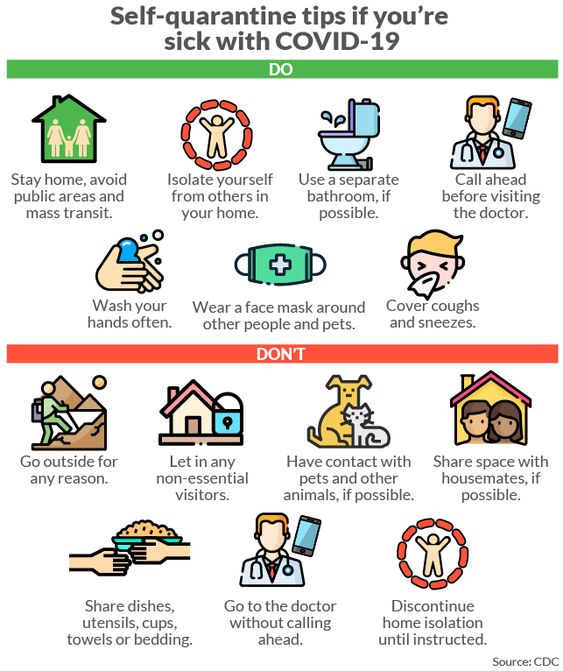
There’s no way that a 14-day quarantine is going to put a total stop to the disease. First of all, there are a significant number of cases on record, where the incubation period was longer than 14 days. Secondly, even if all incubation periods fell within the 14-day window, people are still contagious while their bodies are battling the disease. If they are treated at home, there’s still a chance of them infecting their families.
So what’s the 14-day voluntary quarantine about then?
Just like social distancing, the 14-day voluntary self-isolation is about slowing the spread of the disease, rather than stopping it. It is being instituted now, to ensure that everyone who comes down with a serious case of the disease will have a hospital bed to rest in and a respirator to help them breathe. It’s to ensure that our medical community is able to give people the treatment they need, in order to give them the greatest chances of defeating the virus and surviving.
I recently saw some rather interesting computer models, which showed how a viral disease of this type propagates through a population. In a “normal” situation, where there are no safeguards in place, the number of cases of the disease rises rapidly, outpacing the medical community’s ability to deal with it. A full quarantine of those who are infected is hard to institute because you will always have some people who are going to be “leakers” slipping through and spreading the disease. The most effective thing to do is to isolate as many people as possible, reducing the number of people who are moving around and spreading the disease throughout the population.
This is what the government is trying to do. By asking people to shelter in their homes, they are hoping to drastically reduce the number of people who are out and about, with the potential of spreading the disease. We are not being told that we can’t leave our homes at all, but rather being asked to avoid leaving them as much as possible. At the same time, places where people congregate, where one contagious person could easily infect many other people, are being closed for two weeks, with the same goal of slowing the spread of the disease.
I remember reading a few years back about how school desks have more germs on them than the average toilet seat. My reaction at that time was to write a satire about it. But if you think about it, our schools are a breeding ground for disease. They are filled with children, most of whom are not all that concerned about personal hygiene and who all come into close contact with each other. Typically, if one child gets sick, you can count on the whole class catching it within a week or two.
So, what will this quarantine do for us?
Basically, it does two things. The first is that it shows the spread of the disease, spreading it out over a longer period of time. This will level out the workload for our medical professionals so that they can give each patient the treatment that they need…(continues)
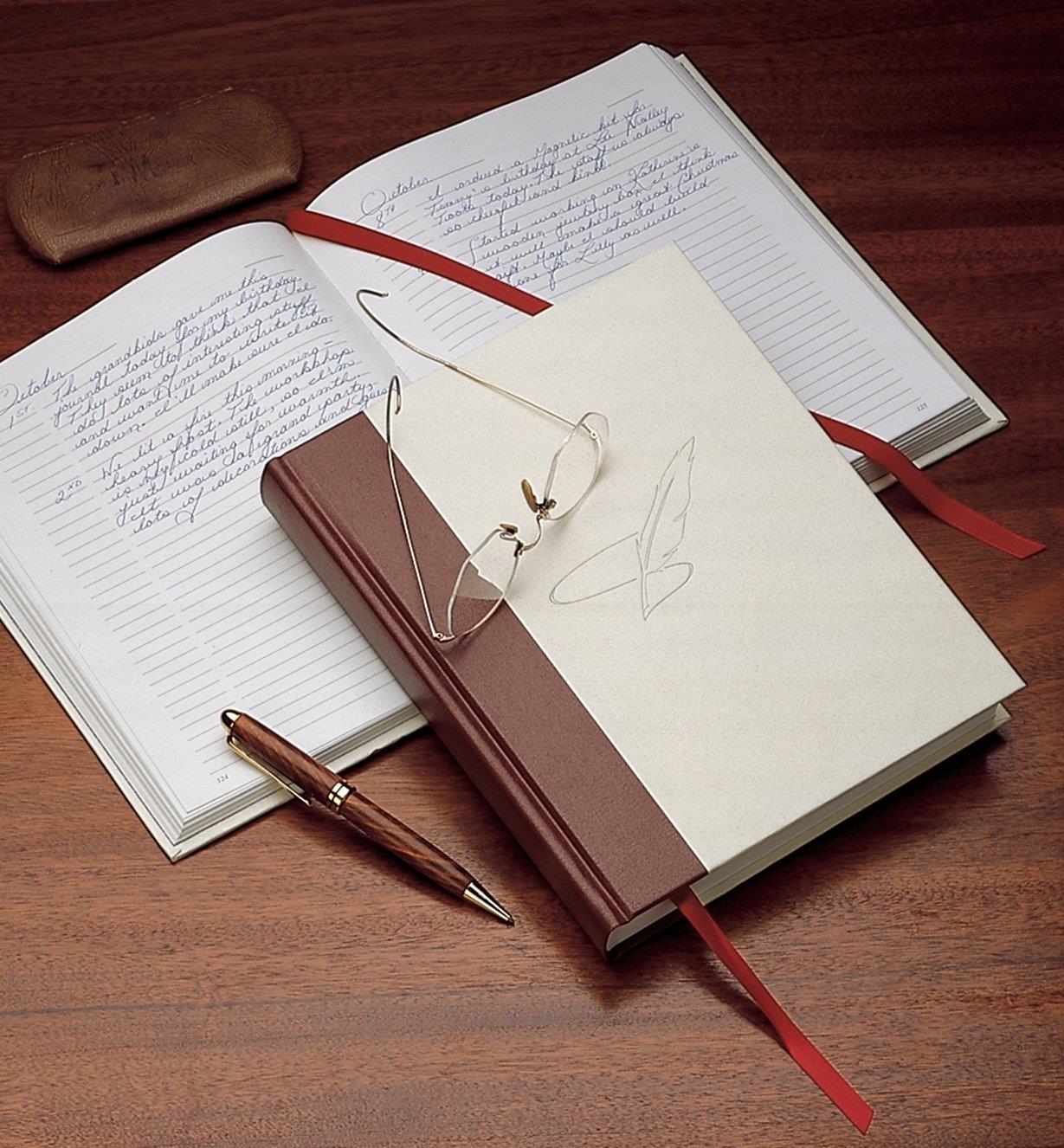
Christian Prepper Gal has an article up on using the current pandemic to evaluate for preparedness – This is a test. This is only a test. Or is it?We don’t know if this event will last two weeks (seems unlikely to be that short), two months (maybe?), or two years (the Spanish Flu Pandemic of 1918 actually surged on and off for about two years). It’s quite possible that we’re living a piece of history that could be remembered for decades or even hundreds of years. For your own benefit, keep a journal of what is happening to you, how you have prepared, what shortcomings you experienced, what you need to improve, and so forth, so that you can go back in less hectic times and make improvements to your life and readiness.
With all that is going on in the world right now, I can’t help but wonder if this is just a test. A test to allow us to see if we really are ready/prepared for what’s yet to come? You know, kind of like a wake up call? Telling us we only thought we were ready.
I’m really hoping that’s all it is! Why? Because I have already learned so much from it. And, by that I mean how much I am NOT ready and prepared! I mean, don’t get me wrong…I am prepared for a short term emergency/SHTF. And by short term I mean a few months. But, anything beyond that? Well, it would be a struggle to survive.
Funny thing is that I thought that was why I was at the homestead…so I could be prepared for a long term SHTF situation. But, I don’t know God’s reasoning behind things. I can only trust Him that there is something more that I need to learn before being put in that position full time. And, I need to be open to Him showing me what that something is. I do know that I learned a lot about prepping/surviving while living on the homestead and some of those things can be implimented in my preps here in the city.
Okay, so I guess looking back on the homestead experiences, combined with this current pandemic (COVID-19), I am seeing where I need to concentrate on improving my preps. So, for me, it’s a combination of both. A test and a wake up call. However, I do believe that most of us who consider ourselves preppers have been able to see areas that need to be improved upon before we are ready for “the big one”. Or is this “the big one”? Personally, I don’t think it is. Although, if those people who are resistant don’t start realizing that this is a serious matter and keep themselves at home as much as possible, it could turn into a long term SHTF.
I do remember many of us last year (2019) feeling like there was an urgency to step up our prepping. Do you remember? I was strongly prompted and urged to do so. Actually, I’m thinking it may have been right around this time of the year. Anyway, I also told my daughter that something was going to happen in 2020. I didn’t know if it would be as a result of the presidential election or something different. But, I did know that we needed to put a rush on our prepping and learning survival skills. It wasn’t fear motivating and moving me. It was God prompting me. Just like this feeling that we really need to get completely serious about prepping for something bigger than this current pandemic. For something that may last longer than a couple of months.
Geesh! It is so easy for me to get off track here! Okay, back to the subject at hand. Is this a test? Or a wake up call? Or both? Now that I’m thinking about it more, it could be both. A test for us to see the holes in our prepping, and a wake up call for us to continue to work on our preps and push to be ready for “the big one” (as in the big SHTF).
This definitely is a SHTF situation that we are living in right now. But, I don’t think it’s the end game just yet. I could be wrong, I’m no expert, so please don’t hold me to it. It’s just a gut feeling that I have. The feeling that something so much worse than what we are experiencing right now is in the works. It may even be the current pandemic continuing to such a place. I don’t know. But what I do know is that I need to be more vigilant and push forward with much more force my prepping/survival endeavors. Once I can. For now, I can remain vigilant and make plans for what I need to do when we get back to a point where I can purchase more food products.
When I really take a look at where I’ve come (with prepping) over the past couple of years I am amazed at the progress I’ve made. And yet, with this pandemic it has also caused me to see all the areas in which I need to improve. And believe me, there are a lot of holes that need to be filled in. I don’t know about you, but it’s not just the food storage that I need to improve upon. It’s also expanding my medical supplies to include a trauma kit and other emergency supplies; which I had started working on just before I moved to my son’s homestead. I need to work on learning more bushcraft/survival skills and practicing the skills I have already learned. There are many areas in my prepping that I need to expound upon and improve. I will not procrastinate. I will not put it off until everything is “back to normal”. I will continue to move forward. There are so many things I can be doing to improve my knowledge and skills while we are all basically self-isolating ourselves.
Here’s some of what I have learned from the Coronovirus (COVID-19) Pandemic of 2020:
That I do not have enough toilet paper stocked. We probably have enough for a couple of months, but who knows how long this lack of availability will last?
That I do not have enough disinfectant wipes, lysol, or bleach stored. Again, I have some, but not nearly enough if this goes long term.
That people are going to hate you for having been prepared with food and necessities. People were actually complaining that there were some who were prepared and didn’t have to go to the stores for food and necesseties. Not even realizing that some people being prepared left more on the shelves for them!
That it truly is important to keep your mouth shut about being a prepper to everyone except those you are willing to feed and care for in a SHTF scenario. This is because of how people reacted to preppers at the beginning of this pandemic (see No. 3). I can just imagine what would happen if it came to the point of food not being available at all.
Those are only a few of the things I have learned from this pandemic. There are some more things I will be sharing with you in upcoming articles and videos.
So, if you are like me in that your eyes have been opened and you have seen areas that you need to expound upon or improve upon in order to be truly ready for “the big one” SHTF, then I pray that you will heed the warnings and regroup, re-evaluate, or whatever it is that you need to do in order to begin to move forward and accomplish those improvements. We don’t know what tomorrow holds. We can’t see into the future (well, most of us can’t). But, we can put our trust and faith in our Heavenly Father and heed His warnings and follow His leading.
Remember we prepare for the worst and hope for the best.
Until next time…happy prepping, and God bless!
Hosea 4:6, My people are destroyed for lack of knowledge: because thou hast rejected knowledge, I will also reject thee, that thou shalt be no priest to me: seeing thou hast forgotten the law of thy God, I will also forget thy children. (KJV)
So many of our lives have been turned upside down. Whether you are now homeschooling your kids – since many schools have been closed. Are you eating at home on a regular basis now when normally you would have gone out to eat one or two times during the week? Are you used to precooked or prepackaged meals? Each of these things can be so hard to navigate in their own, so what is one thing that we can do to make one of these things easier? Make a Menu!
So it’s hard to think about what to feed families during a crisis. And even for those of us who have a food storage menu set up, some of those meals might not sound appetizing at the moment. How do you go about making up a menu for while you’re in quarantine?
Principles for Making a Quarantine Menu
1) Start with what you already have
Are you like me? Do you buy food for a specific meal and at least once a week you don’t eat it? More than that, oftentimes, you don’t reschedule those meals for the next week? Yeah, me too! So when looking through my freezer, I found a lot of food that is easily incorporated into this week’s menu.
I have a fairly deep pantry that I’ve been developing over the course of several years. I built it using a food storage menu. When I started making this week’s menu though, I didn’t major on my food storage menu. I started with what I already have in my freezer.
If you feed your kids normal foods, this will actually help them emotionally deal with this situation. The greater a level of “normal” you can give to your children, the better off they will be during this crisis.
Don’t think that introducing crazy, strange foods at a time like this will do anything good for their (or your) digestive system. Don’t think that your kids will all of a sudden eat canned asparagus if you never fed it to them before. The same goes for
(3) If you’re struggling, make a schedule.
I’m not talking about a menu. I’m talking about a dinner schedule from which to make your menu. A schedule might look like this.
Monday – Mexican Dish
Tuesday – Italian meal
Wednesday – Oriental Dish
Thursday – American/Casserole
Friday – Soup
Saturday – Pizza (either frozen or homemade)
Sunday – Left Overs
OR maybe you’re “schedule” will look like this
Monday – Beef
Tuesday – Chicken
Wednesday – Pork
Thursday – Vegetarian
Friday – Beef
Saturday – Chicken
Sunday – Pork
Then when you go to make a menu, you don’t have to stress too much because the hardest part is already set up for you!
My breakfast and lunch meals are almost always identical from week to week. This is how our breakfasts and lunches go in general. I plan on keeping it the same as MUCH as possible even in quarantine. I do know how to make bread, bagels, granola, biscuits, pizza, and cinnamon rolls, so I can keep that up even if I have to make it from scratch.
And if you can make bread, you can make cinnamon rolls,pizza crust, and bagels. Making noodles is actually really easy too. These things are just time-consuming, but when you’re forced to be at home, it’s a great way to spend your time.
Making homemade granola is even easier to make, and then you have several days worth of breakfasts ready at once. One batch of our granola lasts us 2 weeks eating it twice each week.
My Menu for Quarantine Week 1
So here is an actual picture of my menu for this next week. It goes on my fridge today and will stay up. One of the reasons why I post it is so that I don’t get “What’s for breakfast, Mom?” ALL-THE-STINKING-TIME! I have one child who will finish dinner and go, “Hey, Mom! What’s for breakfast?”
The second reason that I post a menu is that my oldest daughter is responsible for breakfast every day. My middle daughter is responsible for lunches every day, and I’m responsible for dinner every day. This way, they don’t have to ask me what they should be making. They know because it’s listed.
So here’s my menu. Some of this will be from scratch. This week, I’ll make the cinnamon rolls from scratch, but we still have “canned” biscuits” to make things easier on my daughter. We still also have frozen pizzas, so we’ll do those instead of making those from scratch. In future weeks, these will eventually be made from scratch.
Food Storage Recipe – Homemade Granola
We double this recipe and it makes at least 4 breakfasts for a family of 7.
Ingredients
6 C Oats
1 C Nuts (we prefer pecans)
1 C Chocolate Chips
1 C Coconut (can be omitted)
1/2 C Cocoa powder
1 C Coconut oil
1 C Honey
1 T Vanilla
Directions:
Grease a 9×13 two-inch deep casserole dish. Mix the oats, nuts, chocolate chips, coconut, and cocoa powder together. In a saucepan melt the coconut oil and honey together. Once they are melted together, remove from heat and add vanilla. Pour the mixture over the oat mixture in the 9×13 dish, and stir thoroughly. Bake for 1 hour at 250.
How are you setting up your menu for this time during quarantine? Do you feel like you’ve got a good handle on it? If you’re doing well, do you have any tips and tricks to share with the rest of our readers? I’d love to hear. Leave a comment below in the comments section so that we can all be better prepared.
Together lets Love, Learn, Practice, and Overcome!
There are links in this post. Some of the links may be affiliate links. Some of the links may not be. My promise to you is that I will only recommend the most economical version of the best quality of items to serve you. These are the items that I have bought for my own family. You can feel free to use my affiliate links, of which I will get a small amount in compensation, or you can choose to search out your products on your own.
Please note that any affiliate links above are for A Year Without the Grocery Store and not for the Lower Valley Assembly.
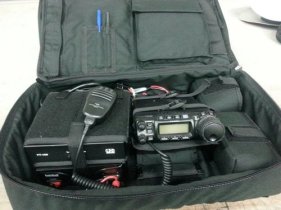
There’s a buzz about radio, and it’s not on the radio.
The amateur radio social media pages and web forums are suddenly buzzing with activity. Mostly it’s from people who are not hams but want to become one. This anecdotal evidence is supported by a notable increase in web traffic to offgridham.com in the last three weeks or so. The search terms suggest that most of these visitors are directly looking for information about off grid communications. Surprise! That’s what we do here, exclusively. So if you’re interested in off grid amateur radio you’ve landed on the best web page on this or any globe. covid-19
Saying the quiet part out loud. covid-19
Public domain image.
Let’s not be coy. This interest in off grid amateur radio is being driven by the Covid-19 virus calamity consuming the world. While most people are not outright giving it as a reason why they are interested in off grid radio, they are dropping enough hints that it isn’t hard to figure it out. c
The funny thing is, the corona virus is not a calamity in the traditional sense. The grid is still solid. The electricity is on, the plumbing works, and the internet is up. The roads are free for travel and the stores are (mostly) open and (somewhat) well stocked. No one is being burned or flooded out of their homes. Society is still functioning, albeit with a six foot space cushion between every living human. covid-19covid-19
So why do so many people suddenly want to jump into radio? There’s not too many ways it can aid in Covid-19 response efforts, so it’s not about “emergency communications”. Or is it? I think the real motive is not about a disease. Rather, the disease is giving a lot of people a reality check about being prepared. Maybe they’re thinking about what might happen if all the people who make the grid work suddenly fall sick themselves. Maybe they’re thinking ahead to what else can happen where amateur radio really will be a valuable resource.
I’m just speculating and have no firm proof of any of this, but it’s hard not to see an association between current events and the sharp upturn of interest in amateur radio.
What now?
If you weren’t prepared before Covid-19 upended the world, you’re not going to make up for it now. I have some shocking news for all the hoarders filling their basements with toilet paper: You’e panicking and reacting, not preparing. The truly prepared already had a stock of toilet paper before Covid-19 came to town. The good news is that it’s not too late to prepare for the next calamity…and you know there will be another one, someday, somewhere.
Passing a simple test and buying a $35.00 handheld radio off Amazon to stash in a cabinet “just in case” is not going to make you prepared either. Amateur radio has a low barrier to entry but the learning curve is fairly steep once you’re in the door. If you do make the step into ham radio, it’s going to require some effort and practice. It’s not a “set it and forget it” avocation, at least not if you want to be any good at it. Many if not most of the people who become amateurs solely for emergency preparedness purposes will not touch a radio until an emergency actually happens. Then, and only then, will they realize that being prepared is not about collecting stuff.
Skills vs. stuff. Covid-19
Theres is good news: Learning about ham radio is fun. Amateur radio is after all a hobby that just happens to have a practical secondary application as an emergency communications service. You’ll be a better person and be better prepared if you don’t let the latter overshadow the former. Being prepared is about having skills and having a plan. Regular readers of this website know I beat the hell out of the importance of having a plan. They also know the operator with a lot of skill but very little equipment is better off than a wannabe with a roomful of the latest & best gear. Making the most of what you have and using skills as a force multiplier is the heart & soul of what Off Grid Ham is all about.
Welcome.
If you recently found this website as a curious outsider, welcome. I hope you’ll stick around for the long haul and enrich yourself with amateur radio. If you’re a long time amateur or a regular reader, I hope you’ll refer newcomers to offgridham.com and help them find a reason to take amateur radio seriously.
We are in the midst of a disaster. It’s too late to plan for what’s already happened. If you weren’t prepared, learn from experience. The next disaster is 100% going to happen so ready yourself now. Only a fool waits for the the house to start burning before they go shopping for a fire extinguisher. I believe the strength and spirit of America will pull us through but hope has never solved any problem. As a famous radio host once quipped, hope is just disappointment delayed. Start learning skills and come up with a plan right now.
Julian, OH8STN, has a new video out about ham radio emergency communications for Groups.
Hello Operators. Todays topic emergency communications, ham radio is a little different than normally seen on the channel. Today we are discussing ham radio emergency communications for groups and small communities while bugging in shtf. The bugging in shtf part, is the self quarantine many of us are experiencing around the world the past few weeks. it’s obvious too many of us now bugging in is very different from the bugging out we may have expected and prepared for. Because of this, groups and communities wishing to learn ham radio emergency group communications, may be interested to learn this approach, and these emergency communications tools.
From The Truth About Guns – HR 5717: Killing Off America’s Gun Culture In One Generation about HR 5717 – Gun Violence Prevention and Community Safety Act of 2020, the latest piece of anti-rights legislation cooked up in D.C. Following the excerpt is a video about the bill from Colion Noir.
Hank “Tippy” Johnson [D-GA, sadly], noted loon and midget/giant cage match fan, has filed HR 5717 the Gun Violence Prevention and Community Safety Act of 2020 in the US House. It has everything a violence-enabling victim disarmament advocate could possibly want: national gun owner licensing, an “assault weapon” ban, a suppressor ban, ex parte “red flag” confiscations, and more.
But the kicker is this section on owner licensing.
I wrote about this bill back in January, when Senator Fauxcahontas Warren (Squaw-MA) filed a Senate companion bill, S. 3254. GovTrack now gives it a 24% chance of being enacted, so let’s take another look.
Ҥ 932. License to own firearms and ammunition
“(a) In general.—Except otherwise provided in this section, it shall be unlawful for any individual who is not licensed under this section to knowingly purchase, acquire, or possess a firearm or ammunition.
“(b) Eligibility.—An individual shall be eligible to receive a license under this section if the individual—
“(1) has attained 21 years of age; and
“(2) has completed training in firearms safety, including—
“(A) a written test, to demonstrate knowledge of applicable firearms laws;
“(B) hands-on testing, including firing testing, to demonstrate safe use of a firearm;
To possess a firearm, you must be licensed. To become licensed, you must first possess a firearm, at least for “hands-on testing” and “firing testing.” But “testing” is not one of the exceptions “otherwise provided.”
Current gun owners would be allowed to keep their existing firearm unlicensed. But no one who is not currently (as of when the Attorney General begins issuing “Federal firearm owner’s licenses”) in possession of a firearm could get a license and lawfully possess a firearm ever again.
And there you have it…lawful civilian gun culture eradicated in a single generation.
One might dismiss this as a simple error by a man with some obvious mental issues, but he didn’t draft this on his own. And these impossible-to-comply-with provisions are becoming standard practice in gun people control bills.
Cassie Johnston at Wholefully has put together a guide on emergency gardening for those who are thinking that maybe this pandemic won’t just be over in two weeks or feels like maybe the grocery stores won’t be as full as you’d like any time soon – How to Build a Cheap and Easy Emergency Vegetable Garden
I once heard that when an emergency happens, it’s not what you have that’s most important, it’s what you know. I’m not sure I really grasped how true that was until we landed ourselves in a global crisis.
While some people have gotten comfort from stockpiling toilet paper, throughout this, I’ve found great comfort in my gardening, preserving, herbalism, and general homesteading knowledge. Even the most robust stockpile runs out, but my ability to grow my own food and medicine never will.
Over the years, we’ve done a good amount of high-quality gardening content here on Wholefully—but that was more from a hobbyist perspective. This article is different, because the times right now are different. This article is designed to teach even the newest of gardening newbies how to plant an emergency vegetable garden (AKA: a survival garden) in even the smallest of spots. Below you’ll find the quick and dirty basics for getting a garden set up on the cheap, what plants I would put in my survival garden, and how to maximize space for food production.
A word of warning: this isn’t going to be an Instagram-worthy #plantlady garden. This also isn’t going to feed your entire family or give you the prettiest heirloom tomatoes. But what an emergency vegetable garden can do is give you some supplementation to a diet heavy on pantry staples, plus give you a much-needed physical and mental outlet for anxiety. It also helps you reclaim just a little bit of control in this uncontrollable situation, and that’s a win.
Where do I even start with gardening?
We’re going to just cover the extreme basics of gardening here to get you started with an emergency vegetable garden, but we highly recommend consuming more gardening information to maximize your growing potential. Here are some resources:
If you have some sort of outdoor space that is exposed to the sun for at least 4-6 hours per day, you can grow your own food.
If you have a balcony available: Collect as many large containers as you can find. These don’t have to be traditional pots—whiskey barrels, five gallon buckets, and even small trash cans work. Just make sure you poke or drill holes in the bottom of repurposed containers for drainage. If you are buying new, I really like the fabric smart pots that are out now. They are affordable, easy to grow in, and you can get them in a variety of sizes. Also, don’t forget that you can grow in hanging baskets!
If you have a small amount of greenspace available: A single 8’x4′ raised bed or even a square 4’x4′ bed can produce an absolute TON of food. If you have a patio or a small yard, a raised bed is the way to go. These are the plans we used for our lifetime raised beds, but they are pricey to build and probably not the right option if you are building a survival garden. If you want to do it affordably and quickly, I highly recommend using half cinder blocks to form the outside of your bed. Half cinder blocks (AKA: 4″ cinder blocks) run around $1.50 each, and you can build a very sturdy 8’x4′ bed with them for less than $30. It takes less than 20 minutes to form the bed, and you can also grow herbs and flowers in the holes of the cinder block—utilize every space you have! We used this method in our apartment garden in the city (off the side of our patio), and it worked well for us for years.
Of course, you can also repurpose other materials if you have them available. Bricks, wood, and tires can all be used to create garden beds. Anything that can hold soil in will do the trick—again, it might not be Instagram worthy, but it’ll grow.
How do I prep the site before I put the beds down?
First, you’ll need to remove any sod (grass) that’s below where your raised bed will be. If you have time on your side, you can use a tarp or black plastic and stake it down at the bed site—leave it for a few weeks to cook in the hot sun, and the grass will die. Time not on your side? Use a spade or shovel to cut out the sod. Then place the bed right on top. The more you kill the grass underneath, the less you’ll have to worry about weeds poking through your garden.
If you’d like, you can also put landscape fabric down to protect from more weeds popping up, although that’s definitely not a necessity…
Herbal Help for Covid 19 We have been busy. My work has been either totally crazy or worrying about getting enough hours. So I’ve been off the keyboard doing a lot to get things better prepared. The other day my wife told me. You need to start taking your own advice that you write about. Well she really said Read your own damn web pages and DO IT. So that is what we’ve been doing. Got a rushed straw bale garden going Working on some trades. Making a Bowie knife to trade for some things. Filling holes in our preps. Gods I wish we had what we had in New Mexico.
But we don’t. We started from scratch. Like a lot of you. So look if we can do it, y’all can also.
Lets talks about this little bug that is causing such a hubbub.
Covid 19
There is some good news about it. Wait WHAT? Good news? Well YEAH.
It is not Ebola or Marberg,
Covid19 doesn’t have the high mortality of MERS or Hanta,
It hasn’t made Zombies…… Yet.
Overall it has a 98% survival rate. For Gods Sakes. We take bigger risks than that driving to work in rush our traffic here in Charleston.
The at risk population mainly appears to be among the elderly or those with per-existing lung conditions or per-existing conditions that lower immunity. It also seems to affect folks with pre existing cardiac issues. Heart failure and coronary artery disease are the 2 biggies. So far it’s primary way of death is Pneumonia. Lets try to prevent that
The Herbalist point of view.
I’ve been talking with some herbalists that know a lot more than me. All pretty much agree we need to support and build up the body against lower respiratory infection. Talking with some respiratory therapists one of the issues the body has with pneumonia is the bacterial infection and the triggering of the immune response can coat the lungs with “gunk” And yes that is a proper medical term! This can make a incubation “soup” that allows more bacteria to breed and grow. Enter the Lymphatic system. It removes the waste and broken down bacteria, fluids and other items from the lungs. Echinacea is good go to for that. Astragalus, and Ginger are also good. Back home in New Mexico I would use Ginger Echinacea and Ocotillo stems as a tea or tincture.
Coughing
Another thing the virus does is produce a cough. Most of the time it starts out dry. But as infection spreads it turns to a wet, productive cough. The dry cough can be soothed by Marshmallow (Not the Stay Puff kind) Mullein and Pleurisy Root. I sometimes add in some slippery elm to lubricate things up to help sooth the dryness a bit. Not to much.
If/when it transitions to the wet cough we don’t want to stop it. Sounds wrong, but a wet productive cough is the body trying to move the “gunk” out of the body. We now want to help the body “dry out” the lungs and get that crud out. Decent expectorants include elecampane,thyme, Hyssop Lobela and ginger.
Elderberry.
This one is causing a storm. Some think that it causes a cytokine storm and helps the virus with that. I’ve never seen it. I have heard of it from elderberries, but it is very rare. Now there is some work being done with Elder flowers. The flower of the Elder tree. It is showing a higher penchant for attacking a virus than the berry. We use both. I am leaning more toward the elderflower since it is far less sweet and they go a lot farther than the whole berries. I have read that instead of a full 8 ounce cup of the elderflower tea it shows more effect by taking small shots multiple times a day. A few drops of tincture instead of a whole dropper. Right now we have tea in the fridge and a percolation cone going of tincture.
Fire Cider
Our old friend who got “trademarked” by a low life company, They eventually lost the lawsuit. UNFORTUNATELY we don’t have the 6 weeks to make it. Thanks to my partner in prepping crime There is an instant version. Full details are here. Instant Fire Cider, but here is the gist of it:
A very similar remedy can be made at home, right now, with very inexpensive ingredients. You probably already have some, if not all, ingredients in your kitchen. It’s filled with decongesting, anti-inflammatory, and immune boosting ingredients. I’m not as big of a fan of “hot & spicy” as others, but I can’t deny the effectiveness of this combination.
Here’s the recipe (makes 8 oz):
Ingredients
1/3 cup raw apple cider vinegar
1/3 cup lemon juice or the juice of 2 lemons
1 teaspoon ground cayenne
1 teaspoon ground ginger
1/2 teaspoon ground turmeric
Pinch of cracked black pepper
1/3 cup of raw honey
Directions
Add lemon juice, vinegar, and spices to your jar
Add honey to bring up to 8 ounces
all ingredients in a small jar (like a mason jar or hex jar)
Shake well to mix
Store in the refrigerator
Finally.
This is a short post. More of a what you can do before and if/when you’re infected. Get off you butt and start gathering the items I’ve listed here. There is no cure and no vaccine. But the gods have giving us the things we need to fight it. Herbs trees and most importantly a brain to do it with. Don’t get all caught up in the media panic or the panic at the stores. Keep a cool head, buy supplies when you can, as you can. Take care of your community, your inner circle. Look if you don’t have to dig into your stores right now then don’t. Use the time we have to keep adding. Don’t buy huge quantities. That makes you a target. Baby steps. Be that no descrpit person that is talked about in the police shows. “What did he/she look like ma’am? I don’t know. Average looking”.
Some herbs to track down
Yarrow
Astagalus
Elecampane
Pleurisy root
Horehound
Mullein
Lobela
Elderberry and Elderflower
Ginger
Tumeric
Cayanne
ACV
Honey
Hyssop
Clear alcohol. IE Vodka , everclear
Marshmallow
Thyme
There is so much more to cover but there is not much time and much to do. We’ll keep posting as we can. Please add comments to theses posts. Add to them. Share them We will make it though this mess. We will emerge into a different world than we left on January 1 2020. We’ll deal with that as we can. We have some bad stuff coming. Keep your wits about y’all and don’t give up. We’ll make it though this mess and get ready for the next. We have a poop ton of information we have written about prior on The Medic Shack Use them and share them.
Caralyn, a young, Christian woman trying to make her way in the big city, at Beauty Beyond Bones has a few words about Corona and the Value of Life.
Yesterday I had 6 Skype dates with my friends, and let me tell you — we were all a little loopy. I think I got an abdominal workout from all the laughter. Most of which, was at my embarrassing expense. 🙂
I’ll tell you what. You think you’ve got some idiosyncrasies? Try being cooped up in a 500 sq. foot studio apartment for a week straight, and then let me know!
Things be getting crazy. And by things, I mean…me.
OK — that’s not the purpose of this post, just a little light humor to brighten our cabin fever 🙂 ((And heads up, I’m posting a lot more on Instagram, so please join me for my crazy candid content. — #BananaGate, anyone?))
SO – One of the most interesting things I’ve watched unfold during this Coronavirus hysteria, is that, whether people fully realize it or not, all of these drastic measures, with the social distancing, and the travel bans, and the working from home…these are all measures to protect life. For the first time ever, we’re all on team “prolife!”
We, as a country – and as a global community – are completely upending our lives, tanking our economy, and flirting with the line of sanity, because we’re protecting the elderly and most vulnerable people. It communicates our recognition of the value for human life. And I’ve got to say, as a prolife millennial — this beautiful teamwork and unity is not lost on me.
I went to the grocery store yesterday (it’s basically the only errand you’re “allowed” to run during these quarantined times), and I, of course was nervous about having to be at a public space. As a young woman with an autoimmune disease, I am hyper vigilant about not contracting Corona. So my MO is: head down – get in, get out, touch nothing, speak to no one, then sanitize until the cows come home.
So, you can imagine how, phobic-me was internally freaking out when this darling 72 year old woman struck up a lengthy conversation with me in the avocado aisle of our natural food store.
I made eye contact and gave a little smile at her, which proceeded to launch her into a full, blown monologue — meanwhile I’m just wringing my hands, thinking, “Please just let me get me out of this germ hotbed” and praying to God that this sweet old woman wasn’t contracting COVID19 from the handlebar of her shopping cart.
But in that moment, as I found myself growing irritated, the Holy Spirit moved in my heart, and gave me a spirit of compassion for this woman. And so I actually began listening to what she was saying.
She lived alone. She was 72. And she was saying that she wasn’t worried, because she keeps herself so healthy by dancing. She said she dances the merengue every afternoon in her apartment — and she even whipped out a couple moves right there in the produce section.
And it was at this moment, sharing in this human connection and moment of joy with this older woman — laughing together and smiling, albeit at a “socially distant” 6 feet apart from one another — that I realized that this precious woman was just in need of some love and warmth, during a time where fear and uncertainty are running rampant at an exponential level.
This gentle, kind and eccentric woman could have been my grandmother. And she’s out here – alone – fending for herself against a virus that is being hawked as the “elderly killer.”
As we went our separate ways, I thought to myself: This is who you’re protecting.
She is who we’re protecting. She is why we’re keeping social distance and staying inside.
It is her life – her value – that has the world taking such dramatic efforts. And realizing that, it brought a smile to my face.
Because as a defender of the unborn, I believe that all life – from conception to natural death – has an innate, inherent value that cannot be stripped away or commoditized, or denied.
One of the most common arguments that pro-abortion people make is that by having the baby, it will detrimentally inconvenience the mother.
But here we are, as not just a nation — but an entire global population — “detrimentally inconveniencing” our livelihoods, our relationships, our economies, our physical and mental health, our leisure time, our lives – in order to protect and defend the lives of the most vulnerable.
I just pray that people realize that connection. And that we reevaluate our judgments on how we protect and defend the most vulnerable and truly voiceless population in the womb. According to the WHO, abortion was the leading cause of death in the world in 2019 — with roughly 125,000 deaths per day.
Can you imagine the outcry and the lengths we’d take to stop that, if, as a society, we cared and recognized the value, dignity, and sanctity of life in those little babies?
The world has — rightfully — come to a screeching halt, for — as of publication — 10,025 deaths.
Each one of those precious lives matters. It’s someone’s mother, father, sister, friend, spouse.
So too, do the lives of those babies. All 42 million of them that died in 2019 alone.
Stay healthy. Stay safe. Stay positive. Stay sane. And next time you eat an avocado, please think of our sweet 72 year old friend, busting out the merengue moves in an NYC grocery store.
As the entire world faces the COVID-19 pandemic crisis, states and municipalities are working to contain the virus, as best as possible, by discouraging (and otherwise doing everything to stop) gatherings of people.
President Trump’s Coronavirus Task Force guidance recommended no more than ten people getting together for at least the next eight weeks.
In the days to come, it is possible that the government will act even more drastically. As most churches are now not gathering on Sundays for the time being, some are asking if these sorts of health mandates are a violation of religious liberty.
The Short Answer is No
Before I explain why, let me note that the question is a reasonable one. After all, we maintain that no government is lord of the church–our only Head is Jesus Christ. And there would be many circumstances in which a government illegitimately could use powers to keep churches from gathering. That said, nothing that is happening right now related to this crisis is, in my view, a violation of religious liberty or the separation of the church from the state.
Our commitment to religious liberty is grounded in what Jesus taught us—that the spheres of the church and the state are different, and the one should not have authority over the other. The state has the “power of the sword,” for instance, to punish criminals and to maintain civic order (Rom. 13:1-7), while the church does not (1 Cor. 5:9-12). The church has the authority to proclaim the gospel and to define the boundaries of the fellowship within that gospel, the state does not.
Legitimate God-Given Authority to Protect in Crisis
The current situation facing us is not a case of the state overstepping its bounds, but rather seeking to carry out its legitimate God-given authority. Nowhere, at this point, have we seen churches targeted because of their beliefs or mission.
At issue is a clear public objective—stopping the transmission of a dangerous virus by gatherings. This applies to the local plate jugglers association just as much to churches. Because the state must respect the consciences and souls of the people, consciences and souls over which it has no ultimate authority, any action involving religious bodies should have, in the words of the Religious Freedom Restoration Act of 1993, a “compelling state interest” and must pursue the “least restrictive means” of achieving it.
In my view, both of these tests have been met, in every case I have seen.
This is an area—the protection of public health—where the state has not just a legal authority but an authority granted by God himself. The state could not, for instance, decline to prosecute a murder because the shooting happened during a church service. And the church could not claim that religious liberty is violated because the state would not allow them to shelter from accountability the shooter.
Legitimate Public Interest So Far
Someone could not claim a religious liberty to embezzle just because the embezzling is happening during the church offertory. The same principle is at work here. Governments are seeking to limit gatherings of people. That is a legitimate public interest, and the government is seeking to do so in the least intrusive way possible.
So far. Everything here refers to actions taken so far.
The situation will almost inevitably lead to even stronger and less voluntary government actions. Could these encroach on religious liberty? That is certainly possible, but not necessarily. To prevent that, we will need more secular leaders to think carefully about why religion is important and more religious leaders to be thinking through the complexities of public health…(continues)
The Justice Department has quietly asked Congress for the ability to ask chief judges to detain people indefinitely without trial during emergencies — part of a push for new powers that comes as the coronavirus spreads through the United States.
Documents reviewed by POLITICO detail the department’s requests to lawmakers on a host of topics, including the statute of limitations, asylum and the way court hearings are conducted…
The request raised eyebrows because of its potential implications for habeas corpus –– the constitutional right to appear before a judge after arrest and seek release.
“Not only would it be a violation of that, but it says ‘affecting pre-arrest,’” said Norman L. Reimer, the executive director of the National Association of Criminal Defense Lawyers. “So that means you could be arrested and never brought before a judge until they decide that the emergency or the civil disobedience is over. I find it absolutely terrifying. Especially in a time of emergency, we should be very careful about granting new powers to the government.”
Reimer said the possibility of chief judges suspending all court rules during an emergency without a clear end in sight was deeply disturbing…
As the COVID-19 pandemic hit the U.S., pundits and opposition politicians pounded President Trump for displaying a “lack of leadership” in response to the deadly virus. And it’s true that, as always, the president was prone to minimizing inconvenient developments, bristling at critics, and contradicting members of his own team. Without a strong, focused figure in the White House (maybe somebody less deplorable?), we can’t possibly pull through this crisis, the opponents suggested. But that’s ridiculous; anybody making their responses to events contingent on political office not being held by narcissistic ass-clowns is putting their fate in the hands of circumstances they can’t control. They’re making a false virtue of dependency.
“The more we learn about it, the greater the possibility is that transmission will not be able to be controlled with public health measures,” Toronto-based Allison McGeer, an infectious disease specialist, cautioned at roughly the same time.
Just weeks later, the World Health Organization, as clumsy and prone to stroking authoritarian regimes as it is, said the virus had “pandemic potential,” while the Centers for Disease Control and Prevention warned of “severe” disruptions to American life from “community spread” of the new virus.
Anybody paying attention had the opportunity to get ready for what was coming—if they were allowed to do so by our fearless leaders.
It’s worth noting that, when political officials act, their most positive efforts come from getting out of the way—that is, by undoing the “leadership” they demonstrated on earlier matters.
President Trump announced “compassionate use” easing of restrictions on patients’ use of drugs that don’t yet have FDA approval for treating COVID-19.
Congress extended liability protection for makers of protective N95 face masks so that hospitals can directly purchase equipment that isn’t specifically approved for medical purposes under cumbersome FDA rules.
Eased regulation enforcement, announced by the Centers for Medicaid and Medicare Services (CMS), means the government won’t take action against health insurers who modify their catastrophic plans to cover COVID-19 diagnosis and treatment for their customers.
Even the Transportation Security Administration is joining in, modifying its insistence that doom is found in any liquid container of more than 3.4 ounce capacity so that travelers can carry 12-ounce bottles of hand sanitizer on airplanes.
“The coronavirus is forcing authorities to admit many of their regulations are unnecessary,” Reason‘s Nick Gillespie noted…(continues)


 Christian Prepper Gal has an article up on using the current pandemic to evaluate for preparedness –
  1) Start with what you already have
 Cassie Johnston at Wholefully has put together a guide on emergency gardening for those who are thinking that maybe this pandemic won’t just be over in two weeks or feels like maybe the grocery stores won’t be as full as you’d like any time soon –