Mises: How to Avoid Civil War

Echoing the thoughts of intelligence analyst Sam Culper of Forward Observer in his previous videos on Civil War, the Mises Institute weighs in on the need for political separation in the United States in order to avoid a bloody civil war.

How to Avoid Civil War: Decentralization, Nullification, Secession

It’s becoming more and more apparent that the United States will not be going back to “business as usual” after Donald Trump leaves office, and it is easy to imagine that the anti-Trump parties will use their return to power as an opportunity to settle scores against the hated rubes and “deplorables” who dared attempt to oppose their betters in Washington, DC, California, and New York.

This ongoing conflict may manifest itself in the culture war through further attacks on people who take religious faith seriously, and on those who hold any social views unpopular among degreed people from major urban centers. The First Amendment will be imperiled like never before with both religious freedom and freedom of speech regarded as vehicles of “hate.” Certainly, the Second Amendment will hang by a thread.

But even more dangerous will be the deep state’s return to a vaunted position of enjoying a near-total absence of opposition from elected officials in the civilian government. The FBI and CIA will go to even greater lengths to ensure the voters are never again “allowed” to elect anyone who doesn’t receive the explicit imprimatur of the American intelligence “community.” The Fourth Amendment will be banished so that the NSA and its friends can spy on every American with impunity. The FBI and CIA will more freely combine the use of surveillance and media leaks to destroy adversaries.

Anyone who objects to the deep state’s wars on either Americans or on foreigners will be denounced as stooges of foreign powers.

These scenarios may seem overly dramatic, but the extremity of the situation is suggested by the fact that Trump — who is only a very mild opponent of the status quo — has received such hysterical opposition. After all, Trump has not dismantled the welfare state. He has not slashed — or even failed to increase — the military budget. His fights with the deep state are largely based on political issues, and not on major policy disagreements. Trump, for example, sides with the surveillance state on matters such as the prosecution of Edward Snowden.

His sins lie merely in his lack of enthusiasm for the center-left’s current drive toward ever more vicious identity politics. And, more importantly, he has been insufficiently gung ho about starting more wars, expanding NATO, and generally pushing the Russians toward World War III.

For even these minor deviations, we are told, he must be destroyed.

So, we can venture a guess as to what the agenda will look like once Trump is out of the way. It looks to be neither mild nor measured.

And then what?

In that situation, half the country — much of it from the half that calls itself “Red-State America” may regard itself as conquered, powerless, and unheard.

That’s a recipe for civil war.

But how can we take steps now to minimize this polarization the damage it is likely to cause?

The answer lies in greater decentralization and local autonomy. But as long as most Americans labor under the authoritarian notion that the United States is “one nation, indivisible” there will be no answer to the problem of one powerful region (or party) wielding unchallenged power over a minority.

Many conservatives naïvely claim that the Constitution and the “rule of law” will protect minorities in this situation. But their theories only hold water if the people making and interpreting the laws subscribe to an ideology which respects local autonomy and freedom for worldviews in conflict with the ruling class. That is increasingly not the ideology of the majority, let alone the majority of powerful judges and politicians.

Thus, for those who can manage to leave behind the flag-waving propaganda of their youths, it is increasingly evident that something other than repeating bromides about teaching high-school civics, reading the Constitution, or electing “strong leaders” will have to be done…

Writing at The American Conservative, Michael Vlahos, for example, appears unconvinced that violence can be avoided. But even he concedes the violence is unlikely to take the form of mass bloodshed as seen in the 1860s:

Our antique civil wars were not bound to formal rules, yet somehow they held to well-etched bounds of expectation. American society today has very different norms and expectations for civil conflict, which certainly will constrain how we fight the next battle.

Today’s America no longer embraces a national landscape of an industrial-lockstep battlefield (think Gettysburg, D-Day). Our next civil war — as social media so eloquently reminds us — will enact its violence on a battle campus of equal pain, if less blood.

Many devotees of perpetual federal supremacy, of course, won’t admit even this. Any attempt at decentralization, nullification, or secession is said to be invalid because “that was decided by the Civil War.” There is no doubt, of course, that the Civil War settled the matter for a generation or two. But to claim any war “settled things” forever, is clearly nonsense.

It is true, however, that if the idea of a legally, culturally, and politically unified United States wins the day, Americans may be looking toward a future of ever greater political repression marked by increasingly common episodes of bloodshed. This is simply the logical outcome of any system where it is assumed the ruling party has a right and a duty to force the ways of the one group upon another. That is the endgame of a unified America.

Click here to read the entire article at Mises Wire.

Is Virginia Brewing the Next Harpers Ferry?

One of the events that inflamed tensions just prior to the US Civil War was the 1859 raid by abolitionist John Brown against a military arsenal at Harpers Ferry in Virginia (Now it’s in West Virginia). Brown was hoping to lead an uprising of slaves and establish an independent stronghold of freed slaves in the mountains. Slaves were, of course, denied the right to have arms, so the raid’s success would provide weapons to supply the slaves and other freedom fighters. But the raid was not a success. Ten of Brown’s men were killed during the raid and John Brown was executed for treason and murder. His last written words were, “I, John Brown, am now quite certain that the crimes of this guilty land will never be purged away but with blood.”

2020 Presidential candidate, former New York City mayor, Democrat, billionaire, and wanna-be tyrant Michael Bloomberg recently spent millions to help the Democrats win majorities in the Virginia state house and senate. Shortly after the election, Governor Northam announced that they would begin “banning the sale of [semi-automatic firearms] and high-capacity magazines, restoring the law that limits purchases to one gun a month, and a red flag law that would empower a court to temporarily remove a gun from a person deemed to be a risk to himself or others” as soon as they could pass such laws. Northam additional said that confiscating firearms was something he is working on.

Democrat senators in Virginia submittled SB16 which among other things creates an extremely broad definition for “assualt firearm” and prohibits any person from “importing, selling, transferring, manufacturing, purchasing, possessing, or transporting” the same. There is no grandfather clause; possession is prohibited.

Last night, hundreds of Virginia citizens decended on a Virginia Beach city council meeting, calling for the city to become a Second Amendment sanctuary. Gloucester County earlier had voted to become a Second Amendment sanctuary. As of December 3rd, twenty-four counties in Virginia had adopted Second Amendment sanctuary resolutions.

In the Declaration of Independence, our forefathers wrote that some of the most important, unalienable rights were life, liberty, and the pursuit of happiness. The rights and powers contained in the Bill of Rights all support those three unalienable rights. Most of the Bill of Rights are in support of the right of liberty. The Second Amendment is one of the few which supports all three. What good is your right to life without means to defend it? Those who claim that their right to life means that no one should be allowed arms are profoundly incorrect. Noted professor of law at the time of the Bill of Rights ratification St. George Tucker said “the right to self-defence is the first law of nature” and that the Second Amendment is “the true palladium of liberty.” A world without arms simply means that those with physical strength will take as they want. As the old saying goes, “God created men, but Sam Colt made them equal.” No tool so far invented is a greater equalizer in a fight against a superior opponent than a firearm.

Virginia has also introduced SB64 which makes it a felony if one assembles for training or practice “for use in…a civil disorder.” As Law Enforcement Today notes,

The most dangerous words in this proposal are “knowing or having reason to know” and “in furtherance of”.

The reason being that intent is no longer really required, leaving every gun range owners and employees susceptible to prosecution for simply doing business. It’s plain as day why this language is the way it is, because with these key words, only loose connections need to be established to criminalize gun owners and enthusiasts.

Furthermore, civil disorder is also quite a broad term as well to be concerned about.

The Second Amendment has a prefatory clause, that being “a well regulated militia being necessary to the security of a free state.” Recently some people have opined that well regulated means that there may be laws banning certain firearms from ownership. What well regulated meant at the time, however, was that the populace making up the militia must be well trained at arms and their use in order to be effective as a fighting force. Banning training in the use of arms because it might be put to use in a civil disorder runs exactly counter to having well trained/regulated citizens.

With all of the Democrat Presidential candidates calling for severe firearm restrictions and heavy handed legislation being proposed or passing in other states, it is no wonder that 2019’s Black Friday saw the second highest all time firearms sales. Virginia is on pace to break its annual gun sales record after setting a daily record on Black Friday. The people see a threat and are responding.

Attempts to disarm the populace are attacks both on the people’s right to life and their right to liberty. (They are also attacks on the right to pursue happiness.) This is why such legislation is so vigorously opposed by firearms owneres. It isn’t because “they are gun lovers;” it’s because they love life and liberty. And this is why Viginia’s new direction is so dangerous. The rapid surge in sanctuary counties is telling of people’s sentiment. The government there may be satisfied to criminalize possession and then wait things out, but if there is a push toward confiscation things could get ugly. Any success will lead to other states following suit.

There is another old saying that there are four boxes to be used in the defense of liberty – the soap box in which people use free speech to sway people to their cause; the ballot box in which the people try to vote in representatives who will actually represent them rather than succumb to other corrupt influences; the jury box in which people may show their dissatisfaction with laws through the use of jury nullification; and, finally, the cartridge box or ammo box through which people fight for their liberty.

The battles of Lexington and Concord were an attempt by our government to seize firearms so that the citizens could not fight back. They sparked the Revolutionary War. The raid on Harpers Ferry was an attempt to seize arms from the government so that slaves could fight for their freedom. It sparked the US Civil War. Could firearms confiscation in Virginia or in another state be the spark for a second, much uglier, civil war?


Related:

Summit News: Bloomberg Unveils Extreme Gun Control Plan

Firearms News: Tazewell County Forms Militia in Response to New Virginia Gun Laws

In response to the wave of proposed anti-gun legislation in Virginia, many of its cities and counties have declared themselves Second Amendment Sanctuaries. One county, in particular, took it a step further at their December 3rd County Board of Supervisors Regular Meeting.

In addition to passing their Second Amendment Sanctuary Resolution, the county also passed a Militia Resolution. This resolution formalizes the creation, and maintenance of a defacto civilian militia in the county of Tazewell…


Washington Examiner: ‘The law is the law’ Virginia Floats Prosecution/National Guard Deployment against Second Amendment Sanctuaries

As Reddit user Liberty_Pr1me said in reference to the Washington Examiner article above:

The Second Amendment was incorporated against state and local governments, through the Due Process Clause of the Fourteenth Amendment. (McDonald v. City of Chicago, 561 U.S. 742)

“An unconstitutional act is not a law; it confers no rights; it imposes no duties; it affords no protection; it creates no office; it is in legal contemplation as inoperative as though it had never been passed.” (Norton v. Shelby County, 118 U.S. 425)

“Congress does not have the power to pass laws that override the Constitution.” (Marbury v. Madison, 5 U.S. 137)

“If the State converts a right into a privilege, the citizen can ignore the license and fee and engage in the right with impunity.” (Shuttlesworth v. City of Birmingham, Alabama, 373 U.S. 262)

This one doesn’t have much for verification, but the Hal Turner Radio Show is reporting:

The Governor of Virginia has allegedly ordered a small cadre of staffers to begin the process for determining how to cut off electricity, telephones/ FAXES, Cellular phones AND DATA, as well as the Internet, in areas where he plans to send Virginia National Guard Troops to forcibly seize guns when the Democrat legislature convenes in January!

The order was allegedly given to a very small and trusted group of staffers, some of whom it turns out,  do not agree (at all) with this idea…

Adjutant General of the Virginia National Guard has issued a statement. Bearingarms.com coverage.

…For those who were hoping that Maj. General Williams was going to come out swinging with a “Hell no we’re not taking anybody’s guns”, it wasn’t going to happen. Even if that’s how the adjutant general feels, he’s not going to pick a fight with the governor if he doesn’t have to…

The Patriot Nurse:

…Your rights are not safeguarded by any institution other than yourself and your ability to defend it…

https://www.youtube.com/watch?v=HjdAZIGynwM

Organic Prepper: How to Render Tallow

Here’s an article from Sandra Lane at The Organic Prepper on how to render tallow and a mention of several uses for it – soap, candles, moisturizer, balm, cooking.

While some recipes call for removing or cutting off the fat from meats, a few require the addition of fat. Whether it is oil to coat a soft ball of bread dough, or solid fat cut into a pie crust, sometimes added fat is needed for cooking. Recently I came across recipes for well-circulated survival food, pemmican, that called for tallow, and I had no clue what they were talking about. Being from the South, I knew what lard was, but not tallow. So off to do some research.

What is tallow?

I discovered tallow, real tallow, is the product of rendering suet, which is the white fat layer surrounding an animal’s organs; namely the kidneys and loins. But it’s also been the more modern name for the product rendered from basic beef fat and/or lamb fat as well.

Tallow has been, and still is, used in everything from soap to candles, moisturizers to lip balm, and is a source of nutrients including niacin, vitamins B6, B12, K2, selenium, iron, phosphorus, potassium, and riboflavin. From my own personal experience, I can tell you it’s pretty darn awesome.

My tallow experiment

When I was making pemmican to write my article about it, I decided to render some tallow, too.

The first thing I did was pull a few roasts out of the freezer. I’d been wanting to cook a roast anyway and, needing the fat for the tallow, I figured I’d carve the fat off the other one and can some stew with the rest of the beef. It wouldn’t be the good stuff; the fat from the organs, but it would be tallow. And since it was frozen, the fat was easy to work with and remove from the outside. The marbling inside was a bit more difficult to get to so I had to let it them thaw some to get to the rest of it.

After cutting all the removed fat up into smaller pieces about a ½ inch to an inch in size, I put them in a small saucepan and then started to cook them down. It’s recommended that this part of the recipe, making the tallow, be done in a crockpot. But I wasn’t making very much pemmican and so didn’t expect I’d need much tallow. It didn’t take me long to figure out I should have started making the tallow the day before. Turns out the fat has to be melted down slowly so as not to burn it. So, I had hours at minimum to kill.

After a little over 4 hours, I had rendered enough tallow to finish the pemmican (almost 2 cups). I only knew it was done because there were some funny looking things floating on top of a clear yellowish liquid. I was surprised it was a yellow color. Using a cheesecloth over a mesh strainer (that was in turn over a metal funnel sitting in a clean mason jar), I poured the tallow into the jar, leaving out enough for the pemmican.

It’s said that the ‘cracklins’ that are left can be seasoned and eaten, or fed to pets, but honestly, I just threw them away because there wasn’t much, to begin with, and they were mushy. I’m thinking if I’d cooked it longer, or maybe even fried them up, they might have been crispy.

Then I made the pemmican, which was easy, and began wiping my hands off on a paper towel. It was at that point I noticed the little jar of tallow I’d poured.

It was no longer yellow but almost white, and hard, at room temperature. Now, I keep my house cool – right around 69 degrees, so I totally understand that room temperature for me is cooler than it may be for others, but the grease hardening that fast was amazing to me. I then looked down at my hands and realized the paper towel just wasn’t going to cut it. Does anyone remember how an older person would tell us as kids not to pour grease down the sink because it would clog it up? This was the stuff they were referring to. Not the canola oil or the vegetable oil, or even the Crisco. Nope. It had to be Tallow. It was coagulating on my hands. Either I was dead, or this stuff was solid at 98 degrees F.

Turning the hot water knob on I squirted some homemade foaming soap on my hands and start to rub, and ended up making a soapy greasy paste. With a big sigh, I squirted some more, then some more for extra measure. Nope – not gonna cut it. My hands felt like they do after I’ve mixed up a meatloaf and put it in the pan; only they smelled like lemon instead of ketchup. I usually use food handlers gloves when I play around in food but I just had to see how that pemmican felt, and now I regretted it.

Then I spied the Dawn dishwashing detergent, remembered the slogan, and thought ‘What a wonderful time to test that!’. Twice with Dawn and some hot water and my hands were clean. At least Dawn takes this grease out of your way. My hands were clean. And soft… I cannot describe to you how soft and supple my hands were at this point. They weren’t greasy – they were soft. And – I kid you not – they looked like my daughter’s hands who’s 20 years younger than me. This was some miracle stuff!..

Click here to read the entire article at the Organic Prepper.

WPR: Mass Shootings by Country 2019

This report/assembly of statistics was put together by World Population Review and delves into the numbers behind public mass shootings around the world.

…While the United States does have an unusually high rate of gun violence and mass shootings for a highly developed and wealthy nation, it is a common misconception it is the worst country in the world in terms of mass shooting rates. The truth of the matter is that the United States is actually number sixty-six on the list of countries in terms of mass shooting rates per capita, but they have had more mass shootings than any other country in terms of overall numbers.

That finding rings true when all countries around the world are taken into consideration. Looking at the United States alongside all the countries in Europe alone, the United States has the twelfth highest mass shooting rate. A few of the European countries with a higher mass shooting rate per capita than the United States include Russia, Norway, France, Switzerland and Finland.

It certainly seems that the United States has the highest mass shootings rate of all the land, but this has been proven untrue. In recent years, the Crime Prevention Research Center released information regarding the annual death rates as a result of mass shootings around the world. The countries that were looked at in this data analysis were…

Click here to read the entire report at worldpopulationreview.com

NWNN: Research Shows Cascadia Quakes Sometimes Trigger San Andreas Fault

Here’s an article from the Northwest News Network about new scientific evidence that’s says that Cascade earthquakes have triggered San Andreas earthquakes several times over the millennia. How could disaster response be delayed and impaired if the entire west coast is impacted rather than just the north or south coast? Of course, the big question that remains to be answered is what magnitude of San Andreas quakes are triggered by Cascade earthquakes. The San Francisco metro area alone has around a million more people than the Seattle metro area. If a large CSZ quake triggered a large San Andreas fault quake, how far down the priority list would aid to outlying/coastal Washington towns fall if such a scenario were to occur?

New earthquake research to be presented by Oregon-based geologists
next week sounds like a B movie plot — a great earthquake along the
Pacific Northwest’s offshore Cascadia fault triggers another great
earthquake on the northern San Andreas Fault. In what may be a case
where life imitates art — or more precisely, where science catches up
to the fertile imaginations of Hollywood script writers — attendees at a
major earth science meeting in San Francisco will hear evidence that
this cascade of disaster happened many times over the past couple of
millennia.

“I mean, Cascadia is big enough by itself,” said lead
researcher Chris Goldfinger of Oregon State University. “But if you add
in San Francisco and the North Coast, it is literally almost a grade B
movie scenario that people don’t want to think about that much.”

…Goldfinger said he found nine to eleven instances over roughly the last
3,000 years where a Cascadia earthquake seems to have triggered a San
Andreas quake. The vast majority of great Cascadia quakes during that
period have a correlation on the San Andreas Fault. He added that his
analysis of landslide traces found no evidence for the stress transfer
working in reverse — from south to north…

Click here to read the entire story at NWNN.

Marginally related:

TMIN: Mt. Rainier And The New Madrid Fault Zone Were Both Just Hit By Significant Earthquakes

OH8STN: Ultimate Raspberry Pi Build for Amateur Radio

Julian, call sign OH8STN, posted a new video last week about Ultimate Raspberry Pi Build. He uses the AmRRON Raspberry Pi scripts for part of the process and praises their work. Julian is using the Raspberry Pi with his radio to build a very light and portable radio communication system that could be used for emergency response operations or just for fun, portable operation.

Hello Operators.
Each of us has a different idea about what the ultimate raspberry pi build would be or look like. For my station, reducing the cable mess, replacing a large audio interface with a low-cost usb audio codec, and creating a lightweight, energy-efficient configuration for ham radio data mode operations. Also important was getting my raspberry pi to work off os 12 volts, just like my Yaesu FT-818 and Yaesu FT-891. In this video, we will go through all the hardware, hardware mods, hats, and software used to make this station the ultimate rasberry pi build for ham radio data modes in the field.

73, Julian #oh8stn

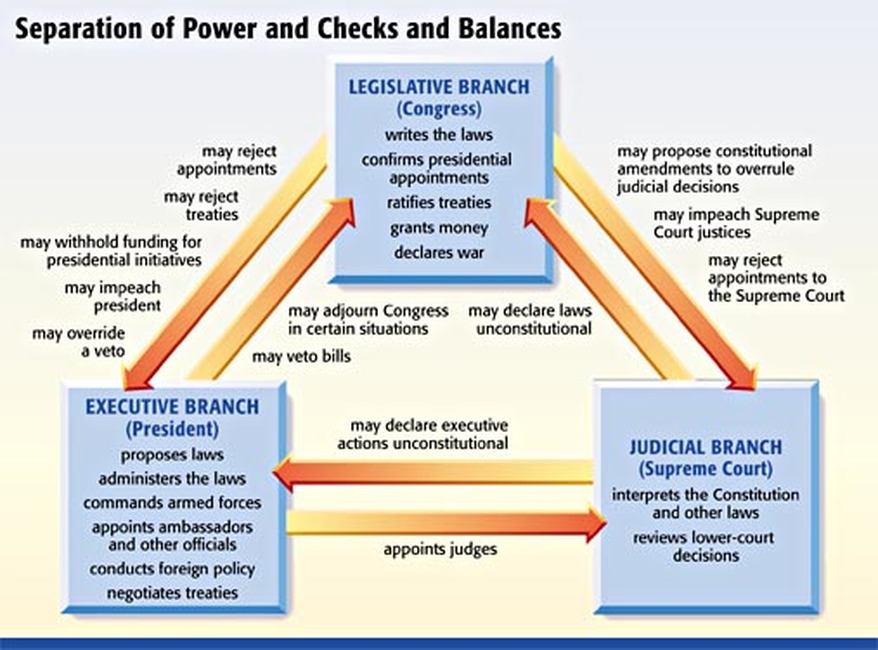
Attorney General Barr: Checks and Balances Are Unbalanced

The following is an excerpt from a speech given by Attorney General Barr earlier this month to the Federalist Society’s National Lawyers Convention. In the speech, Barr expands on imbalances which have developed over time which he claims have weakened the office of the President so that it cannot properly balance against the Legislative and Judicial branches. He has some insightful things to say, so stick with it. I’m not sure buy the entire argument, but there is a lot of truth in here.

The consensus for a strong, independent Executive arose from the Framers’ experience in the Revolution and under the Articles of Confederation.  They had seen that the War had almost been lost and was a bumbling enterprise because of the lack of strong Executive leadership.  Under the Articles of Confederation, they had been mortified at the inability of the United States to protect itself against foreign impositions or to be taken seriously on the international stage.  They had also seen that, after the Revolution, too many States had adopted constitutions with weak Executives overly subordinate to the Legislatures.  Where this had been the case, state governments had proven incompetent and indeed tyrannical.

From these practical experiences, the Framers had come to appreciate that, to be successful, Republican government required the capacity to act with energy, consistency and decisiveness.  They had come to agree that those attributes could best be provided by making the Executive power independent of the divided counsels of the Legislative branch and vesting the Executive power in the hands of a solitary individual, regularly elected for a limited term by the Nation as a whole. As Jefferson put it, ‘[F]or the prompt, clear, and consistent action so necessary in an Executive, unity of person is necessary….”

While there may have been some differences among the Framers as to the precise scope of Executive power in particular areas, there was general agreement about its nature.  Just as the great separation-of-powers theorists– Polybius, Montesquieu, Locke – had, the Framers thought of Executive power as a distinct specie of power.  To be sure, Executive power includes the responsibility for carrying into effect the laws passed by the Legislature – that is, applying the general rules to a particular situation.  But the Framers understood that Executive power meant more than this.

It also entailed the power to handle essential sovereign functions – such as the conduct of foreign relations and the prosecution of war – which by their very nature cannot be directed by a pre-existing legal regime but rather demand speed, secrecy, unity of purpose, and prudent judgment to meet contingent circumstances.  They agreed that – due to the very nature of the activities involved, and the kind of decision-making they require – the Constitution generally vested authority over these spheres in the Executive.  For example, Jefferson, our first Secretary of State, described the conduct of foreign relations as “Executive altogether,” subject only to the explicit exceptions defined in the Constitution, such as the Senate’s power to ratify Treaties.

A related, and third aspect of Executive power is the power to address exigent circumstances that demand quick action to protect the well-being of the Nation but on which the law is either silent or inadequate – such as dealing with a plague or natural disaster.  This residual power to meet contingency is essentially the federative power discussed by Locke in his Second Treatise.

And, finally, there are the Executive’s powers of internal management.  These are the powers necessary for the President to superintend and control the Executive function, including the powers necessary to protect the independence of the Executive branch and the confidentiality of its internal deliberations.  Some of these powers are express in the Constitution, such as the Appointment power, and others are implicit, such as the Removal power.

One of the more amusing aspects of modern progressive polemic is their breathless attacks on the “unitary executive theory.”  They portray this as some new-fangled “theory” to justify Executive power of sweeping scope. In reality, the idea of the unitary executive does not go so much to the breadth of Presidential power.  Rather, the idea is that, whatever the Executive powers may be, they must be exercised under the President’s supervision.  This is not “new,” and it is not a “theory.”  It is a description of what the Framers unquestionably did in Article II of the Constitution.

After you decide to establish an Executive function independent of the Legislature, naturally the next question is, who will perform that function?  The Framers had two potential models. They could insinuate “checks and balances” into the Executive branch itself by conferring Executive power on multiple individuals (a council) thus dividing the power.  Alternatively, they could vest Executive power in a solitary individual.  The Framers quite explicitly chose the latter model because they believed that vesting Executive authority in one person would imbue the Presidency with precisely the attributes necessary for energetic government.  Even Jefferson – usually seen as less of a hawk than Hamilton on Executive power – was insistent that Executive power be placed in “single hands,” and he cited the America’s unitary Executive as a signal feature that distinguished America’s success from France’s failed republican experiment…

I am concerned that the deck has become stacked against the Executive.  Since the mid-60s, there has been a steady grinding down of the Executive branch’s authority, that accelerated after Watergate.  More and more, the President’s ability to act in areas in which he has discretion has become smothered by the encroachments of the other branches.

When these disputes arise, I think there are two aspects of contemporary thought that tend to operate to the disadvantage of the Executive.

The first is the notion that politics in a free republic is all about the Legislative and Judicial branches protecting liberty by imposing restrictions on the Executive.  The premise is that the greatest danger of government becoming oppressive arises from the prospect of Executive excess.  So, there is a knee-jerk tendency to see the Legislative and Judicial branches as the good guys protecting society from a rapacious would-be autocrat.

This prejudice is wrong-headed and atavistic.  It comes out of the early English Whig view of politics and English constitutional experience, where political evolution was precisely that.  You started out with a King who holds all the cards; he holds all the power, including Legislative and Judicial.  Political evolution involved a process by which the Legislative power gradually, over hundreds of years, reigned in the King, and extracted and established its own powers, as well as those of the Judiciary.  A watershed in this evolution was, of course, the Glorious Revolution in 1689…

The second contemporary way of thinking that operates against the Executive is a notion that the Constitution does not sharply allocate powers among the three branches, but rather that the branches, especially the political branches, “share” powers.  The idea at work here is that, because two branches both have a role to play in a particular area, we should see them as sharing power in that area and, it is not such a big deal if one branch expands its role within that sphere at the expense of the other.

This mushy thinking obscures what it means to say that powers are shared under the Constitution.  Constitution generally assigns broad powers to each of the branches in defined areas.  Thus, the Legislative power granted in the Constitution is granted to the Congress.  At the same time, the Constitution gives the Executive a specific power in the Legislative realm – the veto power. Thus, the Executive “shares” Legislative power only to the extent of the specific grant of veto power.  The Executive does not get to interfere with the broader Legislative power assigned to the Congress.

In recent years, both the Legislative and Judicial branches have been responsible for encroaching on the Presidency’s constitutional authority.  Let me first say something about the Legislature

A prime example of this is the Senate’s unprecedented abuse of the advice-and-consent process.  The Senate is free to exercise that power to reject unqualified nominees, but that power was never intended to allow the Senate to systematically oppose and draw out the approval process for every appointee so as to prevent the President from building a functional government.

Yet that is precisely what the Senate minority has done from his very first days in office.  As of September of this year, the Senate had been forced to invoke cloture on 236 Trump nominees — each of those representing its own massive consumption of legislative time meant only to delay an inevitable confirmation.   How many times was cloture invoked on nominees during President Obama’s first term?  17 times.  The Second President Bush’s first term?  Four times.  It is reasonable to wonder whether a future President will actually be able to form a functioning administration if his or her party does not hold the Senate.

Congress has in recent years also largely abdicated its core function of legislating on the most pressing issues facing the national government.  They either decline to legislate on major questions or, if they do, punt the most difficult and critical issues by making broad delegations to a modern administrative state that they increasingly seek to insulate from Presidential control.  This phenomenon first arose in the wake of the Great Depression, as Congress created a number of so-called “independent agencies” and housed them, at least nominally, in the Executive Branch.  More recently, the Dodd-Frank Act’s creation of the Consumer Financial Protection Branch, a single-headed independent agency that functions like a junior varsity President for economic regulation, is just one of many examples.

Of course, Congress’s effective withdrawal from the business of legislating leaves it with a lot of time for other pursuits.  And the pursuit of choice, particularly for the opposition party, has been to drown the Executive Branch with “oversight” demands for testimony and documents.  I do not deny that Congress has some implied authority to conduct oversight as an incident to its Legislative Power.  But the sheer volume of what we see today – the pursuit of scores of parallel “investigations” through an avalanche of subpoenas – is plainly designed to incapacitate the Executive Branch, and indeed is touted as such. ..

Click here to read the entire speech at the Dept. of Justice website.

Related:

Intellectual Takeout: The Deep State – The Headless Fourth Branch of Government

EFF: Ending Government Use of Face Surveillance

The Electronic Frontier Foundation (EFF) has launched a new campaign called About Face to help communities call for an end to government use of face surveillance. With the recent announcement that facial recognition is coming to Sea-Tac airport, you can see that face surveillance is becoming more and more prevalent in America.

…Many forms of biometric data collection raise a wealth of privacy, security, and ethical concerns. Face surveillance ups the ante. We expose our faces to public view every time we go outside. Paired with the growing ubiquity of surveillance cameras in our public, face surveillance technology allows for the covert and automated collection of information related to when and where we worship or receive medical care, and who we associate with professionally or socially.

Many proponents of the technology argue that there is no reasonable expectation of privacy when we spend time in public, and that if we have nothing to hide, we have nothing to fear. EFF is not alone in finding this argument meritless. In his recent majority opinion in the watershed Carpenter v. United States (2018), Supreme Court Chief Justice John Roberts wrote: “A person does not surrender all Fourth Amendment protection by venturing in the public sphere.” In a recent Wired interview, Attorney Gretchen Greene explains: “Even if I trust the government, I do care. I would rather live in a world where I feel like I have some privacy, even in public spaces.” Greene goes on to identify the inherent First-Amendment concerns implicated by government use of face surveillance: “If people know where you are, you might not go there. You might not do those things.”

Like many of us, Greene is particularly concerned about how the technology will impact members of already marginalized communities. “Coming out as gay is less problematic professionally than it was, in the US, but still potentially problematic. So, if an individual wants to make the choice [of] when to publicly disclose that, then they don’t want facial recognition technology identifying that they are walking down the street to the LGBTQ center.” These concerns are not limited to any one community, and the impacts will be felt regardless of intent. “We’re not trying to stop people from going to church, we’re not trying to stop them from going to community centers, but we will if they are afraid of [the consequence] in an environment that is hostile to, for instance, a certain ethnicity or a certain religion…”

Click here to read the entire article at EFF.org.

AmPart: Why Intel Matters

Yesterday, we posted another article from American Partisan on building an intelligence fusion center for your group. Today, we post an article which Sam Culper of Forward Observer wrote for American Partisan entitled The Decision Advantage: Why Intel Matters. Sam lays out why it is so important to be able to gather information and produce intelligence.

Several years ago, I had the great opportunity to train at an elite facility in the Carolinas. Throughout the training sessions, our instructor spoke of the ‘psychological advantages’ of why and how we do things in a gunfight. The goal of these courses wasn’t just to produce individuals who can shoot, but to graduate individuals who can think and shoot — in other words, to teach people to make sound decisions in a high stress environment like a gunfight.

Close your eyes and put yourself momentarily in a gunfight; it doesn’t matter if you choose an active shooter situation at your work or you wind up on some side street in Baghdad. What goes through your mind as you realize someone is shooting at you? Where is your nearest cover? Where is the shooter? Where are your teammates? How many shooters are there? Should you fight through the ambush?

Your brain is trying to process very quickly lots of different operations, which is why most people freeze in a situation like this. Overwhelmed by this massive problem it’s never seen before, the brain just shuts down. It doesn’t know what to do or how to respond. It’s not fight or flight — it’s fight, flight, or freeze. Humans are generally good at solving problems that we’ve solved before, but relatively few of us are good at solving problems they’ve never encountered. This is why we train.

Now let’s take this same concept — that access to information helps you to maintain situational awareness and make better decisions — and move it up one level. Aside from a beating heart, the brain is the most important part of you, and the brain is the most important part of an organization. A preparedness group, a community security team, or neighborhood watch needs a brain: a command center where information is received and intelligence is produced. Just like we can’t make sound decisions in a firefight without access to information, we can’t make sound decisions for our security as a family, group, or community without similar access to information. You’d never go into a firefight wearing a blindfold, so why would anyone go into an emergency situation without knowing how to collect timely intelligence information? It seems like a very rudimentary concept — that navigating a complex threat environment requires the ability to gather tactical intelligence on what’s going on beyond your line of sight — yet many Americans are prepared to remain blindfolded.

Let’s go back to an infrequent but still likely scenario — there’s civil unrest following a natural disaster. Think Hurricane Katrina. There’s no power, no public utilities, catastrophic damage, and lots of needy people, many of whom are out looking for targets of opportunity. If we’re interested in the security of our family and/or community then we need to gather intelligence beyond your line of sight and hearing ability; anything less and we should consider ourselves blindfolded, which would be a mistake of our own doing.

I’d hate to beat a dead horse like the OODA Loop, but it does bear repeating. The OODA Loop concept was developed by Col. John Boyd (USAF, Ret.), a fighter pilot interested in how his pilots could make better and faster decisions while in a dog fight.  OODA stands for Observe, Orient, Decide, Act, and it describes the process by which humans make decisions. (Observing in this case is really a misnomer. We need to be observing, listening, and sensing. We also need to ensure that we’re connected with others who are also observing, listening, and sensing.)

The ultimate goal today — that goes doubly for combat shooters — is how to speed up our own OODA Loops while disrupting the enemy’s OODA, thus slowing down his decision-making process. In the case of intelligence, what we’re achieving by speeding up our OODA Loop is a ‘decision advantage’ for our commander or decision-makers.

Click here to read the entire article at American Partisan.

AmPart: Building Your ACE/Fusion Center

We’ve heard a lot in the past from Forward Observer about building up your intelligence capabilities. Just in case you dismissed that as one organization crying out in the wilderness, here is an article from Gray Man at American Partisan on how to build an analysis control element (ACE) for analyzing the information that you have collected and turning it into actionable intelligence, whether that is for a disaster, civil unrest, or other purpose.

In the intelligence world, we have to coordinate all of the intelligence coming in, obviously. Intelligence drives the mission. In the civilian world, you could stick with that or change it to “information dictates action”.

In order to coordinate and analyze the information coming in, you’ll do yourself a favor to set up what is called an analysis control element (ACE). You could also refer to it as your “fusion” center, seeing as you should be able to fuse together and analyze all of the intelligence you collect and compile it into useful products to drive your activities. All-source, for my current purposes, consists of using HUMINT and SIGINT to the best of your abilities.

HUMINT is human intelligence, intelligence gained by interrogation, elicitation, debriefing, source running, surveillance, reconnaissance, tradecraft, etc. Basically, you’re using yourself (your brain, ears, eyes and your words) and other people to collect intelligence.

SIGINT is signals intelligence, and covers a wide array of electronic intelligence collection techniques. This includes things like electronic surveillance, hacking, wiretapping, etc. For our purposes, it involves monitoring radio traffic and listening in on signals using basic AM/FM radio, satelitte radio, shortwave receivers and police scanners and if you’re so inclined, CBs and ham. You’re going to want to visit the Brushbeater website by NCScout for the best SIGINT information available.

In order to build your ACE, you need to have some equipment. There is a bare minimum amount of equipment you’ll need in order to have what I would call a functional ACE.

Police scanner. My recommendation mirrors that of several other bloggers. That is the Uniden Home Patrol II scanner. Use this as part of your early warning system (EWS).

A decent AM/FM radio. This is good for open source radio news collection and some weather reports. Another point for your EWS.

Shortwave receiver. I recommend the GP-5. Credit for that recommendation goes to NCScout. That’s three pieces of EWS gear.

– Topographical and street maps of your AO and any AO relevant to you. 24 inches by 36 inches is a good size. Check this piece on topo maps recently posted by our own NCScout. USGS Store and MyTopo are two other good sources for maps. You need to know the terrain features and routes in all relevant AOs. Get some Duralar plastic film or something similar to create overlays using dry erase markers so you aren’t writing on the maps themselves.

– Get some folders and start keeping files on relevant people, places and things in your AO. A police chief who sees himself as an overlord as opposed to a public servant is a good subject to keep a file on. A nearby neighborhood with a history of drugs and violence would be as well. Don’t just keep files on potential adversaries though. Keep files on people who might be sympathetic to your cause and purposes for future use.

– Get a binder and keep track of current and potential sources of information. This will help when you have a specific intelligence gap you need filled, and you can thumb through your sources and see who can provide that information to you. It’s also useful when deconflicting sources. You don’t want the same person telling you and your neighbors multiple different stories just to gain favor with everyone.

– Obviously I would recommend a good laptop with reliable internet access. This will enable use of Google Earth and other mapping systems, open source intelligence (OSINT) collection via the web, etc. I’m sure no more explanation is required as to why you’d like to have a web-connected computer in your ACE.

Obtain a copy of FM 2-22.3. This is the US Army manual on HUMINT operations.

– Newspapers are generally slow and full of propaganda, but I can’t tell you how much OSINT I was able to collect from newspapers, especially during my time in the Far East. If you’re so inclined, subscribe to some, online or on actual paper.

– If you’ve got the budget and skills, CB and ham are great options for SIGINT collection and I highly recommend you obtain some capabilities in those areas. Another EWS force multiplier.

Click here to read the entire article at American Partisan. And you can read and learn plenty more about intelligence collection and analysis at ForwardObserver.com.

OG Ham: The Transmitters of Freedom Get a Little Louder

In a follow-up to his previous article The Transmitters of Freedom Should Be Turned Back On, Chris at Off Grid Ham has some good and bad news about short wave broadcasting and a little on who is doing what to whom.

The Transmitters of Freedom Get a Little Louder

shortwave broadcasting

STOCK PHOTO.

First, the bad news…

Shortwave broadcasting is not dead, it’s just being kept alive by the wrong people. Shortwave broadcasting is almost exclusively the domain of sleazy oppressive governments and religious outliers. Communist-run Radio China International took over some of Radio Australia’s old frequencies when Australia discontinued their international shortwave service. And here’s something that should make shortwave fans seethe: The savings from shutting down shortwave saved the Aussie government…wait for it…was less than two million dollars.

That’s right. To save what isn’t even a budget rounding error, the Australian government killed shortwave to tens of millions of people. They probably could have raised that money from private donations.

When a pro-democracy voice leaves the platform, someone will step in to fill the vacuum. That “someone” is usually a bad actor. It’s unlikely shortwave broadcasting will ever completely die. It’s also unlikely shortwave will ever go back to the glory days no matter how obvious its practicality may be. Expect to see oppressive governments increase their presence on the HF bands at the same rate democracies abandon them.

The BBC increases shortwave broadcasting to disputed Kashmir.

The victims of tyrants, socialism, communism, etc., still clamor for the news of truth and freedom. They unfortunately have few options due to the rise of the internet and subsequent decline of shortwave broadcasting. Old school analog AM radio may seem like a quaint anachronism, but unlike the internet it requires very little infrastructure and is difficult to defeat.

The BBC has increased –yes, increased– shortwave broadcasting to the Kashmir territory in Asia. The backstory is somewhat complicated, but the short version is that India, Pakistan, and China each control a portion of the area. All three nations dispute the territorial claims of the others. India shut off the internet, some of the media, and phone service to the area.

To fill the information void, the BBC added one hour and forty five minutes of programming to the region. While this may not sound like much, put yourself in the people of Kashmir’s shoes. If you were living under a media blackout, having nearly two extra hours of uncensored news would be deeply meaningful.

Dissidents use shortwave broadcasting to reach Hong Kong and mainland China.

Sound of Hope started as an effort to bring homeland news to Chinese people living in the United States. It  has grown into a full-blown pro-democracy shortwave broadcasting network beaming to mainland China and Hong Kong. They have even found a way to evade the jamming of their programming by using a network of small transmitters placed in strategic places. Sound of Hope moves its signal to whatever transmitters are least effected by the jamming. It’s an effective system.

As one of the few media outlets that can defeat communist censorship, Sound of Hope has become a significant player in supporting the pro-democracy demonstrations in Hong Kong.  Sound of Hope is not sponsored or funded by any government. It is run mostly by volunteers, many of whom are placing themselves at great personal risk by helping the network. It should be a national embarrassment that a group of volunteers with little money are doing what large governments deemed “too expensive” and “ineffective”…

Click here to read the entire article at Off Grid Ham.

AmPart: Training – It Takes Work

This is a little reminder from NC Scout at American Partisan that you can’t just buy some stuff and say that you’ll be ready when disaster strikes and you need to use it. You need to train with your gear to find out what it and you can do together, and what may need to be tweaked or improved.

Training Notes: It Takes Work

Training Notes: It Takes Work!

We’ve all heard the people who say “I’ll be ready when the time comes!” or “They better not come to my front door!”

I got news for you, the time has come, and they are on your front door. Maybe not physically, yet, but that’s coming. If the lessons from Virginia are a bellwether for the near future, the communist machine at work will not allow American voices to win a so-called election again. And they don’t have to physically come to your door, because they can just legislate your rights away and you’ll do nothing. You’re a rule follower, and they make the rules.

So if there’s anything to objectively be gained from the legitimacy of government being ripped away in public fashion, its that the time has indeed come. We are living in an area absent the rule of law. The fantasy land nonsense of people running around in glorious combat and living in a Rothbardian voluntarist paradise is just that- an escapist fantasy that in no way mimics real societal breakdowns. But when you’ve got a very clear picture of a dual system of justice coupled with a common view that these people will never see punishment, you are indeed living without a rule of law. The only question then that should remain is what happens now that the velvet glove has exposed the iron fist? Neither legitimacy nor objectivity can be regained once lost. A failure of ruling hegemony thus requires force.

Do not forget that Brennan was a declared member of the communist party before joining the CIA. And of the feeder groups indoctrinating minds into the tenets of Marxism was the SDS, with their mantra of “Bring the War Home!”; code for invading the US with populations (in their logic) marginalized or exploited by US policy. Top among them, Central and South America. Ortega, Castro and Guevara are heroes. Groomed by the University system, Brennan finds himself atop the very bureaucracy created to entrench these communists for an eventual overthrow of the US government. These people are desperate to remain in control and they want you gone.

That’s outside our realistic area of influence, but does not ignore what we indeed can do.

What’s to be done on our end is preparing the mass base and guerrilla auxiliary for the next step; training and equipping the people in your area. The Left has indeed been doing that for some time now. Those networks need building, the information exchanged, and working hard to perfect the techniques now in order to save lives later.

In the last Advanced RTO it was commented to me by a longtime Extra-class ham, Engineer and Appleseed Instructor that the more covert ends of the communications training pipeline- data bursts, directional transmitting and physical encryption– takes a large amount of time just to comprehend let alone the training time to perfect. Far more than what can be done in just one weekend. And the same could be said of pretty much anything else I cover in my classes. I give you the basics, but it’s up to you to practice, perfect, and most critical, share it.

Making things work in the real world are the only way to continue to develop those skills. Two of the students from the last RTO and Advanced RTO Courses are doing exactly that, commenting,

Hey, I got the antenna up and working. DVM and I were able to make contact on 80M at around 1630. He has a different HF setup than I do – different antenna and less power, and I think the F layer was not helping at that time – it was a pretty weak signal. With the antenna I built (I built the same one you used in class) and pushing 100W, I was able to make a contact in GA on 40M very clearly. I also heard plenty of people from NY and CT to FL to OH and Chicago.

That’s regional capability that they’re actively creating, that they otherwise may not have been able to achieve. And most important, they’ve got the proper context to use those skills that they definitely won’t get anywhere else. For the people that we’ve all heard saying “I’ll be ready when the time comes”, if that’s your attitude, no, you won’t. All of this is hard enough when conditions are good. If you haven’t been actively training, been sitting on the couch living in a fantasy about fighting the good fight against the Reds while doing literally nothing but wasting time, you will reap exactly the results you’ve put into it. If it were easy, everyone would do it.

Take control of your own destiny. Get trained, get supplied, whether that’s arms, ammo, magazines, food or medical gear, and don’t let it be wasted on you alone.

Read the entire article by clicking here.

Liberty Blitzkrieg: Algorithmic Feudalism (Tech Giant Evil)

Michael Krieger of Liberty Blitzkrieg has written another good article, this one on the dangers that the algorithms used by tech giants pose to our very ability to think. Are you sure your thoughts are your own when every interaction online is being used to present the ideas that are most profitable to those with the power?

Algorithmic Feudalism

…It’s important to note that while much of the recent focus on tech giants revolves around market dominance and anti-competitiveness, the real danger posed is far more extensive. Particularly since the post-election “panic of 2016,” these companies have begun to more earnestly morph into digital information gatekeepers in the name of empire and the national security state.

Day by day, tweaked algorithm by tweaked algorithm, and with each new thought criminal banished from major digital platforms, we’ve seen not only dissident views marginalized, but we’ve also lost a capacity to access information we’re looking for should tech company CEOs or their national security state partners deem it inappropriate. The powers that be have determined the internet permitted too much freedom of thought and opinion, so the tech giants stand ready to bluntly throw the hammer down in order to reverse that trend and regain narrative control. The algorithm will be used to get you in line, and if you don’t comply, the algorithm will destroy you.

More from TruthDig:

Stiegler believes that digital technology, in the hands of technocrats whom he calls “the new barbarians,” now threatens to dominate our tertiary memory, leading to a historically unprecedented “proletarianization” of the human mind. For Stiegler, the stakes today are much higher than they were for Marx, from whom this term is derived: proletarianization is no longer a threat posed to physical labor but to the human spirit itself…

Stiegler firmly believes that a distinction must always be upheld between “authentic thinking” and “computational cognitivism” and that today’s crisis lies in confusing the latter for the former: we have entrusted our rationality to computational technologies that now dominate everyday life, which is increasingly dependent on glowing screens driven by algorithmic anticipations of their users’ preferences and even writing habits (e.g., the repugnantly named “predictive text” feature that awaits typed-in characters to regurgitate stock phrases)… As Stiegler’s translator, the philosopher and filmmaker Daniel Ross, puts it, our so-called post-truth age is one “where calculation becomes so hegemonic as to threaten the possibility of thinking itself.” 

This is the true crux of what we’re dealing with, and so we find ourselves at a terrifying transition point in the entire historical human experience should we fail to correct it. As a consequence of their dominant market shares in core areas of our modern digital world like e-commerce (Amazon), human-to-human communication (Facebook) and information access (Google), tech giants now have the capacity to replace human curiosity and thought with opaque and ever-changing algorithms…

The internet was supposed to free information while connecting people and ideas across borders. This promise is being lost with each passing day, and rectifying the situation is one of the most significant challenges we face. Should we fail, we can look forward to a future where humanity consists of little more than digitally lobotomized automatons responding like lab rats to algorithms created by tech CEOs and their national security state partners.

Click here to read the entire article at Liberty Blitzkrieg.

WaPo: Statistician Thought Gun Control Was the Answer. Then She Did Research.

This article is from an opinion piece at the Washington Post by Leah Libresco – a statistician and writer for news site FiveThirtyEight. At the WaPo site, her more logical article is preceded by an emotional video about how guns must be banned. There are links in the article below to some of her research at FiveThirtyEight, including some methodology for her results. When you look at the data, the vast majority of gun control proposals make no sense.

I used to think gun control was the answer. My research told me otherwise.

Before I started researching gun deaths, gun-control policy used to frustrate me. I wished the National Rifle Association would stop blocking common-sense gun-control reforms such as banning assault weapons, restricting silencers, shrinking magazine sizes and all the other measures that could make guns less deadly.

Then, my colleagues and I at FiveThirtyEight spent three months analyzing all 33,000 lives ended by guns each year in the United States, and I wound up frustrated in a whole new way. We looked at what interventions might have saved those people, and the case for the policies I’d lobbied for crumbled when I examined the evidence. The best ideas left standing were narrowly tailored interventions to protect subtypes of potential victims, not broad attempts to limit the lethality of guns.

I researched the strictly tightened gun laws in Britain and Australia and concluded that they didn’t prove much about what America’s policy should be. Neither nation experienced drops in mass shootings or other gun related-crime that could be attributed to their buybacks and bans. Mass shootings were too rare in Australia for their absence after the buyback program to be clear evidence of progress. And in both Australia and Britain, the gun restrictions had an ambiguous effect on other gun-related crimes or deaths.

As for silencers — they deserve that name only in movies, where they reduce gunfire to a soft puick puick. In real life, silencers limit hearing damage for shooters but don’t make gunfire dangerously quiet. An AR-15 with a silencer is about as loud as a jackhammer. Magazine limits were a little more promising, but a practiced shooter could still change magazines so fast as to make the limit meaningless.

Opinion | The Washington Post Editorial Board appeals to Trump and Congress to stand up to the gun lobby and prevent mass shootings. (The Washington Post)

As my co-workers and I kept looking at the data, it seemed less and less clear that one broad gun-control restriction could make a big difference. Two-thirds of gun deaths in the United Statesevery year are suicides. Almost no proposed restriction would make it meaningfully harder for people with guns on hand to use them. I couldn’t even answer my most desperate question: If I had a friend who had guns in his home and a history of suicide attempts, was there anything I could do that would help?

By the time we published our project, I didn’t believe in many of the interventions I’d heard politicians tout. I was still anti-gun, at least from the point of view of most gun owners, and I don’t want a gun in my home, as I think the risk outweighs the benefits. But I can’t endorse policies whose only selling point is that gun owners hate them. Policies that often seem as if they were drafted by people who have encountered guns only as a figure in a briefing book or an image on the news.

Instead, I found the most hope in more narrowly tailored interventions. Potential suicide victims, women menaced by their abusive partners and kids swept up in street vendettas are all in danger from guns, but they each require different protections.

Even the most data-driven practices, such as New Orleans’ plan to identify gang members for intervention based on previous arrests and weapons seizures, wind up more personal than most policies floated. The young men at risk can be identified by an algorithm, but they have to be disarmed one by one, personally — not en masse as though they were all interchangeable. A reduction in gun deaths is most likely to come from finding smaller chances for victories and expanding those solutions as much as possible. We save lives by focusing on a range of tactics to protect the different kinds of potential victims and reforming potential killers, not from sweeping bans focused on the guns themselves.

Zero Hedge: Ukraine Indictment Claims $7.4 Billion Obama/Democrat-Linked Laundering

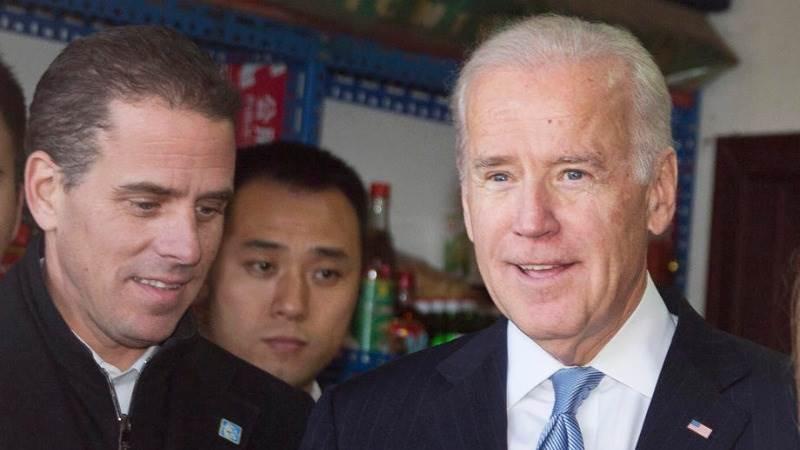
This article comes from Zero Hedge, relating an indictment by Ukraine’s Prosecutor General against Burisma Holders, where Hunter Biden held a highly-compensated sinecure. Emphasis below is from the original article.

An indictment drawn up by Ukraine’s Office of the Prosecutor General against Burisma owner Nikolai Zlochevsky claims that Hunter Biden and his partners received $16.5 million for their ‘services’ – according to Ukrainian MP Alexander Dubinsky of the ruling Servant of the People Party.

Dubinsky made the claim in a Wednesday press conference, citing materials from an investigation into Zlochevsky and Burisma.

“Zlochevsky was charged with this new accusation by the Office of the Prosecutor General but the press ignored it,” said the MP. “It was issued on November 14.”

The son of Vice-President Joe Biden was receiving payment for his services, with money raised through criminal means and money laundering,” he then said, adding “Biden received money that did not come from the company’s successful operation but rather from money stolen from citizens.”

…According to Interfax-Ukraine, MP Andriy Derkach announced at the same press conference that deputies have received new materials from investigative journalists alleging that the ‘family’ of ex-President Yanukovych funneled $7.4 billion through American investment firm Franklin Templeton Investments, which they claim have connections to the US Democratic party”…

The son of Templeton’s founder, John Templeton Jr., was one of President Obama’s major campaign donors. Another fund-related character is Thomas Donilon. Managing Director of BlackRock Investment Institute, shareholder Franklin Templeton Investments, which has the largest share in the fund. It is noteworthy that he previously was Obama’s national security advisor,” Derkach added…

Click here to read the entire article at Zero Hedge.