Michael Munger is a Professor of Political Science, Economics, and Public Policy at Duke University and Senior Fellow of the American Institute for Economic Research. In the article Government, Govern Thyself, he argues that the state is always either too weak to do what we want, or so strong it can do whatever it wants.
In January 2014 then-President Barack Obama made a speech in Washington, D.C. In that informal speech, just before a cabinet meeting, he explained he found it necessary to ignore the U.S. Constitution and unilaterally impose his vision of the good society on the nation:
We’re not just going to be waiting for legislation in order to make sure that we’re providing Americans the kind of help they need. I’ve got a pen and I’ve got a phone…
And I can use that pen to sign executive orders and take executive actions and administrative actions that move the ball forward in helping to make sure our kids are getting the best education possible, making sure that our businesses are getting the kind of support and help they need to grow and advance, to make sure that people are getting the skills that they need to get those jobs that our businesses are creating.
Many people on the right complained (I thought correctly) that this was Presidential overreach. To be fair, even the New York Times called the overzealous suppression of information and prosecution of whistleblowers “a stain on Obama’s legacy.”
Now, of course, all my friends on the left are appalled by the actions of the overreach of the Republican administration. Many who were fine with Obama ordering states around on the environment have recently taken a strong interest in the 10th Amendment, worrying about immigration enforcement and sending federal police to Portland and other cities. Understand: this is no partisan disagreement, but an irredeemable flaw in the nature of the state. The modern state is either too weak to do what we want, or so strong it can do whatever it wants.
The problem is often stated recursively. InLuke 4:23, Jesus mocked his skeptical listeners, “Physician, heal thyself.” The audience doubted Jesus’ claim that he was the messiah, because “Is not this Joseph’s son?” Just some local kid putting on airs and getting above his raisin’. Jesus’ taunting response was, in effect, “Nobody wants a sick physician, or a skinny cook, right?”
There are other observations in this vein; perhaps the most famous is that of the Roman satirist Juvenal. Around 100 C.E. he wrote about a problem of making sure someone does the right thing, even if the boss isn’t watching. His example (it was a satire) focused on ensuring the sexual fidelity of wives:
I know well the advice and warnings of my old friends: “Put on a lock and keep your wife indoors.” Yes, and who will ward the warders? They get paid in kind for holding their tongues as to their young lady’s escapades; participation seals their lips. The wily wife arranges accordingly, and begins with them…. (Satire #6)
Juvenal’s question, “Quis custodiet ipsos custodes?” (I’ve seen it translated “Who will ward the warders/guard the guardians?”), and Jesus’ parable, both illustrate the problem with the dual nature of the state. The usual social contract myth endows the state with the duty to enforce all agreements. But who then is to enforce the agreement between citizens and the state? Can the state be both enforcer and a party in the dispute? Physician, heal thyself.
There is of course a long history of just this kind of critique among libertarians, particularly those of us with some anarchist sympathies. One of the most interesting, important, but (to my mind) underrated of these was the late Anthony de Jasay. The origins of government are supposed by our inability to enforce contracts. So we create an entity that specializes in violence, to force everyone to obey their contracts. In Hobbes’ terms, “Covenants, without the sword, are but words.” Of course, once “we” “consent” to this universal contract enforcer, we have some problems. Who is this “we?” It all happened a long time ago. And very few people actually “consented;” all that happened is that we didn’t leave the country. And who will enforce our contract with the violent contract enforcer? Somehow, the government has to govern itself.
According to Jasay, there are two fatal flaws with the “social contract” idea. The first is the “enforceable contracts” justification, and the second is the “limiting Leviathan” problem of self-governance.
If contracts are unenforceable, then who governs the government? If we can’t enforce contracts with equals, how can we trust Leviathan? Jasay compares this magical thinking to “jumping over your own shadow.” As he puts it, “[I]t takes courage to affirm that rational people could unanimously wish to have a sovereign contract enforcer [itself] bound by no contract.” And by “courage” he intends no encomium. Either (1) those who make this claim are contradicting themselves: since we can’t have contracts, we’ll use a contract to solve the problem; or (2) the argument is simply circular: cooperation requires enforceable contracts, but these require a norm of cooperation that makes the state obey the contract. Of course, if there is a norm of cooperation then other contracts are enforceable without the state.
We are on the horns of a dilemma: either the former claim—contracts cannot be enforced—is true, and we cannot conjure enforceable contracts out of a shadow; or the latter claim—people naturally cooperate on their own—is true, and then no state was necessary in the first place. Robert Nozick (1974) put it well: “Tacit consent isn’t worth the paper it’s not written on.”
The second problem highlighted by Jasay is “limiting Leviathan.” Let’s assume the best: state officials genuinely intend to do good. We might make the standard Public Choice claim that officials use power to benefit themselves, but let us put that aside; instead, suppose officials genuinely want to improve the lives of their citizens.
That still means a minarchist state is not sustainable.
Officials, thinking of the society as a collective rather than as individuals with inviolable rights, will immediately discover opportunities to raise taxes, create new programs and new powers that benefit those who, in the minds of the officials, need help. In fact, it is precisely the failure of the Public Choice assumptions of narrow self-interest that ensure this outcome. It might be possible in principle to design a principal-agent system of bureaucratic contract that constrains selfish officials. But if state power attracts those who are willing to sacrifice welfare, even their own welfare, for the “greater good” then the constitutional dams of minarchy are quickly overtopped, and Leviathan floods the land.
I should hasten to add that it need not be true, for Jasay’s claim to go through, that the concept of “greater good” has any empirical content. It is enough that (some) people believe. The true believers will brandish “the greater good” like a truncheon, smashing rules and laws designed to restrain the expansion of state power. No one who wants to do good will pass up a chance to do good, even if it means changing the rules. This process is much like that described by Hayek in “Why the Worst Get on Top,” or Bertrand de Jouvenal’sOn Power.
So, the argument has the same structure, creating a logical dilemma or contradiction. Either
Minarchy is not possible, because it is overwhelmed by the desire to “do good,” which cannot be controlled by the state because it would require officials to limit themselves for moral, not legal reasons, or
No state, minarchist or otherwise, is necessary because people can limit their actions on their own, without the state’s use of coercion.
Jasay is especially scornful of those who would invoke constitutions and “parchment barriers” to protect a minarchist arrangement. A formal state and a constitution are either unnecessary (if people are self-governing) or ineffective (if they are not). Leviathan either cannot survive because everyone opposes it, or else it is illimitable because no one can resist it.
Most people seem to think that the problem with government power is that the wrong people are in office. That’s not right; the problem is that we want to rely on a physician who suffers an illness that cannot be cured.
Bitcoin Manifesto author Allan Stevo has an article at the Mises Institute about how the government would like to track your crypto transactions, as well as ways that can help anonymize your cryptocurrency use – The Government Wants Your Crypto Data. And Lots of It. Don’t be scared off of cryptocurrency just because governments want to control them. It takes some time and effort to understand and take countermeasures. While governments would have you think otherwise, the money you have earned is yours not theirs.
he Venezuelan government recently announced that its Administrative Service for Identification, Migration and Foreigners (SAIME) is now accepting bitcoin as a payment method for passports.
The problem with that is that bitcoin is not anonymous but pseudonymous.
To interact with any government using bitcoin is to reveal to them the wallet you are paying from. The blockchain is public. When commentators like Caitlin Johnstone and Stefan Molyneux or organizations such as the Mises Institute or TOR Foundation ask for bitcoin contributions, one can follow the money with a blockchain explorer to see how much comes in and how it is spent. One can also see who gave it to them if a donor hasn’t exercised some caution in protecting their privacy.
I would never want the Venezuelan government, the US government, or anyone else who might misuse that information to be able to peek into my crypto finances, especially not through a transaction tied to my passport. Who’s to say that the next time I appear at an immigration checkpoint I won’t be flagged for having too fat of a bitcoin wallet or putting money toward some politically incorrect use?
Though the Venezuelan government dedicates a fraction of the resources to spying on its citizens that the US government does to spying on Americans, there is no need to carelessly provide any government with extra personal data. Knowledge in the hands of the state will be used as a weapon in the hands of the state.
On February 6, 2018, Commodity Futures Trading Commission (CFTC) chairman Chris Giancarlo before the US Senate Banking Committee revealed that the US government uses spot exchanges such as Bitstamp, Coinbase, itBit, and Kraken to glimpse into the industry.
Chainalysis, run by Kraken’s cofounder and former COO Michael Gronager, exists to tie personal identity to bitcoin transactions. Their business model is the reduction of other people’s personal privacy, data that they then monetize by selling it to their customers. Far more sinister than Google or Facebook, which at least anonymize data prior to selling it to advertisers, Chainalysis links real-life personal data, including legal name, to a specific wallet. Many blockchain analysis competitors exist.
Coinbase has recently come under fire for having a similar service, Coinbase Analytics, which has a contract with the US Department of Homeland Security. “Coinbase joins a crowded field of cryptocurrency analytics companies – Chainalysis, Elliptic, CipherTrace and others – vying for a piece of the federal pie. Agencies from all corners of the U.S. government regularly contract with crypto intel firms, inking deals for their tracing software worth millions, and sometimes stretching years,” reports Coindesk.
The bitcoin exchanges that KYC (know your customer) their customers are a perfect place for industry data collection to take place. Coinbase could monetize and simplify that data collection process, not only charging fees for their exchange services, but taking it a step further and monetizing their user data, making their users the product. This is especially pernicious in the privacy obsessed, smaller-government realm of cryptocurrency.
How much money did it take for this $8 billion company to sell out crypto consumers to the US government? Government disclosure shows that the contract has a current award amount of $49,000, with potential for another $134,750 total over the next four years.
Coinbase has reassured users that it is only collecting publicly available data about its users, nothing more, and packaging that for government use. Its CEO, Brian Armstrong, has encouraged users not to use bitcoin if they don’t want to be snooped on by Coinbase, but to use privacy coins instead.
Luckily, the marketplace is responding to privacy incursions like this:
There are decentralized exchanges like Bisq that can’t easily be subpoenaed because there is no central entity to subpoena.
There are wallets that can be used to anonymize bitcoin transactions such as Wasabi Wallet, which utilizes a concept known as CoinJoin to anonymize ownership
Bitcoin mixers too are used by some to anonymize transactions.
Additional ways of anonymizing bitcoin purchases exist, such as with cash or through ATMs, which may or may not KYC customers.
We are now witnessing the introduction of “privacy coins.” These are designed to be far more difficult to trace—some might even say impossible—though I long ago learned that the word “impossible” is not really that accurate, as possibility or impossibility is merely a question of will and available resources.
This topic of maintaining privacy in bitcoin transactions is especially pertinent as personal privacy comes under attack.
US Senators Lindsey Graham (R-South Carolina), Tom Cotton (R-Arkansas), and Marsha Blackburn (R-Tennessee) have introduced the “Lawful Access to Encrypted Data Act,” an antiencryption bill that insists that all encryption without a government back door is illegal. To follow such an order would spell the death of encryption. Any encryption with a back door is not actually encryption.
The pseudonymous Scott Alexander of Slate Star Codex was under threat of doxxing by the New York Times and consequently deleted his popular blog out of privacy concerns. The New York Times defended itself by saying it has a policy to identify all people it writes about. Alexander, after a month of silence from the New York Times on the topic, believes the threat has subsided. The callous disregard for privacy remains.
Google and Apple are begging governments to let them use mobile phones to monitor the whereabouts of users in the name of the latest cause against liberty—public health.
As journalist Peter Chawaga has pointed out, “Privacy is becoming one of the most scarce resources in the world.”
If these attacks on privacy were without consequence, then perhaps one might feel better about them, but as the current spate of cancel culture demonstrates—from Central Park Karen to Seattle’s middle finger Karen—merely having a camera turned on a person when they’re showing disagreeable behavior can be enough to shatter the fragile lives that many live. There’s almost a sociopathic hunger to destroy a person intertwined in some of this behavior. How much worse would the impact of that mob of sociopaths be if they also had access to all of a person’s financial data?
It’s a great time for more encryption and more privacy, and an awful time for helping governments or any other organization populate databases that you can guarantee will one day be used heartlessly against you.
Bill White at Survivopedia writes about some of the numbers that aren’t being talked about much related to the current coronavirus pandemic – people with permanent damage who didn’t die – Are We Looking At The Wrong Numbers?
As the second wave of COVID-19 continues sweeping the nation, it is becoming even more politically polarized than ever before.
This is sad to me, that we can’t unite over something that is really not a partisan issue but is affecting us all. Our focus, all of us, should be on doing what is best for the people of our county; and that includes both protecting their health and protecting their ability to provide for their needs, financially speaking. The two are not mutually exclusive.
But that’s not what’s happening. Those on the political left are trying to use the pandemic to make Trump and Republican governors look bad, focusing on the rise in cases, as we wade through the second surge. It doesn’t matter that this second surge was part of the plan all along, as the original lockdowns were just about flattening the curve, in their narrative, the surge has to be because of some grave error in judgment on the part of their political enemies.
Then we’ve got the political right, many of whom are focusing on how the left-leaning media is overreacting and overstating the danger of the current situation. Sadly, they aren’t serving us any better, when they’re saying that we shouldn’t have to be wearing masks. Yes, I understand their position that the government is infringing on our liberty, but at the same time, I’ve got to say that there’s enough evidence that masks help save lives, that it makes sense to do so.
The argument that’s being used is that only one percent of the people die of COVID-19. But just what do they mean by “one percent?” If they’re talking 1% of the people who come down with it, the numbers don’t jive. We’ve had 4,170,000 people come down with the disease and 147,342 deaths as of this writing. That works out to 3.53% of total cases ending up in death.
But we need to realize that 3.53% is a low number. Even if nobody else comes down with the disease, some of the 2,042,559 active cases will result in death. We just don’t know how many. If we divide the number of people who have died by the total number of closed cases, we get 6.9%. That’s probably too high. When all is said and done, the death toll will probably end up being somewhere between those two percentages; we just don’t know where.
On the other hand, if they’re talking about one percent of the total population dying from COVID-19, then we’re talking 3.31 million people. Since we have no idea of how many total people are going to come down with the disease, that number is not outside the realm of possibility. I personally don’t think it will get that bad, but I can’t discount the possibility…
o start with, for every person who dies of COVID-19, there are 19 others who require hospitalization. That’s a hard number, which can be substantiated by hospital records. So the 147,342 people who have died become 2.8 million who have been hospitalized. Unfortunately, I can’t find any data to substantiate that; as everyone is reporting hospitalizations on a weekly basis, not a cumulative total; and I can’t just add those up, because we don’t know how long any of those people have been in the hospital.
So let’s use that 2.8 million number for now. Supposedly for every person who dies of COVID-19:
18 people will have to live with permanent heart damage
10 people will have to live with permanent lung damage
3 people will end up having strokes
2 people will have to live with chronic weakness and loss of coordination due to neurological damage
2 people will have to live with a loss of cognitive function due to neurological damage
Granted, I’m sure these numbers are preliminary and they will be modified in the future, as our medical community gains more information. But we’re talking about the potential for all of those 2.8 million people having to live with some sort of permanent or semi-permanent disability. And that number is only going to go up, as we’re nowhere near the end of this pandemic if an end actually even exists.
If we take the viewpoint that one percent of the population is going to die of COVID-19, as some are saying, then we’re looking at a total of:
3,311,000 dead
59,598,000 with permanent heart damage
33,110,000 with permanent lung damage
9,933,000 who have strokes
6,622,000 with permanent weakness and lack of coordination
6,622,000 with permanent loss of cognitive function
Obviously, we can’t afford that as a nation. While I’m sure that there will be a considerable amount of overlap, with people having more than one of those symptoms, that just means that those who do have long-term effects will be in that much worse shape. And before you say it will just be old people, I know people in their 20s who have come down with COVID and are still battling these sorts of long-term symptoms two to three months later.
When I say we can’t afford that, I’m referring to the loss in our labor force. While a large percentage of the people who have serious problems with COVID-19 and die are elderly people with underlying health problems, more and more younger people are having serious problems with the disease. Are those young people going to become disabled and end up needing public assistance their whole lives? (continues)
This video comes from intelligence analyst Sam Culper at Forward Observer.
Samuel Huntington’s The Clash of Civilizations (1996) describes a world in disarray following the collapse of the American Empire.
In the latest Forward Observer TV video, I describe what that looks like for the United States, focusing on uncertainty surrounding November elections.
Chuck Hudson, a friend of Daisy Luther of The Organic Prepper, who works at Roper St. Francis Healthcare, Roper Hospital in South Carolina takes time to write about what it is like to work in a COVID ward there. Because some people still believe that COVID-19 is entirely a hoax without any patients or full hospitals, Daisy had to preface with the article with her statement about Chuck being a personal friend of hers, so that people don’t think it’s some kind of planted fake story.
Editor’s Note: This article was written by a personal friend of mine. This isn’t some stranger who wrote to me to share some story that may or may not be true. This is a man I’ve known for years who has dedicated his entire career to caring for the health of others. In this essay, he shares an average day in the COVID ward of the hospital where he works. ~ Daisy
COVID virus has turned the world upside down. From the economy of the planet to pitting neighbor against neighbor and friend against friend. Never mind the violence destroying our cities. We are all dealing with this virus with totally unbelievable numbers, huge numbers of infected people, and a rising death toll.
Yet, I look out my living room window and see green grass, flowers blooming and some kids down the street playing basketball.
And then, I go to work.
The area where our day patients come in is called 2HVT. All 14 rooms of 2HVT are now negative pressure rooms. (Also called isolation rooms, negative pressure rooms help prevent airborne diseases from escaping the room and infecting others.) All the rooms of the old Cardiac ICU, which is attached to our cath lab by a short hall, are now negative pressure rooms. 4 South on the 4th floor is now a COVID unit. 6 south, an old Ortho ward, and 5 South have been converted as well. All these conversions are in the downtown hospital alone. All patient areas of the 3, newer hospitals in the system have been converted to handle COVID patients.
Watching the news here in my new home state of South Carolina, no matter the station, it is the same thing: doom and gloom. More and more infected people from testing, talking heads pointing the finger of blame, and numbers being sensationalized. After all, “If it bleeds it leads.” It’s gotten so bad that I turn on the news just long enough to catch the weather and traffic for the morning drive from Summerville to Charleston.
But enough of that. Let me tell you what it is really like in the COVID step-down unit. This unit is for people not sick enough to need high flow O2 or intubation, yet too sick to go to a “regular” floor. (Like there is a regular COVID floor!) As with any floor, the “permanent “ nurses and techs get morning reports from their night shift counterparts. After getting the reports we start our rounds with the patients.
Wait…no, we don’t just walk into a COVID room.
It takes about 3-5 minutes to gear up before entering a room.
Step 1 put on a set of gloves.
Step 2 Put on impermeable gown.
Step 3 Put on N95 mask.
Step 4 Put on face shield. ( We 3D print the frames for these. And use pieces of acetate we get from Staples. )
Step 6 Put on 2nd set of gloves.
Step 7 Triple check that everything is sealed and in order.
Now…we can go in the room.
We try to allow only 1 person at a time in the room, unless something demands that 2 people are needed. The nurse or tech who goes in the room does not leave the room until they have completed all tasks. If the nurse or techs needs something this is where I come in. If I am not assigned a patient, I run and get things. We are runners. We run and get whatever is needed.
What about emergencies?
Same procedure.
We have Mayday bags stapled to the wall in front of each room. Each of these Mayday bags contains the following:
2 N95’s: small and regular
“Bunny Suit”
Face shield (We 3D print face shields in-house)
6 pairs of separately bagged gloves (sm, med, lg)
Bouffant hat
All of this must be put on prior to entering a room. It is mandatory. Even if the patient is dying.
Very little is talked about…so much to tell.
Even the little things that the patients and the staff endure take a huge toll on us.
A majority of our patients have lost their sense of taste and smell. Some can only sense texture and temperature. This makes it difficult and frustrating for our patients and staff. The food delivered to our COVID patients is left at the “Airlock”. In normal rooms, insulated containers can be used for the food, keeping it hot. However, food in the COVID areas must be served using only paper plates, paper cups, paper serving trays and plastic ware. We have to use a microwave to heat the food just before it goes in the room.
In normal rooms a tech, nurse or CNA brings the food to the patients. In our world, only the assigned nurse or tech brings the food. And it may be a LONG wait due to having to microwave the food just prior to going in. We have to coordinate routine care to keep the number of times a room is entered to a minimum. (I have become an expert at microwaving paper plates of hospital grade food!)
One thing the virus does that many people outside of the medical field don’t know is it interferes with the blood clotting cascade. Believe you me, as a former Medical Lab Tech (MLT) I would LOVE to go over in mind-numbing detail the 12 steps of clotting. The intrinsic and extrinsic pathway that lead to a fibrin strand…”OUCH!” (My wife just tossed a crafts magazine at me. I started describing the steps. In detail.)
So, in addition to damaging the lungs, COVID can cause deep vein thrombosis. It also causes DIC (Disseminated Intravascular Coagulation.) Post mortem exams have revealed up to 30% of early COVID patients had elevated D-Dimer, C-reactive protein and lactate dehydrogenase. All markers for clotting system problems, which has led to death by stroke, even in young people.
Some patients are in denial until the last moment.
Recently, I was helping to discharge a fairly young patient, about the mid to late 40s. As I was getting his history and gathering information on his experience, I asked how he ended up in ICU and then in my area.
He told me he thought he had a summer cold. He thought the whole virus was a hoax and refused to wear a mask. When his wife brought him in he thought it was a bad cold AND an ulcer. He complained of stomach pain, severe diarrhea, and shortness of breath. He was admitted to our COVID floor, still in denial. What he had believed was a stuffed up nose was actually him losing his sense of smell. Then he crashed.
The anesthesiologist did what is called rapid sequence intubation. The patient is given sedative and paralytic drugs. That’s it. Once they are intubated, they are put out.
He told me when they jerked his head back and he saw that the young doctor looking scared though his protective gear he knew then it wasn’t a hoax.
Good news: we ARE saving more than we lose.
Here in Charleston where I work, our average patient stay is 4 days. If they go to the ICU their stay is about double that. In the last 3 weeks we have dropped from 44% to 31% of our inpatients being in for COVID. Our percentage of positive COVID tests is at about 21%. We test EVERY PATIENT that comes in the hospital.
We have a game plan:
Remdesivir
Lovanox
Plasma antibodies from COVID survivors
Intervene and intubate
ECMO: Extracorporeal membrane oxygenation (to treat some patients)
We have a long way to go. We still have shortages of protective gear, but we improvise, adapt and overcome. Up to 170 or so of our teammates, young and not so young, have been out with COVID. Some ended up in the ICU. Our hospital is finding ways to use senior management. A large group of nurses that haven’t been bedside in years are filling in as runners, housekeepers, and patient transport.
This is part of a corporate email from this past week. (Patient sensitive information has been removed.)
Roper St. Francis Healthcare has tested and confirmed that 46 more patients since Tuesday have COVID-19, bringing our total to 3,806 since the beginning of the pandemic.
Once each week, we will provide additional information about our testing and which segments of the population are most affected by the virus.
In the past seven days, 19 percent of our 3,014 COVID-19 tests have been positive, which is down from our 22 percent positive rate during the past 14 days. Our overall positive rate since we started COVID-19 testing is 15 percent. We have 949 tests pending.
Of those testing positive in the past seven days,
– 19 percent are under 29 years old
– 15 percent are 30-39 years old
– 12 percent are 40-49 years old
– 17 percent are 50-59 years old
– 16 percent are 60-69 years old
– 20 percent are over 70 years old
Thirty four percent of those patients have been white, 44 percent have been Black, 5 percent have been Latino and 16 percent have been other.
The areas where we’ve seen the largest number of new cases are North Charleston, Charleston and Summerville.
There have been 3,882,167 cases nationally with a total of 141,677 deaths, according to the federal Centers for Disease Control and Prevention. South Carolina has had 73,101 confirmed cases and 1,203 deaths.
Hero’s? Nah…We signed up for this because we wanted to help.
I’m not going to berate, belittle, or bully anyone over their choice when it comes to personal protective equipment. I am going to ask that you be careful. You do not want someone like me or my old Ranger bud Johnny doing CPR on you. You will end up with damaged ribs.
I’m pretty blessed to be working at Roper St. Francis Healthcare, Roper Hospital. We show up to work each day to care for our patients, and we go home to rest up a little before doing it again the next day. Some of us, myself included, don’t care much for the term “hero”. It is MY job to take care of YOU if you end up in OUR hospital. It is YOUR job to stay healthy, be careful, and be smart about this virus.
For the past couple months, I’ve been hitting some old counterinsurgency standby’s. The last time I read most of the these manuals and books was prior to deployments to Iraq and Afghanistan.
Somehow insurgency followed us back.
Given that the reelection of President Trump is likely to blow wide open these urban insurgencies, it’s long past time for us to begin or continue learning about the cat and mouse of the insurgent and counterinsurgent. In this case, anarchist insurrectionists are trying to foment a broader insurgency against local, state, and federal government.
In his book Counterinsurgency Warfare, author David Galula outlines six strengths and weaknesses that determine the potential for a successful counterinsurgency campaign. I’ll list them below with some brief notes on the current situation.
1. Galula writes that an absence of problems in a country makes insurgency virtually impossible. Since there is no absence of problems — we have both real and artificial problems in this country — an insurgency was virtually inevitable as soon as local, state, and federal governments were weakened, as they are now.
2. Next, a national consensus against insurgents is a strength that this country currently lacks. There’s no national consensus on anything, and there’s substantial support for the insurgents, which strengthens the urban insurgencies.
3. Resoluteness of counterinsurgent leadership is the next strength or weakness. The Trump administration currently has the resolve to wage counterinsurgency, but there’s been opposition from state and local governments. The insurgents’ political and social efforts will focus on degrading the administration’s capacity to execute a counterinsurgency campaign, increasingly so after President Trump’s potential reelection. (The activism against ICE in previous years is a good example.) The Trump administration will face significant problems in instituting a whole-of-government approach, likely leading the administration to take more deliberate or extreme actions, which will increase accusations of fascism.
4. A major factor in any outcome is the counterinsurgents’ knowledge of counterinsurgency warfare. The Trump administration will rely on those with experience in Iraq, Afghanistan, and other places where a shaky counterinsurgency strategy was unevenly applied. Regardless of strategy, defeating urban insurgencies could become a multi-year process in places like Portland and Seattle, as America experiences its own version of the “Irish Troubles” — albeit not an exact comparison.
5. The machine for control of the population includes four factors which a second Trump administration could lack: the political structure (x), the administrative bureaucracy (x), the police (✓), the armed forces (x/✓). If reelected, President Trump will either face a split Congress or a Democratic majority in both the House and Senate, and lack control of the political structure. The Trump administration doesn’t have control of the administrative bureaucracy now and is likely to lack control in a second term. The Trump administration will likely retain control over most federal law enforcement, and is likely to have influence over some local and state law enforcement — that’s certainly less the case in areas where there’s local political support for the insurgencies. Army Secretary Mark Esper and GEN Mark Milley, Chairman of the Joint Chiefs of Staff, last month demurred at the deployment of regular Army troops to confront rioters. Esper and Milley can be replaced with military officials who are more amenable to using the military to put down insurrections, but Democrat-majority Congress would cast doubt on how effective the use of armed forces would be.
6. The sixth and final factor is geographic conditions. These insurrections will primarily occur in urban areas, regardless if they trigger a national insurgency. The most important thing we learned about fighting against urban insurgents in Iraq and Afghanistan is that the counterinsurgency effort can be incredibly disruptive to the city.
Both sides are vying for support of the populace, so the insurgent must develop and propagandize a cause that will garner popular support — this is where the overall effort is won or lost.
These are some initial thoughts on what we could be looking at for at least the next four years, based on Galula’s factors presented in Counterinsurgency Warfare. These are not predictions, of course, but I do hope these initial thoughts are helpful in understanding the future…
A Meet and Greet for Washington Gubernatorial candidate Joshua Freed will be held on Friday, July 31, 2020 at 7:00 pm in The Patriot Barn at 22236 N. Hinzerling Rd, Prosser. If you plan to attend the meet and greet, please RSVP to Frank Ver Mulm so that we know how much food and drink to prepare. Tri-tip, soda, beer and wine will be served.
Joshua and Lindie Freed are college sweethearts and have been married for 23 years.
When Thomas Jefferson wrote the Declaration of Independence, he included in it a list of the colonists’ grievances with the British government. Notably absent were any complaints that the British government infringed upon the freedom of speech.
In those days, speech was as acerbic as it is today. If words were aimed at Parliament, all words were lawful. If they were aimed directly and personally at the king — as Jefferson’s were in the Declaration — they constituted treason.
Needless to say, Jefferson and the 55 others who signed the Declaration would all have been hanged for treasonous speech had the British prevailed.
Of course, the colonists won the war, and, six years afterward, the 13 states ratified the Constitution. Two years after ratification, the Constitution was amended by adding the Bill of Rights. The first ratified amendment prohibited Congress from doing what the colonists never seriously complained about the British government doing — infringing upon the freedom of speech.
James Madison, who drafted the Bill of Rights, insisted upon referring to speech as “the” freedom of speech, so as to emphasize that it preexisted the government. If you could have asked Madison where he believed the freedom of speech came from, he’d have said it was one of the inalienable rights Jefferson wrote about in the Declaration.
Stated differently, each of the signatories of the Declaration and ratifiers of the Bill of Rights manifested in writing their unambiguous belief that the freedom of speech is a natural right — personal to every human. It does not come from the government. It comes from within us. It cannot be taken away by legislation or executive command.
Yet, a mere seven years later, during the presidency of John Adams, Congress enacted the Alien and Sedition Acts, which punished speech critical of the government.
So, how could the same generation — in some cases the same human beings — that prohibited congressional infringement upon speech have enacted a statute that punished speech?
To the some of the framers — the Federalists who wanted a big government as we have today — infringing upon the freedom of speech meant silencing it before it was uttered. Today, this is called prior restraint, and the Supreme Court has essentially outlawed it.
To the antifederalists — or Democratic-Republicans, as they called themselves — the First Amendment prohibited Congress from interfering with or punishing any speech.
Adams’ Department of Justice indicted and prosecuted and convicted antifederalists — among them a congressman — for their critical speech.
When Jefferson won the presidency and the antifederalists won control of Congress, the Federalists repealed the speech suppression parts of the Alien and Sedition Acts on the eve of their departure from congressional control, lest it be used against them.
During the Civil War, President Abraham Lincoln locked up hundreds of journalists in the North who were critical of his war efforts. During World War I, President Woodrow Wilson — whom my alma mater Princeton University is trying to erase from its memory — arrested folks for reading the Declaration of Independence aloud or singing German beer hall songs.
Lincoln argued that preserving the Union was more important than preserving the First Amendment, and Wilson argued that the First Amendment only restrained Congress, not the president. Both arguments have since been rejected by the courts.
In the 1950s, the feds successfully prosecuted Cold War dissenters on the theory that their speech was dangerous and might have a tendency to violence. Some of the victims of this torturous rationale died in prison.
The government’s respect for speech has waxed and waned. It is at its lowest ebb during wartime. Of course, dissent during wartime — which challenges the government’s use of force to kill — is often the most important and timely speech.
It was not until 1969, in a case called Brandenburg v. Ohio, that the Supreme Court gave us a modern definition of the freedom of speech. Brandenburg harangued a crowd in Hamilton County, Ohio and urged them to march to Washington and take back the federal government from Blacks and Jews, whom he argued were in control. He was convicted in an Ohio state court of criminal syndicalism — basically, the use of speech to arouse others to violence.
The Supreme Court unanimously reversed his conviction and held that all innocuous speech is absolutely protected, and all speech is innocuous when there is time for more speech to rebut it. The same Supreme Court had just ruled in Times v. Sullivan that the whole purpose of the First Amendment is to encourage and protect open, wide, robust, even caustic and unbridled speech.
The speech we love needs no protection. The speech we hate does. The government has no authority to evaluate speech. As the framers understood, all persons have a natural right to think as we wish and to say and publish whatever we think. Even hateful, hurtful and harmful speech is protected speech.
Yet, in perilous times like the present, we have seen efforts to use the courts to block the publication of unflattering books. We have seen state governors use the police to protect gatherings of protestors with whose message they agreed and to disburse critical protestors. We have seen mobs silence speakers while the police did nothing.
Punishing speech is the most dangerous business because there will be no end to it. The remedy for hateful or threatening speech is not silence or punishments; it is more speech — speech that challenges the speaker.
Why do folks in government want to silence their opponents? They fear an undermining of their power. The dissenters might make more appealing arguments than they do. St. Augustine taught that nearly all in government want to tell others how to live.
How about we all say whatever we want and the government leaves us alone?
Pastor Joe at Viking Preparedness gives some basic advice to people who are new to trying to get prepared. He starts off with a fake five point list and then gets into some real concepts.
…For the past few month my suspicion is that there might not be an election at all. But let’s look at the factors that are in place:
1) Joe Biden, the Dem candidate, appears to have stage four dementia. Either that, or he is a very good actor. This is another situation where I am questioning WHY? Why would the establishment run Biden (like they ran Clinton), perhaps the worst possible choice if they hope to rally people against Trump and conservatives?
Maybe Trump is meant to stay in office for another four years, because Biden appears to have no capacity to hold the attention of an audience (again, unless his Alzheimer’s is an act). That said, if the economic decline is severe enough into November, the election numbers could still be very close because of the backlash against Trump. Close elections are the easiest for the establishment to manipulate one way or the other.
2) Leftists hate Trump so thoroughly that they would vote for anyone at this point just to get rid of him; but will this fervor be enough to sway moderate Dems to participate if Biden continues his displays of mental frailty?
3) The pandemic lockdowns and viral spread are likely to hit hard by November. Meaning, there is a chance that people will find it difficult to vote at all, unless the votes are handled by mail-in or by electronic means.
4) Electronic or mail-in voting will not be trusted by the public on either side. Whoever wins will be accused of cheating.
5) Civil unrest and violence is almost guaranteed in the lead up to the elections, which could frighten people away from voting booths if they are even in operation.
These factors and more lead me to predict that Election 2020 will be a contested election which ends with Trump staying in office but accused of usurping the democratic process. This outcome is the worst possible outcome and also the most advantageous for the globalist establishment.
The elites are even hinting publicly that this is about to happen. For those of you that have been reading my work for many years, the name “Max Boot” might sound familiar. In my article ‘How Globalists Will Attempt To Control Populations Post Collapse’, published in 2016, I outlined writings by Council on Foreign Relations member Max Boot on the Malaysian Model, a method he describes as the perfect strategy for taking control of a population and destroying an insurgency.
The model calls for the institution of city-sized concentration camps which are used to isolate a rebellion away from the general population. The population in these cities is then subjected to extreme tracking and control measures, while the military is sent out to rural areas to eliminate potential insurgent threats.
Well, Boot is back again, this time writing about how he thinks Donald Trump will try to “hijack” the presidency in 2020.
In an article for the Washington post titled ‘What If Trump Loses But Insists He Won’, Boot outlines a scenario that was “war gamed” by a group called the Transition Integrity Project. The group played out a scenario in which there is a razor thin victory for Joe Biden, followed by actions by Trump to keep control of the presidency through lies and legal wrangling. The group also predicted civil unrest leading to potential “civil war” as the fight over the White House expands.
This article is, I believe, an attempt at predictive programming by the establishment. They are TELLING US exactly what is about to happen. A contested election, civil war, martial law, economic collapse and the US will be destroyed from within. If conservatives actively support unconstitutional levels of federal power or martial law, then the scenario becomes even worse. By forsaking our foundational principles in order to “defeat the left”, we would be handing victory to the globalists. We would be destroying our own movement’s reason for existing while the elites barely have to lift a finger.
The CFR and its long time goal of erasing US sovereignty would then be nearly complete. All that would be left is to ensure they they are the people that get to rebuild America from the ashes of all out domestic conflict and collapse. This cannot be allowed to happen.
I continue to predict that the plan is to destroy the US as we know it and blame conservatives in the process. With so many elites inhabiting Trump’s cabinet, this outcome would be easy for them to engineer. That said, the end game is not in the hands of the elites. It’s in the hands of conservatives.
The temptation for conservatives will be to fully embrace government power in order to stop the leftists, but if we refuse to support martial law measures, if we demand or assert alternative solutions (such as community based security), if we stand by our principles of limited government and if we fight back against the globalists specifically instead of only focusing on the political left, then there is a chance we can stop them from taking control. That said, if we bow to government power and hand over our freedom just to defeat the leftists, then we will lose the greater battle against globalism in the long run.
Chris at Off Grid Ham has an article up, talking about the danger/effect of heat on your batteries. When Your Batteries Are Boiling
Most of the USA is going through a blazing hot summer! Here in the upper Midwest it’s been over 90F/32C every day for almost two weeks. As I write this it’s 87F/31C in Buffalo, New York. That doesn’t sound too bad until you consider that it’s past sundown there, and the average daily July high for Buffalo is only 80F/27C. Most off grid amateurs fuss about battery temperature when it’s cold. Have you ever thought about what heat does to batteries? If you haven’t you should.
The chemistry of heat. battery temperature
How heat effects batteries varies greatly depending on the type of battery, how it is used, and the current going into/out of the battery. Battery chemistry, which is quite complex, is made even more complex by changes in temperature.
In addition to ambient heat, batteries themselves generate heat when they are charged or discharged. So, we have two factors at play. The radio amateur has only limited control over these two factors. Managing heat, to the extent that you can, will give your batteries better performance and a longer service life. battery temperature
Lithium batteries. battery temperature
Few things have benefitted amateur radio like lithium batteries. They are so much lighter and more powerful than their predecessors that the step forward in technology can plausibly be compared to when the transistor replaced the vacuum tube.
But like their ancestors, extreme temperatures effect lithium batteries. Once a lithium reaches 113F/45C, it should not be charged because excessive gas buildup can cause a cell to bulge. Lithiums can be discharged at up to 140F/60C but will lose capacity as they reach the upper limit of their operating range. There is also evidence that the higher the beginning state of charge, the more capacity will be lost as the battery heats up.
All larger lithium batteries have an on-board battery management system (BMS) that controls charging and cell balancing. Usually these electronics will reduce the current or not let you charge or discharge at all outside of acceptable temperature parameters. The high limits may seem generous, but do not underestimate them. Leaving a battery in a car on a hot summer day can easily push it beyond 113F/60C. If you are operating outdoors on a hot day and connect a solar panel to your lithium battery, the ambient temperature plus heat generated by the charge has the potential to exceed established temperature limits. The bottom line is, if your lithium batteries do not already have temperature-compensating circuitry, then you’ll have to monitor battery heat yourself.
AGM/Sealed batteries.
AGM, sealed lead acid, and gel cell batteries are cousins of each other and share similar characteristics. They’re very popular with amateurs due to their relatively low cost and ease of use. battery temperature
The top operating limit for AGM/SLA/gel batteries is 120F/49C. Like lithiums, AGM batteries will have reduced capacity at high temperatures and can also bulge/expand out. Thermal runaway is rare but possible. Overcharging generates heat and AGM batteries are especially sensitive to overcharging, so radio amateurs should be attentive when charging these batteries. A “smart charger” with a temperature probe would be ideal.
AGM-class batteries should not be discharged to less than 50% full. This presents a problem because they lose capacity at high temperatures. So if you have a battery that already has diminished capacity because it is hot, and then have to observe a 50% floor, that doesn’t leave much useful power for your equipment. At the same time, you will have to reduce charge current to avoid further overheating. The end result of all of this is a battery that will need to be charged more often and for longer periods. In a hot environment your AGM battery will for all practical purposes have less than half of its rated capacity. Lastly, long term exposure to heat will cut the service life of an AGM battery by half for every 15F rise above 77F (source)…
C.S. Lewis sets out why he believes in democracy. Believing in God, that is ‘hierarchy’ or ‘inequality within’, is the foundation stone of ‘equality without’ – that is, legal and political equality. Notes below in video description…
This is an illustration of C.S Lewis’ article published in the British magazine called ‘The Spectator’ on 27 August 1943. The Spectator was a weekly magazine and is the oldest continuously published magazine in the English language. You can find the book containing this article here: https://www.amazon.com/Present-Concer…
(0:07) When C.S. Lewis says he is a ‘democrat’, he means with a small ‘d’. (i.e., a person who believes in democracy, not a member of the Democratic Party of the United States). Dictionary meaning 1 below, not 2.
1. An advocate or supporter of democracy. “as a democrat, I accepted the outcome of the referendum”
2. (in the US) a member of the Democratic Party.
(0:16) Rousseau’s great lie was that: “People in their natural state are basically good. But this natural innocence, however, is corrupted by the evils of society.” This view is held almost universally in the world today, which clings to its own ‘righteousness’ just as a drowning man is hesitant to leave a sinking, rickety raft, when offered a short swim to a rescuer’s arms. Once this lie of our “inherent goodness” is abandoned, the truth does not lead to the wrong kind of hopelessness as was feared, but for the first time opens the door to the need of a Saviour. Leaving that raft of false hope can give us freedom. Christianity claims, by contrast, that we were once innocent but are now fallen and corrupted. Yet even in their innocent state in paradise, Eve could be deceived, and Adam couldn’t hold to the truth under pressure. They committed an act of betrayal, not just a mistake (Hosea 6.7).
Rousseau is called the ‘father of the totalitarians’. (Lewis, ‘On the Transmission of Christianity’).
(0:55) See “The Screwtape Letters” #1 and #25 for ‘catch words’.
(1:12) Lewis thought himself a natural non-leader (also see Judges 9.11): ‘…I don’t think there are in fact any people who stand to the rest of us as adult to child, man to beast or animate to inanimate. (Note: this is really the same objection as that which I would make to Aristotle’s theory of slavery (Politics 1254A et seq.). We can all recognize the “natural” slaves (I am perhaps one myself) but where are the “natural” masters?’ (Lewis, ‘The Humanitarian Theory of Punishment’).
(1:50) Some high forms of unequal statuses (and burdens) like kingship and the Levitical priesthood were also medicines or corrections, not ideals. See 1 Samuel 8.1-7, Exodus 4.10-14, and even Deuteronomy 5.25-28. But as Lewis points out, the basic headship or ‘shepherdships’ were ideal and began even before the fall of mankind. Before kingship also, God’s ideal system was to raise up leaders and appoint saviours for each individual crisis. In fact the judges refused kingship – mastership – they only took a shepherd’s role. In English history, we would call these military men the ‘Churchills’ I suppose (i.e. the Duke of Marlborough or Winston Churchill) who saw the gathering danger much earlier than others, came from obscurity and disregard, and led the British nation to outstanding, unlikely, victory over powerful enemies.
(5:15) Lewis mentions the feminist writer Naomi Mitchison, author of “The Home and a Changing Civilisation” (London, 1934, Chapter I, pp. 49-50). “Everybody minds being owned economically, even when they acquiesce; nobody minds being owned in love (or, more accurately, everybody wants to be owned in love). But when the two things are mixed there is the devil to pay…”
(7:10) In music, polyphony is one type of musical texture. A polyphony consists of two or more simultaneous lines of independent melody, as opposed to (1) a musical texture with just one voice, a monophony, or (2) a texture with one dominant melodic voice accompanied by chords, which is called a homophony.
(7:48) ‘I’m as good as you’ – See the demon’s instruction about democracy in “Screwtape Proposes a Toast”.
The original article had certain words italicised: *real* (2:55, 3:57), *erotic* (5:11), and *wear* (8:28).
Ryan McMaken at the Mises Institute writes Americans Are Buying Guns in Record Numbers. The Washington Post Isn’t Pleased. about how rising political instability and violence in the US has led to a record surge in gun sales and especially sales to first time gun owners and how the media is desperately trying to spin this as increased gun ownership causing increased crime.
Social scientists have been trying for many years to blame homicides on the presence of guns. A favorite tool in this quest is the use of studies that show a correlation between gun ownership and crime. These studies are then reported as “evidence” that the presence of guns causes crime.
But there’s always been a problem with this attempt at showing causality between guns and homicides: causality can just as plausibly go the other way. That is, in times and places where the local population feels they are in danger of being crime victims, people are more likely to purchase guns for protection. So, rather than saying “guns cause crime,” we should be saying “crime causes guns.”
New Gun Purchases Soar as Uncertainty and Violence Increase
The early part of 2020 has been unlike any other year for firearm purchases—particularly by first-time buyers—as new NSSF® research reveals millions of people chose to purchase their first gun during the COVID-19 pandemic.
Gun sales have skyrocketed during the past three months, and a record-breaking 80.2 percent increase in sales was reported in May compared to last year, according to the shooting foundation. April’s data showed a 71.3 percent increase from 2019, and there was an 85.3 percent increase in March, according to information previously released by Small Arms Analytics and Forecasting.
Naturally, seeing these news stories, many potential gun owners are more likely to conclude that they need a gun for personal protection. This is especially true when combined with a perception that police organizations cannot be relied upon to engage in crime prevention and enforcement. And this has indeed been the perception in many places where police have appeared unwilling to intervene in June’s riots.
Many normal people would see these events as an illustration of how gun purchases result from fears over crime and uncertainty.
But now, perhaps predictably, left-wing media organizations like the Washington Post are trying to turn this narrative around: people aren’t buying guns as a reaction to violence and social disarray, the Post insists. All those new gun purchases are what’s causing the violence in the first place.
Americans purchased millions more guns than usual this spring, spurred in large part by racial animosity stoked by widespread protests over the killing of George Floyd in Minneapolis, as well as anxiety over the effects of the covid-19 pandemic.
That gun-buying binge is associated with a significant increase in gun violence across the United States.
Note the careful use of language here, though: the gun purchases are “associated” with an increase in gun violence, since causality cannot be established. Indeed, near the bottom of the Post article, the author admits:
The authors [of the Brookings and UC reports] caution that a study of this nature cannot prove causality, particularly at a time of massive social upheaval in a country dealing with an unprecedented public health crisis as well as a nationwide protest movement.
Of course, if one is already committed to the idea that guns cause crime, it makes perfect sense that millions of Americans in early 2020—after passing a criminal background check—will buy guns, and then almost immediately use those guns to commit crimes.
Moreover, it’s unclear that the two studies referenced by the Post article even imply that homicides result from more gun purchases.
The Brookings study, for instance, is more of an op-ed than a study. It’s simply a review of some past events which were followed by surges in gun purchases, including the Sandy Hook and Parkland shootings. This appears to be true indeed, and is a helpful reminder that people do often purchase firearms in light of concerns over personal safety, or at least in light of concerns about future access to firearms.
The UC study is a bit more specific, but even this is far too general to be of any use in concluding that gun purchases lead to violence. Because of data limitations, the UC report, of course, doesn’t establish that the people who bought firearms this year are responsible for any increase in crime that may be occurring. But it’s not even established that surges in gun purchases correlate with surges in crime at the city or neighborhood levels. This is critical, since trends in homicides are not really on a statewide or even metro-wide level. Homicide trends in the US tend to be dominated by homicides in a relatively small number of cities and neighborhoods. For example, the homicide rate in Baltimore is ten times that of the US overall. But this doesn’t mean homicides in Maryland are remarkably high.
So, have firearms purchases surged near the neighborhoods in Chicago, New York, and Kansas City where surges in crime have also occurred? It’s possible, since people bordering the most violent neighborhoods may feel the most at risk. On the other hand, it’s also entirely possible that firearms sales are occurring in places relatively distant from the places with surging homicides. The UC study only appears to give a state-level reading on this. In other words, the study really tells us very little.
In this post at Spotter Up, Alaskan homesteader David Donchess talks about some food plants that he grows indoors. For people in a preparedness mindset, having food through a long winter can be a big concern. David mentions growing potatoes in a plastic bin indoors to provide food throughout the winter among others. Homestead Indoor Gardening: Plants To Grow
Ever since I moved up to Alaska with my wife, we have tried to be more self sufficient. We have really been drawn into growing our own food, to include livestock. The challenge for us in Alaska is keeping our plants and livestock alive during the winter. The summers churn out many world record sized crops due to the extremely long and warm days. Winter, on the other hand, produces the shortest(4-5 hours of sun) and coldest(-30 to -40) days. The harsh winters here can kill most types of perennials if they are not bred to handle cold down to -50. For this reason, indoor gardening is probably your best bet for continuing production of certain plants like leafy greens and things like strawberries and peppers. For this article, I am just going to talk about some of the plants I have in my indoor greenroom and why I grow them.
THE FOCUS
When we start talking about indoor plant growing, we have to keep in mind that the point is to have the ability to be mostly self-sufficient. The reason for growing plants indoors at my house is not to have something nice to look at, but rather to have a healthy variety of foods to eat and cook with. The main focus, due to limited space, should be to grow plants that are nutrient rich and will give you the best return for your efforts. But don’t forget that some nutrients you need cannot be found in just one plant. You will need to do your research and find a variety of foods that give you a decent return in vitamins, minerals, and macro nutrients.
For my plant selection, I have a few plants that offer the same return in certain nutrients, but lead in one area over the others. Then I have certain plants that are just more versatile and can be used in more ways and in more dishes than others. The choice is yours, but I have spent alot of time deciding what plants are worth the investment. Now keep in mind that this is not an indoor garden that is designed to provide everything during the apocalypse. If that were the case, perhaps we would want to simplify the number of plants we have to a short list that will allow us to minimize the need for water and light.
This specific selection of plants require varying ranges of attention, and it is all based on my abilities, space, and the time I am willing to invest in these plants. Each person will have different capabilities, space, funds, and time, which will determine what they grow indoors…
There are vegetables that I like to grow in order to provide a more diverse and balanced nutrient return, while also helping enhance the flavor of your meals. These veggies offer things that you may not be able to get from leafy greens like calories, protein, and higher concentrations of certain nutrients. Here is a list of the vegetables I like to grow and why.
-Broccoli: This vegetable is a powerhouse for sure. Raw, it has a higher concentration of vitamin C than an orange, and about as much calcium as whole milk. The plant can be a bit difficult to get control of since you have to trim the florets before they bloom. But if you take care of your broccoli plants, they will produce for you over and over again with increasing return as time goes on.
-Carrots: This veggie is one of the more versatile since it can be prepared and consumed in pretty much any way that you can imagine. Just a little bit of carrots can easily provide a huge amount of vitamin A to your diet. It takes some patience to get them to harvest. You can actually reuse the carrot heads to make more carrots, making this a somewhat renewable vegetable.
-Bell Peppers: I like growing these because they add a good deal of texture to my meals. If I am making burritos or a stir-fry, you bet that Bell Peppers are going to be included. They give a decent return in vitamin C, but not much of anything else. For the most part, the plants are easy to maintain and grow indoors as long as you provide a steady temperature and don’t let the soil get too wet…
Potatoes are a big thing for my household to the point that I grow them indoors during the winter in big storage bins. They take some time to grow to maturity, but they offer so much in terms of calories and just energy overall. They are very filling and you can add them to pretty much anything. They are relatively maintenance-free except for periodic watering, and they give back alot in return…
My family has bad luck with appliances. Our clothes washers seem to be a constant source of trouble and expensive repairs or replacements. Recently, when our microwave/oven combo caught fire because our young son managed to get a bowl with a spoon into the microwave for several minutes, it caused me to think again of our clothes washer woes. In the past when the clothes washer has been on the fritz, we have been able to take our clothes to a laundromat in town. During the current pandemic, I’m not even sure if the laundromat is allowed to be open. Luckily, Ashley Adamant at Practical Self Reliance has written this account of her experiences with the Yirego Drumi manual washing machine – Pedal Powered Washing Machine for Off-Grid Laundry. It isn’t cheap, with an Amazon price of $350, but it is an option to consider as a backup or as an alternative to power hungry washing appliances.
Off-grid laundry solutions can be tricky, as washing clothes by hand the old fashioned way is backbreaking work. A simple foot pedal-powered washing machine makes quick work of dirty clothes and its downright fun to use!
You never really appreciate how luxurious a modern washing machine truly is…until you try doing the laundry by hand. It is incredibly uncomfortable, back-breaking labor in the best of cases. There’s a good reason modern washing machines were quickly adopted as soon as they become available.
We have a normal full-sized washing machine in our off-grid setup, it broke the week my daughter was born.
Here I was at home with a cloth diapered newborn, and I spent just about every waking minute either nursing or washing clothes in the sink.
The part had to be shipped from outside the country (more common than you’d think) and it took a full month to get our washer functioning again. During that time, I had plenty of time to research off-grid laundry options (or just backup options for when the washer breaks).
There are a few options, including a bucket setup with a plunger like agitator that works pretty well. Believe it or not though, ringing the clothes out is a bigger problem than washing them. Modern detergents are really efficient, and they do a lot of the work, but wringing clothes out with just your hands is tricky.
ure, once or twice is fine, but try doing it for a week or more and see how you hold up. It’s really hard on your finger joints.
Getting the water out of the clothes is tricky though, and old fashioned ringers are darned expensive. A well made clothes wringer is just under $200. Add in even the most inexpensive washing options, like this washboard or this bucket washer and you’d have been better off just investing in something that will do it all with minimal effort.
We still often find ourselves using this tiny off-grid washing machine. Why?
Washers break, power goes out, or I just need to wash a small load of super nasty laundry (diapers, shop rags, paint drop clothes, etc).
Honestly, with two young kids in the house, this little magic machine comes out on hot sunny days for fun. They love watching the suds tirl in the drum, and I’m more than happy to let them “playhouse” by doing the laundry for real.
A load only takes about 8-10 minutes start to finish, including a spin-dry that dramatically cuts down line drying time…


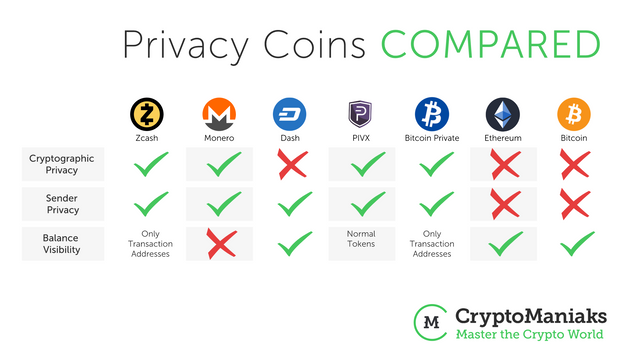 Bitcoin Manifesto author Allan Stevo has an article at the Mises Institute about how the government would like to track your crypto transactions, as well as ways that can help anonymize your cryptocurrency use –

 Chuck Hudson, a friend of Daisy Luther of The Organic Prepper, who works at Roper St. Francis Healthcare, Roper Hospital in South Carolina takes time to write about

 Judge Andrew Napolitano writes at the Tenth Amendment Center
  Pastor Joe at
  Chris at Off Grid Ham has an article up, talking about the danger/effect of heat on your batteries.
  Ryan McMaken at the Mises Institute writes


 Lower Valley Assembly