

Sam Culper, intelligence analyst at Forward Observer, discusses some intelligence lessons learned from the recent Whiskey Warrior incident in New York.
Sam Culper, intelligence analyst at Forward Observer, discusses some intelligence lessons learned from the recent Whiskey Warrior incident in New York.

Combat Studies Group is holding a Gunfight Concepts Pistol course in Coeur d’Alene, ID on December 14-15, 2019. Course is $450.
Course is being hosted by Grey Group LLC / Confidential Investigations.
For more information or to register, contact us at:
frost@unseen.is or frost@criptext.com
Gunfight Concepts – Pistol
For the shooter looking to move beyond static target shooting. Will introduce the shooter to advanced weapon manipulation drills while under duress. Shooting while on the move, target discrimination, dealing with injuries in the middle of a fight and stress inoculation drills. This training is designed to get you way outside your “comfort zone” and exercise those critical skills needed to prevail in a lethal encounter.Gear Required:
* Semi-auto pistol (at least .380cal or greater)
* Three or more magazines
* Duty belt / Holster and at least two mag pouches
* Eye and ear protection
* Comfortable, durable clothing, change of clothes, towel
* Jacket and/or cover shirt
* Firearm maintenance gear (lube, tools, etc.)
* Optional gear…..dump pouches, gloves, armor, knee pads, Band-Aids)Ammo:
* 400 rds (minimum)
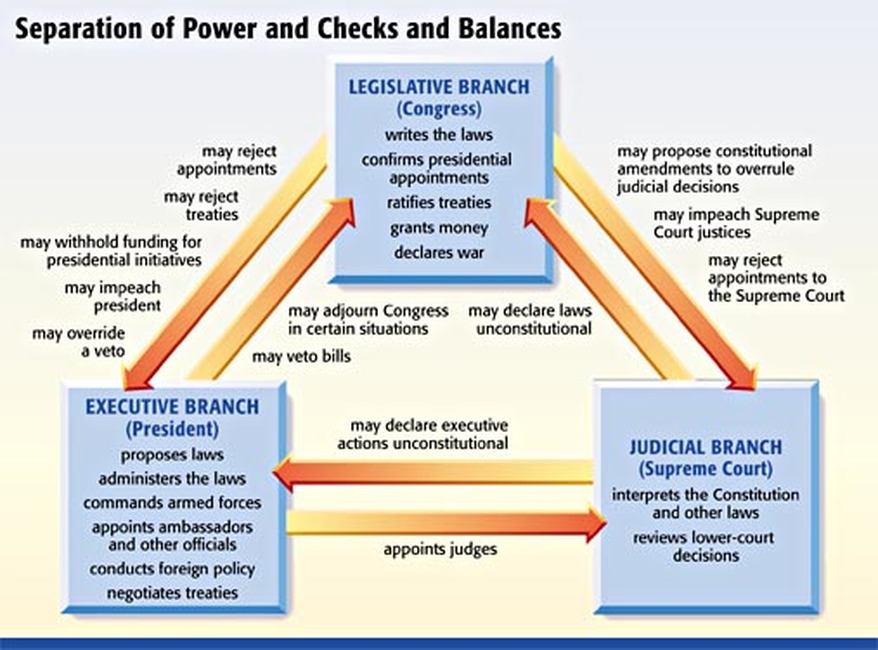
The following is an excerpt from a speech given by Attorney General Barr earlier this month to the Federalist Society’s National Lawyers Convention. In the speech, Barr expands on imbalances which have developed over time which he claims have weakened the office of the President so that it cannot properly balance against the Legislative and Judicial branches. He has some insightful things to say, so stick with it. I’m not sure buy the entire argument, but there is a lot of truth in here.
The consensus for a strong, independent Executive arose from the Framers’ experience in the Revolution and under the Articles of Confederation. They had seen that the War had almost been lost and was a bumbling enterprise because of the lack of strong Executive leadership. Under the Articles of Confederation, they had been mortified at the inability of the United States to protect itself against foreign impositions or to be taken seriously on the international stage. They had also seen that, after the Revolution, too many States had adopted constitutions with weak Executives overly subordinate to the Legislatures. Where this had been the case, state governments had proven incompetent and indeed tyrannical.
From these practical experiences, the Framers had come to appreciate that, to be successful, Republican government required the capacity to act with energy, consistency and decisiveness. They had come to agree that those attributes could best be provided by making the Executive power independent of the divided counsels of the Legislative branch and vesting the Executive power in the hands of a solitary individual, regularly elected for a limited term by the Nation as a whole. As Jefferson put it, ‘[F]or the prompt, clear, and consistent action so necessary in an Executive, unity of person is necessary….”
While there may have been some differences among the Framers as to the precise scope of Executive power in particular areas, there was general agreement about its nature. Just as the great separation-of-powers theorists– Polybius, Montesquieu, Locke – had, the Framers thought of Executive power as a distinct specie of power. To be sure, Executive power includes the responsibility for carrying into effect the laws passed by the Legislature – that is, applying the general rules to a particular situation. But the Framers understood that Executive power meant more than this.
It also entailed the power to handle essential sovereign functions – such as the conduct of foreign relations and the prosecution of war – which by their very nature cannot be directed by a pre-existing legal regime but rather demand speed, secrecy, unity of purpose, and prudent judgment to meet contingent circumstances. They agreed that – due to the very nature of the activities involved, and the kind of decision-making they require – the Constitution generally vested authority over these spheres in the Executive. For example, Jefferson, our first Secretary of State, described the conduct of foreign relations as “Executive altogether,” subject only to the explicit exceptions defined in the Constitution, such as the Senate’s power to ratify Treaties.
A related, and third aspect of Executive power is the power to address exigent circumstances that demand quick action to protect the well-being of the Nation but on which the law is either silent or inadequate – such as dealing with a plague or natural disaster. This residual power to meet contingency is essentially the federative power discussed by Locke in his Second Treatise.
And, finally, there are the Executive’s powers of internal management. These are the powers necessary for the President to superintend and control the Executive function, including the powers necessary to protect the independence of the Executive branch and the confidentiality of its internal deliberations. Some of these powers are express in the Constitution, such as the Appointment power, and others are implicit, such as the Removal power.
One of the more amusing aspects of modern progressive polemic is their breathless attacks on the “unitary executive theory.” They portray this as some new-fangled “theory” to justify Executive power of sweeping scope. In reality, the idea of the unitary executive does not go so much to the breadth of Presidential power. Rather, the idea is that, whatever the Executive powers may be, they must be exercised under the President’s supervision. This is not “new,” and it is not a “theory.” It is a description of what the Framers unquestionably did in Article II of the Constitution.
After you decide to establish an Executive function independent of the Legislature, naturally the next question is, who will perform that function? The Framers had two potential models. They could insinuate “checks and balances” into the Executive branch itself by conferring Executive power on multiple individuals (a council) thus dividing the power. Alternatively, they could vest Executive power in a solitary individual. The Framers quite explicitly chose the latter model because they believed that vesting Executive authority in one person would imbue the Presidency with precisely the attributes necessary for energetic government. Even Jefferson – usually seen as less of a hawk than Hamilton on Executive power – was insistent that Executive power be placed in “single hands,” and he cited the America’s unitary Executive as a signal feature that distinguished America’s success from France’s failed republican experiment…
I am concerned that the deck has become stacked against the Executive. Since the mid-60s, there has been a steady grinding down of the Executive branch’s authority, that accelerated after Watergate. More and more, the President’s ability to act in areas in which he has discretion has become smothered by the encroachments of the other branches.
When these disputes arise, I think there are two aspects of contemporary thought that tend to operate to the disadvantage of the Executive.
The first is the notion that politics in a free republic is all about the Legislative and Judicial branches protecting liberty by imposing restrictions on the Executive. The premise is that the greatest danger of government becoming oppressive arises from the prospect of Executive excess. So, there is a knee-jerk tendency to see the Legislative and Judicial branches as the good guys protecting society from a rapacious would-be autocrat.
This prejudice is wrong-headed and atavistic. It comes out of the early English Whig view of politics and English constitutional experience, where political evolution was precisely that. You started out with a King who holds all the cards; he holds all the power, including Legislative and Judicial. Political evolution involved a process by which the Legislative power gradually, over hundreds of years, reigned in the King, and extracted and established its own powers, as well as those of the Judiciary. A watershed in this evolution was, of course, the Glorious Revolution in 1689…
The second contemporary way of thinking that operates against the Executive is a notion that the Constitution does not sharply allocate powers among the three branches, but rather that the branches, especially the political branches, “share” powers. The idea at work here is that, because two branches both have a role to play in a particular area, we should see them as sharing power in that area and, it is not such a big deal if one branch expands its role within that sphere at the expense of the other.
This mushy thinking obscures what it means to say that powers are shared under the Constitution. Constitution generally assigns broad powers to each of the branches in defined areas. Thus, the Legislative power granted in the Constitution is granted to the Congress. At the same time, the Constitution gives the Executive a specific power in the Legislative realm – the veto power. Thus, the Executive “shares” Legislative power only to the extent of the specific grant of veto power. The Executive does not get to interfere with the broader Legislative power assigned to the Congress.
In recent years, both the Legislative and Judicial branches have been responsible for encroaching on the Presidency’s constitutional authority. Let me first say something about the Legislature…
A prime example of this is the Senate’s unprecedented abuse of the advice-and-consent process. The Senate is free to exercise that power to reject unqualified nominees, but that power was never intended to allow the Senate to systematically oppose and draw out the approval process for every appointee so as to prevent the President from building a functional government.
Yet that is precisely what the Senate minority has done from his very first days in office. As of September of this year, the Senate had been forced to invoke cloture on 236 Trump nominees — each of those representing its own massive consumption of legislative time meant only to delay an inevitable confirmation. How many times was cloture invoked on nominees during President Obama’s first term? 17 times. The Second President Bush’s first term? Four times. It is reasonable to wonder whether a future President will actually be able to form a functioning administration if his or her party does not hold the Senate.
Congress has in recent years also largely abdicated its core function of legislating on the most pressing issues facing the national government. They either decline to legislate on major questions or, if they do, punt the most difficult and critical issues by making broad delegations to a modern administrative state that they increasingly seek to insulate from Presidential control. This phenomenon first arose in the wake of the Great Depression, as Congress created a number of so-called “independent agencies” and housed them, at least nominally, in the Executive Branch. More recently, the Dodd-Frank Act’s creation of the Consumer Financial Protection Branch, a single-headed independent agency that functions like a junior varsity President for economic regulation, is just one of many examples.
Of course, Congress’s effective withdrawal from the business of legislating leaves it with a lot of time for other pursuits. And the pursuit of choice, particularly for the opposition party, has been to drown the Executive Branch with “oversight” demands for testimony and documents. I do not deny that Congress has some implied authority to conduct oversight as an incident to its Legislative Power. But the sheer volume of what we see today – the pursuit of scores of parallel “investigations” through an avalanche of subpoenas – is plainly designed to incapacitate the Executive Branch, and indeed is touted as such. ..
Click here to read the entire speech at the Dept. of Justice website.
Related:
Intellectual Takeout: The Deep State – The Headless Fourth Branch of Government

O My God,
Thou fairest, greatest, first of all objects,
my heart admires, adores, loves thee,
for my little vessel is as full as it can be,
and I would pour out all that fullness before thee
in ceaseless flow.When I think upon and converse with thee
ten thousand delightful thoughts spring up,
ten thousand sources of pleasure are unsealed,
ten thousand refreshing joys spread over my heart,
crowding into every moment of happiness.I bless thee for the soul thou hast created,
for adorning it, sanctifying it,
though it is fixed in barren soil;
for the body thou has given me,
for preserving its strength and vigour,
for providing sense to enjoy delights,
for the ease and freedom of my limbs,
for hands, eyes, ears that do thy bidding;
for thy royal bounty providing my daily support,
for a full table and overflowing cup,
for appetite, taste, sweetness,
for social joys of relatives and friends,
for ability to serve others,
for a heart that feels sorrows and necessities,
for a mind to care for my fellow-men,
for opportunities of spreading happiness around,
for loved ones in the joys of heaven,
for my own expectation of seeing thee clearly.
I love thee above the powers of language to express,
for what thou art to thy creatures.Increase my love, O my God, through time and eternity.-From The Valley of Vision
Michael Krieger of Liberty Blitzkrieg has some good words to share about our current political state of affairs, including how Trump’s election is a symptom of decades of corrupt D.C. practices rather than the beginning of some new era of debauchery and how the biggest problem is all of the people who do not recognize this.
From a big picture perspective, the largest rift in American politics is between those willing to admit reality and those clinging to a dishonest perception of a past that never actually existed. Ironically, those who most frequently use “post-truth” to describe our current era tend to be those with the most distorted view of what was really happening during the Clinton/Bush/Obama reign.
Despite massive amounts of evidence to the contrary, such people now enthusiastically whitewash the decades preceding Trump to turn it into a paragon of human liberty, justice and economic wonder. You don’t have to look deep to understand that resistance liberals are now actually conservatives, brimming with nostalgia for the days before significant numbers of people became wise to what’s been happening all along.
They want to forget about the bipartisan coverup of Saudi Arabia’s involvement in 9/11, all the wars based on lies, and the indisputable imperial crimes disclosed by Wikileaks, Snowden and others. They want to pretend Wall Street crooks weren’t bailed out and made even more powerful by the Bush/Obama tag team, despite ostensible ideological differences between the two. They want to forget Epstein Didn’t Kill Himself.
Lying to yourself about history is one of the most dangerous things you can do. If you can’t accept where we’ve been, and that Trump’s election is a symptom of decades of rot as opposed to year zero of a dangerous new world, you’ll never come to any useful conclusions. As such, the most meaningful fracture in American society today is between those who’ve accepted that we’ve been lied to for a very long time, and those who think everything was perfectly fine before Trump. There’s no real room for a productive discussion between such groups because one of them just wants to get rid of orange man, while the other is focused on what’s to come. One side actually believes a liberal world order existed in the recent past, while the other fundamentally recognizes this was mostly propaganda based on myth.
Irrespective of what you think of Bernie Sanders and his policies, you can at least appreciate the fact his supporters focus on policy and real issues. In contrast, resistance liberals just desperately scramble to put up whoever they think can take us back to a make-believe world of the recent past. This distinction is actually everything. It’s the difference between people who’ve at least rejected the status quo and those who want to rewind history and perform a do-over of the past forty years.
A meaningful understanding that unites populists across the ideological spectrum is the basic acceptance that the status quo is pernicious and unsalvageable, while the status quo-promoting opposition focuses on Trump the man while conveniently ignoring the worst of his policies because they’re essentially just a continuation of Clinton/Bush/Obama. It’s the most shortsighted and destructive response to Trump imaginable. It’s also why the Trump-era alliance of corporate, imperialist Democrats and rightwing Bush-era neoconservatives makes perfect sense, as twisted and deranged as it might seem at first. With some minor distinctions, these people share nostalgia for the same thing.
This sort of political environment is extremely unhealthy because it places an intentional and enormous pressure on everyone to choose between dedicating every fiber of your being to removing Trump at all costs or supporting him. This anti-intellectualism promotes an ends justifies the means attitude on all sides. In other words, it turns more and more people into rhinoceroses…
Click here to read the entire article at Liberty Blitzkrieg.

The Electronic Frontier Foundation (EFF) has launched a new campaign called About Face to help communities call for an end to government use of face surveillance. With the recent announcement that facial recognition is coming to Sea-Tac airport, you can see that face surveillance is becoming more and more prevalent in America.
…Many forms of biometric data collection raise a wealth of privacy, security, and ethical concerns. Face surveillance ups the ante. We expose our faces to public view every time we go outside. Paired with the growing ubiquity of surveillance cameras in our public, face surveillance technology allows for the covert and automated collection of information related to when and where we worship or receive medical care, and who we associate with professionally or socially.
Many proponents of the technology argue that there is no reasonable expectation of privacy when we spend time in public, and that if we have nothing to hide, we have nothing to fear. EFF is not alone in finding this argument meritless. In his recent majority opinion in the watershed Carpenter v. United States (2018), Supreme Court Chief Justice John Roberts wrote: “A person does not surrender all Fourth Amendment protection by venturing in the public sphere.” In a recent Wired interview, Attorney Gretchen Greene explains: “Even if I trust the government, I do care. I would rather live in a world where I feel like I have some privacy, even in public spaces.” Greene goes on to identify the inherent First-Amendment concerns implicated by government use of face surveillance: “If people know where you are, you might not go there. You might not do those things.”
Like many of us, Greene is particularly concerned about how the technology will impact members of already marginalized communities. “Coming out as gay is less problematic professionally than it was, in the US, but still potentially problematic. So, if an individual wants to make the choice [of] when to publicly disclose that, then they don’t want facial recognition technology identifying that they are walking down the street to the LGBTQ center.” These concerns are not limited to any one community, and the impacts will be felt regardless of intent. “We’re not trying to stop people from going to church, we’re not trying to stop them from going to community centers, but we will if they are afraid of [the consequence] in an environment that is hostile to, for instance, a certain ethnicity or a certain religion…”

Yesterday, we posted another article from American Partisan on building an intelligence fusion center for your group. Today, we post an article which Sam Culper of Forward Observer wrote for American Partisan entitled The Decision Advantage: Why Intel Matters. Sam lays out why it is so important to be able to gather information and produce intelligence.
Several years ago, I had the great opportunity to train at an elite facility in the Carolinas. Throughout the training sessions, our instructor spoke of the ‘psychological advantages’ of why and how we do things in a gunfight. The goal of these courses wasn’t just to produce individuals who can shoot, but to graduate individuals who can think and shoot — in other words, to teach people to make sound decisions in a high stress environment like a gunfight.
Close your eyes and put yourself momentarily in a gunfight; it doesn’t matter if you choose an active shooter situation at your work or you wind up on some side street in Baghdad. What goes through your mind as you realize someone is shooting at you? Where is your nearest cover? Where is the shooter? Where are your teammates? How many shooters are there? Should you fight through the ambush?
Your brain is trying to process very quickly lots of different operations, which is why most people freeze in a situation like this. Overwhelmed by this massive problem it’s never seen before, the brain just shuts down. It doesn’t know what to do or how to respond. It’s not fight or flight — it’s fight, flight, or freeze. Humans are generally good at solving problems that we’ve solved before, but relatively few of us are good at solving problems they’ve never encountered. This is why we train.
Now let’s take this same concept — that access to information helps you to maintain situational awareness and make better decisions — and move it up one level. Aside from a beating heart, the brain is the most important part of you, and the brain is the most important part of an organization. A preparedness group, a community security team, or neighborhood watch needs a brain: a command center where information is received and intelligence is produced. Just like we can’t make sound decisions in a firefight without access to information, we can’t make sound decisions for our security as a family, group, or community without similar access to information. You’d never go into a firefight wearing a blindfold, so why would anyone go into an emergency situation without knowing how to collect timely intelligence information? It seems like a very rudimentary concept — that navigating a complex threat environment requires the ability to gather tactical intelligence on what’s going on beyond your line of sight — yet many Americans are prepared to remain blindfolded.
Let’s go back to an infrequent but still likely scenario — there’s civil unrest following a natural disaster. Think Hurricane Katrina. There’s no power, no public utilities, catastrophic damage, and lots of needy people, many of whom are out looking for targets of opportunity. If we’re interested in the security of our family and/or community then we need to gather intelligence beyond your line of sight and hearing ability; anything less and we should consider ourselves blindfolded, which would be a mistake of our own doing.
I’d hate to beat a dead horse like the OODA Loop, but it does bear repeating. The OODA Loop concept was developed by Col. John Boyd (USAF, Ret.), a fighter pilot interested in how his pilots could make better and faster decisions while in a dog fight. OODA stands for Observe, Orient, Decide, Act, and it describes the process by which humans make decisions. (Observing in this case is really a misnomer. We need to be observing, listening, and sensing. We also need to ensure that we’re connected with others who are also observing, listening, and sensing.)
The ultimate goal today — that goes doubly for combat shooters — is how to speed up our own OODA Loops while disrupting the enemy’s OODA, thus slowing down his decision-making process. In the case of intelligence, what we’re achieving by speeding up our OODA Loop is a ‘decision advantage’ for our commander or decision-makers.
 We’ve heard a lot in the past from Forward Observer about building up your intelligence capabilities. Just in case you dismissed that as one organization crying out in the wilderness, here is an article from Gray Man at American Partisan on how to build an analysis control element (ACE) for analyzing the information that you have collected and turning it into actionable intelligence, whether that is for a disaster, civil unrest, or other purpose.
In the intelligence world, we have to coordinate all of the intelligence coming in, obviously. Intelligence drives the mission. In the civilian world, you could stick with that or change it to “information dictates action”.
In order to coordinate and analyze the information coming in, you’ll do yourself a favor to set up what is called an analysis control element (ACE). You could also refer to it as your “fusion” center, seeing as you should be able to fuse together and analyze all of the intelligence you collect and compile it into useful products to drive your activities. All-source, for my current purposes, consists of using HUMINT and SIGINT to the best of your abilities.
HUMINT is human intelligence, intelligence gained by interrogation, elicitation, debriefing, source running, surveillance, reconnaissance, tradecraft, etc. Basically, you’re using yourself (your brain, ears, eyes and your words) and other people to collect intelligence.
SIGINT is signals intelligence, and covers a wide array of electronic intelligence collection techniques. This includes things like electronic surveillance, hacking, wiretapping, etc. For our purposes, it involves monitoring radio traffic and listening in on signals using basic AM/FM radio, satelitte radio, shortwave receivers and police scanners and if you’re so inclined, CBs and ham. You’re going to want to visit the Brushbeater website by NCScout for the best SIGINT information available.
In order to build your ACE, you need to have some equipment. There is a bare minimum amount of equipment you’ll need in order to have what I would call a functional ACE.
– Police scanner. My recommendation mirrors that of several other bloggers. That is the Uniden Home Patrol II scanner. Use this as part of your early warning system (EWS).
– A decent AM/FM radio. This is good for open source radio news collection and some weather reports. Another point for your EWS.
– Shortwave receiver. I recommend the GP-5. Credit for that recommendation goes to NCScout. That’s three pieces of EWS gear.
– Topographical and street maps of your AO and any AO relevant to you. 24 inches by 36 inches is a good size. Check this piece on topo maps recently posted by our own NCScout. USGS Store and MyTopo are two other good sources for maps. You need to know the terrain features and routes in all relevant AOs. Get some Duralar plastic film or something similar to create overlays using dry erase markers so you aren’t writing on the maps themselves.
– Get some folders and start keeping files on relevant people, places and things in your AO. A police chief who sees himself as an overlord as opposed to a public servant is a good subject to keep a file on. A nearby neighborhood with a history of drugs and violence would be as well. Don’t just keep files on potential adversaries though. Keep files on people who might be sympathetic to your cause and purposes for future use.
– Get a binder and keep track of current and potential sources of information. This will help when you have a specific intelligence gap you need filled, and you can thumb through your sources and see who can provide that information to you. It’s also useful when deconflicting sources. You don’t want the same person telling you and your neighbors multiple different stories just to gain favor with everyone.
– Obviously I would recommend a good laptop with reliable internet access. This will enable use of Google Earth and other mapping systems, open source intelligence (OSINT) collection via the web, etc. I’m sure no more explanation is required as to why you’d like to have a web-connected computer in your ACE.
– Obtain a copy of FM 2-22.3. This is the US Army manual on HUMINT operations.
– Newspapers are generally slow and full of propaganda, but I can’t tell you how much OSINT I was able to collect from newspapers, especially during my time in the Far East. If you’re so inclined, subscribe to some, online or on actual paper.
– If you’ve got the budget and skills, CB and ham are great options for SIGINT collection and I highly recommend you obtain some capabilities in those areas. Another EWS force multiplier.
Click here to read the entire article at American Partisan. And you can read and learn plenty more about intelligence collection and analysis at ForwardObserver.com.
In a follow-up to his previous article The Transmitters of Freedom Should Be Turned Back On, Chris at Off Grid Ham has some good and bad news about short wave broadcasting and a little on who is doing what to whom.
The Transmitters of Freedom Get a Little Louder

STOCK PHOTO.
First, the bad news…
Shortwave broadcasting is not dead, it’s just being kept alive by the wrong people. Shortwave broadcasting is almost exclusively the domain of sleazy oppressive governments and religious outliers. Communist-run Radio China International took over some of Radio Australia’s old frequencies when Australia discontinued their international shortwave service. And here’s something that should make shortwave fans seethe: The savings from shutting down shortwave saved the Aussie government…wait for it…was less than two million dollars.
That’s right. To save what isn’t even a budget rounding error, the Australian government killed shortwave to tens of millions of people. They probably could have raised that money from private donations.
When a pro-democracy voice leaves the platform, someone will step in to fill the vacuum. That “someone” is usually a bad actor. It’s unlikely shortwave broadcasting will ever completely die. It’s also unlikely shortwave will ever go back to the glory days no matter how obvious its practicality may be. Expect to see oppressive governments increase their presence on the HF bands at the same rate democracies abandon them.
The BBC increases shortwave broadcasting to disputed Kashmir.
The victims of tyrants, socialism, communism, etc., still clamor for the news of truth and freedom. They unfortunately have few options due to the rise of the internet and subsequent decline of shortwave broadcasting. Old school analog AM radio may seem like a quaint anachronism, but unlike the internet it requires very little infrastructure and is difficult to defeat.
The BBC has increased –yes, increased– shortwave broadcasting to the Kashmir territory in Asia. The backstory is somewhat complicated, but the short version is that India, Pakistan, and China each control a portion of the area. All three nations dispute the territorial claims of the others. India shut off the internet, some of the media, and phone service to the area.
To fill the information void, the BBC added one hour and forty five minutes of programming to the region. While this may not sound like much, put yourself in the people of Kashmir’s shoes. If you were living under a media blackout, having nearly two extra hours of uncensored news would be deeply meaningful.
Dissidents use shortwave broadcasting to reach Hong Kong and mainland China.
Sound of Hope started as an effort to bring homeland news to Chinese people living in the United States. It has grown into a full-blown pro-democracy shortwave broadcasting network beaming to mainland China and Hong Kong. They have even found a way to evade the jamming of their programming by using a network of small transmitters placed in strategic places. Sound of Hope moves its signal to whatever transmitters are least effected by the jamming. It’s an effective system.
As one of the few media outlets that can defeat communist censorship, Sound of Hope has become a significant player in supporting the pro-democracy demonstrations in Hong Kong. Sound of Hope is not sponsored or funded by any government. It is run mostly by volunteers, many of whom are placing themselves at great personal risk by helping the network. It should be a national embarrassment that a group of volunteers with little money are doing what large governments deemed “too expensive” and “ineffective”…

This is a little reminder from NC Scout at American Partisan that you can’t just buy some stuff and say that you’ll be ready when disaster strikes and you need to use it. You need to train with your gear to find out what it and you can do together, and what may need to be tweaked or improved.
We’ve all heard the people who say “I’ll be ready when the time comes!” or “They better not come to my front door!”
I got news for you, the time has come, and they are on your front door. Maybe not physically, yet, but that’s coming. If the lessons from Virginia are a bellwether for the near future, the communist machine at work will not allow American voices to win a so-called election again. And they don’t have to physically come to your door, because they can just legislate your rights away and you’ll do nothing. You’re a rule follower, and they make the rules.
So if there’s anything to objectively be gained from the legitimacy of government being ripped away in public fashion, its that the time has indeed come. We are living in an area absent the rule of law. The fantasy land nonsense of people running around in glorious combat and living in a Rothbardian voluntarist paradise is just that- an escapist fantasy that in no way mimics real societal breakdowns. But when you’ve got a very clear picture of a dual system of justice coupled with a common view that these people will never see punishment, you are indeed living without a rule of law. The only question then that should remain is what happens now that the velvet glove has exposed the iron fist? Neither legitimacy nor objectivity can be regained once lost. A failure of ruling hegemony thus requires force.
Do not forget that Brennan was a declared member of the communist party before joining the CIA. And of the feeder groups indoctrinating minds into the tenets of Marxism was the SDS, with their mantra of “Bring the War Home!”; code for invading the US with populations (in their logic) marginalized or exploited by US policy. Top among them, Central and South America. Ortega, Castro and Guevara are heroes. Groomed by the University system, Brennan finds himself atop the very bureaucracy created to entrench these communists for an eventual overthrow of the US government. These people are desperate to remain in control and they want you gone.
That’s outside our realistic area of influence, but does not ignore what we indeed can do.
What’s to be done on our end is preparing the mass base and guerrilla auxiliary for the next step; training and equipping the people in your area. The Left has indeed been doing that for some time now. Those networks need building, the information exchanged, and working hard to perfect the techniques now in order to save lives later.
In the last Advanced RTO it was commented to me by a longtime Extra-class ham, Engineer and Appleseed Instructor that the more covert ends of the communications training pipeline- data bursts, directional transmitting and physical encryption– takes a large amount of time just to comprehend let alone the training time to perfect. Far more than what can be done in just one weekend. And the same could be said of pretty much anything else I cover in my classes. I give you the basics, but it’s up to you to practice, perfect, and most critical, share it.
Making things work in the real world are the only way to continue to develop those skills. Two of the students from the last RTO and Advanced RTO Courses are doing exactly that, commenting,
Hey, I got the antenna up and working. DVM and I were able to make contact on 80M at around 1630. He has a different HF setup than I do – different antenna and less power, and I think the F layer was not helping at that time – it was a pretty weak signal. With the antenna I built (I built the same one you used in class) and pushing 100W, I was able to make a contact in GA on 40M very clearly. I also heard plenty of people from NY and CT to FL to OH and Chicago.
That’s regional capability that they’re actively creating, that they otherwise may not have been able to achieve. And most important, they’ve got the proper context to use those skills that they definitely won’t get anywhere else. For the people that we’ve all heard saying “I’ll be ready when the time comes”, if that’s your attitude, no, you won’t. All of this is hard enough when conditions are good. If you haven’t been actively training, been sitting on the couch living in a fantasy about fighting the good fight against the Reds while doing literally nothing but wasting time, you will reap exactly the results you’ve put into it. If it were easy, everyone would do it.
Take control of your own destiny. Get trained, get supplied, whether that’s arms, ammo, magazines, food or medical gear, and don’t let it be wasted on you alone.
Michael Krieger of Liberty Blitzkrieg has written another good article, this one on the dangers that the algorithms used by tech giants pose to our very ability to think. Are you sure your thoughts are your own when every interaction online is being used to present the ideas that are most profitable to those with the power?
…It’s important to note that while much of the recent focus on tech giants revolves around market dominance and anti-competitiveness, the real danger posed is far more extensive. Particularly since the post-election “panic of 2016,” these companies have begun to more earnestly morph into digital information gatekeepers in the name of empire and the national security state.
Day by day, tweaked algorithm by tweaked algorithm, and with each new thought criminal banished from major digital platforms, we’ve seen not only dissident views marginalized, but we’ve also lost a capacity to access information we’re looking for should tech company CEOs or their national security state partners deem it inappropriate. The powers that be have determined the internet permitted too much freedom of thought and opinion, so the tech giants stand ready to bluntly throw the hammer down in order to reverse that trend and regain narrative control. The algorithm will be used to get you in line, and if you don’t comply, the algorithm will destroy you.
More from TruthDig:
Stiegler believes that digital technology, in the hands of technocrats whom he calls “the new barbarians,” now threatens to dominate our tertiary memory, leading to a historically unprecedented “proletarianization” of the human mind. For Stiegler, the stakes today are much higher than they were for Marx, from whom this term is derived: proletarianization is no longer a threat posed to physical labor but to the human spirit itself…
Stiegler firmly believes that a distinction must always be upheld between “authentic thinking” and “computational cognitivism” and that today’s crisis lies in confusing the latter for the former: we have entrusted our rationality to computational technologies that now dominate everyday life, which is increasingly dependent on glowing screens driven by algorithmic anticipations of their users’ preferences and even writing habits (e.g., the repugnantly named “predictive text” feature that awaits typed-in characters to regurgitate stock phrases)… As Stiegler’s translator, the philosopher and filmmaker Daniel Ross, puts it, our so-called post-truth age is one “where calculation becomes so hegemonic as to threaten the possibility of thinking itself.”
This is the true crux of what we’re dealing with, and so we find ourselves at a terrifying transition point in the entire historical human experience should we fail to correct it. As a consequence of their dominant market shares in core areas of our modern digital world like e-commerce (Amazon), human-to-human communication (Facebook) and information access (Google), tech giants now have the capacity to replace human curiosity and thought with opaque and ever-changing algorithms…
The internet was supposed to free information while connecting people and ideas across borders. This promise is being lost with each passing day, and rectifying the situation is one of the most significant challenges we face. Should we fail, we can look forward to a future where humanity consists of little more than digitally lobotomized automatons responding like lab rats to algorithms created by tech CEOs and their national security state partners.
Click here to read the entire article at Liberty Blitzkrieg.
This article is from an opinion piece at the Washington Post by Leah Libresco – a statistician and writer for news site FiveThirtyEight. At the WaPo site, her more logical article is preceded by an emotional video about how guns must be banned. There are links in the article below to some of her research at FiveThirtyEight, including some methodology for her results. When you look at the data, the vast majority of gun control proposals make no sense.
I used to think gun control was the answer. My research told me otherwise.
Before I started researching gun deaths, gun-control policy used to frustrate me. I wished the National Rifle Association would stop blocking common-sense gun-control reforms such as banning assault weapons, restricting silencers, shrinking magazine sizes and all the other measures that could make guns less deadly.
Then, my colleagues and I at FiveThirtyEight spent three months analyzing all 33,000 lives ended by guns each year in the United States, and I wound up frustrated in a whole new way. We looked at what interventions might have saved those people, and the case for the policies I’d lobbied for crumbled when I examined the evidence. The best ideas left standing were narrowly tailored interventions to protect subtypes of potential victims, not broad attempts to limit the lethality of guns.
I researched the strictly tightened gun laws in Britain and Australia and concluded that they didn’t prove much about what America’s policy should be. Neither nation experienced drops in mass shootings or other gun related-crime that could be attributed to their buybacks and bans. Mass shootings were too rare in Australia for their absence after the buyback program to be clear evidence of progress. And in both Australia and Britain, the gun restrictions had an ambiguous effect on other gun-related crimes or deaths.
When I looked at the other oft-praised policies, I found out that no gunowner walks into the store to buy an “assault weapon.” It’s an invented classification that includes any semi-automatic that has two or more features, such as a bayonet mount, arocket-propelled grenade-launcher mount, a folding stock or a pistol grip. But guns are modular, and any hobbyist can easily add these features at home, just as if they were snapping together Legos.As for silencers — they deserve that name only in movies, where they reduce gunfire to a soft puick puick. In real life, silencers limit hearing damage for shooters but don’t make gunfire dangerously quiet. An AR-15 with a silencer is about as loud as a jackhammer. Magazine limits were a little more promising, but a practiced shooter could still change magazines so fast as to make the limit meaningless.
Opinion | The Washington Post Editorial Board appeals to Trump and Congress to stand up to the gun lobby and prevent mass shootings. (The Washington Post)As my co-workers and I kept looking at the data, it seemed less and less clear that one broad gun-control restriction could make a big difference. Two-thirds of gun deaths in the United Statesevery year are suicides. Almost no proposed restriction would make it meaningfully harder for people with guns on hand to use them. I couldn’t even answer my most desperate question: If I had a friend who had guns in his home and a history of suicide attempts, was there anything I could do that would help?
However, the next-largest set of gun deaths — 1 in 5 — were young men aged 15 to 34, killed in homicides. These men were most likely to die at the hands of other young men, often related to gang loyalties or other street violence. And the last notable group of similar deaths was the 1,700 women murdered per year, usually as the result of domestic violence. Far more people were killed in these ways than in mass-shooting incidents, but few of the popularly floated policies were tailored to serve them.By the time we published our project, I didn’t believe in many of the interventions I’d heard politicians tout. I was still anti-gun, at least from the point of view of most gun owners, and I don’t want a gun in my home, as I think the risk outweighs the benefits. But I can’t endorse policies whose only selling point is that gun owners hate them. Policies that often seem as if they were drafted by people who have encountered guns only as a figure in a briefing book or an image on the news.
Instead, I found the most hope in more narrowly tailored interventions. Potential suicide victims, women menaced by their abusive partners and kids swept up in street vendettas are all in danger from guns, but they each require different protections.
Older men, who make up the largest share of gun suicides, need better access to people who could care for them and get them help. Women endangered by specific men need to be prioritized by police, who can enforce restraining orders prohibiting these men from buying and owning guns. Younger men at risk of violence need to be identified before they take a life or lose theirs and to be connected to mentors who can help them de-escalate conflicts.Even the most data-driven practices, such as New Orleans’ plan to identify gang members for intervention based on previous arrests and weapons seizures, wind up more personal than most policies floated. The young men at risk can be identified by an algorithm, but they have to be disarmed one by one, personally — not en masse as though they were all interchangeable. A reduction in gun deaths is most likely to come from finding smaller chances for victories and expanding those solutions as much as possible. We save lives by focusing on a range of tactics to protect the different kinds of potential victims and reforming potential killers, not from sweeping bans focused on the guns themselves.
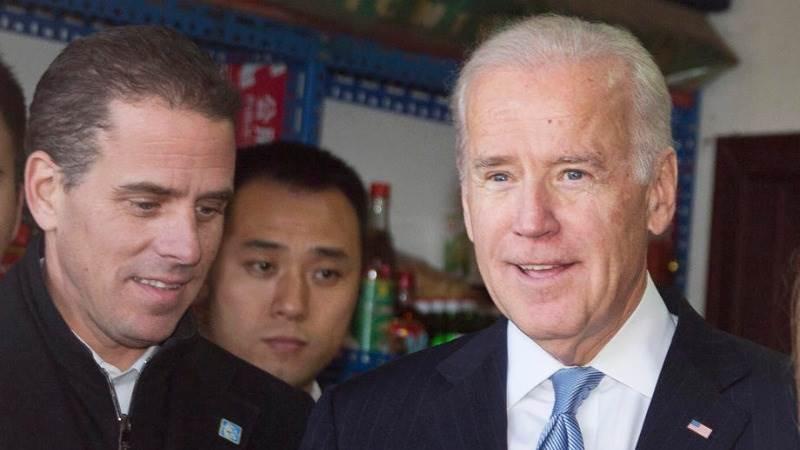
This article comes from Zero Hedge, relating an indictment by Ukraine’s Prosecutor General against Burisma Holders, where Hunter Biden held a highly-compensated sinecure. Emphasis below is from the original article.
An indictment drawn up by Ukraine’s Office of the Prosecutor General against Burisma owner Nikolai Zlochevsky claims that Hunter Biden and his partners received $16.5 million for their ‘services’ – according to Ukrainian MP Alexander Dubinsky of the ruling Servant of the People Party.
Dubinsky made the claim in a Wednesday press conference, citing materials from an investigation into Zlochevsky and Burisma.
“Zlochevsky was charged with this new accusation by the Office of the Prosecutor General but the press ignored it,” said the MP. “It was issued on November 14.”
“The son of Vice-President Joe Biden was receiving payment for his services, with money raised through criminal means and money laundering,” he then said, adding “Biden received money that did not come from the company’s successful operation but rather from money stolen from citizens.”
…According to Interfax-Ukraine, MP Andriy Derkach announced at the same press conference that deputies have received new materials from investigative journalists alleging that the ‘family’ of ex-President Yanukovych funneled $7.4 billion through American investment firm Franklin Templeton Investments, which they claim have connections to the US Democratic party”…
“The son of Templeton’s founder, John Templeton Jr., was one of President Obama’s major campaign donors. Another fund-related character is Thomas Donilon. Managing Director of BlackRock Investment Institute, shareholder Franklin Templeton Investments, which has the largest share in the fund. It is noteworthy that he previously was Obama’s national security advisor,” Derkach added…
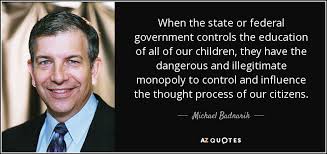
Here is a brief but interesting article by Gary Barnett at LewRockwell.com about states ideally wanting a public that cannot think for itself. Find out more about the history of American Education and its subservience to state control by reading about The Underground History of American Education.
The Elite Controllers Fear the Individual and Individual Intelligence
his once great country of America has gone through many changes, and these changes, while implemented by the design of its true rulers, are not understood by the huddled masses that have been taught to accept mediocrity as desired normalcy. The ruling class fully understands that the only way to control people, and to finally control the world, is to stifle individual excellence by creating a society that refuses to think. This has been accomplished through planned conflict, the instilling of fear, the total control of education by the puppet state, by building dependence through public welfare, and by dominating most all positions of power in a myriad of state, corporate, and important intellectual appointments.
“At its root, the logic is that of the Grand Inquisitor, who bitterly assailed Christ for offering people freedom and thus condemning them to misery. The Church must correct the evil work of Christ by offering the miserable mass of humanity the gift they most desire and need: absolute submission. It must “vanquish freedom” so as “to make men happy” and provide the total “community of worship” that they avidly seek. In the modern secular age, this means worship of the state religion, which in the Western democracies incorporates the doctrine of submission to the masters of the system of public subsidy, private profit, called free enterprise. The people must be kept in ignorance, reduced to jingoist incantations, for their own good. And like the Grand Inquisitor, who employs the forces of miracle, mystery, and authority “to conquer and hold captive for ever the conscience of these impotent rebels for their happiness” and to deny them the freedom of choice they so fear and despise, so the “cool observers” must create the “necessary illusions” and “emotionally potent oversimplifications” that keep the ignorant and stupid masses disciplined and content.”
~ Noam Chomsky,This quote by Chomsky is correct in that it describes the current condition of the general populace, but is incorrect in that it claims free enterprise is the problem. There is no free market in this country, and there has not been a free market for many years. We live in what is best described as a fascist oligarchy, one that relies on the premise of state and corporate partnership. Without that dynamic in place, the situation would not be as dire as it is today.
It is important to state that I believe the common people are not incapable of intelligent thought, but have given in to the pressure from their self-appointed overseers, and accepted a subordinate position in society. They have been programmed to suppress their curiosity, and therefore have chosen to hide from responsibility. I refer to this attitude as a fear of freedom, as freedom requires much work, a strong moral base, an active intellect, and constant defense of self-rule. It is difficult to achieve and even more difficult to keep, so most are willing to take the easy way. By doing so, tyranny of the masses is always the resulting societal structure.
In any society such as this, what the common people perceive as freedom is in realty a type of controlled servitude. While this should be easily recognized by most, it is not, and this is mainly due to a fear of the truth. So pretending that the threat does not exist allows the underclass to avoid conflict, but only temporarily. This avoidance is a natural protection measure, but in the case of a slave society, this hiding from responsibility by the people will eventually become deadly.
The monopoly of power that is held by the few over the rest of society is all consuming, and the ultimate control sought by these elites is getting ever closer to fruition. It has been affected over long periods of time through incremental measures. It did not happen overnight, but over centuries, and at this point, the final objectives desired are within sight.
This is the most dangerous time for man as I see it, as the elite design for future economic decision-making for all is to be placed in the hands of so-called chosen experts, with power over the entire world economy. All economic decisions are to be based on a controlled allocation for society, which is simply centrally planned socialism, with a top-down hierarchy of control by the few. This ruling system is known as Technocracy, and when implemented, it will be the end of liberty.
I do not make these assertions lightly, and this is not theory, it is the current state of affairs. Consider the division among the general population, and the hatred amongst the masses. This is not natural, but has been put in place purposely to achieve a particular outcome by those controlling the now ignorant and indoctrinated general population.
The new world order that is desired by the ruling class is getting ever closer to becoming reality. This is not conjecture or some wildly fantastic science fiction, but is a plan that is gaining momentum due to a society consumed by blind indifference.
In past history when a ruling class went too far, and exceeded all the bounds of accepted power, the people arose, and a new system emerged. But can that happen in this country in this time of extreme political change and concentrated power? The creation of conflict that is evident today is a driving force in bringing about a world run by the few. And the common people are already relegated to a position of cogs in the wheel of society, as opposed to thinking for themselves and taking control of their own lives. This phenomenon must change in order for freedom to survive, and a reversal of the power structure must be forthcoming, if Americans are once again to control their own destiny.

A Senate bill has been filed in the Oklahoma Senate which would prohibit that state from enforcing any federal “red-flag” laws. The so-called “red-flag” gun laws are widely seen as unconstitutional. Current trends toward both immigration sanctuaries and Second Amendment sanctuaries harken back to the Nullification Crisis of the 1830s. The summary below comes from the Free Thought Project.
Landmark Bill Would Bar State from Enforcing Federal Red-Flag Gun Laws
A bill prefiled in the Oklahoma Senate would prohibit state enforcement of any federal “red-flag” laws, setting the foundation to nullify any such laws in practice and effect.
Sen. Nathan Dahm (R-Broken Arrow) filed Senate Bill 1081 (SB1081) for introduction in the 2020 legislative session. Under the proposed law, the Oklahoma legislature would “occupy and preempt the entire field of legislation in this state touching in any way federal or state extreme risk protection orders against or upon a citizen of Oklahoma to the complete exclusion of any order, ordinance or regulation by any municipality or other political subdivision of this state. “ In effect, only the Oklahoma legislature could pass any type of so-called red-flag law effective in the Sooner State.
The legislation also would declare that any federal red-flag law “which would infringe upon a citizen’s Constitutionally-protected rights including, but not limited to the right to due process, the right to keep and bear arms and the right to free speech, shall be null, void, unenforceable and of no effect in the state of Oklahoma.”
These declarations would have very little effect in practice, but SB1081 includes provisions that would make federal red-flag laws nearly impossible to enforce in Oklahoma. The proposed law would prohibit any Oklahoma agency or any political subdivision from accepting any federal grants to implement any federal statute, rule or executive order, federal or state judicial order or judicial findings that would have the effect of forcing an extreme risk protection order against or upon a citizen of Oklahoma.
It would also make it a felony offense for any individual, including a law enforcement officer, to enforce a federal red flag law. In effect, this would bar state and local police from enforcing a federal red-flag law.
EFFECTIVE
The federal government relies heavily on state cooperation to implement and enforce almost all of its laws, regulations and acts. By simply withdrawing this necessary cooperation, states and localities can nullify in effect many federal actions. As noted by the National Governors’ Association during the partial government shutdown of 2013, “states are partners with the federal government on most federal programs.”
Enforcing a red-flag law would be no different.
Based on James Madison’s advice for states and individuals in Federalist #46, a “refusal to cooperate with officers of the Union” represents an extremely effective method to bring down federal gun control measures because most enforcement actions rely on help, support and leadership from state and local governments.
Fox News senior judicial analyst Judge Andrew Napolitano agreed. In a televised discussion on the issue, he noted that a single state refusing to cooperate with federal gun control would make federal gun laws “nearly impossible” to enforce.
“Partnerships don’t work too well when half the team quits,” said Michael Boldin of the Tenth Amendment Center. “By withdrawing all resources and participation in the implementation and enforcement of a federal red flag law, states and even local governments can help bring these unconstitutional acts to their much-needed end.”
LEGAL BASIS
The state of Missouri can legally bar state agents from enforcing federal gun control. Refusal to cooperate with federal enforcement rests on a well-established legal principle known as the anti-commandeering doctrine.
Simply put, the federal government cannot force states to help implement or enforce any federal act or program. The anti-commandeering doctrine is based primarily on five Supreme Court cases dating back to 1842. Printz v. U.S. serves as the cornerstone.
“We held in New York that Congress cannot compel the States to enact or enforce a federal regulatory program. Today we hold that Congress cannot circumvent that prohibition by conscripting the States’ officers directly. The Federal Government may neither issue directives requiring the States to address particular problems, nor command the States’ officers, or those of their political subdivisions, to administer or enforce a federal regulatory program. It matters not whether policy making is involved, and no case by case weighing of the burdens or benefits is necessary; such commands are fundamentally incompatible with our constitutional system of dual sovereignty”
WHAT’S NEXT
SB1081 will be officially introduced and referred to a committee when the Oklahoma legislature convenes on Feb. 2.


 Lower Valley Assembly