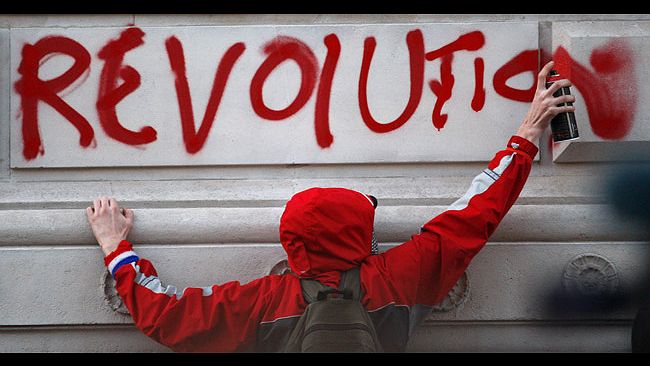
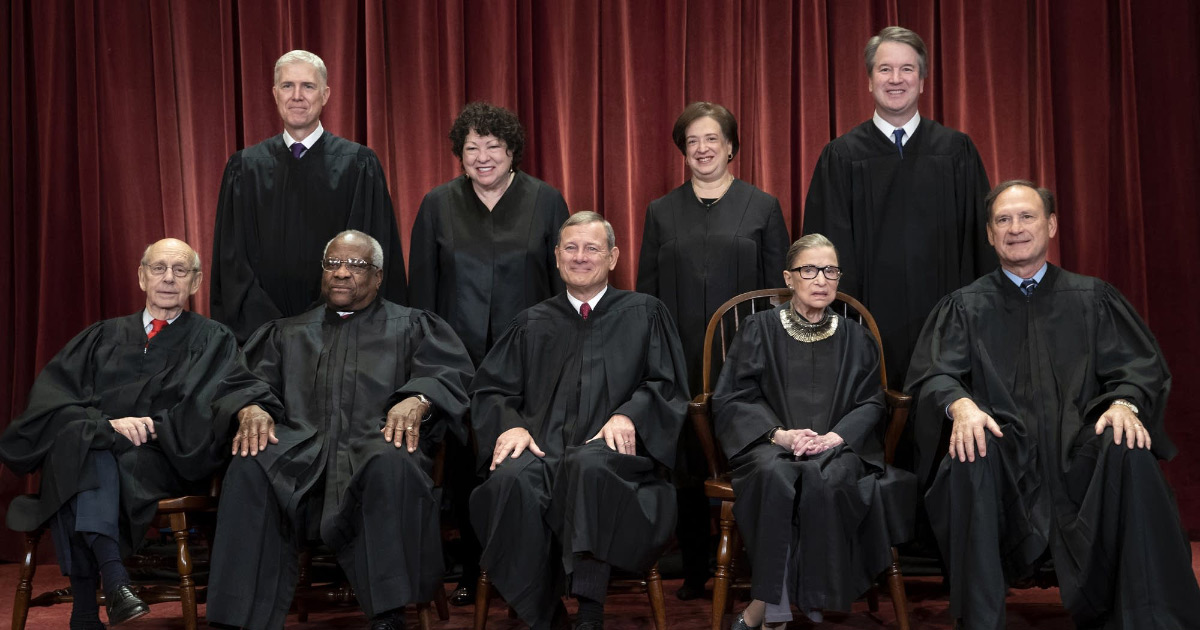
Forward Observer: One Week Until D-Day

Intelligence analyst Sam Culper at Forward Observer sends this short reminder. Forward Observer provides tactical and operational intelligence on the groups driving civil unrest and domestic conflict. They just hired a new analyst to the team and are ramping up production ahead of what they are calling the “Royal Rumble”. If you’re concerned about the country’s slow descent into domestic conflict, and want the ground truth during the upcoming violence and disruption between November and January, then you can join Forward Observer. Subscribe here and get access to Forward Observer’s intelligence reporting.

I’ve followed Professor Peter Turchin for several years. He’s a scientist who studies history and uses models to forecast conflicts.

For the past 10 years, he’s been warning that 2020 would be a turbulent year in American history.

In a recent article co-authored for a think tank, Turchin writes, “The social system that we live in is extremely fragile.”

The domestic conflict has already started, he continues, “[b]ut worse likely lies ahead.” Turchin describes the conflict as “the turbulent twenties”.

That shouldn’t come as a surprise to long time readers. Our Low Intensity Conflict likely started in 2016, and maybe as far back as the 2008 financial crisis.

I started writing my intelligence report on a weekly basis in 2016 because I was very confident that domestic conditions would worsen to the point of armed conflict.

After spending three years in Iraq and Afghanistan as an intelligence NCO and contractor, I knew I had what it took to track a domestic conflict.

There’s one week before the election. I can’t say for certain that we’ll see armed political violence in the coming days, but I’m certain that politically-related killings will continue.

This low intensity conflict is not going to end in November, or December, or January.

This conflict is going to rage for years.

Here at FO, to stay on top of developing conditions, we’re adding regional forums, expanding our daily podcast, and introducing a new line of intelligence products starting in early November.

You won’t be disappointed. But if you are, you can cancel your free 7-day trial anytime you like.

Stay ahead of the curve with our reporting. Subscribe here.

Until next time, be well and stay out front.


Always Out Front,

Samuel Culper

American Mind: What Happens if No One Wins?

This article at The American Mind discusses what happens to the Presidency if no one clearly wins the election – What Happens if No One Wins?

The Constitution provides for election crises—and its provisions favor Trump.

*This article was co-written with Robert J. Delahunty, a law professor at St. Thomas University.

Conservatives and liberals agree on few things, but one of them is that the country may well see an election crisis this year. All of the ingredients seem to be present: a closely and bitterly divided electorate; the threat of violence and disruption on Election Day or after; and the unusual circumstances of the Covid-19 pandemic.

In this essay we provide a short roadmap through the main legal and constitutional issues that could arise if Election Day fails to result in a clear winner of the presidency, identify opportunities for political mischief, and explain why the weight of the constitutional structure favors President Donald Trump in a contested election.

Unusual Circumstances

A crucial fact in this year’s election is that, largely because of COVID, an unprecedented number of voters will vote by mail. According to the Washington Post, 84% of the electorate, or 198 million eligible voters, will be able to vote by mail this year. In the 2016 election, roughly 25% of the votes were cast by mail. This year, as many of half the ballots may be mailed in.

Republicans tend to prefer voting in person while Democrats tend to prefer absentee balloting. In the swing state of North Carolina, Democrats requested 53% of the absentee ballots and Republicans 15%. A July poll reported that 60% of the Democrats in Georgia, but only 28% of the Republicans, are likely to vote by mail.

Counting mailed votes could make a decisive difference on Election Day. In the 2012 election, Barack Obama bolstered his winning margins substantially in swing states like Florida, Michigan, Ohio and Pennsylvania through overtime votes. Hillary Clinton picked up tens of thousands of overtime votes in 2016, though not enough to win. Last April, over 79,000 Wisconsin ballots arrived after election day (and were counted by court order) in a state that Trump carried in 2016 by about 23,000 votes. In Michigan’s August primary, 6,405 ballots missed the deadline and were not counted; Trump carried that state by 10,000 votes.

In one plausible scenario, Trump appears to be the winner on the morning after Election Day, but a “blue wave” begins in the days and weeks after, and Biden claims a belated, overtime victory.

Both Democrats and Republicans have sought either to enlarge or restrict the opportunities for absentee voting. A massive amount of litigation is already taking place. At last count, 279 Covid-related election cases are currently underway in 45 states, the District of Columbia, and Puerto Rico—and that tally does not include other litigation over other election issues.

Vote-counting problems—and the litigation they will generate—do not end once deadlines are decided. States must match signatures on ballots to those on voter rolls and verify that each ballot is valid. Although some key states permit pre-Election Day verification, others do not. Pennsylvania, Wisconsin, and Michigan were among the latter. “Real problems will emerge here,” Karl Rove has warned, “especially when there’s a big increase in mail-in ballots over 2016.”

In Pennsylvania, for example, 84,000 people voted by mail in the 2016 primaries; in 2020, 1.5 million did. In the best of circumstances, matching signatures on mail-in ballots to those on file with the state (from voter registration, ballot applications, or the DMV) is not, to the untrained eye, an easy task. Repeated and time-consuming challenges to the verification process will delay a final, official count.

The Electoral Count

Delayed election results could mean much more than the inconvenience of waking up on November 4 and not knowing who is President. They could trigger a constitutional crisis that would shake the country to its foundations.

An old federal statute, the Electoral Count Act of 1887, establishes deadlines for the states to report their official results and for the 538 members of the Electoral College to meet. The latter date this year is December 14, or 41 days after Election Day. The state deadline this year is December 8. The date is a safe harbor: if a state reports in time, Congress will accept its electors. The Act provides that if “any controversy or contest” remains after December 8, Congress will decide which electors—if any—may cast their state’s votes in the Electoral College.

Delays in counting the votes could well encroach on the December 8 deadline. State legislators and governors might come under mounting pressure to designate electors on their own if the popular vote remains incomplete, especially if there are allegations of fraud or abuse. Article II of the Constitution provides that “each state shall appoint, in such manner as the Legislature thereof may direct, a number of electors, equal to the whole number of Senators and Representatives to which the State may be entitled in the Congress.” The time when state legislatures directly appointed electors themselves are long gone: since the 19th century, states have delegated that power to their voters. But as the Supreme Court noted in Bush v. Gore, a state “can take back the power to appoint electors.”

The constitutional question is not whether but how a state legislature could reclaim the appointment of electors. States have provided by statute for the selection of their electors by their voters; therefore it one might argue they may only resume that power with a second, superseding statute. On the other hand, the Constitution specifically designates state legislatures, rather than the executives or a combination of the two, to choose the electors.  A state legislature might argue that a past legislature-and-governor cannot constrain its discretion to choose electors today.  Is it likely that state legislatures in battleground states could reclaim their constitutional power before the December 8 deadline looms? Probably not.

While Republicans control the state legislatures in six key battleground states, only two of those states also have Republican governors (Arizona and Florida). In four other contested states Republicans control the legislature, but Democrats control the executive: Michigan, North Carolina, Pennsylvania, Wisconsin. Only if the Constitution allows state legislatures, acting without the governor, to choose the electors, could those states cast electoral votes in a disputed popular election.

But there is another scenario in which the state legislatures could designate electors if litigation held up a definitive accounting of the popular vote. This requires a closer look at the Electoral Count Act.

The Act contemplates a post-election period in which states have the opportunity to resolve any “controversy or contest” in accordance with their pre-election law through “judicial or other methods or procedures.” Once this process has reached a definitive conclusion or “final ascertainment,” the governor is then to certify the electors. But the Act presupposes that all such controversies or contests have run their course before the governor submits the certified list of electors. What if December 8 is at hand and the controversies are still going on?

Another provision of the Act could come into play. If a State has held an election on November 3 “and has failed to make a choice” by the December 8 deadline, the Act declares that “the electors may be appointed on a subsequent day [after Nov. 3] in such a manner as the legislature of such State may direct.” That failure could arise from fraud, uncertainty, ongoing recounts or litigation. In those circumstances, a state could be said to have “failed” to make a choice, and its legislature could pick the electors.

That analysis presumes, however, that the Act is constitutional. The founders anticipated the possibility that the Electoral College would fail. In fact, they may not have foreseen political parties that would present the same presidential candidates in every state. Instead, several Founders seem to have thought that the states would often propose local favorites, that the Electoral College would reach no majority in the face of multiple candidates, and that the election would have to go to a backup procedure.

No candidate may win in the Electoral College for less noble reasons as well. Suppose states send electoral votes that—even if certified by the governor—remain under question, whether because of fraud in the vote, inability to count the ballots accurately under neutral rules, or a dispute between branches of a state government.

While the Electoral Count Act appears to create safe harbors for a state’s report of its Electoral College votes, the Act itself might prove unconstitutional. Under the 12th Amendment, “the President of the Senate [i.e., the Vice President] shall, in the Presence of the Senate and House of Representatives, open all the certificates [of the electoral votes of the states] and the votes shall then be counted.” Left unclear is who is to “count” the electors’ votes and how their validity is to be determined.

Over the decades, political figures and legal scholars have offered different answers to these constitutional questions. We suggest that the Vice President’s role is not the merely ministerial one of opening the ballots and then handing them over (to whom?) to be counted. Though the 12th Amendment describes the counting in the passive voice, the language seems to envisage a single, continuous process in which the Vice President both opens and counts the votes.

The check on error or fraud in the count is that the Vice President’s activities are to be done publicly, “in the presence” of Congress. And if “counting” the electors’ votes is the Vice President’s responsibility, then the inextricably intertwined responsibility for judging the validity of those votes must also be his.

If that reading is correct, then the Electoral Count Act is unconstitutional. Congress cannot use legislation to dictate how any individual branch of government is to perform its unique duties: Congress could not prescribe how future Senates should conduct an impeachment trial, for example. Similarly, we think the better reading is that Vice President Pence would decide between competing slates of electors chosen by state legislators and governors, or decide whether to count votes that remain in litigation.

The Role of the House

If the electoral count remains uncertain enough to deprive either Trump or Biden of a majority in the Electoral College, then the 12th Amendment orders that “the House of Representatives shall choose immediately, by ballot, the President.” Our nation barely avoided that outcome 20 years ago in the 2000 Florida recount and has only used twice it in our history (in 1800 and 1824). So if the disasters described above occur, then the Constitution gives the power to choose the President to the House.

So it seems like Nancy Pelosi and the Democrats would get to pick the winner. But not so fast, said the framers, who feared congressional control of the executive. Rather than allow a simple majority vote, the Constitution requires that the House choose the President by voting as state delegations. If the House decides the Presidency, Delaware would have the same number of votes as California.

This unusual process makes sense in light of the larger constitutional structure. The Framers rejected the idea that Congress should pick the President, which they believed would rob the Chief Executive of independence, responsibility, and energy. They wanted the people to have the primary hand in choosing the President, but mediated through the states, because they also feared direct democracy.

Thanks to Republican advantages among the states (rather than the cities) the current balance of state delegations in Congress favors Republicans by 26-23 (with Pennsylvania tied). If today’s House chose the president, voting by state delegations, Trump would win handily.

But there is another twist. The 20th Amendment to the Constitution seats a new Congress on January 3, but does not begin the term of a new president until noon on January 20. The new Congress chosen in the 2020 elections, rather than the current Congress, would choose the President. Even though Republicans currently have a majority of delegations, Democrats have narrowed the gap—after the 2016 elections, Republicans had held a 32-17 advantage in state congressional delegations. If Democrats can win one more congressional seat in Pennsylvania and then flip one more delegation, they could achieve a 25-25 tie in the House. Then the election would require political bargaining of the most extreme kind for the House to resolve a disputed presidential election.

First Constitutional Backup

Suppose the House cannot agree, which could well happen given the polarization of our politics. The Constitution even provides for this. If the House splits 25-25 between Trump and Biden, then the 20th Amendment elevates the Vice President-elect to the Presidency.

Under the 12th Amendment, when the Electoral College fails, the Senate chooses the Vice President. Unlike the House procedure, the Senators each have one vote, meaning that under the current balance in the upper chamber, 53 Republicans would choose Mike Pence to effectively become the next President. But, as with the House, it is the Senate chosen by the 2020 elections, rather than the 2018 elections, that will choose the Vice President. On November 4, we may well learn who will win the Presidency—because control of the Senate is also at stake.

Suppose that this November, Democrats take three Senate seats—those in Arizona, Maine, Colorado, and North Carolina, while losing Alabama—and the Senate divides 50-50. Could Pence, as the sitting President of the Senate on January 3, break a tie in the Senate in his favor to make him Vice President on January 20, 2021, and hence President due to the inability of the House to break its own deadlock? It appears that this is the case; Article I, Section 3 of the Constitution says the Vice President “shall have no Vote, unless [Senators] be equally divided.” It does not restrict the Vice President’s tie-breaking vote to some functions of the Senate but not others. In those extreme circumstances, Pence might recuse himself, but the Constitution would not require it.

Second Constitutional Backup

Suppose then the House, Senate, sitting President, and even Vice President Pence decide that he should not use that tie-breaking power. Then the Constitution’s backup system for the Electoral College will have failed.

That still leaves a second backup system. Article II of the Constitution states that in “the Case of Removal, Death, Resignation or Inability” of both the President and Vice President, Congress can declare “what Officer shall then act as President” until the disability ends or a new President is elected. Don’t forget that word, “Officer,” because it may make all the difference.

Under the current federal succession statute, Congress decided that congressional leaders should assume the Presidency. Speaker of the House Nancy Pelosi sits first in line, followed by the President pro tem of the Senate, currently Chuck Grassley. From there, the line of succession continues to Secretary of State Mike Pompeo, and then the other cabinet members.

But, as Yale law professor Akhil Amar persuasively argued in 1995 (at the prospect of Newt Gingrich becoming President should Congress impeach Bill Clinton!), this part of the federal succession statute likely violates the Constitution. Notice that Article II requires that the Presidency pass down to an “Officer.” The Constitution generally—but not always—refers to “Officers” as members of the Executive Branch. Further, the Incompatibility Clause of the Constitution prohibits Members of Congress to hold executive office. Neither Nancy Pelosi nor Chuck Grassley can become President. Mike Pompeo would become President—an outcome so unusual, so unexpected, it just might fit our bizarre times.

International Man: The American Revolution—The Sequel

Jeff Thomas at International Man writes The American Revolution—The Sequel from his perspective outside of America.

The US is the most observed country in the world. Since it’s the world’s current empire (and since it is beginning its death throes as an empire), it’s fascinating to watch.

Those of us outside of the US watch it like Americans watch TV. It’s like a slow-motion car wreck that we observe almost daily, eager to see what’s going to happen next. We criticise the madness of it all, yet we can’t take our eyes off the unfolding drama. It has all the excitement of a blockbuster movie.

  • The national debt is, by far, the highest of any country in history.
  • The economic system is a house of cards, getting shakier every day.
  • The government has become mired in progress-numbing fascism and increasing collectivism.
  • The government is aggressively creating the world’s most organized police state.
  • The majority of the population have become wasteful, spendthrift consumers who apathetically hope that their government will somehow solve their problems.
  • The media consistently misrepresents international events, prodding the citizenry into accepting that the ongoing invasion of multiple other countries is essential.
  • The most popular candidates for president (both parties) are the candidates that are the most egotistical, out-of-control blowhards who preach provocative rhetoric rather than real solutions.

Still, most Americans retain the hope that, somehow, it will all work out.

Hope Is a Desire, Not a Plan

There are growing numbers of Americans who have accepted that the US is unravelling rapidly and is headed for a social, economic, and political collapse of one form or another.

Some talk of a new revolution (but hopefully a peaceful one, of the Tea Party sort). Some imagine that, if they can store enough guns and ammunition in their homes, they might be able to make a stand against government authorities. Others mull over the idea of organised secession by some of the states. A small, but growing, number are quietly leaving for more promising destinations.

Except for the last of these, most of the “hopes” are understandable, but any attempt at a “Second American Revolution” is unlikely to succeed.

Why? Well, just for a start,

  • The power of the US state is far greater than that of King George III in the late eighteenth century.
  • The present US state would be fighting on its own ground, not some continent thousands of miles across the ocean.
  • The US state is committed to the concept that it dealt definitively (and forever) with the concept of secession between 1861 and 1865.

But, for the sake of argument, let’s say that a breakup of the union, or complete removal and replacement of the government were possible in the US. What then?

Well, unfortunately, here comes the really bad news for those who hope that the US could start over as the free nation it was in its infancy:

  • In the late eighteenth century, America was a largely agrarian collection of colonies. Colonists had to work hard just to survive, so the work ethic and self-reliance were paramount in the colonists’ makeup. They were a brave people who were accustomed to providing for themselves and physically fighting off those who would challenge them.
  • Colonists received no significant largesse from the British or local governments. No welfare, no social security, no Medicare or Medicaid, no benefits of any kind.
  • Colonists made their own daily decisions. They had no government schools or media telling them what to think or what choices to make. They relied on common sense and self-determination to guide their decisions and actions.

Today, of course, the opposite is true. Less than 2% of Americans are involved in agriculture. A mere 9% are actually employed in the production of goods. They are rarely directly involved in their own physical protection (Most, if not all, combat is overseas and fought by defence contractors or those who voluntarily serve the military).

Most Americans receive benefits of one type or another from their government. Most recipients regard these benefits as “essential” and could not get by without them.

Most Americans receive their opinions from the media. Although this is not apparent to many Americans, it’s glaringly clear to those outside the US who can only shake their heads at the misinformation proffered by the US media and the wholesale acceptance of this “alternate reality” by so many Americans.

But what bearing does this have on what the future would be for Americans if they were to become determined enough to either remove their entire government or, alternatively, for some states to secede?

There have been many revolutions in the history of the world, both peaceful and otherwise. In the case of the American Revolution of 1776, the colonists themselves were largely self-contained as a people and possessed the ideal ethos to succeed as a productive country.

But this has rarely been true in history. Whenever a people have been heavily dependent on the State in one way or another, they had become accustomed to receiving largesse at the expense of others. This is a major, major factor. Such a group is unlikely in the extreme to either produce or elect a Washington or a Jefferson. They almost always choose, instead, to fall in behind someone who promises largesse from the State. In choosing such leaders, the people are more likely to receive a Robespierre or a Lenin. Out of the frying pan and into the fire.

The pervasive difficulty here lies in the erroneous concept that there can be a return to freedom whilst maintaining the dependency upon largesse from the State. The two are mutually exclusive. Those who seek a return to greater freedom must also accept that “freedom for all” means an end to the State being empowered to steal from one person in order to give to another.

Or, as stated by Frédéric Bastiat in the mid-nineteenth century, “Government is the great fiction, through which everybody endeavours to live at the expense of everybody else.”

Whether the US continues on its present downward progression, or if it breaks free in a bid for greater freedom, the eventual outcome is likely to have more to do with the collectivist mindset of the majority than with the libertarian vision of a few.

Editor’s Note: Right now, the US is the most polarized it has been since the Civil War.

If you’re wondering what comes next, then you’re not alone.

The political, economic, and social implications of the 2020 vote will impact all of us.

Wilder, Wealthy, and Wise: Civil War 2.0 Weather Report – Oct. 5, 2020

Wilder, Wealthy, and Wise shares their latest Civil War 2.0 Weather Report – Worse Than You Think.

“You were right, Smith. You’re always right. It was inevitable.” – The Matrix: Revolutions

Right now it feels like we’re watching a slow-motion video of a wreck that’s getting ready to happen. We know it’s going to happen, but have no idea how to stop it as physics makes it inevitable.

  1. People actively avoid being near those of opposing ideology. Might move from communities or states just because of ideology.
  2. Common violence. Organized violence is occurring monthly.
  3. Opposing sides develop governing/war structures. Just in case.
  4. Common violence that is generally deemed by governmental authorities as justified based on ideology.
  5. Open War.

We are in the gray zone between step 9. and step 10. I will maintain the clock at 2 minutes to midnight. Violence continues to be commonly justified by local and state authorities, but there are now premeditated, fatal attacks by the Left. As noted in a previous update, the only thing keeping the clock ticking to full midnight is the number of deaths.

In this issue: Front Matter – Being Out In Front – Violence And Censorship Update – Updated Civil War 2.0 Index – You Have No Idea – Links

Welcome to the latest issue of the Civil War II Weather Report. These posts are different than the other posts at Wilder Wealthy and Wise and consist of smaller segments covering multiple topics around the single focus of Civil War 2.0, on the first or second Monday of every month. I’ve created a page (LINK) for links to all of the past issues. Also, feel free to subscribe and you’ll get every post delivered to your inbox, M-W-F at 7:30 Eastern.

Being Out In Front

When I started doing these updates, I wondered if I was being too pessimistic. In part, the original scale was developed based on personal experience – I had visited a “blue” state a few years ago on summer vacation.

A man, apparently looking at birds in a little-used state monument, saw us drive in. He trained his binoculars on our license plate. “Lower-upper Midwestia, eh?” he yelled. “Yes,” I responded.

“Who’d you vote for?” Unusual, but, whatever.

“Well, his name starts with a T,” I replied, grinning.

It puts the donkey in the pit, or a lifetime of communism it will get.

He then proceeded to call me a name for a portion of the anatomy that was the first thing people panicked about when COVID-19 hit and everyone bought all of that toilet paper.

“What did you say?”

“You heard me.” He then repeated the anatomical description and then scurried, rat-like into his SUV.

The Mrs. had gone to the little bathroom at the historical site, and had missed the interaction. I’m glad. She would have broken him like a stick. She always handles my light work.

But this was a significant data point. Never in my life had I been attacked, in public, for no reason other than my ballot. For most of my life, political differences had been a path to amusing conversations among friends. We had considered moving to this state. Why would we, though, when people acted like that? And now, people are moving out of California for the same reason we didn’t move to that blue state.

Once upon a time, we could talk about our political disagreements and still be friends. That worked, because even though there were things we disagreed about, we agreed about most things. Now? Leftists have largely abandoned the things that made us Americans. We have nothing to say to each other.

Seriously, The Mrs. would have broken him in the most embarrassing thirty seconds of his life.

When a stranger will insult you in public over nothing more than your ballot? The time of violence is close.

Violence And Censorship Update

Last month I put forth the criteria (from the literature I could find) that 1,000 was the number of deaths that signified a civil war. There was at least one great comment that made the point that we were already there and the 1,000 death minimum was arbitrary.

It is. But we have to have something, even if it’s arbitrary. The last I could find, there were 50 documented deaths due to the protest as listed by the Washington Post. My bet is that number is too low. It doesn’t, for instance, add in the numbers of dead due to rampant lawlessness in cities where BLM®/Antifa™ have taken root and taken over.

Not all of those “excess” murders are political, but a lot more are than I think are currently being admitted. Although it’s unscientific, I’d put the number of deaths closer to 150 than 50, but no one is tallying them.

On the censorship front, Facebook® has announced that no political ads will be run in the United States the week prior to the election. Facebook© has been removing points that differ from the “official” line about medical opinions, many of which have varied significantly throughout 2020.

Always wondered why the people in Hong Kong are holding American flags and are against censorship, while Antifa© are burning American flags and demanding censorship.

Perhaps the biggest censorship has been elimination of all Facebook™ posts expressing support for Kyle Rittenhouse, who in my opinion was exercising his right of self-defense. The same is true for virtually every major Internet funding service where Kyle’s supporters have tried to get monetary support for him. In the end, at last check they nearly have enough money for his bail. Yet Gofundme® regularly funds people accused of murder. But not witchcraft or self-defense.

They have to have a line somewhere.

Updated Civil War II Index

The Civil War II graphs are an attempt to measure four factors that might make Civil War II more likely, in real-time. They are broken up into Violence, Political Instability, Economic Outlook, and Illegal Alien Crossings. As each of these is difficult to measure, I’ve created for three of the four metrics some leading indicators that lead to the index. On illegal aliens, I’m just using government figures.

Violence:

Up is more violent. The public “perception” of violence keeps dropping over time, in part (my opinion) is that people are now expecting violence, and the sight of burning buildings and riots in the street are just accepted in September of 2020 – I don’t think there’s anyone (besides CNN®) that would say that September was more peaceful than April 2020, but if you look at the graph, we’ve just become used to constant political violence from the Left.

Political Instability:

Up is more unstable. Instability was up in September. I think there’s a really growing feeling among the people on the Left that Trump will win, and that would be the scariest thing that they can imagine. Well, that and getting real jobs.

Economic:

Down indicates worse economic conditions, are up significantly. I wrote last month that I expected a decline through October. Oops. This is why you don’t trust me with your money. But I think the numbers are juiced – I think that the unemployment numbers are artificially low, perhaps significantly so. And I’m expecting the markets to drop off a cliff. Sometime soon.

Illegal Aliens:

Down is good, in theory. This is a statistic showing border apprehensions by the Border Patrol. Numbers of illegals being caught is rising again – it’s at higher than all but one of the last five years. Even if it’s bad here, it’s worse south of the border.

You Have No Idea

. . . how bad it can get.

One thing that history has proven is that the most difficult conflicts are civil wars. They are generally unrestrained in the level of brutality. Why? Unlike war objectives such as wanting Ukraine for extra storage for lawn furniture or wanting Spain to just shut up, already, civil war objectives are personal.

Just saying, you can store a LOT of patio furniture in the Ukraine.

You can see that in Antifa®, especially. I’ve written a lot about them, and I’ve made an effort to really try to understand their mentality. I wrote a post specifically about that, and it’s one of my favorites (Why Would Anyone Become A Leftist?). For Antifa™, it’s personal. Very personal. As Sam Hyde said,

“When we win, do not forget that these people want you broke, dead, your kids raped and brainwashed, and they think it’s funny.”

One thing that was memorable to me was when I was reading Concerned American over at the excellent Western Rifle Shooters Association (LINK) was when he said that he thought that no one over fifty would live through the coming crisis.

A statement that stark took me by surprise. It’s not that he’s wrong – I don’t know that he is. But it brought home to me that the potential for damage in the coming few years dwarfs anything that has ever happened in the United States.

Be aware. Prepare. Be in the safest place you can be…(continues)

Daily Reckoning: Civil War Two

Could civil unrest lead to balkanization of the USA?

James Howard Kunstler, writing at The Daily Reckoning, talks Civil War Two.

America has a new manufactured crisis, ElectionGate, as if all the other troubles piling up like tropical depressions marching across the September seas were not enough.

America needs a constitutional crisis like a hole in the head, and that’s exactly what’s being engineered for the holiday season by the clever folks in the Democratic Party’s Lawfare auxiliary.

Here’s how it works: the complicit newspapers and cable news channels publish polls showing Joe Biden leading in several swing states, even if it’s not true. Facebook and Twitter amplify expectations of a Biden victory. This sets the stage for a furor when it turns out that he loses on election night.

On cue, Antifa commences to riot all around the country. Meanwhile, a mighty harvest of mail-in votes pours into election districts utterly unequipped to validate them.

Lawfare cadres agitate in the contested states’ legislatures to send rogue elector slates to the electoral college. The dispute ends up in congress, which awaits a seating of newly-elected representatives on January 4, hopefully for Lawfare, mostly Democrats. Whoops…!

Turns out, the Dems lost their majority there too. Fighting in the streets ramps up and overwhelms hamstrung police forces in Democratic-run cities. January 20 — Inauguration Day — rolls around, and the Dems ask the military to drag Trump out of the White House “with great dispatch!” as Mr. Biden himself put it so nicely back in the summer.

The U.S. military breaks into two factions. Voilà: Civil War Two.

You didn’t read that here first, of course. It’s been all over the web for weeks, since the Democratic Party-sponsored Transition Integrity Project (cough cough) ran their summer “war game,” intending to demonstrate that any Trump election victory would be evidence of treason and require correction by any means necessary, including sedition, which they’d already tried a few times in an organized way since 2016 (and botched).

The Democrats are crazy enough now to want this. They have driven themselves crazy for years with the death-wish of eradicating western civ (and themselves with it). There are many reasons for this phenomenon, mostly derived from Marxist theories of revolution, but my own explanation departs from that.

The matter was neatly laid out a year ago during the impeachment ploy: After the color revolution in Ukraine, 2014, Mr. Biden was designated not just as “point man” overseeing American interests in that sad-sack country, but specifically as a watchdog against the notorious deep corruption of Ukraine’s entire political ecosystem — as if, you understand, the internal workings of Ukraine’s politics was any of our business in the first place.

The evidence aired publicly last year suggests that Mr. Biden jumped head-first and whole-heartedly into the hog-trough of loose money there, netting his son Hunter and cohorts millions of dollars for no-show jobs on the board of natural gas company, Burisma.

And then, of course, Mr. Biden stupidly bragged on a recorded panel session at the Council on Foreign Relations about threatening to withhold U.S. aid money as a lever to induce Ukraine President Petro Poroshenko to fire a prosecutor looking into Burisma’s sketchy affairs.

Naturally, the Democratic Party impeachment crew accused Mr. Trump of doing exactly what Mr. Biden accomplished a few years earlier.

The impeachment fizzled, but the charges and the odor of the Biden-Burisma scandal lingered without resolution — all the while that Mr. Biden posed as a presidential candidate in the primaries.

This week, the Senate released a report detailing findings of their investigation into the Biden family’s exploits abroad. It didn’t look good.

Also implicated are the State Department officers in the Kiev embassy who pretended not to notice any of this, pointing also to their engagement in further shenanigans around the Trump-Clinton election of 2016 — a lot of that entwined in the Clinton-sponsored RussiaGate scheme.

Of course, the Senate was not so bold as to issue criminal referrals to the Justice Department.

If Mr. Biden actually shows up at this week’s debate, do you suppose that Mr. Trump will fail to bring up the subject?

Does this finally force Mr. Biden’s withdrawal from what has been the most hollow, illusory, and dispirited campaign ever seen at this level in U.S. political history?

All of which is to say that the Democratic Party has other things to worry about, besides who will replace Ruth Bader Ginsburg on the Supreme Court.

That may be hard to believe, but it’s how things are now after four years of implacable, seditious perfidy from the party.

A week ago, all the talk centered around the Democrats’ election coup plan, as publicized stupidly by the so-called Transition Integrity Project. Nice try. What if all those mail-in ballots sent out recently have Joe Biden’s name on them and it turns out that he is no longer a candidate?

Hmmmm…. No doubt the recipients were so eager to fill them in and send them out that there’s no going back on that scam. Apparently, a Biden withdrawal was not one of the scenarios scrimmaged out in the Transition Integrity Project’s “war game.”

What then? A do-over?

Hence, panic in the swamp. Joe Biden’s misadventures, and his pitiful fate, are but the outer rainbands of the brewing storm.

There’s the threat of further and widespread riots, of course, but since when has insurrection proved to be a winning campaign strategy in a country not entirely gone to the dogs?

People who are not insane usually object to their businesses being torched and their homes invaded. At this point, after months of violent antics by criminal nihilists, one can even imagine Multnomah County, Oregon, turning Trumpwise.

The orgy of political hysteria, insane thinking and violence is a psychotic reaction to the collapsing techno-industrial economy — a feature of it, actually.

When all familiar social and economic arrangements are threatened, people go nuts. Interestingly, the craziness actually started in the colleges and universities where ideas (the products of thinking) are supposed to be the stock-in-trade.

The more pressing the practical matters of daily life became, the less intellectuals wanted to face them. So, they desperately generated a force-field of crazy counter-ideas to repel the threat, a curriculum of wishful thinking, childish utopian nostrums and exercises in boundary-smashing.

As all this moved out of the campuses (the graduation function), it infected every other corner of American endeavor, institutions, business, news media, sports, Hollywood, etc.

The country is now out of its mind… echoes of France, 1793… a rhyme, not a reprise.

Regards,

James Howard Kunstler
for The Daily Reckoning

The American Mind: Revolution 2020

The following articles comes from Angelo Codevilla at The American Mind, Revolution 2020. This is a lengthy piece. Please click through one of the links to continue reading past this excerpt.

How did we get here—and how will it end?

Understanding what drives the revolution that is destroying the American republic gives insight into how the 2020 election’s results may impact its course. Its practical question—who rules?—is historically familiar. But any revolution’s quarrels and stakes obscure the question: to what end? Our revolution is by the ruling class—a revolution from above. Crushing obstacles to its growing oligarchic rule is the proximate purpose.

But the logic that drives the revolution aims at civilization itself.

What follows describes how far along its path that logic has taken America, and where it might take us in the future depending on the election’s outcome.

Regime Change

Aristotle, in Book 5 of the Politics, describes how revolutions kill regimes (such as America’s) that balance the contrasting interests of ordinary people with those of the wealthy, of officials, and of other prominent persons. As the balance between any complex regime’s components shifts over time, the system may seamlessly transform into unmixed democracy, oligarchy, or some kind of monarchy. The revolution may be barely perceptible—providing that those who impose themselves, whether from above or below, do so without adding insult to injury.

But, if the party that takes power thereby destroys the friendship that had bound the several parts, even trifling incidents can spiral into all-consuming violence. Thucydides’ account of the revolution that destroyed Corcyra during the Peloponnesian War is prototypical. The French revolution, the Spanish civil war, and countless others echo it. Today, the oligarchic transformation of America’s republic is turning violent. Aristotle, however, points out that oligarchies born of violent revolution tend to succumb to the very violence that births them, quickly degenerating into some kind of tyranny or one-man rule. Restoration of anything like the original constitutional regime is most unlikely.

The U.S. Constitution had codified as fine a balance between the powers of the Many, the Few, and the One as Aristotle may have imagined by arming the federal government’s components, the States, and ordinary citizens (via the first ten Amendments as well as elections) with means to maintain the balance. Its authors, however, were under no illusions about the efficacy of “parchment barriers” to prevent interests from coalescing into factions against the common good. During the 19th century, interests and opinions in the South and the North coalesced into antagonistic ruling classes that fought the century’s bloodiest war. In the 20th, the notion that good government proceeds from scientific expertise, as well as the growing identity between big business and government, fostered the growth of a single nationwide Progressive ruling class. Between the 1930s and the early 21st century, the centralization of administrative power in this class’s hands did much to transform the American republic established in 1776-89 into an oligarchy.

Progressive Oligarchy in America

The ruling class was able to transform America’s constitutional regime because its collective partisanship bridged the divisions between the federal government’s parts, the states, as well as between public and private power.

In America as everywhere else, government regulation of business meant the twains’ coalescence. From the very first, the blurring of lines between public and private—the focus of government on distributing tasks and rewards—shifted decision-making from citizens who merely vote to the administrative system’s “stakeholders.” This reorganization of liberal societies was first codified in Italy’s 1926 Corporation Law as Fascism’s defining feature. Before WWII every Western country, America included (in FDR’s New Deal), had adopted a version thereof. In 1942 Joseph Schumpeter’s Capitalism, Socialism, and Democracy, a neo-Marxist analysis, described this oligarchy as the necessary consequence of modernity.

In America, however, this oligarchy fit Aristotle’s (or Marx’s) mostly economic criteria only superficially. Yes, as we will see below, its power always very much involved the growing identity between government power and private wealth, and hence on restricting access to wealth to the politically connected. But as the decades passed, it became ever clearer that membership in the U.S. ruling class depends primarily on sharing the right socio-political opinions.

The European tradition of government by experts reaches back beyond Napoleon and Hegel to royal techno-bureaucrats. Being essentially amoral, it treats transgressors as merely ignorant. It may punish them as rebellious, but not as bad people. That is why the fascists, who were part of that tradition, never made it as totalitarians. People—especially the Church—remained free to voice different opinions so long as they refrained from outright opposition. America’s growing oligarchy, however, always had a moralistic, puritan streak that indicts dissenters as bad people. More and more, America’s ruling class, shaped and serviced by an increasingly uniform pretend-meritocratic educational system, claimed for itself monopoly access to truth and goodness, and made moral as well as technical-intellectual contempt for the rest of Americans into their identity’s chief element. That, along with administrative and material power, made our ruling class the gatekeeper to all manner of goods.

Progressivism’s foundational proposition—that the American way of life suffers from excessive freedom and insufficient latitude for experts to lead each into doing what is best for all—is the intellectual basis of the oligarchy’s ever-increasing size, wealth, and power. The theme that the USA was ill-conceived in 1776-89 and must be re-conceived has resounded from Woodrow Wilson’s Congressional Government (1885) to the campaigns of Franklin Roosevelt, John Kennedy, Barack Obama, and Joseph Biden: “listen to the scientists!” The criticism’s main point has been constant: America’s original conception validated the people’s right to live as they please, and made it hard to marshal them for Progressive purposes.

But the Progressive critique adds a moral basis: the American people’s indulgence of their preferences—private ease and comfort, focus on families, religious observance, patriotism—has made for every secular sin imaginable: racism, sexism, greed, etc. Because most Americans are racist, sexist, un-appreciative of real virtue or refinement (these are somehow rolled together), because these Americans resist knuckling under to their betters, America is a sick society that needs to be punished and to have its noxious freedoms reformed.

Hence, the revolution that created the American oligarchy—illiterate contemporary Marxists notwithstanding—has nothing in common with Karl Marx’s original democratic (in the Aristotelian sense) conception “from below” (e.g. his 1875 Critique of the Gotha Programme) other than “overthrowing the pillars of the house.” Ours is the Party-centered oligarchic revolution from above that Lenin outlined in What Is to Be Done? (1902). This Leninism is the template of the Soviet and every other Communist regime, bar none. In our revolution, too, everything—always and everywhere—is about the Party.

Upbuilding the Ruling Class

The moral class critique from above was always implicit. It largely stayed in the background of the campaigns for social improvement into which Progressives have led the American people ever since the 1930s, and especially since the 1960s. The ruling class chided Americans for insufficient commitment to education, to well-being for the poor and disadvantaged, to a healthy natural environment, and to public health, as well as for oppressing women, and, above all, for racism. The campaigns for remedying these conditions have been based on propositions advanced by the most highly-credentialed persons in America—experts certified by the U.S. government, whom the media treated as truth-telling scientists, their opponents as enemies of the people.

But each and all of these campaigns produced mostly the ostensible objectives’ opposites while increasing the numbers of the oligarchy’s members and their wealth and power, endowing them with socio-political clienteles as well as with levers for manipulating them. As its members’ powers grew, they developed a taste for disdaining independent Americans and acquired whips for punishing them.

In 1950, Americans at all levels of government spent 2% of GDP on K-12 education and 0.37% on higher education. In our time we spend 4.4% on K-12 and 1.9% on higher education, of a GDP that is about ten times as large. By any measure, the increases have been huge. These were supposed to uplift Americans intellectually and (maybe) morally. But they have dumbed down the nation to the point of mass illiteracy at the bottom and, at the top, created herds of ignorant, haughty, debt-ridden college graduates, fit only to enforce government edicts against Americans they despise. But the money also built up and entitled a class of monied, entitled, self-indulgent educrats—mostly administrators. U.S. college towns nowadays are islands of luxury, ease, and hate. They act as the ruling class’s gatekeepers.

Theodore Roosevelt and John Muir had reminded Americans to preserve our country’s beauty and bounty for all. But beginning in the 1960s the ruling class started using conservation as an excuse for restricting the public living on and profiting from the land, even their own properties. This resulted in big developers, regulators, politicians and lawyers making fortunes while preserving the privacy and increasing the value of places where they themselves live. (Now they want to outlaw building new single-family homes anywhere.) They also reaped billions from subsidies for “renewable energy” by flogging possible correlation—without evidence of cause—between CO2 and “global warming.” All others have suffered.

In 1965, the Census counted some 40 million people as “poor”—roughly the same number as today. Over the succeeding half-century, the Federal government has spent some $22 trillion to lift people out of poverty. Had that money been divided evenly between all the poor, each would have been a millionaire. Instead, the War on Poverty swelled and solidified America’s underclass. Because the government paid to support women with children so long as they were not married, marriage and family cohesion declined. With only about one in eight black children growing to adulthood with two married parents, the black community and America as a whole are beset by a self-perpetuating flow of dysfunctional youth. This led to the long-term imprisonment of more than a million people. Prisons became an industry. But the war on poverty enriched countless contractors, consultants and members of the “helping professions.”

These initiatives are scams. Whatever else they have done, they have increased the number of people whose livelihoods depend on government. Since 1965, the number of direct employees has more than doubled to 22 million, and their pay exceeds that of persons who actually perform services that people want. The city of San Francisco, for example, employs 19,000 persons whom it pays more than $150,000 yearly. This does not count the countless government contractors, or the advantages for some and disadvantages for everyone else that government power combined with corporate power conveys. In short, whatever else these initiatives have done, they surely have created a lot of patronage.

The Little Law That Ate the Constitution

One initiative, sold as the pursuit of justice for black Americans, has empowered the U.S. ruling class with power that transcends money. More than all the other campaigns combined, it has fueled its members’ sense of entitlement to rule fellow citizens it deems moral inferiors. That sweet, heady sense—not any love for blacks—is what drives it.

Into the 1960s, the states of the former Confederacy had imposed segregation to racially separate accommodations. In Plessy v. Ferguson (1896), the Supreme Court had approved them so long as they were “equal.” In fact, most of what states had reserved for Negroes was grossly inferior. The longstanding campaign for “civil rights” had rallied the country against this obvious negation of the 14th amendment’s guarantee of “equal protection of the laws.” But as liberals fought state-imposed racial segregation, they had come to equate justice with the forcible imposition of racial integration resulting from countless personal choices. The Supreme Court’s 1954 decision in Brown v. Board of Education, which outlawed state-directed segregation, also gave impetus to all manner of efforts to re-form society by legal-administrative force.

The decision itself eliminated any chance that this could be done in a disinterested manner. It was not based on the plain, unequivocal meaning of the 14th Amendment’s “equal protection of the laws.” Back in 1896, Justice John Marshall Harlan had dissented from Plessy, arguing that any state establishment of racial preference whatever, regardless of its character or intention, violates those words. But Thurgood Marshall based his decision on “science”—that is, on the variable opinions of the credentialed class. A sociologist by the name of Kenneth Clark claimed he had proven that Negro children could feel and learn normally only in a racially mixed environment. (The “black is beautiful” movement began countering this immediately.) Quickly, “scientific” conventional wisdom made “benign” or “remedial discrimination” by race official U.S. government policy.

The Brown decision’s reliance on “science” also confused legally established segregation with the segregation that results from personal choices. This confusion was the basis for Title II of the Civil Rights Act of 1964, which outlawed discrimination in “public accommodations” on the basis of race. Thenceforth, Civil rights law was no longer about removing legal barriers to personal choices. It had begun forcing personal choices. The Supreme Court’s approval of the law as a mere regulation of interstate commerce was thin pretense. The Act turned out to be the little law that ate the Constitution and poisoned American society.

It was passed primarily by Republican votes. Democrats, seeing the empowerment of a historic Republican constituency in the South as potential disaster, scrambled to avert it by out-pandering Republicans, while describing any reticence on their part as racial animosity and ascribing whatever ailed Negroes to the Republicans’ racism. Quickly, the dynamics of politics turned “civil rights” into a ruinous socioeconomic scam.

Howard W. Smith, segregationist Democrat of Virginia, best foresaw the scam’s size. Bitterly, to ensure that the law’s logic would roil the lives of its sponsors as it was roiling his constituents’, Smith, Chairman of the House of Representatives’ powerful Rules Committee, added language that outlawed discrimination on the basis of sex. The list of supposedly invidious discriminations that the Act (as amended) thus prohibits never stopped growing—age, all manner of disabilities, sexual orientation, etc. In the Act’s lengthening legal shadow, even speech that some may construe as insufficiently hostile to discriminatory “anti-discrimination” has become punishable civilly as well as criminally. Thus, willy-nilly, the Act established what U.S. law quickly recognized as “protected categories” of persons. This negates the American republic’s bedrock: “all men are created equal.” It invited whoever perceives himself disadvantaged or dishonored to construe himself part of such a category and to invite the government to discriminate against his foe. As government joined in some people’s quarrels against others, government became fomenter and partisan in endless strife.

Race (and sex, etc.) is yet another set of excuses for transferring power to the ruling class. The oligarchy is no more concerned about race than it is about education, or environmentalism, or sex, or anything else. It is about yet more discretionary power in the hands of its members, for whom not all blacks (or women, or whatevers) are to be advantaged—only the ones who serve ruling class purposes. In education, employment, and personnel management, co-opting compatible, non-threatening colleagues is the objective. As Joseph Biden put it succinctly: if you don’t vote for him, “you ain’t black.” A ruling class of ever-decreasing quality is a result.

Members and hangers-on who receive privileges, however, are a small number compared with the ruling class’s clients. Breaking down their client’s resistance to the revolution of the ruling class requires inducing them to share in the revolution’s logic of hate for its targets. This in turn requires control over channels of communication. Google, Facebook, and Twitter are indispensable for this. But creating and maintaining a sense of identity between oligarchs and the client mobs is possible mostly because of the latter’s gullibility.

The Logic of Hate

I noted that this revolution’s logic leads to no logical end. That is because “the logic that drives each turn of our revolutionary spiral is Progressive Americans’ inherently insatiable desire to exercise their superiority over those they deem inferior.” Its force, I observed, “comes not from the substance of the Progressives’ demands,” but rather “from that which moves, changes, and multiplies their demands without end. That is the Progressives’ affirmation of superior worth, to be pursued by exercising dominance: superior identity affirmed via the inferior’s humiliation.” Affirmation of one’s own superiority by punishing inferiors is an addictive pleasure. It requires ever stronger, purer doses of infliction, and is inherently beyond satisfaction.

In short, the Progressive ruling class’s intensifying efforts to oppress those they imagine to be their inferiors is not reversible. It is far less a choice of policy than it is the consequence of its awakening to its own identity—awakening to the powers and privileges to which they imagine their superior worth entitles them. It is awakening to its deep resentment—indeed, to hate—for whoever does not submit preemptively.

Let there be no doubt: the ruling class’s focus on Donald Trump has been incidental. America’s potentates do not fear one pudgy orange-haired septuagenarian. They fear the millions of Americans whom they loathe, who voted for Trump, who gave his party control of House and Senate, and who will surely vote for folks these potentates really should fear.

The Trigger

America’s oligarchic transformation had proceeded smoothly for decades because the ruling class had taken care not to add insult to injury. But as time passed, its arbitrariness and contempt increasingly tried the patience of ordinary people who practiced constitutional restraint.

During the 2008 financial panic, however, as the Progressive, bipartisan ruling class scrambled incompetently to save itself and its clients’ assets, it fatefully flaunted its united contempt for the rest of Americans. Republican president George W. Bush, Republican presidential candidate John McCain, the overwhelming majority of Republican politicians and institutions, and the literati from the Nation to the (post-Buckley) National Review were of identical minds with Democratic presidential candidate Barack Obama and Democrat politicians and institutions regarding measures to be taken—to which three fourths of the public objected, to no avail. United, this ruling class scoffed at popular opposition.

Insult having awakened substantial numbers of Americans to the injuries being inflicted on them, they looked to push back.

That began a cycle of recrimination which laid bare and accentuated the differences that had been growing between America’s rulers and ruled. At the time, I wrote that

The two classes have less in common culturally, dislike each other more, and embody ways of life more different from one another than did the 19th century’s Northerners and Southerners—nearly all of whom, as Lincoln reminded them, “prayed to the same God.” By contrast, while most Americans pray to the God “who hath created and doth sustain us,” our ruling class prays to itself as “saviors of the planet” and improvers of humanity.

The people who killed one another in 1861-65 respected each other as individuals and shared standards of truth, justice, and civility. But as our ruling class put the rest of America beyond the proverbial pale, what remained of friendship among the American republic’s components drained away.

By 2016, most Americans preferred either Donald Trump or Bernie Sanders over ruling-class candidates for president. And of course, they increasingly despised one another. In short, the popular basis for constitutional restraint had ceased to exist on all sides. But mostly the ruling class, unaccustomed to outright opposition to its presumption of authority, deemed the voters’ recalcitrance to be illegitimate. That began the revolution’s active phase.

At that time, I wrote that, regardless of who won the upcoming election, the United States of America had crossed the threshold of a revolution, and that though no one could know how that would end, we could be sure only that the peaceful American way of life we had known could never return. Hilary Clinton’s or Donald Trump’s victory in the election would merely have channeled the revolution onto different courses. We would look back on Hillary Clinton and Donald Trump as relics from an age of moderation… (continues)

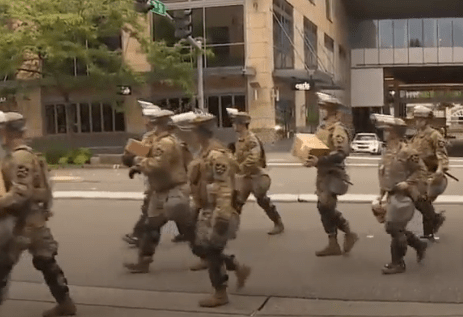
Independent Institute: Replacing RBG — A Lesson in Politics

Randall Holcombe writing at the Independent Institute reminds us that politics is adversarial whereas markets are based on agreement and mutual benefit. Better to rely on markets than politics for more of what we do. Replacing RBG: A Lesson in Politics

Supreme Court Justice Ruth Bader Ginsburg’s death on September 18, less than two months before the upcoming presidential election, set off a major political controversy. Democrats argued that the appointment of her successor should wait until after the election and be made by the winner of the election. Most (but not all) Republicans argued the appointment should be made now, before the election.

When Justice Antonin Scalia passed away in the last year of President Obama’s administration, Obama nominated Merrick Garland to fill Scalia’s seat, but the Republican Senate refused to give his nomination a hearing, arguing (as the Democrats are now) that any Supreme Court appointment should be made after the election, by the winner of the election.

According to the Constitution, President Trump has the power to nominate Justice Ginsburg’s successor immediately, “with the advice and consent of the Senate.” The election year argument against making the appointment is somewhat weakened because President Obama nominated Garland in an election year, although the Republican Senate did not confirm him. But arguments about whether President Trump “should” make a nomination are pretty much irrelevant, except for their rhetorical value, because he has the constitutional power to do so.

While Garland’s nomination stalled, a nomination by President Trump likely would not be, unless a sufficient number of Republican Senators declared their opposition.

The biggest difference between Obama’s nomination and Trump’s is that Obama was facing a Senate with his party in the minority, whereas Trump is facing a Senate with his party in the majority. He likely has the votes to get his nominee confirmed, whereas President Obama did not.

Even if Trump wins the election, waiting to make a nomination could make things more difficult for him, especially if the Democrats were to gain a majority in the Senate. If he wants to “win” on this issue, he should make the nomination now.

Another factor to consider is that if the election is contested, its ultimate outcome might be decided by the Supreme Court, as the presidential election of 2000 was. Trump might like to have another friendly Justice on the Court were that to occur.

I’m not passing judgment on whether nominating a candidate now would be the “right” thing to do, or whether waiting would be the “right” thing. In politics, that’s pretty much irrelevant. You take whatever opportunities you have to “win,” because in politics some win while others lose, and politicians naturally want to avoid being on the losing end.

There is a larger lesson that is playing out in this one specific issue, which is that politics is adversarial, and any political decision produces winners and losers. Thus, politicians have the incentive to take whatever opportunities are offered to put themselves on the winning side of issues.

This contrasts sharply with market activities, in which people transact voluntarily with each other for their mutual gain. Nobody has to engage in a market transaction, so individuals in markets naturally want to entice others into making mutually advantageous exchanges by offering them a chance to increase their well-being by participating in transaction.

Market activity is based on agreement and mutual benefit. Politics is based on conflict, and trying to win by preventing others from getting what they want. The more we rely on markets and the less we rely on politics in our interactions, the more peaceful and harmonious will be our society.

President Trump will make a Supreme Court nomination, not because it is the right (or wrong) thing to do, but because the Republican Senate gives him the opportunity for a win—an opportunity that might not exist after the election. That’s politics. Any other arguments for or against simply amount to empty rhetoric.

The American Mind: “They’re Not Gonna Stop”

Senior analyst for homeland security and counterterrorism at the Center for Security Policy Kyle Shideler writes at The American Mind They’re Not Gonna Stop, referencing a quote from Kamala Harris in regards to rioting.

The deal with the devil is made. Kamala Harris is determined to see it through.

Everyone beware because they’re not gonna stop. They’re not gonna stop before election day in November, and they’re not going to stop after election day. And everyone should take note of that…they’re not going to let up—and they should not. And we should not.

Kamala Harris

It would seem that Kamala Harris and Joe Biden have now made explicit what was always implied in their campaign: as Joe becomes less and less compos mentis, the Democratic proposition on the table becomes, in the words of the candidates themselves, a “Harris-Biden administration.” So it behooves the American people to be as clear as possible not only about who Biden is, but who his VP (read: replacement) pick really is.

Both Biden and Harris have recently issued tepid, nonspecific calls for an end to ongoing street violence. They don’t really mean it of course, which is why they couldn’t bring themselves to explicitly name Black Lives Matter or Antifa as the perpetrators and organizers of the ongoing civil unrest.

The reality is that Biden has no ability to fulfill this promise. The nature of extortion requires the victim have some reasonable assurance that you really can keep his store from burning down. But Biden could not call off the dogs even if he wanted to, as his own vice-presidential candidate has already told us.

In her June 18 interview with Stephen Colbert, Harris committed the classic “Kinsley gaffe”: she accidentally said something she knew to be true. She knows that the BLM “protests” (i.e., the deadly riots) will not stop, even after the election.

“Everyone beware,” She told Colbert with an uncomfortably massive grin that seemed oddly incongruent with her words, “because they’re not gonna stop.”

When, as expected, they did not stop, she and her running mate were forced onto the defensive. Harris warned against confusing ”peaceful protests and peaceful protestors” with “those” persons—conspicuously unidentified—who are “looting and committing acts of violence,” such as burning down family businesses and executing innocent Trump supporters, crimes conspicuously unnamed. Rather than singling out Antifa and BLM for condemnation, Harris instead mentioned “the shooter who was arrested for murder,” namely Kyle Rittenhouse, who defended himself from imminent murder at the hands of Antifa criminals.

Harris left no doubt as to how her remarks were to be interpreted. “The reality,” she claimed, in a characteristically bald-faced lie, “is the life of a Black person in America has never been treated as fully human.” Translation: America, not Antifa, deserves the greater blame.

Just a week after Harris’s Kinsley gaffe, CNN’s Don Lemon warned that the riots were not polling well and needed to come to an end. That a CNN anchor believes the BLM/Antifa insurgents burning cities from Portland to Kenosha care about how their violence impacts the media’s preferred candidate goes to show how self-deluded some have become about our dangerous and revolutionary situation.

But Harris herself clearly has no such delusions, and she’s already made her choice. The Democrat vice presidential candidate’s background as a prosecutor made her so unpalatable to the Democrats’ radicalized base that she failed to pick up a single delegate during her own presidential bid. Sanders’s delegates in California even vocally opposed Harris getting the VP nod. But just three days after the Minneapolis 3rd police precinct was burned to the ground by BLM/Antifa rioters, “Kamala the Cop” called for donations for the bail fund responsible for springing alleged murderers, rapists, and rioters from behind bars.

Senator Bernie Sanders—whose own campaign workers threatened violence if he were not nominated—recently confirmed Harris’s view when he intimated that the campaign to pressure the Democrat ticket further leftward would continue well after the election: “the day after [Biden] is inaugurated we are going to rally the American people to make certain that we implement the most progressive agenda in modern American history.”

It seems like bold talk for Sanders, whose own primary bid was headed off after establishment Democrats fled to the perceived safety of Joe from Scranton. But note that despite agreeing to settle for Biden, the establishment Left still finds the streets of their Blue cities awash in revolutionary violence.

Sanders is on to something, as was ex-Black Panther Angela Davis when she wagered Biden could be “most effectively pressured” to do what she and her comrades want. Biden, who has held government power for over half a century and was the author of the 1994 Crime Bill, and Harris, a former prosecutor, are turning over the policy agenda of their prospective administration to revolutionaries and insurrectionists who viscerally despise them, in hopes that those Marxist brownshirts will threaten the American public into electoral submission.

This may be one of the most cynical quid pro quos in modern political history: You give me position and prestige, I’ll give you power to terrorize the American people and eat them alive.

It would certainly not be the first time that a sclerotic elite disastrously misjudged their own ability to harness revolutionary energy to their advantage. The nature of revolutions is inherently cyclical: always turning inward on itself, picking up steam. The cycle of revolution continuously winnows down and purges the least radical among the ranks. As Lenin wrote in his 1903 What is to be Done?, “the opportunist rearguard will be ‘replaced’ by the genuine vanguard of the most revolutionary class.”

Of course, Lenin was speaking about infighting within the Russian Social Democrat Party, and it would be twelve long years before that he achieved his victory. But his logic was sound. It is ultimately the hardest of hard-core revolutionaries who win intraparty fights during revolutionary periods. And after many failed attempts, this time the revolutionaries may have found their moment—much to the chagrin of Biden and Harris, who definitively epitomize “rearguard” and “opportunist,” respectively.

Having invited into their midst genuine revolutionaries—desirous of their ability to organize, their enthusiasm, and ultimately, drawn to their willingness to project power through violence—Biden and Harris are beginning to see there is no going back. The Democrats—win, lose, or draw—are the BLM/Antifa party now. The party of tearing down statues and launching public struggle sessions against innocent restaurant patrons.

As a vandal in Portland helpfully recorded, the BLM/Antifa insurgents will happily proclaim that “Liberals Get the Bullet Too.” But for Kamala Harris and today’s modern Democrats, ousting Trump and getting to cling—however briefly—to that brass ring of power is worth it. Even though one day, the name being purged will be their own.

Like drug addicts, Democrats promise they can quit their craving for political violence any time they want. But every few decades, they have a relapse. This time, they’re not gonna stop—until they O.D.

Organic Prepper: A Personal Letter to Stressed Out Preppers

Daisy Luther at The Organic Prepper writes A Personal Letter to Stressed Out Preppers Who Are TIRED of This Apocalypse

Dear Friends:

2020 has certainly been quite a year so far, and a defining one for the preparedness movement. No longer are our stockpiles of rice, beans, and hand sanitizer objects that make us strange. Our stashes of TP would make us the envy of the neighborhood if, of course, anybody knew we had it.

So many of the things and beliefs that made us figures of mockery in the past are now proving their value. We’re learning, with a mixture of relief and perhaps dismay, that we weren’t so crazy after all.

When the first lockdown began, we weren’t out there emptying the shelves in the frenzied throng (even though we’re the ones who got blamed for it.) We were watchful but for the most part, comfortable with our preparations. We understood before things went sideways that extended events can result in civil unrest, crime sprees, and chaos. We realized that we could be facing shortages.

And then time went on.

And on.

And on.

This has been a year in which so many things have occurred that proved preppers have things right that it’s positively exhausting. We’ve had a pandemic, civil unrest, food shortages, increases in crime, exorbitant unemployment, and we’re facing an economic collapse, or at the very least, an economic crisis.

And we’re tired.

Maybe everyone doesn’t feel this way. Maybe you’re perfectly fine and you live on your back 40 and have been completely untouched by any of the above-mentioned crises. Maybe your finances are just fine, you never got out much anyway, and you’ve still got 8 years’ worth of food socked away to supplement the things you grow. Maybe you’re reading this as you spin goat hair into yarn from which you’ll make this year’s mittens. Maybe you have no relatives, friends, or loved ones in the path of danger. Maybe your area isn’t prone to a single natural disaster.

If this is the case, I salute you. I really do. Good for you.

But for most of us, this is not the case. A lot of us are tired.

And I mean tired.

I’m sure there will be plenty of folks in the comments who say, “Daisy Luther is such a whiner” but whatever. I’m just going to come right out and tell you how I feel about this.

This year has been difficult.

My life changed completely. The lives of people I love changed completely. I lost some people I cared for deeply to the virus. I watched people in my family frolic around blithely ignoring the virus for which they’re in a peak risk group for death. I watched my country get torn asunder by everything from the pandemic response to racial injustice to perceived insults or losses of rights. I have a family member who lives in a riot zone but due to work and finances, can’t just relocate. (Although those folks on the internet always make it sound so damned easy to just quit your job then up and move to the boondocks to raise sheep.)

I have friends who have developed such extreme political views on either side that I don’t even know what to say to them anymore. I still love them. I still know they’re good people or we wouldn’t have been friends in the first place. But what the heck, y’all?

Then we’ve got hurricanes and the worst wildfires ever in history and floods and droughts and snow in September and murder hornets and the Olympics got canceled and there was some radiation leak in Russia and police brutality, which you will say is alleged or real, depending on your personal perspective. Oh yeah, and the US Postal Service has gone to heck, a lot of kids can’t go back to school so they’re surfing the net while they’re supposed to be “distance learning” online, and Netflix is playing a child porn movie to prove that kids are getting sexually exploited. Our system is going downhill on a greasy slide.

Our presidential candidates are (in my humble opinion) like a choice between your favorite sexually transmitted infection, syphillis or gonhorrhea. And regardless of whether syphilis or gonorrhea wins, all hell’s going to break loose (or break looser because it’s already pretty freakin’ bad in a lot of places) before and after the election that may not even happen the regular way because of the pandemic.

And we preppers who were ready for an emergency are sitting here scratching our heads thinking, “Heck fire, I wasn’t actually prepared for ALL OF THE EMERGENCIES AT ONCE.”

And it’s going on and on and on.

And that’s the other thing.

This stuff is going on and on and on forever. Ad infinitum. We are still in the middle of a global viral outbreak that we don’t completely understand and lots of places are still under major restrictions. A lot of folks don’t have their jobs back and a lot never will. We have been dealing with this particular disaster since at least February and the mental toll of dealing with the restrictions, the loss of income, the isolation, and the loss of freedom has been harsh for many people. There are folks who are just plain mad that they didn’t get the apocalypse they signed up for and they haven’t gotten to shoot any marauders and quite frankly, lockdown is boring as heck.

Lots of us have family members and people in our inner circles who are chomping at the bit to get back to “normal” when things simply are not normal. We’ve got loved ones who want to head out to parties and who want to throw caution to the wind and who flat don’t give a hoot what they bring home to Grandma. We’ve got loved ones who are using this entire scenario to say how we’ve overreacted. We’ve got loved ones who still get aggravated when we bring home more toilet paper.

When we were prepping for all this stuff most of us never expected that our families who were also prepping for this stuff might not be on board with this specific scenario. We never thought we’d have to argue with children and spouses and friends and lovers about things like quarantines and masks and not eating all five years’ worth of the good snacks like Oreos in the first 6 months. We didn’t consider that we might not be able to replace our Bluetooth headsets or that we’d need them for work or that we’d have to have our offices in our homes or that our kids’ teachers might see their BB guns in their bedrooms and send the SWAT teams after us.

We can’t go to church but we can go to riots. We aren’t supposed to travel yet mysterious busloads full of “protesters” show up in other states and that’s just hunky-dory. The borders are closed except they’re not really and the restaurants can’t serve you except they can sort of and we can’t go to the beach but we can line up for a vaccine once the promised injection, untested for long-term side effects, is ready.

This is the worst apocalypse ever because it’s so dad-gum boring and it’s going on for-freaking-ever. That’s the thing that nobody warned us about. This monotony just goes on and on and on. It would be one thing if we were out there fighting for resources but in reality, we’re all just standin’ in line at Wal-Mart with our masks on waiting for our turn to get zapped with a thermometer to see if we are allowed to go inside. If it weren’t for wifi we’d all be crazy by now. Or – let’s be real for a moment – maybe it’s because of wifi so many people are crazy right now. Social media is a jungle – an outright vicious and bloody jungle – and may the most audacious mofo win because those of us who still retain our human decency are not going to be able to hang with the people out there flinging wild ungrounded insults like poop in the monkey cages at the zoo.

And folks – I hate to say it but we’re still on Round One.

We’re going to be dealing with this bizarre altered reality for quite some time. This virus ain’t over yet or if you don’t believe in the virus, then consider that this government response isn’t over yet. We’re never “getting back to normal” and we’re going to have to adapt. We’re going to have to hope our children who are going to school in personal bubbles aren’t going to have OCD and chronic anxiety for the rest of their lives. We’re going to have to learn to make do without all the imports that no longer seem to be populating stores.

We never really expected that a huge part of survival would just be waiting and adapting to the new world around us. Not this new world anyway. This isn’t one we can shoot our way out of or buy our way out of or wait our way out of.  We have to adapt to the new economy, the new precautions, and the new suspicions. We have to adapt to a different type of supply chain.  We have to move into survival mode as we watch civil unrest and riots break out in the most unlikely places, although it’s not really the survival mode we ever expected. We have to adjust to the nearly constant state of offense and unrest. We’re going to have to teach our children to be bold and fearless despite a system that wants them to be afraid. We’re going to have to forge a path through a labyrinth that is nothing like the one we expected when we began prepping for serious events because this event was so wildly unpredictable that nobody could have seen it happening the way it did.

But this is what we do.

We’re preppers. Preparing for the unexpected is our thing. Even when the unexpected is long-lasting, monotonous, boring, and stifling. Even when our family thinks we’re overreacting. Even when everything changes and things don’t get back to “normal.” Even when we’re just sitting there right on the edge of chaos wondering if today is the day that things will erupt in our neck of the woods.

Every.

Single.

Day.

For.

Months.

The way this unfolded isn’t the disaster any of us expected but it’s the hand we’ve been dealt. How well we’re able to handle it will tell us a lot about how mentally prepared we actually are. How we manage our friends, families, and expectations will help us determine how things might go in a future, more Mad-Max variety of apocalypse.

Take this as the learning experience that it is. And don’t be lulled by the boredom into a false sense of security.

Because this is not over. Not by a long shot.

Hang in there, my friends. Whether we have to pull our loved ones along by their collars, whether we have to buy our supplies and stash them away on the sly, whether we have to prepare all on our own, we have to deal with the apocalypse we’ve been given, emotionally and physically.

It’s going to be a long haul, but we’ve got this. I don’t know if you’re feeling the same way that I am, but just in case you are, I wanted you to know – you’re not alone.

Daisy

Black Man With a Gun: Dear White Man

Kenn Blanchard at Black Man With a Gun writes an open letter – Dear White Man.

Dear White Man,

I’m writing to you today because of all that’s going on in the nation. I thought you might need to hear a few words of encouragement from your friend and your brother from another mother. You and I have been pretty close since 2007, when I started my podcast in the basement of my house. You’ve invited me to your home. We’ve broken bread together. We’ve laughed, hugged, even. We’ve smoked cigars. We’ve shared in this Second Amendment fight. We’ve been to speeches. I’ve been a speaker at different events with you. You’ve heard my sermons in church. You’ve introduced me to your family, to your kids. We’ve come through a lot of stuff in these last twenty years or so. Some of us have been together even longer than that. We met, maybe, at the Second Amendment Foundation’s annual meeting, or the National Rifle Association’s meeting across the country, or occasionally you caught me at SHOT Show. We laughed and had some good times.

Well, my white brother, the time’s they are a’changin’. I see your frustration. I hear your anger. I read what you write in your posts. I see the memes you make. Or, I’ve noticed your absence online or in comments. Well, you know me. I haven’t changed. I never run from a fight. I’m talking more about love. Like the song that says nobody’s interested in learning it, but the teacher, it seems.

We got segregation, determination, demonstrations, integration, aggravation, humiliation, and no obligation to our nation. It’s a ball of confusion right now. That’s what the world is today. Yeah.
You got young folks walking around with their heads in the sky and cities aflame in the summertime. And though, the beat goes on. I think yesterday was the eve of destruction. We’re still looking for tax deductions and city inspectors, and Bill the collector, evolution, revolution, gun control, and the sound of soul. They’re still shooting rockets to the moon, but kids are still growing up too soon. It’s a Ball of Confusion, baby.

And I feel you. I understand where you’re coming from.

So, my white brother, I’m just here to tell you that I understand. I’m just giving you a shoutout that I don’t blame you for squat. I don’t. I know who you are. You’ve been the same with me since the beginning. Back when I was the lone brother out here. I was never totally alone, but I was pretty much the singleton. I remember how you treated me and my family, and then my friends, and then my club, and then as I grew my own advocacy and activism, and I grew, and you kept asking me, “How can I get more people of color into my group? How can I get more folks like you in my range?” And we just continued to push on. I know your heart. I know you’re not a racist. I know where you’re coming from, and I ain’t afraid to tell it, truth be told. I’ll still stand with you, even though right now some of you got your war face on. Yeah, you do. Let me tell you about anger.

There are three types of anger that the psychologists can recognize pretty easily. The first is the hasty and sudden anger, and it’s all connected to self-preservation. You think everybody’s after you, so you’re striking out at everybody else. I’m just here to tell you that it’s not me. Remember, we’ve been together a long time. I know who you are, really. The second type is the settled and deliberate anger — a reactionary thing. It’s the deliberate harm or unfair treatment of others. It’s an episodic type of anger. I know that’s not you. And, the third is a dispositional anger. It’s related more to a character trait. It means something’s wrong with you. You’re irritable, sullen. There’s some stuff wrong. Anger can potential mobilize psychological resources and boost the determination toward correction of wrong behaviors, like the promotion of social justice and the communication of negative sentiment and redress of grievances. It can also facilitate patience. In contrast, anger can be destructive when it does not find its appropriate outlet in expression.

Some of you guys are angry white men. And, you’re having a hard time navigating the situation. What happens? The angry person loses their objectivity, your empathy — which you had so much of before — your prudence or your thoughtfulness that you had, that you showed me. And sometimes you can get so pissed off you harm yourself. To all my angry white brothers out there, step back, and take a breath. One of the things I know about anger is that it can get you out of sorts. It can trigger some other stuff. It can make you rely more on stereotypes, and pay less attention to details and more attention to the superficial. That’s what I’m seeing in the memes. Anger is like any other negative emotion, like sadness or fear. Anger can mess up your analytical thinking. One of the things I liked about you before was you’re smart. Now, you’re sayin’ stupid stuff. If it’s not you, it’s the guy next to you. I know it’s tight, but it’s right. Why are you angry?

Because, hey, there’s fear in the air. There’s tension everywhere. Unemployment’s rising fast, and the band played on. Population’s out of hand, suicide, too many bills, hippies movin’ to the hills, people all over the world are shouting, “End the war!” And, the band played on.

Don’t you hear me talking to you? Do you know what one of the greatest motivators in the world is? Loss. Nobody likes to lose anything. So, what’s wrong with America right now? Folks have lost what they used to have — lack of leadership, the polarization of our nation, irresponsibility, the adoption of extremist philosophies, domestic terrorism, erosions of the right to be politically correct. Convenient truths, the rewriting of history for personal gain, the sense of entitlement, the fact that we kicked God out of almost everything we do. The end of “live and let live.” That whole tolerance thing, that politicians are just in it for the money, plain old complacency — what Martin Luther King called “indifference.” Nihilism. That’s a big word. Lack of good jobs. Fidelity….where did she go? Worship of the state, and a plain old loss of respect for other people?

I know you know this, I’m just here to remind you that I feel your pain, that I understand what you’re mad about. I’m just here to tell you that I know who you are. I still like you. Back in 1999, I created a website called Black Man with a Gun . I thought I’d be ostracized and kicked out by the whole world except for a few other radically black people like me. Yeah. I was woke before folks was born. But, you who was awoke before I was? You were. Some of you actually told me about the Deacons of Defense and Justice. Some of you told me about Ossian Sweet. Some of you told me about my own history. I had to go learn about it, and research it and find out about all my relatives, and how I was connected to it. My whole life, I’d been around it, but I missed it. You helped me realize that nobody knows everything, and all of us make mistakes. So, I took my militant butt to the wood shed, and learned some history. And, when I learned, I was on fire for this thing, and decided I was going to teach my world what I learned. I was going to share my knowledge with as many people as I could. And, you still supported me. You didn’t even see me. You didn’t see me get jumped in the church. You didn’t see me get beat down on the street corner. You didn’t hear about what happened after we testified in court in Baltimore or Annapolis — how the Mothers Against Guns ganged up on me, and how, through the grace of God, I was able to let them see the truth, the real truth. You supported me during evangelism for the right to keep and bear arms for almost twenty years. I was doing this crap before we had Google and Instagram and Facebook, but I’m actually kind of tired right now — tired of defending, tired of arguing the same old argument, but luckily, there’s quite a few younger people, younger brothers and sisters that are doing it! And I got nothing but praise for them, except for when they think they’ve created something that’s new and original. Then, they forget where they’ve come from.

So, my angry white brother, failure isn’t final. You know it’s interesting that failing and falling both begin with the same letter. Now, if you’ve gotten mad when you fell, you probably wouldn’t try to stand up anymore. But, if you looked at the fall and the sequence as just something that is — is it what it is — it becomes what you make of it. And, you looked at it as opportunity to learn, which, you did, as a baby, ok? Every baby does. And, what do we do? We get right back up, regardless of failing, and try it again, and you keep doing it until that one day, when you’re walking. Well, right now, we’re falling a lot. We got folks who thing they know stuff they don’t. We got people who are in charge who shouldn’t be, but the brain does not learn from success. The brain learns from the intense scrutiny after the failure to chunk whatever you’re trying to do into it with four or five different parts, and try to figure out the sequence that does work right. And, then it’s going to fire all those circles again. We learn very little from success. So, right now, we’re failing a lot. It looks like Hell warmed over, but be patient. We’ve been here before. The only bad part is people don’t remember the late 60’s, the early 70’s which would soon come — leaders and carpetbaggers, and all of that. We’ve gone through this before.

Folks were taking drugs back in the 60’s trying to take the pain out of living. Now, they just go ahead and kill themselves outright. We need to take more care of our neighbors. We need to take more care of ourselves. We need to watch what we put into our heads — junk in, junk out. We need to realize that all of this stuff is temporary. No storm lasts forever. And, it’s okay to be angry. You can be an angry, white man. Just don’t be angry at me. I didn’t cause none of this trouble! Some of it is good trouble. Some of it’s B.S. Right now that Serenity Prayer is pretty tight, but its right. Where it says,

God, grant me the serenity to accept the things I cannot change, the courage to change the things I can, and the wisdom to know the difference.

That’s how we’re going to get out of this funk, white man! white woman! And for those who are not white who listen to your friend and brother from another mother, I just gave you somebody’s else side for you to think about before you judge them. We all live in a pluralistic society. I really didn’t even know what that was until recently, but I want you to look that up.

We all are born and we grow with different natures which, in return, leads us to have different likes and dislikes, inclinations and disinclinations, temptations and abilities to perform and act. I’m asking you today — white or black, brown, yellow, pink, or multi-colored, to try to understand somebody else. Avoid blaming people. You must understand that people don’t care about you. This isn’t because people are mean or hurtful, it’s just because they’re always focused on themselves. You don’t figure in as their priority. In their process, most of their thoughts are self-directed.

Everybody’s thinking, “My goals. My problems. My feelings.” Yeah. All of us are like that. Mostly, we are all self-centered, but you have to be morally accountable for your actions in this day-to-day life. Keep on understanding that people who appear to be mean or hurtful do not usually do it intentionally, unless they’re sociopathic. It should not deviate you from your appropriate conduct. To say everyone is completely selfish is a gross exaggeration that ignores all the kinds of acts of kindness, sacrifice and love that make this damn world work. Believe it or not, everyone is emotional, and that’s not an exaggeration. We look for reliability in the process of sharing where their strong feelings or points of view are paid due attention, but it’s important to find common ground when you try to interact with people. Understanding is everything. Communication is the secret sauce of the world. Believe it or not, people have short memories. You think they remember your birthday or event? Nah. Most people don’t recollect instances that don’t have anything to do with them. It’s just how we are. They do remember, most likely, similarities or approaches to things that are like theirs. Thats’ how I can say what I’m saying right now, because I’ve been around like fifty-eight years.

Almost forty of those years have been involved in this Second Amendment thing, in some way or another. Almost. Learn to have passion to listen to others. When people talk, listen completely. Most people never listen, but when you’re a good listener, you can develop a better rapport with other people. Now, why am I telling you this? I know you’re grown. You’re old enough to do what the Hell you want, I know. But, who else is going to tell you that you might have a chance to listen? I know you know it — I’m just here to remind you. Develop that animal instinct. You know, it’s really interesting to learn from animals sometimes. They create new life with a purpose, and learn to survive. We have to keep on understanding at each level of a relationship to survive and procreate. You don’t have to read too much into the process of dealing with others to survive and procreate. Sometimes, we think too much. Just do the right thing. Spike Lee was right on that one. Understanding people who don’t look like you is a process of growing. It involves traveling down a path of your lives and making decisions. There will be mistakes, which everyone makes. The importance lies in learning from them to grow stronger. It also guides you to be true to you.

I’m not apologizing for anything except my own behavior. I wrote this letter because we have a problem. We’re more divided than ever, and some folks like it. You know, there’s power in segregation, hate, bigotry, and fear. Those who spread it, share it, joke about it, help it. Everybody who’s gone through something, it has changed them in a way they should never go back to the person they once were. Everybody.

So, walk a mile in someone else’s shoes, and see what they see, hear what they hear, feel what they feel. Then, maybe you’ll understand — me, too! — why I do what I do. You know my name, but not my story. You’ve heard what I’ve done, but not what I’ve been through. The most difficult thing in this life is to know yourself. We’re all going through something right now. It’s an opportunity to do better, to mend a fence, build a bridge, start over if you messed up. Having good morals is still a good thing. Having some core values is still a good thing. Having some wisdom is still a good thing. Thinking before you speak is still a good thing. Check your anger. Check your resources. Check how you’re rollin’. Are you acting like someone else? Or are you acting like you? We can all get this thing back on track if we first take care of our own selves. And, that’s it for this. I’m going to call it quits right there.

You know, at the end of every show, I always say, “just in case nobody has told you this today: I love you.” Well, if you’re wondering how I can love you, and I don’t even know you, check this: Some people hate me, and they don’t know me either. I choose to love.

Shalom baby,

Kenn

Daily Caller: Dems Threaten To Expand Court If R’s Vote On Supreme Ct Nominee This Year

From Daily Caller, Democrats Threaten To Pack Court If Republicans Vote On Ginsburg Replacement This Year.

  • Democrats are threatening to pack the Supreme Court if Republicans fill the vacancy left by liberal Supreme Court Justice Ruth Bader Ginsburg’s death on Friday. 
  • “Congress would have to act and expanding the court would be the right place to start,” House Judiciary Chairman Jerry Nadler wrote on Twitter. 
  • Ginsburg herself pushed back against the idea of packing the court when asked about it last year. 

Prominent Democrats are threatening to expand the size of the Supreme Court to cancel out President Donald Trump’s court picks if Republicans vote on late Justice Ruth Bader Ginsburg’s replacement this year.

Left-wing activists have been pushing Democratic politicians to endorse court-packing since Justice Anthony Kennedy’s 2018 retirement cleared the way for Justice Brett Kavanaugh to join the high court. Some congressional Democrats embraced the idea following Ginsburg’s death Friday night.

“If Sen. McConnell and @SenateGOP were to force through a nominee during the lame duck session—before a new Senate and President can take office—then the incoming Senate should immediately move to expand the Supreme Court,” House Judiciary Chairman Jerry Nadler wrote on Twitter Saturday.

“Filling the SCOTUS vacancy during a lame duck session, after the American people have voted for new leadership, is undemocratic and a clear violation of the public trust in elected officials,” added Nadler, a Democrat from New York.

“Congress would have to act and expanding the court would be the right place to start,” he said. (RELATED: Prominent Democrats Keep Destroying Norms To Go After Trump)

“If he holds a vote in 2020, we pack the court in 2021,” Democratic Mass. Rep. Joe Kennedy tweeted on Saturday. “It’s that simple.”

Democratic Mass. Sen. Ed Markey asserted in a tweet Friday night that if Republicans fill the Supreme Court vacancy, then “when Democrats control the Senate in the next Congress, we must abolish the filibuster and expand the Supreme Court.”

Senate Minority Leader Chuck Schumer told his fellow Senate Democrats on Saturday that “nothing is off the table for next year” if Republicans move to fill the vacant seat, CBS News reported.

Democratic Connecticut Sen. Richard Blumenthal echoed Schumer’s rhetoric, tweeting Saturday: “If Republicans recklessly & reprehensibly force a SCOTUS vote before the election—nothing is off the table.”

Trump promised Saturday morning to nominate a new justice “without delay.”

Conservatives on Saturday pushed back on the idea of expanding and packing the Supreme Court.

Republican Tennessee Rep. Chuck Fleischmann warned that packing the court would be “dangerous” and undermine the court as an institution.

“Court packing is a dangerous and shortsighted idea that will delegitimize our institutions — and that’s what the Dems are threatening to do if they don’t get their way,” Fleischmann wrote in a tweet.

“Packing the court would be a greater blow to norms, legitimacy, and our system of government than *anything* Trump has said or done,” National Review editor Rich Lowry wrote on Twitter.

Some liberal voices in the media have expressed support for packing the court.

“So Democrats should threaten to pack the court,” left-wing writer Jill Filopovic argued in a Washington Post op-ed Saturday. “And, if McConnell pushes through a new justice and then Joe Biden wins, they should follow through,” she added.

“One way for Democrats to make clear they will not tolerate Republicans trying to fill this seat in advance of the election would be for them to pledge that, if they take the White House and Senate in November, they will increase the size of the Supreme Court to 13 justices,” University of California, Berkeley School of Law Dean Erwin Chemerinsky wrote in a Los Angeles Times op-ed Saturday.

“Democrats have no choice but to implement structural reforms to the judiciary if they hope to prevent decades of rule by the alt-right in America,” HuffPost reporter Zach Carter wrote in a June 2018 piece following Kennedy’s retirement.

“At a minimum, that will mean expanding the Supreme Court bench to 11 justices under the next Democratic president. Other reforms, including term limits to remove aging conservatives, may well be appropriate,” he added.

But Ginsburg herself rejected packing the court when asked about it last year.

“Nine seems to be a good number. It’s been that way for a long time,” she told NPR in July 2019. “I think it was a bad idea when President Franklin Roosevelt tried to pack the court.”