Memorial Day, always the last Monday in May, is a federally recognized holiday that honors men and women who died while serving in the military.
Several Memorial Day events will be happening around the Yakima Valley this weekend. Here’s a list:
Tahoma Cemetery
The VFW will hold a service at 10 a.m. near the Veterans Monument on Monday. The Sons of Union Veterans Civil War service will be at 11 a.m. Monday in section F, the Civil War area.
The cemetery is at 1802 Tahoma Ave. It will be open from 8 a.m. to 4 p.m. all weekend.
Placing flags
Members of the VFW, American Legion, AMVETS and the public will be placing American flags on graves at 6 a.m. Saturday at the Lower Valley Memorial Gardens Cemetery, 7800 Van Belle Road in Sunnyside. Participants will place 1,900 flags on veterans’ graves there. Members of the public are welcome.
Breakfast will be provided by the VFW Ladies Auxiliary at the VFW Hall, 615 North Ave. All flag-placing participants are welcome to attend.
If you know of a veteran who does not have a flag on their grave, call Bill Ingram at 509-830-4554 or inform cemetery management.
Sunnyside War Veterans
Memorial Service
The public is invited to two Monday services in Sunnyside presented by the VFW, American Legion and AMVETS on Monday.
The first starts at 9:30 a.m. at Outlook Cemetery on Gap Road south of West Sunnyside Road. The main service begins at 11 a.m. at the War Veterans Memorial at the Lower Valley Memorial Gardens Cemetery, 7800 Van Belle Road.
Names of local veterans who died over the last 12 months will be read. The names of veterans from Sunnyside who were killed in action since World War I also will be read.
The services will include a wreath-laying ceremony, a 21-gun salute, taps and a dove release by AMVET member Henry Ebbelaar. Sunnyside Mayor Dean Broersma will be a guest speaker.
Yakima
The Yakima-Kittitas Detachment of the Marine Corps League is inviting the public to two events Monday. The first is at 9 a.m. at West Hills Cemetery on Wide Hollow Road. The second starts at 1 p.m. at Sarg Hubbard Park, 111 S. 18th St.
Yakima Memorial Day Parade
Downtown Yakima
As expected, the Yakima Memorial Day Parade will be in full force again this year to honor the holiday. The Marine Corps League Detachment 1055 organization is hosting the community event. Since Memorial Day itself is on a Monday, the parade will be Saturday, May 28. It will start at 10 a.m. and last until noon.
There are several ways to honor fallen veterans this Memorial Day weekend in the Tri-Cities.
CITY VIEW CEMETERY
City View Cemetery in Pasco is hosting events to remember the nation’s armed forces. At 10 a.m. on Monday, May 30, there will be a K9 Dedication with Al Yenney, a former city councilman, as well as a demonstration from Service Peace Warriors.
At 11 a.m., the main Memorial Day observance will include Pasco Councilman Pete Serrano and M. Semi Bird from the Richland School Board. There also will be the placement of wreaths, a military anthem medley and a gun salute.
City View Cemetery is at 1300 N. Oregon Ave. in Pasco.
SUNSET GARDENS
Sunset Gardens in Richland plans a weekend-long event for its 50th Anniversary Memorial Day celebration.
Sunset Gardens will raise 1,000 American flags in honor of veterans and fallen service members. On May 28, a tour of the funeral home is planned from 10 a.m. to 3 p.m. along with a Betty White tribute.
On May 29, free hot dogs will be offered at the event center from 11 a.m. to 2 p.m. And Monday’s observance will include special guest speaker Scott Jacobs, retired NCIS investigator, a skydiver, live music, snow cones and hot dogs. The event starts at 11 a.m.
The CBC V.E.T.S Center is partnering with ASCBC and Recreation and Wellness to bring you the 2022 Memorial Day Hike! Join us as we hike to the summit of Candy Mountain Preserve Trail to overlook all that our fallen heroes have preserved in their sacrifice. The trail is 3.6 miles long (roundtrip) with an elevation gain of 555 ft. The first 100 CBC students who attend will receive an exclusive V.E.T.S Memorial Day Hike t-shirt.
We will be gathering in the parking lot below the trail at 6:30 pm. From 6:30 to 6:45 pm guests can sign in, students can receive their t-shirt and guests will have the opportunity to honor their loved ones by writing their name on an Honor and Remember Flag. We will kick off the hike by providing a brief speech to honor the men and women who have sacrificed their lives for the freedoms we have today. We will be providing snacks at the end of the hike which consists of a Gatorade and a granola bar.
This is a self-paced event. We will be packing everything up and be preparing to leave around 9 pm. Carpooling is recommended to lessen our impact.
Here are two videos by Julian, OH8STN of SurvivalTech Nord, on running portable radios. The first covers portable solar power and the second is about an efficient, rugged, antenna for portable operations. Good communication is key in any disaster situation, so make sure you can maintain contact and keep your radios running.
Hello Portable Operators. This episode of oh8stn ham radio is the first of a series called “how to solar power your portable ham radio”. This episodes focuses on solar power and battery storage for mobile, low power and QRP portable amateur stations, operating off-grid. The episode covers my own experiences with popular solar panel brands, charge controller options, battery packs, solar storage options and explains the best way to build your own portable solar powered go kit for EMCOMM, POTA, SOTA or even preparedness. Later in the series we will look at both DIY and ready to run battery pack options, to get your station ready for off grid operation.
This video series continues where my guest post on the PowerFilm blog left off. You can read the original blog post here: http://oh8stn.net/PowerFilmBlog
The series is supported by PowerFilm Solar and GigaParts. Almost all gear mentioned in the video can be found from my GigaParts page at https://oh8stn.net/gigaparts . You can find PowerFilm folding panels, rollable panels, Genasun charge controllers and the perfect battery pack,all from GigaParts. GigaParts also offers a 5% discount to supporters/channel members/patreons of this channel and series.
73 Julian
Hello operators In this episode of OH8STN ham Radio, we test an off center fed dipole as an ultra portable HF antenna option for QRP field station. The antenna is the OCF 40 from chameleon antenna. The HF dipole is resonant on 40, 20 and 10 meters. It handles 50 watts SSB and 20 watts all other modes. Join me as we test this off center fed dipole with the Xiegu X6100 running on solar power and Icom IC-705 running an NVIS winlink session on 40 meters. 73 Julian
In this video Asymmetrical Preparedness talks about making sure you are getting the right nutrients in your long term food storage and not just focusing on calories.
The Organic Prepper has an article on Last-Minute Preps on a Shoestring Budget. No one knows what’s going to come next, but you can still be prepared for the unexpected. Recently I spoke to a friend whom I hadn’t had a chance to talk to since before the pandemic. She lives and Portland and recounted the very hectic 2020 she experienced there – particularly the pandemic and the rioting. Said friend had some preps put away in case of earthquakes and found herself digging into them with the combined problems of lockdowns, supply chain disruptions, and safety issues attendant to going anywhere during the street violence. She had no problems but she did realize that she wished to have more appealing foods stored, primarily to keep up her morale during difficult times. Even substituting something as simple as more white beans instead of less liked lentils was the type of thing she meant, but keeping morale and occasional treats should be kept in mind. It doesn’t have to be expensive.
…This piece will present you with some ideas for cost-effective preps to help round out your stockpiles and give you an extra edge. We’re all feeling the “bite” caused by the price increases everywhere: at the grocery stores, the gas stations, the drugstores, and the hardware stores. It’s only going to get worse before (and if) it gets better.
There are plenty of long-term food supplies and companies you can use for foods with shelf-lives of twenty-five years or more, I understand. I also understand that many of us can’t afford them. First, let’s put out one precept I hope you’ll adopt as your own:
There’s no shame in not having enough money for something: you do the best you can with what you have and keep a positive outlook on it.
There! Now, let’s get into it!
Food
Regarding food supplies, there are different camps and different schools of thought. I’m a big believer in cans. Yes, I can my own stuff (always in wide-mouth Mason jars to better resist a freeze here in Montana), but this doesn’t stop me from stocking up on canned goods packed in good-old-fashioned cans made out of steel. I recommend canned goods for long-term storage on a budget.
Dried stuff (such as beans, rice, etc.) will keep for a long time, but they don’t really give you a lot in return, not to mention the fact that you have to prepare them.
Here are some basics about macronutrients for you to keep in mind:
Protein: The basic building block of life and absolutely essential for tissue repair and recovery. Protein has a high thermogenic factor. It takes more energy to digest, but you get more return on your investment.
Fats: Also very important as sources of energy and also as macronutrients that the brain (and other organs) rely heavily upon.
Carbohydrates: Believe it or not, you should stay away from these as much as possible, but they do have uses when not consumed to excess. One example is after you perform strenuous activity. It is good to replenish your body with protein, but also with some carbohydrates. This prevents catabolism, which occurs when your body is starving for sugar. Without carbohydrates or simple sugars, your body will “cannibalize” your muscle tissue.
The protein in your muscles is then converted into glycogen, which your body burns for energy. It can be devastating because replacement of protein lost in this manner is neither quick nor easy. This is a “deep” subject that I can go further into in another article, but I think you grasp the point.
A couple of references to help you on these topics: Grain Brainby David Perlmutter, and Primal Body, Primal Mind by Nora Gedgaudas. The first book will take you into topics such as glycation: how excessive sugars and carbohydrates in the diet disfigure proteins and cause them to form blockages in vessels. The latter work details the differences in the way our ancestors ate and how our “system” of food production is causative, not curative, of problems.
Canned Foods
Cans can take a beating, handle a freeze, and most contain foods that are cooked. Go with organic stuff as much as possible, and if that can’t be done, “sift” the ingredients. Buy (in this order) generic brands and then name brands. Compare them. The store brands are sometimes much better in quality and at half the price.
Prepared “dinners” in a can: Most of this stuff is not optimal for your body, but this is about survival, plain and simple. My objective here isn’t to recommend any brand but just to give you a “feel” for what you’ll need. Look closely at the ingredients. You’re searching for the least amount of preservatives, artificial ingredients, or “substances” that are unfamiliar. You’re searching for high protein, moderate to low carbohydrates, and moderate fats. Canned chili is good, as are some of the soups and stews. Think beef stew with high protein content. Think lentil soups, bean soups, and pea soups. These all have protein, and you can augment them with the next category.
Canned meats: Canned chicken is your best bet. It’s already cooked, and you can either add something to it or add it to something (such as the soups mentioned in “item 1”. Once again, make sure it’s really meat, without a whole bunch of “fillers,” such as potato-starch, or some other grains. Tuna fish, sardines, fish steaks. All of these you can find even in the dollar stores.
Canned fruits: Avoid the ones in the high-fructose corn syrup. Go for things with high vitamin C content and some fiber. Canned grapefruit, pineapples, and mandarin oranges are among your best bets. Incidentally, bromelain is a chemical constituent found only in pineapples. It stimulates the production of hydrochloric acid in your stomach and enables you to digest meats more easily…
You can obtain these for reasonably-low prices and store for fairly long periods of time.
Summer sausage, beef jerky, and fish: They can be good for years if protected from light, changes in temperature, moisture, and pests. Once again, go for quality, but an eight-ounce stick of summer sausage can be split between a family of four and lend protein for a quick meal when the lights go out and the music stops playing. There are also Mylar pouches of tuna fish and salmon, good for single servings. Make sure these pouches are made entirely out of Mylar; some pouches have a transparent plastic “bottom,” and that won’t cut it in the end.
Dried fruit: Raisins, apricots, banana chips, pineapple. The ones in mylar pouches will give you some longevity for storage. Dried fruits will help alleviate cravings for sugar. Make sure you drink plenty of water when you eat them, or else they can “rob” your body of its fluids and dehydrate you in the course of digesting them.
Nuts and seeds: Peanuts, sunflower seeds, pumpkin seeds. The “buttered” forms will keep longer, and remember, they all tend to become rancid after prolonged storage, but they’ll help. You can store peanut butter for a fairly long time. They’re high in protein. Once again, drink plenty of water when you eat them.
The reasoning behind everything I’ve mentioned thus far is simple:
In a grid-down survival situation, you don’t want the whole, hungry neighborhood to smell that tasty stew you’re cooking on the Sterno stove. You want to crack open those cans and pouches, eat that meal, and seal up anything left over. Don’t leave any signs or signatures that let others know that you’ve stored food, or your “popularity” will suddenly rise, and “company” will drop by…uninvited, of course.
You can eat all of this stuff “as-is” without resorting to a stove.
Food storage: If possible, try to buy some of those large, three or 5-gallon food-grade bucketsfrom the bakery department of your local food store. They only run about $5 a piece or less. Get the ones with rubber gasket rings on the inside of the lids. These “clamp” down into place. If you can’t get the gasketed ones, don’t despair. Use the ones you can find. Seal your cans and packages into these, and then make sure you store/stack them raised up off the floor. Mark the outside of your buckets so that you know their contents at any given glance.
With an absence/shortage of buckets, you can use bins, but I recommend Rubbermaid “Roughneck” bins, the 10-gallon size. They usually run about $10 to $12 or so. They’re worth it. The reasons: they’re durable, stackable, and each bin won’t weigh so much that it makes it impossible to move if the need arises. They’re also dark-colored and will block off light and sight (if you should have to move things, and being spotted by neighbors is possible)…(story continues)
The Benton County Republican Party (BCRP) will be holding a Central Committee Meeting on Thursday, May 26th from 7pm – 9pm at the Island View Worship Center [map], 1520 Fowler St, Richland. At the meeting, the BCRP will be hearing from all of the candidates and giving endorsements. The public and guests are welcome to attend and hear the candidates. Only PCOs will be allowed to vote.
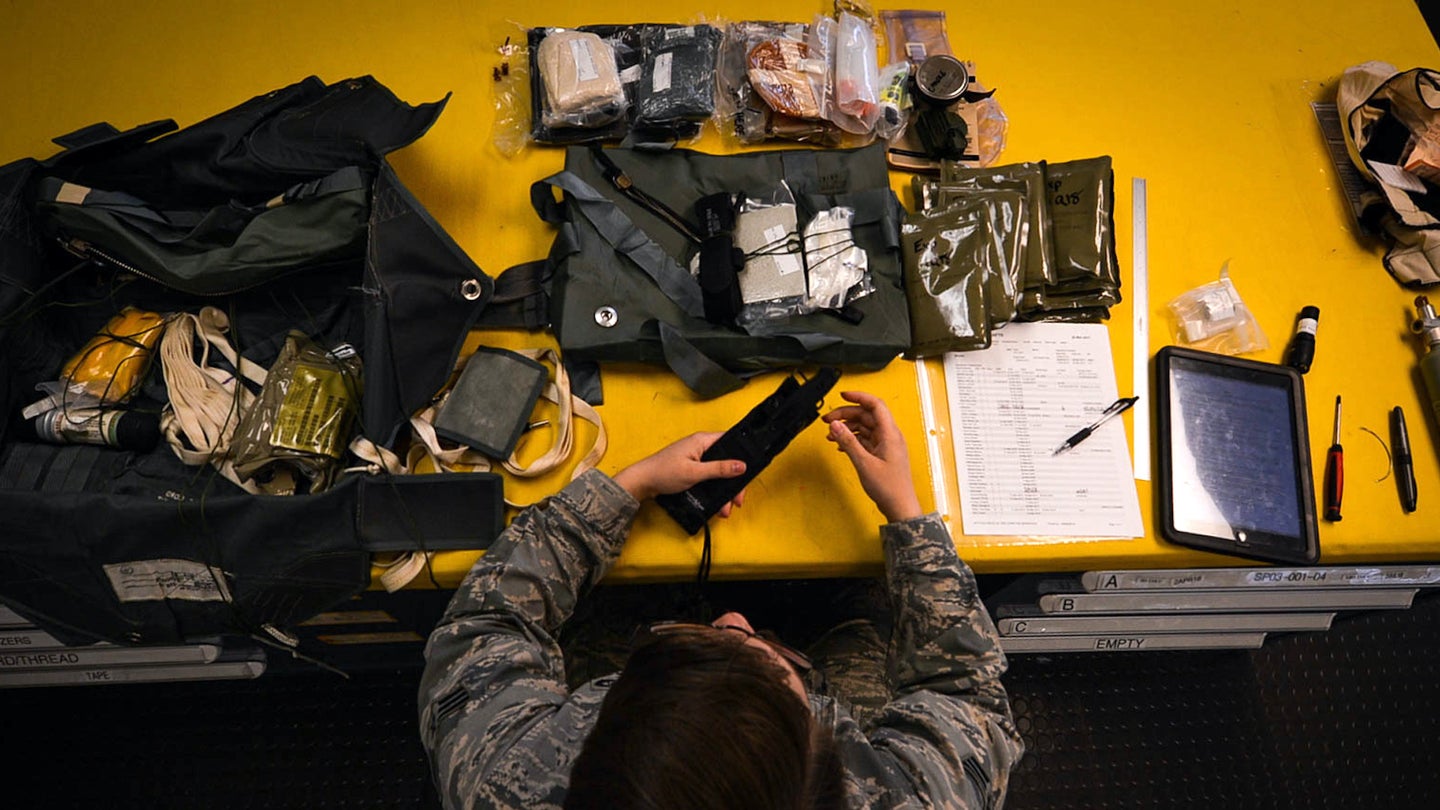
U.S. Air Force Senior Airmen Brittany Cup Choy, 20th Operations Support Squadron aircrew flight equipment journeyman, packs an ACES II ejection seat survival kit at Shaw Air Force Base, S.C., March 7, 2018. (U.S. Air Force photo by Senior Airman Christopher Maldonado)
In How to layer your survival kits for a real-world disaster U.S. Air Force Senior Airmen Brittany Cup Choy, discusses five basic survival kits to help you prepare for real world disasters. Read the entire article at Task & Purpose with more pictures.
Zombies, an alien invasion, or any other of your favorite apocalyptic scenarios are often used to spur interest in survival planning because each one forces you to think about being self-reliant. While it’s fun to plan for unrealistic situations, a good layered survival system actually prepares you for known and likely scenarios.
What would you do if your car slid off of an icy road at night in an area without cell service? How would you prepare if your house was built in a wildfire area? Or, will you be ready if you’re unlucky enough to have your house destroyed by a tornado?
If any of those questions apply to you and you don’t have answers, keep reading because we’ve got you covered. In this article, we’ll show you how to create a survival system for real-world disasters. We’ll cover things like layering survival kits, general safety tips and best practices, and overall preparedness.
Why you should trust us
During my 17 years as an Army infantryman, I’ve had to survive in environments with extreme temperatures and severe weather with limited gear for extended periods of time. I’ve also graduated from Survive Evade Resist and Escape (SERE) school, and now I train military advisors. I’ve also applied this training in my everyday life for everything from flat tires to power outages to tornados. Through all of these experiences, I’ve developed a survival mentality in which I understand the importance of a layered survival system. The following information was based on training, experience, rehearsals, and extensive research.
A layered survival system
A layered survival system means preparing a survival kit for the situations you are most likely to encounter. You probably have some kind of layered survival system in place already. Most people have an everyday carry (EDC), a road kit in their vehicle, and a go-bag in their house. But an optimal layered survival system is more than just a bunch of kits adding up to a bunch of stuff. It’s a way of planning and thinking to get the most out of your system, so you end up with gear that you actually need and redundancies you could actually use. In this article, we’ll cover five basic types of survival kits, which will prepare you for most real-world disasters. These include:
Everyday carry
Vehicle loadout
Cache
Go bag
Weapons package
In the survival community, we’re guided by a saying: “We live out of our bag, fight out of our kit, and survive out of our pockets.” The point of the saying is to prompt you into thinking about your relationship — both literally and figuratively — with your gear.
In layman’s terms, to “live out of your bag” means that you should pack an actual bag so you and your family can survive for an extended period of time. A good standard is to pack so you’re covering all your needs for 72 hours.
To “fight out of your kit” refers to protection. It’s a kit designed solely to protect you and your family from harm. This kit often consists of a firearm, ammo, and armor, as well as a trauma kit or medical pouch.
Finally, to “survive out of your pockets” means having the necessary gear for survival on your person. This involves developing a proper everyday carry, which is your first and probably most important survival kit because it may be all you have if you cannot access your other kits.
Everyday carry
Your everyday carry, or EDC, refers to the items you carry on a daily basis. They’re different for everyone, and if you’re anything like me, you might add, remove, or upgrade items every once in a while. A full EDC looks something like this:
Money: Always carry some form of payment like a credit or debit card and cash. While cash is king, you can get away with about $100 of local currency. That should cover basic needs like transportation, information, food, etc.
Knife: A good folding knife or small fixed blade. Think of it as a tool rather than a weapon. Survival should always be at the forethought of your choices.
Cordage: A piece of paracord is monumental in making traps, lashing, or repairing things. Five to six feet of cord is more than enough. Braided keychains are very useful.
Flashlight: A light source always comes in handy whether you need to signal for help or just need to see in the dark. A small penlight is more than sufficient.
Handgun: If you decide to carry for self-defense, find a pistol or revolver you’re comfortable with using and carrying, which means training and finding the right holster.
Reload: If you end up carrying a weapon, you should carry a reload as well, like a spare magazine or moon clip.
Lighter: Always carry a fire-making device. Stormproof matches, butane lighters, etc. If not, a small ferrocerium rod will throw a spark even in the wettest of conditions.
Jacket: Always take a warm- orwet-weather layer with you (even if you just stash it in the car). Even in the desert, you can become hypothermic. Your clothing is always your first layer of shelter.
Water bottle: Water is life. The average person needs about two to three liters a day to maintain good health. I recommend a water bottle with a built-in water filter.
If you make everything on this list part of your EDC, you will be able to find a practical solution to almost any small-scale problem you encounter. Now, you might think that it’s a lot of stuff to carry, and you wouldn’t be wrong. If you do decide to carry everything on this list, you might want to consider getting a sling bag or fanny pack.
Vehicle loadout
Your vehicle loadout should prepare you not just for a flat tire or dead battery, but also for what you might encounter or, depending on your location, what you might not encounter (like a gas station). You might have enough gear to get by in most towns or cities, but what if you’re in a rural area and you: get two flat tires; run out of gas; hit a deer; experience an electrical fire: or get stuck on the side of the road on a freezing night? Will you be ready for any of those situations? If the answer is no or maybe, the following lists will ensure you are prepared.
Recovery kit
Jack with a locking bar
Full spare tire and wheel package
Breaker bar or battery-powered impact gun
Fix-a-flat and/or tire-plug kit
Portable power station with air compressor and jumper cables
3.5 pounds of baking soda (for fuel spills, battery explosions, and brushing your teeth)
NOTE: Before you go loading your vehicle with everything on this list, you should know that some of the items (like gasoline) can be extremely dangerous to store inside your vehicle. They can be even more dangerous if you’re in an accident. Therefore, you should take proper precautions and comply with state and local ordinances regarding such issues.
An emergency cushion
Preparing a cache of emergency supplies is just good practice. It doesn’t matter if you stick it in a hole in your backyard, inside an old storage unit, or in a safety deposit box at the bank — an emergency cushion will help if you’re in a jam. You might be wondering what kind of jam am I in? In pop culture, such things are used when a character decides to go on the lam. Instead, think of a small disaster like a house fire or tornado. Those sorts of things can take a while to sort out, so for an emergency cushion, you’ll want:
Money: $500 to $1,000 as a general rule. Certainly, enough to get you into a hotel and feed the family until you can figure out the next step.
You also might want to store items of value for bartering
Copies of keys, if applicable, for storage units, friend/family home, transportation, etc.
Personal documents like insurance information, licenses, medical information, etc.
Communication tools like a prepaid cell phone, or a satellite phone with a plan, which is useful if in an area where fires or weather can damage cell towers.
Go bag
Although there’s a lot of overlap, a go bag is very similar to a bug out bag. One is meant for a temporary evacuation of your residence while the other is meant for a long journey. While the difference between the two might be semantics, it’s important to understand the differences before you pack it.
For this article, we’re focusing on go bags. It’s something you stow by your front door or inside your car and fill with essentials meant to get you to a temporary shelter or back home. The packing list might be similar to a day hike. They include:
Shelter
Poncho
Poncho liner
25-foot cordage
Fire
Ferro rod
Stormproof matches
Lighter
Cotton balls soaked in Vaseline
Water
Bottle filtration system
Iodine tablets
Water bottle
Food
Emergency food rations
10-foot snare wire
50-foot fishing line 16 pounds test
Small to medium fishing hooks
Medical
Burn gel or bandages
Suter kit
Tourniquet
Israeli bandage
Medical tape
Band-aids
Quick-clot gauze
Alcohol wipes
Personal hygiene items
Navigation
Compass
Local map
Tools
Folding saw
Settlers tool
Multitool
Fixed-blade knife
Canteen cup
Headlamp
Hatchet
Miscellaneous
Electrical tape
Zip ties
Sewing kit
Batteries
By now, you have probably noticed some overlap between the go-bag and vehicle loadout. It’s true, there are some, but the reason for the redundancies is if one system fails for whatever reason — lost go-bag or missing car — you have the backup. It’s another layer in your layered survival kit.
Weapons package
A weapons package should be designed to prepare you for the worst-case scenario. Think about a natural disaster that disables critical infrastructure and outpaces government resources. A good example is Hurricane Katrina in 2005. Many all over the Gulf Coast were left stranded without electricity, running water, or protection by local authorities. And since then, multiple states have loosened carry laws during a state of emergency. With that being said, a weapons package in this setting is intended for protection and defense (rather than offense). A weapons package typically consists of three weapon systems: an emergency EDC, a backup, and a main gun.
Emergency EDC
Sub-compact to full-sized handgun (tailored to attire)
IWB holster
Extra mag/speedloader/shells
Backup
Compact to full-size handgun
Gun belt with holsters and a survival knife
2x magazine pouch or more, plus ammo for the main gun
Small medical pouch (built for hemorrhage/gunshot wounds)
Main gun (trunk gun)
Long gun
Fighting load carrier or plate carrier
Extra magazines or shells (no more than 3x magazines/35 shot shells)
Additionally, whenever you’re handling weapons, you should practice proper gun safety and comply with all local, state, and federal laws… (continues)
Episode 160. NC Scout is joined by his close friend Bob Griswold, owner of Ready Made Resources, to talk supply chain shortages, the potential causes, the bigger picture and how to mitigate it.
In When Misinformation Drives Bad Policy, John R. Lott, Jr., president of the Crime Prevention Research Center, writes about the American public’s badly misinformed perception of violent crime. On average, the American voters believes that 46% of violent crimes involve firearms, when the figure is actually less than 8%. John Lott has made a name for himself with such books as More Guns, Less Crime, The Bias Against Guns, Dumbing Down the Courts, and The War on Guns among others.
To President Biden, public health researchers, and the media, violent crime is all about guns. But a new survey finds that people are badly misinformed about how much violent crime involves guns. The average likely American voter is way off, thinking that over 46% of violent crimes involve guns. In fact, the true figure is less than 8%.
Not surprisingly, those who believe that most violent crime involves guns are more likely to view gun control as the solution.
Biden has given four major speeches on violent crime (here, here, here, and here). Each one of them was focused on enforcement of gun control laws. In the four speeches, he mentioned “gun” or “firearm” 179 times. The term “weapon,” sometimes in connection with “assault weapon,” was used another 31 times.
The words “crime,” “violence,” or “violent” were mentioned about half as often – 94 times. He only mentions the words “murder” and “homicide” seven times in these four presentations, and entirely omits them from his two most recent talks.
But this “guns first” approach ignores a basic fact – over 92% of violent crimes in America do not involve firearms. Although Biden blames guns for the increase in violent crime, the latest data show that gun crimes fell dramatically.
Even so, there are large differences across groups. The average Democrat estimates that 56.9% of violent crimes involve guns, whereas the typical Republican gave an answer of 37%. Those with the highest incomes (over $250,000 per year) and those who work for the government give the highest numbers – 56.1% and 51% respectively. Women (50%) believe that more violent crimes involve guns than men do (43%). Urban Americans say 48%, whereas rural Americans say 40%. But the biggest difference is between blacks (59%) and Asians (31%).
The McLaughlin survey also gave people three options on the best way to fight crime: Pass more gun control laws, more strictly enforce current laws, or have police concentrate on arresting repeat violent criminals.
Some respondents at least got it right that less than 20% of violent crime involves guns. Just 8% prioritized more gun laws, and 15% focused on stricter enforcement of existing laws. An overwhelming 71% thought the best way of fighting crime was to arrest violent criminals.
Some likely voters thought that more than 80% of the violent crime involved guns. Most supported either more gun control laws (33%) or more strict enforcement of current gun laws (28%). Only 36% of them wanted the focus on arresting violent criminals.
Those who think that most violent crime is committed with guns consistently support more gun control. Those who don’t believe that instead want to focus on arresting violent criminals and keeping them in jail.
Perhaps the gun control debate would be very different if the media had done a better job of informing people about crime. The most newsworthy cases, unfortunately, don’t tend to be typical of violent crime. Focusing on how to solve 8% of violent crime does nothing to solve the other 92%.
NC Scout of Brushbeater.org speaks with author Marc J. O’Connor in episode 158 of Radio Contra.
Episode 158. I’m joined by Marc J. O’Connor, author of “Electronic Warfare for the 4GW Practitioner” to talk fourth generation warfare unfolding in American politics, the strategy the Left has employed, the role of NGOs in subverting American infrastructure and what this means for the future of the US.
Radio Contra Ep. 158 – NC Scout and Marc J. O’Connor on 4th Gen. Warfare
A large survey of 11,000 stores have found that fully 43% are sold out of baby formula. More mothers are breast-feeding their babies these days, but most still find themselves using baby formula at one point or another in their child’s first six months of life. A formula shortage panic is part and parcel of a society that is unprepared for shortages in the face of disasters and other upheavals.
In this case, the formula shortage is thought to be due to a major recall by one of the three companies that make the product: Abbott labs. Recently, several infants were hospitalized with cronobacter sakazakii, a bacterium that was identified in the company’s Michigan plant. One of the babies is reported to have died. Supply chain issues may also be a factor in the current crisis.
If you have Abbott products in your pantry, the Food and Drug Administration (FDA) asks that you check to see if it might be at risk for contamination. Recalled lots can be identified. Check to see if the first two digits of the product code are 22 through 37, the code contains K8, SH, or Z2, and has an expiration date later than April 1, 2022. Abbott’s website has a search feature that allows you to plug in your lot numbers to see if it’s part of the recall.
Baby formula is meant to be as close to human breast milk as possible, making an acceptable substitute difficult to find. What to do? You should first consult with your pediatrician, of course, about the issue. Some pediatricians say that Pedialyte is an option for a day or so to keep the baby hydrated. Others say that toddler formula will do for a few days while you’re hunting for the right stuff. Infants over one year of age on formula can slowly transition to whole milk. A few say small amounts of cow’s milk can even be given in babies 6 month of age or over for a short time.
The brands removed from supermarket shelves include popular brands like Similac, Alimentum, and Elecare. Pediatricians from Prisma Health are reported in South Carolina’s Greenville News as suggesting the following substitutes for recalled products:
Similac 360 Total Care/Advance substitutions: Gerber Good Start Gentle, Enfamil Infant, Enfamil NeuroPro, Enfamil Enspire, Up&Up Advantage/Infant, Parent’s Choice Advantage/Infant
If these options are not available, there isn’t a lot of advice that the government or the pediatric establishment give as alternatives. They recommend continuing to breastfeed or returning to breastfeeding if the infant was recently weaned. Another suggestion is to search for it in places other than supermarkets: pharmacies, for example. Look in areas where the infant population is low (such as senior communities), you may find more available there. Of course, if you can find your baby’s formula online from a trusted source, use that avenue.
If you do find a supply, though, the government says not to get more than a month’s worth (because that’s just greedy). Needless to say, advice like this goes against the grain for preparedness folk.
It’s possible that an infant could transition to solid food. A baby that’s ready should be able to:
remain stable in a sitting position.
hold their head steady while sitting up.
have sufficient coordination so they can look at food, pick it up, and put it in their mouth by themselves.
swallow food easily without frequently spitting up.
Other behaviors could be mistaken as ready for solids. Chewing fists and wanting extra formula are not indications to switch over.
The opinion of the FDA, CDC, and almost all pediatricians is that no formula shortage should result in using cow’s milk in young infants, plant milks like soy or almond, watering down existing formula, or making your own. They explain that all these options are dangerous and can overload an infant’s kidneys or cause electrolyte imbalances that can lead to seizures. The CDC states that homemade formula recipes you’ll find online can contain harmful ingredients or be contaminated. They recommend you ignore those “mommy blogger” recipes.
Unfortunately, solutions to the problem are scarce. Some websites actually advise mothers to borrow a can of formula from a neighbor as a strategy. Not exactly a long-term answer.
Of course, families with infants should listen to their pediatricians, but what happens when the approved commercial substitutes are sold out? What if a disaster knocks out formula manufacturing altogether? In the old days, there were nursemaids, but that doesn’t seem like a popular career path today. Up until the 1960s, some mothers were even sent home with homemade formula recipes.
If the formula shortage continues, you might have little choice but to buck the pediatric establishment and make your own. I’m not a pediatrician and haven’t been in a situation where I needed formula and there was none to be had. Having said that, you have to do something if you can’t find formula and your baby needs to eat. Here are a number of links to various “mommy blogger” homemade recipes (none of which, I have to admit, I’ve tested myself):
It should be noted that no formula recipe using honey is safe for infants, due to the risk of botulism.
For now, it may take a little searching to find the formula you need, but be sure to consider what you’d do if there was none to be found. That’s part of being prepared; if we all had a plan of action for every contingency, we’d be a nation that could weather any shortage.
(Addendum: There’s a program called “Healthy Mothers Healthy Babies” that has formula stockpiles in various parts of the country. Worth checking into.)
The following video is a recording of a webinar presented by The American Civil Defense Association earlier this year on Preparing Your Neighborhood for Emergencies. It goes over getting your neighbors on board, planning for possible emergencies, HELP and OK signs, training, and how the neighborhood responds. As it is a recording of a webinar, there are questions and answers throughout the presentation.
Pam Lewison at the Washington Policy Center discusses Electronic Cattle Transaction Reporting (ECTR) related (“identified cattle”) inspection fee reductions and their disproportionate effect on dairy and small cattle operations who don’t use ECTR (“unidentified cattle”) in Trust Your Neighbors but Identify Your Cattle.
The Washington State Department of Agriculture is proposing a cost cut for livestock brand inspections for “identified cattle” from $1.30 per animal to $0.80 per animal and is set to host a hearing May 24 on the topic.
According to the Washington State Department of Agriculture (WSDA), the cost cut will save livestock producers money and maintain the solvency of the livestock inspection program at the same time.
The saying in cattle country goes, “trust your neighbors but brand your cattle.”
The problem our state faces is the need to both identify livestock and log animal disease traceability information at the same time. Brands are a useful and necessary tool for animals that spend a portion of their lives away from the watchful eyes of their owners. RFID or EID tags are ear tags that provide a digital storage mechanism for animal disease traceability.
Washington state is home to some 9,000 ranch families raising approximately 230,000 head of beef cattle. In addition to our robust beef industry, there are more than 400 dairies in Washington state housing approximately 275,000 dairy cows. The care and raising of these animals vary based upon the practices of the livestock owner but, generally, beef cattle are on range pasture for a portion of the year while dairy cattle are handled every day.
The inspection cost-cutting proposal from WSDA is only applicable to “identified” cattle, or cattle that have an RFID/EID tag and may be branded. Leaving “unidentified” cattle, or cattle that do not have an RFID/EID tag or a brand, still set to pay a fee of $4 per animal. The proposal notes the goal is to wean livestock producers off the need to have inspectors present for private cattle sales and incentivize them to use the ECTR system instead.
However, it still disproportionately punishes dairy operators and small livestock operations, neither of which have a particular incentive to brand their cattle or use an RFID/EID tag, by not addressing the $4 per animal fee for all unidentified cattle.
The livestock inspection department should set a single flat rate for all cattle to better encourage use of RFID/EID tags and logging of private sales via ECTR. A single per animal fee may help foster the use of RFID/EID tags by livestock owners who have resisted the transition from a blank plastic tag to the electronic tags.
Unlike many cattle-heavy states and our direct neighbors, Washington hasn’t figured out how to create an inspection system based on a flat fee per animal. Several other western states – Idaho, Oregon, Montana, Nevada, and Colorado – all charge a flat fee per animal with an additional call-out service fee for any inspections that occur on a ranch rather than in a sale barn. The flat fees charged range in price from $0.55 per head (Colorado) to $1.19 per head (Idaho). Other fees like check-off assessments and animal disease traceability are also added on to those costs…(continues)
Nearly 70 years ago, a little-known lawyer named Joseph Welchfamously confronted Sen. Joseph McCarthy (D-Wis.) in defense of a young man hounded over alleged un-American views. Welch told McCarthy that “I think I have never really gauged … your recklessness” before asking: “Have you no sense of decency, sir? At long last, have you left no sense of decency?”
It was a defining moment in American politics as Welch called out a politician who had abandoned any semblance of principle in the pursuit of political advantage. This week, the same scene played out in the White House with one striking difference: This was no Joseph Welch to be found.
After someone in the Supreme Court leaked a draft opinion in the case of Dobbs v. Jackson Women’s Health Organization, a virtual flash-mob formed around the court and its members demanding retributive justice. This included renewed calls for court “packing,” as well as the potential targeting of individual justices at their homes. Like the leaking of the opinion itself, the doxing of justices and their families is being treated as fair game in our age of rage.
There is more than a license to this rage; there is an addiction to it. That was evident in March 2020 when Senate Majority Leader Chuck Schumer (D-N.Y.) stood in front of the Supreme Court to threaten Justices Neil Gorsuch and Brett Kavanaugh by name: “I want to tell you, Gorsuch, I want to tell you, Kavanaugh, you have released the whirlwind and you will pay the price! You won’t know what hit you if you go forward with these awful decisions.” Schumer’s reckless rhetoric was celebrated, not condemned, by many on the left, even after he attempted to walk it back by stating that “I should not have used the words I used … they did not come out the way I intended to.”
What occurred at the White House this week is even more troubling. When asked for a response to the leaking of a justice’s draft opinion, White House press secretary Jen Psaki declined to condemn the leaker and said the real issue was the opinion itself. Then she was asked about the potential targeting of justices and their families at their homes, and whether that might be considered extreme. It should have been another easy question; few Americans would approve of such doxing, particularly since some of the justices have young children at home. Yet Psaki declared that “I don’t have an official U.S. government position on where people protest,” adding that “peaceful protest is not extreme.”
In reality, not having an official position on doxing and harassing Supreme Court justices and their families is a policy.
Whether protests are judged to be extreme seems often to depend upon their underlying viewpoints. When Westboro Baptist Church activists protested at the funeral of Beau Biden, it was peaceful — but many critics rightly condemned the demonstration as extreme; some even approved of Westboro activists being physically assaulted. When the church brought its case before the Supreme Court, some of us supported its claims despite our vehement disagreement with their views, but 42 senators filed an amicus brief asking the court to deny free-speech protections for such protests. The court ultimately ruled 8-1 in favor of the church.
In this case, the Biden administration and the Justice Department have condemned the court’s leaked draft — but not the threatened protests at justices’ homes, even though those arguably could be treated as a crime. Under 18 U.S.C. 1507, it is a federal crime to protest near a residence occupied by a judge or jury with the intent to influence their decisions in pending cases, and this case remains pending. (Ironically, prosecution could be difficult if the protesters said they had no intent other than to vent anger.)
Even if protests at justices’ homes are constitutionally protected, that does not make them right, any more than the lawful Army-McCarthy hearings of 1954 were right.
In 1954, the left was targeted for its political views; today, it is the left which is calling for censorship, blacklisting and doxing. In such moments of reckless rage, presidents often have become calming voices, tempering extremist passions in their own parties. When they have failed to do so, history has judged them harshly, as in the case of President Eisenhower’s belated condemnation of Sen. McCarthy, something he reportedly regretted for the rest of his life.
President Biden has repeatedly shown that polls, not principles, guide his presidency. He showed integrity as a senator by denouncing court packing as a “bonehead … terrible, terrible” idea. However, he has stayed silent as today’s Democrats have pushed to pack the court with an instant liberal majority, a demand that increased this week. Biden long supported the Senate’s filibuster rule and said efforts to eliminate it would be “disastrous” — but when today’s mob formed, he flipped and denounced the filibuster as a “relic” of the Jim Crow era.
Even on abortion, Biden has shifted with the polls. He once opposed Roe v. Wade and supported an amendment that would negate the decision. At the time, he declared that “I don’t think that a woman has the sole right to say what should happen to her body.” Now President Biden has switched his position without really switching his logic. He recently declared that he supported Roe because “I’m just a child of God; I exist” and thus can decide what happens to his body. Accordingly, he denounced the Supreme Court’s draft opinion as “radical” and affirmed the right of a woman “to abort a child.“
Whether it is court leaking, packing, doxing or other tactics, many Democratic politicians and pundits continue to follow the mob rather than risk its ire…(continues)
In a destabilized society, traumatic wounds may be commonplace is scenarios where there is a desperate population and no rule of law. Even routine activities of daily survival may cause injuries that could become life-threatening. Therefore, the family or group medic must always be prepared to deal with bleeding wounds. Some of these, especially those in the abdomen and chest, are likely to be fatal without advanced medical care. In this article, let’s commemorateNational Stop The Bleed Month (I’m a certified instructor through the American College of Surgeons) by concentrating on those hemorrhages that are survivable.
Cuts in the skin can be minor or catastrophic, superficial or deep, clean or infected. Significant cuts (also called “lacerations”) penetrate both layers of the skin (dermis and epidermis) and are associated with bleeding, the amount of which depends on the blood vessels disrupted. Knowing how to manage hemorrhagic wounds quickly and effectively will be of paramount importance for the survival medic.
In studies of casualties in recent wars, 50 percent of those killed in action died of blood loss. 25 percent died within the first “golden hour” after being wounded. The golden hour is the time after which a victim’s chance of survival diminishes significantly if untreated, with a threefold increase in death rate for every 30 minutes without care thereafter.
If there is active bleeding and the wrong artery is severed, however, it could take just a few minutes for a person to “bleed out” and be beyond medical help. A severed femoral artery can lose more than a pint of blood a minute. With hemorrhage, the reality should, perhaps, be called the “platinum five minutes” instead.
Venous bleeding manifests as dark red blood that drains steadily from the wound, while arterial bleeding is bright red (due to higher oxygen content) and comes out in spurts that correspond to the pulse of the patient. As the vein and artery usually run together, a serious laceration can have both.
Once below the level of the skin, large blood vessels, muscles, and nerves may be involved. You’ll identify more problems with vessel and nerve damage in deep lacerations and crush injuries. In any case, bleeding control must be achieved.
In response to fatalities due to bleeding in recent military conflicts, the U.S. instituted Tactical Combat Casualty Care (TCCC) guidelines. It is thought that up to one in five deaths from hemorrhage in the field may be prevented with quick action by those at the scene. Civilian and law enforcement authorities have established similar strategies in response to the hard lessons learned by our soldiers; so should the family medic.
BLOOD BASICS
It’s worthwhile for the medic who may be dealing with bleeding wounds to know some basics about blood. Blood is a specialized fluid that comprises about 7-8 percent of a person’s total weight. It’s involved in:
• Delivering oxygen to the body from the lungs and eliminating carbon dioxide (a process called “gas exchange”).
• Forming clots that stop hemorrhages.
• Transporting substances that fight infections and disease.
• Delivering waste products to the kidneys and liver.
• Helping to regulate body temperature.
There are four main components to blood:
Red blood cells (RBCs): RBCs are the cells that carry oxygen to body tissues, thanks to a special iron-containing protein called “hemoglobin.” Red cells account for 40-45 percent of total blood volume. They start as immature cells in the bone marrow that mature and are released into the bloodstream. The average lifespan of a red blood cell is about 120 days.
White blood cells (WBCs): These cells account for only about one percent of total blood volume, but are extremely important for fighting infection and disease. There are several types, including short-lived cells deployed for immediate response and longer-lived ones that regulate the function of immune cells, make antibodies, and directly attack infected cells and tumors.
Platelets and other clotting factors: These are small cell fragments that allow bleeding to stop by gathering at the wound site and helping to form a clot. Like RBCs and WBCs, they originate in the bone marrow.
Plasma: A yellow liquid that transports all of the above throughout the body.
Together, these components are referred to as “whole blood.”
PHYSICAL EFFECTS OF BLOOD LOSS
Evaluating blood loss is an important aspect of dealing with wounds. An average size human adult has about 10 pints (4.73 liters or 4730 ml) of blood. The effect on the body caused by blood loss varies with the amount incurred. The American College of Surgeons recognizes four classes of acute hemorrhage, along with expected signs and symptoms:
Class I: Hemorrhage is less or equal to 15 percent of blood volume (1.5 pints/750 ml) in an average adult male. 750 ml is the amount in a bottle of wine. A person donating 1 pint of blood is giving slightly less than 500 ml. At this level there are almost no signs or symptoms, although some may have a slightly rapid pulse and feel vaguely faint or anxious.
Class II: Hemorrhage is 15 to 30% loss of total blood volume (1.5-3 pints/750-1500 ml). The body’s efforts to compensate for less red blood cells at this point results in a faster heartbeat and breathing rate to speed oxygen to tissues. This patient will appear pale and skin will be cool. They’ll feel shaky, weak, and anxious. Blood pressure remains, for now, within normal range. Urine production begins to slow down in order to retain fluid volume.
Class III: Hemorrhage is 30 to 40% loss of blood (3-4 pints/1500-2000 ml). At this point, the heart will be beating very quickly and breathing very fast as the body encounters difficulty getting enough oxygen to tissues. Blood pressure drops. Smaller blood vessels in extremities constrict to keep the body core circulation going. This patient will be confused, pale, and in hypovolemic (low blood volume) shock. Urine decreases significantly. In normal times, blood transfusion is usually necessary.
Class IV: Hemorrhage is more than 40% of total blood volume (greater than 4 pints/2000 ml). The heart can no longer maintain blood pressure and circulation. All parameters are well outside normal range and the patient becomes lethargic due to lack of oxygen and circulation to the brain. Without major resuscitative help at this point, organs like the kidneys fail. The patient loses consciousness. Heart rate and respiration slows and eventually ceases as the patient dies.
ABCDE VS. CABDE
The traditional initial field assessment of a victim usually involves the acronym ABCDE. Although ABCDE may mean different things to different people, one interpretation goes as follows…(continues)
The Machine Gun Nest writes about the Biden administration’s latest attempt to strip rights from the American people in Biden’s Ghost Gun Rule is Dead on Arrival Thanks to the 0% Receiver. It has long been recognized in the USA that a person may manufacture a firearm for their personal use with no need for any licensing, registration, or serial numbering. Gun controllers, however, are willfully ignorant on the current laws, historical context, and even the simplest technical understanding of firearms.
Yesterday, President Biden, the Department of Justice, and the ATF announced the details of their new 364-page rule for the redefinition of “frame or receiver.” In doing so, they have decided to attempt an illegal rewrite of the 1968 Gun Control Act.
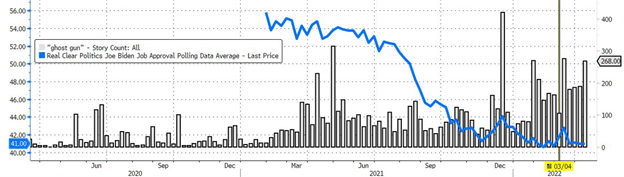
If you’ve been paying close attention to headlines the past few weeks, you may have noticed a surge in articles pertaining to “ghost guns.”
The corporate media has been setting up Biden for an easy “win” on guns with this new rule. Likely because of Biden’s low poll numbers headed into the midterms.
Initially announced in April of 2021, almost a full year later, we’re finally able to see what sort of egregious gun control has been put together for the law-abiding gun owner.
The rule stems from the gun control lobby’s obsession with home-built firearms. The problem here, though, is that to regulate privately made firearms, or “PMFs” as they’re defined in the new rule, the ATF had to cast an extremely wide legal net.
In the 364-page rule, we can see that the Biden admin intends to ban “ghost guns” by creating a new class of highly regulated items by redefining the term “firearm” to include parts and collections of parts that the ATF now considers to be “readily” convertible into functional firearms.
The example used in the press conference was a Polymer80 kit, which quickly sold out of all available models after the announcement of the rule change.
It’s important to note that from what we can tell from the rule change and the opinion of others in the know, this rule does not ban possession of firearms made from 80% kits. It also does not mandate the serialization of those already made firearms or 3D printed items for personal use. What it does do is require the serialization of 80% kits that are in possession of Federal Firearms Licensees (also known as FFLs) and manufacturers. It’s interesting because the expected outcome of this rule, as Biden pitched, was the complete and absolute ban of “ghost guns” altogether.
In addition, ATF has commanded Federal Firearms Licensees to hold 4473 records on-site indefinitely. This small change may go unnoticed by many, but this is a significant step towards a legitimate registry. This action shouldn’t surprise many gun owners, who already know that these rule changes are not about saving lives; they’re only about the consolidation of power.
“Far from “clarifying” anything, the rulemaking tortures simple terms from law into multi-part definitions, with newly injected sub-terms like “readily” having their own lengthy definitions. This is clearly an attempt to sidestep Congress, as Biden even indicated in his remarks today.”
Here’s the irony of the situation, though. Regardless of how overly complex it is or how wide a legal net the ATF decides to cast, this rule change will have little to no effect.
That’s because of the 0% Receiver.
In response to the announcement of the Biden Admin’s proposed rule change, Defense Distributed decided to shift its focus to the creation of 0% receivers.
Cody Wilson of Defense Distributed had this to say about the new rule:
“The receiver rule is an illegal attempt to rewrite the GCA outside of Congress. Nevertheless, Ghost Gunner anticipated this maneuver and is now shipping Zero Percent receivers which perfectly defeat the rule from day one. Americans will always be able to build firearms in the privacy of their homes.”
This rule change has caused a surge in demand for Defense Distributed’s Ghost Gunner 3. The Ghost Gunner is a small CNC Machine that users can insert a bar of aluminum, press a button, and after the machine mills out the metal, have a completely legal, privately made, non-serialized firearm frame ready to go.
Because all the Ghost Gunner 3 needs is a block of aluminum to produce the firearm frame, the Biden Admin & ATF would need to regulate blocks of aluminum to stop people from producing privately made firearms. While the DOJ may be able to convince a judge that an 80% lower is likely to be made into a gun, a block of aluminum is a much harder sell.
The same can be said for 3D printing. Are we to assume that PLA plastic is to be regulated as a firearm?
Because gun control has a hard time passing in the legislative branch (even with all three branches of government controlled by democrats currently), the Biden admin has resorted to governing by executive fiat, using the executive branch to pass new “regulations” using existing law.
As of right now, the rule change has 120 days to take effect after it hits the federal register. Many groups such as Gun Owners of America & Firearms Policy Coalition have already announced their intent to sue the Federal Government over these new rule changes.




 Lower Valley Assembly