WPC: WA HB 2331 would defund schools that do not adopt controversial curriculum mandated by the state

From the Washington (state) Policy Center, HB 2331 would defund schools that do not adopt controversial curriculum mandated by the state

The state House of Representatives may soon vote on HB 2331, a bill to defund school districts refusing to adopt controversial curriculum materials mandated by the state.

Since 2019 the state legislature has passed laws encouraging school districts to teach the false and divisive Critical Race Theory (CRT) and Diversity Equity and Inclusion (DEI) in public schools. Many local schools object to adopting textbooks and materials that promote harmful ideas to children. HB 2331 would give the state superintendent the power to cut state funding if he does not approve of the classroom materials chosen by local schools.

HB 2331 would effectively repeal the state law that says local schools should choose textbooks and materials that are best for children. The bill would further damage the reputation of public education as a place which serves all children, regardless of race and background, on an equal and respectful basis.

Many parents are concerned about the radical leftwing political shift in schools.  The families of 46,000 students have already left public education. The bill would tell families that their local school is not responsive to the community, adding to the trend of families leaving the public system. 

For more information, see our Legislative Memo on this bill.

Preparedness Lessons from the Ukraine War

This Offgrid article is dated back to the beginning of the invasion, but still has some useful things to think about when making your own plans. This article focuses on military threats. You can find many articles and videos that talk about why the USA is nearly invulnerable to invasion, but that just means that someday someone is going to say, “Hey, they’ll never expect it, so they won’t be ready.” Other more general preparedness related articles on the war follow below the excerpt.

Preparedness Lessons from the Invasion of Ukraine

Humans have a natural tendency to assume events we have experienced in the past are a good reflection of events we will experience in the future — psychologists call this normalcy bias. Unfortunately, this leads us to believe that events we haven’t experienced (yet) are unlikely to occur. It’s the driving force behind all the disaster survivors who look back and say, “I never thought it would happen to me!” Don’t let that be you.

Don’t assume the enemy is bluffing.

If warning signs begin to crop up prior to a potential disaster, your preparedness should ramp up proportionally. Hope for the best and plan for the worst.

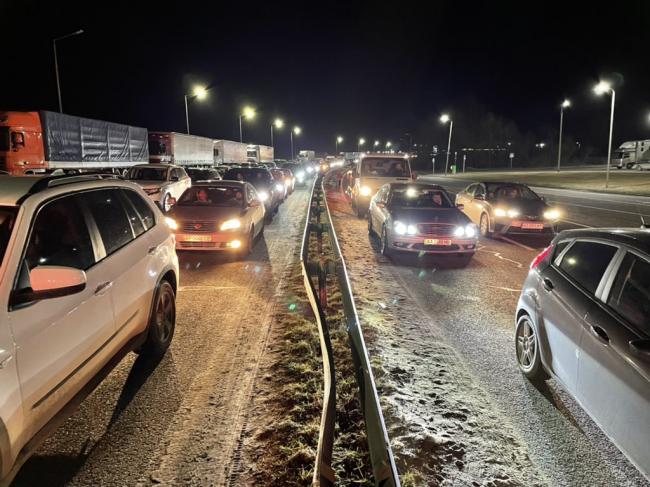
[T]he highest-value targets should have been predictable to anyone with an adversarial mindset…However, some high-value targets are less obvious… What should this mean to you? If you live in a major city that is likely to be a significant target, your threat awareness should be elevated. You should prepare escape routes with waypoints and discuss them with your family — failure to do so could leave you stuck in gridlock, as many Ukrainians were. This is especially true if your city borders directly with a hostile nation or its allies (e.g. Belarus), or lies on a coastline that is readily-accessible. If your escape plan includes air travel, keep in mind that airports are typically a top priority in warfare, and you won’t want to be there when bombs start to fall.

Cyberattacks will be a significant factor

…We’re not suggesting you abandon technology and everyday conveniences, but you should certainly establish contingency plans in case cyberattacks affect the electrical grid, internet service providers, cell phone towers, or banking/point-of-sale systems. Consider learning how to use ham radio for emergency communications, set aside cash, buy a generator, stockpile important medications, and purchase paper maps of the surrounding area. If we’re ever set back to a world without reliable technology, you’ll be more prepared to cope with it.

Training

Ask yourself: how would you respond if you faced an invasion and had to join the fight, whether by mandatory draft or moral obligation? Would you be able to fall back on a solid foundation of training, not just in shooting skills but also small unit tacticsconcealment, communication, navigation, medical, and sustainment skills? Would your spouse and children be prepared to contribute to the fight, or to escape to safety without you?

This brief post at The Prepared just talks about bugging out, and there are some decent posts in the comments as well.

What can we learn from the war in Ukraine?

One of the main lessons I’ve seen so far is the need to reassess my bug out plan. There was a 6 mile (10km) long traffic jam of refugees fleeing to Poland.

274754397_10222353854810724_5248239063361146763_n
FMZSfqOXMAA4nDk

At what point do you abandon your vehicle and trek it on foot? Is going on foot any better?

Another thought I had was having enough water, food, and fuel on hand. You don’t want to run out of food during the middle of an invasion and try to go through a war zone to buy groceries. 

My heart goes out to all those affected. Even to the Russian soldiers who may not like what they are doing but have to.

Let’s learn from what is going on and prepare for the future.

A comment on the post from sewknot:

Things I’ve learned from the news reports & interviews

1 have your documents ready – passport/visa/birth certificates

2 cash – have cash on hand so you don’t have to queue at the atm when you could be on the road

3 have your bag packed! Reports of people waking up at 3 am to missile strikes and deciding to pack THEN

4 your journey will take longer than you expect – make sure you have everything you need to make it to your destination and leave as soon as you can

5 mental fortitude – plan for the worst hope for the best

Some of the above lessons are summarized in an article at Survival Kompass titled 10 Things You Can Learn as a Prepper from the Ukraine Invasion.

  1. 1. Keep a stockpile of water and food for evacuation
  2. 2. Always have access to cash
  3. 3. Prepare for your medical care
  4. 4. Always have a full tank
  5. 5. Check the infrastructure around you
  6. 6. Do not stay longer than necessary
  7. 7. Prepare your family
  8. 8. Have your bug out bag ready
  9. 9. Learn survival skills
  10. 10. Always have a plan B and stay flexible
  11. Conclusion: Early preparation and flexible execution of plans give you an advantage and significantly increase your chances of survival!

AmRRON Increased AmCON to Level 3

From AmRRON:

AmCON-3  20231012-2030z

Increased likelihood of a disrupting event which could result in loss of conventional telecommunications and other services.

Due to numerous corroborating news and intelligence outlets, there is a significantly increased risk of social unrest between pro Israeli and pro Palestinian demonstrations, especially within the major cities of US and Europe.  Additionally, this call to action by the terrorist organization, Hamas, could incite lone wolf or sleeper cells to become operational.  Intelligence indicates that at the very least, Jewish personnel and their businesses and places of worship may be targets of terrorist attacks.SOURCE: Forward Observer

HAMAS LEADER CALLS FOR INTERNATIONAL “DAY OF RAGE”: Head of the Hamas Diaspora Office and founding member Khaled Mashal called for Muslims across the globe to “be martyrs for al-Aqsa” in “the Friday of al-Aqsa Flood” on 20 October.

Why It Matters: Hamas, Hezbollah, and Iranian intelligence services have a presence in the U.S., and more “illegals” have very likely crossed the southern border into the U.S. with the potential to act as sleeper cells. Hezbollah is involved in the narcotics trade in Latin America, ranging from the tri-border area between Argentina, Brazil, and Paraguay to Mexico. If Hamas and Hezbollah seek to draw the U.S. into war in the Levant, they could conduct an attack against U.S. personnel and American tourists in Europe or the Middle East. Amid already high domestic tensions between pro-Palestinian and pro-Israel political factions, Hamas militants could potentially conduct attacks within the United States. – R.C.

Also, from Zero Hedge, US Cities On High Alert Amid Hamas’ ‘Day of Rage’ Threats:

Local and federal law enforcement agencies across the US are increasing patrols after a former Hamas leader called on supporters to unleash chaos in what is being called a ‘day of rage.’ 

In New York City, Morgan Stanley employees were allowed to remote work today as an “All Out For Palestine” rally in Times Square, near the bank’s headquarters, presents security risks, according to Bloomberg. 

Google parent Alphabet Inc. employees in NYC were told they could stay home today, while a Jewish school in Queens instructed parents it would close today due to security risks. 

NBC News said the New York Police Department ordered all officers to be on patrol today while providing enhanced security at cultural sites and houses of worship. Additional officers will be deployed to protest areas.  

“New York City will do whatever it takes to keep our people safe,” New York Mayor Eric Adams (D) told reporters at a Thursday evening press conference. 

Outside of Israel, NYC has the largest Jewish population, and already, Rep. Alexandria Ocasio-Cortez’s (D) Democratic Socialists of America have held pro-Palestinian rallies in Times Square. 

AOC has made an effort, optically, of course, to denounce DSA’s explosive anti-Israel rhetoric: “(The rally) did not speak for the thousands of New Yorkers who are capable of rejecting both Hamas’ horrifying attacks against innocent civilians as well as the grave injustices and violence Palestinians face under occupation.” 

From coast to coast, police departments said they plan to increase patrols after Khaled Mashal, the former leader and founding member of Hamas, called on Muslims earlier this week to unleash a ‘Day of Rage‘ on Friday. 

AmRRON Sets Readiness to AmCON 4

From AmRRON:

Due to the escalating situation involving the war in Israel, and the potential for expanding regionally and beyond, the AmRRON Readiness Condition Level is now at Level 4 (Incident Possible).

There are numerous factors which could lead to regional expansion of the conflict between Israel and Hamas and Hezbollah, especially as it relates to their supporting nation states (such as Iran).

Additionally, large demonstrations in western cities (including the U.S.) in support of “Palestine” could embolden jihadi fighters in the U.S. (including those who have infiltrated our southern border) to carry out terror attacks in western nations similar to what we saw in southern Israel this past weekend.

The unrest and division could also be exploited by Chinese operatives who (according to multiple intelligence reports) are affiliated with the Chinese Communist Party (CCP), and who have infiltrated into the U.S., and pose a significant risk through sabotage operations.  This could lead to disruptions (either kinetic physical action or cyber attacks) against our telecommunications, transportation, navigation, and fiber optic internet infrastructures.

AmRRON operators should take the following actions:

  • Inspect, functions check, and/or repair communications equipment, including alternative power
  • Charge batteries and increase fuel supply
  • Test your family, group, and community emergency communications plan
  • Discuss communications and other emergency response plans with same
  • Ensure your software is updated and tested
  • Submit a test STATREP (preferably using Commstat) in the next 24 hours

Check the website and this AmCON page for any updates.

The US State Department confirmed the deaths of nine US citizens in the war between Hamas and Israel with more citizens unaccounted for.

Brushbeater: The CB for a New Generation

NC Scout of Brushbeater takes a look at a sometimes overlooked radio option for radio communication – Citizens’ Band (CB) radio. He talks about the benefits of the CB frequency spectrum and takes a look at a particular piece of CB equipment.

The CB for a new Generation: The CB-58 HT

Most, myself included, dismissed CB a long time back as little more than a relic of generations gone by. A fun throwback to the 70s and 80s, with more practical and capable equipment options coming into the market it quickly started looking obsolete. Older CB radios left much to be desired in terms of practicality for much else that being mounted on a dashboard. And, to be fair, they were built for their primary purpose.

The fact remains that CB radio itself actually has a ton of utility. From 26-27mHz, its nestled right in the upper end of the HF radio range, behaving much like VHF locally but having the capability of transmitting incredibly long distances with a little original thinking and application of antenna theory. It remains the strongest option, at least frequency wise, for rural applications due to its ability to cover long distances while experiencing lower signal loss due to vegetation. In a nutshell, the lower in frequency you go, the less signal strength you lose to vegetation according to the PRC-64 tests in Vietnam.Growing up on the tailend of the CB heyday, many of the handhelds we used in our hunting clubs left much to be desired and usually wouldn’t last more than one season. Truck mounted units were fine, but there was no real field worthy option and the handhelds were pricey to be an essentially one time use item. This led to the rise in popularity of the Motorola FRS Talkbouts, even though they were limited both in terms of range and capability. Once the Baofeng radios hit the market it really became a game changer for a lot of reasons and at least around here a revolution coupled with the utility of the license free MURS frequencies. CB became mostly viewed as obsolete. But one huge thing of note – it remains the option of choice for Spanish speakers to communicate off grid at least in rural NC. Do not let that data point be overlooked…it works for a reason for them and does for you as well.

That brings us to the intersection of two issues; a lack of decent equipment options for field applications and a social aversion due to the opinion of it being obsolete. Fortunately a solution is here and I think its a revolution to CB radio. The CB-58 caught my eye after the FCC made the use of FM legal on CB (previously it was limited to AM only). Having a rechargeable battery as well as a AA battery box is a massive tool in terms of utility in the field. And its build quality is reminiscent of the old Bendix King wild land firefighter radios if they had had an LCD screen, even featuring the rugged BNC antenna connector that is my personal choice in the field.

But the feature list, foregoing the elephant in the room in terms of ease of use, is the addition of the two-prong Kenwood K1 mic connector. That’s right. The same connector that we all know and love for microphones is a subtle feature on this unit. That means this rig can transmit data using the K1 cable we make heavy use of in the RTO and Recce Courses to send data bursts. You can find the instructions on how to do that in The Guerrilla’s Guide to the Baofeng Radio as well, and its even easier to set up with these.

In the last RTO Course I ran an experiment on the students during the final two days (Signals Intelligence) having two groups rig jungle antennas for the CB band and move to transmitter sites, while not informing the students tasked with SIGINT that another tool was in play. They were intercepting the signals on their spectrum analyzers and scanners, but ignoring them completely. “That’s just CB from the highway” I heard one of them say. And when I dropped a hint, they still couldn’t intercept the traffic on FM because their equipment would only tune AM. Not too shabby. The point here is there’s a huge advantage to the high end of HF where CB resides – its hiding in plain site. By the time the SIGINT team got a bearing, the transmissions were sent and there wasn’t anything to exploit. Kind reminds me of something Lawrence Myers covered using CB radio handhelds in his classic, SpyCom.

Radio doesn’t get any simpler than this. I think its a revolutionary tool and another step up in terms of capability to the American Patriot. Get yours today.

Colion Noir: 5th Circuit Says ATF Pistol Brace Rule “Likely Illegal”

Also, from Reuters news service:

A U.S. regulation restricting ownership of gun accessories known as pistol braces is likely illegal, a federal appeals court ruled Tuesday, a victory for a gun rights group challenging the rule.

A 2-1 panel of the New Orleans-based 5th U.S. Circuit Court of Appeals found that U.S. Bureau of Alcohol, Tobacco, Firearms and Explosives finalized the rule in January without giving the public a meaningful chance to comment on it. That made it invalid under the federal Administrative Procedure Act, the panel found…

CBC: India’s Rice Export Ban Leads to Stockpiling

On July 20th the government of India banned the export of non-basmati white rice to “ensure adequate domestic availability at reasonable prices”. India is the world’s largest exporter of rice, accounting for around 40% of global rice trade. Approximately half of that trade is non-basmati rice. Rice is a very popular preparedness staple for food storage. It is then perhaps no surprise that the ban had led to rising pricing, stockpiling, and empty store shelves.

CBC: India’s rice export ban leads to stockpiling in Canada and around the world

India’s decision to ban the export of non-basmati rice has led to consumers panic-buying and stockpiling Indian rice around the world, driving up prices in the process.

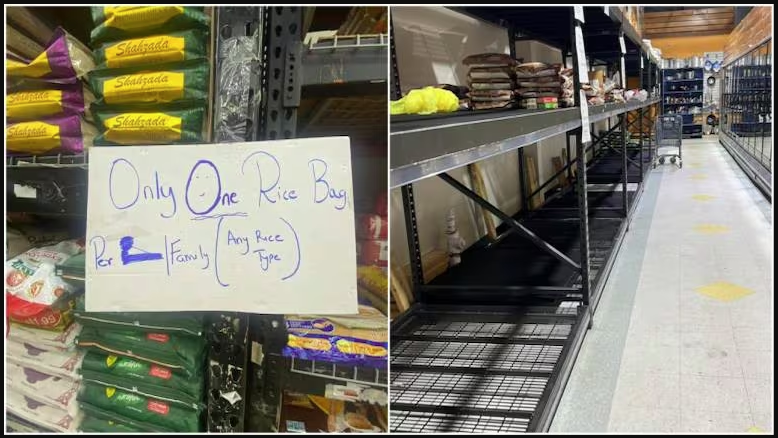
In Canada, the U.S. and abroad, reports of panic-buying are flourishing on social media, with stores that cater to South Asian communities implementing caps on the amount that any customer can buy, and adjusting prices.

Sriram Ramamurthy, the manager of Iqbal Halal Foods in Toronto, told CBC News in an interview Monday that he saw an immediate increase in demand for rice once word of the ban spread on Thursday of last week.

“They started coming in here and they wanted to buy more and more,” he said. He soon implemented a limit of one bag per customer, but that quickly proved futile as customers would come back with more family members, “each one trying to pick two or three at a time.”

Some customers would even approach other customers in line who were not buying rice, trying to get them to purchase it on their behalf, he said.

In order to stave off a food shortage at home, India has banned the export of all rice except for the export-focused basmati variety, which has led some to worry about skyrocketing prices and the potential for further bans in the future.

Ramamurthy says he carries more than 40 different brands of rice in his store, mostly from India, but the majority of what he sells is basmati rice, a premium grade of rice that isn’t even included in the export ban.

But that hasn’t stopped customers from trying to buy up every grain they can, of basmati and varieties included in the ban, just in case, he said.

raj Mohammed said he heard about the ban, so decided to come “down to the grocery store expecting that this is not gonna be the case in Canada. But I guess the worst happened,” he said. He prefers one specific type of basmati rice, one that the store doesn’t have any more of right now. “Now I’m not going to be able to get my hands on it, I guess.”

Ramamurthy says he hasn’t raised his prices yet, but he’s expecting his suppliers to soon. Stores that cater to the South Asian market elsewhere in Canada are reporting similar scenes, including Savor Supermarket in Saskatoon, where purchases are being limited.

Stores in the U.S., Australia and elsewhere are also seeing unprecedented demand, Bloomberg and others reported Tuesday, although CBC News has not been able to independently verify the authenticity of videos showing hoarding and panic buying.

Prices up sharply

India has taken the extraordinary step in order to ensure domestic supply, and bring down prices, which have soared due to excess rains and drought in rice-producing regions.

According to government data, the domestic price of non-basmati rice has increased by almost 10 per cent this month. In September of last year, a metric tonne of non-basmati rice in India would cost about $330 US. Today it tops $450, according to pricing in the most-traded Indian rice futures contract.

Sophia Murphy, executive director for the Minneapolis-based Institute for Agriculture and Trade Policy, says rice is such a staple for India and its 1.2 billion people that the government manages supply closely. Unlike other food commodities, she says the global rice market is very domestically oriented, as less than 10 per cent of all the rice in the world ever crosses a border.

While India is far and away the world’s largest exporter of rice, with more than 40 per cent of international trade in it, their primary concern is maintaining domestic supply, which is why they have had export bans in the past, she says.

“If they ban or someway limit the exports, it should keep more production in the country and it should reduce the inflation pressure that is there on food prices,” she said.

Canada imported about $650 million worth of rice last year, according to government data. Within that, about $140 million came from India — and only a tiny percentage of that is of the small- and medium-grain varieties of non-basmati rice that the ban applies to.

Murphy says while supply of basmati may also be strained, the government did not move to ban exports since it is a more premium product. Local concern is on the other staple varieties, which is why the government used the dramatic step of halting exports.

“Bans are easy to explain to the public,” she said, “we’re not selling food abroad, we’re looking after people at home. It’s often a pretty blunt — not necessarily very effective — instrument but it has domestic political capital associated with it.”

India’s move to ensure domestic supply is the second major announcement from a major exporter this year, as in May Vietnam announced plans to limit its own exports to four million tonnes a year by 2030. That’s down from more than seven million tonnes a year right now, and it’s aimed at “ensuring domestic food security, protecting the environment and adapting to climate change,” the government said in a release.


Doom and Bloom: Which Antibiotics for Your Storage

Doom and Bloom Medical

The Altons at Doom and Bloom Medical have an article up on Which Antibiotics for Your Storage, which also includes a coupon code for 25% off antibiotics which is good until July 31, 2023. Click the link above to see the site on their webpage and get the coupon code from the top of the article.

WHICH ANTIBIOTICS TO HAVE?

(NOTE: The information below is only meant for circumstances where there is no functioning medical system. If modern professional care is available, seek it out.)

If a disaster throws you off the grid, your risk of traumatic injury increases, but so does that of infection. When someone thinks of an infectious disease event, they envision a deadly epidemic. Any catastrophe, however, can increase the number of people with infections. When I say “catastrophe”, I’m not talking losing power from a storm for three days; I’m talking about a true long-term survival scenario.

In these horrific events, dirty wounds, contaminated water, poorly prepared food, and inadequate sanitation will turn previously healthy people into desperately sick ones. With antibiotics in your medical storage, you have a good shot of nipping bacterial infections in the bud. Not having them could lead to tragic consequences.

One of the most frequent questions I receive from readers, listeners, and viewers is which antibiotics to have on hand in survival settings. I have received a flurry of these lately in response to our book “Alton’s Antibiotics and Infectious Disease”: The Layman’s Guide To Available Antibacterials in Austere Settings. In the book, I discuss, well, antibiotics and infectious disease: Those infections which can be expected in those knocked off the gird and the antibiotics obtainable by the average citizen that help prevent otherwise avoidable deaths.

(NOTE: I don’t sell antibiotics myself nor own any part of a company that does, but look above for a special coupon offer from a reputable company that does.)

Certainly, it would be great if you had the financial resources to have all of the medications we talk about in Alton’s Antibiotics and Infectious Disease, but that’s beyond the means of almost everyone. You’ll probably need to pick a limited number to stockpile, but which? Chances are, if you lined up 10 doctors, you’d get 10 different answers.

Your choices would depend on the infections you’re most likely to encounter. Is it wound infections you’re concerned about, or intestinal infections like dysentery or cholera? Does someone in your group have a medical condition that makes them prone to a certain infection? Certainly, one drug doesn’t cure all.

Without knowing your individual situation, I can’t give you specifics.  I can, however, still give you my personal recommendation of a few antibiotics available in aquarium and avian form that would be assets in my survival medicine cabinet. This article would be too long to mention every disease these drugs treat or dosing (our book is more than 300 pages long), but I’ll mention a little about each.

  1. For those who aren’t allergic to penicillin, I think either amoxicillin(Amoxil, Aqua-mox) or cephalexin(Keflex Aqua-flex), both members of the beta-lactam family, would be good drugs to have around, especially for soft-tissue and bacterial upper respiratory infections. Dosing is relatively simple and, in most cases, safe for pregnant and pediatric patients.
  2. Secondly, I would have doxycycline (aqua-doxy), which handles a lot of different infections of the respiratory and intestinal tracts and is okay to take if you’re allergic to Penicillin drugs, although it isn’t considered acceptable for use during pregnancy. For those who claim doxycycline becomes toxic when expired, note that the Department of Defense’s Shelf Life Extension Program has, in the past, authorized its use well beyond the expiration dates.
  3. Metronidazole(flagyl, Aqua-zole) is a drug which I consider very useful, especially for intestinal infection from bacteria and certain parasites, like Giardia, seen in intestinal and pelvic infections, among others. It is also used with other antibiotics in those with stubborn infections, for example, appendicitis, along with another antibiotic for situations where surgery isn’t an option. Although Metronidazole is acceptable in those allergic to penicillin, it’s not okay for pregnant or breastfeeding mothers.
  4. Azithromycin(Z-Pak, Aqua-Zithro) is known to be generally safe in pregnancy as well as those with penicillin allergies. It can deal with many cases of respiratory infection, dysentery, tonsillitis, sinusitis, and more. An additional benefit is that many in your group have taken it before in its popular “Z-Pak” form.
  5. The Sulfa drug combination sulfamethoxazole/trimethoprim (Bactrim DS, Fishbiotic) is an excellent choice for many infections, especially urinary ones. If that is a common problem for family members, you might consider this drug. It has also been used for skin infections, some sinusitis, MRSA, ear infections, and others. Sulfa-Drugs are acceptable in the penicillin-allergic but not in the pregnant woman or breastfeeding mother.
  6. Clindamycin(cleocin, aquatic clindamycin) would be on my list. It has been used to treat everything from acne to anthrax, but is helpful for pneumonias, pelvic infections, uterine infections after childbirth, soft-tissue infections, and is even effective against MRSA. It is, unlike doxycycline and metronidazole, acceptable for use during pregnancy and in people allergic to penicillin (of course, you could be allergic to clindamycin, or any other antibiotic, itself). In rare cases, use of clindamycin could induce an intestinal inflammation (colitis), which could be serious.

You may notice the above list doesn’t include Ciprofloxacin (Cipro, Aqua-Cipro), an antibiotic which is effective against many infections. I felt the side-effects of the drug, including weakness in the muscles and tendons, precluded my adding it. It’s still an option for some.

In our book “Alton’s Antibiotics and Infectious Disease”, we describe the various antibiotic families in detail. The drugs above each belong to a different family. If you could accumulate some of each over time, it would give you the best chance of having a medicine on hand that would have activity against almost any bacterial infection.

It’s important for you to know that every single medication I mentioned has its share of side-effects and reasons why they might be dangerous in some people, like those with kidney or liver disease. You should also learn to recognize the signs and symptoms of various infections. Indeed, antibiotics aren’t useful at all if you’ve misdiagnosed a viral infection as bacterial.

Antibiotics are not candy, and they should be used judiciously and rarely in survival settings. They will be scarce commodities, irreplaceable in a societal collapse, so accumulate a good supply and utilize them wisely. To accomplish that goal requires not just funds, but a fund of knowledge and good judgment. If you’re successful, you might save the life of someone who otherwise might not survive in times of trouble.

Joe Alton MD

CSG: Become More Dangerous

Combat Studies Group posted this back around New Years Day, but it bears repeating. Here’s Become More Dangerous.

New Years resolutions….I’ll be honest, I have never been a big proponent of them. I mean we have all seen the people around us make the same resolutions every year…with the same result…being that they fizzle out within a few weeks. But, if we are going to talk resolutions, might I offer this:

In 2023, become dangerous.

What do I mean by that? It should be abundantly clear to anyone paying attention at this point that our way of life in the West and in America in particular, is being deliberately and systematically destroyed. From “in your face” voting fraud to bio-engineered viruses to genocidal gene therapy shots to wide open borders to the fleecing of the public to fund engineered foreign conflicts to the governmental targeting of “traditional Americans” as “domestic terrorists” and I could go on and on. As the saying goes – The threat is real….and we are in danger.

For the sake of yourself, your family and your way of life – become more dangerous!

– Get into fighting shape

– Hike every morning

– Lift weights

– Practice or learn combatives of some kind

– Stop eating processed food

– Take nutritional supplements as needed

– Cut back or stop drinking alcohol

– Practice / Learn tactical skills

– Shoot on a regular basis

– Get certified in TCCC and remote medical skills

– Practice tactical problem solving (dry runs clearing your home and your friend’s homes)

– Attend at least two training courses this year

– Land navigation (without GPS aid)

– Escape and evasion skills

– Counter surveillance skills

– Tactical / High threat driving skills

– Learn how to run a security patrol

– Learn basic INFOSEC skills

– Food independence

– Start growing something, even if it’s just some herbs in the house

– Learn to can and preserve food

– Get a couple chickens or goats

– Have a backup water source and the means to purify it

– Start composting

– Have a minimum of a year’s worth of non-perishable food for your household

– Homestead

– Invest in a solar system or at least a backup system

– Stockpile various tools and supplies for plumbing, electrical, structural repairs

– Fire extinguishers in every room

– Develop and drill a family plan for fire, home invasion, natural disasters

– Have ample supplies of needed medicines   

– Have a backup for every item of importance in your garage, work shed and tactical den.

– Learn amateur radio / HAM skills and practice (VHF, UHF, HF/NVIS)

– Establish a “safehouse” with a trusted friend

– Lay in some emergency supply caches (off your property)

This is an extremely simplified break down, but covers what I would consider the bare bones approach most folks should take. I realize some reading this are already able to check most or all of these boxes already, good for you but you’re not off the hook. Continue to expand or add to this list. No matter how prepared you are, how well trained you are, how experienced you are – I challenge you to become MORE dangerous. Dangerous to those that would try to bring harm to you, destroy your liberties and bring ruin to your way of life.

Become dangerous – it’s a virtue!

UConn: Disaster Preparedness for Horse Owners

The Extension at the University of Connecticut has a short article on Disaster Preparedness for Horse Owners

Article by Dr. Jenifer Nadeau, UConn Equine Extension Specialist

horse looking out from red barn
Sean Flynn/UConn Photo

When it comes to disasters, a lot of us think about wildfires. However, we also picture catastrophic flooding. Flooding is the most common type of natural disaster. About 40% of all natural disasters worldwide involve flooding. According to National Flood Insurance, in a 30-year mortgage, a home has a 26% chance of being damaged by flood versus a 9% chance of being damaged by fire. Flooding is a year-round threat. River flooding is the most common type of flood in the United States. Flash flooding is the leading cause of weather-related deaths per year, causing approximately 200 human deaths per year and an unknown number of horse-related deaths or injuries. The leading cause of death in large animals during Hurricane Andrew in 1992 included animals killed in collapsed barns, electrocution, kidney failure secondary to dehydration and animals hit and killed on roadways or tangled in barbed wire after escaping from their pasture. Hurricanes, tornadoes, snowmelt, and thunderstorms all contribute to flooding.

Disaster preparedness involves reflecting on hazards that threaten your family’s safety and that of your animals and developing a plan on how to prepare for these hazards. There are four phases of emergency management: mitigation, preparedness, response, and recovery. Mitigation is preventing future emergencies or minimizing their effects. Preparedness is preparing to handle an emergency. Response is responding safely to an emergency. Recovery is recuperating after an emergency.

The foundation of emergency management is personal responsibilities. That is the familiarity with the potential for disaster in your community and the creation of your own emergency plan to care for your animals. The next step is local government responsibilities that include emergency response planning, response, and assessment to protect your community. You can think here of the text messages that notify you of the hazards present in your community such as a severe thunderstorm or your local Community Emergency Response Team (CERT). State government responsibilities include protection from statewide disasters, provision of financial assistance to underfunded communities, and review of local emergency plans. The Statewide Animal Response Teams (SART) are an example of this. Federal government responsibilities are at the top of the pyramid and include protection from and declaration of national disasters, provision of financial assistance if needed and coordination of disasters through the Federal Emergency Management Agency (FEMA).

Flooding results when heavy or continuous rainfall exceeds the absorptive capacity of the soil and the flow capacity of rivers, streams, and coastal areas causing the  watercourse to overflow its banks onto adjacent lands​. There are two types of floods – slow rising floods and fast rising floods. Slow rising floods move down a river or stream and can be predicted to reach a certain height. Fast rising foods are flash floods that usually result due to extreme heavy rain, melting snow, dam failure or levy failure, and occur suddenly.

Things to consider in the short term are:

  • You may not have much time to react, so you need to have a plan in place.
  • You should have a disaster kit on hand in case of emergency.
  • You should know how you will evacuate your horse and have a trailer ready or one you can borrow if needed.
  • You should have a way to identify your horse in case you get separated.

Here is what you should have in your disaster kit:

  • Feed – at least a week’s supply in airtight, waterproof container, rotate feed every three months​
  • Extra feeding bucket for each horse​
  • One week of water for each horse, you can use 50-gallonbarrels, store in a cool, dark location​
  • Extra water bucket for each horse
  • One week’s supply of shavings/straw​
  • Extra pitchfork
  • Extra wheelbarrow/muck bucket
  • First aid kit​
  • Grooming supplies including shampoo, sweat scraper, etc.​
  • Antibacterial soap​
  • Antibiotic ointment
  • Sterile gauze sponges and pads​
  • Two to four disposable diapers or wrapped sanitary napkins​
  • Bandages – Ace, 2 ½” gauze bandage roll, leg bandages​
  • Adhesive tape – 1” and 2” rolls
  • Two to four quilted or padded wraps
  • Household scissors and/or knife​
  • Tweezers​
  • Ice bags or chemical ice pack​
  • Rubbing alcohol​
  • Veterinary or human rectal thermometer​
  • Lubricant​
  • Stethoscope​

As mentioned, you should also have ways to identify your horse and there are several options. Use a livestock crayon to write your name, phone number and address on the horse​. Use clippers to shave your name, address, phone number into the horse’s coat​. Braid an identification tag with your name, address, and phone number into your horse’s mane​. Have at least 10 recent photos of your horse including some with you in it – keep them in sealable plastic baggies in your disaster kit with other important documents, medications, and insurance papers. Keep a copy of the Bill of Sale for your horse or other documentation that can prove ownership with your disaster supplies​. Have your horse microchipped​, branded​, or tattooed​.

There are also some long-term considerations. You need to know what you will do if you cannot return to your home/property and have a place that you can stay for a while until you can return to your home/property. You should have a way of identifying your animals in case you need to set them free (worst case scenario) or reclaim them from a shelter. You should write on a piece of paper the name, address, and phone number of your regular veterinarian, and keep it with your other important documents for your horse since you may not have access to a cell phone or charger. Locate a mobile equine veterinarian you can use in event of a disaster if you don’t already have one in case your horse is too injured to be moved for treatment​. Write out a release form authorizing another party to give medical treatment for your injured or sick horse and keep it on file with your regular vet and an alternate vet. Give a copy to your neighbor or whomever will take of your horse if you are away​.

By being prepared for a disaster, you will keep your horse and yourself safe and hopefully save money as well on any bills that may arise from serious issues. I hope that you have fun with your horse this summer. Stay safe! Please call (860) 486-4471 or email jenifer.nadeau@uconn.edu if you have any questions. Also, visit my web site s.uconn.edu/equine-extension for more information on upcoming horse specialist events and other information. Thanks, and have fun with your horses!

Sources and Resources

  1. National Flood Insurance. Nationwide Flood Facts: Learn About Flooding in Every Region. https://nationalfloodinsurance.org/flood-facts/ Accessed 6/2/23.
  2. Disaster Planning for Horse Farms. https://aaep.org/horsehealth/disaster-planning-horse-farms
  3. Federal Emergency Management Agency http://www.fema.gov/hazard/index.shtm ​
  4. FEMA Independent Study Courses http://www.training.fema.gov/EMIWeb/IS/crslist.asp

Epoch Times: Biden Administration Rule Would Ban Nearly All Portable Gas-Powered Generators

From The Epoch Times:

After seeking to reduce the use of gas stoves, the Biden administration is pushing a proposal to ban the sale of almost all portable gas generators—which some experts have said would be disastrous for the millions of Americans who rely on such generators during power outages.

The U.S. Consumer Product Safety Commission (CPSC) has proposed a policy (pdf) that would remove nearly all existing portable gas generators from the market. The new rule restricts the amount of carbon monoxide that generators can emit by forcing these generators to switch off when they reach a certain level of emissions.

Smaller gas generators would have to cut carbon monoxide emissions by 50 percent, and larger generators would have to cut emissions by up to 95 percent. Nearly all models currently available are expected to not be in compliance with the new standard.

Once the proposed rules come into effect, manufacturers would have to comply with them in just six months, a process that usually takes several years. The rules would also ban manufacturers from stockpiling noncompliant generators before the new standards are enacted.

Generator Manufacturers Speak Out

In a June 28 press release, Susan Orenga, executive director of the Portable Generator Manufacturers’ Association, pointed out that CPSC’s proposal will “create a shortage of essential portable generators during regional and national emergencies because it will prevent the sale of portable generators that are currently available on the market.”

“Furthermore, the timing of the CPSC’s proposed changes are particularly concerning, given repeated warnings that two-thirds of North America is currently facing an energy shortfall this summer during periods of high demand,” she said.

portable gas generators
Workers help residents at Home Depot, where they are buying generator equipment and other supplies on Aug. 29, 2019, as they prepare for Hurricane Dorian. (Michele Eve Sandberg/AFP via Getty Images)

Nearly 5 million households across the United States use gas powered generators during power outages, and they are particularly important during hurricane season, when powerful storms often knock out electric utilities.

In May, the North American Electric Reliability Corp. warned that two-thirds of North America could face blackouts and brownouts between June and September if there are “wide area” heat waves, wildfires, and droughts, and the agency attributed some blame for the problem to the Biden administration’s push for renewable energy.

The CPSC proposal came after the Department of Energy unveiled its Energy Policy and Conservation Program in February, which aims to establish new standards on consumer cooking products, including gas stoves. The rules are expected to ban the sale of at least half of U.S. stove models…(article continues)