In this doodle C.S. Lewis talks about the Christian virtue called ‘Hope’, the continual looking forward to the eternal world (notes below).
During one of the blackest years of WWII, C.S. Lewis wrote a BBC radio talk on ‘Hope & Faith as Virtues’. He originally wrote the radio address for 15 mins, but afterwards the BBC changed the formula & only allowed him 10 mins on “For the [Armed] Forces” radio station. So this talk had the section on ‘Hope’ cut from the broadcast, & it became simply a talk on ‘Faith’. This missing section ended up being printed in the book version of the talks called ‘Christian Behaviour’ (1943) & later became Chapter 10 of Book 3, in the book called ‘Mere Christianity’. This section on ‘Hope’ you are about to hear, was never broadcast by the BBC.
(0:03) This view of the Golden Valley is reputed to be the most beautiful viewpoint in all Britain. It was made famous by the movie ‘Shadowlands’, as Lewis’ childhood picture he thought was a view of heaven (whether or not the picture really existed in his childhood, I do not know). The painting used in the movie is from Symonds Yat Rock & provides a fabulous viewpoint of the River Wye, Herefordshire. Lewis thought our best earthly pleasures are meant to arouse our desire for another world, & our earthly pleasures are only painted copies, or echoes, or mirages of the real joy of Heaven.
(0:47) Alfred the Great, the English King, codified three prior Saxon codes – those of Æthelberht of Kent (c. 602 A.D.), Ine of Wessex (c. 694 A.D.) & Offa of Mercia (c. 786 A.D.) – to which he prefixed the ‘Ten Commandments’ of Moses & also incorporated rules of life from the Mosaic Code & the Christian code of ethics. Alfred the Great is also famous for defeating the Vikings, who had invaded England, & for being magnanimous in his great victory.
(1:53) Lewis on civilisation: “You can’t get second things by putting them first; you can get second things only by putting first things first. From which it would follow that the question, “What things are first?”, is of concern not only to philosophers but to everyone. It is impossible, in this context, not to inquire what our own civilisation has been putting first for the last thirty years. & the answer is plain. It has been putting itself first. To preserve civilisation has been the great aim; the collapse of civilisation, the great bugbear [obsessive fear]. Peace, a high standard of life, hygiene, transport, science & amusement – all these, which are what we usually mean by civilisation, have been our ends. It will be replied that our concern for civilisation is very natural & very necessary at a time when civilisation is so imperilled [by Nazi invasion]. But how if the shoe is on the other foot – how if civilisation has been imperilled precisely by the fact that we have all made civilisation our summum bonum (highest good)? Perhaps it can’t be preserved in that way. Perhaps civilisation will never be safe until we care for something else more than we care for it.”
“The hypothesis has certain facts to support it. As far as peace (which is one ingredient in our idea of civilisation) is concerned, I think many would now agree that a foreign policy dominated by desire for peace is one of the many roads that lead to war [written in 1942 about Chamberlain’s British policy of ‘peace at all costs’). & was civilisation ever seriously endangered until civilisation became the exclusive aim of human activity? There is much rash idealisation of past ages about, & I do not wish to encourage more of it. Our ancestors were cruel, lecherous, greedy & stupid, like ourselves. But while they cared for other things more than for civilisation – & they cared at different times for all sorts of things, for the will of God, for glory, for personal honour, for doctrinal purity, for justice – was civilisation often in serious danger of disappearing?”
“At least the suggestion is worth a thought. To be sure, if it were true that civilisation will never be safe till it is put second, that immediately raises the question, second to what? What is the first thing? The only reply I can offer here is that if we do not know, then the first, & only truly practical thing, is to set about finding out…” (‘First & Second Things’, June 1942).
(7:16) “…I still maintain that what enraptures & transports is always good. In the mirages, this good thing is not where we suppose it to be, namely, in the book or picture. But it may be good in itself – just as an oasis is a good thing though it exists a hundred miles away & not, as the desert traveller sees it, in the next valley…” (Tastes in Literature). The original broadcast had the following words italicised (shown in CAPS). “You want other things MORE”; “There are all sorts of things in this world that OFFER to give it to you”; “But SOMETHING has evaded us”; “probably earthly pleasures were never MEANT to satisfy it.” See ‘The Problem of Pain’ (Chp.10) & ‘The Weight of Glory’ for more.
Common violence. Organized violence is occurring monthly.
Opposing sides develop governing/war structures. Just in case.
Common violence that is generally deemed by governmental authorities as justified based on ideology.
Open War.
We remain in the gray zone between step 9. and step 10. I will maintain the clock at 2 minutes to midnight. There is the possibility of a reduction back to step 8. in the future. Post-election, authorities have begun to crack down on Leftist violence, plus the cold weather makes riots less fun, especially since the stores the fuel has all been burned.
Previously, I stated that the only thing keeping the clock from ticking to full midnight is the number of deaths. I put the total at (this is my best approximation, since no one tracks the death toll from rebellion-related violence) 500 out of the 1,000 required for the international civil war definition.
But as close as we are to the precipice of war, be careful. Things could change at any minute.
In this issue: Front Matter – Banks of the Rubicon – Violence And Censorship Update – Maps – Updated Civil War 2.0 Index – Intolerable Acts and the End of the Republic – Links
Front Matter
Welcome to the latest issue of the Civil War II Weather Report. These posts are different than the other posts at Wilder Wealthy and Wise and consist of smaller segments covering multiple topics around the single focus of Civil War 2.0, on the first or second Monday of every month. I’ve created a page (LINK) for links to all of the past issues. Also, feel free to subscribe and you’ll get every post delivered to your inbox, M-W-F at 7:30 Eastern, free of charge.
Banks of the Rubicon
They were going to come after him, he knew, with the full legal apparatus of the state should he give up power. He knew this. They had told him as much. They hated his fame and popularity; they hated his bestselling books where he boasted of his accomplishments.
But it wasn’t just him, it was his family. He knew that they would take legal action against his family, try to take every bit of his money. They meant to ruin him.
He didn’t want to do it, but they had forced his hand. He would call for an insurrection to take power so that his enemies couldn’t pervert the law to use against him, to use against his family. In the end, was there really a choice? He would take unprecedented action, because the politics in his country were ruined as it was.
Gaius Julius Caesar stood at the banks of the Rubicon, and hesitated. To take a Legion across the river under his command would mean civil war. It would break long-standing tradition.
He ordered the troops forward. On to Rome. Caesar reportedly said, “The die is cast.”
“What does the weather look like, Brutus?” “Hail, Caesar.”
History doesn’t exactly repeat, but it sometimes rhymes. I’ve been writing about an American Caesar for years. The parallels between the United States in December, 2020 and the Roman Republic on January 10, 49 B.C. are large.
Could Donald Trump seize power and become something different than a President?
Yes, he clearly could.
But that might mean the end of the Republic – which has seen a string of peaceful transfers of power that has gone back through time to George Washington.
Wouldn’t it?
Probably. But one could argue that installing a president in an election where there is overwhelming evidence that fraudulent activities took place similarly would destroy the Republic, but just over time.
Will Don cross the Rubicon? If so, expect it on or before the next Weather Report.
Violence And Censorship Update
As I write this, violence appears to be down. Winter, plus it appears that some of the Leftist leaders have gotten the order to keep the rabble in check now that they are “in control.”
As part of the “shut it down” theme from the Left continues, I’m getting reports that large numbers of Leftist accounts are now being shut down by Twitter®. Is this the Leftist’s usual playbook that, once they feel they have power, to get rid of the useful idiots?
Possibly.
How do communists spread their propaganda? Using commercials. Meme is as-found on the ‘net.
Of course, this censorship doesn’t come from government – nope. This censorship now comes from private companies. I’ve been meaning to write a post about how evil that is, but hadn’t gotten around to it. Thankfully, Alexander Macris wrote it well (LINK) so I didn’t have to.
From the article (but RTWT):
This essay has only scratched the surface of a very deep topic. The mechanisms by which tyranny is outsourced are ubiquitous. And it’s not just bypassing the Bill of Rights. Outsourcing of tyranny is used everywhere to bypass the checks and balances placed on our government. Whether it’s accepting control over our currency from the Treasury, offering private mercenaries unconcerned about the laws of war, or monitoring and recording all of your private data, Tyranny Inc. is ready to do the dirty job that government isn’t supposed . . . but really wants . . . to do.
Maps
I’ve seen dozens of maps that describe a hypothetical Civil War 2.0. This one I found interesting for several reasons – it shows the approximate physical extent of Leftist demographics in the country, but also encapsulates a factor that most people don’t consider when dealing with Civil War 2.0 – outside forces.
Found this map on the web – don’t have a person to give credit to. We’ll just call them Anon.
Yes, we know that while Civil War (Beta Version) was fought with Great Britain across an ocean, Civil War 1.0 was fought between states, Civil War 2.0 will be street to street – perhaps with dozens of Stalingrad-type conflicts across the nation.
But while I was watching some movie that involved narco-gangs, I ended up doing research. The fourth-largest (behind 1. American Citizens, 2. American Armed Forces, and 3. American Police Forces) armed group in America are likely the drug cartels.
Civil War 2.0 would be an opportunity for them. But it would also be an opportunity for China. I didn’t put the map together, but you can certainly see that Anon put time into thinking which nations might help which side in the event of a Civil War in the near term. I had several that I could argue with, but I thought I’d present it for what it was – another take on the way an uncertain world might shake out.
Updated Civil War II Index
The Civil War II graphs are an attempt to measure four factors that might make Civil War II more likely, in real-time. They are broken up into Violence, Political Instability, Economic Outlook, and Illegal Alien Crossings. As each of these is difficult to measure, I’ve created for three of the four metrics some leading indicators that lead to the index. On illegal aliens, I’m just using government figures…(continues)
I have fond memories of witch hazel as an anti-inflammatory from my youth. Not so good memories of why I needed so much, but good memories of it providing relief from bruises and welts. I hadn’t run across the commercial astringent bottles for several years until I finally just happened across it in a drug store and had to buy a bottle on the spot. It makes me feel better just having it on the shelf. It is hard to find live plants for sale, but I was able to purchase some seeds and will hopefully be able to start some witch hazel at home. Here is Ashley Adamant from Practical Self Reliance on How to Make Witch Hazel Extract. Click through the link to Practical Self Reliance for the entire article which includes more pictures.
Witch Hazel Extract is known for its antimicrobial and astringent properties, and it’s been used for centuries as a natural disinfectant and wound cleanser. Learn how to make your own witch hazel extract in a few easy steps.
Homemade witch hazel extract
Witch hazel extract can be found at just about any health food store or natural foods coop, and it’s pretty common in everyday grocery stores and drug stores too.
The problem is, the pre-packaged witch hazel extract available in stores has very little actual witch hazel inside. It’s almost all alcohol, which is also a disinfectant, but if you wanted a bottle of isopropyl alcohol you could easily buy it for 1/10th the price.
High-quality witch hazel extract is usually advertised as “low alcohol witch hazel,” which is much more expensive, but only has around 12-16% alcohol to preserve the fresh plant extract. (It’s also much more expensive.)
Why buy it, when you can just make it?
Learning to make witch hazel extract means you always have the knowledge to craft your own natural herbal anti-microbial cleanser, whether you’re deep in the backwoods or simply crafting in your kitchen.
What is Witch Hazel?
American witch hazel (Hamamelis virginiana) is a really unique shrub native that can be found all across the eastern half of North America (range map). It’s a perennial bush that grows no more than a few meters tall, and has many stems originating from the roots.
Wild witch hazel can be found near streams, ditches, and wet lowlands, but it’s also commonly cultivated as an ornamental. The unique blooms look like streamers bursting out of the central blossom, and showy varieties have been bred to almost look like pompoms.
My native witch hazel is much more subdued, but the blossoms are still unique and beautiful.
witch hazel blossoms in late November
Witch hazel blooms in the late fall, long after everything else has gone dormant. Here in Vermont, blossoms appear around thanksgiving and persist until mid-December. Our first frost is usually sometime in September, and we often have snow on the ground by October…so that’s rather late indeed.
A related species, Ozark Witch Hazel (Hamamelis vernalis) grows further south and actually blooms mid-winter.
If you can positively identify witch hazel in the wild, the best time to harvest is actually during bloom or right after, as that’s when the medicinal constituents are the most concentrated in the plant tissues.
(I’ve also read other sources that say it’s best to harvest during spring when it’s just breaking bud and sap is running, so clearly there’s some disagreement on this based on the source you check. Regardless of the “best” time, it can be harvested year-round.)
All the aerial parts of the plant are used, including the leaves, bark, and small twigs. I’m harvesting small twigs and flowers right as they’ve past prime, which is usually when I notice witch hazel in the landscape.
harvesting witch hazel
You can also just purchase dried witch hazel bark, which is easy enough to have on hand year-round. Starwest Botanicals sells dried witch hazel leaf, and other online sources sell dried witch hazel bark, so you can take your pick.
When using leaves, witch hazel extract is made as a gentle infusion (like making tea). For bark and twigs, they’re simmered for 20-30 minutes to make the extract.
Benefits of Witch Hazel Extract
These days, witch hazel extract is almost always used externally because what’s sold is a weak steam distillation of the twigs preserved with isopropyl alcohol. It’s not meant for consumption, it’s meant for use as a topical disinfectant and anti-inflammatory.
Most often you’ll see it recommended as an acne treatment, cleaning wounds, or as a cooling anti-inflammatory pad for treating hemorrhoids.
Historically, a water extract of witch hazel was made fresh and used both internally and externally. According to Chestnut School of Herbs,
“Native Americans have long used the twigs and bark of witch hazel as a medicinal herb, both internally and topically, for a wide variety of ailments. The tea is taken to remedy sore throats, diarrhea, intestinal bleeding, colds, coughs, bruising, and to prevent postpartum hemorrhaging.
The tannins in witch hazel help lessen the inflammation of mucous membranes in sinus congestion from allergies, sinus infections, and head colds. These same astringent tannins are also helpful for conditions related to the mouth: bleeding gums, gingivitis, and other infections.”
The Herbal Academy also has a list of benefits and uses of witch hazel, covering the various external uses of witch hazel extract for treating burns, dandruff, hemorrhoids, and many other things.
How to Make Witch Hazel Extract
Making witch hazel extract is pretty simple. Start with about a tablespoon of witch hazel bark in a cup of water.
Commercial witch hazel bark is finely chopped so it’ll pack neatly into a tablespoon. I just have a rough 1/4 cup of twigs which amounts to roughly the same amount.
Bring the water and bark to a simmer and gently cook for about 20-30 minutes. The volume will reduce by about half, and you’ll have roughly 1/2 cup of witch hazel extract after you filter the plant material.
While it’s simmering, your house will smell a bit like a hospital. The scent isn’t unpleasant, but it just smells strongly antiseptic, like an operating room after sterilization.
Simmering witch hazel twigs to make a decoction (fresh water extract)
(If using leaves, use the same ratio, 1 tablespoon chopped leaves to a cup of water, but make an infusion by steeping the leaves for around 20 minutes.)
This fresh witch hazel extract is now ready for use. Since it’s not preserved with alcohol, it’ll spoil quickly. Removing as much plant material as possible will help it keep longer, but in the best of cases, it’s still should be kept in the refrigerator and used within a week.
Shelf Stable Witch Hazel Extract
If you’d like to make a shelf-stable witch hazel extract, you’ll need to add alcohol. A high proof vodka, whisky, or rum works well. (Isopropyl alcohol will also work, but then it’s not for internal use.)
To be shelf-stable, the mixture will need at least 20% alcohol. Some sources suggest higher, around 30% alcohol. I’ve had homemade tinctures spoil at 20% alcohol, so now I opt for at least 25%.
The herbal academy suggests 25% for a 1-2 year shelf life, and recommends higher alcohol concentrations for longer shelf life.
If you’ve started with 1 cup of water and simmered it down to 1/2 cup extract, you’ll need to add 1/2 cup of 100 proof alcohol (50% ABV) to reach a final concentration of 25% alcohol…(continues)
United States jobless claims have picked up, since the elections and the second wave of coronavirus have slowed down the economic recovery. Uncertainty about tax increases and changes in labor laws, including an increase in the minimum wage, add to the fear of new lockdowns, as employers see the devastating effects of these lockdowns in European employment.
While the United States has been able to recover fast and reduce unemployment to 6.8 percent, the eurozone jobless rate has risen to 8.3 percent before we consider the large number of furloughed employees who remain idle. The second wave of coronavirus in Europe has seen new government-imposed lockdowns and the impact on the economy is already severe. Estimates for the fourth-quarter gross domestic product assume a double-dip recession and another increase in unemployment.
Misguided lockdowns have created a deep and long-lasting impact on the economy and a dramatic social crisis, proving again that the response to the pandemic should have been similar that of Asian countries, which have successfully preserved health and the economy.
Employers all over the United States fear that a Biden administration will impose lockdowns, following the example of some European countries and thus generating a new decline in the economy and a wave of bankruptcies and job losses. Instead of giving simple and effective protocols for business to endure the crisis, some governments, whose members are completely disconnected from the day-to-day problems of small businesses and employers, resort to the drastic and ineffective measure of lockdowns, because it gives more power to governments and because the large corporations do not feel the impact as much as small enterprises. Governments like the idea of lockdowns, because it gives the impression of taking drastic measures to control the pandemic when, in reality, lockdowns simply destroy the business fabric and have proven to be extremely ineffective at reducing the mortality or hospitalization rates. The concerns about a Biden-enforced nationwide lockdown are not exaggerated. Dr. Michael Osterholm, a coronavirus advisor to Joe Biden, said a nationwide lockdown of four to six weeks would help bring the virus under control in the US and revive the economy. I am sorry to say that experience has shown us that none of those two things will happen. Massive lockdowns did not help European countries control the virus, rather the opposite, and have destroyed the economy with long-lasting implications for jobs, bankruptcies, and wages. Meanwhile, countries that have not implemented lockdowns and have provided simple and effective protocols have achieved better results in health and the economy.
Many citizens in the United States ask themselves if the country will recover its record level of employment and its low unemployment rate of 3.5 percent seen in March 2020, before the pandemic. Even if the United States avoids government-imposed lockdowns, which would delay the job recovery for at least another eighteen months, there is grave concern about the likelihood of more regulation, union control, and higher taxes that will make it more expensive to hire personnel and more burdensome both in terms of hiring as well as reducing payroll.
The United States has been an example of job creation during the growth period but, more importantly, rapid job recovery in a complex crisis like the covid-19 one. Adding rigidity to the labor market and increasing taxes will prove disastrous for small and newly created business, which are the largest job creators in the United States.
It is as simple as this. The United States cannot have the wage growth and low unemployment it deserves by copying the labor market legislation of Greece, Spain, or France, countries with extremely rigid job markets and high union intervention…and historically high unemployment.
The European Union used to have the same unemployment rate as the United States. Massive disincentives, a misguided excess of regulation, and heavy taxes have created a divergence by which unemployment in Europe stands at almost twice the rate as in the United States.
The fallacy of “protecting workers” with high taxes to employers and heavy intervention in the labor market only protects governments. Unemployment is higher, wage growth is weaker, and the flexibility loss means lower opportunities for youth employment. Youth unemployment in the eurozone and European Union is simply unacceptably high even in growth periods, and it is due to the barriers to employment created through aggressive intervention in the job market and government control. Incentives to hire are poor while disincentives to work are high.
If anything has been proven by the past two decades, it is that more government, higher taxes, and union intervention do not protect workers, they perpetuate unemployment and reduce wage growth and opportunities.
Lockdowns added to higher taxes and labor rigidity would likely prove very negative for the United States recovery. You cannot recover if you impose the burdens that some European countries have imposed. Labor market interventionism does not protect workers, it empowers politicians.
By the time the final count of states is made, the country likely will be roughly split in half before the Supreme Court. While SCOTUS could flip it off with a one-sentence denial without explanation, like it did in the prior suit, a nation so legally divided makes it harder not at least to consider the merits and give an explained decision.
Texas has sued Pennsylvania, Georgia, Michigan, and Wisconsin in the U.S. Supreme Court seeking, among other things, permission to file a Bill of Complaint, and emergency injunctive relief. Responses must be filed by December 10, at 3 p.m.
The lawsuit is in the form of a Motion for Leave to File Bill of Complaint. (The Brief in support of the Motion appears starting at page 50 of the pdf. A more complete pdf. with all filings, including the Motion for Preliminary Injunction and a Temporary Restraining Order is available here starting at pg. 111)
The relief sought is a delay of the December 14 statutory deadline for electors to vote, arguing that the Supreme Court has the power to delay that deadline since “[t]he only date that is mandated under the Constitution … is January 20, 2021. U.S. CONST. amend. XX.” The purpose of the delay would be for state legislatures to consider appointing the electors given the unreliability in the way the elections were handled.
This may be the last judicial opportunity, since the U.S. Supreme Court denied injunctive relief as to the Pennsylvania certification in a separate case, with state supreme courts, such as Nevada and Arizona, also denying relief.
Keep in mind that while the Supreme Court has original jurisdiction over disputes between states, such jurisdiction is not mandatory. That is why among the things Texas seeks permission to file the proposed Bill of Complaint.
Throughout the day various Attorney Generals from several other states tweeted their support for the Texas action. That support was finalized with an Amicus Brief filed by Missouri and 16 other states in support of Texas:
SUMMARY OF ARGUMENT
The Bill of Complaint raises constitutional questions of great public importance that warrant this Court’s review. First, like every similar provision in the Constitution, the separation-of-powers provision of the Electors Clause provides an important structural check on government designed to protect individual liberty. By allocating authority over Presidential electors to the “Legislature thereof” in each State, the Clause separates powers both vertically and horizontally, and it confers authority on the branch of state government most responsive to the democratic will. Encroachments on the authority of state Legislatures by other state actors violate the separation of powers and threaten individual liberty.
The unconstitutional encroachments on the authority of state Legislatures in this case raise particularly grave concerns. For decades, responsible observers have cautioned about the risks of fraud and abuse in voting by mail, and they have urged the adoption of statutory safeguards to prevent such fraud and abuse. In the numerous cases identified in the Bill of Complaint, non-legislative actors in each Defendant State repeatedly stripped away the statutory safeguards that the “Legislature thereof” had enacted to protect against fraud in voting by mail.
These changes removed protections that responsible actors had recommended for decades to guard against fraud and abuse in voting by mail. The allegations in the Bill of Complaint raise important questions about election integrity and public confidence in the administration of Presidential elections. This Court should grant Plaintiff leave to file the Bill of Complaint.
These states say they have the following interest in the case:
“In the context of a Presidential election,” state actions “implicate a uniquely important national interest,” because “the impact of the votes cast in each State is affected by the votes cast for the various candidates in other States.” Anderson v. Celebrezze, 460 U.S. 780, 794–95 (1983). “For the President and the Vice President of the United States are the only elected officials who represent all the voters in the Nation.” Id.
Amici curiae are the States of Missouri, Alabama, Arkansas, Florida, Indiana, Kansas, Louisiana, Mississippi, Montana, Nebraska, North Dakota, Oklahoma, South Carolina, South Dakota, Tennessee, Utah, and West Virginia.1
Amici have several important interests in this case. First, the States have a strong interest in safeguarding the separation of powers among state actors in the regulation of Presidential elections. The Electors Clause of Article II, § 1 carefully separates power among state actors, and it assigns a specific function to the “Legislature thereof” in each State. U.S. CONST. art. II, § 1, cl. 4. Our system of federalism relies on separation of powers to preserve liberty at every level of government, and the separation of powers in the Electors Clause is no exception. The States have a strong interest in preserving the proper roles of state legislatures in the administration of federal elections, and thus safeguarding the individual liberty of their citizens.
Second, amici States have a strong interest in ensuring that the votes of their own citizens are not diluted by the unconstitutional administration of elections in other States. When non-legislative actors in other States encroach on the authority of the “Legislature thereof” in that State to administer a Presidential election, they threaten the liberty, not just of their own citizens, but of every citizen of the United States who casts a lawful ballot in that election—including the citizens of amici States.
Third, for similar reasons, amici States have a strong interest in safeguarding against fraud in voting by mail during Presidential elections. “Everyvoter” in a federal election, “has a right under the Constitution to have his vote fairly counted, without its being distorted by fraudulently cast votes.” Anderson v. United States, 417 U.S. 211, 227 (1974). Plaintiff’s Bill of Complaint alleges that nonlegislative actors in the Defendant States stripped away important safeguards against fraud in voting by mail that had been enacted by the Legislature in each State. Amici States share a vital interest in protecting the integrity of the truly national election for President and Vice President of the United States.
I don’t think 17 states supporting Texas in itself changes the legalities of what is before SCOTUS. But it certainly changes the optics of the case both publicly and before the Justices. This no longer is Texas going rogue.
You can read here some of the arguments against, primarily that a state has no “standing” to seek to change the result in another state.
Additional states are beginning to file. Arizona has filed a Motion for Leave to file an Amicus Brief, which is unclear as to its ultimate position other than that the court should rule quickly (the proposed Brief itself is not in the docket yet). It’s fair to assume that by the deadline on Thursday, numerous states will have filed in opposition to Texas.
As set forth in the accompanying brief and Complaint in Intervention, election officials in each of the Defendant States altered or otherwise failed to enforce state election laws in the conduct of the 2020 election. The violations of state election law, which is the “manner” the Legislatures of the States have established for choosing presidential electors, violates the Electors Clause of the U.S. Constitution and thus this matter arises under federal law. See Bush v Gore, 531 U.S. 98, 113 (2000) (“significant departure from the legislative scheme for appointing Presidential electors presents a federal constitutional question”) (Rehnquist, C.J., concurring). Moreover, as explained more fully in the complaint filed by Texas, the number of ballots affected by illegal conduct of state elections officials greatly exceeds the current margin between Plaintiff in Intervention and his opponent in the election for the Office of President in each of the respective Defendant States, and the four Defendant States collectively have a sufficient number of electoral votes to affect the result of the vote in the Electoral College for the Office of President. Proposed Plaintiff in Intervention therefore clearly has a stake in the outcome of this litigation.
This Court should grant leave to file the Complaint in Intervention.
By the time the final count of states is made, the country likely will be roughly split in half before the Supreme Court. While SCOTUS could flip it off with a one-sentence denial without explanation, like it did in the prior suit, a nation so legally divided makes it harder not at least to consider the merits and give an explained decision.
What we have here is a legal civil war.
UPDATE December 10, 3 p.m.
The court docket page still seems to be updating as of this hour.
The District of Columbia together with the States and territories of California,
Colorado, Connecticut, Delaware, Guam, Hawaii, Illinois, Maine, Maryland,
Massachusetts, Minnesota, Nevada, New Jersey, New Mexico, New York, North
Carolina, Oregon, Rhode Island, Vermont, Virginia, U.S. Virgin Islands, and
Washington ….
Ohio takes no side, but wants the Court to decide the substantive issue of whether quickly “whether the Electors Clause permits state courts (and state executive officials) to alter the rules by which presidential elections are conducted.” Arizona’s Brief isn’t in the docket yet, but its Motion suggests it’s not taking a side but wants a quick court decision.
The following shows what the State Legislatures and each Branch of the federal government have the authority to do to address the monstrous crime which has been committed against our Country.
1. Article IV, §4, US Constitution
The fundamental Principle which should guide us in dealing with this issue is set forth atArticle IV, §4, US Constitution. It reads,
“The United States shall guarantee to every State in this Union a Republican Form of Government…”
The essence of a “Republic” is that sovereign power is exercised by Representatives elected, directly or indirectly, by The People. 1
Election fraud strikes at the heart of our Constitutional Republic. Therefore, Congress, the federal courts and the Executive Branch [i.e., the “United States”] have the duty, imposed by Article IV, §4, to negate the fraud in order to preserve our republican form of government.
As shown below, the States also have authority to remedy the election fraud committed in their State.
2. The Constitutional framework governing federal elections
These are the clauses in the US Constitution everyone should study:
♦ Art. I, §4 is the “times, places, and manner” clause: It means what it says! Federal and State judges, and federal and State executive agencies, have no authority to tinker with election laws made by the State Legislatures or Congress. When they tinker with the laws, their acts are usurpations and must be treated as such [link].
♦ Art. II, §1, clause 2: The President & Vice President are to be elected by Electors appointed, in such manner as the State Legislatures shall direct…
♦ Art. II, §1, clause 4: Congress may determine the Time of chusing the Electors and the Day on which they Vote.
♦ The 12th Amendment sets forth the procedures for how the Electors are to cast their votes for President & then for Vice President. To our detriment, we have ignored those procedures for a long time.
♦ The 20th Amendment, §1, says the terms of President & Vice President end January 20; and the terms of Senators & Representatives end January 3.
♦ And §2 of the 20th Amendment says Congress shall meet on January 3, unless they make a law setting a different date. Congress did make a law which changed that date to January 6.
3. The Statutory framework
At Title 3, US Code, §§ 1-21 [link], Congress implemented the constitutional provisions.
Congress understood there would be fights in the States over the selection of the Electors. So they provided for the fights:
A.
At 3 USC §1, Congress set November 3 as the date for appointing the Electors in the States.
But the next two Sections address what happens when Electors aren’t appointed on November 3.
♦ §2 says the Electors may be appointed on a subsequent dayin such a manner as the Legislature of each State may direct.
♦ And §3 says Electors are chosen when any controversy respecting their appointment has been finally determined. “Determining the controversy” is, of course, the purpose of the litigation and the hearings in State Legislatures.
B.
Article II, §1, clause 4, US Constit., gives Congress authority to determine the Date on which the electors vote:
♦ 3 USC §7 sets that date for December 14.
♦ But 3 USC §§12 & 13 provide for what happens when Congress hasn’t received the Electors’ votes by December 23.
So we see that flexibility to deal with fights in the States over the selection of Electors is built into the US Code.
C.
Now we get to the counting of the Electors’ Votes in Congress: 3 USC §15 says Congress is to meet on January 6 to count the votes.The President of the Senate [Mike Pence] presides. He is to call for objections to the votes. The rest of §15 and §§16-18 deal with handling the objections in Congress respecting the Electors’ votes.
So the statutory framework recognizes that selecting the Presidential Electors can get messy; and that there would be fights over the Electors in the States and in Congress. We are working through this process right now.
4. Congress has the power to determine whether the President elect and Vice President elect are qualified for office.
Section 3 of the 20th Amendment shows that Congress has the authority to determine whether the President elect and Vice President elect are qualified for office. 2If either is not a natural born citizen, Congress has the power and the duty to disqualify that person. 3 Accordingly, it was Congress’duty to inquire into whether Obama was a natural born citizen; and today it is Congress’ duty to inquire into whether Kamala Harris is a natural born citizen.
Congress also has the power – and the duty – to disqualify Biden and Harris on the ground that the fraud bringing about their sham “election” was an attack on the States’ Right, guaranteed by Article IV, §4, to have a republican form of government.
5. Election Fraud is a federal crime
It is the DUTY of the Department of Justice to investigate and prosecute the election fraud. It is disgraceful that they have done nothing.
6. The Duty of the Supreme Court
The Supreme Court is surely aware of its Duty, imposed by Article IV, §4, US Constitution, to guarantee to the States a republican form of government where Representatives are elected by The People – and not by corrupt politicians who pay for massive organized election fraud and cheating.
While the Supreme Court obviously cannot enforce its own rulings and must depend on the Executive Branch of the federal government to enforce them; 4 the Supreme Court must issue an Opinion consistent with Article IV, §4, which, when enforced by the Executive Branch of the federal government, solves the present crisis.
7. The State Legislatures should appoint replacement Electors
It is clear that State Legislatures have the power to ignore the fraudulent election and appoint a new set of Presidential Electors. Such is consistent with the Constitution and the statutory scheme laid out in 3 USC §§1-21. Furthermore, the Supreme Court has already acknowledged that State Legislatures may do this.
REMEMBER that Article II, §1, clause 2, US Constitution, says Electors are to be appointed “in such Manner as the State Legislatures” may direct.
Originally, Electors were generally chosen by the State Legislatures. In McPherson v. Blacker, decided 1892 [link], the Supreme Court gave the history of how each State Legislature chose their Electors since the first presidential election. It was only later that State Legislatures began to provide for the popular election of the Presidential Electors.
Congress expressly recognizes that State Legislatures may resume at any time the power to select the Electors. Remember that 3 USC §2, says,
“Whenever any State has held an election for the purpose of choosing electors, and has failed to make a choice on the day prescribed by law, the electors may be appointed on a subsequent day in such a manner as the legislature of such State may direct.”
Additionally, in Bush v. Gore, decided 2000 [link], the Supreme Court said that the State Legislature’s power to select the manner for appointing electors is plenary; it may, if it chooses, select the Electors itself; and even after granting the franchise to the People to select the Electors, State Legislatures can resume the power at any time.
So yes, in States where the election was stolen, the State Legislatures may – and should – reassume their plenary power to select the Electors. America urges the State Legislators to be bold and do what is right.
8. Warning
Republican establishment cowards who refuse to confront and defeat the election fraud don’t seem to understand the consequences of their refusal to man up and fight the fraud. Our Country is right now in the process of being overthrown and taken over by profoundly evil people. You better fight while we still can.
Endnotes:
1 Federalist No. 10 (J. Madison) [link]: “A republic, by which I mean a government in which the scheme of representation takes place, … *** … The two great points of difference between a democracy and a republic are: first, the delegation of the government, in the latter, to a small number of citizens elected by the rest; …”
2 The qualifications are set forth at Article II, §1, clause 5 and the 12th Amendment, last sentence.
3 Whether or not a President elect or Vice President elect meet the constitutional qualifications for office is a political question for Congress to decide.
4 Federalist No. 78 (A. Hamilton) [link] “…The Executive not only dispenses the honors, but holds the sword of the community. The legislature not only commands the purse, but prescribes the rules by which the duties and rights of every citizen are to be regulated. The judiciary, on the contrary, has no influence over either the sword or the purse; no direction either of the strength or of the wealth of the society; and can take no active resolution whatever. It may truly be said to have neither FORCE nor WILL, but merely judgment; and must ultimately depend upon the aid of the executive arm even for the efficacy of its judgments.” [Caps are Hamilton’s; other emphasis added]
2 Meter Radio – A Primary Tool is a brief primer on the utility of amateur radio use in the 144-148 MHz range. It has considerably more utility than a phased plasma rifle in the forty watt range.
2 meter band radio (referring to the electro-magnetic wavelength) for amateur radio operators are the frequencies between 144.000 mhz and 148.000 mhz. The modulation most commonly used today is FM. and packet (data). There are amateur radios that are capable of SSB which is permitted but not as widely used. The band (part of the VHF range of bands) is divided into segments for different uses phone (voice), packet, and repeaters being the most common. In emergency radio communications (referred to as ECOM) the 2 meter band is often called the ‘first mile/last mile’ band, meaning it is the communication link between local events and personnel on the ground to their command and control centers (2 meter band for public safety and first responders is more commonly referred to as the public safety spectrum, starting where the amateur radio band ends at the top end) . For local amateur radio operators and first responders, it is probably the most used and most valuable resource for communications in the community. It is also the one of the primary bands you get access to with the easiest and entry level Amateur Radio Technicians license. Most 2 meter amateur radios available today include the public safety spectrum along with the amateur portion but without the ability to transmit on the public safety spectrum unless the radio is modified for use by authorized persons. For situational awareness in your community, having public safety frequencies programmed in the radio’s memory allows one to monitor events, especially using the scan setting most radios today have. While a strictly 2 meter/public safety spectrum radio is highly useful, many people get radios that also include the 70cm band (in the UHF range, also typically used with FM and phone signals). These radios typically add a broader range of frequencies that can be received and monitored but not transmitted on, such the AM airband and other agencies and utilities that use the remainder of the upper VHF range and the lower end of the UHF, sometimes including the 1.25 meter amateur band which a small segment of frequencies from 222Mhz to 225Mhz. Radios that have 2m and 70cm capability are commonly called ‘dual banders’; less popular are ‘tri banders that include 2m, 1.25m, and 70cm.
Having a 2m radio in your vehicle is a must, a dual bander is even better. It is extremely popular and versatile. You can communicate and move in real time, an essential capability in responding to your community’s needs. Having one in your home is almost as important, to be able to make calls for assistance, and to be the reciprocal base station to the mobile stations. In fact I would highly recommend having 3 radios to fully take advantage of 2m and 70cm bands: a home/base dual bander radio, a mobile dual bander, and a HT dual bander (HT is short for handheld transceiver, also more well known as a walkie talkie.) With each household having a base station, mobile vehicle, and a handheld for each individual, you are more prepared to handle any situation by magnitudes. Repeaters for the 2 meter band and 70cm bands are quite literally everywhere (see the Repeater Directories entry on the resource library page of this site). If your interest in this site’s articles were to stop after reading this article, you would have awareness of one the most important communications tools available for maintaining safety, security, community interdependence and cohesion there is, one that is strictly maintained by the community and will work in a grid down situation which would deny cell or internet traffic.
Generally speaking, the 2 meter frequencies are a ‘line-of-site’ radio wave which means exactly as it sounds: a FM 2 meter signal will propagate through clear air until topography interferes or it goes out into space. If you imagine a tangential line from a point on a circle, that point being your antenna and the circle being the surface of the earth, that is how this signal basically works. A FM signal can, potentially, follow the curve of the earth over the horizon by as much as 15% as the bottom of the radiowave drags on the surface of the earth. Transmitter height, signal strength and atmospheric conditions are always a factor as well. 70cm signals have less range, but do have a particular advantage of being more viable inside building and structures. They are a good choice for shorter range communications (shorter than 2 meter) which can be used for the advantages of security and privacy in conjunction with other practices. Antenna polarization plays an important role in FM transmissions: the vertical antenna transmitting a signal is best received by a vertical antenna. Although there is a significant loss in power, a horizontal antenna will better picked up by another horizontal antenna. It is not commonly done, but this technique also can create a security advantage. In an area with a lot of topographical changes, a 2 meter FM radio wave will drag, reflect, and bounce; this can result in an elliptically polarized wave. This can be best observed when holding a HT radio: while receiving a transmission, slowly rotate (up and down, left and right) your antenna to see if your reception improves. Also requesting the transmitting party to ‘better their position’ can improve how well their signal is getting out, the major adjustment is holding up the HT higher. A HT held directly in front of your body restricts transmission and reception by 180 degrees; this could be desirable, but if you’re trying to get help from anyone available, holding your HT high and using a speaker/mic can incredibly increase the reception of your signal.
Quick recommendations: the Yaesu FT-2980R is an incredibly robust and powerful radio. See my field deployment radio ‘Go’ Box:
It also has a packet TNC and USB interface but more on that later. It is a great mobile unit and base unit. Kenwood also makes a great 2 meter only radio: TM-281A
I also use the FT-60R and in my truck a FT-8900R Quadbander as well as the FT-7900R in my shack. Again, there are many good models out there, I just have used these mostly and can recommend them based on my use of them, not for any other reason.
As a member of the Body of Christ in your community, a person whose role is to acquire the skills and capabilities to serve, lead, and minister to your church, it is imperative to get the licensage and radios necessary. Action item: lead your community by studying for your Technicians license, get your license, and budget your resources to get radios. Then help others to do the same. Train and use these tools regularly. When you train, do not just chat on the radio; practice all the skills you would use in a very bad day scenario. As an autonomous communication infrastructure in your community, any member may have to respond to an urgent need, and so everyone needs to have the complete skillset at their fingertips and be able to use it competently. This is no light matter as radio use and net discipline (to be discussed further in another article) can be the difference between life or death, no joke.
If you are called to serve then let nothing stand in your way of being a proficient and professional radio operator (this applies to any role and function in your community; this is the fallen world and corruption abounds, the great opposer is always working to deceive and mislead. We must be out front. Put on the Armor of God and stand!). It is incumbent on each of us to acquire the skills and hardware, learn and train how to use it, and teach and train others how to use it. Then continue training regularly.
Chuck at The Medic Shack talks about how he and others have made changes to the way that they teach prepper medicine as a result of effects from the current pandemic in Learning Prepper Medicine in a Pandemic.
TIMELINE; UNITED STATES. November-2019-January 2020
November 2019. Thanksgiving day. The world is “normal” In America we cooked, feasted and sat down to the “Big Game.
December 2019 Christmas Day. The world changed. Most here in America didn’t notice. A few of us preppers were chatting on Signal, Wickr, and other groups about this new bug in China. The rest of the US was opening presents , feasting and sitting down for the Big Game.
January 2020. The Pepper side of the internet EXPLODED with pages on the Novell Coronavirus 2019. We published our first blog about it in January. The rest of America recovered from the obligatory New Years hangover. Watched the game and some started saying Hey, WTF is this virus that is taking out the hippies in Seattle?
The Change in Prepper Medicine.
Over the last year, we have changed. No not the change in the country. Medicine has changed. How has going to your doctor changed? Getting a procedure done in a hospital? Buying medicine at the local drug store? “Western” or a better turn is Modern medicine has changed, and may never totally go back to what it was. Prepper or Survival medicine has changed also. What we used to teach in person, we now do via the web. Mail order vs in person buying. The demand for help in fighting this virus from a alternative manner has skyrocketed. That has both helped and hurt people. Help by us with the dedication, morals and the skill to do the very best for people. And hurt by those of us that are more interested in the dollar than our job a healers.
What to watch for.
First off watch out for the wild claims. Way back in 2014 Young Living Essential Oil consultants NOT Young Living itself, had ads on websites and social media that the FDA found that some claimed that Young Living proprietary blend of oils would “cure” Ebola.
Now I’m no fan of the FDA, And certainly no fan of Young Living oils.
*Point of clarification here. I am a fan of EO’s My wife is getting pretty damn good with them. Also the oils made by Young Living are good oils. I am just not a fan of the company, nor SOME of the distributors/consultants. Some that sell Young Living are friends of mine. I feel that there are comparable and possibly better oils at better prices from other places with out the sales pitch and sales pressure that SOME consultants use.
TMS Live
Y’all may remember the episode Cat and I did on this exact topic I found the archive and listened to it. And 6 years later I still agree with Cat’s and my castigation of it. Young Living and the “Oil Dropper” were both wrong. I hate to say that the FDA was correct, but this time they were. But that period of being right, has made it REAL tough to do what I do.
What happened
And after 6 years of reading and re-reading the warning letter, I am torn on the FDA’s letter. Part says YES!!!! It’s about time! Another part says, Hmmm, I sometimes use similar descriptions as the consultants use. Wording is everything! The FDA is murder on anything that implies that an oil or herb compound stick tool or ANYTHING not approved by te FDA can treat or cure any disease. The “Act” Or known as 201(g)(1)(B) of the Federal Food, Drug, and Cosmetic Act (the Act) [21 U.S.C. § 321(g)(1)(B) says ANY item that says or is implied they are intended for use in the diagnosis, cure, mitigation, treatment, or prevention of disease.
What we can do.
This make it very difficult for the herbalist, alternative medicine practitioner to help people overcome illness and injury. Remember we are not doctors. We cannot treat, prescribed or give any medical advice. In the current state of affairs of the country, that is the law of the land. We are teachers of the body. We teach people to heal themselves with what they have on hand.
It sounds like we are just giving up, We’re not. We’re just taking a different approach to the same ends.
“Since I have become an avid Young Living essential oil user I have learned all about the anti-microbial properties of so many oils, including ANTI-VIRAL constituents in many of our essential oils.”
“Viruses (including Ebola) are no match for Young Living Essential Oils”
Under the subheading, “Top Oil Choices for Viruses”:
“Top on my list is Thieves. Thieves is highly anti-microbial . . . it could help against Ebola.”
“Ebola Virus can not live in the presence of cinnamon bark (this is in Thieves) nor Oregano.” [sic]
“ImmuPower by Young Living would be a top choice as well. ImmuPower is a blended oil containing (oregano, clove, frankincense, ravintsara, cistus, mountain savory and hyssop). Every single one of these individual oils has anti-viral properties.”
The first two entries are bad descriptions The out right say the oils WILL help with viruses. A alternative medicine person cannot say XYZ oik will do PDQ Thing IE including ANTI-VIRAL constituents in many of our essential oils. And “Viruses (including Ebola) are no match for Young Living Essential Oils”
Now the next item. Hell I’ve used descriptors like this one:
Top on my list is Thieves. Thieves is highly anti-microbial . . . it could help against Ebola.”
Yes, it is a known fact that the individual oils in Thieves oil are anti-microbial
This study shares the oils and what bacteria were killed by the oils.
Hell I’ve said the same thing, and have since taken stuff like that off of my websites.
And the end of the sentence, “ it could help against Ebola.” It sounds harmless enough, and it really is. And its wrong. This person made the statement of It could help against Ebola. This falls under the FDA’s Mitigation of disease. The “it could help against” is a mitigation of care.
Well, what do we do now?
My partner in crime and I have talked about this. Teach. By teaching the use and actions of herbs and other non traditional methods we eliminate the “mitigation, treatment and curing of disease or illness”, by moving it from the here and now to the “Hypothetical” And/or Educational aspects of medicine.
Education is the key
Add to the education is the list of supplies needed. Using this method we can supply to the two most valuable things for a prepper herbalist. The knowledge. And quality supplies at fair prices, or links to get the supplies from elsewhere.
To start this off Cat Ellis is offering her Herbal Skills Intensive course. For the folks who follow and read Pagan Preparedness there is a $50.00 limited time coupon code. This is fantastic class. This gives you the grounding you need to start healing yourself and your family. In the check out type in TMS50 for $50.00 off the course price. And coming real soon, The Medic Shack in conjunction with The Herbal Prepper will be re-working and improving our Wound Care in Austere Environments. Totally revamped we can’t wait to get it finished and online for you!
And Finally.
I know I’ve said this in the past. I apologize for the lack of posting on a regular basis. I’m trying! 🙂 I will say I will do my very best to get more content on line, get our classes going, both live and virtual. And tp be more responsive to comments. To help with that, email me direct at Medic AT Themedicshack.net My spam filters are set pretty high on that account. Y’all would not believe the crap I get sent. From a lawyer in Bumfukistant that has USD 29 million waiting for my SSAN and bank information, to ED prevention, to how my car warranty on my 2001 Jeep Cherokee has expired! ( I really need to jump on that!) Email me and I’ll put your question up on the web page.
OH!! One more thingMedic AT Themedicshack.net
Facebook for The Medic Shack is about done. I’m permabanned from FB on both my accounts. I have partners in crime that will post to The Medic Shack FB page. That being said, Find us on Mewe at The Medic Shack on Mewe
Young Partisans! Radio Free Redoubt brings you another chance to win one of TWO Red Ryder Carbine Action 600-shot BB guns, with a compass in the Stock and this thing that tells time, just like Ralphie in the movie, ‘A Christmas Story’.
Straight from the Daisy Museum, this year’s rifles will be engraved with ‘AmRRON YOUNG PARTISAN on the receiver! A REAL COLLECTORS EDITION!
Learn how to decode One Time Pad secret messages just like real spies do, and enter to win your very own ‘Christmas Dream’ Daisy Museum BB Gun! Must be under 18 years old (it’s an honor system!).
-John Jacob Schmidt
How to participate:
Listen to the John Jacob Show anytime after 8pm, Sunday night December, 6th at
Then, go to the posting titled, “Christmas Red Ryder 2020” for further instructions!
The drawing will be held Sunday evening, December 16th on Radio Free Redoubt
Kids, you might need your parent’s help. They can assist you using the OTP–A Simplified Exercise by JJS. It will walk you through the steps for decrypting a OTP message.
From Breitbart, Texas Sues Georgia, Michigan, Pennsylvania, and Wisconsin at Supreme Court over Election Rules. Texas argues that the defendant states “usurped their legislatures’ authority and unconstitutionally revised their state’s election statutes. They accomplished these statutory revisions through executive fiat or friendly lawsuits, thereby weakening ballot integrity.”
The State of Texas filed a lawsuit directly with the U.S. Supreme Court shortly before midnight on Monday challenging the election procedures in Georgia, Michigan, Pennsylvania, and Wisconsin on the grounds that they violate the Constitution.
Texas argues that these states violated the Electors Clause of the Constitution because they made changes to voting rules and procedures through the courts or through executive actions, but not through the state legislatures. Additionally, Texas argues that there were differences in voting rules and procedures in different counties within the states, violating the Constitution’s Equal Protection Clause. Finally, Texas argues that there were “voting irregularities” in these states as a result of the above.
Texas is asking the Supreme Court to order the states to allow their legislatures to appoint their electors. The lawsuit says:
Certain officials in the Defendant States presented the pandemic as the justification for ignoring state laws regarding absentee and mail-in voting. The Defendant States flooded their citizenry with tens of millions of ballot applications and ballots in derogation of statutory controls as to how they are lawfully received, evaluated, and counted. Whether well intentioned or not, these unconstitutional acts had the same uniform effect—they made the 2020 election less secure in the Defendant States. Those changes are inconsistent with relevant state laws and were made by non-legislative entities, without any consent by the state legislatures. The acts of these officials thus directly violated the Constitution.
…
This case presents a question of law: Did the Defendant States violate the Electors Clause by taking non-legislative actions to change the election rules that would govern the appointment of presidential electors? These non-legislative changes to the Defendant States’ election laws facilitated the casting and counting of ballots in violation of state law, which, in turn, violated the Electors Clause of Article II, Section 1, Clause 2 of the U.S. Constitution. By these unlawful acts, the Defendant States have not only tainted the integrity of their own citizens’ vote, but their actions have also debased the votes of citizens in Plaintiff State and other States that remained loyal to the Constitution.
Texas approached the Supreme Court directly because Article III provides that it is the court of first impression on subjects where it has original jurisdiction, such as disputes between two or more states…
Ashley Adamant at Practical Self Reliance writes about 60+ Unique Fruits & Nuts for Cold Climates (Zones 3-5) More photos through the link at the original article. Where we live is a bit warmer than this around zone 6, but we have aronia, elderberry, chestnut, goji berry, blue/black/rasp-berry, currants, rhubarb, and silverberries at home. And, of course, several of these are grown commercially in the area. We’ve tried some cold hardy figs, but I think it’s just a little too cold for them. We’ve also got a couple of kiwi vines which do well as vines, but so far no fruit. We still hold out hope for them, though.
Cold climate gardening can seem limiting, and you just can’t grow many common supermarket fruits. That just means you have to get creative because there are literally dozens of delicious cold hard fruits you’ve probably never tried.
One of the things I really love about permaculture is how the design manuals really think outside the box when it comes to perennial plant varieties.
Alongside apples, pears, and raspberries, you’ll find mention of Cornelian cherries, lingonberries, beach plums, and spicebush —all manner of food forest crops to keep things interesting in the kitchen year-round.
Our permaculture homestead is in a cold zone 4, with temps that occasionally dip as low as -27 F in the winter. While we won’t be harvesting mangoes anytime soon, there are still plenty of options for temperature climate permaculture food forest plantings.
The plants listed below are well suited to grow in zone 3, 4, and 5, providing good yields with minimal effort for a well-planned diverse permaculture homestead.
Aronia Berries (Aronia melanocarpa)
Currently gaining popularity as a new age super food, Aronia berries are actually a wild edible native to much of the US. They come in two main varieties, black Aronia and red (though there’s also a “purple” Aronia, thought to be a hybrid of the two).
They’re easy to grow and resistant to disease, preferring wet soils and tolerating partial shade. Once established, bushes are highly productive and can grow 6 to 8 feet tall.
Hardy in zones 3 to 9.
Apples & Crabapples (Malus sp.)
The vast majority of apple varieties are hardy to zone 4, if not zone 3, and there are hundreds of varieties to choose from.
Don’t just go with the grocery store types you know, branch out and try some really unique varieties by reading through a few well-stocked nursery catalogs. Make sure you plant a mix of summer apples, along with late fruiting good keepers for a solid supply of year-round fruit.
Don’t forget to add in a few crabapples, both for pollination and amazing fruit. Dolgo crab, in particular, is a good choice, as it’s a profuse bloomer with delicious fruit.
Hardy zone 3 to 9, depending on the variety.
Apricot (Prunus armeniaca)
Many apricot trees are hardy to zone 3, but they’re still not common here in Central Vermont. I asked a nurseryman why, and he told me they don’t do well here because of our wet summers. Apricots are susceptible to fungal diseases, and they do better with less humidity and heavy rains. Nonetheless, we’re trying a few out.
The past few years have been hit or miss for rains, and we had one summer with an epic drought and no rain for more than 6 weeks straight. You never know what the weather will throw at you here in New England, and we might just get lucky.
Growing up in California’s high desert, we were often buried in apricots (literally), and we’d make ourselves sick gorging on them. If you have dry summers, they’re a good option, even in cold climates.
Some varieties hardy zone 3 to 9.
Apricot, Manchurian Bush (Prunus mandshurica)
Native to colder regions in Asia, the Manchurian bush apricot is very hardy. The trees naturally stay small, growing about 12 feet high and 12-18 feet across at the widest point.
Though the trees are hardy to zone 3, late frosts can damage the buds and prevent fruiting in the coldest regions. Plant in a micro-climate that melts out late or protects the trees during late frosts.
We planted three near our pond, which moderates temperatures and helps create a more stable micro-climate. Everything I’ve read says they’ll bear fruit in 2-3 years. I’ll let you know how it goes!
Hardy zone 3 to 9.
Autumn Olives (Elaeagnusumbellata)
Another wild edible, autumn olives, are actually considered invasive in some parts of the country. They’re profuse, easy to grow, and birds easily spread the small soft fruit. I’ve seen two varieties, red and gold.
I’m particularly excited about these, but it’s hard to find a source of plants. From what I’ve read, autumn olives grow readily from hardwood cuttings, so if you’d like to mail me a bundle of sticks in late winter or early spring, I’d really appreciate it.
Once common in coastal regions from the mid-Atlantic states to Canada, Beach Plums have been wiped out by coastal development and population explosions. It is rare in many states.
In spring, Beach Plum trees are covered in white-petaled flowers that turn pink once pollinated. By late summer and early fall, blue-purple plums cover the plant. Wildlife loves these plums, but at one time, so did humans living near these trees.
While tart, Beach Plums are rich in antioxidants and can be turned into delicious jams. Some use these fruits in cordials and wines.
Hardy in zones 3-8.
Beech Trees (Fagus grandifolia)
Though not often thought of as a food source these days, beechnuts were a historically significant source of calories. The nuts are very high in protein and part of Native Americans and early settlers’ diet.
They’re abundant in our woods already and quite productive, though it’s hard to beat the squirrels to them.
Beech trees grow in zones 3 to 8.
Black Walnut (Juglans nigra)
Often overlooked because the nuts have a slightly more bitter taste than English walnuts, black walnuts can be delicious if appropriately handled. It’s important to get them out of the green outer husk quickly because that husk contributes to the bitter flavor.
Black Walnuts are hardy from zones 4 to 9; some say even to zone 3.
Blackberries (Rubus fruticosus)
Blackberries aren’t as popular as blueberries or raspberries, but they’re an easy berry bush to add to your backyard. I grew up with fresh blackberries from my grandmother’s backyard. She would give me a bowl of blackberries with milk and a sprinkle of sugar – such a good snack.
Once planted, blackberries are easy to grow and do exceedingly well in these USDA zones; they’re native to the area. You don’t need to plant more than one bush because they’re self-fertile, but a few bushes will give you a large yield.
Hardy to zones 4-9.
Blueberries (Cyanococcus)
Everyone has heard of blueberries, and they’re some of the easiest berry bushes to grow. Blueberries take time to grow; it can take up to 10 years for a blueberry bush to reach a mature size, but that means they have a long lifespan.
After planting, expect it to take 2-3 years before you receive any sizable harvest, but they’re worth the wait. While waiting, blueberry bushes are attractive, with leaves turning several shades in the fall.
After establishing, blueberry bushes need simple care, including watering, fertilization, and yearly pruning. Aside from that, you don’t need to worry too much; they handle themselves well.
Their hardiness depends on the variety selected. You can find varieties hardy from zone 3-9.
Buffalo Berries (Shepherdia argentea)
Sometimes called rabbit berries, Buffalo berries are a hardy shrub that reaches between six and 20 feet tall. They’re commonly found along streams throughout the Great Plains in North America.
Fruit appears on the shrubs between August and September in abundance. Buffalo berries are scarlet-red or golden-yellow and have a tart flavor that tastes great when used in relishes or jelly. Besides fruit production, adding buffalo berries to your property gives you a winter hardy and drought tolerant plant that can also fix your soil’s nitrogen issues.
Buffalo berries prefer to grow in zones 3-9, but with adequate protection, they might grow in zone 2 as well.
Butternut Trees (Juglans cinerea)
When I first heard of butternuts, I immediately thought of the butternut squashes I grow in my garden, but these are a type of tree that belongs to the walnut family. Butternut trees are native to the eastern United States and Canada, growing wild in some regions.
Sometimes referred to as white walnuts, butternut trees produce their harvest in late October, developing buttery-flavor nuts. These nuts are popular for baking, fresh eating, and confections due to their unique butter flavor.
Growing butternut trees require well-draining soil and full sunlight, but they adapt well to most conditions. They reach up to 60 feet wide, so space everything else around your trees appropriately.
Hardy in zones 3-7.
My two year old son holding a few wild foraged butternuts (husked, cured and dried)
Canadian Buffalo Berry (Shepherdia canadensis)
Cousin to the above-listed buffalo berries, Canadian buffalo berries grow in colder climates. These shrubs are typically found in Newfoundland, Alaska, Oregon, and parts of the Rocky Mountains.
These fruits are edible, but some say that the flavor isn’t as desirable as the original buffalo berries. The yellow flowers that cover the shrub eventually produce red berries.
This variety produces dry sites and handles the occasional drought, but they don’t like excessive heat. Production dramatically declines when the temperatures rise too high.
Canadian buffalo berries grow in zones 2-6.
Carolina Allspice (Calycanthus floridus)
These are rarely a common plant you’ll find in your landscape, but Carolina Allspice is a fragrant plant with maroon to brown flowers. The foliage is also fragrant when crushed. These bushes grow well in most soils and climates.
After the flowers, Carolina Allspice shrubs grow fruit that looks like a brown seed pod.
You can let these dry out or use the oven at a low temperature if you don’t want to wait. Once dried, smash and dry them and use them just like cinnamon.
Hardy from zone 4-10.
Carpathian English Walnut (Juglans regia var. carpathian)
Carpathian walnuts belong to the English walnut family, but these trees handle cold temperatures and weather better. They grow further north than other cultivars and produce a steadier harvest in areas with variable winter.
When growing Carpathian walnut trees, give them plenty of space to grow. They grow up to 60 feet tall and 60 feet wide. Expect fast growth; the trees can grow more than two feet per year, especially in ideal conditions, growing best in full sunlight with at least six hours of sunlight.
The nuts are thin-shelled and easy to open, maturing 1-4 weeks before the hull opens. Expect yields of nuts starting in the middle of fall. The nuts are oval and measure up to two inches in diameter. It takes between 4-8 years for the tree to produce any nuts.
Carpathian English walnuts grow in zones 4-7.
Cherry Trees (Prunus avium)
Homegrown cherry trees give you delicious fruit without too much work. Cherries are broken down into two categories: sweet cherries and sour cherries.
Sweet cherries are what you see in the supermarket for fresh eating. It takes between 4-7 years to bear fruit.
Sour cherries are used for cooking, in particular, pies and preserves. Some people call these tart cherries because their flavor isn’t as sweet. These trees take 3-5 years to bear fruit, depending on the variety.
Sweet cherries are hardy in zones 5-7, and sour cherries are hardy in zones 4-6.
Cherry Plums (Prunus cerasifera)
Cherry plums are a particular group of Asian plum trees, and some are a hybrid between plums and cherries. Prunus cerasifera is a native tree typically grown as a small, ornamental tree that produces fruit if there is another pollinator nearby…(continues)
In a recent essay in The New Republic, Chris Caldwell predicts the coming crackup of the Blue coalition. Since I argued something very similar in my recent book, The Stakes, I naturally agree with the thrust of his thesis.
Except, I think, with the conclusion. Caldwell notes in the last paragraph that
in the 1860s, three major Western countries—Germany, Italy, and the United States—each fought similar wars of national unification, in which the more dynamic part of the country subjugated the more bucolic (or backward) part. In our time, Democrats are the party of relatively greater technological and demographic dynamism, Republicans the party of relatively less. This is not the same type of relationship as the one that obtained until half a century ago, when Republicans were (roughly speaking) the party of capital, and Democrats the party of labor. Capital and labor need each other in a way that dynamism and tradition do not. One fears the present conflict will differ accordingly.
The point about the three great examples of the advanced part of a nation subjugating the backward part is insightful and chilling. I do believe that is what Blue America intends for Red.
But Caldwell further says that dynamism does not need tradition in the same way that labor needs capital and vice versa. I suppose the qualification “in the same way” makes that statement true, but Caldwell’s implication seems to be that they don’t need each other at all. Is that really true?
I doubt it, for a number of reasons. In our specific context, “dynamism” is not what it was in the 1860s, when “dynamism” was quite materially, physically productive. Contemporary “dynamism” is productive on paper but not in the physical world. Blue elites have bet their entire project, and all their status and wealth, on the proposition that this distinction doesn’t matter. No, even more: they’re entirely convinced that “knowledge” productivity is inherently superior to physical productivity. But what if that bet doesn’t pay off? What if physical productivity is inherently more valuable economically, socially and politically, more conducive to civic life? What if virtual productivity depends decisively on its physical counterpart?
To what extent, also, is our paper productivity simply fake? I’m no expert on high finance, but our whole economy seems to me to be jury-rigged, smoke-and-mirrors—dependent as it is on debt, fiat currency, etc.
The Blue Economy
Mass financialization seriously drives the Blue economy. This seems to be based on a few factors, all of which are inherently unstable. The first is a reliance on monetary policy, which is mostly chicanery—zero interest rates for more than a decade now?—and which depends on the dollar’s status as a reserve currency, on the willingness of foreigners to lend us money, and on our ability not necessarily to pay them back (we almost certainly can’t, and even more certainly won’t) but to meet the interest payments.
All of these are interconnected and will go on until they don’t, or can’t. But they seem to have much less staying power than the massive economic expansion from roughly the middle of the 19th century to the middle of the 20th, which was driven by concrete innovation and delivered real gains in standards of living for all classes.
A related but hardly irrelevant point: financialization seems to amount in large part to creating new “products” and markets at the high end, which enrich elites based on…what? Rents excreted out of government monetary policy, outsourcing, immigration, globalization, etc.—all of which make the middle and the heartland poorer. In particular, financialization means finding new ways to stoke consumerism from people who can’t really afford “stuff” like they (or their parents) used to and so must pay for with debt, which obviously benefits banks, in two ways. They make money on the front end through “market-making” and financing the global expansion of big business, and on the back end by lending (and charging usurious interest rates and late fees) to consumers. This is, of course, parasitic.
The other major pillar of the Blue economy is Big Tech, the actual rewards accruing to which appear to be wildly out of proportion to the benefits conferred. When you think back to what the Industrial Revolution accomplished in the transportation sector and manufacturing alone, all of it was vastly more “concrete” than what tech is doing. And the earlier expansions’ benefits were far more transformative and widespread. 1900 looked far less like 1860 than 2020 looks like 1980. Tech is powerful today because of how it can throttle information flows, but information flows are as old as writing. Tech is an effective instrument of tyranny but it does not yet provide benefits for most people that aren’t merely frivolous or enstupefying. Which is in itself a problem for the “dynamic” coalition.
The last element of the Blue economy is media, broadly understood, which either doesn’t make money but is subsidized by Tech or Techies, or does make money but only through its tight alliance with Big Tech, to which it is an appendage. Media (to be more specific, propaganda) is the pillar of the Blue regime, in the sense that it is in effect its army and police force. But as such, it is fundamentally a cost center, not a profit generator.
Perhaps most important, those most emblematic of Blue America, and of the Blue economy—coders, app developers, financiers, VCs, senior managers, foundation grant-makers, professors, vice chancellors for diversity, bloggers, Vox editors, sous chefs, hairstylists, interior decorators, handbag designers, etc.—do not constitute a majority, or even close, of Blue America. They are in fact a minority—and a small minority.
The Blue coalition is something like a layer cake in which the only visible part is the frosting. But underneath that veneer is a light, airy, spongy, not very filling mass that constitutes (spit-balling here) something like 80% of the cake. It doesn’t contribute much to Blue America’s self-congratulatory wealth or “dynamism.” It is, like Blue America’s propaganda arm, a cost center—only much, much more costly. The one thing it contributes is votes. But those votes, even when obtained lawfully, are very expensive. It is at the very least an open question how long “productive” “dynamic” America can generate enough wealth to fund the accustomed lifestyle of the frosting and enough to cover the subsistence of the crumbs sufficiently to keep them turning out to vote the “correct” way.
Blue Subjugation
All of this suggests that the “dynamic” Blue part of the country needs the “backward” Red part a lot more than Caldwell estimates, for a few fundamental reasons. One, the latter are consumers of the stuff the Blues are selling: pixels, bytes, and debt. Second, to the extent that anything gets made any more in this country (other than, perhaps, motherboards), Red people make them. Third, they grow all or most of the food. Fourth, they do the lion’s share of so-called “dirty jobs” or grunt work. Granted, they aren’t hotel maids in Blue cities. But all kinds of other things get done by them and only by them—both Red people in Blue areas and Red people in Red areas, whose work product gets transported into Blue areas also by Red people.
More fundamentally, “dynamism” is inherently parasitic on stability, which is to say virtue. Yes, I know Red America with its opioid crisis, obesity epidemic, welfare usage, etc., is not as virtuous as it used to be. And in some ways—high divorce and illegitimacy rates—it’s in worse shape than the Blue upper and upper-middle classes. But it is also more religious, patriotic and tradition-minded. These traits provide some measure of continuity to a society that is otherwise continually in the process of upheaval owing to the “dynamic” half of the country. What happens when that brake on dynamism is gone, or becomes so weak that it can no longer slow down the car?
Dynamic America has a few ways to address this problem. It can subjugate, as Caldwell says, Boring America. Or it can try to import or develop a Boring class of its own that it can boss around within the confines of Blue America. But the latter solution presumably will, sooner or later, lead to the same problem. “Blue helots” will still be helots. Eventually they will see themselves as such and develop similar interests and political impulses. At which point they will have to be subjugated, too.
Subjugation—whether of a Red class within Blue borders or of Reds where they live now—carries the same risks. One is a reaction that breaks the system and ends the subjugation. That end could take the form of a new settlement that keeps the whole together, perhaps via a kind of radical federalism and regionalism. Or it might lead to a formal separation. Or it might simply end the United States altogether, to be replaced by God-only-knows-what. Barring overt rebellion, the other likely outcome is a kind of implicit general strike in which the Reds’ output and contributions decline.
Aren’t we already seeing at least nascent signs of both? Isn’t the Deplorable support for Trump a sign of rebellion, while the opioid crisis, etc., are signs of apathy and despair?
No one—at least not I—can say which reaction will prevail. But it seems to me that one eventually must if Blue subjugation continues. Which it surely will. The Blues have all the power now, with precious few exceptions, and I see no sign of moderation or circumspection in any of them whatsoever.
Blues sense, at a deep if subconscious level, their need for Reds. Much of their talk about the superiority of their society, economy, and way of life is cant. They may not want to think about where their grubby necessities come from, but they know it’s not from themselves and hence intuit that it must come from somewhere—and someone.
Then there is the unpleasant fact that Blue America wants to rule Red in a way that the latter does not want to rule Blue. To borrow from Machiavelli, in the present-day United States, these two diverse humors are found, which arises from this: that the Blues desire to command and oppress the Reds, while the Reds wish to be neither commanded nor oppressed. Machiavelli offers two solutions to this perennial, inherently irreconcilable conflict. To a prince (sitting or would-be), he recommends becoming the leader-vindicator of the backward or bucolic or less dynamic side and sticking it to the dynamos. To the founder of a republic, he urges the creation of institutions through which both sides harness their mutual enmity to team up and wring the good life out of foreigners.
The problem with the latter solution Machiavelli partly illuminates in another passage where he describes Ferdinand and Isabella’s expulsion of the Jews from Spain as an act of “pious cruelty,” that is, cruelty allegedly in the service of God. Pious cruelty is perhaps the animating impulse of the average Blue’s outlook and behavior toward the average Red: the spirit of the Grand Inquisitor, who, as he flogs you for heresy, really believes he is saving your soul. This, too, is not a recipe for long-term stability. Even—especially—if the Blues win.
In sum, my contention is that dynamism needs tradition more than the reverse, and that tradition may not need dynamism at all—if it’s willing to live a little poorer and with slow or no WiFi.
I leave to the reader to decide for himself whether this short missive has ended on a hopeful note or gives cause for alarm.
This article from the Mises Institute discusses the gun control policies from Joe Biden’s Presidential platform, including the buyback program and alternative $200/firearm tax and registration in Joe Biden Wants a Huge New Tax on Gun Owners
Joe Biden’s gun policy platform offers support for almost all conceivable forms of government restrictions on the Second Amendment. This includes bans and restrictions on sales, expansion of registration and background checks, expansion of buyback programs and gun-grabbing statutes, and the closing of all sorts of “loopholes.”1
While we are only at the policy platform stage, where proposals are grandiose and imprecise, Biden’s legislative agenda will clearly be anti–Second Amendment and not a program to reduce crime and violence. First, he wants to stop the “gun violence epidemic” with restriction on rifles when it is handgun shootings, not rifles, that are a problem and one that is mostly confined to big cities controlled by leftists. Second, he wants to go after “assault weapons” and “weapons of war” when he should know that rifles like the AK and AR “sporters” are not military-grade fully automatic weapons. Third, he would like to hold gun manufacturers civilly liable for criminal acts committed with guns, a move which would shut down the industry, the true goal.
In support of the government’s buyback program, i.e., the carrot, Biden has added a gun tax for anyone who wishes to keep their rifles and high-capacity magazines. If you want to avoid the buyback and keep your guns and high-capacity (greater than ten rounds) magazine, you would have to register both under the National Firearms Act, which triggers a $200 tax for each rifle and magazine—the stick. The stick behind the stick is a penalty of up to ten years in federal prison and a $10,000 fine. Registration involves filling out a thirteen-page registration form and providing fingerprints and a photograph of yourself.This is certainly bad enough for gun owners and Americans in general, but if history is a teacher the end results could be much worse, potentially catastrophic.
Joe Biden was sold to the American voter in 2020 as a moderate of the Democrat Party. He was not a conservative, but neither was he an AOC progressive or a Sanders socialist. His image as a white moderate male was also used to help sell the voters on Barack Obama.
There was also a time when Biden was actually a pragmatist on Second Amendment rights. As the ranking member on the Judiciary Committee, he helped pass the 1986 Firearm Owners Protection Act, which overturned decades of anti-gun court rulings and regulations to restore most gun owner rights and reexpanded commerce by eliminating restrictions on how and where guns could be sold. The legislation’s passage helped lay the foundation of the modern gun rights movement. According to Biden the pragmatist circa 1985:
During my 12.5 years as a Member of this body, I have never believed that additional gun control or Federal registration of guns would reduce crime. I am convinced thata criminal who wants a firearm can get one through illegal, nontraceable, unregistered sources, with or without gun control. In my opinion a national register or ban of handguns would be impossible to carry out and may not result in reductions in crime.2
Despite his recognition of the futility of using gun control to reduce crime and gun violence, the “pragmatist” turned to the dark side when it became politically expedient to do so. In 1993 he helped pass the Brady Handgun Violence Prevention Act, which required background checks through a new national checking system (the National Instant Criminal Background Check System [NICS]). The next year he helped obtain a ten-year ban on assault weapons and high-capacity magazine sales.
As vice president, he was President Obama’s point man in developing legislative proposals and executive orders to shore up gun control at the national level, and yet even that administration admitted that gun control is almost a futile endeavor and that their efforts amounted to little more than feel-good measures.
While no law or set of laws will end gun violence, it is clear that the American people want action. If even one child’s life can be saved, then we need to act. Now is the time to do the right thing for our children, our communities, and the country we love.3
Indeed, with more than a century of experience we know that gun control does not reduce crime but rather increases it, as John Lott has demonstrated. According to Lott’s evidence and that of independent researchers, no form of gun control has positive effects and most forms have negative effects on crime, murder, and mass shootings. Indeed, the most noteworthy policies that improve these problems are the elimination of gun-free zones and the expansion of concealed carry laws.4
With respect to Biden’s proposed gun tax, what are the expected outcomes? The tax is certainly not designed to raise revenue, as it would raise little and entail a good deal of bureaucratic spending. It would no doubt encourage gun buybacks and reduce gun ownership at the margin, but to what end? It would mostly impact responsible gun owners economically impacted by the lockdowns and unemployment. These are the gun owners who reduce crime rates because of the deterrence factor they provide. The gun tax would also encourage the diversion of guns and high-capacity magazines to the black market.
Most importantly, would the gun tax reduce access to guns and in turn reduce crime and violence? Biden has already admitted that the answer is no: “a criminal who wants a firearm can get one through illegal, nontraceable, unregistered sources, with or without gun control.” Efforts to reduce gun violence through policies of red tape and taxes are doomed to fail and only lead to further inroads of enhanced policies of restrictionism and even outright prohibition.
For example, in order to address the real and imagined problem of narcotics addiction, which was already in decline at the end of the nineteenth century, the Harrison Narcotics Tax Act was passed in 1914 to regulate and tax the production, importation, and distribution of opiates and cocaine products.
However, the courts interpreted the legislation to mean that doctors could prescribe these drugs in the course of normal treatment, as a dental anesthetic or for short-term pain management, for example, but not as a treatment for addiction. This turned regulation into prohibition and quickly turned the imaginary crimes of blacks and Asians into very real crimes all across the country. Desperate addicts were willing to pay high prices and commit crimes to satisfy their addictions, and smugglers and drug dealers quickly developed a black market.
Similar negative consequences resulted from the Marijuana Tax Act of 1937, which started as a tax to reduce imagined crimes by minorities, i.e., Reefer Madness, only to quickly devolve into an outright prohibition. Fortunately, we as a people have recognized this mistake and are moving to legalize cannabis and hemp, i.e., marijuana, in a state-by-state process that works in the face of federal and international law.
As horrific and far-reaching as the consequences of the war on drugs have been, the consequences of “commonsense” gun control laws are potentially much greater in the long run. In a very important contribution, Stephen Holbrook demonstrates that the Nazis used gun registration information instituted and collected by the Weimar Regime to rapidly disarm the Jews and other political adversaries. This in turn greatly facilitated the Holocaust.5 A disarmed American population would similarly be much more vulnerable to political repression.
But putting this possibility aside, Biden’s gun control proposals, including the gun tax, offer no possibility of improved security, while most of them will make us less secure and more prone to crime and violence. Most importantly, they are all an affront and threat to our liberty as enshrined in the Second Amendment to the Constitution.
5. Stephen P. Halbrook, Gun Control in the Third Reich: Disarming the Jews and “Enemies of the State” (Oakland, CA: Independent Institute, 2013); Audrey D. Klein, review of Gun Control in the Third Reich: Disarming the Jews and “Enemies of the State,” by Stephen P. Halbrook, Quarterly Journal of Austrian Economics 17, no. 2 (Summer 2014): 264–70, https://cdn.mises.org/qjae17_2_9.pdf.
This month is the 400th anniversary of the Pilgrims’ arrival in New England. The story of how the pilgrims fled religious persecution in England, established the Plymouth Colony in Massachusetts, and celebrated the first Thanksgiving is repeated annually in America. This story tells how 102 pilgrims arrived in Plymouth in the middle of winter. It tells how 45 of those pilgrims starved to death before spring. Then it tells how the pilgrims befriended the Native Americans Samoset and Squanto, learned to grow corn, and gave thanks to God for their blessings during a Thanksgiving feast that autumn.
If you have heard that story, you have not heard the whole truth.
The pilgrims gave thanks to God in a three-day Thanksgiving feast in 1621, but their harvest was not bountiful. They only grew a fraction of the food they needed to survive the coming winter, so the Wampanoag tribe provided much of the food they ate during the first Thanksgiving. Many pilgrims starved the following winter.
In his History of Plymouth Plantation, the governor of Plymouth Colony, William Bradford, wrote that many pilgrims became so desperate the following winter that they sold their clothes and bed coverings for food. Others became servants of the Wampanoag tribe, cutting their wood and fetching them water in return for a cap full of corn. Still, others stole from their fellow pilgrims and from the Wampanoag.
The pilgrims had to learn a lesson about the Bible before God blessed them with abundance.
Something most people do not know about the pilgrims is that they were communalists. The communalist movement was a form of socialism that taught that communities should pool their resources and share their production. Those more capable were to do what they could, and those less capable were to take what they needed. As the atheist Karl Marx later phrased this way of thinking, “From each according to their ability, to each according to their needs.”
It did not take Governor Bradford long to realize that something was seriously wrong. In his History of Plymouth Plantation, he wrote that the young men resented having to work for other men’s wives and children without any recompense. Meanwhile, the old men resented having to accept equal rations as those who had not served the community as long. And the women resented having to cook and clean for men who were not their husbands. The end result of all this resentment was that many refused to work and the food supply dwindled because “much was stolen both by night and day, before it became scarce eatable.”
After three years of scarcity, Governor Bradford rectified the situation by abolishing communalism. After discussing the matter with the leaders of the community, Bradford assigned every family a parcel of land and arranged for all the young boys to be assigned as members of some particular family. He then told each household that they could keep whatever they produced, or trade it away as they saw fit.
The change was startling!
Governor Bradford noted that “the women now went willingly into the fields, and took their little ones with them to plant corn, which before would allege weakness, and inability; whom to have compelled would have been thought great tyranny and oppression.” The pilgrims produced so much food during the summer of 1623, that there actually was great abundance during the Thanksgiving feast they celebrated that autumn. The next year, the pilgrims actually had a surplus of food they could sell to surrounding settlements.
Governor Bradford repented of his role in establishing Plymouth as a commune.
He wrote in his History of Plymouth Plantation, “The experience that was had in this common course and condition, tried sundry years, and that amongst godly and sober men, may well evince the vanity of that conceit of Plato’s and other ancients, applauded by some of later times—that the taking away of property, and bringing in community into a common wealth, would make them happy and flourishing; as if they were wiser than God. For this community (so far as it was) was found to breed much confusion and discontent, and retard much employment that would have been to their benefit and comfort.”
In other words, Bradford and the other pilgrim leaders had to repent of espousing the socialist ideas of the ancient Greek philosopher Plato above the laws of God. Plato rejected the concept of family and private property in his book Republic, but God considers the family unit to be the basic building block of the economy.
The Apostle Paul wrote that “if any provide not for his own, and specially for those of his own house, he hath denied the faith, and is worse than an infidel” (1 Timothy 5:8).
The pilgrims had to learn the hard way that a godly economy is built on a foundation of strong families that produce enough to take care of themselves and give to others. After they learned this important lesson, they were undoubtedly more thankful during the third Thanksgiving than they were during the first Thanksgiving. This is because they learned to be thankful for more than the food the Native Americans gave them; they learned to be thankful for the law of God that taught them how to build a prosperous society.
The British historian Paul Johnson wrote an article in the Sunday Telegraph titled “No Law Without Order, No Freedom Without Law” in 1999. In it, he wrote: “[B]oth in Virginia and in New England to the north, the colonists were determined, God-fearing men often in search of a religious toleration denied them at home, who brought their families and were anxious to farm and establish permanent settlements. They put political and religious freedom before riches …. Thus took shape the economic dynamo that eventually became the United States—an experiment designed to establish the rule of God on Earth ….”
But these colonists had to learn that establishing the rule of God on Earth means keeping the Ten Commandments—the basis of all righteous law. This is the true lesson of the first Thanksgiving; a lesson lost on most Americans today, who give little thought to why they have been blessed with such abundance. At a time when the rule of law in America is under constant attack, Americans need to relearn this hidden lesson of the first Thanksgiving.
Reading Bradford’s History of Plymouth Plantation is a great way to learn about the pilgrims’ experience. And reading Character in Crisis, by Trumpet editor in chief Gerald Flurry, puts the Founding Fathers’ quest to establish the rule of God on Earth in prophetic perspective.


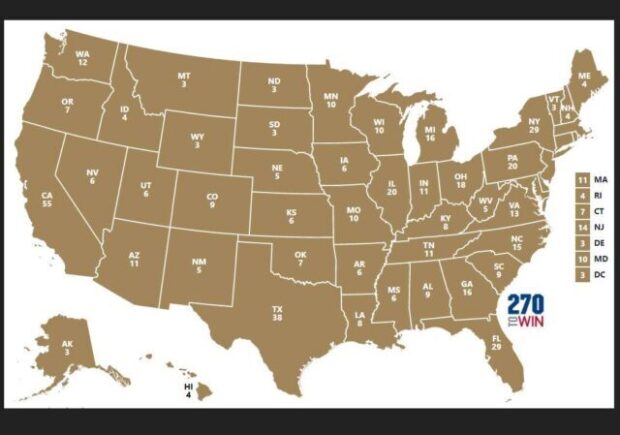









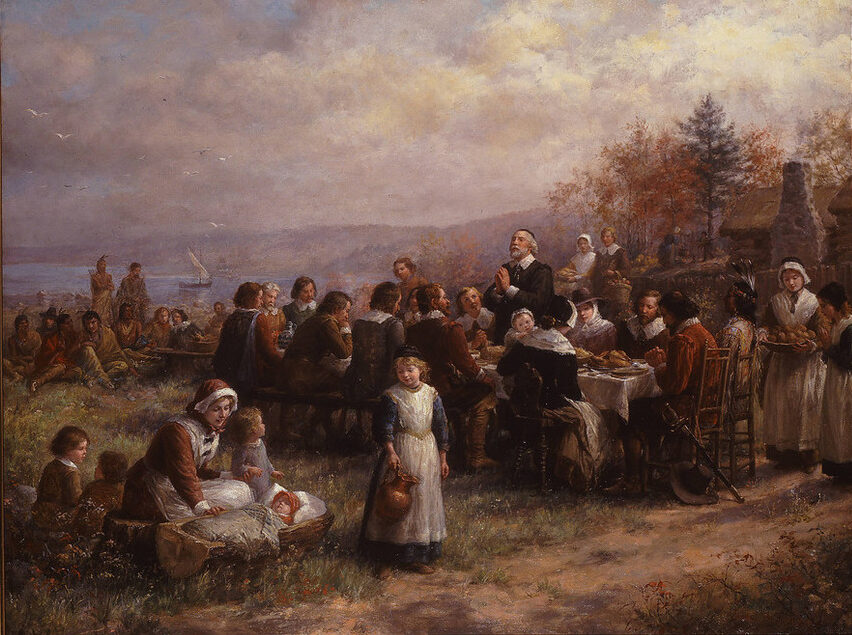
 Lower Valley Assembly