Mises Institute: The School Closures Are a Big Threat to the Power of Public Schools

Ryan McMaken at Mises Institute writes about how US school closures during this pandemic are changing the way people think about schools, confidence in the institution, and how it may lead to changes in the future. The School Closures Are a Big Threat to the Power of Public Schools

Twenty twenty is likely to be a watershed year in the history of public schooling. And things aren’t looking good for the public schools.

For decades, we’ve been fed a near-daily diet of claims that public schooling is one of the most important—if not the most important—institutions in America. We’re also told that there’s not nearly enough of it, and this leads to demands for longer school hours, longer school years, and ever larger amounts of money spent on more facilities and more tech.

And then, all of sudden, with the panic over COVID-19, it was gone.

It turns out that public schooling wasn’t actually all that important after all, and that extending the lives of the over-seventy demographic takes precedence.

Yes, the schools have tried to keep up the ruse that students are all diligently doing their school work at home, but by late April it was already apparent that the old model of “doing public school” via internet isn’t working. In some places, class participation has collapsed by 60 percent, as students simply aren’t showing up for the virtual lessons.

The political repercussions of all this will be sizable.

Changing Attitudes among the Middle Classes

Ironically, public schools have essentially ditched lower-income families almost completely even though school district bureaucrats have long based the political legitimacy of public schools on the idea that they are an essential resource for low-income students. So as long as the physical schools remain closed, this claim will become increasingly unconvincing. After all, “virtual” public schooling simply doesn’t work for these families, since lower-income households are more likely to depend on both parents’ incomes and parents may have less flexible job schedules. This means less time for parents to make sure little Sally logs on to her virtual classes. Many lower-income households don’t even have internet access or computing equipment beyond their smartphones. Only 56 percent of households with incomes under $30,000 have access to broadband internet.

Nonetheless, working-class and lower-income parents are likely to return their children to the schools when they open again. Many believe they have no other choice.

Attitudes among the middle classes will be a little different, however, and may be more politically damaging to the future of the public schools.

Like their lower-income counterparts, middle class parents have long been happy to take advantage of the schools as a child-care service. But the non-educational amenities didn’t stop there. Middle-class parents especially have long  embraced the idea that billions of dollars spent on school music programs, school sports, and other extracurriculars were all absolutely essential to student success. Sports provided an important social function for both the students and the larger community.

But as the list of amenities we once associated with schooling gets shorter and shorter, households at all income levels will start to wonder what exactly they’re paying for.

Stripped of the non-academic side of things,  public schools now must sell themselves only as providers of academic skills. Many parents are likely to be left unimpressed, and this will be all the more true for middle class families where the parents are able to readily adopt homeschooling as a real substitute. The households that do have the infrastructure to do this are now far more likely to conclude that they simply don’t need the public schools much of the time. There are now so many resources provided for free outside the schools—such as Khan Academy, to just name one—that those who are already savvy with online informational resources will quickly understand that the schools aren’t essential.

In addition to this, many parents who were on autopilot in terms of assuming they were getting their money’s worth may suddenly be realizing that public schools—even when they were physically open—weren’t that much of a bargain after all…(continues)
Free-Man’s Perspective: Nothing Changes as Long as You Obey

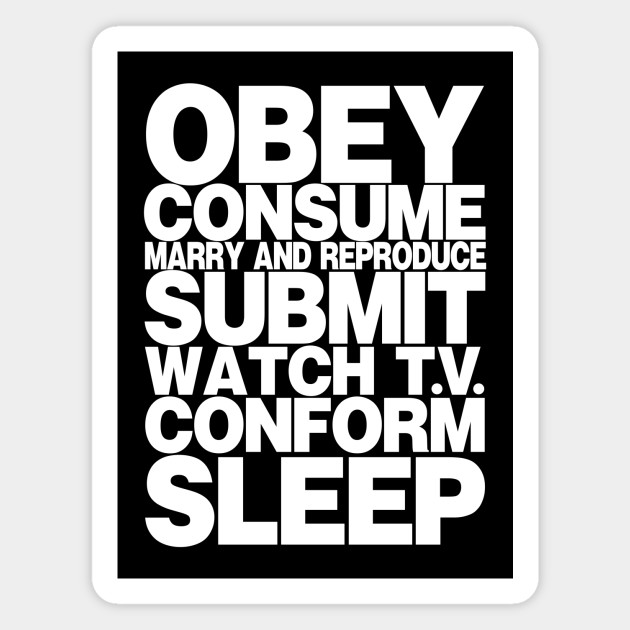
Paul Rosenberg at Free-Man’s Perspective writes about how complaining doesn’t make changes because complainers continue to obey in Nothing Changes as Long as You Obey.

I hear the same complaints about politicians that you do. And while I understand them, the fact is that complaining accomplishes almost nothing. And there is a very simple reason why complaining has no real effect:

Because the complainers keep right on obeying.

As long as you obey, the things you complain about will keep on happening.

The Proof

This idea that “nothing changes as long as you obey” has a modern proof – that of American blacks in the southern United States. Specifically, between the civil war and Martin Luther King Jr.

King is badly misunderstood. His legacy has become a tool for garnering of political power. He has been turned into a semi-mystical symbol and used by power grabbers of many types.

The real Martin King, however, was a minister who exposed the truth that obedience keeps us in chains. His crucial synthesis was to combine disobedience with goodness. His crucial work (and this is greatly under-appreciated) was to hold disobedience and goodness together.

Blacks suffered for many decades in the American south. They complained endlessly, but the laws were against them and remained against them. A significant number of white people were sympathetic, but everyone obeyed the law and little changed.

Until King came along, of course, with his new strategy of goodness plus disobedience.

King, for whatever his shortcomings, was a serious minister, and had a clear vision of what goodness entailed. And, he became very good at communicating it. King added disobedience to goodness, and combined them with teachings on courage and self-control.

Within a decade or so of using this strategy, things changed in the American south. First, individuals changed. And, after a while, laws followed.

There is far too much to tell of this decade, so I will give you some quotes from Dr. King:

Non-cooperation with evil is as much a moral obligation as is cooperation with good.

We will not obey unjust laws or submit to unjust practices. We will do this peacefully, openly, cheerfully because our aim is to persuade. We adopt the means of nonviolence because our end is a community at peace with itself.

Most people can’t stand up for their convictions, because the majority of people might not be doing it. See, everybody’s not doing it, so it must be wrong. And since everybody is doing it, it must be right.

Cowardice asks the question: is it safe? Expediency asks the question: is it politic? Vanity asks the question: is it popular? But conscience asks the question: is it right? And there comes a time when one must take a position that is neither safe, nor politic, nor popular – but one must take it simply because it is right.

Human salvation lies in the hands of the creatively maladjusted.

How to Stop Obeying

First of all, understand that how to do this must be YOUR decision. If you follow the “blueprint” of anyone but yourself, you’ll be falling right back into the same trap of obeying an authority…(continues)

The Caldron Pool: UK Police Warn, Preaching the Bible Is a Criminal Offence if Someone Deems it Offensive

From The Caldron Pook, UK Police warn, preaching the Bible is a criminal offence if someone deems it offensive

Police in the UK have warned a Christian street preacher that it’s now a criminal offence to preach the Bible in public if someone deems it offensive.

Joshua Sutcliffe was preaching at Oxford Circus in London when he was approached by an officer of the Metropolitan Police force.

The officer had been called in after a member of the public reported Mr Sutcliffe for saying something they did not agree with.

“Just had a call that someone was offended by something you’ve said,” the officer explained.

“I’m not going to stop you from doing what you do, but if there’s anything offensive–if someone finds something offensive, regardless of what you think, it’s a crime. There can be a crime there.

“It’s an offence if somebody finds something offensive,” the officer added.

During his gospel message “about Jesus’ love and forgiveness for everyone”, Mr Sutcliffe had made mention of 1 Corinthians 6:9, a passage that lists a number of sins, including homosexuality.

https://www.youtube.com/watch?v=DMk5NCMQ4Fw&feature=emb_logo

AYWtGS: Flattening the Curve Vs. Staying Ahead of the Curve

A Year Without the Grocery Store has an article about planning ahead for the next waves of the virus and associated second and third order effects in Flattening the Curve Vs. Staying Ahead of the Curve.

All of us have heard a lot about flattening the curve.  And according to many experts, we have successfully flattened the curve – to a greater or lesser degree depending on where in the country you live.  But we have a new problem now.  People are thinking about re-emerging from their respective lockdowns – whether self-imposed or government imposed.  And all that many people want is for life to return to normal.  Okay, I’ll level with you.  *I* want life to return to normal, but that isn’t my focus right now.  My focus is on getting ahead of the curve.

<img class=”alignleft wp-image-17894 size-medium” src=”https://i2.wp.com/ayearwithoutthegrocerystore.com/wp-content/uploads/2020/05/AdobeStock_81393979.jpeg?resize=300%2C240&ssl=1″ alt=”” width=”300″ height=”240″ srcset=”https://i1.wp.com/ayearwithoutthegrocerystore.com/wp-content/uploads/2020/05/AdobeStock_81393979-scaled.jpeg?resize=300%2C240&ssl=1 300w, https://i1.wp.com/ayearwithoutthegrocerystore.com/wp-content/uploads/2020/05/AdobeStock_81393979-scaled.jpeg?resize=1024%2C819&ssl=1 1024w, https://i1.wp.com/ayearwithoutthegrocerystore.com/wp-content/uploads/2020/05/AdobeStock_81393979-scaled.jpeg?resize=768%2C614&ssl=1 768w, https://i1.wp.com/ayearwithoutthegrocerystore.com/wp-content/uploads/2020/05/AdobeStock_81393979-scaled.jpeg?resize=1536%2C1229&ssl=1 1536w, https://i1.wp.com/ayearwithoutthegrocerystore.com/wp-content/uploads/2020/05/AdobeStock_81393979-scaled.jpeg?resize=2048%2C1638&ssl=1 2048w, https://i1.wp.com/ayearwithoutthegrocerystore.com/wp-content/uploads/2020/05/AdobeStock_81393979-scaled.jpeg?resize=650%2C520&ssl=1 650w, https://i1.wp.com/ayearwithoutthegrocerystore.com/wp-content/uploads/2020/05/AdobeStock_81393979-scaled.jpeg?resize=600%2C480&ssl=1 600w” sizes=”(max-width: 300px) 100vw, 300px” data-recalc-dims=”1″ />

Getting Ahead of the Curve?

So what I do mean by ‘getting ahead of the curve?’    It’s a fairly common phrase – “getting ahead of the curve.”  In our circumstances, I mean that we need to be able to look toward the future and see what actions we need to take NOW to take care of our families down the road.

Don’t be deceived – this is only the first wave of the virus.  If the pattern of the Spanish Flu pandemic of 1918 holds true, there will be at least 3 waves of this virus.  So if we are seeing an end to the first wave of the Covid-19, we need to start about thinking about preparing for the second and third waves.  We also need to start trying to figure out what will the financial and practical fallout be for our country, region, state, county, city, and family.

Practical Fallout

One way that we’re already experiencing practical fallout is in the breakdown of our supply chain.  When I was at church yesterday – and yes, for the first time in seven weeks, we actually went to church I spent some time talking with a friend who lives in rural Illinois.  She was telling us that they have friends who work in pig farming.  They started probably two months ago, killing off any baby pigs that they didn’t think were going to be among the best of the litter.  Since then, they’ve taken measures to abort any baby pigs at all.  They know that they aren’t going to have the money to feed those pigs until the meat production plants reopen.

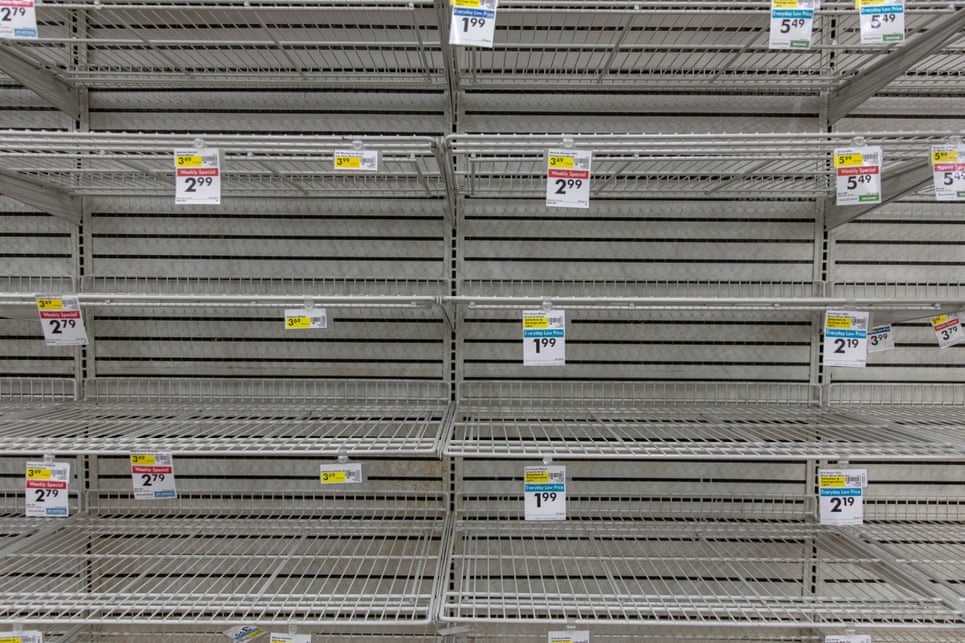
We’re already hearing about how Tyson has been shutting down plants because workers have tested positive for the coronavirus.  We’ve seen shortages of hand sanitizer, toilet paper, garden seeds, soups, pasta, masks, gloves, and so many other things.

So what can we do?  Flattening the Curve vs. Staying Ahead of the Curve<img class=”alignright wp-image-17895 size-medium” src=”https://i2.wp.com/ayearwithoutthegrocerystore.com/wp-content/uploads/2020/05/AdobeStock_83435873.jpeg?resize=300%2C200&ssl=1″ alt=”Flattening the Curve vs. Staying Ahead of the Curve” width=”300″ height=”200″ srcset=”https://i1.wp.com/ayearwithoutthegrocerystore.com/wp-content/uploads/2020/05/AdobeStock_83435873-scaled.jpeg?resize=300%2C200&ssl=1 300w, https://i1.wp.com/ayearwithoutthegrocerystore.com/wp-content/uploads/2020/05/AdobeStock_83435873-scaled.jpeg?resize=1024%2C681&ssl=1 1024w, https://i1.wp.com/ayearwithoutthegrocerystore.com/wp-content/uploads/2020/05/AdobeStock_83435873-scaled.jpeg?resize=768%2C511&ssl=1 768w, https://i1.wp.com/ayearwithoutthegrocerystore.com/wp-content/uploads/2020/05/AdobeStock_83435873-scaled.jpeg?resize=1536%2C1022&ssl=1 1536w, https://i1.wp.com/ayearwithoutthegrocerystore.com/wp-content/uploads/2020/05/AdobeStock_83435873-scaled.jpeg?resize=2048%2C1363&ssl=1 2048w, https://i1.wp.com/ayearwithoutthegrocerystore.com/wp-content/uploads/2020/05/AdobeStock_83435873-scaled.jpeg?resize=650%2C433&ssl=1 650w, https://i1.wp.com/ayearwithoutthegrocerystore.com/wp-content/uploads/2020/05/AdobeStock_83435873-scaled.jpeg?resize=600%2C399&ssl=1 600w” sizes=”(max-width: 300px) 100vw, 300px” data-recalc-dims=”1″ />

Start now and watch the news.  What item or items (whether in your area or in the entire country) is likely going to become scarce in the near future?

1.)  Right now, if you have room in your freezer or you can pressure can, picking up extra meat is very important.  Bacon was already out of stock at Costco when I went out (with gloves and mask) last week.  They didn’t even have beef in the form that I usually pick it up.  Pork and chicken are the two types of meat that are in the greatest danger of seeing shortages.  The sooner you can get out and stock up, the better off you are.

2.)  Restock any foodstuffs that you can to bring your food numbers back to where they need to be.  If you’ve been using my book and workbook system to get your long-term food storage to where it needs to be and your short-term food storage to 3 months, then you know what areas you’ve been taking from during these last two months. Make sure that you fill them back up.  We’ve used significant amounts of oatmeal and tomato sauce.  When I was out at the post office today, we stopped at a store to refill our personal stores.

3.)  Restock any non-foodstuff items.  Have you worked your way through almost an entire pack of gloves?  See if you can replenish them.  Do you have to wear a mask when you’re out in public?  Are you running low?  Can you make your own, purchase single-use face masks, or another reusable alternative?  How are you on shampoo, soap, laundry detergent, dishwasher detergent?

Flattening the Curve vs. Staying Ahead of the Curve<img class=”alignleft wp-image-17896 size-medium” src=”https://i1.wp.com/ayearwithoutthegrocerystore.com/wp-content/uploads/2020/05/markus-spiske-5gGcn2PRrtc-unsplash.jpg?resize=300%2C200&ssl=1″ alt=”Flattening the Curve vs. Staying Ahead of the Curve” width=”300″ height=”200″ srcset=”https://i1.wp.com/ayearwithoutthegrocerystore.com/wp-content/uploads/2020/05/markus-spiske-5gGcn2PRrtc-unsplash-scaled.jpg?resize=300%2C200&ssl=1 300w, https://i1.wp.com/ayearwithoutthegrocerystore.com/wp-content/uploads/2020/05/markus-spiske-5gGcn2PRrtc-unsplash-scaled.jpg?resize=1024%2C683&ssl=1 1024w, https://i1.wp.com/ayearwithoutthegrocerystore.com/wp-content/uploads/2020/05/markus-spiske-5gGcn2PRrtc-unsplash-scaled.jpg?resize=768%2C512&ssl=1 768w, https://i1.wp.com/ayearwithoutthegrocerystore.com/wp-content/uploads/2020/05/markus-spiske-5gGcn2PRrtc-unsplash-scaled.jpg?resize=1536%2C1024&ssl=1 1536w, https://i1.wp.com/ayearwithoutthegrocerystore.com/wp-content/uploads/2020/05/markus-spiske-5gGcn2PRrtc-unsplash-scaled.jpg?resize=2048%2C1365&ssl=1 2048w, https://i1.wp.com/ayearwithoutthegrocerystore.com/wp-content/uploads/2020/05/markus-spiske-5gGcn2PRrtc-unsplash-scaled.jpg?resize=650%2C433&ssl=1 650w, https://i1.wp.com/ayearwithoutthegrocerystore.com/wp-content/uploads/2020/05/markus-spiske-5gGcn2PRrtc-unsplash-scaled.jpg?resize=600%2C400&ssl=1 600w” sizes=”(max-width: 300px) 100vw, 300px” data-recalc-dims=”1″ />Financial Fallout

How stable do you believe your job is?  How about your spouse’s job?  I known and met people who have lost parts of their income because of Covid-19.  I know people who have lost their entire income because of the virus as well.

Even if you think that things are on sure footing, it is a good time now to create an alternate budget.   We have the regular budget that we operate on a month to month basis, but then we have an alternative budget.  First off, If you’ve never used YNAB – You Need A Budget – then I would highly recommend that you check it out.  It is a yearly subscription fee, but it has saved us so much money during the four years that we’ve used it.

So we’ve back to this alternate budget.  It’s a bare-bones budget with every convenience that we feel like we could live without cut out of it.  We aren’t living on that budget, but we’re looking at a time when that might be necessary to live on less.  This enables us to ask, “How much less can we live on?”  And allows us to have concrete numbers as to what we HAVE to bring home…(continues)

Doom and Bloom: Reopening After a Pandemic

The Altons at Doom and Bloom Medical have an article up about Reopening After a Pandemic – what it looks like, the CDC recommendations, and federal and state plans.

The COVID-19 pandemic has rampaged throughout the planet, but a few encouraging signs are giving some citizens the impetus to emerge from their homes. Although the number of cases and deaths continue to rise, several countries have flattened or are clearly on the far end of the bell curve.

Testing in the U.S. has surpassed 10 million and the percentage of severe cases requiring ventilator support are dropping somewhat compared to total cases.

Although some pandemic supplies are still generally unavailable to the average citizen, hospital staffs (in our area, at least) seem to be getting more personal protection equipment than before. While still accepting donations, Cleveland Clinic Florida states on its website: “…through months of planning for the pandemic it had “adequate supplies and medical equipment…”

As time goes on, personal protection gear will become more available

Aside: This may not be the case everywhere. If you have a lot of extra personal protection equipment, consider donating some to your local hospital in case of a second wave of COVID-19 cases.

While we are beginning to get more optimistic with regards to public health, the financial news is terrible. 36.5 million unemployment claims have been filed. Businesses are reaching the point of no return; some brick-and-mortar enterprises may not survive if they don’t reopen soon.

And the customers? Just because the businesses are reopening doesn’t mean the patrons will come flowing back. Many people have been traumatized and are scared to venture out into the New Normal. Some have been able to work from home, cook dinner instead of eating out, and otherwise fend for themselves. They won’t be seeking these services outside the home so much anymore, even if money isn’t an issue.

Cooking at home

The Centers for Disease Control and Prevention (CDC) recently released a detailed 17-page document of its recommendations for reopening. Some believe the criteria may be too strict. The battle between public health and public policy continues.

What are the criteria that must be met before reopening occurs in the U.S.? The federal government is giving leeway to state governments, but there are 50 states, and almost as many different plans of action.

FEDERAL PLANS

The federal government (and most states) want a phased approach to return to normal (or at least the New Normal). Optimally, certain milestones should be reached before beginning phases:

SYMPTOMS: The federal government recommends that the reopening should begin when there is a downward trajectory on the graph of cases of influenza-like illnesses (ILI) within a 14-day period as well as a similar trajectory specific to COVID-19 signs and symptoms.

CASES: The federal government wants to see a downward trajectory of documented COVID-19 cases within a 14-day period, or at least a downward trajectory of positive tests as a percentage of total tests conducted with a 14-day period. This assumes at least a similar (or larger) quantity of tests performed during the same time period.

HOSPITALS: The goal is to have a robust testing program in place for at-risk healthcare workers with a particular interest in checking for antibodies against COVID-19. Also, hospitals would need to have no or few patients requiring “crisis care”.

PHASE 1

INDIVIDUALS SHOULD…(continues)

Click here to read the entire article at Doom and Bloom Medical.

OH8STN: Portable Power and Field Communications

Julian, OH8STN, has another good post up about using portable power during field operations and a couple of radios with versatile power options – Portable Power and Field Communications.

Hello Operators.

This is just a short post about the relationship between field communications, and portable power. Ham radio manufacturers would have us believe our goal is to go out and operate a couple of hours at a time, then recharge our batteries back at home. This may be true sometimes, but it’s not always true.

Ham radio manufacturers don’t recognize the importance of a decent operating run time from internal batteries, or the ability to recharge those batteries, without grid power. For example Elecraft offers one of the most amazing portable radios on the market, the kx2. Did you know it’s impossible to recharge the kx2 in the field without the Elecraft proprietary smart charger, connected to AC mains? This means if you’re off grid without additional batteries, or the ability to plug in a smart charger, you’ll have to use an external battery anyway. Despite how awesome the radio is, having to use that external battery diminishes its lightweight field utility of the radio.

The Yaesu ft-818 is another example. Its internal AA battery pack can power the radio for about an hour or two. Unlike the Elecraft kx2, the ft-818 can be recharged in the field from any DC power source 9 to 15 volts, (AWESOME). It’s Achilles heel is that it takes 8 to 10 hours to recharge its internal battery pack. What the heck is the point of having 2 hours runtime, and 8 to 10 hours recharge time? It’s freaking ridiculous! This means in practice, we need to use an external battery pack anyway.

Some operators have offered alternatives to these problems.

  • Carrying additional battery packs.
  • Using an inverter to power the smart charger.
  • Ration the radios usage so batteries last longer.

All of these ideas come from operators without a solid understanding of communications off grid. Off-grid communications requires us to be grid and energy independent. So when manufacturers tell us the only way to recharge the internal battery of their radio, is using their proprietary AC powered smart charger, we should tell them to go lay an egg. We should also tell manufacturers who have an 8 to 10 hour charge time on a relatively small internal battery, to do a little bit more engineering.

From where I’m standing, it looks like popular ham radio manufacturers have become complacent. We have become such Fanboys, that we continuously make excuses for why these functionalities are not built into their radios. Why don’t we demand amateur radio manufacturers create radios, which are grid independent!? Why do we still accept double AA packs inside our rigs, when a lithium ion or lithium iron phosphate pack are a fraction of the physical size, weight, and offer much higher capacity!? These ultra energy dense packs are standard in everyones mobile phones, tablets and laptops, so why not ham radio!? Why should I buy an Elecraft smart charger, when it’s simply a 3s lithium ion battery pack inside the radio!?

Most of the battery research and projects done on the channel, are in response to ham radio manufacturers not stepping up to offer viable solutions for the off-grid operator. Certainly Elecraft gives us low current draw, but what good is that when your battery is dead, and there’s no way to recharge it?

Although much of the research going into off-grid portable power on the channel, has been done for off-grid and field communications, some of the previous and upcoming projects, exists purely because ham radio manufacturers don’t understand our needs.

Yesterday I tried a new radio for the first time. It’s only the second time I’ve seen this functionality in a commercial radio. The functionalities are

  • Powering the radio from external power supply while
  • Simultaneously recharging the internal battery pack in a reasonable amount of time.

The two radios I’ve seen with this capability are the Icom IC-705, and the Xiegu X5105…(continues)

Click here to read the entire article at OH8STN.

The Guardian: We Mocked Preppers and Survivalists – Until the Pandemic Hit

The Guardian has a little article about how everyone wishes they had been preppers before this pandemic. Hopefully some people will be inspired to be a little more prepared in the future.

We mocked preppers and survivalists – until the pandemic hit

You’ve heard of preppers, right? Survivalists? If you’ve watched TV shows like Doomsday Preppers, you know about their strange, apocalyptic beliefs: that a disaster could strike at any time, overwhelming first responders and the social safety net; that this crisis could disrupt supply chains, causing scarcity and panic and social breakdown; that authorities might invoke emergency powers and impose police curfews. Crazy theories like that.

In fact, many perfectly reputable organizations – including the US federal government and the Red Cross – recommend Americans maintain extra food and emergency supplies. The Federal Emergency Management Agency (Fema) advises keeping a two-week supply of food, as well as water, batteries, medical masks, first-aid supplies and a battery- or hand-powered radio, among other things.

In mainstream society, however, interest in prepping usually invites ridicule about bunkers and tin-foil hats. Preppers have spent years as the objects of our collective derision.

Until now. Today, we’re all preppers – or rather, wish we had been. Non-preppers have been caught in a rain shower without an umbrella. I don’t know if preppers are laughing right now, but perhaps they’re entitled to some vindication.

Now, I’m not a prepper. I am an effete quasi-intellectual with no practical skills of any kind. My current “emergency supplies” are some Hungry-Man Dinners and a liter of bourbon. If things get really bad I will finish the bourbon, lie down and wait to be eaten by stray cats.

But I’ve come to respect the preppers’ ethos of survival and preparedness. One of my friends is one, or at least on the spectrum. When coronavirus hit, he wasn’t one of the millions of people scrambling for surgical masks; he already had them in his survival kit. He kept a few and gave the rest to elderly people.

It has become fashionable to arguenot entirely accurately – that there are “no libertarians in a pandemic”. Certainly, this crisis has been a stark reminder of the importance of collective action. We’re all on this ship together; Covid-19 has laid bare the pathetic inadequacy of the US social safety net, our lack of investment in the common good, and our government’s short attention span for preparing for crises that don’t involve terrorism or war.

But collective action also requires some level of individual responsibility and preparedness, too, at least for those with the ability and the means. You can’t aid your elderly, immunocompromised or poorer neighbors if you haven’t taken the bare minimum of preparations. There’s a reason that airplane safety demonstrations warn passengers to put on their own air-masks before assisting others.

We’re right to be angry at the people stripping supermarkets bare and hoarding desperately needed supplies. Those people aren’t preppers, however. Preppers don’t engage in panic-buying. That’s the whole point. That’s why it is called prepping.

“Prepping is a choice that occurs before a panic, not during,” a prepper recently complained on Reddit. “If you didn’t stock up over time, you are a hoarder or, perhaps worse, an opportunist. In times like these we need to come together and support one another. That doesn’t mean giving away your supplies, but it does mean living in a society.”

Another added, “We aren’t the reason that elderly or immunocompromised people can’t find hand sanitizer, masks or toilet paper. We bought things in small increments when it made zero impact on the supply.” … (continues)


See also, The Atlantic: We Should All Be Preppers

Of Two Minds: Surviving 2020 – Plans A, B, and C

Charles Smith at Of Two Minds has an article on Surviving 2020 – Plans A, B, and C

As the bogus prosperity economy built on exponential growth of debt implodes, we all seek ways to protect ourselves, our families and our worldly assets. There are any number of websites, subscription services and books which offer two basic “practical recommendations:”
1. Buy gold (and/or silver) and don’t worry about timing the market as everything else will become worthless.
2. Establish a heavily armed and well-supplied hideaway before everything implodes.
My problem with these suggestions is that they are predicated on a decisive “end of the world as we know it” collapse of civilization.
While I am alive to the possibility of this cataclysm, an analysis of the many feedback loops which will slow or counteract such a decisive collapse suggests other alternatives are even more likely: my term for the slow, uneven decline of the credit/speculative-bubble era is devolution.
I cover feedback loops, historical cycles and why a lengthy devolution is as least as likely a scenario as abrupt collapse in my book Survival+ (free downloadable version is linked below).
In other words, I do not see planning for eventualities as “either/or.” I look at it in terms of three levels:
Plan A: dealing with devolution: government services are cut back, prices for essentials rise over time, fulltime paid jobs become scarce, the State (all levels of government) becomes increasingly repressive as it pursues “theft by other means,” i.e. the stripmining of private assets to feed its own fiefdoms and Elites; most assets fall in purchasing power (value) as the system’s financial props erode.
Plan B: When things become rationed/unavailable, services become sporadic, pensions stop being paid in full, spontaneous homeless encampments arise in heretofore “nice” areas, cities go bankrupt, small businesses go underground to survive the ever-higher taxes being levied on the few remaining productive enterprises, etc.
Plan C: if things fall apart: either move to communities where you or your family have roots (tough luck for all the millions of rootless Americans shifted around by corporate “relocations” the past 50 years) or turn to your neighborhood, town, friends, family, church and other social networks for cooperative strength.
The problem with putting all your resources into a “bug-out” strategy (Plan C) is that it might not come to pass, in which case you’ve misallocated your assets.
This is why I focus Survival+ on structuring a prosperity which will work on all levels. This prosperity has five basic parts:
1. Prepare for hybrid work by developing multiple skillsets, interests and contacts and understand that being productive and reciprocal is more important than getting paid (as I put it: “to take care of Number One, first take care of numbers 2 through 9.”)
2. Develop sustainable, overlapping social networks (self-organizing networks) in which you have more than one place to interact with the same person, i.e. at church or in the neighborhood. I call these non-State, voluntary networks transparent non-privileged parallel structures because they are independent of the State and Monopoly/Predatory Capital Elites.
3. Cut expenses to the bone so you no longer need a large income to “survive.” Consider lowering your taxable income by working less so you’re no longer working so hard just to pay taxes generated by high incomes. (Thanks to correspondent Stephen A. for noting that barter that results in gains is generally taxable. As always, check with the I.R.S. or a licensed tax advisor to confirm what income is taxable/nontaxable.)
4. Reach a new understanding of “prosperity”: health and social wealth are the “treasures” which money cannot buy. Yes, we all need some money, and preserving/growing whatever capital you do have will be difficult and time-consuming. There is no easy “one size fits all” solution.
5. Understand the importance and strength in building and maintaining personal integrity, the one asset we each control in totality and that no one can take from us. All reciprocal networks (financial, political, religious or social) depend entirely on trust, and the bedrock of trust is complete personal integrity.
Much of the devolution we now face is a direct result of the degradation of integrity. This moral/ethical component of financial implosion is glossed over by the corporate media because the Power Elites have implicitly undermined integrity and morality as a means of soldifying their control of the media and of the national income.
Yes, I know this all sounds wonderful, but how do you do it in real life? Well, life is and always has been a do-it-yourself affair. With 200 million+ employable people in the nation, what advice or recommendations can I possibly give to any one individual, when only that person knows their own interests, strengths and potential customers, clients, allies, competitors and mentors?
Let’s start with one simple truth: nobody knows the future. Thus everything we discuss now is contingent on a number of unpredictable interactions. To base our planning on one scenario is to risk misallocating our scarce assets and resources…(continues)

The Organic Prepper: What I Learned During the COVID Crisis

Daisy Luther at The Organic Prepper talks about lessons she’s learned during the pandemic – What I Learned During the COVID Crisis.

…Here are the things I’ve learned.

Trust your instincts.

I began writing about this virus back in January when it was announced that the entire city of Wuhan was being locked down and millions of people were under stay at home orders. With that many people under a mandatory lockdown, I was firmly convinced that this had potential global ramifications.

I had come back from Europe to attend a funeral in early January and was supposed to return on January 28th. After doing the research for the article mentioned above, I rescheduled my flight for March 28th and settled in with my youngest daughter at her apartment to help out with the bills. We immediately began stocking up.

A lot of folks at that time said I was crazy – a few here on my website but more so on other sites that republished my work. I’m no stranger to being called crazy – I’m in the preparedness industry and I like guns, so right there, the mainstream media sees me as a lunatic. It no longer bothers me and I was convinced that this was going to be a big deal.

Every day from January 23rd to the present, I’ve spent hours researching as this pandemic has unfolded. I sincerely wish that I had not been correct, but here we are, still in lockdown in many parts of the country.

You can prepare fast if you’re aware before other folks are.

I had sold or donated nearly everything that my daughters didn’t want before I took off on an open-ended trip to Europe last fall. The other items were divided up between my two girls. So while the daughter with whom I stayed still had a few things, like firearms, water filters, etc., the stockpile was pretty much gone.

By the end of January, I was pretty sure that we were going to see mandatory quarantines or lockdowns here and I began stocking up. It’s important to note that at this point, you could still buy anything you wanted or needed. I grabbed some extra masks and gloves but most of my focus was on food and other everyday supplies. By the end of February, I was pretty content with the amount of supplies we had. I had spent as little as possible on “right now food” and focused most of my budget on shelf-stable items like canned goods, pasta, and rice.

For about $600, we accumulated a supply that would see us through a minimum of 3 months without leaving the house. I figured, if it turned out that I had overreacted, my daughter would use the food anyway.

I also started a personal spending freeze at the end of January. If it wasn’t an item we needed to become better prepared, I didn’t spend a dime. I was able to put back a few months’ worth of expenses while still stocking up. It helped that my daughter was living thrifty in a less expensive apartment with utilities included. I was very concerned about things like cash flow and it turns out, this has been a huge problem for a lot of people.

You can’t always have the “ideal” situation.

There were a lot of things about my situation that were less than ideal. But that’s probably true in a lot of cases. You just have to adapt to the reality of your situation instead of endlessly wishing it was different or feeling that it’s hopeless. “Less than ideal” does not mean that all hope is lost.

First, there was the situation of living arrangements. I have a daughter in Canada and a daughter in the US. My older daughter in Canada has been working longer and was better established. My younger daughter, who lives in the US, was new to the workforce and didn’t have a lot of money so I stayed with her to help out financially. Her apartment is in a lower-middle-class residential area of the city where she works. Thankfully, it is a two-bedroom and I only brought with me two suitcases.

Living in an apartment without much of a yard during this kind of event is not something I would have chosen, given time to seek alternatives. But we all know this crept up fast. Moving was not an option. I focused on hardening the apartment with plywood to put up at the windows, tripwires that could be set up quickly if needed, and sturdier locks. We got some quarantine warning signs that we could post if all hell broke loose as a potential deterrent, and I set up spotlights in the front yard. Currently, they face the stairs to the front door, but in a bad situation, they could be turned around to illuminate anyone coming up to the house instead.

I bought more ammo for our firearms and we sat down together to work through potential scenarios. We developed a “fatal funnel” in the front hallway and added “stumbling blocks” in the front hall that could be shoved in front of the door to slow down an advance. (Just cardboard boxes filled with hardcover books – nothing fancy.)

We made friends with the other family who lives in the building while maintaining our OPSEC. It’s always good to have allies and they have a better line of sight from their upper apartment.

Normally, I would have bought loads of organic food and preserved it myself, but early in the crisis, there was still a question of whether or not we’d have power throughout the emergency and there simply wasn’t enough time at this late date. My stockpile is not ideal – lots of storebought canned goods and carbs like pasta and rice – but it’s filling and versatile.  And most of all, it’s what was readily available. I was able to grab cases of canned fruits and vegetables and canned ravioli when it was cheap and abundant.

So while it isn’t our normal diet or even our normal preps, we’re fortunate to have it. We’ve continued to hit the store weekly for foods that are more “normal” but can easily shift to the stockpile if it becomes necessary.

As you can see there are a lot of things that aren’t ideal from a prepper’s point of view, but when disaster strikes, you have to adapt. So if your situation isn’t perfect, don’t just throw your hands up in the air and give up – ADAPT…(continues)

Click here to continue reading at The Organic Prepper.

LawOfficer.com: Officer Defends The Constitution & Placed On Leave Pending Termination

An article from LawOfficer.com about Port of Seattle Officer Greg Anderson – Officer Defends The Constitution & Placed On Leave Pending Termination

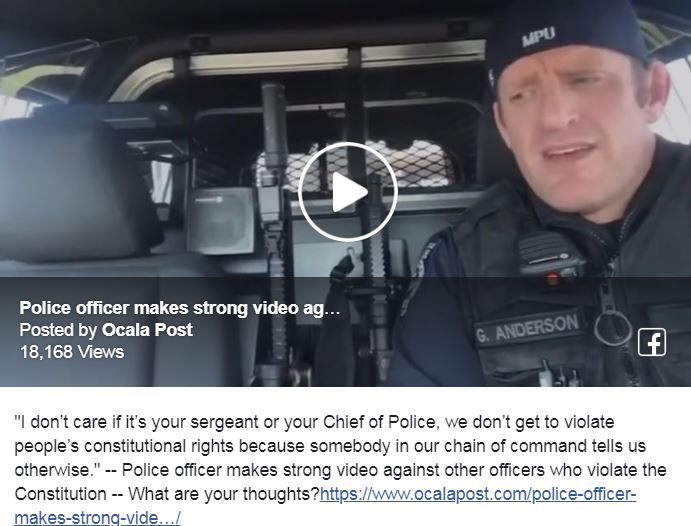
Port of Seattle Police Officer Greg Anderson filmed an inspirational, timely and truth filled video on May 5th.

Similar to what we have been saying here at Law Officer, he questioned why law enforcement around the country was enforcing newly invented rules in light of COVID-19.

“That is not how our job works okay, what really has been pissing me off lately is the fact that these officers that are going out here and enforcing these tyrannical orders… what they’re doing is they’re putting my job and my safety at risk because what you’re doing is your widening the gap between public trust and law enforcement officers,” said Anderson. He went on to say, “I want to remind you that regardless of where you stand on the coronavirus we don’t have the authority to do those things to people just because a mayor or a governor tells you otherwise I don’t care if it’s your sergeant or your Chief of Police we don’t get to violate people’s constitutional rights because somebody in our chain of command tells us otherwise it’s not how this country works those are de facto arrests you know we’re violating people’s rights.”

The next day, Greg woke up and received a message from his chain of command thanking him for a job well done.

He was relieved because like we often discuss in the Courageous Leadership Seminar, law enforcement is often crucified for telling the truth.

Three hours after he was told by his department they were in full support of his video,  Greg got a call instructing him to take down the video.

He refused.

By the next day the video had reached 430,000 views and the agency flat out told him “is time to pull the plug on this.”

Greg responded that “maybe we should embrace this message.”

A few hours later he was told that if if he didn’t take it down immediately and accept a letter of reprimand, the department would take a much harsher approach.

Greg refused to remove the video in part because of the content of that video.

DONATE TO OFFICER ANDERSON HERE

“I thought it was grounded in liberty and integrity and that no one would have issue with it,” Greg says.

“I had to be willing to die on that hill,” Anderson stated.

“The whole message I was trying to share that if you believe something in your heart you have to stand by that message, even if it costs you everything.”

With that, Greg told his boss, “I can’t take the video down.”

His Chief told him, “If you openly defy your Governor, you can’t be a police officer in the State of Washington.”

As is usual in the weak and cowardly leadership that has permeated this fine profession, Greg was subsequently placed on leave and threatened with termination.

Greg says “that I cannot afford to lose my job.”

He has kids and a house but he is steadfast in his beliefs.

And for that Greg Anderson is a hero.

In a statement, Anderson wrote, “I’ve received tons of questions regarding my termination from the Port of Seattle Police. So I figured I should explain. I have been placed on administrative leave (still being paid) pending investigation. I was told by both the agency and my union that this will result in termination due to it being an insubordination charge for refusing to take down the video. I’m not sure what the timeline looks like. I walk un-intimidated into the fray. Thank you for all the support.”

The Port of Seattle Police Department has refused to comment.

Liberty Blitzkrieg: You’re Being Conditioned to Live in a “Smart City” – Resist It

Michael Krieger of Liberty Blitzkrieg writes this article to warn of the dangers of so-called “smart cities” which are really high tech surveillance states, tracking your every movement and tracing every human contact you make- You’re Being Conditioned to Live in a “Smart City” – Resist It.

And at the dead center of it all is Eric Schmidt. Well before Americans understood the threat of Covid-19, Schmidt had been on an aggressive lobbying and public relations campaign pushing precisely the “Black Mirror” vision of society that Cuomo has just empowered him to build. At the heart of this vision is seamless integration of government with a handful of Silicon Valley giants — with public schools, hospitals, doctor’s offices, police, and military all outsourcing (at a high cost) many of their core functions to private tech companies.

The Intercept: Screen New Deal

Each crisis in the 21st century has been aggressively and ruthlessly wielded into a massive wealth and power grab by the American oligarchy and national security state. The big power grab following 9/11 centered around whittling away constitutional rights via mass surveillance in the name of “keeping us safe”, while the money grab after last decade’s financial crisis concentrated wealth and assets into fewer hands while entrenching financial feudalism and making the Federal Reserve and mega banks even more powerful.

Despite the success of this diabolical and intentional concentration of money and power, there’s still too much privacy, freedom and independent wealth around for the imperial oligarchy to feel comfortable. As such, the current pandemic is being used to put the finishing touches on whatever little political and economic freedom remains in these United States.

The lessons learned from prior crises are being rolled out simultaneously this time around while people remain incapacitated at home due to Covid-19. The 2008/09 financial collapse taught those in power they can get away with unprecedented, unaccountable theft during an economic and stock market crash. Similarly, 9/11 demonstrated people will relinquish civil liberties without much protest when immersed in a state of fear.

As such, a new round of society-wide economic pillaging has occurred and is ongoing, while at the same time an equally nefarious agenda to sell you on a completely new way of living — conveniently brought to you by technocratic big tech oligarchs — is in the works.

During moments of heightened confusion and fear, the public is sold and conditioned in subtle ways to accept some new reality they never asked for or wanted. The “smart city” appears to be a key oligarch bucket list item this time around, and I’ve started focusing more attention on it after watching the following exceptionally creepy clip from Reuters.

There’s a desperate and deliberate attempt to emphasize how “smart cities” will benefit humanity and solve a plethora of problems, but the video’s creep factor simply cannot be ignored. Significantly, the plan here seems to be to just go ahead and create smart cities without asking permission from the residents who live there. Thanks to governor Andrew Cuomo, it appears New Yorkers will be big tech oligarchs’ first guinea pigs.

Health care and education represent very big areas of human civilization. Who voted for Eric Schmidt to mold and micromanage New York as if it’s his own personal startup?

As reported by The Intercept:

Former Google CEO Eric Schmidt, who joined the governor’s briefing to announce that he will be heading up a blue-ribbon commission to reimagine New York state’s post-Covid reality, with an emphasis on permanently integrating technology into every aspect of civic life.

“The first priorities of what we’re trying to do,” Schmidt said, “are focused on telehealth, remote learning, and broadband. … We need to look for solutions that can be presented now, and accelerated, and use technology to make things better.” Lest there be any doubt that the former Google chair’s goals were purely benevolent, his video background featured a framed pair of golden angel wings.

Just one day earlier, Cuomo had announced a similar partnership with the Bill and Melinda Gates Foundation to develop “a smarter education system.” Calling Gates a “visionary,” Cuomo said the pandemic has created “a moment in history when we can actually incorporate and advance [Gates’s] ideas … all these buildings, all these physical classrooms — why with all the technology you have?” he asked, apparently rhetorically.

It has taken some time to gel, but something resembling a coherent Pandemic Shock Doctrine is beginning to emerge. Call it the “Screen New Deal.” Far more high-tech than anything we have seen during previous disasters, the future that is being rushed into being as the bodies still pile up treats our past weeks of physical isolation not as a painful necessity to save lives, but as a living laboratory for a permanent — and highly profitable — no-touch future.

So we get a pandemic and suddenly the governor of New York is like yeah let’s just let a couple billionaires and their organizations decide what society needs to look like. It’s as brazen as it is dangerous.

In my last piece, I warned that the imperial oligarchy would try to sell the public on the ludicrous idea we need to become China to defeat China. Meanwhile, Eric Schmidt hasn’t been particularly shy about his apparent desire to recreate China’s surveillance state in the U.S…(continues)

Click here to read the entire article at Liberty Blitzkrieg.


EFF: COVID-19 and Digital Rights

The Electronic Frontier Foundation is the leading nonprofit organization defending civil liberties in the digital world. Here are their thoughts on threats and opportunities arising from COVID-19 response, COVID-19 and Digital Rights.

Surveillance. Governments around the world are demanding extraordinary new surveillance powers that many hope will contain the virus’ spread. But many of these powers would invade our privacy, inhibit our free speech, and disparately burden vulnerable groups of people. Mindful of the stakes, we ask three questions when analyzing proposals that would provide greater surveillance powers to the government: Would the proposal work? Would it excessively intrude on our freedoms? Are there sufficient safeguards? Different proposals raise different issues. For example:

  • Government has not shown that some intrusive technologies would work, such as phone location surveillance, which is insufficiently granular to identify when two people were close enough together to transmit the virus.
  • Some surveillance proposals are too dangerous to a democratic society, such as dragnet surveillance cameras in public places that use face recognition or thermal imaging, mounting such technologies on drones, or giving police officers access to public health data about where people who have tested positive live.
  • Some technologies, such as aggregate location data used to inform public health decisions, need strict safeguards.
  • No COVID tracking app will work absent widespread testing and interview-based contact tracing. Bluetooth proximity is the most promising approach so far, but needs rigorous security testing and data minimization. No one should be forced to use it.

Many new government surveillance programs are being built in partnership with corporations that hold vast stores of consumers’ personal data. We need new laws to protect our data privacy.

Free speech. The free flow of ideas about COVID-19 is vital. This includes anonymous whistle-blowing about containment efforts, online criticisms of government responses to the crisis, and prisoner access to social media to tell the world about outbreaks behind bars. Governments will inevitably abuse any new powers to censor what they deems false information about the virus. When online platforms increase their reliance on automated content moderation, in part because human moderators cannot safely come to work, those moderation “decisions” must be temporary, transparent, and easily appealable

Government transparency. Government decision-making about the virus must be transparent. When governments temporarily close the physical spaces where they make decisions, for purposes of social distancing, they must adopt new transparency accommodations, such as broadcasting their proceedings. While government responses to public records requests may be slower during this public health crisis, the outbreak is no excuse to shut them down altogether…(continues)

The Prepared Homestead: PRIME Act for Food Security

In this video, The Prepared Homestead discusses the PRIME act (HR 2859/S 1620) which would exempt custom meat slaughtering from federal inspection requirements and allow states to regulate it as long as the distribution in only within the same state.

This bill expands the exemption of custom slaughtering of animals from federal inspection requirements.

Under current law, the exemption applies if the meat is slaughtered for personal, household, guest, and employee uses. The bill expands the exemption to include meat that is

  • slaughtered and prepared at a custom slaughter facility in accordance with the laws of the state where the facility is located; and
  • prepared exclusively for distribution to household consumers in the state or restaurants, hotels, boarding houses, grocery stores, or other establishments in the state that either prepare meals served directly to consumers or offer meat and food products for sale directly to consumers in the state.

The bill does not preempt any state law concerning (1) the slaughter of animals or the preparation of carcasses, parts thereof, meat and meat food products at a custom slaughter facility; or (2) the sale of meat or meat food products.

See also Real Milk: PRIME Act Reintroduced in Congress

…The PRIME Act would give states the option of passing laws to allow the sale of custom-slaughtered and processed meat in intrastate commerce direct to the consumer and to venues such as restaurants, hotels, grocery stores, and boarding houses. Federal law currently prohibits the sale of custom-processed meat; meat from a custom facility can only go to the individual or individuals who own the animal at the time slaughter takes place–a requirement costing farmers a substantial amount of business. Many potential customers either don’t have the funds to buy a whole animal or the freezer space to store it.

Farmers who sell meat by the cut must use a slaughterhouse that has an inspector present during the actual slaughtering. Many communities in the U.S. have custom facilities nearby but not inspected slaughterhouses; this means hauling the animals several hours to an inspected facility, driving up the farmer’s costs and stressing the animals. There are places in this country where the farmer has to book a year in advance with the slaughterhouse under inspection for the slaughtering of livestock.

The decline in slaughterhouse infrastructure since the passage of the Wholesome Meat Act in 1967 has been one of the biggest problems small farmers face. The Wholesome Meat Act gave the federal government jurisdiction over meat processing and sales in intrastate commerce. At the time the Act passed, there were nearly 10,000 slaughterhouses in the U.S.1; as of January 1, 2019, there were 2,766.2

Passage of the PRIME Act is more important than ever. There continues to be growing demand for grass-fed beef, but with the lack of local slaughterhouses, small farmers are missing out on much of that business. Instead of business that could go to small American farmers, imported “grass-fed” beef has the dominant market share in the U.S. According to reports, 75% to 80% of grass-fed beef sold in this country is imported. Due to lax country-of-origin-labeling laws, much of this meat is labeled as being produced in the U.S…3

Bayou Renaissance Man: State Bailouts, Possible Violence

Peter Grant at Bayou Renaissance Man has written an article about states looking for bailouts via coronavirus funding and the exacerbation of the possibilities for violence from dwindling government assistance in Bailing out the states: the momentum – and the prospect for violence – builds

…Essentially, many state and local governments are using the pandemic as an excuse to suspend constitutional rights and liberties, and govern by decree.  They’re now trying to extend that to the federal government as well, by making it dance to their fiscally irresponsible tune.  As the American Spectator points out, “Now that officials have learned they can suspend our civil liberties by edict, expect such “emergency” measures any time there’s another crisis, real or perceived.”  I expect that’ll apply to bailouts as well.

I don’t think those agitating for a federal bailout, using the economic misery generated by the pandemic as a lever to apply pressure, have thought this through.  If their residents find that government largesse is no longer flowing (at least in the amounts they want);  and if they believe (or have been told, loudly and repeatedly, by their politicians) that they’re entitled to such largesse;  then they’re going to get out of control and try to take what they want.  The results are likely to be catastrophic for law and order, and civil society.

I think the ordinary people of America realize this.  After all, that’s why they bought more guns in March than any other month in previous US history.  They’re getting ready to defend what’s theirs – and I believe they’re right in anticipating the need to do so.  Again, bold, underlined text is my emphasis.

“Simply put: I wanted peace of mind when it comes to the safety of my family,” Eaton said.

. . .

“To me, it’s all about protecting my family, and if a gun makes that easier, so be it,” Scott, a California tech worker with a wife and daughter, said.

Many of the new gun owners cited concerns about personal protection as states began emptying jail cells and police departments announced they would no longer enforce certain laws. Jake Wilhelm, a Virginia-based environmental consultant and lacrosse coach, purchased a Sig Sauer P226 after seeing Italy enact a nationwide lockdown on March 9.

“[My fiancée and I] came to the conclusion in early March that if a nation like Italy was going into full lockdown, we in the U.S. were likely on the same path,” Wilhelm said. “Given that, and knowing that police resources would be stretched to the max, I decided to purchase a handgun.”

. . .

“I think a lot of people were afraid of exactly what’s happening now,” Viden said. “They’re afraid if it continues to go on longer, things are going to get worse.

. . .

The fear extended past the disease to how communities would bear the strain of job loss, lockdown orders, and law enforcement policies adopted in the wake of the spread. One Tampa inmate who was released over coronavirus concerns has now been accused of murder, according to the Tampa Bay Times. Brian, a 40-year-old living near Tampa, lost his full-time bartending job in March but was concerned enough about deteriorating public safety that he dipped into his savings to purchase a Smith & Wesson M&P Shield.

“My biggest fear is that our local police force comes down with the virus,” he said. “If the good guys are all out sick, who is going to stop the bad guys? When people have no hope, they get desperate. And we fear the worst is to come.

More at the link.

You want to know why my friends want me to upgrade their rifles?  You want to know why I’ve been warning about COVID-19 as a threat to personal security, and suggesting ways to keep your shooting skills honed, even during the lockdown?  You want to know why I wrote my recent three article series about personal defense rifles?  Look no further.  To quote a sixties trope, “You don’t need a weatherman to know which way the wind blows.”  As I pointed out a few weeks ago, the grasshoppers are already coming after the ants.

I expect that problem to become exponentially worse during the next two to three months.  Other observers are even more pessimistic than I am.  (Try this one as an example:  “The economy is dead on arrival, the pin to the grenade has already been pulled, the majority of Americans simply don’t realize it yet.”)

I don’t think it’s going to be as bad as that, but it’s certainly going to be a very difficult few years ahead.  I can only hope and pray that the worst expectations and predictions are wrong.

Click here to read the entire article at Bayou Renaissance Man.