WA-GOAL Alert 2020-1 Public Hearing for Magazine Ban Feb, 25th

From the Washington Gun Owners Action League:

GOAL ALERT 2020-1
Legislative Update from Olympia 22 February 2020

PUBLIC HEARING ON HB 2947 (MAGAZINE BAN)

Last night they posted a public hearing in the House Finance Committee at 8 a.m. on 25 February (Tuesday morning).

If at all possible, try and get to Olympia to speak in opposition to the bill and to the underhanded way the Democrats are manipulating the process to pass an unconstitutional bill (“The right of the individual citizen to bear arms in defense of himself, or the state, shall not be impaired… “)

If you can’t get to Olympia, burn up the telephone lines to Olympia voicing your concerns. Legislative Hotline 800-562-6000.

PUBLIC HEARINGS SCHEDULED:
25 Feb House Finance House Hearing Room “A” John L. O’Brien Bldg
8:00 a.m. HB 2947

LEGISLATIVE HOT LINE: You may reach your Representatives and Senator by calling the Legislative Hotline at 1-800-562-6000. Toll free!!! The hearing impaired may obtain TDD access at 1-800-635-9993. Also toll free!!!

1-800-562-6000 TDD 1-800-635-9993

“The right of the individual citizen to bear arms in defense of himself, or the state, shall not be impaired, but nothing in this section shall be construed as authorizing individuals or corporations to organize, maintain or employ an armed body of men.”

Article 1, Section 24
Constitution of the State of Washington

Forward Observer: After the Area Study – Next Steps

Chief intelligence analyst Sam Culper of Forward Observer posts on the progression of intelligence products you and your group should work on to be prepared for local disasters and emergencies in After Area Studies: The Next Steps in SHTF Intelligence.

For the past few weeks, I’ve made Area Studies the primary focus of the blog and social media presence. If you want to get started in local intelligence for disasters and emergencies, the Area Study is your starting point.

For those new to SHTF Intelligence, here’s a progression of intelligence products, skills, and tasks you should be doing.

1. The Area Study – This intelligence product is the foundation of local intelligence efforts. It’s here, most importantly, where we learn 1) the significance of “Intelligence Value” and 2) the importance of identifying your intelligence gaps.

“Intelligence Value” is what what we assign to information that’s relevant to our mission. The more critical a piece of information is, the higher its intelligence value.

For instance, if your mission is pulling your neighbors out of flood waters, then knowing who needs to be helped and where they live becomes mission-critical information. During this mission, identifying these neighbors becomes one of your top priorities. Other information of intelligence value could include: future flood stages, anticipated depth of area flooding, debris in the area that could pose a hazard, other areas that could be affected by flood waters, how long the flooding will last, and the list goes on.

If flooding is a risk, then you’re going to want to put local flood zone maps in your Area Study.

An “intelligence gap” is literally a gap in our knowledge. These gaps are things we need to know but don’t. Identifying your intelligence gaps is a critical step because it’s here where we identify what we need to collect. All intelligence gathering is directed through these intelligence gaps in the form of Collection Requirements. Once we have our Collection Requirements, then we can focus on collecting.

Through our Area Study, we want to identify threats, assets, fault lines, and vulnerabilities, among other things. Intelligence reduces uncertainty about the future. If I don’t understand my Operating Environment, then I won’t understand my assets and liabilities. I can’t plan for preparedness and security if I don’t understand who and what will affect my community’s security.

If you want to get started on an Area Study, the best and easiest way is to take my Area Intelligence Course.

2. Build Local Networks – While doing your Area Study, with a particular focus on the Human Terrain, you’re going to want to start building your local intelligence network.

In our Area Study, we should be identifying our neighbors and other important or valuable people in the area. If you don’t know your neighbors, go meet them. I recently moved to a new area and started taking walks when my neighbors are getting home from work. It gives me an opportunity to introduce myself and start learning more about them. I’m building rapport with them and looking for signs of like-mindedness. (I started a Neighborhood Watch in my previous neighborhood, which allowed me to go door to door and get contact information to begin this process. I highly recommend doing that. Joining a website like NextDoor will also give you opportunities to meet and communicate with your neighbors.)

In my Area Study, I need to separate these people into three categories: A) develop, B) inform and influence, and C) monitor.

A. I need to develop like-minded people. At a minimum, that means building a relationship with them. The end goal is to develop these neighbors into valuable and cooperative members of a neighborhood watch and/or preparedness group. If you can build enough trust and rapport, invite them to the gun range or other training with you. Get them “bought in” to developing tactical, medical, communications, intelligence, and/or other skills, especially if they share the same concerns about the future.

B. I need to inform and influence my neighbors who are indifferent towards preparedness. People are busy and get distracted. Between work schedules, their kids’ football practice and karate, Netflix, news propaganda, and other things, it’s easy to completely ignore the country’s fault lines. Many times, these people would be very concerned if they knew about the risks and dangers. It’s our job to inform them and then influence them towards preparedness. (My parents are a great example. I’ll relay to them information that concerns me and they can’t believe FoxNews isn’t talking about it. Over the years, I’ve worked on informing and influencing them towards preparedness. Last time I visited, my dad had a closet stacked floor to ceiling with food and water. It’s a start.) Share information in NextDoor, invite these people over for dinner, get your kids on the same soccer team; whatever you have to do to gain access and start building trust and rapport with these people, do it. Once you can prove that a) you’re not a weirdo and b) that you’re an intelligent and competent human being, then you can being sharing information to inform and influence. (Ask for their opinion on these things. See where they sit. Confirm their suspicions, encourage their own self-study of these threats, and, most importantly, don’t become “that guy.”)

C. I want to monitor neighbors who are sketchy, involved in criminality, or could otherwise oppose or disrupt our efforts for community security, especially during a disaster or emergency. (I’m not saying to peer out your window or to conduct surveillance. Just keep an eye out.) Familiarity is a double-edged sword. Yes, it’s always good to get to know your neighbors, but it’s not always good for them to get to know you. Identify these people. If you have to, run background checks. See if these people are “familiar faces” to local law enforcement. Ask your like-minded neighbors what they know about these people. Determine the threat level of the people in this category, add that information to your Area Study, and make considerations when planning for disasters and emergencies.

What we ultimately want to do is move people up the chain: turn B’s into A’s, and develop A’s into security partners.

Once we’ve done our Area Study and identified our collection requirements, we can start relying on our A’s and security partners to, wittingly or unwittingly, provide us with information of intelligence value.

C. Get Your ACE in Gear – The Analysis & Control Element (ACE) is our local intelligence cell. It’s the control room of our intelligence efforts. We’ve demonstrated the value of running of an ACE numerous times, including Operation Urban Charger (2015) when we battletracked the Ferguson riot.

During a disaster or emergency, we’ll need to produce real-time intelligence. If you expect to make decisions, you must be well-informed. You only bridge that gap through an intelligence effort.

This is why I, as much as possible, steer preppers away from accumulating more stuff and towards developing a local intelligence network and building an ACE.

When this disaster or emergency strikes — be it a hurricane, flood, wildfire, EMP/CME, grid down, protracted conflict, whatever it may be — I want to have my preparedness group form an ACE to direct collection, monitor the security situation, and produce real-time intelligence. (Read my Ultimate ACE Startup Guide here.)

In the ACE, we need a central repository for information and group members who know what to do with it. This means that I have to train up my preparedness group in intelligence skills. Much of intelligence collection is intuitive — you have questions, you need answers, and you go find that information somewhere with the skills and resources you have.

What requires some education and training is running an entire network and getting your information turned into actionable or predictive intelligence. Improving your intelligence gathering skills means more efficient collection of a greater intelligence value. Improving the way you analyze information means more accurate and timely intelligence. That results in improving your security, surviving, and/or winning a conflict. This is why I teach intelligence collection and analysis for a living…

Click here to read the entire article at Forward Observer.

Gold, Goats ‘n Guns: Don’t Be Fooled by the Deplatforming of Facebook

From Tom Luongo at Gold, Goats ‘N Guns is this piece on current internet censorship efforts and why you shouldn’t fall for it.

The push for speech control escalates. There is now a concentration of stories concerning social media companies and their role in shaping political thought.

We are nine months from a pivotal presidential election in the U.S. and the push is on to ensure that the outcome goes the way those in power want it to.

Three times in as many weeks billionaire busybody George Soros has attacked Facebook CEO Mark Zuckerberg, demanding he be removed because he is working to re-elect Donald Trump.

This seems like an absurdity. But it isn’t. It’s all part of the game plan.

Create a controversy that isn’t real to seed a narrative that there’s a problem in need of a solution. Facebook has been the center of this controversy to inflame passions on both sides of the political aisle to ensure the desired outcome.

They want regulation of all social media companies to create unscalable barriers to entry for new ones while curtailing free speech on the existing ones.

Warren Buffet would call that a moat. I call it tyranny.

Enter Attorney General William Barr.

He weighed in recently that we need to have a conversation about Facebook et.al. in relation to their Section 230 immunity under the Communications Decency Act.

Section 230 grants immunity to companies like Facebook and Google from prosecution for content hosted on their services as they argue they are not publishers but rather just pass-through entities or platforms of user-generated content.

Now, it’s pretty clear for the past few years the social media companies have been acting with open editorial bias to deplatform undesirables. They rewrite broadly defined terms of services and EULAs (End-User Licence Agreements) which they use to justify controlling what content they are willing to host.

And that’s where the Section 230 immunity comes into play. The big tech companies want to have it both ways, be a neutral platform legally but self-define ‘neutrality’ in such a way that benefits them politically, economically and socially while insulating themselves from breaching contracts with their customers.

What’s clear from Barr’s comments he’s approaching this from a law enforcement perspective.

“We are concerned that internet services, under the guise of Section 230, can not only block access to law enforcement — even when officials have secured a court-authorized warrant — but also prevent victims from civil recovery,” Barr said. “Giving broad immunity to platforms that purposefully blind themselves — and law enforcers — to illegal conduct on their services does not create incentives to make the online world safer for children.”

And this clearly doesn’t address the real issue. That’s your sign there’s something wrong here.

Both political parties are unhappy with the current situation and that should be your red flag that a great stitch-up is in progress. Because the end goal here is government oversight that has bipartisan support.

That support has to be manufactured from both sides. The left wants protection from ‘fake news’ and ‘Russian meddling’ while the right wants a level playing field to air ideas in the public square.

Didn’t you all notice how both of these things became issues right after the wrong person won the 2016 presidential election and the British people made the wrong decision about EU Membership?

I’m sure you noticed the blatant bias exhibited by Facebook, Google, YouTube, Twitter, Reddit and the rest of these protected platforms and wondered why they were allowed to act so egregiously with seemingly no recourse?

The big tech companies don’t want more government oversight, they simply want to continue to have their have their editorial take and enforce it too while taking your money and suppressing your voice.

Government intervention is not the solution here. In fact, it is the goal of the entire exercise…

Click here to read the entire article at Gold, Goats ‘N Guns.

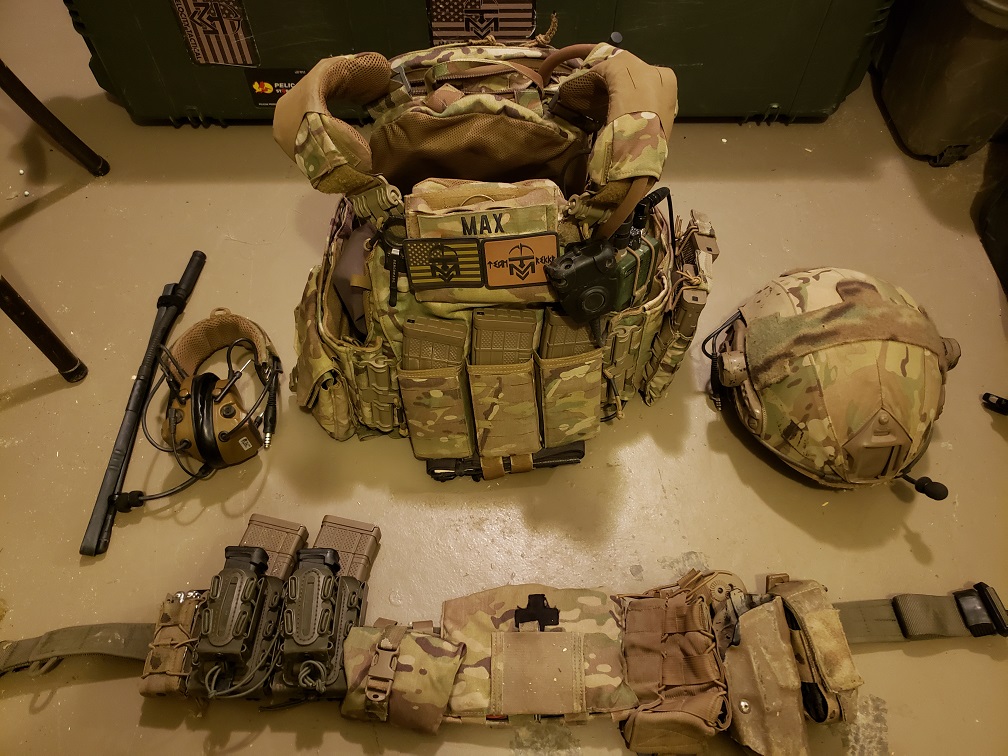
Max Velocity: Assessing Your Tactical Gear Needs


Max Velocity Tactical has an article up on assessing your tactical gear needs. In addition to the article text, there are several lengthy videos going into more detail and showing you various gear.

I have written extensively about gear, and made videos. I will post some general gear videos below. This is why I came up with the MVT Lite Fight concept which, I believe, goes a long way to covering the bases of a basic gear setup. Having said that I have written extensively about gear, and being spurred to write this because it is cropping up again on the MVT Forum, is not a criticism – it is going to come up for each one of you, and is a journey that never ends.

On that note, after some thought, I would like to introduce a new way of thinking about gear. This is because we are always talking about how our gear should suit the mission, but on the other hand we may be equipping ourselves because it is what others do, and we may be imitating; there are plenty of good reasons for that if we are imitating best practices. Also, we don’t have unlimited resources, so our standard gear is likely to follow a similar format. That is generally the idea behind the MVT Lite Fight concept, with a scaleable set of gear. Then we might get specialist missions, where we may have to carry more gear or stay out longer, or deal with a winter environment, etc.

One thing I would like to say is that you should strike a fine line between not having everything you need, and having too much. Many non-mission-essential things you can get away with not having, but if you carry things for every eventuality, you will make yourself a tactical no-go due to weight. Oh, did I mention PT?

So, what is this new way?

Perhaps what we should do is first consider the point or purpose of the mission. Then, build back from that purpose. Examples could be surveillance, security patrol, or raid. Consider what the purpose is, and then build back from the equipment to the man in order to sustain the reason we are on the mission.

Let’s take a security patrol as an example – and clearly we will be helped in this by Intel, which we may be able to get hold of due to conduct of an IPB, and continuing exposure (through patrolling) to the tactical environment.

Security patrolling – what is the purpose? To detect and react to threats? This will come down to mission, and what you expect to do once you discover a threat; engage, break contact, surveille if not seen? Because it is a security patrol, let’s build back from the rifle. If this was a surveillance patrol, we could equally build back from the surveillance equipment you will need to achieve this. You will also see that although we have a ‘Lite Fight’ concept, it isn’t really ‘Light’ once you include mission critical gear, it is just lighter than it could be if you took the kitchen sink.

So:

  • Rifle – this is our purpose, as security patrol riflemen, and thus we build the gear to feed this purpose.
  • Mags to feed it – how many? I always think 8 mags is a realistic first line scale.
  • Type of optic – terrain and engagement distances?
  • Night use? IR laser? IR Flood? NODs? White light?
  • Oil to keep it running.
  • Duration of patrol – rifle cleaning kit?
  • Solid rod in case of stuck case.
  • Spares? To what extent? Spare BCG?
  • Handgun? Applicable in the environment?

Thus, we build what we need to operate our rifle.

Next, mission specific gear based on threat and operational concept:

  • Threat level: ballistic plates or not? Helmet? Chest rig? Full battle belt?
  • Communications? Radio – to who? Do we have a QRF?
  • Vehicles or not? Foot or mounted?
  • Profile: type of clothing / uniform based on the tactical situation. Overt or low profile?
  • Maps, navigation equipment?
  • Notebooks, recording equipment of any type?

Next, we can look at other factors to keep the man who operates the weapon going, probably based on duration of patrol, threat, and weather considerations.

  • Water – quantity?
  • Food / energy?
  • First aid / medical?
  • Duration of patrol?
  • Summer or Winter?
  • Overnight / sleep or not?
  • Need to heat food / water or not?
  • Clothing and spares? Spare socks?
  • Weather appropriate clothing and survival gear?
  • Resupply? When and how?
  • Misc items such as bug spray, water purification (method?) etc.

If this had been a surveillance patrol, what we might have done was build back through the relevant surveillance equipment we were going to take on the mission with us, including how to operate and keep it running fit for purpose – in which case the rifle is secondary in a security or emergency role. If it were a raid or ambush, we might want to consider additional aspects such as more ammunition (how?), potential for QRF for support and / or casualty evacuation. Prisoner handling and equipment – the list goes on.

What is really happening here is that you are basing your mission equipment on the Intel picture, and building it based on your combat estimate as part of mission planning. What is likely is that you will have a basic set of gear with a couple of options – what type of patrol pack or larger ruck to take, for example. Plate carrier or chest rig? etc.

You can certainly have a reaction kit, or basic fighting kit, set up in case of bumps in the night or standard missions, but you will need to have the ability (probably through a couple of different load carriage systems / sizes) to pack for specific missions.

So based, on that, I haven’t really told you anything, because you are going to have to decide a lot of it for yourselves. Err on the side of less gear, so long as you have what is necessary for the mission. Too much “what if this happens” is going to weigh you down, and you simply can’t leave the wire ready for all conceivable circumstances and an endless duration of the operation.

Basic factors:

  • Type of mission, working back from the main equipment used to achieve the mission i.e. rifle, surveillance equipment etc.
  • Duration.
  • Size of team.
  • Terrain.
  • Weather.
  • Operating environment.
  • Mounted or dismounted.
  • Support available.

Continue reading “Max Velocity: Assessing Your Tactical Gear Needs”

WA GOAL Legislative Update 2020-7, Feb. 21st

From the Washington Gun Owners Action League:

GOAL Post 2020-7
Legislative Update from Olympia 21 February 2020

HB 2947 (MAGAZINE BAN) APPEARS OUT OF NOWHERE
CALL YOUR SENATOR AND REPRESENTATIVES NOW!
CHAMBER CUT-OFF
BILLS LIVE, BILLS DIE
THANK THE HOUSE REPUBLICAN CAUCUS
20 DAYS LEFT IN SESSION
PUBLIC HEARINGS SCHEDULED
INITIATIVE 1672, 1673, 1674, 1675, 1687, 1688
VIRGINIA GUN BAN BILL DIES

MAG BAN REVIVED!

ALERT! THE DAY AFTER THE CHAMBER CUT-OFF, “GHOST” HOUSE BILL 2947 SURFACED, BANNING “LARGE CAPACITY MAGAZINES” (OVER 15 ROUNDS), WITH A BUYBACK INCLUDED, MAKING IT A FISCAL BILL NOT SUBJECT TO THE CUT-OFF. BILL IS NOW IN HOUSE FINANCE COMMITTEE. NOTE MY COMMENT BELOW ABOUT DEMOCRAT PAYBACK.

TEXT OF THE BILL: http://lawfilesext.leg.wa.gov/biennium/2019-20/Pdf/Bills/House%20Bills/2947.pdf?q=20200221133228

TIME TO CALL YOUR SENATOR AND REPRESENTATIVES AND DEMAND THEY VOTE “NO” ON THIS SKULDUGGERY. IT APPEARS ADAM SCHIFF AND CHUCK SCHUMER ARE ADVISING THE OLYMPIA DEMOCRATS.

The chamber cut-off passed Wednesday afternoon, by which point any House bills that did not pass out of the House, or Senate bills out of the Senate, are officially dead for the remainder session. (Subject to rules changes by the majority (Democrat) party. Not common, but possible.) Of the nearly three dozen gun-related bills we started the session with, only eight (8) remain in play.

The eight are House Bills 1010 (destruction of forfeited firearms), 2305 (expanded gun confiscation re: protection orders), 2467 (centralized background checks), 2555 (background checks for “other” firearms)2622 (court ordered firearm surrender), and 2623 (firearm prohibition for certain offenses). Plus Senate Bills 5454 (day care center gun free zone) and 6288 (Office of Firearm Violence Protection).

The most onerous bills died, including HB 2240/SB 6077 (magazine capacity limit) and HB 1315/SB 6294 (mandatory and intrusive CPL training).

Republican members of the House (your Representative) played a major role in killing House Bill 2240, the magazine capacity limit bill. The bill, close to the top of the Democrats’ and Governor Inslee/AG Ferguson’s wish lists for the year, was in House Rules, awaiting a pull to the floor. But a funny thing happened before it could be called out for a floor vote (vote by the full House): more than 120 amendments to the bill were filed before a final vote could be taken, thus taking up more than the remaining time before the chamber cut-off. Nearly half of the amendments were filed by Rep. Jesse Young (R-26)!

(Don’t be surprised if the majority Democrats find some way for payback.)

Twenty days remain in the 2020 regular session. It ain’t over’ til the fat lady sings, and she hasn’t even arrived at the opry house yet. Recall the old saying, “No man’s life, liberty or property are safe as long as the legislature remains in session.” Given the clear partisan divide and the bitterness the left is hanging onto (thank you, President Obama, for that sound bite), we must remain vigilant. Thomas Jefferson usually gets the credit for “Eternal vigilance is the price of liberty” but no one can find it in his writings. Doesn’t matter who said it, it’s still true.

Public hearings are scheduled on a handful of gun bills next week. On Monday, 24 February at 10 a.m., Senate Law & Justice will take public testimony on HBs 2305, 2622, 2623, 2467 and 2555. On Tuesday, 25 February at 10 a.m., House Civil Rights & Judiciary will conduct a public hearing on SB 5434.

Four “personal protection” initiatives have been filed in Olympia with the Secretary of State. They are numbered 1672, 1673, 1674 and 1675. Limited additional information is available at https://www.sos.wa.gov/elections/initiatives/initiatives.aspx?y=2020&t=p

Initiatives 1687 and 1688 (lower down the list) would prohibit taxpayer funds being used for protection of the governor, lieutenant governor and/or governor elect (take that presidential hopeful Jay Inslee and his pricey WSP bodyguard detail).

Four Democrats voted with Republicans in Virginia’s legislature earlier this week to kill the Old Dominion State’s proposed modern sporting rifle ban. I guess 20,000 gun owners on your doorstep – half of them openly armed – will get your attention! There ARE some “blue dog” Democrats left (a few here in Washington, too ).

https://www.washingtonexaminer.com/news/virginia-assault-weapon-ban-fails-after-moderate-democrats-break-with-party-to-reject-it?fbclid=IwAR2vnQP_vYXQW9irV2xJE4f_PqjOTpSr1QWOC5f0gBUQFsc4UVzqZef2p8E

Can’t make it to Olympia? You can go to the following web site to submit your comments directly for any given bill. Just add the four-digit bill number (four numerals only, not HB or SB) right after …bill/ I can’t promise the comments will be read, but it’s YOUR opportunity to be heard. Be polite, be brief. And be firm. “Shall not be impaired” means exactly THAT!

https://app.leg.wa.gov/pbc/bill/(add four digit bill number)

BILL STATUS/GOAL POSITION:

(Bills with an asterisk are the only bills remaining alive at this point.)
*HB 1010 WSP destruction of firearms Senn (D-41) S. L&J OPPOSE
HB 1315 CPL training requirement Lovick (D-44) DEAD OPPOSE
HB 1671 Confiscation of firearms Dolan (D-22) DEAD NEUTRAL
HB 2240 Bans high capacity magazines Valdez (D-43) DEAD OPPOSE
*HB 2305 Expands firearm prohibition re: protection orders Doglio (D-22) S. L&J. OPPOSE
HB 2367 Self defense insurance Hoff (R-18) DEAD SUPPORT
*HB 2467 Centralized firearm background checks Hansen (D-23) S. L&J. NEUTRAL
*HB 2555 Background checks for “other” firearms Goodman (D-45) S. L&J OPPOSE
*HB 2622 Court order non-compliance, firearm surrender Kilduff (D-28) S. L&J OPPOSE
*HB 2623 Firearm prohibition, certain offenses Walen (D-48) S.. L&J OPPOSE
HB 2820 Firearms forfeiture/DV court order (correction) Klippert (R-8) DEAD NEUTRAL
*HB 2947 Ban high capacity magazines/buy back Valdez (D-43) H. Finance OPPOSE
HJR 4210 Pretrial detention for certain firearm offenses Wylie (D-49) DEAD OPPOSE

*SB 5434 Expands gun free zones to day cares Wilson, C (D-30) H. CR&J OPPOSE
SB 6077 Bans high capacity magazines Kuderer (D-48) DEAD OPPOSE
SB 6163 Unlawful possession BEFORE conviction Dhingra (D-45) DEAD OPPOSE
*SB 6288 Office of firearm violence prevention Dhingra (D-45) H. CR&J OPPOSE
SB 6289 Restoration of firearm rights Dhingra (D-45) DEAD OPPOSE
SB 6294 CPL training requirement Saloman (D-32) DEAD OPPOSE
SB 6402 Use of a stolen firearm Rivers (R-18) DEAD SUPPORT
SB 6406 Concerning firearms Wilson, L (R-17) DEAD SUPPORT
SB 6584 Unlawful purchase of a firearm Zeiger (R-25) DEAD SUPPORT

HB = House bill, SB = Senate bill. L&J = Law & Justice, CR&J = Civil Rights & Judiciary, PubSaf = Public Safety, HC = Health Care, H. K-12 = House Early education, Aprop = Appropriations, Fin = Finance, W&M = Ways & Means “S” before a bill number indicates Substitute (amended).

PUBLIC HEARINGS SCHEDULED:

24 Feb Senate L&J Senate Hearing Rm “4,” John A. Cherberg Bldg
9:00 a.m. HBs 2305, 2467, 2622, 2623 and 2555

25 Feb House CR&J House Hearing Rm “A,” John L. O’Brien Bldg
10:00 a.m. SB 5434

LEGISLATIVE HOT LINE: You may reach your Representatives and Senator by calling the Legislative Hotline at 1-800-562-6000. Toll free!!! The hearing impaired may obtain TDD access at 1-800-635-9993. Also toll free!!!

1-800-562-6000 TDD 1-800-635-9993

OTHER DATA: Copies of pending legislation (bills), legislative schedules and other information are available on the legislature’s web site at “www.leg.wa.gov“. Bills are available in Acrobat (.pdf) format. You may download a free version of Adobe Acrobat Reader from Adobe’s web site (http://www.adobe.com). You may also obtain hard copy bills, initiatives, etc, in the mail from the Legislative Bill Room FREE OF CHARGE by calling 1-360-786-7573. Copies of bills may also be ordered toll free by calling the Legislative Hotline at (800) 562-6000. You may also hear floor and committee hearing action live at http://www.tvw.org/ (you need “RealAudio” to do this, available free at the TVW web site).

By reading the House and Senate “bill reports” (hbr, sbr) for each bill, you can see how individual committee members voted. By reading the “roll call” for each bill, you can see how the entire House or Senate voted on any bill. The beauty of the web site is that ALL this information is available, on line, to any citizen.

Upcoming WAC gun show(s):

Monroe 28-29 March
Puyallup Pavilion 4-5 April

“The right of the individual citizen to bear arms in defense of himself, or the state, shall not be impaired, but nothing in this section shall be construed as authorizing individuals or corporations to organize, maintain or employ an armed body of men.”

Article 1, Section 24
Constitution of the State of Washington

WA – New Standard Capacity Magazine Ban Introduced – HB2947, Feb. 21, 2020

A new house bill showed up on the Washington legislature web site yesterday – HB2947 – introduced, of course, by civil rights-hating Democrat lawmakers. Today, the 21st, the bill history shows today’s date as the first reading and referral to the Finance Committee.  What is the bill? The bill title somewhat innocuously says “Establishing firearms-related safety measures.” But when you read the bill:

AN ACT Relating to establishing firearms-related safety measures1to increase public safety by prohibiting the manufacture, possession, distribution, importation, selling, offering for sale, purchasing, or transfer of large capacity magazines, and making a violation of these restrictions a gross misdemeanor offense, by defining large capacity magazines to apply to ammunition feeding devices with the capacity to accept more than fifteen rounds of ammunition, by allowing continued possession of large capacity magazines limited to those possessed prior to June 11, 2020, and those inherited on or after June 11, 2020, subject to restrictions on the ability to sell or transfer such large capacity magazines, requiring that they be stored in secure gun storage, and permitting their possession only on the owner’s property or while engaged in lawful outdoor recreational activities or use at a licensed shooting range or when transporting the large capacity14magazine to or from these locations unloaded and in a locked separate15container, by providing limited exemptions solely for government…

So it is yet another standard capacity magazine ban disguised as a firearm safety measure. The bill was introduced by Representatives Valdez (D – 46th), Kilduff (D – 28th), Senn (D – 41st), Peterson (D – 21st), Doglio (D – 22nd), Orwall (D – 33rd), Walen (D-48th), and Bergquist (D – 11th). Walen is the vice chair of the Finance committee, and Orwall is also a committee member.


Liberty Blitzkrieg: Financial Feudalism

As usual Michael Krieger of Liberty Blitzkrieg has some insightful things to say about the sad state of financial, economic and political affairs in the United States – Financial Feudalism.

Watching politics unfold in the post-financial crisis era has been extraordinarily frustrating. While it’s been refreshing to observe the emergence of grassroots populism over the last few years, there’s a problematic lack of depth and clarity embedded in these burgeoning mass movements. Tens if not hundreds of millions of Americans now acknowledge that something’s deeply broken within the current paradigm, but we remain focused on identifying symptoms as opposed to understanding and rectifying the systemic nature of the problem.

Of course, there are numerous complexities when it comes to the administration of an imperial oligarchy, and our system didn’t emerge overnight. Perhaps the most fundamental mutation of the post WW2 era came in 1971 when the international convertibility of U.S. dollars into gold was severed. This is when the country began its long transformation from a largely industrial empire to a financial one. I’ve often highlighted how the purely fiat USD reserve currency is the most powerful weapon ever invented, and how the U.S. control of the global financial system is the true backbone of empire, but it’s equally important to understand how the predatory financial system is also used to subjugate Americans in their own country.

In order to understand how this works we need to dig into the most fundamentally important four letter word in any modern economy: Debt.

When most people consider the debilitating societal effects of excessive debt they tend to see it from one basic level. How the bottom half of the population essentially has no choice but to borrow in order to participate in the economy as constructed. This is because the cost of so many things has been inflated way beyond the capacity of most people to purchase them outright. Specifically, wage growth has failed to keep up with the soaring costs of fundamental things such as shelter, healthcare and higher education.

For instance, home prices have been rising faster than wages in 80% of U.S. markets, which means the higher cost tends to offset historically low mortgage rates. Low interest rates don’t really help such people, it just lets them maybe, barely purchase an intentionally inflated asset to live in by taking on a huge chunk of debt. An asset that could quickly become completely unaffordable should the economy turn down as it did a decade ago.

As such, you have multitudes taking on debt defensively just to keep going and avoid falling further down the socioeconomic scale. Debt doesn’t empower such people, rather, it turns them into modern day indentured servants endlessly stuck on a hamster wheel with little to no hope of getting off. This is not an accident, it’s a tried and tested tool which, when combined with incessant mass media propaganda, is an effective way of creating a submissive, confused and desperate underclass.

Many people understand this by now, but what’s far less understood, yet potentially more significant, is how the wealthy use debt.

When you own your primary home outright and you’ve got enough savings that healthcare premiums and paying for your kids college in cash doesn’t make a dent, debt becomes something else entirely. Debt’s no longer an albatross around your neck, instead it becomes a tool to increase wealth. Debt becomes leverage.

Much of the explosion in wealth inequality over the past several decades can be traced back to this systemic interclass weaponization of debt. If you’re very wealthy and connected, access to extremely cheap debt is virtually unlimited, and this access is used to make leveraged bets on all sorts of stuff, but primarily real estate and financial assets such as stocks and bonds. Hasn’t this always been the case you ask? Aren’t those with capital always extremely advantaged over those without it? Isn’t that the history of capitalism and America since the beginning? My answer would be yes and no.

The main difference between prior periods of history and, let’s say the 21st century, has been the vast increase in power of the financial services sector thanks to the Federal Reserve’s willingness to encourage and enable the insatiable reckless behavior of the speculator class. It’s no secret the Fed has been intentionally boosting assets across the FIRE sector such as real estate, stocks and bonds since the crisis. Those with the capital to ride the coattails of this irresponsible and undemocratic central planning rushed out to take on debt to buy these assets, thus multiplying the return on investment.

While the white-collar cubicle worker with enough extra income to diligently add to their retirement account over the past decade has done fine, bankers or hedge fund managers who took on massive leverage to amplify such bets made generational fortunes while creating nothing of value. It’s the way debt works for the financial services sector versus how it works for the average person in a world dominated by big finance and the central bankers who provide them unlimited welfare.

The same thing occurs within the corporate suite, as executives across industries have used access to extremely cheap debt to buyback stock and reward themselves handsomely despite creating nothing of societal value while doing so. It’s pure financial engineering. Nobody should become generationally wealthy this way, but it’s exactly what’s been happening. So you see, debt’s not just a means to subjugate a desperate bottom half of the population, it’s concurrently an effective tool to expand wealth and power at the top. ..

Click here to read the entire article at Liberty Blitzkrieg

Practical Self Reliance: Making Herbal Healing Salve

Here’s a nice beginner how-to from Ashley at Practical Self Reliance on how to make healing salves. She includes a general recipe and then several herb-specific recipes toward the end. I like to use a calendula salve for minor skin injuries which is similar to the Gardener’s Healing Salve recipe she links. I’ve only included some of the key parts of the article below, more detail is through the article links.

Herbal healing salves are simple and effective ways to enjoy the benefits of herbal medicine, and they couldn’t be easier to make at home.  Salves are semi-solid at room temperature, making them easy to transport and store.  When they come in contact with skin, the botanicals go to work, released by our own body heat for absorption through the skin.

Herbal Healing Salve<img class=”aligncenter size-full wp-image-13045″ src=”https://i2.wp.com/practicalselfreliance.com/wp-content/uploads/2020/02/Herbal-Healing-Salve.001.jpeg?resize=600%2C400&ssl=1″ alt=”Herbal Healing Salve” width=”600″ height=”400″ data-recalc-dims=”1″>

I’ll admit it, as a budding herbalist I was intimidated by making my own salves.  Homemade tinctures and infused oils are easy enough, just place herbs in a medium and wait.

It took me over a decade of herbal practice before I made my first herbal salve.  Start to finish, the whole process only lasted about 10 minutes and I had a whole counter full of homemade herbal medicines.  Why had I waited so long to try this?!?!?!

…Usually, healing salves are made with just a few ingredients.  Often just three ingredients are enough to get the job done, those being herbs, oil, and beeswax…

<img src=”https://i2.wp.com/practicalselfreliance.com/wp-content/uploads/2020/02/Herbal-Healing-Salve.001.jpeg?fit=600%2C400&ssl=1″ class=”mv-create-image no_pin ggnoads” data-pin-nopin=”true” alt=”How to Make a Herbal Healing Salve” data-pin-media=”https://i2.wp.com/practicalselfreliance.com/wp-content/uploads/2020/02/Herbal-Healing-Salve.001.jpeg?fit=600%2C400&ssl=1″>

Yield: About 8 Ounces

How to Make a Herbal Healing Salve

Active Time: 10 minutes
Additional Time: 10 minutes
Total Time: 20 minutes
Difficulty: Easy
Estimated Cost: $5 to $6 per batch

Herbal healing salves are incredibly versatile, and this semi-solid topical herbal medicine is an easy way to incorporate natural herbal remedies into your routine.

Materials

Herbal Infused Oil

  • 1 1/2 cups carrier oil (olive, almond, grapeseed, etc)
  • 1/2 to 1 cup dried herbs

Healing Salve

Tools

  • Pint Mason Jar
  • Fine Mesh Strainer
  • Double Boiler
  • (or saucepan & heatproof bowl)
  • Salve Tins
  • (or other containers)

Instructions

Herb Infused Oil

  1. Add dried herbal material to a pint mason jar. Cover completely with about 1 1/4 to 1 1/2 cups of oil.
  2. Allow the oil to infuse at room temperature for 3 to 6 weeks before straining through a fine-mesh strainer. (Note: Some of the oil will absorb into the herbal material, so starting with slightly more than 1 cup of oil should yield about 1 cup for making a herbal salve.)

Herbal Healing Salve

  1. Measure about 1 cup of herb infused oil. Place it in a heat proof bowl (or double boiler). Add about 1 inch of water to a small saucepan and then place the bowl over the water. Turn the heat on low and gently heat the oil.
  2. Add in about 1 ounce of beeswax pistils (roughly 1 heaping tablespoon). Stir gently until melted.
  3. Remove the oil/wax mixture from the heat and pour it into containers.
  4. Allow the salve to cool to room temperature and reach a semi-solid state before using it.

Notes

The amount of beeswax used is a matter of personal preference. Feel free to use more for a firmer healing salve, or less for a softer more spreadable herbal salve…

Click here to read the entire article at Practical Self Reliance.

Related:

The Herbal Academy: How to Make Calendula Salve

The Saker: Novel Coronavirus – Nonsense and Truths

In The Saker’s COVID-19 – What people say, and only 5 realities the author quickly summarizes some of the rumors, myths, conspiracy theories, and simply unverifiable information that have been spread about the novel coronavirus – COVID-19. There is some good information in there, especially in reference to western perception of the harsh isolation measures being taken in China. The best response to an infectious pandemic is isolation. If people are running around infecting other citizens, refusing to self-quarantine, what is any government or community going to do to those people? It’ll probably look harsh.

…China is now attempting to go back to work. We do not know how successful this is, but some are trying to measure the actual air pollution to try and figure out if China has gone back to work, or not. Economically China has also given guidance to business, saying that this event is a force majeure, known colloquially in contractual terms as ‘an act of God’, and therefore they can renegotiate contracts, delivery dates and completion.

Let us look at what is clear.

1. China is fighting for its life. The death-toll or even containment is not truly visible in any numbers as yet. This will have tremendous impact on supply lines and not only on China’s economy, but all parts of the international supply chain, upstream and downstream. China is acting on expressed unhappiness of their people. They are firing those who do not perform, who put red-tape in the path of directly fighting this virus. It may look brutal to lock people into their homes, but how many do they save by this action? Where do these get food? It is in the Chinese media that food gets delivered. This is something that the western youtube pundits (and their a-hole brothers) forget to report, although this is open and publicized in the Chinese media.

2. This is a catastrophe. It is not a flu, it is not a common cold, it is not something that 5G brought onto China, it is not God punishing the Godless red commies. Whatever it is, it is a catastrophe with world-wide consequences. We do not know enough to come to any meaningful conclusions except to say that considering the timeline, we are right to be suspicious and we may be right to prepare with the basic masks, gloves and limited public exposure, i.e., not visiting large gatherings, for a period of time.

3. If this virus continues, it will have societal impact that may be severe – we won’t shake hands, we won’t hug babies, social interaction will be vastly compromised, and a few more common contact methods like music concerts or sporting activies for humans will be left by the wayside.

4. If it continues much beyond the current level, the extensive economic fallout cannot be estimated.  You and I and no analyst in the world can truly get their arms around the economic fallout and the breakdown of worldwide supply chains.  Who knows, we may be out of a specific little part for a normal service of a vehicle, we may be out of medicines (the idea of the many people that are taking anti-depressants and such types of medicines having to go cold-turkey is quite scary, and there may be a severe shortage of simple medical equipment, like masks and gloves that are even now getting hard to source – just try buying masks on Amazon).

5. In the current analysis and according to what we have available, we do not yet know enough to be meaningful. Much more than that is pure speculation and gives rise to other agendas being seeded into the public narrative.

What is clear, is that people are scared and terrified.


AIER: How Liberalism Can Survive Left-Right Polarization

This article from the American Institute for Economic Research looks into the rise of political extremity, both left and right, in the US, and what we need to do to affirm dedication to liberty while rejecting the vengeful appeal of authoritarianism.

The rise of political extremes in America, both left and right, poses a particular challenge for those of us who prefer liberty over government control. It’s not only in the US; the same grows in the UK, Europe, Latin America, and Brazil. As the old managerial elite in all countries loses credibility and power, socialist and nationalist forms of statism are vying to take their place, while relegating liberalism to the political margins.

To survive and thrive, we will need to gain greater confidence in who we are and what we believe about the social order, clarifying and focusing on what liberty looks like and what precisely we are going for, while avoiding partisan traps along the way. In particular, we need to avoid being lumped in with movements – rightly or wrongly, by expedient or intellectual error – that are contrary to our tradition and philosophical longings.

In case you haven’t heard, for example, many academic and media observers are on a hunt to discover the origin of the nationalist resurgence, and particularly its most bizarre and violent segment of the alt-right. To the horror of many dedicated intellectuals and activists in the liberty space, some academics and journalists have tried to link this movement backward in time to the libertarian political movement as it developed over the last two decades, and, by extension, the rise of the Trump-controlled Republican Party.

It should be obvious that, in theory and contrary to what the socialist left has long claimed, there is no connection whatsoever between what we call libertarianism and any species of rightist ideology. One negates the other. As Leonard Read wrote in 1956, “Liberty has no horizontal relationship to authoritarianism. Libertarianism’s relationship to authoritarianism is vertical; it is up from the muck of men enslaving man…”

And yet today, there does indeed appear, at least superficially, to have been a social, institutional, and even intellectual connection, and migration, between what is called the liberty movement and the emergence of nationalism, right-wing identitarianism, and the politics of authoritarianism. Some of the most prominent alt-right voices in the 2017 Charlottesville marches once identified as libertarians. This fact has been widely covered. It’s a fair question to ask: did these individuals ever really believe in a liberal worldview? Were they trolling all along? Were they just deeply confused?

I’ve been interviewed many times on these questions. How did this come to be? The answer is complex. It was more than six years ago that my article “Against Libertarian Brutalism” raised a conjecture: a libertarianism, rendered simply as nothing more than a “leave me alone” outlook, with no larger aspiration for the good life, and no interest in the subject of social cooperation, could find itself divorced from a historical conception of what the advent of liberty has meant to human life and society as a whole. Without that, we fail to develop good instincts for interpreting the world around us. We are even reduced to syllogistic slogans and memes which can be deeply misleading and feed even illiberal bias.

And where does this bias end up? Where are the limits? I see them daily online. In the name of fighting the left, many have turned in the other direction to embrace an alternative form of identitarianism, restrictions on trade and migration, curbs on essential civil liberties, and even toyed with the freedom of the press and the rights of private enterprise, all in the name of humiliating and eliminating the enemy. Some go further to celebrate anything they believe the left hates, including even odious causes from the authoritarian past.

The rhetoric at the extremes approaches nihilism. The press isn’t really free so why not impose restrictions, censorship, and litigated punishments? The borders aren’t private so why not prohibit all entry? Some speech doesn’t support freedom so why permit it the rights that freedom entails? Social media companies aren’t really private enterprises, so why not force them to carry and promote some accounts that I like? That large company has a government contract so why not bust it up with antitrust?

The gradual evolution of language has unleashed all kinds of confusion. Activists denounce “the establishment” without a clear distinction between government and influential media voices. They will decry “globalism” without bothering to distinguish the World Bank from an importer of Chinese fireworks. They promote identitarianism and racial collectivism without the slightest understanding of the illiberal origins and uses of these ideologies in 20th-century history. After all, they say, there is nothing “inherently un-libertarian” about casting down an entire people, religion, gender, language, or race, so long as you don’t directly use violence.

It takes a special kind of circuitous sophistry to justify, in the name of liberty, collectivistic animus and state violence against voluntary association. But the history of politics shows people are capable of making huge mental leaps in service of ideological goals. All it takes is small steps, little excuses, tweaks of principle here and there, seemingly minor compromises, some element of confirmation bias, and you are good to go, ready to make as much sense as the old communist slogan that you have to break eggs to make omelets…

Click here to read the entire article at AIER.

Office of Firearm Violence Prevention Act Passes in WA Senate

SB 6288 which would create an Office of Firearm Violence Prevention within the Executive Branch of the state government passed in the senate yesterday 25-23. It will now go to the house for consideration. The current Gubernatorial administration has made it clear their position on Second Amendment/Article 1 Section 24 issues, as they routinely sponsor and support gun banning legislation and initiatives designed to disarm law-abiding citizens. A concern with the legislation is that this office would be nothing more than a tax-payer funded lobby group whose sole purpose is to erode self-defense rights in Washington.

From Washingtongunlaw.com:

Office of Firearm Violence Prevention.

Istockphoto 921437942 1024x1024

The current gubernatorial administration has been hostile toward individual Second Amendment Rights.  Often times, the solution to any real or perceived problem has been creation of new taxes or bureaucracy.  SB 6288 creates an entire new agency, under the Governor’s control, to assist in firearms violence prevention.  It could also serve as a valuable political tool.

The Washington office of Firearm Violence Prevention Act, is to be created within the department for the purposes of coordinating and promoting effective state and local efforts to reduce firearm violence.  This bill wold add a new section to RCW 43.  According to the language of the bill itself, the duties of the office include, but are not limited to:

(a) Working with law enforcement agencies, county prosecutors, researchers, and public health agencies throughout the state to identify and improve upon available data sources, data collection methods, and data-sharing mechanisms. The office will also identify gaps in available data needed for ongoing analysis, policy development, and the implementation of evidence-based firearm violence intervention and prevention strategies.

(b) Researching, identifying, and recommending legislative policy options to promote the implementation of statewide evidence-based firearm violence intervention and prevention strategies.

(c) Researching, identifying, and applying for non-state funding to aid in the research, analysis, and implementation of statewide firearm violence intervention and prevention strategies.

(d) Working with the office of crime victim advocacy to identify 35 opportunities to better support victims of firearm violence, a population that is currently underrepresented among recipients of victim services.

What should concern any lawful and responsible gun owner in the State of Washington is that the current Governor and Attorney General have shown a general disdain for the Second Amendment.  Passing legislation which gives the Executive branch another lobbying arm and legislative force should concern any citizen who cherishes their Second Amendment Rights.  You can track SB 6288 and read the entire bill here.


Daily Chronicle: Gun Owners Still Confused About I-1639

It’s too late to vote on I-1639; it already passed. Although the definition of “assault rifle” in 1639 is ludicrously broad, only the pink rifle in the photo above meets the definition — a kids .22lr rifle.

From The Daily Chronicle, Gun Owners Still Confused About I-1639; Sheriff’s Office Is Buried in Background Checks. Initiative: Local Gun Shop Owners Say Education on Law Is Needed, Say Law Hurts Business

On July 1, 2019, I-1639 took full effect in the state of Washington. Seven months later, Shoni Pannkuk, co-owner of The Man Cave Outfitters in Downtown Centralia, says the news of I-1639 and the new process that comes with obtaining a firearm still catches some of her customers off-guard. 

“The number of, which was astounding to me, the number of customers we have, who are obviously gun enthusiasts, hunters, concealed carry, whatever, that have absolutely no idea what I-1639 was and the impacts that it now has,” Pannkuk said. “We get often (from customers) like, ‘I didn’t have to do this before, what do you mean I have to do this.’ I’m like, ‘Yeah, that passed, it was effective July 1.’” 

According to the Washington Attorney General’s Office’s website, buyers have been required to go through, an “Enhanced background check and waiting period requirements for the purchase or transfer of semiautomatic assault rifles.” In addition, those looking to purchase a firearm after June 30, 2019 are required to have passed a “recognized firearm safety training program” within the last five years. It’s also the dealer’s responsibility to verify that a buyer has completed a course. 

The law also states that the training “must be sponsored by a federal, state, county or municipal law enforcement agency, a college or university, a nationally recognized organization that customarily offers firearms training, or a firearms training school with certified instructors.” Pannkuk still feels that verifying the legitimacy of a customer’s training can be ambiguous for the business.

“I can print up a certificate right at home that says I’ve completed it,” Pannkuk said. “I don’t know if the school on (the certificate) is a valid school, I mean, I don’t know.” 

Pannkuk also said she brought up the question regarding verification of the training course at a public hearing with the Washington Department of Licensing right around the time I-1639 was implemented. She said nobody had any answers.

When the law was implemented, Pannkuk described it as an instant change with “little to no guidance.”

“It was July 1,” Pannkuk said. “Here it is, here’s the law. It was terrible, which is why we went to the Department of Licensing. Like ‘What do you expect? Are we required to manage these training (sessions)? Am I required to authenticate them?’”

From Pannkuk’s perspective, the logistical impact of I-1639 is what has hit businesses the hardest. 

“(I-1639) has completely changed how we do the firearm sales,” Pannkuk said. “So, the mandatory 10-day wait that comes with any purchase of a semi-automatic rifle, requires the business, me, the owner, to monitor that. I have to now, A. figure out what jurisdiction you live in, not everybody knows that, surprisingly, you might think you’re in Lewis County, but maybe you’re in city limits. I don’t know that, there’s no database that tells us that information, but that’s where we have to send (the request for background), to your local jurisdiction. We guess, sometimes, if the customer doesn’t know, right, we’re going on what they say.”

Pannkuk added that beyond figuring out where to send those requests, she’s also in charge of sending each of them individually to the correct local jurisdiction...

“How do we get people to vote,” Hobe Pannkuk said. “That was the big issue, a lot of these people that came in that had no idea what I-1639 was, didn’t vote. That’s why it passed.”

Click here to read the entire article at The Daily Chronicle of Lewis county.

Organic Prepper: Thinking about US Quarantine Effects

In this article at The Organic Prepper, Daisy Luther and Selco Begovic think about what kind of effects a strict quarantine in the US might have if it is as severe as the quarantines currently in effect in China. The WHO has suggested that up to half the world population could be infected if the virus isn’t contained. Early studies suggest that the coronavirus has a fatality rate of around 2.3%. If half the world catches it, that’s approximately 100 million fatalities. If half the US population gets infected, that’s around 5 million US fatalities. There is a lot to think about on how that many fatalities and that number of sick people would affect your work, government services, private services, and everyday life.

How long do you think a pandemic quarantine could go on with power, running water, the internet, and trash pick-up continuing to run as normal?

If Covid-19 (also known as the Wuhan coronavirus or nCoV-2019) were to spread where you live as it has in China, it’s possible that extreme measures could be taken. Possibly even a China-style lockdown, where people are told to stay in their homes and where businesses are closed. I’m referring to something much more extreme than just a handful of us self-isolating. 

While I certainly hope such a situation is unlikely, it’s something we should all consider a possibility and get  prepared for, just in case. Considering whether or not this would be an off-grid scenario would play an extremely important part in your preparations.

Selco and I had a very interesting chat about this after I’d raised the point in a group discussion. I thought you might be interested in our thoughts. Of course, there’s no way to know exactly how this might go down, so it’s pure speculation on our part based on the research of similar situations, knowledge of our systems, and personal experiences.

Would we have utilities and services during a quarantine scenario?

…A lot of things are automated, which makes me believe we could potentially have a month or two of relative normalcy with regard to utilities, even if folks aren’t going to work. Garbage pickup would be another matter.

First things first, electrical power, natural gas, water, and the internet could run a long time automatically or with just a bit of input from someone on a computer. A pandemic isn’t going to fry our circuitry like an EMP would, for example. There’s nothing general-infrastructure-wise that would immediately compromise these utilities.

But this assumes that everything besides the pandemic is smooth sailing – that we won’t have any tornadoes, any hurricanes, any blizzards, any earthquakes, unfortunate bolts of lightning, or accidents. And it also omits manmade problems like riots that damage the infrastructure or even deliberate sabotage.

In a full-on pandemic, there’s likely going to be nobody to go out there and repair potential damage. And it’s possible that even if people were willing, they might not have access to the necessary supplies or equipment if these are items that they get on a “just-in-time” basis.

As for water, it could run for a long time but it might not be safe to drink. We’d need to be alert that there’s nobody there testing the tap water and adding chemicals. I don’t love chemicals like fluoride in my water but I do love essential chemicals better than I like amoebic dysentery and shigellosis and cholera. That being said, even if the water wasn’t drinkable right from the tap, it would certainly make life easier if folks not on septic systems could still flush their toilets, and water could be purified in a multitude of different ways

A good question is what would happen with electric power and all other utilities once the SHTF.

And yes answer is not simple. It is based on type of event and severity of the event, but I think we can have some good guesses about it.

UtilitiesPower, running water, communications (internet, cell phones…) and similar utilities up to waste management in all modern societies are brought to an advanced level of functioning.

All that is so “modernized” in a way that most of us usually do not notice or actually do not care how it is being delivered to us. People don’t care how these things work.

I also do not know in depth how all that works, but I know that most of the utilities today are being brought to us in a very automated and interconnected way.

So, as a result, it works good, until it does not.

I think the price for that is the fact that when ONE thing goes out soon another thing will go out too. Even if something goes out FAR from you, it may still mean it easily may go out at your home.

Maintenance

Do not forget, things (services) no matter how modernized need to be maintained, so, if there are no people around to do maintenance, services will not work.

It depends on how bad the event is, and the control the government has over the event, and the society in which the event happening. It is a question of are people gonna be there to maintain services.

As an example, if some serious event is happening, are people willing to go maintain services or they are more willing to go home and protect their loved ones? They are all just humans, do not forget.

People

Also, if there is still a system functioning, the government or some kind of system, does it have enough power to FORCE people to maintain services? People will want to go home to their families.

The important fact is: if the event happening here is serious enough to bring problems to utility services, it is probably serious enough to make other services like the police force or medical services no longer working. So, as a result, the security situation will be deteriorated, so that is another obvious reason why people would want to be more with their families instead of at their job.

A deteriorating situation with utilities will usually go with a deteriorating situation in behavior between people, so it is not like our only problem will be city services and everything else will be fine at home (and safe)…

Click here to read the entire article at the Organic Prepper.

WA 8th Leg. Dist. Town Hall, Feb. 22, 2020

From Rep. Bill Jenkins:

Dear Friends and Neighbors,

I’ll be co-hosting a town hall event with my fellow colleagues from the 8th Legislative District – Reps. Brad Klippert and Matt Boehnke, and Sen. Sharon Brown – in Richland.

This Saturday, Feb. 22 is your opportunity to discuss with us your opinions, concerns and questions about the legislation being debated in Olympia. We will begin the event with a brief legislative update on the 2020 session and then dive into our Q&A session. There’s a lot going on and we want to hear from you! We hope you will join us.

Details include:

Date: Saturday, Feb. 22
Time: 10:00 – 11:30 a.m.
Location: Richland Community Center
Address: 500 Amon Park Dr., Richland, WA 99352

If you cannot attend the event, or would like to submit a question or comment beforehand, please contact my office.

I look forward to seeing you on Saturday!

Sincerely,

Bill Jenkin

Forward Observer: Coronavirus & the Area Study

Intelligence analyst Sam Culper of Forward Observer has a few thoughts relating to coronavirus and what you might think of related to your area study.

News from China over the weekend shows that 760 million people are on some form of lock down or quarantine as the government tries to contain the spread of Coronavirus. That’s three quarters of a billion people.

In other words, over half the entire country is being told when they can leave their homes and for how long.

Last night, my wife and I started watching a documentary series on Netflix called Pandemic, in which American pathologists repeatedly say that we’re not prepared for a pandemic in America.

Pathologists continually say that it’s not a matter of “if” but a matter of when.

Most striking to me was when a physician warned that a slight mutation that resulted in a novel strain of highly lethal influenza, swine flu, or avian flu could end up killing millions of people.

My thoughts then went to second- and third-order effects:

What happens if a virus affects farm workers?

What happens if food delivery stops?

What happens if large cities or rural areas are quarantined?

What happens if pathologists discover that the virus can be or is being spread through the pipes carrying our drinking water?

And that brings my thoughts to my own level of preparedness, and specifically to my Area Study.

We build an Area Study so we can better understand our neighborhoods, who lives there, what fault lines it has, where we’re vulnerable, and what conditions could develop during an emergency.

For those of you building an Area Study, here are some pandemic considerations:

1. What medical facilities nearest to me will handle patients infected by a pandemic disease or virus?

2. How well staffed and supplied are those hospitals? In other words, how many patients can the facility house and treat, and how long can they respond before they encounter constraints on resources? (One of the limiting factors in China is that some areas have run out of Coronavirus test kits.)

3. Every county in America should have an emergency operations action plan. Have they considered a pandemic and what are their plans to respond to one? (Ask your local county officials where you can find the county’s emergency action plan. Or start with an online search: “[My County] Emergency Action Plan” I found my county’s plan via the web.) What facilities in the area might be used to treat patients that can’t fit in the hospital?

4. What are the second- and third-order effects of a pandemic? How long can my neighborhood/area function if placed under quarantined? If the virus isn’t in my area, how can I know if people are escaping the quarantine in surrounding areas (as has happened in China)? Will an outbreak or quarantine cause a mass migration? If so, how will that affect me?

I’ll be doing some research into how we can add a pandemic annex to our Area Study and what information should go into it.

In the meantime, if you have any specific considerations that you’d like to share, please let me know. You can add a comment to this post and I can include your input when I send out the next email on pandemic preparedness.

Related:

Forward Observer: An Introduction to the Area Study

Forward Observer: Area Study Part II