Wenatchee Hamfest, June 8-10, 2018

The Apple City Amateur Radio Club invites you to their 50th anniversary hamfest, June 8th – 10th, 2018 in Dryden, WA, at the Dryden Gun Club. The location is just five miles from Leavenworth.

Registration is $7 per person. Tickets are only available at the door.

Activities begin Friday at noon. The grounds open for tents and RVs (no hookups) on Thursday afternoon.

  • Free camping
  • Prizes, bingo, rabbit hunt
  • Ice cream social, Friday night
  • VE testing
  • Breakfast Saturday morning
  • Continental breakfast Sunday morning
  • Swap meet/tailgating
  • Raffle

Contact: Tracy Lathrop – KD7KBE@msn.com, (509) 393-2579 (please leave a message)

Talk-in: W7TD repeater 146.68 MHz ( – / 156.7 tone)

Click here to download pdf event flyer.

Medic Shack: Civil War and Disease

Chuck at The Medic Shack has an article up describing the increase in disease during modern civil wars and the lack of preparedness in the professional medical facilities.

Over the years we have talked about nuclear war chemical war, SHTF because of crazy politicians, money collapse, and general bad things. One thing that Cat the Herbal Prepper and touched in in past Medic Shack and Herbal Prepper Live shows is normal diseases that follow war, or SHTF collapse.

So lets look at 2 recent civil wars. Bosnia and Syria.
First off lets start with the worst mistake made in medicine at the beginning of the civil war.
There were HUGE signs of the impending war. The crash of Communism, the heated political rhetoric. The clashes between the 3 sides in small isolated conflicts.

So No preparations were made, no stockpiling of medications, no reorganization plan to help them quickly adapt to wartime conditions – if the need arised. As a result, the hospitals in Sarajevo ran out of basic surgical material (dressings, bandages, sutures, cleaning solutions, and similar) within the first three months of the siege. Essential medications, oxygen, and anesthetic gases were at a premium, and the power and water supply were cut off after several months. At the end of the first year medicine had returned to the mid 1800s level of technology. Another problem that I can see happening is the health care post SHTF going to “highest bidder” Meaning If you can pay you get treated. If not. So sorry Charlie. Don’t tell me it won’t happen. You all have seen the deterioration of medical ethics today. Doctors putting in pacemakers on people who don’t need them. Writing scripts on expensive drugs to treat a patient where a proven, less expensive drug, or no illness at all, to get some kick back from Big Pharma. I could go on but this is not what this news letter is about.
After the major medical centers closed and supplies were not to be found and good clean food and water was not available disease reared its wartime head. The official statement by WHO and the Red Cross was limited spread of infectious disease’s happened during the war. In reality, Typhus, Cholera Parasitic intestinal infections (Giardia Cryptosporidia) rose rapidly. Due to malnutrition there was a huge increase in deaths from flu measles and exposure. Scarlet Fever killed 2 out of 10 children under the age a of 6. Due to lack of clean water for hygiene fleas lice, mites and other insects infested the population. Outbreaks of Bubonic plague happened. Also instances of Bartonellosis (Trench Fever) Leishmaniases, Lyme disease Hepatitis A and C and others. Since it was declared a non outbreak event by the WHO there are few numbers to support the claims of eyewitnesses of the event.

Lets fast forward to the 21st century and Syria. Syria did not have the same level of medical infrastructure that central Europe had. Health care was situated in the larger cities and towns and the rural population made their ways to the cities or treated themselves.

The Syrian civil war on the other hand has had and does have extensive coverage by the WHO and other medical organizations. And the documentation of disease during the war is published and it is in a word scary.

The war started inn 2011. In Syria Hepatitis A was almost unheard of. By 2012 an average of 2200 cases a year appeared. Typhoid less than 50 in 2011. By 2012, 1150.

Cutaneous Leishmaniasis. In 2011 less than 100. By 2012 52,900 cases. There is incomplete data after 2012 since the information is highly controlled and unverifiable.

One thing that is similar between both modern civil wars. No preparations were made by the local medical community. All the signs were there but no one in government or medical leaders choose to do something.

So what does all this have to do with the Prepared Medical Prepper?

EVERYTHING.

As we see from recent history the government nor the national and local health communities will do NOTHING to prepare for anything until its to late. Are we on the cusp of a civil war? It very possible giving the current state of relation we have with each other in our own country. The divisional racial wedge that has been driven between us. And the current fight we have about The Constitution of The Untied States.

So what do we need to look out for?

Click here to read the entire article at The Medic Shack.

Center for Self Governance, Level I & II, Spokane, June 17

The Center for Self-Governance is holding their Level I and Level 2 class in Spokane, WA on June 17, 2018 from 1:30 pm to 9:00 pm.
Location
Argonne Library
4322 N Argonne Rd
Spokane, WA 99212

Level 1 and Level 2 – Combined Training

Online attendees must register at least 7 business days prior to class to be guaranteed on-time delivery of their workbook.  A webinar link will be emailed to registrants the day of class.  Please send an email to pleslie@tncsg.org if you plan to attend online. 

Foundational Civics

  • Tuition: $110
  • Time: 8 hours
  • Students will need to complete all training exercises (#1-#7) prior to scheduling the Level 3

Level 1 – Foundations in Self Governance

In Level 1, the student compares and contrasts the theoretical concepts of power, government, and control. The student will learn different systems of government based on those concepts. The control concepts of Self Governance and Centralized Governance introduces the student to the experimental role of the governed within the U.S. mixed republican system of government. The student completes Level 1 training exercises before moving onto Level 2. This level and associated exercises are foundational to successful completion of the entire course.

Level 2 – Macro Understanding of Centralized Governance

Building on the Level 1 paradigm, the Level 2 student is introduced to the design elements of the U.S. mixed republican form of government. They will learn the logic behind and current structure of separation of governments (i.e. Federal v. State), the separation of powers (i.e. executive v. legislative), and the separation of controls (i.e. Sheriff v. Coroner). They will explore the inter-relationship between selection of elected, appointed, and employed governors and influencing (controlling) those governors. The student completes the Level 2 training exercises before entering Level 3. This level and associated exercises establishes the student’s basis of authority from which they will put self governance into practice in the remaining training levels.

Your workbooks are included in the registration fee.

Adult registration is $110 (NOTE:  Combined class is NOT for children under 18 years of age).

Prior Level 1/2 students may review this class for $20.

Family discounts are available.  Contact CSG for more information.

Supplies to bring include: paper, pen, and your enthusiasm! This is an interactive class and we look forward to hearing from you. Please dress comfortably and bring a sweater/jacket as facility temperatures can be unpredictable.

You must attend the full 8 hours to complete the course, as well as associated training exercises, to graduate Level 1 & 2.  Training cannot be taken out of sequence.

Blanchard: Guide to Parenting

Kenn Blanchard of Black Man with a Gun has written a short essay on parenting responsibility. It’s worth your time to give it a read.

First I want to tip my hat to those successful baby boomers that are now the gray haired group in their seventies.

This generation that survived the Civil Rights era, bussing, political upheavals, World War II, the Nazi Holocaust, fear of the H-Bomb, Korea, Viet Nam, the Cuban Missile Crisis, Watergate, have raised children that have invented the internet, social media, drones, video games, remote control vehicles, cell phones and all the stuff we take for granted that the millennial can’t live without.

Somehow unfortunately my generation has forgotten that being a parent sis a full time job. We “collectively” hopefully not you my firmed, have not learned some important things from the old folks. Are you still with me?

The first lesson is that love is sacrificial. True love, real love, is not an emotion. It is not a passing feeling, or equal to I heart you!

Love is expressed more that it was said in my parent’s generation. Who remembers the Encyclopedia Britannica, the World Book and maybe even the Bible Stories series of books our parents “invested” in so we would have chance to go to college or get good grades so we could get a job and get out on our own? Those books were our Google. Remember the dictionary? My parents worked two jobs so that we had a house, clothes to wear and expensive breakfast cereal to eat on Saturday mornings. Named brand cereal too, like Capt Crunch, Sugar Pops, Rice Kris pies….

They made payments on the encyclopedia. When someone got a new car in the neighborhood or family it was a big deal Folks celebrated with you.

Oh and by the way, there where guns and live ammunition in the house. There were military arms brought home from the wars they served in or bought at pawn shops to protect the home. My maternal grandmother, mother of the church, deaconess, preparer of Holy Communion on second Sundays, kept a loaded single barrel Sears and Roebuck shotgun behind the kitchen woodstove, all my life. Nobody touched it. Nobody died from it being there, unsecured. My paternal grandmother was a little rough around the edges, she kept a loaded Belgium Browning A5 shotgun in her bedroom over the door and a concealed weapon, and an Italian handled switchblade knife in her bra…

Click here to read the entire article at Black Man with a Gun.

Sparks31: Monitoring Exercise

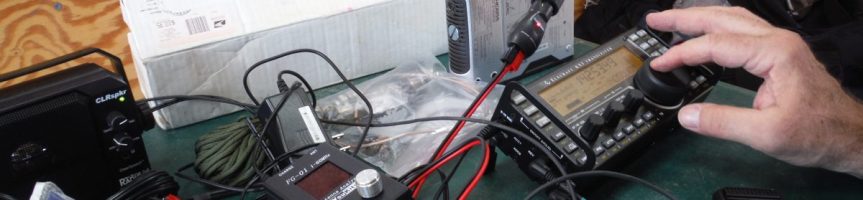
Sparks31 put up a couple of posts on running a monitoring exercise (MONEX) designed to use basic radio receiving equipment, get you experienced in listening, test your gear, and give you an idea of who is operating in your area and their frequencies. The first exercise in part 1 uses a portable broadcast FM radio and the second an AM radio, which just about everyone has. These are exercises that you can do on your own and only require the ability to receive. You do not need a license to receive radio communications.

MONEX Part 1

MONEX Part 2

MONEXes (Monitoring Exercises) are important because they help you understand what your listening equipment is capable of doing, they help you improve your skills in both COMINT and OSINT, and they help you figure out what frequencies in your area are useful for keeping an ear on events. Communications monitoring equipment is not something you can purchase and toss in a go-box for when the balloon goes up. You need to get proficient with the equipment before the s[tuff] hits the fan. Information gathering is as important a survival skill as firearms proficiency, or growing your own food. MONEXes are the way to COMINT proficiency.

RELATED

Consolidated Frequency List (pdf) This contains a long list of to whom various frequencies have been allocated for use. (H/t Sparks31)

FEE: In the Wake of Mass Shootings, Parents Reconsider Mass Schooling

From the Foundation for Economic Education:

In the Wake of Mass Shootings, Parents Reconsider Mass Schooling

Parents who remove their children from the confines of the conventional classroom are not running away from reality. They are running towards it.

In the wake of recent tragic school shootings, anxious parents are contemplating homeschooling to protect their children. After February’s school shooting in Parkland, Florida, the Miami Herald reported that more parents were considering the homeschooling option. And after Friday’s disturbing school shooting in Sante Fe, Texas, a local ABC news affiliate in Alabama reported the increasing appeal of homeschooling.

“If I had the time, I would teach my kids myself, and I would know that they’re safe,” a father of four told ABC station, WAAY31. A public school teacher interviewed by the channel disagreed with the idea of homeschooling. According to the news story, the teacher “says resorting to homeschooling is teaching your children to run from reality.”

But that raises the question: Is compulsory mass schooling “reality”?

Public Schools Are Consuming More and More of Kids’ Time

Segregating children by age into increasingly restrictive, test-driven classrooms where they are forced by law to be unless a parent or caregiver liberates them is hardly “reality.” What’s worse is that young people are spending increasingly more time in this coercive “reality” than ever before.

In the case of teens, spending more time in school and school-like activities may be further separating them from the actual real world.

For young children ages six to eight, schooling increased from an average of five hours a day in 1981-82 to an average of seven hours a day in 2002-03. And for today’s teens, schooling consumes much more of their time than it did for previous generations, seeping into summertime and other historically school-free periods. According to data from the U.S. Bureau of Labor Statistics, 42 percent of teens were enrolled in school during July 2016, compared to only 10 percent enrolled in July 1985.

In the case of teens, spending more time in school and school-like activities may be further separating them from the actual real world in which they previously came of age. As Business Insider reports: “Almost 60% of teens in 1979 had a job, compared to 34% in 2015.” Spending more time in the contrived reality of forced schooling and less time in authentic, multi-age, productive communities may be taking its toll on today’s youth…

Click here to continue reading at FEE

Brushbeater: The Prepper’s Signal Kit

NC Scout at the Brushbeater blog has an article up discussing recommendations for line of sight radio equipment – that is suggestions for VHF and UHF transceivers.

As anyone who’s taken the RTO Course knows, the actual equipment itself doesn’t matter that much with some solid foundational training. One VHF analog radio, functionality-wise, does the same thing as any other VHF analog radio. Students are usually surprised by the neat things you can do with a few bucks spent in wire and electric fence insulators along with guiding hand. We wring the absolute most out of whatever you have. But that aside, I do have some suggestions for the prepper just starting out and the more seasoned survivalist who’s graduated to the jack of all trades phase. Since many folks are asking about current production gear, let’s talk about it- specifically, what gets the job done for the money, and what’s really good for a little higher end.

20160516_114710With that said I’ll state up front that buying a bunch of stuff and putting it in a bag or box and then never using it does you no good. You have to use your gear, whatever it is. Everything I own is used hard and heavy- not abused, mind you, responsible people care for their equipment– but used. I know the ins and outs of what I own, and you can be darn sure that if I suggest it, I not only use it, but I can show you the results. So for the folks that buy a case of Baofengs on Alibaba and then never take them out of the box, you’re doing yourself a disservice. Whether you’re buying a $20 Baofeng, a $200 Yaesu, or something somewhere in between, use your stuff and if it fails, you’ll know its limits. The next thing I’ll say is I definitely don’t require anyone to ‘be a ham’ or have any prior knowledge before coming to class. But having people to talk to is the most important part of the learning process, and like land navigation, marksmanship, and basically anything else, its very much a perishable skill. There is a learning curve to communications, especially emergency and field expedient uses, so having stuff just sitting around ain’t doing much for anyone.

Click here to read the entire article at Brushbeater blog.

Liberty State Rally, Zillah, May 19, 2018

May 19th, 2018 from 12:00 pm until 3:00 pm

At Valley Covenant Community Church

115 Glen Dr, Zillah, WA 98953

Free to Attend – Donations are Encouraged – Liberty State items available for purchase; meals available for purchase in support of church summer ball

Meals available for purchase in support of church summer ball.

Liberty State gear available for purchase.

Keep Gov’t Local – Excerpt from “Human Scale Revisted”

On the ability of local communities to better respond to issues than state or federal government, from the book Human Scale Revisited by Kirkpatrick Sale:

To find the government as the root cause of such problems, of course, should not surprise us by now: it is in the nature of the state, we have repeatedly seen, to create the problems that it then steps in to correct and uses to justify its existence. But there is a further point to the process that is pertinent here; in the words of British philosopher Michael Taylor:

The state…in order to expand domestic markets, facilitate common defence, and so on, encourages the weakening of local communities in favour of the national community. In doing so, it relieves individuals of the necessity to cooperate voluntarily amongst themselves on a local basis, making them more dependent upon the state. Teh result is that altruism and cooperative behavior gradually decay. The state is thereby strengthened and made more effective in its work of weakening the local community.

This is important: it is exactly this that accounts for the inability of the Lake Michigan communities to regulate their pollution problems in the first place. Communities that were in control of their own affairs, whose citizens had an effective voice in the matters that touched their lives, would almost certainly choose not to pollute their own waters or to permit local industries to do so, out of sheer self-interest if not out of good sense — particularly if they were small, ecology-minded, economically stable, and democratically governed. (And if by some chance a community or two did go on polluting, resistant to all appeals, their toxic effects would likely not overstrain the lake’s ability to absorb them.) It is this process, moreover, that accounts for the failure of the concerned majority to have cleaned up the pollution once it existed. Individuals and communities conditioned to cooperative and federative behavior, particularly those whose interests are greatest (in this case fishing villages, towns with bathing beaches, beach clubs, marinas, lakefront hotels, boardwalk businesses), would almost certainly work out, and pay for, a way to restore the lake — especially if there were no federal or state governments to siphon off the locally generated money through taxation.

As with pollution, so with the other public services of the state. There is a not a one of them, not one, that has not in the past been the province of the community or some agency within the community (family, church, guild) and that has been taken on the state only because it first destroyed that province. There is not a one of them that could not be re-absorbed by a community in control of its own destiny and able to see what its natural humanitarian obligations, its humanitarian opportunities, would be. Invariably hen the state has taken over the job of supplying blood for hospitals, there is a shortage, even when it offers money; the United States now gets much of its blood from overseas. Invariably when a community is asked to do it voluntarily, and when the community perceives that the blood is to be used for its own needs, there is a surplus. This is not magic altruism, the by-product of utopia; this is perceived self-interest, community-interest, made possible (capable of being perceived by the individual) only at the human scale.

Indeed there is not one public service, not one, that could not be better supplied at the local level, where the problem is understood best and quickest, the solutions are most accessible, the refinements and adjustments are easiest to make, the monitoring is most convenient. If it be said that there is not sufficient expertise in a small community to tackle some of the complicated problems that come along, the answer is surely not a standing pool of federal talent but an appeal throughout neighboring communities and regions for a person or group who can come in to do the job. (This is in fact what the federal government itself most often does today, hence the great reliance on contract firms and $650-a-day consultants.) If it be said that some problems are too big for a small community to hand along (an epidemic, a forest fire, or some widespread disaster), the anser is clearly not the intervention of some outside force but the ready cooperation of the communities and regions involved, whose own self-interest, even survival, is after all at stake. And if it be said that there is not enough money in a small community to handle such problems — well, where do you suppose the government got its money in the first place, and how much more might there be in local pockets if $500 billion of it weren’t spent by Washington, $200 billion by state capitals, every year?

I cannot imagine a world without problems and crises, without social and economic dislocations demanding some public response. I see no difficulty, however, in imagining a world where those are responded to at the immediate human level by those who perceive the immediate human effects and control their own immediate human destinies.

FO with John Mosby on Building Tribe, Community and Preparedness

Sam Culper at Forward Observer interviews John Mosby, a former Army Special Operations soldier, small arms instructor, and author on building tribe, community and preparedness. Mosby writes at the Mountain Guerrilla blog, and is the author of The Reluctant Partisan Volumes I and II, and Forging the Hero.


2018 Liberty Academy Annual Symposium, Boise, June 20-23

2018 Liberty Symposium

 June 20th-23rd — Boise, Idaho

The overall objective of the Northwest Liberty Academy is to teach students 12-112 the moral and ethical principles of FREE ENTERPRISE and a FREE SOCIETY through interactive games, exercises, panel discussions and more…


“Liberty cannot be preserved without a general knowledge among the people.” — John Adams

REGISTER NOW

FREE ENTERPRISE. Participants will be introduced to basic economic principles through INTERACTIVE GAMES, where participants are not just in their seats, but on their feet in activities that teach them about free trade, entrepreneurism and the consequences of political intervention.

NWLA is pleased to have FEE, Foundation for Economic Education, America’s oldest Free Market think tank as part of our annual Symposium and Regional Economic Workshops.

Business leaders, entrepreneurs and public officials will join in two panel discussions: “The Unintended Consequences of Well-intended Legislation”. Learn how governmental rules and regulations can affect our economy, our lives and our liberty.

“Propaganda & Political Correctness”: Learn how politicians, advertisements, and the media often use communication to influence public opinion. Discuss whether Political Correctness can lead to misrepresenting the intentions or meaning of a harmless statement.

CIVIC DUTY. Students are introduced to the moral imperative of standing on principles over politics, irrespective of party affiliation. The second part of the symposium includes a personal tour of all three branches where students will meet with elected officials and learn about:

  • The proper role of government in our Republic.
  • The significance of the Oath of Office to uphold our Constitution.
  • Understanding our inalienable rights to life and liberty including private property rights.
  • The duty of the citizens to remain eternally vigilant as to the activities of those who govern.

Please enjoy this video which was produced by NWLA Youth Ambassador, Ellie Carignan.

Symposium Speakers & Presenters

Mark Herr
Center for Self-governance

Jason Riddle
Program Director, Foundation for Economic Education, FEE

KrisAnne Hall
Constitutional Attorney – krisannehall.com

Dan Roberts
owner/manager, Lost River Log and Supply LLC.

Alex Baron
Founder, Charles Carroll Society blog

Connor Boyack
President, Libertas Institute; Author

Jeff Proctor
Program Manager and Senior Instructor, Charles Koch Institute

Russ Fulcher
Businessman; Former ID State Senator

John Green
Constitutional Attorney; Sound Money Advocate

Alan Hodge
Co-Founder, NWLA; Pres., White Pine Foundation, Inc.

Rep. Ron Nate
Prof. of Economics, BYU; Idaho State Rep.

Rep. Matt Shea
Attorney at Law; Washington State Rep.

Isaac Tellez
Sr. Pastor HC; Former Missionary

Jake Thompson
Founder of HEROES Academy

JoAn Wood
Former Idaho State Rep.; Business Owner

Rep. Heather Scott
Idaho State House of Reps

Lawerence Denney
Idaho Secretary of State

Ron Crane
Idaho State Treasurer

Justice Dan Eismann, Ret.
Idaho Supreme Court

Sen. Cliff Bayer
Idaho State Senate

Rep. Christy Zito
Idaho State House of Reps

Sen. Chuck Winder
Idaho State Senate

REGISTER NOW!

Continue reading “2018 Liberty Academy Annual Symposium, Boise, June 20-23”

NC Scout: Preparedness Groups and Community

From NC Scout, writing at American Partisan:

log cabin

From my angle, not suffering the myopia of many, the prepper movement seems to be rekindling. After the siesta many seemed to take after November 2016, a large number are waking up to the reality that no, your problems are not solved by simply voting and that no, they won’t be any time after. We can easily see that all of the same issues which motivated the many are still omnipresent- the shaky basis of our economy, the very real threat of domestic discord, and the increasing likelihood of terrorism or even a possible nuclear exchange. I can’t help but wonder if this is what the early 80s felt like. Coming of age in the 90s survivalists were far more concerned with the rise of globalism and the threat of domestic tyranny, listening to William Cooper on our Sony Shortwave receivers that we bought at Radio Shack. Those threats haven’t gone away, but what has changed for the good is the approach many are adopting to preparedness and survival compared to the past- embracing a small group and community model versus the inefficient and socially obtuse ‘lone wolf’ stereotype. Before anyone hisses at their screen while reading this, take a moment to reflect on some of the things that have been either written, filmed, or observed in the past few years. Look at the growth of all things survival, primitive living, or just asking for a simpler and more resilient lifestyle. What was once a fringe notion among social outsiders is now mainstream. Look at the resurgence of the ways of yore and the reembracing of simpler, more resilient and less wasteful lifestyles. The age of tradition is coming back, fueled in part by a need to reawaken those bonds with our past meanwhile recognizing the need for community. The days of the large family gatherings and community get-togethers seems to be returning, and its a welcome sight.

gummer.jpgRugged Individualism doesn’t negate the need for others. I think of myself as a fairly well rounded individual. I can build anything from a lean-to shelter to a radio shack. I can keep a person alive from trauma long enough to get them to a higher tier of care. I can communicate around the world with basic equipment, I can make accurate shots with a 7.62×51 past 1k meters, lead a combat patrol, fix my diesel truck, brew my own beer, hunt any game out there, and can make it into the best smoked sausage you’d want to eat. But those skills at a basic level only serve me. What of my family? What of yours? I have to sleep sometime. Who watches over you when the body or mind shuts down?

And that’s where the confusion comes in. The idea of the well rounded man, rugged individual, or as I like to call self starter, doesn’t mean you don’t need anyone else. Could I live like that, alone, in total isolation? Maybe for a little while, but it wouldn’t be much fun. Without others to share a good laugh, food, drink or the human experience with, what’s the point of ‘surviving’? Many of the libertarian mindset pride themselves on personal liberty, not being reliant on anyone else for anything and accountable to the self alone. While I share those views it cannot negate the reality that I cannot do all things alone nor would I want to. Specialization may be for insects, but we do all have our talents. Groups tend to coalesce around skills that add to the whole. And that brings us to how we stand up communities of preppers.

The first thing to recognize is that prepper groups are voluntary and should be based on respect and friendship…

Click here to read the entire article at AmericaPartisan.

Northwest Blacksmith Assoc. Conference 2018

The Northwest Blacksmith Association annual conference will be held May 11-13, 2018 in Longview, WA.

 Go to Online Registration

Planning for the conference is well underway.  Info about our demonstrators will be posted as soon as they are available. Below is a brief outline of what to expect for 2018… and even more will be added as the plans are confirmed.

Set up day Thursday, May 10, 2018

  • Demonstrators:Main Event Local Demonstrator: Scott Szloch. See more about Scott at:  http://szlochironworks.com
    Main Event From Afar: Rachel David of New Orleans, See more about Rachel at: http://redmetal.net
  • Hands-On Classes:
    Alair Wells: Beginner- Tooling up
    Bill Apple:Intermediate- Getting the most out of your top tools.
    Ben Czyhold: Advanced Class – developing forms from a piece of flat bar – i.e. making three dimensions from 2 dimensions
  • Repoussé Station
  • Gallery: bring your works to display in our gallery, show off your latest.
  • Auction: support the NWBA with an entry into the auction, something hand-made, materials, tools or services. Anything of value that can be sold at our auction.
  • Black Smoke Alley: bring your solid fuel forge and set up in Black Smoke Alley to demonstrate and offer hands on experiences, or just enjoy forging at your own setup during the conference.
  • Tailgate Sales: fill your pickup with tools and materials, sell them to your friends, and buy enough of someone else’s stuff to fill the truck back up.
  • Contests with prizes: Friday night Solo Blacksmith Challenge ‘Twist Off’, Saturday night Group Blacksmith Challenge ‘Ring Toss’ (2-3 smiths)
  • Potluck Social: large grill will be available to cook your barbecue meats, bring food to share.  It is a potluck and the NWBA will be providing the grill and the picnic spot and some food.  Last year there was confusion about this, and even though a lot of people did not bring food, there was a lot to eat and people had a really good time hanging out and sharing a meal together. Plan on being there!
  • Banquet and Dessert Dash!

Camping for tents and r.v.s are available for $15 a night plus tax= $16.21, this is PER TENT or RV, not per person.
The past few years the NWBA has subsidized the camping, paying the bill for our group’s camping and paying more for the camping than we charged.  The fees went up yet again this year.  The fees we are charging just covers our costs.

VOLUNTEER and GET A DISCOUNT:  Conference volunteers needed for our registration desk and to oversee midnight madness in our Mentoring Center. Volunteer to take a 3 hour shift and get $45 off your conference registration!! Go to the volunteer sign up page. 

Hotel Info: Use your favorite search engine (Google, Bing, etc etc) to find hotel info for your conference visit: “Longview, WA Hotels”

Hotel Discount: The Best Western Aladdin will give NWBA members a discount on rooms, $95 a room.
You must book by April 27th and mention the NWBA. After the 27th rooms will be normal price.


Cowlitz Expo Center and NWBA Mentoring Center
1900 7th Avenue – Longview, WA
Details
Location

Cowlitz Expo Center and NWBA Mentoring Center