Forward Observer: Election Legitimacy

The following comes from Sam Culper, principal intelligence analyst at Forward Observer, about the failure of governments and fears over perceived illegitimacy of the 2020 presidential election.

I’ve been watching the Netflix series “Narcos” and have just about wrapped up Season 3. Narcos is a show about Pablo Escobar and the Colombian cartels in the cocaine trade of the 1990s.

Sure, there’s some security tradecraft and intelligence collection in the show, which in my opinion makes it worth the watch, but I found something more interesting:

Cartel kingpin Pablo Escobar didn’t just run a cartel. He ran the entire city of Medellin and the province of Antioquia. He was untouchable. As one of the richest men in the world, he was more powerful than the Colombian president. But it wasn’t just his wealth that gave him power — it was his army of gunmen willing to die to carry out his orders and the overwhelming popular support he enjoyed in his home city.

In the show (and in real life), after a years long battle with the DEA and Colombian National Police, Escobar’s cartel is destroyed and he’s ultimately killed.

After Escobar’s death in the show, I thought, “Well, I guess that’s the end of the series.”

BUT…

The smaller cartels were battling for supremacy to fill in the power vacuum left by Escobar’s death. A clear victor emerges.

There’s an interesting dynamic here because it’s not just the competing cartels fighting for power. The Colombian National Police and their counter-narcotics units complete this circular firing squad where everyone is fighting against each other for power.

I look at this as an analogy of what happens when government loses legitimacy. We see it happen all over the world: the people lose faith in their public institutions — due to decades of corruption and ineptitude — and that’s one way you get failed states. That’s how you get competitors duking it out to fill a power vacuum.

Over the weekend, I perused the shelves of Barnes and Noble’s Current Affairs section, which was rife with anti-Trump books and warnings of the country’s impending fall into fascism. There were books on racism, sexism, religious bigotry (e.g., Christian), and every other flavor of imaginable intersectionality and victimhood. There were books about political resistance and civil disobedience, and books by conservative and progressive authors who lay all blame for every wrong in the world at the feet of their political opponents.

There are clearly a lot of grievances in America (real, imagined, and contrived).

Pending any change to the ballots, roughly 50 percent of the country is going to be unhappy about the results of next year’s elections. Roughly 30% is going to be irate. A smaller percentage may be moved to violence.

The legitimacy of elections may even fall into question again.

Free and fair elections are the cornerstone of government legitimacy. Politicians can have all-time lows in approval ratings, we can impeach and remove our leaders, and elected officials can run the country into the ground — but as long as there are free and fair elections, change is always just a few years away. We at least have faith in the process, even if we don’t like the results.

But what happens when that “faith in the process” ends?

What happens if next year’s elections are disrupted?

What happens if there’s terrorism on the morning of Election Day that keeps millions of Americans from voting due to fear of being harmed?

What happens if a winner is declared, but there are valid claims of voter fraud that might overturn the results?

What is the “hanging chad” equivalent of the 2020 elections?

If there’s one thing that “keeps me up at night” — more than EMP, financial collapse, or any other catastrophic threat — it’s what’s going to happen with this election.

It’s a big, Big, BIG reason to think about the local effects of these potential events. We can’t focus solely on the primary event: what are the second- and third-order consequences? (Financial, economic, etc.)

I’m reminded of the power vacuum left by the death of Pablo Escobar. Even in that hectic period, his enemies didn’t miss a beat. Ours won’t either.


And here’s a reminder that Forward Observer will bring their Tactical Intelligence class to Tacoma, WA next June and Coeur d’Alene, ID in April.

Off Grid Ham: Survival Skills – When It’s No Longer a Hobby

Chris Warren at Off Grid Ham has a nice article up for amateur radio licensees, talking about whether you know it or not when a disaster strikes you may become the person everyone around expects to communicate with the outside world. So it might be a good idea to do some planning even if preparedness “isn’t your thing.”
Survival Skills: When It’s No Longer a Hobby

Like it or not, you may become “that guy” (or girl).

Amateur radio means different things to different people. Some like to tinker and experiment. Others are into DX or contests, or maybe community service projects. No matter what your motivations are, amateur radio serves a secondary usefulness that goes far beyond just being a hobby or avocation. Threatening weather, fires, floods, civil unrest, large scale accidents, and a long list of other calamities can and do occur. No area of the world is truly safe from everything. The day may come when your pastimes are valuable survival skills. Are you ready to be the one others can count on when SHTF? You may get the job even if you don’t want it.

It’s not crazy doomsday paranoia.

You’ve probably heard all the stereotypes about survivalists and preppers. While it’s true a small but highly visible minority of survivalists have unconventional and even bizarre ideas, the survivalists’ root theme is perfectly reasonable and rational: Major disruptions in society can and do occur and it’s wise to have survival skills and supplies that will help you deal with the situation.

Do you have a fire extinguisher and smoke detectors in your house? Why do you have these things when statistically you’ll live your entire life and and never need them? Are you some kind of paranoid weirdo?

Do you see where I’m going with this? Being prepared for things that are very unlikely to happen does not make one a prophesying crackpot. To some degree everyone is a survivalist/prepper; at what point being prudently prepared becomes kooky is a matter of either naiveté or cynicism, depending on your perspective.

Amateur radio and survival skills.

survival skills
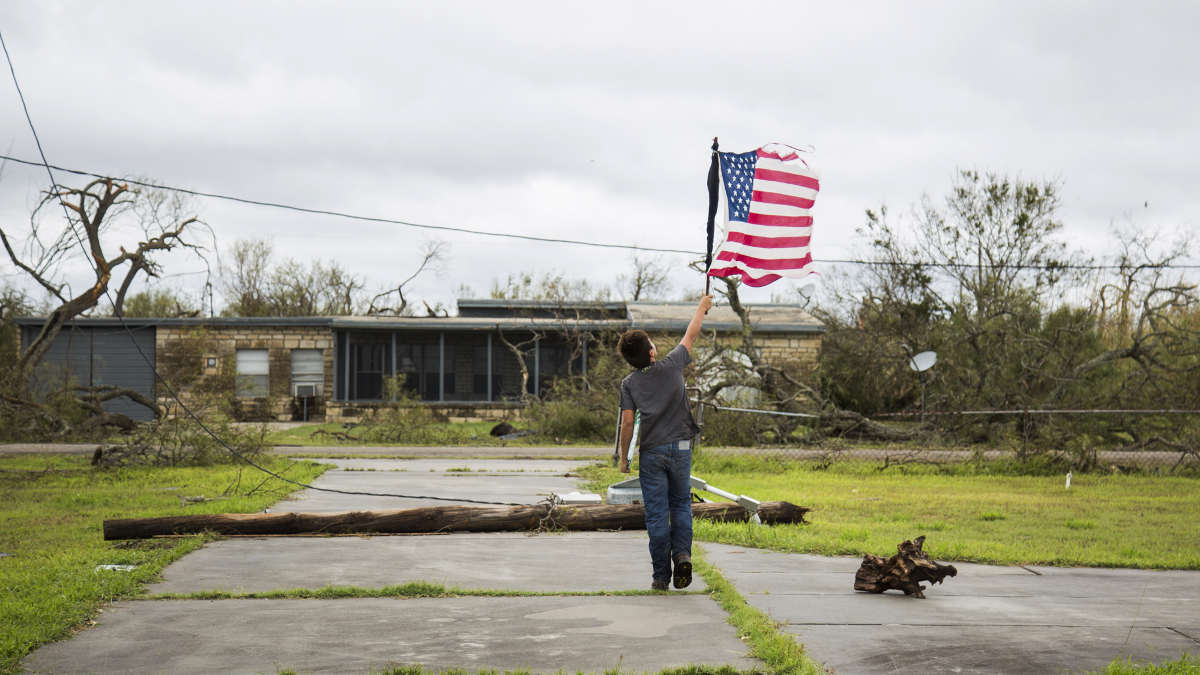
Hurricane Harvey. Photo courtesy of conservativetribune.com

The maxim that amateur radio works when everything else fails may be a cliché, but it’s not inaccurate. The average off grid amateur already has most of the required equipment. The only missing piece is coming up with a plan to apply those survival skills in an actual SHTF situation. Reviewing a few basic concepts offers focus:

Click here to read the entire article at Off Grid Ham

Doom and Bloom: Clindamycin as Medical Storage Item


The Altons at Doom and Bloom Medical have up an article about the usefulness of the antibiotic clindamycin as a medical storage item.

In any situation where modern medicine is not available, there will be a number of deaths that occur from injury and infection. These may occur as a result of contact with hostile neighbors or from epidemic diseases, but many will happen simply from the performance of activities related to survival. Many minor wounds will become contaminated, leading to infections that could easily have been treated with antibiotics.

Things don’t end well for this family
Years ago, I realized the importance of antibiotics in a family’s medical kit after watching a History Channel program called “After Armageddon”. In it, the Johnson family is caught in a long-term disaster and finds a community that will take them in. The father is a paramedic and has useful medical skills, but simple injuries associated with household chores lead to a soft tissue infection. Without antibiotics, the family is forced to watch their patriarch sicken and die as the infection spreads throughout his body.

In a major disaster, this and many other deaths might be avoided if antibiotics were available. You may be reluctant to treat yourself or family members with these potent drugs. This is understandable: Antibiotics aren’t candy and are best utilized by qualified medical professionals. If there are no trained personnel, however, a layman with a working knowledge of bacterial diseases and their treatments may have no choice but to use antibacterials to save a life.

Note: This is the premise of our book “Alton’s Antibiotics and Infectious Disease: A Layman’s Guide to Available Antibacterials in Austere Settings”.

There are many antibiotics, but which antibiotics accessible to the average person would be good additions to your medical storage? When do you use a particular drug? The wrong antibiotic at the wrong time can be as bad as doing nothing at all. You should have both quantity and variety to be effective as a medic in long-term survival settings.

Today we’ll take the example of a drug that is used in the aquarium industry that is identical to a medication used in humans: Clindamycin, aka “Fish-Cin”. It is also known as “Cleocin”.

Clindamycin is part of the Lincosamide family of drugs. It works by preventing the production of bacterial proteins necessary for growth. This particular medication has been used to treat everything from acne to anthrax.

Cute, ain’t it? Ouch!

Clindamycin works best on bacteria that are anaerobic, which means that they don’t require oxygen to multiply. A deep puncture wound like, for example, a cat bite would give rise to favorable environments for anaerobes. Clindamycin is versatile enough to treat or prevent certain bacterial or protozoal causes of:

  • Acne
  • Dental infections
  • Ear Infections
  • Tonsillitis
  • Soft tissue Infections (skin, etc.)
  • Peritonitis (inflammation of the abdomen seen in appendicitis and other medical issues)
  • Some pneumonias and lung abscesses
  • Uterine infections (such as after miscarriage or childbirth)
  • Blood infections
  • Pelvic infections
  • MRSA (Methicillin-resistant Staph. Aureus infections)
  • Parasitic infections (Malaria, Toxoplasmosis)
  • Bone infections
  • Anthrax

It should be noted that although a certain antibiotic may be effective against a certain infection, that it may not always be the most effective. The drug most in favor at the moment is called the “drug of choice”. The drug of choice may change as new antibiotics are developed or new research becomes available about existing medicines…

Click here to read the entire article at Doom and Bloom Medical.

AmCon: Civil War Begins When the Constitutional Order Breaks Down

A good deal continues to be written on the possibility of another civil war in the United States. The Atlantic‘s December issue is entirely devoted to the idea. The article below is from The American Conservative and discusses the irreconcilable visions of American life and why the resolution to such crises always leads to violence. The author is a professor at Johns Hopkins University and has written books and papers on terrorism, insurgency, counterterrorism, and strategic defense.

Civil War Begins When the Constitutional Order Breaks Down

A lithograph cartoon depicting U.S. Rep. Preston Brooks’ attack on Sen. Charles Sumner in the U.S. Senate chamber on May 22, 1856. (J.L. Magee/public domain)

Civil war is, at root, a contest over legitimacy. Legitimacy—literally the right to make law — is shorthand for the consent of the citizens and political parties to abide by the authority of a constitutional order. Civil war begins when this larger political compact breaks down.

Civil War means that there is a functional split within the source of legitimacy between two parties, each of which was formerly part of the old constitutional order. Thus each can claim that it represents the source of new legitimacy, and the right to define a new or reworked constitutional order.

Hence civil war becomes a struggle in which one party must successfully assert a successor legitimate order, and to which the opposing party must eventually submit. This is above all a contest over constitutional authority. Inasmuch as civil war happens after constitutional breakdown, it means that resolution must be reached not only outside of a now-former legal framework, but also unrestrained even by longstanding political customs and norms. Extra-constitutional force is now the deciding factor, which is why these struggles are called civil wars

The character of civil war is existential. The breakdown of the old order forces frightening prospects on society. If constitutions represented a collective source of authority, in its violent replacement are suddenly two opposing and inimical pretenders, each crying for both allegiance and punishment. Moreover, one party’s victory is the inevitable loss of the other’s way of life.

Hence in such conflicts, the entire society must choose sides, and it is an all-or-nothing choice. Moderates and undecided, and those peaceful fence sitters all are forced to join warring factions. In civil war, perhaps the greatest violence, in the heart, is the aggressive coercion to join a warring cause…

American constitutional order has not broken down, yet. Constitutional legitimacy still rules…A daily torrent of unfiltered evidence suggests that our constitutional order is fissuring before our eyes. That we have skirted constitutional crisis for the past quarter century is no reassurance, but rather an alarm of continuing erosion. Each new test is yet more bitterly contested, and still less resolved…

Already, warring sides have hardened their hearts so that they will do almost anything in order to prevail. The great irony is that their mutual drive to win—either to preserve their way of life, or make their way of life the law of the land—means that the battle has already become a perverse alliance. Today they refuse to work together in the rusting carapace of old constitutional order. Yet nonetheless they work shoulder-to-shoulder, together, to overthrow it. For both sides, the old order is the major obstacle to victory. Hence victory is through overthrow…

Click here to read the entire article at The American Conservative.

Related:

SHTF Plan: Bill Maher: “Learn to Live with Each Other or There Will Be Blood!”

Dollar Collapse: Civil Unrest is the New Normal Out There

Doom and Bloom: Chemical Emergencies

The Altons at Doom and Bloom Medical have started a series on Chemical and Biological emergencies. In this article, they discuss various chemical agents and what to do.

In today’s modern world, it’s difficult to avoid exposure to toxic chemicals. Chemical weapons are largely prohibited by the Chemical Weapons Convention (CWC), a treaty that outlaws their production and use. Although almost all nations have signed this treaty, the risk of chemical attacks by terror organizations and industrial accidents still exist…

WHAT TO DO IN CHEMICAL EMERGENCIES

Evacuation may be the best course of action

Chemical accidents or attacks, such as an overturned tanker truck or a terror event, may render an area dangerous. Common sense dictates evacuation as the wisest course of action. This is not only to prevent physical contact but also to avoid noxious fumes that may be carried by the winds. Given the wide range of chemicals, be sure to seek and rapidly act upon the advice of local emergency departments for the specific event.

Evacuation may involve going to an emergency shelter. If so, notify others of your plan of action and take additional supplies and medications that the municipality may not have in sufficient quantities. Know what their policy is regarding pets. The schools your children attend will have their own plan of action for chemical emergencies; be aware of their disaster protocols. It may be more dangerous to try to bring them home.

SHELTER IN PLACE?

Safe rooms for chemical/gas accidents should be in higher floors, not the basement where gas may sink

Some chemical emergencies could make going outdoors risky. Leaving might put you in harm’s way. Sheltering in place is a way to protect yourself until help arrives. Sheltering in a vehicle, however, is a last resort, as vehicles aren’t airtight enough to protect you from noxious fumes.

If you can’t evacuate the area, choose a room with as few windows and doors as possible. A room with a water supply (a connecting bathroom, perhaps) is best. Some gases sink to the floor, so a second-story room is preferable. Notice how different this strategy is from most natural disaster plans, where a basement might be the safest area in the home.

Shut all outside doors and windows as soon as you are aware of the emergency. Locking and taping them will make a better seal against the chemical. Turn off air conditioners, fans, and heaters. Close the fireplace damper, vents, and any place that air can enter from outside.

Go into the designated safe room and shut the door. Turn on the radio and keep a cell phone available. If it is necessary to drink water, drink safely-stored water, not water from the tap. If you run out of water, you can drink from a toilet tank (but not from the bowl)…

Click here to read the entire article at Doom and Bloom Medical.

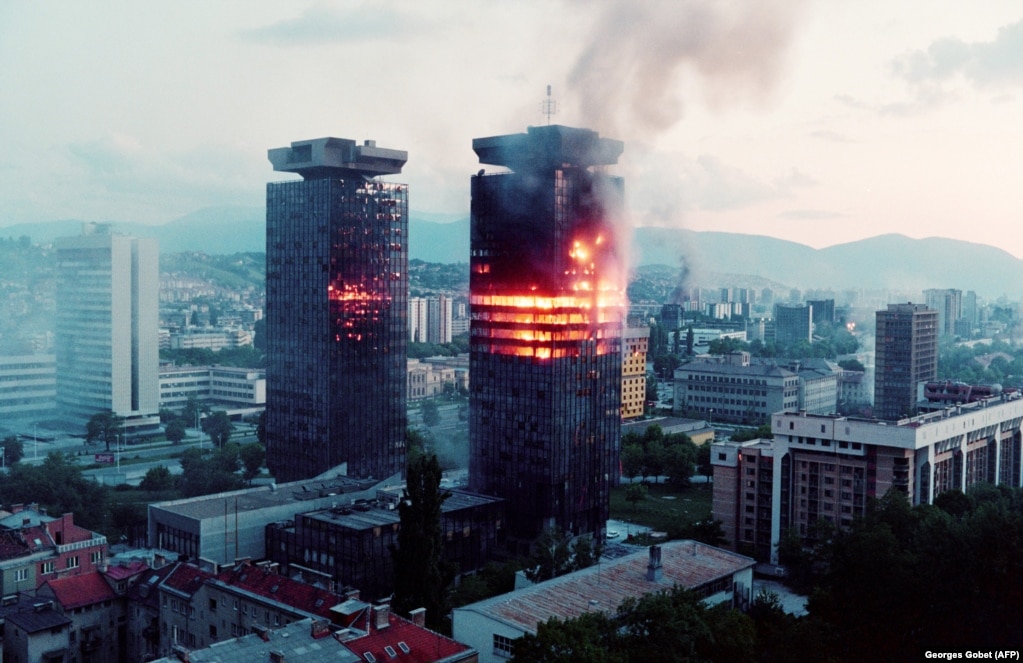
Organic Prepper: How the SHTF in Bosnia – Does This Sound Familiar?

Daisy Luther of The Organic Prepper interviewed Balkan war/Sarajevo siege survivor Selco about similarities between what he saw in Bosnia prior to the war and what he sees of the US now.

How the SHTF in Bosnia: Selco Asks Americans, “Does this sound familiar?”

US and Yugoslavia (in 1990) on first look do not have anything in common because people are going to say, “The USA cannot have anything similar to any socialistic system.”

This is true but only on first look…

Things that I experienced in my case prior to SHTF, and things that you might recognize:

  • Things that make differences between people are more and more problematic (race, religion, political opinion).
  • Polarization is getting obviously stronger.
  • People want to come to your country, but they do not want to “assimilate” or contribute to the greater good. They want to preserve their way of life which is often absolutely contradictory to the way that your country (society) works.
  • The political way of solving those problems often fails, because, in essence, those problems are hard to solve in a democratic way (in the spirit of democracy).
  • Your freedoms are “shrinking” as a result of that.
  • Calls for “radical solutions“ for the problems are stronger and stronger.
  • The media is absolutely working a dirty job, and it is hard to find out what is the truth anymore.
  • Suddenly people and events from history are “brought back” so people can judge and argue about it, to write history again, to build myths sometimes.

…rioting over the statue of a general from WW2 which was about to be destroyed because for some people he was a war criminal and for others he was a hero and important political figure.

It was a big event, and people were brought into that event in big numbers, arguing and fist fighting and rioting…

…it is about dehumanizing, no matter who or what group. It is about adopting opinions like “they are so different that they do not deserve…( to live here, to have rights…)

Once that happens a whole new set of rules jumps in and those rules mean that lot of your liberties and rights gonna be taken too, and that is the problem actually.

When that happens, you will understand that it is not really important who is who. The only thing important is that somehow you do not have your rights anymore (for example the right to carry a firearm) and then you are in s..t…

…Hope in something new and something better was exactly what I was experiencing just prior SHTF, new leaders, new democracy, freedom…

It clouded my perception, I trusted too much….

…I have seen many people killed, a lot of women and children too, civilians. A huge number of people suffered, were hungry and cold and were terrified through that period.

But I can count on one hand the dead or hungry politicians in that time.

Things were good for them through that period. Some of them ended up even richer. A lot of them are still powerful in the same or different parties, and are still talking about “their people” or “ causes” or “fear from others”.

It is the way it works.

Click here to read the entire article at the Organic Prepper.

Alt-Market: The Economic Crash So Far

Brandon Smith at Alt-Market has penned this article on the current state of the US economy in November 2019.

The Economic Crash So Far: A Look At The Real Numbers

There are many problems when attempting to track a faltering economy. For one, the people in government generally do not want the public to know when the system is in decline because this looks bad for them. They prefer to rig statistical indicators as much as possible and hope that no one notices. When the crash occurs, they then claim that “no one saw it coming” and the disaster “came out of nowhere”, so how could they be to blame?

I have even heard it argued that political leaders, including the president, have a “duty” to lie about the state of the economy because once they admit to the decline they will cause a panic and perpetuate the crisis. This is stupidity. If an economic system is in disrepair and is built on a faulty foundation, then the problems should be identified and fixed immediately. The weak businesses should be culled, not bailed out. The wasteful government spending should be cut, not increased. The downturn should not be hidden and prolonged for years or decades. In most cases, this only makes the inevitable crash far worse and more damaging.

Another factor, which some people might call “conspiracy theory” – but it has been proven time and time again in history – is that the money elites have a tendency to engineer economic disasters while deliberately hiding the real statistics from the public. Why? Well, if the real data was widely disseminated, then a crash would not be much of a surprise and the populace could be prepared for it. I suspect the elites hide the data because they WANT the crash to be a surprise. The bigger the shock, the bigger the psychological effect on the masses. This fear and confusion allows them to make changes in the power structure of a nation or of the entire world that they would not be able to accomplish otherwise.

The most rigged statistics tend to be the least important overall in analysis, but this does not stop the mainstream media and investors from hyper focusing on them. How many times have you told friends and family about the collapse in manufacturing or the explosion in consumer and corporate debt, only to hear them say, “But the stock market is at all-time highs!” Yes, even though stock markets are a meaningless trailing indicator, even though GDP stats are a complete fallacy, and even though jobless numbers do not include tens of millions of people out of work, these are the stats that the average person takes mental note of when consuming their standard 15 minutes of news per day.

While the issue of rigged statistics makes analysis of a crash difficult, a willfully ignorant citizenry makes reporting on the real data almost impossible. It’s sad to say, but a large number of people do not want to hear about negative information. They want to believe that all is well, and will delude themselves with fantasies of blind optimism and endless summers. Like the tale of “The Ant And The Grasshopper”, they are grasshoppers and they see anyone who focuses on the negative as “chicken littles” and “doom mongers”. In their minds they have all the time in the world, until they freeze and starve when winter comes.

When I encounter people who actually believe the manipulated numbers or buy into the stock market farce or simply don’t want to accept that a crash could happen in their lifetime, I always ask them to consider these questions: If the global economy is not on the verge of collapse, then why did central banks keep propping it up for the past ten years? And if central banks have been propping up the system, how much longer do you think they can do this? How much longer do you think they want to do it? What if one day they decide to let the entire house of cards tumble? What if such an event actually benefits them?

We’ve seen that a broken economy can be technically held together for a decade, but under the surface, the structure continues to rot. The bottom line is that even if the elites wanted to keep the system going for another ten years, and even if politicians continued to help them by pumping out false statistics, there is no way to hide the effects of crumbling fundamentals. We saw this during the crash of 2008, and now we’re seeing it again…

All of these factors and more show an economy in recession or depression (depending on what historic standards you use). In the darker corners of the investment world, the great hope is that the central banks will return to pumping trillions into the banking sector ($16 trillion during the TARP bailout dwarfs the $250 billion the Fed has recently pumped out in their repo markets). They hope that this will free up even more credit. Meaning, they believe only more debt will save the system from suffering.

I say, time is up on the debt party. More stimulus will not stall the crash that is already happening, and the Fed does not appear poised to print anywhere near what it did during the credit crisis, at least not in time to change the trend. The can has been kicked for the last time. The grasshopper mentality will not save people from the clear reality. Only preparation and planning will.

Click here to read the entire article at Alt-Market.

EFF: US-UK Agreement to Allow Warrantless Access to US Internet Servers

This article is from the Electronic Frontier Foundation, which fights for your digital freedoms, about an agreement between the US and the UK which would allow the UK police access to data held by American companies without following US privacy laws or the 4th Amendment.

Congress, Remember the 4th Amendment? It’s Time to Stop the U.S.-UK Agreement.

Unless Congress stops it, foreign police will soon be able to collect and search data on the servers of U.S. Internet companies. They’ll be able to do it without a probable cause warrant, or any oversight from a U.S. judge. This is all happening because of a new law enforcement deal between the U.S. and the United Kingdom. And while it seeks to exclude purely domestic correspondence between U.S. citizens and residents, plenty of Americans’ data will get swept up when they communicate with targeted individuals located abroad.

This is all happening because, for the first time, the U.S. executive branch is flexing its power to enter into law enforcement agreements under the CLOUD Act. We’ve been strongly opposed to this law since it was introduced last year. The recently signed deal between the U.S. Department of Justice and the U.K. Home Office will allow U.K. police easy access to data held by American companies, regardless of where the data is stored. These U.K. data requests, including demands to collect real-time communications, do not need to meet the standards set by U.S. privacy laws or the 4th Amendment. Similarly, the deal will allow U.S. police to grab information held by British companies without following U.K. privacy laws.

This deal, negotiated by American and British law enforcement behind closed doors and without public input, will deal a hammer blow to the legal rights of citizens and residents of both countries. And the damage won’t stop there. The U.S.-U.K. Cloud Act Agreement may well become a model for further bilateral deals with other foreign governments and the United States. Earlier this month, Australian law enforcement agencies began negotiating their own deal to directly access private information held by U.S. Internet companies.

There’s still one possible path to put the brakes on this disastrous U.S.-UK deal: Congress can introduce a joint resolution of disapproval of the agreement within 180 days. This week, EFF has joined 19 other privacy, civil liberties, and human rights organizations to publish a joint letter explaining why Congress must take action to resist this deal.

No Prior Judicial Authorization

In the U.S., the standard for when law enforcement can collect stored communications content is clear: police need to get a warrant, based on probable cause. If police want to wiretap an active conversation, they have to satisfy an even higher standard, sometimes called a “super warrant,” that limits both the timing and use of a wiretap. Perhaps most importantly, stored communications warrants and wiretap warrants have to be signed by a U.S. judge, which adds an extra layer of review to whether privacy standards are met. At EFF, a core part of our work is insisting on the importance of a warrant in many different scenarios.

Judicial authorization is a critical step in the U.S. warrant process. When police search people’s private homes, offices, or devices, they must justify why the search for specific evidence outweighs the presumption that individuals remain free from government intrusion. Judicial authorization acts as a safeguard between citizens and law enforcement. Further, history has shown that police can and will abuse their powers for intimidation, or even personal gain. In colonial times, the British military used general warrants to search through colonists’ houses and seize property—actions that helped fuel a revolution, and formed the basis for the 4th Amendment to the U.S. Constitution.

Incredibly, the DOJ has just thrown those rights away. Instead of relying on probable cause, the new agreement uses an untested privacy standard that says that orders must be based on a “reasonable justification based on articulable and credible facts, particularity, legality, and severity.” No judge in any country has decided what this means. Continue reading “EFF: US-UK Agreement to Allow Warrantless Access to US Internet Servers”

AIER: Paul Krugman Is Wrong on Gov Debt

The American Institute for Economic Research has up an article on why economist Paul Krugman is wrong when he says that government “debt is money we owe to ourselves” and therefore not anything to worry about.

Krugman’s Zombie Idea: We Owe It to Ourselves

Paul Krugman coined the term “zombie ideas” to describe “policy ideas that keep getting killed by evidence, but nonetheless shamble relentless forward, essentially because they suit a political agenda.”

Krugman has revived one of his favorite zombies: the notion that high government deficits aren’t dangerous in the way that an individual incurring heavy debt is because the national debt is “money we owe to ourselves.” He doubled down on his claims in response to an article comparing the dangers the debt poses to future generations to climate change.

Krugman has repeatedly written on this topic at his blog (see here and here). It was a common refrain of his during the Eurozone crisis and in the aftermath of the Great Recession when there was a bipartisan push to cut future deficits to prevent future Greek-style debt crises.

As with most myths, there is a grain of truth to the claim. National debt does differ from the debt individuals and households incur in a few notable ways. Individuals have a finite lifetime to incur and repay their debts. Governments don’t; they can pass debt onto future generations. So long as people are willing to lend it money and the government can service debt as it comes due, government debt can persist in perpetuity. And to the extent that the debt is owned by domestic citizens, the money that is used to repay the debt needn’t leave the economy.

That said, this grain of truth doesn’t eliminate the ocean of evidence against Krugman’s claim that worrying about the burden the national debt might impose on future generations is nonsensical. Here are some reasons why this argument is fundamentally flawed.

A large share of the national debt is owed to foreigners

For starters, it’s not the case that the national debt is entirely owed to “ourselves” (i.e., that it is exclusively owned by US citizens). Nearly one-third of the US debt ($6.636 trillion of the $22 trillion in debt) is owned by foreign governments and international investors.

This isn’t necessarily a bad thing. The willingness of foreigners to lend to the U.S. government has helped keep Treasury rates at historical lows, making it cheaper for future taxpayers to repay the interest on the national debt. If the US government is running deficits to finance justifiable initiatives (say, fighting World War II) and spending programs that will boost future growth, we should welcome funds from investors regardless of their nationality.

Nevertheless, it undercuts Krugman’s case that repaying the debt won’t burden future taxpayers and the future economy on net because the money will “stay in the U.S. economy.”

The fallacy of “we” and the reality that future taxpayers really do “foot the bill”

A bigger problem is that Krugman commits what Don Boudreaux calls the “Fallacy of Us, We, and Our.” Even if the entire national debt is owned by US citizens, there is no real sense in which “we” owe the debt to “ourselves.” The individuals incurring and benefitting from the debt are entirely different from the individuals who must bear the burden of repaying that debt.

Once we move past the intellectual sleight of hand of using collective pronouns like “we” and “ourselves” to describe all Americans across time, we get a much clearer picture of who gains and loses from the national debt.

Current taxpayers and citizens clearly benefit; they receive the benefit of increased government spending without incurring the full cost of those expenditures. Future taxpayers and citizens, who will have to repay the debt as it comes due, are clearly hurt. They have to pay higher taxes to repay the debt incurred and owned by the prior generation.

This insight remains true even if the older generation sells them its bonds before they pass. As James Buchanan astutely noted decades ago, future generations first have to buy these bonds from the prior generations. And, in order to buy them, they must first reduce their consumption. It is that reduced consumption — not the higher taxes they’ll have to pay when the debt is retired (since, by assumption, that money will flow right back to them as bondholders) — that is the true cost imposed on future generations from government debt.

Government debt “crowd outs” private investment and creates deadweight loss

The “we owe it to ourselves” argument also glosses over two of the most important arguments for why deficit spending is not a free lunch for taxpayers or the future economy.

First, deficit spending crowds out private investment…

Click here to continue reading at AIER.org.

Mann Packing Recall of Many Vegetable Products

Mann Packing Co. has issued a voluntary recall on many vegetable products sold in the USA and Canada due to possible Listeria monocytogenes contamination.

Mann Packing Co., Inc. (Mann) announced today the voluntary recall of a series of vegetable products sold to select retailers in the United States and Canada. The voluntary recall is a response to a notification by the Food and Drug Administration (FDA) and the Canadian Food Inspection Agency of a potential contamination with Listeria monocytogenes. To date, public health officials have not reported any illness associated with these products.

Mann Packing is issuing this recall out of an abundance of caution. Listeria monocytogenes is an organism which can cause serious and sometimes fatal infections in young children, frail or elderly people, and others with weakened immune systems. Although healthy individuals may suffer only short-term symptoms such as high fever, severe headache, stiffness, nausea, abdominal pain and diarrhea, Listeria infection can cause miscarriages and stillbirths among pregnant women. Mann Packing will continue to work closely with the authorities to investigate the issue.

The recalled products have “Best If Used By” date of October 11, 2019 to November 16, 2019. Please see below for a full list of affected products as well as product images available.

Consumers who believe that they are in possession of any of the products affected by this recall should dispose of the product in an appropriate waste container.

For any inquiries or comments, all consumers are welcome to call the 24 hour customer service line at 1-844-927-0707 or email Mann Packing Co., Inc. at consumers@mannpacking.com


Forward Observer: Don’t Let This Happen to You

This is just a short note from Forward Observer about the importance of your area study.

Yesterday I heard about a guy who lost over $100,000 in stored food and gear because his underground doomsday bunker flooded. Ouch.

It reminded me of some recent feedback from a student…

“I’m working on my Area Study and am shocked that the county Emergency Management Operations Plan identified my street as in a hazard zone for an upstream dam failure, post-earthquake. I now need to move all my preps up-slope since my basement will flood. Do your Area Study, folks!!”

In the event of a disaster, this information is a GAME CHANGER for this gentleman and his family.

There’s a good chance that your county has an Emergency Management Operations Plan that you can get your eyes on. You should read over it, if you haven’t already. Add it to your Area Study.

The Area Study is absolutely foundational to security and preparedness planning. It outlines the fault lines and vulnerabilities of an area, and enables you to make plans to mitigate those risks and threats.

We’ll be running our last Area Study Live Course of the year starting on 12 November.

Take this opportunity and get your Area Study done –> Area Study Live (Online)

You can find the All Hazards Mitigation Plan for the following counties through the following links as a step on your way to completing an area study:

Benton County, WA 2019 (pdf)

Franklin County, WA 2005 (pdf)

Grant County, WA 2013 Volume 1 (pdf) and Volume 2 (pdf)

Klickitat County, WA has only begun preparing their Hazard Mitigation Plan. You can get a copy of the county’s 2013 Emergency Management Plan here.

Walla Walla County, WA 2018 (pdf)

Yakima County, WA 2015 (pdf)

The Hazard Mitigation Plans tend to identify all of the known/likely hazard scenarios that the county expects. These hazards may not be spelled out the county’s Emergency Management Plan, which instead lays out which departments are responsible for various area of disaster response and what the over all plan for recovery and response is.

Off Grid Ham: Go Boxes

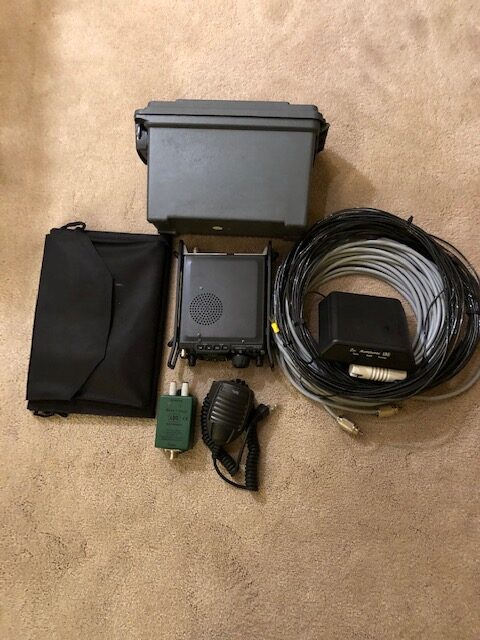
Dan Passaro’s shack in a can.

In this article, Chris Warren of Off Grid Ham spends a little bit of time talking about ham radio go boxes. For ham radio enthusiasts, the radio go box is mostly commonly used when responding as an emergency communications volunteer or for fun, portable radio communications while camping or hiking. But the go box holds a place for preppers, too, even if you aren’t an amateur radio licensee. Even if your plan for emergencies is to “bug in” (stay put at home) there are disasters which may force you out of your home, and you will want some kind of portable communications ready to go – whether that is ham radio, FRS, GMRS, MURS, CB or just a kit for keeping your cell phone charged up.

Go Box Zen 2.0

I didn’t realize it’s been over three years since the last time Off Grid Ham specifically addressed go boxes. If the internet discussions and on air chatter are any indicator, it’s a very popular way to operate. It’s way past time to revisit the humble ham radio go box and come up with some fresh ideas.

In the last three years I’ve noticed an uptick in ham radio go box deployment. There are even entire social media pages dedicated solely to go boxes (or bags or whatever your thing is). I think there are several reasons why. Many operators live under homeowners’ association rules that severely limit having a fixed antenna. Theses operators may have no choice but to hit the road. Others want something they can take camping, for SHTF purposes, or EMCOMM. The various special event stations from parks and other significant places may be driving the trend too. There’s also new equipment manufacturers offering low cost gear. This opened possibilities to people who could not otherwise afford a dedicated go box.

As before, this is not going to be a step-by-step how to on building a ham radio go box. There are too many variables and too many individual choices for me to come up with a plan that works for everyone. Instead, we’ll go over some concepts to consider and questions you’ll need to answer before you begin.

Defining priorities.

What is the Number One priority for your ham radio go box? It it portability? DX-capability? Data modes? Keeping the cost down? Before you can construct a go box, you have to decide what trait is the most important. From there you can work in secondary needs. As with everything, there will be compromises, and some things are mutually exclusive.

The main reason ham radio go boxes do not live up to expectations is because they were not built to expectations in the first place. Or possibly, what you thought was a Number One priority turned out to be not such an urgent issue after all. Years ago my first go box was a huge fail because my Number One priority, cost savings, meant giving up so many other smaller things that they made the cost savings not worth it.

ham radio go box
The main parts of my new & improved, much lighter ham radio go box. Left is a 27 watt folding solar panel. Top is a DC power box which includes a 13 amp-hour lithium battery and the charge controller. Right is a random wire antenna. Not shown: Alpha Antenna FMJ.

I used an old Yaesu FT-757 GX II radio. I also dug up an inverter, a solar controller, an FT-2900 2-meter radio, a 100 watt solar panel, and some various plugs and connectors. All of this stuff I already had. I built a nice wood box to mount everything in. My out of pocket cost for the entire project was less than $100.00, and most of that was for a 35 amp hour SLA battery. It looked impressive. I felt like a boss!

Well guess what? I achieved my goal of keeping the cost down, but my ham radio go box was so clunky and heavy that I didn’t care. Between the battery, the wood box, and all the other stuff, I could barely move that beast by myself. There wasn’t much “go” in that go box, unless I invested in a forklift too. I thought saving money was my Number One priority but I gave up too many other attributes to make it worthwhile.

That was my lesson in not only defining priorities, but also considering what else I have to give up to attain that priority. I inadvertently buried the cost savings under all the other problems. I used that go box only once or twice, then dismantled it.

What comes next?

After admitting defeat in my first attempt at a ham radio go box, I reexamined my priorities…

Click here to continue reading at Off Grid Ham.

Related:

OH8STN: Grid Down Comms

Instructables: KE0OJE’s Ham Radio Go Box

Instructables: Radio Go Box (Ham, MURS, GMRS, FRS)

HARC Net: Amateur Radio Go Kit (pdf)


Organic Prepper: What Preppers Can Learn from Chile Riots

This article at the Organic Prepper talks about some lessons learned surviving the ongoing riots in Chile. Civil unrest has been spreading around South America. Will it continue to spread? Could we see these levels of unrest in the USA?

…Much worst was once the tear gas started to get into our patio. Our house is entirely open. Even the dogs were having a hard time. Vinegar spraying in the face was quickly started.

Get more information on surviving civil unrest and riots.

It´s a good moment to remind you all: adding a good gas mask (one for each family member) and after bought, everyone must learn how to wear it in a hurry, and do it properly. This can make an important difference.  Small children are going to be the most severely affected. Seen it happening in Caracas. Guards attacked a hospital. Jeez. If you´re hunkering down adults must take turns to monitor the surroundings (AND. DON´T. OPEN. THE. CURTAINS).

A face covered with a gas mask sticking out an apartment window is very likely to be targeted. So don´t do that. “Regular” “Normal” people do not have gas masks. But we know this is a good tool. Perhaps some drops of Valerian herb essence in a cup of water will help with those nerves, something I strongly recommend. Just put some music, and grab a book while installing yourself in an observation post that allows you to check to see what´s happening outside. If you have (as I indeed have recommended in some previous articles) to have an array of 2 or 3 remote cameras to see what´s happening outside without sticking the nose outside of a window, this is the moment to use them. Quietly and unnoticed. This will work as a means to calm down yours, too.

Don´t leave your place unless it´s extremely necessary.

I´m sure someone thinking they´re smart cookie will call me Mr. Obvious and other stupidities. But try to dialogue with your (non-prepper) wife once the food is gone and her rattle is shaking as if there´s no tomorrow. Trust me, the streets are not going to be safer once this rattling starts. Jokes apart, not because you don´t see anything from your window doesn´t mean something is NOT coming your way.

If you feel the need to make it to the supermarket 4 miles away with the best prices, maybe you can get there. Maybe you could even buy your stuff if the place hasn´t been looted. And maybe, too, a turmoil gets between you and your home and can´t be surrounded. You could get yourself into trouble just because. No need to do it. Keep your place supplied, be creative and use your brains. What I mean is, if the water, power or phone gets cut off, it´s stupid to leave the place believing that you´re going to make it to their offices to make a claim. I know there is plenty of people that would do this. So don´t call me Cap. Obvious. You´ll be underestimating the endless human potential for dumbness.

OK now, let´s elaborate a little bit. Suppose you are in your apartment in downtown Chile. On the second floor. Going higher in one of the countries of the Fire Belt is not wise. Anyway, tear gas is starting to feel. You pull out your gas masks, or even your swimming glasses and a cloth soaked in vinegar over your mouth. The 3 supermarkets nearby have been looted. Not just looted, they have been destroyed. Cashier machines, transport belts, even the shelves island have been demolished. Some reports have told that even factories have been burned. Senseless, irrational violence. And you don´t have where to buy fresh vegetables, nor fruit. You have still water and power.

But it´s here where our preppings are going to shine and your kids will learn that it pays off to play squirrel, at the end of the day.

Your horizontal freezer is filled up with supplies. Your pantry is stocked from floor to roof with canned vegetables, beans, pasta and whatnot, enough for six months. You have toilet paper to wipe off an entire primary school battalion for one year (if you have children under 10 you know how they go through toilet paper FAST). Toothpaste, shampoo, and soap? No problem. That couple of cases of beer is still safe under your bed.

Depending on your level of preparedness, defined according to your real needs, you could leave once you find it´s safe and make it to your bug out location.

One of my friends informs me that in Chile his job was not affected. He could attend to his office, just walking carefully…and a cab every now and then. The train is not functional. There are massive demonstrations. When these start, people just leave the office and go home. Usually, the turmoil starts when these people reach a certain point…

Click here to read the entire story at the Organic Prepper.

Liberty Blitzkrieg: US Dollar as a Weapon

This article is from Michael Krieger at Liberty Blitzkrieg writing about how the USA has used the US Dollar and the global financial system to maintain political hegemony across the world and how that dollar hegemony is coming to an end.

Irrespective of where you reside in the world, chances are you feel some sense of unease, a nagging concern for the future and a deep instinctual understanding that an era you knew and navigated your entire life is slipping away and won’t be coming back.

We’ve been witnessing widespread protest and unrest across countries with distinct political and economic systems, such as Hong Kong, France, Chile, Spain, Ecuador, Lebanon and Venezuela just to name a few. Those with vested interests and an ideological solution to sell insist it’s all because of socialism, capitalism or some other ism, but the truth is this goes far deeper than that. What’s actually happening is the geopolitical and economic paradigm that’s dominated the planet for decades is failing, and rather than address the failure in any real sense, elites globally are have decided to loot everything they possibly can until the house of cards comes crashing down.

You can’t properly discuss the entrenched global paradigm without addressing the American empire, and you can’t have a conversation about empire without discussing the monetary and financial system that keeps it all in place. The last time I discussed this in any detail was last year in the post, The Road to 2025 (Part 3) – USD Dominated Financial System Will Fall Apart. Today’s post should be seen as an update to that piece, taking stock of where we stand a year and a half later.

Several assumptions were made in last year’s article that must be recognized in order to understand how I see the situation. The first is a view that we’re already transitioning into a multi-polar world, in other words, the U.S. no longer holds a position of total planetary geopolitical dominance similar to what it enjoyed in the mid-to-late 1990s. Despite proclamations to the contrary, history did not in fact end.

U.S. leadership became accustomed to getting virtually whatever it wanted around the world via overt violence, covert intelligence operations or economic coercion, but this is no longer the case in 2019. Although this doesn’t sit well with much of the foreign policy establishment, it’s nevertheless reality. The most recent evidence came just last week with Denmark’s decision to approve the Nord Stream 2 gas pipeline, something the U.S. was adamantly opposed to.

Tom Luongo offered an interesting analysis of why this is so significant:

For the past three years the U.S. has fought the construction of the Nordstream 2 pipeline from Russia to Germany every inch of the way.

The battle came down to the last few miles, literally, as Denmark has been withholding the final environmental permit on Nordstream 2 for months.

The U.S., especially under Trump, have committed themselves to a ‘whole of government approach‘ to stop the 55 bcm natural gas pipeline from making landfall in Germany…

In a sense, this pipeline is Germany’s declaration of independence from seventy-plus years of U.S. policy setting. 

The fact the U.S. foreign policy establishment sees it as our business to determine which country the EU should buy natural gas from and how offers a glimpse into the imperial mindset. It’s the same mindset that maintains Iran shouldn’t be able to sell oil to anyone without U.S. permission. It represents an attachment to total global control, a view that the world consists of little more than the U.S. hegemon and its client states.

Which gets us to the key point surrounding the unsustainable nature of the world’s monetary and financial system. Specifically, we already live in a world where several powers (namely China and Russia) have very publicly and clearly elucidated they will not function as U.S. client states going forward. They appear to be on the winning side of history because it’s much harder to maintain global empire than to frustrate it at this point, but the U.S. maintains an enormous advantage when making moves on the geopolitical chessboard. It’s not the ubiquitous military bases or advanced technology, but a more esoteric and stealth weapon — the U.S. dollar…

Click here to continue reading at Liberty Blitzkrieg.