Christian Prepper Gal: This Is Only a Test. Or Is It?

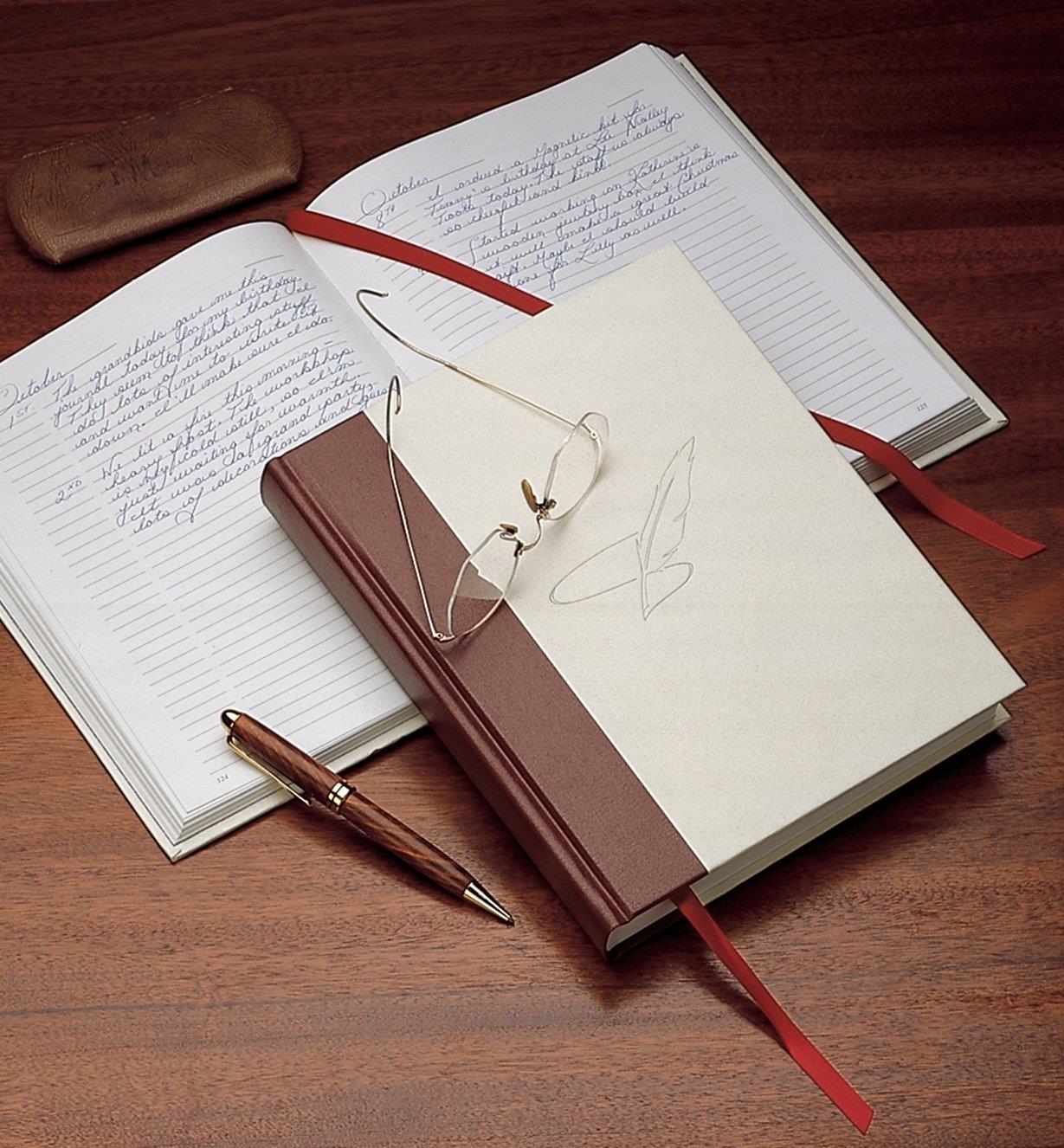
Christian Prepper Gal has an article up on using the current pandemic to evaluate for preparedness – This is a test. This is only a test. Or is it? We don’t know if this event will last two weeks (seems unlikely to be that short), two months (maybe?), or two years (the Spanish Flu Pandemic of 1918 actually surged on and off for about two years). It’s quite possible that we’re living a piece of history that could be remembered for decades or even hundreds of years. For your own benefit, keep a journal of what is happening to you, how you have prepared, what shortcomings you experienced, what you need to improve, and so forth, so that you can go back in less hectic times and make improvements to your life and readiness.

With all that is going on in the world right now, I can’t help but wonder if this is just a test. A test to allow us to see if we really are ready/prepared for what’s yet to come? You know, kind of like a wake up call? Telling us we only thought we were ready.

I’m really hoping that’s all it is! Why? Because I have already learned so much from it. And, by that I mean how much I am NOT ready and prepared! I mean, don’t get me wrong…I am prepared for a short term emergency/SHTF. And by short term I mean a few months. But, anything beyond that? Well, it would be a struggle to survive.

Funny thing is that I thought that was why I was at the homestead…so I could be prepared for a long term SHTF situation. But, I don’t know God’s reasoning behind things. I can only trust Him that there is something more that I need to learn before being put in that position full time. And, I need to be open to Him showing me what that something is. I do know that I learned a lot about prepping/surviving while living on the homestead and some of those things can be implimented in my preps here in the city.

Okay, so I guess looking back on the homestead experiences, combined with this current pandemic (COVID-19), I am seeing where I need to concentrate on improving my preps. So, for me, it’s a combination of both. A test and a wake up call. However, I do believe that most of us who consider ourselves preppers have been able to see areas that need to be improved upon before we are ready for “the big one”. Or is this “the big one”? Personally, I don’t think it is. Although, if those people who are resistant don’t start realizing that this is a serious matter and keep themselves at home as much as possible, it could turn into a long term SHTF.

I do remember many of us last year (2019) feeling like there was an urgency to step up our prepping. Do you remember? I was strongly prompted and urged to do so. Actually, I’m thinking it may have been right around this time of the year. Anyway, I also told my daughter that something was going to happen in 2020. I didn’t know if it would be as a result of the presidential election or something different. But, I did know that we needed to put a rush on our prepping and learning survival skills. It wasn’t fear motivating and moving me. It was God prompting me. Just like this feeling that we really need to get completely serious about prepping for something bigger than this current pandemic. For something that may last longer than a couple of months.

Geesh! It is so easy for me to get off track here! Okay, back to the subject at hand. Is this a test? Or a wake up call? Or both? Now that I’m thinking about it more, it could be both. A test for us to see the holes in our prepping, and a wake up call for us to continue to work on our preps and push to be ready for “the big one” (as in the big SHTF).

This definitely is a SHTF situation that we are living in right now. But, I don’t think it’s the end game just yet. I could be wrong, I’m no expert, so please don’t hold me to it. It’s just a gut feeling that I have. The feeling that something so much worse than what we are experiencing right now is in the works. It may even be the current pandemic continuing to such a place. I don’t know. But what I do know is that I need to be more vigilant and push forward with much more force my prepping/survival endeavors. Once I can. For now, I can remain vigilant and make plans for what I need to do when we get back to a point where I can purchase more food products.

When I really take a look at where I’ve come (with prepping) over the past couple of years I am amazed at the progress I’ve made. And yet, with this pandemic it has also caused me to see all the areas in which I need to improve. And believe me, there are a lot of holes that need to be filled in. I don’t know about you, but it’s not just the food storage that I need to improve upon. It’s also expanding my medical supplies to include a trauma kit and other emergency supplies; which I had started working on just before I moved to my son’s homestead. I need to work on learning more bushcraft/survival skills and practicing the skills I have already learned. There are many areas in my prepping that I need to expound upon and improve. I will not procrastinate. I will not put it off until everything is “back to normal”. I will continue to move forward. There are so many things I can be doing to improve my knowledge and skills while we are all basically self-isolating ourselves.

Here’s some of what I have learned from the Coronovirus (COVID-19) Pandemic of 2020:

  1. That I do not have enough toilet paper stocked. We probably have enough for a couple of months, but who knows how long this lack of availability will last?

  2. That I do not have enough disinfectant wipes, lysol, or bleach stored. Again, I have some, but not nearly enough if this goes long term.

  3. That people are going to hate you for having been prepared with food and necessities. People were actually complaining that there were some who were prepared and didn’t have to go to the stores for food and necesseties. Not even realizing that some people being prepared left more on the shelves for them!

  4. That it truly is important to keep your mouth shut about being a prepper to everyone except those you are willing to feed and care for in a SHTF scenario. This is because of how people reacted to preppers at the beginning of this pandemic (see No. 3). I can just imagine what would happen if it came to the point of food not being available at all.

Those are only a few of the things I have learned from this pandemic. There are some more things I will be sharing with you in upcoming articles and videos.

So, if you are like me in that your eyes have been opened and you have seen areas that you need to expound upon or improve upon in order to be truly ready for “the big one” SHTF, then I pray that you will heed the warnings and regroup, re-evaluate, or whatever it is that you need to do in order to begin to move forward and accomplish those improvements. We don’t know what tomorrow holds. We can’t see into the future (well, most of us can’t). But, we can put our trust and faith in our Heavenly Father and heed His warnings and follow His leading.

Remember we prepare for the worst and hope for the best.

Until next time…happy prepping, and God bless!

Hosea 4:6, My people are destroyed for lack of knowledge: because thou hast rejected knowledge, I will also reject thee, that thou shalt be no priest to me: seeing thou hast forgotten the law of thy God, I will also forget thy children. (KJV)


Off Grid Ham: Sudden Interest in Radio

Amateur Radio – ready for emergency deployment

Chris Warren of Off Grid Ham talks about the recent surge of Sudden Interest in Radio Syndrome (SIRS) cases in If You Missed The Train, Don’t Worry. There Will Be Another.

There’s a buzz about radio, and it’s not on the radio.

The amateur radio social media pages and web forums are suddenly buzzing with activity. Mostly it’s from people who are not hams but want to become one. This anecdotal evidence is supported by a notable increase in web traffic to offgridham.com in the last three weeks or so. The search terms suggest that most of these visitors are directly looking for information about off grid communications. Surprise! That’s what we do here, exclusively. So if you’re interested in off grid amateur radio you’ve landed on the best web page on this or any globe. covid-19

Saying the quiet part out loud. covid-19

covid-19

Public domain image.

Let’s not be coy. This interest in off grid amateur radio is being driven by the Covid-19 virus calamity consuming the world. While most people are not outright giving it as a reason why they are interested in off grid radio, they are dropping enough hints that it isn’t hard to figure it out. c

The funny thing is, the corona virus is not a calamity in the traditional sense. The grid is still solid. The electricity is on, the plumbing works, and the internet is up. The roads are free for travel and the stores are (mostly) open and (somewhat) well stocked. No one is being burned or flooded out of their homes. Society is still functioning, albeit with a six foot space cushion between every living human. covid-19covid-19

So why do so many people suddenly want to jump into radio? There’s not too many ways it can aid in Covid-19 response efforts, so it’s not about “emergency communications”. Or is it? I think the real motive is not about a disease. Rather, the disease is giving a lot of people a reality check about being prepared. Maybe they’re thinking about what might happen if all the people who make the grid work suddenly fall sick themselves. Maybe they’re thinking ahead to what else can happen where amateur radio really will be a valuable resource.

I’m just speculating and have no firm proof of any of this, but it’s hard not to see an association between current events and the sharp upturn of interest in amateur radio.

What now?

If you weren’t prepared before Covid-19 upended the world, you’re not going to make up for it now. I have some shocking news for all the hoarders filling their basements with toilet paper: You’e panicking and reacting, not preparing. The truly prepared already had a stock of toilet paper before Covid-19 came to town. The good news is that it’s not too late to prepare for the next calamity…and you know there will be another one, someday, somewhere.

Passing a simple test and buying a $35.00 handheld radio off Amazon to stash in a cabinet “just in case” is not going to make you prepared either. Amateur radio has a low barrier to entry but the learning curve is fairly steep once you’re in the door. If you do make the step into ham radio, it’s going to require some effort and practice. It’s not a “set it and forget it” avocation, at least not if you want to be any good at it. Many if not most of the people who become amateurs solely for emergency preparedness purposes will not touch a radio until an emergency actually happens. Then, and only then, will they realize that being prepared is not about collecting stuff.

Skills vs. stuff.  Covid-19

Theres is good news: Learning about ham radio is fun. Amateur radio is after all a hobby that just happens to have a practical secondary application as an emergency communications service. You’ll be a better person and be better prepared if you don’t let the latter overshadow the former. Being prepared is about having skills and having a plan. Regular readers of this website know I beat the hell out of the importance of having a plan. They also know the operator with a lot of skill but very little equipment is better off than a wannabe with a roomful of the latest & best gear. Making the most of what you have and using skills as a force multiplier is the heart & soul of what Off Grid Ham is all about.

Welcome.

If you recently found this website as a curious outsider, welcome. I hope you’ll stick around for the long haul and enrich yourself with amateur radio. If you’re a long time amateur or a regular reader, I hope you’ll refer newcomers to offgridham.com and help them find a reason to take amateur radio seriously.

We are in the midst of a disaster. It’s too late to plan for what’s already happened. If you weren’t prepared, learn from experience. The next disaster is 100% going to happen so ready yourself now. Only a fool waits for the the house to start burning before they go shopping for a fire extinguisher. I believe the strength and spirit of America will pull us through but hope has never solved any problem. As a famous radio host once quipped, hope is just disappointment delayed. Start learning skills and come up with a plan right now.

KIMA News: Donations of Respirator Masks and Other Medical Supplies Needed

From KIMA news, Donations of respirator masks and other medical supplies needed

Health care providers are in critical need of supplies as COVID-19 continues to hit Washington. Critical health supplies are in demand for Trios, Lourdes, Kadlec and Prosser Memorial. The Tri-Cities Business and Visitor Center is volunteering to be a central donation point to drop off supplies. Jim Hall, a representative of area health organizations, explains what type of items are needed.

“Hand sanitizer, wipes, PPE equipment, gowns and more, the more we can accumulate the better position we are going to be,” explained Hall. According to Hall, the Tri-Cities community is stepping up.

“Thank you to the community and thank you to the Business and Visitor Center for putting this collective effort together,” said Hall. You can drop off supplies Monday through Wednesday from 11 am to 7 pm at the Tri-Cities Business and Visitor Center.

“I know all of the medical providers in the area have really been swamped with inquiries from the public on how they can help,” said Hall. You can help by donating or help by practicing good hand washing and social distancing.

Health officials say we will get through this together. “I know nurses and doctors and health care providers are working around the clock to take care of our entire community,” said Hall.

Here is a list of supplies in critical shortage:

  • Masks- Surgical Masks, N95 Masks, or Handmade
  • Face Shields / Goggles
  • Finger Oximeter
  • Gloves (Non-Latex preferred)
  • Disinfecting Wipes
  • Thermometers
  • Hand sanitizer
  • Isolation Gowns

According to the Washington State Department of Health, many items were delivered to Washington State given from the Federal Strategic National Stockpile.

Here are the numbers of supplies given:

  • Gowns: 26,459
  • Gloves: 104,250
  • Masks: 133,760
  • Suits: 13

Here are the numbers of supplies given directly to the state:

  • 1.6 Million N95 Respirators
  • 560,000 Masks
  • 12 Million Disposable Gloves
  • 600,000 Masks
  • 74,000 Disinfectant Wipes

Wholefully: How to Build a Cheap and Easy Emergency Vegetable Garden

Cassie Johnston at Wholefully has put together a guide on emergency gardening for those who are thinking that maybe this pandemic won’t just be over in two weeks or feels like maybe the grocery stores won’t be as full as you’d like any time soon – How to Build a Cheap and Easy Emergency Vegetable Garden

I once heard that when an emergency happens, it’s not what you have that’s most important, it’s what you know. I’m not sure I really grasped how true that was until we landed ourselves in a global crisis.

While some people have gotten comfort from stockpiling toilet paper, throughout this, I’ve found great comfort in my gardening, preserving, herbalism, and general homesteading knowledge. Even the most robust stockpile runs out, but my ability to grow my own food and medicine never will.

Over the years, we’ve done a good amount of high-quality gardening content here on Wholefully—but that was more from a hobbyist perspective. This article is different, because the times right now are different. This article is designed to teach even the newest of gardening newbies how to plant an emergency vegetable garden (AKA: a survival garden) in even the smallest of spots. Below you’ll find the quick and dirty basics for getting a garden set up on the cheap, what plants I would put in my survival garden, and how to maximize space for food production.

A word of warning: this isn’t going to be an Instagram-worthy #plantlady garden. This also isn’t going to feed your entire family or give you the prettiest heirloom tomatoes. But what an emergency vegetable garden can do is give you some supplementation to a diet heavy on pantry staples, plus give you a much-needed physical and mental outlet for anxiety. It also helps you reclaim just a little bit of control in this uncontrollable situation, and that’s a win.

Where do I even start with gardening?

We’re going to just cover the extreme basics of gardening here to get you started with an emergency vegetable garden, but we highly recommend consuming more gardening information to maximize your growing potential. Here are some resources:

How do I build emergency vegetable garden beds?

If you have some sort of outdoor space that is exposed to the sun for at least 4-6 hours per day, you can grow your own food.

If you have a balcony available: Collect as many large containers as you can find. These don’t have to be traditional pots—whiskey barrels, five gallon buckets, and even small trash cans work. Just make sure you poke or drill holes in the bottom of repurposed containers for drainage. If you are buying new, I really like the fabric smart pots that are out now. They are affordable, easy to grow in, and you can get them in a variety of sizes. Also, don’t forget that you can grow in hanging baskets!

If you have a small amount of greenspace available: A single 8’x4′ raised bed or even a square 4’x4′ bed can produce an absolute TON of food. If you have a patio or a small yard, a raised bed is the way to go. These are the plans we used for our lifetime raised beds, but they are pricey to build and probably not the right option if you are building a survival garden. If you want to do it affordably and quickly, I highly recommend using half cinder blocks to form the outside of your bed. Half cinder blocks (AKA: 4″ cinder blocks) run around $1.50 each, and you can build a very sturdy 8’x4′ bed with them for less than $30. It takes less than 20 minutes to form the bed, and you can also grow herbs and flowers in the holes of the cinder block—utilize every space you have! We used this method in our apartment garden in the city (off the side of our patio), and it worked well for us for years.

Of course, you can also repurpose other materials if you have them available. Bricks, wood, and tires can all be used to create garden beds. Anything that can hold soil in will do the trick—again, it might not be Instagram worthy, but it’ll grow.

How do I prep the site before I put the beds down?

First, you’ll need to remove any sod (grass) that’s below where your raised bed will be. If you have time on your side, you can use a tarp or black plastic and stake it down at the bed site—leave it for a few weeks to cook in the hot sun, and the grass will die. Time not on your side? Use a spade or shovel to cut out the sod. Then place the bed right on top. The more you kill the grass underneath, the less you’ll have to worry about weeds poking through your garden.

If you’d like, you can also put landscape fabric down to protect from more weeds popping up, although that’s definitely not a necessity…

Click here to read the entire article at Wholefully.

Related:

Vegetable Gardening with Lorraine: Survival Gardening

Backdoor Survival: 13 Best Staples for a Survival Garden

Survivopedia: Survival Garden Basics

The Medic Shack: Herbal Help for Covid 19

Chuck at The Medic Shack shares some herbal info for boosting the immune system and soothing symptoms of coronavirus.

Herbal Help for Covid 19

Herbal Help for Covid 19 We have been busy. My work has been either totally crazy or worrying about getting enough hours. So I’ve been off the keyboard doing a lot to get things better prepared. The other day my wife told me. You need to start taking your own advice that you write about. Well she really said Read your own damn web pages and DO IT. So that is what we’ve been doing. Got a rushed straw bale garden going Working on some trades. Making a Bowie knife to trade for some things. Filling holes in our preps. Gods I wish we had what we had in New Mexico.

But we don’t. We started from scratch. Like a lot of you. So look if we can do it, y’all can also.

Lets talks about this little bug that is causing such a hubbub.

Covid 19

There is some good news about it. Wait WHAT? Good news? Well YEAH.

  • It is not Ebola or Marberg,
  • Covid19  doesn’t have the high mortality of MERS or Hanta,
  • It hasn’t made Zombies…… Yet.

Overall it has a 98% survival rate. For Gods Sakes. We take bigger risks than that driving to work in rush our traffic here in Charleston.

The at risk population mainly appears to be among the elderly or those with per-existing lung conditions or per-existing conditions that lower immunity. It also seems to affect folks with pre existing cardiac issues. Heart failure and coronary artery disease are the 2 biggies. So far it’s primary way of death is Pneumonia. Lets try to prevent that

The Herbalist point of view.

I’ve been talking with some herbalists that know a lot more than me. All pretty much agree we need to support and build up the body against lower respiratory infection. Talking with some respiratory therapists one of the issues the body has with pneumonia is the bacterial infection and the triggering of the immune response can coat the lungs with “gunk” And yes that is a proper medical term! This can make a incubation “soup” that allows more bacteria to breed and grow. Enter the Lymphatic system. It removes the waste and broken down bacteria, fluids and other items from the lungs. Echinacea is good go to for that. Astragalus, and Ginger are also good. Back home in New Mexico I would use Ginger Echinacea and Ocotillo stems as a tea or tincture.

Coughing

Another thing the virus does is produce a cough. Most of the time it starts out dry. But as infection spreads it turns to a wet, productive cough. The dry cough can be soothed by Marshmallow (Not the Stay Puff kind) Mullein and Pleurisy Root. I sometimes add in some slippery elm to lubricate things up to help sooth the dryness a bit. Not to much.

If/when it transitions to the wet cough we don’t want to stop it. Sounds wrong, but a wet productive cough is the body trying to move the “gunk” out of the body. We now want to help the body “dry out” the lungs and get that crud out. Decent expectorants include elecampane,thyme, Hyssop Lobela and ginger.

Elderberry.

This one is causing a storm. Some think that it causes a cytokine storm and helps the virus with that. I’ve never seen it. I have heard of it from elderberries, but it is very rare. Now there is some work being done with Elder flowers. The flower of the Elder tree. It is showing a higher penchant for attacking a virus than the berry. We use both. I am leaning more toward the elderflower since it is far less sweet and they go a lot farther than the whole berries. I have read that instead of a full 8 ounce cup of the elderflower tea it shows more effect by taking small shots multiple times a day. A few drops of tincture instead of a whole dropper. Right now we have tea in the fridge and a percolation cone going of tincture.

Fire Cider

Our old friend who got “trademarked” by a low life company, They eventually lost the lawsuit. UNFORTUNATELY we don’t have the 6 weeks to make it. Thanks to my partner in prepping crime There is an instant version. Full details are here. Instant Fire Cider, but here is the gist of it:

A very similar remedy can be made at home, right now, with very inexpensive ingredients. You probably already have some, if not all, ingredients in your kitchen. It’s filled with decongesting, anti-inflammatory, and immune boosting ingredients. I’m not as big of a fan of “hot & spicy” as others, but I can’t deny the effectiveness of this combination.

Here’s the recipe (makes 8 oz):

Ingredients

  • 1/3 cup raw apple cider vinegar
  • 1/3 cup lemon juice or the juice of 2 lemons
  • 1 teaspoon ground cayenne
  • 1 teaspoon ground ginger
  • 1/2 teaspoon ground turmeric
  • Pinch of cracked black pepper
  • 1/3 cup of raw honey

Directions

  • Add lemon juice, vinegar, and spices to your jar
  • Add honey to bring up to 8 ounces
  • all ingredients in a small jar (like a mason jar or hex jar)
  • Shake well to mix
  • Store in the refrigerator

Finally.

This is a short post. More of a what you can do before and if/when you’re infected. Get off you butt and start gathering the items I’ve listed here. There is no cure and no vaccine. But the gods have giving us the things we need to fight it. Herbs trees and most importantly a brain to do it with. Don’t get all caught up in the media panic or the panic at the stores. Keep a cool head, buy supplies when you can, as you can. Take care of your community, your inner circle. Look if you don’t have to dig into your stores right now then don’t. Use the time we have to keep adding. Don’t buy huge quantities. That makes you a target. Baby steps. Be that no descrpit person that is talked about in the police shows. “What did he/she look like ma’am? I don’t know. Average looking”.

Some herbs to track down

  • Yarrow
  • Astagalus
  • Elecampane
  • Pleurisy root
  • Horehound
  • Mullein
  • Lobela
  • Elderberry and Elderflower
  • Ginger
  • Tumeric
  • Cayanne
  • ACV
  • Honey
  • Hyssop
  • Clear alcohol. IE Vodka , everclear
  • Marshmallow
  • Thyme

There is so much more to cover but there is not much time and much to do. We’ll keep posting as we can. Please add comments to theses posts. Add to them. Share them We will make it though this mess. We will emerge into a different world than we left on January 1 2020. We’ll deal with that as we can. We have some bad stuff coming. Keep your wits about y’all and don’t give up. We’ll make it though this mess and get ready for the next. We have a poop ton of information we have written about prior on The Medic Shack Use them and share them.

Reason: Stop Looking for ‘Leadership’ During the COVID-19 Outbreak

JD Tuccille at Reason has some well pointed words about leadership during the current pandemic – Stop Looking for ‘Leadership’ During the COVID-19 Outbreak

As the COVID-19 pandemic hit the U.S., pundits and opposition politicians pounded President Trump for displaying a “lack of leadership” in response to the deadly virus. And it’s true that, as always, the president was prone to minimizing inconvenient developments, bristling at critics, and contradicting members of his own team. Without a strong, focused figure in the White House (maybe somebody less deplorable?), we can’t possibly pull through this crisis, the opponents suggested. But that’s ridiculous; anybody making their responses to events contingent on political office not being held by narcissistic ass-clowns is putting their fate in the hands of circumstances they can’t control. They’re making a false virtue of dependency.

That’s not to say we shouldn’t listen to people who have expertise. Epidemiologists shared widely reported warnings in January of “the spread of 2019-nCov within and outside mainland China.”

“The more we learn about it, the greater the possibility is that transmission will not be able to be controlled with public health measures,” Toronto-based Allison McGeer, an infectious disease specialist, cautioned at roughly the same time.

Even China’s awful political rulers, who muzzled medical whistleblowers after they warned of the disease (there’s leadership!), admitted by the end of the month that the situation was out of control.

Just weeks later, the World Health Organization, as clumsy and prone to stroking authoritarian regimes as it is, said the virus had “pandemic potential,” while the Centers for Disease Control and Prevention warned of “severe” disruptions to American life from “community spread” of the new virus.

Anybody paying attention had the opportunity to get ready for what was comingif they were allowed to do so by our fearless leaders.

It’s worth noting that, when political officials act, their most positive efforts come from getting out of the waythat is, by undoing the “leadership” they demonstrated on earlier matters.

President Trump announced “compassionate use” easing of restrictions on patients’ use of drugs that don’t yet have FDA approval for treating COVID-19.

Congress extended liability protection for makers of protective N95 face masks so that hospitals can directly purchase equipment that isn’t specifically approved for medical purposes under cumbersome FDA rules.

Eased regulation enforcement, announced by the Centers for Medicaid and Medicare Services (CMS), means the government won’t take action against health insurers who modify their catastrophic plans to cover COVID-19 diagnosis and treatment for their customers.

Licensed physicians can also now practice across state lines, under CMS waivers that ease a host of other rules that bind the practice of medicine in red tape. The feds played catch-up on that one: states including Arizona, California, Florida, Louisiana, Massachusetts, Mississippi, North Carolina, Tennessee, and Washington had already moved to ease restrictive licensing of medical providers before the feds jumped on the issue.

Even the Transportation Security Administration is joining in, modifying its insistence that doom is found in any liquid container of more than 3.4 ounce capacity so that travelers can carry 12-ounce bottles of hand sanitizer on airplanes.

“The coronavirus is forcing authorities to admit many of their regulations are unnecessary,” Reason‘s Nick Gillespie noted…(continues)

Click here to read the entire article at Reason.com

Rep. Bill Jenkin – COVID-19 Information and Resources

The following coronavirus information comes from the office of Representative Bill Jenkin.

Dear Friends and Neighbors,

We are facing uncertain times. The shadow of COVID-19 (coronavirus) continues to threaten our health, lives, economy, and overall finances.

The governor has signed into the law the bill we passed at the conclusion of the 2020 session providing $200 million in emergency funds to immediately equip local and state agencies with funding to help in their response efforts.

I want to ensure you, your families, and your businesses have the most up-to-date information and resources relating to this virus. Below, you’ll find important information and resources to keep you informed and hopefully answer some questions I’m sure you have.

The House Republican Caucus has created a website with local, state, and national resources. Our communications staff keeps this updated daily. It’s another great source for you. I encourage you to bookmark this website.

For other daily resources and the latest headlines, I encourage you to subscribe to my caucus’ daily morning headlines – known as the Capitol Buzz. You can do so by clicking here. I also encourage you to follow our news aggregator The Ledger. You can bookmark the site by clicking here.

If there’s anything I can do to help, please don’t hesitate to contact my office at (509) 492-4648. You can also email me at Bill.Jenkin@leg.wa.gov. My Legislative Assistant, Marge, is also here to assist you with whatever you need. You can email her at Marge.Plumage@leg.wa.gov. I encourage you to reach out. We’re here for you.

I promise, together we’ll get through these uncertain and challenging times.

Sincerely,

Bill

Coronavirus | Information and Resources

Information for you and your family

Recent announcements and news releases from the Governor’s Office and Department of Health

Information for parents from the Office of Superintendent of Public Instruction (OSPI)

Information for employers and employees

Governor’s Office | Partial list of resources to support economic retention and recovery related to COVID-19:

Employment Security Department:

U.S. Small Business Administration:

Centers for Disease Control and Prevention:

Department of Labor:

Department of Financial Institutions:

  • Financial Resources for Washington Residents Impacted by COVID-19
    • Accessing Your Financial Institution.
    • Unemployment Help.
    • Trouble Paying Credit Cards.
    • Trouble Paying Your Mortgage.
    • Trouble Paying Rent.
    • Student Loans Deferment.
    • Short Term and Emergency Loans.
    • Paying Utilities.
    • Insurance Issues.
    • Avoiding Scams.
    • At Home Financial Education Resources for Students.
    • Additional Resources.

Department of Labor & Industries:

  • Workers’ Compensation Coverage and Coronavirus (COVID-19) Common Questions
    • Can COVID-19 ever be allowed as a work-related condition?
    • When to file a claim.
    • When will a claim likely be denied?
    • How can I file a COVID-19 claim?
    • Filing a worker’s compensation claim: Exposure vs. contraction of COVID-19
    • Quarantine.
    • Covered treatment and post-exposure care.
    • Additional information on COVID-19.

Office of the Insurance Commissioner:

  • Coronavirus
    • Health insurance.
    • For insurers and medical providers.
    • Travel insurance.
    • Other types of insurance

It’s an honor to serve you.

Sincerely,

Bill Jenkin

Alt-Market: From Quarantine To Tyranny To Rebellion: Where Is The Line In The Sand?

Brandon Smith at Alt-Market talks about whether the government is competently managing the coronavirus or is manipulating the citizenry so as to better control them when the system breaks in From Quarantine To Tyranny To Rebellion: Where Is The Line In The Sand? 

…As I have noted in previous articles, there is a reason why the establishment refused to inform the citizenry of the instabilities inherent in the pandemic scenario; the more unknowns there are for the public the more panic will set it, chaos ensues, and it is chaos that can be exploited to push forward numerous agendas. These agendas include global centralization as well as the erasure of constitutional liberties.

Now that a national collapse event is slowly being accepted by many as a legitimate possibility, there is a debate rising as to what measures the government should take, or should be allowed to take. Those of us in the prepper and liberty movements always knew this day was coming; a day when the public would start considering trading away an array of freedoms in exchange for promises of security.

Even now, government officials are still trying to tell people that this event will be “short lived”.

“Don’t worry”, they say, “It will only last a couple of weeks.” Oh, and “Don’t concern yourselves with food shortages, that’s not going to happen…” You can look at these lies in two different ways:

1) The government is trying to stave off a “panic” by slowly easing people into the reality that the system is breaking.

2) The government is trying to keep people passive to the danger so that when the system breaks completely they will be unprepared, desperate and easier to manipulate.

I believe the second option is the most likely given the evidence at hand, but in either case the government is crippling the public response time to the disaster. They did this for months and they are still trying to do it now. So, my argument is, why should we suddenly take their advice or take orders from them when the manure hits the fan? They have FAILED in their responsibilities to inform and protect the citizenry, and they are about to violate their prime mandate, which is to protect the personal liberties that make our society worth living in. Without these freedoms, there is no point to keeping our system intact anyway.

The establishment and its defenders will claim that we all “have to make sacrifices” today in order to have freedoms tomorrow, but that’s not how the constitution was designed to work. Our rights are MORE important during times of distress and crisis, for it is in these times that we need to know what we are fighting for, and what we are struggling for. Survival is meaningless if we have to accept tyranny to achieve it.

Once governments see a chance to usurp freedoms from the people, they DO NOT tend to give those freedoms back later unless the people become a viable opponent that could bring the establishment down.

There are some who will say that a forced quarantine is necessary to protect the “greater good” of the greater number. It is true that the Covid-19 virus is a danger, and I think the people who claim it’s “no worse than the flu” are fighting a losing battle as the death rate is clearly much higher than the average flu virus. They will look extremely foolish a few months from now as the virus continues to cycle through the population and the dead continue to increase. That said, I think I understand why they cling to this crumbling argument.

They think that by arguing that the pandemic is “all hype” they can morally justify resistance to the inevitable totalitarian response from governments. They think it has to be one or the other:  Either the virus is hyped and resistance is acceptable, or the virus is real and resistance is unacceptable. I ask – Why can’t it be both? The virus is dangerous to many, but a totalitarian response is still unacceptable.

The virus is in fact more destructive than any flu in recent memory – It’s not a plague on the level of the Black Death, but if it continues to kill at a rate of 3% to 5% at it has been then this puts a large number of human beings at risk. It is not something to be taken lightly, and those people that are actively trying to discourage others from preparing for it are truly narcissistic in their ideology. If you don’t think it’s a threat, then don’t prepare, but don’t scream at others for taking precautions just because you desperately want to be right, and don’t come around demanding food and supplies from those same people when the ceiling comes crashing down on your head.

Also, understand that Covid-19 is only part of the problem. The bigger crisis is in the economy itself; a collapse has been baked into this cake for years now, and the virus has little to do with it.  Leftist kids are going around calling this pandemic the “boomer remover”, almost cheering the assumption that mostly older and conservative Americans will die from this.  I have to break it to them that during the economic collapse that is inevitably coming they will have to wipe the snot from their noses and put on their big-boy diapers otherwise they aren’t going to survive either; most of them have no discernible skills and no preparations to speak of.  They are essentially useless.

If Covid-19 is a “boomer remover”, then the economic crisis is a “snowflake bake”, and they are about to get roasted…

Click here to read the entire article at Alt-Market

AYWtGS: Covid-19 Quarantine Day 1

A Year Without the Grocery Store related their first day of quarantine – Covid-19 Quarantine Day 1 – in which a perhaps surprising number of issues pop up.

I had planned on making one more trip to Costco before going into quarantine.  Did we NEED anything?  Probably not, but there were a few items that I really wanted to get a few more of – mostly dairy type items. I do have other alternatives, but they take preparing, and I’m by nature lazy.  I wanted another package or two of shredded cheese, some more heavy whipping cream and maybe some more eggs.

I messaged my mom to ask her if she wanted me to pick up anything for her.  She asked me not to leave the house.  I was willing to head out, but I understood her hesitancy.  So because I wanted to honor my mother, I stayed home.  It was the right decision.

Bad News from Texas<img class=”alignright size-medium wp-image-17746″ src=”https://i1.wp.com/ayearwithoutthegrocerystore.com/wp-content/uploads/2020/03/benjamin-bousquet-PDVvoXRAmCY-unsplash.jpg?resize=300%2C200&ssl=1″ alt=”” width=”300″ height=”200″ srcset=”https://i1.wp.com/ayearwithoutthegrocerystore.com/wp-content/uploads/2020/03/benjamin-bousquet-PDVvoXRAmCY-unsplash-scaled.jpg?resize=300%2C200&ssl=1 300w, https://i1.wp.com/ayearwithoutthegrocerystore.com/wp-content/uploads/2020/03/benjamin-bousquet-PDVvoXRAmCY-unsplash-scaled.jpg?resize=1024%2C683&ssl=1 1024w, https://i1.wp.com/ayearwithoutthegrocerystore.com/wp-content/uploads/2020/03/benjamin-bousquet-PDVvoXRAmCY-unsplash-scaled.jpg?resize=768%2C512&ssl=1 768w, https://i1.wp.com/ayearwithoutthegrocerystore.com/wp-content/uploads/2020/03/benjamin-bousquet-PDVvoXRAmCY-unsplash-scaled.jpg?resize=1536%2C1024&ssl=1 1536w, https://i1.wp.com/ayearwithoutthegrocerystore.com/wp-content/uploads/2020/03/benjamin-bousquet-PDVvoXRAmCY-unsplash-scaled.jpg?resize=2048%2C1365&ssl=1 2048w, https://i1.wp.com/ayearwithoutthegrocerystore.com/wp-content/uploads/2020/03/benjamin-bousquet-PDVvoXRAmCY-unsplash-scaled.jpg?resize=650%2C433&ssl=1 650w, https://i1.wp.com/ayearwithoutthegrocerystore.com/wp-content/uploads/2020/03/benjamin-bousquet-PDVvoXRAmCY-unsplash-scaled.jpg?resize=600%2C400&ssl=1 600w” sizes=”(max-width: 300px) 100vw, 300px” data-recalc-dims=”1″>

I got a phone call from my father-in-law.  We had asked him to join us up here in Illinois because he really wasn’t ready for this.  But in his phone call, he let me know that one of his friends was presumptive positive for Covid-19.  While he hasn’t been in contact with this friend, he had other friends who have spent time with his presumptive positive friend with whom he has spent time.  So he won’t be coming up, but he needs items to get him through this next bit – where hopefully he doesn’t come down with the virus.

In case he does get sick, we’re sending him “just add water” dry soup mixes to help feed him past these next two weeks (which he only has 1 can of soup per day).  We’re also sending him Xlear to help keep his nasal passages clear and zinc lozenges.  I found a great article on the benefits and problems with zinc, so make sure you read it before you run out and start taking zinc.

The plan is for him to shelter in place for 2 weeks.  If he doesn’t come down with it during the next 2 weeks, then he’ll drive up here.  We’re also sending him PPE (Personal Protective Equipment) so that if he does come up here he will be protected during his trip.

If he does come up here, he will be quarantined for an additional two weeks, so make sure that he doesn’t get sick from his trip up and it gives us an additional two weeks to make sure that he doesn’t have a latent infection from his being exposed in Texas.

<img class=”alignleft size-medium wp-image-17747″ src=”https://i2.wp.com/ayearwithoutthegrocerystore.com/wp-content/uploads/2020/03/hermes-rivera-qbf59TU077Q-unsplash.jpg?resize=300%2C200&ssl=1″ alt=”” width=”300″ height=”200″ srcset=”https://i0.wp.com/ayearwithoutthegrocerystore.com/wp-content/uploads/2020/03/hermes-rivera-qbf59TU077Q-unsplash-scaled.jpg?resize=300%2C200&ssl=1 300w, https://i0.wp.com/ayearwithoutthegrocerystore.com/wp-content/uploads/2020/03/hermes-rivera-qbf59TU077Q-unsplash-scaled.jpg?resize=1024%2C683&ssl=1 1024w, https://i0.wp.com/ayearwithoutthegrocerystore.com/wp-content/uploads/2020/03/hermes-rivera-qbf59TU077Q-unsplash-scaled.jpg?resize=768%2C512&ssl=1 768w, https://i0.wp.com/ayearwithoutthegrocerystore.com/wp-content/uploads/2020/03/hermes-rivera-qbf59TU077Q-unsplash-scaled.jpg?resize=1536%2C1024&ssl=1 1536w, https://i0.wp.com/ayearwithoutthegrocerystore.com/wp-content/uploads/2020/03/hermes-rivera-qbf59TU077Q-unsplash-scaled.jpg?resize=2048%2C1365&ssl=1 2048w, https://i0.wp.com/ayearwithoutthegrocerystore.com/wp-content/uploads/2020/03/hermes-rivera-qbf59TU077Q-unsplash-scaled.jpg?resize=650%2C433&ssl=1 650w, https://i0.wp.com/ayearwithoutthegrocerystore.com/wp-content/uploads/2020/03/hermes-rivera-qbf59TU077Q-unsplash-scaled.jpg?resize=600%2C400&ssl=1 600w” sizes=”(max-width: 300px) 100vw, 300px” data-recalc-dims=”1″>Conflict
I am not putting this out there to throw my husband “under the bus.”  I’m putting this out there so that all of you can understand that the conflicts that you’re experiencing right now are (very unfortunately) a part of this situation… (continues)

Organic Prepper: How to Help Your Community Be Better Prepared

Kara Stiff at The Organic Prepper has written How to Help Your Community Be Better Prepared for Covid-19 (and Future Emergencies). It’s worth your time to read.

…Some people can’t get their doctors to prescribe a reasonable stockpile of essential medications, or they need regular access to a hospital for dialysis or some other life-saving service. Some don’t have an extra dollar to spend on food for later because they can’t cover food for today. Others can’t stay home even when they’re contagious because they’ll lose their job. And some are suffering from depression or other mental states that make it literally impossible to think about the future, much less plan for it.

Some of these have been issues for me in the past, and I’m just lucky those periods of my life were short. There are millions of people who live there permanently.

Systemic and personal barriers to other people’s preparedness affect me personally, even though my family is in pretty good shape. We live out in the country but we’re still surrounded by neighbors, and our fortunes will rise and fall with theirs. My family can only be as prepared as our neighborhood, our county, our state. Which is to say, not very prepared at all.

How I’m working on community preparedness

So instead of further addressing our personal preparedness with diminishing returns, I’m working on community preparedness. I’m not an elected official or a leader, just a private citizen, so the things I’m doing are friendly and neighborly things.

Before we got our little cold I did my friend’s monthly livestock feed run for her, saving her a day in the car so she can rest up and take care of things at home. Then, I took my elderly neighbors some extra eggs. I haven’t seen them in a while, and it’s to both of our advantages if they remember who I am. I reintroduced myself to my neighbor who just moved in, so he remembers who I am, too.

Of course, it’s safest to live in a tight network of preparedness-minded people with diverse and complementary skills who unconditionally support each other. But how many of us are actually achieving that right now?

It’s difficult to build and maintain that sort of situation in a nation where most people aren’t interested, and people are always moving. Some of my neighbors form a pretty good support group, but I also have neighbors I’m not close with. Knowing their names and faces is far better than not knowing.

Another thing I’m doing is giving extra money to my local food bank. In these times when all the headlines scream that unemployment is low and the economy is hearty, about 15% of my county is already leaning on the food bank, including lots of elderly people and families with small children. These are the people who can least afford a health problem or a wider financial disruption, and it’s ultimately better for me if they have access to the resources to stock up.

The greater the proportion of the population who can meet some of their needs in any emergency, be it a virus, a weather event or just a personal job loss, the more likely it is that any forthcoming disaster assistance can cover the remaining needs. More needs met equals less unrest (certainly not none, but less) and less unrest equals my family being safer (certainly not safe, but safer).

It’s easy to feel that because I’m all set, all those grasshoppers who won’t see to their own needs can suffer and it doesn’t affect me. But it isn’t true. I am safest when everyone is safest.

This week I’m reaching out gently to friends and family, especially those who are vulnerable because of asthma, pregnancy, age or other preexisting conditions. Because my anxiety about my own family is relatively low, I can speak to them in encouraging, soothing, practical ways, sharing information and urging them to get some extra food so they have the option to stay home, hopefully without stressing them out too much. A few people actually contacted me, and I was able to better answer their questions and listen to their feelings because I’m not panicking myself. They weren’t interested last week when I mentioned the virus offhandedly, but this week, they are.

People become receptive to preparedness on their own timelines.

You might have found in your personal conversations that people are uninterested or even scornful about your preparedness ideas. I’ve certainly found that. My dad was polite but not too excited about my thoughts during last winter’s ice storm. Now he’s been following the Covid-19 news, and all of a sudden he wants to talk more in-depth about water catchment, food storage, and communication if the cell service is ever disrupted.

His change of mind just goes to show that people have to become receptive all on their own. In my experience, all we ordinary private citizens can do is try to gently plant a seed of interest in preparedness topics, and then be there to water it when the circumstances are right. For a lot of previously uninterested people, those circumstances are right now, and they might be looking around for somebody to learn from. Groups you’re already a part of (such as clubs or churches) may also be more receptive now that they used to be.

I’m not suggesting giving them a guided tour of your storage, or anything else that compromises your own security, but something as simple as speaking quietly to group leaders, assisting them to support others…

Click here to continue reading at The Organic Prepper.

Sovereign Man: How Bad Will It Get?

Simon Black at Sovereign Man has a few thoughts/prediction on where the pandemic could take us.

We certainly live in extraordinary times.

Even people who have been irrationally dismissive of the Corona pandemic up until this point finally had to wake up and smell reality yesterday. The NBA. Tom Hanks. European travel ban.

Our human brains, while magnificent and inspiring, are also wired in bizarre ways. We’re filled with countless ‘cognitive biases’ which affect our judgment, usually for the worse.

Among them is that human beings often cannot accept the possibility that tomorrow could be radically different than today.

Things that were completely unthinkable just a few days ago have now happened. And pretty much everything is on the table right now.

So I wanted to spend a bit of time today thinking through some potential outcomes that might have seemed inconceivable before this outbreak.

I’m not suggesting these are foregone conclusions. But they’re definitely possible.

1) Supply chains will break down

Nearly everything you buy at the store or online is the result of a ridiculously complex, global system of commerce, finance, and logistics.

This computer that I’m using right now was sourced from hundreds of different materials—plastics, metals, etc. that were mined and produced from dozens of places. The component parts were manufactured by different suppliers, assembled in China, and transported on boats and trucks to wholesalers, retailers, etc.

The whole process involves countless people, dozens of companies, and thousands upon thousands of miles.

This system works great under normal conditions. But it’s not resilient. It’s unable to cope with severe global shocks like we’re seeing now.

I think we could see (and are already seeing) factory workers stop coming to work. Mail delivery could be curtailed. Or just imagine there’s an outbreak at an Amazon Fulfilment Center, and the company goes down to minimal staffing.

All of this will have an impact in the smooth production and delivery of goods around the world.

I don’t think we’ll have any sort of Mad Max shortages. But the virus effect could likely create scarcity, especially for anything that’s manufactured outside of your home country.

2) Rationing and Export Prohibition

Countries will become increasingly protectionist, especially with critical items like masks and medicine. We’ve already seen the German government blocking a shipment of 240,000 face masks to Switzerland.

And demand for several items is going to skyrocket. You might have heard about the toilet paper heists across Asia, or fistfights breaking out in Australia over antibacterial cleansers.

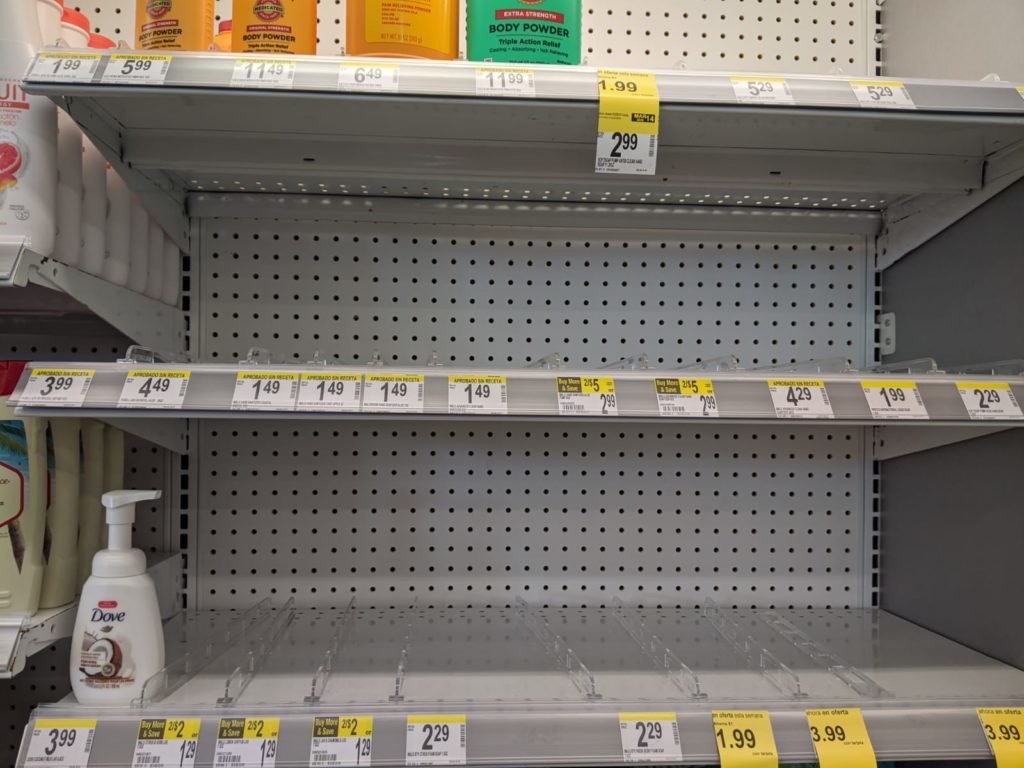
Here’s a photo that a friend sent to me a few hours ago of the hand sanitizer section at Walgreens– almost empty.

This isn’t going to stand for very long before the companies themselves start to limit purchases, or governments impose full-blown rationing. And that leads to…

3) Some people will become totally unglued. Others will be saints.

Let’s be honest— there’s already so much anger in the world. Strikes, riots, protests, Twitter rants… even armed thugs in the streets (Antifa) physically assaulting people with ideological differences.

Introduce a little bit of scarcity into all that anger and a few people will become totally unhinged.

Just think about how violent some shoppers can be on Black Friday, punching each other’s lights out in Wal Mart for the last big screen TV on special.

At the same time, this pandemic also has the potential to bring out the best in people. And countless others will be at their very best: respectful, generous, and responsible…

Click here to continue reading at Sovereign Man.

Reminder to Check on Vulnerable Neighbors

There have been some stories shared on social media of people being carefully approached by strangers who are in the high-risk categories for COVID-19 (older adults and people with heart disease, diabetes or lung disease) and asked for help with shopping or other resources, because the strangers are afraid to expose themselves by going into crowded stores themselves. Sometimes they are being given cash and a shopping list, which exposes these high-risk people to both theft and then not having supplies. If you have neighbors whom you know are in a high risk group, it is a good idea to contact them (ideally via a remote method that doesn’t expose them to anything you may be carrying) and ask if you can assist them with any preparations. You could also print them an OK/HELP sign so that they can notify neighbors if they need assistance, and the people for whom they have phone numbers aren’t able to respond to help.

Be mindful that you still need to practice good hygiene to prevent infection in either direction when passing off goods or payment.

AYWtGS: Handling Quarantine with Kids

Karen at A Year Without the Grocery Store has an article up – Got Kids? How Do You Handle a Coronavirus Quarantine With Them? – with some suggestions on handling quarantine without going crazy.

We all love our children.  But despite that love, want to see parents cringe quickly?  Tell them that they are going to be stuck inside with their children for three months or more.  More than that, they cannot leave their home.

That thought in itself is incredibly overwhelming!  Add to it, getting ready to cut yourselves off from the world, it’s enough to devastate any parent.  How do you handle being cooped up with your kids for months on end?  Don’t stress, there are answers that don’t include 24/7 TV.

Let me start by saying, I’m a mom to five kids ages 8-17.  I don’t take the notion of being stuck inside my home for months with my kids lightly.  While younger kids will have an easier time staying home, older kids are going to feel the isolation much more.

So how do we handle a quarantine with kids?

When I was pregnant with my second set of twins, I was in the hospital every week for a non-stress test.  I had a friend who was pregnant at the same time.  She was hospitalized with placenta previa.  She wasn’t just hospitalized for a week or two.  No, she was hospitalized for more than TWELVE weeks.  And during that time, she was mostly confined to half of a small room.

How in the world did she keep herself sane being remanded to that small room for so long?  Some of her tips and tricks will work for us as we talk about how we’re going to help our kids (and ourselves) through what could be a long quarantine.

(1) Start Your Day Off Healthy

Make sure that you are starting your day off with a multi-vitamin, vitamin C, and a probiotic.  I would also suggest that you spend time in God’s word and prayer at the beginning of your day.  We love to sing together as a family, and this would be a good time to do that as well.

(2) Make sure your kids are learning.

Whether you homeschool or not, make sure that your kids are still learning.   Even if you send your kids to school, make sure that they are bringing their school books home with them as you get closer to keeping them home from school in a quarantine.   Or you could put together a school kit so that you will always have items to help your children learn if they can’t go to school.

For me, it’s really simple.  I have three children still in school.  And since we homeschool, they will all continue doing their school just like normal.  That will go a HUGE way toward helping things still feel normal.

What about older kids who have graduated and are working while still living at home?  Make sure that you have conversations with them now about when you are going to tell them that they can’t continue working for a while.  Have them talk to their employers NOW to manage expectations.

These older children should still be learning!  As I was going through totes today taking stock of everything for our quarantine, I found suture needles and other implements for doing stitches and practice skin.  Find a YouTube video on practice suturing and have them learn how to do sutures.  Or have you or your kids ever made bread or noodles from scratch?  Why not use some of that time to learn how to do a new skill?

(3) Make sure that you and your kids are moving daily.

If you have little kids, it’s obvious why they should do physical activity every day.  But what about older kids who aren’t bouncing off the walls?  Why should they (and you) exercise daily?

Studies have shown that mice were divided into three groups and all infected with the flu.  One group was sedentary.  One group jogged on a wheel for 20-30 minutes (modest activity for mice), and another group of mice was kept on a wheel for 2 1/2 – 3 hours.  Fifty percent of the sedentary group died.  SEVENTY percent of the mice who ran for 2 1/2-3 hours died!  Only 12 percent of the mice who were kept on the wheel for 20-30 minutes died.

Even if you aren’t going to expose yourself to the virus, keeping your body moving a modest amount can help your body better handle whatever is thrown at it.

Now, not everyone has a treadmill or a stationary bike, I get that.  But do you have Amazon Prime?  You can learn (or practice) yoga with your kids using this free video.  Don’t like yoga?  Here’s an exercise video called “Marching Low Impact.”  Or buy a digital copy of “Sweating to the Oldies” and sweat (and laugh and laugh) with your kids.

(4)  Play at least one game a day with your kids. 

This is a great time to spend time playing some of those games that you don’t play regularly either because you haven’t taken the time to learn them or because they take a little more time to play.

Do you have two decks of cards?  All you need is a Hoyle Card book, and you’ll have hours of fun at your hands.

Another thing that might fall into this category is putting together puzzles.

(5) Take a skill that you have to the next level.

Do you have a skill that you enjoy – like knitting?  Take it to the next level.  Maybe you could learn how to do cables or knit in multiple colors.  I’ve learned a bit about spinning, but don’t take a lot of time to actually practice it.  This would be the perfect time to take that skill to the next level.

How Do You Handle a Quarantine with Kids?(6) Schedule time for kids to talk with their friends using Facetime or Skype.

Only one of our kids has a cell phone.  And her cell phone is one for which we purchase minutes.  That means that calls aren’t a regular part of our kids lives.  Even if your kids have cell phones, talking with friends makes so much more of an impact when they can see them.

What if your kids could ‘virtually’ get together with their friends regularly during a quarantine?  They would be able share stories of what’s going on, what they are learning, and the time would pass so much faster.

(7) Enjoy movies and TV shows in moderation.

There are few things that make me feel more claustrophobic than sitting in front of a screen watching mindless TV too long.  I will often feel the need to get up and do something when I’ve got an Amazon or Netflix show going too much.  But that being said, sometimes, we just need to let our minds go to a more fun place and a movie or a TV show can do that for us.

(8) Most Importantly set a routine for your days.  How Do You Handle a Quarantine with Kids?

I say this last because I wanted to give you a lot of options for filling a routine.  Why do you need a routine?

When I was pregnant with my second set of twins, I was in the hospital on a weekly basis for non-stress tests.  I had a friend who was pregnant at the same time, but she was admitted to the hospital because of placenta previa and was at high risk for hemorrhaging.

The thing is that she wasn’t just in the hospital for one or two weeks, she was in the hospital for TWELVE weeks!  She wasn’t just confined to the limits of the hospital.  She was almost exclusively confined to her small hospital room, which she had to share with another person from time to time.

How did she keep from going crazy while she was confined to such a small space?!?

The most important thing that she did (by her own admission) was to set a routine for her day.  She would start it with time in God’s word and prayer.  Then she would spend around two hours scrapbooking.  After that, she would watch TV for about two hours.  Then she would work on a crocheting something for an hour or two.  Her kids and her husband would come and visit her for a couple of hours later in the day.  She would spend some time reading after that.  Then she would spend some time coloring in a coloring book.

Her routine kept her from going completely stir crazy.  So I want you to take 10-15 minutes and using activities from above or others that you come up with on your own to set a schedule for yourself and your children so that you have a routine for when you all are quarantined.

Will the routine change once you get into your quarantine?  Absolutely!  Some things will work.  Some things won’t work as you envisioned them, but you’ll be giving yourself a framework for your family.  Change it around, turn it on its head if need be.  But make sure that you actually have a routine so that everyone doesn’t go completely crazy!

What About You?

What other ideas do you have on how to keep your kids from going crazy during a quarantine?  How long do you anticipate that your family will need to be in quarantine?  Are you concerned about missing any really big events because of the quarantine?  I’d love to hear!  Share with us in the comments so that we can all be better prepared.

Together lets Love, Learn, Practice, and Overcome!

There are links in this post.  Some of the links may be affiliate links.  Some of the links may not be.

Dr. Gabriel Cousens’ COVID-19 Wuhan Coronavirus Protection and Prevention

The information below from Dr. Gabriel Cousens was going to presented as part of a health/essential oils presentation during the general assembly meeting tonight (which has been cancelled):

COVID-19 Wuhan Coronavirus
March 10th, 2020 UPDATE
Protection & Prevention
The COVID-19 Coronavirus question, on one level, is getting more complicated, as a certain amount of disinformation contradicting the basic data is emerging. Some say it’s an internet hoax, others say it’s not that serious, and others are saying it needs to be taken seriously. Even though some are saying, “No problem – It’s a minor threat”, it would be a major mistake not to take the proper hygiene and anti-viral nutritional protocol precautions and start the immune system building protocol as outlined in my Coronavirus Protection Protocol. There’s an old Sufi saying, “Love everybody (hoax or not), but tie up your camel (follow the prevention protocol).” This means we must act preventatively. My position as a former lieutenant commander in the Public Health Service is to give advice that will at least make people healthier (if I’m wrong) and save lives (if I’m right).
The present evidence strongly suggests that although there is some controversy, COVID-19 is a laboratory-made weaponized bio-terror virus. This virus is a manmade chimera, which is not actually normally found in nature.
It also turns out that the nations with the most advanced 5G rollouts also have the highest incidence of COVID-19 cases and mortality. There is clear statistical evidence of these 5G-exposed populations have the highest infection rates and death rates. It has been observed that those nations with the most powerful 5G networks are having the biggest outbreak of COVID-19 coronavirus to date. It is well-known that 5G not only is associated with higher rates of depression, paranoia, and anxiety, but also higher rates of weakened immunity, cancer, heart disease, and type-2 diabetes. There are over 10,000 studies showing that 4G is associated with decreased immune system function and chronic disease. Researchers are also claiming that 5G is at least 100 times more potent than 4G, so it’s no surprise that 5G would be associated with higher morbidity, vulnerability, and mortality from this weaponized coronavirus, COVID-19. Based on the available science, it’s reasonable to theorize that 5G could specifically activate the pathological potentialities of the virus. Although this is only probable speculation and has not been totally proven, it still brings us back to prevention with an additional point – the importance of fighting against 5G wherever they threaten to roll it out, for our sakes and the sake of humanity. It took 30 years to absolutely prove smoking causes cancer; we cannot afford to wait that long.
Research from the well-respected Lancet journal out of England shows that people should be quarantined at least 24 days, while others are saying it should be up to 1 month before being released back into the public area. Whether it is by ignorance or by malefic choice, we’re releasing people into the public after only 14 days of quarantine, if they are quarantined at all. It’s not clear who’s making these unscientific decisions but brings us back to the fact that it is our responsibility to take care of ourselves. The estimates are that if we really take care of ourselves, and/or with hospital treatment, the average fatality rate is between 2% to 3.4% depending on age and degree of wellness. Others, who have direct contact with Chinese sources are claiming it may be 10 times higher. A statement made by Anthony Fauci, MD, director of National Institute of Allergy and Infectious Diseases, in an editorial published on 2/28/20 in the New England Journal of Medicine, suggested that COVID-19’s mortality rate is “considerably less than 1%”. The worst mortality rates, which increase with age and lack of proper health and hygiene, could be 15-18% fatality rate if over 70 years old; others say this approximate 15% mortality rate is for those over 80 years old; and still others say these higher rates apply to those as young as 60. Other scientific estimates of the mortality rate are: 8% for ages 70-79 and 3.6% for those ages 60-69. Mortality rates seem to increase with age. Kids under 10 seem to be quite safe with a projected fatality rate of .04%. The bottom line, again, is that we have the ability to protect ourselves from this, and there’s no need to go into fear, but we do need to pay attention.
As the statistics unfold, the mortality rate for COVID-19 appears to be roughly 30 times greater than the flu, although the rate of spread for the flu virus is greater. Marc Lipsitch, a Harvard epidemiology professor, has stated, “I think the likely outcome is that it will ultimately not be containable.” He predicts that at least 40-70% of the US population will contract the virus. Most medical experts believe that while it can’t be contained that 98% of the population will do ok. COVID-19 is a lower respiratory illness, as opposed to the cold, which generally effects the upper respiratory system.
As of March 10th, 2020, an estimated 110,000 people worldwide have been affected by COVID-19, but others estimate at least 300,000 people in China alone have been infected. Of those infected, 81% have a mild infection, 14% have a moderate infection, and 5% become critical and need hospitalization. Two-thirds of those who have died are men. 80% are older than 60 years, and 75% had underlying chronic diseases, such as heart disease, cancer, diabetes, and high blood pressure.
In an attempt to gain some perspective, current statistics show that on a single day, such as on February 10th, 2020, 108 people in China died from COVID-19. Even if the numbers are tenfold higher for COVID-19, it brings it to 1,080 people dying in a day, which is still less than all other causes of death per day, except suicide.
·     1,660 Americans died of cancer.
·     2,150 Americans died from heart attacks.
·     123 Americans died from suicide.
·     3,287 Americans died from car accidents.
·     8,500 children around the world starved to death.
Obviously, the deaths per day from COVID-19 was significantly lower than other causes of death for that day. Also, the 1918 influenza pandemic had a mortality rate of around 5%, but enormous impact because it was highly contagious. The idea, of course, it not to become a statistic for any of these causes.
Compared to other lethal viruses, COVID-19 also has a lower mortality rate at this state of the pandemic. For example, according to WHO, the mortality rate for SARS (Severe Acute Respiratory Syndrome) is approximately 10% and for MERS (Middle East Respiratory Syndrome), it is 30%. COVID-19’s mortality rate may be as low as 1%, but is probably, based on current statistics, at least 2-3.4%. As you can see, relatively speaking, on a global level, COVID-19 has a lower mortality rate than these other major viral infection threats, but generally a higher infectivity rate than all but the H1N1 epidemic of 2009/2010. The last SARS outbreak had more fatalities than the current COVID-19 currently has. Currently 110 countries have reported COVID-19 infections; second to the H1N1 outbreaks. In general, it seems, at this point, that the COVID-19 virus is less deadly than MERS or SARS, but neither have captured the headline attention that COVID-19 has received.

Continue reading “Dr. Gabriel Cousens’ COVID-19 Wuhan Coronavirus Protection and Prevention”