Tenth Amendment Center: Benjamin Franklin on How to Lose an Empire

Michael Boldin at Tenth Amendment Center writes Benjamin Franklin: How to Lose an Empire.

“Empires, by Pride & Folly & Extravagance, ruin themselves like Individuals.”

Benjamin Franklin certainly understood history.

He had witnessed it unfold.

In fact, he predicted the unraveling of the British Empire.

Featuring some of his best satire and sharpest wit, Benjamin Franklin published an article in The Public Advertiser on September 11, 1773. In Rules By Which A Great Empire May Be Reduced To A Small One,”  Franklin explained the colonies’ grievances to a British audience, predicting the policies would lead to the downfall of the empire. 

With tongue firmly planted in cheek, Franklin satirically wrote the essay as an instruction manual on how to lose an empire.

Much of it sounds pretty familiar to the situation we face now – once again living under the largest government in history.

For instance, Franklin said one key to losing an empire is to bar the people or the states from defending against foreign enemies at their borders. Here’s how Franklin put it.

“If any Colony should at their own Charge erect a Fortress to secure their Port against the Fleets of a foreign Enemy, get your Governor to betray that Fortress into your Hands.”

And if that’s not enough, add a little gun control for good measure.

“If they should have lodged in such Fortress the very Arms they bought and used to aid you in your Conquests, seize them all, ’twill provoke like Ingratitude added to Robbery.”

Franklin’s sarcasm and wit, possibly unmatched by any writer of his time, hammered home the big point.

“One admirable Effect of these Operations will be, to discourage every other Colony from erecting such Defences, and so their and your Enemies may more easily invade them, to the great Disgrace of your Government, and of course the Furtherance of your Project.”

As you read through Franklin’s list of colonial grievances couched in satiric language, you find that they went far beyond “taxation without representation.” 

That’s not to say taxation wasn’t part of the formula. 

Franklin wrote that one pathway to losing an empire is to tax your subjects into oblivion and to “never regard the heavy burdens those remote People already undergo.”

You can make the arbitrary taxation more grievous “by public Declarations importing that your Power of taxing them has no Limits,” Franklin wrote. 

This will probably weaken every Idea of Security in their Property, and convince them that under such a Government they have nothing they can call their own; which can scarce fail of producing the happiest Consequences!

And if you want to make the taxes even more odious, “send from the Capital a Board of Officers to superintend the Collection, composed of the most indiscreet, ill-bred and insolent you can find.” 

Sounds pretty familiar, doesn’t it?!

But wait, there’s more!

As you tax the people, tell them you’re taking their money to “protect” them, but then make it the ultimate grift – lie to them and just waste it instead.

“If it [a tax] was originally appropriated for the Defence of the Provinces and the better Support of Government, and the Administration of Justice where it may be necessary, then apply none of it to that Defence.”

Then use that money to buy off political support.

As Franklin explained, “bestow it where it is not necessary,” to pay big salaries and pensions to government officials and their cronies.

On top of taxes, Franklin recommended piling on burdensome regulations. 

“Perplex their Commerce with infinite Regulations impossible to be remembered and observed; ordain Seizures of their Property for every Failure; take away the Trial of such Property by Jury, and give it to arbitrary Judges of your own appointing.”

Meanwhile, no matter how peacefully your Colonies have submitted to your Government, oversee it with a massive militarized force ready to put down any opposition with violence.

Franklin advised, “Suppose them always inclined to revolt, and treat them accordingly.” You do this by quartering troops among them “who by their Insolence may provoke the rising of Mobs, and by their Bullets and Bayonets suppress them.

“By this Means, like the Husband who uses his Wife ill from Suspicion, you may in Time convert your Suspicions into Realities.”

If you want to lose an empire, it’s always a good idea to treat people unfairly.

Take special Care the Provinces are never incorporated with the Mother Country, that they do not enjoy the same common Rights, the same Privileges in Commerce, and that they are governed by severer Laws, all of your enacting, without allowing them any Share in the Choice of the Legislators.

On top of all this, assert the power over the people “IN ALL CASES WHATSOEVER.” (a direct reference to the hated Declaratory Act)

This will “convince them, that they are at present under a Power something like that spoken of in the Scriptures, which can not only kill their Bodies, but damn their Souls to all Eternity, by compelling them, if it pleases, to worship the Devil.”

Of course, your subjects will complain when saddled with these burdens. The key is to Ignore every complaint and change nothing.

“To confirm these Impressions, and strike them deeper, whenever the Injured come to the Capital with Complaints of Mal-administration, Oppression, or Injustice, punish such Suitors with long Delay, enormous Expence, and a final Judgment in Favour of the Oppressor.

All of these, and more, should sound at least a little familiar. It’s a lot like what the federal government is doing to all of us today. 

Ultimately, all these are actions of a tyrant. 

For Benjamin Franklin, as he later proposed for the great seal of the United States, the people should never just sit idly by and take it:

“Rebellion to Tyrants is obedience to God.”
Tenth Amendment Center: Eight Essential Principles Behind the 2nd Amendment

Tenth Amendment Center founder Michael Boldin writes Eight Essential Principles Behind the 2nd Amendment.

There is only one thing the ATF is authorized to do under the Constitution.

Disband!

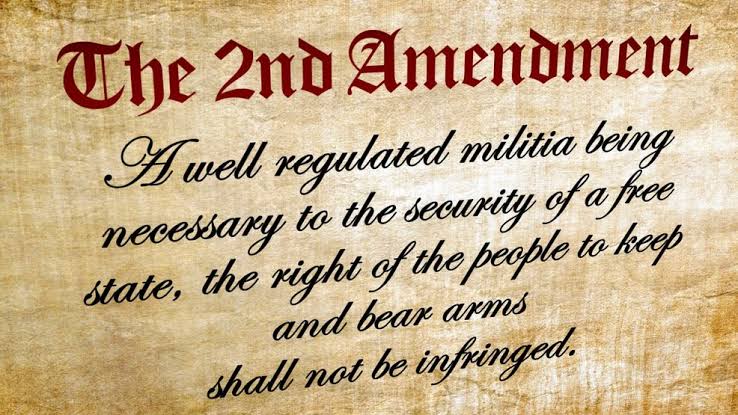
This may sound like hyperbole, but when you understand the following eight essential principles from the founders behind the Second Amendment, this becomes completely clear.

First, the right to keep and bear arms is a natural right. In View of the Constitution of the United States, St George Tucker wrote, “The Right to Self Defense is the first law of nature,” and he called it “the true palladium of liberty.”

In other words, you have the right to defend yourself simply because you exist.

Samuel Adams made a similar assertion decades earlier, saying “Among the natural rights of the colonists are these: First, a right to life; secondly to liberty; Thirdly, to property; together with the right to support and defend them in the best manner they can.

It follows from this that the Second Amendment isn’t your “gun permit.” You don’t need government permission to exercise a natural right. In effect, you are your own gun permit.

This leads to a third key point: every federal gun law is unconstitutional. 

All of them, past, present, and future – without exception.

Theophilus Parsons said, “No power was given to Congress to infringe on any one of the natural rights of the people.” [Emphasis added]

The Second Amendment was intended to clarify this point, explicitly stating that the right to keep and bear arms “shall not be infringed.”

Even though the Second Amendment was only intended to restrict the actions of the federal government, state and local restrictions on firearms also violate your individual, natural rights. As Mercy Otis Warren put it, “Self-defense is a primary law of nature, which no subsequent law of society can abolish.” [Emphasis added]

James Wilson echoed the same idea, writing, “The defense of oneself, justly called the primary law of nature, is not, nor can it be abrogated by any regulation of municipal law.” [Emphasis added]

So why do we even have a Second Amendment?

The founders cited four primary reasons.

  • It helps promote the individual, natural right of self-defense. 
  • It guarantees the states a militia power of their own to balance the military power of the federal government. – in other words, it prevents the need for large, permanent standing armies
  •  It was adopted to support the people defending against foreign invasion.
  •  Defense against domestic tyrants.

This raises the sixth key point. To fulfill the purposes of the Second Amendment, the people need to have the weapons necessary to get the job done. In other words, it’s not just about “muskets.” To render a standing army unnecessary, the people have to have military arms.

Tench Coxe pointed out that the people have the right to every type of weapon common to a soldier.

“Their swords, and every other terrible implement of the soldier, are the birth-right of an American.” [Emphasis added]

Coxe’s view should come as no surprise. The Revolutionary War had ended only five years earlier. If the colonists had not possessed military-style weapons, they would have lost the war.

James Madison alluded to this in Federalist #46, as he pointed out that a well-armed citizenry can protect themselves against an overreaching government. 

“It may well be doubted, whether a militia thus circumstanced could ever be conquered by such a proportion of regular troops. Those who are best acquainted with the last successful resistance of this country against the British arms, will be most inclined to deny the possibility of it.”

More generally, the seventh key point is that the founders viewed disarming the people as tyranny

During the Virginia ratifying convention, George Mason gave a history lesson, reminding the delegates that “an artful man, who was governor of Pennsylvania” advised Parliament “to disarm the people; that it was the best and most effectual way to enslave them.

Mason continued, nothing that “they should not do it openly, but weaken them, and let them sink gradually, by totally disusing and neglecting the militia.”

Noah Webster expressed a similar view, writing, “Before a standing army can rule, the people must be disarmed.

Standing armies were anathema to the founding generation, and many Second Amendment supporters miss the point that a well-armed populace mitigates the need for one.

St. George Tucker made this connection clear.

“Wherever standing armies are kept up, and when the right of the people to keep and bear arms is, under any color or pretext whatsoever, prohibited, liberty, if not already annihilated, is on the brink of destruction.”

Finally, we will never protect our right to self-defense and to keep and bear arms by getting on our knees and begging the government to stop violating it. As Thomas Jefferson put it“A free people claim their rights as derived from the laws of nature, and not as a gift of their chief magistrate.”

During the North Carolina ratifying convention, James Iredell who was one of the first Supreme Court justices said“The only resource against usurpation is the inherent right of the people to prevent its exercise.”

Roger Sherman made a similar point during a debate in the House of Representatives. 

“It is the privilege of every citizen, and one of his most essential rights, to bear arms, and to resist every attack upon his liberty or property, by whomsoever made.”

Putting these eight points together, it all boils down to this: The only way to protect your rights is to exercise them whether the government wants you to, or not. 

Before you go, a quick bonus point. 

As Thomas Jefferson advised his 15 year old nephew Peter Carr, it’s essential for young people to be well-armed and trained too. He wrote, “As to the species of exercise, I advise the gun.”

“While this gives a moderate exercise to the body, it gives boldness, enterprise, and independence to the mind. Games played with the ball, and others of that nature, are too violent for the body, and stamp no character on the mind. Let your gun therefore be the constant companion on your walks.”

Daily Caller: Federal Court Strikes ATF Ban on Reset Triggers

From Daily Caller, Pro-Gun Group Secures Big Win Over ATF In Federal Court

A federal court on Tuesday struck down a ban imposed by the Bureau of Alcohol, Tobacco, Firearms and Explosives (ATF) on reset triggers.

The ruling comes as the result of a lawsuit filed by The National Association for Gun Rights (NAGR). U.S. District Judge Reed O’Connor “vacated” the agency’s ban on the devices, arguing that it had overstepped its authority when it redefined forced reset triggers as machine guns, according to a press release from NAGR.

A forced reset trigger (FRT) is a firearm component that allows the trigger to reset more quickly than a regular trigger by forcing it back to its starting position after it is fired. The mechanism enables a shooter to fire multiple shots at a faster rate without converting the weapon into a fully automatic firearm.

The court’s ruling was influenced by the Supreme Court’s decision against the agency’s bump stock ban

The ATF “engaged in unlawful agency action taken in excess of their authority,” according to the court’s ruling, emphasizing that they did so by “redefining the statutory definition” of a “machinegun.”

The judge asserted that FRTs do not meet the statutory definition of machine guns because a firearm equipped with the device “must still reset after each round is fired and must separately function to release the hammer by moving far enough to the rear in order to fire the next round.”(article continues)

Seattle Times: WA is losing farms and food-producing land.

From The Seattle Times WA is losing farms and food-producing land. Does anyone care? Author Pam Lewison is a fourth-generation farmer in Eastern Washington and the director of the center for Agriculture at the Washington Policy Center.

Fourteen farms a week vanished from Washington state every week during the last five years.

The U.S. Department of Agriculture recently released data from the U.S. Census of Agriculture and the numbers are shocking.

Between 2017 and 2022, our state lost 3,717 farms and ranches. It also lost more than 102,000 food-producing acres. To put these numbers in perspective, Washington lost a total of 3,456 farms in the previous decade.

We all know that correlation does not equal causation. Yet increases in operating costs and the enactment of hostile state and federal agricultural policy certainly suggest causation.

For example, 2022 was the first year agricultural overtime pay was implemented in Washington state.

In just a year’s time, agricultural employers saw their labor costs increase nearly 10% per employee by adding just five hours of overtime pay a week. An increase of $107.73 per employee, applied to the 164,000 farmworkers in our state, represents an increase of $17.67 million in overtime wages a week industrywide.

Farms and ranches are often misunderstood in discussions about labor, with the prevailing belief being that increased costs can simply be passed on to the consumer. However, farms and ranches negotiate set prices often before their operating prices are incurred. The overtime law also reinforced the mistaken but persistent belief that farms and ranches are rife with poor treatment of people who work hard, often far from their homes and native languages.

Similarly, in recent years, debates around riparian buffers have spotlighted an urban prejudice against agriculture in environmental stewardship. The dominant urban presumption seems to be those least connected to land care the most, while farmers and ranchers have an exploitative relationship with it.

Like other industries, our state’s farms and ranches have evolved. The perception of them should evolve too. The focus on good working relationships, living wages, environmental stewardship and care for the land, water, soil and native species is an intrinsic part of agricultural life. Without well-paid employees or healthy land and clean water, farms and ranches are stripped of yet another part of their means of survival.

As our farms disappear, so, too, does our access to food grown locally. Gone will be the opportunities for low-income families to shop for local produce at a fruit stand or farmers market stall. Gone will be the chance for individuals to find meat that is grass-fed from a rancher they have met.

Taking away direct access to locally produced food takes away access to true food equity — ensuring that everyone has access to food. When local food producers are forced to focus on their survival, charitable efforts are often among the first items to be sacrificed. Donations of fresh produce to food banks are often abandoned in favor of monetizing as much product as possible.

While the disappearance of 3,717 farms in five years is deeply concerning to the agricultural community in our state, it should alarm every Washingtonian.

William Jennings Bryan wrote, “Burn down your cities and leave our farms, and your cities will spring up again as if by magic; but destroy our farms and the grass will grow in the streets of every city in the country.”

Maybe Bryan was wrong about the grass growing in our streets. Maybe mega-corporate farms and automated technologies can replace the American farmer and maybe consumers won’t mind having fewer choices and a lowered standard of freshness. But is that a future we want to promote?

The fates of the Washington farmer and the thousands of families that rely on them for work are largely in the hands of increasingly urban lawmakers and the people they serve. The only question that remains is whether they will seek a deeper understanding and accommodation of the unique challenges of farming, or will they end it as a way of life?

World Amateur Radio Day, Apr. 18

Thursday, April 18th, 2024, is World Amateur Radio Day. Amateur Radio is an important part of disaster response and preparedness, as well as having positive impacts on scientific and diplomatic efforts.

IARU – World Amateur Radio Day

ARRL – World Amateur Radio Day

The ITU notes:

A century of innovation, community, and advocacy

Today, amateur radio is more popular than ever, with more than 3,000,000 licensed operators around the world. Notably, ITU has recognized the IARU as representing the interests of amateur radio services and licensees.

In nearly a century of engagement, IARU has helped to grow the amateur services into a well-recognized partner in global communications. Our forthcoming centenary is an opportunity to celebrate these achievements.

On 18 April each year, operators around the world take part in World Amateur Radio Day. This is a day when IARU member-societies can show their capabilities to the public and enjoy friendships with other amateurs worldwide.

We proudly share the good work done by amateur radio operators, their innovations in the science of communications, and what we do for the global community.

While these services have been in operation for over a century, 1924 was the first year that intercontinental amateur communications became commonplace. The field has witnessed unparalleled technological advances since then – part of the reason amateur radio is so crucial for global communications and timely emergency response today…”

EENews: Tensions at home and abroad pose growing threat to US grid

EENews reports on the increase in physical threats to the US power grid in the past couple of years in Tensions at home and abroad pose growing threat to US grid

Rising incidents of domestic terrorism and a surge in state-sponsored cyber attacks on critical infrastructure are posing a heightened risk to the U.S. power system, the nation’s grid reliability authority warned last week.

The geopolitical turmoil from the Israeli-Hamas conflict and the ongoing Russian-Ukrainian war is driving a dramatic increase in malicious cyber activity, according to the North American Electric Reliability Corp., a nonprofit body in charge of setting reliability standards for the wholesale power system. Those international tensions are adding to the steady increase in domestic physical threats against the power infrastructure that are likely to climb as the U.S. election season ramps up.

“The current geopolitical situation has significant ramifications for the North American grid,” Manny Cancel, senior vice president at NERC, told reporters Thursday, and that’s contributed to “a dramatic increase in malicious cyber activity.”

Cancel, who is also CEO of NERC’s Electricity Information Sharing and Analysis Center, which gathers and analyzes data from power companies, said at the same time, U.S.-based threats could include a wide range of activities aimed at shutting off the power for large swaths of people to sow unrest.

“We know activists continue to use this as a vehicle to get their ideology and other political thoughts across,” said Cancel. “So nonetheless, we’re going to be very vigilant during this current election cycle.”

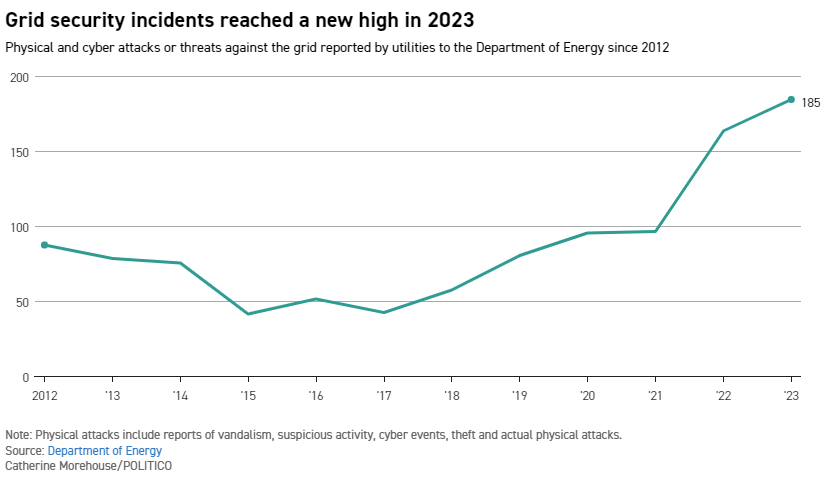
Physical threats against the grid have seen a sharp uptick in recent years, according to a POLITICO analysis of DOE data. The nation’s power providers reported 185 instances of mostly physical attacks or threats against critical grid infrastructure in 2023, beating the previous record number of reports from 2022 and doubling the number of incidents in 2021.

Security experts say that rise correlates to the growth in domestic extremism and terrorism, fueled by public messaging boards and rampant information sharing that offers a guide for people to target weak spots in the power system.

“There is ample publicly available information for bad actors to identify vulnerable assets and choke points that, if taken offline, could have significant sustained consequences for this system,” Victor Atkins, a former associate deputy director for operations under the Department of Energy’s Office of Intelligence and Counterintelligence.

Utilities reported more than 2,800 physical security threats to the center in 2023, according to Cancel, a jump of more than 1,000 from the previous year.

NERC spokesperson Rachel Sherrard said the increase “can be largely attributed to enhancements in members’ information sharing.” She added the increased number of incidents “is not necessarily indicative of an increase in risk.”

Cancel said the vast majority of physical threats and attacks don’t result in power outages — only about three percent have any impact on the grid.

None of the recent incidents have led to the kind of cascading outages or widespread failures on the scale of the notorious Northeast blackout of 2003, which shut down the power system from Michigan to Massachusetts and as far as Northern Ontario.

But localized impacts from these incidents can still be devastating.

shooting attack in 2022 against two North Carolina substations left 45,000 people without power for four days. The state’s medical examiner has blamed the attack for the death of an 87-year-old woman whose oxygen machine failed.

California utilities avoided a crisis last week after an unknown suspect attempted to destroy a local substation by shooting at a transformer and shutting off circuit breakers. The FBI is offering a $25,000 reward for information on the suspected shooter. An FBI official told a local news station that if the attack had succeeded, it could have led to catastrophic consequences for people relying on electricity for medical purposes.

Brian Leventhal, a spokesperson for the impacted utility Southern California Edison, said SCE “uses a multilayered, defense in-depth strategy at our facilities to deter and respond to security threats.”

Cyber threats have also been on the rise, but are more difficult to directly quantify, according to Cancel.

DOE’s data include only a handful of suspected cyber attacks. But the NERC center has recorded a rise in the number of security weaknesses in the power system. From 2023 to 2022, the National Institute of Science and Technology recorded a jump of about 2,000 system vulnerabilities — a pace of about 60 additional threats per day, Cancel said.

What’s clear to U.S. officials is that hackers linked to U.S. adversaries are plenty capable of wreaking havoc on the power system.

“The major nation state actors — China, North Korea, Iran and Russia — absolutely possess the capability to disrupt critical infrastructure here in North America,” said Cancel.

“When they’ll decide to use this is obviously a very complicated decision. But nonetheless, we accept the fact that they have the capability,” he added.

Several high profile cyber breaches have proved those nations’ capabilities.

Last year, the Department of Energy was among federal and state agencies impacted by a mass cyberattack through vulnerable software. And a vulnerability revealed late last year — now dubbed “CitrixBleed” — launched warnings from federal security agencies who found state-backed hackers were exploiting the vulnerability to access major U.S. companies.

POLITICO investigation from last year found reporting gaps between federal and state officials, as well as grid and security authorities, related to ongoing threats against the grid.

Atkins, who is now a consultant focused on reducing risks to critical infrastructure, warned the U.S. power grid vulnerabilities were due to the “patchwork” of federal and local, public and private entities involved in maintaining security of the grid. He described it as a “paradigm of diffused responsibility.”

“It seems to me that it is only a matter of time before the sophistication and coordination of these attack scenarios reach a point to cause much more catastrophic consequences,” he said.

WPC: The Parental Rights initiative just passed, but some lawmakers are telling school officials to ignore it

The Washington Policy Center writes The Parental Rights initiative just passed, but some lawmakers are telling school officials to ignore it

On Monday the state legislature passed Initiative 2081, the Parental Rights initiative, by wide bipartisan margins.  It passed by a vote of 82 to 15 in the House and by 49 to zero in the Senate.  You can see how your representative voted here.

As a citizen initiative it doesn’t need the governor’s signature and will become law in 90 days.  The popular measure will require public schools to inform parents about what is happening to their own children in school.  

Passage of Initiative 2081 is a very positive first step for parents and students.  It was signed by over 454,000 people.  It is an important indicator of the public’s broad dissatisfaction with the public schools.  

The purpose of the initiative is to get the state legislature to listen to the public’s widespread frustrations with public education.  Some Democratic lawmakers, though, still haven’t gotten the message.

During floor debate Monday, Senator Jamie Pedersen (D-Seattle) said (time stamp 55:10):

“…I was comforted to hear from the Office of the Superintendent of Public Instruction and from school directors that they plan to implement the initiative narrowly and consistently with the other law we have passed over time protecting the rights of young people [to hide information from their parents]…

“We’ll be watching very carefully to watch how this rolls out on the ground in our 295 school districts is consistent with that understanding.”

Representative Sharon-Tomiko Santos (D-Seattle) said angrily (time stamp 1:12:53):

“…this law doesn’t do much to change the underlying laws…. I am very happy to know from our counsel and professional staff that the measure before us does not repeal any of the important protections and safeguards that the legislature has enacted for our youth…I understand the concerns that reverberate throughout our community about unintended consequences, so Mr. Speaker I will remain vigilant that students rights are not abridged and that districts do not misinterpret or misapply the law.”  

Parents are not stupid. They will quickly figure out that hardliners in the legislature are resisting change.  They’re the ones who will be “watching very carefully” to see if there’s any real improvement in the way school officials treat them.

My prediction is the trend of families pulling out of the public system will continue.  Already 46,000 families have left.  If the new Parental Rights law is ignored, as some hold-out legislators intend, it is unlikely the measure will slow the exodus from public education.

Parents are dismayed by consistently poor academic outcomes, with schools failing to adequately educate 61 percent of students in math, and failing to adequately educate 49 percent of students in English.  Parents oppose pushing harmful CRT and DEI ideology in the classroom, with teachers informing white students they are oppressors while telling black and brown students they are automatic victims.  Likewise, parents don’t want age-inappropriate sexualized content in schools, nor do they like being lied to about personal problems their child may be experiencing in school.

Parents want public schools that are open and honest.  Passing the Parental Rights initiative is a sincere effort to reassure families and rebuild trust, but it will all be for nothing if some lawmakers are telling school officials to ignore it.

Liv Finne is the director of the Center for Education at the Washington Policy Center.

Radio Contra: Interview with Jack Lawson

NC Scout of Brushbeater and Radio Contra interviews Jack Lawson, author of the Civil Defense Manual and co-author of the out-of-print A Failure of Civility, to talk the current situation, what lies ahead and how to best prepare for the shortages and second order effects that are on the horizon.

Radio Contra Ep. 275 An Uncivil Future with Jack Lawson

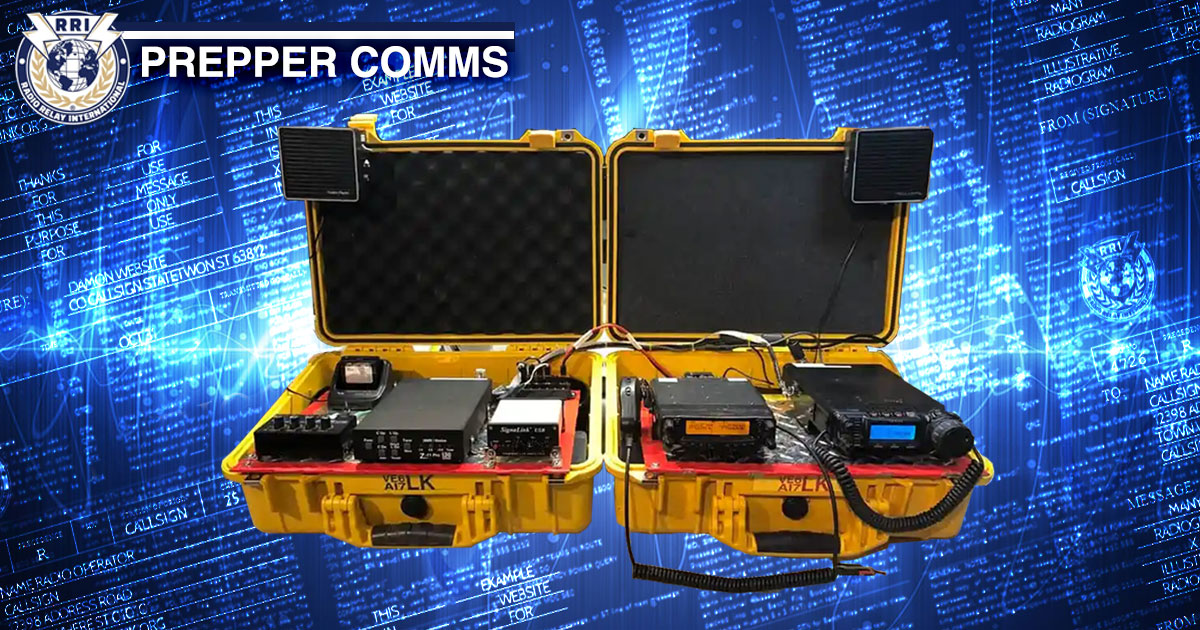
RRI: Prepper Comms – Connectivity versus Communications

Radio Relay International writes about communications in Prepper Comms: Connectivity versus Communications

It appears an entire cottage industry has emerged in which various vendors sell ham radio, GMRS, and similar resources as a preparedness tool. Search YouTube using terms such as “prepper” and “communications” and one will find hundreds, if not thousands of videos that promote various communications solutions, many of which focus on ham radio. Unfortunately, one can argue that many of these videos and sales pitches amount to the proverbial “blind leading the blind.”

There is much to be said for establishing communications alternatives that support neighborhood and community preparedness. Prepper groups are fond of the term “MAG,” which translates to mutual assistance group. Having a “MAG” composed of like minded and equally dedicated and prepared people can be a very good thing, particularly if the participants are all level-headed and equally dedicated to preparedness. We won’t digress further into that subject except to assert that developing the ability to communicate in the event of disruptions to the cellular grid and local/regional Internet connectivity is a prudent preparedness step. Therefore, let’s examine the realistic communications requirements for one’s preparedness program.

Most communications are local:

This assertion should not come as a surprise. It’s been proven through 175 years of telecommunications history. The volume of communications traffic on local networks is typically higher than that on long-haul circuits. It’s simply a reflection of the nature of social hierarchy. In a SHTF situation, circumstances usually dictate that local issues are addressed first. For example, if summoning assistance, the person from whom you request assistance must be close enough to provide the needed aid. As a result, most members of one’s prepper “tribe” do not need to be ham radio operators. Common resources such as FRS/GMRS (interoperable), CB radio, or MURS are often more than adequate for covering local terrain. Even hard-wire resources such as field phones can be pressed into service between closely located homes or facilities.

The gateway process as force multiplier:

If a MAG establishes a local communications network using commonly available, inexpensive technology, messages leaving the local network can be transferred to national/international infrastructure by “gateway” operators with long-haul capabilities. One to three operators (for redundancy) in a group that have the necessary license, training, and equipment to communicate over longer distances can move message traffic between the local network and long-haul infrastructure services. For example, if someone in your prepper group needs to send a message to a relative 1000 miles away, he simply formats a radiogram, transmits it to the gateway operator, and the latter individual injects it into the long-haul network.

The gateway function is a simple force multiplier process, which allows everyone in a group to send and receive medium/long-haul messages even if they do not have an interest in communications systems as a technological hobby or avocation. The process is also not economically regressive. After all, there’s a big difference between the cost of a new or used CB or GMRS radio and a modern ham radio transceiver and associated equipment.

Gateway requirements:

While impressive and elegant, HF radio and similar resources, with their ability to communicate over long distances, are of little value if communications with distant points are established randomly. In other words, even with survivable HF radio capabilities, some type of standardized infrastructure designed to efficiently relay and route messages to their destination is required. For this purpose, one might use Winlink (radio email), the RRI Digital Traffic Network, or manual mode traffic networks using CW, SSB, or various narrowband digital methods. Each method will offer both advantages and disadvantages depending on circumstances and operational requirements. These pros and cons are outside the scope of this article but suffice to say that the ability to exchange signal reports with random stations around the country is NOT the same as rapidly and accurately transmitting record message traffic to a third party 200 or 2000 miles away. For that, one needs not only infrastructure, but one also needs training, which brings us to our final point……

Connectivity is NOT the same as communications:

The prepper community, and even some Amateur Radio emergency communications volunteers, tend to perceive disaster communications in a “break glass in time of emergency” fashion. Using a bit of imagery, the “ham radio” is an object similar to a fire extinguisher in a public space. The “ham radio” (noun) sits in a red box labeled “break glass in case of emergency.” In the mental fantasy of the prepper, he will simply break the glass, turn on the radio, and start communicating. Unfortunately, “reality bites.” One can guarantee that 100-percent of the time, prepper communications will suffer in myriad ways. Messages will arrive garbled, content will be missing, assumptions regarding content will be made, and fatal errors in messages, tactical or record message, will hamper organizational response. In other words:

THE ABILITY TO ESTABLISH CONNECTIVITY IS NOT THE SAME AS THE ABILITY TO COMMUNICATE! (article continues)

The Medic Shack: Escape! (On Bugging Out)

The Medic Shack posted Escape! last summer after the Maui fires as a bit of a lessons learned and “what should you do to prepare to bug out.” Below is only and excerpt, but the entire article is worth a read.

…For decades you all have heard people like me tell you. “You need a BOB, Bug Out Bag” And you need X amount of food, water and change of clothes. Also need Y type of weapons and reloads. You need this brand of radio and you need need need. Mostly we tell you the things you need, is well, you need them. And to be perfectly transparent. We make a little bit of money off purchases you make from the links we research and share with you. Today we’re going to diverge (somewhat) the you need to buy this. To you need to PLAN and RESEARCH this. Folks like me sometimes forget we need not tell you to buy something, When we should be telling ideas on how to find your own answers. This post starts that trend here.

Getting the heck out of Dodge

According to the news articles a lot of people died in their homes and automobiles.

Lets take the sacrifice those people made and learn from them.

So our first bit of planning and research is to put down the computer, phone and tablet. (Well after you read this. Please! ) And GET OUT. By that I mean get out of your home and explore. Really explore. Find those over grown logging roads and dirt tracks. The back alleys side streets and weed choked vacant lots. Take your GPS. You will get lost. And that’s part of this exercise, And get maps. Lots of maps. As was found out in Maui\.

LAHAINA, Hawaii (AP) — Hawaii emergency management records show no indication that warning sirens sounded before people ran for their lives from wildfires on Maui that killed at least 55 people and wiped out a historic town. Instead, officials sent alerts to mobile phones, televisions and radio stations — but widespread power and cellular outages may have limited their reach.

https://www.pbs.org/newshour/nation/questions-grow-over-wildfire-warnings-as-maui-death-toll-rises

Without cell service your phone GPS won’t work. Stand alone GPS like Garmens will. But batteries die, A protected laminated map will last forever. Learn to read a map and use a compass. If anyone says again “My phone ALWAYS works for Google Maps” read again the above article. Get maps. You can even download and print maps for free from National Geographic. https://www.natgeomaps.com/trail-maps/pdf-quads. Print them. Protect them. And learn to use them. Hmmm, note to self. Looks a good old fashioned land navigation class is in order here.

Moving out. When?

When is it time to move out? That is something you’d have to answer for yourself. IN the above links, the major issue was no warning. And the major reason was power, land line and cellular service was down. A NOAA radio with battery backup is ESSENTIAL. NOAA stations have alternate power and keep broadcasting alerts. Get one like this https://amzn.to/3OPOm9e. That runs normally on household power, but has battery backup. NOAA broadcasts not only weather but disaster inforamtion. It can give size and location of whatever is heading your way. Now when. First most of us preppers are borderline horders. Remember. DO. NOT. TAKE EVERYTHING YOU OWN! Take what you need to survive. And you did remember to place cache’s here and there? If not do so. NOW! …(article continues)

Radio Contra Ep. 267 Interview with K

NC Scout of Brushbeater interviews K of Combat Studies Group in episode 267 of Radio Contra. They discuss the Texas border, involvement in local politics, Iran, China, Russia, weapon setups, and more.

Radio Contra Ep. 267. Night Vision, Thermal, Weapons Setups and Training with K of Combat Studies Group

S2 Underground: Improvised Incident Response

S2 Underground has a quick video on responding to an incident in your area.

“What do I do when X happens?” is a question we get fairly often. While no one can answer that for each specific event, there are basic steps one can take if located outside the general area of an incident, but still need to be involved. This is our attempt to create a very basic, stop-gap solution to this when it comes to communications. There will be more to come on this topic later, but in the interest of expediency, this is what we have for now.