Pastor Joe at Viking Preparedness gives some basic advice to people who are new to trying to get prepared. He starts off with a fake five point list and then gets into some real concepts.
…For the past few month my suspicion is that there might not be an election at all. But let’s look at the factors that are in place:
1) Joe Biden, the Dem candidate, appears to have stage four dementia. Either that, or he is a very good actor. This is another situation where I am questioning WHY? Why would the establishment run Biden (like they ran Clinton), perhaps the worst possible choice if they hope to rally people against Trump and conservatives?
Maybe Trump is meant to stay in office for another four years, because Biden appears to have no capacity to hold the attention of an audience (again, unless his Alzheimer’s is an act). That said, if the economic decline is severe enough into November, the election numbers could still be very close because of the backlash against Trump. Close elections are the easiest for the establishment to manipulate one way or the other.
2) Leftists hate Trump so thoroughly that they would vote for anyone at this point just to get rid of him; but will this fervor be enough to sway moderate Dems to participate if Biden continues his displays of mental frailty?
3) The pandemic lockdowns and viral spread are likely to hit hard by November. Meaning, there is a chance that people will find it difficult to vote at all, unless the votes are handled by mail-in or by electronic means.
4) Electronic or mail-in voting will not be trusted by the public on either side. Whoever wins will be accused of cheating.
5) Civil unrest and violence is almost guaranteed in the lead up to the elections, which could frighten people away from voting booths if they are even in operation.
These factors and more lead me to predict that Election 2020 will be a contested election which ends with Trump staying in office but accused of usurping the democratic process. This outcome is the worst possible outcome and also the most advantageous for the globalist establishment.
The elites are even hinting publicly that this is about to happen. For those of you that have been reading my work for many years, the name “Max Boot” might sound familiar. In my article ‘How Globalists Will Attempt To Control Populations Post Collapse’, published in 2016, I outlined writings by Council on Foreign Relations member Max Boot on the Malaysian Model, a method he describes as the perfect strategy for taking control of a population and destroying an insurgency.
The model calls for the institution of city-sized concentration camps which are used to isolate a rebellion away from the general population. The population in these cities is then subjected to extreme tracking and control measures, while the military is sent out to rural areas to eliminate potential insurgent threats.
Well, Boot is back again, this time writing about how he thinks Donald Trump will try to “hijack” the presidency in 2020.
In an article for the Washington post titled ‘What If Trump Loses But Insists He Won’, Boot outlines a scenario that was “war gamed” by a group called the Transition Integrity Project. The group played out a scenario in which there is a razor thin victory for Joe Biden, followed by actions by Trump to keep control of the presidency through lies and legal wrangling. The group also predicted civil unrest leading to potential “civil war” as the fight over the White House expands.
This article is, I believe, an attempt at predictive programming by the establishment. They are TELLING US exactly what is about to happen. A contested election, civil war, martial law, economic collapse and the US will be destroyed from within. If conservatives actively support unconstitutional levels of federal power or martial law, then the scenario becomes even worse. By forsaking our foundational principles in order to “defeat the left”, we would be handing victory to the globalists. We would be destroying our own movement’s reason for existing while the elites barely have to lift a finger.
The CFR and its long time goal of erasing US sovereignty would then be nearly complete. All that would be left is to ensure they they are the people that get to rebuild America from the ashes of all out domestic conflict and collapse. This cannot be allowed to happen.
I continue to predict that the plan is to destroy the US as we know it and blame conservatives in the process. With so many elites inhabiting Trump’s cabinet, this outcome would be easy for them to engineer. That said, the end game is not in the hands of the elites. It’s in the hands of conservatives.
The temptation for conservatives will be to fully embrace government power in order to stop the leftists, but if we refuse to support martial law measures, if we demand or assert alternative solutions (such as community based security), if we stand by our principles of limited government and if we fight back against the globalists specifically instead of only focusing on the political left, then there is a chance we can stop them from taking control. That said, if we bow to government power and hand over our freedom just to defeat the leftists, then we will lose the greater battle against globalism in the long run.
Chris at Off Grid Ham has an article up, talking about the danger/effect of heat on your batteries. When Your Batteries Are Boiling
Most of the USA is going through a blazing hot summer! Here in the upper Midwest it’s been over 90F/32C every day for almost two weeks. As I write this it’s 87F/31C in Buffalo, New York. That doesn’t sound too bad until you consider that it’s past sundown there, and the average daily July high for Buffalo is only 80F/27C. Most off grid amateurs fuss about battery temperature when it’s cold. Have you ever thought about what heat does to batteries? If you haven’t you should.
The chemistry of heat. battery temperature
How heat effects batteries varies greatly depending on the type of battery, how it is used, and the current going into/out of the battery. Battery chemistry, which is quite complex, is made even more complex by changes in temperature.
In addition to ambient heat, batteries themselves generate heat when they are charged or discharged. So, we have two factors at play. The radio amateur has only limited control over these two factors. Managing heat, to the extent that you can, will give your batteries better performance and a longer service life. battery temperature
Lithium batteries. battery temperature
Few things have benefitted amateur radio like lithium batteries. They are so much lighter and more powerful than their predecessors that the step forward in technology can plausibly be compared to when the transistor replaced the vacuum tube.
But like their ancestors, extreme temperatures effect lithium batteries. Once a lithium reaches 113F/45C, it should not be charged because excessive gas buildup can cause a cell to bulge. Lithiums can be discharged at up to 140F/60C but will lose capacity as they reach the upper limit of their operating range. There is also evidence that the higher the beginning state of charge, the more capacity will be lost as the battery heats up.
All larger lithium batteries have an on-board battery management system (BMS) that controls charging and cell balancing. Usually these electronics will reduce the current or not let you charge or discharge at all outside of acceptable temperature parameters. The high limits may seem generous, but do not underestimate them. Leaving a battery in a car on a hot summer day can easily push it beyond 113F/60C. If you are operating outdoors on a hot day and connect a solar panel to your lithium battery, the ambient temperature plus heat generated by the charge has the potential to exceed established temperature limits. The bottom line is, if your lithium batteries do not already have temperature-compensating circuitry, then you’ll have to monitor battery heat yourself.
AGM/Sealed batteries.
AGM, sealed lead acid, and gel cell batteries are cousins of each other and share similar characteristics. They’re very popular with amateurs due to their relatively low cost and ease of use. battery temperature
The top operating limit for AGM/SLA/gel batteries is 120F/49C. Like lithiums, AGM batteries will have reduced capacity at high temperatures and can also bulge/expand out. Thermal runaway is rare but possible. Overcharging generates heat and AGM batteries are especially sensitive to overcharging, so radio amateurs should be attentive when charging these batteries. A “smart charger” with a temperature probe would be ideal.
AGM-class batteries should not be discharged to less than 50% full. This presents a problem because they lose capacity at high temperatures. So if you have a battery that already has diminished capacity because it is hot, and then have to observe a 50% floor, that doesn’t leave much useful power for your equipment. At the same time, you will have to reduce charge current to avoid further overheating. The end result of all of this is a battery that will need to be charged more often and for longer periods. In a hot environment your AGM battery will for all practical purposes have less than half of its rated capacity. Lastly, long term exposure to heat will cut the service life of an AGM battery by half for every 15F rise above 77F (source)…
C.S. Lewis sets out why he believes in democracy. Believing in God, that is ‘hierarchy’ or ‘inequality within’, is the foundation stone of ‘equality without’ – that is, legal and political equality. Notes below in video description…
This is an illustration of C.S Lewis’ article published in the British magazine called ‘The Spectator’ on 27 August 1943. The Spectator was a weekly magazine and is the oldest continuously published magazine in the English language. You can find the book containing this article here: https://www.amazon.com/Present-Concer…
(0:07) When C.S. Lewis says he is a ‘democrat’, he means with a small ‘d’. (i.e., a person who believes in democracy, not a member of the Democratic Party of the United States). Dictionary meaning 1 below, not 2.
1. An advocate or supporter of democracy. “as a democrat, I accepted the outcome of the referendum”
2. (in the US) a member of the Democratic Party.
(0:16) Rousseau’s great lie was that: “People in their natural state are basically good. But this natural innocence, however, is corrupted by the evils of society.” This view is held almost universally in the world today, which clings to its own ‘righteousness’ just as a drowning man is hesitant to leave a sinking, rickety raft, when offered a short swim to a rescuer’s arms. Once this lie of our “inherent goodness” is abandoned, the truth does not lead to the wrong kind of hopelessness as was feared, but for the first time opens the door to the need of a Saviour. Leaving that raft of false hope can give us freedom. Christianity claims, by contrast, that we were once innocent but are now fallen and corrupted. Yet even in their innocent state in paradise, Eve could be deceived, and Adam couldn’t hold to the truth under pressure. They committed an act of betrayal, not just a mistake (Hosea 6.7).
Rousseau is called the ‘father of the totalitarians’. (Lewis, ‘On the Transmission of Christianity’).
(0:55) See “The Screwtape Letters” #1 and #25 for ‘catch words’.
(1:12) Lewis thought himself a natural non-leader (also see Judges 9.11): ‘…I don’t think there are in fact any people who stand to the rest of us as adult to child, man to beast or animate to inanimate. (Note: this is really the same objection as that which I would make to Aristotle’s theory of slavery (Politics 1254A et seq.). We can all recognize the “natural” slaves (I am perhaps one myself) but where are the “natural” masters?’ (Lewis, ‘The Humanitarian Theory of Punishment’).
(1:50) Some high forms of unequal statuses (and burdens) like kingship and the Levitical priesthood were also medicines or corrections, not ideals. See 1 Samuel 8.1-7, Exodus 4.10-14, and even Deuteronomy 5.25-28. But as Lewis points out, the basic headship or ‘shepherdships’ were ideal and began even before the fall of mankind. Before kingship also, God’s ideal system was to raise up leaders and appoint saviours for each individual crisis. In fact the judges refused kingship – mastership – they only took a shepherd’s role. In English history, we would call these military men the ‘Churchills’ I suppose (i.e. the Duke of Marlborough or Winston Churchill) who saw the gathering danger much earlier than others, came from obscurity and disregard, and led the British nation to outstanding, unlikely, victory over powerful enemies.
(5:15) Lewis mentions the feminist writer Naomi Mitchison, author of “The Home and a Changing Civilisation” (London, 1934, Chapter I, pp. 49-50). “Everybody minds being owned economically, even when they acquiesce; nobody minds being owned in love (or, more accurately, everybody wants to be owned in love). But when the two things are mixed there is the devil to pay…”
(7:10) In music, polyphony is one type of musical texture. A polyphony consists of two or more simultaneous lines of independent melody, as opposed to (1) a musical texture with just one voice, a monophony, or (2) a texture with one dominant melodic voice accompanied by chords, which is called a homophony.
(7:48) ‘I’m as good as you’ – See the demon’s instruction about democracy in “Screwtape Proposes a Toast”.
The original article had certain words italicised: *real* (2:55, 3:57), *erotic* (5:11), and *wear* (8:28).
Ryan McMaken at the Mises Institute writes Americans Are Buying Guns in Record Numbers. The Washington Post Isn’t Pleased. about how rising political instability and violence in the US has led to a record surge in gun sales and especially sales to first time gun owners and how the media is desperately trying to spin this as increased gun ownership causing increased crime.
Social scientists have been trying for many years to blame homicides on the presence of guns. A favorite tool in this quest is the use of studies that show a correlation between gun ownership and crime. These studies are then reported as “evidence” that the presence of guns causes crime.
But there’s always been a problem with this attempt at showing causality between guns and homicides: causality can just as plausibly go the other way. That is, in times and places where the local population feels they are in danger of being crime victims, people are more likely to purchase guns for protection. So, rather than saying “guns cause crime,” we should be saying “crime causes guns.”
New Gun Purchases Soar as Uncertainty and Violence Increase
The early part of 2020 has been unlike any other year for firearm purchases—particularly by first-time buyers—as new NSSF® research reveals millions of people chose to purchase their first gun during the COVID-19 pandemic.
Gun sales have skyrocketed during the past three months, and a record-breaking 80.2 percent increase in sales was reported in May compared to last year, according to the shooting foundation. April’s data showed a 71.3 percent increase from 2019, and there was an 85.3 percent increase in March, according to information previously released by Small Arms Analytics and Forecasting.
Naturally, seeing these news stories, many potential gun owners are more likely to conclude that they need a gun for personal protection. This is especially true when combined with a perception that police organizations cannot be relied upon to engage in crime prevention and enforcement. And this has indeed been the perception in many places where police have appeared unwilling to intervene in June’s riots.
Many normal people would see these events as an illustration of how gun purchases result from fears over crime and uncertainty.
But now, perhaps predictably, left-wing media organizations like the Washington Post are trying to turn this narrative around: people aren’t buying guns as a reaction to violence and social disarray, the Post insists. All those new gun purchases are what’s causing the violence in the first place.
Americans purchased millions more guns than usual this spring, spurred in large part by racial animosity stoked by widespread protests over the killing of George Floyd in Minneapolis, as well as anxiety over the effects of the covid-19 pandemic.
That gun-buying binge is associated with a significant increase in gun violence across the United States.
Note the careful use of language here, though: the gun purchases are “associated” with an increase in gun violence, since causality cannot be established. Indeed, near the bottom of the Post article, the author admits:
The authors [of the Brookings and UC reports] caution that a study of this nature cannot prove causality, particularly at a time of massive social upheaval in a country dealing with an unprecedented public health crisis as well as a nationwide protest movement.
Of course, if one is already committed to the idea that guns cause crime, it makes perfect sense that millions of Americans in early 2020—after passing a criminal background check—will buy guns, and then almost immediately use those guns to commit crimes.
Moreover, it’s unclear that the two studies referenced by the Post article even imply that homicides result from more gun purchases.
The Brookings study, for instance, is more of an op-ed than a study. It’s simply a review of some past events which were followed by surges in gun purchases, including the Sandy Hook and Parkland shootings. This appears to be true indeed, and is a helpful reminder that people do often purchase firearms in light of concerns over personal safety, or at least in light of concerns about future access to firearms.
The UC study is a bit more specific, but even this is far too general to be of any use in concluding that gun purchases lead to violence. Because of data limitations, the UC report, of course, doesn’t establish that the people who bought firearms this year are responsible for any increase in crime that may be occurring. But it’s not even established that surges in gun purchases correlate with surges in crime at the city or neighborhood levels. This is critical, since trends in homicides are not really on a statewide or even metro-wide level. Homicide trends in the US tend to be dominated by homicides in a relatively small number of cities and neighborhoods. For example, the homicide rate in Baltimore is ten times that of the US overall. But this doesn’t mean homicides in Maryland are remarkably high.
So, have firearms purchases surged near the neighborhoods in Chicago, New York, and Kansas City where surges in crime have also occurred? It’s possible, since people bordering the most violent neighborhoods may feel the most at risk. On the other hand, it’s also entirely possible that firearms sales are occurring in places relatively distant from the places with surging homicides. The UC study only appears to give a state-level reading on this. In other words, the study really tells us very little.
In this post at Spotter Up, Alaskan homesteader David Donchess talks about some food plants that he grows indoors. For people in a preparedness mindset, having food through a long winter can be a big concern. David mentions growing potatoes in a plastic bin indoors to provide food throughout the winter among others. Homestead Indoor Gardening: Plants To Grow
Ever since I moved up to Alaska with my wife, we have tried to be more self sufficient. We have really been drawn into growing our own food, to include livestock. The challenge for us in Alaska is keeping our plants and livestock alive during the winter. The summers churn out many world record sized crops due to the extremely long and warm days. Winter, on the other hand, produces the shortest(4-5 hours of sun) and coldest(-30 to -40) days. The harsh winters here can kill most types of perennials if they are not bred to handle cold down to -50. For this reason, indoor gardening is probably your best bet for continuing production of certain plants like leafy greens and things like strawberries and peppers. For this article, I am just going to talk about some of the plants I have in my indoor greenroom and why I grow them.
THE FOCUS
When we start talking about indoor plant growing, we have to keep in mind that the point is to have the ability to be mostly self-sufficient. The reason for growing plants indoors at my house is not to have something nice to look at, but rather to have a healthy variety of foods to eat and cook with. The main focus, due to limited space, should be to grow plants that are nutrient rich and will give you the best return for your efforts. But don’t forget that some nutrients you need cannot be found in just one plant. You will need to do your research and find a variety of foods that give you a decent return in vitamins, minerals, and macro nutrients.
For my plant selection, I have a few plants that offer the same return in certain nutrients, but lead in one area over the others. Then I have certain plants that are just more versatile and can be used in more ways and in more dishes than others. The choice is yours, but I have spent alot of time deciding what plants are worth the investment. Now keep in mind that this is not an indoor garden that is designed to provide everything during the apocalypse. If that were the case, perhaps we would want to simplify the number of plants we have to a short list that will allow us to minimize the need for water and light.
This specific selection of plants require varying ranges of attention, and it is all based on my abilities, space, and the time I am willing to invest in these plants. Each person will have different capabilities, space, funds, and time, which will determine what they grow indoors…
There are vegetables that I like to grow in order to provide a more diverse and balanced nutrient return, while also helping enhance the flavor of your meals. These veggies offer things that you may not be able to get from leafy greens like calories, protein, and higher concentrations of certain nutrients. Here is a list of the vegetables I like to grow and why.
-Broccoli: This vegetable is a powerhouse for sure. Raw, it has a higher concentration of vitamin C than an orange, and about as much calcium as whole milk. The plant can be a bit difficult to get control of since you have to trim the florets before they bloom. But if you take care of your broccoli plants, they will produce for you over and over again with increasing return as time goes on.
-Carrots: This veggie is one of the more versatile since it can be prepared and consumed in pretty much any way that you can imagine. Just a little bit of carrots can easily provide a huge amount of vitamin A to your diet. It takes some patience to get them to harvest. You can actually reuse the carrot heads to make more carrots, making this a somewhat renewable vegetable.
-Bell Peppers: I like growing these because they add a good deal of texture to my meals. If I am making burritos or a stir-fry, you bet that Bell Peppers are going to be included. They give a decent return in vitamin C, but not much of anything else. For the most part, the plants are easy to maintain and grow indoors as long as you provide a steady temperature and don’t let the soil get too wet…
Potatoes are a big thing for my household to the point that I grow them indoors during the winter in big storage bins. They take some time to grow to maturity, but they offer so much in terms of calories and just energy overall. They are very filling and you can add them to pretty much anything. They are relatively maintenance-free except for periodic watering, and they give back alot in return…
My family has bad luck with appliances. Our clothes washers seem to be a constant source of trouble and expensive repairs or replacements. Recently, when our microwave/oven combo caught fire because our young son managed to get a bowl with a spoon into the microwave for several minutes, it caused me to think again of our clothes washer woes. In the past when the clothes washer has been on the fritz, we have been able to take our clothes to a laundromat in town. During the current pandemic, I’m not even sure if the laundromat is allowed to be open. Luckily, Ashley Adamant at Practical Self Reliance has written this account of her experiences with the Yirego Drumi manual washing machine – Pedal Powered Washing Machine for Off-Grid Laundry. It isn’t cheap, with an Amazon price of $350, but it is an option to consider as a backup or as an alternative to power hungry washing appliances.
Off-grid laundry solutions can be tricky, as washing clothes by hand the old fashioned way is backbreaking work. A simple foot pedal-powered washing machine makes quick work of dirty clothes and its downright fun to use!
You never really appreciate how luxurious a modern washing machine truly is…until you try doing the laundry by hand. It is incredibly uncomfortable, back-breaking labor in the best of cases. There’s a good reason modern washing machines were quickly adopted as soon as they become available.
We have a normal full-sized washing machine in our off-grid setup, it broke the week my daughter was born.
Here I was at home with a cloth diapered newborn, and I spent just about every waking minute either nursing or washing clothes in the sink.
The part had to be shipped from outside the country (more common than you’d think) and it took a full month to get our washer functioning again. During that time, I had plenty of time to research off-grid laundry options (or just backup options for when the washer breaks).
There are a few options, including a bucket setup with a plunger like agitator that works pretty well. Believe it or not though, ringing the clothes out is a bigger problem than washing them. Modern detergents are really efficient, and they do a lot of the work, but wringing clothes out with just your hands is tricky.
ure, once or twice is fine, but try doing it for a week or more and see how you hold up. It’s really hard on your finger joints.
Getting the water out of the clothes is tricky though, and old fashioned ringers are darned expensive. A well made clothes wringer is just under $200. Add in even the most inexpensive washing options, like this washboard or this bucket washer and you’d have been better off just investing in something that will do it all with minimal effort.
We still often find ourselves using this tiny off-grid washing machine. Why?
Washers break, power goes out, or I just need to wash a small load of super nasty laundry (diapers, shop rags, paint drop clothes, etc).
Honestly, with two young kids in the house, this little magic machine comes out on hot sunny days for fun. They love watching the suds tirl in the drum, and I’m more than happy to let them “playhouse” by doing the laundry for real.
A load only takes about 8-10 minutes start to finish, including a spin-dry that dramatically cuts down line drying time…
A new Cato national survey finds that self‐censorship is on the rise in the United States. Nearly two-thirds—62%—of Americans say the political climate these days prevents them from saying things they believe because others might find them offensive. The share of Americans who self‐censor has risen several points since 2017 when 58% of Americans agreed with this statement.
These fears cross partisan lines. Majorities of Democrats (52%), independents (59%) and Republicans (77%) all agree they have political opinions they are afraid to share.
Strong liberals stand out, however, as the only political group who feel they can express themselves. Nearly 6 in 10 (58%) of staunch liberals feel they can say what they believe. However, centrist liberals feel differently. A slim majority (52%) of liberals feel they have to self‐censor, as do 64% of moderates, and 77% of conservatives. This demonstrates that political expression is an issue that divides the Democratic coalition between centrist Democrats and their left flank…
Self‐censorship is widespread across demographic groups as well. Nearly two‐thirds of Latino Americans (65%) and White Americans (64%) and nearly half of African Americans (49%) have political views they are afraid to share. Majorities of men (65%) and women (59%), people with incomes over $100,000 (60%) and people with incomes less than $20,000 (58%), people under 35 (55%) and over 65 (66%), religious (71%) and non‐religious (56%) all agree that the political climate prevents them from expressing their true beliefs…
If you’re still deluding yourself into believing that this thinly-veiled exercise in martial law is anything other than an attempt to bulldoze what remains of the Constitution and reinforce the iron-fisted rule of the police state, you need to stop drinking the Kool-Aid.
This is no longer about partisan politics or civil unrest or even authoritarian impulses.
This is a turning point.
Unless we take back the reins—and soon—looking back on this time years from now, historians may well point to the events of 2020 as the death blow to America’s short-lived experiment in self-government.
The government’s recent actions in Portland, Oregon—when unidentified federal agents (believed to be border police, ICE and DHS agents), wearing military fatigues with patches that just say “Police” and sporting all kinds of weapons, descended uninvited on the city in unmarked vehicles, snatching protesters off the streets and detaining them without formally arresting them or offering any explanation of why they’re being held—is just a foretaste of what’s to come.
One of those detainees was a 53-year-old disabled Navy veteran who was in downtown Portland during the protests but not a participant. Concerned about the tactics being used by government agents who had taken an oath of office to protect and defend the Constitution, Christopher David tried to speak the “secret” police. Almost immediately, he was assaulted by federal agents, beaten with batons and pepper sprayed
The so-called racial justice activists who have made looting, violence, vandalism and intimidation tactics the hallmarks of their protests have played right into the government’s hands
They have delivered all of us into the police state’s hands.
There’s a reason Trump has tapped the Department of Homeland Security and the U.S. Customs and Border Protection for this dirty business: these agencies are notorious for their lawlessness, routinely sidestepping the Constitution and trampling on the rights of anyone who gets in their way, including legal citizens.
Except these border patrol cops aren’t just disregarding the Constitution.
They’re trampling all over the Constitution, especially the Fourth Amendment, which prohibits the government from carrying out egregious warrantless searches and seizures without probable cause.
As part of the government’s so-called crackdown on illegal immigration, drugs and trafficking, its border patrol cops have been expanding their reach, roaming further afield and subjecting greater numbers of Americans to warrantless searches, ID checkpoints, transportation checks, and even surveillance on private property far beyond the boundaries of the borderlands.
That so-called border, once a thin borderline, has become an ever-thickening band spreading deeper and deeper inside the country.
Now, with this latest salvo by the Trump administration in its so-called crackdown on rioting and civil unrest, America itself is about to become a Constitution-free zone where freedom is off-limits and government agents have all the power and “we the people” have none.
The Customs and Border Protection (CBP), with its more than 60,000 employees, supplemented by the National Guard and the U.S. military, is an arm of the Department of Homeland Security, a national police force imbued with all the brutality, ineptitude and corruption such a role implies.
Just about every nefarious deed, tactic or thuggish policy advanced by the government today can be traced back to the DHS, its police state mindset, and the billions of dollars it distributes to local police agencies in the form of grants to transform them into extensions of the military.
As Miller points out, the government has turned the nation’s expanding border regions into “a ripe place to experiment with tearing apart the Constitution, a place where not just undocumented border-crossers, but millions of borderland residents have become the targets of continual surveillance.”
In much the same way that police across the country have been schooled in the art of sidestepping the Constitution, border cops have also been drilled in the art of “anything goes” in the name of national security.
If you’re anywhere near a border (near being within 100 miles of a border, or in a city, or on a bus, or at an airport), you can be stopped and asked to prove you’re legally allowed to be in the country. If you’re traveling on a public road that smugglers and other criminals may have traveled, you can be stopped.
In Portland, which is 400 miles from the border, protesters didn’t even have to be near federal buildings to be targeted. Some claimed to be targeted for simply wearing black clothing in the area of the demonstration.
Are you starting to get the picture yet?
This was never about illegal aliens and border crossings at all. It’s been a test to see how far “we the people” will allow the government to push the limits of the Constitution.
We’ve been failing this particular test for a long time now.
It was 1798 when Americans, their fears stoked by rumblings of a Quasi-War with France, failed to protest the Alien and Sedition Acts, which criminalized anti-government speech, empowered the government to deport “dangerous” non-citizens and made it harder for immigrants to vote.
During the Civil War, Americans went along when Abraham Lincoln suspended the writ of habeas corpus (the right to a speedy trial) and authorized government officials to spy on Americans’ mail.
During World War I, Americans took it in stride when President Woodrow Wilson and Congress adopted the Espionage and Sedition Acts, which made it a crime to interfere with the war effort and criminalized any speech critical of war.
By World War II, Americans were marching in lockstep with the government’s expanding war powers to imprison Japanese-American citizens in detainment camps, censor mail, and lay the groundwork for the future surveillance state.
By the time 9/11 rolled around, all George W. Bush had to do was claim the country was being invaded by terrorists, and the government was given greater powers to spy, search, detain and arrest American citizens in order to keep America safe.
The terrorist invasion never really happened, but the government kept its newly acquired police powers made possible by the nefarious USA Patriot Act.
Despite the fact that the breadth of the military’s power to detain American citizens violates not only U.S. law and the Constitution but also international laws, the government has refused to relinquish its detention powers made possible by the National Defense Authorization Act (NDAA).
Then Donald Trump took office, claiming the country was being invaded by dangerous immigrants and insisting that the only way to keep America safe was to build an expensive border wall, expand the reach of border patrol, and empower the military to “assist” with border control.
That so-called immigration crisis has now morphed into multiple crises (domestic extremism, the COVID-19 pandemic, race wars, civil unrest, etc.) that the government is eager to use in order to expand its powers.
Yet as we’ve learned the hard way, once the government acquires—and uses—additional powers (to spy on its citizens, to carry out surveillance, to transform its police forces into extensions of the police, to seize taxpayer funds, to wage endless wars, to censor and silence dissidents, to identify potential troublemakers, to detain citizens without due process), it does not voluntarily relinquish them
This is the slippery slope on which we’ve been traveling for far too long.
Sure, it’s the Trump Administration calling the shots right now, but it’s government agents armed with totalitarian powers and beholden to the bureaucratic Deep State who are carrying out these orders in defiance of the U.S. Constitution and all it represents.
Whether it’s Trump or Biden or someone else altogether, this year or a dozen years from now, the damage has been done: as I make clear in my book Battlefield America: The War on the American People, we have allowed the president to acquire dictatorial powers that can be unleashed at any moment.
There’s a reason the Trump Administration is consulting with John Yoo, the Bush-era attorney notorious for justifying waterboarding torture tactics against detainees. They’re not looking to understand how to follow the law and abide by the Constitution. Rather, they’re desperately seeking ways to thwart the Constitution.
There are have been a lot of untruths about face masks circulating in the US during this pandemic from both the government and the public. One of the earliest lies came from the Surgeon General in an attempt to save the limited face mask supply for the sole use of health care providers:
Seriously people- STOP BUYING MASKS! They are NOT effective in preventing general public from catching #Coronavirus, but if healthcare providers can’t get them to care for sick patients, it puts them and our communities at risk!
We know that wearing a mask outside health care facilities offers little, if any, protection from infection…the potential benefits of universal masking need to be balanced against the future risk of running out of masks and thereby exposing clinicians to the much greater risk of caring for symptomatic patients without a mask…
Both of these statements were obviously meant to cover for a lack of preparedness by both government and private healthcare for a large scale pandemic and resulting lacking of masks for everyone. They sought to soothe the uneducated public with the idea that they had nothing to fear while preserving scarce mask resources for front line health providers, knowing that masks would protect them. These ill-advised statements have come back to bite those who would try to limit the pandemic spread as many point back to these statements among others to counter government calls and mandates for universal mask wearing (whether such mandates are legal or not is beside the point). Of course, face masks are not 100% effective! No one is saying that they are. Can they install a false sense of security? Yes, they can. Properly worn masks should be coupled with other effective measures as a defense in depth against infection.
Masks become less effective when they are worn or handled improperly – of course. And the issue is further complicated by the type of mask worn. N95 or N99 masks are much more effective at protecting the wearer of the mask than a simple surgical mask which is designed more to protect other people from you — though the surgical mask will still offer a little protection to the wearer. These complications are what lead voices in the government and the media to recommend not wearing masks. “It’s too complicated for the average citizen,” is what they think. You can prove them wrong with a little effort.
The use of face masks was protective for both health-care workers and people in the community exposed to infection…Our unadjusted analyses might, at first impression, suggest use of face masks in the community setting to be less effective than in the health-care setting, but …we did not detect any striking differences in effectiveness of face mask use between settings…
The above sums up some of the science of mask wearing in order to prevent the spread of contagious disease. Given the contradictory, illogical, and often untrue statements previously made by officials, it is understandable that people are distrustful of recent mandatory mask statements. On top of that, there is the genuine question of government authority to make such mandates. For a very vocal portion of the liberty movement, they have decided not to even try to sort out the science of mask wearing, and instead stake their lives on their believed right to infect whomever they please. However, just because a government official may not have any authority to tell you to do or not do something, that doesn’t mean that whatever they are telling you is a bad idea. So, in case science does not sway you, here are some voices from within the prepper/liberty/tactical communities, talking about mask wearing.
…What is interesting to me is how viciously partisan a medical issue has become. Of course, like I said last week, it’s not surprising. We live in a time in the imperial cycle when you can’t have a conversation about the weather without it turning into a political hot potato. That is what it is.
Our state recently finally got a masks in public mandate. Now, I get it, when the government tells people to do something, they don’t want to do it. I GET it. F… the government. I agree with that. I’m still wearing a mask, because I’ve been wearing a mask since before the government suggested it. I was wearing a mask in public when the government was still telling you that masks were pointless.
I had to go to the feed store the other day. As I was walking in, I stopped outside the front door to pull my mask on. An older farmer was walking out. He saw me adjusting the mask, and snarled, “You don’t have to wear that damned thing!”
“Mister, I don’t have to do a goddamned thing.” I replied. Admittedly, I was already kind of pissy, and his attitude didn’t help mine, at all.
“Well, why are you wearing it then!?”
“I’ve been wearing a mask since January—before you’d even heard of COVID-19, because I’m not a f’ing douchebag. I’ll keep wearing my mask.”
That old man stopped and looked me up and down, TWICE. I swear, you could see the gears turning, as he debated taking a swing at me!
Now, my response probably could have been less aggressive, but…
“I’m not wearing a mask, and I don’t care if the governor and the police tell me I have to!”
“F- those BLM and Antifa protesters. If they’d just do what the police tell them, they wouldn’t get shot!”
Breaking the law—and to be clear, I don’t actually have a problem with people breaking the law. For the most part, I encourage it, in many cases—is always a matter of scale and moral values. YOU may see violating the law—a city ordinance or a state ordinance—about wearing a mask as a statement about your individual rights, just like another person sees his ability to protest against what he perceives, rightly or wrongly, to be injustice, as his individual rights. You’re made because you’re being told to wear a mask. He’s mad because he’s being told WHERE he can protest (and, under the Obama administration, remember, there was a LOT of bitching about “1st Amendment Zones” from The Right).
(And before anybody gets all — about it, obviously I recognize the difference between an act of civil disobedience and a malum in se criminal violation that is violent…although I’d also point out that not following medical advice regarding the containment of a pathogen, during a pandemic COULD be interpreted, pretty easily, as a violent act…)
If you don’t want to wear a mask? I don’t give a s#@!. Don’t wear a mask. I’m not going to call the police on you, and I’m not going to get in your face, and go all Karen on you, telling you how you should be wearing a mask. I really don’t give a s#@!. MY family is wearing n95 masks, instead of just cotton masks, because we recognize that, while a cotton mask WILL help slow the spread of pathogen, if some huge f’ing percentage of people are unwilling to participate, then we need to focus on our welfare, so we can further decrease the chances of US catching the disease, by wearing a mask with better protective value.
Am I going to judge you for not wearing a mask in public? Of course I am. I believe that self-sacrifice for the good of the community is the foundation of civic virtue, and—like the Founding Fathers—I believe without civic virtue, there are no rights. Thomas Jefferson famously wrote a letter to a congregation of Baptists at Danbury, CT once. It’s often quoted, in part, but people overlook one part of the letter:
“Adhering to this expression of the supreme will of the nation in behalf of the rights of conscience, I shall see with sincere satisfaction the progress of those sentiments which tend to restore to man all his natural rights, convinced HE HAS NO NATURAL RIGHTS IN OPPOSITION TO HIS SOCIAL DUTIES.” (emphasis added).
This is the part that everybody likes to ignore, as they complain about infringements on their “rights.” People—on both sides of the supposed aisle—want to claim that the Founders were all about liberty, which is not untrue. What they overlook however—or intentionally ignore—is the fact that every single one of them, not just Mr. Jefferson, believed, as Mr. Jefferson stated above, if you don’t fulfill your social/civic obligations, you don’t HAVE any claim to “rights.” That’s because, while they did believe in “natural” rights, they also believed that man is “naturally” a social creature, and those rights evolve from his position within a society.
So, yeah, I’m going to judge the f!@# out of you. You know what? Who cares? You don’t know me. Most of you wouldn’t know me from Adam, if you saw me on the street. Why do you care if I judge you? Maybe, when people are getting angry about being “judged” for moral transgressions (and failures in civic obligation ARE a moral transgression, however you define civic obligations), it’s not because strangers are judging them, but because they are judging themselves, and realize they are falling short. I know I’m always my own harshest critic, even if others don’t always recognize that fact.
What I’m not going to do? I’m not going to tell you you’re a piece of s#@! for not wearing a mask. I don’t need to…
Aesop of Raconteur Report (also a healthcare provider, treating COVID patients in CA):
CA gov. Gabbin’ Nuisance re-closed 30+ counties yesterday, all because of the morons that think wearing a mask is the Mark Of The Beast, and washing your hands is communism.
…people should be required to wear and use properly appropriate PPE, like masks and gloves, and given the opportunity to take responsibility for their own protection, and get out and about. I’ve taken care of 1-2 dozen Kung Flu patients already, at close range, using nothing more complicated than that. It works, and if I can do it, you darned sure can, if you have access to enough of the PPE to do it…
As a couple of posters have already referenced it, we’ll fisk this metric f**kton of bullsh…, er, rose fertilizer, originally posted in the NEJM a couple of months back, and unaccountably burped back up (or more likely, shat out) again this week.
1) That’s not a “study”. As it’s conspicuously labeled “Perspectives”, it’s sheer OPINION.
And we all know what opinions are like (and in this instance, for exactly the same reasons).
In this case, by an over-educated and under-bright pack of bumbling baboons.
2) The authors are clearly axe-grinding jackholes, their entire thesis is unsupported patent horseshit, and the purpose of wearing cloth/surgical masks (which is what 99.999% of people have on) is always to protect others from you, not to protect you from others, and anyone who doesn’t know that is not only a jackhole, they’re too stupid to be writing papers anywhere.
At their intended purpose, such masks excel, as they have for 150 years or so since they were pioneered for maintaining asepsis in surgery.
3) For bonus points, the Five Blind Mice who authored that codswallop have about 45 years of post-secondary education between them, and yet none of them noticed they contradicted themselves a couple of paragraphs after that corker:
“…fundamental infection-control measures.
Such measures include vigorous screening of all patients coming to a facility for symptoms of Covid-19 and immediately getting them masked and into a room;”
IOW, fundamental infection control is masking people to curb the spread of cough and sneeze droplets, the exact method of transmitting Kung Flu against which face masks excel.
Some people tell me I can’t fix stupid; I say I can, if you’ll let me use a big enough hammer.
Those five degreed jackasses should be horsewhipped until the whites of their bones show, and then be dipped to the neck into a vat of rubbing alcohol. Daily. For a month.
4) Don’t get fooled by something just because it’s posted by NEJM…
Chris Martensen of Peak Prosperity has been talking about the effectiveness of mask wearing since March:
COVID-19 is still a new disease. Currently, doctors and scientists are still figuring out how it works in the body and how to treat it. It will be a part of our lives in the future just like any other disease. Some people ask “Are you going to wear a mask for the rest of your life?” No. I won’t. But I will wear it until the disease is better understood, and there is a best practice for treating it other than putting the patient on a ventilator and waiting for them to die or there is some prophylaxis against it.
Even if you for some reason believe that COVID is no worse than the flu, as a prepper I hope that you have used this time to practice wearing a mask and for figuring out how many masks and other PPE you will need when a serious outbreak does hit. For example, I’ve learned around the head elastic banded masks don’t work well for me because of my huge melon head; the bands tend to break easily while donning the mask. I’ve found velcro masks work much better and are more easily donned and removed with less risk of touching contaminated surface. I’ve learned that you need a great deal more numbers of disposable PPE than I had expected previously. But if you’re not taking this disease seriously, then you probably won’t take the next seriously, either, so maybe it’s something that you don’t need to worry about in your preps.
There are two legal options to respond to a state budget deficit: 1) The Governor orders across the board budget cuts, or 2) A special session of the legislature occurs liquidating the deficit. The first is a blunt instrument allowing no thoughtful response. The second provides the people’s legislative branch of government the opportunity to deliberate a more surgical response. The Governor, however, has made it clear he doesn’t plan to call a special session to allow lawmakers to meet to balance the budget. No special session leaves the obligation for the Governor required under RCW 43.88.110(7):
“If at any time during the fiscal period the governor projects a cash deficit in a particular fund or account as defined by RCW 43.88.050, the governor shall make across-the-board reductions in allotments for that particular fund or account so as to prevent a cash deficit, unless the legislature has directed the liquidation of the cash deficit over one or more fiscal periods.”
“Penalty for violations. Any officer or employee violating, or wilfully refusing or failing to comply with, any provision of this chapter shall be guilty of a misdemeanor.”
“ . . . WHEREAS, the anticipated revenues combined with the beginning cash balance of the general fund are insufficient to meet anticipated expenditures from this fund for the remainder of the current fiscal period; and . . .
WHEREAS, state law authorizes and directs the Governor to implement across-the-board reductions of allotments of appropriations to avoid a projected cash deficit . . .
NOW, THEREFORE, I, Christine O. Gregoire, Governor of the state of Washington, pursuant to chapter 43.88 RCW do hereby order: The allotment of each appropriation from the State General Fund will be reduced effective October 1, 2010, by an amount necessary to avoid a cash deficit in the State General Fund.”
The requirements of RCW 43.88.110(7) are based on the cash projection in a single account. This means when evaluating if a cash deficit is projected, you can’t assume balances in other accounts or the state’s emergency reserves. Accessing fund balances in other accounts, including the emergency reserves, requires an appropriation from the legislature.
If the Governor is not going to call a special session to allow the legislature to act, there is one simple question he needs to answer: Is a cash deficit currently projected for the general fund?
Fairy tales often get a bad rap. Among politicians and activists, “fairy tale” connotes “fantasy,” as in Greta Thunberg’s rant at the U.N. Climate Action Summit: “We are in the beginning of a mass extinction, and all you can talk about is money and fairy tales of eternal economic growth.”
Yet fairy tales not only promise the hope that Thunberg rejects: they register each culture’s sociopolitical concerns, offering moral and practical solutions.
Consider Charles Perrault’s 1697 tale of “Little Thumbling,” which depicts the poverty of French peasants, the greed of the rising moneyed class (the ogre), and the corruption of the court. For the little man, only cunning can save the day.
Or recall Jacob and Wilhelm Grimm, who collected and reshaped fairy tales during the Napoleonic wars, defiantly presenting a German tradition (take that, Boney). And in the twentieth century, the Nazis revised the Grimms’ classics to spread their own propaganda. In one chilling film, Little Red is saved from the wolf by an SS officer.
Which brings us to one of Disney’s latest releases: Maleficent: Mistress of Evil (2019). As critics have observed, it seems overloaded with themes and subplots, from genocide to environmentalism to the history of the dark fey.
Technically, it is not a great film.
Yet Maleficent: Mistress of Evil performs an essential service by reflecting our time: it foregrounds how fake news promotes our national divisions, and it models how to reject bias in favor of facts, moral judgment, and the prosperity brought by peace.
Spinning Stories: #MaleficentIsEvil
Disney is of course an expert at updating and promoting scripts. Maleficent (2014) retells its own Sleeping Beauty (1959), itself based on the Grimms’ variant, though Disney identified Perrault’s version as its source text. No need to remind viewers of the Germans so soon after World War II.
Maleficent then recuperates the villain as the victim of a man who literally stole her fairy wings. In retaliation, Maleficent cursed his daughter, Princess Aurora, to be poisoned by a spindle, but then redeemed herself by growing to love the child. That film ended with Maleficent, not Prince Phillip, awakening Aurora with “true love’s kiss.”
So why is the sequel’s subtitle Mistress of Evil? It is a puzzle that the narrator foregrounds at the start, noting that Maleficent’s love for Aurora “was somehow mysteriously forgotten. For as the tale was told over and again throughout the kingdom, Maleficent became the villain once more.”
To paraphrase one politician, everybody says so.
The mystery is solved near the film’s end, when Prince Phillip’s mother, Queen Ingrith, tells Aurora that it was she who spread the lies:
Do you know what makes a great leader, Aurora? The ability to instill fear in your subjects and then use that fear against your enemies. So I spread this story of the evil witch and the princess she cursed. It didn’t matter who woke Sleeping Beauty. They were all terrified. And the story became legend.
To be fair, Ingrith believes that fairies like Maleficent threaten humanity. She claims that when she was young, the crops in her father’s kingdom died, leading the people to suffer. Meanwhile, the magical fey of the Moors continued to thrive.
“My brother and I believed we should take what we needed,” Ingrith states, echoing modern rationales for the redistribution of wealth. Why create when one can simply take? Did the fairies really deserve what they had? But her father, the king, disagreed, sending Ingrith’s brother to ask the fey’s help. He never returned.
In this context, Queen Ingrith’s tales about Maleficent and other fairies may be factually incorrect, but she believes them to be morally true, which is apparently the new standard in journalism. And so she spins her stories with an effectiveness that even Walter Duranty would envy.
To solidify her narrative, Queen Ingrith stages a family dinner for the newly engaged Aurora and Phillip. First she antagonizes Maleficent, working her into a rage. Then Ingrith poisons her own husband with the iconic spindle and frames Maleficent for it. Even Aurora falls for the lie. The people, terrified, are primed for war.
Pick Your Poison
As Maleficent leaves Queen Ingrith’s castle, she is shot with a poisoned bullet by one of Ingrith’s servants, Gerda. Fortuitously, a mysterious fairy rescues her and takes her to a remote location to heal. When Maleficent awakens, she discovers a world of Dark Fey who have been exiled from their lands by humans.
As Maleficent navigates this new realm, she is pulled in different directions by two fairies. One, the warrior Borra, is motivated by resentment: they must kill the humans and reclaim their lands. Another fairy, the peaceful Conall, points a different way: Maleficent, the descendant of the Phoenix, possesses great powers that could be used to heal, not destroy, if she can forgive Aurora.
The characters’ options mirror our own. Do we focus on the past and continue the resentments? Do we, like one prominent activist, threaten that if demands are not met, “we will burn down this system and replace it?” Or do we unite to move forward?
The question involves not only politics but moral judgment. As Adam Smith observes in The Theory of Moral Sentiments, “The real, revered, and impartial spectator . . . is upon no occasion, at a greater distance than amidst the violence and rage of contending parties. . . . Of all the corrupters of moral sentiments, therefore, faction and fanaticism have always been by far the greatest.”
Even as Maleficent struggles with judgment, Aurora, now at the palace for her wedding, comes to suspect that she has condemned Maleficent unfairly. She finally realizes that Ingrith plans to exterminate the fey. She warns Prince Phillip and saves a group of fairies being exterminated by Gerda.
Waking Up
In the end, it comes down to individual choice. Borra and Ingrith, driven by revenge, choose to lead their armies into battle. Ingrith warns Phillip, “These creatures stand between us and everything we need to survive.” Her solution is to destroy.
Phillip rejects her logic, telling Borra, “My mother wanted a fight, and you’re giving it to her. I won’t allow her hatred to ruin my kingdom or yours.” His argument leads Borra to awaken from his own hatred to consider who is driving the war and why.
Maleficent goes a step further. She dies to save Aurora when Ingrith shoots her with a poisonous bolt. Her love trumps race, politics, and resentment for past wrongs. And because Maleficent is a descendant of the Phoenix, she regenerates.
At first glance, the Phoenix motif seems like a sadly artificial solution, but it follows a tradition of fairy tales depicting symbolic rebirth to capture a character’s growth in wisdom. Snow White is “reborn” after her time in the coffin; Little Red is “reborn” after her time in the wolf’s belly; and Maleficent is “reborn” after her sacrifice.
The result is hope that what was imperfect—a person, a relationship, a country—can be made better. The film ends with humans and fairies celebrating the marriage of Philip and Aurora. While negotiations are surely ahead, the first step has been taken toward peace and the prosperity brought by mutual exchange.
Ultimately, Maleficent: Mistress of Evil is a fairy tale of our time. Reflecting the national divisions that have only escalated since its release, it illustrates how false stories spread to infect hearts and minds as fatally as a virus. The solution is to reject these fictions and judge for ourselves. As Conall tells Maleficent, “I’ve made my choice. Now make yours.”
…In the last few weeks, I saw riots erupt every single day because people lost their confidence in how the situation was being handled here with all events. People went out in the streets in big numbers, kicking police, smashing windows… I think the main reason for it was the feeling that their lives are being taken away, or to put it more clearly their future is getting taken from their hands by the people who do not know what they do.
So folks went out on the streets, letting that rage out on the system
It is nothing particularly new. When emotions like rage and fear erupt after boiling for a long time, these things happen.
There’s always someone with a “perfect solution.”
What I noticed too is among a huge mass of those people there were movements with ideas that are very violent and radical, trying to take that rage and fear of the common folks and use it in their favor, in order to steer people. They want to “ride” on the common folk’s rage and fear, and they want to get more power.
So they can rule.
That is nothing new either. It happened through history frequently. In very hard times, a movement with a dangerous and radical agenda took all those people’s desperation, rage, and fear and used it in their favor.
Who would people listen to during hard and desperate times? A movement with radical ideas that promises a solution to all problems, of course.
It is the perfect time for movements, or people, or some man with “solutions” to everything. What you just have to do is to follow their ideas. Yeah, some of those ideas sound…hmmm… maybe weird, or a bit radical, but what the hell? I mean those folks will “save us”, right?
I am afraid of those “perfect solutions” that are coming, at least coming here in my region. Who knows, maybe those “perfect solutions” are coming everywhere.
It is not about conspiracy theories now. It is about how much people must be desperate in order to accept something which in essence could be even worse than the actual situation?
How desperate must a family man who has lost his job, home, health, and safe future be in order to accept something which is, at its very essence, wrong?
Is all this only a prelude to something even worse after which we will all welcome the “solution”?
I do not know.
What the future holds
As things continue to erode here, I feel like I know less.
Or maybe in a way, I want to know less about things that I cannot change, and I invest more in things that I can change.
And again, as much I do not know exactly what the future will bring, I am positive it is not going to be good. Too many things are happening. Too many people are losing everything, including hope.
I am kinda waiting for something that will be even worse than this…

 Pastor Joe at Viking Preparedness gives some basic advice to people who are new to trying to get prepared. He starts off with a fake five point list and then gets into some real concepts.
 Chris at Off Grid Ham has an article up, talking about the danger/effect of heat on your batteries. When Your Batteries Are Boiling
 Ryan McMaken at the Mises Institute writes Americans Are Buying Guns in Record Numbers. The Washington Post Isn’t Pleased. about how rising political instability and violence in the US has led to a record surge in gun sales and especially sales to first time gun owners and how the media is desperately trying to spin this as increased gun ownership causing increased crime.


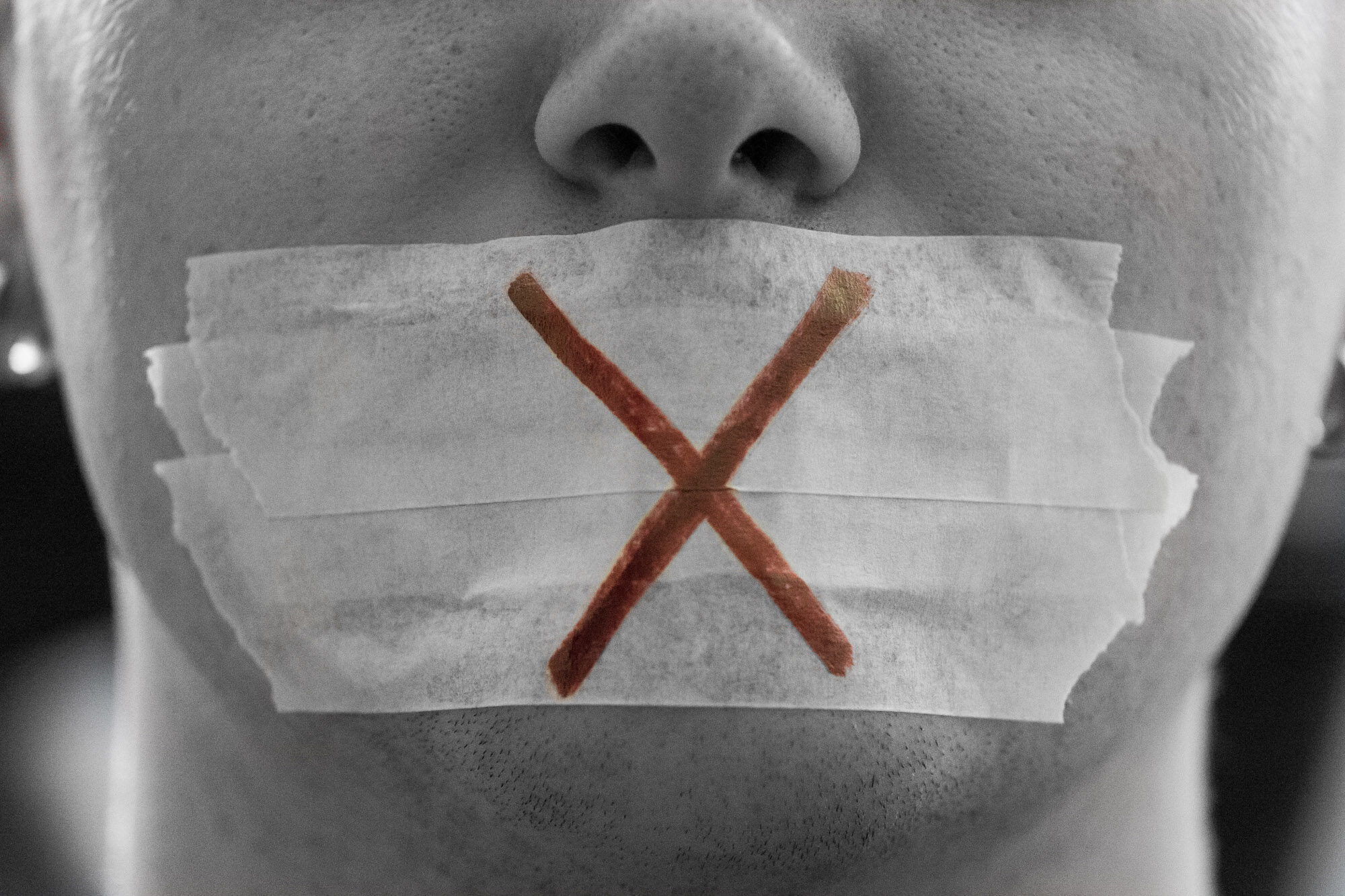 From the Cato Institute, Poll: 62% of Americans Say They Have Political Views They’re Afraid to Share


 Lower Valley Assembly