The Organic Prepper: Eye Witness Account of Seattle Riots

The Organic Prepper has an eye-witness account from a national guard member of the Seattle riots – An Eye-Witness’s Shocking Account of What’s REALLY Happening During the Seattle Riots. The takeaway? “You can’t depend on anyone to come and save you when unrest shows up in your neighborhood. The people who were there, willing, and able to defend Seattle were forced to stand down. You have to expect to be completely on your own.”

A social media post (which has been removed) by a member of the Washington National Guard has been shared more than 7000 times since it was written on June 12th. It’s a true education in mob mentality.

As Toby Cowern says, “Look how much ‘othering’ has been done already. Once that’s happening there’s a big problem.”

He’s right – and here’s the shocking truth about what’s really going on in Seattle from a person who had a front-row ticket to the mayhem.

An eye-witness account

I previously said I had a lot to say regarding my experiences while in downtown Seattle [Incoming VERY long post…]. When I came home, I was exhausted, angry, and saddened by what I had experienced. I said I needed to share what happened, but I also said I needed some time to rest and reflect. My unit was activated for 12 days. We worked long hours but we continued to stay dedicated to the state and the mission. I can’t stop that now. I’ve been up all night, trying my best to put into words what I experienced and observed. This is too important to wait. I rarely post on social media, but I’m making this post, hoping it reaches those that want to know the truth. I can imagine, given the current environment, this post may cause some controversy. That is not my intention what-so-ever. I agree the excessive use of force in Minnesota was inexcusable but reacting with hatred and violence is contradictory to the message of peace and change. Either way, people need to know what’s actually happening behind the guise of this “movement.” Whether localized or nationalized, what I witnessed NEEDS TO STOP!

Activation:

I was working nights and the day of my phone call, I had difficulties sleeping that morning. I had a lot on my mind, and I decided I was going to stay up and do some yard work. As I was preparing to go outside, I started receiving text messages and phone calls. “We’ve been activated! Hit time at the armory is 1700!” I looked at my watch and I had maybe an hour before hit time. “Well, I’m going to be late…” I thought. I immediately responded to the text messages and phone calls, telling them I would be there as soon as possible. Why was I going to be late?

My unit is in Western Washington and I live in Southeastern Washington… to drive, at a pace much faster than the speed limit, I’d be lucky to make it in three hours… Without hesitation, I grabbed all my staged military gear and threw it into the back of my vehicle. I figured, “Heck, if it’s an emergency, they’re not going to have time to put out a packing list… so, I mise well bring everything.” As I was throwing military gear into my vehicle, I received text messages telling me to pack for at least a week. “Wow, this is serious…” I thought. Being activated and expecting the mission to last a week or more, whatever the activation was for, it was going to be an uphill battle… I threw a few uniforms and a week’s worth of clothing in my rucksack and proceeded to drive to the armory.

Preparation:

I arrived at the armory in the evening and realized I had now been awake for over 24 hours. I contacted my chain of command and determined we’d leave at zero dark hundred for Seattle. I gathered my issued equipment, added it to my ruck sack, and tried to take a one-hour nap. I awoke to people on the move and bright fluorescent lights. It felt like I had just closed my eyes, but it was go-time. I grabbed my bags and met my unit in the parking lot of the armory. There was no time to waste! We loaded every cot we had, all our personal bags, and whatever we could quickly think of that we might need. We loaded our transportation and were off to Seattle in what seemed like minutes…

The Build Up:

On our way to Seattle, I had time to dwell and self-reflect. What’s so out of control that the Guard would be called up? Who and/or what am I going to be protecting? Am I going to be protecting rights, life, property, or all the above? I told myself that no matter what happens, I will do my utmost to remain impartial, to uphold the Constitution, to protect the rights of the citizens of the United States, and to protect life and property to the best of my ability. As a Soldier, we take an oath to support and defend the Constitution of the United States against ALL enemies, foreign and domestic. Regardless of the political climate, a Soldier has the responsibility to remain impartial, to ensure all citizens’ rights are protected and that the Constitution is adhered to. As we approached Seattle, I did so with an open mind and a sympathetic heart. I prayed that I may understand whoever needs our help, that I may do my job to the utmost of my ability, and that the rights of all those involved would be preserved.

The Gear:

Per order of the Governor of Washington State, Jay Inslee, the Washington Army National Guard went into Seattle COMPLETELY UNARMED. We had NO way to defend ourselves and HAD TO rely upon the SEATTLE POLICE DEPARTMENT to protect us… Not all of us had vests or plates that would stop rifle bullets. In the beginning, most of us didn’t even have shin guards… A few Soldiers didn’t have batons… Shields were hit or miss, but we ended up sharing where we could…

The Riots:

Oddly enough, my first day was one of the hardest days. We touched ground and were immediately dispatched to the Seattle Police Department (SPD) East Precinct near the intersection of 11th St and Pine St (Capitol Hill). This location would become very familiar for me, due to all of the “peaceful protesters” rioting here almost every night… Only one other unit arrived the day before we did, and they were sent to Westlake Center due to it being actively vandalized and destroyed.

Before I talk about the first day, I have to admit that my squad was later sent to Westlake. While I was there, I saw remnants of fire and broken glass everywhere I went. Almost all glass areas were boarded up and the area was devoid of business. What I, and most non-locals didn’t know, is that Westlake is a shopping center. It’s blocks upon blocks of popular businesses in downtown Seattle. It’s essentially an outdoor shopping mall… Due to the fact that not a single store was open, I was curious about the extent of damage to the area the night before. While I was looking through photos on Google while on break, one of the Seattle Police Department Police Officers pointed to an area down the street and said, “The bastards torched my patrol car right there.” As she said that, the newspaper headline photo lit my smartphone screen as I could see protesters celebrating around broken business windows and a couple vehicles that were aflame. I thought to myself, “Why would someone do this?” As I read through the headlines, I came to realize the businesses were broken into, looted, and then set ablaze… all in the name of “Black Lives Matter.” I tried my best to connect the dots… but how does social injustice relate to graffiti, theft, malicious mischief, and arson? If there was a specific political statement from these crimes, even the news media didn’t interpret or understand it… it was obviously a crime of opportunity…

Returning back to my first day at East Precinct, I was assigned as one of the squad leaders. My squad, consisting of primarily Soldiers from my unit, were fairly distinct. Like everyone else in my unit, we wore a black vest that distinguished us against every other Guardsman in Seattle. I could explain why, but it’s not relevant. If you want proof of where I was, find the Soldiers with black vests in Seattle… I was one of them.

Anyways…

On the first day, we were initially on the line behind the Seattle Police Officers at the East Precinct. The Officers weren’t carrying shields like us that day. During the protests, I observed Officers shaking hands with those yelling at them. I also saw one Officer approach a male crying in the crowd. The Officer asked the male if he wanted a hug and the protester replied, “Yes!” I watched as the Officer embraced and comforted the crying protester. Seeing these things, I thought to myself “Why am I here? Seattle PD obviously has a connection with the population, what am I supposed to accomplish or prevent here?” It didn’t take long for that to change.

I took up position on our right flank, recognizing a weakness in our line. A female quickly made eye contact with me, while recording me with her cell phone, and started yelling… “HEY! ARMY! Where are you from?!” I told her I was a Soldier with the Washington Army National Guard. She asked if I lived in Washington State. I told her, “Yes, I’m a citizen of Washington State, just like you.” She then abruptly said, “Why do you guys keep killing us?” I told her, “Excuse me?! I haven’t killed anyone…” She looked at me, befuddled, and said… “You guys keep killing us! You know, your training… don’t you have some sort of limitation where you can’t kill people?! You know, where you can only shoot us if we shoot at you?” At this point, I obviously knew she was referring to our Rules of Engagement (RoE) but it was obvious she was trying to provoke me. I tried to explain to her that what she was saying wasn’t true, but she kept interrupting me. Every time I’d try to speak, she’d raise her voice and interrupt me. As she continued to escalate, I recognized she was trying to provoke an exaggerated reaction out of me. I looked at her, shrugged, and proceeded to ignore her as I scanned the crowd. She grumbled and said, “You don’t even know your own regulations?!” I looked at her, shrugged again, and continued to ignore her… As I was scanning, I saw a male protester point out and move towards an African-American Police Officer.

The protester proceeded to yell, asking why the Officer was on the “white-man’s side.” He called the Officer an “Uncle Tom,” a “pretender,” a “race traitor,” and a N-word I’d prefer not to use. Every fiber of my being wanted to lash out. How can you use racist terms and protest racism while using it in a derogatory manner towards someone else? How can you even find fault in someone that is remaining peaceful, that is protecting your rights, and is obviously concerned for the community?! I was furious as the protester continued berating the Officer… We then got replaced by another squad for relief.

During their “protest” I observed multiple people tell others to “shut up” because of their “white privilege.” I also saw two protesters almost get into a fight because one wasn’t “letting the black man speak.” Another protester, when a male had a megaphone, yelled “Listen to him! He’s black!” I was raised, under the impression, that equality means treating everyone equally… Race won’t cease to be an issue until we stop talking about it. All my brothers and sisters are one color: green. It’s cool to honor your heritage, but no one gets special anything due to their skin tone… Everyone is treated the same and everything is equal. How is this (equality) a hard concept?

I talked to my Soldiers during our downtime. I had a few African-American Soldiers in my squad. I pointed out and talked to them about what I had just observed. I told them they may be focused upon, that the racists in the crowd might single them out because they’re African-American. It wasn’t long before we returned to the protest line...(continues)

Doom and Bloom: Suture Basics for the Off Grid Medic

The Altons at Doom and Bloom Medical have an article on Some Suture Basics for the Off-Grid Medic. More photos at article.

suture basics

Many animals, (insects, spiders, shrimp, crabs) have an exoskeleton as a protective covering. Humans have their skeleton on the inside, so we depend on the largest organ of the body, our skin, instead.

Skin represents the armor that protects the body from invasion by debris and microbes. A breach in that armor increases the chance of infection that may spread throughout (called “sepsis”) and become life-threatening.

As such, there are circumstances where a break in the skin should be closed with materials known as sutures. The decision to close skin should not be automatic and depends on many factors (discussed in previous articles on this site). Once that decision is made, however, the correct choice of suture material impacts the strength and effectiveness of the healing process.

THE IDEAL SUTURE

All wound closure methods have their advantages and disadvantages. Your choice should depend on the careful evaluation of the wound, as well as an understanding of the properties of a given suture material.

The optimal suture should be:

·           Sterile

·           Easy to use

·           Strong enough to hold wound edges together

·           Able to retain strength for the time needed to heal

·           Unlikely to cause infection, tissue reaction, or significant scarring

·           Reliable in its everyday use with every type of wound

It’s difficult to find a single suture type that meets all of the above criteria, but there are many that will do if chosen properly.

TISSUE HEALING

The time needed for healing should impact the choice of suture materials. The interval it takes for a tissue to no longer require support from sutures will vary depending on tissue type:

Days: Muscle, subcutaneous tissue like fat, and skin

Subcutaneous tissue is sometimes called the “hypoderm”. It’s connected to the deep layer of skin (the “dermis”). The skin and muscle in many areas of the body are separated by a layer of subcutaneous fat. Fat will appear as yellowish globules below the whitish dermis.

Weeks to Months:  Fascia or tendons

Fascia is connective tissue beneath the skin that attaches, covers, stabilizes, and compartmentalizes muscles and other internal organs. A tendon is connective tissue attaching a muscle to a bone.

CATEGORIZING SUTURE DIAMETERS

Around a century ago, the average suture consisted of a needle through which a separate string was threaded. This method was used for thousands of years until the process of swaging was invented. A swaged suture has the thread built into the blunt end of the needle, making surgical sutures a single unit for the first time.

In the United States and many other countries, a standard classification of sutures has been in place since the 1930s.  This classification identifies stitches by type of material and size of the “thread”.

The first manufactured sutures were given sizes from #1 (thinnest) to #6 (thickest). #4 suture would approximate the string on a tennis racquet.

As technology advanced, even thinner sutures were produced that were titled beginning at 0 (pronounced “oh”). Just like double-ought buckshot is bigger than triple-ought, 2-0 (pronounced “two-oh”) suture is thicker than 3-0 (pronounced “three-oh”). If you are doing microsurgery, you’re going down all the way to 8-0, 9-0, or 10-0. Size 7-0 is about the diameter of a human hair.

The suture thread used should be the smallest size which will give adequate tensile strength to keep skin together. Finer sutures have less tissue reaction but are more difficult to handle for the inexperienced. The off-grid medic should consider using somewhat thicker sutures that can be more easily handled.

ABSORBABLE SUTURES

Absorbable chromic gut suture

In addition to diameters, sutures are classified as absorbable and non-absorbable.  An absorbable suture is one that will break down spontaneously over time (but not before the tissue has mostly healed).

Absorbable sutures have the advantage of not requiring removal.  They can be used in a number of deep layers, such as muscle, fat, organs, etc.  A classic example of this is “catgut”, actually made from the intestines of cows or sheep. Since these sutures are made from multiple fibers, they remain extremely strong in the first few days of healing.

plain “catgut”

Catgut is usually found in “plain” and “chromic” varieties. Plain gut absorbs very quickly but has a tendency to cause tissue inflammation. When dipped in a chromic salt solution, catgut retains tensile strength in the body longer and causes less of a reaction, while still remaining absorbable.

Gut sutures are used today to close tissue that heals rapidly, such as vaginal lacerations from childbirth or in the oral cavity.

Newer absorbables are synthetic. These include:

  • PDS (polydiaxonone)
  • Monocryl (poliglecaprone 25)
  • Vicryl (polyglactin)
  • Maxon (polyglyconate)
  • Dexon (polyglycolic acid)

These sutures retain their tensile strength for varying lengths of time. They cause less tissue inflammation due to an absorption process different than that of gut.

Vicryl sutures are used for approximating muscle or fat layers, as well as lower layers of skin. Maxon and Monocryl can also be used for soft tissue as well as for cosmetic procedures where visible sutures aren’t desired. PDS is used to stitch muscle and fascia tissue.

Besides the classic synthetic sutures, new subtypes such as Vicryl Rapide, Vicryl Plus and PDS II exist. These may take less or more time to dissolve than the originals.

(Aside: Every physician has their own preference for sutures that relate to their experience, schooling, and other factors. For example, it is considered old-fashioned by many to use stitches for closing surgical incisions on skin, as most close skin wounds with staples. A randomized, clinical trial, however, found that women who had C-sections with dissolvable stitches were 57% less likely to have wound complications than those whose wounds were closed with staples. I used this method (known as a “subcuticular” closure) with good results for 20 years.)

NONABSORBABLE SUTURES

Nonabsorbable sutures are those that stay in the body indefinitely or, at least, for a very long time. Normally. They are best used in skin closures or situations that require prolonged tensile strength.

Nonabsorbable sutures can be used in deep layers in certain situations. They cause less tissue reaction, although a small remnant may be felt where the body’s immune system walled it off (known as a “granuloma” or “encapsulation”).

Nonabsorbable sutures can be separated into synthetic single-stranded monofilaments and braided natural or synthetic multifilaments.

Single-stranded monofilaments include Ethilon (nylon) and Prolene (polypropylene). Braided natural multifilaments include braided surgical silk or cotton. Ethibond is the most commonly-used synthetic multifilament.

Nylon monofilament suture

Monofilaments like Nylon are slightly less likely to harbor bacteria, whereas braided multifilaments have tiny nooks and crannies which may serve as hideouts for microbes. The difference in infection rate is very small, however.

Monofilaments also glide more easily through tissue, but may require more knots to stay in place than a braided multifilament like silk. While multifilamentous thread tends to come out straight, monofilaments retain the same S-shape in which they were packaged. This is more an annoyance for the inexperienced than anything else.

Braided surgical silk suture

Braided surgical silk is easier to handle than nylon, especially for novices, and is often used for teaching purposes. 2-0 and 3-0 are sizes considered too thick by many surgeons, but are useful for teaching aspiring off-grid medics to learn surgical knot-tying. Although scarring may be more noticeable, this is a secondary issue in survival scenarios.

The off-grid medic must know skills ordinarily not taught to the average citizen. Wound closure is one of these skills, but must be combined with a working knowledge of when closure is appropriate and when it isn’t. We’ll discuss these issues in future articles.

Wilder, Wealthy & Wise: Civil War 2.0 Weather Report

Here is Wilder’s latest Civil War 2.0 Weather Report at Wilder, Wealthy & Wise.

“If we can stop him, we shall prevent the collapse of Western Civilization.  No pressure.” – Sherlock Holmes:  A Game of Shadows

CLOCK

I liked the ticking of the clock I got from the pawnshop, but in the end it was a second-hand emotion.

  1. People actively avoid being near those of opposing ideology.  Might move from communities or states just because of ideology.
  2. Common violence. Organized violence is occurring monthly.
  3. Opposing sides develop governing/war structures.  Just in case.
  4. Common violence that is generally deemed by governmental authorities as justified based on ideology.
  5. Open War.

In the first issue of the Civil War Weather Report, I put together ten steps to a new civil war.  I did not expect that on the one year anniversary of that first report we’d move from step 6 nearly to step 9.  Step 9. is, of course, two minutes to midnight.

We are very, very close.  I debated internally more than a bit whether we were at an 8. or a 9. this month.  I finally decided to stay at an 8., despite multiple jurisdictions doing everything but arming the rioting faction of the protest movement with automatic firearms and bullhorns that make them all sound like Gilbert Gottfried.  It is clear we are at least an 8., and you will see in the graphs section that our Wilder Violence Index has reached new highs.

In this issue:  Front Matter – You Knew Where This Was Going – Violence and Censorship Update – Updated Civil War 2.0 Index – Balkans or Caesar Might Be The Best Case Scenario – Links

Welcome to Issue 12 of the Civil War II Weather Report.  These posts are different than the other posts at Wilder Wealthy and Wise and consist of smaller segments covering multiple topics around the single focus of Civil War 2.0, on the first or second Monday of every month.  I’ve created a page (Link) for links to all of the past issues.

You Knew Where This Was Going

The most popular posts on this site have been about the political state of the country.  The Civil War Weather Reports aren’t my usual form of post, but have proven to be very popular.  I’m sure it’s not just for graphs featuring bikinis.  Well, at least not only because of the bikinis.

I think the reason these posts are popular is simple:  many people could sense the fragile peak that it seems all of Western Civilization is perched on.  Whether it is a conscious review of the surrounding culture or just a feeling in the pit of the stomach when confronted with an outrageous news article, something’s just not right.  Society has been changing by increments over the years, but those changes are coming faster and faster and faster.

Claire Wolfe, the groundbreaking and iconic Freedom blogger said it very well at her place last week (LINK):

Each day I think I’ve processed the latest craziness enough to blog something coherent. Useful even. But then new waves of craziness wash over the world. I don’t know what to say. I can’t write good sense against the onslaught of the crazy. I don’t know how civilization is holding together under tsunamis of crazy.

But then, of course civilization isn’t holding together — and I’m not just talking about the one-two punch of totalitarian don’tleaveyourhouseism followed without pause by riotandlootallyouwantism.

Chains of rapid-fire events and chaos like this are not generally the friend of those that love freedom.  The Russian Revolution promised:

  • Peace, through ending World War I,
  • Food, because Communists are well known to produce excess food,
  • Land, whereby peasants would get parts of land owned by the wealthy,
  • Minimum wages,
  • Maximum working hours,
  • Running factories by elected worker representatives and
  • Lots of other promises.

In the end, up to 12,000,000 people (mainly civilians) died in the civil war that followed, and the promises that were made were largely ignored.  The Bolsheviks said and promised anything to get a force of disaffected behind them.  Not sure if this sounds familiar to AOC fans?

Hey girl, are you the French Revolution?  Because I keep imagining you sans-culottes.

I get a sense that the Left today is up to the same trick.  They’ve “created” media events and have managed them to get power – political power and power in the street.  Some of the Leftists may even be stupid enough to believe that there are magic economic levers that they can move to keep the promises they’re making.  In reality, they really don’t care:  it’s all about the power.

Lenin’s reintroduction into Russia and subsequent funding from foreign sources bring George Soros to mind.  Soros continually funds groups in the United States that are directly opposed to actual freedom.  The protesters and their associated rioters have a structure that has been funded and provisioned with everything from water and medical supplies to pre-staged bricks and gasoline.  Not saying that George is funding those directly, but . . .

More on that, below.

Violence and Censorship Update

No politician has ever captured the attention of the Left like Donald Trump.  They hated Reagan, and George W. Bush was famous for “stealing” an election.  But something about Trump drives them nearly crazy enough to try to get a job.  The media’s portrayal of Trump as the anti-ChristObama, perhaps?

The violence, of course, is plain for anyone reading any news to see.  It’s not in just the United States:  these protests have been coordinated across nearly every Western nation.  If the protests had been confined to Minnesota, I could buy the idea that they were organic.  And to the extent that they are peaceful gatherings to seek political redress?  I celebrate them.

LOOT

It’s not looting, it’s just an involuntary clearance sale.

But to flash across the world with violence and destruction?  That takes amplification and organization and is clearly the seed of revolution against the West.

The amplification of the signal comes from both mainstream and social media.  Whereas the original death that started the protests was (rightly) exposed, the subsequent deaths of protesters, rioters, and innocent civilians hasn’t been mentioned much at all.  How many dead?

I’m not sure.  This should be a fairly easy number to get to, but I’ve seen numbers between 12 and 18.  Absent media tracking, I’m not sure how you’ll count them up.  If we wait long enough, I’m sure they’ll all be counted and attributed to COVID-19.  To add to the butcher’s bill, thousands have been injured.

Regardless, I have seen, at minimum tens of millions of dollars in damage.  I would expect the number to increase to hundreds of millions, at least.  A fire is, as I write this, blazing in downtown Phoenix.  Odds that it’s related to the rest of the violence?  Nearly 100%.

Censorship is on the rise, as well.  I already spouted off on that last week (Free Speech: Endangered Species – WRSA is Down) in response to Western Rifle Shooters Association being shut down (You Can Find Him Here).  I expect to see that it will be on the increase during the next six months – the election is too important to the Left to leave it in Biden’s hands – chances are good he might wander off to try to buy a rotary phone at Montgomery Wards™.

Updated Civil War II Index

The Civil War II graphs are an attempt to measure four factors that might make Civil War II more likely, in real time.  They are broken up into Violence, Political Instability, Economic Outlook, and Illegal Alien Crossings.  As each of these is difficult to measure, I’ve created for three of the four metrics some leading indicators that lead to the index.  On illegal aliens, I’m just using government figures.

May was again a difficult month.  I had to re-scale the graph on violence as this month nearly pegged every meter.  I will assure my faithful readers that I spent extra time this month finding just the right bikini-clad girl, since I want to at least reach the journalistic integrity standards of the Washington Post®.

Violence:…(continues)

The Organic Prepper: Unconventional Warfare in the US

Political warfare location within four implements of power

Daisy Luther of The Organic Prepper writes about the use of unconventional warfare techniques with the US recently in her article There’s an Actual Playbook for Everything Happening Right Now and the US Wrote It. But Who Is Using It Against Us? Some of this echoes themes written of by intelligence analyst Sam Culper of Forward Observer on low intensity conflict in the US, as you may have seen from articles of his that we’ve posted to this site.

While it might seem like everything that is happening is just chaotically bouncing from one shocking event to the next, that assessment couldn’t be further from the truth. There’s a playbook – a literal playbook – and we’re being manipulated toward the endgame that does not benefit the American people.

What’s the endgame?

Spoiler alert.

It’s widespread guerrilla actions and the destabilization of our country.

What’s this playbook?

The playbook I’m referring to in this article is the US Special Forces Unconventional Warfare Manual from 2010. These were methods that the United States military employed against Libya.

The intent of U.S. UW efforts is to exploit a hostile power’s political, military, economic, and psychological vulnerabilities by developing and sustaining resistance forces to accomplish U.S. strategic objectives. Historically, the military concept for the employment of UW was primarily in support of resistance movements during general-war scenarios. While this concept remains valid, the operational environment since the end of World War II has increasingly required U.S. forces to conduct UW in scenarios short of general war (limited war).

Enabling a resistance movement or insurgency entails the development of an underground and guerrilla forces, as well as supporting auxiliaries for each of these elements. Resistance movements or insurgencies always have an underground element. The armed component of these groups is the guerrilla force and is only present if the resistance transitions to conflict. The combined effects of two interrelated lines of effort largely generate the end result of a UW campaign. The efforts are armed conflict and subversion. Forces conduct armed conflict, normally in the form of guerrilla warfare, against the security apparatus of the host nation (HN) or occupying military. Conflict also includes operations that attack and degrade enemy morale, organizational cohesion, and operational effectiveness and separate the enemy from the population. Over time, these attacks degrade the ability of the HN or occupying military to project military power and exert control over the population. Subversion undermines the power of the government or occupying element by portraying it as incapable of effective governance to the population. (source)

And now this guideline is very clearly being used against the United States. It started years back, but recently, we’ve watched things escalate rather dramatically.

Here’s the guideline.

Consider this a pyramid that begins at the bottom and builds to the apex. This all begins with underground activities and the fanning of legitimate flames, like Selco mentioned in his article about defunding the police.

Does that stuff look familiar? It should because we’re more than three-quarters of the way through this escalation.

The causes are not unjust.

The thing that makes this technique so effective is that the causes themselves are not unjust. They are things that would rightly anger any reasonable, compassionate human being.

Most white people don’t want to see people of other races suffer indignities and violence based on the color of their skin. (I say “most” because there are always outliers and extremists.) Most Americans in general do not want to see police brutality. They don’t want to see families split up or people imprisoned for decades for victimless crimes.

Let me be perfectly clear when I say that it is not unreasonable or wrong to be outraged and want things to change. I hate some of the things I’ve seen our government and police officers do and have written about these misdeeds for years.

But this article isn’t about whether or not our anger is justified. It is an assessment of a playbook.

All of this outrage over injustice forms the foundation of something that can be used against us. The agitation has been building up for years – far longer than President Trump has been in office – so as much as people love to hate him, he isn’t the cause of all this. But he’s certainly not making things go any more smoothly.

An early timeline

Everything I’m writing about today is about how our government in the past has encouraged a resistance in other countries, and how a resistance is being nurtured here in the United States right now.

So what does it take to cause people to be angry enough to resist?

Resistance generally begins with the desire of individuals to remove intolerable conditions imposed by an unpopular regime or occupying power. Feelings of opposition toward the governing authority and hatred of existing conditions that conflict with the individual’s values, interests, aspirations, and way of life spread from the individual to his family, close friends, and neighbors. As a result, an entire community may possess an obsessive hatred for the established authority. Initially, this hatred will manifest as sporadic, spontaneous nonviolent and violent acts of resistance by the people toward authority. As the discontent grows, natural leaders, such as former military personnel, clergymen, local office holders, and neighborhood representatives, emerge to channel this discontent into organized resistance that promotes its growth. The population must believe they have nothing to lose, or more to gain. (source)

There can be more than one resistance going on at a time, too. Currently, everything that is in the news is about the resistance that has sprung up over the death of George Floyd. A few months ago, it was about the sanctuary cities in Virginia standing up against state legislators.

Resistance organizations have been around for years: Black Lives Matter, the NRA, Antifa, the Boogaloo movement, the Black Bloc, the Gun Owners of America. I’m just listing off examples of organizations here, not passing judgment whether they’re good or bad. I’ll bet that most people who join do so because of their own deeply held beliefs. They sincerely feel they’re doing the right thing and have the best of intentions.

But then there are the other people who join – the infiltrators – and they take these kinds of organizations to dark places. Much has been written about the involvement of the Communist Party, neo-Nazis, George Soros, and white supremacists in various groups. And while some of it may be the stuff of legends and propaganda, a lot of it is very likely to be true…(continues)

OH8STN: How to Ham Radio Off Grid

Julian, OH8STN, has another video on How to Ham Radio Off Grid.

Hello Operators. Todays video is very special, since it answers many of the questions we’ve asked about portable ham radio off grid. Operating a ham radio station off grid and or in the field is not something to be taken lightly. We need to look at our field communication goals, how long we’re going to be out there, the type of equipment we need in the field, and battery power for our ham radio, when off grid or in the field. If you’re a ham radio beginner or seasoned veteran adding additional skills and capabilities to your station, you’re going to love this series.

https://www.youtube.com/watch?v=avGBTzWAqbo

How-To Geek: How Worried Should You Be About the Health Risks of 5G?

There have been concerns expressed about the health effects of electromagnetic radiation for some time. Recently, with the introduction of 5G wireless services, there has been a new upswell of concern. While this article from Dave Johnson at How-To Geek is not a comprehensive or technical article, I think it frames the health concerns in a way that is understandable to most – How Worried Should You Be About the Health Risks of 5G? Most of the US places where 5G is already deployed are using frequencies (In the 450 MHz – 6GHz ranger) that are already in use by current LTE phone data networks. So there isn’t much difference at all between the 5G and LTE as far as health effects would go. As 5G matures and more compatible phones are out there, there will be more use of the 25 GHz – 53 GHz range. Higher frequencies mean that more data can be added to the signal, translating to higher bandwidth. These higher frequency access points have a shorter range, transmitting at lower power, and thus need to be deployed closer to the end users with fewer users per access point.

5G logo over a city at night
areebarbar/Shutterstock.com


5G, the next generation of cellular technology for the next generation of smartphones, is imminent. And with it, there’s concern about the health risk of this new, more powerful network. How worried should you be about the coming 5G healthpocalypse?

By now, you may have seen articles on Facebook or alternative health websites. The gist: 5G is a dangerous escalation of traditional cellular technology, one packed with higher energy radiation that delivers potential damaging effects on human beings. Some 5G conspiracy theorists contend that the new network generates radiofrequency radiation that can damage DNA and lead to cancer; cause oxidative damage that can cause premature aging; disrupt cell metabolism; and potentially lead to other diseases through the generation of stress proteins. Some articles cite research studies and opinions by reputable organizations like the World Health Organization.

It sounds worrisome, but let’s take a look at the actual science.

What Is 5G?

5G has been hyped for a few years, but this is the year that carriers begin the process of rolling out the new wireless standard. AT&T, Verizon, and Sprint have all started to deploy their networks in the first half of the year, though widespread availability is still a year or more away. 5G will get a foothold in little more than a handful of cities this year.

Update: With the onset of the Coronavirus pandemic, a number of viral social media conspiracy theories have speculated that 5G is the cause of the world’s current problems. Simply put, these claims are factually false. 5G does not cause Coronavirus.

That isn’t keeping device manufacturers and service providers from jumping onto the 5G bandwagon. Samsung’s new Galaxy S10 and Galaxy Fold (the phone that unfurls into a tablet), for example, are both 5G-ready, along with models from LG, Huawei, Motorola, ZTE, and more.

5G offers at least a tenfold improvement in network performance. The last major network upgrade was 4G, which debuted in 2009 (the year of the Colorado balloon boy hoax), with a peak speed of about 10 Mbps. In comparison, 5G is poised to deliver peak speeds between 10 and 20 Gbps. And network latency will drop from 30ms to about 1ms, ideal for video game streaming, online video, and the Internet of Things, which is anticipating 5G to connect sensors, computers, and other devices with ultra-low latency.

An Evolution of Concerns

Before we address 5G, it’s worth pointing out that the latest health fears about radiation aren’t happening in a vacuum (there’s some physics joke in there, no doubt). Concerns about 5G are the latest iteration of decades of headlines about the dangers of electromagnetic radiation. We’ve seen controversies about everything from the health risks of Wi-Fi to smart meters.

Electromagnetic hypersensitivity, for example, is a hypothetical disease in which certain people experience debilitating symptoms in the presence of radiation like cell phones and Wi-Fi—so yes, Michael McKean’s bizarre behavior on “Better Call Saul” is a real thing. But despite people claiming such sensitivities for at least 30 years, systematic scientific reviews have found that “blinded” victims can’t tell when they’re in the presence of an electromagnetic field, and the World Health Organization now recommends psychological evaluation for people so afflicted.

Likewise, decades of studies have found no link between cell phones and cancers like brain tumors, though that hasn’t kept municipalities like San Francisco from passing laws requiring stores to display the radiation emitted by handsets—which implies, in the minds of consumers, risk.

How Dangerous Is Radiofrequency Radiation?

5G cellular base station
kriangphrom/Shutterstock.com

At the root of all concerns about cell phone networks is radiofrequency radiation (RFR). RFR is anything emitted in the electromagnetic spectrum, from microwaves to x-rays to radio waves to light from your monitor or light from the sun. Clearly, RFR isn’t inherently dangerous, so the problem becomes discovering under what circumstances it might be.

Scientists say that the most important criterion about whether any particular RFR is dangerous is whether it falls into the category of ionizing or non-ionizing radiation. Simply put, any radiation that’s non-ionizing is too weak to break chemical bonds. That includes ultraviolet, visible light, infrared, and everything with a lower frequency, like radio waves. Everyday technologies like power lines, FM radio, and Wi-Fi also fall into this range. (Microwaves are the lone exception: non-ionizing but able to damage tissue, they’re precisely and intentionally tuned to resonate with water molecules.) Frequencies above UV, like x-rays and gamma rays, are ionizing.

Dr. Steve Novella, an assistant professor of neurology at Yale and the editor of Science-Based Medicine, understands that people generally get concerned about radiation. “Using the term radiation is misleading because people think of nuclear weapons—they think of ionizing radiation that absolutely can cause damage. It can kill cells. It can cause DNA mutations.” But since non-ionizing radiation doesn’t cause DNA damage or tissue damage, Novella says that most concern about cell phone RFR is misplaced. “There’s no known mechanism for most forms of non-ionizing radiation to even have a biological effect,” he says.

Or, in the less refined but more visceral words of author C. Stuart Hardwick, “radiation isn’t magic death cooties.”

Studies Aren’t Clearcut

Of course, just because there’s no known mechanism for non-ionizing radiation to have a biological effect, that doesn’t’ mean it’s safe or that no effect exists. Indeed, researchers continue to conduct studies. One recent study was released by the National Toxicology Program (NTP), an agency run by the Department of Health and Human Services. In this widely quoted study about cell phone radio frequency radiation, scientists found that high exposure to 3G RFR led to some cases of cancerous heart tumors, brain tumors, and tumors in the adrenal glands of male rats.

The study is a good object lesson in how hard it is to do science like this. As RealClearScience points out, the number of tumors detected were so small that they statistically could have occurred by chance (which may be more likely since they were only detected in male subjects). Moreover, the level and duration of the RFR exposure were well in excess of what any actual human would ever be exposed to, and in fact, the irradiated test rats lived longer than the unexposed control rats. Says Dr. Novella, “Experienced researchers look at a study like that and say that doesn’t really tell us anything.”

Sizing Up 5G’s Risks

Ongoing studies aside, 5G is coming, and as mentioned, there are concerns about this new technology.

A common complaint about 5G is that, due to the lower power of 5G transmitters, there will be more of them. The Environmental Health Trust contends that “5G will require the buildout of literally hundreds of thousands of new wireless antennas in neighborhoods, cities, and towns. A cellular small cell or another transmitter will be placed every two to ten homes according to estimates.”

Says Dr. Novella, “What they’re really saying is the dose is going to be higher. Theoretically, this is a reasonable question to ask.” But skeptics caution you shouldn’t conflate asking the question with merely asserting that there’s a risk. As Novella points out, “We’re still talking about power and frequency less than light. You go out in the sun, and you’re bathed in electromagnetic radiation that’s far greater than these 5G cell towers.”

It’s easy to find claims online that the greater frequency of 5G alone constitutes a risk. RadiationHealthRisks.com observes that “1G, 2G, 3G and 4G use between 1 to 5 gigahertz frequency. 5G uses between 24 to 90 gigahertz frequency,” and then asserts that “Within the RF Radiation portion of the electromagnetic spectrum, the higher the frequency, the more dangerous it is to living organisms.”

But asserting that the higher frequency is more dangerous is just that—an assertion, and there’s little real science to stand behind it. 5G remains non-ionizing in nature.

Devices emitting electromagnetic fields in the home
elenabsl/Shuttterstock.com

The FCC—responsible for licensing the spectrum for public use—weighs in as well. Says Neil Derek Grace, a communications officer at the FCC, “For 5G equipment, the signals from commercial wireless transmitters are typically far below the RF exposure limits at any location that is accessible to the public.” The FCC defers to the FDA for actual health risk assessments, which takes a direct, but low-key approach to addressing the risks: “The weight of scientific evidence has not linked cell phones with any health problems.”

In 2011, the World Health Organization weighed in, classifying RF Radiation as a Group 2B agent, which is defined as “Possibly carcinogenic to humans.” This, too, is nuanced. Says Novella, “you have to look at all the other things they classify as a possible carcinogen. They put it in the same class as things like caffeine. That is such a weak standard that it basically means nothing. It’s like saying ‘everything causes cancer.’”

Part of the problem with the WHO declaration is that it’s focused on hazard, not risk—a subtle distinction often lost on non-scientists, not unlike the rigorous distinction between “precision” and “accuracy.” (Precision refers to how tightly clustered your data is; accuracy refers to how close that data is to the real value. You might have a dozen miscalibrated thermometers that all tell you the wrong temperature with a very high degree of precision.) When the WHO classifies coffee or nickel or pickles as a possible carcinogen, it’s asserting hazard without regard for real-world risk. Explains Novella, “A loaded pistol is a hazard because theoretically, it can cause damage. But if you lock it in a safe, the risk is negligible.”

Scientists will continue to test new networks as technology evolves, to make sure the technology we use every day remains safe. As recently as February, U.S. Senator Richard Blumenthal critiqued the FCC and FDA for insufficient research into the potential risks of 5G. As the NTP study shows, research into radiation risks is difficult and often inconclusive, meaning it can take a long time to make real progress.

But for now, everything we know about 5G networks tells us that there’s no reason to be alarmed. After all, there are many technologies we use every day with a substantially higher measurable risk. And as Dr. Novella says, “With 5G the hazard is low—but non-zero—and the actual risk appears to be zero. We’ve picked up no signal in the real world.”

See also:

Healthline: Should You Be Worried About EMF Exposure?

ARRL: Radio Frequency Safety (PDF) This gets a bit more technical but shows that there ae definitely known thermal dangers from RF radiation.

American Cancer Society: Microwaves, Radio Waves, and Other Types of Radiofrequency Radiation

The Medic Shack: Triage

Chuck at The Medic Shack has an article introducing people to the concept of Triage.

Triage. An introduction to combat medicine.

Welcome to the next level of preparedness. Trauma. Trauma can come from many sources. A slip with an knife in the kitchen. A smashed thumb in the workshop. A terrible cut from a chainsaw. Being at the wrong place at the wrong time and caught up in a riot. Now add in those same injuries, but multiply times 10. You now have a MCE. Pick the scenario. It can happen. Learning how to prioritize, delegate, investigate, assess and treat are skills anyone can learn.

Applying them with out emotion is a different beast altogether. It is doable. One of the hardest things to master in triage is seeing the injuries, and not getting personal with them. Another is being able to itemize the injuries, almost coldly and place them in the order of severity, and the order of treatment.

This is a HUGE deviation from the basic first aid that we talk about. With the fast moving changes sweeping the country and the world, Cat from The Herbal Prepper and I decided that we need to change up some of our topics and delve into more advanced lifesaving.

A word of warning and disclaimer. We are not doctors. We can not diagnose, prescribe or treat injury nor illness outside of a SHTF situations. This blog post is for informational use only. Pagan Preparedness, nor the owners, operators, instructors or author’s claim any responsibility for people using this information in any manner.

Glossary of terms

MOI= Method Of Injury

LOC=Level Of Consciousness

LOR = Loss of Resistance

MCE Mass Casualty Event

Triage= The process of sorting people based on their need for immediate medical treatment as compared to their chance of benefiting from such care.

The military triage flow sheet.

This is the method I used as a combat medic. There are terms here that people may be uncomfortable with. Items like balancing resources that you have now, to what you may have to what benefit it will give the patient, AND what loss/benefit of the expending those supplies will have on the group

Triage Decision Flowchart

Triage Decision Flowchart, showing the five steps in the triage process.

Step 1: Remove GREEN patients. Get help, you can’t do it all yourself

ASSESS:

2: MOI

3: LOC

4: Breathing.


Always remember. There are many more patients than rescuers.

Triage is designed to separate patients into categories according to their injuries, level of consciousness , and yes even if they are alive. It is important to do the examination quickly but be very complete with it. Lives depend on it. This is one the things that gives us medics bad dreams. At the triage station you may have to make a decision on if someone lives or dies.

The triage that we’ll go over here, is slightly different than what one will see in the local emergency room. The basics are the same, but the application of a hostile or dangerous environment adds a new level of difficulty,

An example of the difference between combat and civilian triage is the Boston Marathon bombing. The civilian medics on site risked their lives and rushed to the aid of the victims. And treated them where they fell. There also was a detachment of Army Medics to support the Army team running. They risked their lives and rushed to the aid of the victims AND SNATCHED THEM UP AND BROUGHT THEM TO SAFETY BEFORE TREATING THEM. The civilian medics triage and treated on site. Military medics, train to if at all possible get the victim to a safe or at least safer area before triage or treating…(continues)

Liberty Blitzkrieg: Resist the Crazy

Michael Krieger at Liberty Blitzkrieg writes about how elites try to divide the people in order to maintain power, and how you must keep your mind guarded to resist such efforts in Resist the Crazy.

Where’s evil? It’s that large part of every man that wants to hate without limit, that wants to hate with God on its side. It’s that part of every man that finds all kinds of ugliness so attractive – it’s that part of an imbecile that punishes and vilifies and makes war gladly.

– Kurt Vonnegut, Mother Night

As things felt like they were spiraling out of control last week, as Americans and people around the world were inundated with endless videos of street violence in addition to reactionary calls to deploy the U.S. military to cities across the country, the temptation to lose control of one’s mental faculties and basic humanity was heightened.

I saw evidence of this all around me. There was a dark and vicious energy in the air, and it felt contagious.

The responses to the tweet above were encouraging and demonstrated many others sensed the same thing and were likewise troubled by it. The overall madness of last week reminded me of the months following Donald Trump’s election. In both cases, the worldview of large numbers of people was shaken to its core. I think the root cause of the breakdown in both instances was that many people’s model of what is “normal” was suddenly shattered.

For example, the idea of Donald Trump being elected president was so incomprehensible and concerning to so many, they completely lost it when he won. Likewise, images of American cities burning amidst widespread looting caused another group to crack. Neither group had fully come to grips with how broken and corrupt the U.S. economy and society had become, and that these sorts of things happen when states begin to fail.

The reaction to Trump being elected from many of those traumatized by it was to try to remove him at all costs, even if this meant spreading an outlandish Russiagate theory for three years straight. Likewise, the knee-jerk reaction from many to the riots was to send in the military to crush them. In both cases, those who had their comfort zones shattered responded by trying to make the uncomfortable situation go away as soon as possible. Nobody wanted to ask why.

Why was Trump elected? People are angry. Why did cities erupt into civil disobedience? People are angry. Lots of people are angry, but why? We should probably try to honestly answer that question sooner rather than later. There are a lot of very good reasons to be angry.

That being said, unless your life is in immediate danger, the best response to an event that shocks you to your core is to step back and take a deep breath.  You don’t have to like what’s happening, but you should consider what a productive or creative response to the situation might look like, as opposed to immediately resorting to an instant-gratification, emotionally charged, reptilian response. The response to a crisis is often worse than the crisis itself.

Someone mentioned to me that he tells all his friends: “you must stand guard at the door of your mind.” Great advice in general, but particularly necessary during times like these. This is also partly what it means to be more conscious, a topic I’ve written about extensively in recent years (see my series on Spiral Dynamics)

It’s never been more important for those who are somewhat conscious to remain that way, because just as consciousness can evolve, it can also devolve. Characteristic of an evolved consciousness is being able to acknowledge one’s own flaws and vulnerabilities. It means being aware of your more base instincts as a human, which means admitting that just as you have the capacity for love, compassion and generosity, you also have the capacity for hate, apathy and selfishness.

Being honest about this and attempting to confront it is key to evolving one’s consciousness, but ego tends to get in the way. The ego has an image it needs to maintain and protect, which ends up acting as a severe roadblock on the path to sustainable self-improvement. It affects and stifles everyone to varying degrees.

An old Cherokee is teaching his grandson about life. “A fight is going on inside me,” he said to the boy.

“It is a terrible fight and it is between two wolves. One is evil – he is anger, envy, sorrow, regret, greed, arrogance, self-pity, guilt, resentment, inferiority, lies, false pride, superiority, and ego.” He continued, “The other is good – he is joy, peace, love, hope, serenity, humility, kindness, benevolence, empathy, generosity, truth, compassion, and faith. The same fight is going on inside you – and inside every other person, too.”

The grandson thought about it for a minute and then asked his grandfather, “Which wolf will win?”

The old Cherokee simply replied, “The one you feed.”

It’s important to understand that virtually everyone considers themselves a good person. That person on the complete opposite side of the political spectrum whom you detest, thinks of themselves as a righteous warrior fighting for all that’s good and just. Everyone sees themselves in this sort of way to a greater or lesser degree, but not everyone can be right. So we divide ourselves into tribes that reinforce our views of how right and great we are, and how bad everyone else is. This prevents us from seeing where other people are coming from, and it prevents us from uniting on the really big issues that affect us all.

Moreover, there are people who understand this about human nature and intentionally use it against us. A perfect summary of how this plays out every day via social media can be found in the following excerpt from a post recently published at The Prepared.

You should also remember that the split-screen effect means media types can tell whatever story they want to tell. As in the Venezuela clip above, there are some outlets who focus on the peaceful and joyful parts of the present protests, and others who focus purely on the violence and chaos.

All of this stuff—the beautiful and the ugly—is really happening and really matters, but you have to be extremely careful in using news reports to develop a sense of how much of what is happening where.

You need to be the guardian of your mind, and you need to recognize that people are constantly trying to push your consciousness into a fight or flight state where you’re malleable and easy to manipulate. There are times in life when fight or flight is appropriate to survive, but it’s not a healthy state of mind to resonate in over the course of an average day.

You can contribute to the crazy, or you can contribute in some other way.  A new world is on the horizon, but we need to be careful about how we go about building it. What the world desperately needs right now is more conscious people. From that well, a brighter future can be born.

Mises Institute: Three Ways Lockdowns Paved the Way for Riots

Ryan McMaken at the Mises Institute has an article on Three Ways Lockdowns Paved the Way for These Riots

There were many reasons to oppose the COVID-19 lockdowns.
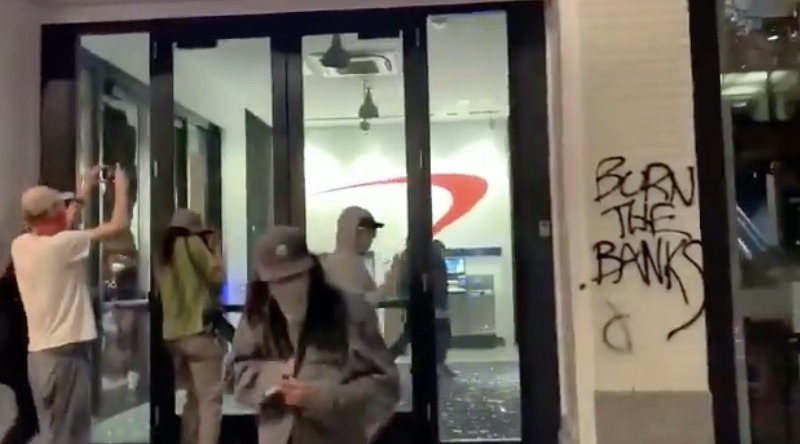
They cost human lives in terms of deferred medical treatmentThey cost human lives in terms of greater suicide and drug overdoses. Domestic abuse and child abuse have increased. There is also good reason to believe that lockdowns don’t actually work. The lockdown activists capitalized on media-stoked fear to push their authoritarian agenda based not on science, but on the whims of a handful of experts who insisted that they need not present any actual evidence that their bizarre, draconian, and extreme scheme was worth the danger posed to human rights, health, and the economic well-being of billions of human beings.

Those who lacked the obsessive and irresponsible tunnel vision of the prolockdown people warned that there were other dangers as well, in terms of social and political conflict.

It didn’t require an especially clear crystal ball to see that destroying the livelihoods of countless millions while empowering a police state to harass and arrest law-abiding citizens would create a situation that maybe—just maybe—could lead to greater social and political conflict.

Specifically, there are three ways in which the lockdowns laid the groundwork for our current state of unrest.

The Lockdowns Created an Economic Disaster

The COVID-19 stay-at-home orders, business closures, and other forms of coerced social distancing have so far led to job losses for well over 30 million Americans. The unemployment rate has risen to levels not seen since the Great Depression. Food banks are under strain as Americans line up for free food. Thanks to government moratoria on evictions in many areas, it is still unknown to what extent homeowners and renters are unable to pay mortgages and rents, but a wave of delinquencies is almost certainly coming.

To advocates of lockdowns, this is all “worth it” even though these sorts of economic stresses often lead to suicide, stress-induced disease, and death. But impoverishment, unemployment, and financial ruin are all merely “inconvenient,” as described by head lockdown advocate Anthony Fauci.

To someone who isn’t enamored of lockdowns, however, it is clear that millions of job losses are likely to worsen a variety of social ills, sometimes even resulting in violence. Moreover, the current job losses appear to be affecting the young and those who earn lower incomes most.

Lockdown advocates have attempted to avoid responsibility for all this by claiming that it is the pandemic itself that has caused the current economic disaster, and not the lockdowns. This is a baseless assertion. As has been shown, neither the pandemics of 1918 or 1958 led to the sorts of job losses and decline in economic growth that we’re now seeing.

The Lockdowns Destroyed Social Institutions

Another outcome of the lockdowns has been the destruction of American social institutions. These institutions include schools (both public and private), churches, coffee shops, bars, libraries, barbershops, and many others.

Lockdown advocates continue to claim that this is no big deal and insist that people just sit at home and “binge watch” television shows. But researchers have long pointed to the importance of these institutions in preserving peace and as a means of defusing social tensions and problems.

As much as lockdown advocates may wish that human beings could be reduced to creatures that do nothing more than work all day and watch television all night, the fact is that no society can long endure such conditions.

Human beings need what are known as “third places.” In a 2016 report, the Brookings Institution described what these places are:

the most effective ones for building real community seem to be physical places where people can easily and routinely connect with each other: churches, parks, recreation centers, hairdressers, gyms and even fast-food restaurants. A recent newspaper article on McDonald’s found that for lower-income Americans, the twin arches are becoming almost the equivalent of the English “pub,” which after all is short for “public house”: groups of retirees meeting for coffee and talk, they might hold regular Bible study meetings there, and people treat the restaurant as an inexpensive hangout.

Third places have a number of important community-building attributes. Depending on their location, social classes and backgrounds can be “leveled-out” in ways that are unfortunately rare these days, with people feeling they are treated as social equals. Informal conversation is the main activity and most important linking function. One commentator refers to third places as the “living room” of society.

The lockdown advocates, in a matter of a few days, cut people off from their third places and insisted, in many cases, that this would be the “new normal” for a year or more.

Yet, these third places cannot simply be shut down—and the public told to just forget about them indefinitely—without creating the potential for violence and other antisocial behavior.

Indeed, third places act as institutions that provide a type of social control that is key to a well-functioning society. In his trenchant book The Revolt of the Elites and the Betrayal of Democracy, historian and social critic Christopher Lasch described the importance of third places in communicating political and social values and conventions to young people, and in setting the bounds of acceptable behavior within the community. Lasch notes that these institutions are also important in defusing violent impulses among the young. Also of great importance is the fact that third places provide a means of social control that is voluntary and not a form of state coercion.

Writing in the 1990s, Lasch was lamenting the decline of third places, although he emphasized their importance even in their modern reduced form. Thanks to the lockdowns, however, these places have been crippled far beyond what Lasch might ever have imagined.

The Lockdowns Empowered the Police State

The lockdowns have created a situation in which millions of law-abiding citizens have been deemed criminals merely for seeking to make a living, leave their homes, or engage in peaceful trade.

In many areas, violations of the lockdown orders have been—or even still are, in many places—treated as criminal acts by police. This has greatly increased negative interactions between police and citizens who by no moral definition are criminals of any sort.

Many have already seen the stories: police arresting mothers for using playground equipment, police arresting business owners for using their own property, police beating people for the “crime” of standing on a sidewalk.

Complicating the issue is the apparent fact that police have not enforced social distancing edicts “uniformly.” Some have alleged, for example, that the NYPD has lopsidedly targeted nonwhites in enforcement:

of the 40 people arrested [for social distancing violations in Brooklyn between March 17 and May 4], 35 were African American, 4 were Hispanic and 1 was white. The arrests were made in neighborhoods—Brownsville, Bedford-Stuyvesant, Cypress Hills and East New York—which have large concentrations of blacks and Latinos.

This may or may not reflect the reality of the general situation, but the fact is that the lockdowns created the perception among many that this is just yet another case of law enforcement targeting certain populations over small-time violations.

Moreover, it is quite plausible that lower-income populations have more often been on the receiving end of state harassment in the name of social distancing. After all, compliance with lockdowns is something of a luxury reserved for higher-income, white-collar residents who can work from home and remain comfortable for long periods in their roomy houses. Working-class people and those with fewer resources are far more likely to need to find income and venture outside during lockdowns. This attracts the attention of police.

Lockdown advocates, apparently in their usual state of extreme naïvete, perhaps believed that further empowering police to violently enforce government decrees against petty infractions would not lead to any unfortunate side effects down the road. Yet criminalizing millions of Americans and subjecting them to heightened police harassment is not a recipe for social tranquility.

Worsening a Volatile Situation

Of course, my comments here should not be interpreted as making excuses for rioters. Smashing up the property of innocent small business owners—or worse, physically harming innocent people—is reprehensible in all circumstances. But this isn’t about making excuses. We’re talking about avoiding extreme and immoral government policies (i.e., police-enforced lockdowns) that remove those institutions and conditions which are important in helping minimize conflict.

Some may insist that the riots would have occurred no matter what, but it’s easy to see how the lockdowns made a bad situation worse. Yes, some of the rioters are lifelong thugs who are always on the lookout for new opportunities to steal and maim. But experience suggests that the pool of people willing to engage in riots is often larger during periods of mass unemployment than during other periods. In addition, those people who exist on the margins of criminality—the sorts of people for whom third places serve an important role in moderating their more antisocial tendencies—are more likely to be swept up in these events when third places are abolished. And, as we have seen, lockdowns also create more opportunities for police abuse that ignite riots of the sort we’ve seen in recent days.

It’s true the responsibility for the riots lies primarily with the rioters. But we cannot deny that policymakers fuel the flames of conflict when they outlaw jobs and destroy people’s social support systems by cutting them off from their communities. It’s also wise to not provoke people by pushing for widespread human rights violations and additional police harassment. But this is what lockdown advocates have done, and their imprudence should not be forgotten.

James Kunstler: That Change You Requested…?

Author James Howard Kunstler gives his opinion on recent events in That Change You Requested…?

All the previous incidents of white cops killing blacks were just too ambiguous to seal the deal. Michael Brown in Ferguson, Missouri (a murky business); Tamir Rice in Cleveland (waving the BB gun that looked like a .45 automatic); Trayvon Martin (his killer George Zimmerman was not a cop and was not “white”); Eric Garner, Staten Island (black policewoman sergeant on the scene didn’t stop it); Philando Castile, Minneapolis (the cop was Hispanic and the vic had a gun). Even the recent February killing of jogger Ahmaud Arbery in Brunswick, Georgia, had some sketchy elements (did Arbery try to seize the shotgun?) — YouTube has scrubbed the video (?) — and then it took months for the two white suspects (not cops) to be arrested.

The George Floyd killing had none of those weaknesses. Plus, the video presented a pretty much universal image of oppression: a man with his knee on another man’s neck. Didn’t that say it all?  You didn’t need a Bob Dylan song to explain it. The Minneapolis police dithered for four days before charging policeman Derek Chauvin with Murder 3 (unpremeditated, but with reckless disregard for human life). The three other cops on the scene who stupidly stood by doing nothing have yet to be charged. Cut it, print it, and cue the mobs.

The nation was already reeling from the weird twelve-week Covid-19 lockdown of everyday life and the economic havoc it brought to careers, businesses, and incomes. In Minnesota, the stay-at-home order was just lifted on May 17, but bars and restaurants were still closed until June. Memorial Day, May 25, was one of the first really balmy days of mid-spring, 78 degrees. People were out-and-about, perhaps even feeling frisky after weeks of dreary seclusion. So, once the video of George Floyd’s death got out, the script was set: take it to the streets!

Few Americans were unsympathetic to the protest marches that followed. Remorse, censure, and tears flowed from every official portal, from the mouth and eyes of every political figure in the land. The tableau of Officer Chauvin’s knee on Mr. Floyd’s neck was readymade for statuary. Indeed, there are probably dozens of statues extant in the world of just such a scene expressing one people’s oppression over another. And yet the public sentiments early-on after the George Floyd killing had a stale, ceremonial flavor: The people demand change! End systemic racism! No justice, no peace! How many times have we seen this movie?

What is changing — and suddenly — is that now it’s not just black people who struggle to thrive in the USA, but everybody else of any ethnic group who is not a hedge fund veep, an employee of BlackRock Financial, or a K-Street lobbyist — and even those privileged characters may find themselves in reduced circumstances before long. The prospects of young adults look grimmest of all. They face an economy so disordered that hardly anyone can find something to do that pays enough to support the basics of life, on top of being swindled by the false promises of higher education and the money-lending racket that animates it.

So, it’s not surprising that, when night falls, the demons come out. Things get smashed up and burned down. And all that after being cooped up for weeks on end in the name of an illness that mostly kills people in nursing homes. Ugly as the ANTIFA movement is, it’s exactly what you get when young people realize their future has been stolen from them. Or, more literally, when they are idle and broke and see fabulous wealth all around them in the banks’ glass skyscrapers, and the car showrooms, and the pageants of celebrity fame and fortune on the boob tube. They are extras in a new movie called The Fourth Turning Meets the Long Emergency but they may not know it.

Hungry for change? You won’t have to wait long. This society may be unrecognizable in a few months. For one thing, there’s a good chance that the current violence in the streets won’t blow over as it has before. There hasn’t been such sudden, massive unemployment before, not even in the Great Depression — and we’re not even the same country that went through that rough episode. Just about every arrangement in contemporary life is on-the-rocks one way or another. Big business, small business, show business… it’s all cratering. The great big secret behind all that is not that capitalism failed; it’s that the capital in capitalism isn’t really there anymore, at least not in the amounts that mere appearances like stock valuations suggest. We squandered it, and now our institutions are straining mightily to pretend that “printing” money is the same as capital. (It’s just more debt.) Note, the stock markets are up this morning at the open! Go figure….

Change? We’re getting it good and hard, and not at a rate we were prepared for. It’s hugely disorienting. It produces friction, heat, and light, which easily becomes violence. There’s, for sure, plenty we can do to make new arrangements for American life without becoming communists or Nazis, but a lot of activities have to fail before we see how that could work. The overburden of obsolete complexity is crushing us, like Derek Chauvin’s knee on George Floyd’s neck. They were both, in their way, common men, caught in the maelstrom of metaphor. That proverbial long, hot summer we’ve heard about for so long…? It’s here.

Liberty Blitzkrieg: We’re in the Thick of it Now

Michael Krieger of Liberty Blitzkrieg writes about recent rioting and government tyranny in We’re in the Thick of It Now – What Happens Next?

It’s with an extremely heavy heart that I sit down to write today’s post. Although widespread civil unrest was easy to predict, it doesn’t make the situation any less sad and dangerous. We’re in the thick of it now, and how we respond will likely determine the direction of the country for decades to come.

If the combination of peaceful protesting, looting and violence witnessed across American cities over the past few days completely caught you off guard, you’re likely to come to the worst possible conclusion about what to do next. The knee-jerk response I’m already seeing from many is to crush the dissent by all means necessary, but that’s exactly how you give the imperial state and oligarchy more power. Power it will never relinquish.

The pressure cooker situation that erupted over the weekend has been building for five decades, but really accelerated over the past twenty years. After every crisis of the 21st century there’s been this “do whatever it takes mentality,” which resulted in more wealth and power for the national security state and oligarchy, and less resources, opportunities and civil liberties for the many. If anything, it’s surprising it took so long to get here, partly a testament to how skilled a salesman for the power structure Obama was.

The covid-19 pandemic, related societal lockdown and another round of in your face economic looting by Congress and the Federal Reserve merely served as an accelerant, and the only thing missing was some sort of catalyst combined with warmer weather. Now that the eruption has occurred, I hope cooler heads can prevail on all sides.

On the one hand, you can’t pillage the public so blatantly and consistently for decades while telling them voting will change things and not expect violence once people realize it doesn’t. On the other hand, street violence plays perfectly into the hands of those who would take the current moment and use it to advocate for a further loss of civil liberties, more internal militarization, and the emergence of an overt domestic police state that’s been itching to fully manifest since 9/11.

It’s my view we need to take the current moment and admit the unrest is a symptom of a deeply entrenched and corrupt bipartisan imperial oligarchy that cares only about its own wealth and power. If people of goodwill across the ideological spectrum don’t take a step back and point out who the real looters are, nothing’s going to improve and we’ll put another bandaid on a systemic cancer as we continue our longstanding march toward less freedom and more authoritarianism.

While we aren’t going to solve everything at once, something should be done as soon as possible to at least partially address current anger and frustration.

Clearly there’s a major problem when it comes to policing in America, particularly in poor inner-city communities. Let’s start by ending qualified immunity.

Qualified immunity, created by the Supreme Court in the 1970s, shields police and other government officials from liability in civil rights lawsuits when the illegality of their actions was not “clearly established” at the time of the offense.

Attorneys representing the families of Floyd, Ahmaud Arbery, and Breonna Taylor called for policing reforms—including rolling back qualified immunity—at a press conference today…

While it may seem like George Floyd’s right to not be choked to death by a police officer would be rather obvious, the fuzzy phrase “clearly established” has evolved over time to become a pedantic and unforgiving standard. Plaintiffs are often required to go fishing for cases that match their exact circumstances, lest their lawsuit get tossed. Last year, a 9th Circuit Court of Appeals panel granted qualified immunity to an officer who, without warning, shot a 15-year-old holding an airsoft gun. 

Ending qualified immunity may seem like a small thing, but it’s an important step toward adding some accountability to those in positions of power. As it stands, power at all levels in our society largely operates above the law. This applies to politicians, national security state operatives, CEOs, Wall Street, the police, and of course, Jeffrey Epstein. Those in positions to do the most damage to society are simultaneously most immune from the consequences of their actions. This is a core systemic problem in our country, so let’s take a small step and start with qualified immunity for police officers while the opportunity exists. From there we can turn our attention to the bigger fish.

I understand my message will likely fall on deaf ears, and I’m used to things not going the way I want them to. I have no idea where society will go from here, but I know we’re at a key inflection point in our nation’s history. We can begin to turn this thing around, or we can go totally off the deep end. Try to be as creative, constructive and conscious as possible during these trying times.

See also Michael Snyder’s The Horrifying Civil Unrest We Have Been Warning You About Is Here, And America Is Literally Coming Apart At The Seams at TMIN.

For a very long time, many of us have been loudly warning the American people that this was coming.  The mainstream media and many of our national leaders have been fanning the flames of hatred, anger, frustration and division on a daily basis for many years, and it was just a matter of time before we witnessed an eruption of violence of this magnitude.  Over the last week, we have seen protests in at least 145 different U.S. cities, and reports of rioting, looting and violence are coming in so fast that it is literally impossible to keep up with them all.  So far, at least 40 U.S. cities have imposed curfews, the National Guard has been activated in at least 15 states, and at least 4,100 people have been arrested.  On Sunday night, the violence in Washington D.C. became so alarming that President Trump was actually rushed to a secret bunker under the White House

The Prepared Homestead: The Most Important Self-Defense Principle

Sean of The Prepared Homestead talks about the most important self-defense principle in this video.

This principle is foundational in the self defense world. It is more important than studying the martial arts, owning and training with a firearm etc… it is to avoid dangerous places and people. It’s so simple but will keep you clear of the vast majority of potential problems. In this video I cover a couple of key points regarding this principle like the Gift of Fear and situational awareness.

https://www.youtube.com/watch?v=uVXoAAC4JlU

The Organic Prepper: How to Survive Riots and Civil Unrest

Photo courtesy Reuters

Daisy Luther at The Organic prepper writes about How to Survive Riots and Civil Unrest.

As the world seems to be on fire in countries across the planet, the threat of civil unrest and riots certainly feels like it’s increasing. People are responding with rage to perceived injustices, and whether that rage is warranted or not isn’t the point of this article.

Often when I write about surviving events like mass shootings or riots, people scoff and say, “That was a false flag perpetrated by government operatives” or “Those people got paid by [insert evil billionaire here.]” The simple fact you must understand is that it doesn’t matter who started it, who paid for it, who instigated it, or who is taking part in it. If you find your city or town under siege by irate protesters, none of those things matter at the moment. These are things to be sorted out later.

What matters is how to survive and how to keep your loved ones safe. What we witnessed via social media of the riots in Chile should be enough to make anyone want to be prepared.

The idea of an angry mob appearing in your neighborhood is a frightening one but understanding more about the patterns of civil unrest can make it feel a bit more manageable.

It happens fast

It’s extremely important to understand how speedily riots can occur. In his newsletter, Simon Black of Sovereign Man wrote of his ties to Chile. He shared an eyewitness account.

…this past Friday was a particularly beautiful day. By lunchtime, people were out in the parks enjoying the weather. It was calm, peaceful, and joyful.

Within a matter of hours the city had turned into a war zone. Hours.

One of my team members told me on the phone yesterday, “If you had said on Friday afternoon that Santiago would be in chaos by nightfall, I would have laughed… And then it happened.” (source)

Never underestimate the power, rage, and motivation of a mob. Never think it can’t happen where you are.

There’s a distinct pattern to civil unrest.

Civil unrest can be predicted to some degree. Jose shared some of the warning signs he has observed and they all share their part in this pattern.

Here’s how a protest turns into a riot:

  • A perceived outrage occurs.
  • Good people react and protest the outrage.
  • Sometimes there are not-so-good people in the group, those who want to see violence.
  • Those perpetrating the outrage try to quell the protest because they don’t think that the outrage was actually outrageous.
  • Others react to the quelling and join the protest.
  • A mob mentality erupts. Thugs say, “Hey, it’s a free for all. I’m gonna get some Doritos and while I’m at it, beat the crap out of some folks for fun.”
  • All hell breaks loose.
  • The police and military get called in.
  • The city burns, and neighborhoods get destroyed, and no one in the area is safe.
  • Cops act preemptively, out of fear, and for a time, there is no rule of law.
  • If you happen to be stuck there, know this: you’re completely on your own.

Tess Pennington wrote about societal breakdowns in more detail – read her excellent article for more information on these predictable scenarios.

The mob mentality and Freud

Some people are just waiting for the opportunity to behave in this fashion. They’d love to act like that every single day, but they don’t want to spend the rest of their lives in jail. But when a verdict gets rolled out, when a storm takes out the power, when a disaster strikes, they delight in the chance to rob, pillage, loot, and burn.  Who can forget the day before Superstorm Sandy hit the East Coast, when thugs were coordinating looting rampages via Twitter?

I remember learning about “sublimation” in a high school psychology class.

Sublimation is a defense mechanism that allows us to act out unacceptable impulses by converting these behaviors into a more acceptable form. For example, a person experiencing extreme anger might take up kickboxing as a means of venting frustration. Freud believed that sublimation was a sign of maturity that allows people to function normally in socially acceptable ways. (source)

If you believe Freud’s theory, then it’s easy to see that many people look for an excuse to revert to their true natures.  In a situation where “everyone” is doing something, they are able to cast off the normal control of their impulses without much fear of reprisal. The number of looters and thugs far outstrip the number of arrests in most situations, so there’s a very good chance that someone swept up in that mentality can go burn somebody else’s home or business and completely get away with it.

In his course, One Year in Hell, Selco recounts how quickly and shockingly the SHTF in his Bosnian city. He explains that any time a group of people becomes violent, it’s possible for it to turn into a longer-term event than just a few rough days.

Never think “it can’t happen here.”

Remember in 2015 when Baltimore, Maryland was a war zone? It may have given you a sense of deja vu, flashing back to the fall when Ferguson, Missouri was under siege. We’ve seen riots in Sacramento, California; Milwaukee, Wisconsin (which the media lied about); Charlottesville, Virginia; Portland, Oregon; and all over the nation after the presidential election in 2016.

And it didn’t slow down after the election. Portland has been the site of numerous protests that were really just all-out street fights and the police were ordered to stand down.

Some of the following information appears in my book, Be Ready for Anything, which has an entire chapter dedicated to surviving civil unrest.

How to survive a riot or unrest event

When you understand the patterns discussed above, you can make your plan with a bit more authority. But remember that no plan is engraved in stone in the survival world. You’ve got to be ready to pivot to Plan B in the blink of an eye if information arises that makes Plan A no longer the safest.

This article is about the safest ways to survive civil unrest. It’s not about making a stand or teaching those punks a lesson.  There’s always someone who chimes in with a snide remark about how cowardly it is to lockdown with your family in order to stay safe.

Blah, blah, blah. If you want to go get involved in a battle to make a political point, that’s certainly your prerogative. If you want to fight the police enforcing martial law, it’s your call.

However, if your priority is your own safety and the safety of your family, the goal should be to avoid engaging altogether. This article is about surviving, not about How Things Should Be.

Get everyone together

If your area is beginning to devolve, the first thing you’re going to want to do is to get everyone in the family home or to a safer secondary location.)

In a perfect world, we’d all be home, watching the chaos erupt on TV from the safety of our living rooms.  The reality is, family members are likely to be at work or school when things start to break down. You need to have a plan laid out in advance to get everyone together and you need to be flexible enough to know when to move on to Plan B.

  • Devise an efficient route for picking up the kids from school.  Be sure that anyone who might be picking up the children already has permission to do so in the school office.
  • Find multiple routes home. Map out alternative backroad ways to get home as well as directions if you must go home on foot.
  • Find places to lay low along the way.  If you work or go to school a substantial distance from your home, figure out some places to lay low now, before a crisis situation.  Sometimes staying out of sight is the best way to stay safe.
  • Avoid groups of people – it doesn’t take much to turn a peaceful protest into a riot.
  • Keep in mind that in many civil disorder situations the authorities are to be avoided every bit as diligently as the angry mobs of looters. The police won’t stop to ask you questions nicely in a tense situation. You’ll be treated as a threat.

Know when to abandon the plan to get home. Sometimes, you just can’t get there. Going through a war zone is not worth it. Find a different place to shelter. Pay attention to your instincts…(continues)

Wikipedia Co-Founder Larry Sanger Says Site Is Badly Biased Against Conservatives

This will come as no surprise to most readers here, but Larry Sanger, co-founder of encyclopedic site Wikipedia.com, says that the site has lost its original neutral point of view and is now badly biased against conservative viewpoints. Many people consider the site as the go to place to find information about various topics and things, as a launching point for further research or as the end of their research, so it is sad that it has devolved into such unreliable disarray.

Wikipedia’s “NPOV” is dead.1 The original policy long since forgotten, Wikipedia no longer has an effective neutrality policy. There is a rewritten policy, but it endorses the utterly bankrupt canard that journalists should avoid what they call “false balance.”2 The notion that we should avoid “false balance” is directly contradictory to the original neutrality policy. As a result, even as journalists turn to opinion and activism, Wikipedia now touts controversial points of view on politics, religion, and science. Here are some examples from each of these subjects, which were easy to find, no hunting around. Many, many more could be given.

Wikipedia’s favorite president?

Examples have become embarrassingly easy to find. The Barack Obama article completely fails to mention many well-known scandals: Benghazi, the IRS scandal, the AP phone records scandal, and Fast and Furious, to say nothing of Solyndra or the Hillary Clinton email server scandal—or, of course, the developing “Obamagate” story in which Obama was personally involved in surveilling Donald Trump. A fair article about a major political figure certainly must include the bad with the good. The only scandals that I could find that were mentioned were a few that the left finds at least a little scandalous, such as Snowden’s revelations about NSA activities under Obama. In short, the article is almost a total whitewash. You might find this to be objectively correct; but you cannot claim that this is a neutral treatment, considering that the other major U.S. party would treat it differently. On such a topic, neutrality in any sense worth the name essentially requires that readers not be able to detect the editors’ political alignment.

Not Wikipedia’s favorite president

Meanwhile, as you can imagine, the idea that the Donald Trump article is neutral is a joke. Just for example, there are 5,224 none-too-flattering words in the “Presidency” section. By contrast, the following “Public Profile” (which the Obama article entirely lacks), “Investigations,” and “Impeachment” sections are unrelentingly negative, and together add up to some 4,545 words—in other words, the controversy sections are almost as long as the sections about his presidency. Common words in the article are “false” and “falsely” (46 instances): Wikipedia frequently asserts, in its own voice, that many of Trump’s statements are “false.” Well, perhaps they are. But even if they are, it is not exactly neutral for an encyclopedia article to say so, especially without attribution. You might approve of Wikipedia describing Trump’s incorrect statements as “false,” very well; but then you must admit that you no longer support a policy of neutrality on Wikipedia.

I leave the glowing Hillary Clinton article as an exercise for the reader.

“Prior to prohibition, cannabis was available freely in a variety of forms,” says Wikipedia, helpfully.

Wikipedia can be counted on to cover not just political figures, but political issues as well from a liberal-left point of view. No conservative would write, in an abortion article, “When properly done, abortion is one of the safest procedures in medicine,” a claim that is questionable on its face, considering what an invasive, psychologically distressing, and sometimes lengthy procedure it can be even when done according to modern medical practices. More to the point, abortion opponents consider the fetus to be a human being with rights; their view, that it is not safe for the baby, is utterly ignored. To pick another, random issue, drug legalization, dubbed drug liberalization by Wikipedia, has only a little information about any potential hazards of drug legalization policies; it mostly serves as a brief for legalization, followed by a catalog of drug policies worldwide. Or to take an up-to-the-minute issue, the LGBT adoption article includes several talking points in favor of LGBT adoption rights, but omits any arguments against. On all such issues, the point is that true neutrality, to be carefully distinguished from objectivity, requires that the article be written in a way that makes it impossible to determine the editors’ position on the important controversies the article touches on.

Gospel reliability is “uncertain,” Wikipedia says, neutrally.

What about articles on religious topics? The first article I thought to look at had some pretty egregious instances of bias: the Jesus article. It simply asserts, again in its own voice, that “the quest for the historical Jesus has yielded major uncertainty on the historical reliability of the Gospels and on how closely the Jesus portrayed in the Bible reflects the historical Jesus.” In another place, the article simply asserts, “the gospels are not independent nor consistent records of Jesus’ life.” A great many Christians would take issue with such statements, which means it is not neutral for that reason—in other words, the very fact that most Christians believe in the historical reliability of the Gospels, and that they are wholly consistent, means that the article is biased if it simply asserts, without attribution or qualification, that this is a matter of “major uncertainty.” In other respects, the article can be fairly described as a “liberal” academic discussion of Jesus, focusing especially on assorted difficulties and controversies, while failing to explain traditional or orthodox views of those issues. So it might be “academic,” but what it is not is neutral in the original sense we defined for Wikipedia.

Of course, similarly tendentious claims can be found in other articles on religious topics, as when the Christ (title) article claims,

Although the original followers of Jesus believed Jesus to be the Jewish messiah, e.g. in the Confession of Peter, Jesus was usually referred to as “Jesus of Nazareth” or “Jesus, son of Joseph”.[11] Jesus came to be called “Jesus Christ” (meaning “Jesus the Khristós”, i.e. “Jesus the Messiah” or “Jesus the Anointed”) by later Christians, who believe that his crucifixion and resurrection fulfill the messianic prophecies of the Old Testament.

This article weirdly claims, or implies, a thing that no serious Biblical scholar of any sort would claim, viz., that Jesus was not given the title “Christ” by the original apostles in the New Testament. These supposed “later Christians” who used “Christ” would have to include the apostles Peter (Jesus’ first apostle), Paul (converted a few years after Jesus’ crucifixion), and Jude (Jesus’ brother), who were the authors of the bulk of the epistles of the New Testament. “Christ” can, of course, be found frequently in the epistles.3 Of course, those are not exactly “later Christians.” If the claim is simply that the word “Christ” does not appear much in the Gospels, that is true enough (though it can be found four times in the book of John), but it is also a reflection of the fact that the authors of the Gospels instead used “Messiah,” and quite frequently; the word means much the same as “Christ.” For example, he is called “Jesus the Messiah” in the very first verse of the New Testament (Matthew 1:1). Clearly, these claims are tendentious and represent a point of view that many if not most Christians would dispute.

It may seem more problematic to speak of the bias of scientific articles, because many people do not want to see “unscientific” views covered in encyclopedia articles. If such articles are “biased in favor of science,” some people naturally find that to be a feature, not a bug. The problem, though, is that scientists sometimes do not agree on which theories are and are not scientific. On such issues, the “scientific point of view” and the “objective point of view” according to the Establishment might be very much opposed to neutrality. So when the Establishment seems unified on a certain view of a scientific controversy, then that is the view that is taken for granted, and often aggressively asserted, by Wikipedia.

Neutral information, representing a scientific consensus with no dissent, I’m sure.

The global warming and MMR vaccine articles are examples; I hardly need to dive into these pages, since it is quite enough to say that they endorse definite positions that scientific minorities reject. Another example is how Wikipedia treats various topics in alternative medicine—often dismissively, and frequently labeled as “pseudoscience” in Wikipedia’s own voice. Indeed, Wikipedia defines the very term as follows: “Alternative medicine describes any practice that aims to achieve the healing effects of medicine, but which lacks biological plausibility and is untested, untestable or proven ineffective.” In all these cases, genuine neutrality requires a different sort of treatment.

Again, other examples could be found, in no doubt thousands of other, perfectly unexciting topics. These are just the first topics that came to mind, associated as they are with the culture wars, and their articles on those topics put Wikipedia very decidedly on one side of that war. You should not be able to say that about an encyclopedia that claims to be neutral.

It is time for Wikipedia to come clean and admit that it has abandoned NPOV (i.e., neutrality as a policy). At the very least they should admit that that they have redefined the term in a way that makes it utterly incompatible with its original notion of neutrality, which is the ordinary and common one.4 It might be better to embrace a “credibility” policy and admit that their notion of what is credible does, in fact, bias them against conservatism, traditional religiosity, and minority perspectives on science and medicine—to say nothing of many other topics on which Wikipedia has biases.

Of course, Wikipedians are unlikely to make any such change; they live in a fantasy world of their own making.5

The world would be better served by an independent and decentralized encyclopedia network, such as I proposed with the Encyclosphere. We will certainly develop such a network, but if it is to remain fully independent of all governmental and big corporate interests, funds are naturally scarce and it will take time.


  1. The misbegotten phrase “neutral point of view” is a Jimmy Wales coinage I never supported. If a text is neutral with regard to an issue, it lacks any “point of view” with regard to the issue; it does not take a “neutral point of view.” My preferred phrase was always “the neutrality policy” or “the nonbias policy.”[]
  2. On this, see my “Why Neutrality?“, published 2015 by Ballotpedia.[]
  3. Both in the form “Jesus Christ” (e.g., 1 Peter 1:1, Jude 1:1) and in the form “Christ Jesus” (1 Corinthians 1:2).[]
  4. That it was Wikipedia’s original notion, see the Nupedia “Lack of Bias” policy, which was the source of Wikipedia’s policy, and see also my final (2001) version of the Wikipedia neutrality policy. Read my “Why Neutrality?” for a lengthy discussion of this notion.[]
  5. UPDATE: In an earlier version of this blog post, I included some screenshots of Wikipedia Alexa rankings, showing a drop from 5 to 12 or 13. While this is perfectly accurate, the traffic to the site has been more or less flat for years, until the last few months, in which traffic spiked probably because of the Covid-19 virus. But since the drop in Alexa rankings do not seem to reflect a drop in traffic, I decided to remove the screenshots and a couple accompanying sentences.[]