There’s a common misconception in the Survivalist community. “I’ll retreat…get away from the major population centers…work to live off the grid…and let the urban hellholes rot.”
Well…about that.
Rural living is, for all intents and purposes, a better way to live. We’re more in tune with the natural world by and large, not in spite of it, and for the most part the lifestyle lends itself well to harder people used to doing without. And for people like me, there’s nothing that replaces the generations-deep connections to your homeland. The people there are your people- and in spite of differences, there is a deeply ingrained love of place. It is home.
Sounds good until the problems begin to bubble up. The first issue is questioning exactly how many in those rural areas are actually self-sufficient. That answer is probably few. And the rates of addiction and substance abuse is in turn shockingly high, correlated with the inevitable poverty rate. This was not by accident. The trailer-hood is a thing. Opioids were dumped on our population by Big Pharma, just as with the rise of decentralized meth manufacturing two decades earlier, and the crack epidemic which made its way into rural America just the same as the well-publicized urban epidemics during the 1990s. Home invasions and thefts are the norm.
No, not quite the retreat paradise the suburbanites had envisioned…is it?
Dusting off the old sociology coursework, I’d argue rather convincingly that this creates a populace primed for violent revolution. Decades of institutionalized poverty have created a primed pump. This in turn is a reality that one group on the Left whole-heartedly is attempting to exploit (albeit self defeated at times): Redneck Revolt.
You may not think much of this crowd pictured, but the guy standing, centered, is a political science professor from UNC. He’s got an unlimited pool from which to recruit and influence. A strong place to be for a revolutionary leader.
Interesting bit there. While the Left is no stranger to infighting, at a possibly even worse level than their counterparts on the Right, Redneck Revolt admittedly is correct in focusing on rural areas as a vanguard for fomenting revolution. This is reflective of the strategy employed by Che Guevara’s opinion on the same from his work Guerrilla Warfare. They are seeking to exploit the social and economic realities for their benefit. While the gun community snobs look down on guys with inexpensive gear, cheap weapons and optics, and a general lack of cool-guy bravado, they wholly embrace it. Its a more effective recruiting model than belittling a guy to whom $20 may mean the difference between if his kids eat why he can’t afford a NightForce and BCM AR-15.
This image is of a self-described Antifa Guerrilla while fighting in Syria, equipped with both day and night optics. Think they haven’t brought that training back to the US?
This creates a serious potential in the rural areas. For all those I’ve personally heard claiming ‘that can’t happen here’, I argue that not only can a rural area be overrun quickly, but, without training and networking small isolated homesteads are easy pickings for a small team of determined attackers. With only one or two real trigger pullers in a home and little to no warning against a force that likely is well equipped with enablers such as night vision and thermal, you’d be easy pickings in the event that big balloon goes up.
So this begs the question as to mitigating this threat.
Take every opportunity to get to know your neighbors and bring something of value to the table. Understand that if you’re an outsider to a rural place, you’ll be exactly that for years. Rural folks are slow to warm up to new people. Be quick and receptive to taking advice and rare to give it yourself.
Take every opportunity to embrace the tradition of a place. The Left abhors tradition and the authority inherent in it. They exist to destroy it, viewing it only as an oppressive force maintaining status and social domination. Celebrate traditions and be a fixture in Church.
Stop saying ‘it can’t happen here.’ It absolutely can, and likely will, post-election. A normalcy bias exists, especially among rural areas and so-called retreatists, that they’re somehow exempted from all this. You’re not. The Left has been laying the groundwork for their revolution for well over 100 years and despite a few setbacks, plan to steamroll ahead.
Build an off-grid communications network. This is invaluable for early warning and critical for rural defense. Reliance on phone networks is problematic for a lot of reasons but central to that is its inherent fragility. I’ve been re-running old American Partisan communications articles on Brushbeater to refresh that knowledge, but nothing replaces training. Get some.
Get Training. This is the urgent one. Whether its from a course I’m running, or one of the many run by fellow American Partisan contributors and trainers such as Sam Culper or JC Dodge, you owe it to yourself to learn from those that have the real-world bona-fides in their specific areas of interest. In fact, JC Dodge has a course coming up just after the election- go train with him.
The next seven days in America will tell us much about the shaping of our future as a nation, but the days after it will tell us much more. The Left sees an opportunity, and while many on the Right have completely written off the threat posed to rural areas by Redneck Revolt, I contend, with a substantial amount of history to back it up, that for rural areas the threat may very well be the highest.
Covid-19 has occupied nearly all media attention, but foreign policy remains an important topic for many Americans who are exhausted by the prevailing order of never-ending wars. Lost in the usual cacophony of politics in the Trump era—which has been marked by outrage politics and a lack of introspection in discourse—are any in-depth discussions about making changes to America’s foreign policy quagmire. For some people who became disenchanted with the nation-building adventures of the Bush and Obama eras, the election of Donald Trump in 2016 presented a glint of hope.
Although he is no dyed-in-the-wool noninterventionist, Trump questioned a number of the shibboleths of the contemporary foreign world order that places America as the unquestioned savior of the world. Some members of the foreign policy blob (or the Blob) were so taken aback by Trump’s criticism of the North Atlantic Treaty Organization (NATO) during the campaign trail that some feared he would have the US completely leave the military alliance. If only!
History has repeatedly shown, however, that what is said on the campaign trail does not exactly translate into tangible results. Although Trump was able to get NATO member countries such as Germany to pull more of their weight by increasing military spending to comply with NATO standards, NATO remains intact and is still being used to counter the alleged Russian Bear. The fact remains that NATO is a dinosaur of the bygone Cold War era and serves no real national interests in the present.
Nonetheless, Trump’s conversation about having European countries spend more on defense is somewhat encouraging, inasmuch as it makes the idea of countries with an American military presence assuming their defense functions slightly more palpable. Ideally, this would occur outside the NATO framework, as countries start providing for their own defense while America scales back its military presence in said countries and focuses more on its domestic affairs. Alas, we don’t operate in such circumstances.
It is amusing how foreign policy elites’ feathers continue to be ruffled by an administration that hasn’t done much to scale back the military-industrial complex (despite a lot of negative talk directed toward it from the president himself) nor to reduce America’s global footprint abroad. Take, for example, former vice president Dick Cheney. The former member of the Bush brain trust expressed his dismay with President Donald Trump’s supposedly “transactional” foreign policy of weighing the costs and benefits of a number of alliances and partnerships the US has made with other countries over the years. Yes, a transactional foreign policy is not ideal, but it’s a marginal improvement over the missionary role America has taken during the last century. A transactional foreign policy actually takes into consideration that there are actual costs—human and financial—when projecting power abroad.
Many on the mainstream right correctly observe that there are no free lunches in matters of domestic economics. But when foreign policy comes up similar logic escapes them. With over eight hundred bases across the globe and a military budget larger than the next ten highest-spending militaries combined, the US is clearly putting too much of an emphasis on policing the world, when there are plenty of countries that are willing and capable of defending themselves if given the chance. Plus, the US has many domestic problems—from economic uncertainty to social tension—that it will need to sort out in the next few decades.
Most of the liberal and conservative establishment is trapped in outdated twentieth-century notions of foreign policy strategy and is not aware of notable geopolitical realignments taking place across the globe. US policymakers will have to live with the fact that the US cannot police every corner of the world. Additionally, should the US government get overzealous, there will be countries ready to resist American efforts to expand its influence and make potential interventions costly.
The talk about an “America First” foreign policy has been refreshing, but the U.S. has yet to commit to a coherent withdrawal policy. You either have the likes of Liz Cheney leading a bipartisan coalition in the US House to roadblock any withdrawal efforts, or even worse, when the administration announces some form of troop reduction, the generals remain quiet or say that the withdrawal must be “conditions based.” All these roadblocks make one wonder who really calls the shots on foreign policy. With how radically the US state has transformed over the last century, the straightforward policymaking guide that the Constitution originally laid out looks more and more like a dead letter. Unelected bureaucrats and foreign policy officials seem to be the ones actually running the show while presidents function as mere placeholders.
On a more positive note, the Trump administration has made some solid nominations for the positions of ambassador to Afghanistan and ambassador to Germany. William Ruger (the nominee for the Afghanistan ambassadorship) and Douglas Macgregor (the nominee for the German ambassadorship) are both critics of the US government’s perpetual war strategy and overreliance on a militarized foreign policy. As evidence of how dangerous their views are to the foreign policy establishment, both nominees have received stiff opposition from liberal interventionist to neoconservative circles—a solid sign that they’re good choices, but also an indicator that their nominations will likely be torpedoed.
If you think change will come about by getting rid of Trump, think again. Trump’s opposition is simply nothing to write home about. A Biden-Harris administration would do very little to the warfare state. We shouldn’t be fooled by any clever marketing that Trump’s rivals put forward. They’re not a saner, more level-headed alternative to the supposedly erratic Trump. As Ryan McMaken makes clear, the Democratic duo will continue operating within the same parameter of never-ending wars and not fundamentally reorient foreign policy toward restraint. Defense contractors can be confident that business will go on as usual. This is the tragedy of modern-day politics, which is dominated by a uniparty that broadly agrees on foreign policy questions.
Marginal changes in personnel and political leadership are always welcome, but they ignore a fundamental precondition for any meaningful change in policy—a shift in political ideas; namely, a rejection of the progressive liberal ethos of American foreign policy, which international relations scholar Kevin Doremusbelieves has the objective of “providing global security, global capitalism, democracy, and peace.”
The irony of this foreign policy outlook is that it ignores how liberalism came about in the first place. It was not brought about by putting GIs on the ground or through subversive forms of soft power, such as color revolutions, but rather emerged in the West through organic processes such as decentralization and jurisdictional competition. While certain countries can embrace Western institutions and reap great success, Doremus observed that the “combination of universal liberal values with the unmatched US military power leads to advocates ignoring the historical and cultural contexts of other countries” and make them believe that the US government can poke and prod countries into becoming facsimiles of America and other Western liberal democracies.
Like all forms of intervention, unintended consequences are bound to occur. They can come in the form of blowback or the development of balancing coalitions such as the emerging China-Iran-Russia axis, which has surfaced in response to perceived overreach by hegemonic states such as the US. The rise of illiberalism on the international stage is largely the product of a US government full of imperial hubris that doesn’t take into account cultural differences among polities and whose first instinct is to browbeat countries that don’t conform to its agenda.
The power of ideas cannot be overstated in the struggle to chart a new path for foreign policy. As Ludwig von Mises explained in Epistemological Problems of Economics, “No one can escape the influence of a prevailing ideology.” The same dynamic is in play with regard to foreign policy. Unless there’s a massive shift in consciousness in public opinion both domestically and abroad that recognizes how social engineering does not work, the ruling class will constantly be promoting regime change endeavors and other militaristic adventures with little to no pushback.
As of this morning, Oct. 28th, 2020, the Hurricane Watch Net is active on 14.325MHz for Hurricane Zeta, which is expected to make landfall in eastern Louisiana and/or Mississippi later today.
The Hurricane Watch Net will activate Wednesday morning at 11:00 AM EDT (1500 UTC) on 14.325.00 MHz for Hurricane Zeta. We will begin simultaneous operations on 7.268.00 MHz beginning at 5:00 PM EDT (2100 UTC). Once activated, we will remain in operation on 14.325.00 MHz for as long as we have propagation. We will remain on 7.268.00 MHz until after Zeta is downgraded to a Tropical Storm or we lose propagation, whichever occurs first.
Zeta is forecast to be a Category 1 Hurricane when it makes landfall somewhere in southeast Louisiana late Wednesday evening.
As with any net activation, we request observed ground-truth data from those in the affected area (Wind Speed, Wind Gust, Wind Direction, Barometric Pressure – if available, Rainfall, Damage, and Storm Surge). Measured weather data is always appreciated but we do accept estimated.
We are also available to provide backup communications to official agencies such as Emergency Operations Centers, Red Cross officials, and Storm Shelters in the affected area. We will also be interested to collect and report significant damage assessment data back to FEMA officials stationed in the National Hurricane Center.
As always, we are praying and hoping for the best yet preparing for the worst.
One week before the hotly contested presidential election that has fanned emotions on both sides, law enforcement agencies across the region are preparing for the possibility of civil unrest erupting in Washington state..
“We are making preparations and hoping for the best (but are) concerned about widespread civil unrest,” said Bellevue Police Department Chief Steve Mylett.
Some law enforcement agencies that are tracking extremist activity say they are seeing increased chatter among right-wing extremist groups.
“A lot of the chatter we’ve picked up over the last few weeks has been more directed at post-election civil unrest,” said Devin Burghart, executive director for the Institute for Research and Education on Human Rights, who has been monitoring elections professionally since 1993. “Talk of an impending civil war, depending on the election results and the taking back of America have certainly dominated those far-right corners.”
Burghart said his team has been monitoring the rhetoric at recent large gathering, on social media, walkie talkie apps and on HAM radios.
“This is the highest level of intensity we’ve seen in that entire time, by far,” Burkhart said, who added that the chatter so far has not amounted to any real threats in the Pacific Northwest.
Burghart believes the failed plot to kidnap Michigan Gov. Gretchen Whitmer has deterred other extremist activity.
A spokesperson for the Seattle Police Department said the agency is ensuring they’re fully staffed around the November election date.
“The Seattle Police Department has limited time-off for personnel around November 3rd to ensure the department is able to adequately provide public safety services at any events, gatherings or demonstrations related to the election,” said police Sgt. Randy Huserik in a written statement Monday.
He also pointed to the readiness of the Community Response Group, a recently launched team, should an unplanned, large-scale event occur in the aftermath of the vote.
The Washington National Guard is also training crews in preparation for potential deployment.
“The Washington National Guard is merely taking proactive steps to ensure our men and women are properly trained and ready should local jurisdictions or law enforcement agencies need us,” said Karina Shagren, spokesperson for the Guard.
Shagren said crews are receiving the same training they received ahead of supporting local law enforcement agencies in Seattle and Bellevue during summer protests.
Officials in the FBI’s Seattle office said they are not aware of any legitimate plans for violence or unrest before, on or immediately after election day.
“We don’t have any specific credible threats here in Seattle,” said Assistant Special Agent in Charge. Abass Golfrey.
He said the office is planning on establishing a local command post ahead of the election and working with other local agencies to ensure national security through the election.
“Yes, there is heightened stakes, and within the FBI office here we’ve noticed that,” Golfrey said. “But this is what we do.”
Last week, Gov. Jay Inslee said his administration does have plans in place should unrest follow the election, but he did not say if those plans included deployment of the Washington National Guard.
“I’m very hopeful the margins of the election will be large enough that there is not a reason for controversy,” he said. “That would be a great blessing for the United States.”
Ashley Adamant of Practical Self Reliance tells us how to make Yarrow Salve. A few years ago I tried to start some medicinal herbs indoors. I didn’t do a very good job. A few weeks later, most of the neglected herbs were dead and the rest were sad, scraggly things on the verge of death. Tucking these struggling starts into a few out of the way places in the garden, I resigned myself to their imminent death. A couple of years later, there was a mysterious, inexplicable abundance of yarrow growing throughout the periphery of the garden. It took some time to realize that they must have grown from that tattered start. They’ve turned into a nice, soft ground cover which the kids wish covered the whole yard. Oh, and it still has medicinal value, too.
Yarrow salve offers many medicinal and healing benefits, and it couldn’t be easier to make at home. Yarrow can be found growing in the wild all throughout the United States and is an important addition to any home remedy collection.
With its soft white flowers and equally soft green leaves, the yarrow plant is a beautiful addition to any garden (which, thanks to its mosquito-repelling properties, is why you’ll often find it planted in backyards and surrounding areas).
Yarrow (Achillea millefolium) is also easily found growing in the wild, where it can be foraged and then used to make this salve. If foraging is new to you, read my post about foraging and using yarrow for tips on locating and identifying this plentiful flowering plant.
This salve uses the leaves of the yarrow plant, if you find yourself with an excess of leftover yarrow flowers you can turn them into a soothing hot & moist tea for cold and flu.
Benefits of Yarrow Salve
The healing and medicinal benefits of yarrow have been known for thousands of years. Over 2,500 years ago Asian yarrow was first used by Chinese doctors to relieve inflammation, bleeding, and animal bites. Yarrow also makes an appearance in Greek mythology; the warrior Achilles is said to have used the herb for its blood-clotting effects on the battlefield!
While the flowers of the yarrow plant are typically used to relieve internal issues such as fever, stomach upset, and menstrual cramping, yarrow leaves are more likely to be used as a topical remedy. Specifically, yarrow leaves have powerful anti-inflammatory, anti-itching, anti-bacterial, wound healing, and blood coagulating properties when applied to the skin.
Scientists have actually been able to replicate these findings in a lab setting. A randomized controlled study published in the Journal of Ethnopharmacology examining the use of yarrow as a topical inflammatory found that, after seven days of continuous reapplication, “The application of tested oil extracts on artificially irritated skin in vivo demonstrated the ability to re-establish their optimal pH and hydration of skin to the values measured prior to the irritation.”
According to Herb Rally, yarrow’s “antiseptic and anodyne properties coupled with its ability to coagulate blood and stop bleeding make it the perfect ally in this case. These properties also make it useful in cases of hemorrhoids, post-partum care, bruises, and mouth sores, as well as internal bleeding.”
Yarrow leaves are one of the best herbs to bring on a camping or hiking trip (or, if you’re comfortable ID-ing yarrow, you can forage it directly from the site). You can make a basic poultice by chewing the leaves and placing them directly onto a burn, mosquito bite, or minor cut for near-instant relief.
Supplies & Equipment for Making Yarrow Salve
One of the best parts about making homemade herbal salves is the fact that no special equipment is required.
All you need is a simple double broiler, such as this store-bought double boiler, or you can make your own DIY-version using a heatproof bowl and a small pot (which is what I usually do).
The herbs are infused into a neutral oil; I like to use olive oil but you can also try grapeseed, coconut or jojoba oil — each of these options have well-known soothing properties when applied to the skin.
Beeswax thickens the salve and helps it set, you can weigh out pieces from a large block of beeswax or pour and measure out beeswax pellets (which I find is a lot easier).
A small kitchen scale is an indispensable, inexpensive kitchen tool for measuring the beeswax (unless you happen to find beeswax in convenient 1 oz bars, like these).
Finally, you’ll need to have containers on hand for the finished salve. I typically like to use 2-ounce salve tins which screw shut and make great gifts. If you prefer the look of glass, you can also use any small jar with a tight-fitting lid, such as quarter pint mason jars.
How to Make Yarrow Salve
Making your own yarrow salve is easier than you might think, the active prep time is only 30 minutes and the rest of the time is hands-off. If you’ve ever made any other healing salves you’ll know the main requirements are patience and consistency (and in fact, because we’re going to use the warm rapid infusion method to make this yarrow salve, the actual patience required for this recipe isn’t all that much).
When it comes to infusing oil with herbs, there are two main methods: rapid infusion and slow infusion.
Fresh herbs, like the yarrow used in this recipe, should always be infused using the warm rapid infusion method. When fresh herbs are stored in oil for several weeks they’ll eventually spoil, releasing water into the oil and causing it to go rancid (which, you’ll know if you’ve ever accidentally smelled or ingested rancid oil, is an unpleasant experience).
The slow infusion method, on the other hand, can be used when dried herbs are added to the oil instead of fresh. This process involves storing the jars in a cool, dry location out of direct sunlight for 3 to 6 weeks.
Begin the salve-making process by filling a pint mason jar with yarrow leaves — they should be fairly densely packed.
Since yarrow grows wild all around my land, and the surrounding areas, I actually just bring a mason jar out foraging and pack the leaves right into the jar. It’s a convenient way to measure.
Next, you’ll want to finely chop the yarrow leaves into small pieces using a pair of garden shears or sharp kitchen scissors.
I’ll bring the jar filled with yarrow back to my porch and get to chopping.
Pour enough olive oil (or other neutral oil of your choice) into the mason jar to cover the chopped leaves.
In this case, I’m just using olive oil from my kitchen, since it’s a nice neutral choice and great for gifts. Almond oil has natural skin-soothing properties, but be sure it’s not used by anyone with nut allergies.
I’ve also used jojoba oil, which mimics your skin’s natural lubricants and is especially nourishing.
Infusing oils with fresh herbs takes a bit of care, and usually involves a double boiler so the herbs infuse before they spoil. It’s a quicker process, infusing over 1-2 days instead of 3-6 weeks.
Leaving the jar open, place the jar into a double boiler that’s been filled with about an inch of water on the bottom. If you don’t have a double boiler, you can use also use a saucepan or slow cooker, in which case you’ll need to place the jar on a trivet (I use a canning lid or an old cotton dish towel).
Very slowly, warm the water up to 110 to 120 degrees. Resist the urge to crank the heat during this step, the goal is to gently infuse the oil with yarrow, not to cook the herbs. Overheating the oil will result in the yarrow losing some of the healing properties and medicinal potency.
Allow the yarrow to infuse into the oil for between 24 and 48 hours, keeping the temperature between 110 and 120 degrees. This can be achieved by periodically bringing the water back up to temperature and then turning it off again. Before I go to bed I heat the water up, turn it off, and then place a towel over the pot to keep its contents warm.
Once the oil is infused to your liking, it can be made into the finished salve. Carefully strain out the yarrow leaves from the oil and pour into a heatproof bowl (we’re going to make another double boiler). Place the bowl over simmering water in a small pot, adding the beeswax and stirring until the mixture is completely incorporated and smooth.
(If you don’t have a kitchen scale to weigh the beeswax, 1 ounce of solid beeswax is roughly equivalent to 1 heaping tablespoon of beeswax pistils).
Pour the liquid yarrow salve into small tins or jars and let it set for at least 30 minutes.
As a general rule, herbal salves should be used within 1 year of being made.
Apply yarrow salve to bee stings, minor cuts, rashes (including diaper rash), and burns. It’s something I always like to keep on hand, and these small tins are perfect to bring on camping and hiking trips as well as for stashing in a purse or backpack…
Intelligence analyst Sam Culper at Forward Observer sends this short reminder. Forward Observer provides tactical and operational intelligence on the groups driving civil unrest and domestic conflict. They just hired a new analyst to the team and are ramping up production ahead of what they are calling the “Royal Rumble”. If you’re concerned about the country’s slow descent into domestic conflict, and want the ground truth during the upcoming violence and disruption between November and January, then you can join Forward Observer. Subscribe here and get access to Forward Observer’s intelligence reporting.
I’ve followed Professor Peter Turchin for several years. He’s a scientist who studies history and uses models to forecast conflicts.
For the past 10 years, he’s been warning that 2020 would be a turbulent year in American history.
In a recent article co-authored for a think tank, Turchin writes, “The social system that we live in is extremely fragile.”
The domestic conflict has already started, he continues, “[b]ut worse likely lies ahead.” Turchin describes the conflict as “the turbulent twenties”.
That shouldn’t come as a surprise to long time readers. Our Low Intensity Conflict likely started in 2016, and maybe as far back as the 2008 financial crisis.
I started writing my intelligence report on a weekly basis in 2016 because I was very confident that domestic conditions would worsen to the point of armed conflict.
After spending three years in Iraq and Afghanistan as an intelligence NCO and contractor, I knew I had what it took to track a domestic conflict.
There’s one week before the election. I can’t say for certain that we’ll see armed political violence in the coming days, but I’m certain that politically-related killings will continue.
This low intensity conflict is not going to end in November, or December, or January.
This conflict is going to rage for years.
Here at FO, to stay on top of developing conditions, we’re adding regional forums, expanding our daily podcast, and introducing a new line of intelligence products starting in early November.
You won’t be disappointed. But if you are, you can cancel your free 7-day trial anytime you like.
Stay ahead of the curve with our reporting. Subscribe here.
David Cole, writing at Black Man With a Gun, writes this article about letting minor irritations affect your vote – Who Are You? Unlike many others, I don’t believe that voting for a third party candidate is a waste. Voting for the lesser of two evils is still choosing evil. That said, a person needs to try to get to the core of what they get with any given candidate. A well-spoken, charismatic person who promises the world and looks oh-so-Presidential, but reneges on all the promises and kicks you in the face is probably not someone for whom you should vote. On the other hand, someone who comes across as an uneducated hillbilly but fights for your rights and liberty may be a good candidate.
While catching up on a podcast of Tom Gresham’s “Gun Talk,” I heard Tom say this in the last minute of Hour 3: “You don’t like his tweets?…You’re going to give up your gun rights over tweets? That says a lot about YOU.” It’s a great point, and worth discussing.
So what exactly does that say about you? What I heard was Tom suggesting that it says you’re the kind of person who would sacrifice the Second Amendment over something as unimportant as some rude comments and tweets. It says you’re the kind of person who is so sensitive to the President’s commentary that you are willing to either vote for Joe Biden, vote third party, or sit out the election (kind of the same as voting third party). It says that that you are the kind of person who values a president who “acts presidential” even more than you value protecting the Second Amendment. I think he’s absolutely right. I also think it might say something much worse.
Because to steal a phrase from the opposition, “here’s the deal”: Either Joe Biden or Donald Trump will be the next president. (Sorry, Jo Jorgensen supporters. In case no one told you yet, she is not going to win.)
So let’s do Donald Trump first. Gun people who are reluctant to vote for Trump will point to two reasons (other than rude tweets). Their first objection is that he outlawed bump stocks. We can argue the merits and demerits of that another day, but in my opinion that was never a hill worth dying on. If you think it is…well, let’s just say I understand why the President’s tweets upset you so much. Next, they’ll point out that he made comments which indicated that he supported red flag laws. He also didn’t act on it. That’s it. Those are the two anti-gun arguments commonly leveled at the President.
Now, gun folks who latch onto that last one also like to insist that statements in support of gun control are no different from actual gun control. (You know, sort of like how a certain segment of the population equates words to actual violence. But I digress.) Still, if we’re going to hold the President’s words against him, then it’s only fair that we hold Candidate Biden to the same standard, and hold his words against him. If you are unaware of his stance on guns, I suggest you click on over to https://joebiden.com/gunsafety/ and review his plan to “end gun violence.” And how is he going to end it? By enacting the most comprehensive and draconian agenda of gun control ever. Again, if you want the particulars, head on over to his gun control page and read for yourself. I’m not going to list it all out here, but it is safe to say that any gun control measure you can think of is in there. In fact, if Biden’s gun control ambitions are realized, you’ll be referring to the time when Trump took away bump stocks as “the good old days.” No one serious about gun rights can be serious about Joe Biden.
“But Dave,” some of you might say, “it isn’t really just an either/or choice. We can not vote for Trump because we don’t like him, and then if Biden comes for our guns we’ll fight!”
If you could avoid this by voting, would you?
OK, I get it. Molon labe, cold dead hands, Wolverines!…blah, blah, blah. But what that tells me is that you’re the kind of person who would rather go to war to defend gun rights than to vote to save them. That you’re the kind of person who finds the prospect of spilling the blood of your countrymen preferable to voting for Donald Trump…because of tweets, bump stocks, and and some poorly considered comments which have never been acted upon. (Also…I can’t help but notice that none of you have actually gone to war over any of those things yet. Just saying.)
If you could avoid this by voting, would you?
But if you truly favor the prospect of allowing things to slide to the point of possible bloodshed; if you can’t bring yourself to vote for rude, tweeting Trump even if it could save the nation from violent clashes over gun rights…what does that say about you? I think what it says about you…at best…is that you’ll throw the Second Amendment overboard because of some tweets and rude comments. And what it says about you…at worst…is that even though you understand a Biden gun control presidency could cost lives in defense of the Second Amendment, you still won’t vote Trump to stop it.
Is that who you are? Are you a person who would embrace and exhaust every peaceful option to defend the Second Amendment before resorting to violence? Or are you a person who would sit back and willingly let things slide until there is no non-violent option left? Who are you?
Theory of Human Government
In the first half of class, the student compares and contrasts the theoretical concepts of power, government, and control. The student will learn different systems of government based on those concepts. The control concepts of Self Governance and Centralized Governance introduces the student to the experimental role of the governed within the U.S. mixed republican system of government.
Structure of Human Government
In the second half of class, the student is introduced to the design elements of the U.S. mixed republican form of government. They will learn the logic behind and current structure of separation of governments (i.e. Federal v. State), the separation of powers (i.e. executive v. legislative), and the separation of controls (i.e. Sheriff v. Coroner). They will explore the inter-relationship between a selection of elected, appointed, and employed governors and influencing (controlling) those governors. The student completes all training exercises before entering the Applied Civics program. This level and associated exercises establish the student’s basis of authority from which they will put self-governance into practice in the remaining training levels.
This is an interactive class and we look forward to hearing from you. You must attend the full 4-5 hours to complete the course, as well as associated training exercises, to graduate Foundational Civics. Training cannot be taken out of sequence. Students will need to complete all training exercises (#1-#7) prior to scheduling the Level 3.
The use of Directional Antennas are the most basic way to improve communications security even if all you’ve got is a set of inexpensive radios. In Part 1 we talked about the theory of use and why they’re important to have for the dedicated RTO of a small unit. Sending your signal in one direction versus all directions does a couple of things for us- creates security through only sending a signal along the necessary path and second it greatly improves the range along that path. In this section we’re going to discuss the antennas themselves and how they work.
The Yagi
UHF Yagi in the field during the Advanced RTO Course.
Remember just a few years back when every house had those funny antennas on its roof? The ones you had a rotor (or if you were poor you had an set of big channel locks on the pole) to turn to get a better signal on the TV stations you wanted to watch? They’re mostly gone these days but that was a type of Yagi antenna.
Named after two electrical engineers in Imperial Japan during the interwar period, Yagi and Uda, the antenna was a solution to two problems. First, it sent a signal in one direction much further with a lot less power. Second, it listened much stronger in that same direction. It enabled directional communications links with even the very crude radio gear of the day, and found itself in service with the primitive radar systems just coming into use.
Yagis work through having a basic dipole (called the driven element) connected to the radio, with one dipole slightly longer just behind it (called a reflector) and one or more dipoles out front (called directors) that have no electrical connection to the driven element. They work on magnetic harmony- in other words, the reflector reflects the energy from the driven dipole forward, and the directors further pull that energy in the forward direction. The more directors you have, the tighter the beam. In addition, the more directors you have, the higher the decibels of gain you have in that direction- keep in mind that with each 3db of gain, you’ve effectively doubled your radiated power output in that direction. Since gain is in orders of magnitude, for each additional 3db you’re doubling your gain again.
Wait, what? Think about it like this. If you have a three element Yagi antenna, like the one picture above in from the Advanced RTO Course, which has 7.5 decibels of gain, you’ve taken the 4 or 5 watts from a handheld and increased its radiated power to over 20 watts just based on the gain of that antenna, in the direction that antenna is pointed. You’ve taken a very basic tool (the humble handheld) and made a potent communications device while using the same amount of battery power. Not bad. Not bad at all.
But the Yagi also has gain on reception, meaning it hears better in that given direction over a single omnidirectional antenna. That’s why going back to our old over the air TV antenna example above, you’d rotate the antenna towards the direction of the TV station, and why hams use the same antennas on towers to listen in a given direction. Its a heck of a lot of capability in a relatively small package for line of sight (VHF/UHF) use. And since they’re small, they should be part of every patrol loadout.
The last directional antenna is known as the Longwire. The Longwire antenna was best known to the Vietnam generation as LRP team members used them for directional communications back to their bases of operations while evading the Signals Intelligence assets of the NVA. As the name would imply, it’s one really long wire that runs to a resistor placed in series with the wire and then driven into the ground. The long wire itself radiates with the ground end running along the earth ground. The resistor works to pull all of the current in its direction and with it most of the radiated energy.
The Longwire antenna rigged up for use. It’s incredibly simple and goes up fast.
Of each of the antennas discussed, the long wire is by far the simplest and most clandestine when used. And it also presents a very low Standing Wave Ratio (SWR) due to the residual energy being pulled to the resistor at the end of the line. Very little gets reflected back to the radio itself, But most of all, it packs up the most compact and is the easiest to build or repair in the field. All you really need is a long run of wire and a high Ohm carbon resistor- just make sure you have a lot of them.
Summing It Up
These three antennas are each fairly easy to build on your own and present a huge advantage over omnidirectional antennas. The security offered through using directional communications is not to be overlooked. For a team of guerrillas communicating critical information, its the only option. But that said it takes a bit of work and training to get right. In part three we’ll be discussing exactly how to do that, covering the basic planning requirements and how to incorporate them into your patrolling equipment.
“Politicians are more likely than people in the general population to be sociopaths. I think you would find no expert in the field of sociopathy/psychopathy/antisocial personality disorder who would dispute this… That a small minority of human beings literally have no conscience was and is a bitter pill for our society to swallow — but it does explain a great many things, shamelessly deceitful political behavior being one.”—Dr. Martha Stout, clinical psychologist and former instructor at Harvard Medical School
There is no difference between psychopaths and politicians.
Nor is there much of a difference between the havoc wreaked on innocent lives by uncaring, unfeeling, selfish, irresponsible, parasitic criminals and elected officials who lie to their constituents, trade political favors for campaign contributions, turn a blind eye to the wishes of the electorate, cheat taxpayers out of hard-earned dollars, favor the corporate elite, entrench the military industrial complex, and spare little thought for the impact their thoughtless actions and hastily passed legislation might have on defenseless citizens.
Charismatic politicians, like criminal psychopaths, exhibit a failure to accept responsibility for their actions, have a high sense of self-worth, are chronically unstable, have socially deviant lifestyles, need constant stimulation, have parasitic lifestyles and possess unrealistic goals.
It doesn’t matter whether you’re talking about Democrats or Republicans.
Political psychopaths are all largely cut from the same pathological cloth, brimming with seemingly easy charm and boasting calculating minds. Such leaders eventually create pathocracies: totalitarian societies bent on power, control, and destruction of both freedom in general and those who exercise their freedoms.
Once psychopaths gain power, the result is usually some form of totalitarian government or a pathocracy. “At that point, the government operates against the interests of its own people except for favoring certain groups,” author James G. Long notes. “We are currently witnessing deliberate polarizations of American citizens, illegal actions, and massive and needless acquisition of debt. This is typical of psychopathic systems, and very similar things happened in the Soviet Union as it overextended and collapsed.”
In other words, electing a psychopath to public office is tantamount to national hara-kiri, the ritualized act of self-annihilation, self-destruction and suicide. It signals the demise of democratic government and lays the groundwork for a totalitarian regime that is legalistic, militaristic, inflexible, intolerant and inhuman.
Incredibly, despite clear evidence of the damage that has already been inflicted on our nation and its citizens by a psychopathic government, voters continue to elect psychopaths to positions of power and influence.
According to investigative journalist Zack Beauchamp, “In 2012, a group of psychologists evaluated every President from Washington to Bush II using ‘psychopathy trait estimates derived from personality data completed by historical experts on each president.’ They found that presidents tended to have the psychopath’s characteristic fearlessness and low anxiety levels — traits that appear to help Presidents, but also might cause them to make reckless decisions that hurt other people’s lives.”
The willingness to prioritize power above all else, including the welfare of their fellow human beings, ruthlessness, callousness and an utter lack of conscience are among the defining traits of the sociopath.
When our own government no longer sees us as human beings with dignity and worth but as things to be manipulated, maneuvered, mined for data, manhandled by police, conned into believing it has our best interests at heart, mistreated, jailed if we dare step out of line, and then punished unjustly without remorse—all the while refusing to own up to its failings—we are no longer operating under a constitutional republic.
Worse, psychopathology is not confined to those in high positions of government. It can spread like a virus among the populace. As an academic study into pathocracy concluded, “[T]yranny does not flourish because perpetuators are helpless and ignorant of their actions. It flourishes because they actively identify with those who promote vicious acts as virtuous.”
People don’t simply line up and salute. It is through one’s own personal identification with a given leader, party or social order that they become agents of good or evil.
Much depends on how leaders “cultivate a sense of identification with their followers,” says Professor Alex Haslam. “I mean one pretty obvious thing is that leaders talk about ‘we’ rather than ‘I,’ and actually what leadership is about is cultivating this sense of shared identity about ‘we-ness’ and then getting people to want to act in terms of that ‘we-ness,’ to promote our collective interests. . . . [We] is the single word that has increased in the inaugural addresses over the last century . . . and the other one is ‘America.’”
The goal of the modern corporate state is obvious: to promote, cultivate, and embed a sense of shared identification among its citizens. To this end, “we the people” have become “we the police state.”
We are fast becoming slaves in thrall to a faceless, nameless, bureaucratic totalitarian government machine that relentlessly erodes our freedoms through countless laws, statutes, and prohibitions.
Any resistance to such regimes depends on the strength of opinions in the minds of those who choose to fight back. What this means is that we the citizenry must be very careful that we are not manipulated into marching in lockstep with an oppressive regime.
But what does this really mean in practical terms?
It means holding politicians accountable for their actions and the actions of their staff using every available means at our disposal: through investigative journalism (what used to be referred to as the Fourth Estate) that enlightens and informs, through whistleblower complaints that expose corruption, through lawsuits that challenge misconduct, and through protests and mass political action that remind the powers-that-be that “we the people” are the ones that call the shots.
Remember, education precedes action. Citizens need to the do the hard work of educating themselves about what the government is doing and how to hold it accountable. Don’t allow yourselves to exist exclusively in an echo chamber that is restricted to views with which you agree. Expose yourself to multiple media sources, independent and mainstream, and think for yourself.
For that matter, no matter what your political leanings might be, don’t allow your partisan bias to trump the principles that serve as the basis for our constitutional republic. As Beauchamp notes, “A system that actually holds people accountable to the broader conscience of society may be one of the best ways to keep conscienceless people in check.”
That said, if we allow the ballot box to become our only means of pushing back against the police state, the battle is already lost.
Resistance will require a citizenry willing to be active at the local level.
Yet as I point out in my book Battlefield America: The War on the American People, if you wait to act until the SWAT team is crashing through your door, until your name is placed on a terror watch list, until you are reported for such outlawed activities as collecting rainwater or letting your children play outside unsupervised, then it will be too late.
This much I know: we are not faceless numbers.
We are not cogs in the machine.
We are not slaves.
We are human beings, and for the moment, we have the opportunity to remain free—that is, if we tirelessly advocate for our rights and resist at every turn attempts by the government to place us in chains.
The Founders understood that our freedoms do not flow from the government. They were not given to us only to be taken away by the will of the State. They are inherently ours. In the same way, the government’s appointed purpose is not to threaten or undermine our freedoms, but to safeguard them.
Until we can get back to this way of thinking, until we can remind our fellow Americans what it really means to be free, and until we can stand firm in the face of threats to our freedoms, we will continue to be treated like slaves in thrall to a bureaucratic police state run by political psychopaths.
There’s a lot out in the blogging community about “getting prepared” (a.k.a. “prepping” or “food storage”) and the people who adhere to this premise typically fall into one of several categories: they either grew up in a culture where this was common (farmers, for example), or they’re hard core survivalists believing that everyone else is the enemy, or they’re doomsdayers who are fearful of the future and sure the world is coming to an end.
Just like a lot of things in this fallen world, there are some truths and good points each group espouses, but none of these philosophies would be consistent with a Christian world view.
Why then, would a Christian prepare? Is it biblical to practice food storage? Would it be a sin to do so? How could a believer even go about prepping without falling into sin? And prepare for what… natural disasters? An enemy? Economic instability? War? Terrorism? With such huge ethical questions to answer, it’s no wonder that most Christians don’t prepare in the least.
To answer these controversial issues, we must turn to the Bible for wisdom. And if you were to do so, you’d find that there are examples of both; where God’s people or individuals prepped for hard times and famine (Genesis 6-7 and 37; Matthew 25: 1-13) and instances when they were called to go without being prepared (Exodus 16; I Kings 17:1-16; Matthew 10).
While there seems to be more examples of people not being prepared in the Bible than those that were actually prepared, I believe that during biblical times, trusting God to literally provide manna from heaven wasn’t the norm and preparedness was more of a way of life during Biblical times. (Just do a Bible word search on “store” to get an idea).
Food wasn’t readily available at a supermarket, so people had to daily think way ahead for food supplies in order to just survive. Hunting, fishing, raising their own food, storing wheat… this was normal. Walking in faith that God would provide at the very moment of need was not!
What’s important to grasp from the Scriptures is that in both categories, God provided. Sometimes God provided in advance before the event occurred while at other times He provided at the moment of the actual need, during the crisis, or even afterward. But it all came from Him. And it still does!
Since there isn’t a specific biblical command not to prepare or store up food, I think it’s pretty easy to come to the conclusion that a Christian can prep without being in sin. But why would a believer want to or feel the need to do so?
Any number of scenarios might require a believer to be prepared, from the very possible financial crisis to the less likely terrorist attack. Since we do not know what tomorrow may bring (Proverbs 27:1; James 4:13-15), we would be foolish indeed to assume that everything will always remain stable in a fallen world.
This isn’t Mayberry and there’s an enemy out to destroy us (I Peter 4:8). And anyone watching, listening, or reading the news lately would most likely agree that the world as we have known it is fragile indeed.
Often in the past, Christians have avoided storing food based on Luke 12:16-20, but I believe they are misinterpreting that passage of scripture when they do so. The issue was not that the man in Luke 12 stored food. All farmers store food. And this farmer had barns already, which he had used in the past.
The sin came to fruition when he became proud, selfish, and didn’t acknowledge God who had provided for him. Unfortunately, this is still true today, and many who store up food and supplies miss this point and end up becoming fearful, stingy, and paranoid. (Yes, those are ugly words, but sin IS ugly!).
All preparations should be made with the intent to share both food and the good news with the less fortunate, our neighbors who are truly in need, and the vulnerable in our society (elderly, orphan, widow, handicapped, physically infirm, etc.).
There are plenty of examples in the Bible that speak to this, but the one that is both comforting and chilling can be found in Matthew 25:31-46 where Jesus talks about the sheep and the goats – those that took care of the stranger or their neighbor and those that did not. After reading the passage, there is no doubt in my mind that we must maintain our food stores with an open hand.
Sadly, there always has been and will always be those who do not feel the need to prepare nor be ready to share.
They have not carefully considered the question of should a Christian practice food storage.
God knew this would be the case and so He gave us several reminders in scripture that speak about the fool as the one who is not prepared:
Proverbs 21:20 – “There is precious treasure and oil in the dwelling of the wise, but a foolish man swallows it up.”
Proverbs 6:6-9 – “Go to the ant, O sluggard, Observe her ways and be wise, Which, having no chief, Officer or ruler, Prepares her food in the summer And gathers her provision in the harvest. How long will you lie down, O sluggard? When will you arise from your sleep?”
Proverbs 30:24-25 – “Four things are small on the earth, But they are exceedingly wise: The ants are not a strong people, But they prepare their food in the summer;”
Which presumes upon God and is more arrogant and foolish?
Being self controlled enough to set aside some food each week into storage for hard times or presuming that the grocery store will always have what you need when you want it?
Saving three months worth of extra food like you save extra cash in the bank for emergencies, large purchases, and needs or eating everything in your pantry each week and assuming you’ll have an opportunity to buy more later?
Working diligently to put up extra canned goods, water, batteries, and such for a natural disaster or depending on FEMA to be at your door within 24 hours of a crisis?
Keeping a spirit of hospitality in your heart and adding a bit more food than your family needs at the moment to the pantry in order to be ready to share with a friend or stranger in need or thinking only of your own family’s needs with the attitude that others will provide for them (like the government perhaps)?
So, should a Christian practice food storage?
I’ll be the first to agree that we can’t prepare for everything and some disasters could wipe out all we’ve set aside. We’ve seen what earthquakes, tsunamis, and tornados can do. Do not let that fact keep you from being faithful with what God has already graciously bestowed. And who knows? If your food storage is suddenly gone, perhaps He’ll provide for your own family from someone’s food storage who has wisely prepared as well!
The final weeks of a presidential campaign is one of the best opportunities to view political perfidy in spectacular colors. While the media lectures Americans about their civic duty to vote to save the nation, the candidates continue conniving nonstop with no respect for the facts or decency. After the election is settled, the media and the political establishment will announce “the system worked” and Americans must again respect and obey their rulers (unless Trump is re-elected, of course).
Politicians have mandated warning labels for almost everything except voting booths. Federal agencies require full disclosure of risks for everything from mortgages to volunteering for medical experiments. People are entitled to far more information when testing baldness cures than when casting votes that could lead to war.
Hopefully Americans will not be as gullible after the election as many are before casting their ballot. Dishonesty is the distinguishing trait of the political class, going all the way back to ancient Athens and the satirical plays of Aristophanes. In 1799, Thomas Jefferson observed, “Whenever a man casts a longing eye on offices, a rottenness begins in his conduct.”
A successful politician is often merely someone who bamboozled more voters than the other liar running for office. Political campaigns rely on deception because, as economist John Burnheim explained, “Overwhelming pressures to lie, to pretend, to conceal… are always present when the object to be sold is intangible and its properties unverifiable until long after the time when the decision to buy can be reversed.”
Lying has long been part of presidents’ job description: the names of Lyndon Johnson and Richard Nixon practically became synonyms for deceit. Former president George W. Bush is being rehabilitated by the media nowadays. But Bush made “232 false statements about weapons of mass destruction in Iraq and another 28 false statements about Iraq’s links to Al Qaeda,” as the Center for Public Integrity reported. Bush’s determination to dishonestly drag America into another Middle East war led to the deaths of more than 4,000 American troops and hundreds of thousands of Iraqi civilians.
President Barack Obama received sainthood even before his election and he retained his halo even though he falsely promised dozens of times that people could keep their doctor after Obamacare’s decrees took effect. Obama campaigned in 2008 on a peace platform and then bombed seven nations. Obama promised “no more illegal wiretapping” but he unleashed the National Security Administration to target any American “searching the web for suspicious stuff.”
The 2016 presidential race was a landmark: never before had American voters been obliged to choose between two such widely despised candidates. Routine deceit by both candidates helped make “post-truth” the 2016 word of the year according to the Oxford English Dictionary.
The 2020 race is also deluging voters with near-record levels of malarkey. Joe Biden denied referring to American soldiers as “stupid bastards” (despite a video of his spiel), denies that his son Hunter has done anything wrong (despite the pesky laptop emails), and exaggerated the Covid death toll a hundredfold. Trump has ludicrously portrayed his pandemic response as faultless, wildly exaggerates the economic achievements of his administration, and perennially denies the damage inflicted here by his trade wars. The one certainty is that the 2020 election will not be won by an honest man.
If a new president is elected next month, the media will insist that “this time is different” and that Americans can safely trust the White House again. In reality, Election Day merely marks a brief intermission between campaigning lies and governing lies. Yet, if Biden wins, Americans will be encouraged to pretend that election victories expunge the sins – or at least the character defects – of triumphant politicians. Winners supposedly deserve a “honeymoon” where people pretend they are trustworthy enough to enact new laws and launch ruinous new federal programs.
But nothing happens after Election Day to make politicians less venal. Presidents and members of Congress take oaths to uphold and defend the Constitution. But, as former U.S. senator Bob Kerrey explained in 2013, “The problem is, the second your hand comes off the Bible, you become an asshole.” When elected officials scorn the Constitution, politics becomes little more than promising and pilfering.
America is increasingly a “Garbage In, Garbage Out” democracy. Politicians dupe citizens and then invoke deluded votes to sanctify and stretch their power. In the post-9/11 era, politicians treat Americans like medical orderlies treat Alzheimer’s patients, telling them anything that will keep them subdued. It doesn’t matter what untruths the people are fed because they will surely forget them.
Lies subvert democracy by crippling citizens’ ability to rein in government. As Willie Brown, the former mayor of San Francisco and mentor for Vice Presidential candidate Kamala Harris, said, “In politics, a lie unanswered becomes truth within 24 hours.” Any lie accepted by a sufficient number of ignorant voters becomes a political truth.
Disregarding political lies paves the way for official crimes. As former New York City mayor Michael Bloomberg declared, “When we tolerate dishonesty, we get criminality.” If elected politicians can lie and cover up their actions, then how can any reasonable person not expect to be oppressed?
Politicians assure that voters’ apparent consent is irrevocable regardless of how many lies permeated election campaigns. But there is no such thing as retroactive self-government. Belatedly exposing political lies does nothing to resurrect lost freedoms.
Deceiving voters is as much a violation of their rights as barring them from the polling booth. Only if we assume that people consent to being lied to can pervasive political lies be reconciled with democracy. And if people consent to deceit, elections become little more than patients choosing who will inject their sedatives.
President Obama, in his January 2017 farewell address, criticized Americans who “blame the leaders we elect without examining our own role in electing them.” By Obama’s standard, the perpetual perfidy of the political class would justify condemning voters almost regardless of how they cast their ballots. Obama also condemned people who did not vote. Obama thereby created a no-win situation – except for politicians.
Obama, in his 2016 speech to the Democratic National Convention, also declared, “We do not look to be ruled.” Regardless of the irony of a heavy-handed ruler tossing out that line, it rings true for tens of millions of Americans who make their own liberty their supreme political value.
In the short run, the political game is rigged so that winners capture far more power than many, if not most, Americans would willingly cede to them and vastly more than the Constitution permits. But citizens can reduce the hazards they face by remembering that winning votes never redeemed a rascal. The winner of next month’s presidential election will be a clear and present danger to Americans’ rights and liberties regardless of his margin of victory.
“The next Fourth Turning is due to begin shortly after the new millennium, midway through the Oh-Oh decade. Around the year 2005, a sudden spark will catalyze a Crisis mood. Remnants of the old social order will disintegrate. Political and economic trust will implode. Real hardship will beset the land, with severe distress that could involve questions of class, race, nation and empire. The very survival of the nation will feel at stake. Sometime before the year 2025, America will pass through a great gate in history, commensurate with the American Revolution, Civil War, and twin emergencies of the Great Depression and World War II.” – Strauss & Howe–The Fourth Turning
“There is no darkness but ignorance. The devil can cite Scripture for his purpose.” William Shakespeare
I read The Fourth Turning in 2006, after seeing it described in John Mauldin and Doug Casey’s newsletters as an uncannily accurate assessment of American history based upon generational configurations which recur on eighty-year cycles, a long human life. Strauss and Howe wrote the book in 1997 and used their generational theory to predict the Crisis that would begin in the mid-2000’s and come to an indeterminate climax in the mid-2020’s.
As a student of history, the theory spoke to me. I have been writing articles since 2009, using the Fourth Turning as a guide to interpreting what has been happening and what might happen as this crisis period accelerates towards its violent culmination. The quotes above perfectly capture exactly what has happened since this crisis began in September 2008, with the Fed/Wall Street created financial collapse. The existing social order is disintegrating, but they are willing to destroy the country rather than relinquish their wealth, power and control.
Strauss & Howe identified the core elements of this Crisis as debt, civic decay, and global disorder. No one can argue the severe distress engulfing the nation and the world traces its origins to these core elements, with the catalyst for this Crisis being the 2008 central banker manufactured financial collapse. Nothing has been normal since 2008. And 2008’s epic implosion was driven by the disastrous financial, political and military decisions implemented by the puppets of the Deep State from 2000 onward, with the Federal Reserve obligingly creating bubble after bubble as the “solution” to the previous bubble.
And now we are here again, in the midst of the greatest bubble in the history of mankind. A bubble of willful ignorance. The obliviousness of most Americans to the danger awaiting them is akin to the day before Fort Sumpter was bombed, the day before Pearl Harbor was attacked, or the dinosaurs unaware of a giant meteor rushing towards the planet and about to transform their future in a challenging way.
Real hardship has beset the land, for those not in the .1% or Deep State lackeys being rewarded for propagating mistruths, outright lies, fear, and propaganda on behalf of their oligarch benefactors. These apparatchiks mainly consist of corrupt politicians, central bank lackeys, mainstream media hacks, neocon warmongers, surveillance state traitors, and big pharma captured health “experts”. The severe distress does involve class, race, nation and empire, but most of the distress has been artificially created by those pulling the strings – Bernays’ invisible government manipulating the masses.
As the looming election advances like a deadly avalanche crashing down a mountainside towards an unsuspecting village below, a battle wages between an evil ingrained establishment and a few dedicated patriots of truth. If you don’t feel the very survival of the nation hangs in the balance, then you are either delusional, willfully ignorant, or unwilling to recognize your own cognitive dissonance. The next five to ten years will alter the course of history in a profound way. Whether the outcome is positive for average American citizens is very much in doubt.
“Most human beings have an almost infinite capacity for taking things for granted. That men do not learn very much from the lessons of history is the most important of all the lessons of history.” – Aldous Huxley
I wish it were not so, but most human beings seem incapable of critical thought regarding how history follows a cyclical path due to human nature retaining its flaws, weaknesses, vulnerabilities and fortes throughout history. We believe we have advanced because our inventions, discoveries, and technology, but the desire for wealth, power and control over others still consumes a sociopathic portion of mankind who tend to rise to the top through any means necessary.
As Huxley lamented in the 1950’s, technological progress has actually propelled mankind backwards in terms of its humanity and relationship with nature and other human beings. The very technology we glorify as an example of our advancement is now being used by the totalitarians to imprison us. It has happened slowly and methodically over decades as generation after generation have entered the government indoctrination centers (public schools) to be taught ignorance and obedience to the state. This indoctrination has been reinforced by ceaseless propaganda injected into their brains by media conglomerates doing the bidding of the state.
The dystopian use of disinformation, false narratives, blatant lies and propaganda by the totalitarians constituting the Deep State, as their never-ending coup attempt against a duly elected president attests, will be the catalyst for the next vicious phase of this Fourth Turning. For the last four years the Russiagate coup has dogged Trump, as Obama, Clinton, Brennan, Clapper, Comey, Mueller and a myriad of lesser co-conspirators have propagated the Big Lie to cover-up their traitorous actions of trying to overthrow Trump.
An honest truth-seeking press with unbiased journalists would have uncovered this conspiracy and revealed the truthful facts to a concerned public. Instead, a completely captured corporate media has turned a blind eye to the truth as they have acted as accomplices of the coup culprits. Just as evil is the suppression of truth through censorship and keeping silent regarding the truth. Huxley understood how totalitarian propagandists operated decades before the current batch of Silicon Valley authoritarians initiated their national truth repression scheme.
“Great is truth, but still greater, from a practical point of view, is silence about truth. By simply not mentioning certain subjects… totalitarian propagandists have influenced opinion much more effectively than they could have by the most eloquent denunciations.” – Aldous Huxley
A perfect example of this is my local ABC news affiliate doing an hour long broadcast last night with absolutely no mention of the Hunter Biden – Joe Biden pay for play scandal. The truth dies in silence. The left-wing media dominated by six mega-corporations and social media billionaire titans (Bezos, Zuckerberg, Dorsey) have colluded with other left wing billionaires (Soros, Bloomberg) and the traitorous Deep Staters (Comey, Brennan, Clapper, Clinton) to bring down a sitting president and now to memory hole proof of Joe Biden corruption and his son’s illegal dealings with foreign enemies.
These anti-rational propagandists are enemies of freedom, as they systematically pervert reality and knowingly manipulate the minds of the masses towards how they require them to think, feel and act. After years of socialist indoctrination in government schools and universities, the masses have been taught to feel rather than think. Victimhood is celebrated, while personal responsibility is scorned…(continues)
For the entire lives of anyone under the age of seventy-five, the US has been at the top of the heap in almost every way. For decades, it had greater freedom, greater prosperity and higher production than any other country in the world.
America was a cornucopia – the centre for innovation and trends in technology, the arts and social development. And today, many Americans, even if they complain about changes for the worse in their country, come back quickly to say, “This is still the greatest country in the world.” Or, “Everybody is still trying to come here.”
Well, truth be told, neither of these knee-jerk comments is accurate any longer. But even those who have come to that realisation tend to resort to the inevitable fall-back comment: “Well, whattaya gonna do? It’s just as bad everyplace else.”
And yet, this is also inaccurate. Throughout the history of the world, whenever a country had entered its decline stage, others were in the process of rising up.
And this is just as true today. There are countries where prosperity and production are far greater than in the US and, increasingly, countries where the key ingredient that made America great – Liberty – is present to a far greater degree.
In fact, this is the one characteristic of America that’s most rapidly in decline. This is especially true in 2020, when a virus has been used as a justification to dramatically increase governmental dominance of the populace.
It matters little whether the US had a hand in creating the virus, or whether it was merely co-opted as an opportunity to expand control.
The result has been heavy-handed governmental meddling in medicine, business and personal freedoms.
As regards the latter concern, the odd halfway measure of personal movement control is not great enough to keep a virus from spreading, but it has been sufficient to collapse businesses, create record unemployment and make it impossible for some people to feed themselves.
In the bargain, it has served as an ideal cover story for an economic collapse that had been inevitable. The government can say, “Don’t blame us for the collapse; it was those naughty Chinese and their pesky virus that did it.”
The decline is not an accident. It’s a planned demolition. And it’s going well. For those who actually pull the strings, profit will be made from the unfolding crisis. Not for everyone, of course, but most certainly for those few who are creating it.
But many say that the US is waking up, that its citizenry are coming to the conclusion that the Deep State – that corporatist ruling class that are made up of governmental and big-business leaders – has increasingly destroyed the prosperity, production and liberty that once existed and replaced them with massive debt, an exit of production to other countries and a vanishing middle class.
And they’d be entirely correct. The endgame for the once-great US Empire is now underway, and over the next few years, we shall bear witness as it tumbles downhill.
So, what are Americans to do?
Well, my belief is that – as is always the case when a country declines – the populace will divide into several groups.
The first group, which will be by far the largest, will increasingly grumble, but ultimately do little or nothing to save themselves. They will go down with the ship.
The second group will say, “We don’t have to accept this.” They’re the preppers, the ones who have a store of food and have been stashing away guns and ammunition. They’re the folks who are seen at the corner bar, saying, “If they come for me, I’m locked and loaded.”
Their friends nod in agreement, but in fact, if a trained and outfitted SWAT team were to arrive on their porch, there would be very few who would succeed in getting off a single shot, and for those who did, their remaining life would be brief.
On the more thoughtful side of this group would be the third group. They would also say, “We don’t have to accept this,” but their choice of a solution will be to “work within the system.”
This is a much larger group – the ones who wait for each election as though it holds a solution. Each time, they’re disappointed. If the party they supported is elected, the winners somehow fail to return the country to the free society it had once been. If the other party is elected, the decline only accelerates.
Incredibly, the lightbulb never seems to go on for this group. They never get to the point of realisation that, “Oh, I get it: neither party has any intention of returning the country to a state of liberty. The only question is which group of pretenders gets to be in charge of the decline this time around. Either way, I lose.”
It could be said that this is the most tragic group. They’re sincere and dedicated. They endlessly hope that a solution is just around the corner, without there being any actual substance for their hope.
The commonality in all three of these groups is that they all end up as casualties. They may differ in their approach to the decline, but they’ll share in the loss of their wealth (however large or small) and their liberty.
But there’s also a fourth group – those who leave. Their numbers are small and they tend not to make a large impact on the consciousness of the other three. In fact, they’re never even mentioned by the media. It’s as though they don’t exist.
So, let’s step back a few centuries. America was founded by a hardworking assortment of settlers who came from several countries in Europe. In their home countries they witnessed oppression – limitations to both their liberty and their ability to create a good life for themselves and their families.
They were independent-minded and self-reliant. They carved out lives in the wilderness and later built towns, then cities. But all the while, they hung on to their core belief of independence and liberty.
Today, they’re still revered as being the backbone of what made America great. And this view is accurate. Yet, today’s Americans are nothing like them. None of the three groups above thinks like them, although the middle group would like to believe they do, merely by owning guns. They’re not independent-minded. They’re not self-reliant.
The key here is that the founders of America recognised that there was no chance that they could change the corrupt and controlling systems they were born into in Europe.
So they left Europe and started over elsewhere.
The fourth group are following a similar path: Seek out a destination where the government does not yet have the power to rob you of your wealth and freedoms.
The choice is a simple one. If you value your liberty – the ability to make your own decisions and to keep more of what you’ve earned – pack your bags and go.




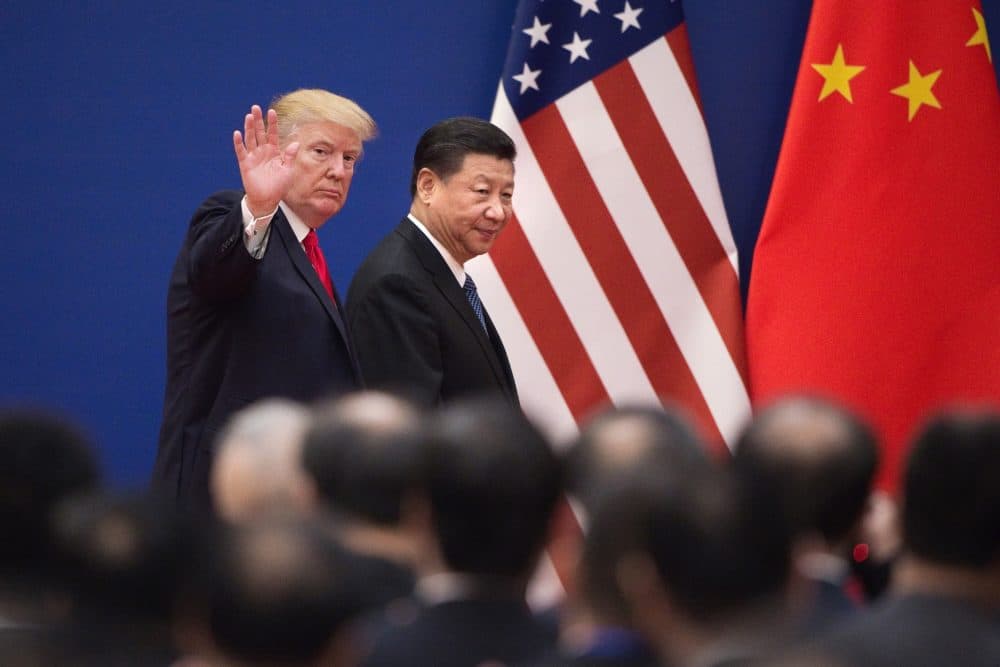

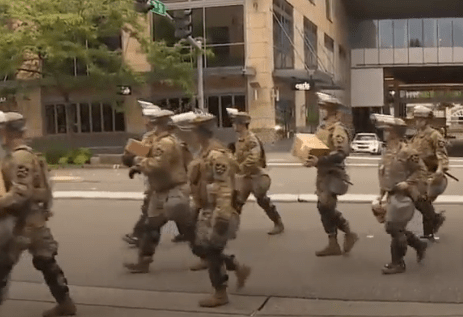






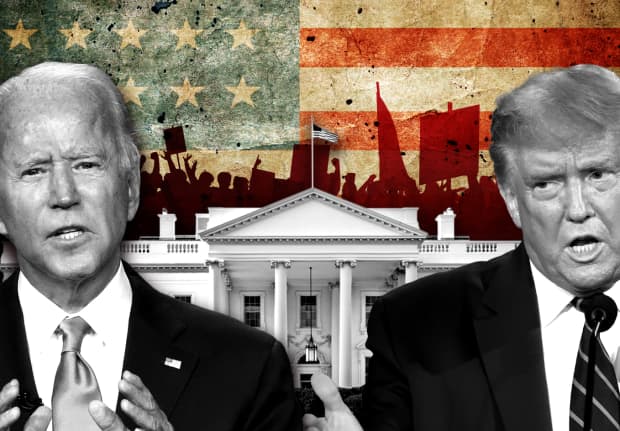
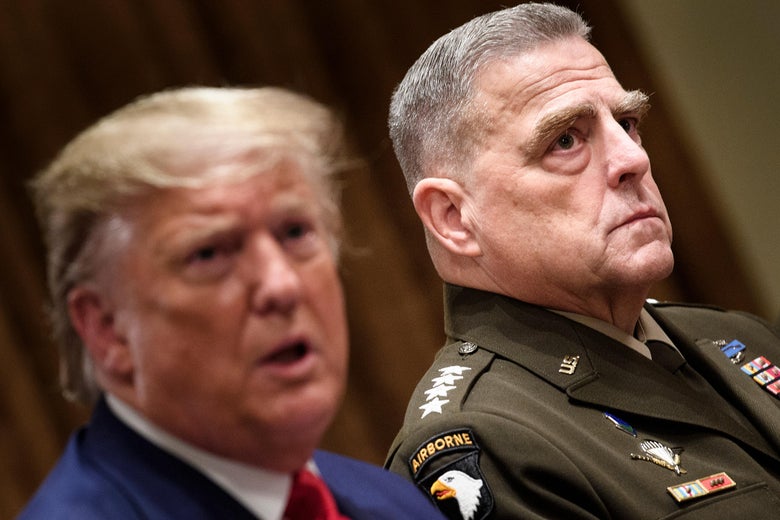

 Here’s another article from Jeff Thomas at International Man –
 Lower Valley Assembly