Prosser Community Chili Cook Off, Feb. 15, 2020

The First Annual Community Chili Cook Off is being held on Saturday, Feb. 15, 2020 at the Prosser Community Center, 1215 Dudley Ave., Prosser, WA at 12:00 pm.

You are invited to bring your best chili to the Prosser Community Center. There will both a prize for best judged entry (1st, 2nd, and 3rd places) and one for the people’s choice. To register your chili, it must be at the community center for judges no later than 11:20 am. Judging begins at 11:30. They recommend the use of crock pots to keep your chili warm.

This event is hosted by the Prosser Senior Citizen’s Club, who will also be selling bowls of chili for $5, served with corn bread. Drinks available for $1.

For more information, contact Prosser Community Center at 786-2915.

AIER: The Stakes of Politics are Far Too High

This piece by economics professor Alexander Salter at the American Institute for Economic Research dwells on the idea that growth in federal government and expansion of federal power are at odds with maintaining liberty, thus The Stakes of Politics are Far Too High.

Despite the comedy of errors that was the Iowa Democratic Caucus, not to mention the ambiguity of New Hampshire, the national fervor grows. Bernie Sanders’ strong performance makes him the Democratic frontrunner: his odds of winning the nomination stand at 33%, with Michael Bloomberg at a surprising 27%.

Sanders’ campaign is notable because he is explicit about his radical vision for the U.S. economy. An advocate of the Green New Deal, Sanders has promised to reengineer the American economy from the top-down, at a cost of more than $10 trillion over the next decade.

On the Republican side, President Trump never leaves campaign mode. His proposed budget, released on Monday, will not balance for at least 15 years, suggesting he is more than happy to bestow gifts on the electorate without paying for them. Overall, the national debt has grown by $3 trillion since Trump took office. Now it seems trillion-dollar deficits are the new normal.  This suggests Republicans have made their peace with a government empowered to direct more and more of our lives.

In short, Democrats are close to going “all-in” on democratic socialism, or at least a hardcore form of social democracy that entails a large degree of federal dirigisme. And Republican policy (which differs greatly from Republican rhetoric) is heading towards the same.  Using new programs and new spending to secure electoral support is nothing new. But given the dire fiscal situation of the United States, as well as the ominous growth federal power, we have a very good reason to worry that the political clash that will culminate in November will end poorly for everyone, regardless of who wins the White House.

Plenty of op-eds have been written on the economics of deficits and the growth of the national debt. We know our fiscal trajectory is unsustainable. Less well known are the political consequences.  Those consequences can only be understood by first refamiliarizing ourselves with the purpose of our Constitutional system.

Why do we have a Constitution that fragments political power and divides it among many organizations? The typical answer is to prevent tyranny, which is true. But it is incomplete. Our Constitution has so many procedural safeguards in place because the Founders understood the first need of a durable government at the federal level was to lower the stakes of politics. Because it is difficult to enact sweeping changes at the national level, control over the national government is not perceived by any political faction to be an existential threat.

That is how it is supposed to work. In fact, we have deviated significantly from the politics of prudence and restraint envisioned by the Founders. Congress increasingly authorizes greater and greater spending, upon which the well-being of millions has come to depend.

The Executive increasingly governs by fiat, selectively enforcing laws and allocating significant fiscal resources of its own. In this world, the game of politics has necessarily become high-stakes: the benefits of controlling the government are enormous, and as a result, efforts to secure this control have become a matter of life or death. Bloated budgets and perpetual deficits are a sure sign we are moving towards winner-takes-all politics.

The political philosopher Thomas Hobbes, in justifying the state, wrote that rational individuals willingly cede political power to a central arbiter and enforcer so that they may escape the “war of all against all.” Unfortunately, our fiscal scenario has reignited this war.

The first axiom of sound governance is to lessen the dangers caused by differences in principles and worldviews among citizens. But when the state becomes an all-encompassing institution—when everything and anything is political—disagreements become existential threats.

“When you play the game of thrones, you win or you die.” This quote by a fictional Machiavellian monarch aptly describes our situation. Unless we commit to lowering the stakes of politics, once again embracing moderation and humility, we doom ourselves to a never-ending cycle of reciprocal political domination. This is the death of liberty under law, and of democratic self-governance itself.

FFF: Compulsory Education – The Bane of Learning and Freedom

An educated citizenry is required for the preservation of our liberty and our republic. This has been well known since the founding of our nation. But is compulsory education the answer? This article at the Future of Freedom Foundation says no. Compulsory Education – The Bane of Learning and Freedom

Approximately 50-million students, bound by state compulsory attendance laws, are trapped in what is essentially a prison of their bodies and minds.

Most Americans never question school compulsory attendance laws itself but instead focus on what occurs inside the classroom. Public schools, which can also be called government schools, are notorious for a wide array of problems. From class size to the controversy over testing to disruptive student behavior, the demand that more taxpayer money be used to correct the poor performance is touted as the answer. This completely disregards two points: 1. The benefit-cost ratio of government education of children is often a losing deal. (Private schools are frequently smaller, religious affiliated, and in many cases cost less to educate each student than the public counterparts.) 2. More important, compulsory education violates the liberty of all citizens – taxpayers and students alike, not only by forcing parents to subject their children to a state education but also with the coercive funding (i.e., taxation) used to force children’s attendance.

My principal objection to compulsory education is that it violates the freedom of the individual. No one should be required to give up personal sovereignty to comply with a state or federal government mandate — not through military conscription and not through compulsory education.

From its earliest days, our nation functioned well without compulsory education laws, and the minimal involvement of government enabled youth to choose trade/vocational training, religious study, or higher education relevant to the individual’s personal choice. As the idea of compulsory attendance began to develop in society, it became increasingly repressive, decade by decade. Parochial schools and family home-schooling were replaced by laws forcing attendance for most students at government schools.

Government-run schools and compulsory attendance to any school are the antitheses of freedom, liberty, and learning. Forced to attend a school, most will go to government schools. Students are treated as prisoners sentenced to serve 12 years (or less in some states). Years of children’s precious lives and vulnerable minds are spent in forced confinement, often subjected to aimless busywork to meet the demands of teachers. The individual is not valued in many government schools, as all focus is on becoming an upstanding member of the collective. Leftist indoctrination has become ubiquitous. Independent thinking is discouraged while group-think pervades nearly every aspect of the politicized curriculum. All of this in the name of bettering children’s lives.

The oppression is accepted by the majority who learn quickly how to gain approval from their masters, with students who rebel sadly turning to personally and socially destructive behaviors. While many passively accept this oppression, the individuals who would be better suited to pursue unique aptitudes suffer.

With rare religious exceptions recognized, the vast majority of American youth must obey by attending such schools or face various penalties and punishments, as well as sometimes the possibility of fines and jail time for parents. Gone are the days where educational choices were up to the young person and his family.

The result of youth being exposed to years of socialist ideas explains the rampant decline of basic knowledge and generation upon generation of graduating seniors with minimal ability to do much of anything aside from obeying orders. All too many high-school graduates display poor writing skills and an inadequate ability to engage in critical thinking on simple matters.

The collective is placed above the individual. From rewards for just showing up to ribbons for all, disallowing students to give one another a card or a simple gift unless all are given one, to situational ethics role-playing scenarios, students are continuously subjected to an agenda that discourages independent thought. High achievement is discouraged as competition is rejected while poor performers are made to feel equal to all. Critical thinking and actual substantive course work are replaced by leftist revisionism of history, identity politics, and advocacy of politically correct perceptions of life.

Free speech, a fundamental of our nation, is not only not valued, but it is also suppressed. Subtle and patent discrimination of those not conforming to the frequently liberal agenda pervades government education. After years of this beginning when very young, the mental and emotional development is stunted, and the socialist mindset is placed — exactly what an all-powerful government wants — an easily controlled and manipulated unquestioning populous.

All of this occurs simply because the American people have never questioned the premise of compulsory education…

Click here to read the entire article at FFF.org

Related:

Educator John Taylor Gatto RIP


Forward Observer: Compiling Your Area Study (Part II)

Chief intelligence analyst Sam Culper at Forward Observer has posted this second part of the area study article he started here.

In the last post, I covered why you need an Area Study and left you with a practical exercise. In this post, we’ll start looking at the Operating Environment.

First, we need to begin by identifying the boundaries of our Operating Environment. We call this the Area of Operations, or AO.

Defining the AO will help us focus on this area specifically. Your AO might be your home and property, or your subdivision or neighborhood. Wherever you expect to operate during an emergency should be considered your AO. Identify your expectations: do you plan to stick close to home, will you patrol your neighborhood, or will you be traveling to a bug out location? In short, where ever you will be during an emergency is your AO.

I’m often asked, “How far away from my home can information still be relevant?” Answer: If it’s in your AO, then it could directly affect you and it could very relevant.

Outside your AO is your Area of Interest, or AI.

Your AI is the area where things can indirectly affect you. During an emergency, what happens in my AO is my primary concern, but I’m still interested in what’s happening in my AI. That’s the difference with these boundaries.

Important Note: You’re going to define these areas on a map or, preferably, a map overlay. Draw out the boundaries. They could be circles, squares, or some odd shapes, but we want to define these boundaries so our teammates understand this concept. Your teammates may be your preparedness group, your neighborhood watch, or your neighbors during an emergency. If you want to be squared away and you want them to know that you’re squared away, start with defining your AO and AI boundaries on a map.

Next, we want to start looking at the significant characteristics of the AO and AI.

Specifically, we’re looking at the six layers of our Operating Environment. You’re going to want to identify these characteristics specifically. These are all the things that can affect you during an emergency, which is why we want to identify them and their effects before the emergency occurs.

Physical Terrain: The Physical Terrain includes traditional terrain features — mountains, hills, valleys, lakes, rivers, etc. — and man-made features like roads, houses, buildings, fences, etc. Weather is often grouped in with physical terrain, so we’ll cover weather and climate patterns, as well. Understanding how these factors could influence future events, developments, and/or conditions is an intelligence task.

Human Terrain: The Human Terrain includes the people, along with their attitudes, beliefs, behaviors, and customs. From a community perspective, identifying all the elements of the Human Terrain helps us to identify security partners and potential threats and foes, especially if disaster were to strike. The better we understand the people who surround us, the more accurate expectations we can have about the future.

Critical Infrastructure: Critical Infrastructure includes the facilities and people who provide access to food, water, fuel, electricity, transportation, commerce, communications, and the internet; all of which are critical to the average AO.

Politics/Governance: Politics and governance includes elected officials, political appointees, government employees, their institutions and facilities, and their political and ideological beliefs. The better we understand how local political and governance works, the better informed we can be of their potential future decisions, especially during a protracted emergency.

Law Enforcement/Military/Security: Police departments, sheriffs’ offices, National Guard and Reserve components of the military, and private security corporations all take part in security and emergency operations. Understanding these organizations or units, their personnel, and their capabilities goes a long way in staying informed of what they’re likely to do in the future.

Economic/Financial: And finally, the economic and financial drivers of a community matter, especially if these systems are disrupted. Disruptions to economic and financial factors have very significant second- and third-order consequences, and understanding how these factors will affect the community is critical.

Practical Exercise #2…

Click here to read the entire article at Forward Observer.

Tenth Amendment Center: Oppose a Disease at its Beginning

On restraining government, from the Tenth Amendment center:

If you give politicians an inch, they’ll take a mile.

The Founders warned us about this over and over.

Take John Dickinson, for example. Known as “the Penman of the Revolution,” he was one of the leading writers in the early days of the conflict. He insisted that the colonists needed to “oppose a disease at its beginning,” before the sickness could spread.

Dickinson published a series of essays now known as Letters from a Farmer in Pennsylvania in a local newspaper. He used his pen to vigorously oppose the Declaratory and Townshend Acts.

The American colonists had effectively nullified the hated Stamp Act by refusing to enforce it and actively resisting its implementation. They defeated the mighty British empire utilizing virtually every strategy and direction available – from resolutions and declarations, to protest, resistance and even non-compliance by government officials. But the British weren’t about to concede their authority over the colonies. When Parliament repealed the Stamp Act, it passed the Declaratory Act declaring its absolute political superiority over the colonies. This Declaratory Act asserted that Parliament could make any laws binding the colonies “in all cases whatsoever.”

A year later, Parliament put its words into action with the passage of the Townshend Acts. These laws imposed new taxes on the importation of paper, paint, lead, glass, and tea, and expanded the British government’s power to fight smuggling. The Townshend Acts included the New York Restraining Act. suspending the Assembly of New York’s legislative powers as punishment for failing to fully comply with orders from the crown.

Dickinson warned that failure to confront this assertion of British power then and there would lead to dire consequences and loss of liberty down the road. In the sixth Letter from a Farmer, he argued that letting the government take on even a little bit of new power would eventually lead to bigger and bigger usurpations in the future.

“All artful rulers, who strive to extend their power beyond its just limits, endeavor to give to their attempts as much semblance of legality as possible. Those who succeed them may venture to go a little further; for each new encroachment will be strengthened by a former. ‘That which is now supported by examples, growing old, will become an example itself,’ and thus support fresh usurpations.”

He continued with this theme in the ninth essay, chronicling the ways that the British Parliament, the Crown, and English judges were expanding their authority over the colonies. He concluded the essay with a warning in the form of a Spanish history lesson.

Spain, Dickinson said, was once free. Its governance was similar to that of the colonies. No money could be raised without the people’s’ consent. But an ongoing war against the Moores required funding. The king received a grant of money to fund the fight, but he was concerned it might not be a sufficient amount to pay for the war effort long-term. So, the king asked that “he might be allowed, for that emergency only, to raise more money without assembling the Cortes.” The Cortes was the Spanish representative body — similar to the Parliament.

Dickinson noted that the proposal was “violently opposed by the best and wisest men in the assembly.” But the majority approved the measure. And thus began a slide down a slippery slope. As Dickinson described it “this single concession was a PRECEDENT for other concessions of the like kind, until at last the crown obtained a general power of raising money, in cases of necessity.”

The legislature gave an inch and the king took a mile.

Dickinson wrote:

“From that period the Cortes ceased to be useful—the people ceased to be free.”

He closed the letter with these Latin words of instruction:

Venienti occurrite morbo.

Oppose a disease at its beginning.

John Adams made a similar argument also using a Latin phrase: “Obsta principiis.” which means withstand beginnings, or resist the first approaches or encroachments. Colloquially, we would say, “nip it in the bud,” which is exactly the phraseology Adams used.

“Nip the shoots of arbitrary power in the bud, is the only maxim which can ever preserve the liberties of any people.”

Adams and Dickinson both recognized an important truth. When you allow a government to chip away at the limits on its power, eventually the dam will burst. You will end up with a government exercising virtually unlimited authority – arbitrary power. At that point, it becomes difficult, if not impossible, to rein it back in. Adams wrote:

“When the people give way, their deceivers, betrayers, and destroyers press upon them so fast, that there is no resisting afterwards.”

You can’t tear down a fence and then expect the animals to stay in the field. Once the fence is gone, the animals will wander. The same thing happens when we tear down fences around government power. The government will wander further and further away from its restraints and accumulate more and more power for itself. As Dickinson wrote, “Each new encroachment will be strengthened by a former.”

Politicians love to use emergencies as an excuse to expand their own power. But once the new policy is in place, it never goes away – even after the emergency has long passed. In fact, the new policy almost always becomes a springboard to expand government power even more. The Patriot Act is a perfect example. Nearly two decades after 9/11 the federal government is still using that act to justify spying on all of us all the time.

This is why we must hold the line on the Constitution: Every issue, every time. No exceptions, no excuses.

NBC: Why You Should Avoid Public Phone Charging Stations

People who have attended the Groundrod class by Combat Studies Group will already be familiar with this, but this NBC article tells people why using public phone charging stations may just be getting your phone hacked. You can get data blocking USB attachments which will allow your phone to charge but block any access to data.

“Low phone battery.”

It’s a notification that can inspire a sense of dread for anyone on the go without an outlet in sight.

And while free public charging stations have provided some relief in those situations, experts warn that powering up could give hackers a way into your personal information.

“Depending on the vulnerability they exploit, they would have access to everything you would have access to on your phone,” said cybersecurity expert Jim Stickley.

The practice, known as “juice jacking,” occurs when people plug in to “juice” up their phones and hackers use malware in the charging station or USB cable to “jack” their information, such as phone numbers and passwords.

The scam has prompted local authorities, including the Los Angeles County District Attorney’s Office, to alert the public to think twice about plugging in at places like airports or malls.

“You might have seen a public USB charging station at an airport or shopping center. But be warned, a free charge could end up draining your bank account,” Los Angeles County Deputy District Attorney Luke Sisak said in a video warning in November.

To find out just how easy it can be for a hacker to gain access to a charging phone, Stickley gave NBC News access to a simulation he set up along the Port of San Diego in Southern California. Through special hardware installed in a homemade charging station, Stickley was able to watch and record everything being shown on the screen of a connected phone.

IMAGE: Jim Stickley
Cybersecurity expert Jim Stickley demonstrates how a hacker could access a person’s phone through a public charging station.NBC News

NBC News correspondent Vicky Nguyen posed as the first victim.

“Now we get to the best part. She’s actually entering in her credit card number,” Stickley said as he watched Nguyen shop on Home Depot online.

In four hours, dozens of people stopped at the makeshift charging station to power up their phones. Some expressed shock when they were told it was a setup.

A woman who identified herself as Ruth gave NBC News permission to access her phone through the charging station and demonstrate the type of information being retrieved from her device. In a matter of seconds, her personal Facebook messages popped up on a separate monitor.

“It’s dangerous,” Ruth said…

Click here to continue reading at NBC news.

The Trumpet: The Spread of Coronavirus and Other Modern Plagues

This article from The Trumpet gives their biblical take on modern plagues.

Many of you are familiar with the pale horse of the apocalypse of Revelation 6:7-8: “[B]ehold a pale horse: and his name that sat on him was Death, and Hell followed with him. And power was given unto them over the fourth part of the earth, to kill with sword, and with hunger, and with death, and with the beasts of the earth.” This shows that diseases like this virus are about to get worse, spreading like medieval pandemics and killing millions of people! Whether or not this specific outbreak will cause such ruin, this prophecy is sure.

You can find a related image in Zechariah 6. It is important to note the time frame. This chapter describes a dual crown being given to a man just before Jesus Christ returns—a prophecy that was recently fulfilled (request my free book The New Throne of David for an explanation). Before that takes place, though, four chariots emerge from between two mountains, symbolizing God the Father and Jesus Christ (verse 1). God sends these chariots. He gives specific commands about what these chariots are to do. This is explained in Chapter 7 of that book.

The black horses here symbolize violence, famine and pestilence. We are already in the preliminary stages of their ride. The coronavirus is only a small part of the overall picture. Other plagues are already spreading in our cities.

Many cities are facing a crisis of homelessness. In downtown Los Angeles, for example, is a little city of homeless people. The area is awash in drugs—and human feces, rats and every imaginable kind of filth. And even now, people are contracting tuberculosis and typhoid fever! Some of the policemen have contracted these Third World diseases! Rats carry disease and spread it everywhere. Some experts warn of the onset of bubonic plague—a disease that wiped out much of Europe in the 14th century! We are ignoring that history, and officials are permitting these conditions to ripen within some of our mightiest cities!

The same circumstances are true in Seattle and San Francisco. Some travel guides tell visitors to avoid portions of San Francisco and other big cities to avoid catching bubonic plague.

It is a most awful scene; we can hardly even stand to hear the news about it! Yet it is just a small foretaste of the plagues coming to America and Britain and Judah if people don’t repent before God!

…Where is this leading? We are already experiencing the preliminary stages of what the Bible terms “great tribulation,” in which one third of the populations in America and other Israelitish nations will die—before being directly attacked by foreign enemies!

These black horses—violence, famine, pestilence—are going to overtake the Earth! God is beginning to send a number of globe-rattling events our way! He is going to let the world see where their evil ways lead them.

God has a lot to accomplish with His people in the midst of an explosion of satanic chaos! He sends these angels out with specific jobs, all in preparation for the Great Tribulation, the Day of the Lord and the Second Coming of Jesus Christ! He is already preparing for that crisis of crises!

WA GOAL Legislative Update 2020-5, Feb. 7

From the Washington Gun Owners Action League:

GOAL Post 2020-5
Legislative Update from Olympia 7 February 2020

NEW BILLS FILED/FOLLOWED
FIRST POLICY COMMITTEE CUT-OFF
BILLS MOVE, BILLS DIE
PUBLIC HEARING SCHEDULED
REPEAT: ONLINE ACCESS FOR BILL COMMENTS
STILL NEED VOLUNTEERS

Well, they noticed you at the capitol rally! Rep. Senn (D-41) has filed a bill (HB 2925) prohibiting firearms on the Capitol Campus. This has been tried before and failed, but this year is different. They’re more afraid of citizens with guns this year than they have been in the past. On the other hand, Sen Fortunato (R-31) has also filed SB 6673 to protect firearm rights. The bill reaffirms the right to keep and bear arms under both the federal and state constitutions and repeals much of the restrictive language contained in Washington firearms code, RCW 9.41. Don’t hold your breath waiting for this to pass. With today being the policy committee cut-off and no public hearing scheduled, short of extraordinary action, this one is DOA.

Between e-mail problems (ongoing), a heavy holiday and beyond travel schedule and overlapping Washington and Florida legislative sessions (I’m also VP and Legislative Director of the Florida Sport Shooting Assn), I’ve missed a few important bills. HB 2367 and SB 6043 address the issue of “self-defense” coverage as offered by companies such as ACLDN and USCCA that our esteemed insurance commissioner declines to authorize. Both of these bills will be heard this week and also voted on in executive session on Friday.

Today (Friday, 7 February) is the first policy committee cut-off date. Bills that have not passed out of their first policy committee (for most gun-related bills, House Civil Rights & Judiciary and Senate Law & Justice) are generally considered dead for the session. Bills that require additional funding must pass through one of the fiscal committees next week. As this is the short session, the train is moving fast.

Bills marked with an asterisk (*) in Bill Status below have presumably died for this session. Because HB 2925 (Capitol gun ban) was filed so late, don’t be surprised if they move it. Good news, both “assault weapon ban” boils died (HB 2241, SB 60760 but both magazine bans live on.) (In my opinion, the a/w ban bills died because the Democrat legislators don’t want to face the voters’ wrath in November. Look for an initiative to be filed.) Bad news? Lots. Of the two CPL training bills (HB 1315, SB 6294) the Senate version is the least harmful.

And “dead” doesn’t always mean “dead.” Let an incident occur that fits one of the “dead” bills and watch it get revived by the Democrat majority.

A close look at the Bill Status will show thirteen bills total awaiting a pull to the respective (House or Senate) chamber floor for a full chamber vote. Those that pass go to the other chamber for the same process. A couple more are also hanging fire in a fiscal committee until next Tuesday’s fiscal cut-off.

A public hearing is scheduled in Senate Law & Justice next Wednesday on HB 1010, destruction of forfeited firearms.

Can’t make it to Olympia? You can go to the following web site to submit your comments directly for any given bill. Just add the four-digit bill number (four numerals only, not HB or SB) right after …bill/ I can’t promise the comments will be read, but it’s YOUR opportunity to be heard. Be polite, be brief.

https://app.leg.wa.gov/pbc/bill/(four digit bill number)

The Washington Arms Collectors is seeking volunteers to work the voter registration table at the gun shows in Puyallup and Monroe, and possibly other venues. If you have the time, please see Jane Milhans or George Kelley at the shows. The 2020 elections, at all levels, are the elections of a lifetime. Please do your part. Think of your grandson sitting on your lap in 20-30 years, asking, “What did you do in the big gun wars, Gramps?”

BILL STATUS/GOAL POSITION:
HB 1010 WSP destruction of firearms Senn (D-41) S. L&J OPPOSE
*HB 1068 Magazine restrictions Valdez (D-43) H. CR&J OPPOSE
HB 1315 CPL training requirement Lovick (D-44) H. Rules OPPOSE
*HB 1374 Repeals state preemption of gun laws Macri (D-43) H. CR&J OPPOSE
*HB 1671 Confiscation of firearms Dolan (D-22) H. Rules NEUTRAL
*HB 2196 Raise standard for issue of a “red flag” order Walsh (R-19) HG. CR&J SUPPORT
*HB 2202 Exempts law enforcement from a/w training Klippert (R-8) H.PubSaf OPPOSE
HB 2240 Bans high capacity magazines Valdez (D-43) H. Rules OPPOSE
*HB 2241 Bans assault weapons and magazines Peterson (D-21) H. CR&J OPPOSE
HB 2305 Expands firearm prohibition re: protection orders Doglio (D-22) H. Rules OPPOSE
HB 2367 Self defense insurance Hoff (R-18) H. Rules SUPPORT
HB 2467 Centralized firearm background checks Hansen (D-23) H. Aprop NEUTRAL
*HB 2519 Ammunition background checks Walen (D-48) H. CR&J OPPOSE
HB 2555 Background checks for “other” firearms Goodman (D-45) H. Aprop OPPOSE
*HB 2569 Pre-trial detention for certain firearm offenses Wylie (D-49) H. PubSaf OPPOSE
HB 2622 Court order non-compliance, firearm surrender Kilduff (D-28) H. Aprop OPPOSE
HB 2623 Firearm prohibition, certain offenses Walen (D-48) H. Rules OPPOSE
*HB 2767 Recreation shooting areas on public lands Blake (D-19) H. CR&J SUPPORT
HB 2820 Firearms forfeiture/DV court order (correction) Klippert (R-8) H. Rules NEUTRAL
*HB 2925 Bans firearms on Capitol grounds and buildings Senn (D-41) H. CR&J OPPOSE
HJR 4210 Pretrial detention for certain firearm offenses Wylie (D-49) H. Pub Saf OPPOSE
SB 5434 Expands gun free zones to parks and day cares Wilson, C (D-30) S. Rules OPPOSE
*SB 6043 Self defense insurance Wilson, L. (R-17) S. L&J SUPPORT
*SB 6076 Bans assault weapons and hi cap magazines Kuderer (D-48) S. L&J OPPOSE
SB 6077 Bans high capacity magazines Kuderer (D-48) S. Rules OPPOSE
*SB 6161 Excise tax on ammunition Dhingra (D-45) S. L&J OPPOSE
SB 6163 Unlawful possession BEFORE conviction Dhingra (D-45) S.Rules OPPOSE
SB 6288 Office of firearm violence prevention Dhingra (D-45) S. W&M OPPOSE
SB 6289 Restoration of firearm rights Dhingra (D-45) S. L&J OPPOSE
SB 6294 CPL training requirement Saloman (D-32) S. Rules OPPOSE
*SB 6347 CPL validity seven years with training Wagoner (R-39) S. L&J SUPPORT
SB 6402 Use of a stolen firearm Rivers (R-18) S.Rules SUPPORT
SB 6406 Concerning firearms Wilson, L (R-17) S. Rules SUPPORT
SB 6584 Unlawful purchase of a firearm Zeiger (R-25) S. L&J SUPPORT
*SB 6673 Removes many existing firearm restrictions Fortunato (R-31) S. L&J SUPPORT

HB = House bill, SB = Senate bill. L&J = Law & Justice, CR&J = Civil Rights & Judiciary, PubSaf = Public Safety, HC = Health Care, H. K-12 = House Early education, Aprop = Appropriations, Fin = Finance, W&M = Ways & Means “S” before a bill number indicates Substitute (amended).

PUBLIC HEARINGS SCHEDULED:
12 Feb Senate Law & Justice Committee, Senate Hearing Room “1,” JAC Bldg
9:00 am SHB 1010

LEGISLATIVE HOT LINE: You may reach your Representatives and Senator by calling the Legislative Hotline at 1-800-562-6000. Toll free!!! The hearing impaired may obtain TDD access at 1-800-635-9993. Also toll free!!!

1-800-562-6000 TDD 1-800-635-9993

OTHER DATA: Copies of pending legislation (bills), legislative schedules and other information are available on the legislature’s web site at “www.leg.wa.gov“. Bills are available in Acrobat (.pdf) format. You may download a free version of Adobe Acrobat Reader from Adobe’s web site (http://www.adobe.com). You may also obtain hard copy bills, initiatives, etc, in the mail from the Legislative Bill Room FREE OF CHARGE by calling 1-360-786-7573. Copies of bills may also be ordered toll free by calling the Legislative Hotline at (800) 562-6000. You may also hear floor and committee hearing action live at http://www.tvw.org/ (you need “RealAudio” to do this, available free at the TVW web site).

By reading the House and Senate “bill reports” (hbr, sbr) for each bill, you can see how individual committee members voted. By reading the “roll call” for each bill, you can see how the entire House or Senate voted on any bill. The beauty of the web site is that ALL this information is available, on line, to any citizen.

Upcoming WAC gun show(s):
Monroe 28-29 March
Puyallup Pavilion 4-5 April

Download GOAL Post 2020-5 pdf for easy printing

“The right of the individual citizen to bear arms in defense of himself, or the state, shall not be impaired, but nothing in this section shall be construed as authorizing individuals or corporations to organize, maintain or employ an armed body of men.”

Article 1, Section 24
Constitution of the State of Washington

Tenth Amendment Center: Ignoring the Constitution

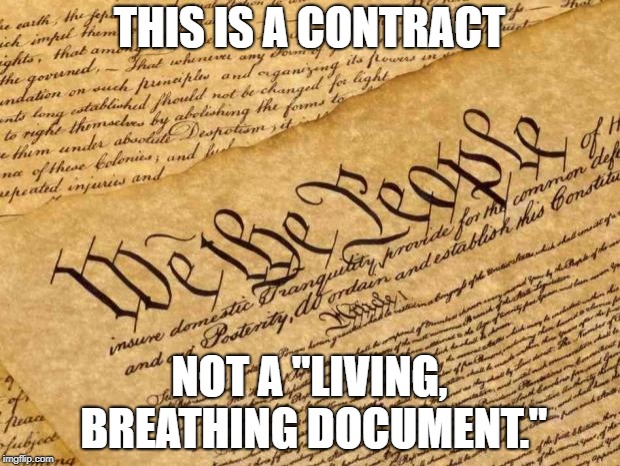
A couple days ago we posted an article that Jacob Hornberger had written for the Future of Freedom Foundation on the First Amendment. In Ignoring the Constitution at the Tenth Amendment Center, he reminds us of other parts of the Constitution that have been eroded and ignored over time. A constitution exists as a conveyance of authority to a government from the people it governs. It strictly limits the powers exercisable by that government. Some people believe that a constitution should be “a living document” in that the words should be re-interpreted over time to mean whatever the rulers think it should mean in the present day. This is the same as having no constitution at all. It means nothing to write things down on paper if it then becomes okay for people to “re-interpret” the text as the opposite of what was written. This is what we have today in the United States. We have a Constitution, but it has been ignored, re-interpreted, and swept under the rug. There are effectively no limits on the power of the US federal government. If you haven’t already noticed this, you haven’t been paying attention.

Constitutional violations have become so commonplace in American life that when they occur, the reaction among many Americans is ho-hum.

There are two classic examples of this phenomenon: the declaration of war requirement and gold and silver as legal tender.

Article 1, Section 8, enumerates the powers of Congress. It states in part: “Congress shall have Power To declare war.”

Article 2, Section 2, enumerates the powers of the president. It states in part: “The President shall be Commander in Chief of the Army and Navy of the United States.”

Thus, while the president is given the power to wage war, he is not given the power to declare war. The decision on whether to go to war lies with Congress. Unless Congress declares war, the president is constitutionally prohibited from waging war.

Yet, we all know that presidents ignore this constitutional restriction with impunity. They exercise both the power to declare war and wage war. There has never been a constitutional amendment authorizing this revolutionary change in our governmental structure.

Moreover, the change has come with the full knowledge and implicit consent of Congress, which has never impeached a president for illegally abrogating Congress’s power to declare war.

Additionally, despite the oath that U.S. military personnel take to support and defend the Constitution, they all blindly obey the president’s order to wage war without the constitutionally required congressional declaration of war.

Article 1, Section 10, states in part: “No state shall make any Thing but gold and silver Coin a Tender in Payment of Debts.

It goes without saying that every state in the Union blithely ignores that constitutional provision. Rather than making gold and silver coin legal tender, they all have made paper Federal Reserve notes, which promise to pay nothing, legal tender.  Many Americans, including state and federal judges, act like that constitutional provision doesn’t exist.

Article 1, Section 8, states in part: “The Congress shall have Power To coin Money, regulate the Value thereof.” There is no power given to Congress to print paper money.

Yet, here we are, living under a monetary system that is based on irredeemable paper notes issued by the federal government. Many Americans, including state and federal judges, act like all this is perfectly normal, as if these restrictions on power within the Constitution don’t matter or don’t really exist.

If public officials are empowered to ignore constitutional provisions whenever they want, then what’s the point of having a Constitution? When the Framers used the Constitution to bring the federal government into existence, their aim was to establish a limited-government republic, ones whose powers were limited to those enumerated in the document. The reason they did that was to ensure that federal officials could not destroy or abridge the freedom of the American people. The Constitution was intended as a higher law that the American people imposed on their government officials. If public officials wanted to change or expand such powers, they would be required to secure an amendment of the Constitution.

Federal officials expect us to comply with their laws. Why shouldn’t they be expected to comply with our law, the law of the Constitution?

Organic Prepper: Off-Grid Cooking Without Electricity

Resilience homesteader Kara Stiff has written a nice article for The Organic Prepper – Off-Grid Cooking Lessons: How to Prepare Food Without Using Electricity – in which she writes of the effort made to reduce electricity use in order to make going off-grid affordable, and how she cooks during winter and summer.

Much of the remaining usage is cooking, so we got set up to cook mostly off-grid.

I say mostly because we still have a crockpot, a toaster oven, and an electric kettle to help us integrate our schedule with that of the outside world. The wage-earner can have his tea when he leaves before the morning fire. The family can have a hot dinner after a day away, or simmer broth overnight. These are convenience devices; we don’t rely on them for our main cooking needs.

Winter off-grid cooking

For winter cooking we use our wood stove, a Vermont Bun Baker. It has an oven and a cooktop. Ours is also set up to make hot water in an open-vented thermosiphon loop. That heat is transferred to the pressurized plumbing through a setup that works surprisingly well, though it was prohibitively expensive. I was nervous about planning a house with a wood cookstove because while I’d cooked on a few, I hadn’t lived with one long-term. But there wasn’t room in our 725-square-foot house for two stoves nor was there room in our tight budget. It was one or the other.

In reality, I adjusted to cooking on a wood stove fairly quickly and easily. The oven only gets good and hot when the stove runs for a while, so I only bake in the coldest months, which is fine because I’m not really into baking. Shorter fires are enough to roast peanuts for homemade peanut butter, or eggshells to crush for the chickens.

Surprisingly, I burn dinner less often on the woodstove than I did on electric or gas stoves, probably because it just takes as long as it takes. There’s no way to impatiently turn the heat way up like on an electric, only to regret it when the food blackens. It doesn’t really take longer to make dinner, though, because I use the heating-up time well. I also burn myself on it less often, probably because the woodstove is hot not just on the top but down the front as well, so it’s impossible to forget that it’s hot. The children have great respect for it and have not come close to even a minor burn.

If you care about environmental damage as we do, a wood stove is not the most environmentally-friendly choice. I did some math and discovered that the one and a half cords of home-grown and salvage wood we burn per year is definitely environmentally worse than using electricity to accomplish the same tasks, but not by that much (see a more in-depth discussion here). Though my family carefully considers environmental concerns in every decision we make, we also care a lot about resilience. In the end, resilience won out for the critical tasks of winter heat and cooking…

Washington Examiner: How Big Tech Reshaped Politics Through Censorship

From the Washington Examiner, Blacklist Valley: How Big Tech reshapes politics by censoring conservative ideas another tale of internet censorhip.

FEA.BigTech.jpg

For better or worse, social media is the new public square. Of adults, 68% use Facebook, 73% use YouTube, and a quarter use Twitter. The numbers are much higher for adults under 50. Two-thirds of adults and roughly 4 in 5 under 50 use social media to consume news. Three-quarters of Facebook users are on the site every day, and Twitter users have a disproportionate influence on the media because so many journalists are on the service.

The size and scale of social media companies exploded primarily because they presented themselves as open platforms — blank slates. Google, Facebook, and Twitter all characterized their products as engines for social improvement. “We think of Twitter as the global town hall,” said former Twitter CEO Dick Costolo. “We are the free speech wing of the free speech party.”

Costolo was Twitter’s chief executive from 2010 until 2015 and the immediate predecessor of current CEO Jack Dorsey. Twitter’s general manager in the United Kingdom, Andy Yang, likewise described Twitter as the “free speech wing of the free speech party” in March 2012. Google became a multibillion-dollar company by offering a portal for free, unrestricted information to anyone with access to the internet; famously, its original motto was “Don’t be evil.” An internal Facebook memo circulated in June 2016 stated that at Facebook, “we believe in connecting people so deeply that anything that allows us to connect more people more often is de facto good.”

The public has given these three tech companies (and others) enormous power to select the information we read, share, and discuss with our neighbors and friends. We’ve gotten so accustomed to the role they play in our lives that we fail to notice that Big Tech is sifting through the available information and narrowing, and prioritizing, our choices. Although Facebook, Google, and Twitter once touted themselves as bastions of democracy and free speech, they are now openly moving toward direct censorship and media manipulation — and specifically targeting conservative ideas and personalities.

They have already acquiesced to their new censorship fetish. In March 2018, Google circulated an internal memo that instructed employees on the benefits of censorship. In the memo, which was titled “The Good Censor,” Google conceded that while the internet was “founded upon utopian principles of free speech,” free speech is no longer en vogue. “Tech companies are adapting their stance towards censorship” in direct response to “the anxiety of users and governments.” The memo said that “tech firms have gradually shifted away from unmediated free speech and towards censorship and moderation” but framed that shift as a positive development. One major way that tech companies are “stepping into the role of moderator” is by “significantly amping up the number of moderators they employ — in YouTube’s case increasing the number of people on the lookout for inappropriate content to more than 10,000.” It argued that censorship was necessary partly because of users “behaving badly.”

The most alarming part of the missive, however, was that it spoke approvingly of foreign governments that were censoring online speech. Google framed the acts as “taking steps to make online spaces safer, more regulated, and more similar to their offline laws. Protected from hate speech on the street? Now you are on the net too …” Twitter has completely and publicly abandoned its brand as the “free speech wing of the free speech party,” with Dorsey claiming the whole “free speech wing” thing was one giant “joke.” His company, once seemingly devoted to the free expression of its users, now says it is prioritizing making users feel safe from others’ speech. Facebook, too, is openly rebranding itself as a benevolent censor. Here’s what Facebook CEO Mark Zuckerberg told the Senate Commerce and Judiciary committees in April 2018 (emphasis added):

Overall, I would say that we’re going through a broader philosophical shift in how we approach our responsibility as a company. For the first 10 or 12 years of the company, I viewed our responsibility as primarily building tools that, if we could put those tools in people’s hands, then that would empower people to do good things. What I think we’ve learned now across a number of issues, not just data privacy, but also fake news and foreign interference in elections, is that we need to take a more proactive role and a broader view of our responsibility. It’s not enough to just build tools. We need to make sure that they’re used for good. And that means that we need to now take a more active view in policing the ecosystem and in watching and kind of looking out and making sure that all of the members in our community are using these tools in a way that’s going to be good and healthy.

Three forces are driving Big Tech’s online censorship. Two are external and related: market pressures and de-platforming campaigns by liberal activists and journalists. The third pressure is internal: Silicon Valley is staggeringly one-sided politically. Profit margins and market pressures are crucial levers that left-wing ideologues use to pull tech giants and other corporations in the direction of censorship. Companies want to avoid controversy, and, in the era of outrage mobs, that means avoiding offending the Left, which controls most of the cultural institutions in America. That’s part of the reason why massive companies are embracing left-wing politics in advertising, such as what Gillette did with its “toxic masculinity” ad. Left-wing activists amplify those pressures with smear campaigns and boycotts intended to rattle advertisers and investors, forcing the hands of tech companies. If you convince corporate marketing agencies that advertising on Facebook is risky, you can be certain that Facebook will take some form of action to shed controversy and reassure investors.

The external pressures of left-wing activists are compounded by the internal pressures of the companies’ employees, who want Big Tech to embrace censorship against nonliberal opinions as a moral and political necessity…

Click here to read the entire article at Washington Examiner.

Charles Carroll Society: Spokesman Review Hit Piece on Candidate Alex Barron

Candidate Alex Barron

This article was written for the Charles Carroll Society by Idaho Senate candidate Alex Barron.

Shawn Vestal is a Spokesman-Review opinion columnist. He wrote a hit piece about me this Sunday. Shawn Vestal constantly savages President Trump, Washington Representative Matt Shea, Idaho Representative Heather Scott, and most other conservative Republicans. He defends the violent actions of the communist black shirts known as Antifa, and other Democratic Socialists fringe groups…

Last Tuesday, 20JAN2020, 25,000 people showed up in Virginia to protest the tyrannical local government attempt to take their firearms…

I was asked to speak about gun rights and decided to talk about how this tyrannical nation attacked the gun rights of Americans of African descent for many, many years. I spoke about the truth that Martin Luther King requested “permission” to carry a firearm for self-defense. Because his State did not have Constitutional Carry, his local sheriff was able to deny his request. As all know, he was later murdered.

I spoke about how the Black Panthers (and yes they had communist ties, but they were still American citizens) carried long rifles to protect their communities from a tyrannical government, and that both Democrats and Republicans got together to pass gun control to remove the ability of those black men to carry firearms in public (open carry). A Republican governor signed that gun control Bill. And it is still in place today.

My speech is on the web, and you can listen to it directly. When Shawn Vestal heard that I had spoken about many black leaders and our desire to be as armed as possible, including noted abolitionist Fredrick Dongles who said the “Every slave hunter who meets a bloody death in his infernal business is an argument in favor of the manhood of the black race”, Shawn Vestal, socialist authoritarian progressive, was not pleased.

On Twitter, Shawn Vestal said to me, “Yes, you’ve really intelligently grasped the spirit of the day and of the great man himself. Got it. The RWNJ attempt to co-opt MLK is unassailable!” Then he followed up with “…I bet you’ve got a *super* wise take on Malcolm X, though.” [Bard Note: What is RWNJ anyone?]

I was like: this white, communist progressive is lecturing me about my own black history? This white progressive is calling me stupid? I do not need to take one word of advice from a white progressive about my own culture and history. See, “I is be able to read and stuff.” My walk through life is much closer to our great black icons than this arrogant progressive fool. My walk through life has proven to me that autocratic progressives and their failed policies have led the black community (and in more general terms all poor people) to death and destruction. This is why I am such a motivated and passionate fiscal and social conservative Republican. I want to try to take a different route. And I told him as much. Shawn Vestal told me to shut up.  The other white progressives online thought that was funny.
Thus Shawn Vestal decided he was going to “show this uppity negro” a thing or two. Remember these leftists, who claim to value diversity, hate diversity of opinion. All they care about is attempting to “get a scalp” on the wall. Shawn Vestal, the Democrat progressive, decided he was going to use the power given to him by the Spokesman-Review to take that “arrogant conservative negro” down a peg or two. And thus, a few days after this heated Twitter exchange, this socialist, in cooperation with liberals from both Spokane and North Idaho, writes this hit piece. Expect more. Understand that liberals inside and outside of the Republican Party will share this article and try to define me and my campaign in the most negative way possible…

This is not the first time black veterans have to fight white-owned newspapers. After War World, I, the KKK, and other violent Democratic groups savaged returning black veterans. They felt men who had stood up to protect their nations were particularly dangerous to the American Apartheid system (Jim Crow). “Many of the city’s white-owned newspapers fanned the flames of terror, reporting on fabricated instances of black men assaulting white women. In one case, The Washington Post ran a front-page story advertising the location for white servicemen to meet and carry out further attacks on black people in the city. Now punks like Shawn Vestal and the Spokesman-Review continue this pattern of “fanning the flames” against minorities who walk off their racist progressive modern plantation of decay, single-parent homes, poverty, welfare, death, and destruction. They now use terms like “Look, a dangerous and potentially violent negro is among you. FEAR!”

“Black people [formed] ad hoc self-defense organizations to try to keep white folks from terrorizing their communities,” says Simon Balto, a Professor of African American History at The University of Iowa and author of Occupied Territory: Policing Black Chicago from Red Summer to Black Power. “Black veterans were instrumental in that.”

Black veterans were a large part of what made the summer of 1919, in the words of historian David F. Krugler, the year that African Americans fought back. “This is the country to which we Soldiers of Democracy return. This is the fatherland for which we fought!” W.E.B DuBois, a civil rights activist and prominent intellectual, wrote in Crisis Magazine in May 1919, a month after the earliest event of the Red Summer, a riot in Georgia where six people—two white officers and four black men—were killed at a church: “But by the God of Heaven, we are cowards and jackasses if now that that war is over, we do not marshal every ounce of our brain and brawn to fight a sterner, longer, more unbending battle against the forces of hell in our own land.” Veterans in Chicago formed militias to defend black homes, neighborhoods, and families, when the police and government refused. In the time following Williams’ death, one group of black veterans broke into an armory and stole weapons. They then used them to beat back a white mob. “Because many of them have actually seen battlefield combat, they are willing and capable of using violence for the purpose of self-defense,” says Balto…

Click here to read the entire article at Charles Carroll Society.

Yakima Senior Symposium, Feb. 20, 2020

From Rep. Dan Newhouse:

You are invited to join me and a panel of experts in Yakima at the 2020 Senior Symposium on Thursday, February 20th! 

There are many resources available for seniors, but navigating the systems can be difficult. I welcome you to attend the 2020 Senior Symposium if you or a loved one have questions about health and retirement benefits, identity theft and tax filing, or veterans issues. This event is free and open to all seniors and their families in the 4th Congressional District.

Date: February 20, 2020
Location: Harman Senior Center, 101 North 65th Avenue, Yakima
Time: 9:00AM – 12:00PM

Health & Benefits Panel (9:00AM – 10:00AM)
Tax & ID Theft Panel (10:00AM – 11:00AM)
Veterans Panel (11:00AM – 11:30AM)
Question & Answer Session (11:30AM – 12:00PM)

Click here for Senior Symposium details & participating panelists.

Staff and volunteers will also be on-site to interview for the Library of Congress’ Veterans History Project. If you are a veteran interested in archiving your stories of military service for future generations, please contact my Yakima office at (509) 452-3243 to arrange an interview at the Senior Symposium.

I hope you will join our panelists and me on February 20th for this fun and informational event! Constituents are encouraged to pre-register for the event here. Pre-registration is not required for attendance, but it will speed up the check-in process on the morning of the event.

Sincerely,

Dan Newhouse
Member of Congress

FFF: Do We Need the First Amendment?

Do We Need the First Amendment? is a simple article by former trial attorney and professor Jacob Hornberger over at the Future of Freedom Foundation. The topic of where our rights come from, though, is vital and people constantly need to be reminded. There are both conservatives and liberals who think that our rights are from and/or are limited to the Constitution’s Bill of Rights. Some incorrectly believe that if we amend the Constitution to remove one of the listed rights, then we have done away with that right. Others wail and complain if the Supreme Court decides there is a right in existence not listed in the same Bill of Rights.

One must remember that the US Constitution gave form to the government, but perhaps more importantly it listed every power that the federal government was delegated by the people. When some people complained that the proposed Constitution didn’t originally list any protected rights, the framers said “Look, we didn’t give the government to abridge any rights. See? That power isn’t listed anywhere.” But people demanded a Bill of Rights just to be extra sure that it was clear that the government had no power to legislate in those areas. Again, some people said, “But if we write down a list, then some day people might think that only the listed the rights are protected” and people replied “We didn’t give the government that power! But here’s a ninth amendment that says you keep all of those, too.” Unfortunately, people didn’t pay attention, and the government has slowly, at times, and by leaps and bounds, at other times, has encroached everything.

Many years ago, I was giving a lecture on the Constitution and the Bill of Rights to a class at a public high school here in Virginia. During the course of my talk, I made the following statement: “The First Amendment does not give people the right of free speech.”

I asked the students whether my statement was correct or incorrect. Everyone immediately told me that I was wrong. They said the First Amendment did in fact give people the right of free speech.

I held my ground. I said it didn’t, and I pressed the students to figure out why I was maintaining my position. They were just as steadfast in their position, until a girl raised her hand and said, “Mr. Hornberger is right. The First Amendment does not give people rights. It prohibits the government from infringing on rights that preexist the government.”

She was absolutely right.

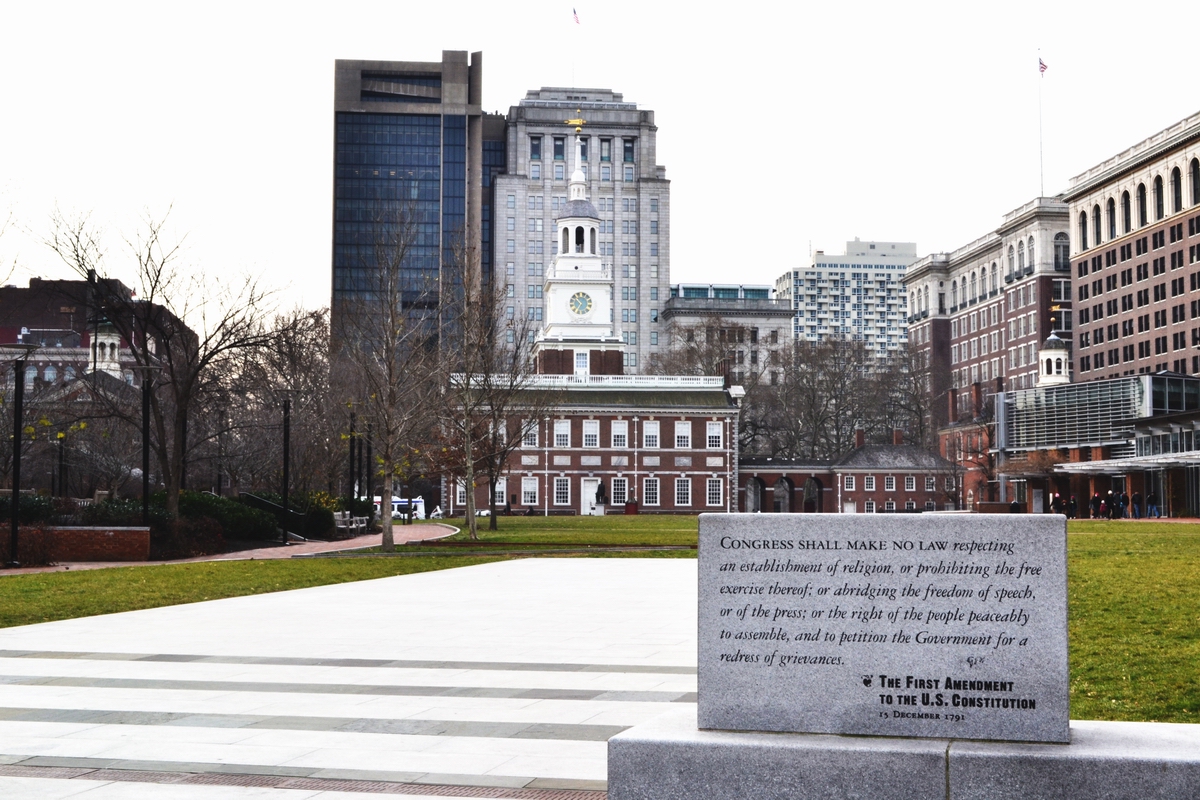
The First Amendment reads:

Congress shall make no law respecting an establishment of religion, or prohibiting the free exercise thereof; or abridging the freedom of speech, or of the press; or the right of the people peaceably to assemble, and to petition the Government for a redress of grievances.

Notice that the Amendment does not give people rights. Instead, it prohibits Congress from enacting laws that abridge people’s rights.

But what is that all about? Why did our ancestors deem it necessary to enact such a prohibition? Isn’t Congress our friend? Isn’t it composed of people who we elect to represent us? We often hear that we should trust the government. It doesn’t sound to me that the people who enacted the First Amendment had much trust in elected representatives.

After all, the only reason for enacting such a prohibition is the concern that in the absence of such a prohibition, Congress would enact laws that abridge freedom of speech and other fundamental rights. That sounds like Americans believed that the members of Congress needed to be told that they were prohibited from doing so.

The First Amendment and the other amendments in the Bill of Rights reflect how leery people were of Congress and the rest of the federal government. They were convinced that if they approved the Constitution, the federal government they were calling into existence with the Constitution would destroy their rights and their freedom.

That was also why Americans opposed enormous, permanently standing military establishments. Given their conviction that the federal government would destroy their rights, they understood that the way governments historically had done that was through their military forces.

After all, how else to enforce a law, say, that prohibits people from criticizing the president or Congress? Sure, it would be possible to arrest, indict, convict, and incarcerate them but what if dissent became widespread among the citizenry? That’s where a massive military establishment would come into play — to use massive military force to put down dissent with round-ups, assassinations, killings, torture, executions, and other things that militaries historically have done to oppress people. That’s why all totalitarian regimes have large, permanent, powerful military establishments.

Thus, there is no possibility that our American ancestors would have approved the national-security state form of governmental structure under which we live today, a structure consisting of the Pentagon, the CIA, the NSA, and a vast empire of domestic and military bases. If the Constitution had proposed that form of governmental structure, Americans would have summarily rejected the deal and simply continued operating under the Articles of Confederation, another type of governmental system, one in which the federal government’s powers were so weak that the federal government wasn’t even given the power to tax.

The Constitution called into existence a limited-government republic, a type of governmental system that gave the federal government very few powers. There was an army, but it was relatively small — large enough to defeat Native American tribes but not large enough to threaten the American people with massive tyranny.

In fact, that’s why our American ancestors enacted the Second Amendment. It was designed to ensure that people would retain their right to keep and bear arms as a way to fight against any federal army or national police force that the Congress or the president might employ to enforce their destruction of free speech and other rights and liberties.

Thus, whenever you hear someone lamenting the lack of trust that many Americans today have in the federal government, it might be worth reminding them that the federal government was called into existence under a cloud of mistrust among our American ancestors. And they were right to have that mistrust!