In the spring of 1941, guests of the Allerton House in New York City descended 45 feet below ground to check out the hotel’s newly completed air raid shelter. The shelter boasted an auxiliary lighting system in case the building lost electricity. Watching the German bombing campaign over London terrified Americans, and led the government to form civil defense preparations. Photograph via Bettmann/Getty
here’s a reason “preppers,” people who plan for the worst-case scenario, like to talk about the zombie apocalypse. The idea of an army of walking dead swarming the country pervades their thoughts because, says Roman Zrazhevskiy, “If you prepare as if a zombie apocalypse is going to happen, you have all the bases covered.” That means: an escape route, medical supplies, a few weeks’ worth of food.
Zrazhevskiy has been thinking about this for decades. He was born in Russia a few months after the nuclear meltdown at Chernobyl. At the dinner table, his family often talked about the disaster and what went wrong. Then, after they relocated to New York, Zrazhevskiy stood on the waterfront outside his Brooklyn high school on September 11, 2001, and watched the World Trade Center towers collapse. Even then, he had a small go-bag prepared with disaster supplies.
Now, he’s the guy who has a kit and a checklist for every occasion, including taking his toddler to the beach. Zrazhevskiy lives in Texas and runs survival outfitters Ready to Go Survival and Mira Safety. In 2019, with protests in Hong Kong, wildfires in Australia, and the threat of war with Iran, business boomed. But when the CDC announced the U.S.’s first confirmed coronavirus case last January, business reached “a whole new level,” says Zrazhevskiy. His companies spent the next couple of months scrambling to fill backorders. The flood of new customers had so many questions that he hired seven full-time staffers just to answer emails. “It’s kind of a customer service nightmare,” he says. “People are really flipping out.”
In a public imagination fueled by reality TV, preppers are lonely survivalists, members of fanatical religious groups, or even wealthy Silicon Valley moguls who buy luxury underground bunkers and keep a getaway helicopter fueled. But in reality preppers range from New Yorkers with extra boxes of canned goods squeezed in their studio apartments to wilderness experts with fully stocked bunkers.
Eight months into the coronavirus pandemic, something has shifted in our collective psyche as we remember empty aisles and medical supply shortages. Firearm sales are up, bread baking and canning are trendy, and toilet paper stockpiles are common. Are we all preppers now?
A forgotten American tradition
The coronavirus pandemic is the epitome of what preppers call a “s*** hits the fan” event. As the country braced for lockdowns and began seeing shortages of crucial supplies last March, people found themselves woefully unprepared. But there was a time in American history when many more civilians were ready for disaster.
In 1979, when Alex Bitterman was in second grade, Sister Mary Jane gathered her students in the gym of their Catholic school. In front of her sat a three-foot-tall gray barrel and she asked the students to guess what was inside. A clown, they thought. Or snakes? The nun opened it and pulled out a wool blanket, a plastic water container, and a large tin of saltines. These items would save them, she said, if the Soviet Union dropped a nuclear bomb on the town of Cheektowaga, New York.
For decades, a barrel like this was no surprise to American schoolchildren. A stockpile sat in the back of Bitterman’s school gym, and a yellow binder in the administration office held a set of hyper-local contingency plans for various disasters. So when COVID-19 reached the U.S., Bitterman, now an architecture professor at Alfred State College in upstate New York who studies how extreme events shape communities, remembered that barrel. Forty-one years later, he realized the country has lost its collective preparedness. “Why are we sitting in our houses waiting for someone to come save us?” he says. “No one’s coming.”
But there was a time when the nation felt that someone would come. The Great Depression birthed the New Deal, which gave Americans a safety net—Social Security, federal housing, and federal unemployment insurance—and instilled the belief that the government would step in when they needed a hand. Helping them prepare for a disaster or attack was part of the deal.
In 1941, after Americans watched British civilians take shelter in the London Tube during German bombardment in World War II, President Franklin Roosevelt formed the Office of Civilian Defense with the aim of helping Americans prepare for a military attack on a local level. A variety of government-mandated civil defense agencies operated from World War II through the Cold War and provided communities with guidelines and resources to keep emergency response local.
This effort manifested in the barrel and binder Bitterman remembers from childhood, as well as things like a national emergency alert system. Starting in the 1950s, designated civil defense radio channels would broadcast information in case of a Soviet attack. For decades, every radio and TV station was required to test the system weekly. The civil defense bible—the 162-page, government-issued “Blue Book”—laid out strategy and instructions for an emergency that often kept the responsibility hyperlocal.A family unit, the authors stressed, was the “basis for organized self-protection.” Soon, the need to be prepared seeped into all aspects of life, from architecture (basement bomb shelters) to education (the infamous classroom “duck and cover” drills).
Two decades later, the Cuban Missile Crisis delivered another wake-up call. A nuclear arsenal aimed at the U.S. from 90 miles off the coast, Bitterman says, eroded the idea that the country was safe from outside threat. The agency’s name would change over the years, but civil defense adapted to the evolving threats of the 20th century. It was, says Bitterman, “the one time in our shared American history when we had a unified, coordinated effort to prepare for disasters of all different kinds.”
As the Cold War thawed, the threat of natural disasters took its place: hurricanes on the east coast, tornados in the Midwest, earthquakes in California. Such problems were too large for local communities to manage on their own. Massive environmental contamination required federal clean-up, and disasters like the 1979 Three Mile Island reactor meltdown in Pennsylvania spooked the public….(continues)
A lot of people just parrot things they hear without really thinking about it. If they did carefully consider what they were saying, they probably wouldn’t say it. This is particularly true when it comes to mass, warrantless surveillance.
The Lexington Police Department covertly uses two cameras that can be hidden in streetlights and one that is disguised as a utility box. Coupled with the fact that documents released by the LPD during legal proceedings reveal lax policies that could be interpreted to allow surveillance virtually any place at any time, I find the use of these cameras troubling.
But I’ve been told I have no basis to oppose the use of these cameras because, “You have no expectation of privacy in a public place.”
This is true in a technical, legal sense. But just because something is legal doesn’t make it just or ethical. And legality has virtually no bearing on how we live our lives.
And when you really did deep, most people don’t really believe this nonsense.
Based on the “expectation of privacy” doctrine, you can stand on the sidewalk in front of my house and take pictures of my daughter playing in the yard all day every day. You can even take pictures of my wife getting dressed through the window if she forgets to pull the curtains closed. Now, I may not have any legal expectation of privacy in my front yard or through my open blinds, but in the real world, I damn sure expect my daughter to be able to play in the yard and my wife to be able to get dressed free from your video-voyeurism.
And I think most reasonable people have the same expectation. It may not be a valid legal expectation, but it is certainly a reasonable human expectation.
The legal notion of “no expectation of privacy” in public is really meant to apply to incidental observation. I can’t come after you for taking a photo of a bird in my yard even if you happen to capture my daughter in the frame. I can’t demand police arrest you if you happen to glance up and see my wife through an uncovered window. I can’t get angry if I start dancing in a public park and you film me and stick it on YouTube.
But even from a legal standpoint, you can’t spy on me. At some point, your behavior crosses the line from incidental observation to stalking. I’m pretty sure if you saw me standing on the street taking pictures of your kids for hours on end, my insistence that you have “no expectation of privacy” would fall on deaf ears.
Government surveillance is more akin to stalking than incidental observation. If a cop positions a camera in such a way as to capture everything that happens in your yard, that’s a little creepy. It may be legal, but that doesn’t make it right.
In fact, government is held to a higher standard than everyday folks. The Fourth Amendment and privacy protections in every state constitution make this clear. For instance, Section 10 of the Kentucky State Constitution declares:
“The people shall be secure in their persons, houses, papers and possessions, from unreasonable search and seizure; and no warrant shall issue to search any place, or seize any person or thing, without describing them as nearly as may be, nor without probable cause supported by oath or affirmation.”
If government agents are going to watch me, they should have probable cause and get a warrant. Otherwise, they should leave me alone.
The issue of privacy was one of the flashpoints that led to the American War for Independence.
Prior to the Revolution, the British claimed the authority to issue Writs of Assistance allowing officials to enter private homes and businesses to search for evidence of smuggling. These general warrants authorized the holder to search anyplace for smuggled good and did not require any specification as to the place or the suspected goods. Writs of assistance never expired and were considered a valid substitute for specific search warrants. They were also transferable.
Electronic surveillance is the 21st-century version of writs of assistance. They allow police to go on fishing expeditions and watch our every move. They empower law enforcement to track us, document us and monitor us until they find a reason to come after us.
George Orwell’s 1984 was meant to warn us about ubiquitous government surveillance, not serve as an instruction manual.
People who roll out arguments like “you have no expectation of privacy” or “if you have nothing to hide you have nothing to fear” are really telling me they simply don’t believe the government would ever target them with surveillance. This mostly comes from conservatives who value law and order. But you should ask yourself a question: who is going to get targeted by surveillance when the government decides it wants to enforce a mask mandate? Or arrest people for attending a church service? Or when they come after a certain kind of gun? You are only one policy-shift away from having the digital crosshairs on your back.
Never forget, the power you give government over others — it also has over you.
The American Mind talks about the widening chasm between liberal and conservative Americans in A House Dividing? The piece includes links to other essays which further discuss the issues.
We do not publish this feature lightly. Nor do we intend to take a firm editorial stance in the debate. But it is past time to bring the discussion Americans are now having in private into public light. The longer it stays underground and forbidden, the more we risk serious and sudden shocks to our political and cultural life together. Only by having this debate out in public can we hope to resolve the current crisis.
When we can’t agree as a people on the purpose of government, or even about what human nature is, the next logical question is: how can we stay together as citizens? What truths, in other words, do we still think self-evident? What is the basis of our shared citizenship? Where is the growing divide in America leading us, and what is the best path forward?
The best book on the topic has been written by our colleague Michael Anton, who explores these questions in The Stakes, which we encourage you to read. Examining the contemporary scene, we find those, like Geoffrey Vaughan, who acknowledge the deepening divide yet hold that the structure of American government stands. In “Madison Wins, Factions Lose,” he argues that “Madison has continued to outwit the ideologues and factionalists.” And, after all, even Democrats who support packing the Supreme Court and adding Puerto Rico as a state are operating within the Constitutional framework. Republicans now eye the Constitution’s requirement that state legislators ultimately choose their state’s electors to the Electoral College.
Yet one must also note that changes to the Constitution’s Electoral College and the apportionment of the U.S. Senate are being openly proposed by mainstream Democrats. Further, while the Constitution at least partially holds, the question is how long it can continue to keep a house divided together. In the midst of the growing divide in America, red counties are growing increasingly eager to leave blue states and reconstitute red ones even as blue states have been saber-rattling for four years about federalism and state prerogatives. This week, we present the visions of two pseudonymous authors pointing toward a national separation in the interest of preserving the union.
It is not only young radicals who are thinking though a potential balkanization and breakup of the nation. Many engaged citizens are talking about such things in private. It is particularly worth noting that many highly competent professionals throughout the country—notably those in finance and tech whose livelihoods are tied to judging reality as it is and not as they’d like it be—quietly believe that America is headed towards an even deeper divide. Many are silent readers of this website, and in private they often offer dark thoughts about the state of our financial system, Big Tech, and our political culture.
In “2020: A Retrospective from 2025,” Professor “Tom Trenchard” provides an account of what might happen if red counties began to act as a unified front against the blue cities that propelled Joe Biden’s vote count. This is not merely a fantasy: red county repartition movements have been picking up steam, and Trenchard’s account identifies the real divide in American political life between rural and urban areas.
Finally, in the essay of the week, “Rebecca” presents an extended argument for the depth of the divide, proposing that the only way to resolve it is a more radical form of federalism. This “proposal for a renewed America” is not an argument for secession, but a peaceful process whereby both sides are allowed some measure of self-governance, with an eye to reunification. As the author says, “The two Americas avow their disagreements. The Separation respects reality and seeks peaceful co-existence.”
Such thoughts are no longer wild-eyed fantasy. Both pseudonymous essays vaguely echo Angelo Codevilla’s thoughts at the end of Revolution 2020 and “Our Revolution’s Logic.” These voices now represent those of many thoughtful Americans concerned about the fate of the nation. We welcome more to the discussion.
In recent decades, many have claimed that advances in communications and transportation would eliminate the different political, economic, and cultural characteristics peculiar to residents of different regions within the United States. It is true the cultural difference between a rural mechanic and an urban barista is smaller today than was the case in 1900. Yet recent national elections suggest that geography is still an important factor in understanding the many differences the prevail across different regions within the US. Urban centers, suburban neighborhoods, and rural towns still are characterized by certain cultural, religious, and economic interests that are hardly uniform across the landscape.
In a country as large as the United States, of course, this has long been a reality of American life. But even in far smaller countries, such as the larger states of Europe, the problem of creating a national regime designed to rule over a large diverse population has long preoccupied political theorists. At the same time, the problem of limiting this state power has especially been of interest to proponents of “classical” liberalism—including its modern variant, “libertarianism”—who are concerned with protecting human rights and property rights from the grasping power of political regimes.
The de facto “answer,” to the this problem, unfortunately, has been to empower national states at the expense of local self-determination and institutions which had long provided barriers between individual persons and powerful national states. Some liberals, such as John Stuart Mill, have even endorsed this, thinking that mass democracy and national legislatures could be employed to protect the rights of regional minorities.
But not all liberals have agreed, and some have understood that decentralization and the maintenance of local institutions and local power centers can offer a critical obstacle to state power.
The Growth of the State and the Decline of Local Powers
Among the best observers and critics of this phenomenon are the great French liberals of the nineteenth century, who watched this process of centralization unfold during the rise of absolutism under the Bourbon monarchy and during the revolution.1
Many of these liberals—Alexis de Tocqueville and Benjamin Constant in particular—understood how historical local autonomy in cities and regions throughout France had offered resistance to these efforts to centralize and consolidate the French state’s power.
Alexis de Tocqueville explains the historical context in Democracy in America:
During the aristocratic ages which preceded the present time, the sovereigns of Europe had been deprived of, or had relinquished, many of the rights inherent in their power. Not a hundred years ago, amongst the greater part of European nations, numerous private persons and corporations were sufficiently independent to administer justice, to raise and maintain troops, to levy taxes, and frequently even to make or interpret the law.
These “secondary powers” provided numerous centers of political power beyond the reach and control of the centralized powers held by the French state. But by the late eighteenth century, they were rapidly disappearing:
At the same period a great number of secondary powers existed in Europe, which represented local interests and administered local affairs. Most of these local authorities have already disappeared; all are speedily tending to disappear, or to fall into the most complete dependence. From one end of Europe to the other the privileges of the nobility, the liberties of cities, and the powers of provincial bodies, are either destroyed or upon the verge of destruction.
This, Tocqueville understood, was no mere accident and did not occur without the approval and encouragement of national sovereigns. Although these trends were accelerated in France by the Revolution, this was not limited to France, and there were larger ideological and sociological trends at work:
The State has everywhere resumed to itself alone these natural attributes of sovereign power; in all matters of government the State tolerates no intermediate agent between itself and the people, and in general business it directs the people by its own immediate influence.
Naturally, powerful states are not enthusiastic about having to work through intermediaries when the central state could instead exercise direct power through its bureaucracy and by employing a centrally controlled machinery of coercion. Thus, if states can dispense with the inconveniences of “local sovereignty” this enables the sovereign power to exercise its own power all the more completely.
The Power of Local Allegiance and Local Customs
When states are dominated by any single political center, other centers of social and economic life often arise in opposition. This is because human society is by nature quite diverse in itself, and especially so across different regions and cities. Different economic realities, different religions, and different demographics (among other factors) tend to produce a wide range of diverse views and interests. Over time, these habits and interests supported in a particular time and place begin form into local “traditions” of various sorts.
Benjamin Constant, a leading French liberal of the nineteenth century, understood these differences could serve as effective barriers to centralized state power. Or, as noted by historian Ralph Raico: “Constant appreciated the importance of voluntary traditions, those generated by the free activity of society itself….Constant emphasized the value of these old ways in the struggle against state power.”
In his book Principles of Politics Applicable to All Governments, Constant complains that many liberals of his time, having been influenced by Montesquieu, embraced the ideal of uniformity in laws and political institutions.
This, Constant warns, is a mistake and tends to create more powerful centralized states, which then proceed to violate the very rights that Montesquieu thought could be preserved through uniformity.
But political uniformity can lead down very dangerous paths, Constant insists, concluding, “It is by sacrificing everything to exaggerated ideas of uniformity that large States have become a scourge for humanity.” This is because large politically uniform states can only reach this level of uniformity by employing the state’s coercive power to force uniformity on the people. The people do not give up their local traditions and institutions easily and therefore, Constant continues,
It is clear that different portions of the same people, placed in circumstances, brought up in customs, living in places, which are all dissimilar, cannot be led to absolutely the same manners, usages, practices, and laws, without a coercion which would cost them more than it is worth.
This may not be “worth it” to the people, but it appears to be worth it to the regime. Thus, states over the past several centuries have expended immense amounts of time and treasure to break down local resistance, impose national languages, and homogenize national institutions. When this process is successful, a nation’s laws end up reflecting the preferences and concerns of those from the dominant region or population at the expense of everyone else. When it comes to these large centralized states, Constant writes:
one must not underestimate their multiple and terrible drawbacks. Their size requires an activism and force at the heart of government which is difficult to contain and degenerates into despotism. The laws come from a point so far from those to whom they are supposed to apply that the inevitable effect of such distance is serious and frequent error. Local injustices never reach the heart of government. Placed in the capital, it takes the views of its surrounding area or at the very most of its place of residence for those of the whole State. A local or passing circumstance thus becomes the reason for a general law, and the inhabitants of the most distant provinces are suddenly surprised by unexpected innovations, unmerited severity, vexatious regulations, undermining the basis of all their calculations, and all the safeguards of their interests, because two hundred leagues away men who are total strangers to them had some inkling of agitation, divined certain needs, or perceived certain dangers.
For Constant, the diversity among communities ought not be seen a problem to solve, but rather as a bulwark against state power. Moreover, it is not enough to speak only of individual freedoms and prerogatives when discussing the limits of state power. Rather, it is important to actively encourage local institutional independence as well:
Local interests and memories contain a principle of resistance which government allows only with regret and which it is keen to uproot. It makes even shorter work of individuals. It rolls its immense mass effortlessly over them, as over sand.
Ultimately, this local institutional strength is key because for Constant state power can be successfully limited when it is possible to “skillfully combine institutions and place within them certain counterweights against the vices and weaknesses of men.”
Unfortunately, it appears even the last few institutional vestiges of localism are under attack from the forces of political centralization. Whether it is attacks on Brexit in Europe, or denunciations of the electoral college in the United States, even limited and weak appeals to local control and self-determination are met with the utmost contempt from countless pundits and intellectuals. Two centuries after Tocqueville and Constant, regimes still recognize decentralization as a threat. Those who seek to limit state power should take the hint.
1. Murray Rothbard also viewed the rise of French absolutism as an attack on local control and local prerogatives. See Ryan McMaken, “Medievalism, Absolutism, and the French Revolution,” Mises Wire, July 12, 2019.
Here is NC Scout of Brushbeater talking about Ontario’s Ranger Assault Knife: The Best Of All Worlds? Perhaps I’m a little biased because I have one of these knives and enjoy it myself. NC Scout mentions getting a better sheath, and I have a kydex sheath made by someone who doesn’t appear to be making them any more, but here’s a photo of the sheath. There are similar kydex sheaths sold by others available online.
What would be that ‘one knife’, that if the rest of the world went to hell, that you could strap on your side and do just about everything you’d need a fixed blade to do?
That’s a tough question and one I bet more than a few of you battle on a regular basis. I do, and I’ve carried knives I picked into hell with me, only to later find something that fit the bill just a bit better. It seems like with each wilderness trip, class, or hunt I end up with new wants in a blade. It hasn’t got any better since I got that first Air Force Survival Knife (aka the Jumpmaster knife) I borrowed from an AWOL kid’s kit so long ago. Doubt he missed it. That knife did everything I ever asked it to, is easy to sharpen, and doubles as a combat effective fighting knife. And for a long while it served me well, and still absolutely could had I not retired it when I returned from Afghanistan. But would it be my first choice today? Probably not; designs have evolved and I’ve got a number of knives that fit the general purpose bit a lot better, and one of them is Ontario’s Ranger Assault Knife.
Combat knives are always a fun topic of discussion and one that’s often highly personal. That old USAF design was meant to be a jack of all trades and it excelled at a few. Like most of its contemporaries, it is a stick tang short Bowie-type with an integrated handguard to prevent the user’s hands from slipping up the blade during a stab but also to protect against glancing blows. Mine slayed MREs, 550 cord and tubular nylon just like everyone else’s- even skinned a goat we picked up from a local village in Afghanistan. Its also made notches, battoned wood, made fire and processed domestic game with the best of them.
I’ve always loved tactical knives and fighter-type blades. But the reality is that most often a tactical knife, with many serrations, odd grind angles and ultra-hard steel is more a hindrance than an enabler for most mundane survival tasks. What’s basic and simple, at least in my experience, has become the preferred blade to a lot of the more tactical-oriented types. It’s a view that’s neither good or bad, its just personal choice based on what we call on our tools to do. Some of these tasks include:
Lets look at the list. Any knife can skin and process game- in fact I’ve skinned more animals with my decade-old Buck-Strider folder than any other knife I’ve owned. And likewise for feather stick making, any sharp knife with decent edge geometry can do that. But for the heavier duty tasks a good fixed blade is what’s needed. For battening through limbs, a full-tang knife is really the best option. I’ve done it with the old USAF knife, but a full tang construction is best. And when striking ferro rods, high carbon steel and a squared spine gets the job done without having to use the knife’s edge. Speaking of, the ability to bring back a good working edge in the field is paramount. S30V, 154CM and the like are excellent for edge retention, but what happens if your edge does take some damage during use? 1095 is easier to bring back even from severe damage while using a small field stone or diamond plate like we use in the First Line Course, along with a small piece of leather as a strop.
So that brings us to Ontario’s Ranger Assault Knife (RAK). Justin Gingrich, founder of Ranger Knives and Green Beret, partnered with Ontario Knife Company several years back to mass produce his tactical and survival blade designs. I’ve used an RD-7 for a number of years now as a general purpose woods blade and its a highly functional design. His knives are a no-frills, hard use utilitarian types over the elegance of say, a Randall Made or Blackjack. These are not exactly lookers, but they will do everything asked of them and probably much more. The Ranger Assault Knife was something of a crossover design; combining the attributes of a functional fighting weapon and qualities you’d want in a simple survival knife.
Even batoning through this large knotty pine, which is generally a no-no, is no problem for the RAK.The design sports a sabre grind that starts 2/3 of the way up the blade. Even after heavy use, including batoning, there’s no visible damage to the edge.
Looking over the design you’ll notice the spear point of the 6 inch blade. It’s as great for stabbing as it is choking up on the knife and making finer cuts with the tip. Being 3/16in thick and having the full width go to the tip, its very strong for any prying task you might be called on to do in the wild. Fortunately choking up on that blade is made easy by the very large (yuuuge!) choil. It allows you to control the blade for power cuts but also to accommodate the guard as part of the design. It’s one solid piece of 1095 steel, hardened to 53-55rc, which is hard enough to retain an edge a reasonable amount of time while still soft enough to flex when prying or batoning to prevent chipping. And the knife has no issues batoning- hard wood, soft wood, anything reasonable it breaks down pretty easily.
The blade itself sports a thick saber grind with a short, flat secondary bevel. I prefer a full flat grind for pretty much everything I do with a knife, but on this blade it works to the advantage of the design by maintaining the knife’s strength. Since the parameters of the intended use include aircrew survival, that strength is required when possibly cutting through aluminum airframes or punching out glass. The pointed pommel serves as a glass breaker also, the same way the older RAT 5 and ESEE 5 knives do. And that leads me to my only real complain with it; that spike pommel is borderline obnoxious. Everything else about the knife is excellent, and since I don’t plan on needing to egress from an aircraft anytime soon, I’m thinking of grinding it down a bit. And the stock sheath is a flimsy nylon piece of junk. I threw it in the trash and had a kydex one made. But that’s it; the steel, the heat treat, the edge retention, and the flat out utility of this knife is excellent.
My Final Thoughts
The RAK pictured next to a RAT 5. Compare the glass breaker bevels on both.
For what this blade costs, around $65, it’s an excellent buy and well worth picking up a couple. You’ll need a better sheath but honestly I’m rarely happy with most stock sheaths. The design is definitely a jack of all trades and well thought out as a utility blade for those going into harm’s way. And as easily as it can be used in combat, it finds itself at home with a wide variety of survival tasks. Would it be that ‘one knife’ to use if the world went to hell? I think it could be. You could spend a heck of a lot more money and not come close to what you get out of this blade.
Recently on TVW’s show Inside Olympia, Austin Jenkins interviewed state superintendent Chris Reykdal about the COVID-19 school shutdown and the upcoming legislative session.
Surprisingly, Superintendent Reykdal admitted his own son is “struggling mightily” under remote instruction. He called for a vocational program based on school choice, so students can attend a vocational school or take apprenticeship training.
This is similar to the popular Running Start choice program, under which students take their funding to a community college. He said high school students should be able to control their own education funding.
Reykdal also said he won’t be asking the legislature for a “ton” more money for the public schools. He admitted the way schools spend money is more important than the amount of money the system gets, and shared a personal story about the impact of the COVID school shutdown on his own family.
Here are the key exchanges:
Austin Jenkins:
“What are you hearing about this, and how alarmed are you, that [middle and high school] kids are literally flunking out, failing, because of this remote learning situation?” (At 17:45)
Chris Reykdal:
“I am bothered by it. I am living it right now as a parent of two teenagers, who have historically been very successful academically, taking advanced courses, including AP courses and college level courses while in high school. And I have one of them who is struggling mightily in classes, that never would have been the situation if they had been face-to-face. So how did this happen? Number one, we gave very clear advice to districts to limit the number of learning standards ….and a lot of great educators made that transition, and I think some of them didn’t, and still try to cover too much content…..I would never design a school system around remote learning.” (At 18:23)
Austin Jenkins:
“What will the 2021 session look like for your agency?” (At 23:10)
Chris Reykdal:
“….We [the state] spend $25,000 per child over the last two years of high school, about $12,500 each year. We need to give students a lot more ability to grab those resources and go find a pathway that works for them. Which means, great full-time Running Start, that works, but what about the student who wants to be a fabricator, a welder, a plumber, an electrician, they need to go find a program full-time for those last two years….but the entire high school system in the U.S. is a broken system…we have to rethink this completely…” (At 24:26, emphasis added.)
Austin Jenkins:
“Any specific budget asks of the legislature?” (At 25:38)
Chris Reykdal:
“…It’s remarkable that we are going to return money because we didn’t transport kids around, but we are desperate to have one-to-one learning supports for students who are struggling…. It isn’t that we need a ton of new money, it’s that we need flexibility with the money we do have…. . “(At 26:01, emphasis added.)
Superintendent Reykdal is right. The schools do not need more money.
He is also right that students and parents should have more control over education dollars (should “grab those resources” as he puts it). That way families, not rigid education bureaucracies, could access the learning resources that work best for them.
Lawmakers in Idaho are more forward-looking in this regard. A few years ago the legislature there started giving every seventh-grade student over $4,000 in public money to help plan for high school. The response has been enthusiastic, with parents seizing the chance to make good education choices for their kids.
Idaho is not alone. Leaders in 29 states and the District of Columbia provide over 67 education choice programs, giving families direct access to scholarships, learning vouchers, tax-free Education Savings Accounts and tax credits to pay for tuition at private schools, and to hire tutors, learning coaches and other skilled educators for their children.
These choice programs are very popular, especially with low-income and minority families who are badly underserved by the traditional system.
By the way, the $12,500 Superintendent Reykdal proposes is only state-level funding. Local and federal money add more. Statewide that’s an average of $15,700 per student. In Seattle alone, taxpayers spend $20,200 per student.
Perhaps a silver lining of the COVID-19 school shut-down is that top leaders like Superintendent Reykdal are finally experiencing first-hand the poor public education choices most families face every day. He may be opening his mind to the idea that many students can “find a pathway” that works for them, by giving families “more ability to grab those [educational] resources.”
He’s right. If lawmakers let students and parents control more of their own public education dollars to access better learning programs after a year of locked-down schools, it will be a big step in the right direction.
In this article, Lisa Vargas at I Need That to Prep gives a pretty thorough discussion on Canned Meat Survival Food. While it is pretty common in our area for people to have experience raising or hunting meat animals, there are still a large number of people who do not. The human body needs protein every day to produce essential acids and will die without them. While proteins can also be found in lentils, beans, and whole grains, meat is what most people think of first for protein. In order to get all of the required essential acids that your body needs, you must consume what is referred to as a “complete protein.” Foods that contain the nine amino acids which a body must consume are called complete proteins. All animal proteins are complete proteins. A very few plant foods contain complete proteins — soybeans, quinoa, buckwheat, hempseed, and blue-green algae. Other than those, you need to combine incomplete proteins, like whole grains with beans (i.e. beans and rice, beans and tortillas, etc). Meat is more difficult to store long term than dry foods like beans, rice, and whole wheat berries, which is why most long term food storage plans focus on vegetable matter proteins than meat. That said for variety and psychological health/comfort it’s good to store what meat you can.
In our community there is this strange idea that we are going to transform from burger eating desk job dawdlers to hunters and trappers that feast primarily on wild food.
I think if you are not currently eating lots of wild food, you killed or raised, then you will really struggle in becoming a hunter or farmer that survives off of these kinds of animals. That is the reason canned meat for survival is such an important topic.
In this article, we will dive into the subject of canned meat. Whether you realize it or not there is a wide range of canned meats to choose from and some are better than others.
Why You Should Stock Up on Canned Meat for Survival
Protein is key to any preppers pantry and it is also what most pantries are lacking. Some of us keep chickens and hunt to assure we have access to protein outside of the home. These are both great answers to the protein issue, but you can also stock your pantry with great protein options if you know what canned meat to stockpile.
Canned meat for survival does not eat, it doesn’t need to be killed and it is always in the same place. You cannot say that about other sources of meat protein. You do not want to depend on the outside world for all of your meat for this very reason.
Canned meat has a long shelf life and if you know what to buy you can add these meats to meals or even eat them straight from the can! The landscape of the canned meat market is a lot wider than you think. From things like quality canned fish to something as obscure as canned pork brains, it’s all out there!
The canning process is pretty flawless and removes air from the can that prevents bacteria from growing. This is why you can have such a great shelf life out of canned meats. Industrial canning is an incredible technology that changed the world! Why not take advantage of this in your own prepper pantry.
Keys to Look for in Quality Canned Meats
Canned meats are quite possibly one of the widest ranging canned products on the market. Perhaps soup would be the only meat product to compare. Meats are varied and really are broken down between two main categories.
Meat – These meat items are those which are still, mostly, in their original form.
Force Meat – Force meat is a category of meat that is highly processed and reformed into something either resembling meat or takes the shape of the can itself.
If we are talking about quality canned meats, you are looking for those that have been minimally processed. Things like canned salmon, canned chicken and canned mackerel are all minimally processed.
Meats that are highly processed like Spam and Vienna Sausages are tasty, but they are loaded with salt, sugar, and nitrites. While it is not a bad thing to have these on the shelf, you would not want them to be what you eat each and every meal.
Another good tell is to look at the ingredients list on the canned meats you enjoy. Canned meats with the smallest ingredient list are going to be the best.
Shelf Life of Canned Meats
To understand the shelf life of canned goods you have to know what makes them go bad. You see, canned goods are fully cooked, processed with salt and citric acid, placed in sterilized cans, and then vacuum sealed. The cans feature a lining that protect the food from direct contact with the metal.
Overtime the can takes damage from moving around and this can allow micro punctures in the can to allow air inside. Once air gets inside you are going to have bacterial growth. You could also have an acidic food that will wear out the inside lining of the can. This will create a heavy metal poisoning issue over time.
The wonderful thing about canned meats is that they are a non-acidic canned food. Unless they are canned in a tomato sauce you are safe with canned meats.
In the survival community we hear a lot about use by dates and there is much debate about how long you can keep food. Having worked in the food banking industry for 5 years, as a food safety manager, I became an expert on quality and use by dates on canned goods. You see, we had to be able to tell what was useable and what had to be discarded for safety reasons.
Our guidelines were to keep canned meats for 5 years past the best buy date! This low acidic food has no problem extending an already generous best by date by as long as 5 years. That is pretty impressive and gives you one more reason to store canned meat for survival.
Safety of Canned Meats
The canning process is incredibly safe and has a tremendous benefit. There is a reason it has been so widely accepted and we still have cans in every home in America, nearly. However, the process is not flawless and there are some things that we need to consider.
When you remove oxygen from an environment it stops the growth of bacteria. That is why this process is so effective. However, there is one bacterium, Botulinum Clostridium, that really enjoys the low oxygen environment.
The bacteria make the botulinum toxin that can be extremely dangerous to the nervous system. This bacterium likes a low sugar, low acid, low oxygen environment and thus canned meats make for a perfect home.
In the worst cases a person can experience muscle paralysis as the nervous system is affected. It is best to react to symptoms of an infection early.
Symptoms can include the following:
double vision
blurred vision
drooping eyelids
slurred speech
difficulty swallowing
difficulty breathing
a thick-feeling tongue
dry mouth
muscle weakness
At home you can avoid botulism by practicing safe canning practices and using a pressure cooker when canning low acid foods, like canned meats. However, when you are buying already canned meats it is hard to know what has happened to that meat in its own process.
There is one telltale sign when it comes to identifying canned meats that could pose a threat from botulism: SWELLING.
When you see a swollen can where the top or sides are bulging there is some kind of bacterial growth affecting the contents of that can and you should avoid any canned meats that have this kind of bulging. You may notice this at the store or at home in your own prepper pantry. Either way, that can should be discarded.
How to Properly Store Canned Meats
A canned meat is just like any other canned food when it comes to storage. There are optimal conditions for storing canned goods and you want to be sure that all of the items in your prepper pantry are in those conditions.
You want to avoid extremes of temperature at all cost. Tin and metal alloys that are the base of these cans can expand and contract rapidly in extremes of temperature. This could compromise the seal on your canned food. Once air gets inside bacteria will begin to grow.
Store your canned goods off the ground and in an area that will not experience a lot of movement. When cans fall the damage can be minimal on the surface but, again, if your seal is compromised then you will have a better chance of opening a can and finding it spoiled.
How to Cook with Canned Meats
Cooking with canned meats is quite simple. There are two things to consider when you add canned meats to your meals.
Canned meats are cooked all the way through. That means that you do not need to cook them for a long time. They should be added at the end of the process and just warmed through. The only exception here is if you are using canned meat to make a meatball or stuffing of some kind.
Canned meats flake and breakup easily. When you add them to a dish you do not want to mix or stir it excessively after the meat has been added. Too much stirring and you will wind up with meat flecks in your meal rather than pieces.
Consider these two important principles when using canned meats in your cooking food.
Facts About Dehydrated Meat Products vs. Canned Meat Products
There are lots of questions when it comes to dehydrated meat products versus canned meat products. Most people are still up in the air about dehydrated foods. They just haven’t eaten them and don’t really know much about the process and its effect on food. To be honest, the process of dehydration is very gentle on meat and preserves a lot of its integrity and nutritious makeup.
Even if you have eaten many dehydrated meals you may be eating TVP or textured vegetable protein, so you need to go after freeze-dried meat to really understand the flavor and texture of dehydrated meat.
Canned meats are rapidly heated and cooled and this affects the quality of the meat. However, these meats are easier to eat and prepare. They are also cheaper and easier to stock up on because of their location at your local market.
DEHYDRATED MEAT
It lasts longer
It is more nutritionally sound
It can be stored as part of other meals that are easy to store and rehydrate
It is lighter and can be stored more effectively
CANNED MEAT
Easier to buy
Exponentially more affordable
Quicker to eat
People are simply more comfortable with it
Nutrition Facts of Canned Meats
All forms of canned meats are nutritious in some ways. However, some are better for you than others. Again, don’t forget that preference is a huge part of food storage and while canned sardines are much healthier than canned Spam, if you hate fish you are still going to be hungry!
Canned fish is probably your most healthy option and has the lowest sodium content. Salmon is going to provide you with 23 grams of protein per serving and that is impressive. Of course, fish are going to give you the most bang for your buck in terms of Omega 3s in canned form.
Canned chicken is very low in sodium, when it is not canned in salty broth, and contains a whopping 30 grams of protein in a 5oz serving. Its deep in B vitamins, Selenium and Niacin.
Canned beef is king when it comes to protein and you are going to get 88 grams in a 14.5oz serving. That is just a serious punch and why people turn to beef. You will also get some great b vitamins and a nice iron boost, as well.
Eating meat is massive uptake of nutrition no matter what type you choose. Having a variety of canned meat will give you access to easy digest protein in large amounts and the nutrients attributed to those meats.
Packaging
When it comes to canned meats you are dealing with a few different kinds of packaging. Most are canned but the canning can be a little different. You will be dealing with thick mylar for some tuna and salmon options, too.
The absolute best option is the sturdy cylindrical can. It is designed for stacking and durability. Most meats can be found in this kind of packaging and it the very best for long term storage. These types of cans can only be opened using a can opener and that is how you know the most durable of all the other options.
Some canned fish, like sardines, are packaged in the rectangular can. These are designed to be opened by hand which means they are less durable and less reliable. If they are stacked to heavily or sustain a fall the thin top could open from the damage. Worse yet, it could open a little and you wouldn’t know it.
I still store things like canned sardines and mackerel in this kind of can, but I just keep them separate and understand we have to be careful with them.
The final type of packaging is the Mylar bag that contains tuna and salmon. These are typically 4oz packages and are zip top after you eat them. This type of packaged meat is tasty and convenient but not something you would store for the long term. They are too small to feed a family and are really designed to feed one person away from home.
Stick with the traditional tin can for the bulk of your canned meat packaging.
Meat Canned in Oil or Water: Which is Better?
Canned meats can be canned in all kinds of things from sauces to mustard to spring water. Remember, if your canned meat is packed in tomato sauce or some other acidic sauce than it will cut short the shelf life of your canned meats.
However, certain meats are delicious when they are canned in oil and other meats are better just canned in water. You should also look at this choice based on how you plan to eat and use the canned meat. Are you going to eat the meat right out of the can, or will it be an ingredient in something else?
Consider this: If you are adding canned meat in oil to a soup you are going to create an oil slick on the top of your soup. That could be a problem for you. You should also consider the type of oil the meat is canned in.
Canned meat in extra virgin olive oil is a much different food than canned meat stored in soybean oil. Know your oils!
That said, one of my very favorite canned meats is a canned mackerel that is packaged in olive oil. I will bite into that any day of the week, right out of the can! So, when it comes to meat canned in oil or water much of it has to do with use and preference.
Canned Meat Survival Food
While the supermarket shelves are filled with a wide range of canned meat products there is one company that stands out as THE canned meat for survival headquarters. They are called Survival Cave Food and they do one heck of a job with canned meat.
While the supermarket features 8oz, 4oz cans and some 1lb cans of meat Survival Cave Food offers a higher quality meat in larger portions. They offer all meats in 14oz and 28oz cans!
Survival Cave Food can provide you with options in the following meat categories:
Beef
Chicken
Turkey
Pork
Ground Beef
Mixed
The mixed 12 can option is a great way to kickstart your canned meat stockpile. This will put 21lbs of ready to eat canned meat on your shelf!
If canned meat is a concern, do yourself a favor and look into Survival Cave Food.
Final Thoughts
You cannot substitute the nutritional value and morale boosting effects of meat in a survival situation. Like all things in preparedness you should have a tiered approach to solving the problem of meat and protein in a disaster or emergency. Canned meat for survival should play a huge roll.
Canned meat is a high quality survival food that lasts a very long time and can be purchased in a wide variety of forms. Do your best to buy quality canned meats that are minimally process but you can have some forcemeats around, too!
While food safety and product quality are essential to a good, canned meat stockpile don’t forget about preference. There is no point in storing a bunch of canned tuna if you hate it! Even though it can be cheap.
Find the meats you really like to eat from companies like Survival Cave Food and build out a stockpile that works for you and your family.
In this audio-only video, intelligence analyst Sam Culper of Forward Observer talks about a Toronto police action and what it means in an insurgent context as well as how it makes him anticipate further unrest.
NC Scout at Brushbeater has another short article on boots, this time inspiration taken from an American guy who converted to Islam and fought in various places around the world. A Guerrilla’s Experience in Boot Selection. You can check out NC Scout’s previous boot post here.
I was sorting through some old stuff cleaning out a building- an odd collection of crap, mostly junk, from a stack of toughboxes holding my old gear from sometime in between deployments to the middle east. Its crazy just how much junk one bubba can collect, how you instantly are reminded of certain thoughts and feelings when you last used whatever it was, but most important, you come back to old gear with a different perspective.
Digging up a tattered old copy of Aukai Collins’ book My Jihad I had that feeling. Its been a couple of years since I last read it and that copy sits on my bookshelf. But this copy is different. Its a hard cover and was given to me by a pubic affairs guy I was drinking buddies with way back when, who knew Aukai through Robert Young Pelton’s Dangerous Places forum and had stuck up a friendship after living in southern Arizona near him. Back then I was fascinated by the story of a guy who, probably as a product of a rough upbringing and a renegade attitude against the world, converted to Islam in a California youth prison and took up arms in Bosnia, Afghanistan, and then Chechnya. Despite the religious aspect, he didn’t go fight for anything other than himself. He just didn’t know it at the time. And maybe that was the part that intrigued me the most. The story sounded familiar then and far more so now.
Even still, Aukai’s story is a telling one. despite his bungling across eastern Europe and Central Asia culminating in the Caucasus, its full of valuable lessons for a anyone reading it. It is a brutal yet entertaining tale of lessons learned in an asymmetric conflict. A big one is footwear. A man can go without a lot of things but proper footwear is the one thing that will either keep you going in miserable conditions or make you miserable in decent ones. And as anyone who’s trained with me knows, what’s on my feet is what I’ll always recommend.
Aukai died four years ago, but he left an interesting blog behind from about twelve years ago that I skimmed through after dusting off that old copy of My Jihad. And funny enough, he wrote about boots in one of the first posts.
For those of you browsing my website or blog who hail from the San Diego County area I have an interesting side note for you. In my book I mentioned that during one of my original adventures overseas I had to hike up a steep, muddy ravine that would allow us to by pass one of the bad guy’s firebases. This turned into an all night ordeal, hiking/crawling up steep ravines in the dark and mud. Upon exiting the ravine this was followed by another hike through a thick muddy field until we crossed the border and realitive safety.
Our guide took us to the first of a series of safe houses. Keeping with the local custom we took our boots off before entering the “home” (it was actually a man and his wife and four children living in a Conex shipping container because their house had been blown into a pile of rubble). My associates that had made the trek with me took of their wet boots caked in mud and then their socks had to come off also because these too were soaked. Although there were far greater problems to come during the war, like for example out of the four associates who had made the muddy trek with me that night, I am the only one left alive, at that moment soaking wet cold feet with blisters seemed to be quite a catastrophe.
I on the other hand was in relative luxury. My feet were bone dry and didn’t have a blister on them. I actually said a silent little thank you to the man that had sold me my beautiful Danners. My feet would continue that way on through the rest of the war until the day shrapnel from a POM-50 directional mine would tear through the boots like swiss cheese making holes in my legs that would eventually lead to the amputation of the right one.
Sounds awful familiar. Experience may be a cruel mistress but she is a good teacher. Danner is good to go and a pair of Elk Hunters are what’s on my feet as I type this. But then again I also have former Marine Raiders who brings a deer he killed in the back of his truck to my Alumni weekend and am trying to find time to get in the woods to kill my own this year…so it shouldn’t come as a shock.
Spend the coin and get a good pair of boots- its the lone deficiency that you can’t make up for in other ways in the field.
The Altons at Doom and Bloom Medical have an article about what to do When a Person Faints. I once fainted while standing in early morning PT formation in the Army, probably from a combination of low blood sugar and low hydration. Well, I vomited and then fainted, so I hit at least one of the warning signs which the Altons mention. I think I also hit “momentary lack of attention.” After questions from a medic and a drink of water, I was able to continue with PT as usual with no further issues. Anyone can faint, but sometimes more rest is better.
Even 6’4″ military men may experience fainting
We often write about medical strategies when a society collapses, but, sometimes, an individual may collapse as a result of fainting (also called “syncope”). It usually occurs when a drop in blood pressure (“hypotension”) doesn’t allow enough oxygenated blood to reach the brain.
Someone who has fainted must be differentiated from the person who has “seized” from epilepsy. Fainters won’t exhibit jerky movements as in a Grand Mal seizure or stare into space as in a Petit Mal seizure. Also, a person who has had a seizure tends to be difficult to rouse for a period of time. This is called a “post-ictal” state and may last for 30 minutes or so before it resolves on its own. Most people who have only fainted will regain alertness relatively soon after the episode.
(Note: Grand Mal and Petit Mal are no longer used in the latest nomenclature of seizures. They changed the whole system in 2017, but most people still know them by these names.)
There are a few signs that a person is close to fainting:
Cold, clammy skin
Nausea or vomiting
Complaints of feeling lightheaded or weak
A sensation of spinning
Tunnel vision or blurriness
Yawning
Slow pulse
Momentary lack of attention
(Note: More than once, I’ve had a surgical intern or other assistant faint dead away during a grueling and long surgical procedure.)
Survival scenarios almost guarantee the medic will be confronted with a person who has fainted at one point or another. Simple activities of survival, such as long hikes to retreats, work sessions in hot weather, and hiding out in hot shelters without climate control, can make certain group members prone to syncope. In addition, skipped meals and dehydration will put many of your people at risk.
Low blood sugar and various other medical conditions can cause fainting. Good hydration and appropriate dietary intake will prevent most episodes. Glucose or honey packets, for example, can help raise a person’s blood sugar that has gone dangerously low. Have some in your kit. Others may pass out due to irregular heart rhythms, extreme stress, or even pregnancy.
If someone feels as if they are about to collapse, they should sit down and put their head down between their knees to increase blood flow to the brain. If you see someone who is fainting from a standing position, hold and gently lower them to the ground on their back. In normal times, of course, you would have someone call emergency medical services as soon as possible.
If help isn’t coming, it’s up to you to quickly evaluate the victim. If the patient fell to the floor, there is always the possibility of a head injury. Evaluate for obvious wounds and rule out concussion.
A person who has had a simple fainting spell will usually be breathing normally and have a steady, regular pulse. Raise their legs about 12 inches off the ground and above the level of their heart and head. This position will help increase blood flow to the brain. Assess the patient for evidence of trauma, bleeding, or signs of a seizure. If bleeding, apply direct pressure to the wound. If no pulse or breathing, begin CPR.
After the first few seconds, you have determined that the victim is breathing, has a pulse, and is not bleeding. Tap on their shoulder (some say to gently shake) and ask in a clear voice “Can you hear me?” or “Are you OK?”. Loosen any constricting clothing and make sure that they are getting lots of fresh air by keeping the area around them clear of crowds. Look for a medical alert bracelet that may give clues as to their health issues. If you are in an area that is hot, fan the patient or carefully carry them to a cooler area. Cool compresses may be helpful.
If you are successful in arousing the patient, ask them if they have any pre-existing medical conditions such as diabetes, heart disease or epilepsy. Stay calm and speak in a reassuring manner. People oftentimes are embarrassed and want to brush off the incident, but be aware they are still at risk for another fall.
Once the victim is awake and alert (Do they know their name? Do they know where they are? What year it is?), you may have the patient sit up slowly if they are not otherwise injured. Don’t let them get up for 15 minutes or so, even if they say that they are fine. If you are not in an austere setting, emergency medical personnel are on the way; wait until they arrive before having the patient stand up. Off the grid, however, you will have to make a judgment as to whether and when the victim is capable of returning to normal activities. A period of observation would be wise.
As dehydration and low blood sugar are possible causes, some oral intake may be helpful during recovery. This is appropriate only if it is clear that they are completely conscious, alert, and able to function. Test their strength by having them raise their knees against the pressure of your hands. If they are weak, they should continue to rest. Close monitoring of the patient will be very important, as some internal injuries may not manifest for hours.
Attorney Molly McCann writes about how large, internet, social media companies are enforcing foreign speech laws across the board in The Big Tech Occupation.
Big Tech has infiltrated the American homeland and is imposing speech laws that resemble those of Europe, challenging the authority and longevity of the First Amendment. Although we share common ideals with other Western nations, we pursue and defend those ideals very differently. Nowhere is this more apparent than in our approach to speech.
It is important to understand how fundamentally different our country is from the rest of the world if we want to understand why Big Tech’s speech codes shout not be inflicted on American citizens in American jurisdictions. Put another way, if the would-be monarchs of Silicon Valley get their way, their speech codes will ultimately undermine our American values of free speech and the First Amendment itself.
A Tale of Two Speeches
In America, the First Amendment expresses an absolutist viewpoint on speech: “Congress shall make no law...” (emphasis added). From there, the courts have developed a framework that governs speech. Not all speech is “protected” speech (e.g. fighting words and true threats), and we have standards that determine if, when, where, and how the government can limit speech. All told, American speech law can be quite complex, but philosophically it begins at that intransigent right: “Congress shall make no law.” This principle permeates the American mindset and is defended by our written and entrenched (i.e., difficult to change) Constitution.
Europe, however, begins from a qualified position and immediately seeks to balance speech with other competing interests. Despite aspirational language to the contrary, European law begins with the assumption that speech is a privilege, the contours of which can be defined and redefined by the government. Article 10 of the European Convention of Human Rights makes this clear.
1.Everyone has the right to freedom of expression. This right shall include freedom to hold opinions and to receive and impart information and ideas without interference by public authority and regardless of frontiers….
This sounds good until you read the second paragraph:
2. The exercise of these freedoms, since it carries with it duties and responsibilities, may be subject to such formalities, conditions, restrictions or penalties as are prescribed by law and are necessary in a democratic society, in the interests of national security, territorial integrity or public safety, for the prevention of disorder or crime, for the protection of health or morals, for the protection of the reputation or rights of others, for preventing the disclosure of information received in confidence, or for maintaining the authority and impartiality of the judiciary. (emphasis added)
The blunt fact is that most Europeans have freedom of speech at the discretion of their governments. Think about the wide differences of opinion there are on what speech restrictions are “necessary in a democratic society”! The European crusade against hate speech (a label that can be applied to almost any disfavored speech) is a perfect example of the abuse that can flourish when speech isn’t enshrined in a written and entrenched constitution, and is instead a discretionary standard subject to majority votes of prevailing legislatures.
The United Kingdom has yo-yoed back and forth on banning “insulting” speech as hate speech. The term has been added, dropped, and added again over the past decade. According to a 2013 article in the Guardian, when ‘insulting’ was included in the hate speech law “arrests and prosecutions rang[ed] from an Oxford student asking a police officer ‘Do you realise your horse is gay?’ which Thames Valley police described as homophobic and ‘offensive to people passing by’, to a 16-year-old holding up a placard that said ‘Scientology is a dangerous cult’.” Hate speech can mean almost anything, and in 2018, British police were rounding up and questioning people for tweets that criticized gender reassignment surgeries for children. As the culture slips, standards that can be amended by majority legislatures cannot defend speech rights.
The United States Constitution’s protection of speech has no tempering clause. Our court-created frameworks all seek to implement and obey the opening, sweeping directive of the First Amendment; we do not recognize a “hate speech” exception to the First Amendment; and our speech rights are certainly not at the mercy of every successive Congress’s whim. We can truly boast speech rights—and the ability to assert those rights against our government.
Enter Big Tech
The Big Tech internal speech codes are just like Europe’s broad, discretionary standards in that they permit a privileged few to determine what is and is not offensive or “dangerous” speech. For example, Facebook bans “hate speech,” including “white nationalist rhetoric” and “violent or dehumanizing speech, statements of inferiority, or calls for exclusion or segregation,” as well as other categories of offensive speech. Although this type of speech policing is contrary to the American principle that we have the liberty to offend, these definitions might sound otherwise uncontroversial and even attractive (after all, most decent people don’t want to be exposed to violent or dehumanizing speech). But of course, in addition to offending our spirit of free speech generally, the application of these standards has already proven to be both broad and biased, permitting companies to label all manner of political socially-conservative speech as dangerous or violent. There is wisdom and authentic freedom in America’s adherence to robust and “absolutist” protection of speech; there is opportunity for corruption, bias, and suffocating censorship lurking in the European approach.
Big Tech has effectively imported European speech law into the United States. Big Tech has created a massive internal framework that blankets the nation and imposes European-style standards in direct opposition to the robust, absolutist American rule.
Because Tech oligarchs control the primary thoroughfares of public discourse today—our new public squares of the digital age—they have effectively occupied our country and imposed foreign law on American citizens, restricting our fundamental liberty to gather and to exchange thoughts and ideas freely.
Big Tech censorship is also dangerous to the long-term stability of the First Amendment. Because digital interaction is so widespread, its European view of speech will slowly begin to chip away at Americans’ absolutist attitude toward speech. Big Tech’s speech codes are chilling and suppressing speech now, but ultimately, our collective attitude toward speech might change.
In debating cancel culture, Greg Lukianoff and Adam Goldstein have argued that nations without good free-speech law can still preserve a thriving culture of free speech—albeit a persecuted one—but, a culture that itself is not freedom-minded will not be free, no matter how good its law on speech is. Lukianoff and Goldstein have warned that if Americans’ attitude toward speech changes, our First Amendment will not protect us. Similarly, if Big Tech’s moralizing about and censoring of hate speech is accepted by too many Americans, it will influence and shift our culture’s attitude, and the First Amendment will fall. To maintain the potency of the First Amendment, the American public has to believe in and live its spirit.
Justice Scalia once remarked, “many Europeans like to think of Americans as their close cousins—albeit reckless, loudmouthed cousins they’re embarrassed to talk about at dinner parties. It is easy to forget, however, that the United States was settled primarily by people seeking, in one way or another, refuge from the ways of Europe.” Our freedoms are not equal.
Europe’s speech standards leave Europeans at the mercy of their ruling class. In America, the First Amendment (and the attitude it embodies), continues to provide Americans the strongest speech rights of any people on earth. Big Tech cannot be allowed to impose European speech codes in digital public squares within American jurisdictions. It is an affront to American sovereignty, and by demanding conformity to a European understanding of speech rights, Big Tech threatens to mold our culture’s perception of speech in a way that will undermine our independent attitude toward speech and even threaten the longevity of the First Amendment.
A section on Email application security from IntelTechniques
IntelTechniques has a chart they put out last month covering the security of voice, email, messaging, and video applications. Click here to view the page. Some explanations of the terminology used:
E2EE – end to end encryption. E2EE is good to have. If something is encrypted, but not end to end, then at some point in the data’s journey between two end points it is “in the clear” for anyone to view.
Country of ownership is there to indicate the likely laws governing privacy or to investigate how easily a company submits to subpoenas for access to their servers.
14-eyes association is another name for SIGINT Seniors Europe or SSEUR – an association of fourteen countries around the world who all share surveillance data with each other. For example, the US may have a law that makes it illegal to collect surveillance data on a US citizen without a warrant, but they can ask an ally from SSEUR to share that same data with them because it wasn’t collected by the US agency.
Open Source is the name for software where the program source code is available to the public to check (and even modify under conditions of the various open source licenses) for accuracy, security, or other reasons.
Third-party metadata – does the application allow metadata access (such as To, From, Subject, source IP, etc) to any third parties?
Third-party analystics – does the application allow any third party to analyze traffic that passes through the application system?
Ephemeral messages – An ephemeral message is one that can or will disappear from both the sender and receiver devices after some amount of time.
Third-party audit indicated whether the application source code has been audited by a neutral third party for security problems.
I believe that most of the other terms are more easily understood.
To say out-loud that you find the results of the 2020 presidential election odd is to invite derision. You must be a crank or a conspiracy theorist. Mark me down as a crank, then. I am a pollster and I find this election to be deeply puzzling. I also think that the Trump campaign is still well within its rights to contest the tabulations. Something very strange happened in America’s democracy in the early hours of Wednesday November 4 and the days that followed. It’s reasonable for a lot of Americans to want to find out exactly what.
First, consider some facts. President Trump received more votes than any previous incumbent seeking reelection. He got 11 million more votes than in 2016, the third largest rise in support ever for an incumbent. By way of comparison, President Obama was comfortably reelected in 2012 with 3.5 million fewer votes than he received in 2008.
Trump’s vote increased so much because, according to exit polls, he performed far better with many key demographic groups. Ninety-five percent of Republicans voted for him. He did extraordinarily well with rural male working-class whites.
He earned the highest share of all minority votes for a Republican since 1960. Trump grew his support among black voters by 50 percent over 2016. Nationally, Joe Biden’s black support fell well below 90 percent, the level below which Democratic presidential candidates usually lose.
Trump increased his share of the national Hispanic vote to 35 percent. With 60 percent or less of the national Hispanic vote, it is arithmetically impossible for a Democratic presidential candidate to win Florida, Arizona, Nevada, and New Mexico. Bellwether states swung further in Trump’s direction than in 2016. Florida, Ohio and Iowa each defied America’s media polls with huge wins for Trump. Since 1852, only Richard Nixon has lost the electoral college after winning this trio, and that 1960 defeat to John F. Kennedy is still the subject of great suspicion.
Midwestern states Michigan, Pennsylvania, and Wisconsin always swing in the same direction as Ohio and Iowa, their regional peers. Ohio likewise swings with Florida. Current tallies show that, outside of a few cities, the Rust Belt swung in Trump’s direction. Yet, Biden leads in Michigan, Pennsylvania, and Wisconsin because of an apparent avalanche of black votes in Detroit, Philadelphia, and Milwaukee. Biden’s ‘winning’ margin was derived almost entirely from such voters in these cities, as coincidentally his black vote spiked only in exactly the locations necessary to secure victory. He did not receive comparable levels of support among comparable demographic groups in comparable states, which is highly unusual for the presidential victor.
We are told that Biden won more votes nationally than any presidential candidate in history. But he won a record low of 17 percent of counties; he only won 524 counties, as opposed to the 873 counties Obama won in 2008. Yet, Biden somehow outdid Obama in total votes.
Victorious presidential candidates, especially challengers, usually have down-ballot coattails; Biden did not. The Republicans held the Senate and enjoyed a ‘red wave’ in the House, where they gained a large number of seats while winning all 27 toss-up contests. Trump’s party did not lose a single state legislature and actually made gains at the state level.
Another anomaly is found in the comparison between the polls and non-polling metrics. The latter include: party registrations trends; the candidates’ respective primary votes; candidate enthusiasm; social media followings; broadcast and digital media ratings; online searches; the number of (especially small) donors; and the number of individuals betting on each candidate.
Despite poor recent performances, media and academic polls have an impressive 80 percent record predicting the winner during the modern era. But, when the polls err, non-polling metrics do not; the latter have a 100 percent record. Every non-polling metric forecast Trump’s reelection. For Trump to lose this election, the mainstream polls needed to be correct, which they were not. Furthermore, for Trump to lose, not only did one or more of these metrics have to be wrong for the first time ever, but every single one had to be wrong, and at the very same time; not an impossible outcome, but extremely unlikely nonetheless.
Atypical voting patterns married with misses by polling and non-polling metrics should give observers pause for thought. Adding to the mystery is a cascade of information about the bizarre manner in which so many ballots were accumulated and counted.
The following peculiarities also lack compelling explanations:
1. Late on election night, with Trump comfortably ahead, many swing states stopped counting ballots. In most cases, observers were removed from the counting facilities. Counting generally continued without the observers
2. Statistically abnormal vote counts were the new normal when counting resumed. They were unusually large in size (hundreds of thousands) and had an unusually high (90 percent and above) Biden-to-Trump ratio
3. Late arriving ballots were counted. In Pennsylvania, 23,000 absentee ballots have impossible postal return dates and another 86,000 have such extraordinary return dates they raise serious questions
4. The failure to match signatures on mail-in ballots. The destruction of mail in ballot envelopes, which must contain signatures
5. Historically low absentee ballot rejection rates despite the massive expansion of mail voting. Such is Biden’s narrow margin that, as political analyst Robert Barnes observes, ‘If the states simply imposed the same absentee ballot rejection rate as recent cycles, then Trump wins the election’
6. Missing votes. In Delaware County, Pennsylvania, 50,000 votes held on 47 USB cards are missing
7. Non-resident voters. Matt Braynard’s Voter Integrity Project estimates that 20,312 people who no longer met residency requirements cast ballots in Georgia. Biden’s margin is 12,670 votes
8. Serious ‘chain of custody’ breakdowns. Invalid residential addresses. Record numbers of dead people voting. Ballots in pristine condition without creases, that is, they had not been mailed in envelopes as required by law
9. Statistical anomalies. In Georgia, Biden overtook Trump with 89 percent of the votes counted. For the next 53 batches of votes counted, Biden led Trump by the same exact 50.05 to 49.95 percent margin in every single batch. It is particularly perplexing that all statistical anomalies and tabulation abnormalities were in Biden’s favor. Whether the cause was simple human error or nefarious activity, or a combination, clearly something peculiar happened.
If you think that only weirdos have legitimate concerns about these findings and claims, maybe the weirdness lies in you.
Intelligence analyst Sam Culper of Forward Observer talks about Levels of Intelligence and Operations. He discusses three levels of warfighting applied to intelligence, recommending a 60/30/10% effort split from local to national level (tactical to strategic level) of preparation.
On 1 January 1940, Britain called up two million 19- to 27-year-olds for military service. The first half of this lecture presented here contains an introductory section on how we decide what is good and evil, before Lewis goes on to discuss the pacifist question in particular (11:24). Part 2 of the Lecture is here which deals with the fourth element, Authority: https://www.youtube.com/watch?v=jreq3… You can find the book here: http://www.amazon.com/Compelling-Reas… This is the first half of an address to the Oxford Pacifist Society. The exact date of this address has always been unknown except that it was given in 1940, but I notice the lecture does refer to something very topical at the time – the heroic and sacrificial courage of the captain and crew of the ‘Jervis Bay’ (misread in Lewis’ rough handwriting as ‘Terris Bay’). The sinking was only made public in the U.K. on the 12th November 1940 (Daily Mirror https://drive.google.com/file/d/0B9Mm…) so that narrows down the delivery date considerably to late 1940. At this time Britain was in the middle of the Blitz and was facing the Nazi threat alone, with the Pacifist President Franklin Roosevelt ‘leading from behind’ and being painfully slow to help arm the last democracy in Europe. As bad as that was, Britain did worse! Britain was facing the same severe stress she had given to Czechoslovakia in 1938 with a public and leader asleep to the gathering storm. This situation would all change within a single year of this lecture, with the Japanese strike on Pearl Harbor and Nazi Germany declaring war on the United States on the 11th December 1941. I’ve added some helps to the captions during Winston Churchill’s address, but the captions need to clicked on by pressing the subtitle button on bottom right of the video.






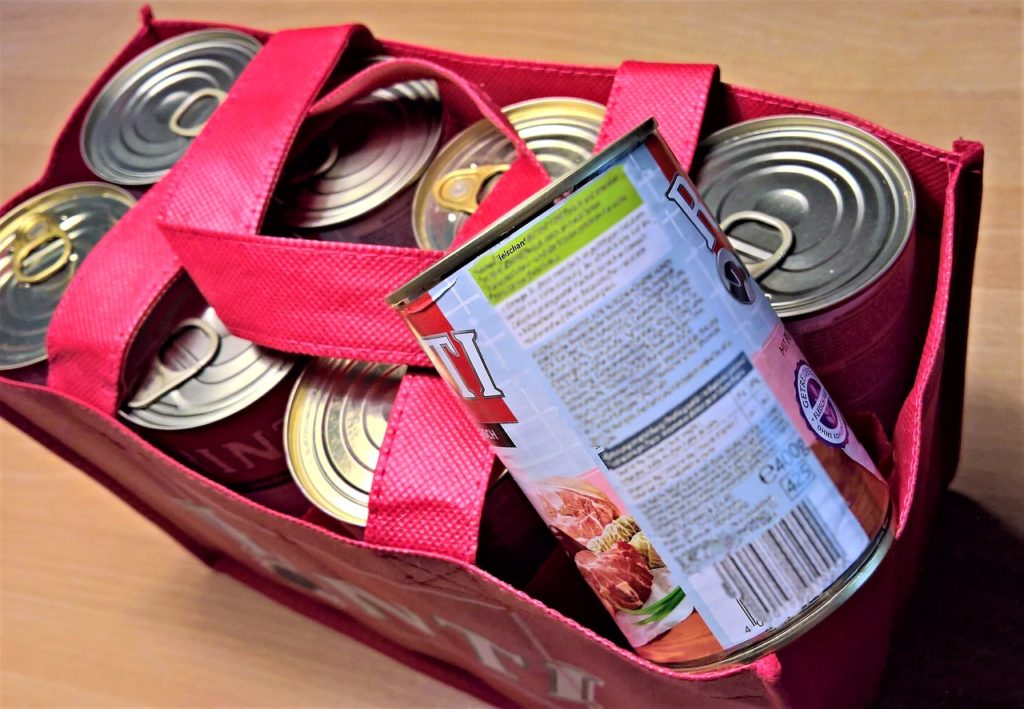
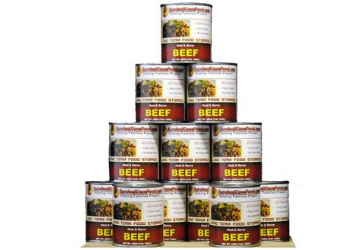






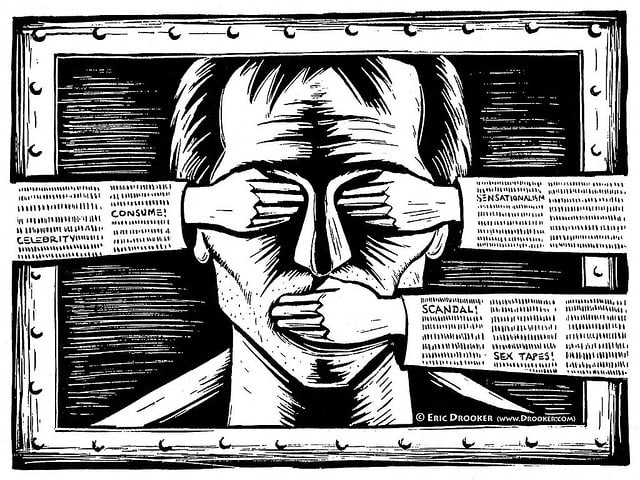


 Lower Valley Assembly