Forward Observer: Podcast on Low Intensity Conflict/Chetnik Guerrilla Warfare

In this podcast, intelligence analyst Sam Culper of Forward Observer talks about Chetnik guerrilla warfare and how he believes it may presage low intensity conflict developing in the USA.

One of the more interesting things I’ve been doing is reading histories of multi-sided conflicts.

On today’s Out Front with Samuel Culper radio show, I talk about the three-sided war between the Nazis, the Chetniks (a Serbian nationalist group), and Soviet-backed communist partisans in early 1940s Yugoslavia.

It was ugly.

The Chetniks waged guerrilla warfare on the Nazis and communists. The communists waged war against the Nazis and the Chetniks. And the Nazis attacked them back. It was a brutal time in history for the Serbs.

And my concern is that our low intensity conflict, when it does really heat up — maybe as soon as this fall — is going to lead to similar types of attacks on Americans from all walks of life.

What’s worse than a simple civil war is a protracted, multi-sided tribal conflict that doesn’t end.

https://www.youtube.com/watch?v=kpZqzgKdnbc

Food Preservation

Our tomato plants are starting to produce an abundance of paste tomatoes. We’ve just finished canning our first excess of tomatoes for the summer. We dehydrate our goji berries in batches as we harvest the ripe berries. We’ve previously canned up elderflower cordial earlier this summer and enjoy refreshing and healthy spritzers in the heat. Blackberry and blackberry/apricot jams have been stored up in jars. The first ripe watermelon was devoured this afternoon; will we preserve some rind?

Food preservation has become something of a lost art in this day and age, but a lot of people still express an interest in the practice. Where can you learn more about it if you don’t already have a friend who has been preserving food? One way is through books. The Ball Complete Book of Home Preserving or The Ball Blue Book Guide to Preserving are stand-bys that have been updated over the years. They mostly just cover canning, but have very reliable recipes and instructions that are easy to understand for beginners. If you can learn through reading, but don’t want a whole book on the topic, Instructables has a free online course on Canning and Preserving which lets you work through six topics at your own pace.

For a more visual approach and covering more topics, the University of Alaska Fairbanks Extension has a video series on Youtube called Preserving Alaska’s Bounty which gives you an overview of several preservation topics, including water bath canning, pressure canning, sausage-making, fruit leathers, sauerkraut, dehydrating, and more. The videos are a bit dated, but still have good basic info. Youtube user Homestead Heart also has a playlist for food preservation. English Country Life’s Youtube channel has a food preservation playlist which includes things like curing bacon, smoking food, lard, and more. A more technical or science explanation of food preservation can be found with FoodSci with ProfVigeant.

The WSU Extension normally has an online, food preservation program called Preserve the Taste of Summer, but it appears to be closed for the year. Click here to download a PDF flyer with details about the course cost and syllabus. Similarly, the University of Idaho Extension has a Preserve @ Home online program, which next airs in January 2021. Click here for a past Preserve @ Home flyer.

Other web resources include:

National Center for Home Food Preservation (Univ of Georgia) and its related website Preserving Food at Home.

Healthy Canning

The Home Preserving Bible

FoodPreserving.org This one is Australian. Weights are giving in both grams and pounds, while other volume measurements are in the familiar cups and teaspoons.

Now, go forth to a new life, rising through food preservation methods to self-sufficiency, peace and plenty.

The Survival Mom: TEOTWAWKI has finally arrived

The Survival Mom talks about some societal and cultural changes resulting from the pandemic in TEOTWAWKI has finally arrived.

This past spring while America was busy shopping for toilet paper and hand sanitizer, and panicking at their shortages, TEOTWAWKI happened.

The End Of The World As We Know It arrived. It slipped right past us while we were all distracted, but make no mistake. We are unlikely as a country and a world to ever go back to “normal”. We aren’t going to turn a corner at some point and magically, it will be as though the pandemic never happened.

Who knew, back in January and February of 2020, that the coronavirus pandemic would be the TEOTWAWKI event that changed our world?

There has been an upheaval in virtually every aspect of our lives. New divisions now exist between people that didn’t exist in the “before time”. Authorities, both elected and unelected, have expanded their powers. Data has been skewed, misrepresented, and at times, falsified in order to maintain an official narrative, and in the meantime, a near-panic-level fear has drilled its way deep into the hearts and minds of millions.

We went from “slow the spread,” “wash your hands for at least 20 seconds,” to now, altering everything about our lifestyles as we wait for a vaccine, which may or may not ever come.

However, it turns out that this TEOTWAWKI event isn’t wholly negative and full of doom as many of us once believed.

Some commentators, James Altucher for one, have called the virus, “The great reset”, meaning that society has a chance to re-imagine and re-create something better than what existed before. Mike Cernovich described it as an “accelerator” – The pandemic has accelerated events that would have eventually happened but are now occurring within weeks rather than months or years.

Our public school system, medical treatment and consultation, family relationships, and businesses are just a few things that are being reset and accelerated.

Public education and TEOTWAWKI

Public education will never be the same. As we speak, thousands, maybe millions of parents across the country are taking control of their children’s education and are seeking to hire teachers and tutors directly.

Image: parent message to find teacher

Nebraska’s homeschool filings are up 21% from the same time last year, and in social media, parents are clamoring to find other like-minded families to create “homeschooling pods”. Here’s a quote from a now-viral Facebook post:

“If you are not a parent/in a mom’s group, you may not be aware that a kind of historic thing is going on right now.

This week there has been a tipping point in Bay Area families looking to form homeschooling pods. Or maybe “boiling point” might be a better term… Essentially, within the span of the last 48 hours or so, thousands of parents are scrambling through an absolute explosion of facebook groups, matchups, spreadsheets, etc. to form homeschooling pods.”

She adds, “This is maybe the fastest and most intense PURELY GRASSROOTS economic hard pivot I’ve seen.”

Parents are learning about micro-schools and diving into homeschooling, even as teacher unions are making demands that might have made sense back in January but are now completely untethered to this new reality. A reality where millions of students and parents discovered the variety of options available and are continuing down that alternative path.

Yes, for public education, TEOTWAWKI is the new reality — the end of public education as we once knew it. There’s no putting the traditional public educational genie back in the bottle, ever.

TEOTWAWKI and the family — surprising results

Another positive result has been during the quarantine weeks, families discovered they quite like being at home together. A friend of mine living in Brooklyn was astonished by how well his family, including two teenagers, are getting along in their apartment, with only a nearby park available for outings and fresh air.

I read this quote from a mom who said, “It’s going to be very difficult to get back to normal because for the last eight weeks we’ve been having dinner together as a family, every single night. And for the previous 10 years, we never did that.”

Many families are facing dramatic financial hardships. I don’t want to minimize that, but at the same time, spending more time together and not less has resulted in, for many, strengthened family ties…(continues)

Click here to read the entire article at The Survival Mom.

The Human Path: Herbal First Aid Kit

Sam Coffman, author of The Herbal Medic, at The Human Path has this video about The Herbal First Aid Kit.

Sam Coffman from The Human Path (an herbalism and survival school in Austin and San Antonio, Texas) explains the most fundamental concepts around creating and using your own herbal first aid kit. Sam’s experience as a former Special Forces Medic, while blending that world with herbalism, gave him some unique insights into making and using herbal first aid kits that are highly effective in a variety of situations. He uses the herbal first aid kit that The Human Path sells, as the starting point for talking about the packs, the containers, the herbs, the practicality of what works and what doesn’t, and why you would want to use an herbal first aid kit in the first place.

https://www.youtube.com/watch?v=PIhXY1q2cv4

Forward Observer: 5 Steps to Setting Up an Intelligence Network for SHTF

Intelligence Analyst Sam Culper at Forward Observer presents Five Steps to Setting Up an Intelligence Network for SHTF. He also invites you to his Intel Bootcamp.

Many of you feel a sense of urgency about the future… Like things might spiral out of control around November or shortly thereafter.

And despite that sense of urgency, I know there are lots of reasons why you might not take my latest online course.

As you may have heard, the Intel Bootcamp course starts today.

I’m going to show students how they can build a local intelligence network to facilitate information-sharing during what disasters may come.

I’m removing the fogginess of what to do next, the guess work and the trial-and-error.

If you watch these instructional videos and complete the tasks I outline, then you’re going to be head and shoulders above your peers and the competition.

For those who aren’t going to take this course, I want to outline five things you need to know… (This stuff is in the course, by the way.)

1. Start a neighborhood watch. It doesn’t matter how many people join at first — just get it started. You can use this organization immediately to share information, plus there are numerous benefits later on.

2. Focus your efforts. It’s easy to get bogged down by just how much useless information comes through the news. Use my 60/30/10 model to focus your collection locally. Sign up for local sources of official information and automate your collection as much as possible.

3. Be deliberate. Identify your intelligence gaps — figure out what you need to know. From these gaps, you generate collection requirements — the pieces of information that need to be collected. If we’re not deliberate about collection, we’re going to end up with junk.

4. Develop people, not sources. Don’t think of developing sources as purely transactional. Yes, we want them to find useful information and pass it to us, but these people are our neighbors and community members. They want the same thing we do: a safe neighborhood and early warning about local threats. Build trust and friendship as you build our your local network.

5. Lean on existing groups. Lots of areas have existing civic and political groups. These groups are not only sources of information, but also recruiting pools for people who are concerned about the future and interested in communities safe from crime, mob violence, looting, or worse. Either join yourself, or task members of your network to join these groups. Many hands make light work.

There is, of course, a lot to do. And there’s a lot more to it than this.

But if you internalize these five goals for yourself and act on them, then you’re going to be well on your way to building a solid information-sharing network for when disaster does strike…

The Trumpet: Hagia Sophia and a Clash of Civilizations

Hagia Sophia church being converted for opening as mosque

From The Trumpet, Hagia Sophia and a Clash of Civilizations:

Turkey has just taken Orthodox Christianity’s greatest cathedral and turned it into a mosque.

There’s a lot of history here. When Hagia Sophia was opened by Emperor Justinian in a.d. 537, it was the largest, and possibly the most impressive, building in the world.

This one building may have impacted the lives of billions. Early Russian history records the story of Vladimir the Great, ruler of the Rus in the 10th century. Vladimir wanted to choose a religion for the Rus, and sent out envoys to neighboring civilizations. Once the envoys saw Hagia Sophia, their minds were made up. “We no longer knew whether we were in heaven or on Earth,” the envoys reported, “nor such beauty, and we know not how to tell of it.” Vladimir converted to Orthodox Christianity, and that religion has shaped Russian and Slavic history ever since.

In 1453, Constantinople and Hagia Sophia fell to the Ottoman Turks. And so they turned one of Christendom’s greatest churches into a mosque.

Hagia Sophia went through a third revolution in 1934. Mustafa Kemal Atatürk transformed Turkey from an Islamic empire into a secular state—as a powerful symbol of this, he transformed Hagia Sophia from a mosque to a museum. It is now Turkey’s top tourist destination, drawing 3.7 million visitors a year.

Which is why Turkish President Recep Tayyip Erdoğan’s decision on July 10 to turn it back into a mosque is so significant. His political allies have hailed it as a second conquest of Istanbul. It is a deliberate statement. Turkey is no longer the secular state of Atatürk. It is an Islamic nation, aiming to become an empire.

Turkish writer Orhan Pamuk said the conversion of Hagia Sophia back to a mosque “is to say to the rest of the world, ‘Unfortunately we are not secular any more.’ There are millions of secular Turks like me who are crying against this, but their voices are not heard.”

This reversal away from secularism runs against the grain of Western thought. To many, history runs in one direction: Europe used to be religious, but is becoming very secular; this is the march of progress that all nations will eventually follow.

Erdoğan’s reversal is the latest proof that the world is not on a one-way track to secularism.

Look around the world and you can see evidence of this. In 1989, Central Asia had only 160 active mosques. Four years later, there were 10,000. Moscow had 50 churches in 1988. Four years later, it had 250. Around the same time, nearly a third of Russians under age 25 said they had switched from being atheistic to believing in God.

In the still officially atheistic state of China, the World Religion Database shows the total number of followers of all religions jumping from around 300 million in 1970 to around 700 million today. Despite government attempts to stop it, religion has spread much faster than Chinese population growth.

In South Korea in 1962, 2.6 percent of the population were Buddhist and 5 percent were Christian. Now 23 percent are Buddhist and more than 29 percent are Christian.

“In the modern world, religion is a central, perhaps the central, force that motivates and mobilizes people,” wrote Samuel Huntington in his book Clash of Civilizations. “It is sheer hubris to think that because Soviet communism has collapsed, the West has won the world for all time and that Muslims, Chinese, Indians and others are going to rush to embrace Western liberalism as the only alternative.”

Time has proved Huntington dramatically correct. He wrote his book before 9/11, when radical Islam made itself a major concern to everyone in the world. He wrote it before head coverings became one of the major political issues in Europe, the bastion of liberal multiculturalism.

The big question is, could Europe be swept along by such a trend?

At the other end of Europe is what could be Hagia Sophe’s mirror image. The Grand Mosque of Córdoba in Spain was built in the eighth century a.d. To the locals at the time, “the beauty of the mosque was so dazzling that it defied any description.”

But the Grand Mosque is now the Cathedral of Our Lady of the Assumption, after the Spanish conquered it in 1236.

My point is not to set up some kind of moral equivalency between the two. Hagia Sophia is the fifth church of that name to be converted into a mosque in Turkey in recent years. I know of no Western country running the process in reverse.

Instead, my point is to show that Europe and the Middle East, Christianity and Islam, are closely connected. What happens in one affects the other—and has for centuries.

Religion is already rising in Europe in reaction to Islam. When Russia voted on its new constitution at the start of the month, most attention was focused on President Vladimir Putin’s attempt to extend his time in office. But the vote also added God into the constitution.

In Poland this month, incumbent President Andrzej Duda was reelected. Duda’s Law and Justice party has close links with the Catholic Church. “In hardly any other EU country are the state and church as closely connected as in Poland,” noted deutschlandfunk.de.

Across Europe, religion is making a comeback—not in terms of religious observance, but instead with symbols and rhetoric.

Across Eastern and Central Europe, leaders have made clear that they view their countries as Christian and that Muslims are not welcome. In May 2015, Hungarian Prime Minister Viktor Orbán said, “I think we have a right to decide that we do not want a large number of Muslim people in our country.”

“Let us not forget, however, that those arriving have been raised in another religion and represent a radically different culture,” he wrote in Frankfurter Allgemeine Zeitung. “Most of them are not Christians, but Muslims. This is an important question, because Europe and European identity is rooted in Christianity” (Sept. 3, 2015).

Slovakian Prime Minister Robert Fico said in May 2016, “I do not want to see a Muslim community in Slovakia. … We do not want to change the traditions of this country, which are built on the Christian tradition.” The president of the Czech Republic warned in January 2016 that integrating Muslims into Europe “is practically impossible.”

The same trends are arriving in Western Europe. Since 2018 all government buildings in the German state of Bavaria have been obliged to display a cross.

In the West, upstart political parties like the Alternative für Deutschland in Germany and the National Rally (formerly the National Front) in France have taken up the mantle of politicized religion. National Rally leader Marine Le Pen pushes “a secularized Christianity as culture,” Rogers Brubaker, a sociologist at the University of California–Los Angeles, told Atlantic magazine. “It’s a matter of belonging rather than believing.” Brubaker described it as a Christianity that says, “We are Christians, precisely because they are Muslims. Otherwise, we are not Christian in any substantive sense” (May 6, 2017).

The AfD is the same way. Its election slogans, such as “Burkas? We’re into bikinis,” are hardly paragons of chastity and virtue. In the culture wars, they are on the side of the Christian right, and the Christian right is happy to accept them.

The AfD’s stunning election success—coming from nowhere to become the third-largest party in Germany’s parliament—shows the appetite in Germany for this kind of religion in politics.

In Europe it tends to be Islamist terrorist attacks or migration from Islamic countries that triggers this kind of religious fervor. Absent of that, it dies down…

Click here to continue reading at The Trumpet.

Tenth Amendment Center: Gov’t Worried that Mask Use Thwarts Gov’t Facial Recognition

From the Tenth Amendment Center, DHS Worried Widespread Mask Use Will Thwart Government Facial Recognition.

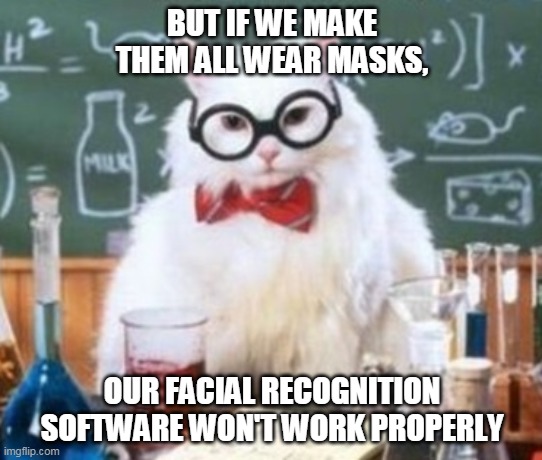
There has been a lot of controversy over masks, but no matter what you think about the efficacy of face coverings in preventing the spread of COVID-19, there is one advantage to masking up. The U.S. Department of Homeland Security (DHS) has expressed concern that widespread use of masks will thwart facial recognition.

A DHS “intelligence note” dated May 22 came to light in the BlueLeaks trove of law enforcement documents. The DHS Intelligence Enterprise Counterterrorism Mission Center in conjunction with a variety of other agencies, including Customs and Border Protection and Immigration and Customs Enforcement drafted the note. It “examines the potential impacts that widespread use of protective masks could have on security operations that incorporate face recognition systems — such as video cameras, image processing hardware and software, and image recognition algorithms — to monitor public spaces during the ongoing Covid-19 public health emergency and in the months after the pandemic subsides.”

According to The Intercept, the Minnesota Fusion Center distributed the notice on May 26, as protests over the killing of George Floyd were ramping up. “Email logs included in the BlueLeaks archive show that the note was also sent to city and state government officials and private security officers in Colorado and, inexplicably, to a hospital and a community college.”

The note warned, “We assess violent extremists and other criminals who have historically maintained an interest in avoiding face recognition are likely to opportunistically seize upon public safety measures recommending the wearing of face masks to hinder the effectiveness of face recognition systems in public spaces by security partners.”

The note also expresses more general concern about mask-wearing. One header reads, “Face Recognition Systems Likely to be Less Effective as Widespread Wear of Face Coverings for Public Safety Purposes Continue,”

“We assess face recognition systems used to support security operations in public spaces will be less effective while widespread public use of facemasks, including partial and full face covering, is practiced by the public to limit the spread of Covid-19.”

The debate on masking aside, thwarting facial recognition is a good thing because the federal government is aggressively pushing the expansion of its vast and increasingly intrusive facial recognition network.

THE GROWING FEDERAL PROGRAM

recent report revealed that the federal government has turned state drivers’ license photos into a giant facial recognition database, putting virtually every driver in America in a perpetual electronic police lineup. The revelations generated widespread outrage, but this story isn’t new. The federal government has been developing a massive, nationwide facial recognition system for years.

The FBI rolled out a nationwide facial-recognition program in the fall of 2014, with the goal of building a giant biometric database with pictures provided by the states and corporate friends.

In 2016, the Center on Privacy and Technology at Georgetown Law released “The Perpetual Lineup,” a massive report on law enforcement use of facial recognition technology in the U.S. You can read the complete report at perpetuallineup.org. The organization conducted a year-long investigation and collected more than 15,000 pages of documents through more than 100 public records requests. The report paints a disturbing picture of intense cooperation between the federal government, and state and local law enforcement to develop a massive facial recognition database.

“Face recognition is a powerful technology that requires strict oversight. But those controls, by and large, don’t exist today,” report co-author Clare Garvie said. “With only a few exceptions, there are no laws governing police use of the technology, no standards ensuring its accuracy, and no systems checking for bias. It’s a wild west.”

There are many technical and legal problems with facial recognition, including significant concerns about the accuracy of the technology, particularly when reading the facial features of minority populations. During a test run by the ACLU of Northern California, facial recognition misidentified 26 members of the California legislature as people in a database of arrest photos.

With facial recognition technology, police and other government officials have the capability to track individuals in real-time. These systems allow law enforcement agents to use video cameras and continually scan everybody who walks by. According to the report, several major police departments have expressed an interest in this type of real-time tracking. Documents revealed agencies in at least five major cities, including Los Angeles, either claimed to run real-time face recognition off of street cameras, bought technology with the capability, or expressed written interest in buying it.

In all likelihood, the federal government heavily involves itself in helping state and local agencies obtain this technology. The feds provide grant money to local law enforcement agencies for a vast array of surveillance gear, including ALPRs, stingray devices and drones. The federal government essentially encourages and funds a giant nationwide surveillance net and then taps into the information via fusion centers and the Information Sharing Environment (ISE).

Fusion centers were sold as a tool to combat terrorism, but that is not how they are being used. The ACLU pointed to a bipartisan congressional report to demonstrate the true nature of government fusion centers: “They haven’t contributed anything meaningful to counterterrorism efforts. Instead, they have largely served as police surveillance and information sharing nodes for law enforcement efforts targeting the frequent subjects of police attention: Black and brown people, immigrants, dissidents, and the poor.”

Fusion centers operate within the broader ISE. According to its website, the ISE “provides analysts, operators, and investigators with information needed to enhance national security. These analysts, operators, and investigators…have mission needs to collaborate and share information with each other and with private sector partners and our foreign allies.” In other words, ISE serves as a conduit for the sharing of information gathered without a warrant. Known ISE partners include the Office of Director of National Intelligence which oversees 17 federal agencies and organizations, including the NSA. ISE utilizes these partnerships to collect and share data on the millions of unwitting people they track.

Reports that the Berkeley Police Department in cooperation with a federal fusion center deployed cameras equipped to surveil a “free speech” rally and Antifa counterprotests provided the first solid link between the federal government and local authorities in facial recognition surveillance.

See also EFF’s San Francisco Police Accessed Business District Camera Network to Spy on Protestors


AIER: Government, Govern Thyself

Michael Munger is a Professor of Political Science, Economics, and Public Policy at Duke University and Senior Fellow of the American Institute for Economic Research. In the article Government, Govern Thyself, he argues that the state is always either too weak to do what we want, or so strong it can do whatever it wants.

leviathan

In January 2014 then-President Barack Obama made a speech in Washington, D.C. In that informal speech, just before a cabinet meeting, he explained he found it necessary to ignore the U.S. Constitution and unilaterally impose his vision of the good society on the nation:

We’re not just going to be waiting for legislation in order to make sure that we’re providing Americans the kind of help they need. I’ve got a pen and I’ve got a phone…

And I can use that pen to sign executive orders and take executive actions and administrative actions that move the ball forward in helping to make sure our kids are getting the best education possible, making sure that our businesses are getting the kind of support and help they need to grow and advance, to make sure that people are getting the skills that they need to get those jobs that our businesses are creating.

Many people on the right complained (I thought correctly) that this was Presidential overreach. To be fair, even the New York Times called the overzealous suppression of information and prosecution of whistleblowers “a stain on Obama’s legacy.”

Now, of course, all my friends on the left are appalled by the actions of the overreach of the Republican administration. Many who were fine with Obama ordering states around on the environment have recently taken a strong interest in the 10th Amendment, worrying about immigration enforcement and sending federal police to Portland and other cities. Understand: this is no partisan disagreement, but an irredeemable flaw in the nature of the state. The modern state is either too weak to do what we want, or so strong it can do whatever it wants.

The problem is often stated recursively. In Luke 4:23, Jesus mocked his skeptical listeners, “Physician, heal thyself.” The audience doubted Jesus’ claim that he was the messiah, because “Is not this Joseph’s son?” Just some local kid putting on airs and getting above his raisin’. Jesus’ taunting response was, in effect, “Nobody wants a sick physician, or a skinny cook, right?”

There are other observations in this vein; perhaps the most famous is that of the Roman satirist Juvenal. Around 100 C.E. he wrote about a problem of making sure someone does the right thing, even if the boss isn’t watching. His example (it was a satire) focused on ensuring the sexual fidelity of wives:

I know well the advice and warnings of my old friends: “Put on a lock and keep your wife indoors.” Yes, and who will ward the warders? They get paid in kind for holding their tongues as to their young lady’s escapades; participation seals their lips. The wily wife arranges accordingly, and begins with them…. (Satire #6)

Juvenal’s question, “Quis custodiet ipsos custodes?” (I’ve seen it translated “Who will ward the warders/guard the guardians?”), and Jesus’ parable, both illustrate the problem with the dual nature of the state. The usual social contract myth endows the state with the duty to enforce all agreements. But who then is to enforce the agreement between citizens and the state? Can the state be both enforcer and a party in the dispute? Physician, heal thyself.

There is of course a long history of just this kind of critique among libertarians, particularly those of us with some anarchist sympathies. One of the most interesting, important, but (to my mind) underrated of these was the late Anthony de Jasay. The origins of government are supposed by our inability to enforce contracts. So we create an entity that specializes in violence, to force everyone to obey their contracts. In Hobbes’ terms, “Covenants, without the sword, are but words.” Of course, once “we” “consent” to this universal contract enforcer, we have some problems. Who is this “we?” It all happened a long time ago. And very few people actually “consented;” all that happened is that we didn’t leave the country. And who will enforce our contract with the violent contract enforcer? Somehow, the government has to govern itself.

According to Jasay, there are two fatal flaws with the “social contract” idea. The first is the “enforceable contracts” justification, and the second is the “limiting Leviathan” problem of self-governance.

If contracts are unenforceable, then who governs the government? If we can’t enforce contracts with equals, how can we trust Leviathan? Jasay compares this magical thinking to “jumping over your own shadow.” As he puts it, “[I]t takes courage to affirm that rational people could unanimously wish to have a sovereign contract enforcer [itself] bound by no contract.” And by “courage” he intends no encomium. Either (1) those who make this claim are contradicting themselves: since we can’t have contracts, we’ll use a contract to solve the problem; or (2) the argument is simply circular: cooperation requires enforceable contracts, but these require a norm of cooperation that makes the state obey the contract. Of course, if there is a norm of cooperation then other contracts are enforceable without the state.

We are on the horns of a dilemma: either the former claim—contracts cannot be enforced—is true, and we cannot conjure enforceable contracts out of a shadow; or the latter claim—people naturally cooperate on their own—is true, and then no state was necessary in the first place. Robert Nozick (1974) put it well: “Tacit consent isn’t worth the paper it’s not written on.”

The second problem highlighted by Jasay is “limiting Leviathan.” Let’s assume the best: state officials genuinely intend to do good. We might make the standard Public Choice claim that officials use power to benefit themselves, but let us put that aside; instead, suppose officials genuinely want to improve the lives of their citizens.

That still means a minarchist state is not sustainable.

Officials, thinking of the society as a collective rather than as individuals with inviolable rights, will immediately discover opportunities to raise taxes, create new programs and new powers that benefit those who, in the minds of the officials, need help. In fact, it is precisely the failure of the Public Choice assumptions of narrow self-interest that ensure this outcome. It might be possible in principle to design a principal-agent system of bureaucratic contract that constrains selfish officials. But if state power attracts those who are willing to sacrifice welfare, even their own welfare, for the “greater good” then the constitutional dams of minarchy are quickly overtopped, and Leviathan floods the land.

I should hasten to add that it need not be true, for Jasay’s claim to go through, that the concept of “greater good” has any empirical content. It is enough that (some) people believe. The true believers will brandish “the greater good” like a truncheon, smashing rules and laws designed to restrain the expansion of state power. No one who wants to do good will pass up a chance to do good, even if it means changing the rules. This process is much like that described by Hayek in “Why the Worst Get on Top,” or Bertrand de Jouvenal’s On Power.

So, the argument has the same structure, creating a logical dilemma or contradiction. Either

  1. Minarchy is not possible, because it is overwhelmed by the desire to “do good,” which cannot be controlled by the state because it would require officials to limit themselves for moral, not legal reasons, or
  2. No state, minarchist or otherwise, is necessary because people can limit their actions on their own, without the state’s use of coercion.

Jasay is especially scornful of those who would invoke constitutions and “parchment barriers” to protect a minarchist arrangement. A formal state and a constitution are either unnecessary (if people are self-governing) or ineffective (if they are not). Leviathan either cannot survive because everyone opposes it, or else it is illimitable because no one can resist it.

Most people seem to think that the problem with government power is that the wrong people are in office. That’s not right; the problem is that we want to rely on a physician who suffers an illness that cannot be cured.

Mises Wire: The Government Wants Your Crypto Data. And Lots of It.

Bitcoin Manifesto author Allan Stevo has an article at the Mises Institute about how the government would like to track your crypto transactions, as well as ways that can help anonymize your cryptocurrency use – The Government Wants Your Crypto Data. And Lots of It. Don’t be scared off of cryptocurrency just because governments want to control them. It takes some time and effort to understand and take countermeasures. While governments would have you think otherwise, the money you have earned is yours not theirs.

he Venezuelan government recently announced that its Administrative Service for Identification, Migration and Foreigners (SAIME) is now accepting bitcoin as a payment method for passports.

The problem with that is that bitcoin is not anonymous but pseudonymous.

To interact with any government using bitcoin is to reveal to them the wallet you are paying from. The blockchain is public. When commentators like Caitlin Johnstone and Stefan Molyneux or organizations such as the Mises Institute or TOR Foundation ask for bitcoin contributions, one can follow the money with a blockchain explorer to see how much comes in and how it is spent. One can also see who gave it to them if a donor hasn’t exercised some caution in protecting their privacy.

I would never want the Venezuelan government, the US government, or anyone else who might misuse that information to be able to peek into my crypto finances, especially not through a transaction tied to my passport. Who’s to say that the next time I appear at an immigration checkpoint I won’t be flagged for having too fat of a bitcoin wallet or putting money toward some politically incorrect use?

Though the Venezuelan government dedicates a fraction of the resources to spying on its citizens that the US government does to spying on Americans, there is no need to carelessly provide any government with extra personal data. Knowledge in the hands of the state will be used as a weapon in the hands of the state.

There are plenty of lists of big bitcoin wallets and there are people who make a name for themselves by watching bitcoin move from one account to another. Among them is the US government.

On February 6, 2018, Commodity Futures Trading Commission (CFTC) chairman Chris Giancarlo before the US Senate Banking Committee revealed that the US government uses spot exchanges such as Bitstamp, Coinbase, itBit, and Kraken to glimpse into the industry.

Chainalysis, run by Kraken’s cofounder and former COO Michael Gronager, exists to tie personal identity to bitcoin transactions. Their business model is the reduction of other people’s personal privacy, data that they then monetize by selling it to their customers. Far more sinister than Google or Facebook, which at least anonymize data prior to selling it to advertisers, Chainalysis links real-life personal data, including legal name, to a specific wallet. Many blockchain analysis competitors exist.

Coinbase has recently come under fire for having a similar service, Coinbase Analytics, which has a contract with the US Department of Homeland Security. “Coinbase joins a crowded field of cryptocurrency analytics companies – Chainalysis, Elliptic, CipherTrace and others – vying for a piece of the federal pie. Agencies from all corners of the U.S. government regularly contract with crypto intel firms, inking deals for their tracing software worth millions, and sometimes stretching years,” reports Coindesk.

The bitcoin exchanges that KYC (know your customer) their customers are a perfect place for industry data collection to take place. Coinbase could monetize and simplify that data collection process, not only charging fees for their exchange services, but taking it a step further and monetizing their user data, making their users the product. This is especially pernicious in the privacy obsessed, smaller-government realm of cryptocurrency.

How much money did it take for this $8 billion company to sell out crypto consumers to the US government? Government disclosure shows that the contract has a current award amount of $49,000, with potential for another $134,750 total over the next four years.

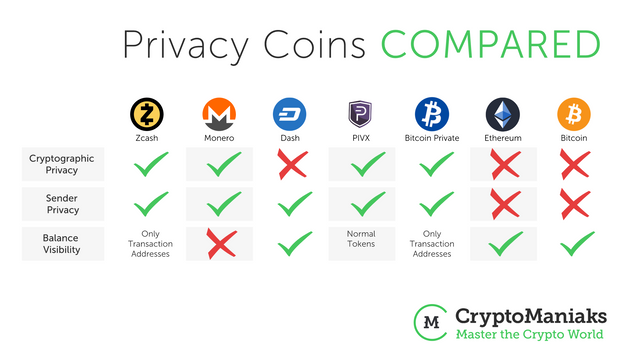
Coinbase has reassured users that it is only collecting publicly available data about its users, nothing more, and packaging that for government use. Its CEO, Brian Armstrong, has encouraged users not to use bitcoin if they don’t want to be snooped on by Coinbase, but to use privacy coins instead.

Luckily, the marketplace is responding to privacy incursions like this:

  • There are decentralized exchanges like Bisq that can’t easily be subpoenaed because there is no central entity to subpoena.
  • Additional ways of anonymizing bitcoin purchases exist, such as with cash or through ATMs, which may or may not KYC customers.
  • We are now witnessing the introduction of “privacy coins.” These are designed to be far more difficult to trace—some might even say impossible—though I long ago learned that the word “impossible” is not really that accurate, as possibility or impossibility is merely a question of will and available resources.

This topic of maintaining privacy in bitcoin transactions is especially pertinent as personal privacy comes under attack.

  • US Senators Lindsey Graham (R-South Carolina), Tom Cotton (R-Arkansas), and Marsha Blackburn (R-Tennessee) have introduced the “Lawful Access to Encrypted Data Act,” an antiencryption bill that insists that all encryption without a government back door is illegal. To follow such an order would spell the death of encryption. Any encryption with a back door is not actually encryption.
  • The pseudonymous Scott Alexander of Slate Star Codex was under threat of doxxing by the New York Times and consequently deleted his popular blog out of privacy concerns. The New York Times defended itself by saying it has a policy to identify all people it writes about. Alexander, after a month of silence from the New York Times on the topic, believes the threat has subsided. The callous disregard for privacy remains.
  • Google and Apple are begging governments to let them use mobile phones to monitor the whereabouts of users in the name of the latest cause against liberty—public health.

As journalist Peter Chawaga has pointed out, “Privacy is becoming one of the most scarce resources in the world.”

If these attacks on privacy were without consequence, then perhaps one might feel better about them, but as the current spate of cancel culture demonstrates—from Central Park Karen to Seattle’s middle finger Karen—merely having a camera turned on a person when they’re showing disagreeable behavior can be enough to shatter the fragile lives that many live. There’s almost a sociopathic hunger to destroy a person intertwined in some of this behavior. How much worse would the impact of that mob of sociopaths be if they also had access to all of a person’s financial data?

It’s a great time for more encryption and more privacy, and an awful time for helping governments or any other organization populate databases that you can guarantee will one day be used heartlessly against you.

Survivopedia: Are We Looking At The Wrong Numbers?

Bill White at Survivopedia writes about some of the numbers that aren’t being talked about much related to the current coronavirus pandemic – people with permanent damage who didn’t die – Are We Looking At The Wrong Numbers?

As the second wave of COVID-19 continues sweeping the nation, it is becoming even more politically polarized than ever before.

This is sad to me, that we can’t unite over something that is really not a partisan issue but is affecting us all. Our focus, all of us, should be on doing what is best for the people of our county; and that includes both protecting their health and protecting their ability to provide for their needs, financially speaking. The two are not mutually exclusive.

But that’s not what’s happening. Those on the political left are trying to use the pandemic to make Trump and Republican governors look bad, focusing on the rise in cases, as we wade through the second surge. It doesn’t matter that this second surge was part of the plan all along, as the original lockdowns were just about flattening the curve, in their narrative, the surge has to be because of some grave error in judgment on the part of their political enemies.

Then we’ve got the political right, many of whom are focusing on how the left-leaning media is overreacting and overstating the danger of the current situation. Sadly, they aren’t serving us any better, when they’re saying that we shouldn’t have to be wearing masks. Yes, I understand their position that the government is infringing on our liberty, but at the same time, I’ve got to say that there’s enough evidence that masks help save lives, that it makes sense to do so.

The argument that’s being used is that only one percent of the people die of COVID-19. But just what do they mean by “one percent?” If they’re talking 1% of the people who come down with it, the numbers don’t jive. We’ve had 4,170,000 people come down with the disease and 147,342 deaths as of this writing. That works out to 3.53% of total cases ending up in death.

But we need to realize that 3.53% is a low number. Even if nobody else comes down with the disease, some of the 2,042,559 active cases will result in death. We just don’t know how many. If we divide the number of people who have died by the total number of closed cases, we get 6.9%. That’s probably too high. When all is said and done, the death toll will probably end up being somewhere between those two percentages; we just don’t know where.

On the other hand, if they’re talking about one percent of the total population dying from COVID-19, then we’re talking 3.31 million people. Since we have no idea of how many total people are going to come down with the disease, that number is not outside the realm of possibility. I personally don’t think it will get that bad, but I can’t discount the possibility…

o start with, for every person who dies of COVID-19, there are 19 others who require hospitalization. That’s a hard number, which can be substantiated by hospital records. So the 147,342 people who have died become 2.8 million who have been hospitalized. Unfortunately, I can’t find any data to substantiate that; as everyone is reporting hospitalizations on a weekly basis, not a cumulative total; and I can’t just add those up, because we don’t know how long any of those people have been in the hospital.

So let’s use that 2.8 million number for now. Supposedly for every person who dies of COVID-19:

  • 18 people will have to live with permanent heart damage
  • 10 people will have to live with permanent lung damage
  • 3 people will end up having strokes
  • 2 people will have to live with chronic weakness and loss of coordination due to neurological damage
  • 2 people will have to live with a loss of cognitive function due to neurological damage

Granted, I’m sure these numbers are preliminary and they will be modified in the future, as our medical community gains more information. But we’re talking about the potential for all of those 2.8 million people having to live with some sort of permanent or semi-permanent disability. And that number is only going to go up, as we’re nowhere near the end of this pandemic if an end actually even exists.

If we take the viewpoint that one percent of the population is going to die of COVID-19, as some are saying, then we’re looking at a total of:

  • 3,311,000 dead
  • 59,598,000 with permanent heart damage
  • 33,110,000 with permanent lung damage
  • 9,933,000 who have strokes
  • 6,622,000 with permanent weakness and lack of coordination
  • 6,622,000 with permanent loss of cognitive function

Obviously, we can’t afford that as a nation. While I’m sure that there will be a considerable amount of overlap, with people having more than one of those symptoms, that just means that those who do have long-term effects will be in that much worse shape. And before you say it will just be old people, I know people in their 20s who have come down with COVID and are still battling these sorts of long-term symptoms two to three months later.

When I say we can’t afford that, I’m referring to the loss in our labor force. While a large percentage of the people who have serious problems with COVID-19 and die are elderly people with underlying health problems, more and more younger people are having serious problems with the disease. Are those young people going to become disabled and end up needing public assistance their whole lives? (continues)

Click here to read the entire article at Survivopedia.

Forward Observer: Election 2020 – Catastrophic Failure? The Evidence Is Stacking Up

This video comes from intelligence analyst Sam Culper at Forward Observer.

Samuel Huntington’s The Clash of Civilizations (1996) describes a world in disarray following the collapse of the American Empire.

In the latest Forward Observer TV video, I describe what that looks like for the United States, focusing on uncertainty surrounding November elections.

Organic Prepper: What It’s Really Like to Work in a COVID Ward

Chuck Hudson, a friend of Daisy Luther of The Organic Prepper, who works at Roper St. Francis Healthcare, Roper Hospital in South Carolina takes time to write about what it is like to work in a COVID ward there. Because some people still believe that COVID-19 is entirely a hoax without any patients or full hospitals, Daisy had to preface with the article with her statement about Chuck being a personal friend of hers, so that people don’t think it’s some kind of planted fake story.

Editor’s Note: This article was written by a personal friend of mine. This isn’t some stranger who wrote to me to share some story that may or may not be true. This is a man I’ve known for years who has dedicated his entire career to caring for the health of others. In this essay, he shares an average day in the COVID ward of the hospital where he works. ~ Daisy

COVID virus has turned the world upside down. From the economy of the planet to pitting neighbor against neighbor and friend against friend. Never mind the violence destroying our cities. We are all dealing with this virus with totally unbelievable numbers, huge numbers of infected people, and a rising death toll.

Yet, I look out my living room window and see green grass, flowers blooming and some kids down the street playing basketball.

And then, I go to work.

The area where our day patients come in is called 2HVT. All 14 rooms of 2HVT are now negative pressure rooms. (Also called isolation rooms, negative pressure rooms help prevent airborne diseases from escaping the room and infecting others.) All the rooms of the old Cardiac ICU, which is attached to our cath lab by a short hall, are now negative pressure rooms. 4 South on the 4th floor is now a COVID unit. 6 south, an old Ortho ward, and 5 South have been converted as well. All these conversions are in the downtown hospital alone. All patient areas of the 3, newer hospitals in the system have been converted to handle COVID patients.

Watching the news here in my new home state of South Carolina, no matter the station, it is the same thing: doom and gloom. More and more infected people from testing, talking heads pointing the finger of blame, and numbers being sensationalized. After all, “If it bleeds it leads.” It’s gotten so bad that I turn on the news just long enough to catch the weather and traffic for the morning drive from Summerville to Charleston.

But enough of that. Let me tell you what it is really like in the COVID step-down unit. This unit is for people not sick enough to need high flow O2 or intubation, yet too sick to go to a “regular” floor. (Like there is a regular COVID floor!) As with any floor, the “permanent “ nurses and techs get morning reports from their night shift counterparts. After getting the reports we start our rounds with the patients.

Wait…no, we don’t just walk into a COVID room.

It takes about 3-5 minutes to gear up before entering a room.

Step 1 put on a set of gloves.

Step 2 Put on impermeable gown.

Step 3 Put on N95 mask.

Step 4 Put on face shield. ( We 3D print the frames for these. And use pieces of acetate we get from Staples. )

Step 6 Put on 2nd set of gloves.

Step 7 Triple check that everything is sealed and in order.

Now…we can go in the room.

We try to allow only 1 person at a time in the room, unless something demands that 2 people are needed. The nurse or tech who goes in the room does not leave the room until they have completed all tasks. If the nurse or techs needs something this is where I come in. If I am not assigned a patient, I run and get things. We are runners. We run and get whatever is needed.

What about emergencies?

Same procedure.

We have Mayday bags stapled to the wall in front of each room. Each of these Mayday bags contains the following:

  • 2 N95’s: small and regular
  • “Bunny Suit”
  • Face shield (We 3D print face shields in-house)
  • 6 pairs of separately bagged gloves (sm, med, lg)
  • Bouffant hat

All of this must be put on prior to entering a room. It is mandatory. Even if the patient is dying.

Very little is talked about…so much to tell.

Even the little things that the patients and the staff endure take a huge toll on us.

A majority of our patients have lost their sense of taste and smell. Some can only sense texture and temperature. This makes it difficult and frustrating for our patients and staff. The food delivered to our COVID patients is left at the “Airlock”. In normal rooms, insulated containers can be used for the food, keeping it hot. However, food in the COVID areas must be served using only paper plates, paper cups, paper serving trays and plastic ware. We have to use a microwave to heat the food just before it goes in the room.

In normal rooms a tech, nurse or CNA brings the food to the patients. In our world, only the assigned nurse or tech brings the food. And it may be a LONG wait due to having to microwave the food just prior to going in. We have to coordinate routine care to keep the number of times a room is entered to a minimum. (I have become an expert at microwaving paper plates of hospital grade food!)

One thing the virus does that many people outside of the medical field don’t know is it interferes with the blood clotting cascade. Believe you me, as a former Medical Lab Tech (MLT) I would LOVE to go over in mind-numbing detail the 12 steps of clotting. The intrinsic and extrinsic pathway that lead to a fibrin strand…”OUCH!” (My wife just tossed a crafts magazine at me. I started describing the steps. In detail.)

So, in addition to damaging the lungs, COVID can cause deep vein thrombosis. It also causes DIC (Disseminated Intravascular Coagulation.) Post mortem exams have revealed up to 30% of early COVID patients had elevated D-Dimer, C-reactive protein and lactate dehydrogenase. All markers for clotting system problems, which has led to death by stroke, even in young people.

Some patients are in denial until the last moment.

Recently, I was helping to discharge a fairly young patient, about the mid to late 40s. As I was getting his history and gathering information on his experience, I asked how he ended up in ICU and then in my area.

He told me he thought he had a summer cold. He thought the whole virus was a hoax and refused to wear a mask. When his wife brought him in he thought it was a bad cold AND an ulcer. He complained of stomach pain, severe diarrhea, and shortness of breath. He was admitted to our COVID floor, still in denial. What he had believed was a stuffed up nose was actually him losing his sense of smell. Then he crashed.

The anesthesiologist did what is called rapid sequence intubation. The patient is given sedative and paralytic drugs. That’s it. Once they are intubated, they are put out.

He told me when they jerked his head back and he saw that the young doctor looking scared though his protective gear he knew then it wasn’t a hoax.

Good news: we ARE saving more than we lose.

Here in Charleston where I work, our average patient stay is 4 days. If they go to the ICU their stay is about double that. In the last 3 weeks we have dropped from 44% to 31% of our inpatients being in for COVID. Our percentage of positive COVID tests is at about 21%. We test EVERY PATIENT that comes in the hospital.

We have a game plan:

  • Remdesivir
  • Lovanox
  • Plasma antibodies from COVID survivors
  • Intervene and intubate
  • ECMO: Extracorporeal membrane oxygenation (to treat some patients)

We have a long way to go. We still have shortages of protective gear, but we improvise, adapt and overcome. Up to 170 or so of our teammates, young and not so young,  have been out with COVID. Some ended up in the ICU. Our hospital is finding ways to use senior management. A large group of nurses that haven’t been bedside in years are filling in as runners, housekeepers, and patient transport.

This is part of a corporate email from this past week. (Patient sensitive information has been removed.)

Roper St. Francis Healthcare has tested and confirmed that 46 more patients since Tuesday have COVID-19, bringing our total to 3,806 since the beginning of the pandemic. 

Once each week, we will provide additional information about our testing and which segments of the population are most affected by the virus.

In the past seven days, 19 percent of our 3,014 COVID-19 tests have been positive, which is down from our 22 percent positive rate during the past 14 days. Our overall positive rate since we started COVID-19 testing is 15 percent. We have 949 tests pending.

Of those testing positive in the past seven days,

– 19 percent are under 29 years old

– 15 percent are 30-39 years old

– 12 percent are 40-49 years old

– 17 percent are 50-59 years old

– 16 percent are 60-69 years old

– 20 percent are over 70 years old

Thirty four percent of those patients have been white, 44 percent have been Black, 5 percent have been Latino and 16 percent have been other.

The areas where we’ve seen the largest number of new cases are North Charleston, Charleston and Summerville.

There have been 3,882,167 cases nationally with a total of 141,677 deaths, according to the federal Centers for Disease Control and Prevention. South Carolina has had 73,101 confirmed cases and 1,203 deaths.

Hero’s? Nah…We signed up for this because we wanted to help.

I’m not going to berate, belittle, or bully anyone over their choice when it comes to personal protective equipment. I am going to ask that you be careful. You do not want someone like me or my old Ranger bud Johnny doing CPR on you. You will end up with damaged ribs.

I’m pretty blessed to be working at Roper St. Francis Healthcare, Roper Hospital. We show up to work each day to care for our patients, and we go home to rest up a little before doing it again the next day. Some of us, myself included, don’t care much for the term “hero”. It is MY job to take care of YOU if you end up in OUR hospital. It is YOUR job to stay healthy, be careful, and be smart about this virus.

Forward Observer: What’s Next for the Urban Insurgencies

Intelligence analyst Sam Culper at Forward Observer writes about the continuing urban insurgency in What’s Next for the Urban Insurgencies.

For the past couple months, I’ve been hitting some old counterinsurgency standby’s. The last time I read most of the these manuals and books was prior to deployments to Iraq and Afghanistan.

Somehow insurgency followed us back.

Given that the reelection of President Trump is likely to blow wide open these urban insurgencies, it’s long past time for us to begin or continue learning about the cat and mouse of the insurgent and counterinsurgent. In this case, anarchist insurrectionists are trying to foment a broader insurgency against local, state, and federal government.

In his book Counterinsurgency Warfare, author David Galula outlines six strengths and weaknesses that determine the potential for a successful counterinsurgency campaign. I’ll list them below with some brief notes on the current situation.

1. Galula writes that an absence of problems in a country makes insurgency virtually impossible. Since there is no absence of problems — we have both real and artificial problems in this country — an insurgency was virtually inevitable as soon as local, state, and federal governments were weakened, as they are now.

2. Next, a national consensus against insurgents is a strength that this country currently lacks. There’s no national consensus on anything, and there’s substantial support for the insurgents, which strengthens the urban insurgencies.

3. Resoluteness of counterinsurgent leadership is the next strength or weakness. The Trump administration currently has the resolve to wage counterinsurgency, but there’s been opposition from state and local governments. The insurgents’ political and social efforts will focus on degrading the administration’s capacity to execute a counterinsurgency campaign, increasingly so after President Trump’s potential reelection. (The activism against ICE in previous years is a good example.) The Trump administration will face significant problems in instituting a whole-of-government approach, likely leading the administration to take more deliberate or extreme actions, which will increase accusations of fascism.

4. A major factor in any outcome is the counterinsurgents’ knowledge of counterinsurgency warfare. The Trump administration will rely on those with experience in Iraq, Afghanistan, and other places where a shaky counterinsurgency strategy was unevenly applied. Regardless of strategy, defeating urban insurgencies could become a multi-year process in places like Portland and Seattle, as America experiences its own version of the “Irish Troubles” — albeit not an exact comparison.

5. The machine for control of the population includes four factors which a second Trump administration could lack: the political structure (x), the administrative bureaucracy (x), the police (), the armed forces (x/✓). If reelected, President Trump will either face a split Congress or a Democratic majority in both the House and Senate, and lack control of the political structure. The Trump administration doesn’t have control of the administrative bureaucracy now and is likely to lack control in a second term. The Trump administration will likely retain control over most federal law enforcement, and is likely to have influence over some local and state law enforcement — that’s certainly less the case in areas where there’s local political support for the insurgencies. Army Secretary Mark Esper and GEN Mark Milley, Chairman of the Joint Chiefs of Staff, last month demurred at the deployment of regular Army troops to confront rioters. Esper and Milley can be replaced with military officials who are more amenable to using the military to put down insurrections, but Democrat-majority Congress would cast doubt on how effective the use of armed forces would be.

6. The sixth and final factor is geographic conditions. These insurrections will primarily occur in urban areas, regardless if they trigger a national insurgency. The most important thing we learned about fighting against urban insurgents in Iraq and Afghanistan is that the counterinsurgency effort can be incredibly disruptive to the city.

Both sides are vying for support of the populace, so the insurgent must develop and propagandize a cause that will garner popular support — this is where the overall effort is won or lost.

These are some initial thoughts on what we could be looking at for at least the next four years, based on Galula’s factors presented in Counterinsurgency Warfare. These are not predictions, of course, but I do hope these initial thoughts are helpful in understanding the future…

WA Gov. Candidate Joshua Freed Meet and Greet, July 31st, Prosser

A Meet and Greet for Washington Gubernatorial candidate Joshua Freed will be held on Friday, July 31, 2020 at 7:00 pm in The Patriot Barn at 22236 N. Hinzerling Rd, Prosser. If you plan to attend the meet and greet, please RSVP to Frank Ver Mulm so that we know how much food and drink to prepare. Tri-tip, soda, beer and wine will be served.

Joshua and Lindie Freed are college sweethearts and have been married for 23 years.

Tenth Amendment Center: A Brief History of the Freedom of Speech in America

Judge Andrew Napolitano writes at the Tenth Amendment Center A Brief History of the Freedom of Speech in America

When Thomas Jefferson wrote the Declaration of Independence, he included in it a list of the colonists’ grievances with the British government. Notably absent were any complaints that the British government infringed upon the freedom of speech.

In those days, speech was as acerbic as it is today. If words were aimed at Parliament, all words were lawful. If they were aimed directly and personally at the king — as Jefferson’s were in the Declaration — they constituted treason.

Needless to say, Jefferson and the 55 others who signed the Declaration would all have been hanged for treasonous speech had the British prevailed.

Of course, the colonists won the war, and, six years afterward, the 13 states ratified the Constitution. Two years after ratification, the Constitution was amended by adding the Bill of Rights. The first ratified amendment prohibited Congress from doing what the colonists never seriously complained about the British government doing — infringing upon the freedom of speech.

James Madison, who drafted the Bill of Rights, insisted upon referring to speech as “the” freedom of speech, so as to emphasize that it preexisted the government. If you could have asked Madison where he believed the freedom of speech came from, he’d have said it was one of the inalienable rights Jefferson wrote about in the Declaration.

Stated differently, each of the signatories of the Declaration and ratifiers of the Bill of Rights manifested in writing their unambiguous belief that the freedom of speech is a natural right — personal to every human. It does not come from the government. It comes from within us. It cannot be taken away by legislation or executive command.

Yet, a mere seven years later, during the presidency of John Adams, Congress enacted the Alien and Sedition Acts, which punished speech critical of the government.

So, how could the same generation — in some cases the same human beings — that prohibited congressional infringement upon speech have enacted a statute that punished speech?

To the some of the framers — the Federalists who wanted a big government as we have today — infringing upon the freedom of speech meant silencing it before it was uttered. Today, this is called prior restraint, and the Supreme Court has essentially outlawed it.

To the antifederalists — or Democratic-Republicans, as they called themselves — the First Amendment prohibited Congress from interfering with or punishing any speech.

Adams’ Department of Justice indicted and prosecuted and convicted antifederalists — among them a congressman — for their critical speech.

When Jefferson won the presidency and the antifederalists won control of Congress, the Federalists repealed the speech suppression parts of the Alien and Sedition Acts on the eve of their departure from congressional control, lest it be used against them.

During the Civil War, President Abraham Lincoln locked up hundreds of journalists in the North who were critical of his war efforts. During World War I, President Woodrow Wilson — whom my alma mater Princeton University is trying to erase from its memory — arrested folks for reading the Declaration of Independence aloud or singing German beer hall songs.

Lincoln argued that preserving the Union was more important than preserving the First Amendment, and Wilson argued that the First Amendment only restrained Congress, not the president. Both arguments have since been rejected by the courts.

In the 1950s, the feds successfully prosecuted Cold War dissenters on the theory that their speech was dangerous and might have a tendency to violence. Some of the victims of this torturous rationale died in prison.

The government’s respect for speech has waxed and waned. It is at its lowest ebb during wartime. Of course, dissent during wartime — which challenges the government’s use of force to kill — is often the most important and timely speech.

It was not until 1969, in a case called Brandenburg v. Ohio, that the Supreme Court gave us a modern definition of the freedom of speech. Brandenburg harangued a crowd in Hamilton County, Ohio and urged them to march to Washington and take back the federal government from Blacks and Jews, whom he argued were in control. He was convicted in an Ohio state court of criminal syndicalism — basically, the use of speech to arouse others to violence.

The Supreme Court unanimously reversed his conviction and held that all innocuous speech is absolutely protected, and all speech is innocuous when there is time for more speech to rebut it. The same Supreme Court had just ruled in Times v. Sullivan that the whole purpose of the First Amendment is to encourage and protect open, wide, robust, even caustic and unbridled speech.

The speech we love needs no protection. The speech we hate does. The government has no authority to evaluate speech. As the framers understood, all persons have a natural right to think as we wish and to say and publish whatever we think. Even hateful, hurtful and harmful speech is protected speech.

Yet, in perilous times like the present, we have seen efforts to use the courts to block the publication of unflattering books. We have seen state governors use the police to protect gatherings of protestors with whose message they agreed and to disburse critical protestors. We have seen mobs silence speakers while the police did nothing.

Punishing speech is the most dangerous business because there will be no end to it. The remedy for hateful or threatening speech is not silence or punishments; it is more speech — speech that challenges the speaker.

Why do folks in government want to silence their opponents? They fear an undermining of their power. The dissenters might make more appealing arguments than they do. St. Augustine taught that nearly all in government want to tell others how to live.

How about we all say whatever we want and the government leaves us alone?