Prolonged Field Care: SOP for Ideal Makeshift Clinic

The Prolonged Field Care site of the Special Operations Medical Association has put up a podcast and slides for setting up a clinic in an unconventional warfare situation for Special Forces Operational Detachment Alpha (SFODA) units. This can probably be adapted for makeshift clinics that can be used by medically trained personnel in the event of various disasters, civil war/disturbance, and other emergent situations. The slides include some layouts for a single treatment bed clinic.

SOP for the Ideal SF Clinic

Click to download PDF slides

25 minute podcast

Related:

Pastor Joe Fox of Viking Preparedness also has posted a recent video showing an aid station for a group event.

Also, if you are a Patreon contributor to Mountain Guerrilla Blog, he has a related post Survival Retreat Considerations, Medical Critical Nodes published on Sept. 5.

EFF: Big Tech’s Disingenuous Push for a Federal Privacy Law

Following the theme of the earlier article on The Meat Packing Myth is this article from the Electronic Frontier Foundation – an organization leading the fight for digital privacy and free speech — about a push by big tech companies for federal regulation of digital privacy and why this push is in the self-interest of these corporations rather than in support of your actual privacy.

Big Tech’s Disingenuous Push for a Federal Privacy Law

This week, the Internet Association launched a campaign asking the federal government to pass a new privacy law.

The Internet Association (IA) is a trade group funded by some of the largest tech companies in the world, including Google, Microsoft, Facebook, Amazon, and Uber. Many of its members keep their lights on by tracking users and monetizing their personal data. So why do they want a federal consumer privacy law?

Surprise! It’s not to protect your privacy. Rather, this campaign is a disingenuous ploy to undermine real progress on privacy being made around the country at the state level. IA member companies want to establish a national “privacy law” that undoes stronger state laws and lets them continue business as usual. Lawyers call this “preemption.” IA calls this “a unified, national standard” to avoid “a patchwork of state laws.” We call this a big step backwards for all of our privacy.

The question we should be asking is, “What are they afraid of?”

Stronger state laws

After years of privacy scandals, Americans across the political spectrum want better consumer privacy protections. So far, Congress has failed to act, but states have taken matters into their own hands. The Illinois Biometric Information Privacy Act (BIPA), passed in 2008, makes it illegal to collect biometric data from Illinois citizens without their express, informed, opt-in consent. Vermont requires data brokers to register with the state and report on their activities. And the California Consumer Privacy Act (CCPA), passed in 2018, gives users the right to access their personal data and opt out of its sale. In state legislatures across the country, consumer privacy bills are gaining momentum.

This terrifies big tech companies. Last quarter alone, the IA spent nearly $176,000 lobbying the California legislature, largely to weaken CCPA before it takes effect in January 2021. Thanks to the efforts of a coalition of privacy advocates, including EFF, it failed. The IA and its allies are losing the fight against state privacy laws. So, after years of fighting any kind of privacy legislation, they’re now looking to the federal government to save them from the states. The IA has joined Technet, a group of tech CEOs, and Business Roundtable, another industry lobbying organization, in calls for a weak national “privacy” law that will preempt stronger state laws. In other words, they want to roll back all the progress states like California have made, and prevent other states from protecting consumers in the future. We must not allow them to succeed.

A private right of action

Laws with a private right of action allow ordinary people to sue companies when they break the law. This is essential to make sure the law is properly enforced. Without a private right of action, it’s up to regulators like the Federal Trade Commission or the U.S. Department of Justice to go after misbehaving companies. Even in the best of times, regulatory bodies often don’t have the resources needed to police a multi-trillion dollar industry. And regulators can fall prey to regulatory capture. If all the power of enforcement is left in the hands of a single group, an industry can lobby the government to fill that group with its own people. Federal Communications Commission chair Ajit Pai is a former Verizon lawyer, and he’s overseen massive deregulation of the telecom industry his office is supposed to keep in check.

The strongest state privacy laws include private rights of action. Illinois BIPA allows users whose biometric data is illegally collected or handled to sue the companies responsible. And CCPA lets users sue when a company’s negligence results in a breach of personal information. The IA wants to erase these laws and reduce the penalties its member companies can face for their misconduct in legal proceedings brought by ordinary consumers…

Tenth Amendment Center: The Presidency is Too Powerful

The following article was written by Trace Mitchell at the Foundation for Economic Education, but republished at the Tenth Amendment Center. In The Presidency is Too Powerful Mitchell lays out an explanation for how President after President has drawn more power to the office. And his analysis there is correct – Presidents have sought to increase the power of the office. However, after giving an example of President Trump’s rhetoric over China Mitchell says “That is how we got to where we are today.” This, unfortunately, ignores the fact that Congress on its own initiative has shifted more power to the executive over time through their desire to escape responsibility. Mitchell touches on it when he talks about Congress delegating their power, but he only puts it in terms of a response to Presidential rhetoric. Congress has accomplished this escape from culpability by unconstitutionally transferring their power and duty to pass all laws to various administrative agencies in the executive. The executive branch now writes administrative law which is enforced by executive agents and judged in executive administrative courts.

This problem was being noted as early as 1944 in a Virginia Law Review article titled “Administrative Law: A Threat to Constitutional Government?” There are times when Congress finds itself at an impasse over certain issues. They know that an action must be taken, but it get done in Congress because of political interests. Sometimes they are able to pass this off to independent committees which decide the outcome and Congress decides that they will vote yea or nay on the committee’s decision without subjecting it to further debate. Other times, though, Congress will simply pass a law that authorizes an executive agency to create the laws covering an area. Congress wins because they can tell their constituents that they acted to resolve an issue, but any negative outcomes can be blamed on the executive agency. Representatives are happy because they can’t be held accountable. Presidents are happy because the executive branch has more power. Citizens lose doubly.

An excerpt from The Presidency is Too Powerful:

Even if Trump does not have the power to directly order all U.S. firms to cease trade with Chinese corporations, the discretionary power held by the executive branch is strong—so strong that he may be able to achieve a similar outcome through other means. He could impose massive tariffs so large they essentially act as de facto prohibitions. He could threaten noncompliant firms with harsher regulations or enforcement that is more aggressive. He may be able to achieve his goals indirectly even if he cannot achieve them directly.

Either way, rhetoric like this shifts the Overton window further and further. We begin to accept things that seemed entirely unacceptable not long ago. We become desensitized. The dividing lines between the different branches of government become increasingly blurred. That is how we got where we are today.

Executive overreach is not a new phenomenon, but it does have an accumulative effect. Each president is able to get away with a little bit more, typically under the guise of an “emergency.” Slowly they amass greater and greater power. Slowly the concept of strictly limited, enumerated powers deteriorates. While each president since the founding has attempted to increase the scope of their power, this behavior took a new form after Woodrow Wilson.

Wilson was able to take advantage of an overly ambitious president’s best friend: war. As FDR’s Attorney General Francis Biddle said, “The constitution has not greatly bothered any wartime president.” Wilson began by going after one of the most fundamental constitutional guarantees: freedom of expression.

After being inaugurated into his second term, Wilson asked Congress to give him the authority to censor the press during times of war, to criminalize the promotion of America’s enemies, and to combat literature that was “of a treasonable or anarchistic nature.” Congress listened and passed the Espionage Act of 1917, which gave Wilson almost everything he asked for except the ability to censor the press. However, just a year later the Espionage Act was amended with the Sedition Act of 1918, which provided for more government surveillance of its citizens and further limited speech that was viewed as detrimental to the government. Wilson finally amassed most of the power he wanted.

Franklin D. Roosevelt continued this legacy of expanding executive power during times of distress. In fact, during his first week in office, FDR used the Trading with the Enemy Act of 1917—a law granting the president vast economic powers during times of war or national emergency—to order a “bank holiday” in order to prevent bank runs. This was particularly aggressive because the act did not give him the power to regulate the domestic economy. Since FDR, executive power has continued to expand and grow, increasing more and more under each successive president. Truman, Eisenhower, Kennedy, Johnson, Nixon, Ford, Carter, Reagan, Bush Sr., Clinton, Bush Jr., Obama, and Trump have each used and built upon the powers seized by their predecessors.

The Founders were afraid of this exact scenario. James Madison, often referred to as the “Father of the Constitution,” wrote that power “is of an encroaching nature” and thought “it ought to be effectually restrained from passive the limits assigned to it.” To combat this tendency, he created a system of checks and balances where each branch has significant authority over their domain and can limit the power of the other branches. Or, in the words of the great modern philosopher Kanye West, “No one man should have all that power.” However, Madison did not predict that branches would delegate their power to the extent they have with legislation like the Espionage Act or the International Emergency Economic Powers Act.

Click here to read the entire story at the Tenth Amendment Center.

AmPart: Community Security Toolkit – SPACE

Sam Culper, chief intelligence analyst for Forward Observer, has written an article for American Partisan on the intelligence tool called SPACE analysis for signature, profile, associations, contrast and exposure.  He explains how to use this tool to identify weakness in an opponent’s security measures or to evaluate your own. Who are your opponents? It could be gangs, political extremists, criminals, competitors for scarce resources or any number of other groups.

During my last tour in Afghanistan, Palantir was quickly becoming the sweetheart analysis software suite of the Army and Marine Corps. Before I deployed, I sat through a class offered by the company, and immediately recognized that it’s great software. Intelligently designed, easy to use, top notch functionality, and categorization options allow an end-user to drill down and really dissect the adversary and surrounding events. It is, however, only as powerful as the end-user allows it to be.

By the time I left the Intelligence Community, I had become disillusioned with the state of the average analyst (though not every analyst) and much of leadership which was more interested in developing the latest technology instead developing the minds of their analysts.

Intelligence analysis is, and likely will be for decades to come, 80% investigation and 20% technology; but tools like Palantir are trying to invert that ratio. Without a highly inquisitive mind motivated to find the solutions to unanswered or seemingly unanswerable questions, and the proper analytical methods to pick apart your adversary, your analysis of information of intelligence value will be found wanting. Still, for all the faults of technology, Palantir made SPACE analysis way easier.

SPACE is an acronym that every good analyst should use, especially where it concerns community security. Its roots are in our operational security (OPSEC) manual, and when the adversary doesn’t care enough to implement SPACE into his security considerations, it’s our job as intelligence analysts to exploit their mistakes. (That road goes both ways, by the way.)

One of the things an analyst should consider of an adversary are his vulnerabilities, which makes OPSEC so important to both parties. In SPACE, we’re presented with invisible vulnerabilities: indicators that aren’t often considered and don’t appear to be vulnerabilities at face value, but are useful nonetheless when applied to the enemy’s operating picture.

Keep SPACE in mind when inventorying your own security measures…

Click here to read the entire article at American Partisan.

WHO: World Facing ‘Acute Risk of Devastating Disease Pandemics’

Infectious disease doctors have for some time been worried about another Spanish Flu-style pandemic, fearing that the world is overdue for one. This article from The Independent seems a bit engineered to incite alarm, but it is still a good message. A pandemic could arise at any time, and people will probably be surprised when it does.

World facing ‘acute risk of devastating disease pandemics’ which would kill millions, WHO warns

An airborne pandemic could kill millions and wipe 5 per cent from the global economy, according to WHO scientists

An airborne pandemic could kill millions and wipe 5 per cent from the global economy, according to WHO scientists ( Getty )

The world is facing the growing risk of a disease pandemic which could kill millions, and critically destabilise the global economy, an international expert panel of scientists has warned.

The Global Preparedness Monitoring Board (GPMB), a new body assembled by the World Bank and the World Health Organisation formed after the west African Ebola outbreak, has said governments must make considerably larger efforts to prepare for and mitigate that risk.

In its first annual report, the GPMB said there is an “acute risk for devastating regional or global disease epidemics or pandemics that not only cause loss of life but upend economies and create social chaos”.

“The threat of a pandemic spreading around the globe is a real one,” the group said in a report released on Wednesday.

“A quick-moving pathogen has the potential to kill tens of millions of people, disrupt economies and destabilise national security.”

“While disease has always been part of the human experience, a combination of global trends, including insecurity and extreme weather, has heightened the risk. Disease thrives in disorder and has taken advantage–outbreaks have been on the rise for the past several decades and the spectre of a global health emergency looms large.

It added: “There is a very real threat of a rapidly moving, highly lethal pandemic of a respiratory pathogen killing 50 to 80 million people and wiping out nearly 5 per cent of the world’s economy.

“A global pandemic on that scale would be catastrophic, creating widespread havoc, instability and insecurity. The world is not prepared.”


Click here to read the entire article at The Independent.

Natural News: NSA Archiving Encrypted Communications to Decrypt Later

Encryption works. But as computing power increases the time requires to brute force crack your encryption keys decreases. This article from Natural News notes that the NSA is archiving all eencrypted emails and transactions in the hopes that increases in computing power, including quantum computing, will allow them to be decrypted in the next few years. Note that it mentions 256-bit AES and RSA keys. Upgrade your encryption to elliptic encryption if your apps support it. If your apps don’t support it, look for ones that do.

That said, the NSA also has a vested interest in making people believe that using encryption is useless. So this could also be a smoke screen. Cover your bases and use the best encryption practicable. The government has no business reading your correspondence without a valid warrant.

The NSA is archiving all encrypted emails and transactions, knowing they will be able to decrypt most digital files in about 3 years, thanks to quantum computing

All encrypted emails, files and hard drives that currently rely on 256-bit encryption (such as AES or RSA) may be retroactively broken by the NSA in the next three years, thanks to rapid advances in quantum computing recently announced by Google scientists.

The NSA is currently archiving all encrypted communications and storing the digital files on offline storage servers in its “Bumblehive” domestic spying facility in Utah. Currently these digital files cannot be broken because classical computing presents a strongly asymmetrical complexity problem that makes breaking encrypted files prohibitively time consuming and expensive. Files encrypted with 2^n bits currently present computational complexity that requires 2^n computer power to break. In other words, encrypting files is easy (linear), but breaking encryption is incredibly difficult (logarithmic).

But rapid advances in quantum computing transform the breaking of encryption from a logarithmic mathematical problem to a linear problem, collapsing the complexity to 2 * n instead of 2 ^ n…

KrisAnne Hall to Speak at WA Farm Bureau Annual Meeting

This year’s annual meeting and tradeshow for the Washington Farm Bureau will be held at the Wenatchee Convention Center on Nov. 19 & 20, 2019.

Consitutional attorney and educator KrisAnne Hall is scheduled to speak during the luncheon on Wednesday, Nov. 20th.

Other speakers include Dr. André Wright, Dean of WSU College of Agricultural, Human, and Natural Resource Sciences, and Scot Hulbert, WSU Associate Dean for Research.

There are Ag tours on Monday, Nov. 18th, including the fish hatchery, Icicle Ridge Winery, and Badger Mountain Brewing.

Early bird registration: $100.00 – Ends October 11th.

General registration: $120.00 – All registrations after October 12th.

*Annual meeting registration cutoff is November 12th 2019*

Click here to download a PDF flyer for the annual meeting.

Off Grid Ham: Grounding Your Off Grid System

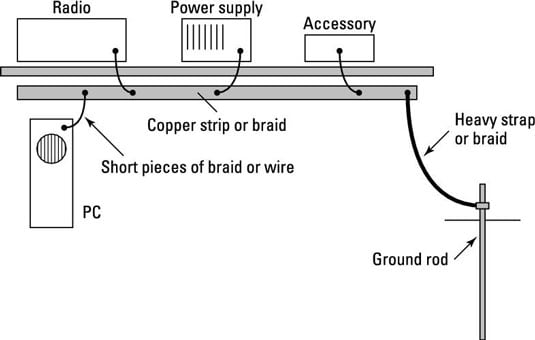
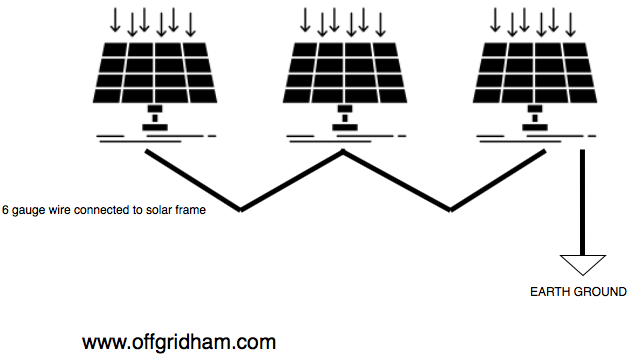
Chris Warren over at Off Grid Ham has a nice article about the often confusing concept and execution of system grounding in Grounding Your Off Grid System. He’s not just talking about grounding your communications gear, but also your solar panels, and generators. Don’t get burned; learn to ground.

It’s hard to follow.

One issue that seems to come up a lot in the off grid radio realm is proper system grounding. The rules and expectations are hard to follow. There are a lot of opinions out there. Many of them are accurate, others are not. Today we’ll go over some basic grounding principles for off grid ham radio. This is by no means a comprehensive guide.

All the same basic grounding concerns with commercial power also apply to off grid energy. Electricity does not behave differently just because it comes from a renewable source. Finally, lightning does not discriminate!

What exactly is “ground”?

In the most simple terms, “ground” is a reference point. If you remember your basic electricity training for your amateur radio license, voltage is an expression of potential energy. However, potential doesn’t mean anything unless it is compared to something. For example, if you are standing on the roof of your house you have potential energy (via gravity) when compared to your yard. If you are laying flat on your back in your yard you have no potential energy compared to the yard because, after all, you’re already in the yard. You can’t fall if you’re already down, right?

Electrical grounding works the same way. Electricity needs a place to go, and it will not go anywhere without potential. Ground provides an electrical reference point. This has many implications for the operational effectiveness and safety of your off grid system.

Grounding outdoor equipment.

If electricity needs a place to go, it’s best for it to have a defined safe path instead of letting it find its own way. Off grid hams should place a high priority on grounding antennas and solar panels.

Connect (bond) solar panel frames together with 6 gauge copper wire attached to a conductive metal pipe or rod pounded into the ground. Be sure also to connect any metal support structures. Grounding lugs made specifically for solar panels are available from many sources including (of course) Amazon. Ground rods should be at least six and preferably eight feet deep. Getting a ground rod down that far will be a problem for many hams. You can substitute two or more shorter rods in place of one long one (be sure to bond the rods to each other).

GROUNDING

OFFGRIDHAM.COM ORIGINAL GRAPHIC ©2019

Click here to read the entire story at Off Grid Ham.

Mises Wire: The Meat-Packing Myth

In this article from Mises Wire, Murray Rothbard discusses the Meat Inspection Act of 1906, heralded at the time as a successful regulation of the large meat packets for the health of the people. In fact, Rothbard argues, the regulation was at the behest of those large meat packers to stifle competition. This behavior by wealthy corporations to use regulations to kill off competitors continues to this day and is the main source of both conservatives’ dissatisfaction with Congressional corruption and progressives’ anger over corporations running the government.

In fact, both conservatives and progressives are correct. The US Congress operates on corruption largely funded by wealthy corporations influencing laws to their own benefit. Conservatives get angry that their representatives aren’t doing what is right. Progressives get upset that the corporations are not more heavily regulated. Members of Congress are not motivated by finding solutions to problems. Finding solutions is not lucrative. Continued battle over emotional issues and doing favors for wealthy corporate donors on the other hand makes millions.

Gun control does not solve violence problems. Fighting over it makes millions. Neither Democrats nor Republics have passed much legislation in the past two decades in regards to firearms, but they’ve talked about it, threatened it, introduced some token legislation and made millions as citizens fought over it.

Fighting over issues like the national debt and healthcare are not meant to solve problems, but to provoke donations and monetary influence.

Most of the anger on “both” sides (as if there were only two) of the political aisle finds it root in out of control government though often the sides don’t realize it.  The BLM movement. Bundy ranch and Malheur standoffs. Occupy Wall Street. The Tea Party. And so on, are all at base problems that come from unaccountable, out of control government.

But I digress…

Excerpt from The Meat-Packing Myth

…This rigid inspection law satisfied European medicine, and European countries swiftly removed their prohibition on American pork. But the European meat packers were upset in proportion as their physicians were satisfied. Quickly, the European packers began discovering ever higher “standards” of health — at least as applied to imported meat — and European governments responded by reimposing import restrictions. The American meat industry felt it had no other choice but escalating its own compulsory inspection — as the minuet of ever higher and hypocritical standards continued. The Department of Agriculture inspected more and more meat and maintained dozens of inspection stations. In 1895, the department was able to get Congress to strengthen meat inspection enforcement. By 1904, the Bureau of Animal Industry was inspecting 73% of the entire U.S. beef kill.3

The big problem for the large packers was their smaller competitors, who were able to avoid government inspection. This meant that their smaller rivals were outside the attempted cartelization and benefited by the advantage of being able to ship uninspected meat. To succeed, the cartel had to be extended to, and imposed upon, the small packers.

…The large meat packers were enthusiastically in favor of the bill, designed as it was to bring the small packers under federal inspection. The American Meat Producers’ Association endorsed the bill. At the hearings of the House Committee of Agriculture on the Beveridge bill, Thomas E. Wilson, representing the large Chicago packers, put their support succinctly:

We are now and have always been in favor of the extension of the inspection, also to the adoption of the sanitary regulations that will insure the very best possible conditions. … We have always felt that Government inspection, under proper regulations, was an advantage to the live stock and agricultural interests and to the consumer …5

One advantage to imposing uniform sanitary conditions on all meatpackers is that the burden of the increased costs would fall more heavily on the smaller than on the bigger plants, thereby crippling the smaller competitors even further.

…Senator Knute Nelson realized that the law was a meat packer’s bonanza: “Three objects have been sought to be accomplished — first, to placate the packers; next, to placate the men who raise the range cattle, and, third, to get a good market for the packers abroad.” Even Upton Sinclair himself was not fooled; he realized that the new law was designed to benefit the packers…

Gov. Candidate Loren Culp Speaks in Richland on Sept. 28, 2019

EVENT: Public Meeting
WHEN: Saturday, September 28th, 2019
TIME: Starting at 6:00 p.m.
WHERE: Island View Worship Center
LOCATION: 1520 Fowler St, Richland, Washington
Loren Culp, who is running for governor in 2020, will be in speaking on September 28th.
Clint Didier will also be in attendance with Loren.

Click here to download a pdf flyer for the event.

Loren Culp has been married to his high school sweetheart Barbara for 41 years. He is the father of two and grandfather of seven. Loren is a lifelong resident of Washington State. He attended school in Chimacum (Jefferson County) and Republic (Ferry County).

He is a U.S. Army Veteran, a member of the American Legion and a life member of the Veterans of Foreign Wars (VFW). He is currently the Police Chief of Republic, WA and the author of the #1 best selling book “American Cop”.

America needs warriors now more than ever and Loren Culp is a shining example of how our Founding Fathers hoped all Americans would be.”
~ Ted Nugent

National Preparedness Month 2019 – Week 4

September is National Preparedness Month.

The theme for week four is Get Involved in Your Community’s Preparedness.

There are several ways to get involved in preparedness for your community.

  • Community Emergency Response Teams (CERTs) trains volunteers to prepare for the types of disasters that their community may face. You may not have a local CERT team or training, but it is good training if it is in your area. Find your local CERT: https://community.fema.gov/Register/Register_Search_Programs
  • Learn about the hazards most likely to affect your community and their appropriate responses.  Most cities and counties are required to have an all hazards mitigation plan, which will list the hazards that your local government believes are most likely in your area.
  • Most every community has voluntary organizations, like the Lower Valley Assembly, a county posse, or local Red Cross, that work during disasters.
  • Take classes in lifesaving skills, such as CPR/AED and first aid.
  • Check in with neighbors to see how you can help each other out before and after a storm. You can download an OK/HELP sign to help with that purpose.
  • If you have a disability, plan ahead for accessible transportation that you may need for evacuation or getting to a medical clinic. Work with local services, public transportation or paratransit to identify accessible transportation options. www.ready.gov/disability

Rutherford Institute: Martial Law Masquerading as Law and Order

Constitutional attorney and author John Whitehead has written another article, this time for the Rutherford Institute, detailing our current police state in the US.

Martial Law Masquerading as Law and Order: The Police State’s Language of Force

“Since when have we Americans been expected to bow submissively to authority and speak with awe and reverence to those who represent us? The constitutional theory is that we the people are the sovereigns, the state and federal officials only our agents. We who have the final word can speak softly or angrily. We can seek to challenge and annoy, as we need not stay docile and quiet.”—Justice William O. Douglas, dissenting, Colten v. Kentucky, 407 U.S. 104 (1972)

Forget everything you’ve ever been taught about free speech in America.

It’s all a lie.

There can be no free speech for the citizenry when the government speaks in a language of force.

What is this language of force?

Militarized police. Riot squads. Camouflage gear. Black uniforms. Armored vehicles. Mass arrests. Pepper spray. Tear gas. Batons. Strip searches. Surveillance cameras. Kevlar vests. Drones. Lethal weapons. Less-than-lethal weapons unleashed with deadly force. Rubber bullets. Water cannons. Stun grenades. Arrests of journalists. Crowd control tactics. Intimidation tactics. Brutality.

This is not the language of freedom.

This is not even the language of law and order.

This is the language of force.

Unfortunately, this is how the government at all levels—federal, state and local—now responds to those who choose to exercise their First Amendment right to peacefully assemble in public and challenge the status quo.

This police overkill isn’t just happening in troubled hot spots such as Ferguson, Mo., and Baltimore, Md., where police brutality gave rise to civil unrest, which was met with a militarized show of force that caused the whole stew of discontent to bubble over into violence.

A decade earlier, the NYPD engaged in mass arrests of peaceful protesters, bystanders, legal observers and journalists who had gathered for the 2004 Republican National Convention. The protesters were subjected to blanket fingerprinting and detained for more than 24 hours at a “filthy, toxic pier that had been a bus depot.” That particular exercise in police intimidation tactics cost New York City taxpayers nearly $18 million for what would become the largest protest settlement in history.

Demonstrators, journalists and legal observers who had gathered in North Dakota to peacefully protest the Dakota Access Pipeline reported being pepper sprayed, beaten with batons, and strip searched by police.

In the college town of Charlottesville, Va., protesters who took to the streets to peacefully express their disapproval of a planned KKK rally were held at bay by implacable lines of gun-wielding riot police. Only after a motley crew of Klansmen had been safely escorted to and from the rally by black-garbed police did the assembled army of city, county and state police declare the public gathering unlawful and proceed to unleash canisters of tear gas on the few remaining protesters to force them to disperse.

More recently, this militarized exercise in intimidation—complete with an armored vehicle and an army of police drones—reared its ugly head in the small town of Dahlonega, Ga., where 600 state and local militarized police clad in full riot gear vastly outnumbered the 50 protesters and 150 counterprotesters who had gathered to voice their approval/disapproval of the Trump administration’s policies.

To be clear, this is the treatment being meted out to protesters across the political spectrum.

The police state does not discriminate…

Click here to continue reading at the Rutherford Institute.

Tenth Amendment Center: How Our Constitution Was Supposed to Work

Constitutional scholar and co-author of The Origins of the Necessary and Proper Clause  and The Original Constitution Rob Natelson has written an article based on information from newly re-published essays by founder Tench Coxe about some limitations on federal power that were known and spelled out by the founding fathers.

How our Constitution was supposed to work: new evidence comes to light

Judging by the promises of presidential candidates, you might think the federal government is designed to fix whatever ails us: health care, education, crime, infrastructure, the common cold.

But the Constitution doesn’t grant the federal government such unlimited authority. And neither Congress nor the presidency nor the courts were created to exercise it.

The Constitution fashioned the federal government to address a limited number of activities, contained in the document’s “enumerated powers.” The remainder were exclusively the domain of state and local government and the private sector. This system of divided authority is called “federalism.”

…Despite the Constitution’s federal structure, many in the founding generation didn’t think it limited the central government sufficiently. They wanted to be able to govern themselves in their own states and local communities. They didn’t want Congress or federal judges or officials imposing uniform policies on the entire country.

These members of the founding generation had good reasons for fearing centralized power. They knew their history: Concentrated power usually grows into oligarchy or dictatorship. They questioned whether Congress would have the information or judgment necessary to tailor laws for every nook and cranny in the nation. They recognized that when government remained local, citizens enjoyed more say in how it was run. If someone was severely disaffected with state policies, he always could move to a different state.

This option of moving away is a vital safety valve. Without it, there is no practical way to vent anger among persistent political losers. Anger gives rise to hate: Hate fosters divisiveness and repression and, and in extreme cases, civil war.

Indeed, modern federal efforts to impose uniform “solutions” on the entire nation may be a leading cause of today’s toxic political environment.

…Coxe’s essays itemize many of the activities over which the Constitution granted the federal government little or no jurisdiction. Among them were social services (i.e., care for the poor and health care), education, religion, real estate, local businesses, most roads and other infrastructure, nearly all criminal law matters, and most civil court cases.

When people believed government should regulate those areas, the Constitution mandated that they turn to state and local government. No fleeting national coalition would be permitted to dictate to the entire country…

Click here to read the entire article at the Tenth Amendment Center.

AmPart: Signals Intelligence – Electronic Isolation Of A Target

NC Scout at American Partisan has written an article on signals intelligence and how to exploit it to disrupt an enemy’s communications. Please note that disrupting someone’s radio communications during peacetime is usually illegal. The FCC can fine you thousands of dollars, revoke any radio licenses you have, and confiscate your radio equipment.

Signals Intelligence: Electronic Isolation Of A Target

Not too long ago I ran a short post over at Brushbeater noting a story from the Marine Corps, pairing signals collection guys with Scout Snipers in a somewhat new small unit strategy. Building on the successes SOF units have had for a long time now in recognizing the rapid value of SIGINT in the field, pairing the two elements only makes sense. The idea is to isolate a target where they’re most vulnerable- electronic communications- in order to end the fight quickly with as few casualties on our side as possible. And working from a prepared citizen’s point of view, those same capabilities can and should be reflected in your own training.

It’s not enough to simply have a scanner, however nice it might be, and call yourself good on signals intelligence. Situational awareness, maybe, maybe, but none of it will do you much good without a means to exploit what ever it is you’ve collected.

The purpose of intelligence is exploitation. 

Recording voice traffic with common items makes exploitation easy

What that means in practical terms is that unless I can do anything with what I’m hearing, its completely useless to me. So what if I hear some traffic on a random frequency. Did I take the time to record it? What did they actually say? What is their level of training or discipline? Who’s the person in charge on the mic?

We can listen to all the traffic we want, but if we have no way of exploiting that, then we’re wasting our time.

Some of the equipment you’ll need for a signals collection package at the small unit level includes a decent scanner capable of decoding P25, a communications receiver, an inexpensive analog radio,  a recording device, a Yagi, and a frequency counter. Most of the higher end scanners on the market have up-gradable firmware that is enabling the decoding of P25 modes in use with public service as well as DMR which is very common today in the US as well as being used in Ukraine and Syria among guerrillas. A communications receiver, while similar to a scanner, will tell us the exact frequency the traffic is on, unlike most digital scanners today. We need to know this in order to have the operating frequency- its not enough to know what they’re saying, but we need to know what frequency they’re on so that if we decide to shut down their communications, we can effectively attack.

Our inexpensive analog radio enables us to not just have additional redundancy in our kit, but it’s also a useful exploitation tool. Depending on what type of gear your opponent has, something like a UV-5R can become our weapon in shutting their communications down. Using a Yagi to first get a bearing on their direction and then focus our signal in their direction, overloading their radios. This is beginning what’s known as isolating the target…

Click here to finish reading the article at American Partisan.