Of Two Minds: Surviving 2020 – Plans A, B, and C

Charles Smith at Of Two Minds has an article on Surviving 2020 – Plans A, B, and C

As the bogus prosperity economy built on exponential growth of debt implodes, we all seek ways to protect ourselves, our families and our worldly assets. There are any number of websites, subscription services and books which offer two basic “practical recommendations:”
1. Buy gold (and/or silver) and don’t worry about timing the market as everything else will become worthless.
2. Establish a heavily armed and well-supplied hideaway before everything implodes.
My problem with these suggestions is that they are predicated on a decisive “end of the world as we know it” collapse of civilization.
While I am alive to the possibility of this cataclysm, an analysis of the many feedback loops which will slow or counteract such a decisive collapse suggests other alternatives are even more likely: my term for the slow, uneven decline of the credit/speculative-bubble era is devolution.
I cover feedback loops, historical cycles and why a lengthy devolution is as least as likely a scenario as abrupt collapse in my book Survival+ (free downloadable version is linked below).
In other words, I do not see planning for eventualities as “either/or.” I look at it in terms of three levels:
Plan A: dealing with devolution: government services are cut back, prices for essentials rise over time, fulltime paid jobs become scarce, the State (all levels of government) becomes increasingly repressive as it pursues “theft by other means,” i.e. the stripmining of private assets to feed its own fiefdoms and Elites; most assets fall in purchasing power (value) as the system’s financial props erode.
Plan B: When things become rationed/unavailable, services become sporadic, pensions stop being paid in full, spontaneous homeless encampments arise in heretofore “nice” areas, cities go bankrupt, small businesses go underground to survive the ever-higher taxes being levied on the few remaining productive enterprises, etc.
Plan C: if things fall apart: either move to communities where you or your family have roots (tough luck for all the millions of rootless Americans shifted around by corporate “relocations” the past 50 years) or turn to your neighborhood, town, friends, family, church and other social networks for cooperative strength.
The problem with putting all your resources into a “bug-out” strategy (Plan C) is that it might not come to pass, in which case you’ve misallocated your assets.
This is why I focus Survival+ on structuring a prosperity which will work on all levels. This prosperity has five basic parts:
1. Prepare for hybrid work by developing multiple skillsets, interests and contacts and understand that being productive and reciprocal is more important than getting paid (as I put it: “to take care of Number One, first take care of numbers 2 through 9.”)
2. Develop sustainable, overlapping social networks (self-organizing networks) in which you have more than one place to interact with the same person, i.e. at church or in the neighborhood. I call these non-State, voluntary networks transparent non-privileged parallel structures because they are independent of the State and Monopoly/Predatory Capital Elites.
3. Cut expenses to the bone so you no longer need a large income to “survive.” Consider lowering your taxable income by working less so you’re no longer working so hard just to pay taxes generated by high incomes. (Thanks to correspondent Stephen A. for noting that barter that results in gains is generally taxable. As always, check with the I.R.S. or a licensed tax advisor to confirm what income is taxable/nontaxable.)
4. Reach a new understanding of “prosperity”: health and social wealth are the “treasures” which money cannot buy. Yes, we all need some money, and preserving/growing whatever capital you do have will be difficult and time-consuming. There is no easy “one size fits all” solution.
5. Understand the importance and strength in building and maintaining personal integrity, the one asset we each control in totality and that no one can take from us. All reciprocal networks (financial, political, religious or social) depend entirely on trust, and the bedrock of trust is complete personal integrity.
Much of the devolution we now face is a direct result of the degradation of integrity. This moral/ethical component of financial implosion is glossed over by the corporate media because the Power Elites have implicitly undermined integrity and morality as a means of soldifying their control of the media and of the national income.
Yes, I know this all sounds wonderful, but how do you do it in real life? Well, life is and always has been a do-it-yourself affair. With 200 million+ employable people in the nation, what advice or recommendations can I possibly give to any one individual, when only that person knows their own interests, strengths and potential customers, clients, allies, competitors and mentors?
Let’s start with one simple truth: nobody knows the future. Thus everything we discuss now is contingent on a number of unpredictable interactions. To base our planning on one scenario is to risk misallocating our scarce assets and resources…(continues)

The Organic Prepper: The Truth About Neighbors in Survival Situations

Daisy Luther at The Organic Prepper has an article on The Truth About Neighbors, Coworkers, & Friends in Survival Situations, detailing some things learned about people during this pandemic. I can think of a few additions to the types listed from my experiences, can you?
…many of us are realizing that there’s also a lot to learn about the folks just outside our inner circles: our neighbors, our co-workers, our extended families, and other communities in which we’re involved like churches or schools.

Behavior outside of the group.

While our connections with these people aren’t as intimate as those within our groups,  in some cases they can still threaten an otherwise solid survival plan. Some of the people described below may sound familiar after weeks of movement restriction.

  • The people you warned for months if not years that they needed to put some food aside, make arrangements for their prescriptions, and buy some extra toilet paper and soap.
  • Folks who know more than you now wish they did about your pantry and who’ve made it clear that they think it’s “greedy” that your family has so much while others have so little
  • People we used to really like boasting on Facebook how they snitched on somebody for some innocuous thing they felt flouted the “rules”
  • Neighbors taking a sudden and noticeable interest in your garden or your chickens
  • People in the neighborhood who are no longer working and now just sit on their porch all day and closely watch what everyone else is doing – including people unloading supplies from their cars into their homes
  • The nosy neighbor who demands that everything be “fair” and wants to take a tally of anything – people, water, supplies, guns, you name it.
  • That guy down the street you never liked in the first place who is becoming even more unlikeable by promoting himself as some kind of neighborhood watch king, handing out unsolicited advice and warnings, or maybe trying to set up “rules” by which he expects everyone else to abide
  • The people who are moving closer and closer to overstepping the boundaries of civil behavior – they’re doing small things dropping their trash in your yard or blatantly looking inside the windows of your car – but it’s an escalation
  • The co-worker who asks way more questions about your preparedness level than is really appropriate
  • The community group (church, social club, volunteer organization) that wants donations or participation in a way that is likely to threaten your OPSEC (operational security – more on that later)

You know the ones. They’re trying to get just a little too close for comfort. We’ve probably all seen somebody over this period of time and thought, “Yeah, I’m going to have to watch that guy.”

If the situation were to worsen, you would indeed have to watch that guy.

Identify “who” your neighbors and coworkers are

The people around you can be beneficial, neutral, or a threat. It’s best to determine which one they are as early as possible in an emergency…(continues)

Click here to read the entire article at The Organic Prepper.

Christian Prepper Gal: Has the Reality of It Hit You Yet?

Christian Prepper Gal asks if you’ve realized that you’re in a SHTF situation in Has the Reality of It Hit You Yet?
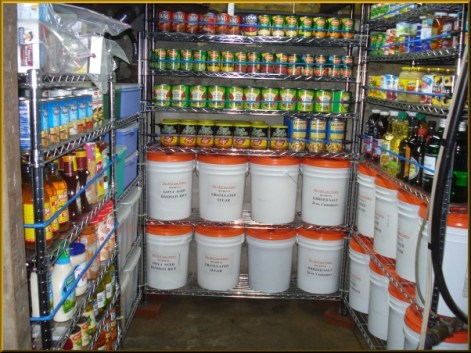
We are in the midst of a global pandemic. We are in the middle of a SHTF situation. I think for most preppers that is just now beginning to sink in. And, I’ve been amazed at the number of new preppers that have shown up in Facebook groups in the past month! The time to be prepared is NOW. And, I’m not just talking about being prepared with food and household essentials. Unfortunately, so many, and especially new, preppers think that is all they need to or have to do.

Last Fall (2019) I began to feel very strongly that it was time to stop trying to warn people of the need to be prepared. That it was time to make sure we had our own ducks in a row, and see to it that our own lamps were filled with oil. I even expressed to those around me that I felt like “something” was going to happen in 2020. And, by “something” I meant we were going to experience (as a nation) SH(ing)TF. And, guess what?!? It happened! I personally had thought it would be as a result of the election. But, apparently I was wrong. See? I can admit being wrong, from time to time, lol.

It is my belief that this SHTF scenario has just begun. We are all wanting it to be overwith quickly and for things to get back to normal. But, you know what? I don’t think it’s going to be overwith quickly, and I’m not sure things can ever be back to what normal was before the COVID-19 pandemic. I don’t mean to be a Debbie Downer, but I also don’t mean to give false hope to others, or myself. The reality of it is that there will be repercussions from our nation being essentially shut down. Even though the term has not been “officially” used as of yet here in the U.S., that is what has happened. We’ve already been shut down for close to a month, and it sure doesn’t look like things are going to be getting back to “normal” any time soon.

How are you reacting to all this?

First and foremost, we SHOULD NOT be reacting with fear. Especially as Christians. But, it’s easy to allow that to happen. Remember, though…

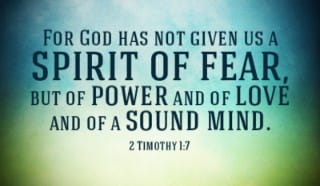
2 Timothy 1:7, For God hath not given us the spirit of fear; but of power, and of love, and of a sound mind. (KJV)

It is especially important to remember that right now, during this pandemic. We do not want to allow our minds to become the devil’s playground, do we? I know I don’t! But, if we allow fear to creep in, that is exactly what we’re doing.

How do we avoid or get rid of that fear? We read The Word of God. Romans 10:17, So then faith cometh by hearing, and hearing by the word of God. (KJV). If we read (hear) The Word of God, it drives out fear! How can you have faith and fear at the same time? You can’t! And, that’s why we need to build up our most holy faith. We need to saturate our entire beings with His Word! According to Johh 1:1, “In the beginning was the Word, and the Word was with God, and the Word was God. (KJV) Jesus is The Word. If we read what He said, in His Word, our faith will abound! And, faith expels fear! If we put our trust in Him, we will prevail and overcome fear.

There was one day a couple of weeks ago that I was so overcome with the negative from the news and social media that I had to play some contemporary worship music. I turned it up loud, and let it drown out all the negative in my mind and eyes. Then, I could put my mind and eyes back on Jesus.

We need to keep our eye on the prize. And, as Christians, our prize is eternal life with our Heavenly Father. So, if we keep our eyes on Him, we will win in the end!

Are you still denying it?

As I mentioned earlier, some (many) people (including preppers) are in denial. They truly think that our government will be able to take care of us and this is the worst that things will get. Some preppers don’t even realize that this is the SHTF that they’ve been preparing for! My thought is that the reason for that is they are only seeing the here and now. They’re not seeing what can and possibly will happen as a result of our nation being shut down.

Take a moment and let that sink in. Think about it. Our government has already put itself two trillion dollars in debt over this pandemic and that has only touched the surface. It will take much, much more than that to dig us out of this economic hole we are in. Do we have that much money and resources in reserve? Most likely not.

The economic downfall of the pandemic is just now beginning to be felt by many. What is going to happen when the food and resources begin to run out? What’s going to happen when parents cannot provide for their families? It will hit those with the lower incomes first. And, we are on the brink of that happening as I write. And, we are only in the beginning; one month since the declaration of this being a pandemic. We have a long way to go before we can even begin recovery. The virus hasn’t even been stabilized yet; it could take up to 18 months or longer to develop a vaccine. Our government is trying to help us and prevent things like chaos as a result of looting and rioting from happening. But, it’s not all up to only them…(continues)

Click here to read the entire article at Christian Prepper Gal.

Jamie Cooks It Up: Food Storage and Recipes

40 Food Storage Recipes and Food Storage/Pantry Staple Lists is an older blog post from Jamie Cooks It Up! It talks about what kinds of foods to have as staples and for long term storage, and then links to a bunch of storage recipes (also on her site) for using those foods. Maybe you bought up a bunch of food storage early in this pandemic and aren’t sure what to do now. Maybe you’re looking at the supply chain woes and wondering what you need to get through the rest of year. Jamie Cooks It Up also posts a “week menu plan” each week with one meal per day for the week.

I’ve been getting a lot of emails lately regarding food storage, and pantry staples. 

“What do you keep stocked in your kitchen, what are some fabulous food storage recipes, Where should I buy my food storage and What can I feed my family if I can’t go to the store for 3 weeks in a row”. These are just a sampling of the questions posed.  

Now, I am by no means a food storage specialist, however I thought I would put together a few tips, lists and recipes together for you regarding the subject. Please know that the advice I am giving here is just from my own personal experiences, and not the only tried and true method around. If you have some food storage advice, I would love you to leave it in the comment section for others to view. 

Acquiring a substantial food storage can be overwhelming, I realize. The intention of this post is not to cause you stress or grief or feelings of extreme anxiety. When I was newly married, some 18 years ago, I remember coming across an article in a magazine that had to do with organizing a kitchen and what spices a person should  purchase. After taking one glance at the list I tossed it in the trash and thought to myself…”there is no way I’ll EVER be able to acquire all of those things, I wonder how long we can live on cupboard lint.”

It’s true. Those were my very thoughts. 

However, I learned as I’m sure many of you have, that it just takes a little bit of time, effort and financial planning and a well stocked kitchen can be attained. The same is true of obtaining a useful supply of food storage. You don’t need to spend 1 million dollars or build an underground bunker storing 95 years worth of food to be successful. 

Alright, let’s get to it. If you are already a food storage pro, and are just looking for the 40 Food Storage Recipes promised, please scroll to the bottom of the post and enjoy. 

WHY IN THE WIDE WORLD SHOULD I STORE EXTRA FOOD?

As a means of being prepared for difficult circumstances, such as job loss, natural disasters or an economic downturn. 


WHAT KIND OF FOOD SHOULD I STORE? 

You should store food that your family regularly eats, that also has at least a 3 month shelf or freezer life. Baking supplies, spices and seasonings, canned goods, as well as frozen vegetables, fruits, meat and poultry. (Lists found if you keep scrolling down.)

Expensive Freeze Dried Food is not really my cup of tea. I may regret not purchasing it if the continents end up colliding and I am forced to dig a hole in my back yard and eat tree roots to survive. Truly. I may regret it at that point. But for now, stocking and storing a 6 month to 1 year supply of real food my family regularly eats is my course of action. 

Store some long term food storage items such as hard winter wheat, rice, dried beans, etc. I try to keep about a 3 year supply of these things. (Keep scrolling down for a complete list). They are inexpensive, healthy and if stored properly they have a 30 year shelf life! That is a long old time, wouldn’t you agree? I keep these items in large, sealed, 5 gallon buckets (they can accommodate about 40 pounds). I don’t have a big food storage room so I just stick them here and there, which really means my kids all have 3 or 4 buckets in the bottom of their closets. But they don’t mind, they would rather eat rice and beans than tree roots…or so I keep telling them…

LONG TERM STORAGE:

*Hard White Winter Wheat
Dried White Beans
Dried Black Beans
Dried Kidney Beans
Lentils
* White Rice
Brown Rice
*Steel Cut Oats

40 FOOD STORAGE RECIPES
The recipes I have listed for you below, are recipes that primarily use food storage staples as ingredients. You may need a fresh egg, some milk, butter or cheese for some of them, but I tried to keep the list as food storage friendly as I could…
Moogie Mush, cracked wheat cereal

Total Time: 17 minutes

Yield: 8 servings

Ingredients

4 C hot water
1/4 t salt
1 1/2 t vanilla
3/4-1 C raisins
2 1/2 C cracked wheat (I buy White Winter Wheat and then crack it in a blender)
1/4 C brown sugar
20 packets of splenda

Instructions

1. Crack your wheat in a blender. Don’t add more than about 2 cups at a time. It should be the right texture after about 4 minutes.
2. Combine the water, salt, vanilla and raisins in a sauce pan and bring to a boil.
3. Turn down the heat to low and stir in the wheat. The wheat tends to clump up a bit. Break the clumps up with a wooden spoon.
4. Add the sugar and splenda and stir to incorporate.
5. Cover the sauce pan, turn off the heat, and let it sit for 10 minutes. (Keep it on the warm burner)

Technology Review: Waiting for the Big One, then Coronavirus Arrived

MIT Technology Review has a good article about community preparedness on the Oregon Coast in They were waiting for the Big One. Then coronavirus arrived. The article’s subtitle is Can being ready for one kind of disaster prepare you for another?

Linda Kozlowski’s neighbor wanted to know if she needed anything from Walmart. It wasn’t a quick trip into town; the drive from the Oregon coast to Portland took two hours. But because of her age, Kozlowski, a 77-year-old retiree, might be at risk from covid-19. Perhaps there would be hard-to-find goods, like hand sanitizer. She thought for a moment and asked for bread, pasta, and toilet paper.

Helping senior citizens is a neighborly thing to do, especially in the middle of a pandemic. But in Manzanita, where Kozlowski lives, joint grocery runs are part of a detailed disaster preparedness plan that Kozlowski herself introduced to the town 13 years ago. Back then, it wasn’t a disease they were concerned about, but a storm that helped locals realize exactly how vulnerable they were to power outages, floods, and landslides.

The Oregon coast is a harsh, unforgiving place where mundane outings can quickly turn deadly. This past January, Jeremy Stiles and his two young children, Lola and William, were swept out to sea by a sneaker wave while hiking north of Manzanita. Lola died at the hospital. William’s body was never found. (Jeremy recovered from hypothermia.)

Until recently, though, the main thing most residents were preparing for was a combined earthquake and tsunami they nicknamed The Big One. The Cascadia Subduction Zone fault line stretches from Vancouver Island in Canada to Cape Mendocino, California. The last Cascadia earthquake occurred in 1700, and scientists have predicted that one will occur every 300 to 600 years. When it hits, the region will be devastated.

So Kozlowski had helped the neighborhood get prepared. She’d followed advice, called a meeting, and identified who had first aid skills, who had generators, who had a chainsaw. She’d organized a spot for everyone to rendezvous if things went bad. Sure, she’d created the disaster plan in case there was a tsunami. But it meant that when the coronavirus pandemic hit, Kozlowski and her neighbors already knew exactly how to lean on one another.

The majority of Americans are not ready for disaster. A 2016 survey conducted by Columbia University’s National Center for Disaster Preparedness found that 65% of households reported having no or inadequate plans to survive a catastrophe. Forty-one percent of households said they weren’t confident their communities knew what to do if disaster struck unexpectedly. And yet, in the face of coronavirus, preparation has become urgent in a whole new range of ways to a whole new range of people. Lockdowns and shelter-in-place orders have paralyzed communities, shut down businesses, and led to panic buying. If the nation was generally unprepared for disaster, it was even less ready for this particular flavor of emergency.

“Are we prepared as a country? I don’t think so,” says Irwin Redlener, the director of the Columbia center. “The fact is, the studies we have done that have to do with individual preparedness have been extremely depressing…”

Kozlowski…organized residents to get trained. Then came the portable, handheld emergency radio operators and those familiar with ham radio. Today, every Thursday at 6 p.m., they call in to a centralized channel called the Net (the operation center is the firehouse), say who they are, and listen to what’s called an “educational moment,” about something like how to get to an assembly site. Last year there were 2,701 total check-ins.

In 2008, Kozlowski expanded from Manzanita to two other local towns, covering some 2,000 people, and formed the volunteer corps. Most of its money comes from local fundraising and from the fire department. Her budget is small—even if it has risen from $4,000 to $12,000—but the corps offers classes in emergency radio, WaSH (water, sanitation, and hygiene), and managing chronic illness in austere conditions. The closest hospital is 40 minutes away, so the corps also has a medical reserve made up of local doctors, nurses, vets, and physical therapists. Kozlowski says this training has all helped them deal with coronavirus. “We’ve been talking about ‘How do you wash your hands?’ for a long time,” she says. “Because after a disaster, the last thing you want to do is get diarrhea.”

Kozlowski’s efforts were soon mimicked around the coast. Sharon Kloepfer, a CERT volunteer in Gearhart, another coastal town, told me Manzanita has “blown away every other community as far as preparedness.” In Rockaway Beach, a strip of land south of Manzanita, David Elkins is trying to copy Kozlowski after taking her volunteer corps classes. He was told the city didn’t have any money to hire an emergency manager, so he rallied 25 residents who are now trained in first aid, lost-person search, and small-fire suppression…

Click here to read the entire article at Technology Review.

Raw Story: Cold War-style Preparedness Could Help Fight Future Pandemics

There is an article over on Raw Story about how local preparedness could be a more effective way of dealing with disasters and pandemics rather than a reliance on top-down response. Who woulda thunk?

Cold War-style preparedness could help fight future pandemics

A key group of allies is missing in the U.S. effort to face the coronavirus pandemic: the American people.

In the wake of World War II and during the Cold War, the U.S. was the world’s best at planning and preparing for mobilizing the citizenry to take action in an emergency. In those days, the anticipated emergency was a nuclear attack on the U.S., likely resulting in a loss of national leadership that required local governments and members of the public to step up.

Every American was asked to help prepare for that possibility, storing extra supplies, planning to communicate with family members and developing survival skills.

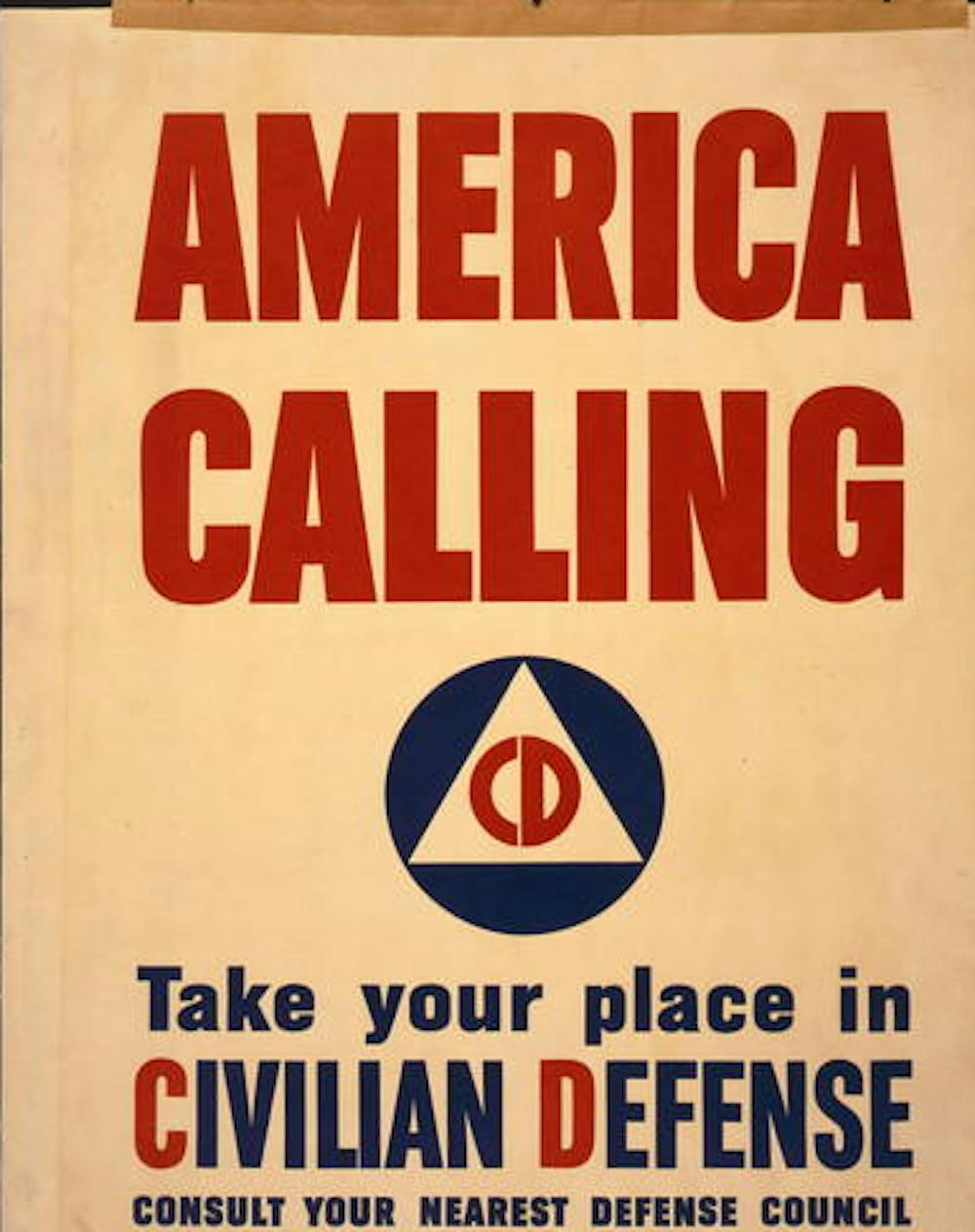
A poster from 1941 urged all Americans to contribute to community preparedness for emergencies.
Government Printing Office, 1941/Library of Congress

Eventually, this type of “civil defenseplanning grew to incorporate responses to other extreme events, such as hurricanes, tornadoes and earthquakes.

Over the latter half of the 20th century, the U.S. civil defense effort encouraged all Americans to be prepared to respond actively to a national emergency.

In recent years, however, Americans’ expectations have shifted from being ready to respond to passively waiting for help from a centralized, bureaucratic federal effort – usually led by the Federal Emergency Management Agency…

…Small organizations are able to adapt: Many have quickly shifted to fill the immediate need. Small wineries, microbreweries and distilleries are making hand sanitizer. Garment and uniform companies are making masks. Schools are using 3D printers to produce face shields.

These examples demonstrate that small-scale approaches can be effective in producing big results. In contrast, larger organizations are more bureaucratic and slower to respond. These inverse economies of scale mirror civil defense efforts: Many working collectively but independently are sometimes more effective than a larger centralized effort.

When facing an unexpected crisis, some amount of disorganization is probably inevitable. But other countries, such as Estonia, Sweden, Finland, Nigeria and Australia, actively work to engage all citizens in disaster preparedness, first aid training and other efforts that give people clear and productive tasks to accomplish.

Following their example – and indeed the United States’ own history – could help create a system of federal oversight and coordination complemented by prepared and trained local responders. That could better prepare the public to pull together as a collective civic community when disaster next strikes.

Click here to read the entire article at Raw Story.

Primal Survivor: 10 Tips for Buying Food During Shortages

If you waited until now to stockpile emergency food, you are probably struggling.  The recent pandemic means Emergency food kits orders are backlogged for months.

Popular retailers like REI are out of virtually all freeze-dried meals.  And supermarkets are having an impossible time of keeping shelves stocked with non-perishables like pasta, flour, canned goods, and instant meals.

This doesn’t mean you can’t stockpile food during the pandemic.  You’ve just got to be strategic about it.  Here are some tips to help you build up a stockpile of food even in the midst of disaster shortages.

1. Understand Why You Are Stockpiling Food

As the experts keep telling us, there is no food shortage right now. Rather, all the panic buying is causing the shelves to empty quickly. People are simply buying more than usual.

Nor is there likely to be a food shortage anytime soon.  Even in countries which have almost complete shutdowns, food manufacturing employees are allowed to go to work.  In fact, governments are organizing safe transportation to make sure these people can get to work!

Sure, there could be food shortages in the not-too-distant future. It’s understandable (and even smart) if you want to stockpile just in case.  However, now is not the time to build up a long-term food stockpile.  Wait until the craziness has died down to start!

If we aren’t going to run out of food, then why stockpile?

The answer is this: So you don’t have to leave your home. And especially so you don’t have to leave home to go to the grocery store.

Because of all the crowds and people who pass through them, grocery stores are one of the most dangerous places during the coronavirus pandemic.  The longer you can go between grocery store visits, the safer you will be (and thus the safer your community will be too).

Once you realize you are stockpiling food so you don’t have to leave home, you will be able to go about shopping in a smarter way.

2. Do Not Go Grocery Shopping during the Panic

If you have enough food in your home to last a while (even if it’s just a few days), DO NOT GO GROCERY SHOPPING NOW.

At the time of writing this, people in the United States are still panic buying.  If you head to the stores now, you will likely find bare shelves and crowds of people.  You won’t succeed in getting the food you need and you’ll expose yourself to a lot of potentially-sick people.

Instead, hold off on going to the store as long as you can.  In countries like Italy, it only took a couple weeks before the panic-buying stopped.  In Serbia, the panic-buying stopped after just a few days and the shelves were back to normal.

crowds at supermarket during COVID-19
Look at all these people shopping for supplies. It’s safer to wait for the crowds to thin out! (Image credit: U.S. Air Force photo by Kemberly Groue)

3. Make a Food Spreadsheet

A friend of mine works at a supermarket.  She tells me about all the people literally buying 30 packages of spaghetti and nothing else.  Others are buying massive amounts of flour and oil but nothing else.

What the hell are you going to do with 30 bags of pasta???

Sure, you won’t starve but do you really want to eat plain pasta for the next few weeks?  And how will you use flour without yeast or baking soda and baking powder?  Oil is also pretty useless if you don’t have something to fry or cook with it! (continues)

Click here to continue reading at Primal Survivor.

Survivopedia: Coronavirus – What You Should Really Do Regarding Your Stockpile

From Bill White at Survivopedia, Coronavirus: What You Should Really Do Regarding Your Stockpile on how the pandemic may be different from what most preppers prepared and why the so-called “panic  buying” has been a good thing.

As the COVID-19 Coronavirus sweeps the globe, different people are reacting in different ways.

For most, fear is a part of that reaction. That’s normal, as we all tend to be afraid of the unknown and there’s still a lot of unknown about this virus. But the truly scary part isn’t the fear that people are having; it’s the fear that governments are having.

Don’t get me wrong; I don’t envy the problems that the president and state governors are facing right now. They are in a no-win situation, where they are having to make decisions based on limited information, with the foreknowledge that there is no right answer. No matter what they decide, there will be others, sitting on the sidelines, telling them how wrong they are.

As it stands right now, if the president or some governor calls for a full quarantine, they will be blasted for overreacting and destroying the economy. If they don’t call for that, they will be blasted for not taking the situation seriously and every death will be laid at their doorstep. Both of these reactions are already happening, it just depends on who is doing the complaining about what the government is doing, and that doesn’t necessarily follow party lines.

Is Quarantine Coming?

The entire state of California, 40 million people, is now under quarantine. New York Governor, Andrew Cuomo is directing non-essential businesses to keep their workers at home. Even in Texas, which has relatively few cases, the governor is calling for voluntary self-isolation for the next two weeks.

Is this an overreaction? Or is it necessary to prevent a massive number of people from dying?

To answer that question, we need to understand why the government is calling for people to self-quarantine, specifically why they’re calling for a 14-day self-quarantine.

There’s no way that a 14-day quarantine is going to put a total stop to the disease. First of all, there are a significant number of cases on record, where the incubation period was longer than 14 days. Secondly, even if all incubation periods fell within the 14-day window, people are still contagious while their bodies are battling the disease. If they are treated at home, there’s still a chance of them infecting their families.

So what’s the 14-day voluntary quarantine about then?

Just like social distancing, the 14-day voluntary self-isolation is about slowing the spread of the disease, rather than stopping it. It is being instituted now, to ensure that everyone who comes down with a serious case of the disease will have a hospital bed to rest in and a respirator to help them breathe. It’s to ensure that our medical community is able to give people the treatment they need, in order to give them the greatest chances of defeating the virus and surviving.

I recently saw some rather interesting computer models, which showed how a viral disease of this type propagates through a population. In a “normal” situation, where there are no safeguards in place, the number of cases of the disease rises rapidly, outpacing the medical community’s ability to deal with it. A full quarantine of those who are infected is hard to institute because you will always have some people who are going to be “leakers” slipping through and spreading the disease. The most effective thing to do is to isolate as many people as possible, reducing the number of people who are moving around and spreading the disease throughout the population.

This is what the government is trying to do. By asking people to shelter in their homes, they are hoping to drastically reduce the number of people who are out and about, with the potential of spreading the disease. We are not being told that we can’t leave our homes at all, but rather being asked to avoid leaving them as much as possible. At the same time, places where people congregate, where one contagious person could easily infect many other people, are being closed for two weeks, with the same goal of slowing the spread of the disease.

I remember reading a few years back about how school desks have more germs on them than the average toilet seat. My reaction at that time was to write a satire about it. But if you think about it, our schools are a breeding ground for disease. They are filled with children, most of whom are not all that concerned about personal hygiene and who all come into close contact with each other. Typically, if one child gets sick, you can count on the whole class catching it within a week or two.

So, what will this quarantine do for us?

Basically, it does two things. The first is that it shows the spread of the disease, spreading it out over a longer period of time. This will level out the workload for our medical professionals so that they can give each patient the treatment that they need…(continues)

Click here to read the entire article at Survivopedia.

Christian Prepper Gal: This Is Only a Test. Or Is It?

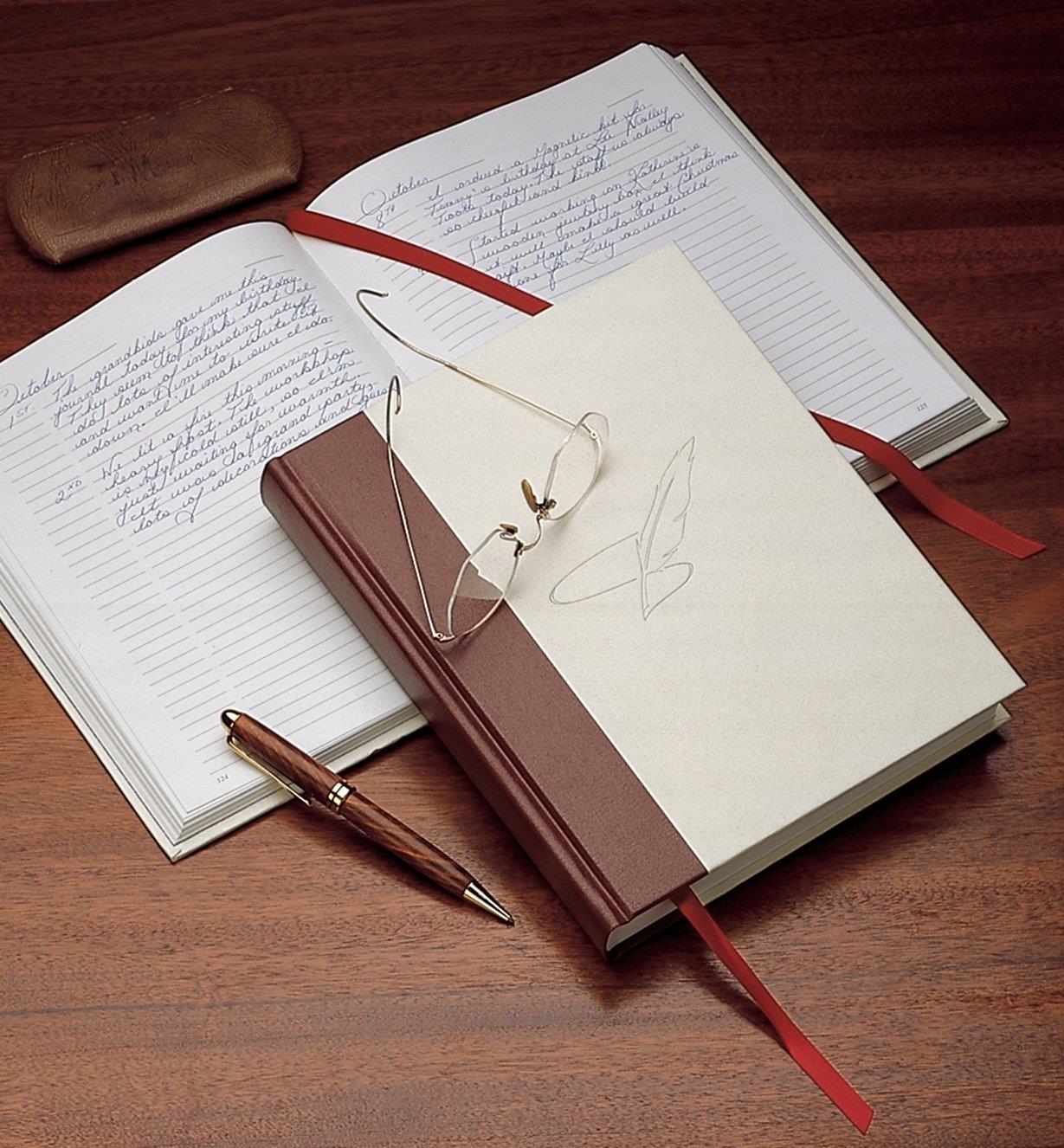
Christian Prepper Gal has an article up on using the current pandemic to evaluate for preparedness – This is a test. This is only a test. Or is it? We don’t know if this event will last two weeks (seems unlikely to be that short), two months (maybe?), or two years (the Spanish Flu Pandemic of 1918 actually surged on and off for about two years). It’s quite possible that we’re living a piece of history that could be remembered for decades or even hundreds of years. For your own benefit, keep a journal of what is happening to you, how you have prepared, what shortcomings you experienced, what you need to improve, and so forth, so that you can go back in less hectic times and make improvements to your life and readiness.
With all that is going on in the world right now, I can’t help but wonder if this is just a test. A test to allow us to see if we really are ready/prepared for what’s yet to come? You know, kind of like a wake up call? Telling us we only thought we were ready.

I’m really hoping that’s all it is! Why? Because I have already learned so much from it. And, by that I mean how much I am NOT ready and prepared! I mean, don’t get me wrong…I am prepared for a short term emergency/SHTF. And by short term I mean a few months. But, anything beyond that? Well, it would be a struggle to survive.

Funny thing is that I thought that was why I was at the homestead…so I could be prepared for a long term SHTF situation. But, I don’t know God’s reasoning behind things. I can only trust Him that there is something more that I need to learn before being put in that position full time. And, I need to be open to Him showing me what that something is. I do know that I learned a lot about prepping/surviving while living on the homestead and some of those things can be implimented in my preps here in the city.

Okay, so I guess looking back on the homestead experiences, combined with this current pandemic (COVID-19), I am seeing where I need to concentrate on improving my preps. So, for me, it’s a combination of both. A test and a wake up call. However, I do believe that most of us who consider ourselves preppers have been able to see areas that need to be improved upon before we are ready for “the big one”. Or is this “the big one”? Personally, I don’t think it is. Although, if those people who are resistant don’t start realizing that this is a serious matter and keep themselves at home as much as possible, it could turn into a long term SHTF.

I do remember many of us last year (2019) feeling like there was an urgency to step up our prepping. Do you remember? I was strongly prompted and urged to do so. Actually, I’m thinking it may have been right around this time of the year. Anyway, I also told my daughter that something was going to happen in 2020. I didn’t know if it would be as a result of the presidential election or something different. But, I did know that we needed to put a rush on our prepping and learning survival skills. It wasn’t fear motivating and moving me. It was God prompting me. Just like this feeling that we really need to get completely serious about prepping for something bigger than this current pandemic. For something that may last longer than a couple of months.

Geesh! It is so easy for me to get off track here! Okay, back to the subject at hand. Is this a test? Or a wake up call? Or both? Now that I’m thinking about it more, it could be both. A test for us to see the holes in our prepping, and a wake up call for us to continue to work on our preps and push to be ready for “the big one” (as in the big SHTF).

This definitely is a SHTF situation that we are living in right now. But, I don’t think it’s the end game just yet. I could be wrong, I’m no expert, so please don’t hold me to it. It’s just a gut feeling that I have. The feeling that something so much worse than what we are experiencing right now is in the works. It may even be the current pandemic continuing to such a place. I don’t know. But what I do know is that I need to be more vigilant and push forward with much more force my prepping/survival endeavors. Once I can. For now, I can remain vigilant and make plans for what I need to do when we get back to a point where I can purchase more food products.

When I really take a look at where I’ve come (with prepping) over the past couple of years I am amazed at the progress I’ve made. And yet, with this pandemic it has also caused me to see all the areas in which I need to improve. And believe me, there are a lot of holes that need to be filled in. I don’t know about you, but it’s not just the food storage that I need to improve upon. It’s also expanding my medical supplies to include a trauma kit and other emergency supplies; which I had started working on just before I moved to my son’s homestead. I need to work on learning more bushcraft/survival skills and practicing the skills I have already learned. There are many areas in my prepping that I need to expound upon and improve. I will not procrastinate. I will not put it off until everything is “back to normal”. I will continue to move forward. There are so many things I can be doing to improve my knowledge and skills while we are all basically self-isolating ourselves.

Here’s some of what I have learned from the Coronovirus (COVID-19) Pandemic of 2020:

  1. That I do not have enough toilet paper stocked. We probably have enough for a couple of months, but who knows how long this lack of availability will last?

  2. That I do not have enough disinfectant wipes, lysol, or bleach stored. Again, I have some, but not nearly enough if this goes long term.

  3. That people are going to hate you for having been prepared with food and necessities. People were actually complaining that there were some who were prepared and didn’t have to go to the stores for food and necesseties. Not even realizing that some people being prepared left more on the shelves for them!

  4. That it truly is important to keep your mouth shut about being a prepper to everyone except those you are willing to feed and care for in a SHTF scenario. This is because of how people reacted to preppers at the beginning of this pandemic (see No. 3). I can just imagine what would happen if it came to the point of food not being available at all.

Those are only a few of the things I have learned from this pandemic. There are some more things I will be sharing with you in upcoming articles and videos.

So, if you are like me in that your eyes have been opened and you have seen areas that you need to expound upon or improve upon in order to be truly ready for “the big one” SHTF, then I pray that you will heed the warnings and regroup, re-evaluate, or whatever it is that you need to do in order to begin to move forward and accomplish those improvements. We don’t know what tomorrow holds. We can’t see into the future (well, most of us can’t). But, we can put our trust and faith in our Heavenly Father and heed His warnings and follow His leading.

Remember we prepare for the worst and hope for the best.

Until next time…happy prepping, and God bless!

Hosea 4:6, My people are destroyed for lack of knowledge: because thou hast rejected knowledge, I will also reject thee, that thou shalt be no priest to me: seeing thou hast forgotten the law of thy God, I will also forget thy children. (KJV)

Organic Prepper: Ways to Prep When There Are No Supplies and You’re Out of Money

Daisy Luther at The Organic Prepper has a timely article out 12 Ways to Prep When There Are No Supplies to Buy and You’re Out of Money. Anyone reading the news knows that many preparedness/daily living items are in short supply, and with millions laid off or working reduced hours money is tight for many more.

If you’ve been prepping for the Covid-19 pandemic recently, you’ve probably noticed a couple of things.

  1. The stores are quickly running out of the supplies people want.
  2. People are quickly running out of money.

Both of these things are important. Of course, if there are no supplies, you can’t buy what you need. But secondly, you need to still consider your budget. This situation with Covid-19 will be personally costly. At this point, we all still have bills to pay and your stockpile won’t do you much good when it’s sitting on the curb beside you because you couldn’t make your mortgage payment.

So while I advise doing everything you can to be prepared, I also encourage you NOT to go deeply into debt now of all times. People are getting laid off by the tens of thousands right now. Everything is changing.

We’re at a critical point right now when there’s a crisis bearing down on us and we want to get prepared. But there are very few supplies left on store shelves to buy and many of us don’t have much money left to spend. This does not mean there’s nothing you can do. In fact, you’re at one of the most crucial junctures of preparedness right now.

How to prep without buying more stuff

Here are some things you can do to prepare for the possibility of quarantine when you’ve put a halt to the frantic spending. Make yourself a checklist and get cracking.

  1. Fill up all your containers with water. A Mason jar full of water takes up the same amount of space as an empty Mason jar. Go through your house and fill up every vessel you can with water.
  2. Organize your supplies. If you bought a whole lot of stuff in a frenzy – and let’s be honest, a lot of us did – you may have them stacked in a precarious pile in some area of the house. Take the time to organize your food. You can go about this in different ways – put ingredients for meals together, put all the veggies in one area, all the grains in another area…however you decide to go about it, getting organized will help you see what you have on hand.
  3. Make a menu. While you’re organizing your food stockpile, create some meal plans based on the supplies that you have.
  4. Organize first aid and medical supplies. Put all your first aid, over-the-counter medications, prescription meds, and medical supplies together so you can see what you have. Think about how you can improvise anything you’re missing.
  5. Organize other supplies. I keep my supplies in kits. I have a power outage kit with candles, lighters, flashlights, batteries, solar chargers, etc. I have a pandemic kit I created back in 2014 during the Ebola scare with masks, gloves, Tyvek suits, booties, and other things specific to a pandemic. I use big Rubbermaid tubs for these kits but you can use anything: cardboard boxes, even space on a shelf.
  6. Do a home-security check.  Go outside and take a walk around your house. Are there things that need to be addressed to make your home more secure? Do you need to trim back some shrubs to keep the area under windows visible? Should you secure downstairs windows so they can’t easily be raised up from the outside? Can you put a locking latch on the gate in the back yard? Does your shed need a lock on it? Focus on the small tasks you may have been putting off to make your home more secure.
  7. Make a family security plan. Would your family members know what to do in the event of a home invasion? If not, you need to make a plan. Vulnerable family members need to get out of the way, and family members who are engaging the criminals need to know who is doing what so they don’t get in each other’s way. Place weapons and potential weapons in strategic areas around the home.
  8. Figure out a long-term water plan. Where could you acquire water if no longer came from the taps? Identify places where you could get water – creeks, ponds, rivers, lakes, even fountains if you’re in the city. If there’s nothing like that, figure out how you could capture rainwater the most efficiently. Make sure you have a way to purify this water.
  9. Take a look at your budget. Are there things you can cut right now to help you get better prepared for a long-term financial crisis? Slash unnecessary expenditures now. Call your insurance company for a better rate. Cancel subscription boxes.
  10. Spend some time learning. If you’re already in lockdown, make the most of your time by learning new skills and acquiring knowledge. The best thing you can do right now is to subscribe to Selco’s Patreon that he’s running with his business partner Toby. It’s only $1 a month and the information on there is timely and PURE GOLD. Learn to make things, repair things, grow things, and take some time to look into old-fashioned solutions. This is a great time to pick up some new skills. Read some of those books in your to-read pile and check out how-to videos on YouTube.
  11. Clean and do laundry. This may not sound like a prep at all, but in the unlikely event that the power is interrupted, it would really be bad to start out with a house that needs to be vacuumed and a sky-high pile of dirty laundry.
  12. Assess your neighborhood. If it’s still okay to go for a walk (without coming in close contact with others) take a stroll around your immediate neighborhood. Identify resources, like creeks or fruit trees in the park. Think about which neighbors are more likely to be allies and which ones you expect could be troublesome. This isn’t something you need to act on now – you’re just gathering information.

When you complete these exercises you may find that there are a few things you still need to buy. At the time of this writing, you can probably still do that. The good news is, these things are unlikely to be the stuff that everyone else is buying in a frenzy – think about essential hardware, high-level medical supplies, and tools.

There’s a lot more to prepping than simply buying stuff and piling it into a closet. The time you spend now on non-purchase prepping is also very important. It’s a whole lot easier to think things through right now when you are calm and well-fed than it is to try and figure them out when you’re under stress. This isn’t the time to sit around streaming Netflix or doing a crossword puzzle. There’s a lot of work to be done before we reach the point that we can’t do anything more.

So close that Amazon window on your computer and get to work…

Click here to read the entire article at The Organic Prepper.

Organic Prepper: How to Help Your Community Be Better Prepared

Kara Stiff at The Organic Prepper has written How to Help Your Community Be Better Prepared for Covid-19 (and Future Emergencies). It’s worth your time to read.
…Some people can’t get their doctors to prescribe a reasonable stockpile of essential medications, or they need regular access to a hospital for dialysis or some other life-saving service. Some don’t have an extra dollar to spend on food for later because they can’t cover food for today. Others can’t stay home even when they’re contagious because they’ll lose their job. And some are suffering from depression or other mental states that make it literally impossible to think about the future, much less plan for it.

Some of these have been issues for me in the past, and I’m just lucky those periods of my life were short. There are millions of people who live there permanently.

Systemic and personal barriers to other people’s preparedness affect me personally, even though my family is in pretty good shape. We live out in the country but we’re still surrounded by neighbors, and our fortunes will rise and fall with theirs. My family can only be as prepared as our neighborhood, our county, our state. Which is to say, not very prepared at all.

How I’m working on community preparedness

So instead of further addressing our personal preparedness with diminishing returns, I’m working on community preparedness. I’m not an elected official or a leader, just a private citizen, so the things I’m doing are friendly and neighborly things.

Before we got our little cold I did my friend’s monthly livestock feed run for her, saving her a day in the car so she can rest up and take care of things at home. Then, I took my elderly neighbors some extra eggs. I haven’t seen them in a while, and it’s to both of our advantages if they remember who I am. I reintroduced myself to my neighbor who just moved in, so he remembers who I am, too.

Of course, it’s safest to live in a tight network of preparedness-minded people with diverse and complementary skills who unconditionally support each other. But how many of us are actually achieving that right now?

It’s difficult to build and maintain that sort of situation in a nation where most people aren’t interested, and people are always moving. Some of my neighbors form a pretty good support group, but I also have neighbors I’m not close with. Knowing their names and faces is far better than not knowing.

Another thing I’m doing is giving extra money to my local food bank. In these times when all the headlines scream that unemployment is low and the economy is hearty, about 15% of my county is already leaning on the food bank, including lots of elderly people and families with small children. These are the people who can least afford a health problem or a wider financial disruption, and it’s ultimately better for me if they have access to the resources to stock up.

The greater the proportion of the population who can meet some of their needs in any emergency, be it a virus, a weather event or just a personal job loss, the more likely it is that any forthcoming disaster assistance can cover the remaining needs. More needs met equals less unrest (certainly not none, but less) and less unrest equals my family being safer (certainly not safe, but safer).

It’s easy to feel that because I’m all set, all those grasshoppers who won’t see to their own needs can suffer and it doesn’t affect me. But it isn’t true. I am safest when everyone is safest.

This week I’m reaching out gently to friends and family, especially those who are vulnerable because of asthma, pregnancy, age or other preexisting conditions. Because my anxiety about my own family is relatively low, I can speak to them in encouraging, soothing, practical ways, sharing information and urging them to get some extra food so they have the option to stay home, hopefully without stressing them out too much. A few people actually contacted me, and I was able to better answer their questions and listen to their feelings because I’m not panicking myself. They weren’t interested last week when I mentioned the virus offhandedly, but this week, they are.

People become receptive to preparedness on their own timelines.

You might have found in your personal conversations that people are uninterested or even scornful about your preparedness ideas. I’ve certainly found that. My dad was polite but not too excited about my thoughts during last winter’s ice storm. Now he’s been following the Covid-19 news, and all of a sudden he wants to talk more in-depth about water catchment, food storage, and communication if the cell service is ever disrupted.

His change of mind just goes to show that people have to become receptive all on their own. In my experience, all we ordinary private citizens can do is try to gently plant a seed of interest in preparedness topics, and then be there to water it when the circumstances are right. For a lot of previously uninterested people, those circumstances are right now, and they might be looking around for somebody to learn from. Groups you’re already a part of (such as clubs or churches) may also be more receptive now that they used to be.

I’m not suggesting giving them a guided tour of your storage, or anything else that compromises your own security, but something as simple as speaking quietly to group leaders, assisting them to support others…

Click here to continue reading at The Organic Prepper.

Paratus Familia: Actionable Intelligence

Enola Gay at Paratus Familia has an article up on seeing danger and taking refuge in a time of unclear and contradictory public messaging – Actionable Intelligence.

Watching the news is a lesson in frustration.  The media has cried wolf for so long that if this pandemic truly is “the end of the world as we know it”, we’re not going to believe it until it’s too late. There is no truly “actionable intelligence” coming from news reports or social media.  One side says that the sky is falling and the other side says “move along, there’s nothing to see here”.  Wisdom is in short supply.

We have seen (at least according to media outlets) lots of “stocking up” on key quarantine and hygiene essentials.  Many people have been caught unawares, and are worried, even to the point of hysteria, that they don’t have enough to get they and their families through this crisis.  I have a few thoughts on the concept of preparedness and Christianity…..

I absolutely believe that God is the author of life and sustains us from even before our very first breath.  It is His providence that sees us through each day and provides hope for the future.  However, He did give us biblical principles to live by and preparedness is one of many.

When God spoke to Noah, He told him to prepare for judgement.  He gave him very specific instructions about building an ark, loading it with life sustaining food and preparing his family for the trials of the days ahead.  Now, if anybody had a reason to doubt, it was Noah.  For over 100 years, Noah works on the ark.  I have no doubt there were many naysayers and hecklers, but Noah persevered.  Noah built a boat in a world that had never seen rain, never seen a flood, never had even seen an “act of God”.  What faith!  God could have saved Noah and his family by “Divine Intervention”, but instead, He chose to have Noah prepared.

The story of Joseph may be an overused example of preparedness, but it is without a doubt a perfect picture of God’s faithfulness through preparedness.  Once more, God could have chosen not to allow the famine, but instead He readied His servant Joseph to care for His people.  What would have happened to the people Egypt and the surrounding areas had Joseph not heeded God’s voice?

The example of the ten virgins in Matthew, although directly relating to the returning of the bridegroom, is instructive in discerning the wise from the foolish.  The wise virgins brought with them their lamps and their oil, conversely, the foolish virgins brought their lamps, but lacked the foresight to bring oil.  My desire is to be known as wise rather than foolish!!

Another thought is that God always starts with something.  When He made man, He started with dirt. When He made woman, He started with man.  God instructed Elijah to have the widow feed him.  She explained that she had only enough flour and oil for one loaf for she and her son, and then they would die.  Elijah instructed her to feed him first and that her supplies would last.  THEY DID!!  She had something and God multiplied it.  Even Jesus, with His very first miracle, started with something. He didn’t just conjure up wine for the wedding, He started with water.  Later, at the Sermon on the Mount, He started with a few loaves and fishes, and fed 5000 men; not counting women and children.  He used what was available and multiplied it.  Those examples, at the very least, should spur to have SOMETHING.  God, in His sovereignty, will use what we have – but we need to start with something.  We don’t have to panic about not having everything we think we need, but we do need to make an effort to acquire SOMETHING.

And then we get into the Proverbs.  They are a goldmine of preparedness advice:

Proverbs 6:6-8
Go to the any, you sluggard; consider its ways and be wise. It has no commander, no overseer or ruler, yet it stores it provisions in summer and gathers its food at harvest.

Proverbs 21:20
In the house of the wise are stores of choice food and oil, but a foolish man devours all he has.

Proverbs 22:3
A prudent man sees danger and takes refuge, but the simple keep going and suffer for it.

Proverbs 27:12 (this one is even mentioned twice)
The prudent see danger and take refuge, but the simple keep going and suffer for it.

Proverbs 30:25
Ants are creatures of little strength, yet they store up their food in the summer.

Proverbs 31 is one of my favorite chapters.  It is like a job description for a Godly wife.  A couple of verses really speak to me when it comes to preparedness.  31:15 “She gets up while it is still dark; she provides food for her family and portions for her servant girls”.  31:21 “When it snows, she has no fear for her household; for all of them are clothed in Scarlett”.  31:25 “She is clothed with strength and dignity; she can laugh at the days to come”.  The Proverbs 31 woman provided food for her household.  She did not wait for someone else to provide for her.  She was not afraid of the cold, because she had already made sure that her household was well clothed.  She laughed at the days to come.  I think this is my favorite verse.  For a woman, the only way that you can laugh at the days to come is if you feel that you have taken care of what needs to be taken care of.  When you have laid in supplies, a part of you says “bring it on!”.  Then you truly can laugh at the days to come.

As Christians, it is our responsibility to be wise stewards.  How can we be a beacon of hope in a dark world, if we, ourselves are dependent upon the charity of others?  How can we bring glory to God if we are stealing or cheating to survive?  We must be like the prudent man who sees danger and takes refuge rather than the simple man who keeps going and suffers for it.

Market Watch: How ‘Survivalists’ Are Preparing for Coronavirus Epidemic

Could this happen in the U.S.? A man walks around empty refrigerators in a supermarket in Wuhan, China, the epicenter of the coronavirus outbreak.

From the folks at Market Watch, How America’s extreme ‘survivalists’ are preparing for a worst-case coronavirus epidemic — ‘beans, bullets and Band-Aids’ 

James Wesley Rawles is hunkered down at an undisclosed location west of the Rockies. “I’m not at liberty to say what state I live in,” he told MarketWatch via internet phone. “I live in the inland Northwest… more than two hours from any decent shopping. We could lock our gate and say goodbye to the world for two or three years and get along just fine.”

He’s on his ranch with a large family. “I’m not at liberty to discuss it,” says Rawles, a former U.S. Army Intelligence officer. “Let’s just say it is a very large family.”

This is a key moment for “preppers” or “survivalists” like Rawles. While the coronavirus has spooked markets into massive sell-offs and sent shoppers to stores like Costco COST, -0.03%   to stock up on supplies, survivalists have been prepping for something like this for years. Even decades.

“I was a ‘prepper’ long before that term even came into being,” says Jim Cobb, author of Preppers’ Long-Term Survival Guide and Urban Emergency Survival Plan. “Since I was 16 years old,” says Rawles, when asked when he first started readying himself for a possible apocalypse. “That was in 1976.”

‘Be prepared for whatever life throws at you.’

—Jim Cobb, author of ‘Preppers’ Long-Term Survival Guide and Urban Emergency Survival Plan’

Nobody knows for sure, but there may be many more preppers in the U.S. The term covers everything from “doomsday preppers” in the northern mountain states to people who just make sure to be stocked up at home in case of disaster.

Rawles, the author of the “Patriots” doomsday novels, and the website survivalblog.com, has been living at his undisclosed ranch since 2006. He is a messianic Christian and a controversial figure. “The general public is clueless,” Rawles. “I call them the GDP — the Generally Dumb Public.”

Most people will be unprepared if there are shortages, or if they have to go into quarantine, he says. He’s watched the run on things like N95 face masks — despite health officials’ recommendation that the public not buy them — without surprise. “It is at times like this that the GDP wakes up,” he says. “My motto is panic now and beat the rush.”

“I’ve been doing it my whole life,” says “Doc Montana,” a survivalist who asked that MarketWatch not share his real name. “[A] lot of urban people aren’t prepared for a disaster,” he adds.

Cobb, meanwhile, lives in a more mainstream environment in Wisconsin, where he works as a disaster preparedness consultant and a writer. “I’m not an ‘end of the world is coming’ kind of guy,” he says. “It isn’t a case of having to batten down the hatches because the zombies are going to get us. For me, preparedness is common sense. Be prepared for whatever life throws at you.”

Some preppers say the coronavirus was on their radar in January

Rawles says he and other preppers noticed that the commodities markets were flashing alarm signals about China long before Wall Street paid attention. “We started raising alarms about this in early January,” says Rawles. “The commodities markets essentially fell apart.”

Oil slumped, he pointed out. Copper, a key leading indicator of economic activity, plunged. The Baltic Dry Index, which tracks demand for global shipping, went south. He and many fellow preppers think the virus is likely to be a so-called “Black Swan event” — the term coined by author Nassim Taleb to describe major, sudden, and unpredictable shocks to the system.

Rawles, who says he is ready for his long-expected doomsday a scenario, says he holds his money in platinum, silver, and U.S. nickels, which he believes will be valuable because of their base metal content.

So far, the World Health Organization is calling coronavirus, or Covid-19, an epidemic rather than a pandemic. Worldwide, there had been over 90,000 cases and 3,100 deaths as of Tuesday. However, more than 80,000 of those cases are in China.

The WHO is calling coronavirus an ‘epidemic’ rather than a ‘pandemic.’

The definition of an epidemic and pandemic are somewhat vague. An epidemic refers to a surge in the number of cases of a disease, while a pandemic refers to a disease that has spread widely across countries and continents.

The WHO has declared the coronavirus a “global health emergency,” the organization’s highest alert level.

As President Trump confirmed during last week’s press conference on the disease, the federal government does have contingency plans, even including quarantining cities, if it should get much worse.

Many preppers don’t believe the reassurances about the scale of the epidemic, least of all the information coming out of China.

They both agree on one thing: a worst-case scenario is the most likely outcome. Some, like Rawles, fear the worst from the coronavirus. He thinks it is “unstoppable” and “will be all over the planet in the next months.” Doc Montana believes the authorities are trying to warn people to get ready without causing a stampede.

But others are more philosophical and, perhaps, less apocalyptic. “There is so much goofy stuff that is floating around on social media,” says Cobb. “You don’t know what’s right and what’s wrong.” His take? “No. 1, don’t worry about what you don’t know. Worry about what you can control. As a practical matter, prepping for a pandemic isn’t that different from prepping for a sudden job loss or a power outage.”

‘Don’t worry about what you don’t know. Worry about what you can control.’

—Jim Cobb, author of ‘Preppers’ Long-Term Survival Guide and Urban Emergency Survival Plan.’

Most preppers are nothing if not dramatic, and they have a variety of terms to describe total disaster. Most of them are acronyms…

Click here to continue reading at Market Watch

Grid Down Consulting: A Biblical Perspective on Preparedness

From Grid Down Consulting, A Biblical Perspective on Preparedness.

 In the books that I’ve published in the past, I have made clear my faith and the importance of relying on God through hard times.  In this chapter, I would like to discuss the biblical perspective on being prepared.  When discussing biblical theology, I realize it can be as contentious an issue as which gun is best suited to a SHTF situation, but I feel it is an important discussion to have.  The chapter below is MY OPINION and beliefs on the subject.  If you are a believer and have a personal relationship with Jesus, then I want to make one point overwhelmingly clear:  this chapter is a general guide.  At no point does it take any precedence over what God is specifically calling you to do.  Again, please pay heed to that still small voice that resides in each one of us and listen to the leading of the Holy Spirit to help guide your decision-making process through the hard times ahead. 

     I have had multiple discussions with my pastor on the subject and, as with all aspects of prepping and life, I am always willing to evolve my thinking and stance on the subject as new sound biblical information is put before me.  Please feel free to contact me through my website and let me know what you believe on the subject.  But before you do, please research and pray about it and don’t just take a one-sided stance for contentious purposes.

     There are two sides to the biblical argument on prepping.  There are the Christians who will cite stories, like those of Joseph, on being prepared for hard times, and there are the Christians who will cite the example of the Israelites fleeing Egypt and how God miraculously supplied their every need during forty years of wandering through the wilderness.  So what should we, as Christians, do?  Should we make advanced preparations or rely solely on God’s miraculous provisions if hard times were to come about?  I believe the answer is actually both.

     However, before I start discussing scripture on the subject, let me first remind you of the three main reasons people (including Christians) don’t prepare for hard times.  The first is ignorance, that is to say, not being educated on the subject.  The second is the “ostrich head in the sand” syndrome: it’s much more comfortable to hope it will never happen.  And the third is (especially for Americans) the assumption that the government will come to their aid.

     Educating yourself takes time and work, and the topic can be depressing (especially if you don’t have faith and a reliance on God to see you through).  The mainstream media is NOT a good source and you have to dig for yourself to find any solid information.  Remember, in November of 2014, Admiral Rodgers, the Director of Cyber Security for our nation, told Congress that what he fears the most is a cyber attack on our critical infrastructure (the electric grid) that could lead to massive loss of life and industry, that he believes it will happen in the very near future, and that they are completely unable to stop it.  That is a huge revelation!  Yet the mainstream media completely ignored that story.  Be careful about what the media is feeding you and pray for discernment to see through the spin they put on stories to push their agenda.  The information you need is out there, but not on the 6:00 Evening News. 

     Just because the media aren’t covering the threat does not mean that it won’t affect you and your family once it happens.  And just because it is a frightening scenario and you’d rather just not think about it or just pretend it doesn’t exist, it does not lessen the severity of the impending societal breakdown.  You can’t just “blink” and miss it.  And banking on the military and FEMA to help not only you, but 300+ million additional starving people all at the same time?  It’s seriously not even realistic to think that would work, even with full electrical and communication systems working.  The threat of EMP and the vulnerability of the electric grid have been widely known in the government since the 1960s.  That’s over forty years and ten presidential administrations (Republican and Democrat alike) that have done nothing to harden our critical infrastructure or protect the electric grid.  It would only cost around $2-$4 billion dollars to harden the grid, which is less than what we give Pakistan in aid each year.  The politicians don’t care!  Voting for this doesn’t buy them any votes come election time because very few people are even aware that a threat exists.  It’s hard for me to fathom as all the information is out there, yet no one is talking about it.  I think it’s time for Christians to WRESTLE with this, rise up and take the lead.

   I feel it is imperative that you educate yourself on the threat.  What I mean by this is that if you are putting away tons of food and supplies for no specific reason, then you are a bit crazy.  That is why “preppers” have been shown in a bad light by the media.  The liberal media think that everything is going wonderfully in our rapidly growing technological society and that there is no threat to our food supply and no one needs a gun to protect himself because the police will protect you (when in truth they will usually show up ten minutes later to clean up the mess and call the coroner’s office for your dead body).  Since the media have no interest in researching the threat, there obviously isn’t one and you’re crazy for putting some extra food in your basement. 

     Information and education on the subject is paramount before making decision.  Researching the theology behind “prepping” is completely irrelevant if you don’t believe there are hard times ahead for our country.  I strongly challenge you to spend AT LEAST a full day’s worth of time (over time if need be) looking at the evidence I put forth in on the likelihood of a grid-down scenario.  That does not mean just read through what I wrote.  Even though I put a lot of information on my website, it is literally the tip of the iceberg of evidence towards a grid-down scenario.  Do your own research!  Click on the hundreds of links I supply to government reports, news articles, and videos on the subject.  Do your homework and pray about it before deciding if preparing for hard times makes sense for you and your family.  I believe that the amount of evidence I put forth is irrefutable and if you don’t bury your head in the sand in fear, you will come to the same conclusions that I have about the undeniable threats that face this country in the near future.  Once you have done that or if you are already convinced that hard times lay ahead for other reasons, then continue.

     I have a close friend that I graduated high school with, whom I respect enormously and I know that he loves the Lord immensely.  During a discussion a while back about my profession as an emergency preparedness consultant, he mentioned that his stance is not to worry about the future and he is going to just trust in God when the time comes.  He also mentioned the story of the Israelites escaping Egypt in Exodus and how God supplied their every need.  That challenged me a bit, and made me second guess myself.  It forced me to research that story and pray and deliberate on it.  Did I not have enough faith?  Was I not trusting God to miraculously supply my family’s needs should the worst come to pass? 

     Here is what I’ve come to personally believe.  First, God took the Israelites out of Egypt and into a “wilderness” to wander for 40 years.  This area is essentially a desert.  To this day it would be very hard to grow crops or raise livestock in this area of the Middle East, not to mention that there were approximately 3 million Israelites to be fed and watered each day.  This is not a situation where the Israelites WERE capable of taking care of themselves.  This was a situation where God led them to that place and only a miracle by God (manna) could sustain them and keep them alive, forcing them to wholly put their trust and faith in God.  I believe this is a great example of how God can supply our needs miraculously when he chooses to do so. 

     If I were to go for a week-long backpacking trip in the dry desert of Arizona, I would take supplies for myself to make sure I would have enough food and water.  I wouldn’t just head out with the shirt on my back and expect God to miraculously save me and feed me.  I am not insinuating that he couldn’t, I am just saying that it would not be a wise decision on my part to test Him.  I think God expects us to be smart and responsible in our decision-making processes.  This leads to the preparedness side of the story.  The Israelites were slaves and had no way to or even enough time to prepare for their quick departure out of Egypt.  They didn’t have time to grow large crops and store away food to take with them or raise large quantities of livestock for their journey (not that the Egyptians would have let them do that anyway).  This is an instance where God used many miracles to harden Pharaoh’s heart and let them escape the oppression of the Egyptians.  God miraculously brought them out of the land of Egypt and miraculously provided for their needs.  This is a wonderful story about God’s ability to do miraculous things to save His people.  There is nothing in this story that I could find “against” preparing for hard times...

Click here to continue reading at Grid Down Consulting.

Smart Survivalist: Low Cost Prepping – Your Survival on a Budget

Getting prepared at a low cost has always been a popular topic. Now that people have started to worry about the looming coronavirus pandemic, those who are unprepared are looking at getting prepared for the possibility of being quarantined for two to four weeks. Some have looked into their cupboards and realized (especially those living in big cities like New York) that they have nothing stashed because they are used to just hopping out and picking up what they need. Some have more money than others, but if you’re trying to stock up in a short amount of time your budget is limited. Here is The Smart Survivalist with Low Cost Prepping — Your Survival on a Budget. Canned beans, rice, and pasta are low cost staples. Make sure you have access to water and store some if you have space in case of power outages or other interruptions to your home water supply.

If you are only preparing for a 2-4 week quarantine, you can get by without having a full array of nutrition. For a short duration, you’re only worried about getting enough calories to survive through the period. For example, a 25 pound of oatmeal provides about 37,000 calories (not including adding milk, sugar or other toppings) or enough for almost 19 days at 2,000 calories per day. But you’ll need to eat almost seven cups of dry oats per day to get that many calories. So think about how much you’ll need to eat to feel full and how many calories you’ll have per day. Canned  beans tend to be rather high calorie per volume, so if you had oatmeal sometimes and beans other that would be more manageable from a caloric intake and fullness perspective. You may need to be creative to get a good variety of foods that fulfill your needs. And finally don’t forget hygiene products, too.

Low cost prepping is actually a doable task. We all should be prepared for the worst outcomes of today’s reality, but we don’t have to spend thousands of hard-earned dollars on survival equipment. It’s completely possible to just walk into Walmart, or Walmart’s counterpart in your country, and fill your survival list on a very small budget.

I’ve done my own research on this topic, and came up with a list of items that can make a big difference in disastrous events – yet each and every one of them does not cost more than five dollars. The items can be sorted into five important categories. I even took this research a few steps further and outlined ten of the cheapest and most useful of such items. And finally, I also discuss what necessary survival steps and techniques you can take without spending another penny…

All items on the low cost prepping list can be divided into 5 categories: first aid, water, food, hygiene items and emergency supplies. You might ask, do I need all of them? Well, a person can survive for 3 days without water, and as much as 3 weeks without food, but it would be a painful and probably lethal experience. And what if you are injured or running a fever? What if you are stuck on your roof for many days as your neighborhood is flooded?

As you can understand now, being fully prepared is a necessity. You will need the items that I am about to list, and trust me, I do not intend to suggest redundant or luxury items. These are the items that can be utilized when an actual disaster strikes, and all of them are on a budget. Just make sure you stock enough to last you at least a week. Also, before deciding on quantities, see how many members there are going to be in your group, and who they actually are. A child might need less food than a grown man…

s I mentioned earlier, you cannot survive for a long time without water. Fortunately, bottled water is cheap and non-perishable. You can stockpile as much as you need. You will need approximately 2 gallons for a person per day, which includes both drinking and sanitary needs. I would recommend buying even more than that, because you never know what might happen.

There is always the option of water purification, and I have written a thorough article about the best ways to purify water. Keep in mind, however, that some of the methods require additional investment, of time and/or money, while bottled water is always on a budget.

You can also stock on other low cost consumable liquids. Powdered milk costs less than $5, and one package is enough to prepare two gallons of milk. You can mix it with coffee and boiled water. Instant coffee and cappuccino mixes also cost under $5. This might not be your dreamy latte, but it’s something that can get you through a challenging day.

The total cost of products in the water category is no more than $30.

The most affordable and most reliable water filtering item is definitely LifeStraw (on Amazon). This award-winning tool has been globally recognized as a highly efficient water filter that allows you to drink any water directly. It’s ultralight, can be easly carried anywhere and nullifies the need for iodine tablets, as it removes 99.9999% of bacteries, parasites and pollutants. A trusty companion for every prepper and survivalist!…

Just like in case of water, you cannot survive without food. You need energy, nourishment, nutrients. For low cost prepping and for successful survival, we need to stockpile on food that costs less than $5 each and can last for years. It is also preferable to collect food that can be mixed with other food in order to create new dishes and break the monotony of identical dinners.

So first of all, there are cans. Canned goods can be your savior. You will need minerals and vitamins, but fresh vegetables and fruits expire quickly. The canned ones, however, can be consumed even if they are opened 2 years after they were packed. And these are the cans that I suggest to purchase:

  • Assorted beans. These can be chick peas, kidney beans, and several others. They fill you quickly and have tons of necessary protein.
  • Carrots (sliced)
  • Peas and carrots (a popular combination, and again a lot of protein)
  • Oranges or mandarins
  • Tomato sauce
  • Sliced potato
  • Lasagna
  • Mac and cheese
  • Cheese ravioli in tomato sauce
  • Italian pasta beef ravioli

In addition, there are foods that are not necessarily canned, but they can last for a very long time.

  • Pasta. This is an underrated food. Sure, it might seem boring, but it’s very cheap, very filling and can be prepared in minutes. You can always mix it with sauce or other goods. All in all, it’s a great source of carbs and energy.
  • Instant pudding (get several packs)
  • Flour – really inexpensive, you can make bread from it.
  • Sugar and salt – just keep them in dry places, don’t let them get wet!
  • Sardines
  • Ham
  • Chicken breast
  • Quaker
  • Raisins. Some don’t like them, but they are very nutritious.
  • Meatballs for pasta/spaghetti
  • Chicken pot pie soup
  • 5 pound bags of rice. Rice (particularly white one) can be stored away for a long period of time without going bad. It is very filling, very cheap and has tons of carbs to energize you when you most need it.
  • Peanut butter – a great calories source. Your body needs certain fats, and peanut butter has them. It’s delicious, and it provides you with additional energy that is needed for your survival.

The total cost of food mentioned here is no more than $175

Click here to read the entire article at The Smart Survivalist.

Related:

The Organic Prepper: How to Build a 30-Day Emergency Food Supply…Fast

Pantry Chart with shelf life (large image 1.5MB)