FFF: Monetary Destruction in America

Jacob G Hornberger at the Future of Freedom Foundation has a well written article detailing Monetary Destruction in America. It’s a bit of a long read, but worth the Constitutional and monetary education.

The Constitution made it crystal clear what the official money of the United States was to be when it called the federal government into existence. That money was to be gold coins and silver coins, not paper money.

Article 1, Section 10, of the Constitution, which is a restriction on the power of the states, states, “No State shall … coin Money; emit Bills of Credit; make any Thing but gold and silver Coin a Tender in Payment of Debts….”

What were “bills of credit”? That was the term used at that time for paper money. Through that provision in the Constitution, the Framers expressly prohibited the states from issuing paper money. It prohibited them from making anything but gold coins and silver coins legal tender or official money. It prohibited the states from issuing their own coins, leaving that power and responsibility to the federal government.

With respect to the federal government, Article 1, Section 8, states, “The Congress shall have Power …To coin Money, regulate the value thereof, and of foreign Coin…. To provide for the Punishment of counterfeiting the Securities and current Coin of the United States.”

Why wasn’t there an express prohibition on the power of the federal government to emit “bills of credit” or paper money? The reason is that the Constitution established a government of limited, enumerated powers. The federal government’s powers were limited to those listed in the Constitution. If a power wasn’t enumerated, it couldn’t be exercised. Since there was no power to issue paper money given to the federal government, it couldn’t exercise such power.

It was different with the states. Under the Constitution, they were to have whatever powers they wished to exercise, unless there was an express restriction on a particular power within the Constitution. That was why the Framers deemed it necessary to restrict the powers of the states when it came to money: no printing of paper money, no coining of money, and no making anything but gold coins and silver coins official money.

The federal government, on the other hand, was given the power to coin money, not print money, and to regulate the value of such money. It was also given the power to punish people for counterfeiting “the Securities and current Coin of the United States.”

Article 1, Section 8 of the Constitution also gave Congress the power “To borrow Money on the credit of the United States.” That’s what counterfeiting “the Securities” of the Constitution was referring to — debt instruments of the United States, such as bills, notes, and bonds.

There is something important to realize about the federal government’s debt instruments: It was understood that they were not money or “legal tender” but rather promises to pay money — i.e., promises to pay gold coins and silver coins.

When we consider all of these constitutional provisions, it is easy to see that the Framers intended to establish a monetary system in which gold coins and silver coins were to be the official money of the United States. And, in fact, that is precisely what happened after the federal government was called into existence. The Coinage Act of 1792 established the first mint in Philadelphia for the purpose of issuing coins. The silver dollar was the first unit of money issued. That would be followed by the silver half-dollar, quarter-dollar, dime, and half-dime. Gold coins consisted of the $10 gold Eagle, $5 Half-Eagle, and $2.50 Quarter-Eagle.

That gold-coin, silver-coin system remained the monetary system of the United States for more than 125 years. It turned out to be the most stable monetary system in history, one that, along with no income taxation, no welfare state, no warfare state, no immigration controls, and very few economic regulations, played an important role in the tremendous rise in economic prosperity and rising standards of living in the United States throughout the 19th and early 20th centuries.

It is often said that America’s “gold standard” was a system in which paper money was “backed by gold.” Nothing could be further from the truth. There was no paper money. There were only debt instruments promising to pay gold and silver. The system was one in which gold coins and silver coins were the official money of the United States.

Paper money

Why did our American ancestors have such a deep antipathy toward paper money? They knew that throughout history public officials had plundered and looted people through the use of paper money. To finance their ever-burgeoning expenses, public officials, of course, would first resort to tax increases. At some point, however, taxes would get so high that people would begin to resist, cheat, or, in extreme cases, violently revolt. That’s when kings and other regimes would resort to the printing press to finance their expenditures. They would simply crank up their printing presses, print whatever amount of money they needed, and go spend it.

The result would be a devaluation of everyone’s else’s money…(continues)

Click here to read the entire article at the Future of Freedom Foundation.
Hello Homestead: Cooking with Dried Beans

Sam Schipani at Hello Homestead has an article that explains how you should prepare your dried beans, storage, soaking, cooking – Here’s what you need to know about cooking with dried beans. If you are seasoned at using your storage foods, then there may be nothing new here, but if this is your first time pulling out that food that you got “just in case” or recently picked up some dried beans as desperately sought out foods for lockdown, then this is for you.

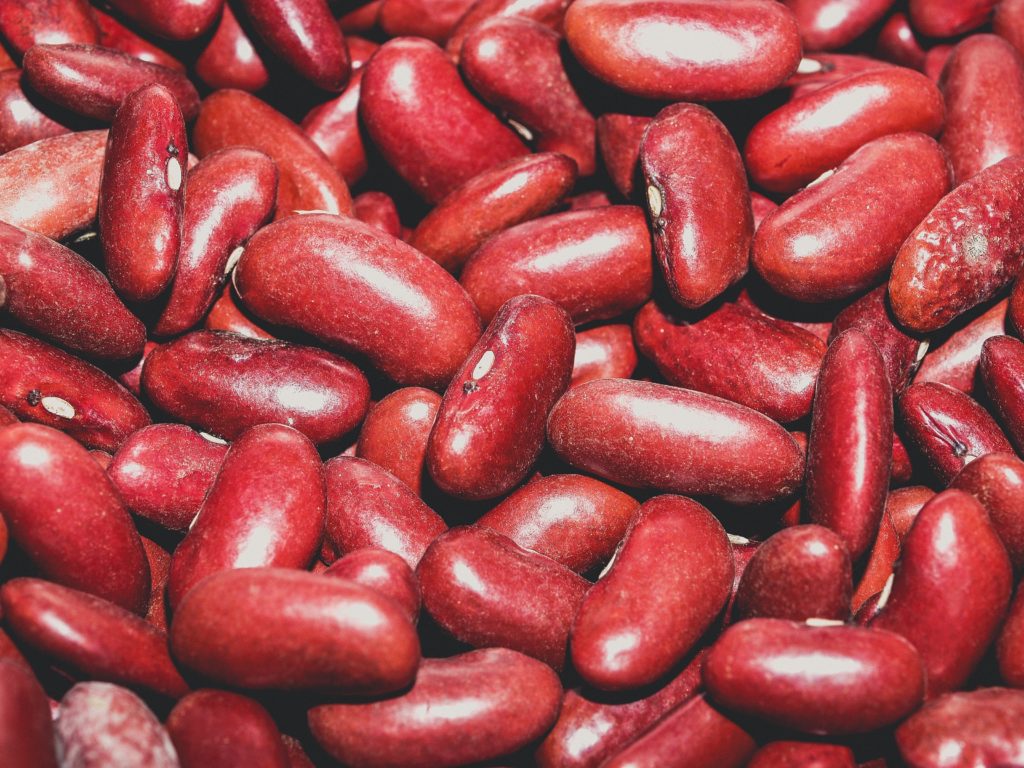
Red kidney beans. | Photo from Pexels

As the number of positive coronavirus cases continues to climb, citizens around the country have started stockpiling foodstuffs in preparation for the recommended social distancing, self-quarantine and self-isolation. A few nonperishables, in particular, have been popular in grocery stores — among them, canned beans.

Luckily, dried beans are generally available in bulk supply, in both conventional grocery stores and health food stores. If you purchased a bag of dried beans to stand-in for your usual canned counterparts, you may not know what to do with them.

Consider this an opportunity to open yourself up to the wonderful world of dried beans. Dried beans are cheaper, healthier and more sustainable than their canned counterparts. Plus, dried beans usually come in much more fun and tasty heirloom varieties than the canned offerings.

To make tasty, tender beans while avoiding any uncomfortable gas, here’s what you need to know about preparing dried beans from scratch.

Stored dried beans at Songbird Farm in Unity, Maine. | Photo by Linda Coan O’Kresik

1. Store them

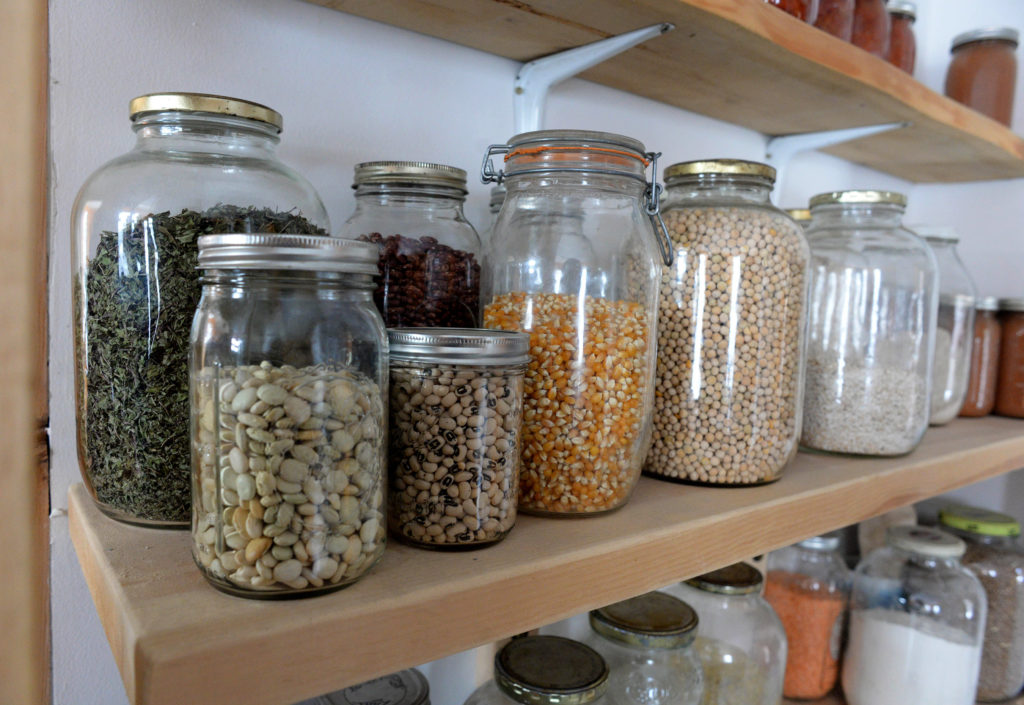
First, make sure you properly store your dried beans leading up to the moment you use them. Dried beans left in their original grocery store packaging — generally, a thin plastic or paper bag — will dry out faster. Instead, store them in food-safe storage containers with a tight-fitting lid. Dried beans should also be stored out of direct sunlight in a dry spot kept at a cool temperature between 50 and 70 degrees Fahrenheit. A cool pantry will work best.

2. Soak them …

Many dried beans need to be soaked before they are used to dissolve the starches that cause intestinal discomfort. The exceptions to the bean soaking rule include smaller and softer legumes, such as lentils, split peas, black-eyed peas and adzuki beans.

For all beans, pick through the beans and discard any discolored or shriveled beans, as well as any foreign matter such as stray pebbles or twigs. Rinse the beans well.

To soak, put the dried beans in a pot and cover them in a few inches of water. Let sit overnight in the refrigerator.

If you don’t have all night, you can also quick soak beans and get a similar effect. Put those beans in a pot, cover them with water and bring them up to a boil. Let the beans boil for a few minutes, then cover the pot and turn off the heat. Let the beans sit for at least half an hour in the hot water.

… or, maybe, don’t soak them

There are kitchen gadgets that can help you get around the soaking if you really want to. You could make your beans in a slow cooker in just a few hours without soaking overnight, or you could prepare dried beans in a pressure cooker (but don’t skip the olive oil — this helps reduce foam during cooking, which could clog the pressure valve).

The exception to these workarounds, though, is red kidney beans, which should always be soaked. They require a different cooking method to break down toxins in the bean. To make them more digestible, always soak first and then boil for 20 minutes before preparing in the slow cooker or pressure cooker.

3. Cook them

If you have chosen to use the regular soaking method, now it’s time to make those beans nice and creamy. First, drain and rinse your soaked beans, whatever method you wound up using.

Transfer them to another pot, then cover them in a few inches of water (the exact amount isn’t important). Bring them to a simmer, avoiding a boil (which will make them fall apart), with a dash of salt.

You may have heard that dried beans shouldn’t be salted until the end of cooking to avoid toughening the beans, but this is an oversimplification of the truth. In fact, some chefs swear that salting beans at the beginning of cooking and ending up with flavorful, tender beans. As a general rule, keep early salting light — most of the salt will be added at the end, after the beans have cooked through.

To give your beans a little more flavor, add aromatics such as onions, shallots, garlic, chiles or fresh herbs. The Bean Institute recommends a whole, quartered onion, a few cloves of garlic, and a sprig or two of fresh herbs like rosemary, thyme or a bay leaf, but you can experiment with your own mix of flavors. Lightly salt again after about an hour of simmering.

After another 30 minutes to an hour, your beans will be tender and edible (a quick taste test will help to make sure, but be careful not to burn your tongue). Turn off the heat and fish out any aromatics you used (keeping them in a cheesecloth bag is one easy way to do this). Then, season the cooking liquid to taste with salt and add any acidic ingredients such as tomatoes, vinegar or lemon juice… (continues)

Read the entire article at Hello Homestead by clicking here.

Yakima County Emergency Mgmt Seeks Donations of Protective Gear

From KNDO/KNDU in support of Yakima first responders and healthcare workers:

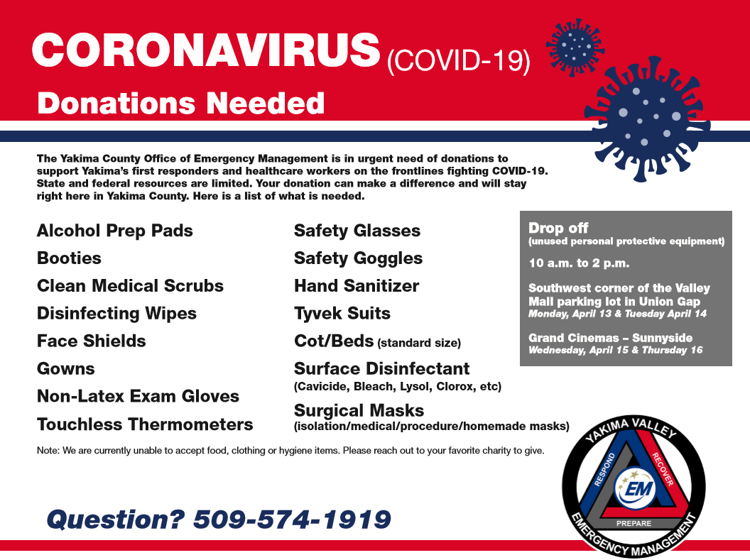
Yakima County Office of Emergency Management asking public for donations of protective gear for frontline workers during COVID-19 outbreak

The Yakima County Office of Emergency Management urged the public this week to donate protective gear to frontline workers during the OCIVD-19 outbreak.

The organization stated there continues to be a shortage of supplies and are asking the public to provide homemade gowns, gloves, masks, face shields and more.

People can drop off donations at the following locations:

Valley Mall/2529 Main St, Union Gap, WA 98903 from Monday, April 13th to Wednesday, April 15th.

Grand Cinemas/3400 Picard Pl, Sunnyside, WA 98944 from Thursday, April 16th to Friday, April 17th.

Management stated people donating have to stay in their cars at each donation drop off as a staff member will pick up the items.

The Christian Century: Thinking about Good Friday during a pandemic

From The Christian Century, Thinking about Good Friday during a pandemic

“…I think about the Solemn Reproaches a lot these days. A virus that looks like a crown of thorns is multiplying uncontrollably, and our collective anxiety about it has left us alternating between language of reproach and language of pleading.

The pleas have been fairly straightforward, even as they’ve increased in ur­gency and intensity: Wash your hands. Stay home if you’re sick. Don’t hoard face masks. Cancel all large gatherings. Pass legislation that guarantees paid sick leave. Shut down schools. The reproaches have been more complicated, as we’ve struggled to understand the causes of the pandemic. I’ve heard people blame globalization, secretive governments, un­equal access to health care, an unregulated market that made it easy for a virus to jump across the animal-human barrier, the narcissism and denial of world leaders, people who don’t cough into their elbows, climate change, delayed test kits, cruise ships, handshakes, pangolins, political appointments motivated by loyalty instead of competence, overcrowded prisons and detention centers, open work spaces, communion by intinction, and asymptomatic carriers.

Reproaches can be useful—particularly if we direct them toward ourselves, naming our sins and striving to correct our errors as we move forward. But as resources become scarce and panic increases, it can be easy for our reproaches instead to turn outward and morph into violence—whether that means overtly xenophobic mob actions or just the cumulative harm caused by millions of small decisions made out of anxiety.

Christians have responded to past pandemics in a variety of ways. In February 1349, with the plague looming, the municipal authorities of Strasbourg in Alsace rounded up the city’s Jewish people, accused them of poisoning the Christians’ wells, demanded that they convert on the spot, and burned about 1,000 of them alive.

But it’s also true that in the third century, when a plague nearly wiped out the Roman Empire, Christians became known for performing unsolicited acts of compassion and self-sacrifice. Cyprian, who was the bishop of Carthage at the time, wrote these words:

How pertinent, how necessary, that pestilence and plague which seems horrible and deadly, searches out the righteousness of each one, and examines the minds of the human race, to see whether they who are in health tend the sick; whether relations affectionately love their kindred; whether masters pity their languishing servants; whether physicians do not forsake the beseeching patients; whether the fierce suppress their violence. . . . These are trainings for us, not deaths: they give the mind the glory of fortitude; by contempt of death they prepare for the crown.

Being forced to envision our own mortality can strip us bare of all pretenses and reveal who we really are.

That Good Friday morning when Dan and I rehearsed the Solemn Reproaches in the empty church, a complex beauty emerged. The sanctuary, built in a midcentury architectural style that I can only describe as urban stark, was already stripped of all adornment. Everything soft—paraments, linens, cushioned kneelers, flowers, candles, books—had been removed during the Maundy Thursday service the night before. In that somber space, Dan’s voice and mine resonated only with stone, bricks, concrete, and wood.

It was a rehearsal, but it was as real as any act of worship ever is. There were only two of us, and yet we were confessing the sins of all Christians across the centuries. The heaviness of our guilt—as individuals, and as the body of Christ in a world marred with violence and in­equity—was palpable. The need for God’s mercy felt thick.

But just as thick was the presumption that God would indeed grant that mercy. We knew even as we were pleading for it that it was already ours. We remembered that we were singing to a God who had jumped across the divine-human barrier in order to be able to bleed and sweat and catch viruses and weep and ache and die. That’s why Dan and I kept singing, hesitant to stop.

But it was Good Friday, and we worked at a church. We had a lot to do. Before too long, we went back to our offices so we could complete all of the Holy Week tasks that still needed to be done.

This year, many churches may be empty on Good Friday because of the pandemic. But I’d like to think that the chanting of prior generations will resonate even in those stark, still sanctuaries: “Holy God, holy and glorious, holy and immortal, have mercy on us.”

Alt-Market: How To Protect Yourself From Long Term Pandemic Lockdown

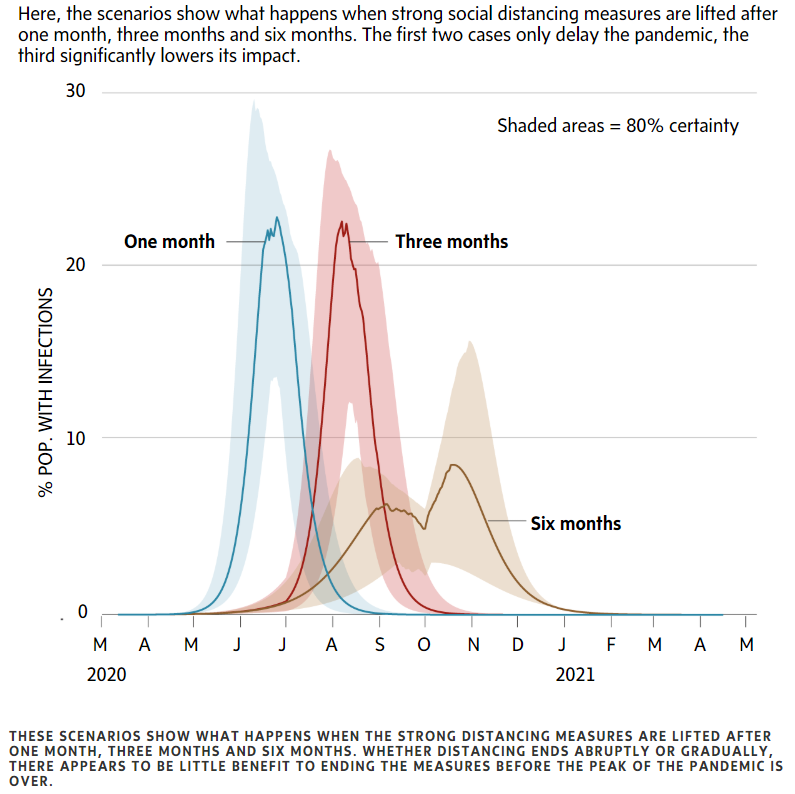
How long with the lock downs last? Hint: X-axis is in months, not weeks.

Brandon Smith at Alt-Market has an article on protecting yourself during what he believes is sure to become a long term pandemic lockdown – How To Protect Yourself From Long Term Pandemic Lockdown. Certainly he is not the only person to express that this will not be over in just a couple of weeks, and there is much to back him up.

It has been only two weeks since widespread pandemic lockdowns were implemented in the US and as expected the public is not handling the idea very well. Within one week there were already frantic demands for the economy to reopen by Easter (spurred on by Donald Trump), and mass delusions have developed that this is still going to happen despite the fact that lockdown guidelines have been extended to at least April 30th. People desperately want to believe that this will all be over in a matter of weeks.

Many governments continue to perpetuate this fantasy by using very carefully worded terminology. For example, the phrase “two weeks of hell” is being consistently repeated by the media after Trump uttered the notion a few days ago. In Italy, a Milan official sees lockdowns now continuing for 2-3 more weeks. In Spain, the public was left with the impression that two solid weeks of quarantine and lockdowns would help stave off infections, yet the government extended the restrictions for…yes, you guessed it…another two weeks.

Why are these announcements always in two week intervals? I suspect it is because this the maximum amount of days before the average person begins to register the passage of time in their minds in a new situation. After two to three weeks of going without certain comforts and habits, people tend to adapt and find different ways of doing things. And, after two to three weeks of crisis, they might wake up and recognize the situation is not going to get better…

Are we just supposed to sit back and become slaves, dependent and clamoring for a meager UBI check every month?  I think not.

So, the question is, what can we do about it? As I have been saying for well over a decade, the solution is to decouple from the system and build our own. But what does this mean specifically?

Step 1: Start Providing Your Own Essentials

Essentials include water, food, shelter and security. Without these four things no human can live for very long. If a person can provide these things for himself, then he will never be beholden to anyone, including a domineering government.

I suggest starting small and expanding. Build a water collection source, or drill a well if you own property. Turn your yard into a garden, even if you live in the suburbs. In fact, your entire neighborhood should be growing gardens right now, and anyone who tries to tell you otherwise should be dissuaded from their attempts to control what you do on your own property. This means establishing neighborhood security and no longer relying on local law enforcement.

It’s one thing to store essentials in case of emergency, it’s another to become a producer and ensure your survival for the long term.

Step 2: Organize For Mutual Aid And Defense

Each neighborhood or town should be working together for security as the system continues to collapse, which means establishing radio communications and small patrols to ward off looters. In New York alone, major crimes are up 12% as the lockdowns ramped up.  In many municipalities in the US, law enforcement is not responding to most calls involving assaults, break-ins and robberies.  Organization at this time is paramount; the more organized you are the more of a deterrent you represent to people who would seek to take what you have. Most predators are cowards; when given the choice between a strong target and a weak target, they will invariably choose the weak target.

The common argument against organization is that the “nail that sticks up will be hammered down”. I would remind people that the nails that are willingly hammered down will be stepped on forever. Nobody wants to step on a nail that sticks up. That hurts.

Predators, including predatory and totalitarian governments are, at bottom, weaklings. And their weakness will become apparent the moment they face an opponent that actually refuses to back down due to fear.

Step 3: Establish Barter Markets And Black Markets

As noted in previous articles, the primary goal behind this pandemic is to use it as a rationale for controlling all commerce. If you do not have the proper “green code” from the government indicating you are “free from infection”, then you are not allowed to participate in the economy. No job, no grocery stores, no public gatherings, etc. This is happening right now in places like China and South Korea and according to elitists like Bill Gates and others it is coming to the US soon, make no mistake.

The only way to counter such control is to not need the mainstream system at all. Localized barter markets need to be established, and if they outlaw those, then you need to set up black markets. Trade and production must continue or humanity as we know it will die. It will be replaced with a centralized socialist hive system that will crush all liberty, and this is unacceptable. Localization is the key to our survival.

This means that the public must make and active effort to save themselves through their own innovation instead of waiting around for government to save the day…(continues)

Click here to read the entire article at Alt-Market.

TIWIKB: Lessons Learned in the Time of Coronavirus

Lessons Learned in the Time of Coronavirus comes from the Things I Wish I Knew Before blog. The article relates some lessons learned in the earlier phase of the pandemic growth in the US.

I’m home with my family this morning, following guidelines for self-isolation and social distancing. It is so surreal, but here are the actionable items that I’ve learned so far from living in the time of coronavirus. Most of us will survive the coronavirus, and this is why these learnings are important to me.

Photo credit: forbes.com

#1 Respond at the first hint of trouble, not at panic time

Determining what constitutes as “the first hint of trouble” is open to debate, but I will say that I responded somewhere in the middle between “the first hint of trouble” and “panic time.”

I went to Costco two weeks ago and decided to purchase some stocking supplies. It was more crowded than usual and I could see a number of carts filled with an irregular amount of certain supplies. However, it was still a manageable crowd. I should have thought of precautionary preparation when the first case of coronavirus was diagnosed, rather than when I actually did. After all, there’s no downside to acting earlier.

A few days ago, I went back to Costco for some allergy medicine and it was panic time. The parking lot was almost full before the store even opened. The allergy medicine I wanted was out of stock, as were all of the panic items (paper towels, toilet paper, rice, pasta, disinfecting wipes, rubbing alcohol). Shoppers were elbow to elbow (great for our minimum 6ft social distancing requirement) and I am now hearing online reports from our neighbors of the continual crowds at all the local grocery stores.

#2 Always have 3 months worth on hand

Why 3 months worth? Well, I’m not sure that’s the correct number, but basically you want to be self-sufficient for some period in the event that you become isolated (due to say coronavirus, store closures, insufficient stock, or a major disaster renders everything unavailable to you except for your home (don’t forget to pack your emergency bag for when your home isn’t an option either).

Here’s what I should have had 3 months worth of:

  • Food (that we would actually eat – not random cheap stuff for emergencies)
  • Household supplies (paper products, cleaning, and disinfecting supplies)
  • Toiletries (soap, shampoo, toothpaste, etc.)
  • Medications (common OTC items like cold and allergy medicines and prescriptions)
  • Protection supplies (disposable gloves, garbage bags, plastic bags, N95 masks, face masks )

I wasn’t able to get some of these items during the current panic time. What I should have done is just gradually amassed 3 months worth of the above items like a regular consumer in the months/years prior and thereafter, just replenish stress-free any items that dipped below the 3-month threshold.

If you don’t have enough room where you live, stockpile whatever amount is realistically maintainable in your available space. If organized purchasing is not your strong suit, use an inventory list – there are many online options to help…(continues)

Keep reading at Things I Wish I Knew Before by clicking here.

Off Grid Ham: Everything But the Ham (Non-Amateur Radios)

Chris Warren at Off Grid Ham has another good article up, this one describing the various radio services apart from ham radio which are available for use and their advantages and disadvantages – Everything But the Ham.

It’s about ham-less options.

I’m going to assume that everyone who reads this blog is either a currently licensed ham, or at least vaguely interested in becoming one. With that kind of a demographic, why should I even entertain the idea of covering non-ham radio communications? Well, it’s all about having options. Furthermore, there are some pretty good reasons why even licensed hams might want to consider other services. unlicensed radio communications

The king of communications. unlicensed radio communications

For non-commercial personal communications without reliance on a network or a grid, amateur radio isn’t just at the top of the pyramid, it’s about 95% of the entire pyramid. Without ham radio, your choices are very limited, but they’re not zero. What about that other five percent? Maybe you’re not a ham and don’t want to become one. Maybe you are a ham and want to expand your capabilities. What is out there? What is possible?

The good news is that there are several choices for non-ham communications. All of them are inexpensive and relatively easy to deploy. None of these options will allow you to communicate over long distances.

Multi-Use Radio Service (MURS).

MURS operates on five FM channels in the VHF band around 151 mHz. No license is required. Two watts is the maximum transmit power. The antenna cannot exceed 60 feet above ground or 20 feet above the structure on which it is mounted (whichever is higher). Non-voice communications such as motion sensors and security systems also use MURS. With only five channels, there is a possibility of competition for limited band space.

There’s one more hangup: MURS used to be part of the VHF business band. Commercial business licensees assigned to MURS frequencies were grandfathered in, meaning, they can still use the band even though their equipment may far exceed MURS technical requirements. Grandfathered business users have priority use over unlicensed MURS stations.

MURS-specific radios tend to be more expensive than those in other services. Many radios intended for licensed amateurs will operate on MURS frequencies. This is legal, but be sure to observe transmitter wattage restrictions as most amateur equipment by default exceeds two watts unless manually set to a lower power. unlicensed radio communications

General Mobile Radio Service (GMRS).

unlicensed radio communications

STOCK PHOTO

GMRS operates on thirty FM channels between 462 and 467 mHz. You will need a license in the USA; it costs $70 and is valid for ten years. GMRS shares 22 channels with the Family Radio Service (FRS). GMRS allows a maximum transmitter output of 50 watts, except for channels 8-14 where the limit is one-half (0.5) watt. Operators may use repeaters with GMRS if the input and output frequencies conform to established splits. Frequencies in between channels 1-7 may be used for simplex communications, but are limited to five watts. On interstitial frequencies between channels 8-14, simplex is also allowed but the transmit power limit is still 0.5 watts. unlicensed radio communications

True GMRS equipment can be costly. Be aware that manufacturers often market FRS radios as “GMRS radios”. This is technically true since the two services share frequencies, but read the fine print and know you are really buying. FRS radios are generally inexpensive and therefore poorly made.

Family Radio Service (FRS). unlicensed radio communications…(continues)

Click here to read the entire article at Off Grid Ham.

Rainier Redoubt: Prepare For At Least Six More Months of Social Distancing

As the virus spread has appeared to slow in Washington state, it’s easy to begin thinking that things may return to normal soon. Here’s Rainier Redoubt talking about why that may not be so, Prepare For At Least Six More Months of Social Distancing and Stay-At-Home Orders.

On March 24, 2020 we asked the question COVID-19, When Will It End? In this blog post we suggested that it pays to start planning for strong social distancing for at least the next six months.

On April 2, 2020 Washington State Governor Jay Inslee extended end date of the state’s “stay-at-home” order from April 6th to May 4th.

On April 6, 2020 the Govenor and the state Superintendent of Public Instruction, Chris Reykdal, announced that both public and private schools in Washington would remain closed for the remainder of the school year. The school year in Washington normally ends in mid-June, so this adds an additional six weeks of school closuers beyond the current end date for the state’s stay-at-home order.

As of April 6, 2020 there were 1,346,299 confirmed cases of COVID-19 world-wide, with at least 368,000 of those cases being in the United States. State and Federal governments must weigh the risks of the spread of the COVID-19 virus and perhaps a million deaths, against a complete collapse of the economy with millions of people out of work and small businesses never being able to recover from the financial loss.

The government must decide at what point it is medically safe to allow businesses to reopen and to lift restrictions on social distancing. Even if the government removes these restrictions prior to October 2020, we still strongly recommend caution in your social interactions through at least the end of the year.

COVID-19 is not going to just suddenly disappear. Until an effective vaccine and treatment are developed and distributed there will be a significant health risk from the virus.

In the absence of a vaccine, cure, or massive testing and quarantine, lockdowns and stay-at-home orders will need to last for months. However, the US faces a unique challenge because only half the states have adopted aggressive intervention, and done so at varying times. Even if these states achieve control or containment, they may be vulnerable to contagion from other states that were late to do so. (SSRN)
According to an article in Business Insider, Ultimately, experts say that social-distancing measures will be necessary until we have a vaccine, and that’s 12 to 18 months. But that doesn’t necessarily mean we’re all in our homes for 18 months, it means maybe we’re avoiding public gatherings for that amount of time or limiting the amount of travel internationally, but it’s not necessarily as restrictive as what we’re seeing now.

Click here to read the entire article at Rainier Redoubt.

See also The Organic Prepper – We Won’t Be Getting “Back to Normal.” Not Soon. Not Ever.

Mint Press: The Attack on Civil Liberties in the Age of COVID-19

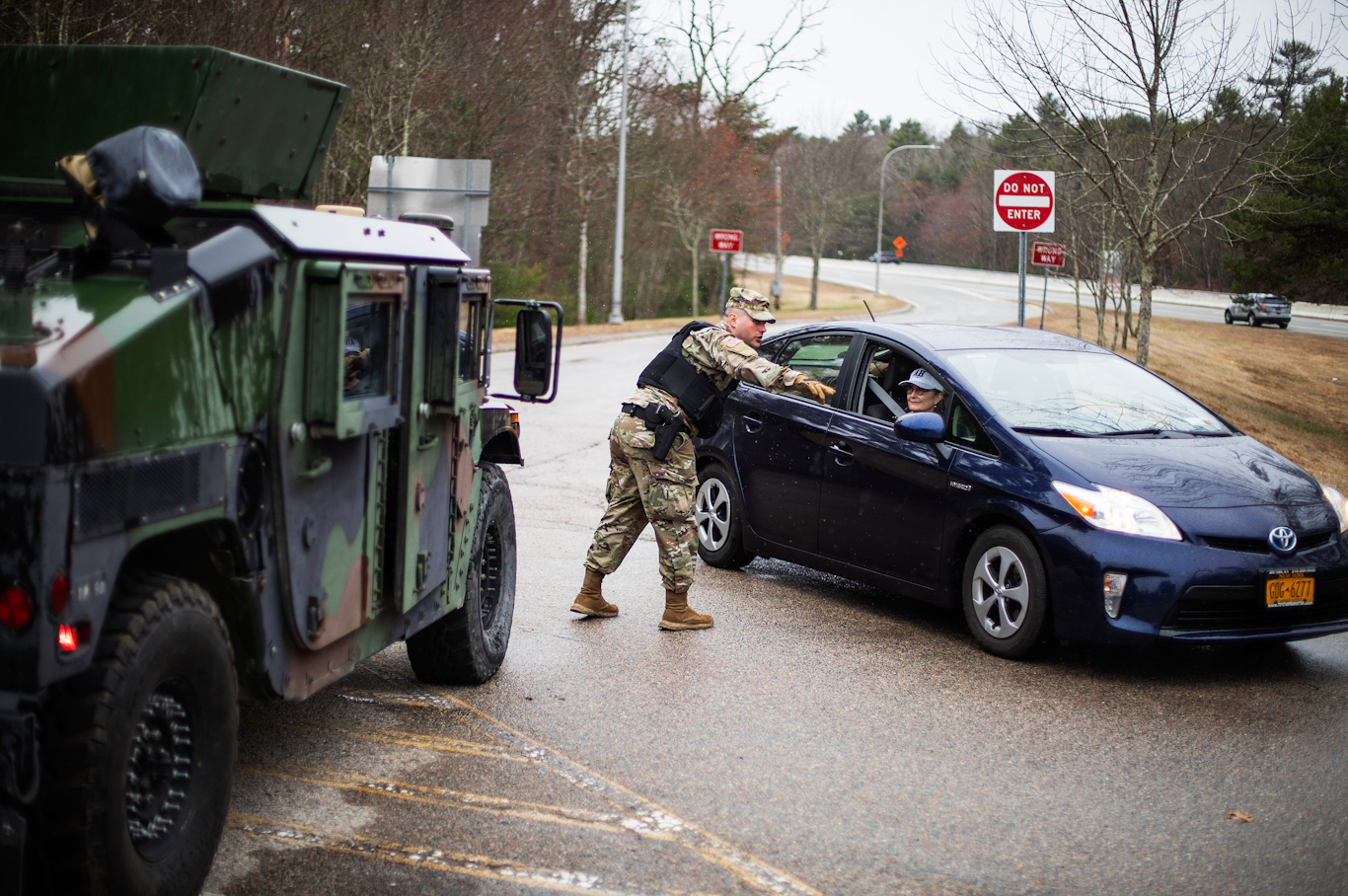
Rhode Island National Guard Military Police direct a motorist with New York license plates to a checkpoint, March 28, 2020, David Goldman | AP

Constitutional attorney John Whitehead writes about The Attack on Civil Liberties in the Age of COVID-19 at Mint Press. It is important to reflect upon whether the government is taking actions for which it has the authorized power in perilous times like these. There have been many calls on the federal government to take actions for which it has no Constitutionally delegated authority – like national quarantines. State governments have more power, but still limited by their own constitutions – a reason why Washington State, for example, recently passed a constitutional amendment to provide for broader emergency powers. That being said, during this pandemic, some people have taken the absurd approach that if the government is requiring you to do something, and you believe that requirement is unconstitutional, then you it is your duty to do the opposite. For example, because you believe that a statewide stay at home order is an unconstitutional exercise of power, you may deliberately gather with others to protest. This is akin to shooting yourself in the head because the government makes suicide illegal. Just because a particular exercise of power is not constitutionally sound, the underlying requirement may still be the wise course for people to take, and indeed may be your duty as a responsible citizen to take. Protest the illegality, but not by getting people killed.

You can always count on the government to take advantage of a crisis, legitimate or manufactured.

This coronavirus pandemic is no exception.

Not only are the federal and state governments unraveling the constitutional fabric of the nation with lockdown mandates that are sending the economy into a tailspin and wreaking havoc with our liberties, but they are also rendering the citizenry fully dependent on the government for financial handouts, medical intervention, protection and sustenance.

Unless we find some way to rein in the government’s power grabs, the fall-out will be epic.

Everything I have warned about for years—government overreach, invasive surveillance, martial law, abuse of powers, militarized police, weaponized technology used to track and control the citizenry, and so on—has coalesced into this present moment.

The government’s shameless exploitation of past national emergencies for its own nefarious purposes pales in comparison to what is presently unfolding.

Deploying the same strategy it used with 9/11 to acquire greater powers under the USA Patriot Act, the police state—a.k.a. the shadow government, a.k.a. the Deep State—has been anticipating this moment for years, quietly assembling a wish list of lockdown powers that could be trotted out and approved at a moment’s notice.

It should surprise no one, then, that the Trump Administration has asked Congress to allow it to suspend parts of the Constitution whenever it deems it necessary during this coronavirus pandemic and “other” emergencies.

It’s that “other” emergencies part that should particularly give you pause, if not spur you to immediate action (by action, I mean a loud and vocal, apolitical, nonpartisan outcry and sustained, apolitical, nonpartisan resistance).

In fact, the Department of Justice (DOJ) has been quietly trotting out and testing a long laundry list of terrifying powers that override the Constitution.

We’re talking about lockdown powers (at both the federal and state level): the ability to suspend the Constitution, indefinitely detain American citizens, bypass the courts, quarantine whole communities or segments of the population, override the First Amendment by outlawing religious gatherings and assemblies of more than a few people, shut down entire industries and manipulate the economy, muzzle dissidents, “stop and seize any plane, train or automobile to stymie the spread of contagious disease,” reshape financial markets, create a digital currency (and thus further restrict the use of cash), determine who should live or die…

Click here to read the entire article at Mint Press.

See also Aesop of Raconteur Report’s response to claims of never ending government tyranny related to Covid.

…”Objection: Assumes facts not in evidence, i.e. that a temporary quarantine will become a decades-long boondoggle.

Reductio ad absurdum Fallacy, 20 yard penalty and loss of possession.

And I observe FTR that people crying about something that’s not yet three weeks old as though it will go on endlessly are children who were never spanked, sent to bed without their supper, or told to wait for any form of gratification…(continues)

American Partisan: Frequencies For Monitoring When The World Goes Dark

From NC Scout at American Partisan – Frequencies For Monitoring When The World Goes Dark some information and links on what radio frequencies to monitor when something really big happens and normal communications go down.

Frequencies For Monitoring When The World Goes Dark

NCS,

What are the frequencies for FEMA to do informational broadcasts when the internet/cells go down?

Just a what if. – A Reader

That’s a good question. There’s a ton of crap floating around on the net right now, making it nearly impossible for the average person to sift through what’s real and what’s straight BS. But with that said, one of the main ones is the ‘looming‘ shutdown of the internet and cell phone service. I don’t know how much validity that actually has, but it underscores the ability to communicate and spread information through decentralized means- which is why I’ve taught communications skills in far greater depth and breadth than anyone else ever offered civilians, combining combat experience with practical end skills.

So with that said, go check out my first post on the topic, listing frequencies of interest and the second post, listing foreign military HF frequencies. And with that said, do not overlook the very vital role the American Red Cross will play, especially when it comes to HF message traffic.

HF
KNNP491
WQJI233
2326.0
2463.0
2726.0
2801.0
3170.0
3201.0
5135.0
5140.0
6858.0
7480.0
7549.0
7697.0
7932.0
7935.0

VHF Low Band 
KA3699
KGB223
WQEF834
47.4200
47.5000

VHF/UHF 
KB84508
KNJR836
WPEQ240
WPME641
WQHH921
WQMD985
WQXM300
27.4900
35.0400
43.0400
151.5050
151.5125
151.6250
151.7000
151.7600
154.5275
158.4000
158.4075
451.8000 / 456.8000
451.8125 / 456.8125
453.4250 / 458.4250
453.4750 / 458.4750
453.5250 / 458.5250
462.7625
462.7875
464.5000 / 469.5000
464.5500 / 469.5500
464.6000 / 469.6000
464.6250 / 469.6250
464.6500 / 469.6500
464.7000 / 469.7000
464.7250 / 469.7250
464.7500 / 469.7500
466.3125
467.9125

The VHF / UHF frequencies can be monitored with a Baofeng, but for the rest you’ll need HF gear. Check out this post if you need a primer to get that squared away.

Doom and Bloom: Fever

The Altons at Doom and Bloom Medical have an article up on fever – what is it? Why does it happen? What should you do about it?

  • COVID-19 is running rampant throughout the globe. Contagious and sometimes deadly, it’s likely to cause severe illness in millions and ruin economies before it’s done.

    You probably know the classic symptoms: Fever (also known as “pyrexia“) occurs in 88 percent of cases, followed by a dry cough. One in five or six go on to develop pneumonia. Of these, a percentage will succumb to the disease. You should know about these symptoms and others associated with COVID-19 and other infections. Today we’ll discuss fevers.

    Why do we get fevers when we’re sick? There seems to be a body of evidence that suggests a higher body temperature kills many viruses and bacteria that do just fine at a normal temperature (98.6 degrees Fahrenheit). Fever is a weapon against disease-causing organisms.

    What constitutes a fever? An elevated body temperature, of course, but how high? In medical school, I learned that it wasn’t a fever until you hit about 100.4 degrees Fahrenheit. This equals 38 degrees Celsius. In older people, the immune system is often too weak to mount that high a temperature. Any elderly person at 99.6 or so should be considered as “febrile” (having a fever).

    Your temperature is a fluid statistic, however. In the morning, it is lower than it is in the late afternoon or evening, sometimes by a degree or more. The temperature also varies dependent on the method used to measure it.

    Old-style glass thermometer

    In the past, people used mercury thermometers. These were made of glass and required no battery, a useful item long-term off the grid. Unfortunately, they could break, causing cuts and dispersing mercury (a toxic substance).

    Today’s thermometers are electronic and non-toxic. There are various types on the market that use the mouth, armpit, rectum, ear, and forehead. Compared to the standard normal oral temperature of 98.6 degrees, you can expect:

    • A normal armpit reading to be one half to one degree lower (97.6)
    • A normal rectal temperature to be one half to one degree higher (99.6)
    • A normal temperature using an ear thermometer to be one half to one degree higher (99.6)
    • A normal forehead scanner (such as those used in many airports) temperature to be one half to one degree lower (97.6)

    So, if a person’s temperature is 100.4 F orally, it could be 99.4 in the armpit or forehead and 101.4 in the rectum or ear. Rectal temps are thought to be most accurate, while armpit temperatures are thought to be least accurate.

    Note: An oral thermometer reading may be inaccurate if you ate or drank something recently. A precise value may not be obtainable for 15-30 minutes afterwards.

    The ability to use the thermometer properly is an important factor. This isn’t difficult for adults that read the instructions, but a fussy, sick toddler may not cooperate. In this case, a rectal temperature reading may be the most accurate.

    Many use the ear thermometer. This is also known as a tympanic thermometer, named after the tympanic membrane or “eardrum”. Tympanic temperature readings average about the same as rectal. To be accurate, take the temperature in both ears and use the highest reading. The reading may be artificially elevated if you have been laying on your side with your ear on a pillow. As well, it’s said that those with a very short, curved ear canal may not have reliable results. This is a tough one to tell unless you ask your doctor to take a look during an exam.

    “Forehead” thermometers actually scan the temperature of the temporal artery. This item is superior to forehead strips, which are better at measuring skin temperature than body temperature. Be aware that they can be expensive.

    Here’s advice from Seattle Children’s hospital on how to properly use each type of thermometer…

Click here to read the entire article at Doom and Bloom.

NY Times: Official Counts Understate the US Coronavirus Death Toll

From the New York Times, Official Counts Understate the US Coronavirus Death Toll

A coroner in Indiana wanted to know if the coronavirus had killed a man in early March, but said that her health department denied a test. Paramedics in New York City say that many patients who died at home were never tested for the coronavirus, even if they showed telltale signs of infection.

In Virginia, a funeral director prepared the remains of three people after health workers cautioned her that they each had tested positive for the coronavirus. But only one of the three had the virus noted on the death certificate.

Across the United States, even as coronavirus deaths are being recorded in terrifying numbers — many hundreds each day — the true death toll is likely much higher.

More than 9,400 people with the coronavirus have been reported to have died in this country as of this weekend, but hospital officials, doctors, public health experts and medical examiners say that official counts have failed to capture the true number of Americans dying in this pandemic. The undercount is a result of inconsistent protocols, limited resources and a patchwork of decision making from one state or county to the next.

In many rural areas, coroners say they don’t have the tests they need to detect the disease. Doctors now believe that some deaths in February and early March, before the coronavirus reached epidemic levels in the United States, were likely misidentified as influenza or only described as pneumonia.

With no uniform system for reporting coronavirus-related deaths in the United States, and a continued shortage of tests, some states and counties have improvised, obfuscated and, at times, backtracked in counting the dead.

“We definitely think there are deaths that we have not accounted for,” said Jennifer Nuzzo, a senior scholar at the Johns Hopkins University Center for Health Security, which studies global health threats and is closely tracking the coronavirus pandemic.

Late last week, the Centers for Disease Control and Prevention issued new guidance for how to certify coronavirus deaths, underscoring the need for uniformity and reinforcing the sense by health care workers and others that deaths have not been consistently tracked. In its guidance, the C.D.C. instructed officials to report deaths where the patient has tested positive or, in an absence of testing, “if the circumstances are compelling within a reasonable degree of certainty.”…

Click here to read the entire article at NY Times.

Medium: What Everyone’s Getting Wrong About the Toilet Paper Shortage

Will Oremus has written an article at Medium.com on What Everyone’s Getting Wrong About the Toilet Paper Shortage, pointing out that it has little to do with so-called hoarding. The fact is that people actually are using more toilet paper at home. There are similar problems with dairy products. With everyone staying at home and mostly eating at home, consumption of milk, butter, eggs, etc. is higher at home, now.

round the world, in countries afflicted with the coronavirus, stores are sold out of toilet paper. There have been shortages in Hong Kong, Australia, the United Kingdom, and the United States. And we all know who to blame: hoarders and panic-buyers.

Well, not so fast.

Story after story explains the toilet paper outages as a sort of fluke of consumer irrationality. Unlike hand sanitizer, N95 masks, or hospital ventilators, they note, toilet paper serves no special function in a pandemic. Toilet paper manufacturers are cranking out the same supply as always. And it’s not like people are using the bathroom more often, right?

U.S. Health Secretary Alex Azar summed up the paradox in a March 13 New York Times story: “Toilet paper is not an effective way to prevent getting the coronavirus, but they’re selling out.” The president of a paper manufacturer offered the consensus explanation: “You are not using more of it. You are just filling up your closet with it.”

Faced with this mystifying phenomenon, media outlets have turned to psychologists to explain why people are cramming their shelves with a household good that has nothing to do with the pandemic. Read the coverage and you’ll encounter all sorts of fascinating concepts, from “zero risk bias” to “anticipatory anxiety.” It’s “driven by fear” and a “herd mentality,” the BBC scolded. The libertarian Mises Institute took the opportunity to blame anti-gouging laws. The Atlantic published a short documentary harking back to the great toilet paper scare of 1973, which was driven by misinformation.

Most outlets agreed that the spike in demand would be short-lived, subsiding as soon as the hoarders were satiated.

No doubt there’s been some panic-buying, particularly once photos of empty store shelves began circulating on social media. There have also been a handful of documented cases of true hoarding. But you don’t need to assume that most consumers are greedy or irrational to understand how coronavirus would spur a surge in demand. And you can stop wondering where in the world people are storing all that Quilted Northern.

There’s another, entirely logical explanation for why stores have run out of toilet paper — one that has gone oddly overlooked in the vast majority of media coverage. It has nothing to do with psychology and everything to do with supply chains. It helps to explain why stores are still having trouble keeping it in stock, weeks after they started limiting how many a customer could purchase.

In short, the toilet paper industry is split into two, largely separate markets: commercial and consumer. The pandemic has shifted the lion’s share of demand to the latter. People actually do need to buy significantly more toilet paper during the pandemic — not because they’re making more trips to the bathroom, but because they’re making more of them at home. With some 75% of the U.S. population under stay-at-home orders, Americans are no longer using the restrooms at their workplace, in schools, at restaurants, at hotels, or in airports.

Georgia-Pacific, a leading toilet paper manufacturer based in Atlanta, estimates that the average household will use 40% more toilet paper than usual if all of its members are staying home around the clock…(continues)

Click here to read the entire article at Medium.com

Here is a video of a dairy farmer of Wagner Farms, talking about dairy item shortages and supply chains.

Organic Prepper: How to Survive Uncertainty About the Future

From Daisy Luther at The Organic Prepper, What Will the Future Bring? Here’s How to Survive the Uncertainty

…Three months ago, we all had dreams, goals for the future, or at least some idea of what the upcoming year would hold for us.

I’ll bet none of us even considered on New Year’s Eve that we’d spend the first half (at least) of the year dealing with a deadly pandemic. Heck, I sat on a balcony in a little seaside village in Montenegro, toasting the new decade with a friend and some Jack Daniels, watching fireworks over the Adriatic Sea, and planning what European destination I’d be heading to next.

It probably never crossed anyone’s mind that there’d be some crazy new virus that nobody had ever heard of which would leave us under the equivalent of house arrest for months. Few of us imagined that suddenly, over the course of just a few weeks, more than ten million Americans would suddenly become unemployed.

Dreams have been shattered.

Goals have been put aside.

Lives have been lost.

Everything has changed.

And nobody knows what the future will hold.

A lot of the things we do know are horrible.

How utterly terrifying to know that we’re all likely to lose somebody we love to this virus or to a medical condition that would have been survivable if the local hospital hadn’t been overflowing with COVID patients.

We know there’s nary a roll of toilet paper to be found in a huge swath of the United States. We know that our supply chain, if not broken, is at the least, badly bruised. We know that if a person we love goes into the hospital with COVID-19, there’s a frighteningly large chance they may never come out again unless it’s in a body bag. We know that medical professionals in New York City don’t even have personal protective equipment to keep themselves healthy while they try to keep people alive. We know that yesterday in the state of New York, 23 people died every hour of the day from the coronavirus that has destroyed the world as we know it.

We nearly all know people who have been laid off. Maybe it’s someone in your family. Maybe it’s you. And if you haven’t yet lost your job, are you waiting for that hammer to drop? We all know of businesses that aren’t going to make it through months of this shutdown.

We know people who couldn’t pay their rent this month. We know people who pulled it together this month but won’t be able to pay May’s rent if this lockdown should continue. We know it’s so bad that the government has said landlords can’t evict tenants in many states – which means the landlords may not be able to pay their mortgages.

We may not know much right now, but we know that the economy is a f*cking disaster.

And we have no idea when this current purgatory will end…

We’d all like to think that one day this will suddenly be over. The kids will return to school. We’ll go back to our offices and our commutes. We won’t be struggling over money anymore. Life will return to the pre-COVID days.

But is this the healthiest way to look at the situation?

Spending all your time looking forward to the day when this is over is an exercise in frustration because nobody knows when that will be. And more than that, nobody knows what “normal” is going to look like when all the lockdowns are over. A lot of things will never be the same.

You can help yourself by learning to adapt now to changed circumstances. This will help you learn to live with the new normal, whatever that turns out to be. Major events are bound to cause major and long-lasting changes. This has happened throughout history.

In reality, the things we’re experiencing right now, while not necessarily easy, aren’t so bad. Things will probably get worse before they get better, but eventually, some form of “better” will come.

Your ability to adapt is indicative of your ability to survive. So let’s get through this lockdown and keep our mindsets positive.  Let’s get through the part that comes next.

Then, eventually, we’ll come out on the other side, ready to tackle the new normal, whatever that ends up being like…(continues)

Click here to read the entire article at The Organic Prepper.

Preparedness Mama: DIY Composting at Home

As long as we’re talking about gardening, let’s talk about composting. Composting is a good way to turn your yard waste, kitchen waste, and even paper waste into delicious, delicious garden food. Here is Preparedness Mama talking DIY Composting at Home

One of the easiest projects that you can do when it comes to gardening is to build a compost pile. It is also one of the most important parts of your garden. A compost pile offers some great benefits for both the soil and your fall cleanup efforts. In today’s article, we are going to go over the ins and outs of how to make a compost pile at home. But first, we will highlight some of the neat benefits of having your own compost pile.

how to build a compost pile at homeWhat Is a Compost Pile?

For individuals who don’t know, a compost pile is simply a pile of leftover organic scraps. These scraps can come from the outdoors, your kitchen, and even leftover animal waste. You might be wondering why anyone would ever want to collect compost, well, compost can provide the nutrients that your soil and plants need. A compost pile also feeds microbes that are beneficial and ensures that it will keep all the resources that are valuable out of the landfills.

As the organic material begins to breaks down, the nutrients and minerals feed the soil and give an overall boost of health to your garden. For gardeners who are looking to add that additional boost in a timely manner, composting is the solution that they seek.

Why You Should Build a Compost Pile

From financial reasons to environmental ones, there are so many reasons why you should learn how to make a compost pile. Let’s take a look at some of the top ones.

Less Waste

One of the best benefits of a compost pile is the significant reduction of waste it provides. When you are cooking or cleaning around the house, you will find that a lot of the items you come across can be composted. By composting, you get the benefit of being environmentally conscious all while putting resources back into the Earth. It is almost like having a mini recycling plant in your own backyard.

You Can Create a Rich Fertilizer

If you are a natural gardener, then you will love the fact that composting can provide you with having a nutritionally rich fertilizer. Having a fertilizer that is rich in minerals and nutrients can help you in having a successful harvest. Whether it be vegetables or flowers, a rich fertilizer can be the difference between a dull garden and a bountiful one.

Composting Can Help You Save Money

Once you learn how to make a compost pile, you will soon feel the financial benefit of it. For starters, if you pay per bag for garbage collection, you will notice that you will be throwing out less. This means more money in your pocket. Not only that but when it comes time to garden, a compost pile can be super helpful in saving you money. You no longer have to spend piles of money on buying fertilizer..

Composting is Good for the Environment

From reducing toxins to helping keep organic matter out of landfills, composting is proven to helping keep the environment clean. When you compost, you help return soil that has been infused with pesticides and other toxins back to a healthy state. Not only that, but composting helps to keep such toxins out of essential resources such as water supplies and other plants too.

Now that you have a general sense of how beneficial composting can be to a community. Let’s dive into the specifics of how to make a compost pile right at home… (continues)

Click here to read the entire article at Preparedness Mama.