Organic Prepper: Timing Is EVERYTHING When the SHTF

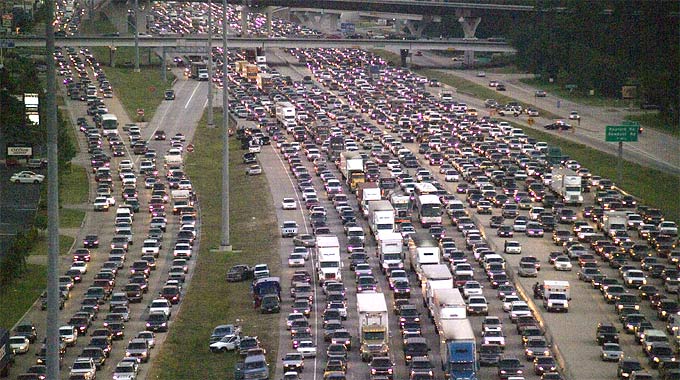
Florida residents bugging out ahead of Hurricane Irma.

Selco Begovic, writing at the Organic Prepper, talks about the importance of timing when the SHTF. Just recently we briefly posted about the immense traffic jam caused when people in Paris tried fleeing ahead of the most recent lockdowns. Just this morning after a work meeting with my boss we briefly segued into the state of the country and that we both considered moving to other countries but weren’t sure which could be considered “better” right now. But we also recognized that you don’t want to wait until it is too late to leave. If/when a government crackdown finally comes, it will probably be too late to leave, so you have to try to read the signs of descent.

Timing or the importance of perfect timing in SHTF can be a matter of life and death.

For a starting point, you need to understand something that I mentioned in previous posts. When SHTF occurs, the situation is fluid – it can change quickly, and you need to recognize those changes so you can react in time, and in the proper way.

The real danger is other people

I like to say that when the SHTF most probably your enemy is not going to be some foreign invaders, UN troops, or people that are very different than you.

It’s very possible your enemy will be the people that today live around you.

What will make them your enemy?

Well, a lot of things. The SHTF itself, the lack of resources, hate, polarization, absence of a system, absence of repercussion for their actions…

But always the main reason will be the lack of resources, and it is something I wrote about a lot in my book. That makes every person your possible enemy.

How does the importance of timing come into play here?

Well, it is on you to time your plans and actions based on the situation around you.

Here are a couple of examples:

  • Are local criminal gangs going to go completely wild and storm your home?
  • Can you feel absolutely free to shoot anyone who is a possible threat to you?
  • When you are bugging out are you gonna run over whoever stands in your way on the road, or are you driving like a law-abiding citizen?

Answers to those questions are quite different based on the time (or timing) when you are answering them. Simply if there is no system still working, everything falls apart. The timing of your action is important. You must understand what the rules are so you can choose how (or how hard) your response will be.

And do not forget, since it will be fluid the difference can be as little as a half-hour of time. Or even minutes.

A law-abiding citizen

Yes, I know, most probably you are a law-abiding citizen.

But, you cannot be a law abiding citizens in a situation where there is no law at all.

So what are you gonna be?

I am not suggesting anything here, but, again, your actions should be different in normal times and world without law and order. I am talking here not about violence, but about your feelings of who owns what when all falls apart.

If you recognize in time that there is simply no system, and there are things that actually suddenly do not “belong” to anyone, you can make good decisions about acquiring things you need. And trust me if you do not make it then, you will make it later. Only later you are not gonna have so many choices or opportunities.

No, I am not talking about stealing from other folks or looting your local mall during a bad weather event or riot.

I am talking about your acts in the first days of an event that is gonna be complete and prolonged world without a regular system of law and order.
Timing there also means that you need to recognize when some things are more important than others…for example, food is more important than some big-screen TV.

Actions on the ground

Timing also means a lot while certain things are happening when SHTF, especially in the very early stages of SHTF.

The early stage is important, because most of the people in that stage are not sure of:

  • what is exactly happening
  • how serious it is
  • how long it is going to last
  • what exactly they should do

You, as a survivalist/prepper, should be ahead of those people and you should know, or at least have an educated guess about the 4 questions above so you can time your actions appropriately.

Looting/scavenging

There is nothing too much philosophical here, and here is one example:

Something happens, and people are looting the mall.

What are you going to do?

Well, the most obvious answer is that you’ll stay at home because it is safest.

But let’s say you need medicines, food, or whatever.

Well if it is a real and serious SHTF, I would say you are gonna go there and “loot.” Only it is technically not looting anymore, because there is no law and order. It is not coming back for a long time or ever. So if you are smart, you’ll go there and stock up with important medicines, or food, or lighter fluid or similar stuff.

The timing is perfect because the answers to all of the above questions are “satisfying” for that. And you as a prepper for sure are not gonna loot stereos and TVs.

Most of the other people gonna be stupid and loot that useless stuff, because they completely missed the understanding of what is going on.

The timing here can be tricky too because you need to check if there are other people who understood how serious the situation is (based on the above questions). If they did, then you might lose your life there looking for food or medicines, simply because a lot of other people could be doing the same.

And do not forget, criminal organised groups WILL eventually figure out what is important, so they will eventually come to control that.

So, the timing is important, but again, the timing of your understanding of the term “law-abiding citizen” here is something that you need to figure out first when something serious happens.

You also need to know when to leave.

I have said before if I had realized what was coming when the SHTF for me, I would have left. But I waited too late. I missed my time.

You must be ready to leave everything (physical) in a split second if that means survival and life.

Learn to operate in terms of “less is more” or in other words, try whenever you can to substitute dependence on things with owning knowledge of a particular skill. For example, owning a big stash of water is great, owning skills and means to purify near water sources is even better.

Be ready to alter your plans – do not value your current plan so much that you are ready to die for it. Have an open and flexible mind so you can recognize that moment when your current plan becomes worthless. Do not act like “my plan (bugging out, or bugging in) is so good that I am ready to die for it.

Timing is everything when the SHTF.

A lot of things and actions in the world of survival are simply words. Those words will have different meanings when SHTF, based on the moment in time and based on when you are taking your actions. You as a prepper need to time your actions according to the events around you, and you need to be ready to kinda bend based on the events unfolding.

The most adaptable will survive.

Tenth Amendment Center: There Is No Anti-Commandeering Doctrine when Local Governments Take on a State

Mike Maharrey at the Tenth Amendment Center discusses legal issues related to trying to apply state sovereignty over federal acts (nullification) down to county and city actions against state power in There is No Anti-Commandeering Doctrine when Local Governments Take on a State

The Tenth Amendment Center’s practical nullification strategy relies on James Madison’s blueprint for taking on federal power. Madison advised that “a refusal to cooperate with officers of the union” would create impediments and obstructions to federal acts.

The Supreme Court’s long-standing anti-commandeering doctrine supports this nullification strategy. In a nutshell, this legal doctrine prohibits the federal government from “commandeering” state and local personnel or resources for federal purposes.

In effect, the federal government cannot force state or local governments to cooperate in the enforcement of federal laws or the implementation of federal programs. With the Supreme Court affirming this doctrine in five major cases dating back to 1842, the feds are legally powerless in the face of state noncooperation.

A lot of people want to apply this anti-commandeering strategy to state governments as well. The idea would be for a county or local government to simply refuse to enforce a state law. Activists have specifically pushed this strategy to block enforcement of state gun control laws. But local non-cooperation with state laws poses significant problems from a legal standpoint because the relationship between a city or county and a state is much different than the relationship between a state and the federal government.

By their action, the states created the federal government. Even though they make up part of the union, each state remains a sovereign political society. The states delegated some powers to the federal government and within its constitutional authority, the federal government enjoys supremacy. But outside of the federal government’s delegated authority, the states maintain their fundamental independence. In Federalist #32, Alexander Hamilton explained that under the new Constitution, the states would retain their sovereignty and independence, and would only be subject to the general government in those areas where power was specifically delegated to it.

“An entire consolidation of the States into one complete national sovereignty would imply an entire subordination of the parts; and whatever powers might remain in them, would be altogether dependent on the general will. But the plan of the convention aims only at a partial union or consolidation, the State governments would clearly retain all rights of sovereignty which they before had, and which were not, by that act, exclusively delegated to the United States.”

State governments and their local governments have a fundamentally different relationship. Cities and counties are “political subdivisions” of the state. They possess virtually no autonomy unless their state legislatures give it to them. And what the legislature can give, the legislature can take away. In fact, cities and counties exist at the will of the state government. The state legislature can change their borders, split them up, or even dissolve them completely. As a result, counties and cities have a legal obligation to follow the directives of the state government.

From a legal standpoint, no anti-commandeering doctrine exists for cities or counties. They cannot legally refuse to cooperate with state dictates. The state government can commandeer local personnel and resources for state purposes because cities and counties only exist as extensions of the state.

There are some exceptions to this rule. Some states, including Illinois, extend local governments “home rule” privileges, granting them some autonomy. But even in these states, the legislature can override home rule.

In practice, local governments can still refuse to enforce state laws or implement state programs. But unlike states that refuse to cooperate with the federal government, local governments can be punished by the state for their noncooperation. The state legislature can legally cut funding to local governments that refuse to enforce a state law. They even have the power to remove local officials from office or perhaps subject them to criminal penalties.

This makes local non-cooperation with a state government a very difficult strategy to carry out. It could prove successful if enough local entities ban together. But without the anti-commandeering legal doctrine to shield them, it’s much easier for a state to force local and county compliance. The states have legal cover when they refuse to cooperate with the federal government. Local governments enjoy no such legal shield against the state.

From a strategic standpoint, activists should be wary of trying to employ a strategy created for states to use against the feds as a tool for local governments to take on a state. It could be effective if enough local entities work together and create enough political pressure to dissuade the state from cracking down. But you need to be aware that local governments and their employees enjoy virtually no legal protection and the state has significant latitude in how it deals with an uncooperative local entity.

Doom and Bloom: Asthma in Survival

The Altons at Doom and Medical have an article about Asthma in Survival.

Asthma is a chronic condition that limits your ability to breathe. It affects the tubes that transport air to your lungs, collectively known as the “airways”. Asthma affects 20 million Americans and is the most common cause of chronic illness in children. Off the grid, increased stress and exposure to new substances will only makes things worse. The family medic must know how to recognize and treat symptoms with limited supplies.

When people with asthma are exposed to a substance to which they are allergic (an “allergen”), airways become swollen, constricted, and filled with mucus. As a result, air can’t pass through to reach the part of the lungs that absorbs oxygen (the “alveoli”).

During an episode of asthma, you will develop shortness of breath, tightness in your chest, and start to wheeze and cough. This is referred to as an “asthma attack”. In rare situations, the airways can become so constricted that a person could suffocate from lack of air.

Here are common allergens that trigger an asthmatic attack:

  • Pet or wild animal dander
  • Dust or the excrement of dust mites
  • Mold and mildew
  • Smoke
  • Pollen
  • Severe stress
  • Pollutants in the air
  • Some medicines
  • Exercise

Yes, you can trigger an asthmatic attack with exercise. This doesn’t mean you shouldn’t stay in shape. Exercise strengthens lungs, which helps improve asthma control.

There are many other myths associated with asthma; the below are just some:

Asthma is contagious. (False)

You will grow out of it. (False; it might become dormant for a time but you are always at risk for it re-emerging.)

It’s all in your mind. (False; although may trigger it, it’s very real.)

If you move to a new area, your asthma will go away. (False; it may go away for a while, but eventually you will become sensitized to something else and it will likely return.)

Asthma should only be treated when an episode occurs. (False; asthma is best treated with constant medication to reduce frequency and severity of attacks. Encourage your asthmatic group members to stockpile meds.)

You will become addicted to your asthma meds. (False; inhalers and oral asthma drugs aren’t addictive. It’s safe to use them on a regular basis.)

Here’s are two “true” myths: Asthma is, indeed, hereditary. If both parents have asthma, you have a 70% chance of developing it compared to only 6% if neither parent has it. Also, asthma does have the potential to be fatal, especially if you are over 65 years old.

(Note: In the 1980s, I treated a pregnant patient who had the worse type of asthma attack, called “status asthmaticus.” Once she improved somewhat, she insisted on going home against my advice  to care for her other children. She returned that night in an irreversible state of oxygen loss. Both mother and baby perished.)

PHYSICAL SIGNS AND SYMPTOMS OF ASTHMA

Asthmatic symptoms may be different from attack to attack and from individual to individual. Some of the symptoms are also seen in heart conditions and other respiratory illnesses, so it’s important to make the right diagnosis. Symptoms may include:

  • Cough
  • Shortness of Breath
  • Wheezing (usually of sudden onset)
  • Chest tightness (sometimes confused with coronary artery spasms/heart attack)
  • Rapid pulse rate and respiration rate
  • Anxiety

Besides these main symptoms, there are others that are signals of a life-threatening episode. If you notice that your patient has become “cyanotic”, they are in trouble. Someone with cyanosis will have a blue/gray color to their lips, fingertips, and face.

Cyanosis

You might also notice that it takes longer for an asthmatic to exhale than to inhale. As an asthma attack worsens, wheezing may take on a higher pitch. As the attack worsens, the patient suffers a lack of oxygen that makes them confused and drowsy; they may possibly lose consciousness.

Asthma vs Heart Attack

As an asthma attack may resemble a heart attack, the medic should know how to tell the difference. For Asthma is usually improved by using fast-acting inhalers, a strategy that doesn’t offer relief from a heart attack or other cardiac events. Cardiac patients often have swelling of the lower legs, also called “edema.” This is rarely seen with asthma. Asthmatic also don’t have arm and jaw pain that is often seen with heart attacks. Those with a history of cardiac chest pain improve with the angina drug nitroglycerin.

Although both may be associated with shortness of breath, few will confuse the symptoms of COVID-19 with asthma, but suffice it to say that COVID-19 is associated with fever and loss of taste or smell.

DIAGNOSING ASTHMA

On physical exam, use your stethoscope to listen to the lungs on both sides. Make sure that you listen closely to the bottom, middle, and top lung areas as described in the section on physical exams.

In a mild asthmatic attack, you will hear relatively loud, musical noises when the patient breathes. As the asthma worsens, less air is passing through the airways and the pitch of the wheezes will be higher and perhaps not as loud. If no air is passing through, you will hear nothing, not even when you ask the patient to inhale forcibly. This person may become cyanotic.

typical peak flow meter

Sometimes a person might become so anxious (a “panic attack”) that they become short of breath and may think they are having an asthma attack. To resolve this question, you can measure how open the airways are with a simple diagnostic instrument known as a peak flow meter. A peak flow meter measures the ability of your lungs to expel air, a major problem for an asthmatic. It can help you identify if a patient’s cough is part of an asthma attack or whether they are, instead, having a panic attack or other issue.

To determine what is normal for a member of your group, you should first document a peak flow measurement when they are feeling well. Have your patient purse their lips over the mouthpiece of the peak flow meter and forcefully exhale into it. Now you know their baseline measurement. If they develop shortness of breath, have them blow into it again and compare readings.

In moderate asthma, peak flow will be reduced 20-40%. Greater than 50% is a sign of a severe episode. In a non-asthma related cough or upper respiratory infection, peak flow measurements will be close to normal. The same goes for a panic attack; even though you may feel short of breath, your peak flow measurement is still about normal.

TREATMENT OF ASTHMA

Asthma bronchodilator in inhaler

The cornerstones of asthma treatment are the avoidance of “trigger” allergens, as mentioned previously, and the maintenance of open airways. Medications come in one of two forms: drugs that give quick relief from an attack and drugs that control the frequency of asthmatic episodes over time. In panic attacks, however, these medicines are ineffective; treatment for anxiety is discussed elsewhere in this book.

Quick relief asthma drugs include “bronchodilators” that open airways, such as Albuterol (Ventolin, Proventil), levalbuterol (Xopenex HFA), among others. These drugs should open airways in a very short period of time and give significant relief. These drugs are sometimes useful for people going into a situation where they know they will exposed to a trigger, such as before strenuous exercise. Don’t be surprised if you notice a rapid heart rate on these medications; it’s a common side effect.

If you find yourself using quick-relief asthmatic medications more than twice a week, you are a candidate for daily control therapy. These drugs work, when taken daily, to decrease the number of episodes and are usually some form of inhaled steroid. There are long-acting bronchodilators as well, such as ipratropium bromide (Atrovent HFA). Another family of drugs known as Leukotriene modifiers prevents airway swelling before an asthma attack even begins. These are usually in pill form and may make sense for storage purposes. The most popular is Montelukast (Singulair).

Often, medications will be used in combination, and you might find multiple medications in the same inhaler. The U.S. pharmaceutical Advair, for example, contains both a steroid and an airway dilator. Remember that inhalers lose potency over time. Expired inhalers, unlike many drugs in pill or capsule form, have less effect than fresh ones. Physicians are usually sympathetic to requests for extra prescriptions from their asthmatic patients.

NATURAL TREATMENT OF ASTHMA

Ginger

In mild to moderate cases of asthma, you might consider the use of natural remedies. Some involve breathing exercises:

Pursed-lip breathing: This slows your breathing and helps your lungs work better. Breathe in slowly through your nose for two seconds. Then position you lips as if you were whistling, and breathe out slowly through your mouth for four seconds.

Abdominal breathing: Similar to pursed-lip breathing but focuses on using the diaphragm more effectively. With your hands on your belly, breathe as if you were filling it with air like a balloon. Press down lightly on the belly as you slowly exhale.

There are also a number of substances that have been reported to be helpful:

Ginger: A study published in the American Journal of Respiratory Cell and Molecular Biology indicates that ginger is instrumental in inhibiting chemicals that constrict airways. Animal tests find that extracts of ginger help ease asthmatic symptoms in rodents. Use as a tea or extract twice a day.

Ginger and Garlic Tea: Add three or four minced garlic cloves in some ginger tea while it’s hot. Cool it down and drink twice a day. Some report a benefits from just the garlic.

Other herbal teas are thought to help: Ephedra, Coltsfoot, Codonopsis, Butterbur, Nettle, Chamomile, and Rosemary all have been used in the past to relieve asthmatic attacks.

Caffeine: Black unsweetened coffee and other caffeine-containing drinks may help open airways.  Don’t drink more than 12 ounces at a time, as coffee can dehydrate you. Interestingly, coffee is somewhat similar in chemical structure to the asthma drug Theophylline.

Eucalyptus: Essential oil of eucalyptus, used in a steam or direct inhalation, may be helpful to open airways. Rub a few drops of oil between your hands and breathe in deeply. Alternatively, a few drops in some steaming water will be good respiratory therapy.

Honey: Honey was used in the 19th century to treat asthmatic attacks. Breathe deeply from a jar of honey and look for improvement in a few minutes. To decrease the frequency of attacks, stir one teaspoon of honey in a twelve-ounce glass of water and drink it three times daily.

Turmeric: Take one teaspoon of turmeric powder in 6-8 ounces of warm water three times a day.

Mustard Oil Rub: Mix mustard oil with camphor and rub it on your chest and back. There are claims that it gives instant relief in some cases.

Gingko Biloba leaf extract: Thought to decrease hypersensitivity in the lungs; not for people who are taking aspirin or ibuprofen daily, or anticoagulants like warfarin (Coumadin).

Lobelia: Native Americans actually smoked(!) this herb as a treatment for asthma. Instead of smoking, try mixing tincture of lobelia with tincture of cayenne in a 3:1 ratio. Put 1 milliliter (about 20 drops) of this mixture in water at the start of an attack and repeat every thirty minutes or so

Further research is necessary to determine the effectiveness that some of the above remedies have on severe asthma, so take standard medications if your peak flow reading is 60% or less than normal.

Don’t underestimate the effect of diet on the course of asthma. Asthmatics should:

  • Replace animal proteins with plant proteins.
  • Increase intake of Omega-3 fatty acids and vitamin D.
  • Eliminate milk and other dairy products.
  • Eat organically whenever possible.
  • Eliminate trans-fats; use extra-virgin olive oil as your main cooking oil.
  • Always stay well-hydrated; more fluids will make your lung secretions less viscous.

Finally, various relaxation methods, such as taught in Yoga classes, are thought to help promote well-being and control the panic response seen in asthmatic attacks. Acupuncture is thought by some to have some promise as well.

I’m sure you have your own home remedy that might work to help asthmatics. If so, let us know!

Joe Alton MD

The Trumpet: What Does the U.S. Constitution Say About the Election Crisis?

The Trumpet talks about what the Founding Fathers said in regards to solving contested elections in What Does the U.S. Constitution Say About the Election Crisis?

The rule of law is under attack in America. Evidence shows politicians are trying to transform the nation by emphasizing ends over means. Former United States federal prosecutor Sidney Powell claims to have evidence exposing large-scale voter fraud. During an interview with Fox Business, Powell said she had “staggering statistical evidence” that a leading voting machine firm, Dominion Voter Systems, stole votes from U.S. President Donald Trump.

“Well, I can hardly wait to put forth all the evidence we have collected on Dominion, starting with the fact it was created to produce altered voting results in Venezuela for Hugo Chávez and then shipped internationally to manipulate votes for purchase in other countries, including this one,” she told Lou Dobbs on November 13. “It was funded by money from Venezuela and Cuba, and China has a role in it also. So, if you want to talk about foreign election interference, we certainly have it now. We have staggering statistical evidence.”

What Powell is talking about is the biggest political scandal in U.S. history—if proved true.

If corrupt politicians can get away with using Communist-funded software to rig an election, then we no longer live in a constitutional republic. We live in an authoritarian technocracy.

Shockingly, most political and media figures do not want to give Powell a chance to present her evidence. News sources from the center-left Washington Post to the center-right Wall Street Journal have condemned Powell’s claims as a conspiracy theory. Former President Barack Obama said in an interview with 60 Minutes that President Trump needs to “put the country first” and concede the election right away. A group of 1,000 attorneys published a letter on November 10 making similar demands. They accused President Trump of violating his oath to the U.S. Constitution by claiming there was evidence of voter fraud.

Of course, none of these figures say what specific clause of the Constitution President Trump had violated. That is because the Constitution does not prohibit presidents from investigating voter fraud. In fact, as the nation’s chief law enforcement executive, you could say the Constitution mandates that he investigate these fraud allegations.

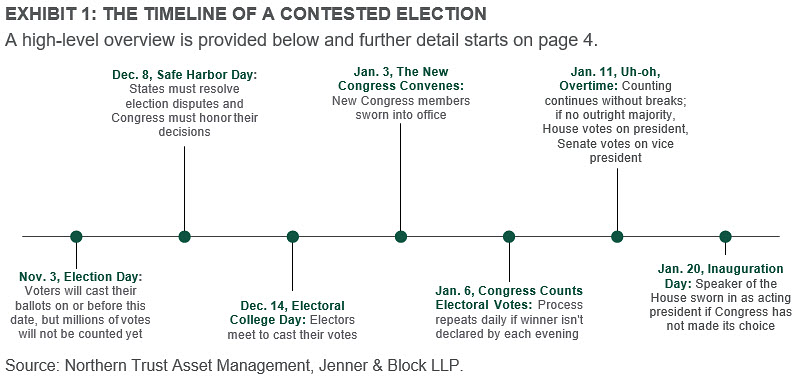
Those accusing President Trump of violating the rule of law are ignoring a major aspect of constitutional law. The Constitution does not give the media the power to pick the president, nor does it give attorneys the power to pick the president. It does not even give the American people the power to pick the president. The supreme law of the land gives the electoral college the power to pick the president. This means every politician, lawyer and soldier who has taken an oath to the Constitution is bound to accept the president chosen on December 14 by the 538 electors of the electoral college.

The recounts and court cases that happen before then are an attempt to inform these electors how their state voted. Electors are not constitutionally required to vote for the candidate who won their state, and six electors did not do so during the 2016 presidential elections. Only 33 states have laws punishing electors for not voting the way their state did.

The framers of the U.S. Constitution also wrote specific provisions on how to solve a contested election. They empowered Congress to be the backup if the electoral college could not decide on a winner. The 12th Amendment specifies that if no candidate receives 270 votes in the electoral college due to disputed ballots, or some other reason, the House of Representatives shall immediately choose between the three leading candidates. In this congressional vote, the representation from each state has one vote.

In regard to the current election crisis, law professor Donald Brand wrote, “If neither candidate gets to 270 electors due to disputed ballots, the House would have to decide the election. Though the House has a Democratic majority, such an outcome would almost certainly benefit Trump. Here’s why: In a concession to small states concerned their voices would be marginalized if the House was called upon to choose the president, the founders gave only one vote to each state. House delegations from each state meet to decide how to cast their single vote. That voting procedure gives equal representation to California—population 40 million—and Wyoming, population 600,000. This arrangement favors Republicans. The gop has dominated the House delegations of 26 states since 2018—exactly the number required to reach a majority under the rules of House presidential selection.”

Many Democrats hate the electoral college and want to replace it with a system where the winner of the popular vote becomes president. But they cannot condemn President Trump for violating the rule of law for refusing to concede an election before the electoral college has even convened. The framers of the U.S. Constitution established provisions on how to decide contested elections, and the only people violating the rule of law are those trying to circumvent those provisions by letting the media pick the president.

In 1999, British historian Paul Johnson wrote an article in the Sunday Telegraph titled “No Law Without Order, No Freedom Without Law.” He wrote: “The rule of law, as distinct from the rule of a person, or class or people, and as opposed to the rule of force, is an abstract, sophisticated concept. It is mighty difficult to achieve. But until it is achieved, and established in the public mind with such vehemence that masses of individuals are prepared to die to uphold it, no other form of progress can be regarded as secure. The Greeks had tried to establish the rule of law but failed. The Romans had succeeded under their republic but Caesar and his successors had destroyed it. The essence of the rule of law is its impersonality, omnipotence, and ubiquity. It is the same law for everyone, everywhere—kings, emperors, high priests, the state itself, are subject to it. If exceptions are made, the rule of law begins to collapse—that was the grand lesson of antiquity.”

Americans today do not understand “the grand lesson of antiquity” as our founders understood it. That is why the nation is on a dangerous path toward lawlessness.

For decades, activists have striven to fundamentally transform America by emphasizing ends over means. If a policy lacks support to be passed by the lawmaking branch of government, radicals call for the president to enact it via executive order, or for the Supreme Court to enact it via judicial activism, or for protesters to take to the streets. They accuse President Trump of violating the rule of law when he investigates lawbreaking, but they attack the supreme law of the land if the electoral college votes in a way they do not like.

The Prophet Isaiah described such lawless thinking 2,700 years ago: “None calleth for justice, nor any pleadeth for truth: they trust in vanity, and speak lies; they conceive mischief, and bring forth iniquity. They hatch cockatrice’ eggs, and weave the spider’s web: he that eateth of their eggs dieth, and that which is crushed breaketh out into a viper. Their webs shall not become garments, neither shall they cover themselves with their works: their works are works of iniquity, and the act of violence is in their hands” (Isaiah 59:4-6).

This passage is a prophecy about end-time America (as our free book The United States and Britain in Prophecy, by Herbert W. Armstrong, proves). Today, corrupt politicians “speak lies,” “conceive mischief,” and “bring forth iniquity.” But God will not allow them to “cover themselves in their works.” He will expose the corruption so people have a chance to repent before a lawless spirit completely destroys America by replacing the rule of law with the horrifying rule of brute force!..

Organic Prepper on Liberals Burning Books

In Mainstream Media Thinks Parler Is a “Threat to Democracy” Because Libertarians and Conservatives Get to Post, Daisy Luther of The Organic Prepper talks about liberal outrage over social media alternative Parler – the free speech social network. Mainstream social media tech giants have been removing conservative and libertarian voices from places like Facebook, Twitter, Youtube, and many others in order to stifle dissenting voices in the name of false truth. These liberals want to remove alternative ideas from circulation. This is no different than burning books – books being the way most ideas circulated before the advent of internet technology. Liberals cried out, rightly, against book burning for many decades, and now liberals the book burners. As Time magazine once said, “if you are on the side of book-burners, you’ve already lost the argument.”

After years of being censored on Facebook and Twitter, conservatives, libertarians, and other fans of free speech are making a mass exodus to new platforms. One that has really taken off since the election is Parler, which has been the most downloaded app in the country over the past two weeks.

Unsurprisingly, the mainstream media and left-wing extremists are outraged. How dare the people who have been censored, deplatformed, and shut down on their social media sites move to a site that promises not to treat them like pariahs? (By the way, you can find me on Parler here: @daisyluther ) They go as far as to say it’s a “threat to democracy” because libertarians and conservatives get to post.

I mean, seriously, we can’t be letting conservatives and libertarians post their opinions all willy-nilly, right? What will happen without the “fact-checkers?”

Why on earth WOULDN’T people go to a different network?

Personally, I haven’t had access to my own Facebook pages for more than a year and won’t unless I send them photos of my passport, a utility bill, and other identifying information – because they didn’t think my driver’s license was sufficient. As well, I voluntarily archived my thriving preparedness groups because of the threat of losing both my groups, my own personal account, and the accounts of all my moderators if we let through a post of which Facebook disapproved. I wrote more about it here.

And remember when Twitter shut down Zero Hedge’s account for posting something about the coronavirus they deemed as misinformation that was later proven to be true? And how they put warnings on nearly anything the President posts? And how conservative and libertarian websites are being demonetized?

I invite you to try posting anything on standard social media that questions vaccines, the outcome of the election, the COVID lockdowns, or is pro-gun. I’ll see you in Facebook jail.

Everyone who is leaving is a crazy racist.

To hear the MSM talk about it, everyone over there has a “bunker mentality”, they’re joyously engaging in racism and hate speech, and they just want an echo chamber. It’s “not good for the country,” according to commentators on CNN.

“There’s this new social media app called Parler getting a lot of attention, because conservatives are leaving, saying they’re leaving Twitter and Facebook, going of to Parler, because they believe Parler is a safer space for them. What we’re seeing is even more of a bunker mentality in right-wing media. And ultimately that’s not good for the country.”

“No it’s not good, it’s a threat to democracy,” Pamela Brown replied, “that these people are in echo chambers and they’re getting fed a diet of lies essentially.” (source)

Incidentally, sweeping generalizations aside, there are a lot of folks over there (like me) who are not politically conservative.

CNN is not alone in their hysteria about the social media outlet. Here’s what the mainstream media is saying about Parler and the folks using it. Yes, the irony over their outrage is palpable. And yes, it does seem like they’re trying to further divide the country. Be sure to like the video and subscribe to the channel – it’s a great show with timely subject matter. (Warning: Some harsh language)

For those of you new to Parler:

If you ask questions on those videos, I’m sure you’ll get an answer.

Things to remember about social media

For those who want free speech that is not left-leaning, Parler definitely seems like a better option than the Big Tech monoliths. However, there are a few things to remember.

  • If you get to use something for free, you are the product. Either your eyeballs on advertisements or your information will make Parler money one of these days. And it’s understandable – the expense of running a platform like that is immense.
  • While the rules may be favorable toward your position right now, it doesn’t mean they always will be. Facebook didn’t start out censoring the snot out of everyone who didn’t agree with Mark Zuckerberg. The rules will evolve.
  • Don’t share too much personal information. I know you guys are aware of this, but I just want to remind you not to share the kind of personal information that would allow people to find out where you live, when you’ll be on vacation, etc. Nothing online is that safe.
  • Don’t become too dependent on one outlet. Whether you’re a blogger like me or someone who just wants to connect with like-minded people, don’t forget that you are using their platform. They make the rules and they can decide whether you can stay or go, whether you can post certain things, or whether they want to change direction. It’s comparable to building a house on borrowed land. It might be nice land, but it’s not yours.

With these caveats in mind, I’ll see you over there if you are a social media person. Find me @daisyluther on Parler and please consider checking out our forum, here, for more in-depth preparedness discussions.

Do you think a more conservative social media outlet is a bad thing?

Are you bothered by a social media platform that doesn’t conservatives and libertarians? Or do you think it’s fair and reasonable to be able to share your opinions equally?

AmPart: Giuliani – Powell News Conference November 19, 2020

American Partisan, among others, made note of the Nov. 19th press conference with “Rudy Giuliani, Sydney Powell, and a host of other lawyers who are representing President Trump and the American people who voted for him.”

…To be quite frank, I was mesmerized as I drove around and at one point when my errand list was done, I parked in a shopping center parking lot to listen to the end of the press conference.

Giuliani started out saying that he called the news conference because he was tired of the press saying that the Presidential election was not stolen. “Show us facts” the MSM keeps shouting…

In case Youtube removes the above video, it may alternately be viewed at Breitbart – Trump Campaign Holds Press Conference to Outline ‘Viable Path to Victory’

FEE: Would AOC Blacklist 73 Million Americans?

The Foundation for Economic Education discusses how people are losing their jobs over a lack of “proper” political orthodoxy – Would AOC Blacklist 73 Million Americans?

Should a qualified employee’s political views determine whether he gets—or keeps—a job? For a growing number of Americans, they already do. As I wrote in an article published recently at American Greatness:

[Last month] a Pennsylvania police chief was forced to retire by his “progressive mayor” after 26 years on the job. His offense? The chief’s wife posted a Facebook message supporting President Donald Trump.

Lancaster Police Chief Jarrad Berkihiser might be the latest victim of cancel culture, but he won’t be the last.

The article was written before the 2020 election. Since then the female African-American police chief of Portsmouth, Virginia, lost her job. The town’s progressive leadership fired Angela Greene after she pressed charges against rioters who decapitated and pulled down a Confederate statue, striking a middle-aged black man in the head. The injury left the man temporarily comatose, caused him to flatline twice as his brain swelled dangerously, and required months of therapy to teach him to walk and talk again. City officials fired Greene on Monday morning, a little more than two months after placing her on paid leave. She said she plans to sue.

Greene will have company in the unemployment line, and not merely because of another round of proposed COVID-19 lockdowns or impending minimum wage hikes. A number of political figures have in effect declared a Bush Doctrine against the Trump administration: They will make no distinction between the 45th president and those who “enable” him. For instance, former Clinton administration Treasury Secretary Robert Reich proposed a “Truth and Reconciliation Commission” to discover the names of anyone who helped “enable” the Trump administration.

Rep. Alexandria Ocasio-Cortez, D-N.Y., tweeted support of the Trump Accountability Project, an effort to blacklist “Trump sycophants” to stifle their employment prospects. (After the blacklist backlash, TAP announced last Thursday that “this project will no longer be active.”)

“Employers considering them should know there are consequences for hiring anyone who helped Trump attack American values,” said former Obama campaign spokesman Hari Sevugan, threatening not only Republicans but those who hire Republicans.

Depending on how broadly one wants to define “helped,” this description could encompass 73 million Americans. It could go well beyond Trump administration alumni to include anyone insufficiently supportive of the Great Awokening, and perhaps the whole point is to instill the maximum level of fear in the greatest number of political apostates.

This is alarming. Americans of all political backgrounds should seek to reverse this lamentable trend for several reasons.

First, threatening to lock someone out of “polite society” over run-of-the-mill political differences normalizes discrimination. While some find it more acceptable to discriminate against people based on their beliefs rather than immutable factors such as ethnicity, sex, or gender identity, legitimizing employment bias against any group opens the possibility of bias against every group. Worse, researchers have found that Americans already indulge political animosity “to a degree that exceeds discrimination based on race.”

Second, employment bias denies people the opportunity to share their God-given gifts and talents with others. It deprives their families of an adequate livelihood, entirely out of spite.

But discrimination does not simply hurt those who are discriminated against. It also violates the bigot’s self-interest. Viewpoint discrimination in the workplace denies a firm the most productive talent on the basis of often-irrational biases. That lowers the office’s efficiency, productivity, and ingenuity.

Two researchers, Shanto Iyengar and Sean Westwood, bore this out by conducting an experiment that allowed participants to award scholarships to either the most qualified applicant or a student who shared the same political views. When it came to a time for choosing, they wrote, “partisanship simply trumped academic excellence.” Discriminating against the best and the brightest leaves bigoted firms competing for second place.

Politically prejudiced hiring also harms businesses in another way. One source summarized the late economist Gary S. Becker’s groundbreaking work on the economics of discrimination this way:

Suppose that an employer does not want to employ members of a particular group even though these workers are as productive as any others. If the firm has to pay all workers the same wage it will simply not employ members of the disadvantaged group. However, if it is possible to pay these workers less than those from other groups the firm then faces a trade-off: it can employ members of the disadvantaged group at lower wages and thus increase its profitability, or it can discriminate and employ only workers from the high wage group even though this will mean lower profits. Discrimination in the latter case therefore imposes a cost on the firm.

Finally, if the neo-McCarthyites really believe that President Trump and his supporters are revolutionaries, the last thing they should want is for this group to find itself unemployable, aggrieved, and awash in free time. If they honestly think that job losses make people “cling to guns or religion, or antipathy toward people who aren’t like them,” it would behoove them to see their political enemies busy themselves punching time clocks, creating goods and services, and entangling themselves in the joys of family life. One can only speculate how better employment prospects might have thwarted previous revolutions. What if Adolf Hitler had been a better artist? What if Fidel Castro had been a better baseball player?

For economic as well as philosophical and moral reasons, we should oppose viewpoint discrimination in secular education and employment. As I wrote at American Greatness:

We must stand up for Jarrad Berkihiser. We must demand our right to offend and be offended. We must insist on being judged on the content of our character, not the color of our skin.

Among those rights is the right to be judged on our performance, not our political orthodoxy.

The Federalist: Your Political Leaders Hate You And Think You’re Stupid

From The Federalist, something you may have already suspected – Your Political Leaders Hate You And Think You’re Stupid

One thing should be abundantly clear by now, after ten months of this pandemic: our political leaders hate us and they think we’re stupid. Nothing else can explain the blatant hypocrisy we’ve seen, mostly from Democrat governors and mayors who are eager to impose harsh lockdowns and strict rules for the public at large but then turn around and do whatever they please with their own families, friends, and cronies.

Examples abound, but this week brought a fresh spectacle of hypocrisy in the form of a nervous, patently disingenuous apology from California Gov. Gavin Newsom, who was caught dining at an opulent birthday dinner for a top California political operative at a fancy French restaurant in Napa earlier this month, in apparent violation of his own COVID-19 protocols.

The timing couldn’t have been worse. On Monday Newsom announced he was “pulling the emergency brake” on reopening his state amid a spike in COVID cases, dealing a crippling blow to shuttered businesses and out-of-work Californians who have been struggling for months under rolling lockdown orders.

Only after Newsom was widely criticized for his rank hypocrisy did he offer an attenuated mea culpa, explaining that upon his arrival he was surprised to find there were “just a few extra people” at the party, but quickly added it was an “outdoor restaurant” in Napa County, which has looser restrictions compared to other areas of the state. Blinking incessantly and smiling tightly, Newsom finally got around to saying, albeit in the passive voice, that “the spirit of what I’m preaching all the time was contradicted.” Indeed it was, governor.

But then we come to find out this week that the dinner wasn’t outdoors at all. Pictures obtained by the Fox News affiliate in Los Angeles show Newsom and a bunch of others dining at the French Laundry restaurant in Yountville, California. They are obviously not outside, not social distancing, and not wearing masks.

The woman who took the photos told the Fox affiliate that Newsom was with a “very large group of people shoulder to shoulder,” and that she was “surprised because it didn’t look like he was uncomfortable being there until the very end, until people were looking at him and staring at him as he was leaving the room.”

But it doesn’t end there! On Wednesday, Politico reported that two top officials with the California Medical Association were among the guests at Newsom’s fancy birthday dinner.

You might think the state’s top medical lobbyists would think twice about flagrantly disregarding COVID guidelines, or even feign an apology like Newsom, but no. A spokesman for the CMA told Politico that “the dinner was held in accordance with state and county guidelines,” which prohibit more than three households from gathering privately—but do allow restaurants to seat people from more than three households together. See?

Apparently this is a pretty common attitude among California politicians and their lobbyist buddies. With much of their state locked down by government fiat, last week a bunch of state lawmakers and corporate lobbyists flew off to Hawaii for a five-day conference and schmooze-fest at an upscale Maui resort. Legislators and their families mingled with representatives of businesses and trade groups that paid thousands of dollars for access to the lawmakers in what has become an annual lobbying tradition—even during a global pandemic!

Dan Howle, chairman and executive director of the Independent Voter Project, which hosts the conference, didn’t apologize. He told the San Francisco Chronicle, “Somebody has to be first to say, ‘OK, we’re going to do a group event safely.’” Yes, Dan, somebody does has to be the first, and why shouldn’t it be a handful of powerful politicians and corporate lobbyists instead of, you know, ordinary people trying to salvage their businesses and visit their loved ones?

Lockdowns For Thee, But Not For Me

On and on it goes. Chicago Mayor Lori Lightfoot, who issued a citywide stay-at-home order last week, defended her recent appearance at a massive street rally celebrating Biden’s apparent victory, where a mask-less Lightfoot addressed the crowd through a bullhorn.

When asked about the obvious double standard on MCNBC last week, Lightfoot was defensive, insisting that, “There are times when we do need to have relief and come together, and I felt like that was one of those times.” She added, as if it excuses her hypocrisy, “That crowd was gathered whether I was there or not.”

Seemingly everywhere you look you find people in positions of power ignoring pandemic restrictions and doing as they please. Often these are the same people who are most outspoken about the need for lockdowns.

Back in September, House Speaker Nancy Pelosi was defiant after being caught on camera (mask-less, of course) at a shuttered San Francisco salon in violation of a citywide lockdown order, calling it a “setup” and refusing to apologize.

Then last week, Pelosi was forced to cancel a dinner for incoming Democratic House members after a viral tweet showing tables being set up for the soiree understandably provoked outrage. “It’s very spaced,” she explained to an NBC News reporter.

The truth is, our elites have been doing this since the pandemic began. Who knows how many ordinary Americans were barred from attending the funerals and burials of their beloved dead these past months? Yet thousands were allowed to gather in July for memorials of Rep. John Lewis, in services that stretched from Alabama to Washington, D.C. Thousands were allowed to gather for George Floyd’s memorial service in June in Minneapolis.

We all saw the way the media treated Trump rallies like COVID super-spreader events yet condoned the hundreds of large-scale protests over the summer and fall in cities all across the country under the idiotic pretense that the protesters were “all wearing masks.” Same with the post-election celebrations that brought out thousands, dancing in the streets cheek-by-jowl and passing around champagne bottles.

Again, there is only one possible conclusion you can reach, based on months and months of appalling hypocrisy from the media and our ruling elite: they think lockdowns are for you, not them. They think pandemic rules are for you, not them. They think suffering hardships and doing as you’re told are for you, not them. Why? Because they hate you and think you’re stupid.

AIER: FedCoin Revisited

A US physical coin, not a digital currency

This article at the American Institute for Economic Research talks about a new push for government-controlled, central bank digital currency to more easily track the income and tax liabilities of end users – FedCoin Revisited.

The Federal Reserve is thinking about issuing a central bank digital currency (CBDC). The International Business Times reports that the Fed “would be open to collaborating with private business on the creation of a digital currency but emphasized that they were not yet making any commitments.” Talk of a so-called FedCoin appeared to have quelled. But it is now back in full force.

To some, the idea of a FedCoin seems obvious. They see no reason for the Fed to forego adopting 21st century monetary technology. And, certainly, there are a number of benefits, such as lower transaction costs of electronic transfers and helping to execute instant payments (such as in the FedNow project). However, a CBDC also carries risks that must be weighed against the benefits.

One’s view on FedCoin is often related to his or her view on cash. If she thinks cash is good, she is likely to oppose FedCoin. If he thinks cash is bad, he is likely to see FedCoin as an improvement on the status quo. Indeed, some see the introduction of FedCoin as an important step in the direction of a completely cashless economy.

Advocates of moving towards a cashless economy argue that making all payments electronic would help to fight tax evasion and crime. If the move were required, however, it would harm those preferring to use cash for legal transactions as well.

Many people place a high value on anonymity. For some, it’s personal. They don’t want others to know what they are doing. For some, it’s political. They worry about the degradation of institutions, as private information might be used for political ends. The threat of obtaining and revealing private information might silence opposition and undermine the democratic process.

A cashless economy might also lead to policy changes. In order to foster spending during a recession or an economic downturn, the Fed might tax money demand with negative interest rates. If holding cash is an option, then depositors can withdraw their deposits and avoid the negative interest rate. But, if cash is not an option, then consumers are stuck paying interest on their FedCoin holdings. Since they cannot avoid the negative interest rate, consumers would rather spend their money than see their bank balances go down.

In addition to the issues related to one’s view on cash, FedCoin might also undermine financial intermediation. By offering FedCoin, the central bank might crowd out commercial banks.

A checking account at Bank of America is guaranteed by the Federal Deposit Insurance Corporation up to the max of $250,000. An account at the Fed is a liability of the government. If both offer the same payment services, why would one opt for the riskier commercial bank account?

Many will see little cause for concern with depositors having access to safer accounts. But that’s because they don’t think much about banking. Banks attract deposits with payment services and interest payments. They then funnel those funds to productive investment ventures. Financial intermediation makes us more productive, thereby raising the standard of living. As the World Bank reports, private credit to GDP high-income countries is “more than 4 times the average ratio in low-income countries.”

If would-be depositors hold FedCoin instead, the corresponding funds will have to be intermediated by the Fed. At best, the Fed would just auction off funds to private financial institutions. But recent events suggest the Fed might be inclined to allocate credit.

My concerns with FedCoin, and other CBDCs, are admittedly speculative. We don’t know whether the Fed would take steps to eliminate cash or impose negative rates on FedCoin balances. We don’t know how it would go about intermediating funds. But such speculations should make one thing clear: there are risks. At the least, we should develop strong institutional checks before permitting the Fed to plow ahead.

Survivalist/Prepper/Outdoorsman Auction – Naples, ID – Nov. 19-21

JKern Auction Group in Naples, ID is holding an auction of survivalist, prepper, and outdoors gear.

The huge Survivalist, preppers and outdoorsman auction is finally here!! We will be open from 9 a.m. to 5 p.m. today, Thursday, November, 19 for you to come walk through to view all the items and to pre-register for tomorrow and Saturdays auction. There are some Buy It Now items available for purchase today such as: books, clothing, blankets and holiday items. See you today at 138 Latigo Lane, Naples, Idaho. (Moose Valley Nursery on Highway 95 between Sandpoint and Bonners Ferry).

Preview and registration: Thursday, Nov. 19, 9 a.m. to 5 p.m.
Auction days: Friday, Nov. 20 and Saturday, Nov. 21, 9 a.m. to 5 p.m.

Economic Collapse Blog: UN World Food Program Warns Of “Famines Of Biblical Proportions In 2021”

This article comes from Michael Snyder at the Economic Collapse Blog – UN World Food Program Warns Of “Famines Of Biblical Proportions In 2021” As Some Americans Wait 12 Hours For Food

The UN World Food Program was the winner of the Nobel Peace Prize in 2020, and the head of that agency is warning of the potential for absolutely devastating famines around the globe in 2021.  The COVID-19 lockdowns that were instituted all over the world this year created tremendous hardship in many wealthy countries, but in poorer nations the economic devastation has created alarming waves of hunger.  There was hope that things would get better when lockdowns were being lifted, but now a new round of lockdowns is being imposed, and many experts are warning about what this could mean for those living in deep poverty.

David Beasley was absolutely thrilled when his agency was given the Nobel Peace Prize, because all of the attention has given him more opportunities to ask for money.  Because without a massive influx of money, he says that we are going to see “famines of biblical proportions in 2021”

The head of the World Food Program says the Nobel Peace Prize has given the U.N. agency a spotlight and megaphone to warn world leaders that next year is going to be worse than this year, and without billions of dollars “we are going to have famines of biblical proportions in 2021.”

As I have previously explained to my readers, widespread crop failures along with the economic shutdowns brought on by COVID-19 have put a tremendous amount of stress on global food distribution systems.  Food prices are rapidly rising all over the planet, and this is hurting the people at the bottom of the economic food chain the most.

According to Beasley, many areas of the globe are potentially facing a major food crisis “in the next three to six months”

According to a joint analysis by WFP and the U.N. Food and Agriculture Organization in October, 20 countries “are likely to face potential spikes in high acute food insecurity” in the next three to six months, “and require urgent attention.”

Of those, Yemen, South Sudan, northeastern Nigeria and Burkina Faso have some areas that “have reached a critical hunger situation following years of conflict or other shocks,” the U.N. agencies said, and any further deterioration in coming months “could lead to a risk of famine.”

Here in the United States, the good news is that nobody is facing starvation at this point.

But the bad news is that we are in the midst of the worst economic downturn since the Great Depression of the 1930s, and some Americans are waiting in line for up to 12 hours for handouts.  If you don’t believe this, here is an excerpt from a news report about a food distribution event that just happened in Texas

Thousands of families lined up to receive groceries at a Texas food bank this weekend, some queuing for as long as 12 hours as the on-going coronavirus pandemic continues to inflict hunger and economic hardships on the state.

The food bank distribution event, held by North Texas Food Bank (NTFB) in Dallas on Saturday, saw 600,000 pounds of food given away – including 7,000 turkeys.

You have to be pretty desperate to be willing to wait in a line for 12 hours.

But when you are very hungry and you are very short on money, all of a sudden you will be willing to do things that you wouldn’t normally do.

For those that wouldn’t have a Thanksgiving dinner otherwise, this food distribution event was “a real big deal”

“I see blessings coming to us cause we all struggling. And I appreciate North Texas helping us out,” resident Samantha Woods said while waiting in her vehicle.

“I haven’t been working since December, can’t find a job, they cut my unemployment, it’s a real big deal,” said Cynthia Culter.

Elsewhere, millions upon millions of impoverished Americans are facing the possibility of being evicted from their homes right after the holiday season is over.

A national moratorium on evictions is scheduled to end on January 1st, and it is being reported that we could see a record number of evictions in January 2021…

An estimated 11 to 13 million renter households are at risk of eviction, according to Stout, an investment bank and global advisory firm. It predicts there could be as many as 6.4 million potential eviction filings by January 1, 2021 if the CDC moratorium is lifted.

Since the order does not cancel or freeze rent, all of the tenant’s back rent will be due come January 1. Without rent relief or an extension of the protection, many struggling renters will — again — face eviction.

I have a feeling that the moratorium may be extended, but that will just put even more financial stress on landlords.

And at some point there will be no more moratoriums, and all of that back rent will be due, and most of those households will not be able to pay it and will be evicted anyway.

…(continues)

Brushbeater: Stalking Boots

NC Scout at Brushbeater spends some time talking about what is good in a boot that you can stalk well in versus a boot made for hiking/rucking with heavy gear in Stalking Boots.

Growing up, nearly everyone I knew hunted. Whether it was white tail, rabbits, dove, pheasant, and even hogs back when we had them in central NC. And in all those years, you had three general types of boots- Cowboy boots for dressing up, work boots in the field, and hunting boots in the Fall- and that was about it. It wasn’t until I went into the Army that I gave much thought at all to footwear or even knew the value of a good pair of boots, much less different boots for different tasks. Fort Benning fixed that.

Back when I was in High School I saw a movie called The Hunted with Tommy Lee Jones and Benicio Del Toro, about a ex-Special Forces or something-guy having some mental issues and looking for his old mentor from a SERE school, because…reasons. It hasn’t aged well, but, there was a few decent takeaways from it. Most notably was the fact that Jones’ character, LT, wore moccasins everywhere. It might have seemed like some hippy-back-to-the-land BS back then, but, its one of the few things about that movie actually rooted in reality. Light, soft soled shoes are critical for stalking in woodland environments. He used moccasins to effectively stalk, having little more than rawhide and a thin rubber bottom for basic tread.

A student learning to stalk in the Scout Course.

Years later, when I was learning to do the same, one of the issues all of us ran into was using boots that either had too hard a sole or limited our ability to feel the terrain under our feet. Literally all of the qualities you don’t want when you’re carrying a heavy ruck on your back are the ones you do want when stalking. Thick soles designed for load bearing and stability also limit what you feel under your feet. This in turn leads to guys making errors in their stalking lanes- crunching deadfall sticks and limbs, rustling leaves and knowing what type of terrain you’re leaving too much spoor or trailsign in. Thin and light works well.

These days I’m doing a lot less heavy rucking and a lot more stalking work in the woods. The reality is that I’m likely not going to carry a 100lb ruck like I did back in Afghanistan for a lot of reasons, but it boils down to: a) my fighting kit selection is lighter now that what I had no option to use back then; b) a lot of my support gear, ie commo equipment, is far smaller & lighter now than before and c) I know a heck of a lot more now than I knew back then. Above all, my mission is entirely different today. A lot of what people are showing off as their “bugout bag” or third line patrolling kits is flat out unrealistic. But on the other hand, learning to effectively stalk in your operating environment will carry you a heck of a lot further down the tactical path then having a bag full of crap to leave for the guy who actually knew how to hide.

You’re a hunter of men, start thinking like one.

What makes an animal as larger as the Black Bear in eastern NC such an effective stalker? You’d think that due to its size it would make tons of noise, and yet it doesn’t. As any bear hunter familiar with eastern NC can tell you, its not just thick underbrush, but that a bear will be on top of you in no time if you’re not completely aware of your surroundings. Bear, like all effective predators, understand how to move in their terrain. They use their senses first before committing to make the movement, smelling and watching while moving slowly and deliberately. For a human, once we’re re-awakened our senses in the wild, the next step is to understand how to actually move.

Do not rush to be over-encumbered. If you’re carrying more gear than you can effectively remain quiet while moving with, then you’re carrying too much gear. This was the same philosophy of two of the best special reconnaissance units in modern history- the Selous Scouts and the South African Recces– with first hand accounts from both units frequently favoring blacked-out Converse Chuck Taylors in the field. While that made plenty of sense for the time, our options have gotten better today.

Danner Elk Hunter, Danner Reckoning

There’s a lot of good brands for lightweight boots out there- Solomon makes a good one, as does Rocky (what I wore in the winter months in Afghanistan) and even Nike with the SFB. A couple of solid options that have served me well in recent years have both come from Danner. I’ve become a big fan of their boots over the years because of their consistently high quality as well as their overall designs. One of the big selling points for me has been the lace-to-toe layout that allows me to control exactly how much tension the boot has on the sides of my feet; road marches, let them out because your feet are going to swell, for field work, tighten them up for greater dexterity in lateral movement. I’ve worn other brands over the years for field use that have been decent, but I keep coming back to Danner for a reason.

The first pair are a newer design they call the Reckoning- a lightweight boot that I’m assuming is their modern take on the jungle boot by its drain holes and breathable design. Its been a great boot so far in the two years I’ve worn them and is completely flexible from heel to toe. I’ve beat the living snot out of this pair and aside from a small tear in the outer nylon from getting hung up in some heavy briars, they’ve held up well. They’ve been on my feet for every Scout Course and most other classes I’ve run for the past couple of years and while they’re definitely military-looking boots, they’ve done everything I’ve asked them to do and more.

Stalking Footwork 101: Step with the outer edge of the foot, dropping the heel first then rolling the foot to the toe. As your first foot rises, do the same with the opposite foot. Get into a rhythm of walking like this in the woods- it’ll greatly mitigate your noise signature.

The second pair is in many ways a polar opposite- the traditional looking, excellent Elk Hunter. Mine are uninsulated and are definitely old school in appearance. But that said they work, and work well. The soft suede is very much like a moccasin and molded to my feet nearly immediately. The soles on the other hand took some time. While they were soft on the outsole like many hunting boots I’ve worn in the past to mitigate noise, they were definitely on the rigid side and took about 25-30 miles of walking before they had enough flex to effectively roll the feet while moving. Since then though, they’ve been great in the woods. These are some of the grippiest boots I’ve ever worn as well, which also takes some getting used to- wherever you place your foot, its staying there. But they’re quiet and feel a heck of a lot lighter on the feet than the listed 59oz in the specs.

Both boots have two critical qualities in common- a lace-to-toe design and flexibility of the soles. The lace-down allows me to adjust the tension on different parts of my foot. Loosen them up for a longer movement (your feet will swell) or tighten them when you need more precision in stepping during a stalk. The second factor is the lack of a defined heel. No heel allows the foot to roll from your natural heel to the toe, greatly mitigating noise and making an overall better stalking technique.
They’re not quite as feral as wearing moccasins everywhere, but they’re comfortable, durable, and have served me well. As alumni from the Scout Course know, your proper selection of footwear are the tools that make or break your ability to successfully move undetected. Shooting is either a failure of bad tactics or the culmination of a really good one- remaining undetected and fighting on your terms will always win over an adversary dressed for door kicking in thick woodlands.

Cato Institute: Government in a Pandemic

From Thomas Firey at the Cato Institute, Government in a Pandemic

When the threat of COVID-19 became apparent, some political commentators began arguing that Americans must accept much greater governmental intervention in their lives if the United States were to respond effectively to the disease. This idea was soon distilled into a pithy slogan: “There are no libertarians in a pandemic.”

In fact, government can respond effectively to the historic COVID-19 crisis while following the principles of limited government. However, federal, state, and local governments in the United States have done a poor job of identifying and implementing good policies for the pandemic that are compatible with those principles. Instead, policymakers have attempted interventions far beyond the powers of a properly limited government—with poor results.

Americans and their political leaders are understandably worried about COVID-19 and its effects, both on human health and the economy. That worry may indeed lead some people to reflexively demand broad government intervention. But if the United States follows the principles of limited government, those principles will help see us through this crisis.

Introduction

When the threat to the United States from the novel 2019 coronavirus disease (COVID-19) became apparent, political leaders and commentators began calling for large governmental interventions to counter the disease’s health and economic effects. Many of these people added that the political philosophy of limited government—“liberalism” in the classical sense—would handicap the country’s response to the crisis and thus must be rejected. This was soon distilled into a pithy slogan: “There are no libertarians in a pandemic.”

As COVID-19’s grim health toll and economic statistics have accumulated, the criticisms of liberalism have grown louder.

Appropriate to the era, the “no libertarians” slogan was popularized by a Twitter post: Atlantic staff writer Derek Thompson used it to introduce a news item about Republican lawmakers advocating public funding for COVID-19 testing and for treatment of uninsured victims of the disease.1 A week later, his Atlantic colleague Peter Nicholas used a variant of the slogan as the title of a column criticizing President Trump for campaigning on “anti‐​socialism” while his administration pushed a host of extraordinary interventions into the economy in response to the pandemic.2 “Just as there are no atheists in foxholes, in a national emergency, there’s no truly laissez‐​faire government,” Nicholas wrote.

Others quickly picked up the theme. New York Times columnist Farhad Manjoo, noting the same news item as Thompson, concluded, “Everyone’s a socialist in a pandemic.”3 Ryan LaRochelle, a lecturer at the University of Maine, wrote in the Washington Post that a “decades‐​long war on the safety net and the government’s administrative capacity [has] made our society particularly vulnerable to the pandemic’s impact on our economic life. This has seriously hampered the federal government’s response to the coronavirus and shown how dangerously ill‐​suited this ideology is to the crisis.”4

Perhaps the sharpest criticisms came from essayist and novelist George Packer, who bemoaned “a federal government crippled by years of right‐​wing ideological assault” and “politicians and donors who wanted government to do as little as possible for the common good.”5 He described a dystopian America that, without active management from Washington, DC, is nearly powerless against COVID-19:

Every morning in the endless month of March, Americans woke up to find themselves citizens of a failed state. With no national plan—no coherent instructions at all—families, schools, and offices were left to decide on their own whether to shut down and take shelter. When test kits, masks, gowns, and ventilators were found to be in desperately short supply, governors pleaded for them from the White House, which stalled, then called on private enterprise, which couldn’t deliver. States and cities were forced into bidding wars that left them prey to price gouging and corporate profiteering. Civilians took out their sewing machines to try to keep ill‐​equipped hospital workers healthy and their patients alive. Russia, Taiwan, and the United Nations sent humanitarian aid to the world’s richest power—a beggar nation in utter chaos.6

As for the idea that private actors could respond to the virus, Packer asserted simply, “It turns out that ‘nimble’ companies can’t prepare for a catastrophe or distribute lifesaving goods—only a competent federal government can do that.”7

The belief that COVID-19 shows the need for bigger, more interventionist government has not been confined to the left of the U.S. political spectrum. The right, which in previous decades repeatedly declared a commitment to “small government,” began talking about the need to boost “state capacity” to respond to the pandemic and other problems. Two of the right’s up‐​and‐​coming leaders, Sens. Marco Rubio (R–FL) and Josh Hawley (R–MO), pushed large‐​scale government financial assistance programs, with Rubio helping to craft the Paycheck Protection Program that has blossomed into a roughly $650 billion subsidy to businesses.8 Its creation was part of the $2 trillion Coronavirus Aid, Relief, and Economic Security (CARES) Act that provides federal support to businesses, households, and state governments.9 The CARES Act passed with overwhelming support from Republican lawmakers and was signed by President Trump, who had his name prominently stamped on the ensuing household subsidy checks.10

Those efforts are in accordance with the new “national conservative” movement, which endorses government intervention in the economy to promote a host of goals.11 As one of the movement’s intellectual leaders, Henry Olsen of the Ethics and Public Policy Center, told Politico about policymaking in response to COVID-19:

This is going to jump‐​start the already simmering debate over how the right should deal with domestic policy. Clearly there’s going to be demand for many types of stimulus. There’s going to be demand for the view that we’re not going to let this happen again. And a libertarian, hands‐​off policy doesn’t really respond to that.12

These calls for government to intervene in response to COVID-19 are understandable. The disease is often painful and sometimes fatal, and it is produced by a novel virus that spreads through social contact. As yet, there is no known effective vaccine against the virus, and treatment therapies are limited. People naturally want something to “fix” a crisis, and they look for government to be that powerful fixer. It is comforting to envision government scientists in their labs probing the virus, government doctors tending to the infected and uninfected alike, government financing research and development on therapies and vaccines, and government policymakers, counseled by sage experts, directing the public toward safety and away from danger.

That’s the vision; the reality is different. Government leaders and their advisers have been operating with imperfect knowledge about the recently discovered disease, resulting in public recommendations and policies that, especially in the early months of the outbreak, have been wasteful at best and harmful at worst. Though a number of those failures can be attributed to an especially inept Trump administration, they can be found across the political spectrum, at different levels of government, and among both the virtuous and dishonorable.

Government does have important roles to play in a pandemic. However, those roles are consistent with the principles of limited government. This analysis examines some of those interventions—constraining negative externalities and providing public goods—and notes instances where government has performed poorly in those areas when responding to COVID-19. The analysis also discusses interventions that limited government should not undertake—such as manipulating the production and distribution of private goods—but that government has attempted broadly in this crisis, with poor results.

Limited Government and Market Failure

Critics of limited government often equate it with anarchy, the lack of any government activity. That equivalence is false. The philosophy of limited government does place the highest value on individual liberty, including people’s freedom to privately arrange for the satisfaction of their wants. These arrangements often take place in the market, an arena for many forms of voluntary exchange. So, rather than rejecting government altogether, valuing liberty means creating important roles for government in protecting the freedom of exchange and private ordering.

Among the oldest roles of the state is defending its citizens from violent invaders, thereby protecting against a dramatic disruption of the market. This defense is difficult, if not impossible, to provide through purely private agreement. Residents operating individually would be hard‐​pressed to fend off an invading horde, and private mutual aid agreements or contracts employing mercenaries would be weakened by residents who did not join the arrangement or who joined only when a threat was imminent. A defense that protects only parts of a community is a defense penetrated by invaders.

Defense is an example of market failure: a want that cannot be adequately addressed through private exchange. Specifically, defense is an example of market failure known as a public good. Public goods are difficult to limit only to individuals who pay for them; the goods must be provided to everyone in a community if the goods are to have much value. If left to private exchange, residents would be tempted to not purchase the goods but instead free‐​ride on the purchases of others. That would result in only some residents—or perhaps none—purchasing the goods. That, in turn, would reduce the funding and quality of the public goods provided, to the detriment of all residents, including those who do purchase the goods.

Government can provide its citizens public goods via taxation. Government can produce the goods itself (e.g., by employing troops to provide defense) or contract with a private provider to furnish them (e.g., purchasing materiel to equip the troops). The key is that taxation overcomes the market failure by requiring citizens to pay for the goods. Besides defense, examples of public goods include police and fire services (private security and firefighters cannot ignore crimes and fires at noncustomers’ properties without putting their customers at risk), street lights (the lighting’s benefit cannot be limited to customers), and—at least until recently—local roads (before technological advances, it was prohibitively costly to toll local roads).

Other types of market failure exist. Though there is no definitive list, several forms are commonly recognized. One of these is externalities, which are costs or benefits of an exchange that are borne by some party other than the participants who agree to the exchange. Externalities result in less welfare than if all involved parties had voluntarily reached agreement. For instance, a polluting factory inflicts a cost (negative externality) on its neighbors, who may not be part of the voluntary exchange between the factory and its customers. Positive externalities, in which a third party receives a benefit, are less commonly cited as a problem, but they do exist.

Government can intervene to address other market failures.13 Often, such policies take the form of laws, regulations, and enforcement. For instance, environmental law is intended to reduce the negative externality of pollution.

Minimizing Government Failure

From an economic perspective, under a properly limited government, market failure is a necessary but insufficient condition for government intervention. Another necessary condition is that the proposed policy does not violate established liberties. Also, intervention always comes with costs, and those costs must not outweigh the benefits.

Further complicating matters, many of the troublesome dynamics that produce market failures also afflict government policymakers and bureaucrats, producing government failures.14 For instance, policymakers often suffer from imperfect information, resulting in bad policies.15 Also, policymakers and bureaucrats are motivated by private incentives just like everyone else, and those incentives can yield misguided—and even corrupt—outcomes.16 Unlike in the marketplace, where interaction is voluntary and participants can look for the exchanges that best fit their wants, citizens are compelled to abide by and pay for the choices of government policymakers and bureaucrats regardless of how sensible those choices may be. Classical liberal principles help to minimize those problems.

Despite the constraint of limited government, there is much it can do to address COVID-19 by focusing on the market failures associated with the disease. Unfortunately, the U.S. federal government and some state and local governments have struggled to identify and implement such policies. Instead, they have intervened in ways beyond the powers of properly limited government, with poor results. The following sections describe some of those government failures.

Limited Government and COVID-19

Several market failures are present in the COVID-19 crisis. Among them:

  • Negative externality: Infected persons can transmit the virus that causes the disease, severe acute respiratory syndrome coronavirus 2 (SARS‐​CoV‐​2), through common social contact. Transmission involuntarily inflicts costs on others, making it a negative externality. As libertarians often say, “People’s right to swing their fists ends at the tip of another’s nose”; likewise, people’s liberty ends at the point that they put others at involuntary risk.
  • The public goods of medical research: People want to avoid the disease and recover from it quickly if they are infected. That creates market incentives for research into the virus and disease and distribution of the findings. But the benefits from that work are difficult to confine to the individuals who pay for it. Information is easily transmitted, and the academic world rewards the broad distribution of many types of research to accelerate scientific discovery. That makes research into SARS‐​CoV‐​2 and COVID-19, and the resulting knowledge, public goods. Though some people would still pay for that work even if others free‐​ride on the results, private funding would likely be below optimal levels.
  • The public good of acquired immunity: Relatedly, an effective vaccine against the virus has public goods characteristics. A population can become resistant to an infectious disease if only a portion of its members develop resistance to it, a phenomenon known as “herd immunity.” Some diseases require high member immunity rates to produce this resistance—80 percent or more—but others have lower thresholds.17 Currently there is no scientific consensus on a threshold for COVID-19, though early guesses by epidemiologists fall in the 60–70 percent range, and one study argues that it could be as low as 43 percent.18 Those numbers suggest that a third to more than half of the population could free‐​ride on others’ bearing the cost of the vaccine, allowing for a public goods problem.

Some government interventions are justified to address these market failures regarding COVID-19, provided that the interventions’ benefits outweigh the costs and that the interventions do not violate protected rights. The U.S. federal government and state and local governments have made efforts at this sort of policymaking. Below are a few examples…(continues)

The Federalist: If Americans Can No Longer Trust Our Elections, We’re In Big Trouble

From Willis Krumholz at The Federalist, If Americans Can No Longer Trust Our Elections, We’re In Big Trouble

The polls from the major networks and universities promised a blue wave. President Trump was down by at least 10 points nationally, and by nearly that much or more in the major swing states. The few pollsters, including Trafalgar, who got 2016 and 2018 right and called 2020 a close race, were widely ridiculed.

Nate Silver, a leftwing poll analyst, was chief among the critics. Silver gave former Vice President Joe Biden a nearly 70 percent chance of winning Florida.

Immediately on Election Day, turnout looked good for the GOP. Trump won Florida decisively and by 8:30 p.m. Central Time, and made huge inroads in urban areas. While Hillary Clinton won Miami-Dade County by 30 points in 2016, the 2020 Trump ticket was down only single digits in the county.

That’s because Trump made significant gains among nonwhite Americans, and according to exit polls had the second-highest nonwhite share of the vote of any Republican since 1976. Cuban Americans are a big reason for Trump decisively winning Florida, but Trump’s gains with minority voters are a nationwide trend. The flipside was lower black and Hispanic turnout for Democrats—except for several major Democratic cities in contested swing states.

In other words, a significant margin of minority voters who didn’t defect to Trump decided not to vote. Indeed, a Bloomberg article days before the election cited anonymous Biden officials who said the campaign was worried about black and Hispanic turnout due to a lack of a ground game in these traditionally Democratic strongholds. But the warnings had gone unheeded.

Instead, the campaign hoped to make up these lost minority votes with gains in the suburbs, particularly among white women. In the end, Trump gained among white women compared to 2016, and only appeared to marginally lose votes from white men—many of which may have been upper-class suburban white men.

Back to Election Night

On election night, Trump’s decisive win in Florida was a bellwether to punters in the betting markets. The Trump campaign also seemed to outperform Election Day voting in states like Michigan and Pennsylvania, especially given the turnout seen in Florida. A shy Trump vote did exist, especially in the suburbs among women, and the GOP was morphing into a working-class, increasingly multiracial party. Betting odds swung in Trump’s favor, peaking at around 85 percent.

That’s when things went south for the Trump campaign. In a yet unexplained move, states including Pennsylvania, Michigan, and Wisconsin stopped releasing vote counts on election night. Fact-checkers have noted that these states didn’t stop counting—fair enough—but not why they stopped releasing the results of their counting.

Come 4 a.m. the next morning, huge amounts of fresh Biden votes were reported. Trump’s betting odds plummeted, and days later the media declared Biden to be the president-elect.

Except 70 percent of Trump voters, who comprise half the country, are convinced of massive election fraud. Yet corporate media has no intention of investigating claims of fraud. Instead, it has pivoted from saying there is “no evidence” of fraud, to saying that not enough evidence exists to overturn the results.

Contrary to the hope of Trump supporters, the courts will probably be powerless to sort these issues out. This is an incredibly dangerous moment for the country and may be a pivotal point in the future of America’s democratic republic. Did we just cross the Rubicon?

The Morning After

Before all else, we must go to the source of distrust over this election. Whereas Florida finished counting votes on election night, and has a system that knows roughly how many votes are outstanding and will be counted before election night is over, in key states like Pennsylvania, Michigan, and Wisconsin an unknown number of ballots could come in at the last second. And they did.

For that, thank Democrat lawsuits to overturn state voting laws at the last second, using COVID as a pretext. For those who doubt that the suits were nakedly political, note that they looked like a wish list based on a bill Democrat House Speaker Nancy Pelosi authored in 2019 to accomplish nationwide mail-in voting.

Many of the suits were quarterbacked by former Hillary Clinton campaign attorney Marc Elias, who was involved in manufacturing Russiagate’s Christopher Steele “dossier.” Like most things rotten in this country, particular blame should be placed on the courts that decided bureaucrats could unilaterally rewrite state laws to turn absentee voting into mail-in voting.

There was no good reason to remove requirements that absentee ballots arrive before the end of Election Day, nor to allow the fraud-welcoming practice of “ballot-harvesting.” The John Roberts Supreme Court stood idly by and let lower courts rip up longstanding state election law. Democrats and the media complain that the legislatures should have acquiesced and affirmed this judicial tyranny by changing the law to allow ballots to be counted before Election Day. That would have only put the legislature’s seal of approval on a mess that the courts stupidly created.

Mail-In Balloting Is an Easier Fraud Mark

Regardless of the existence or level of fraud in the 2020 election, it is a fact that mail-in balloting opens elections to the likelihood of massive fraud and chaos. First, there’s an easy opportunity for cheating, given the unknown number of ballots that can come in. Because ballots can be accepted after election day, an unscrupulous faction that lags in earlier counting can come up with the votes to make the difference.

Second, there’s less accountability for election officials. In a normal election, it is possible to immediately tell how many votes are cast and from where—once the votes are cast, all that’s left is to count the votes, because officials know by ward and precinct how many votes are in and what type have been cast (are the votes early in-person, absentee, or election day in-person?). Not so for mail-in voting.

One can have a recount, but that will only recount the same bad ballots.

Then, once the counting starts, mail-in voting brings problems of a haphazard chain of custody and reduced controls over voter-eligibility verification. All this is why one can have a recount, but that will only recount the same bad ballots.

The obvious problems with mail-in voting are not a rightwing conspiracy. France banned mail-in voting in the 1970s for these very reasons. In a recent New Jersey mail-in election, about 20 percent of the ballots cast were found to be fraudulent. A local New York election this year saw huge delays in processing ballots. A 2012 article in the New York Times warns that regular old absentee voting could screw up the electoral process, let alone allowing ballots to come in after election day.

Independent left-leaning journalist Glenn Greenwald writes Georgia had an 80 percent chance to go for Trump on election night, ostensibly because of a good Republican turnout. But so many ballots came in for Biden the next morning that the state ostensibly swung to Biden’s favor, due to major Democratic turnout in the Democratic stronghold of Fulton County.

This doesn’t prove fraud, but Greenwald calls this seesaw process in which many areas are counting votes nearly a week after the election a “disgrace.” “Distrust in U.S. outcomes [under such a system] is dangerous but rational,” writes Greenwald.

‘No Evidence’ of Any Fraud?

The media, Democrats, and many establishment Republicans have reflexively repeated that “no evidence” of fraud existed. Yet evidence does exist. The stories coming out of major vote-counting centers are shocking, and only add to the distrust. Dozens upon dozens of witnesses have signed affidavits attesting wrongdoing or highly inappropriate behavior from officials who are supposed to be impartial.

Detroit poll challengers have signed affidavits, under penalty of perjury, that they saw election workers counting ballots for non-eligible voters, and the double counting of voters. These persons say they were harassed constantly, and that election workers and Democratic operatives would get in their faces and start screaming if they raised a concern.

Federal agents threatened one of these whistleblowers, in an effort to get him to recant his story.

Some “election workers” appeared to be AFL-CIO activists. If concerns were raised, GOP poll challengers said, they were ushered from the room by the police and the entire room would cheer. They say election workers’ goal was to get as many GOP poll challengers as possible kicked out of that room.

Poll challengers also allege that they were pushed out of the room when the military ballots came in. Workers were sent to lunch; Democrats ate inside the building and the Republicans ate outside the area where votes were being counted, and the doors were locked so Republicans couldn’t get back in.

Irregularities alleged by these challengers aside from counting ineligible voters include ballots being dropped off by random vehicles, including a Mercedes Benz and a Ferrari, or arriving after the cutoff period. A sworn affidavit claims ballots were being “fraudulently and manually entered” when the person had no information and the birthdate was simply put as “1/1/1900.” Another Detroit GOP poll challenger says she witnessed names on ballots not coming up in the system but being counted nonetheless. When she raised concerns, she says she was kicked out.

Sworn affidavits by several U.S. Postal Service employees, in at least Pennsylvania and Michigan, along with a city employee from Detroit, alleged they were asked to backdate ballots (make ballots appear as if they were sent on election day) by their superiors. It was later revealed that federal agents threatened one of these whistleblowers, in an effort to get him to recant his story. A Clark County Nevada elections department employee says that his coworkers fabricated proof of residence data to allow ineligible voters.

In Philadelphia, GOP poll challengers had to sue to be allowed to observe what election workers were doing. Democratic state officials counter-sued to stop the access. While GOP poll challengers were moved forward in the room, the vote counters were moved further away, a mockery of state law that allows oversight of this process.

Photos of Philly vote counters show several women wearing Biden masks. A Trump campaign lawsuit has a sworn affidavit from a person who says he or she saw USB drives being delivered to the back of the room where voting machines were housed, and where observers were restricted.

In Philadelphia, GOP poll challengers had to sue to be allowed to observe what election workers were doing.

Meanwhile, the Georgia GOP state party chair claims Fulton County election officials told his observers to go home on election night because they were closing up, but then continued to count ballots “in secret.” In Wisconsin, election clerks allegedly altered “thousands” of absentee ballots to make them eligible.

Add to this multiple videos of what appears to be poll workers throwing away Trump ballots, and at least a handful of examples of dead persons voting. A conservative pollster, Richard Baris, claims to have found evidence of 10,000 deceased persons voting in Michigan. Others also claimed to have found thousands of dead voters in that state.

Meanwhile, Pennsylvania far exceeded its record for 90-year-olds registering to vote. In Nevada, multiple witnesses signed sworn affidavits that they saw a “Biden-Harris” van filling out loads of ballots.

Yes, Republicans have at least anecdotal evidence of fraud, although in one sense the media is right: these anecdotes are not evidence enough to overturn the election. That’s because there’s no way to quantify any of this evidence into an actual number of bad votes, even assuming all these claims are well-founded.

Then There Are the Statistical Anomalies

There’s more than anecdotal evidence, however. Observers and experts pointed out plenty of statistical anomalies. Some may turn out to be innocuous, or easily explainable. Others have been less well-explained.

First, Republicans took issue with the massive vote dumps for Biden that occurred overnight, in which Biden was getting nearly 100 percent of the vote. One of these was attributed to an extra zero and human error.

Michigan added almost 150,000 votes in one instance, all of which were for Biden except for about 6,000.

Silver tweeted that around 27,000 votes out of Philadelphia went “all for Biden.” In the face of obvious wonderment of how Biden could get 100 percent of such a large share of votes, Silver was quick to claim that election officials “unintentionally enter vote updates one candidate at a time, rather than entering all candidates together.” Maybe, but when votes stop getting reported and reporting starts coming in early in the morning with nearly 100 percent of votes coming in for Biden that justifiably raised eyebrows.

On a graph, these vote dumps in Michigan, Wisconsin, Georgia, and Pennsylvania resulted in Biden quickly jumping above Trump, and the odds of a Trump win plummeting. Michigan added almost 150,000 votes in one instance, all of which were for Biden except for about 6,000.

On election night, Trump led in Pennsylvania by almost 800,000 votes. The next morning, Trump’s lead shrunk to less than 100,000. Later, ballots found, including those apparently lingering with the U.S. Postal Service, supposedly put Biden over the edge.

Biden received an unbelievable amount of the mail-in share in Pennsylvania and Michigan.

Biden’s advantage in mail-in voting was to be expected, but the magnitude of the spikes for Biden in these select states is worth scrutiny. According to ballot requests across the country, GOP voters voted by mail too, just not with the same intensity as Democratic voters.

But while Trump received a reasonable share of the mail-in or absentee votes in places like Ohio, Biden received an unbelievable amount of the mail-in share in Pennsylvania and Michigan. Biden’s Pennsylvania mail-in total, excluding about 90,000 mail-in votes from libertarians and those with no party affiliation, equates to winning all the Democratic and Independent mail-in votes, and 9 percent of the GOP mail-in votes.

Said differently, Biden is up 60 points in absentee or mail-in ballots in Pennsylvania, and up by almost 40 points in Michigan. That’s not Biden receiving 60 percent of mail-in votes in Pennsylvania. That’s Biden receiving 80 percent of the mail-in vote. Comparably, Biden was only up single digits in absentee voting in most other battleground states. Biden’s mail-in advantage was 15 points in Ohio and 5 points in Minnesota.

There’s no reason to think Pennsylvania and Michigan should be outliers to national mail-in voting trends. Despite several comments by the president, the Trump campaign ground game in these states encouraged mail-in voting. In Michigan and Wisconsin, according to NBC News, Republicans actually led Democrats in mail-in ballots requested and returned. Yet the vast majority of the ballots that were counted after election day in these states were for Biden.

A Weird, Asymmetric Surge in Only Some Cities

No, this Biden surge in cities wasn’t driven by the suburbs abandoning Trump—Trump didn’t lose the suburbs any more than he lost them in 2016, and losses there were more than replaced by gains in working-class areas. These Biden votes were entirely driven by massive turnout in select Democratic strongholds in swing states. As mentioned before, this turnout was not consistent across the country. In parts of these cities, there was more turnout than registered voters.

Biden only had a net gain of 4,000 votes compared to Hillary Clinton in 2016 in Cuyahoga County (Cleveland), Ohio. Yet Biden had a net gain of almost 70,000 in Wayne County (Detroit), Michigan. In Minneapolis, Democrats bragged of 88 percent turnout—extremely high relative to the rest of the country and the state…(continues)