Mises Institute: Mises and Rothbard on Democracy and Revolution

In this piece from the Mises Institute, David Gordon examines von Mises’ statement that the only convincing argument for democracy is that it allows for a peaceful change of power. Then he discusses Murray Rothbard’s critique which says that if that is true, then the democratic government that results must exactly resemble the government that would have resulted from a violent revolution and why that doesn’t happen. Another argument comes in when a government like the US is full of un-elected bureaucrats with great power who are protected from change from an election. In that case also, you end up with a government which does not reflect what might have been obtained by violent revolution.

Ludwig von Mises rejects the standard arguments for democracy. Not for him are the alleged virtues of public deliberation. For him, there is only one argument for democracy that is convincing. He says that only democracy allows for a peaceful change of power. Every government, he thinks, rests on popular consent. If a sufficient number of people find the government no longer tolerable, it won’t be able to maintain itself in power. In a democracy, people in this situation can peacefully replace the government with an opposition party more to its liking. Without democracy, there is liable to be a violent revolution, because those in power and their supporters are likely to cling to power, even if their position is in the long run unsustainable.

Mises puts the argument in this way in Liberalism:

Government by a handful of people—and the rulers are always as much in the minority as against those ruled as the producers of shoes are as against the consumers of shoes—depends on the consent of the governed, i.e., on their acceptance of the existing administration. They may see it only as the lesser evil, or as an unavoidable evil, yet they must be of the opinion that a change in the existing, situation would have no purpose. But once the majority of the governed becomes convinced that it is necessary and possible to change the form of government and to replace the old regime and the old personnel with a new regime and new personnel, the days of the former are numbered. The majority will have the power to carry out its wishes by force even against the will of the old regime. In the long run no government can maintain itself in power if it does not have public opinion behind it, i.e., if those governed are not convinced that the government is good. The force to which the government resorts in order to make refractory spirits compliant can be successfully applied only as long as the majority does not stand solidly in opposition.

There is, therefore, in every form of polity a means for making the government at least ultimately dependent on the will of the governed, viz, civil war, revolution, insurrection. But it is just this expedient that liberalism wants to avoid. There can be no lasting economic improvement if the peaceful course of affairs is continually interrupted by internal struggles….

Here is where the social function performed by democracy finds its point of application. Democracy is that form of political constitution which makes possible the adaptation of the government to the wishes of the governed without violent struggles. If in a democratic state the government is no longer being conducted as the majority of the population would have it, no civil war is necessary to put into office those who are willing to work to suit the majority. By means of elections and parliamentary arrangements, the change of government is executed smoothly and without friction, violence, or bloodshed.

There are various points at which you can challenge this argument. For example, what if the majority of people oppose the government, but there isn’t a consensus backing a particular opposition group? (I don’t mean that the party in power won’t let popular opposition groups run. Mises when he talks about democracy assumes that elections are fair.) But even if the argument can be challenged, it seems to have much in its favor.

Murray Rothbard raises a remarkable objection to this argument that hasn’t received the attention it deserves. His book Power and Market contains a profusion of arguments, one right after the other, and this one has escaped much notice.

His argument, in brief, is that if democracy is supposed to be a substitute for violent revolution, then the democratic government must exactly resemble the government that would have won out in a violent revolution. It is most unlikely that this will happen. If so, Mises’s argument fails.

Rothbard explains what he has in mind in this passage:

There is, moreover, another flaw in the “peaceful-change” argument for democracy, this one being a grave self-contradiction that has been universally overlooked. Those who have adopted this argument have simply used it to give a seal of approval to all democracies and have then moved on quickly to other matters. They have not realized that the “peaceful-change” argument establishes a criterion for government before which any given democracy must pass muster. For the argument that ballots are to substitute for bullets must be taken in a precise way: that a democratic election will yield the same result as would have occurred if the majority had had to battle the minority in violent combat. In short, the argument implies that the election results are simply and precisely a substitute for a test of physical combat. Here we have a criterion for democracy: Does it really yield the results that would have been obtained through civil combat? If we find that democracy, or a certain form of democracy, leads systematically to results that are very wide of this “bullet-substitute” mark, then we must either reject democracy or give up the argument.

How, then, does democracy, either generally or in specific countries, fare when we test it against its own criterion? One of the essential attributes of democracy, as we have seen, is that each man has one vote. But the “peaceful-change” argument implies that each man would have counted equally in any combat test. But is this true? In the first place, it is clear that physical power is not equally distributed. In any test of combat, women, old people, sick people, and 4F’s would fare very badly. On the basis of the “peaceful-change” argument, therefore, there is no justification whatever for giving these physically feeble groups the vote. So, barred from voting would be all citizens who could not pass a test, not for literacy (which is largely irrelevant to combat prowess), but for physical fitness. Furthermore, it clearly would be necessary to give plural votes to all men who have been militarily trained (such as soldiers and policemen), for it is obvious that a group of highly trained fighters could easily defeat a far more numerous group of equally robust amateurs.

Could Mises respond to this argument? He might have said that even if Rothbard is right that democracy isn’t a perfect substitute for the results of a violent revolution, it’s close enough to merit our support, given the costs of violence. But I’m sure Rothbard would have had a counter for that as well. Murray had an amazing ability to counter any argument against him, and I’ve never met his match in this.

The Trumpet: Escape “the Biggest Civilizational Catastrophe”

From The Trumpet, Escape ‘the Biggest Civilizational Catastrophe’ on family collapse and resulting civilizational collapse.

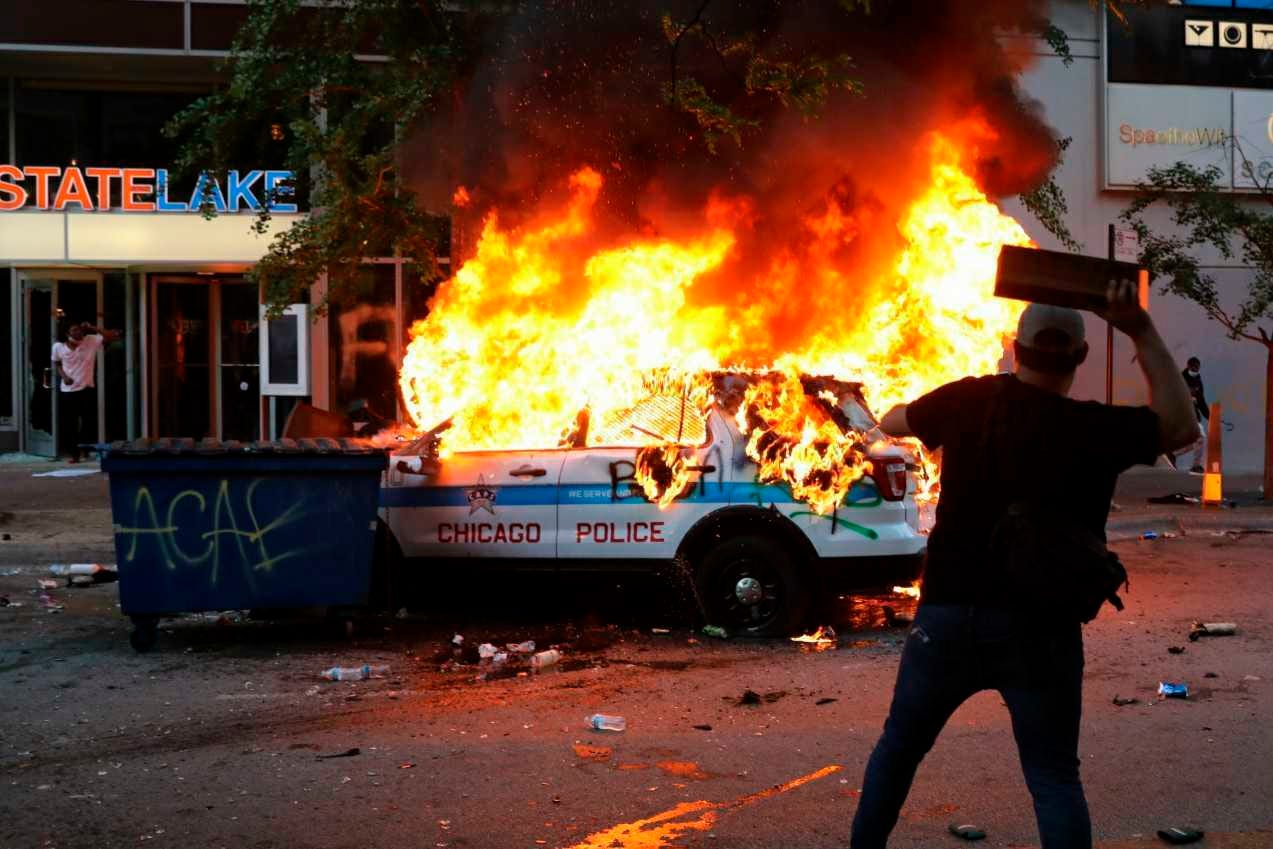
America is collapsing. On our city streets, youths are terrorizing people, vandalizing buildings, burning police cars, looting stores and inflicting violence on those who oppose them. Even more shocking, many leaders permit, justify and encourage the destruction! This is what a nation on the verge of collapse looks like.

You may think this crisis erupted after the death of George Floyd. The reality is, it has been building for decades. But it didn’t originate in the halls of government, the university or even the classroom. The chaos on our streets started in our homes. It came from the decades-long breakdown in our families.

In a Fox News interview in July, commentator Heather MacDonald said, “I am going to break a massive feminist taboo here, and say that males matter. Fathers matter. Fathers bring a set of values and norms to child rearing whether it’s self-reliance or self-discipline, honor and courage. On average, it complements what mothers can bring.”

In today’s culture, this sort of language is considered inflammatory, sexist and violent. In this upside-down world, MacDonald is one of the few people still brave enough to state the obvious.

“The anarchy that we have lived through with the looting and the rioting of the last month,” she continued, “has been preceded by a more slow-motion anarchy and breakdown, which is the breakdown of the family because our prisons today are filled almost exclusively with fatherless men” (emphasis added).

MacDonald is exactly right: This has been slow-motion breakdown of the family! Children unloved, untaught and undisciplined in the home have become unhappy, unenlightened, unrestrained adults. Uncontrolled tantrums in the home have become Molotov cocktails hurled at police. Children never taught to be grateful have become rioters who loot what they can and burn what they can’t, even though they live in the wealthiest, freest, most blessed nation in world history.

Stability, discipline, happiness, gratitude, productivity, kindness: these qualities need to be learned. And they need to be taught in the home by loving, God-fearing parents.

MacDonald called the breakdown of the family the “biggest civilizational catastrophe that we’re facing today.” She said that breakdown is the “root of the spiraling crime, insane drive-by shootings that we see in the inner city, and the destruction of human potential.”

With an urgent tone, MacDonald said, “It’s a hard thing to turn this around, but we have to.” She’s absolutely right.

What she doesn’t know is that family breakdown, and the resultant societal breakdown, were prophesied. Isaiah 3:12 describes a society in which children “oppress” and women “rule.” Men, fathers and husbands, aren’t even mentioned in that verse! The family has been turned upside down and as a result, society has been turned upside down!

Thankfully, it does not have to be this way in your home. It should not be this way in your home! God gives instruction that will help you escape “the biggest civilizational catastrophe,” and build a strong, stable family.

That includes learning how to love your children God’s way, which takes unselfishness, patience, positivity, encouragement, vision and many other virtues. It includes teaching and training them in the way they should go. It includes guiding and correcting them as necessary. Above all it means getting your family structure right. The Bible provides marvelous detail about the God-ordained roles within the family (e.g. Colossians 3; Ephesians 5; 1 Timothy 3). The emphasis is on the husband and father ruling the household well. If the house is not ruled well, the results are catastrophic! A breakdown in the home leads to the breakdown of cities and society as a whole.

God sent a man in this end time in the spirit of Elijah to “restore all things” to the Church (Matthew 17:10-11). God said this man “shall turn the heart of the fathers to the children, and the heart of the children to their fathers” before Christ’s return (Malachi 4:6). This beautiful scripture is talking about protecting, maintaining and strengthening the family structure! It is about getting our families right in the context of Jesus Christ’s imminent return! Why? Because God’s Family is going to be leading in the World Tomorrow. God is working with people right now who will be able to help Him in building excellent families during the Millennium and beyond. That starts with teaching them how to do this in their own physical families today.

This prophesied role was fulfilled by Herbert W. Armstrong. He taught and wrote extensively on how to build strong families. Since his death in 1986 we have carried on that work. As a starter to help you get your family life in order, we would like to offer you a free book: Child Rearing With Vision. This book will show you how to raise a family God’s way. Teaching God’s law and administering God’s government in the home is key to a happy, fulfilled life—and it trains you to teach and administer God’s way of life in the World Tomorrow!

CSG: Foundational Civics Class, Aug. 30, 2020 – Yakima

The Center for Self Governance is holding a Foundational Civics class on Sunday, August 30th, 2020 from 3 pm -7 pm at the Yakima Christian Center in Yakima, WA.

Foundational Civics

Theory of Human Government
In the first half of class, the student compares and contrasts the theoretical concepts of power, government, and control. The student will learn different systems of government based on those concepts. The control concepts of Self Governance and Centralized Governance introduces the student to the experimental role of the governed within the U.S. mixed republican system of government.

Structure of Human Government
In the second half of class, the student is introduced to the design elements of the U.S. mixed republican form of government. They will learn the logic behind and current structure of separation of governments (i.e. Federal v. State), the separation of powers (i.e. executive v. legislative), and the separation of controls (i.e. Sheriff v. Coroner). They will explore the inter-relationship between a selection of elected, appointed, and employed governors and influencing (controlling) those governors. The student completes all training exercises before entering the Applied Civics program. This level and associated exercises establish the student’s basis of authority from which they will put self-governance into practice in the remaining training levels.

This is an interactive class and we look forward to hearing from you. You must attend the full 4-5 hours to complete the course, as well as associated training exercises, to graduate Foundational Civics.  Training cannot be taken out of sequence. Students will need to complete all training exercises (#1-#7) prior to scheduling the Level 3.

Class link.

TACDA: Water – The Absolute Basic

Dr. Landon Beales has written an article for The Journal of Civil Defense on Water: The Absolute Basic on storage and purification of water.

Storing water is as easy as turning on the faucet—as long as you store it before an emergency arises! If you wait until it’s critical, then both frustration and costs increase – in direct proportion to the water’s availability! The following are some basic recommenda-
tions to guide you in this fairly simple storage project.

Recommendation #1: Store water from the source you are currently drinking.

Family members are accustomed to its taste and mineral content, so adjustment to “new” water won’t be necessary. There are enough other challenges during emergencies without being frustrated by your water supply.Recommendation #2: Store your water reserves in new, thoroughly cleaned, heavy duty, plastic containers with tight-fitting lids.

Heavy, plastic containers have the major advantage of being shatterproof and lighter than glass bottles or jugs.
The federal government, through the Department of Transportation, has developed a rigid burst test and handling standard (DOT #34) for plastic containers utilized in the interstate hauling industry. Plastic containers in this classification are designed to specifications for strength and transportability when filled with liquids. Plastic containers meeting DOT #34 are available in many sizes, ranging from 5-gallon to 55-gallon models. Water weighs eight pounds per gallon, so the 5-gallon container (at 40 lbs.) is about the maximum weight most people can carry – and just the right size for water storage. The 5-gallon container is designed for  tacking to conserve space and is easy to handle for rotating your water supply.

If you don’t have a storage space problem, the larger containers are better for consolidating and organizing water storage. If your storage space is fairly limited, smaller storage containers  facilitate stacking and moving them more often. Shipping-grade water containers, when filled with water, are capable of withstanding both hot and cold outdoor temperatures. This is important if some of your volume of water must be stored outside the protected environment of your living space.

There is always a great temptation to “keep it cheap” and store water in used containers. The difference in price of acquiring and preparing used containers is comparable to acquiring new equipment, all things considered. It’s not worth risking loss of your water supply by using containers of unknown origin and quality.

New containers should be sanitized. Rinse the new container with drinking water from a new, dedicated ‘drinking water safe’ hose (such as those used in campers). Rinse 55-gallon containers with a 50% solution of water and bleach. Wear rubber gloves and eye protection. Leave the bung filler cap slightly loose. Swish and roll the container so the bleach solution reaches all areas of the container. Let it sit for 10 minutes. Pour the solution back into a clean bucket and use it for the next container. Repeat the process. Pour out the solution before filling with clean tap water. The remaining bleach will ‘shock’ the drinking water. You may wish to add 1⁄4 c. bleach per 55-
gallon drum of water before tightly replacing the cap on the bung. Wash off the outside of the drum with clean water so as not to damage clothing or nearby items with bleach. Bleach residue is dangerous to your health. Filter water at point of use…(continues)

PDF of article from The American Civil Defense Association

Detroit News: How to Get Prepared

The Detroit News interviewed the couple who run The Provident Prepper website and asked them about preparedness in COVID-19 caught us off guard. Here’s what disaster preppers say we needed to do all along

For three months, Jonathan and Kylene Jones didn’t step foot inside a grocery store. They relied on their Utah home’s built-in storage room supply: flour, rice, beans, a freezer full of food.

That was last summer.

The couple, founders of the “The Provident Prepper” website and YouTube channel, wanted to do a 90-day trial of surviving solely on their food storage and garden. Bartering and trading was allowed — their kids hauled hay for a nearby farmer one day in return for a Subway sandwich — but they couldn’t go to the grocery store. Those were the rules.

So when the coronavirus erupted in March, emptying grocery stores and turning others into hoarders overnight, Kylene and Jonathan Jones relaxed.

“When this pandemic struck, we’d already been through it,” said Kylene Jones, 55. “There was this great sense of peace that taught us that we’re just fine, we can do this.”

The Joneses acknowledge that very few people have the patience or time to do an experiment like theirs.

But a variety of people who prioritize preparedness say that most people can and should have supplies and plans to get them through several days. It’s doable without entertaining conspiracy theories or spending a fortune on special tools and supplies.

Here’s how to start.

Think it through 

Yes, it might feel weird or unnerving to imagine worst-case scenarios. But thinking through possible disasters — especially now that we can envision one — is key to preparation and peace of mind, said Ontario’s fire administrative director Jordan Villwock.

“While it’s not fun to think about, it’s always better when an incident happens that you’re prepared,” Villwock said. “Hope is not a good contingency plan.”

Florida gets hurricanes. In the Midwest, tornadoes. California is blessed with earthquakes, wildfires and mudslides. Get to know your area’s specific vulnerabilities. Do you live on a fault line? Is your beachfront property susceptible to a tsunami? Look up your local jurisdiction’s hazard mitigation plan, which should detail threats unique to your area, Villwock recommends.

While you’re at it, look up evacuation routes for your neighborhood — include routes with the blue “evacuation” signs as well as little-known streets that might come in handy if the larger thoroughfares get blocked. Find routes that don’t use bridges or roads crossed by bridges. Know how to get out, in case of an emergency.

Plan for communication 

Sit down with your family, roommates or neighbors and discuss. Decide on a meeting place in your neighborhood and one farther away, if it’s not safe to stay close to home. Agree on an out-of-state contact who can serve as an intermediary to help relay information. Memorize and write down that person’s contact information.

“Some people hesitate to feed their children information that’s scary, but I think it can be done in a non-threatening way,” said Jonathan Jones, 60. “It truly empowers them to look at a situation and say, ‘OK, here’s what we’ve already done and we can think this through.’”

Also write down your medical insurance, doctors’ contact information and any other health conditions (including allergies).

Many jurisdictions now have the capability to send messages through Amber alerts _ remember your cellphone blaring the various curfew alerts? Individual cities and counties often have their own emergency alert systems. Sign up for them on your city’s website. You should also follow your local government, police and fire departments’ social media, which are often the first to sound the alarm about an emergency near you.

Get ready to go 

Practiced preppers often have a couple different stores of supplies. Call it whatever you want — a go-bag, bugout bag, 72-hour supplies, or basic preparedness kit — it should be ready to go at a moment’s notice. Think of the 2018 Camp Fire, a deadly wildfire that tore through the Northern California town of Paradise in minutes.

Ready.gov, the federal preparedness website, advises that you fill your bag with the basic supplies we’re now all accustomed to — hand sanitizer, face masks and gloves — and some we’re not — an AM/FM crank radio, a flashlight, cellphone charger, extra batteries, a whistle, a utility tool, a blanket, a personal hygiene kit, bottles of water and at least three days of non-perishable food.

Villwock recommends also keeping cash in small bills in your bag, along with paper maps of your city.

“Think what life would be like if you’re finding places and you don’t have Google Maps anymore,” he said. “How would you get around?”

Don’t forget a first aid kit, which should contain supplies to treat an immediate injury and help you last a few hours if you can’t get medical help quickly. Villwock recommends bandages, ointment, antiseptic towelettes, an ice pack, tweezers and tape.

Once you have the basics down, customize. If you have children, add enough supplies for them too. If you live in a cold climate, pack a sweater, hat or boots. Perhaps you need medication for anxiety.

“Address stuff based on what’s going to kill you or cause you the largest problems the quickest,” said Dan Baird, founder and head instructor of the California Survival School. “Take care of your first aid needs and basic health and safety needs first.”

Keep your bag in a readily accessible place, like your car, a coat closet or garage. “You don’t want it buried deep in the closet in the middle of the house,” Baird said. If you keep the bag in your car, maybe add glow sticks so people can see you if you’re stranded one night on the side of the road.

Some experienced survivalists include other tools, ranging from eating utensils to things like the “doomsday axe.” But Villwock cautioned against getting caught up in all the advanced supplies.

“Having all those tools and blankets … is going to make it more comfortable during the disaster,” Villwock said. “When you have reusable plates and can openers and duct tape and Q-tips, yeah that’s going to all come in handy, if necessary. But 72 hours, I could go without a Q-tip most likely, you know.”

Prepare the home 

By now, we’re probably all accustomed to having a couple extras boxes of pasta or cans of beans in our pantry. But what do we really need in a home supply?

Preppers recommend plenty of non-perishable food and at least one gallon of water per person, per day. You’ll also need a backup of your medications and basic home tools. Frozen food is good too, but it may spoil quickly during a power outage.

How long should supplies last? Three weeks, three months or a year, depending on which prepper you ask. You’ll have to decide what length of time makes sense to you.

Once you do, they advise that you buy a little extra of your regular grocery list every week until you’re stocked up. Don’t waste money on items you never use, Baird said. Rotate through the items, keeping your supply’s shelf life fresh.

“Have your spaghetti, have your macaroni and cheese, have your oatmeal,” Baird said. “Have whatever it is you already like to eat.”

The Joneses agreed. During their 90-day survival trial, they learned they had packed too much tuna for their liking, but not enough cat food. They fed the tuna to the cats and adjusted their shopping list going forward. Also, Kylene Jones realized, they needed more chocolate.

Where to keep it all? Don’t be afraid to do a spring cleaning to maximize your pantry or closet space. Then get creative. In addition to a storage room on their 1.5 acres, the Joneses use empty space under their bed.

“We recognize that a lot of people can’t have that, or it’s not practicable, but whatever space you have, you can make it usable,” Jonathan Jones said.

Don’t get overwhelmed 

If you’re stressed imagining the next disaster and the prospect of preparing for it seems too much, stop and take a breath. Think of prepping as the opposite of hoarding — get ready while you’re in a calm state of mind so you don’t have to panic later.

Preparing is also a form of community care, the Joneses said. Planning ahead means no last-minute runs to the store to stock up, taking away from other people in need.

“A lot of the reason people don’t prepare is because it seems overwhelming until you break it down,” Jonathan Jones said. “When you break it down into small, manageable pieces, then it’s doable, then you can make some real progress. And then what comes with that is a lot of peace of mind.”

So think ahead. Keep it simple. And don’t hoard toilet paper.

Preppers Survive: 10 Yeast-free Bread Recipes

Preppers Survive has an article on 10 Yeast-free Bread Recipes, including flat breads, soda breads, crackers, hard tack, pancakes and more. They’re not natural yeast or ferment recipes, but recipes without yeast.

Yeast, bread, and toilet paper were among the first items to disappear off the grocery shelves during the start of the 2020 pandemic. Bread is a beloved food staple and has been since cavemen roamed the earth. There are lavish bread recipes for the rich, basic homemade recipes for the middle class, and meager yeast-free bread recipes for the impoverished.

The majority of the United States population relies on grocery stores for bread, cakes, crackers, and pastries. We love the way it fills our bellies and the way its carbs convert into energy.  So, what can you do when yeast is not available? Do you have a back-up plan if the supply change is interrupted? Having 50 lbs of flour in your food storage pantry is a good start but what other ingredients would you need to make a simple food staple like bread for your family?


Below are 10 yeast-free bread recipes that need very few ingredients. These recipes have withstood the test of time and kept people away from starvation during times of scarcity. You may want to try a few of these recipes and see if one is a good fit for your family. Don’t forget to print a few and add them to your preparedness binder.


  1. Australian Damper

10 Yeast-free Bread Recipes with Few Ingredients for Doomsday preppers

For thousands of years, this bread has been made by Australian Aborigines. They would grind plants or nuts to make flour then mix it with water. Eventually, Australian cowboys were documented traveling with flour, salt, and water to make a bush bread by cooking it over hot coals. After many years, the recipe has expanded ingredients and adapted to a more modern taste.

(6) Ingredients:  Flour, salt, milk, butter, sugar, baking powder

For the full recipe visit:  Food.com – Australian Damper


  1. Bannock

This bread originated from Scotland around 1562. The bread was eventually found in Canada and throughout North America used by Native Americans. It’s typically a dense, flat bread cooked in a round pan and made from oats or barley.

(5) Ingredients:  Flour, baking powder, salt, bacon grease, water

For the full recipe visit:  Prepper’s Will – How to Make Bannock Bread


  1. Crackers

10 Yeast-free Bread Recipes with Few Ingredients

Modern day crackers started out as Hard Tack (see the recipe below) then evolved in 1810, from an accidental baking incident into the cracker we know and love today. They got their name from the cracking noise they make when bitten into.

(5) Ingredients:  Flour, sugar, salt, fat (oil, butter, etc), water

For the full recipe visit:  The Pioneer Woman – How to Make Crackers


  1. Hard Tack

It’s a biscuit that has been used by sailors for thousands of years. The recipe was documented as far back as Ancient Rome. During the Civil War, it was a food staple for soldiers. With only three ingredients, it’s a go-to recipe to help people get through hard times by holding off hunger-pains.

(3) Ingredients:  Flour, salt, water  

For the full recipe visit:  YouTube – Treader Tube – Hard Tack Survival Bread


  1. Pancakes

10 Yeast-free Bread Recipes with Few Ingredients

Pancakes might be the oldest form of bread known to man, dating back to the Stone Age. Early American pancakes used buckwheat or cornmeal (aka Johnnycakes). What makes pancakes different from other breads it how it’s cooked. Once the batter has been made you drop it into a heated, greased pan. So, you’ll need a fifth ingredient which is grease or oil.

(4) Ingredients: Flour, eggs, milk, baking powder

For the full recipe visit:  Café Delites – Easy 3 Ingredient Pancakes


  1. Soda Bread

Soda bread originates from Ireland and was cooked in an iron pot over an open flame. It has a hard crust, dense texture, and a sour taste. Sour milk was used because of its reaction with the baking soda. Today buttermilk is used instead.

(4) Ingredients: Flour, salt, baking soda, buttermilk

For the full recipe visit:  Cooking NY Times – Traditional Irish Soda Bread


  1. Sponge Cake

Italians introduced this yummy bread to the world around 1420 during the Renaissance. It became very popular because it’s easy to make, uses only three ingredients, has no added fat, and tastes great!

(3) Ingredients: Flour, eggs, sugar

For the full recipe visit:  Food.com – Three Ingredient Italian Sponge Cake


  1. Survival Bars

Survival bars are a modern spin on ration bars. They are designed to be high in calories, have a long shelf life, use inexpensive ingredients, and taste better than fortified ration bars that the military and Coast Guard use.

(6) Ingredients: Oats, powdered milk, sugar, honey, gelatin, water

For the full recipe visit:  Food Storage and Survival – Homemade Survival Bars


  1. Tamale

Tamales are older than Mayan or Aztec civilizations. This recipe is estimated to be over 10,000 years old. Warriors and hunters would pack them for sustenance on long journeys.

(6) Ingredients: Masa harina (corn flour), stock, salt, baking powder, lard, butter

For the full recipe visit:  Mexican Please – Easy Tamales Recipe


  1. Trench Cake

The British government released this recipe to the public so they could make a cake with the limited food rations citizens were allocated. It was common practice to send a trench cake to a loved one fighting in the first world war. Eggs were scarce so vinegar was used as a substitute. This recipe can be improved by adding currants or raisins, plus spices like nutmeg and ginger.

(7) Ingredients:  Flour, cocoa, baking soda, margarine, vinegar, milk, bwn sugar

For the full recipe visit: Ask a Prepper – WW1 Survival Food


Forward Observer: Mao on American Patriots

Intelligence analyst Sam Culper of Forward Observer has a couple of Out Front podcast episodes on Mao and what conservatives can learn from him. There is good information about subversion of conservative institutions, hard and soft power, community organizing and outreach, and the need to think of creating large groups rather than small groups. Below are the two podcasts on Youtube.

Politics is war without bloodshed while war is politics with bloodshed. – Mao

Medium: Why Trump Is Likely to Win Again

Freelance writer Thomas Greene has written a piece at Medium.com titled Why Trump Is Likely to Win Again. While I believe he gets some things wrong (like a lot of people do believe H. Clinton is a criminal), I agree that voter anger over elected representatives and un-elected bureaucrats who have been captured (and corrupted) by the system is the primary fuel keeping the Trump engine running.

The Bronx of my childhood was a paradise. My street ran parallel to a section of the old Croton Aqueduct, by then long disused, which we kids called the Ackey. Along its banks grew trees and bushes and wild flowers forming a ribbon of thicket in which we played, and through which we “hiked.”

We were always in the street. We learned our games and rhymes by word of mouth, from older to younger. We chose our adventures and settled disputes among ourselves. We played stick ball and ringolevio and skully, red rover and stoop ball, and a deliciously sadistic variety of Johnny on a pony. We raced about on noisy cheap skates with metal wheels.

In this urban sanctuary I grew up safe, loved, happy, and unmistakably working class, yet somehow I slipped away. I was reared to become an ironworker or electrician, but I managed to pass through a posh New England liberal arts college and end up a tech journalist and author. I’ve worked unsupervised, chiefly from home, since the 1990s.

Most of my relatives and old neighborhood friends hate people like me. And I don’t blame them. Most are lifelong Democrats, yet they voted for Donald Trump, and will again, and I can’t blame them for that, either. Let me explain.

My career is the product of an economic revival engineered by the center-right New Democrats of the Clinton era and subsequent administrations. I’ve observed the tech industry for two decades; it’s a job, but it’s hardly work: I’m a nerd; I like science, technology, and medicine. Right now, I couldn’t be more comfortable in lockdown. Amazon supplies my dry goods while a friendly driver brings my groceries. My family and I are safe. No one comes near us without a mask. I control my environment; I choose the people in whose presence I’ll work, if any. I can smoke and drink on the job if I please. So long as I honor my deadlines and file clean copy, no one has anything to say about it. Tech’s been good to me.

But the guy I was expected to become walks beside me like an imaginary friend I never outgrew. I think about him often — daily, if I’m honest. He commutes by bus, encountering irresponsible louts who refuse to mask up. He worries about it, too. His wife, who had earned a second income, is at home supervising their kids. He lives by the lunch buzzer and the punch clock. If there’s music where he works, it’s amplified by cheap, overdriven speakers and the genre will suit him only by chance. The temperature and ambient noise and lighting were calibrated by industrial psychologists. He can’t evade disagreeable co-workers. He’s paid far less than a family wage, but he’s got no health coverage or pension. He endures daily uncertainty about his family’s needs. Why should he not hate me? I would hate me if I were him.

He and millions of others failed to thrive in the tech economy, but that was a feature, not a bug. Blue-collar Americans were never going to adapt, despite the assurances of New Economy cheerleaders, many of whom were in government. Factories closed and data centers opened. Dotcom outfits traded on nothing more than an online presence, which somehow made sense to us. The New Democrats exalted capital both tangible and intellectual, and devalued labor, as if they’d been old-school Establishment Republicans. They fawned over Bill Gates and Eric Schmidt, Steve Jobs and Larry Ellison, Michael Dell and Andy Grove the way one imagines Calvin Coolidge gushing about Rockefellers and Morgans, Vanderbilts and Astors.

A high-tech meritocracy would lead America in a better direction, and the need was urgent. The Old Economy was failing, undeniably. It was time to re-formulate it with a progressive veneer: no more dirty factories or pollution; NAFTA would ship that mess abroad. America would subsist on green energy, outsourcing, financial services, the sacrament of e-commerce, and high-tech gadgets: a middle-class Valhalla governed by upper-middle-class trustees from the best schools. There would be no need for troublesome relics like labor unions; the virtuous nature of technological progress would itself ensure quality jobs and dignity for workers. Plentiful consumer credit would replace the family wage and health-care benefits. Blue-collar America would suffer collateral damage, but too much was at stake; it would be a necessary sacrifice. And of course we’d be gentle; we were Democrats and nerds, after all.

Big Tech was hardly the sole disruptor, but the New Democrats fell for, and amplified, Silicon Valley’s specific flavor of empty promises wrapped in technobabble. “Delivering the ____ of the future,” they said. We got e-this and i-that and smart everything else. It had a wholesome ring and implied that Richard Feynman and Carl Sagan were finally in charge. The progressive, sciency veneer gave cover to other mega-rackets with less compelling legends, enabling them to fleece their workers and consumers too. Soon everyone was delivering the ____ of the future.

The Democratic Party divorced its industrial, unionized base and married its Silicon Valley mistress. It had once believed in collective bargaining. It had once believed that workers were an essential part of a healthy economy and worthy of respect. There was a time when a US president, like Harry Truman, might entertain a labor activist, like Walter Reuther, amiably in the Oval Office. But the Party had fallen hard for its tech darlings and began to dream of a meritocracy based on steadily-increasing knowledge, intelligence, and creativity that would lift us all toward self-realization as we bathed in the restorative glow of our screens. In other words, Democrats put their faith in social vaporware. Old-Economy workers would be “rehabilitated,” language implying that they might be more intellectually challenged than unlucky. “Euthanized” would be a more honest word. The former lower-middle and working classes would listen to two decades of meritocratic cant while their standards of living would fall steadily with no ground floor in sight. They were never a priority.


The candidate Barack Obama spoke to blue-collar America. He campaigned on change that would rejuvenate careers and restore dignity. Working Americans in the swing states doubted that Hillary Clinton even knew they existed. They saw Obama as a last hope and supported him enthusiastically in the 2008 primaries and later in the general election, but he soon proved to be a disappointment. He, too, fell in love with Silicon Valley and Wall Street and neglected the people who needed him most. And they punished him: he won fewer states in 2012 than he had in 2008. People like the alternate me felt cheated by a guy who rocked a Brooks Brothers suit and talked a great game, then gave the Tech and Finance sectors everything they wanted and more. Educated people from the best schools trusted Big Tech outfits because educated people from the best schools ran them. Elites imagine each other to be virtuous because they imagine themselves that way.

Technology giants were understood not as hardy sprouts but would be treated instead with princess-and-the-pea levels of delicacy, thanks to a superstitious fear that it might all be brought to grief by, say, forcing companies with hundreds of billions in share value to tolerate an employees’ union, offer a minimum wage adequate for a decent life, or pay tax proportional to their reliance on public goods.

No one bears greater responsibility for the lack of empathy toward Old-Economy workers that led to Donald Trump’s victory than big-name Tech darlings and the New Democrats who coddled them, then openly ridiculed their own voter base: the people Hillary foolishly nicknamed “Deplorables;” that is, the millions of disappointed Obama voters who would happily have voted blue if they’d had confidence that the party would respect them, welcome them, and acknowledge their needs. But the New Economy is a gated community, shut firmly to them, whose most strenuous boosters have been the Clinton, Bush, and Obama Administrations. Old-school, working-class Democrats are unwelcome in the party they built. No one wants them tracking mud through the salon.

Donald Trump defeated Hillary Clinton in the swing states the same way Barack Obama had: by characterizing her as disdainful toward blue-collar Americans. It was a potent message among those who once had seen decent wages in return for honest work, lately reduced to Walmart greeters and Uber drivers. Humiliated by a labor market in which they had nothing to trade, the former working class understood that they also had nothing to lose. Liberal democracy and its supporting institutions shed their veneer of sanctity when dead-end employees can aspire only to dead-end management gigs. Call them “associates” and “technicians” all you want; they know who they’ve become and what others think of them. They are why Trump won in the swing states; he was propelled to victory by disillusioned Obama voters. They gleefully chanted “lock her up” not because they thought Hillary was an actual criminal, but because they knew what her election would bring them: four or eight more years of economic and social stagnation to top off the twenty they’d already been through.


They elected Donald once and they will try to again. He is scornful and vicious. He despises openly. He snarls and barks. He will make a pig’s breakfast of everything he touches, but here’s the thing everyone misses: educated elites will feel the hardship he causes more acutely than the millions of workers who have already adapted to pittance wages, dead-end careers, and chronic disrespect. They’ve endured two decades of it; they can cope. They’re betting that liberal snowflakes like me can’t.

Trump will not be defeated by educating voters, by exposing his many foibles and inadequacies. Highlighting what’s wrong with him is futile; his supporters didn’t elect him because they mistook him for a competent administrator or a decent man. They’re angry, not stupid. Trump is an agent of disruption — indeed, of revenge. Unfortunately, the coronavirus pandemic has positioned him as a tragic force-multiplier on a scale that few could have predicted, and the result is verging on catastrophic.

Still, that might not be enough to prevent his re-election. Workers now sense that economic justice — a condition in which labor and capital recognize and value each other — is permanently out of reach; the class war is over and it was an absolute rout: insatiable parasites control everything now, and even drain us gratuitously, as if exacting reparations for the money and effort they spent taming us. The economy itself, and the institutions protecting it, must be attacked, and actually crippled, to get the attention of the smug patricians in charge. Two decades of appealing to justice, proportion, and common decency have yielded nothing. I’d rather not see four more years of Donald, but I understand the impulse to use him as a cat’s paw.

Joe Biden is only moderately attractive to swing voters. He’s got longstanding ties to the financial and consumer-credit rackets, and many of his senior campaign people are former lobbyists, industry flacks, and banking alums. He’s a New Democrat at heart: too much like Hillary and too little like the Barack Obama we thought we were voting for in 2008. Elizabeth Warren and Bernie Sanders appeal to the Obama 2008 → Trump 2016 electorate, not Biden, and not the domesticated Obama of 2020 who will be campaigning for him.

I doubt that Obama can draw enough of his old swing voters back to the Democratic Party. They were his constituency once, but he let them go and now his transformation into a New Economy aristocrat is complete. He could even be a liability to Biden, who seems more down to earth than today’s Obama.

The New Democratic Party and the flashy economic colossus controlling it are a seductive pair. We saw this as Obama spoke on 30 July 2020, eulogizing the late US Representative John Lewis. The former president and Columbia University and Harvard Law School graduate promised us that one day, “when we do finish that long journey toward freedom; when we do form a more perfect union — whether it’s years from now, or decades, or even if it takes another two centuries — John Lewis will be a founding father of that fuller, fairer, better America.” Thus did our first black president signal that he might condone two more centuries of racial and social injustice so long as the meritocracy continues to treat him and his family right.

He and other high-minded elites are thinking fine thoughts and beaming positive energy to ordinary Americans from the metaphorical gated community swaddling the rich, progressive class. No uniformed weasel will dare kneel on any of their necks, we can be certain. There will be no eviction notices, no local food pantries, no paltry unemployment checks for them. These people have no clue what’s going on in the workaday neighborhoods of American cities and in our towns and rural communities, and they’ll be pleased to keep it that way.

Why should the victims of the New Economy not despise the system, and the people tending it, so intensely that they would vote Republican again? Why would they not hope that Donald will cause so much damage that America will be forced to make a fresh start? For them, stability equals stagnation while chaos might bring opportunities.

Elections are decided in the swing states. We know how Massachusetts and Mississippi will vote. The battle will take place in Florida, Georgia, North Carolina, Virgina, Pennsylvania, Ohio, Michigan, Iowa, Wisconsin, and Colorado, and it will be decided by Obama-Trump voters. They haven’t forgotten that, during two decades’ time, Democrats exported their jobs and rewarded them with gigs. The question is, will their resentment overcome their reluctance? They might fear Donald’s destructive potential, but they’ll be inclined to vote for someone who has been wrecking the political and economic system that cut them down from working class to working poor with no hope of escape. Donald has a solid chance of winning.

For Democrats, the only path forward is behind: the Party must welcome, and actually represent, employees whose lives and labor and services are valued as essential contributions to society. The former working class won’t be satisfied until they see Bill and Hillary, Barack and Joe enact an auto-da-fé through the streets of Washington accompanied by a dreary huddle of bankers, VCs, bond traders, and Tech CEOs in quest of a genuine catharsis in which the pain of their guilt and self loathing swells and burns and finally grows so unbearable that they literally curse themselves and beg to be forgiven.

If candidates Biden and Harris, and the wider Democratic Party, fail to recognize and renounce the worst elements of the high-tech, financialized New Economy they’re in bondage to, and neglect to reach out to Obama-Trump swing voters with genuine understanding, compassion, and respect — not to mention actual, regulatory solutions — Donald might well be elected again, exactly as he was in 2016: by swing-state Democrats who have had enough.



Ammo.com: Asymmetrical Warfare and 4GW — Militia Groups

This article comes from the library/writings at Ammo.com, Asymmetrical Warfare and 4GW: How Militia Groups are America’s Domestic Viet Cong. It’s a bit of a longer article that goes into the different generations of warfare, asymmetrical warfare, and where the US militia fits in.

“It is interesting to hear certain kinds of people insist that the citizen cannot fight the government. This would have been news to the men of Lexington and Concord, as well as the Mujahedeen in Afghanistan. The citizen most certainly can fight the government, and usually wins when he tries. Organized national armies are useful primarily for fighting against other organized national armies. When they try to fight against the people, they find themselves at a very serious disadvantage. If you will just look around at the state of the world today, you will see that the guerillero has the upper hand. Irregulars usually defeat regulars, providing they have the will. Such fighting is horrible to contemplate, but will continue to dominate brute strength.”

Col. Jeff Cooper

When one discusses the real reason for the Second Amendment – the right of citizens to defend themselves against a potentially tyrannical government – inevitably someone points out the stark difference in firepower between a guerilla uprising in the United States and the United States government itself.

This is not a trivial observation. The U.S. government spends more on the military than the governments of China, Russia, Saudi Arabia, India, France, United Kingdom, and Japan combined. Plus, the potential of a tyrannical government is arguably upon us – with the federal government spying on its own citizens, militarizing local police departments with equipment and tactics from the War on Terror, and repeatedly searching Americans, which desensitizes them to this invasive process.

There is much historical precedent, however, for guerilla uprisings defeating more powerful enemies. For instance, the Cold War saw both superpowers brought to their knees by rural farmers – for the Soviets, their adventure in Afghanistan against the Mujahideen, and for the United States, the Vietnam War against the Viet Cong.

In both cases, nuclear weapons could have been used against the guerilla uprising, but were not. Even assuming the use of nuclear weapons from the position of total desperation, it’s hard to imagine they would have made much of a difference in the final outcome of either conflict. Unlike the invading armies, the local resistance enjoyed both broad-based support as well as knowledge of the local terrain.

Asymmetrical Warfare and 4GW: America's Domestic Viet CongNow imagine such a scenario in the United States. You wouldn’t be the first person to do so. From Red Dawn to James Wesley, Rawles’ Patriots series, there is a relatively long-standing tradition of American survival literature about the hoi polloi resisting the tyranny of big government, either before or after a collapse.
For the purposes of this article, consider what a domestic American terrorist or freedom fighter (after all, the label is in the eye of the beholder) organization based on the militia movement would look like in open revolt against the United States government. In the spirit of levity, we’ll call them the “Hillbilly Viet Cong.” They would most likely find their largest numbers in Appalachia, but don’t discount their power in the American Redoubt, or the more sparsely populated areas of the American Southwest, including rural Texas.

Here we have tens of thousands of Americans armed to the teeth with combat experience, deep family ties to both the police and the military, extensive knowledge of the local geography, and, in many cases, survivalist training. Even where they are not trained, militant and active, they enjoy broad support among those who own a lot of guns and grow a lot of food.

On the other side, you have the unwieldy Baby Huey of the rump U.S. government’s military, with some snarky BuzzFeed editorials serving as propaganda.

Could the Hillbilly Viet Cong take down the USG? Maybe, maybe not. But it’s difficult to imagine that the USG could take them down.

Indeed, even with a number of nasty little toys on the side of the federal government, we live in an age of a technologically levelled playing field. This is true even when it comes to instruments of warfare. While the USG has nuclear weapons, it’s worth remembering that a pound of C4 strapped to a cheap and readily available commercial-grade drone is going to break a lot of dishes.

This sort of guerilla insurgency has a name: It’s called fourth-generational warfare (4GW), and you might be surprised to learn that you already live in this world.

What Are the First Three Generations of Warfare?

Asymmetrical Warfare and 4GW: America's Domestic Viet CongTo understand how 4GW is a new and improved form of war, we first need to explain what the first three generations of warfare were:
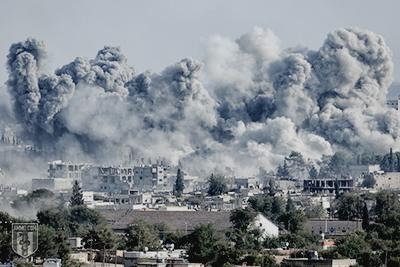
First-Generation Warfare

The first generation (1GW) is basically what you would have seen in the movie 300. The hallmarks of this generation of warfare are armies from two different state actors leveraging line-and-column tactics and wearing uniforms to distinguish between themselves.

This generation is not entirely without subterfuge. For example, counterfeit currency was used to devalue the money supply during the 1GW Napoleonic Wars. Other examples of 1GW conflicts include the English Civil War and the American Revolutionary War.

Second-Generation Warfare

The second generation (2GW) comes with the advent of rifling and breech-loaded weapons. As students of military history know, the invention of rifling was one of the reasons that the United States Civil War was so bloody. This meant that firearms that were once mostly for show after 100 feet or so, were now deadly weapons – and tactics did not immediately evolve.

But evolve they did. Many things we take for granted as being just part of warfare – such as camouflage, artillery, and reconnaissance – are defining features of 2GW. The American Civil War is probably the first 2GW conflict. Others include the First World War, the Spanish Civil War and, much more recently, the Iran-Iraq War. The United States military coined this phrase in 1989.

Third-Generation Warfare

This phase of warfare, also known a 3GW, is the late modern version of warfare, where speed and stealth play a much bigger role. Weapons and tactics alone are less important. Instead, military units seek to find ways to outmaneuver one another before – or even instead of – meeting on the battlefield.

The era of 3GW was initiated with the Blitzkrieg, which marked the decisive end to cavalry and replaced it with tank and helicopter warfare. Junior officers were given more leeway to give orders. The Second World War was the first 3GW conflict, with the Korean, Vietnam and both Iraq Wars becoming further examples of this style of fighting.

What Is Fourth-Generation Warfare?

Asymmetrical Warfare and 4GW: America's Domestic Viet CongThe most direct way of discussing 4GW is to say that it describes any war between a state actor and a non-state actor. This is also known as asymmetrical warfare, but it’s not the only difference between 4GW and other, earlier forms of conflict. Asymmetrical warfare does, to be sure, blur the lines between combatants and civilians. This is in part what made the Bush-era “war on terror” so difficult and complicated: The war was against a set of ideas rather than a nation or even an extra-national army.

Continue reading “Ammo.com: Asymmetrical Warfare and 4GW — Militia Groups”

American Partisan: Logistics – Ammo in Guerrilla Groups

NC Scout at American Partisan writes about the importance of logistics in guerrilla conflicts in A Challenge of Logistics: Ammo in Guerrilla Groups.

Almost as predictable as the rising of the sun is the issues of keeping a guerrilla group supplied. In every historical account I’ve read and personal encounters training and patrolling with the Kurdish Peshmerga and even the Afghan Border Police (which is little more than a government sanctioned militia) the number one issue boils down to logistics. In all cases, its not even having a combat load of ammunition for a patrol- they barely have ammo to even train, much less sustain a firefight for long. Such is life. Today many are finding themselves in a similar situation. Ammo, for the most part, is short and expensive where you can find it. The guns don’t seem to be the problem- 5.56 and 9mm are the new 22 Long from the era of Obama. Taking that into account, how many here in the States actually have a realistic picture of how much equipment it’ll take to remain supplied for any amount of time?

I’ve always had a fascination with Cold War era conflicts- partly because I’ve known many who were involved in them and still look to the ones alive for advice, but also because there’s so many lessons that inherently go overlooked in terms of the realities and challenges a guerrilla force will face. Reality, always, is far different from one’s expectations and a far cry from the fantasies many espouse.

The Cuban Revolution is a great example. Early on, the primary challenge that the various factions faced was not finding motivated people but establishing a standard for arms and ammunition, followed very closely by a coherent training plan to evolve the motivated would-be guerrillas from randomly successful fighters against a far superior military force to a force to be feared using the Escambray mountain range as a natural base of operations.

Such is the interesting story of Frank Sturgis in Cuba. It was Sturgis, a WWII Marine Raider, who was largely responsible for first recognizing these needs then starting his own airlift to supply them with surplus WWII arms and ammunition. The M1 Carbine became a very popular arm for the tight jungle terrain and became the weapon of choice among many. It was light and fast, had decent stopping power within the relatively close distances jungle fighting entails (an opinion shared by Philippine Guerrillas a decade earlier) Sturgis used his lessons learned fighting in the Pacific in WWII to make the guerrilla band a force to be reckoned with, later being instrumental in the training of Assault Brigade 2506 that landed at the Bay of Pigs and then continuing to train the survivors until just before he died in the 1990s. And somewhere in that timeline he found himself breaking into Watergate. But the larger point to be made is that without outside support, the Cuban Revolution would have been crushed- a reality that forced them to work with outside sources that were often cagey at best.

Taking that lesson into account, there’s a few lessons that bear noting, and have repeated themselves over time. The first is having a standard weapon that is both easily supplied, repaired, and simple to teach others to use. Many times, several of us have probably heard the questions “why do you have more than one of those? You can only shoot one…” and while that last bit might be true, it neglects the reality of the need to arm others. We don’t exist in free space, and the notion of ‘I’m just going to bug out to my retreat and they’ll leave me alone!’ is a pipe dream. Further, the ability to arm others infers control and inherent authority. I armed you, you work for me. If there is no authority, there is no cohesion.

You need one standard of ammunition and magazines. Having a multitude of random specialty calibers or proprietary magazines for those weapons means that you’ve added a layer of complications to your logistics plan that will at best cause that weapon to be an expensive club later on down the road. Further, a guerrilla’s personal choice of weapon is more often dictated by what ammo he can source rather than what he would like. Last, and this is one that my personal experience mirrors, is that the so-called ‘battlefield pickup’ is not a reliable plan to resupply your group. That doesn’t mean it won’t be viable in some instances, but the reality of combat is that in fluid and volatile conditions, you don’t always have time to pick up weapons and supplies off your adversaries alone. Despite the popular internet tropes in survival circles, there won’t just be guns laying around everywhere. I’ve operated in two different warzones, and aside from a few inert shells here and there, I didn’t see any weapons laying around and not in the hands of people ready to use them.

Finding yourself as the potential leader of a guerrilla band, one of your principle challenges then becomes keeping a healthy stockpile of munitions to both accomplish your needs in combat while recognizing your training goals. It would be remiss to point out that ammo is currently experiencing a major shortage in the US from the very real looming threat of domestic instability. The two most common calibers in the US, 9mm and 5.56, are nearly non-existent and expensive where found. On the other hand, 7.62×39 can still be found with minimal price gouging. And while AK prices are higher than in years past, the weapon is still not extremely expensive to get into. The learning curve on the AK, at least from my own perspective, is far shorter to build a competent shooter, especially within its intended range and role.

Whatever the future holds, the reality is that no matter how much ammunition you have today, you really don’t have enough for a potential future. The world is changing rapidly and with it, the United States. Look at where we are today compared to just six months ago…let alone four years…and gasp- two decades. Let it be a sober reminder of the urgency of the times.

Global Security: Logistics for Low Intensity Conflict

US Army: Logistical Considerations for Low Intensity Conflict (PDF 1.1MB)

US Army: Guerrilla Logistics research thesis (PDF)

The Medic Shack: Amputation – First Aid and Post Aid

Chuck at The Medic Shack talks about amputating injuries, first aid for them, and post aid while using photos from his son’s recent injury. So be warned of finger amputation photos through the link.

This post is on Amputation. What first aid and also post aid needs to be done.

NOTE: Some of the images at the end of this are graphic. They are of my son’s finger and the wound. 

This site contains affiliate links to products. We may receive a commission for purchases made through these links. This does NOT increase the price of the product you may purchase.

Background

Normally when I write a blog post its from current events, past experiences both civilian and or military. This time I am using my youngest son as our topic. This past week (Tuesday the 4th of August) he had a pretty normal day at work. He works at a motorcycle accessory shop. Sells gear and he is about the most requested tire man in the city.

People bring him tires to mount that they bought from all over. From the store he works at to mail order The reason he is so requested is he cares for the customer and the motorcycle. Never scratches or damages a rim. He recently did a set of tires that the rims cost 2 grand each. Personally requested by the bike owner. Not bad for a 19 year old young man. Today’s post ties in to one from may on one we did years ago on Emergencies 

Where did my finger go?

He and his manager were moving out the old tire machine for the brand new one the store bough. As they were lifting it on the pallet the old one came on, the bead breaker slipped out of position, dropped down and amputated his lift index finger between the 3rd knuckle and the nail bed. (Knuckles are counted from nearest to the hand to the finger tip. Think of drawing and angle from the cuticle backwards from that point at a 45 degree angle to the 1st knuckle. If folks have taken my classes or shooting classes from some of my friends, you have heard me say that a traumatic injury is not a painful as it looks. For a while at least.

According to Ryan it felt like he pinched his finger. Not to bad. He went to keep lifting and he looked down and saw the blood covering the floor and tire machine. His mechanic glove was torn and the end of it was missing. The body has amazing self preservation tools. I’ve know gunshot victims who were shot, walked down a flight of stairs with a suspect in custody, put them in the patrol car and then died.

First Aid

STOP THE BLEEDING! This cannot be stressed enough STOP THE BLEEDING. Even an injury like my son Ryan has can be dangerous if the bleeding is not stopped. When blood is spilled on the floor it looks 5 times as much as it is.

The blood loss Ryan had was about ¼ a cup 60 cc more or less. It looked like more. MUCH more. 2 fluid ounces is not much in the grand scale of the body. An adult will have approximately 1.2-1.5 gallons (or 10 units) of blood in their body. The average us 1.2 gallons or 5 liters

Now the scary part. The ½ cup of blood he lost was in the first minute! And it was not pure arterial flow. It was a mixed flow. The finger tips do not have large arteries in them The vessels are about 1/32nd of an inch in diameter (.79 mm). DIRECT PRESSURE.

Ryan has been trained extensively in first aid. Well he HIS my and his mom’s son. Growing up in a medical family has advantages. He squeezed below the wound and yelled he needed something to help hold it. His manager and the vendor grabbed shop towels and put pressure on it. Sat him down with his hand higher than his heart and called 911.

If at all possible retrieve the amputated part, wrap in clean cloth or sterile bandage material, place in a baggie, and place that baggie into one containing ice. This gives the surgeons the best chance of re-attachment.

To tourniquet or to not tourniquet.

There is a sorted history on the tourniquet. Lets go back to the 1980’s As an old medic, when we had a wound that needed a tourniquet, we put it on, marked a “T” on the patients forehead with date and time of application. If your patient was going to be with you for a few hours, every hour or so we would loosen the tourniquet for a short time to allow blood to the part below the tourniquet. The reapply it.

This did not work as well as expected. For a tourniquet to work it has to be tight. TIGHT. When it is applied correctly. Tissues will be damaged. When tissue is damaged there is swelling. We call it edema. So when we let off the tourniquet, let some blood down, then re applied it, the bleeding would stop and all was good in the world. Until the patient bled out. What happened was when the tourniquet was re-applied, it compressed the edema, and stopped the flow. But once the edema had been moved, the tourniquet was now loose…(continues)

Click here to read the entire article at The Medic Shack.

American Digest: The Cities – Reports from the Ground

From American Digest:

Mike on Twitter: “I’ve been exchanging messages with friends about what what’s happening in our cities: NY, Philadelphia and LA especially. A lot of disturbing things are not making the news. Even Republicans aren’t drawing attention to it. Here’s a message from a friend about life in NY today:

“Here’s my neighborhood, Mike: An elderly man, enjoying dinner w/his wife at an outdoor restaurant, punched in the face. A woman waiting for the subway to come stabbed in the back. An older neighbor pausing to catch his breath told to pay two dollars in protection money or get “the fuck off that particular street corner. This is just the ten block radius from where I live in the last six days.” Other friends from NY talk about shattered business districts, drugstores with locked shelves, and hundreds of homeless people and parolees, including sex offenders, being moved into hotels on the Upper West Side adjacent to schools and playgrounds, which are filled with needles again like in the 1970s. Friends in Philadelphia report large homeless encampments in the city center and being robbed at gunpoint.

Friends in LA talk about squatters taking over empty homes in professional class neighborhoods whose residents fantasize about emigrating to Canada. Friends in all three cities have seen police officers refuse to get out of their cars while large-scale lawbreaking takes place in front of them. That’s in addition to the obvious mayhem being perpetrated on a nightly basis in Portland, Seattle and Chicago. Estimates are that up to one million people have already fled New York City — meaning nearly everyone who has the means to leave has left.

Minneapolis is a smoldering ruin that has sustained untold damage to its immigrant neighborhoods. This is not what I am reading. This is what I am hearing from people directly.

Make no mistake about it: America is now in the middle of a 70s style urban crisis whose root is a well-founded fear of violent crime and social collapse in the midst of a pandemic. The destructive spiral that has been unleashed by leftwing play-acting at revolution and pursuit of stupid fantasies of abolishing the police is destroying our greatest cities.

As urban residents vote with their feet, we are being left with empty urban shells with no tax base and no meaningful employment. The fact that the business of Washington DC is the Federal government and the national media is now centered here is blinding our society to what’s actually happening in other big cities across the country.

What’s happening is this: Thirty years of very meaningful social and economic progress in our cities — which has hugely benefited minorities — is being undone by a toxic coalition of professional ideologues and “organizers,” rich kids in Che t-shirts, well-coiffed Mayors, and a National Democratic Party that pretends that the ongoing destruction of minority owned businesses and the social and economic infrastructure that is a primary engine for raising African American and immigrant families into the middle class is somehow about “civil rights” or “racial inequality.” It is not.

It is about a war on the American middle class being waged from above and below by people whose response to the values and the struggles of average American families

Tenth Amendment Center: The Constitution Wasn’t Written to Protect Your Liberty

From the Tenth Amendment Center comes a short piece on the limited purpose of the US Constitition, The Constitution Wasn’t Written to Protect Your Liberty

One of the most biggest misconceptions I hear about the Constitution is that it was written to “protect our liberty.”

It wasn’t. At least not in a direct sense.

The confusion likely arises from the words of the Declaration of Independence.

“We hold these truths to be self-evident, that all men are created equal, that they are endowed by their Creator with certain unalienable Rights, that among these are Life, Liberty and the pursuit of Happiness.–That to secure these rights, Governments are instituted among Men, deriving their just powers from the consent of the governed.”

It’s true that the Constitution was written during a time when protecting unalienable rights was widely viewed as the primary role of government. But the Constitution is not a philosophical document. It is a legal document that formed a political union and created a central government.

That’s all it does. Asking it to “protect your rights” is really asking too much. That wasn’t why it was written or ratified.

Now the Constitution does reflect the philosophy espoused in the Declaration in that it established a general government of limited, enumerated powers. The decentralized nature of the political system it created was intended to encourage liberty.

By strictly limiting the authority of the general government, the founding generation hoped it would never possess enough the power to intrude on our rights.

But there isn’t any provision in the Constitution that actually empowers the federal government to protect our liberty. In fact, the founding generation would have almost certainly considered that too much power for a general government to wield.

In practice, this means the federal government really doesn’t have any responsibility to “protect your rights” beyond staying within its constitutionally delegated powers. Its obligation isn’t to act in order to protect liberty, it is to not act outside of its legitimate authority.

In the same way, the Bill of Rights was never intended to empower the federal government to protect your rights. As the preamble to the Bill of Rights makes clear, it was intended to add “further declaratory and restrictive clauses” to the Constitution “in order to prevent misconstruction or abuse of its powers.” I have often said it would be better named “The Bill of Restrictions.”

A lot of people want the Constitution to deliver something it never promised. They want the government to serve as a liberty enforcement squad. This is a dangerous proposition. In order to protect your liberty, the government must define your liberty. The best thing the government can do is stay out of the way. The Constitution created a limited federal government for that purpose.

But it’s ultimately up to us to hold it within its limits. Unfortunately, by insisting that the government “protect their rights” they are doing the exact opposite.

The Trumpet: Disunited States – A Lesson We Must Learn

The Balkanized States of America

Joel Hilliker at The Trumpet writes about divisions in the USA and whether they will lead to civil war in Disunited States: A Lesson We Must Learn

Is it unjust to prejudge people according to their race? Is it wrong for people in the street to exact vigilante-style “justice” against strangers? Is it wrong to prejudicially condemn people for the sins of their forefathers? Is it criminal to steal and destroy property? Should every citizen be able to live and work free from fear of arbitrary violence? Until rather recently, societal consensus was an unqualified yes to all these questions. But suddenly, they are all topics of fierce contention.

Here is a crucial question: How long can society function if we cannot agree on such basic points?

The fact is that, as alarmed as many people are by the lawlessness plaguing America’s streets today, it seems very few grasp the existential nature of the problem. America is facing civil war. Bible prophecy specifically says it will happen.

One major reason is that we are violating a specific biblical principle of living. This principle is controversial today. But it is a foundational truth. And it vividly illustrates the relevance of the Bible for our day.

In a cbs News interview, here is how Nikole Hannah-Jones, the architect of the “1619 Project” for the New York Times, responded when asked to “interpret” the arson, thievery, criminality and violence in America’s cities: “Yes, it is disturbing to see property being destroyed; it is disturbing to see people taking property from stores. But these are things. And violence is when an agent of the state kneels on a man’s neck until all of the life is leeched out of his body. Destroying property which can be replaced is not violence. And to use the exact same language to describe those two things, I think, really—it’s not moral to do that. I think any reasonable person would say we shouldn’t be destroying other people’s property—but these are not reasonable times.”

To have mainstream voices advocating destruction, lawlessness and insurrection as appropriate and legitimate is unprecedented—and deeply corrosive to society’s survival.

“If somebody decides to loot a Gucci, or a Macy’s, or a Nike, that makes sure that person eats. That makes sure that person has clothes,” Ariel Atkins, the leader of Black Lives Matter in Chicago, told reporters. “That is reparations. Anything they wanna take, take it, because these businesses have insurance. They’re going to get their money back. My people aren’t getting anything.”

A short time ago, such thinking was simply inconceivable. Everyone knew that indiscriminate destruction was evil. There was no controversy over the foundational understanding that arson, theft, looting, physical assault and violence were crimes. Everyone agreed that people should be safe, and their property should be safe. Someone who owns a business should be able to run that business, provide jobs, deliver goods and services to the community, contribute to the economic health of society, and earn a living—without fearing or actually suffering hatred, violence and destruction.

Stunningly, this is no longer something we all agree on. Rioters, journalists, commentators, professors, and even mayors, governors and members of Congress—influential, powerful people—do not believe it. They now insist that criminal destruction of property and assault on fellow citizens is understandable, even acceptable, even righteous, for the sake of “social change” in this “historic moment.”

This spirit is changing America. Prodded by such reasoning, cities are defunding police and allowing the predictable increases in crimes. And even more astoundingly, a growing number of people don’t even recognize these as problems—because they view them as mere symptoms of the real problems of racism and inequality.

Behold the consequences of adopting moral relativism as our society has been for decades—even generations. People have lost their elemental sense of right and wrong. They cannot recognize evil even when it is lighting their own city on fire.

Here is where the Bible is so supremely valuable. It gives us absolute standards—our Creator’s laws of right and wrong—that never change. It is a refreshing contrast to the moral standards of leftists, which change from year to year and sometimes from moment to moment. Yesterday’s heroes are today’s villains. And the most blatant evils are excused or even glorified.

Consider a few examples.

The Bible says God is no respecter of persons. He evaluates based on a person’s character. He judges the heart, not the outward appearance. He holds everyone to the same unchanging standard of right and wrong.

Accepting this truth is critical to a fair, just, stable society. All societies are flawed, but less so the ones that treat each person as a child of God, made in God’s image. This idea is articulated in America’s Declaration of Independence—that all men are created equal, endowed by their Creator with rights that include life, liberty and the pursuit of happiness…(continues)

Click here to continue reading at The Trumpet.

John Mosby on Building a Preparedness Group/Resilient Community

In this older post from John Mosby at Mountain Guerrilla, he gives his opinion on how to start a preparedness group or how to build a community for mutual assistance, or whatever you want to call your group. People always ask us about how to go about starting a preparedness group at the preparedness expo and elsewhere. We’ve posted several other articles previously on the topic, but as usual John has his own opinion.

We spend a lot of time on this blog, discussing the importance of building what John Robb terms a “resilient community,” while I turn back to the more traditional “tribe.” One of the recurring themes that arises in the commentary to these articles is the inability of people to find and befriend “like-minded people” to band together with for protection and security.

If this is your problem, rest assured, Aristotle thinks you’re an asshole. In his Nichomean Ethics, after pointing out that friendships are essential to the human experience (another example of classical antiquity being smarter than the ‘retreat survivalist.’), Aristotle went on to describe friendships as having three fundamental bases.

The first type of friendship that Aristotle described is the friendship wherein we like someone because they’re simply enjoyable to be around. This is the college buddy that you still hang around with because he’s good for laughs, or because he throws great parties. Aristotle explained that this was among the lowest forms of friendship, and they seldom last any great length of time. They’re not what most mature people would describe as “real” friendships.

This friendship—whether you are the guy who enjoys hanging out with someone, or you’re the guy who people enjoy hanging out with—stops, the minute shit gets tough. It’s entertaining to point out that “laughter is the best medicine,” and we need court jesters, especially in times of stress, but if that’s the only value someone is bringing to a relationship? Meh.

The second type of friendship that Aristotle mentioned, was also a “lower” form of friendship. Today, most of us generally view this type of relationship as only being valued by people who are inherently pieces-of-shit. These are the relationships where one party (or both), find utility in the friendship.

Aristotle wrote, “Those who pursue utility….sometimes….do not even find each other pleasant; there they do not need such companionship unless they are useful to each other; for they are pleasant to each other only in so far as they rouse in each other hopes of something good to come.” It’s not necessary that either party to the friendship is being mercenary per se. It’s simply a matter that the motivation for being friends is “what’s in it for me.”

This is ultimately the issue for most survivalists and preppers trying to build tribe among other preppers. We look for “well, what kind of preps does this person have? Do they share the same political values as me? Will they help me fight the good fight, politically?” Again, there’s nothing inherently wrong with this; it’s a reason for developing a friendship, it’s just not the highest form of friendship, and when we’re building a tribe—from scratch, mind you—we need the highest levels of friendship, trust, and frith.

I repeatedly suggest a thorough, annual reading of Dale Carnegies’ “How to Win Friends and Influence People,” and I stand by that. It’s important for people to recognize however, that Carnegie was writing for the businessman who needed to develop rapid, ultimately relatively shallow, business friendships of a utilitarian nature. You need to use those tactics, when meeting people, but you also need to go far, far past that step.

Aristotle also described the highest form of friendship. Considering that much of what we understand as modern, liberal (in the Classical sense, not the contemporary political sense) Western values are largely derived from Aristotle’s writing, it should be no real surprise that most people’s concept of what “real” friendship, at the highest level is, coincides pretty closely with Aristotle’s definition.

“Perfect friendship is of those who are good, and alike in virtue; for these wish each other well alike to each other…” Different from pleasure- or utility-based friendships, true friendships…the type of friendships that tribes must be based on (after all, remember, we’re talking about building a group of people that meets the definition of “kith and kin”) involve genuine care for the well-being of the other person/people, not mere ego issues.

This is not—as many anarchists would like to believe—a matter of radical self-sacrifice. It’s simply a matter of genuine concern for the well-being of the other party, regardless of the benefits to the self. This is the guy who stands up and teaches classes to his local survival group, not for his ego, but because he genuinely wants to pass on good information for the well-being of his friends, not because he’s getting paid, or because he needs to stroke his ego. This is the guy who shows up at 0600, on his day off, to help a neighbor get his crop in, and doesn’t ask anything in return, because he knows he doesn’t need to ask: the neighbor will be there next weekend, when HE needs a hand moving some furniture.

The problem that I see too often in the preparedness community is the “John, how do I find like-minded people to build tribe with?” questions we constantly get.

You don’t “find” like-minded people to become your friends. If that happens, it just happens, because you happen to meet like-minded people that you express a genuine interest in. The most important lesson of Aristotle’s discussion of friends is, looking in on-line communities for “prepper groups” to join is, how are you going to have a legitimate interest in the well-being of someone you don’t know?

You don’t know if those people in that group share your values. You don’t know if they share your work ethic. You don’t know anything about them…

Build your tribe by strengthening the friendships and relationships you have.

Click here to read the entire article at Mountain Guerrilla.