As Spring begins to sneak across the land, thoughts turn to gardens. Here are some thoughts from Kara Still at The Organic Prepper on growing and foraging food – Eating What We Grow: What We Learn and What We Love.
I grew up in Alaska. My family bought most of what we ate at the store, shipped in from the “Lower 48,” as the rest of the U.S. is known up north. The supply chains were long and fragile, and the produce was both expensive and terrible. Wilted lettuce, fuzzy strawberries, bruised apples. I couldn’t imagine why anyone would eat a peach or an ear of corn on the cob because after weeks in transit these delicacies taste like cardboard (or like rot). I ate ice cream, frozen hash browns and plenty of McDonald’s. Alaska is America, after all.
There was also another cuisine in my household, one born out of connection to the land. My family picked tart wild blueberries on the steep mountainside, with the tundra a spongy vermillion carpet around us and the first snows dusting the bare peaks above. We spent hours on icy glacial rivers or motoring past a pebbly shore, casting after salmon and halibut. We scoured the woods for wild mushrooms: nutty white King bolete (porcini), sweet-sour butter bolete, blue-bruising birch bolete, shaggy manes, and oyster mushrooms.
My eyes were opened when I was able to access other foods.
I got so sick of salmon that I refused to eat it, but the joke was on me because the salmon was already in my soul, residing there as a deep curiosity about unusual foods. As I attained adulthood and went traveling I sampled a long list of strange stuff: raw whitefish roe and muktuk (raw whale skin with the fat still on) in rural Alaska, alpaca and guinea pig in Peru, kangaroo and saltwater crocodile in Australia. I nibbled whatever was available: feijoa and loquat and dragon fruit, carpenter ant and raw jellyfish and bladderwrack seaweed, oysters smashed open on the beach.
This isn’t as strange as it sounds. Dr. Weston A. Price, the author of the classic book Nutrition and Physical Degeneration, was a dentist who traveled the world in the 1930s to document what people ate. His research includes 500 pages of pictures of people’s mouths and long lists of who did and who did not have cavities. At the edges of the Earth, Dr. Price found healthy people thriving on almost every imaginable diet: dried fish with a little oatmeal and cabbage in Scotland, cattle milk and blood plus wild vegetables in Africa, seal or caribou and berries in Alaska, cheese and rye bread with a little cabbage in alpine Scandinavia. Their teeth were flawless, their faces beautiful.
Not everyone was healthy, though. Some places Price visited, most people had had every tooth pulled from their heads by the age of 20. Some populations also had underdeveloped chests, high incidence of tuberculosis, crowded mouths and facial deformities, all from lack of nutrients. These folks were not eating a wide variety of different diets. They were all eating the same diet, which mostly consisted of white flour and jam.
There isn’t one perfect diet, because humans are omnivores that can thrive and be healthy on lots of different sets of foods. Just not on white flour and jam.
Now we’re eating wild and foraged things, plus what we grow.
These days, I live on a little homestead in rural North Carolina. My family has 17 acres of mixed woods and overgrown fields, with a pond and a stream. We have a little house we built with our hands, a garden, a young orchard, a few goats, chickens and geese.
We still eat wild things, mostly violets and sheep sorrel, chickweed, wild spring onion, a few puffballs and blackberries, bass out of the pond. One year we found a bumper crop of shaggy-bark boletes that taste like the butter boletes I grew up with. One year I killed and cooked an egg-stealing rat snake (it made fine tacos).
But my county is farm country, a thoroughly humanized landscape since before Columbus when the natives burned the undergrowth to create a fantastically productive landscape that white settlers thought was a park. If we want to eat from the land rather than the Walmart (and we do), most of that food has to be encouraged to grow, not just hunted and gathered.
Growing food is a fascinating and complex endeavor fraught with failure and surprise. My favorite potatoes and English peas are tougher to produce here in the baking south than in the frozen north. Instead, I’m gradually learning to grow exotic things even the luckiest Alaskan gardener can only dream of, like eggplant, grinding corn, hot peppers, and sweet potatoes.
Some growing seasons are successes and others are lessons.
This year was an education in drought. In June we had a 100-year flood that took out the bridges on two of the four roads into our property. Nine months later, those bridges still aren’t fixed. After that deluge, it hardly rained for three months. Seminole pumpkin, for several years running a heavy producer, utterly failed because of squash bug combined with too little water. My tomatoes made only enough for the table and about 15 jars of salsa. I have a brand new solar dehydrator, and I was looking forward to dried tomatoes with everything. Instead, I have more frozen green beans than I know what to do with…
Who doesn’t like coffee? Morgan at Rogue Preparedness has an article on roasting your long term storage green coffee beans. Sure, you can store roasted beans, but fresh roasted beans make so much better coffee. You could even store already ground coffee, but ew, no. Green coffee beans can last 20 years in storage and still make nice, fresh coffee after being roasted.
Coffee is considered a vice by many but when it comes to coffee, it’s going to be highly sought after in any emergency, disaster, off grid situation. Coffee has been a staple of many households for…it’s existence, basically.
There’s some conflicting information online about how to best store coffee beans, whether green (raw) or roasted. I’m going to offer my advice based on my own personal experience and advice given from actual coffee roasters and aficionados.
I’ll also be talking about how to roast raw coffee beans off grid.
First, let’s talk about how to store roasted coffee.
There are some hardcore coffee drinkers out there that will tell you roasted coffee is only good for 6 months after packaged and/or opening. Roasted coffee can be stored for years and it’ll still have that nice caffeinated effect. I have never found any evidence that coffee will go “bad”, as in unable to drink.
I’ve even heard people say that ground coffee will only last a few hours after being ground! Maybe as far as the freshest taste goes, sure, but coffee will still be plenty potent for years to come after it’s been ground, or even as roasted coffee beans, just as long as it’s stored properly.
Will the same taste quality be there? Probably not. But it’s still coffee.
The best ways to store roasted coffee would be in an opaque container, meaning something that isn’t clear. Notice the type of packaging that coffee comes in. Just as long as light can’t directly shine in, it’s a good package.
A mylar bag with an oxygen absorber works great. You can also just store it in a mylar bag without an oxygen absorber, though the oxygen absorber will greatly help the longevity of taste.
You’ll also want to keep the coffee stored away from heat and moisture. Keep it out of the fridge and freezer, too.
I’ve drank ground coffee from a container that has sat there for years and brewed it up and it’s tasted fine and also did the job that coffee is supposed to do; give me that sweet, sweet caffeinated feel.
Next, let’s talk about storing green (raw) coffee beans.
I like to store raw coffee beans in addition to regular coffee because…why not! Raw coffee beans store for a significant amount of time, years, just like roasted coffee. I like the satisfaction of roasting my own coffee.
There are a few different ways to store green coffee beans.
But first, just like with roasted coffee, you want to store your green coffee beans in a cool, dry place out of direct sunlight.
The first way is to vacuum seal it and then place the vacuum sealed bag (which is usually clear) inside of a burlap bag or some other opaque bag.
You could also store in a mylar bag with an oxygen absorber.
You could also store in a burlap bag.
Lastly, let’s talk about how to roast raw beans.
The video above shows how I roast my coffee with propane. There are several different ways to roast coffee at home in small batches like shown in the video above, but this is just one of the easiest.
If you don’t have a propane camp stove, you can use a fire
Cover up most of the holes of the popcorn popper with aluminum foil. You want to roast the coffee so closing the holes allows the coffee beans to roast.
Prepare your fire or propane stove setup outside in a well ventilated area.
Put the green coffee beans inside of the popcorn popper, close lid.
Keep the heat on the propane fairly low, but not too low, you’ll want to experiment so that you’re not roasting the beans too slowly or too fast and not burning them. I’d suggest starting out with just a handful of beans to get the hang of the process first.
Place the popcorn popper over the heat source and rotate very slowly, sometimes letting it sit for a few minutes at a time without rotating, just be sure to keep a very close eye on it. It may take 5-10 minutes for it to ‘heat up’.
The popping noises you’ll start to hear are completely normal. Once you hear the first ‘pops’, that’s when it’s just about ready. The popping will continue, even when it’s at a medium roast.
When it comes to how long you should do it, this comes with experience. Once you hear the first cracks, they should be medium brown, or you could continue to roast to make them a darker coffee bean. It’s up to your personal preference.
As an FYI, you don’t need a popcorn popper or propane, it’s just one of the easiest ways to do it as you have full control over the process.
If you’re doing it exclusively over the fire and don’t have all that new-fangled gear, you can just put the coffee beans in a pot or pan with a lid. You’ll want to stir frequently, while at the same time keeping the lid on so that it roasts. Lift the lid, stir, close for a minute, lift the lid, stir, close for a minute, etc. until you hear that first ‘popping’ then try to stir while keeping lid fairly closed. You want it to roast, but you also don’t want it to burn, so the beans need to be moving about.
Then, grind and enjoy! You can buy a manual coffee grinder. You can grind them with a rock. Or a mortar and pestle. Or you can place them in a bag and hammer them.
Of course, you can always store instant coffee, as well.
Coffee is a staple in the prepper community and has a great shelf life. As far as I’m concerned, coffee doesn’t go bad. I’ve never heard of an instance that coffee has gone bad.
James Wesley Rawles is hunkered down at an undisclosed location west of the Rockies. “I’m not at liberty to say what state I live in,” he told MarketWatch via internet phone. “I live in the inland Northwest… more than two hours from any decent shopping. We could lock our gate and say goodbye to the world for two or three years and get along just fine.”
He’s on his ranch with a large family. “I’m not at liberty to discuss it,” says Rawles, a former U.S. Army Intelligence officer. “Let’s just say it is a very large family.”
“I was a ‘prepper’ long before that term even came into being,” says Jim Cobb, author of Preppers’ Long-Term Survival Guide and Urban Emergency Survival Plan. “Since I was 16 years old,” says Rawles, when asked when he first started readying himself for a possible apocalypse. “That was in 1976.”
‘Be prepared for whatever life throws at you.’
Nobody knows for sure, but there may be many more preppers in the U.S. The term covers everything from “doomsday preppers” in the northern mountain states to people who just make sure to be stocked up at home in case of disaster.
Rawles, the author of the “Patriots” doomsday novels, and the website survivalblog.com, has been living at his undisclosed ranch since 2006. He is a messianic Christian and a controversial figure. “The general public is clueless,” Rawles. “I call them the GDP — the Generally Dumb Public.”
“I’ve been doing it my whole life,” says “Doc Montana,” a survivalist who asked that MarketWatch not share his real name. “[A] lot of urban people aren’t prepared for a disaster,” he adds.
Cobb, meanwhile, lives in a more mainstream environment in Wisconsin, where he works as a disaster preparedness consultant and a writer. “I’m not an ‘end of the world is coming’ kind of guy,” he says. “It isn’t a case of having to batten down the hatches because the zombies are going to get us. For me, preparedness is common sense. Be prepared for whatever life throws at you.”
Some preppers say the coronavirus was on their radar in January
Rawles says he and other preppers noticed that the commodities markets were flashing alarm signals about China long before Wall Street paid attention. “We started raising alarms about this in early January,” says Rawles. “The commodities markets essentially fell apart.”
Oil slumped, he pointed out. Copper, a key leading indicator of economic activity, plunged. The Baltic Dry Index, which tracks demand for global shipping, went south. He and many fellow preppers think the virus is likely to be a so-called “Black Swan event” — the term coined by author Nassim Taleb to describe major, sudden, and unpredictable shocks to the system.
Rawles, who says he is ready for his long-expected doomsday a scenario, says he holds his money in platinum, silver, and U.S. nickels, which he believes will be valuable because of their base metal content.
So far, the World Health Organization is calling coronavirus, or Covid-19, an epidemic rather than a pandemic. Worldwide, there had been over 90,000 cases and 3,100 deaths as of Tuesday. However, more than 80,000 of those cases are in China.
The WHO is calling coronavirus an ‘epidemic’ rather than a ‘pandemic.’
The definition of an epidemic and pandemic are somewhat vague. An epidemic refers to a surge in the number of cases of a disease, while a pandemic refers to a disease that has spread widely across countries and continents.
The WHO has declared the coronavirus a “global health emergency,” the organization’s highest alert level.
As President Trump confirmed during last week’s press conference on the disease, the federal government does have contingency plans, even including quarantining cities, if it should get much worse.
Many preppers don’t believe the reassurances about the scale of the epidemic, least of all the information coming out of China.
They both agree on one thing: a worst-case scenario is the most likely outcome. Some, like Rawles, fear the worst from the coronavirus. He thinks it is “unstoppable” and “will be all over the planet in the next months.” Doc Montana believes the authorities are trying to warn people to get ready without causing a stampede.
But others are more philosophical and, perhaps, less apocalyptic. “There is so much goofy stuff that is floating around on social media,” says Cobb. “You don’t know what’s right and what’s wrong.” His take? “No. 1, don’t worry about what you don’t know. Worry about what you can control. As a practical matter, prepping for a pandemic isn’t that different from prepping for a sudden job loss or a power outage.”
‘Don’t worry about what you don’t know. Worry about what you can control.’
Most preppers are nothing if not dramatic, and they have a variety of terms to describe total disaster. Most of them are acronyms…
In Socialism in America, author Jacob Hornberger of The Future of Freedom Foundation discusses the idea that America is a preeminent socialist country and has been for some time, but Americans live in denial of this truth. There are no pure socialist countries, though North Korea comes closest, because they are doomed to failure and always require some private enterprise to be allowed in order to be taxed to fund the rest of the socialist enterprise.
Lost in the ongoing debate in America as to whether the United States should embrace socialism is a discomforting fact: America embraced socialism a long time ago. The problem is that many Americans have simply not wanted to accept that fact and instead have preferred living a life of denial.
A complete socialist system would be one in which the state owns everything in society, including businesses and real estate. In a pure socialist society, the government is the sole employer, and everyone is a government employee. No private grocery stores, computer companies, restaurants, movie theaters, or anything else. The government owns and operates everything, and everyone works for the government.
Moreover, in a pure socialist society, all the homes are owned by the state. There are no private houses or apartments for sale or rent because nothing is privately owned. Everyone lives in public housing because the state owns all the dwellings. How do people determine where they are to live? The state assigns everyone his own particular housing unit.
How does the socialist state fund all this? It owns and operates all the businesses and enterprises in the hope of generating revenues to finance its socialist system. One problem, however, is that state-owned enterprises are notorious for inefficiencies and corruption, which means that they inevitably end up losing money rather than making money. Think of Amtrak and the Postal Service. Or state-owned petroleum companies in Latin America. They produce losses, not gains, for the state.
Thus, to fund its socialist enterprises, the socialist state inevitably permits a small number of citizens to engage in private enterprise. Once those people begin making money, the state taxes them and uses the money to fund its operations. The state does its best to
extract as much money as it can from these private-sector enterprises without pushing them out of business.
There are few purely socialist countries. North Korea comes closest to the socialist ideal.
There are countries, however, that adopt programs and policies that are socialist in nature. The United States is a premier example of such countries, even though many Americans are loathe to acknowledge it. They have convinced themselves that America is a “free enterprise” country and that they themselves are “capitalists.” The last thing they want to confront is that they are living a life that embraces socialism.
Let’s examine socialism in America.
Social Security
Contrary to popular opinion, especially as held by seniors, Social Security is not a retirement program. There is no investment fund into which people place their savings for retirement. There are no lock boxes at Fort Knox labeled with each person’s name and containing his “contributions.”
Social Security is a straight socialist program, one that uses the government to take money from people to whom it belongs and gives it to people to whom it does not belong. This process of coercive redistribution of wealth is based on a principle enunciated by Karl Marx: from each according to his ability, to each according to his need. The state takes money from those who have produced it and gives it to people who are said to need it more.
For more than a century after the United States was founded, Americans lived without Social Security. The idea for this particular socialist program originated among German socialists in the late 1800s. The so-called Iron Chancellor of Germany, Otto von Bismarck, adopted it into law in Germany. The program was later imported into the United States and became a legally established program in the 1930s. Today, the U.S. Social Security Administration displays a portrait of Bismarck on its website.
From its inception, Social Security has been a straight socialist, welfare-state program, one that uses the state to forcibly take money from some and give it to others. It
is no different in principle from food stamps, education grants, farm subsidies, or other socialist programs.
Seniors have a valid point when they say that the state plundered and looted them throughout their work lives, which has left them without savings for their retirement years. They say that they are just getting their money back under this program.
But that is simply not the case. Their money is long gone. It was spent in the same year that it was collected, on Social Security payments to people who are now long dead, to fund other welfare-state programs, or to fund the national-security establishment and its vast and ever-growing array of warfare-state programs. The money that is being given to seniors today is coming out of the pockets of their children and grandchildren and their friends in those generations, many of whom are struggling to make ends meet. The problem is only getting worse because seniors are demanding more, which means even more taxes must be imposed on young and middle-aged people who are still working.
Proponents of Social Security say that this socialist program reflects how good, caring, and compassionate Americans are. That’s ridiculous. Social Security is founded on force. Young people are forced to pay Social Security taxes. There is nothing voluntary about paying such taxes. If a young person refuses to pay his Social Security taxes, the authorities will come after him, arrest him, fine him, and send him to jail. If he resists with force, he might well find himself dead at the hands of some trigger-happy cop.
Goodness, care, and compassion can come only through the voluntary choices of people. When a young person chooses to help his parents in their old age with financial assistance or personal care, that’s goodness, care, and compassion. When the IRS takes a young person’s money and gives it to seniors, that’s just political stealing.
There is no way to reconcile Social Security with the principles of a free society. Freedom necessarily entails the right to keep everything you earn and decide for yourself what to do with it…
NC Scout at American Partisan has an article up about the southern tradition of Community Cooking, how it aids a community, and how communal cooking may help in a disaster.
So we’re finding ourselves in a rush once more. The reality of a pandemic is setting in and people are buying up as much freeze-dried supplies as they can get their hands on. But while I don’t think the physical consequences for an overwhelmingly large percentage of healthy persons will be severe, I do think that the economic disruptions, and the trickle down interruptions in our food supplies, have the potential to be far-reaching. Then again its one of the very real reasons that a good number of people I’m friends and neighbors with have taken every opportunity to move towards a more sustainable lifestyle. Its not just about having solar power or ‘living off the grid’ for my own sake, but a creation of better resiliency against these sort of inevitable disasters. So you’ve got all those beans and rice put back, but how are you gonna cook them? And are you cooking off-grid? I draw on lessons I learned from my childhood growing up in the rural south and as an adult living in the third world, among Iraqis and Afghans, where a supply chain wasn’t taken for granted. Top among those lessons was the value of cooking for a whole community.
Discada- a giant steel disk that people have been effectively cooking on for over a millennia.
In America we’re culturally predisposed to thinking individually, permeating all the way down to our eating habits. This has led to incredible amounts of wasteful practices, but its also led to us isolating ourselves to a large degree. In many respects this filters down to our own preparedness practices; the things we buy, the things we buy in bulk, and the justifications behind them. It is an attitude of “I GOT MINE!” negating the reality that hungry masses are motivated masses- and they’ll simply take what you have when they get desperate enough.
On the other hand, a community protects what a community values.
Every fall in the rural southeast communities have a stew. Every church, every volunteer fire department, and many civic clubs. Its a good fundraiser but its a hell of a lot more than that. Its a tradition and a symbol of our cultural connection with the land. Back in the less-modern era people ate a diet based on what they had at the time. Vegetables followed the harvest seasons, meats followed the livestock slaughter schedule, and at the end of the year and through the winter, stews were made from whatever was left over to prevent spoilage. Crops and livestock were hard earned like everything else. Waste not, want not.
Corn tortillas and four cups of boiled white rice. Dirt cheap meal that can feed a lot of people.
There’s a strong parallel to this and those cultures overseas, especially in Afghanistan. In most rural cultures around the world you’ll find a community kitchen in the small villages or groups of mud huts. In the center you’ll typically find a firepit, a few pots, usually a pressure cooker, and in some places a large metal disk much like the discada that I use. Its cooking gear that they’ve been using for generations, much like we did not that long ago.
The community kitchen, so to speak, is built to feed everyone- not just individually. A group learns to live off what they have, source their food from their environment, and know what goes a long way to sustaining the most, quickly and efficiently. Rice and beans are a staple food in most parts of the world. Cooking them is fairly straightforward and its a cheap food to stock up on. You can pick up a 20lb of rice and another 4lb of red beans for just over $30 total- and that will feed a small group of people for a good while. All you need is clean water and wood for the fire, and you’re good to go. Add in some bullion cubes for flavor and have some canned meat for long term storage and you’ll be the rock star of your group when people get burned out
Marinaded chicken, bell, poblano and serrano peppers and mushrooms. All locally sourced, cooked off grid, prepared for eight adults.
on freeze dried food or MREs.
Maybe its the attitude I hold towards greater sustainability, maybe its my ongoing love of re-wilding, or maybe its partly trying to squeeze everything I can out of my hard earned money, but my approach to prepping and survivalism is to know how to provide and prepare that next meal for my family- not just tomorrow, but forever. There’s a learning curve to it, but for me at least its worth it on many levels to have and practice the skills to survive rather than simply bank on prepared foods alone to carry us through. I have those too, but they’ll be the last in the rotation after I’ve exhausted every other option. No matter what the crisis, I’ve got the tools and skills to use it. And you should too.
The powers-that-be want us to forget these basic lessons in how to get along. They want us to fume and rage and be so consumed with fighting the so-called enemies in our midst that we never notice the prison walls closing in around us.
Don’t be distracted.
No matter what happens in the next presidential election, no matter how many ways the powers-that-be attempt to sow division and distrust among the populace, no matter how many shouting commentators perpetuate the belief that there is only one “right” view and one “wrong” view in politics, the only “us vs. them” that will matter is whether “we the people” care enough to stand united in our commitment to the principles on which this nation was founded: freedom, justice, and equality for all.
The rest is just noise intended to distract us from the fact that life in America has become a gut-wrenching, soul-sucking, misery-drenched, demoralizing existence, and it’s the government that is responsible.
Even so, here’s why I’m not giving up on the American dream of freedom, and—despite all the reasons to the contrary—why you shouldn’t either: because this is still our country.
I’m outraged at what has been done to our freedoms and our country. You should be, too.
We have been subjected to crackdowns, clampdowns, shutdowns, showdowns, shootdowns, standdowns, knockdowns, putdowns, breakdowns, lockdowns, takedowns, slowdowns, meltdowns, and never-ending letdowns.
We’ve been held up, stripped down, faked out, photographed, frisked, fracked, hacked, tracked, cracked, intercepted, accessed, spied on, zapped, mapped, searched, shot at, tasered, tortured, tackled, trussed up, tricked, lied to, labeled, libeled, leered at, shoved aside, saddled with debt not of our own making, sold a bill of goods about national security, tuned out by those representing us, tossed aside, and taken to the cleaners.
We’ve had our freedoms turned inside out, our democratic structure flipped upside down, and our house of cards left in a shambles.
We’ve seen the police transformed from community peacekeepers to point guards for the militarized corporate state. The police continue to push, prod, poke, probe, scan, shoot and intimidate the very individuals—we the taxpayers—whose rights they were hired to safeguard. Networked together through fusion centers, police have surreptitiously spied on our activities and snooped on our communications, using hi-tech devices provided by the Department of Homeland Security.
We’ve been railroaded into believing that our votes count, that we live in a republic or a democracy, that elections make a difference, that it matters whether we vote Republican or Democrat, and that our elected officials are looking out for our best interests. Truth be told, we live in an oligarchy, politicians represent only the profit motives of the corporate state, whose leaders know all too well that there is no discernible difference between red and blue politics, because there is only one color that matters in politics: green.
We’ve had our schools locked down and turned into prisons, our students handcuffed, shackled and arrested for engaging in childish behavior such as food fights, our children’s biometrics stored, their school IDs chipped, their movements tracked, and their data bought, sold and bartered for profit by government contractors, all the while they are treated like criminals and taught to march in lockstep with the police state…
Appearances to the contrary, this country does not belong exclusively to the corporations or the special interest groups or the oligarchs or the war profiteers or any particular religious, racial or economic demographic.
This country belongs to all of us: each and every one of us—“we the people”—but most especially, this country belongs to those of us who love freedom enough to stand and fight for it.
Don’t wait for things to get that bad before you find your voice and your conscience. By then, it will be too late.
As Aleksandr Solzhenitsyn’s character reflects in The Gulag Archipelago:
How we burned in the camps later, thinking: What would things have been like if … during periods of mass arrests, as for example in Leningrad, when they arrested a quarter of the entire city, people had not simply sat there in their lairs, paling with terror at every bang of the downstairs door and at every step on the staircase, but had understood they had nothing left to lose and had boldly set up in the downstairs hall an ambush of half a dozen people with axes, hammers, pokers, or whatever else was at hand?… The cursed machine would have ground to a halt! If…if…We didn’t love freedom enough. And even more – we had no awareness of the real situation…. We purely and simply deserved everything that happened afterward.
Take your stand now—using every nonviolent means at your disposal—while you still can.
Don’t wait to reflect back on missed opportunities to push back against tyranny.
Early bird applications must be submitted by April 1.
Welcome!
Thank you for your interest in Patriot Academy. The Student Track is for young leaders (men and women), ages 16-25. The Citizen Track (only offered in TX) is for those over 25 (more information here).
Patriot Academy’s purpose is to inspire, educate, train, and equip young leaders who share the stated mission of The Torch of Freedom Foundation to restore America’s Constitutional Republic by renewing our Biblical principles of liberty upon which the nation was built.
Applicants must demonstrate a desire to fulfill this mission and a basic desire to learn more about how such a mission would be accomplished and what role they might have in this effort.
Applicants must also demonstrate a strong work ethic and a willingness to earn their way through study, fundraising, and servant leadership.
Every Patriot Academy Capitol Boot Camp has extremely limited availability, so you should apply early to increase the likelihood of acceptance.
Applications may be received until session space is full.
*To qualify for discounted rates, please note the “tuition submission postmark” deadlines.Your spot is not guaranteed until all registration requirements and complete payment is received.
The Northwest Patriot Academy Capitol Boot Camp will be held at the Idaho state capitol in Boise. Students will stay at a nearby hotel and will be shuttled to the capitol each day and back to the hotel at night.
$325 – Super Early Bird Rate: Due by January 1st.*
In the books that I’ve published in the past, I have made clear my faith and the importance of relying on God through hard times. In this chapter, I would like to discuss the biblical perspective on being prepared. When discussing biblical theology, I realize it can be as contentious an issue as which gun is best suited to a SHTF situation, but I feel it is an important discussion to have. The chapter below is MY OPINION and beliefs on the subject. If you are a believer and have a personal relationship with Jesus, then I want to make one point overwhelmingly clear: this chapter is a general guide. At no point does it take any precedence over what God is specifically calling you to do. Again, please pay heed to that still small voice that resides in each one of us and listen to the leading of the Holy Spirit to help guide your decision-making process through the hard times ahead.
I have had multiple discussions with my pastor on the subject and, as with all aspects of prepping and life, I am always willing to evolve my thinking and stance on the subject as new sound biblical information is put before me. Please feel free to contact me through my website and let me know what you believe on the subject. But before you do, please research and pray about it and don’t just take a one-sided stance for contentious purposes.
There are two sides to the biblical argument on prepping. There are the Christians who will cite stories, like those of Joseph, on being prepared for hard times, and there are the Christians who will cite the example of the Israelites fleeing Egypt and how God miraculously supplied their every need during forty years of wandering through the wilderness. So what should we, as Christians, do? Should we make advanced preparations or rely solely on God’s miraculous provisions if hard times were to come about? I believe the answer is actually both.
However, before I start discussing scripture on the subject, let me first remind you of the three main reasons people (including Christians) don’t prepare for hard times. The first is ignorance, that is to say, not being educated on the subject. The second is the “ostrich head in the sand” syndrome: it’s much more comfortable to hope it will never happen. And the third is (especially for Americans) the assumption that the government will come to their aid.
Educating yourself takes time and work, and the topic can be depressing (especially if you don’t have faith and a reliance on God to see you through). The mainstream media is NOT a good source and you have to dig for yourself to find any solid information. Remember, in November of 2014, Admiral Rodgers, the Director of Cyber Security for our nation, told Congress that what he fears the most is a cyber attack on our critical infrastructure (the electric grid) that could lead to massive loss of life and industry, that he believes it will happen in the very near future, and that they are completely unable to stop it. That is a huge revelation! Yet the mainstream media completely ignored that story. Be careful about what the media is feeding you and pray for discernment to see through the spin they put on stories to push their agenda. The information you need is out there, but not on the 6:00 Evening News.
Just because the media aren’t covering the threat does not mean that it won’t affect you and your family once it happens. And just because it is a frightening scenario and you’d rather just not think about it or just pretend it doesn’t exist, it does not lessen the severity of the impending societal breakdown. You can’t just “blink” and miss it. And banking on the military and FEMA to help not only you, but 300+ million additional starving people all at the same time? It’s seriously not even realistic to think that would work, even with full electrical and communication systems working. The threat of EMP and the vulnerability of the electric grid have been widely known in the government since the 1960s. That’s over forty years and ten presidential administrations (Republican and Democrat alike) that have done nothing to harden our critical infrastructure or protect the electric grid. It would only cost around $2-$4 billion dollars to harden the grid, which is less than what we give Pakistan in aid each year. The politicians don’t care! Voting for this doesn’t buy them any votes come election time because very few people are even aware that a threat exists. It’s hard for me to fathom as all the information is out there, yet no one is talking about it. I think it’s time for Christians to WRESTLE with this, rise up and take the lead.
I feel it is imperative that you educate yourself on the threat. What I mean by this is that if you are putting away tons of food and supplies for no specific reason, then you are a bit crazy. That is why “preppers” have been shown in a bad light by the media. The liberal media think that everything is going wonderfully in our rapidly growing technological society and that there is no threat to our food supply and no one needs a gun to protect himself because the police will protect you (when in truth they will usually show up ten minutes later to clean up the mess and call the coroner’s office for your dead body). Since the media have no interest in researching the threat, there obviously isn’t one and you’re crazy for putting some extra food in your basement.
Information and education on the subject is paramount before making decision. Researching the theology behind “prepping” is completely irrelevant if you don’t believe there are hard times ahead for our country. I strongly challenge you to spend AT LEAST a full day’s worth of time (over time if need be) looking at the evidence I put forth in on the likelihood of a grid-down scenario. That does not mean just read through what I wrote. Even though I put a lot of information on my website, it is literally the tip of the iceberg of evidence towards a grid-down scenario. Do your own research! Click on the hundreds of links I supply to government reports, news articles, and videos on the subject. Do your homework and pray about it before deciding if preparing for hard times makes sense for you and your family. I believe that the amount of evidence I put forth is irrefutable and if you don’t bury your head in the sand in fear, you will come to the same conclusions that I have about the undeniable threats that face this country in the near future. Once you have done that or if you are already convinced that hard times lay ahead for other reasons, then continue.
I have a close friend that I graduated high school with, whom I respect enormously and I know that he loves the Lord immensely. During a discussion a while back about my profession as an emergency preparedness consultant, he mentioned that his stance is not to worry about the future and he is going to just trust in God when the time comes. He also mentioned the story of the Israelites escaping Egypt in Exodus and how God supplied their every need. That challenged me a bit, and made me second guess myself. It forced me to research that story and pray and deliberate on it. Did I not have enough faith? Was I not trusting God to miraculously supply my family’s needs should the worst come to pass?
Here is what I’ve come to personally believe. First, God took the Israelites out of Egypt and into a “wilderness” to wander for 40 years. This area is essentially a desert. To this day it would be very hard to grow crops or raise livestock in this area of the Middle East, not to mention that there were approximately 3 million Israelites to be fed and watered each day. This is not a situation where the Israelites WERE capable of taking care of themselves. This was a situation where God led them to that place and only a miracle by God (manna) could sustain them and keep them alive, forcing them to wholly put their trust and faith in God. I believe this is a great example of how God can supply our needs miraculously when he chooses to do so.
If I were to go for a week-long backpacking trip in the dry desert of Arizona, I would take supplies for myself to make sure I would have enough food and water. I wouldn’t just head out with the shirt on my back and expect God to miraculously save me and feed me. I am not insinuating that he couldn’t, I am just saying that it would not be a wise decision on my part to test Him. I think God expects us to be smart and responsible in our decision-making processes. This leads to the preparedness side of the story. The Israelites were slaves and had no way to or even enough time to prepare for their quick departure out of Egypt. They didn’t have time to grow large crops and store away food to take with them or raise large quantities of livestock for their journey (not that the Egyptians would have let them do that anyway). This is an instance where God used many miracles to harden Pharaoh’s heart and let them escape the oppression of the Egyptians. God miraculously brought them out of the land of Egypt and miraculously provided for their needs. This is a wonderful story about God’s ability to do miraculous things to save His people. There is nothing in this story that I could find “against” preparing for hard times...
In Spirits in the Material World the Burning Platform discusses the imminent loss of trust in our institutions as part of the fourth turning (ala Strauss & Howe), warning that strife is on the horizon which will force people to focus on the spiritual aspects of life and make choices for the future.
…Bloody revolutions don’t happen during Awakenings or Unravelings. But they do happen during Fourth Turning Crisis periods. There is no possibility of political solutions. The nation has split into competing camps, with no possibility of compromise or negotiated settlements. Our culture has been degraded. After decades of gorging on iGadgets, luxury automobiles, McMansions, and keeping up with the Joneses, the cynicism and desperation of the masses is palatable.
Greed, swindles, delusion and avarice have created an unpayable mountain of debt, severely risking the future of our country, and producing social disorder which will lead to bloodshed. There is a simmering rage just below the surface of a superficial civility, ready to explode at the slightest provocation. The 2016 ascension of Trump against the wishes of the Republican establishment and Sanders’ current ascension against the wishes of the Democrat establishment is proof the existing social order is rapidly losing control and will be swept away in a torrent of violence once the debt dam ruptures. The mood darkens by the day…
There must be another way. We are halfway through this Fourth Turning and answers are few. The questions are many. Humanity’s tendency toward self-destruction is a spectacle which reaches its zenith during Fourth Turnings. Decades of bad choices, living for today, accumulating insane levels of debt, and being deluded by the powers that be, has created a culture of alienation, greed, violence and materialism. The coronavirus pandemic, rapidly spreading across the globe, has the potential to dramatically shift the stranglehold of big business, big government, globalism, and Deep State surveillance over our lives.
Are the ghosts about to conquer the machine? Will the spiritual side of humanity arise once again and defeat the powers of evil who currently control the levers of society? A struggle against dark forces awaits the good people who choose the truth over the lies plied by the corrupt establishment.
The winner-take-all battle between good and evil approaches swiftly. Those with a spiritual basis for their actions will be pitted against those driven by greed, authority and oppression. This coronavirus pandemic, whether biologically weaponized by government authorities to further their agenda of control through fear, or organically formed through genetic mutations in filthy third world countries, appears to be the catalyst which will propel us into the ether of death and devastation, pervasive during the climax of Fourth Turnings. I’ve never been less sure about the future than I am today.
Is the planet about to experience a worldwide contagion that kills millions and brings global economic activity to a standstill, triggering a collapse in outrageously overvalued markets and implosion of the mountain of global debt? Or will the Deep State and their pliable servants utilize standard fear mongering techniques to further enslave a populace insufficiently capable of distinguishing reality from make believe.
The establishment will continue to lie and cheat because they are anchored in the material world and its ephemeral riches. They hate those who do not fall into line and can’t be corrupted by earthly riches. Either scenario will ultimately result in a showdown between good and evil. We all have choices to make. Will we ascend into the light of the spiritual or descend into the darkness of demons?
A complete collapse in trust is on the horizon. The excesses of materialism and greed have reached their zenith. Propaganda, money printing and Trump tweets cannot overcome a global pandemic. The ineptitude of government agencies and cluelessness of government bureaucrats has been on display in China and will be laid bare in the U.S. when the coronavirus continues its rampage across the globe. It will also reveal the propensity of government to act in a totalitarian manner when they are given free rein to control our lives. This virus will expose the fascist nature of our surveillance state and their incompetent response to a life or death crisis on our doorstep.
A crisis where life or death hangs in the balance will force people to focus on the spiritual aspects of life and make choices about what kind of world they want to leave for future generations. As this coronavirus brings our interconnected global just in time economy to a halt and millions once again see their 401ks evaporate, materialism will lose the admiration of the masses and people will begin to realize humanity can only survive and thrive if we adjust our priorities towards liberty, reason, responsibility, and doing what’s right today in order to leave a viable future for our children. The dark clouds of a monster storm on the horizon beckons. We will be forced to make difficult choices. Hopefully, enough people will make the right choices…
The Altons at Doom and Bloom Medical have a video up on the WHO recommendations for home care of a coronavirus infected patient who has been asked to stay at home after medical evaluation.
Coronavirus
In situations when hospitals may be overwhelmed or understaffed the WHO has released guidance for Home Care of patients with mild symptoms. All concerned patients should be first be evaluated in a medical facility before home care is initiated. These measures are meant to decrease public contacts and the spread of disease, and decrease the patient load on hospitals during epidemics and pandemics .
Learn which patients may be asked to stay home during illness and when they should be hospitalized. A link to a medical facility should be established for the entire duration of any home home care until all symptoms have cleared and the facility releases the patient and resolved. This connection will allow family members and the patient to be reassured there is contact with a medical professional for questions and concerns.
Home care takes planning and education about personal hygiene, basic infection prevention and control protocols, and how to safely care for the sick person without spreading it to other household members. Recommendations (from the World Health Organization) are detailed in this video. Also see our How To Build A Sickroom video.
Wishing you the best of health in good times and bad,
Getting prepared at a low cost has always been a popular topic. Now that people have started to worry about the looming coronavirus pandemic, those who are unprepared are looking at getting prepared for the possibility of being quarantined for two to four weeks. Some have looked into their cupboards and realized (especially those living in big cities like New York) that they have nothing stashed because they are used to just hopping out and picking up what they need. Some have more money than others, but if you’re trying to stock up in a short amount of time your budget is limited. Here is The Smart Survivalist with Low Cost Prepping — Your Survival on a Budget. Canned beans, rice, and pasta are low cost staples. Make sure you have access to water and store some if you have space in case of power outages or other interruptions to your home water supply.
If you are only preparing for a 2-4 week quarantine, you can get by without having a full array of nutrition. For a short duration, you’re only worried about getting enough calories to survive through the period. For example, a 25 pound of oatmeal provides about 37,000 calories (not including adding milk, sugar or other toppings) or enough for almost 19 days at 2,000 calories per day. But you’ll need to eat almost seven cups of dry oats per day to get that many calories. So think about how much you’ll need to eat to feel full and how many calories you’ll have per day. Canned beans tend to be rather high calorie per volume, so if you had oatmeal sometimes and beans other that would be more manageable from a caloric intake and fullness perspective. You may need to be creative to get a good variety of foods that fulfill your needs. And finally don’t forget hygiene products, too.
Low cost prepping is actually a doable task. We all should be prepared for the worst outcomes of today’s reality, but we don’t have to spend thousands of hard-earned dollars on survival equipment. It’s completely possible to just walk into Walmart, or Walmart’s counterpart in your country, and fill your survival list on a very small budget.
I’ve done my own research on this topic, and came up with a list of items that can make a big difference in disastrous events – yet each and every one of them does not cost more than five dollars. The items can be sorted into five important categories. I even took this research a few steps further and outlined ten of the cheapest and most useful of such items. And finally, I also discuss what necessary survival steps and techniques you can take without spending another penny…
All items on the low cost prepping list can be divided into 5 categories: first aid, water, food, hygiene items and emergency supplies. You might ask, do I need all of them? Well, a person can survive for 3 days without water, and as much as 3 weeks without food, but it would be a painful and probably lethal experience. And what if you are injured or running a fever? What if you are stuck on your roof for many days as your neighborhood is flooded?
As you can understand now, being fully prepared is a necessity. You will need the items that I am about to list, and trust me, I do not intend to suggest redundant or luxury items. These are the items that can be utilized when an actual disaster strikes, and all of them are on a budget. Just make sure you stock enough to last you at least a week. Also, before deciding on quantities, see how many members there are going to be in your group, and who they actually are. A child might need less food than a grown man…
s I mentioned earlier, you cannot survive for a long time without water. Fortunately, bottled water is cheap and non-perishable. You can stockpile as much as you need. You will need approximately 2 gallons for a person per day, which includes both drinking and sanitary needs. I would recommend buying even more than that, because you never know what might happen.
There is always the option of water purification, and I have written a thorough article about the best ways to purify water. Keep in mind, however, that some of the methods require additional investment, of time and/or money, while bottled water is always on a budget.
You can also stock on other low cost consumable liquids. Powdered milk costs less than $5, and one package is enough to prepare two gallons of milk. You can mix it with coffee and boiled water. Instant coffee and cappuccino mixes also cost under $5. This might not be your dreamy latte, but it’s something that can get you through a challenging day.
The total cost of products in the water category is no more than $30.
The most affordable and most reliable water filtering item is definitely LifeStraw (on Amazon). This award-winning tool has been globally recognized as a highly efficient water filter that allows you to drink any water directly. It’s ultralight, can be easly carried anywhere and nullifies the need for iodine tablets, as it removes 99.9999% of bacteries, parasites and pollutants. A trusty companion for every prepper and survivalist!…
Just like in case of water, you cannot survive without food. You need energy, nourishment, nutrients. For low cost prepping and for successful survival, we need to stockpile on food that costs less than $5 each and can last for years. It is also preferable to collect food that can be mixed with other food in order to create new dishes and break the monotony of identical dinners.
So first of all, there are cans. Canned goods can be your savior. You will need minerals and vitamins, but fresh vegetables and fruits expire quickly. The canned ones, however, can be consumed even if they are opened 2 years after they were packed. And these are the cans that I suggest to purchase:
Assorted beans. These can be chick peas, kidney beans, and several others. They fill you quickly and have tons of necessary protein.
Carrots (sliced)
Peas and carrots (a popular combination, and again a lot of protein)
Oranges or mandarins
Tomato sauce
Sliced potato
Lasagna
Mac and cheese
Cheese ravioli in tomato sauce
Italian pasta beef ravioli
In addition, there are foods that are not necessarily canned, but they can last for a very long time.
Pasta. This is an underrated food. Sure, it might seem boring, but it’s very cheap, very filling and can be prepared in minutes. You can always mix it with sauce or other goods. All in all, it’s a great source of carbs and energy.
Instant pudding (get several packs)
Flour – really inexpensive, you can make bread from it.
Sugar and salt – just keep them in dry places, don’t let them get wet!
Sardines
Ham
Chicken breast
Quaker
Raisins. Some don’t like them, but they are very nutritious.
Meatballs for pasta/spaghetti
Chicken pot pie soup
5 pound bags of rice. Rice (particularly white one) can be stored away for a long period of time without going bad. It is very filling, very cheap and has tons of carbs to energize you when you most need it.
Peanut butter – a great calories source. Your body needs certain fats, and peanut butter has them. It’s delicious, and it provides you with additional energy that is needed for your survival.
The total cost of food mentioned here is no more than $175…
The SARS-CoV2 virus, newest member of the coronavirus family has proven to be especially contagious, with over 80,000 cases and 2700 deaths so far. Cases of COVID-19 (the name for the disease) have been reported in more than 30 countries and community-wide outbreaks are confirmed in places like Italy in Europe, Iran in the Middle East, and South Korea (among others).
Although the grand majority of cases are still in mainland China, more cases are being reported outside China than inside these days. South Korea has more than 1,260 cases and one of them is a U.S. soldier. Italy has 320 cases and 12 dead. Iran only claims 139 cases but 19 deaths, much more than the 2 percent fatality rate seen in other countries. Most suspect this means that many tens of thousands are still undetected.
Meanwhile, The Centers for Disease Control and Prevention (CDC) gave an opinion that “the immediate risk of this new virus to the American public is believed to be low at this time,” while also saying: “It’s not so much a question of if this will happen anymore but rather more a question of exactly when”.
Despite the many cases that are popping out throughout the world, Most U.S. experts and World Health Organization (WHO) officials believe that COVID-19 is not yet at pandemic status. If the COVID-19 outbreaks all over the world aren’t a pandemic, what is?
WHO Regions
The World Health Organization should consider following their own definitions for pandemic disease. The different WHO phase alerts for infectious disease outbreaks are:
Phase 1: The disease is found circulating in animals; no known infections in humans. An example would be an outbreak in 2019 of vesicular stomatitis virus, a disease that affected more than a thousand premises holding horses. No cases were reported among humans, even those who worked daily with the animals.
Phase 2: The disease has caused proven infection in humans. The bird flu affected millions of poultry as well as a number of people who lived and worked in close contact with them.
Phase 3: Small clusters of disease occur in humans but do not affect entire communities. Measles virus may affect a number of non-vaccinated people in an area, but the large number of vaccinated individuals prevents it from running rampant.
Phase 4: The disease affects entire communities. The disease now qualifies as an epidemic, but the risk for a pandemic, although increased, is not certain. With COVID-19 in early 2020, large areas in China were saturated with cases but no major community-wide outbreak had originated anywhere else for a time (outside of a cruise ship). Since then, other countries are reporting spikes in cases, with cases in South Korea doubling over the course of one day. In my opinion, COVID-19 has now passed this stage.
Community-wide Ebola outbreaks stayed in one region
Phase 5: Spread of disease between humans is occurring in more than one country in a region. The Ebola virus outbreak of 2014 is an example of this phase; cases affected communities in several different adjacent West African countries but no community outbreaks occurred outside of the region. In 2020, COVID-19 cases in nearby nations like South Korea and Japan are starting to accumulate, just as Ebola did in West African countries in 2014.
Phase 6: Community-level outbreaks exist in at least one additional country in a different region. With Ebola, cases in North America and Europe didn’t originate there and the infection didn’t take hold locally in any significant manner. Influenza, however, commonly reaches pandemic status on an annual basis.
COVID-19 in 2020 is developing large numbers of cases of human-to-human transmission outside of China. With outbreaks in Italy, Iran, South Korea, and elsewhere predicted to get worse before they get better, it’s clear you’ve got a pandemic on your hands. Right now.
I say this not just because of the cases that have been reported, but because we can only surmise that the number of cases documented is less than what really exist.
That doesn’t necessarily mean that real numbers are being held back. Statistics may be affected by the limitation on lab facilities to test for a disease. In some emerging infectious diseases, no test may be accurate enough to give proven results. In the COVID-19 outbreak, a number of people have tested negative using the current technology and still show symptoms.
Quarantines of entire cities in the face of a dangerous disease may lead those who are mildly ill to stay inside their homes and not seek care in overcrowded hospitals. As a result, many cases may not be counted.
Sometimes, however, a government may put out inaccurate numbers in an effort to avoid panic in its citizens. Certain regimes may limit the dissemination of information to give an unclear picture of the epidemic’s real effect on the country.
For example, we have no idea of how many cases of COVID-19 may exist in North Korea, a nation which borders China and most certainly has been affected. Yet, the government is completely silent about the SARS-COV2 virus.
Face Masks cannot be exported from China
When people are prepared, they can purposefully and rationally act to decrease their chance of infection. But to get prepared, most people look to their government’s health agencies for advice. Those health agencies should alert citizens with enough time to get the supplies they need and prepare.
Epidemics don’t just make people sick; they also disrupt the chain of supply. China, a major producer of face masks, has already mandated that they are no longer for export. In the U.S., many personal protection gear items are already scarce.
It’s important to know that there’s no need to panic. Hopefully, the CDC opinion is correct in its assessment that the immediate risk to Americans is low . If we are to weather this storm, however, we need to be shown the black clouds on the horizon. Declare a pandemic and let’s work to get our communities ready with a plan of action. Complacency can be hazardous to your health.
Here is a short article from the Mises Institute, describing why free markets are no enemy of inequality, but rather regulated markets are greater causes of harm – Four Reasons Inequality Isn’t What You Think It Is.
One of the defining characteristics of advocates for socialism is an obsession with equality. According to this line of thinking, inequality is the central problem of the modern world, and it demands a centralized solution. Thus, socialists—and more mild social democrats—push to use the power of the state to force the transfer of wealth from the productive and successful to those who are less so. This is the way to achieve social justice, they contend.
But inequality is not the societal plague that socialists allege it to be.
The Source of Wealth: Consumer Judgment
Contrary to popular belief, the way to make money is not to exploit one’s customers. The reality is the opposite. Wealth is created by identifying the problems that people have and creating products that provide a solution and improve their lives.
In this process, the consumer leads the process by expressing his own preferences in the marketplace. If a consumer feels that a product is overpriced, he will not make an exchange. If a product seems worthwhile, he will buy it willingly. The sum of these individual choices—to purchase or not—make or break a business on the market, and this is the consumers’ prerogative. In order to meet his own needs, a person must produce something that satisfies another’s needs, whether they be labor, industrial machinery, or fine cuff links.
Does Wealth Accrue at the Expense of the Poor?
One of the socialists’ key assumptions is that there is always a losing side in a transaction. They think that wealth is like a pie, and that the rich take the largest slice, leaving workers and customers with almost nothing. In reality the market is always expanding the pie, and voluntary exchanges are always win-win when they are made.
Bill Gates, Jeff Bezos, and all the other “evil capitalists” have managed to create an unprecedented amount of wealth, but not only for themselves. Those working for them have benefited from their jobs, and the people who buy their products and services have benefited from better or cheaper goods (or both). Other benefits include more time to pursue more important things, and in ways that cannot be quantified (i.e., they are measured in psychic profit). The entrepreneurs, in turn, have benefited from the services of their workers—which are well worth paying for. Entrepreneurs also benefit from the voluntary purchases made by their customers.
Profit and Competition Are Not Antithetical to Collaboration
Socialists pit profit and competition against an ideal of sharing and collaboration. But rather than being a wicked, stolen good, profit is a crucial incentive for collaborative human action.
People are always searching for the best and cheapest products in order to satisfy their needs, and their demands raise prices. The prospect of profit quickly pushes entrepreneurs into producing what people want—and what they are willing to pay for. Profits illustrate how much people value an entrepreneur’s services. Consumers only pay if the entrepreneur satisfies their desires.
As long as there are profits to be made, others enter the market. The competition spurs entrepreneurs to make production more efficient and cheaper, because the greater the competition, the more the businessman will have to do to earn the customer’s business. As more goods enter the market, consumers can be more picky about whom to purchase from, and prices drop. It’s their own demand that sets the prices, and once they are satisfied and there’s not as much profit in the business, entrepreneurs shift to making other things that people want.
As many Austrian and non-Austrian economists have figured out, the market is an everyday “voting system” of what needs to be produced. Every penny acts as a vote for how best to use limited resources. Profits point entrepreneurs toward what people want most badly. The resulting production is a form of collaboration rather than exploitation. People can do more, because they don’t have to do everything themselves, and they can focus on what they do best.
Income Inequality Is Heightened by a Restrained Market
The Left makes the mistake of arguing that only the rich have gotten richer and attack capitalism without looking at the facts. The market has made nearly everyone richer, not only in terms of income but also in terms of the overall quality of life and the products that they own.
Leftists also ignore income mobility in market economies, when studies show that in fact most people born to the richest fifth of Americans fall out of that bracket within twenty years while most of those born to the poorest fifth climb to a higher quintile and even to the top.
Though their rhetoric makes it seem surprising, this makes sense. As Ludwig von Mises pointed out in The Anti-Capitalistic Mentality, the businessman owes his wealth to his customers, and this wealth is inevitably lost or diminished when others enter the market who can better satisfy the consumer through lower prices and/or a better quality of goods and services.
The problem with income inequality today is that it isn’t entirely a byproduct of the free market but instead is the result of a market crippled by interventionist policies, such as regulations, expensive licenses, and the most complicated tax system in the history of this country. Such restrictions have limited competition and made wealth creation more difficult, causing the stagnation of the middle and lower classes.
Though leftists contend that these restrictions protect people from the “dangers” of the free market, they actually protect the corporate interests that progressives claim to stand against.
Colossal businesses like Amazon and Walmart in fact favor higher minimum wages and increased regulations. They have the funds to implement them with ease, and such regulations end up acting as a protective barrier, keeping startups and potential competitors from entering the market. With competition blocked, these businesses can grow artificially large and don’t have to work as hard to earn people’s business. Instead they can spend money on lawyers and DC lobbyists to fence small businesses out of the market.
Ironically, efforts to regulate businesses in the name of protecting laborers and consumers harms small businesses and makes everyone less equal than they could be in a free market.
Conclusion
Markets are not the enemy of inequality. Regulated markets are. The income inequality that naturally occurs in the free market as a result of human uniqueness is needlessly amplified by restrictive government policies to the detriment of all.
Voluntary exchanges in capitalism are mutually advantageous. If they weren’t, the exchange would never take place. People who live in countries with more economic and social freedom enjoy greater incomes and a higher standard of living. Free trade has contributed more to the alleviation of poverty than have all the government-run programs. Socialist intervention in the market can only distance man from eradicating poverty and from happiness: only unrestrained competition driven by profit can bring about the expansion of choice, the fall in prices, and the increased satisfaction that make us wealthier.
Chris Warren at Off Grid Ham has written an off grid radio guide for those who are beginners to working their radios without mainline power. There are a bunch of useful links at the end of his article, too.
The demand and desire to take amateur radio off grid is absolutely there. The problem is that information about off grid radio is sprinkled around. It’s hard to find straight answers. Many radio and survival blogs occasionally address the issue, but to my knowledge, Off Grid Ham and OH8STN are the only two outlets that deal with off grid radio radio exclusively.
For readers who are not off the grid, or seek to expand off grid capabilities, I’ve put together this “off grid radio guide” for beginners that will answer the most common questions in one compact package. This is not a comprehensive guide; we’re just going to summarize main points. At the end of this article there will be links to additional information on the topics covered here.
Have a purpose!
Graphic courtesy of tunein.com
I’ve beaten this drum so much it may seem tiresome, but it cannot be overstated that having clearly defined goals is an absolute must. If you do not have a specific purpose in mind, then you’re just going to trip around randomly trying different things with no meaningful result. If you have the time and money to spend on dead-end projects, then by all means don’t bother with a roadmap; you’ll eventually find your way and probably have a great time doing it. Off grid radio guide
But for those of us who do not have the means to live like plans don’t matter, the first chapter in our off grid radio guide is to have a purpose. Your stated goal does not have to be complicated or lengthy. Here are a few examples:
Operate for a weekend or so while camping.
Helping kids/scouts/youth group with an educational project.
Involvement with contests and SOTA/POTA activities.
Energy independence/operate off grid full time from a home station.
Your goals may change over time. I originally got into off grid ham radio just to experiment and fool around with solar panels. That lead to a large home station, several portable power setups, and this blog! Regardless of what your motivations are, make sure you can define them.
How much power will you need? Off grid radio guide
Answering this question is a major component of defining your purposes and goals.. After all, it doesn’t make sense to plan a power system without knowing how much power you’ll need.
If your plans include an engine-driven mechanical generator, choose one that will run at 33-50% of its maximum capacity while powering your equipment. This is the window where generators are the most efficient. You don’t want to push a generator close to its limit for extended periods, nor do you want a generator that is way oversized for the load it powers. Either of these two extremes are a bad idea.
Batteries.
Matching power needs to batteries is a very tricky dance because a battery’s performance can change with age, temperature, previous use, and physical condition. A handy rule to follow is that whatever number you come up with for your needed battery capacity, increase it by 50%. This will give you plenty of wiggle room for inherent factors that degrade battery capability.
When determining battery size, carefully consider the expected duty cycle you’ll be demanding of your equipment. Duty cycle is a ratio, expressed as a percentage, of transmit time to receive time. The more you transmit, the higher the duty cycle and the more battery you’ll need. At a minimum, figure a duty cycle of 25% and up to 80% if you run a lot of data.
Solar panel calculation.
No off grid radio guide would be worthwhile without discussing solar panels. The biggest variable is the sun itself. On a cloudy day, you may realize only 10% of your panel’s capacity. A solar panel will never hit its rated maximum power due to the varying levels of sunlight and the inefficiency of the system. Like batteries, include generous headroom in the form of more solar wattage capacity to make up for the losses…
Virology Down Under is a website run by Ian Mackay, a PhD in virology. The following article was written for the site by Jody Lanard and Peter Sandman who are experts in risk communication and have written about risks involved with Ebola, Swine Flu and Zika in addition to Coronavirus. In Past Time to Tell the Public: “It Will Probably Go Pandemic, and We Should All Prepare Now the authors discuss the fact that governments should already be telling people to get prepared for a pandemic and banned public gatherings. The time for trying to contain the virus is past and pandemic preparedness is upon us. Don’t expect the government to keep the virus from your door.
In addition to the dangers of the virus itself, people should be prepared for product shortages off all types if the coronavirus goes pandemic. There have already been reports of things like face masks, and some auto manufacturers have warned that factories will need to close because of a lack of parts from China. But there are more common everyday items that are at risk of shortage, too. For example, Procter & Gamble has warned that it may have supply problems with over 17,000 of its products because they are supplied through over 380 companies in China. Procter & Gamble is a huge supplier of consumer products including such brands as Charmin, Crest, Tide, Vicks, Gillette, Pampers, Always, Tampax, Pepto-Bismol, Olay, Old Spice, Secret, and many, many other common household names.
We are starting to hear from experts and officials who now believe a COVID-19 pandemic is more and more likely. They want to use the “P word,” and also start talking more about what communities and individuals can and should do to prepare. On February 22, Australian virologist Ian Mackay asked us for our thoughts on this phase of COVID-19 risk communication.
Here is our response.
Yes, it is past time to say “pandemic” – and to stop saying “stop”
It’s a good time to think about how to use the “P word” (pandemic) in talking about COVID-19. Or rather, it is past time.
It is important to help people understand that while you think – if you do think so – that this is going to be pandemic in terms of becoming very widespread, no one knows yet how much severe disease there will be around the world over short periods of time. “Will it be a mild, or moderate, or severe pandemic? Too soon to say, but at the moment, there are some tentative signs that….”
The most crucial (and overdue) risk communication task for the next few days is to help people visualize their communities when “keeping it out” – containment – is no longer relevant. The P word is a good way to launch this message.
But the P word alone won’t help the public understand what’s about to change: the end of most quarantines, travel restrictions, contact tracing, and other measures designed to keep “them” from infecting “us,” and the switch to measures like canceling mass events designed to keep us from infecting each other.
We are near-certain that the desperate-sounding last-ditch containment messaging of recent days is contributing to a massive global misperception about the near-term future. The theme of WHO’s and many governments’ messages – that the “window of opportunity” to stop spread of the virus is closing – is like the famous cover page of Nevil Shute’s On the Beach: “There is still time … Brother.”
For weeks we have been trying to get officials to talk early about the main goal of containment: to slow the spread of the virus, not to stop it. And to explain that containment efforts would eventually end. And to help people learn about “after containment.” This risk communication has not happened yet in most places.
One horrible effect of this continued “stop the pandemic” daydream masquerading as a policy goal: It is driving counter-productive and outrage-inducing measures by many countries against travelers from other countries, even their own citizens back from other countries. But possibly more horrible: The messaging is driving resources toward “stopping,” and away from the main potential benefit of containment – slowing the spread of the pandemic and thereby buying a little more time to prepare for what’s coming.
We hope that governments and healthcare institutions are using this time wisely. We know that ordinary citizens are not being asked to do so. In most countries – including our United States and your Australia – ordinary citizens have not been asked to prepare. Instead, they have been led to expect that their governments will keep the virus from their doors.
Take the risk of scaring people
Whenever we introduce the word “pandemic,” it’s important to validate that it’s a scary word – both to experts and to non-experts – because it justifiably contains the implication of something potentially really bad, and definitely really disruptive, for an unknown period of time. This implication is true and unavoidable, even if the overall pattern of disease ends up being mild, like the 2009-10 “swine flu” pandemic.
Validate also that some people may accuse you of fear-mongering. And respond that hiding your strong professional opinion about this pandemic-to-be would be immoral, or not in keeping with your commitment to transparency, or unforgivably unprofessional, or derelict in your duty to warn, or whatever feels truest in your heart.
It may help to consider the “damned if you do, damned if you don’t” fallacy. Feel free to say that “Jody Lanard and Peter Sandman say” that officials or experts – in this case YOU – are “darned if you do anddamned if you don’t.” You’re only darned if you warn about something that turns out minor. But you’re damned, and rightly so, if you fail to warn about something that turns out serious.
It’s simply not true, in principle or in practice, that you are damned if you do and damned if you don’t! Over-alarming risk messages are far more forgivable than over-reassuring ones.
Push people to prepare, and guide their prep
This is the most culpable neglected messaging in many countries at this point.
The main readiness stuff we routinely see from official and expert sources is either “DON’T get ready!” (masks), or “Do what we’ve always told you to do!” (hand hygiene and non-mask respiratory etiquette).
The general public, and many categories of civil society, are not actively being recruited to do anything different in the face of COVID-19 approaching.
A fair number of health care workers and communication officers tell us their hospitals and healthcare systems are just barely communicating about COVID-19. They want to be involved in how to prepare for “business not as usual.” We’re guessing that many hospital managements are in fact preparing for COVID-19, but we worry that they’re doing it too quietly, without enough effort to prepare their staff.
Lots of businesses, especially smaller ones, are doing off-the-cuff pre-pandemic planning. Several trade journals have articles about how specific industries should prepare for a likely pandemic. Around February 10, the U.S. Centers for Disease Control and Prevention posted interim guidance for businesses. But we have seen almost nothing in mainstream media citing this guidance, or recommending business continuity strategies like urgent cross-training so that core functions won’t be derailed because certain key employees are out sick, for instance.
Pandemic planning research suggests that employees are likeliest to say they will show up for work during a pandemic if three specs are met – if they think their family is reasonably safe; if they think their employer is being candid with them about the situation; and if they have a pandemic-specific job assignment in addition to or different from their routine “peacetime” assignment.
Hardly any officials are telling civil society and the general public how to get ready for this pandemic.
Even officials who say very alarming things about the prospects of a pandemic mostly focus on how their agencies are preparing, not on how the people they misperceive as “audience” should prepare. “Audience” is the wrong frame. We are all stakeholders, and we don’t just want to hear what officials are doing. We want to hear what we can do too.
We want – and need – to hear advice like this:
Try to get a few extra months’ worth of prescription meds, if possible.
Think through now how we will take care of sick family members while trying not to get infected.
Cross-train key staff at work so one person’s absence won’t derail our organization’s ability to function.
Practice touching our faces less. So how about a face-counter app like the step-counters so many of us use?
Replace handshakes with elbow-bumps (the “Ebola handshake”).
Start building harm-reduction habits like pushing elevator buttons with a knuckle instead of a fingertip.
There is so much for people to do, and to practice doing in advance.
Preparedness is emotional too
Suggesting things people can do to prepare for a possible hard time to come doesn’t just get them better prepared logistically. It also helps get them better prepared emotionally. It helps get them through the Oh My God (OMG) moment everyone needs to have, and needs to get through, preferably without being accused of hysteria.
It is better to get through this OMG moment now rather than later.
Offering people a list of preparedness steps to choose among means that those who are worried and feeling helpless can better bear their worry, and those who are beyond worry and deep into denial can better face their worry.
Yet another benefit: The more people who are making preparedness efforts, the more connected to each other they feel. Pandemic preparedness should be a communitarian experience. When a colleague offers you an elbow bump instead of a handshake, your mind goes to those lists of preparedness recommendations you’ve been seeing, and you feel part of a community that’s getting ready together.
This OMG realization that we have termed the “adjustment reaction” (see http://www.psandman.com/col/teachable.htm) is a step that is hard to skip on the way to the new normal. Going through it before a crisis is full-blown is more conducive to resilience, coping, and rational response than going through it mid-crisis. Officials make a mistake when they sugarcoat alarming information, postponing the public’s adjustment reaction in the vain hope that they can avoid it altogether.
Specific pandemic preparedness messages
Below are links to specific preparedness messaging we drafted for a possible H5N1 pandemic. The links are all from our 2007 website column What to Say When a Pandemic Looks Imminent: Messaging for WHO Phases Four and Five. Each item is in two parts – a draft message (a summary sentence followed by a few paragraphs of elaboration), then a risk communication discussion of why we think it’s an appropriate pre-pandemic message. Because these were written with H5N1 in mind, the pandemic they contemplate is more severe and less likely than the one we contemplate today. So some changes may be called for – but frankly, in our judgment, not many.
One of the scariest messaging failures in the developed world is not telling people vividly about what the end of containment will look like, for instance the end of contact-tracing and most quarantines.
The FAQs on the Singapore Ministry of Health webpage (https://www.moh.gov.sg/covid-19/faqs) can serve as a model that other developed countries can adapt to start talking to their publics about this now, to reduce the shock and anger when governments stop trying to contain all identified cases.
What’s working for us
We’d like to share with you some of our recent everyday life experiences in talking about pandemic preparedness with people who perceive us as a bit knowledgeable about what may be on the horizon. Some of this overlaps with the more generic comments above.
1. We’ve found it useful to tell friends and family to try to get ahead on their medical prescriptions if they can, in case of very predictable supply chain disruptions, and so they won’t have to go out to the pharmacy at a time when there may be long lines of sick people. This helps them in a practical sense, but it also makes them visualize – often for the first time – how a pandemic may impact them in their everyday lives, even if they don’t actually catch COVID-19. It simultaneously gives them a small “Oh my God” moment (an emotional rehearsal about the future) – and something to do about it right away to help them get through the adjustment reaction.
2. We also recommend that people might want to slowly (so no one will accuse them of panic-buying) start to stock up on enough non-perishable food to last their households through several weeks of social distancing at home during an intense wave of transmission in their community. This too seems to get through emotionally, as well as being useful logistically.
3. Three other recommendations that we feel have gone over well with our friends and acquaintances:
Suggesting practical organizational things they and their organizations can do to get ready, such as cross-training to mitigate absenteeism.
Suggesting that people make plans for childcare when they are sick, or when their child is sick.
4. And the example we like the best, because it gives every single person an immediate action that they can take over and over: Right now, today, start practicing not touching your face when you are out and about! You probably won’t be able to do it perfectly, but you can greatly reduce the frequency of potential self-inoculation. You can even institute a buddy system, where friends and colleagues are asked to remind each other when someone scratches her eyelid or rubs his nose. As we noted earlier, someone should develop a face-touching app – instead of a step-counting app to encourage you to walk more, how about an app to encourage you to auto-inoculate less! And track your progress, and compete with your friends, even!
The last message on our list – to practice and try to form a new habit – has several immediate and longer-term benefits.
Having something genuinely useful to do can bind anxiety or reduce apathy. You feel less helpless and less passive.
And you can see yourself improving.
And you can work on your new habit alone, and also in a pro-social communitarian way. Others can help you do it, and you can help them.
And it yields real harm reduction! It is arguably the endpoint of what washing your hands is for, and it helps when you can’t wash your hands out in the world.
Like all good pandemic preparedness recommendations, it helps you rehearse emotionally, as well as logistically.
The bottom line
Every single official we know is having multiple “Oh my God” moments, as new COVID-19 developments occur and new findings emerge. OMG – there is a fair amount of transmission by infected people with mild or subclinical cases! OMG – there is a high viral load early on in nasal and pharyngeal samples! OMG – the Diamond Princess, how can that have been allowed to happen! And on and on.
Officials help each other through those moments. They go home and tell their families and friends, sharing the OMG sensation. And then what do they tell the public? That they understand that “people are concerned” (as if they themselves weren’t alarmed), but “the risk is low and there’s nothing you need to do now.”
Ian, it sounds like you want to argue on behalf of preparedness. Encouraging all stakeholders to prepare logistically should start now, if not sooner. And you are in a position not just to encourage logistical preparedness, but also to encourage government sources and other experts like yourself to do the same. Perhaps even more important, in our judgment: You can try to encourage emotional preparedness, and try to encourage other official and expert sources to encourage emotional preparedness – guiding people’s OMG adjustment reactions instead of trying to stamp them out.


orchard, a few goats, chickens and geese.



 In
In 
 <img aria-describedby=”caption-attachment-9661″ class=”wp-image-9661 size-medium” src=”
 <img aria-describedby=”caption-attachment-9610″ class=”wp-image-9610 size-medium” src=”
 <img class=”size-medium wp-image-9608 alignleft” src=”
 <img aria-describedby=”caption-attachment-9660″ class=”wp-image-9660 size-medium” src=”
 <img aria-describedby=”caption-attachment-9657″ class=”wp-image-9657 size-medium” src=”
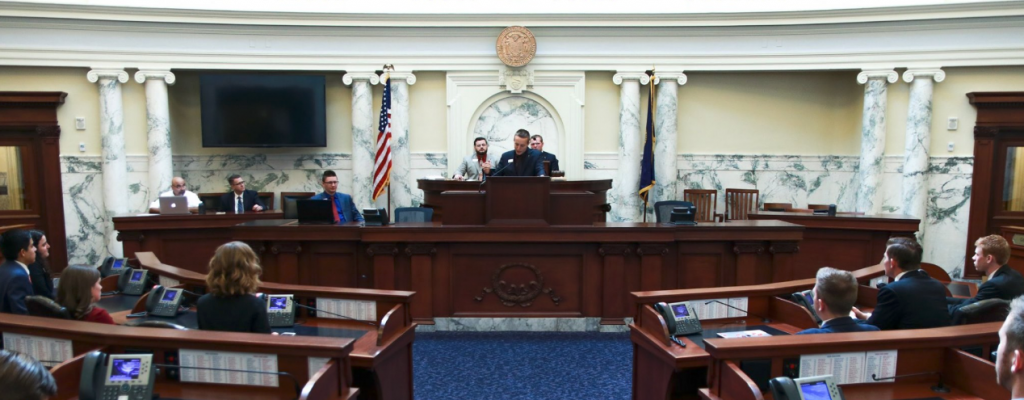

 In
In 

 Getting prepared at a low cost has always been a popular topic. Now that people have started to worry about the looming coronavirus pandemic, those who are unprepared are looking at getting prepared for the possibility of being quarantined for two to four weeks. Some have looked into their cupboards and realized (especially those living in big cities like New York) that they have nothing stashed because they are used to just hopping out and picking up what they need. Some have more money than others, but if you’re trying to stock up in a short amount of time your budget is limited. Here is The Smart Survivalist with
 The most affordable and most reliable water filtering item is definitely


 Here is a short article from the Mises Institute, describing why free markets are no enemy of inequality, but rather regulated markets are greater causes of harm –
 Lower Valley Assembly


