Organic Prepper: How to Deal with Rolling Blackouts: Notes from South Africa

In this article from the Organic Prepper, a South African writes notes about dealing with rolling blackouts and alternate forms of power like generators and solar power. It has some good information on battery cycles and reducing your loads. While I haven’t seen as much damage to equipment from power outages as the author of the article, it does happen. Some power utilities will help you put in a whole house surge suppressor. Our local utility will put one in at the meter for around $6 per month charge.

Living in South Africa we have had our share of rolling blackouts nationally. The cause: nefarious activities. The result being us forced to find ways to ensure we are not affected as badly.

The problem is better now, but it has highlighted that it is not just a South African problem, but in actual fact a Western world problem. We all are totally reliant on a massive aging infrastructure that can come tumbling down like a house of cards, with or without help.

Another problem is the cost to keep the national system operational. In some areas, it is not a priority to resolve the regular failures.

For getting started with backup power, remember that NEEDs vs WANTs –  a huge price difference.

  • UPSs – with like 2 up to 8 100ah batteries. Good for a number of hours depending on use – most cost-effective solution
  • Generators – works for some, but cheap ones cost more as they damage some electrical appliances over time.
  • Solar inverters and panels – power failures, what is that? And you save a lot of money afterward IF YOU DO IT RIGHT.

What is also good to know, when the power goes off, switch off your distribution board, leaving just the light plugs on. When the power comes back on, lights come on, wait a few minutes for the grid to stabilize, before switching things on. We have lost computers, internet modes, freezers/fridges, alarm systems etc, damaged when the grid goes off and back comes on. UPS’es have the best protection for this.

How does one solve the issues from frequent blackouts?

Here are some pertinent notes from my own experience.

  • Older fridges/freezers have a huge start-up current, necessitating a bigger inverter and they use a lot of kWh over 24 hours. Upgrade them to an A++ or even A+++ model, as soon as you can. It will save you on utilities and can be powered longer on batteries.
  • Lights: obviously CFL and / or LED, and not cheap LEDs. They are cheap for a reason. Test the wattage, it may be more than the claimed wattage “saving” you nothing. Check the claims lumens.
  • Putting lights on solar is not a “savings”. It is actually an increase in cost for batteries are more expensive per kWh than utility power costs per kWh because lights are use when there is no solar power. So switch to the best lumens for the lowest watts, and switch the light off when not in use, biggest saving ever.
  • Stove/oven/kettle – entire kitchen – on solar power is doable, but expensive. Utilities are cheaper. Kettle take few minutes to boil, microwave also a few minutes, why spend more on inverter and batteries to power them. Use gas. Gas per unit of power may not be cheaper than utilities. Check what you are paying for each.
    Maximum savings are: Switch off at the wall, not in standby, for all the standby power adds up to a lot of power paid for, yet not used.
  • When all the occupants of a house are asleep, say 11pm – 5am – how much power is used during that time? Excluding alarms and outside lights – which have a motion sensor to switch on. Figure this out and find places to cut.

The Rules of Running Backup Power Efficiently

Right, now that you have a few notes to consider, here are the rules that we have found important when using backup power like a generator.

The very first rule: NEEDs vs WANTs

Needs are much cheaper than wants, like you WANT to power your entire house during a power failure, or do you just NEED to power very selected devices like a fridge, lights, cell phone chargers?

The second rule: Know your loads and runtimes and match the batteries to that…

Click here to continue reading at the Organic Prepper.

Peak Prosperity: Survival Learnings from a California Fire Evacuee

Today’s survival lesson comes from Peak Prosperity‘s Adam Taggart enumerating some of his lessons learned from mandatory evacuation from California fires.

As I type this, there are over 16 large wildfires currently burning across northern and southern California. Hundreds of thousands of residents have been displaced. Millions are without power.

My hometown of Sebastopol, CA underwent mandatory evacuation at 4am Saturday night. I jumped into the car, along with our life essentials and our pets, joining the 200,000 souls displaced from Sonoma County this weekend.

Even though I write about preparedness for a living, fleeing your home in the dead of night with a raging inferno clearly visible on the horizon drives home certain lessons more effectively than any other means.

I’d like to share those learnings with you, as they’re true for any sort of emergency: natural (fire, flood, hurricane, tornado, earthquake, blizzard, etc), financial (market crash, currency crisis) or social (revolution, civil unrest, etc).

And I’d like you to be as prepared as possible should one of those happen to you, which is statistically likely.

Your survival, and that of your loved ones, may depend on it.

No Plan Survives First Contact With Reality

As mentioned, I’ve spent years advising readers on the importance of preparation. Emergency preparedness is Step Zero of the guide I’ve written on resilient living — literally the first chapter.

So, yes, I had a pre-designed bug-out plan in place when the evacuation warning was issued. My wife and I had long ago made lists of the essentials we’d take with us if forced to flee on short notice (the Santa Rosa fires of 2017 had reinforced the wisdom of this). Everything on these lists was in an easy-to-grab location.

The only problem was, we were 300 miles away.

Reality Rule #1: You Will Be Caught By Surprise

There are too many variables that accompany an unforeseen disaster to anticipate all of them. Your plan has to retain enough flexibility to adapt to the unforeseen.

In my case, we were down at Parents’ Weekend at Cal Poly in San Luis Obispo, where my older daughter recently started her freshman year.

As the text alerts warning of the growing fire risk started furiously arriving, we monitored them closely, reluctant to leave the festivities and our time with our daughter. But once the evacuation warning came across, we knew it was serious enough to merit the 6-hour mad dash home to rescue what we could.

The upside of that long drive was that it gave us time to alter our bug-out plan according to the unfolding situation. We decided my wife and younger daughter would go directly to safety; that reduced the lives at risk in the fire zone down to just 1 (mine). And I used the phone to line up neighbors who could grab our stuff should I not be able to make it home in time.

The learning here is: Leave plenty of room in your plan for the unexpected. If its success depends on everything unfolding exactly as you predict, it’s worthless to you.

Reality Rule #2: Things Will Happen Faster Than You’re Ready For

Once an emergency is in full swing, things start happening more quickly than you can process well.

Even if developments are unfolding in the way you’ve anticipated, they come at an uncomfortably fast rate that adrenaline, anxiety and fatigue make even more challenging to deal with.

Just as The Crash Course chapter on Compounding explains how exponential problems unfold too fast to avoid once they become visible, it’s very easy to get overwhelmed or caught off-guard by the pace required to deal with a disaster.

The Kincade fire started at 9:30pm the night before I left Sebastopol for Cal Poly. When I went to bed that night it was a mere 300 acres in size. Two days later it was 25,000 acres. (it’s currently at 66,000 acres).

It went from “nothing to worry about” to “get out NOW!” in less than 48 hours.

Watching who fared well during the evacuation and who didn’t , those who took action early out of a healthy sense of caution had much more success than those who initially brushed off the potential seriousness of the situation.

Here’s how much of a difference timely action made:

The ‘evacuation warning’ advisory became a ‘mandatory evacuation’ order at 4am on Saturday night. My car was ready to go and I was on the road out of town within 5 minutes.

Several friends of mine left home just 45 minutes after I did. By that time, the fleeing traffic made the roads essentially immobile. My friends had to turn back to ride things out in their homes, simply hoping for the best.

So I’m reminded of the old time-management axiom: If you can’t be on time, be early. In a developing crisis, set your tolerance level for uncertainty to “low”. Take defensive measures as soon as you detect the whiff of increasing risk; it’s far more preferable to walk back a premature maneuver than to realize it’s too late to act.

Reality Rule #3: You Will Make Mistakes

Related to Rule #2 above, you’re going to bungle parts of the plan. Stress, uncertainty and fatigue alone pretty much guarantee it.

You’re going to forget things or make some wrong choices.

Case in point: as I was evacuating, the plan was to take a less-traveled back route, in order to reduce the odds of getting stuck in traffic. But, racing in the dark and checking in on the phone with numerous friends and neighbors, muscle memory took over and I found myself headed to the main road of town. Too late to turn back, I sat at the turn on, waiting for someone in the line of cars to let me in.

It then hit me that perhaps no one might. Folks were panicked. Would someone be willing to slow down to let me go ahead of them?

Obviously someone did, or I wouldn’t be typing this. But that mistake put everything else I’d done correctly beforehand in jeopardy.

So, as the decisions start to come fast and furious, your key priority is to ensure that you’re focused on making sure the few really important decisions are made well, and that the balls that get dropped won’t be ones that put your safety at risk.

Forget to pack food for the cat? No big deal, you’ll find something suitable later on. Miss your time window to evacuate, as my friends did? That could cost you your life.

Reality Rule #4: When Stressed, All You Care About Is People & Pets

A good bug-out plan covers preparing to take essential clothes, food & water, medications, key documents, communications & lighting gear, personal protection, and irreplaceable mementos.

But when the stakes escalate, you quickly don’t care about any of those. It’s only living things — people, pets & livestock — that you’re focused on.

The rest, while valuable to have in an evacuation, is ultimately replaceable or non-essential.

I very well might have rolled the dice and stayed down at Cal Poly if it weren’t for the cat. But family is family, no matter how furry. I just couldn’t leave her to face an uncertain fate. And I believe strongly you’ll feel the same about any people or pets in your life — it’s a primal, tribal pull to take care of our own. If you don’t plan for it, it will override whatever other priorities you think you may have.

So prioritize accordingly. Build your primary and contingency plans with the security of people and animals first in mind. If there’s time for the rest, great. But if not, at least you secured what’s most important (by far)…

Click here to continue reading at Peak Prosperity.

Mountain Guerrilla: “When” the SHTF

This lengthy piece comes from Mountain Guerrilla blog‘s Patreon page. This one is a public posting, so no Patreon membership is required to read it.  Some people get turned off by the way John Mosby writes; try to get past it. Mosby consistently writes insightful commentary. You may not like what he says, but think about it before rejecting it, and you may find your mind changing. In this article, Mosby talks about supposedly prepared people who ended up not being prepared for simple disasters and the kinds of things you can do to be self-sufficient in a way that makes you prepared for these short term disasters.

“When” the SHTF

One of the things I’ve spent a lot of time and bandwidth on is pointing out the inanity of focusing preparedness on some potential future cataclysmic event that will bring about The End Of The World As We Know It (TEOTWAWKI)… like overnight, total economic meltdown leading to a catastrophic failure of modern society, EMP or CMP destroying the electrical grid, terrorists detonating “dirty bombs” in multiple major metropolitan centers, zombie or other pandemic disease outbreaks, and the like are cool to theorize about. The problem is, they’re cool to theorize and fantasize about because they are so unlikely.

That’s not to say that it wouldn’t be super convenient. That sounds facile, but it really isn’t. Sure, the idea that “90% die-off” of the American population being “convenient” seems ridiculous. The idea that spending the rest of your life in a tooth-and-claw fight for sustenance and survival would be “convenient” seems like something a testosterone-poisoned teenage boy would claim. The reality is however, compared to the reality we are facing, the popular images of “TEOTWAWKI” are exactly that: they’re convenient.

You wake up one morning, and nobody, anywhere, has any electricity. The banks and banking computers no longer work, so nobody, anywhere, has any money left, and those who did have a couple hundred or thousand in cash, stuffed into a pair of underwear, are … out of luck, because every quickly realizes that cash is valueless. You no longer have to worry about soccer practice, band recitals, or math tutors, for Little Suzie and Sam, because it’s time to crawl into the Crye Multicam jammies you bought, strap on your plate carrier, load and zero your 1970s vintage, Belgian-made FN/FAL with wood furniture (because real men carry rifles made of wood and steel, by Gawd!) and iron sights, and prepared to defend hearth and home, and the virtue of the little Missus!

No more fighting about what’s for supper, and whether we should eat at home, or go out, because we’re going to be living on beans and rice for the next year. No more worrying about who is watching what on television, because the power grid is down, and the satellites got fried by the CME too, so there’s no DirecTV, even if you did have a generator to hook the television up to. No more worries about making it to the gym to work out, and try to treadmill that “freshman fifteen” you put on your first year of college….twenty years ago, because it’s going to be physical labor from now until you die, trying to gather supplies, and cut and split wood.

No more dealing with attorneys to battle it out with the neighbor over the boundary dispute because one of you built the privacy fence incorrectly. Now, you can just smoke check the dude with a thirty caliber round from your FAL, because the police are no longer working. It’s not like you have to worry about him fighting back, because he’s “sheeple,” and you’re pretty sure he doesn’t even own a gun. You’ve certainly never seen him carrying one, and he doesn’t have any cool guy gun bumper stickers on his truck, like you do.

Yeah, it would be convenient.

———————————————

Reality is dirtier, and far, far less convenient. Reality is PG&E shutting down the power grid to millions of people, for weeks, because they’re worried about lack of infrastructure maintenance causing runaway wildfires. Reality is those wildfires happening anyway, and closing down your “Bug Out” route, because of traffic congestion, as everybody else tries to flee the dangers at the same time.

Reality is a tornado sweeping across two counties, knocking power out to thousands of homes, and sending 300 year old oak trees through roofs, and blowing barns and sheds into the next township. Reality is the electric company subsequently telling you that, “Yeah, your power is going to be out for awhile, because we’ve got several hundred miles of line to replace, and you’re at the bottom of the priority list. Oh, you have a newborn baby? A disabled grandmother living at home? Not our problem. Sorry.”

Reality is a winter storm blowing in and knocking out the power for the next week, as temperatures plummet to single digits, and nobody in your subdivision has a wood stove for back-up, because covenants in the HOA agreement.

Reality is what happened to parts of Oklahoma and Arkansas this summer, when the Arkansas River flooded to historic record levels, and destroyed entire communities worth of homes.

————————————–

I have a friend who lost power recently. Their power was out for a week. They ended up going and staying with family, because the weather was cold, and they didn’t have any back-up systems in place at the house. Dude is one of the most all-around competent, handy, people I’ve ever known. He’s a super hard worker, self-employed, and has dozens of employees. He’s genuinely, just an all-around competent dude.

This friend has tens of thousands of dollars worth of guns. He wears a concealed pistol everywhere he goes, and he keeps a rifle locked up, inside the cab of his truck, along with a plate carrier, “just in case.”

I asked him, “Why do you carry a gun?”

“Well, because there are bad people in the world, and I can’t rely on the police to be on hand to protect me and my wife and kid!” He’s right. It’s a really good answer. It’s solid. It’s legitimate.

“Cool. So, why don’t you have a back-up generator wired to the house? Why don’t you have a woodstove in the house, and a couple cords of wood in the backyard? What if, instead of a storm knocking out the power for a few days, this had been THE EVENT? What if your family had lost power too?”

He didn’t have an answer. Most people I’ve had similar discussions with, over the years, haven’t had answers…

Click here to continue reading at the Mountain Guerrilla Patreon page.

AmPart: Simple Rainwater Catch System

American Partisan has posted a useful article for addressing your water needs – Plans and photos of a simple rainwater catch system. Rain catchment systems work most easily in areas that have rain fall throughout the year. If you live in an area with mostly seasonal rainfall, then you’ll need to empty your rain barrel into some kind of cistern in order to have water through the dry months.

When I think about preparedness and survival, I think about the primary priorities in order like this: Shelter, Water, Food and Security. The secondary priorities, once you’ve handled those first four, go like this: Medical, Intelligence, Communications and Transportation. I’m going to give you some plans for a simple way to start a rainwater collection system to allow you to check your water needs off the list. Try to remember as a starting rule that your survival group is going to need to plan for water usage to the tune of one gallon of water per person, per day. Sometimes this will obviously include some adjustments up and down for different cooking needs, sanitation, medical, etc., but generally speaking, that rule is a good starting point.

Before we start, also take into consideration your local water sources. I personally live in a very riverine area, though I’m not right on the water. So as long as I’ve done well for myself with transportation, that might be a good option for collecting water. However, I’ve also got a pretty reliable rainfall pattern (or so I say, as we are currently experiencing our first night of rain in eight weeks). Some of us can often count on decent rainfall, but it would behoove you to store water in the largest amount you can for those weeks (or months) when rain is scarce.

This type of simple system will allow you to funnel rainwater into your reservoir, and also collect from other sources and deposit it in the reservoir yourself. When it’s time to use it, or if you want to drain it into smaller ready-to-use jugs or bottles, it’ll need to be filtered/purified. My unpaid recommendation is to use a Berkey water filter for that, simply because the “black” filters that company uses are able to filter a very large amount of water before they need to be replaced. Simply take the water from your collection system, pour it through a Berkey or some similar filtration system, and it’ll be ready to drink. Without filtering, the water can be used for garden irrigation, pets, possibly even hygiene.

Below you’ll see the parts you’ll for this simple build laid out on our table. There we have a 1/2″ metal hose adaptor and a 1/2″ spigot. You’ll need two PVC bushings to go onto those and a pair of rubber washers, one for each bushing. Get some Teflon tape to wrap the metal threads of the hose adaptor and spigot. Get a length of garden hose to attach to the hose adaptor later as an overflow valve. I have some black plastic mesh screen and a couple of bungee cords to make a top screen. Use a power drill and a 13/16 spade bit for drilling holes in the barrel. My barrel I’m using is a food grade 55 gallon barrel that I’m told contained Mountain Dew before it came to me. Some sources will have the top cut off for you, but you can use a jig saw or a saws-all to remove if you need to. I advise using food grade plastic rather than something that could rust. Lastly, you need a short length of garden hose, at least three feet, and make sure it’s still got the attachment on one end.


Use your drill bit to drill out two holes in the barrel. One hole needs to near the bottom, which is where the spigot will eventually go. Three inches from the bottom should be ok, but don’t go too much higher. You don’t want to lose access to several inches of water in the bottom. The next hole needs to be near the top, offset at least 90 degrees from the bottom hole. This will be your overflow outlet, hopefully overflowing into another container via the hose you’ll attach later. It needs to be offset because we will assume that you will eventually pair this barrel with a second one catching your first barrel’s overflow, and you don’t want it blocking the spigot below.


With the only section of this project that I would call “work” behind you, you’re ready to attach your pieces. Get your Teflon tape and wrap the threads on the narrower end of the hose adaptor, the threads that are going inside the barrel. Take your hose adaptor and push that side through your top drilled hole. If the hole is tight, you might have to screw it in. Reapply Teflon tape if you have to. On the inside, place a rubber washer and then screw the PVC bushing onto the metal adaptor.


You’ll follow the same process for the spigot at the bottom. Wrap the metal threads with Teflon tape and push the spigot into the hole. You may need to screw the spigot in if the hole is a tight fit, and if so, make sure the Teflon tape is still in place afterward. Position a rubber washer on the inside and screw the bushing into place.


Take your overflow hose and attach it to the hose adaptor you installed at the top. This hose will drain water into a second container when this container is full.


Secure the mesh screen around the top of the barrel using your bungee cords. You’ll need to purify this water coming out before drinking it anyway, but this mesh can prevent leaves, sticks and some bugs or animals from getting inside.


Here is your finished product!


Some notes:

Once you get the system built, fill the barrel all the way up to the overflow hose and let it run out for a few minutes. You’re checking for leaks, especially at the bottom around the spigot. That kind of water pressure is likely to cause a leak in that bottom area, so then drain the barrel and take some silicon, caulk or other sealant and seal the leak on the inside and outside. Your overflow hose attachment isn’t nearly as likely to leak, nor will it matter as much if it does. There is much less pressure at the top hole than at the bottom. Once your sealant has dried, fill the barrel again and look for leaks…

Click here to continue reading at American Partisan.

Related:

PennState Extension: Rainwater Cisterns: Design, Construction and Treatment

State of Texas: The Texas Manual on Rainwater Harvesting (pdf) This is an eighty-eight page manual covering many aspects of rain harvesting. A little of the data is Texas-specific, such as rainfall maps.

Rutherford Institute: Beware the Growing Evil in Our Midst

Constitutional attorney and author John Whitehead writes this piece at The Rutherford Institute on our/society’s obliviousness to the truth and the need to wake up.
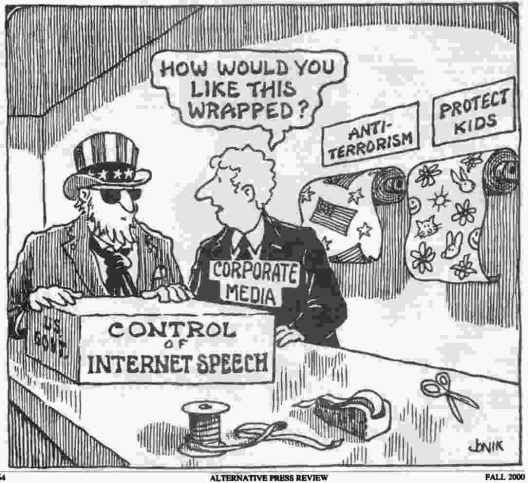
They Live, We Sleep: Beware the Growing Evil in Our Midst

We’re living in two worlds, you and I.

There’s the world we see (or are made to see) and then there’s the one we sense (and occasionally catch a glimpse of), the latter of which is a far cry from the propaganda-driven reality manufactured by the government and its corporate sponsors, including the media.

Indeed, what most Americans perceive as life in America—privileged, progressive and free—is a far cry from reality, where economic inequality is growing, real agendas and real power are buried beneath layers of Orwellian doublespeak and corporate obfuscation, and “freedom,” such that it is, is meted out in small, legalistic doses by militarized police armed to the teeth…

We’re being fed a series of carefully contrived fictions that bear no resemblance to reality.

The powers-that-be want us to feel threatened by forces beyond our control (terrorists, shooters, bombers).

They want us afraid and dependent on the government and its militarized armies for our safety and well-being.

They want us distrustful of each other, divided by our prejudices, and at each other’s throats.

Most of all, they want us to continue to march in lockstep with their dictates.

Tune out the government’s attempts to distract, divert and befuddle us and tune into what’s really going on in this country, and you’ll run headlong into an unmistakable, unpalatable truth: the moneyed elite who rule us view us as expendable resources to be used, abused and discarded.

In fact, a study conducted by Princeton and Northwestern University concluded that the U.S. government does not represent the majority of American citizens. Instead, the study found that the government is ruled by the rich and powerful, or the so-called “economic elite.” Moreover, the researchers concluded that policies enacted by this governmental elite nearly always favor special interests and lobbying groups.

In other words, we are being ruled by an oligarchy disguised as a democracy, and arguably on our way towards fascism—a form of government where private corporate interests rule, money calls the shots, and the people are seen as mere subjects to be controlled…

the real battle for control of this nation is taking place on roadsides, in police cars, on witness stands, over phone lines, in government offices, in corporate offices, in public school hallways and classrooms, in parks and city council meetings, and in towns and cities across this country.

The real battle between freedom and tyranny is taking place right in front of our eyes, if we would only open them.

All the trappings of the American police state are now in plain sight.

Wake up, America…

Read the entire article by clicking here.

Craig Murray: Government’s Slow Murder of Julian Assange

In case you haven’t been paying attention for a while, Julian Assange is the founder of WikiLeaks – a journalist website dedicated to publishing primary source materials showing government and corporate corruption and other bad doings. In 2010 WikiLeaks published material obtained from intelligence analyst Bradley Manning and the US government decided that it had had enough. Some American politicians called for him to be pursued as a terrorist. Hillary Clinton, for example, reported asked “Can’t we just drone this guy?” A warrant was issued for his arrest. In 2011, he was awarded the Sydney Peace Foundation’s gold medal for exceptional courage in pursuit of human rights. He sought refuge from US arrest in the Ecuadoran embassy in 2012 and stayed there until April of 2019 when Ecuador withdrew its protection under US pressure and was arrested by British police.

In Assange in Court, Craig Murray talks about Julian Assange’s most recent appearance in court.

…Before I get on to the blatant lack of fair process, the first thing I must note was Julian’s condition. I was badly shocked by just how much weight my friend has lost, by the speed his hair has receded and by the appearance of premature and vastly accelerated ageing. He has a pronounced limp I have never seen before. Since his arrest he has lost over 15 kg in weight.

But his physical appearance was not as shocking as his mental deterioration. When asked to give his name and date of birth, he struggled visibly over several seconds to recall both. I will come to the important content of his statement at the end of proceedings in due course, but his difficulty in making it was very evident; it was a real struggle for him to articulate the words and focus his train of thought.

Until yesterday I had always been quietly sceptical of those who claimed that Julian’s treatment amounted to torture – even of Nils Melzer, the UN Special Rapporteur on Torture – and sceptical of those who suggested he may be subject to debilitating drug treatments. But having attended the trials in Uzbekistan of several victims of extreme torture, and having worked with survivors from Sierra Leone and elsewhere, I can tell you that yesterday changed my mind entirely and Julian exhibited exactly the symptoms of a torture victim brought blinking into the light, particularly in terms of disorientation, confusion, and the real struggle to assert free will through the fog of learned helplessness…

…it was unclear why we were sitting through this farce. The US government was dictating its instructions to Lewis, who was relaying those instructions to Baraitser, who was ruling them as her legal decision. The charade might as well have been cut and the US government simply sat on the bench to control the whole process. Nobody could sit there and believe they were in any part of a genuine legal process or that Baraitser was giving a moment’s consideration to the arguments of the defence. Her facial expressions on the few occasions she looked at the defence ranged from contempt through boredom to sarcasm. When she looked at Lewis she was attentive, open and warm…

…I have been both cataloguing and protesting for years the increasingly authoritarian powers of the UK state, but that the most gross abuse could be so open and undisguised is still a shock. The campaign of demonisation and dehumanisation against Julian, based on government and media lie after government and media lie, has led to a situation where he can be slowly killed in public sight, and arraigned on a charge of publishing the truth about government wrongdoing, while receiving no assistance from “liberal” society.

Unless Julian is released shortly he will be destroyed. If the state can do this, then who is next?

Related:

Global Research: The Torture and Murder of Julian Assange

Daily Mail: Julian Assange’s father fears the US government will ‘murder’ his son if he is extradited to America

Common Dreams: Why Everyone in the US Who Counts Wants Julian Assange Dead

WikiLeaks: It’s time to act: They are killing Julian Assange slowly

Paul Craig Roberts: Julian Assange Is Being Murdered By The British Because Washington Wants Him Dead But Doesn’t Have A Case Against Him

Campaign for Free Speech: Poll Finds Majority Want to Scrap 1st Amendment

From the Campaign for Free Speech which recently conducted a poll on the First Amendment to the US Constitution.

New Campaign For Free Speech polling results demonstrate just how vulnerable free speech protections are in the United States.

CFS polling results show:

51% of Americans think the First Amendment is outdated and should be rewritten. The First Amendment protects your right to free speech, free assembly, and freedom of religion, among other things.

48% believe “hate speech” should be illegal. (“Hate speech” is not defined—we left it up to the individual participant.) Of those, about half think the punishment for “hate speech” should include possible jail time, while the rest think it should just be a ticket and a fine.

80% don’t actually know what the First Amendment really protects. Those polled believed this statement is true: “The First Amendment allows anyone to say their opinion no matter what, and they are protected by law from any consequences of saying those thoughts or opinions.”

It’s actually not true. The First Amendment prevents the government from punishing you for your speech (with exceptions such as yelling “fire” in a crowded area to induce panic).

But more broadly, freedom of speech does not mean you are protected from social consequences for your speech. You may have the right to say something extreme or hateful and not get thrown in jail, but others in society have the right to shun you.

What explains these results?

We believe there are at least two factors at play. One is the obvious polarization of politics and the media. While many who identify as conservative may dislike the reporting of CNN and would likely favor sanctions for “fake news,” many progressives or liberals may feel the same way towards Fox News.

Second, we hear much about “hate speech.” Although the term is never defined, most agree that it should be opposed, rebuked, and criticized.  But should it be punished by the government?  If the government is in charge of determining what is hate speech, then it inevitably becomes political—a weapon that can be used to punish people on the other side of an issue.

We believe it is time to reconnect with the central tenets of the First Amendment.  Free speech is a non-partisan issue that has always been a cornerstone of our democracy and critical for a free society.

Click here for the full survey results.


Forward Observer Class Schedule

Forward Observer has announced their remaining class schedule for 2019 and early 2020. There is an online Area Study class in November, and FO will be in Tacoma, WA in June, 2020 to teach a Tactical Intelligence class.

I’ll be teaching the Tactical Intelligence Course in more than a dozen places next year. By request, I’ll also be teaching an Advanced Collection Course and the Operations Security/Communications Security (OPSEC/COMSEC) Course.
2019

12 NOV: Area Study Live (Online)

07-08 DEC: Tactical Intelligence Course – Orlando, FL


2020

11-12 JAN: Tactical Intelligence Course – Austin, TX

18-20 JAN: Tactical Intelligence Course + OPSEC/COMSEC – Nashville, TN

29 FEB – 01 MAR: Tactical Intelligence Course – Phoenix, AZ

21-22 MAR: Tactical Intelligence Course – Dallas, TX

28-29 MAR: TBA

25-26 APR: Tactical Intelligence Course – Minneapolis, MN

23-24 MAY: Tactical Intelligence Course + OPSEC/COMSEC – Las Vegas, NV

6-7 JUN: Tactical Intelligence – Tacoma, WA

25-26 JUL: Tactical Intelligence – Pittsburgh, PA

AUG: TBA

SEP: TBA

OCT: TBA

NOV: TBA

DEC: TBA

If you want to get enrolled in a scheduled course, do it early. These courses will fill up!

* As always, once you’ve taken this course, you can take a refresher course for free, as long as there’s space available. This applies to SHTF Intelligence Course grads.

Mises: Why We Can’t Ignore the “Militia” Clause of the Second Amendment

Author, economist and political scientist Ryan McMaken has an article at Mises on the Second Amendment and the militia clause. The analysis is, for the most part, good, but not new to those who spent time studying the history of the Second Amendment and the militia. I disagree where he says that “privately-armed citizens can only offer relatively token resistance” to today’s standing armies, and I suspect a lot of enemy fighters would disagree as well, unless we can call eighteen years of war against lightly armed Afghani resistance fighters “token.”

Why We Can’t Ignore the “Militia” Clause of the Second Amendment

While many defenders of private gun ownership recognize that the Second Amendment was written to provide some sort of counterbalance against the coercive power of the state, this argument is often left far too vague to reflect an accurate view of this historical context surrounding the Amendment.
After all, it is frequently pointed out that private ownership of shotguns and semi-automatic rifles could offer only very limited resistance to the extremely well-equipped and well-armed United States military.

It is often, therefore, just assumed that the writers of the Second Amendment were naïve and incapable of seeing the vast asymmetries that would develop between military weaponry and the sort of weaponry the average person was likely to use.

Was the plan really to just have unorganized amateurs grab their rifles and repel the invasion of a well-trained military force?1

The answer is no, and we know this by looking at the wording and reasoning behind the Second Amendment. The text, of course, reads “A well regulated militia, being necessary to the security of a free state, the right of the people to keep and bear arms shall not be infringed.”

Gun-rights advocates often fixate on the second half of the amendment, claiming that the phrase about a militia is just something that provides a reasoning for the second phrase. Many opponents of gun control even suggest that the only phrase here of key importance is “shall not be infringed.”

The Second Amendment as a Guard Against a Standing Army

Looking at the debates surrounding the Second Amendment and military power at the end of the eighteenth century, however, we find that the authors of the Second Amendment had a more sophisticated vision of gun ownership than is often assumed.

Fearful that a large federal military could be used to destroy the freedoms of the states themselves, Anti-Federalists and other Americans fearful of centralized power in the US government designed the Second Amendment accordingly. It was designed to guarantee that the states would be free to raise and train their own militias as a defense against federal power, and as a means of keeping a defensive military force available to Americans while remaining outside the direct control of the federal government.

This grew out of what was a well-established opposition to standing armies among Americans in the late eighteenth century. In his book Eagle and Sword: The Federalists and the Creation of the Military Establishment in America, 1783–1802, Richard Kohn writes:

No principle of government was more widely understood or more completely accepted by the generation of Americans that established the United States than the danger of a standing army in peacetime. Because a standing army represented the ultimate in uncontrolled and controllable power, any nation that maintained permanent forces surely risked the overthrow of legitimate government and the introduction of tyranny and despotism.

We can see this plainly in the speeches and writings of the Anti-Federalists like Patrick Henry, but we also see it in the more moderate attendees of the constitutional convention as well, such as George Mason, who “When once a standing army is established in any country, the people lose their liberty.”

Sentiments like Mason’s did not represent the views of oddball outliers. Rather, Kohn notes, these were mainstream views of the danger of an unimpeded federal military establishment.

But how to combat the power of a federal standing army?

On this, the Americans did not need to re-invent the wheel. After all, the idea of locally-controlled military forces answerable to civil officials was put into place in seventeenth-century England. The English militias had been created out of fear of a large standing army directly answerable to the king.

Although the system had fallen into disuse in England by the time the Americans were debating the matter in the eighteenth century, the Americans were well aware of this history.

These ideas were further developed at the Virginia ratifying convention where Patrick Henry mocked the idea that liberties could be preserved by simply “assembling the people.” Without locally controlled, military might, Henry noted, federal force could destroy the independence of the state governments. Similarly, George Mason concluded that the “militia … is our ultimate safety. We can have no security without it.”

As historian Leon Friedman concludes, “the people organized in the state militias were regarded as a counterforce against the threat that the regular army could be used as an instrument of oppression and service in the militia was a right of the citizen that could not be transgressed by the federal government.”2

In light of this, it’s easier to see the key element offered by the “militia” phrase of the Second Amendment.

Even after the adoption of the new constitution, opposition to a powerful federal military continued. Congress opposed not only attempts to increase the size of the professional US army much beyond 1,000 men, but also opposed attempts to mandate any specific training in a “federally organized militia system.” In the end, opposition to federal control of military affairs meant training of militias was “left entirely to the states.”3

The “Unorganized Militia” and Private Gun Ownership

As Brion McClanahan has shown, the Second Amendment — like the First Amendment — was never written to apply to the states themselves, but to Congress. The states were still free to regulate the ownership of weaponry in their own constitutions and by their own legislatures. Most state governments, however, elected to include provisions in their own constitutions protecting private gun ownership as an element of the state’s overall militia strategy…

Click here to continue reading at Mises.

Related:

American Partisan: Violence Versus Aggression

Most are familiar with the right to be armed, while wholly unfamiliar with the duty assigned to that right. The preservation of such right is predicated upon first being armed then proficiency at arms, followed by the assurance of violence should any other right be taken. Your duties accompanying the right of being armed is the capacity for all three of those qualifiers. And that violence must be both quick and decisive; violence has no other legitimate purpose aside from the preservation of one’s liberty.

Mutiny Shop Custom Patches

This short post is just to call some attention to the fine folks at Mutiny Shop. They are well known for making morale patches and custom patches. They will even help you with graphic design for your patch. Our own LVA patches, which became the logo at the top of this web page, were made possible by and with the help of Mutiny Shop and their design team. I told them what I wanted and gave them some very rough graphics to work with, and they did the rest. We still have a few of these patches available to members if you want them.

Normally this wouldn’t rate a post, but they’ve reportedly been financial victims of some Google search rankings shenanigans. I have been very happy with their product and customer service in the past, so if you are looking to have a custom patch made or need some camo firearm painting stencils then please check them out.

Forward Observer: Two Things Leading to Conflict in America

From intelligence analyst Sam Culper of Forward Observer:

Two big things leading to conflict in America…

Bottom Line Up Front: Pre-revolutionary Cuba and America’s likely future have something in common.

I’ve jumped into a new book about the conditions before the Cuban Revolution. The beginning of the book is about the factors that led to the Marxist revolution, which lasted from 1953-1959.

A brief summary: Under Batista, Cuba saw political reform and economic advancement. Batista left after decades in power, then corruption and stagnation began creeping back to Cuba. Batista came back in 1952 to run for president again, seized power via coup d’etat, suspended the constitution, and obstructed the ability of one Fidel Castro to be elected to the Cuban Congress.

Declaring that Batista was a fascist dictator, Fidel and Friends set about on revolution.

Citing one important point before the revolution began, here’s a quote from the book:

“… Cuban society over the years appears to have generated some degree of dissatisfaction…

The aspirations of members of the middle class for a standard of living and social status commensurate with their education… were continually frustrated by two obstacles:

The success of the upper class in maintaining its wealth and political power, and the inability of the Cuban economy to provide ‘adequate’ employment and other opportunities especially for the members of the professional middle class.”

I’ll unpack some thoughts…

1. A common complaint on the Left (and a growing one on the Right) is that America has become a de facto oligarchy where the rules of the country are largely written by the wealthiest people.

These people, after all, have the most to lose, so it stands to reason that they lobby the federal government for rules that benefit them the most.

This is the first thing that pre-revolutionary Cuba and the United States have in common. (This is exactly what’s enabled the current socialist political insurgency we see today.)

2. If we’re to believe the predictions of job displacement due to advances in automation, machine learning, and artificial intelligence, then we arrive at the conclusion that tens of millions of Americans — some 25 percent of the country — will have their jobs replaced in the coming decades. (Sure, some jobs will be created, but will they be created fast enough to make up for all those displaced workers? Unlikely. Can displaced workers find new skills and careers? I’ll answer below.)

So what will these tens of millions of Americans do for work? Let’s take trucker drivers, for instance. It’s the most popular job in 29 states. The age of the average truck driver is 45. They’re too young to retire and too old to re-skill. (Plus, the data on those reskilling programs is pretty bleak. Very low success rate.)

Yet, their industry is about to be turned on its head due to automated driving. And it’s not just truck drivers — there’s a host of menial and professional jobs that will be replaced by robots in the coming years and decades.

So we could very well have an economy that doesn’t provide ‘adequate’ employment and other opportunities for tens of millions of Americans, starting with low skill and moving into high skill professional occupations.

That’s the second thing that America will have in common with pre-revolutionary Cuba.

My conclusion isn’t that we’re going to have a national Marxist revolution, a la Fidel, Che, et. al.

My conclusion is that these two economic trends are going to lead to conflict. (They already are.) Many of today’s billionaires are warning about a bottom-up revolt against the ruling class. It’s coming.

Are you prepared?

Petition to Repeal I-1639 Launched

The initiative to repeal the effects of I-1639 is I-1094 (Defense of the Second Amendment Act of 2020). From Ammoland – Grassroots Revolt to Repeal WA Gun Control Initiative 1639 Launched. Signatures must be turned in by Jan. 3, 2020, so be sure to sign the petition by the end of the year if you support it.

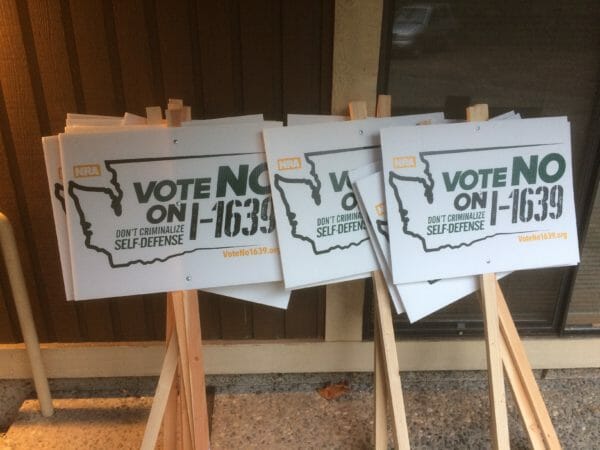
Thousands of yard signs opposing Initiative 1639 in Washington state last year did not prevent passage of the multi-faceted gun control measure. Now there is a grassroots repeal effort, despite a federal court challenge by SAF and NRA. (Dave Workman photo)

U.S.A.-(Ammoland.com)- Frustration and fury are the two main ingredients of what can best be described as a grassroots revolt in Washington State with the launch of a counter initiative effort to repeal gun control Initiative 1639, the extremist measure passed by about 60 percent of Evergreen State voters last November.

This isn’t a case of “sore losers” but legions of law-abiding private citizens who believe their right to bear arms under both the federal and state constitutions is being violated.

I-1639 has already resulted in one federal lawsuit by the Second Amendment Foundation and National Rifle Association, one declared candidacy for governor by a small town police chief, refusal by sheriff’s in a majority of the state’s 39 counties to enforce provisions of the measure, and the creation of a new crime, “Community Endangerment.” This carries either gross misdemeanor or Class C felony penalties, depending upon the violation.

The initiative also, for the first time in history, defined a firearm that, according to Spokane County Sheriff Ozzie Knezovich, doesn’t really exist: the “semiautomatic assault rifle.” Under the language of I-1639, a “semiautomatic assault rifle” is “any rifle which utilizes a portion of the energy of a firing cartridge to extract the fired cartridge case and chamber the next round, and which requires a separate pull of the trigger to fire each cartridge.” This translates to literally any self-loading rifle ever manufactured anywhere on the planet, according to critics.

There is no indication Sheriff Knezovich, or any of the other lawmen who opposed I-1639, is involved in this repeal effort.

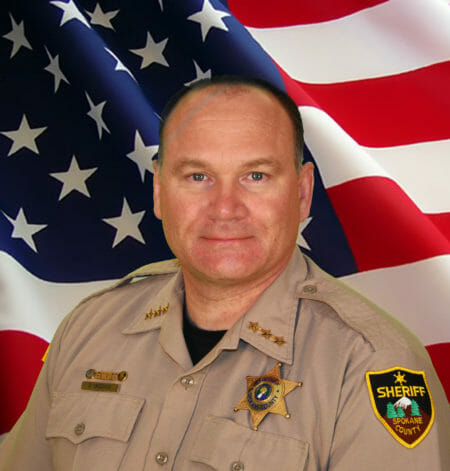
Spokane County Sheriff Ozzie Knezovich said earlier this year that I-1639 defines a firearm that actually doesn’t exist. (Official Sheriff’s Department photo)

Perhaps most famously, the initiative prohibits the purchase of a so-called “semiautomatic assault rifle” to anyone in the 18-20-year-old age group; young adults who can still join the military, get married, enter into contracts and vote. They just can’t exercise their Second Amendment right to purchase or own one of these firearms.

It also created a registry requirement.

The initiative was opposed by nearly every major law enforcement organization in the state, a fact that was systematically downplayed, if not ignored, by the establishment media. It was opposed by some newspapers, endorsed by others.

And now I-1639 has spawned the effort to erase it. The office of anti-gun Attorney General Bob Ferguson, who has spent the last three years filing lawsuits against the Trump administration and who was an early endorser of I-1639, has given this new effort a number and ballot title.

The new measure is Initiative 1094, and the ballot title approved by Ferguson’s says this:

“This measure would remove requirements for sale or delivery of semiautomatic assault rifles, remove certain age limitations for pistols and semiautomatic assault rifles, repeal crimes regarding firearm storage, and change other firearms-related laws.”

The language applies to rimfire as well as centerfire rifles, so such popular sporting guns as the Ruger 10/22, Remington Nylon 66, Marlin Model 60 and Browning SA-22, the popular “gallery gun,” all chambered for the .22 Long Rifle rimfire.

The ballot measure summary provided by Ferguson’s office explains:

“This measure would remove increased background checks, firearm safety training requirements, and waiting periods for purchase or transfer of semiautomatic assault rifles; remove certain age limitations for pistols and semiautomatic assault rifles; repeal crimes related to firearm storage and firearm sales to unauthorized persons; modify requirements for private, non-dealer transfer of firearms; and repeal or amend other firearms-related laws, including requirements for recordkeeping, notification to law enforcement of firearms sales and denials, and background checks.”

The campaign, according to activist John Valle, is so far being conducted via social media. Initiative forms were being printed, and Valle said copies will be available for downloading online for printing on an 11×17-inch sheet.

Valle told Ammoland News, “We have a network of volunteers. Every Patriot group is on board and I’ve got 23 gun shop owners in Eastern Washington who will put it in their shop.”

He has spoken with gun show operators, and there is a growing legion of volunteer signature gatherers who plan to canvas the state.

Here’s the downside. The goal of this unorganized grassroots movement is to collect 5,000 valid signatures every day in order to turn in 300,000 signatures to the Secretary of State’s office.

The deadline for signature turn-in is Jan. 3, 2020 for the measure to appear on the November 2020 ballot, where it faces the likelihood of disappearing amid the presidential, congressional, gubernatorial and legislative election choices.

Among those involved in this effort is Nick Culp, son of Republic Police Chief Loren Culp. He’s the lawman who famously went before the Republic City Council following the passage of I-1639 to declare he would not enforce it and ask that Republic become a “Second Amendment sanctuary.” Sheriffs around the state followed suit, and more than a half-dozen county commissions also expressed opposition to enforcement.

The lawsuit, meanwhile, is lumbering forward. It is joined by gun shop owners in Spokane and Vancouver, and three private citizens in the affected age group. Currently, in the discovery phase, there may not be a hearing or trial until sometime next year.

Backers of the initiative are fired up, though they realize the challenge is formidable. I-1639 supporters spent about $5 million on their campaign. Valle, a Spokane-area resident, told Ammoland that he has no budget, and really can’t start a PAC.

But what this effort has is devoted participants. Getting enough signatures to validate is only half the problem they face. If the measure does quality, supporters face a daunting campaign in which they will almost certainly be out-spent by the Seattle-based gun prohibition lobby, which is bankrolled by billionaires and wealthy elitists, living primarily in a handful of zip codes in and around the Seattle area.

Sheriff Knezovich theorized earlier this year that the reason this measure included a definition of “semiautomatic assault rifle” is to lay the groundwork for a future effort, either via legislation or another initiative, to ban such guns. Anti-gunners think in the long term, he indicated at the time.

From KEPR TV:

Tri-Cities businesses with petitions and signature sheets:

  • Ace Pawn and Loan, 429 W Entiat Ave, Kennewick, WA 99336
  • B & B Express Printing, 7519 W Kennewick Ave, Kennewick, WA 99336
  • Columbia Gun Rack, 314 W Kennewick Ave, Kennewick, WA 99336
  • Ed & Moe’s Pawn Shop, 419 W Entiat Ave Suite C, Kennewick, WA 99336
  • Griggs Department Store: 801 W Columbia St, Pasco, WA 99301
  • Hole in the Wall, 7509 W Deschutes Ave, Kennewick, WA 99336
  • Talos Tactical, 4096 W Van Giesen St, West Richland, WA 99353


KIRO Radio: Gun rights activists mounting legal opposition to I-1639, AG Ferguson

The following Yakima Valley businesses are also reportedly carrying the petition and signature sheets:

  • Ranch and Home, Kennewick and Pasco locations
  • J&L Produce, Richland
  • The Coffee Bean, 840 Stevens Dr., Richland
  • Brubaker Arms, Yakima
  • Old Mill Country Store, 1504 S 36th Ave, Yakima
  • The Range, 1701 Garretson Ln, Yakima
  • UPS Store 6788, 420 S 72nd Ave, Ste. 180, Yakima
  • M&E Seed & Grain, 500 7th Ave, Prosser (unverified)

This link connects to a Google document which lists a large number of signature locations, some confirmed some not, across the state.

Gary Barnett: All Hail the Emperor

All Hail the Emperor by Gary Barnett.

Once upon a time in this country, there was no president, and there was no federal tax, as all the tyrannical government was relegated to the states. Prior to that time of a somewhat free society, there were only local government structures overseen by a sitting king from afar, so most of the common people did not have to deal daily with bureaucracies, restrictive laws, heavy taxation, and large scale corruption. But then the Constitution was born, and all power was given to a central authority under the guise of a democratic republic ruled over by the people. But people do not ever rule over governments, governments always rule over people.

Fast forward to today, and government hell has taken center stage. This is not in the sense that most would understand, because the lowly citizen thinks any assault on liberty is due to government policy or tyrannical interference, but it is much more complicated than what is believed. Government is but a pawn in a game of power over the masses orchestrated by a controlling elite bent on total authority over all. It is a partnership of sorts, fascist to be sure, but government officials have to play by the rules laid out by the real power, or they will face harsh measures. Many have fallen to a deadly fate due to breaking the rules of this allowed power.

We now live under 24 hour a day surveillance, police state tactics and SWAT raids, extreme taxation, the ruination of money, out of control prison incarceration, continuous war, and restrictive laws that touch every aspect of every life. Nothing is allowed without state license and extortion payments, and nothing is truly owned by the individual. Any resident of this country, citizen or not, can be “legally” held, imprisoned, tortured, or murdered without any due process whatsoever. This fact alone eliminates any possibility of a free society.

And yesterday, it was announced that the Trump administration through its corrupt attorney general, William Barr, have announced a new program that will set up a “pre-crime” authority in 2020; one that will be able to legally arrest and incarcerate any it deems as “likely’ to commit a crime in the future. If any reading this do not understand the dire implications of such an Orwellian nightmare scenario as this, then please go back to your phone apps and zone out of reality.

Crimes that harm others are real crimes. Should a man steal from another, he has committed an act that should be condemned. Should a man injure another or his family, he has committed an act that should be condemned. Should a man imprison or murder another without cause, he has committed a heinous act that deserves condemnation. But when the government does these things; when a government steals, injures and harms innocents, when it falsely imprisons those who have harmed no one, when it murders thousands of innocent people in the false name of national security, it is applauded for protecting the public and upholding the law.

The bar should be set the same for the entirety of government as it is for individuals. If any individual should do something that is considered a crime due to natural law, then the government should be held to that same standard should it commit the same crime. But obviously, the government lives in a world of double standards, deceit, and corruption, and is allowed to continue its nefarious lies and indiscretions, its thievery, and its murder without limit.

Logic in the crowd is seemingly lost, and so long as the huddled masses continue to allow criminal behavior by those it sanctions through the asinine voting process, then only a continuation of tyranny will result. So long as kings and presidents are allowed to rule, the people will serve their chosen masters, and remain in a state of servitude, slaves to the system they themselves allow to exist.

Tyranny is defined as that which is legal for the government but illegal for the citizenry. ~ Thomas Jefferson

Mises: Mercantilism, Merchants, and “Class Conflict”

Conceived in Liberty is a book authored by economist Murray Rothbard, detailing the revolutionary USA’s founding struggle between liberty and power. The excerpt below is from the book, briefly discussing mercantilism and class conflict. It seems relevant in this day as Democrats and Republics alike squabble over the spoils of a strong government intervening in economic affairs. Conceived in Liberty is available as a free pdf download from Mises or as a hardback book.

Mercantilism, Merchants, and “Class Conflict”

[This article is excerpted from Conceived in Liberty (1975), volume 1, chapter 32: “Mercantilism, Merchants, and ‘Class Conflict.'”]

The economic policy dominant in the Europe of the 17th and 18th centuries, and christened “mercantilism” by later writers, at bottom assumed that detailed intervention in economic affairs was a proper function of government. Government was to control, regulate, subsidize, and penalize commerce and production. What the content of these regulations should be depended on what groups managed to control the state apparatus. Such control is particularly rewarding when much is at stake, and a great deal is at stake when government is “strong” and interventionist. In contrast, when government powers are minimal, the question of who runs the state becomes relatively trivial. But when government is strong and the power struggle keen, groups in control of the state can and do constantly shift, coalesce, or fall out over the spoils. While the ouster of one tyrannical ruling group might mean the virtual end of tyranny, it often means simply its replacement by another ruling group employing other forms of despotism.

In the 17th century the regulating groups were, broadly, feudal landlords and privileged merchants, with a royal bureaucracy pursuing as a superfeudal overlord the interest of the Crown. An established church meant royal appointment and control of the churches as well. The peasantry and the urban laborers and artisans were never able to control the state apparatus, and were therefore at the bottom of the state-organized pyramid and exploited by the ruling groups. Other religious groups were, of course, separated from or opposed to the ruling state. And religious groups in control of the state, or sharing in that control, might well pursue not only strictly economic “interest” but also ideological or spiritual ones, as in the case of the Puritans’ imposing a compulsory code of behavior on all of society.

One of the most misleading practices of historians has been to lump together “merchants” (or “capitalists”) as if they constituted a homogeneous class having a homogeneous relation to state power. The merchants either were suffered to control or did not control the government at a particular time. In fact, there is no such common interest of merchants as a class. The state is in a position to grant special privileges, monopolies, and subsidies. It can only do so to particular merchants or groups of merchants, and therefore only at the expense of other merchants who are discriminated against. If X receives a special privilege, Y suffers from being excluded. And also suffering are those who would have been merchants were it not for the state’s network of privilege.

In fact, because of (a) the harmony of interests of different groups on the free market (for example, merchants and farmers) and (b) the lack of homogeneity among the interests of members of any one social class, it is fallacious to employ such terms as “class interests” or “class conflict” in discussing the market economy. It is only in relation to state action that the interests of different men become welded into “classes,” for state action must always privilege one or more groups and discriminate against others. The homogeneity emerges from the intervention of the government in society. Thus, under feudalism or other forms of “land monopoly” and arbitrary land allocation by the government, the feudal landlords, privileged by the state, become a “class’ (or “caste” or “estate”). And the peasants, homogeneously exploited by state privilege, also become a class. For the former thus constitute a “ruling class” and the latter the “ruled.”1 Even in the case of land privilege, of course, the extent of privilege will vary from one landed group to another. But merchants were not privileged as a class and therefore it is particularly misleading to apply a class analysis to them.

A particularly misleading form of class theory has often been adopted by American historians: inherent conflicts between the interests of homogeneous classes of “merchants” as against “farmers,” and of “merchant-creditors” versus “farmer-debtors.” And yet it should be evident that these disjunctions are extremely shaky. Anyone can go into debt and there is no reason to assume that farmers will be debtors more than merchants. Indeed, merchants with a generally larger scale of operations and a more rapid turnover are often heavy debtors. Moreover, the same merchant can shift rapidly from one point of time to another, from being a heavy net debtor to net creditor, and vice versa. It is impermissible to think in terms of fixed persisting debtor classes and creditor classes tied inextricably to certain economic occupations.

The merchants, or capitalists, being the peculiarly mobile and dynamic groups in society that can either flourish on the free market or try to obtain state privileges, are, then, particularly ill-suited to a homogeneous class analysis. Furthermore, on the free market no one is fixed in his occupation, and this particularly applies to entrepreneurs or merchants whose ranks can be increased or decreased very rapidly. These men are the very opposite of the sort of fixed status imposed on land by the system of feudalism.

Organic Prepper: Winter Is Coming – Vehicle Emergency Kit

Daisy Luther at The Organic Prepper has a good article up on making sure that your vehicle is ready for emergency situations – Winter is Coming: Here’s Your Vehicle Emergency Kit Checklist

Many of us spend far more of our waking hours away from home, busy with work, school, or chauffeuring our kids to their various activities. Because of this, a vehicle emergency kit is vital. In recent winters, there were two notable situations during which a well-stocked kit would have been beneficial. During one scenario, a freak snowstorm struck the Atlanta, Georgia area. Because weather like this is such a rarity, the area was completely unprepared, officials didn’t have the experience or equipment needed to deal with it, and traffic gridlocked almost immediately. Hundreds of people were stranded as the freeway turned into a scene reminiscent of The Walking Dead, with bumper-to-bumper vehicles at a standstill. Those without food and water in their vehicles went hungry, and many people ran out of gas as they tried to keep warm. No matter how comfortable you are with winter driving, in a situation like this, you are at the mercy of others who may not be so experienced.

The take-home preparedness point here is that it doesn’t matter how great of a driver you are in the snow, whether or not you have moved to the tropics from your winter chalet in Antarctica, or whether you have huge knobby tires and 4WD. Over-confidence in your own ability can cause people to forget about the lack of skills that other folks have. Many times, people end up in a crisis situation through no fault of their own and are at the mercy of other people who have no idea what they are doing. (source)

The next situation had a lot more potential for a tragic ending, had it not been for the survival skills of a father of 4 small children. A family of six had taken off for a day of snowy adventure when their Jeep flipped over in a remote part of the Seven Troughs mountain range in Northwestern Nevada. James Glanton, a miner and experienced hunter, kept his family alive and unscathed for two days in the frigid wilderness using only the items from his vehicle and the environment. Due to his survival skills and the things he had on hand, none of the family members so much as suffered frostbite while awaiting rescue. You can learn more about the hero dad’s resourcefulness HERE.

Before adding any preps to your vehicle, make sure that it is well maintained because not having a breakdown in the first place is a better plan than surviving the breakdown. Change your oil as recommended, keep your fluids topped up, and keep your tires in good condition, replacing them when needed. As well, particularly when poor weather is imminent, be sure to keep your fuel level above the halfway point. If you happen to get stranded, being able to run your vehicle for increments of time will help keep you warm. Build a relationship with a mechanic you can trust, and pre-empt issues before they become vehicle failures at the worst possible time.

What’s in my vehicle emergency kit?

Disaster can strike when you least expect it, so now is the time to put together a kit that can see you through a variety of situations. I drive an SUV, and I keep the following gear in the back at all times. You can modify this list for your amount of space, your environment, the seasons, and your particular skill set. Some people who are adept at living off the land may scale this down, while other people may feel it isn’t enough. I make small modifications between my cold weather kit and my warm-weather kit, but the basics remain the same. While you should have the supplies available to set off on foot, in many cases, the safer course of action is to stay with your vehicle and wait for assistance.

Some people feel that having a cell phone means they can just call for assistance. While this is a great plan, and you should have a communications device, it should never be your only plan. What if there is no signal in your area or if cell service has been interrupted? What if you simply forgot to charge your phone? In any scenario, calling for help should never be your only plan. You should always be prepared to save yourself.

How-to-Create-a-Vehicle-Emergency-Kit1-300x236

My SUV is small, but I manage to fit a substantial amount of gear in it, still leaving plenty of room for occupants. The tub on the right hand side just has a couple of things in the bottom and serves two purposes. It keeps the other tubs from sliding around, and it contains shopping bags after a trip to the grocery store. You can also place purchases on top of the other containers if necessary. I have two 18 gallon totes and a smaller 10-gallon tote, with individual components in small containers within them.

Tools

tools

knife

First Aid

first aid

I use old Altoids containers for small items like band-aids and alcohol wipes. They stand up far better than the flimsy cardboard boxes those items come in. (Also, that means we get to have Altoids.)

altoids tin

Light

The police flashlight is also a taser.

Individual Kits

individual kit

It’s sort of hard to see but in the photo above, the container is a stocking hat for warmth and a waterproof hat that will also provide some sun protection. Inside the container are two pairs of socks, a rain poncho, a Berkey sport bottle (it can purify up to 100 gallons of water), and a space blanket. Each of these is topped off with a hoodie in warmer weather. In the winter, gloves and scarves replace the hoodie.

Shelter

shelter

Obviously, THIS is not the Taj Mahal of tents. But it fits easily into a backpack and would be sufficient for day-to-day emergencies in warmer weather.  In the winter, and anytime we are going further from home, we have a bigger sturdier tent that we put in the vehicle. This would be used in the event that we were stranded but for some reason, unable to use the vehicle for shelter. Generally speaking, your vehicle will provide better shelter and safety than a tent.

Emergency Kit

All of the above mini-kits go into one big 18-gallon tote.

Emergency kit

Also included are a few different types of rope, a compass, a road atlas (I like the kind that are spiral-bound), WD-40, duct tape, and a 4 pack of toilet paper. There is room for 2 warm blankets folded on top.

Food

I use a separate smaller container for food and hygiene items.

food

Our food kit contains graham crackers with peanut butter, pop-top cans of soup, pop-top cans of fruit, antiseptic wipes, hand sanitizer, baby wipes, garbage bags, spoons, forks, a survival guide, and plastic dishes. Not shown: ziplock bags of dog food in single servings…

Click here to keep reading at The Organic Prepper. More categories and itemized kit list through link.