Liberty Blitzkrieg: Insiders Don’t Criticize Other Insiders

Here is a brief, but enlightening, article by Michael Krieger of Liberty Blitzkrieg about the political swamp and the difference between insiders and outsiders – Insiders Don’t Criticize Other Insiders.

Since leaving office President Obama has drawn widespread criticism for accepting a $400,000 speaking fee from the Wall Street investment firm Cantor Fitzgerald, including from Senators Bernie Sanders and Elizabeth Warren. Only a few months out of office, the move has been viewed as emblematic of the cozy relationship between the financial sector and political elites.

But as the President’s critics have voiced outrage over the decision many have been reluctant to criticize the record-setting $65 million book deal that Barack and Michelle Obama landed jointly this February with Penguin Random House (PRH)…

While the Obamas’ deal is unique for the amount of money involved, outsized book contracts between politicians and industries they’ve benefitted has precedent. In a recent report issued by the Roosevelt Institute, the study’s authors, Thomas Ferguson, Paul Jorgensen, and Jie Chen, argue that the mainstream approach to money in politics fails to recognize major sources of political spending. Among the least appreciated avenues for political money, they argue, are payments to political figures in the form of director’s fees, speaking fees, and book contracts.

From the 2017 Naked Capitalism piece: The “Market Forces” Behind the Obamas’ Record-Setting Book Deal

Back in 2009, when the Obama administration was busy ensuring the nation’s financiers would become larger, more powerful and never serve a day in jail despite their historic crime spree, Larry Summers had dinner with Elizabeth Warren. During the course of that meal, he instructed her about how power really functions in the U.S.:

A telling anecdote involves a dinner that Ms. Warren had with Lawrence H. Summers, then the director of the National Economic Council and a top economic adviser to President Obama. The dinner took place in the spring of 2009, after the oversight panel had produced its third report, concluding that American taxpayers were at far greater risk to losses in TARP than the Treasury had let on.

After dinner, “Larry leaned back in his chair and offered me some advice,” Ms. Warren writes. “I had a choice. I could be an insider or I could be an outsider. Outsiders can say whatever they want. But people on the inside don’t listen to them. Insiders, however, get lots of access and a chance to push their ideas. People — powerful people — listen to what they have to say. But insiders also understand one unbreakable rule: They don’t criticize other insiders.

“I had been warned,” Ms. Warren concluded…

Click here to read the entire story at Liberty Blitzkrieg.

Raconteur Report: Government Involved in Johnson & Johnson Case Deserve Lynching

Aesop over at the Raconteur Report has some very strong opinions on the recent Johnson & Johnson suit in which plaintiffs were awarded $572 million in damages because people in the state of Oklahoma overdosed on opiates. While his words may be extreme, he has a valid point that this is not rule of law; this is perversion of the law that should not be allowed to happen. This is the issue that is causing people on the right and the left and the middle to become irate, even if they don’t always realize the cause — this is government run amok.

J&J Is Getting Railroaded by Morons and Why You Care

If you were paying close attention yesterday, you might have heard that some inbred robed fuckwit (and his mental incapacity and jurisprudential shortcomings with that appellation should be considered an extremely light sentence) yesterday awarded plaintiffs against Johnson & Johnson some $572M in damages (out of the $17Billion they asked for), due to opiate overdose deaths in the state of OK.

TL;DR:
This is childish magical thinking and judicial bulls#@t that should get the judge impeached, disbarred, and stoned at the city gates immediately..

…So, in short, OK  went looking for someone wholly uninvolved, with deep pockets.And found a judge with an IQ on a par with potted plants (but let’s be fair, judges come from lawyers, and the morons don’t fall far from the tree there), who looked at the contrary facts and legal doctrine, and decided none of that mattered, then spun his Magic 8-Ball and concluded half a billion dollars of shakedown cash sounded like a good round number…

Blaming the makers of a legal product, in an excruciatingly highly-regulated trade, for the misdeeds of others using completely different items, whose only similarity is a chemical class, is simply utter horseshit. Such jurisprudence is the hallmark of mental retardation and absolute professional incapacity...

This case is the equivalent of a judge finding Oneida culpable for forks causing obesity. It’s finding Ticonderoga pencils responsible for causing mistakes on SATs. And if I haven’t made the point blisteringly clear yet,
It’s finding Colt, Winchester, Remington, and Ruger guilty for murders and robberies…


Aesop follows up with an article Fiat Anarchy.

…J&J isn’t the issue here, A.B.

The issue is fiat anarchy under color of authority.

Setting the precedent that uninvolved innocent parties can be rounded up, sued, and financially ruined for the unrelated actions of evil people using not-their-product, as if apples were elephants and horseflies were horses, because the defendants happen to be minding their own business legally and above board, undoes all trade and commerce in anything, in about a minute.

That’s a civilizational death sentence…

FEMA: Americans Need to Start Saving for a Rainy Day

This was written as an opinion piece in The Hill by FEMA Deputy Administrator for Resilience Daniel Kaniewski. TL;DR – The government isn’t coming to save you. Better start getting prepared to take care of yourself/your community.

Every day our nation faces some risk whether it be from flooding, earthquakes, wildfires, hurricanes, tornados or other threats. While none of us want to think that the next disaster will happen where we live, the fact is our communities can never truly be prepared for disasters if the people who live in our communities are not.

One of FEMA’s core missions is to educate the public on disaster preparedness, both at home and in the community, and the results are encouraging. Every year, more Americans are taking preparedness actions. But, we need to address an essential component of the preparedness message —  savings and insurance.

We need individuals to take charge of their own preparedness both at home and in their communities. It starts with discussing the importance of financial health and its relationship to being ready. Americans must adopt the habit of saving for emergencies, both large and small. An emergency fund can help cover evacuation expenses or pay for supplies to get a home ready for a hurricane. After a disaster, these funds can be used to replace damaged items or pay for necessities before an insurance company can settle a claim.

Research paints a compelling picture of the link between financial wellness and disaster preparedness. We also know that emergency savings make a big difference in helping families recover more quickly after disasters. However, a 2017 Federal Reserve report found 40 percent of adults would not have the cash readily available if faced with a $400 emergency expense. Additionally, a 2017 survey by the Federal Deposit Insurance Corporation found that 8.4 million households in the United States have neither a checking nor savings account.

So, at a time when the evidence points toward the importance of savings, many Americans are not in a position to act. Even those who do have bank accounts often do not take the action of ensuring they have immediate access to cash at home. Having liquid assets in the bank and cash at home are both essential steps in building a prepared household. ATMs and credit card machines might not be functioning after a disaster and you will likely have to use cash for food, water or fuel in the immediate aftermath.

Americans should focus on building up their financial wellness to protect themselves and their families. FEMA and its financial wellness nonprofit and private sector partners continue to share messaging and resources that can be used to help build financial resilience in communities. Through PrepTalks “Financial Literacy and Overcoming Liquid Asset Poverty,” and the FEMA Podcast “Making ‘Cents Out of Disaster Financial Preparedness,” we have compiled resources to provide individuals and communities a greater understanding and awareness of financial resilience.

We continue to share the message of the importance of saving, but we also have to expand the definition of financial preparedness. A large part of protecting every family’s financial future is insurance. There is not a more important or valuable disaster recovery tool than insurance. This of course includes flood insurance, which is usually not included in standard homeowners’ and renters’ policies. But it’s not just flood insurance. All types of insurance have a role to play in reducing financial risk. Unfortunately, we have an insurance gap (the difference between what is insured and what is insurable) in this country; approximately 70 percent of disaster losses are uninsured. Those who lack insurance will take longer to recover — and some may never fully recover–adding further stress after a disaster.

Survivors working toward their recovery should understand that FEMA’s Individual Assistance program grants were never intended to cover all disaster losses. The average FEMA Individual Assistance grant to disaster survivors in Texas following Hurricane Harvey was approximately $3,000. The average flood insurance payout was more than $117,000.

Enhancing financial preparedness and closing the insurance gap can help reduce the impacts of disasters. We have to get ahead of the risks we may face and not just respond to them. Making a more resilient nation must be a shared goal, and a shared responsibility.

Daniel Kaniewski, PhD, serves as FEMA’s deputy administrator for resilience and is currently FEMA’s second-ranking official.

AmPart: So What’s the Matter with Universal Gun Registration?

Author and former navy seal Matt Bracken has written a short post at American Partisan on some twentieth century firearm registration history – So What’s the Matter with Universal Gun Registration?

To say that Turkey did not enjoy a smooth transition from being the seat of the collapsing Ottoman Empire, through World War One and into the modernist Ataturk era, would be a massive understatement. In those turbulent times, ethnic Turks, Muslims composing the vast majority of the population, considered their Christian minorities, especially the Armenians, to be disloyal and treacherous.

In 1911, a national gun registration law was passed in Turkey, with no apparent ill intention beyond increasing public safety. In 1915, during The Great War, these gun registration lists were used to disarm the Armenian and other Christian populations. Army battalions cordoned off entire towns and did gun sweeps. Once disarmed, the official state violence visited against the Armenians ratcheted up to murderous levels. Typically, on town-wide sweeps, all of the men and boys were taken away by the Turkish soldiers, never to be seen or heard from again…

…A new low standard had been set. A nation’s leaders could commit genocide against a despised minority, murder two million living souls in full view, and the world would not give a good damn. It was an important lesson for future dictators, leading to even greater mass murders under the Nazis and Soviets.

And the German Nazis and the Soviet Communists learned another crucial lesson from the Turks: national gun registration laws could be passed easily in the name of dubious “public safety,” and the registration lists could be used later to disarm selected minorities and then subsequently to arrest, deport, and murder them by the millions after they were helpless to resist…

Click here to read the entire article at American Partisan.

Hurricane Watch Net Now (Not) Active for Dorian

Hurricane Watch Net is now active (Update: no longer active) on 14.325 MHz and 7.268 MHz as tropical storm Dorian, expected to reach hurricane strength before landfall, passes to the north of Puerto Rico, US Virgin Islands, and Dominican Republic before heading for the Florida and/or Georgia coast. (Update 8/29/19: Tropical Storm Dorian was upgraded to Category 1 Hurricane around 2pm Eastern time today. It is expected to make landfall in the US as a Category 4. Update 9/3/19: Hurricane Dorian has been downgraded from a category 5 to a category 2 hurricane. Update 9/4/19: Hurricane Dorian has re-intensified to a category 3 hurricane. Update 9/6/19: Dorian is now a category 1 hurricane.)

From HWN:

he Hurricane Watch Net has been in continuous operation since 5:00 PM EDT – 2100 UTC Saturday afternoon and will remain in operation until further notice.

Hurricane Dorian made landfall around 11:00 PM (0300 UTC) Sunday evening along the east end of Grand Bahama Island as a strong Cat 5 Hurricane with maximum sustained winds of 180 mph. After landfall, the storm all but stalled. 12 hours later with little to no movement, the storm still had Cat 5 winds of 155 mph.

After being over Grand Bahama Island as a stalled Hurricane, after 36-hours of barely drifting across the island, Dorian finally began to move away with maximum sustained winds of 110 mph.

Member of the Hurricane Watch Net have been reading the latest bulletins and updates as well as making calls to the islands for any reports…checking on their well-being, any weather data, damage reports, etc. However, when a storm is stalled over an area beginning with sustained winds of 180 mph and slowly dropping to 110 mph, that amount of high wind and continuous storm surge, major catastrophic damage is to be expected.

Video recorded by recon helicopters over Abacos Island on Tuesday began to reveal the extent of damage caused by Dorian. What we saw is just absolutely heartbreaking. Overnight, Dorian pulled away from Grand Bahama Island. I’m sure we will get an idea to the extent of damage to the island by way of recon aircraft today as well as feet on the ground with help.

The Hurricane Watch Net will continue to make calls to the Bahamian Islands for survivors and to collect and pass any and all emergency or priority traffic from the area…

From Florida Division of Emergency Management:

Residents should have 7 days of supplies in preparation of hurricane . A stocked supply kit has water, nonperishable food, prescription medications, flashlights and extra batteries…

From the ARRL:

Over the weekend, on Saturday, Puerto Rico Emergency Management Agency (PREMA) Commissioner Carlos Acevedo urged the island’s resident to put into effect the Family Plan the agency has suggested for emergencies. This includes ensuring a first line of defense in terms of water, canned goods, medicines, batteries, and fuel for power generators. Residents heeded the advice, heading out to markets around the island to purchase water and supplies, and later that day, hundreds of people went to supermarkets to buy water and other supplies in larger-than-usual quantities. By Sunday, vendors were limiting bottled water to between two and five packages, depending on locale.

The government of Puerto Rico is assuring the public that it’s better prepared than it was for Hurricanes Irma and Maria 2 years ago. New Commonwealth Governor Wanda Vázquez has been meeting with agency heads to make sure storm preparation plans are in place.

“About 30,000 people still have blue roofs installed in the wake of Irma and Maria,” Puerto Rico PIO Angel Santana, WP3GW, told ARRL. He said this situation presents a primary safety concern for those affected residents.

8/29/19 Update: Parts of Florida are already experiencing bottled water and fuel shortages as people prepare for the coming storm.

Speaking to the Orlando Sentinel, Orlando resident Nicholas Boyd said during the last storm, the art teacher had put off stocking up on supplies a little too long,

“Last time, I put it off a little too long, and there was none left,” the 35-year-old Boyd said, adding that he wanted to be “a little more proactive” this time around. And he isn’t alone: Home Depot said it had already sent some 160 truckloads of various products to stores in Florida so far.

“We have five distribution centers in the Southeast working to get more materials to stores as quickly as they can,” a spokesperson said, adding that the chain is “prioritizing those in-demand items like generators, batteries, water and plywood.”

Reporting from a Publix in Baldwin Park, the Orlando Sentinel noted that shelves of water were left largely empty, and employee were offering customers bottles of Fiji water instead of the large multi-gallon jugs they were looking for.

“We like to get the 5-gallon jugs because we have a dispenser at home, but they’re out of those,” said 37-year-old Orlando resident Shannon Taylor, a professor at the University of Central Florida’s college of business. “So instead I went into the aisle with the bottled water, and they didn’t have any, but right when I was walking out of there, one of the Publix employees came with a cart of a few extra boxes of Fiji.”

Forward Observer: SHTF Early Warning

Sam Culper at Forward Observer continues his video series on how an intelligence analyst prepares for an SHTF situation with this video on early warning.

In this video, I continue my five-step security and preparedness planning process. Let’s take a look at a methodical way to develop “early warning” of local SHTF events.

AIER: The Obama Film “American Factory” Backfires

The American Institute for Economic Research has up a short article discussing the film American Factory which was perhaps meant to be about workplace culture clashes or the diminishment of wages and benefits when there workers are not unionized. The AIER contents that it is instead a “damning snapshot of American labor entitlement.”

Higher Ground, the production company founded by Michelle and Barack Obama, has released the first of a planned seven-film series on Friday. American Factory chronicles the opening of a Chinese factory near Dayton, Ohio, where a GM plant closed in 2008. It’s reasonable to suppose that the point was to alarm us about the wiles of global capitalism. Oddly, the film might have the opposite effect on many viewers. It certainly did for me.

The documentary opens with a prayer on the day the plant closes as tearful workers see the last vehicle come off of the production line. A few years later, Fuyao Glass announced its intent to open a glass-production facility in the shuttered facility. One of our first glimpses is of a question and answer as American employees of the Chinese firm speak about the goals of the firm to prospective employees: they plan to employ several thousand people in all capacities, but mostly blue-collar work of the type that disappeared when the local GM plant shut down. One prospect asks if this will be a union shop. No, he is told. The plan is to be non-union…

nitially, the woman who has been living in her sister’s basement has moved into an apartment. She extols her reacquired independence. Other employees bemoan their non-union pay and conditions but seem contented; they or friends and family have lost houses, have seen communities torn apart, and know firsthand the double impact of the so-called Great Recession and increasing competition from China. But even that wears off over time.

The work is sometimes dangerous, and the pay is lower than many of the workers have previously received, and before long thankfulness is replaced by myopia. Despite the company’s warnings, there are rumblings about unionization, and a United Automobile Workers agitator is caught walking through the private workspace with a “Union Yes” sign held aloft. The ineffectiveness of American managers to quash the unionization efforts leads to their sudden termination, and the Chinese CEO threatens to close the plant if it continues.

The same workers who, a short time before, were deeply appreciative of their unlikely bounty then begin to badmouth the company. Some are meeting secretly with union officials. Ultimately employees hold a vote, and the result is somewhat surprising.

There are two particularly telling moments in the film. In one, a Chinese manager teaches a class on how to deal with Americans, whom the Chinese line employees are training. Americans, he explains, need constant encouragement. It’s a hilarious and somewhat cringeworthy section…


Click here to read the entire article at AIER.


American Militias After the Civil War: From Black Codes to the Black Panthers and Beyond

Ammo.com has written a long article on the history of militias in America. Here is an excerpt from the second part of that article, titled American Militias after the Civil War: From Black Codes to the Black Panthers and Beyond. If you find this interesting, please read the entire article at Ammo.com, starting with the first part.

The Civil War (1861-1865) was nothing less than a revolutionary reorganization of American government, society, and economics. It claimed almost as many lives as every other U.S. conflict combined and, by war’s bloody logic, forged the nation which the Founding Fathers could not by settling once and for all lingering national questions about state sovereignty and slavery.

The postwar period, however, was one of arguably greater turmoil than the war itself. This is because many men in the South did not, in fact, lay down their arms at the end of the War. What’s more, freedmen, former slaves that were now American citizens, had to take defensive measures against pro-Democratic Party partisans, the most famous of whom were the Ku Klux Klan.

America’s militia has existed for a number of purposes and has exercised a surprising number of roles over the years. But at its core, it’s a bulwark of the power of the country against the power of the state…

The Reconstruction Era (1865-1877) is one of the most fascinating – and violent – periods of American history. After the defeat of the Confederate States, the United States Army took direct control of the quelled rebel states. Elections were eventually held and Republicans won every state, with the exception of Virginia. The state governments then organized militias, which were comprised of a majority of black men.

To say that there was racial tension in the former Confederate states would be an understatement. Not only was the South under continued military occupation, but they were also being occupied by their former slaves, now armed by what was until very recently a foreign power. The white population of the South responded to what they considered to be an attack on them and their rights by organizing militias of their own, despite the fact that this was prohibited by law. In fact, postbellum laws on militia organization prohibited drilling, parading, or organizing…

A correspondent writing at the time spoke of the palpable fear of the white population: He believed that a massacre of the entire white population was impending. This anxiety is what led to the so-called “Black Codes” of the postwar era, which included tight restrictions on the weapons that could be owned by free blacks – if any at all. Some laws even restricted blacks from owning knives.

It’s worth noting that black veterans of the time were armed quite well. Not only did many keep their service weapons after the war was over, but they were also in possession of weapons claimed as war prizes. The average black citizen of the time, however, wanted only arms for self defense. Indeed, the mutual feeling of uneasiness in the postwar South seems to have a solid foundation for each group…

Some of the first anti-gun control movements in the United States were among freed blacks seeking to keep and bear arms for their own protection against the white independent militias. The names are familiar to most Americans: The Ku Klux Klan, the Knights of the White Camelia, The Red Shirts, The White League, The White Brotherhood. These white independent militias have been called by George C. Rable the “military arm of the Democratic Party.” Many blacks who had no intention of firing a shot in anger wanted a weapon simply to keep themselves and their families secure in the face of armed terrorist gangs seeking to circumvent the Reconstruction…

Read the entire article American Militias after the Civil War: From Black Codes to the Black Panthers and Beyond at Ammo.com.

Gatestone Institute: The Extinction of Christians in the Middle East

A story from The Gatestone Institute on the extinction/extermination of Christians in the Middle East and how it was ignored by the West.

Convert, pay or die. Five years ago, that was the “choice” the Islamic State (ISIS) gave to Christians in Mosul, then Iraq’s third-largest city: either embrace Islam, submit to a religious tax or face the sword. ISIS then marked Christian houses with the Arabic letter ن (N), the first letter of the Arabic word “Nasrani” (“Nazarene,” or “Christian”) . Christians could often take no more than the clothes on their back and flee a city that had been home to Christians for 1,700 years.

Two years ago, ISIS was defeated in Mosul and its Caliphate crushed. The extremists, however, had succeeded in “cleansing” the Christians. Before the rise of ISIS, there were more than 15,000 Christians there. In July 2019, the Catholic charity, Aid to the Church in Need, disclosed that only about 40 Christians have come back. Not long ago, Mosul had “Christmas celebrations without Christians”.

This cultural genocide, thanks to the indifference of Europeans and many Western Christians more worried about not appearing “Islamophobic” than defending their own brothers, sadly worked. Father Ragheed Ganni, for instance, a Catholic priest from Mosul, had just finished celebrating mass in his church when Islamists killed him. In one of his last letters, Ganni wrote: “We are on the verge of collapse”. That was in 2007 — almost ten years before ISIS eradicated the Christians of Mosul. “Has the world ‘looked the other way’ while Christians are killed?” the Washington Post asked. Definitely…

Forward Observer: SHTF Security Planning

Samuel Culper at Forward Observer has up another video in his SHTF preparedness series. This one is titled SHTF Security Planning.

In this video, I continue my five-step security and preparedness planning process. Let’s start matching missions to threats, and then break down some basic mission planning.

Forward Observer will also be holding an SHTF Intelligence webinar on Thursday, Sept. 12, 2019 at 1900/7pm Central. Register by clicking here.

USA Today: The SPLC Is a Hate-Based Scam

From a USA Today op-ed written by Jessica Prol Smith, senior news writer and editor for Alliance Defending Freedom.

…I never expected that everyone would celebrate or share my beliefs. But I did expect to be able to discuss and debate these differences without becoming a political target in an act of terrorism, the first conviction under Washington, D.C.’s 2002 Anti-Terrorism Act.

It was the type of violent incident that one could expect a group that purportedly monitors “hate,” like the Southern Poverty Law Center, to notice, research and decry. In fact, we were on the center’s radar but for all the wrong reasons. The assailant acknowledged later in FBI testimony that he had selected our office precisely because the SPLC had labeled my employer a “hate group.”

It has always been easier to smear people rather than wrestle with their ideas. It’s a bully who calls names and spreads lies rather than thoroughly reading a brief’s legal arguments or challenging the rationale underlying a policy proposal. The SPLC has chosen to take the easy path — to intimidate and mislead for raw political power and financial benefit.

For years, former employees revealed, local journalists reported and commentators have lamented: The Southern Poverty Law Center is not what it claims to be. Not a pure-hearted, clear-headed legal advocate for the vulnerable, but rather an obscenely wealthy marketing scheme. For years, the left-wing interest group has used its “hate group” list to promote the fiction that violent neo-Nazis and Christian nonprofits peacefully promoting orthodox beliefs about marriage and sex are indistinguishable. Sometimes, it has apologized to public figures it has smeared, and it recently paid out millions to settle a threatened defamation lawsuit

Click here to read the entire piece at USA Today.

AF Magazine: AF Researches Call for National EMP Preparation

From Air Force Magazine, Air Force Researchers Call for National Electromagnetic Attack Preparation.

Everyday Americans aren’t worried enough about the threat of a massive electromagnetic attack, according to a new, 130-page Air University report on electromagnetic spectrum vulnerabilities.

During the Cold War, the public was aware of the threat of nuclear attack and took it seriously, participants in the Electromagnetic Task Force’s 2019 study said. They concluded the US should mount a similar national campaign encouraging individuals, the military, and industry to adopt electromagnetic protection and resilience plans, just as citizens built bomb shelters during the Cold War.

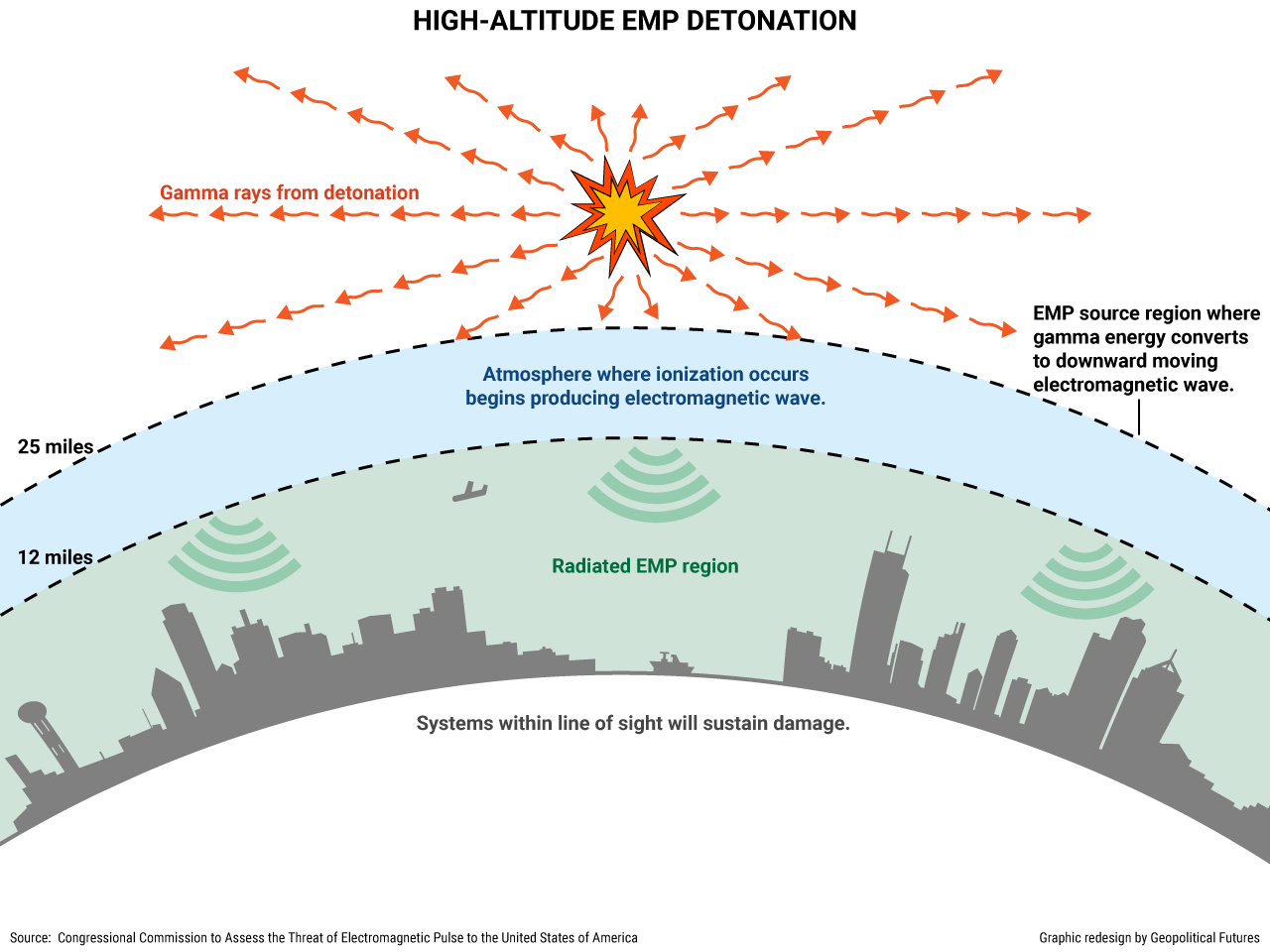
An electromagnetic pulse attack is essentially a surge of energy, caused by a nuclear detonation or a solar storm, that could overload electronics and cause them to fail. While national leaders and industry are more aware of the potential impacts, the Air University study said, an effort akin to the “Smokey Bear” wildfire-prevention initiative could better alert the public.

The second annual study, undertaken by hundreds of scholars, industry experts, and military officers earlier this year, argued that the proliferation of “efficient but delicate” computers, networks, and other electronic infrastructure leaves the US particularly vulnerable to electromagnetic attacks on a grand scale…

Click here to read the entire article at Air Force Magazine.

Doom and Bloom: Dengue Fever – A Rising Pandemic

The Altons at Doom and Bloom Medical have an article up on Dengue Fever , its current pandemic status, symptoms, treatment and precautions.


  • aedes aegypti mosquito

    Singapore dengue outbreak: Nearly 9000 cases through July – Outbreak News Today

    Nicaragua declares alert over dengue fever – Washington Post

    Bangladesh grapples with country’s worst dengue outbreak – Miami Herald

    Three headlines about Dengue Fever this year? No, actually they’re all headlines just from one day: Aug 1st, 2019. Dengue fever is a true pandemic, with community wide outbreaks in various regions throughout the world. Indeed, rates of Dengue infection are thought to have increased greatly since 1960 due to encroaching civilization and population growth in warmer regions. As a resident of South Florida, I believe that the development of residential air conditioning around that time may have precipitated the explosion in potential victims.

    rash in dengue patient

    What is Dengue fever? It’s an infection caused by a virus that’s transmitted to humans by mosquitoes. If you live between latitude 35 degrees north and 35 degrees south, and lower than 3000 feet elevation, you’re in Dengue territory.

    And you’re not alone. An estimated 400 million people get infected with the Dengue virus every year. Luckily for the grand majority, they don’t even know they have it. 96 million cases, however, aren’t so fortunate and develop sickness.

    The mosquito in question is the Aedes Aegypti, but other species may possibly spread it. A mosquito bites a human with the Dengue virus and becomes infected. It doesn’t get sick, but the virus is now in its saliva for life. The mosquito passes Dengue onto the next human through its next bite.

    Just a few diseases transmitted by mosquitoes

    There are actually four different but related viruses that cause dengue fever, but the symptoms are similar. If you’re in the unlucky minority that gets sick, you can expect to see signs about four to seven days after the infectious bite…


Click here to read the entire article at Doom and Bloom.

WA Governor Candidate Loren Culp to Speak at Aug. 15 General Assembly

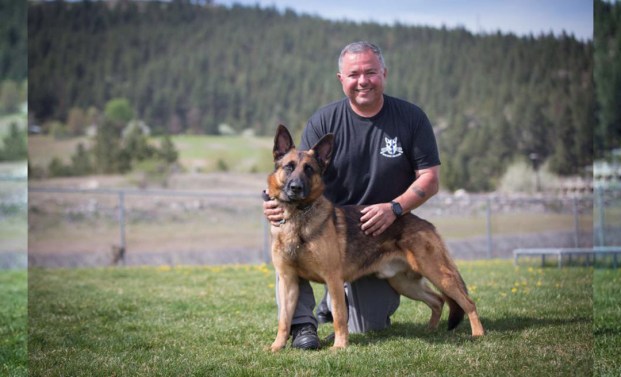
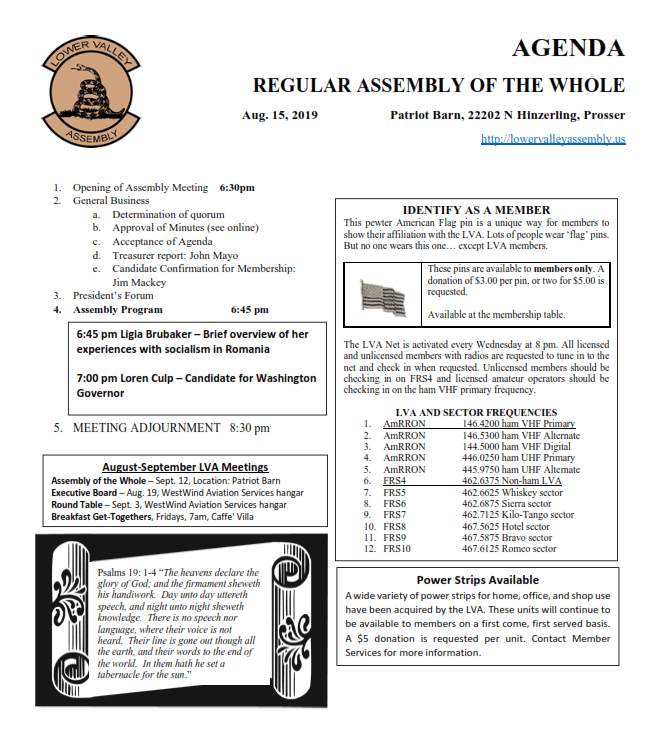
The Lower Valley Assembly will hold its next general assembly on Thursday, Aug. 15, 2019, beginning at 6:30 p.m. Our speaker will be candidate for governor Loren Culp, current Police Chief of Republic, WA. He will begin speaking at 7:00 p.m in the Patriot Barn at 22202 N. Hinzerling Rd north of Prosser.

1911bakery will have baked goods for sale and is donating proceeds to the campaign. Don’t forget your wallet! You can check into the Facebook event by clicking here.

Click here to download a printable PDF agenda.

Edit: A transcript of Chief  Culp’s speech at this meeting is posted here.

Related:

WA State Wire: Four Candidates Chase Republican Nomination for Governor