
 The Prepared Homestead has a video out talking about six steps that you should taking right now in regards to the pandemic and resultant/simultaneous supply chain/economic problems. He covers (1) sizing up the situation, (2) scenario development – best, most likely, worst case, (3) taking stock of your financial situation, (4) topping off supplies, (5) growing some of your own food, (6) working on your health. Much of one and two will be familiar to you if you’ve taken or read Forward Observer‘s SHTF Intelligence or Area Study book/classes.
Tag: covid-19
16th Leg. Dist. Republicans Open Letter to People of Benton County
The Benton County Republicans for the 15th Legislative District have written an open letter to the people of Benton County about the county commissioners and their saying that they have no authority to resist the governor’s stay at home orders. The letter reads, in part:
…Shon Small, Jerome Delvin, and James Beaver made the statement “The Benton County Board of Commissions does not have the legal authority to override the Governor’s ‘Stay Home, Stay Healthy’ proclamation…” The Commissioners’ job is to oversee the county and also, we firmly assert, to protect the citizens from overreach of power by the capital. All three of our Commissioners are either willfully ignorant or just negligent in their role…
It is time to get business’s open and the people back to work. We firmly believe that every
person in Benton County is essential. We know there are veritable public health concerns and
those who ought to stay home, can chose to do so. The working people of Benton County
know what is best for them, not the Governor’s boot-licking Commissioners, whose income
rolls in whether they work or not. It’s time the Commissioners earn their paycheck and protect
the good and hard working people of Benton County from the bureaucratic double speak of
Olympia. The woes of King and Pierce County are not the identical worries of Benton
County; we are a different demographic, climate, economy, and culture. The citizens of this
community possess an undeniable right to make decisions autonomously from our State
government; to tailor our county government to serve the people of this area as is fitting to the
citizenry of this particular locality. Top down, authoritarian mandates from the capital are ‘one
size, fits the capital alone’ decisions – they are made without a thought of us here! We are
calling on the Commissioners to do what is prudent for Benton County; they are elected to a
very well compensated position, as a public servant, and ought to conduct themselves
accordingly…
Liberty Blitzkrieg: Chinagate Is the New Russiagate
Michael Krieger at Liberty Blitzkrieg writes about the current nonsense of blaming China for the US (and other countries’) lack of preparedness and the reasons behind it (dodging responsibility for incompetence by local, state, and federal politicians and bureaucrats, coupled with the need to extend the national security state and the flow of spice money). Who didn’t see China lockdown a few hundred million people and think, “Whoa, this looks serious” — apparently politicians. They must have just thought, “I wish I could do that.” Chinagate Is the New Russiagate.
I’ve become convinced the next major event that’ll be used to further centralize power and escalate domestic authoritarianism will center around U.S.-China tensions. We haven’t witnessed this “event” yet, but there’s a good chance it’ll occur within the next year or two. Currently, the front runner appears to be a major aggressive move by China into Hong Kong, but it could be anything really. Taiwan, the South China Sea, currency, economic or cyber warfare; the flash points are numerous and growing by the day. Something is going to snap and when it does we better be prepared to not act like mindless imbeciles for the fourth time this century.
When that day arrives, and it’s likely not too far off, certain factions will try to sell you on the monstrous idea that we must become more like China to defeat China. We’ll be told we need more centralization, more authoritarianism, and less freedom and civil liberties or China will win. Such talk is nonsense and the wise way to respond is to reject the worst aspects of the Chinese system and head the other way.
– From my 2019 piece: Two Paths Forward with China – The Good and The Bad
As the clownish farce that is Russiagate slinks back into the psyop dumpster from which it emerged, an even more destructive narrative has metastasized following the U.S. government’s incompetent response to covid-19.
It was clear to me from the start that Russiagate was a nonsensical narrative wildly embraced by a variety of powerful people in the wake of Trump’s election merely to serve their own ends. For establishment Democrats, it was a way to pretend Hillary Clinton didn’t actually lose because she was a wretched status quo candidate with a destructive track record, but she lost due to “foreign meddling.” This allowed those involved in her campaign to deflect blame, but it also short-circuited any discussion of the merits of populism and widespread voter dissatisfaction (within both parties) percolating throughout the land. It was a fairytale invented by people intentionally putting their heads in the sand in order to avoid confrontation with political reality and to keep their cushy gravy-train of entrenched corruption going.
Russiagate was likewise embraced by the national security state (imperial apparatus) for similar reasons. Like establishment Democrats, the national security state also wanted to prevent the narrative that the status quo was rejected in the 2016 election from spreading. It was incentivized to pretend Hillary’s loss was the result of gullible Americans being duped by crafty Russians in order to manufacture the idea that U.S. society was healthy and normal if not for some external enemy.
Another primary driver for the national security state was to punish Russia for acting like a sovereign state as opposed to a colony of U.S. empire in recent years. Russia has been an increasingly serious thorn in the side of unipolarism advocates over the past decade by performing acts such as buying gold, providing safe harbor for Edward Snowden, and thwarting the dreams of regime change in Syria. Such acts could not go unpunished.
So Russiagate served its purpose. It wasted our time for much of Trump’s first term and it helped prevent Bernie Sanders from winning the Democratic nomination. Now we get Chinagate.
When the premier empire on the planet starts blaming external enemies for its internal problems, you know it’s almost always an excuse to let your own elites off the hook and further erode civil liberties. While it appears the novel coronavirus covid-19 did in fact come from China, and China tried to discourage other countries from taking decisive action in the early days, our internal political actors blaming China for their own lack of preparation and timely reaction is patently ridiculous.
The entire world saw China shutdown the entire city of Wuhan shuttering factories and the economy. Anyone with two eyes and half a brain could see they were ACTING as if this were very serious. I bought masks, hand sanitizer, lysol wipes at the end of January. Why didn’t State? https://t.co/oECvvxbV0K
— Stacy Herbrrrt (@stacyherbert) April 23, 2020
If Stacy and myself were able to see the situation clearly and respond early, why couldn’t our government? This isn’t rocket science. The Chinese were acting as if the world had ended in cities across the country and we’re supposed to believe U.S. leaders simply listened to what the CCP was saying as opposed to what they were doing? How does that make any sense?
It makes even less sense considering the Trump administration has been in an explicit cold war with China for almost two years. This concept that the American national security state just took China’s word for what was going on in the early days is preposterous. So what’s going on here? Similar to Russiagate, the increased focus on directing our ten minutes of hate at the Chinese provides cover for the elites, but Chinagate is far more dangerous because the narrative will prove far more convincing for many Americans…(continues)
Citizens Journal: Boost Your Immune System, Too

In Karen Selick’s article Coronavirus Crisis Reopens 150-Year-Old Controversy at Citizens Journal, she reminds us that there is another side to fighting viruses besides just avoiding the virus itself, i.e. you can boost your body’s ability to fight off viruses by improving your immune system.
…French scientist Louis Pasteur (1822-1895) is widely celebrated as “the father of germ theory”— the idea that we become sick when our bodies are invaded by foreign organisms such as bacteria, molds, fungi, and of course viruses. Although the idea had been circulating long before Pasteur achieved eminence, his laboratory work in the 1860s appeared to provide the scientific proof that had previously been missing.
What’s not widely known is that other French scientists working in the same field in that era held somewhat different beliefs, known as the “terrain theory”. They believed that the most important factor that determines whether or not a person becomes ill is not the presence of a germ, but rather the preparedness of the body’s internal environment (the “soil” or terrain) to repel or destroy the germ…
But regardless of Pasteur’s character, and regardless of whether he recanted at the end or not, what lives on after him is the mindset, clearly visible amongst most of today’s medical professionals and health care bureaucrats, that it is the germ (formally designated SARS-CoV-2) that has to be tracked down, isolated, avoided, and eradicated—and that’s all that matters. The “terrain”, to conventional modern thinkers, is nothing.
For instance, on the Ontario government’s website telling its citizens what to do about COVID-19, its advice consists entirely of measures designed to prevent people from coming in contact with the virus: stay home, wash your hands often, don’t touch your face, maintain physical distancing and wear a mask when you have to go out.
No mention is made of any measures individuals can take to ensure their immune systems are operating at peak efficiency (or as the French scientists would have put it, their terrain is well prepared to mount a defence). It’s almost as though the Ontario government doesn’t believe human beings have immune systems or that they’re of any use whatsoever. The only hope, Ontario seems to believe, is for a pharmaceutical company to patent a vaccine, because that is the only way that human beings can defend themselves against a virus, or acquire immunity.
In fact, Ontario and Canada have gone out of their way to discourage people from looking for methods of helping themselves. Ontario’s website says “there is no specific treatment” for COVID-19. End of story. Canada’s government-owned broadcasting company, the CBC, recently published this article denouncing “bogus cures” including vitamin C, zinc, medicinal mushrooms and oil of oregano.Vitamin D3, Zinc and M…Best Price: nullBuy New $6.98(as of 03:40 EST – Details)
This official attitude is utter nonsense—there is actually an abundance of scientific evidence supporting various nutritional supplements as being instrumental in preparing people’s immune systems to repel or overcome viral infections.
Take zinc, for example. Many COVID-19 patients have mentioned as symptoms the loss of their senses of smell and taste. According to the BBC, these symptoms affects as many as 18 percent of infected patients. This CNN article says that some people will take days or weeks to recover these senses after having the virus, while others may take months or years.
But the loss of these senses is a well-established symptom of zinc deficiency, a fact not mentioned in either of the two articles cited, and apparently not known to most of the mainstream medical community. Yet here is a PubMed study connecting zinc deficiencies with “smell and taste disturbances”. Here’s one specifically connecting “older patients” with zinc deficiencies and loss of acuity in the senses of taste and smell. Both of these studies also mention that zinc deficiencies lead to impaired immune function or an increased risk of infection. Can medical “experts” and governments not connect the dots?
Vitamin D is another nutrient (a hormone, actually) well recognized by scientists to have antiviral benefits. Google Scholar lists 3,670 research reports published in 2020 alone containing the words “vitamin D” and “virus”…(continues)
John Mosby on Pandemic
 John Mosby of Mountain Guerrilla has been writing about Covid-19 for his Patreon subscribers for a few weeks, now. While he acknowledges the uncertainties, he tries to point out the things than you can/should act on regardless of other uncertainties. His articles on the topic are long, and the following is just a small excerpt. The most useful parts are on his Patreon and are worth a read.
…I hinted at it above, but further issues with this virus are coming to light. Among these is the already known/suspected possibility of reinfection, due to inadequate antibody production. In at least one study I’ve seen, of the test results that came back positive for antibody presence, in the NY population, only about 30% actually had adequate antibody presence to indicate even the possibility of immunity. So, despite around 20% of the population of NYC potentially having been exposed to the SARS-CoV-2 already, of that 20%, only about 30% may even have any level of immunity to reinfection.
Second, there are increasing number of otherwise healthy patients (no previous medical history, no relevant comorbities), who have recovered from COVID-19, only to suddenly drop dead from stroke, later, because of blood-clotting caused by the disease. This seems to indicate another potential example of the lasting organ damage that can occur despite “recovery” that aren’t immediately apparent.
Finally, one of the claims that has circulated repeatedly, since the beginning, was the theory that summer time would find a reprieve from the virus, allowing us time to “catch our breath” and get ready for another round of the fight with it, come next autumn and winter. The problem with THAT one is that, well…the southern hemisphere (with the apparent exception of Australia, which is actually kind of an outlier for a number of reasons, mostly because of the level of lockdown they initiated early on) and the equatorial regions seem to be getting hammered pretty fucking hard…and their numbers don’t even account for the shoddiness of what passes as “record keeping” in those shitholes.
So, What?
(1) This isn’t the fucking flu. If you still think it’s anything like the flu, choke yourself. Seriously.
(2) You really don’t want to catch this virus. By all accounts, it’s a fucking miserable experience, even with “mild” symptoms, in fit, athletic young people. Then, there’s the whole possibility of dying from it thing…That doesn’t even account for the possibility of “recovering” and then dying from a stroke a couple of weeks later.
(3) The “lockdowns” are politically and economically impossible to sustain for much longer. So, the numbers are going to increase, both in total case numbers, and in fatalities. Your goal should be (ours certainly is!) to avoid contracting it at all, and if it is unavoidable, to contract it as late as possible, so there has been more time to consider all possible treatment options, come up with viable, working treatments, and get the requisite materials into the supply pipelines to help (which may not happen anyway…).
Interestingly, I’ve noticed that nobody in a position of authority is claiming “we’ll have a vaccine in a few weeks!” anymore. Instead, they’ve switched to the 12-18 months timeline that some of us have been trying to explain to people for the last couple of months. Further, I haven’t done a lot of digging yet, but to the best of my limited research (thus far), there’s NEVER been a viable vaccine for a coronavirus. Not SARS-COV (the first one). Not MERS-COV. Not the Common Cold. None, that I’ve been able to discover. I’d love to see evidence refuting that…
SocioEconomic Impacts
There are a number of very real impacts coming down the pipe, as a result of this pandemic. While it’s becoming increasingly popular, in some circles (mostly on the Right, but I’ve seen some circulating on the Left as well), to blame all of the impacts on the lockdown/quarantine response to the virus, the fact is, most of us have KNOWN the system in place, as it was, wasn’t really sustainable in the long-term. Whether you were concerned about the political issues, the economic issues, the resource issues, or the environmental issues, the reality is, COVID-19 hasn’t “destroyed” anything. The lockdown/quarantine response hasn’t “destroyed” anything. This—whether the pandemic itself, or the response thereof—just gave the system the nudge off the edge of the precipice it was hanging off of.
I’ve seen a number of claims circulating that “the response” is nothing but a political ploy to avert blame for a “controlled collapse” of an unsustainable economic model. To that, I have three responses, which have guided my own response to the situation.
(1) Anyone who has been prepping for any length of time should have considered the impacts of potential pandemics. Especially in light of “Swine Flu” and “Bird Flu” scares in recent years, even those of us that didn’t spend much time considering it, have to have spent SOME time considering it. If you did, you knew—or should have known—that lockdown/quaratine was one of the major planning elements for controlling/containing the spread of pandemic disease. You would also have discovered that medical authorities—even contrarian medical authorities—around the world have warned, repeatedly, of the possibility—actually, the PROBABILITY, even INEVITABILITY—of an international pandemic of this scale. So, none of this is particularly surprising, either the pandemic itself, or the response thereto…
(2) The whole “it’s all a plan by the government to bail out the elites” would seem to have some grounding in possibility, when you look at the way the “Stimulus” has gone. Most citizens got their paltry little $1200/person “Please Don’t Riot Yet” checks, while hundreds of billions of dollars went to the banks, airlines, and corporations…again.
The fact that the Fed “shored up” the markets, with an infusion of newly created “money,” even as they’re predicting record unemployment levels and loss of up to half the US GDP in the coming months, would seem to reinforce that possibility. The markets crashed, but then magically rebounded, despite no real reason, other than the Fed pouring made-up money into them, would seem to give legs to the idea it was done just to give the “elites” the chance to get out from under their portfolios.
The problem I see with that argument—that it was all intentional—is that it would require basically every government in the world to be in on the game. That’s a pretty big stretch of the imagination. I’m not saying it’s impossible, but I AM saying, it’s improbable. I don’t subscribe to that belief (which is not the same thing as saying the political and bureaucratic classes aren’t taking advantage of the situation to leverage things to their favor, as much as possible).
(3) The biggest issue with the whole conspiracy theory though is…”So what?” If that theory IS right, what impact does that have on YOUR ability to deal with the situation? What impact does that have on the ability of YOUR FAMILY, and YOUR COMMUNITY to weather the storm? Because, honestly? That’s all that matters, at this point. Anything larger scale is probably completely outside of your sphere of control anyway.
It certainly doesn’t do any good to bitch and whine about it. You’re not going to change it, by venting to your (probably) like-minded friends on Facebook or Twitter or Instagram. Far better is to use a little mental Judo, and simply refuse to focus on it. When you feel a rant or anger about it coming on, simply find something USEFUL to focus on. It’s not “suppressing” it. It’s acknowledging it exists (“Man, I’m really pissed that I think the elites are taking advantage of this!”) and then acknowledging that there’s fuck-all you can do about it, and moving on to something you CAN control (“Man, it sucks that I’m pissed, but I really don’t want to get my blood pressure all jacked up, so I’m gonna go weed the garden bed!”)…
Mark Manson: Nobody Knows What is Going On nor What to Do

NYT bestselling author Mark Manson writes about the confusion, lies and general contentiousness of the current pandemic in Nobody Knows What Is Going On. Occasional strong language ahead. His basic premise is that we’re still learning about this disease and no one really knows how bad (or not bad) it is. Some doctors say it’s just the flu. Other doctors say young, healthy people are dying from stokes caused by the virus. Everyone is contradicting each other, so people are reverting to believing whatever they want to believe or whatever aligns with their political outlook or whatever aligns with their financial interest and so on.
Right now, we have two large, complex systems. The first is a virus sweeping through the global population and our combined efforts to mitigate it. The second is a declining global economy. Both systems are incredibly difficult to measure and understand, much less predict. Both are so large and unruly that we struggle to even comprehend them in their entirety. And so far, pretty much everything we’ve thought about either has been utterly wrong.
Let’s start with the first system: the spread of the virus. Despite months of research and testing, we still know very, very little. For example, we know that the virus is highly contagious, but we still have no clue how contagious. Studies pin its R0 number (how many people each sick person goes on to infect) as high as 6.6 and as low as 1.4. For reference, that’s like saying the virus will infect anywhere from 20% of the population to 80%, a range so broad that you might as well pick a number out of a hat.
What about how many people have been infected? A series of studies came out in the past week showing that infections have likely been vastly undercounted and that there are thousands (perhaps millions) of people out there who have been infected but had no symptoms. This would be big news, because it would suggest that the virus is far less deadly than we thought. A recent Stanford study argued that the real mortality rate could be from 0.12% to 0.2%, making coronavirus hardly more deadly than the seasonal flu (which has a mortality rate of 0.1%). The problem is that these studies relied on inaccurate tests, did not test people randomly, and had other major methodological errors.
Okay, but what about deaths? A recent New York Times investigation found that there are potentially 20 to 30% more people dying from COVID-19-related deaths than are being reported (note: this study has also been widely challenged.) So, while there may be far more people being infected than we’re counting, there’s also likely far more people dying than we’re counting.
This means… well, I don’t know what the fuck this means. And neither does anybody else. Pretty much every projection model, including the ones government officials have relied upon, have been wildly incorrect so far. Lockdowns work! But, then again, they might not. Hydroxychloroquine was supposed to be a successful treatment. Then it turned out it wasn’t. Remdesivir was supposed to be a successful treatment. Then it turned out it wasn’t. Ventilators were supposed to save lives. Then it turned out they probably don’t. The hospitals are going to be overloaded! Until they weren’t. Smokers were all going to die! Wait, no, smokers might be the ones who live.
A few weeks ago, the US government’s estimate of 240,000 deaths seemed so absurd that they revised it down to 60,000. Now that number seems completely absurd and will likely need to be revised much higher again. The cherry on top of the shit sundae, of course, is the US president talking about beaming ultraviolet rays through our bodies as though we live in an episode of Star Trek… and then following that up by suggesting that maybe we inject ourselves with disinfectants.
If there’s one thing we know for certain about this pandemic, it’s that we know almost nothing for certain about this pandemic.
And that’s only the first system we’re wrestling with. The second is our economic system. Within a span of a couple weeks, the travel, hospitality, entertainment, restaurant, and brick and mortar retail industries have practically been annihilated. Just in the United States, 26 million people have lost their jobs in a little more than a month; an unemployment rate that rivals The Great Depression (note: this number is also likely being undercounted). The consensus is that we are certainly entering into a recession with whisperings of the D-word… no, not that D-word… the Depression D-word. The International Monetary Fund has said that we are potentially entering a global depression that will rival the 1930s in its depth and scope.
It’s for this reason that working class people have begun protesting and rioting in the western world, demanding economic relief. Leaders and pundits have come out arguing that lockdowns are a “cure worse than the virus itself.” Others argue that because the virus disproportionately affects the elderly, we should only tell old people to stay home and let the rest of the population build immunity as quickly as possible.
But there are many problems with these arguments. The first is that we don’t even know if herd immunity can exist. We do not know how long immunity lasts for COVID-19. People who contract many of the other coronaviruses only remain immune for a short period of time. Sadly, there have already been a number of reported cases of people contracting COVID-19 twice. If people only remain immune for a few weeks or months, then herd immunity will be impossible.
Second, while the virus is far more dangerous to the elderly, it’s no cakewalk for some of the young as well. There are reports of long-lasting damage to lungs, hearts and potentially even brain stems of those who have been hospitalized. Doctors are seeing strange numbers of infected young patients dying of strokes. On a new subreddit for people who have tested positive to share their experiences, there are horror stories of 25-year-olds on ventilators and people with persisting symptoms over a month later.
Third, re-opening the economy is not a magic bullet. As I wrote a couple weeks ago, nobody is going back out to a crowded public area any time soon, even if they are open. Would you go to a concert next week? I sure as fuck wouldn’t. What about next month? Next year? Lock down or not, tens of millions of people are going to stay home no matter what, guaranteeing that consumer spending remains in the toilet and tens of millions remain unemployed.
Fourth, we don’t even know that the economy was healthy in the first place. Some of the greatest investors in the world such as Ray Dalio have been arguing for years that we were due for a once-in-a-century collapse. For years, many pointed to negative interest rates and high levels of debt as a ticking time bomb waiting to go off. A pandemic may actually not be the cause of our economic woes, but merely the proverbial straw that broke the camel’s back.
Then again, this could all be wrong. Epidemiological projections have been famously wrong for the past month, but economic projections have been consistently wrong for… well, pretty much as long as there’s been economists.
We still don’t know what the COVID-19 does to the body or its long-term repercussions. We don’t know if building herd immunity is even possible, much less worth the cost. We don’t know how many people would die if we opened the economy up sooner rather than later, and we don’t know how stimulative opening up the economy would be anyway.
We just don’t know a damn thing. Nobody does. So, stop acting like you do.
Click here to read the entire article at MarkManson.net.
The Organic Prepper: The Truth About Neighbors in Survival Situations
 Daisy Luther at The Organic Prepper has an article on The Truth About Neighbors, Coworkers, & Friends in Survival Situations, detailing some things learned about people during this pandemic. I can think of a few additions to the types listed from my experiences, can you?
…many of us are realizing that there’s also a lot to learn about the folks just outside our inner circles: our neighbors, our co-workers, our extended families, and other communities in which we’re involved like churches or schools.
Behavior outside of the group.
While our connections with these people aren’t as intimate as those within our groups, in some cases they can still threaten an otherwise solid survival plan. Some of the people described below may sound familiar after weeks of movement restriction.
- The people you warned for months if not years that they needed to put some food aside, make arrangements for their prescriptions, and buy some extra toilet paper and soap.
- Folks who know more than you now wish they did about your pantry and who’ve made it clear that they think it’s “greedy” that your family has so much while others have so little
- People we used to really like boasting on Facebook how they snitched on somebody for some innocuous thing they felt flouted the “rules”
- Neighbors taking a sudden and noticeable interest in your garden or your chickens
- People in the neighborhood who are no longer working and now just sit on their porch all day and closely watch what everyone else is doing – including people unloading supplies from their cars into their homes
- The nosy neighbor who demands that everything be “fair” and wants to take a tally of anything – people, water, supplies, guns, you name it.
- That guy down the street you never liked in the first place who is becoming even more unlikeable by promoting himself as some kind of neighborhood watch king, handing out unsolicited advice and warnings, or maybe trying to set up “rules” by which he expects everyone else to abide
- The people who are moving closer and closer to overstepping the boundaries of civil behavior – they’re doing small things dropping their trash in your yard or blatantly looking inside the windows of your car – but it’s an escalation
- The co-worker who asks way more questions about your preparedness level than is really appropriate
- The community group (church, social club, volunteer organization) that wants donations or participation in a way that is likely to threaten your OPSEC (operational security – more on that later)
You know the ones. They’re trying to get just a little too close for comfort. We’ve probably all seen somebody over this period of time and thought, “Yeah, I’m going to have to watch that guy.”
If the situation were to worsen, you would indeed have to watch that guy.
Identify “who” your neighbors and coworkers are
The people around you can be beneficial, neutral, or a threat. It’s best to determine which one they are as early as possible in an emergency…(continues)
Click here to read the entire article at The Organic Prepper.
End of the American Dream Blog: Almost Everyone Is Wrong About This Coronavirus Pandemic
Michael Snyder of the End of the American Dream blog shares his thoughts on The Facts That Prove That Almost Everyone Is Wrong About This Coronavirus Pandemic. Mr. Snyder is mostly trying to point out in this piece that both the group saying that Covid-19 is nothing/a hoax/the flu/etc. and those thinking it is a pandemic holocaust are wrong and that the facts show something in between.
When it comes to COVID-19, most Americans seem to be gravitating toward one of two extremes. Some are treating this pandemic like it is the end of the world, while many others are dismissing it as a “nothingburger”. But the truth is somewhere in between. Nobody can deny that lots of people are getting sick and lots of people are dying. In fact, the U.S. death toll has doubled in a little over a week and it has now shot past the 47,000 mark. And as this pandemic progresses, a lot more people are going to get sick and a lot more people are going to die, and this is going to be true whether the lockdowns continue or not. The lockdowns were never going to stop COVID-19, and anyone that believed that was just being delusional.
The only time a lockdown should be instituted is if a pandemic has gotten so bad in an area that hospitals are being absolutely overwhelmed, because if people can’t get treatment that is a factor that could potentially increase the overall death toll substantially.In most of the United States that is not happening right now, and so in most of the nation the lockdowns should be immediately ended.
But won’t a lot more people start getting sick if that happens?
Of course, and this is something that the “nothingburger” crowd doesn’t understand. Lifting the lockdowns is going to cause the virus to cycle through our population at a much faster rate, and the numbers will get pretty ugly. But as long as the medical system can handle it, lockdowns are not necessary.
What “the end of the world” crowd does not understand is that when you are dealing with a virus that spreads as easily as this one, it is inevitable that most of the population will eventually become infected. You can “flatten the curve” and delay the inevitable with lockdowns, but that also prolongs the pandemic. In the end, roughly the same number of people will get sick and roughly the same number of people will die no matter how the pandemic is “managed”.
This week, the “nothingburger” crowd has made a really big deal out of the fact that a study conducted in L.A. county discovered that about 4 percent of all residents had already developed COVID-19 antibodies, and they were trying to use that study to prove that this pandemic is not much of a threat at all.
Actually, it shows just the opposite.
This pandemic is not going to be over until herd immunity is achieved, and according to Johns Hopkins that does not happen until 70 to 90 percent of a population has developed immunity…
When most of a population is immune to an infectious disease, this provides indirect protection—or herd immunity (also called herd protection)—to those who are not immune to the disease.
For example, if 80% of a population is immune to a virus, four out of every five people who encounter someone with the disease won’t get sick (and won’t spread the disease any further). In this way, the spread of infectious diseases is kept under control. Depending how contagious an infection is, usually 70% to 90% of a population needs immunity to achieve herd immunity.
So let’s do some really quick math.
Let’s assume that the study conducted in L.A. County is representative of the nation as a whole and that approximately 4 percent of all Americans have now developed antibodies.
And let’s also assume that herd immunity for COVID-19 will be achieved when 80 percent of the total population has developed antibodies.
If 47,000 Americans have died at the current 4 percent level of exposure, that means that we could potentially be looking at an overall death toll of 940,000 once we hit an 80 percent exposure level.
Does anyone in the “nothingburger” crowd want to try to claim that 940,000 dead Americans is not a big deal?
I keep hearing people say that this virus “is just like the flu”, and that is absolutely absurd…(continues)
Click here to read the entire article at the End of the American Dream blog.
Prolonged Field Care: Oxygenation, Ventilation and COVID19
Prolonged Field Care has posted a podcast on Oxygenation, Ventilation and COVID19. This is austere medical management information, so you will hopefully not need it for our current pandemic, but better prepared than scared as we say.
Doug and Dennis talk austere management of COVID19 patients with an emphasis on strategies for oxygenation and ventilatory support. The remainder of the post is an massive amalgamation of resources I have been collecting for over a year for my own respiratory refresher. It’s a lot to take in but if you are looking for something related to airway, oxygenation or ventilation, scroll down and you should have some great rabbit holes to dive down.
We have been trying to get more vent training with the Advanced Special Operations Medical Sergeant Course, Regional Support Medic program and prolonged field care training for a while recognizing that this is a universal weakness for the majority of us SOF Medics. We just don’t do it enough. I had the 6 students go through over 7 hours of vent training in 4 blocks over the course of 9 weeks and we were just getting comfortable with the basics. Most go back to their day jobs and won’t likely touch it again for a long time.
While getting ready for an upcoming class I was invited to take, I wanted to review everything I had found useful for airway and ventilation. There is a lot here but contains all the resources I found most useful…
COVID19 Airway and Vent
Disclaimer: I am not currently taking caring for any COVID19 patients,or any others for that matter, but these resources seem to be helpful to those who are. Recommendations are evolving daily so be sure to check the date on everything in this section…
Use an exhalation filter no matter what airway or vent you are using!
https://vimeo.com/403343413
10th SFG(A) SOCRATES Training:
EMCrit always has some great resources like this 4 Apr webinar…
https://emcrit.org/emcrit/avoiding-intubation-and-initial-ventilation-of-covid19-patients/
This deals with other, non-invasive positive pressure solutions such as COVID19 CPAP: https://emcrit.org/pulmcrit/cpap-covid/
This is the comprehensive PulmCrit/EMCrit Internet Book of Critical Care post if you have the time: https://emcrit.org/ibcc/COVID19/
Bill Cantrell also has some great resources on ResusMed: http://www.resusmed.com/2020/03/30/protected-airway-management/
You could try awake proning
CPAP machines (and some kind of viral exhaust filter) could buy time or prevent getting them on a vent. Most of the stuff I have read says that COVID19 Patients on vents have anywhere from a 50% to 90% mortality even with properly trained and equipped ICU teams. A SOF medic probably shouldn’t intentionally be trying to do any of this without very close oversight or in extremis. Like I said, it would be a bad day for the best of us…(continues)
Click here to read the entire article at Prolonged Field Care.
Yakima Herald: Yakima Has Highest Rate of Covid-19 in WA
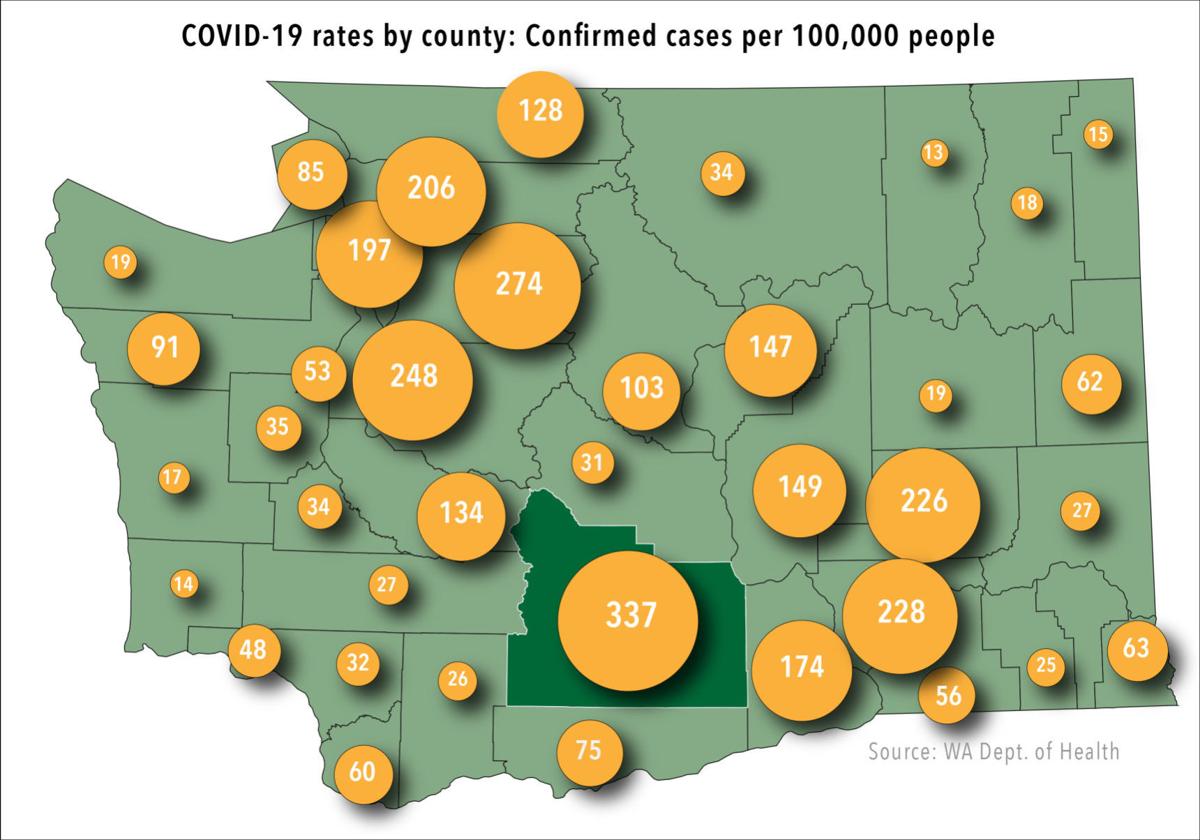
From the Yakima Herald, Yakima County has highest rate of COVID-19 cases in Washington, double the state rate:
Yakima County has the highest rate of COVID-19 infections in the state by a significant amount, and is double the state average, according to state Department of Health data.
The county had a rate of 337 cases per 100,000 people, according to the latest state data, accounting for the 840 Yakima County cases recorded by the state as of midnight on Monday.
That’s significantly higher than the next highest county rate in the state, Snohomish County, which has 274 cases per 100,000 people. It’s double the state rate of 168 confirmed COVID-19 cases per 100,000 people.
Yakima County also has the second-highest rate of testing for COVID-19 in the state after Snohomish County, according to Yakima Health District spokeswoman Lilian Bravo.
As of Tuesday evening, Yakima County had 886 confirmed cases of COVID-19, including 38 deaths, according to the Yakima Health District. Twenty-five people were hospitalized with the respiratory virus. The health district did not provide updated numbers Wednesday due to technical difficulties.
Map released
On Tuesday, the health district released a map showing the breakdown of confirmed COVID-19 cases among residents in each city and town in Yakima County.
The health district map shows where community members infected with the virus live, not where they contracted the virus, said Bravo. Community members can contract the virus from anywhere in the community, she said — not just areas with higher rates of residents with confirmed cases.
The health district mapping is based on COVID-19 cases per 100,000 population, not actual case numbers in each town or city. Cases in long-term care facilities, which account for about a third of cases in the county, were not included in the map to prevent the data from being skewed. P.O. Box addresses were also excluded.
High densities of cases can be seen in parts of Yakima, Sunnyside, Toppenish, Wapato and Tieton, among others.
The high case rate in the county compared to elsewhere in the state can be attributed to outbreaks in long-term care facilities, as well as the high proportion of essential workers in Yakima County, Bravo said.
Cases at seven Yakima County long-term care facilities make up 25% of the county’s total cases.
Essential workers
About 72,700 of 115,000 Yakima County jobs, or 63%, are in essential industries like agriculture, health care and wholesale trade, according to job figures from the first quarter of 2018 provided by the Yakima County Development Association.
This compares to 54% statewide.
“Context is that over 60% of jobs are still considered essential in Yakima, so we’re not as shut down as some areas in the state,” Bravo said. “Having more individuals still working, not necessarily always being able to work from home, having to show up to work — that’s going to put them at a higher risk of infection.”
Zero Hedge: America on the Brink?
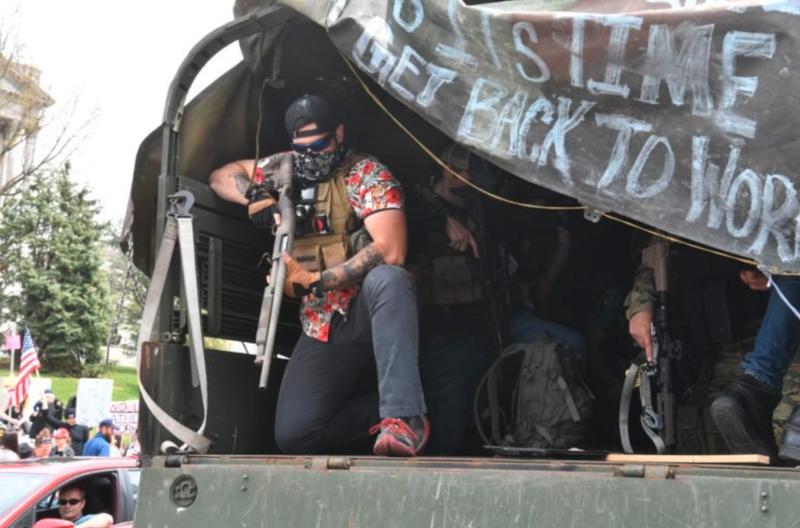
From Zero Hedge, America On The Brink? Shocking Images Show “Pennsylvania Militia” Rolling Up To “Reopen America” Rally. Early in this pandemic, I noticed that people had stopped talking about civil war, which was rampant talk last year. As the lockdowns progressed, I began to wonder if the economic damage would knock down all the barriers that intelligence analyst Sam Culper of Forward Observer said would prevent widespread violence.
America could be standing on the edge of a revolution. Seriously, well, with National Guard troops deployed across the country, any uprising would likely be squashed.
We noted late last month that a “social bomb” was set to detonate over major Western cities. It was thought that the epicenter of unrest could begin deep within inner cities, such as those in Baltimore and Detroit, but that might not be the case.
It appears tensions are soaring among anti-quarantine protesters and state governments. The lockdown backlash started last Thursday in Lansing, Michigan.
Anti-quarantine rallies sprouted up across the country over the weekend, organized by right-wing groups that held rallies in Texas, Indiana, New Hampshire, Nevada, Maryland, Utah, Wisconsin, Washington, and Colorado.
Attempting to show force, some protesters wielded rifles, handguns, and shotguns, along with American flags, Betsy Ross flags, Trump signs and “Don’t Tread On Me” flags right up to the doorsteps of some state capital buildings.
The sight is absolutely stunning, but before we continue, we must understand the right-wing groups that organized the rallies are fed up with quarantine orders enforced by state governments to mitigate the spread of COVID-19. While it is open for discussion if the strict lockdowns were worth it, several things are evident, and why many of these protesters are angry, is that the economy has crashed into depression, 22 million jobs lost, businesses bankrupted, and hunger crisis unfolding. Combined this all together, and a perfect storm of unrest could be nearing.
While we could show you images of the latest rallies from across the country, that would be a bit too much. So, let’s focus on the “reopen” Pennsylvania demonstration on Monday (April 20). The location was Harrisburg, Pennsylvania, more specifically, at the Pennsylvania State Capitol Complex…(continues)
Christian Prepper Gal: Has the Reality of It Hit You Yet?
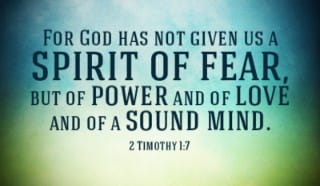 Christian Prepper Gal asks if you’ve realized that you’re in a SHTF situation in Has the Reality of It Hit You Yet?
We are in the midst of a global pandemic. We are in the middle of a SHTF situation. I think for most preppers that is just now beginning to sink in. And, I’ve been amazed at the number of new preppers that have shown up in Facebook groups in the past month! The time to be prepared is NOW. And, I’m not just talking about being prepared with food and household essentials. Unfortunately, so many, and especially new, preppers think that is all they need to or have to do.
Last Fall (2019) I began to feel very strongly that it was time to stop trying to warn people of the need to be prepared. That it was time to make sure we had our own ducks in a row, and see to it that our own lamps were filled with oil. I even expressed to those around me that I felt like “something” was going to happen in 2020. And, by “something” I meant we were going to experience (as a nation) SH(ing)TF. And, guess what?!? It happened! I personally had thought it would be as a result of the election. But, apparently I was wrong. See? I can admit being wrong, from time to time, lol.
It is my belief that this SHTF scenario has just begun. We are all wanting it to be overwith quickly and for things to get back to normal. But, you know what? I don’t think it’s going to be overwith quickly, and I’m not sure things can ever be back to what normal was before the COVID-19 pandemic. I don’t mean to be a Debbie Downer, but I also don’t mean to give false hope to others, or myself. The reality of it is that there will be repercussions from our nation being essentially shut down. Even though the term has not been “officially” used as of yet here in the U.S., that is what has happened. We’ve already been shut down for close to a month, and it sure doesn’t look like things are going to be getting back to “normal” any time soon.
How are you reacting to all this?
First and foremost, we SHOULD NOT be reacting with fear. Especially as Christians. But, it’s easy to allow that to happen. Remember, though…
2 Timothy 1:7, For God hath not given us the spirit of fear; but of power, and of love, and of a sound mind. (KJV)It is especially important to remember that right now, during this pandemic. We do not want to allow our minds to become the devil’s playground, do we? I know I don’t! But, if we allow fear to creep in, that is exactly what we’re doing.
How do we avoid or get rid of that fear? We read The Word of God. Romans 10:17, So then faith cometh by hearing, and hearing by the word of God. (KJV). If we read (hear) The Word of God, it drives out fear! How can you have faith and fear at the same time? You can’t! And, that’s why we need to build up our most holy faith. We need to saturate our entire beings with His Word! According to Johh 1:1, “In the beginning was the Word, and the Word was with God, and the Word was God. (KJV) Jesus is The Word. If we read what He said, in His Word, our faith will abound! And, faith expels fear! If we put our trust in Him, we will prevail and overcome fear.
There was one day a couple of weeks ago that I was so overcome with the negative from the news and social media that I had to play some contemporary worship music. I turned it up loud, and let it drown out all the negative in my mind and eyes. Then, I could put my mind and eyes back on Jesus.
We need to keep our eye on the prize. And, as Christians, our prize is eternal life with our Heavenly Father. So, if we keep our eyes on Him, we will win in the end!
Are you still denying it?
As I mentioned earlier, some (many) people (including preppers) are in denial. They truly think that our government will be able to take care of us and this is the worst that things will get. Some preppers don’t even realize that this is the SHTF that they’ve been preparing for! My thought is that the reason for that is they are only seeing the here and now. They’re not seeing what can and possibly will happen as a result of our nation being shut down.
Take a moment and let that sink in. Think about it. Our government has already put itself two trillion dollars in debt over this pandemic and that has only touched the surface. It will take much, much more than that to dig us out of this economic hole we are in. Do we have that much money and resources in reserve? Most likely not.
The economic downfall of the pandemic is just now beginning to be felt by many. What is going to happen when the food and resources begin to run out? What’s going to happen when parents cannot provide for their families? It will hit those with the lower incomes first. And, we are on the brink of that happening as I write. And, we are only in the beginning; one month since the declaration of this being a pandemic. We have a long way to go before we can even begin recovery. The virus hasn’t even been stabilized yet; it could take up to 18 months or longer to develop a vaccine. Our government is trying to help us and prevent things like chaos as a result of looting and rioting from happening. But, it’s not all up to only them…(continues)
Click here to read the entire article at Christian Prepper Gal.
Independent: WA Gov. Inslee Says Trump “Fomenting Domestic Rebellion”
In a classic case of the pot calling the kettle black, Washington Governor Jay Inslee on Friday accused President Trump of fomenting domestic rebellion for daring to plan for the reopening of states. This despite Governor Inslee’s own efforts throughout his tenure as governor to destroy the liberties and property enjoyed within his own state, creating an antagonistic divide between Eastern and Western Washington. Inslee accuses Trump of “anti-democrate rhetoric” while his own actual actions have been dictatorial in nature – executive orders with no representative approval.
Jay Inslee, governor of Washington State, has accused President Donald Trump of “encouraging illegal and dangerous acts.”
In a statement released on Friday afternoon, the governor said the president’s “unhinged rantings” could lead to violence and were “fomenting domestic rebellion”.
He also warned that the president was putting millions at risk of contracting the coronavirus.
The governor was responding to the Mr Trump’s comments earlier on Friday about “liberating” parts of the country from lockdowns put in place to stem the spread of the Covid-19 pandemic.
Mr Inslee says that while on Thursday the president stood alongside White House officials and public health experts, saying that science would guide his plan for easing restrictions, with sensible guidelines to resuming economic activity, “Less than 24 hours later, the president is off the rails.”
“He’s not quoting scientists and doctors but spewing dangerous, anti-democratic rhetoric.”
See also We the Governed: A good day for a little rebellion against Washington Governor Inslee
TACDA: Strategies for Coping with Isolation and Loneliness During the Pandemic
From The American Civil Defense Association, Strategies for Coping with Isolation and Loneliness During the Coronavirus Pandemic:
Contributors: Dr. Russell Fulmer, Dr. Michele Kerulis, Alexandria Widener, Lauren Brdecka, Ali Haji, Colbertson Kreger, Zemzem Amme, Sue Tao
“Loneliness is not a phase”
– Layne Staley, lead singer of Alice in Chains in the song Angry Chair
People respond to a world crisis in different ways. Some, including first responders, doctors, sanitation workers, and those in food preparation, must continue going to work to maintain essential functions in our communities. Others who are under stay-at-home orders have responded with stress, anxiety, and despair; they likely feel lonely and isolated. However, some people see a silver lining, have faith in humanity, and believe that, together, we can do our part to contain the COVID-19 pandemic.
The coronavirus pandemic has worried many people who already are anxious. We live in the Age of Anxiety. For those who experience the turbulence of anxiety, loneliness, panic, or existential angst in the best of times, a global pandemic may further trigger the underlying sense of existing uncertainty.
If you are lonely and anxious, we–members of the Counseling@Northwestern community https://counseling.northwestern.edu/–want to share how we are managing isolation and social distancing with the hope you may learn how to address the situation from different perspectives.
Our purpose is to:
- Identify common types of isolation. Identification may be the first step toward lessening some of the pain. We draw from existential theory and philosophy, notably the work of Irvin Yalom.
- Provide tips from students who deal with each type of pain, so that you might use their coping strategies. You will see that some students embrace isolation or otherwise identify positives from its onset.
Types of Isolation
There are three types of isolation: interpersonal, intrapersonal, and existential.
INTERPERSONAL ISOLATION is akin to loneliness. The often-repeated phrase that “it’s not the quantity of your relationships that matter, it’s the quality,” is relevant here. Certain personality styles may crave interactions with people more than other styles. Group identity is also relevant, including whether you belong to a group that society has traditionally shunned or oppressed.
INTRAPERSONAL ISOLATION is to disavow of part of the self. Have you ever said, “A part of me has died?” Do you recall a time you felt whole, but after a traumatic event, you felt fragmented? Maybe you have felt fragmented ever since. Or, did parts of you never have a chance to develop, maybe due to dysfunction in the home during your upbringing? If so, you know intrapersonal isolation.
EXISTENTIAL ISOLATION, as described by Yalom, is “a vale of loneliness which has many approaches. A confrontation with death and with freedom will inevitably lead the individual into that vale.” The existential form of isolation refers to the inherent gap that exists between people, no matter how close the bond. For example, your experience about an event—like the coronavirus scare—is unique to you, and your feelings about it, perceptions toward it, and exact encounters you have because of it will live only within you. Other people may have similar attitudes and experiences, but the unbridgeable gap remains.
Eight Tips for Managing and Thriving in Isolation During the COVID-19 Pandemic
1Accept the reality of the situation. Acknowledging an unpleasant reality may help to reduce stress and enable you to think through the best way to move forward.2Embrace your feelings. Acknowledging uncomfortable feelings can give you power over those emotions. Tend to feelings of danger and insecurity.3Don’t think about feelings as positive or negative. Feelings can represent how you connect to your environment and signal what actions you should take to make yourself comfortable.4Be mindful of how loneliness can manifest in physiological sensations like elevated heartbeat. Recognizing alarming sensations in the moment and allowing them to pass may help neutralize them.5Use isolation as an opportunity to better get to know and understand yourself outside of who you are when interacting with other people. Rediscover your uniqueness.6Focus on the opportunities isolation provides, rather than the things you have lost. Take advantage of extra time to make positive changes or pursue goals you may have put off.7Find ways to stay relaxed and connect to your social networks. Maintaining pre-pandemic routines as much as possible can help, but give yourself leeway to make adjustments.8Practice self-care. Receiving constant news updates can create more stress. Plan how you want to receive important information and take mental and physical breaks.
Learning to Accept Your Feelings While Experiencing Existential Isolation
Alexandria Widener
For me, experiencing existential isolation isn’t necessarily a bad thing, even though it does add another layer to my depression. Granted, I didn’t always view it in this manner. I used to fear the voice in my head that told me life was meaningless and nothing would change. I resorted to self-destructive measures in a desperate attempt to silence it. Nothing worked; I was always left alone with that voice in my head to keep me company. The only way to conquer it was to embrace it.
My main tip for anyone struggling with existential isolation or depression if it occurs as a result of isolation is to accept your feelings. Once you accept feelings of depression as a part of yourself, you gain autonomy over it.
However, there is a thin line between acceptance and concession. Acceptance places the power in your hands because it indicates you are acknowledging the discomfort and choosing to “sit with it” as opposed to running away. For me, accepting my depression means recognizing I interpret and feel things differently from others. I’m not always happy, and that’s OK. Embracing this knowledge frees me from pretending to be something I am not.Once you accept feelings of depression as a part of yourself, you gain autonomy over it.
Obviously, my experience will not be the same as yours. I can’t list coping skills to help you because what works for me might not work for you. People can accompany you on your journey to offer guidance and support, but ultimately, you arrive at the final destination alone. I’m genuinely enjoying the current social distancing and stay-at-home orders imposed by state leaders due to the coronavirus. Getting to choose when I interact with people has been refreshing. Once I accepted that whatever will be will be, it alleviated a lot of stress and anxiety. I’m not saying that I don’t think I can play a role in helping, nor am I saying that I have surrendered to complacency. I think we should come together and do what we can to flatten the curve. I just recognize that regardless of our efforts, what’s going to happen will happen. All we can do is our best. What that means for me is helping those who are most vulnerable, chilling with my dog, and binge watching The Good Doctor as I do my part to slow the spread by staying inside.
Tending to Yourself in Intrapersonal Isolation
Lauren Brdecka
Many of us, myself included, are familiar with intrapersonal isolation. At one time we felt whole and circumstances, events, and people took away that sense of wholeness. Circumstances such as the COVID-19 outbreak can trigger intrapersonal isolation. In a time like this, life is very limited, life-altering choices are being made for us, we have physical limitations, there is an acute sense of danger and caution, some of us may become hypervigilant, and the looming danger and fear may exist without the words to fully articulate the larger scope of your feelings and circumstances.
Intrapersonal isolation, very simply put, is isolation of parts of yourself. During this time of literal isolation, I have reflected on varying parts of myself and my once full life—my loving and rewarding relationships with my nieces and nephews (7 months old, 3, and 7 years old), my sober community, and serving and supporting my clients’ mental health—have become starkly narrowed. Being ordered to isolate has, if nothing else, ensured my physical safety and given me clarity on important aspects of my life and things I can live without.Intrapersonal isolation, very simply put, is isolation of parts of yourself.
I can live without fast food, but in the long run, I will struggle to live happily without seeing members of my family. Amid these unique times, I make sure to tend to the parts within myself that are longing for security. When I feel threatened or unsafe, I always lean into those parts of myself and hear what they have to say and make certain I am not dodging or shushing them. I “re-parent” the parts of myself that feel lost. Re-parenting allows people to give ourselves what we didn’t receive as children, such as positive reinforcement, someone who will listen to me, unconditional love, etc. I engage in re-parenting to heal the younger parts of myself that show up in adulthood.
For me, taking action to relax and stay grounded really helps. These things include yoga, stretching, cooking, taking a hot shower or bath, and meditation. Also, I ask myself, are there parts within me that believe being able to leave the house will make this easier? In fact, I am seeking more control in my life because the truth of it is, I am safer at home. On a daily basis, I FaceTime people I know, and I have reached out to friends to ask if we can go on walks together while standing far apart. The global pandemic requires me to be flexible in ways we have never had to be, and that is not inherently bad, although it may be uncomfortable.
Above all, I know that most of the literal world is having to face these uncertain and uncomfortable times and, although I am physically alone, I, by no means, am alone, which has actually helped me to feel even more united to people and parts of the world I will never meet or see. Stay well for the time being all, and this, too, shall pass.
Reframing Your Feelings Related to Interpersonal Isolation
Ali Haji
With social distancing becoming the buzz phrase of 2020, and for good reason, understanding the ramifications of interpersonal isolation on our mental health is important. All of us have likely felt the effects of interpersonal isolation and perhaps the one with which we are most familiar. Interpersonal isolation is defined as a person-person isolation. In other words, isolation from other beings. It is important to note that this does not always have to take a physical form. Interpersonal isolation can exist amid group gatherings whereby the way we relate to others is not ideal for what the group setting requires. Given the current state of society, I will focus most on the more literal, physical separation from others with which most of us are currently coping.Interpersonal isolation is defined as a person-person isolation. In other words, isolation from other beings.
As with most things in our life that render us out of control, knowing how to cope with the resulting feelings can make or break us. In my experience, interpersonal isolation and the subsequent loneliness that can result is a challenge. With any difficult feeling, I find it important to understand how the loneliness that I experience is unique to myself. I ask myself questions like “Where do I feel this feeling in my body?” and “What physiological sensations can I associate with it?” This process brings a mindful attention to our present moment, allowing us to observe the arrival and departure of uncomfortable feelings, thereby helping us to objectify them. The process of objectification and being mindful of our visceral sensations can allow us to reframe thought processes like, “I am lonely,” with “that’s loneliness.” In my experience, allowing the feeling to pass rather than holding on to it and using our thinking minds to “figure it out” proves most effective, albeit most difficult as it requires an attention to our present moment and felt experiences. Loneliness, like most other feelings, can often be paired with concrete physiological sensations like our hearts pounding, heavy breathing, or muscle tension. The onset of these feelings can be quite alarming and noticeable but in bringing a mindful attention to our state of being, we notice that the aforementioned sensations are not permanently lodged in our system but rather able to neutralize and dissipate as time passes. For example, maybe after a few minutes, we notice our breathing return to normal and our muscles beginning to relax.
We might also consider why we deem loneliness a negative feeling. Our feelings guide us and perhaps these feelings of loneliness are a gentle reminder that we need to reach out to those around us in the ways that we can. The energy that loneliness brings might be applied to poetry, music, writing, or creating in some capacity. At the end of the day, removing the duality of positive and negative is our best bet at seeing our feelings for what they are—our visceral and honest connection with the environments and surroundings in which we find ourselves. Perhaps they are not things that we need to avoid and push away and more so a highly personalized teacher that we have 24/7 access to, informing us of our limits and boundaries. We have a greater capacity to neutralize and feel our feelings than we give ourselves credit and sometimes reminding ourselves to have mastery of our feelings rather than be slave to them is the push we need. And hey, a Zoom-based social hour can always help.
Using Isolation to Encourage Acceptance of Your Authentic Self
Colbertson Kreger
In a society that promotes conformity while shunning originality, it is hard to find our place within the maelstrom of social self-acceptance. The person I am behind closed doors is my authentic self, whereas when the door opens, I become a performer. I am performing for the masses and myself a certain standard of human interaction, while at the same time wildly fantasizing about the feeling of authenticity. Taking the step toward an authentic experience with others, and most importantly, yourself, is to take a step into the unknown. We have performed since our birth, and now is a time to learn who we really are. Your uniqueness may be overshadowed by anxiety and internal critique, but that shadow can only be cast if you stand behind your angst instead of finally taking that fabled step toward the light of self-authenticity.
I have taken that step. I have shouldered the burden of being unique and all the notions that are attached, and I have felt the warm sun upon my face for the first time. Our purpose here has been constructed into spending our time to benefit a culture and society that does nothing more than break people down. Our time is for growth and taking the steps toward discomfort. Growth will only occur during a period of discomfort, and in a world of lies and fear mongering, we all owe it to ourselves to put down the mask, and to finally act as who we are.
Embracing Growth in the Face of Interpersonal Isolation
Zemzem Amme
With so many limitations now in place due to the ever-changing circumstances of the coronavirus, it is nearly impossible to still have your pre-pandemic routine. Sudden change commonly brings a period of mourning and anxiety that occurs when navigating through your new reality.
During these moments, I find Viktor Frankl’s words fitting: “Between stimulus and response there is a space. In that space is our power to choose our response. In our response lies our growth and our freedom.”Sudden change commonly brings a period of mourning and anxiety that occurs when navigating through your new reality.
This is the time where I challenge myself by finding new ways to still enjoy my time at home. It can be easier to focus on what we have lost, rather than seeing what we now can explore. Just like any growth, we are never truly ready. This is something new and it creates an opportunity—if you choose to seize it—for change. Whether you are reconnecting with individuals, better organizing your house, or doing the daunting task of confronting your internal conflicts, there is a chance of coming out of isolation changed for the better.
Even though we are bombarded with many new ways of communicating, it doesn’t replace what we are used to. As human beings, we are constantly communicating with people, whether verbally, through sign, or something as simple as eye contact. There is no right way to handle communication and connection disruptions during this situation, but there are ways to assuage the loneliness that we feel. For me, this is the time for reflection, when I can truly focus on what matters most. Though I may take this as a time for growth, the reality is that most of my growth happened around a community. Even though we all may experience this uncharted territory differently, one thing that doesn’t change is that we are experiencing this phenomenon together.
Generating Meaning from the Reality of Isolation
Sue Tao
Week two into social distancing, I have mastered a daily coping routine to keep myself active, both mind and body, and to keep from feeling isolated. I’ve taken advantage of this time that I call “a break from the world” to realign my personal agendas that have been pending due to the lack of time I had before the pandemic, such as studying for my national counselor exam. I recently integrated hosting a daily social hour with friends on Zoom, which has been a great hit with new friends dialing in, and group walks every other day for fresh air and live conversations with friends who are not exposed to COVID-19 and have complied with social distancing/isolation the past couple weeks. Lastly, I engage in daily mindfulness techniques, a skill set I am enhancing so I can teach my clients in the counseling arena about the benefits of mindfulness with competence and confidence.
I was determined at the start of the COVID-19 pandemic to not let the news and media affect my mental health well-being, because so often, stress and anxiety can be accumulated from consuming excessive news and media (which I have personally witnessed among my family and friends). No pun intended, but anxiety is a strand of virus that feeds the fear in us. All in all, I think that isolation is subjective, and it is my responsibility to generate a meaningful and productive day, one day at a time.
Living in Isolation as an Extrovert
Dr. Michele Kerulis
I am a social butterfly so having a mandated stay-at-home order feels very confining for me as an extrovert. I feel very fortunate that I am used to working from home. This experience allows me to feel 100% confident in my ability to work from home for prolonged periods.
What is difficult for me during this time is having my stress management tools taken away without advance notice. Part of my self-care routine is attending yoga classes, going to the gym, and participating in sporting events, many of which have been canceled. My gyms are closed so the routine of separating myself from work and going into a different environment to wind down from my day is no longer an option.
Each year, I look forward to seeing my colleagues at counseling conferences where we come together as a community and celebrate our amazing mental health field. Like falling dominos, we watched our community conferences canceled, one after another. I was devastated to learn I would not be able to see my fellow professors and counselors, as we frequently share ideas about how to continue providing for our students and clients. I was looking forward to providing a keynote address to my colleagues and helping to decrease the stigma related to seeking counseling services.
Like many helpers, I was shocked at the magnitude of the pandemic and I wanted to know what I could do to help. I know that I must care for myself if I want to be effective at caring for others. What I have done during the stay-at-home order is committed to a daily schedule to help create a sense of normalcy during these chaotic times. I suggest that people continue as if they were going on with their pre-pandemic routines as best they can. For me, this includes completing morning hygiene tasks, making a cup of coffee or tea, attending to work responsibilities online, and exercising. I take breaks throughout the day and connect with people. I call, text, and have Zoom video chats with friends, colleagues, and loved ones. I enjoy simple things like watching animal videos online, participating in home workouts from Pinterest, and looking at beautiful photos. I find that these simple, enjoyable things help decrease stress.I know that I must care for myself if I want to be effective at caring for others.
I have also turned off the TV and have asked specific people in my life to inform me of pandemic updates if/when my community status changes. I believe the oversaturation of media coverage is not healthy for society. Instead of overindulging in repetitive media posts and stories, I think it is more effective for people to come together as a community (while maintaining social distance) and to follow the recommendations of trusted health authorities like the World Health Organization and Centers for Disease Control and Prevention. Until the pandemic subsides, we must have faith in ourselves to keep living our day-to-day lives so we can be effective counselors and teachers.
Citation for this content: Counseling@Northwestern https://counseling.northwestern.edu/, the Online Master of Arts in Counseling Program from The Family Institute at Northwestern University
Wilder, Wealthy, and Wise: Eight Phases of Crisis – Covid-19 Edition
John Wilder at Wilder, Wealthy, and Wise has written a someone what long, and maybe slightly rambling but still good, piece on crisis stages that we may see with Covid-19. Eight Phases of Crisis – Covid-19 Edition is a couple of weeks old, now, but still germane.
…Here are, as near as I can determine, Eight Stages of a Crisis™, a level at which each crisis can be evaluated compared to the other – this is my modification of work originally done by Zunin and Myers. This is like the Kübler-Ross five stages of grief, but with the apocalypse in mind. Why settle for one death, when you can have millions or billions on your mind? It’s so nice and cheery. The nice part of using this model is that you can gauge where we are in the current COVID-19 mess.
The Warning
This is the opening stage of a crisis. It may be short, as in 9/11, or it may be a slow-motion collapse like the gradually increasing troop buildups and mobilizations that led to World War I. Everyone wanted to stop it, but no one was sane enough to say “no.” The Warning before the first Civil War was literally decades in length.
In the current COVID crisis, The Warning came during and just after the December impeachment. With the focus of the country elsewhere, who cared about the flu? We don’t trust the media very much. Why? They don’t seem trustworthy. Example: when Trump shuts down air transport to China, CNN® says it’s racist. When China shuts down air transport from the United States, CNN™ says it’s a wise and prudent move by China’s benevolent leadership…
The Event
The Event is generally not long, but it can be. It’s the Shot Heard Round the World at Lexington and Concord in the Revolutionary War. The Event is when the rules change forever, and nothing can ever make the world go back to the way it was. It’s the spark that lights the fire. When people look back, everyone can see The Event.
Nothing is ever the same afterwards – The Event changes everyone that it touches, and often ends up changing systems permanently. It is disruptive. It may not be the reason that everything fails, it might just be a small event toppling an already unstable system. In a crisis like 9/11, the event is obvious and instant. COVID-19 has led to a slow-rolling avalanche across the economy. Was it poised for a fall anyway? Possibly…
Disbelief
When things have changed, and changed drastically, people refuse to believe it. When the power is out because a tree fell on the power lines, I will walk into a room an automatically flip the light switch. Why? Habit, partially. But there’s a part of my mind that is existing in Disbelief, perhaps, that doesn’t believe that the power could ever be gone.
Disbelief isn’t a coping strategy, and it’s not an attempt of the mind to protect itself, at least in a healthy person. It’s more inertia. You’re used to the world being a certain way, and when it isn’t, part of your mind isn’t quite ready to process it…
Panic
At some point, the mind is confronted with the new reality and forced to accept it. But the rules are new, and unknown. What to do? One could take a deep breath, and review the situation and think logically or? One could Panic. Panic is easier, and doesn’t require a lot of thought.
Panic is the natural reaction when your brain realizes that it has done zero to prepare for the new reality…
Heroism
While the Panic is ongoing, the first glimmer of Heroism starts to show. Brave men and women working in the medical field are the first signs of Heroism. Donald Trump talking with Al Sharpton to address the problems he sees is Heroism – realizing that there is a greater good, and that sacrifice is required. Heroism is embodied throughout the response to the crises where a few have an opportunity to save many, and where enemies put aside squabbles for a time because it’s the right thing to do…
The Cliff
Keeping order requires energy. Some part of the energy of the system is put into keeping order. In a time of significant social cohesion, like World War II, the United States didn’t face The Cliff, even though virtually every other developed nation did. Instead, the energy that the crisis took was replaced by people working together.
Most of the time in a real crisis, however, there’s The Cliff. I wrote about it here: Seneca’s Cliff and You.
We have not fallen off The Cliff. Is it certain that there is one? No. But every single leader, elected or appointed, is acting like it’s there. I believe we will see it. The new normal will be grow from events moving quickly. Already at Wilder Redoubt, we’ve had nothing but home cooked meals for the last week, with a couple of store-bought sandwiches being the exception.
Will home cooked food, family dinners, and homeschooling be the legacy of COVID-19?
I expect that we’ll see The Cliff soon enough…
Disillusionment
After the fall, things suck. We had heroes, but the time for Heroism is over. Disillusionment sets in when things don’t snap back to normal. Things will seem rosy, only for failure to crush hope. The more government “helps” during this phase, the worse recovery will be. Roosevelt “helped” so much during the Great Depression that he extended it for years.
But politicians will take drastic steps, because they can’t help themselves. The length of time Disillusionment lasts? Months to years…
Rebuilding
This is the other side of The Cliff. Whereas, as Seneca said you go down a cliff pretty quickly, you only build up slowly. Rebuilding the economy will take years. If we do it right, we’ll build a stronger economy, less dependent upon foreign supply lines, that guarantees freedom while preserving the traditional values that built the wealth in the first place.
If done poorly? The system is controlled, oppressive, and coercive…(continues)
Click here to read the entire article at Wilder, Wealthy, and Wise.
 Lower Valley Assembly