Wilderness Doc: Hydration and Rehydration

While hydration may seem more like a summer topic, cold, dry weather can cause a decrease in thirst, making it easier to become dehydrated. Here’s an article from Wilderness Doc on Hydration and Rehydration, including using a nasogastric tube for severely dehydrated patients. While Doc doesn’t discuss it in this article, there is also the option of emergency rectal hydration for patients who are unconscious, suffering nausea, or in shock.

Hydration aka water…essential for life. We take for granted this vital substance which we cannot live without. In much of the world, however, clean drinking water is a luxury. In a previous post, I have discussed how to make this water safe to drink. In this post, I want to examine what you might be able to do for yourself or a companion should you become dehydrated.

Oral rehydration is the standard way to rehydrate. This can be accomplished with small sips of water, Gatorade or, in dire circumstances, whatever you have at hand. If you have more resources, making an oral rehydration solution is even better. There are several options to make this. The two most common start with a quart of clean water to which the following is added:

Option 1: One teaspoon of salt, 8 teaspoons of sugar. Mix, then add 0.5 cup orange juice or half a banana (mashed).

Option 2: One-fourth teaspoon of baking soda, 1/4 teaspoon salt. Mix. Add 2 tablespoons of sugar or honey. Mix again. Add 0.5 cup orange juice or half a banana (mashed).

Ideally, the dehydrated patient will drink at least 3 quarts of this solution daily until the diarrhea or other source of dehydration ceases.

Unfortunately, the severely dehydrated patient may refuse or be physically unable to drink the solution. In those cases, consider a nasogastric tube feeding for these patients. Most people are able to easily place such a tube with some lubrication either through KY or other water soluble lubricants applied either to a standard NG tube or to IV tubing or any relatively clean piece of small caliber, flexible tubing. Be sure to test placement by listening over the stomach while blowing into the mouth end (proximal end) of the tube and hearing bubbles in the stomach. You should also start out with a very small (less than 5 ml) test infusion. If coughing occurs, check placement again as you do not want to introduce the solution into the lungs and potentially produce a pneumonitis. The amount of fluid to administer for adults is calculated by adding the patient’s weight in kg’s to 40. An 80 kg patient would need 80+40=120 ml/hr of the oral rehydration fluid. This would be continued until the patient is able to drink the solution on their own, without aid of the tubing.

While there are examples of WWII POW’s utilizing sharpened bamboo sticks and rubber tubing to fashion IV’s, the risk of infection from this would be very high. Further, the art of finding a vein in such a severely dehydrated patient is one most, even with modern and sterile equipment do not possess. If things are so bad as to even consider such a situation, it is likely natural processes will not be stopped. So, while an interesting thought experiment, I would recommend you think more about and ensure adequate knowledge of the above skills instead…

Burning Platform: Americans Believe Current Divisiveness Will Not End Well

In June of 2018 a Rasmussen poll said that 31% of US citizens believed that a civil war would happen in five years. Now a new poll says that 67% of Americans believe that we on the verge of civil war. Michael Snyder has written some commentary on these results in an article at The Burning Platform.

Most Americans Do Not Believe That This Chapter of American History Is Going to End Well

…And now all of the political strife and discord in this country has been given a focal point.  I have repeatedly warned that Democrats should have never gone down the road of impeachment, because either way this process turns out it is going to be very bad for America.

If Trump is impeached by the House but protected by the Republicans in the Senate, the left is going to go absolutely ballistic.

But if Trump is impeached by the House and then removed from office by the Senate, the right is going to go absolutely ballistic.

Either way, this story is going to have a very negative end.

And even if Trump wasn’t in the White House, the seething hatred between the left and the right would still be there.  In fact, things have gotten so bad that a new survey found that 67 percent of all Americans believe that we are “on the edge of civil war”

Partisan political division and the resulting incivility has reached a low in America, with 67% believing that the nation is nearing civil war, according to a new national survey.

“The majority of Americans believe that we are two-thirds of the way to being on the edge of civil war. That to me is a very pessimistic place,” said Mo Elleithee, the executive director of Georgetown University’s Institute of Politics and Public Service.

I was stunned to see such a high number.

Obviously most Americans don’t actually want a “civil war”, but this is what most of them see coming.

Earlier today, I came across an article about a Major League Baseball umpire named Rob Drake that is now in hot water for posting about “civil war” on Twitter

Major League Baseball is looking into a now-deleted tweet from umpire Rob Drake warning of a civil war if president Donald Trump is impeached.

According to a copy of the tweet obtained by ESPN, Drake tweeted that he planned to buy an assault rifle “because if you impeach MY PRESIDENT this way, YOU WILL HAVE ANOTHER CIVAL WAR!!! #MAGA2020″.”

Is that really how this chapter in American history is going to end?

Are we destined to see utter chaos in the streets?

I am not saying that we should all try to find a way to agree on everything.  When it comes to our most fundamental values, there are certain things that I will never, ever, ever agree on with my political opponents.

And the fact that our nation no longer has a cohesive set of values is definitely a big part of the problem.  With various national leaders constantly touting their own value systems and trying to pull us in a whole bunch of different directions simultaneously, it is certainly not surprising that we have ended up at this point.

But nobody should want a fractured nation where we are literally fighting with one another in the streets.

Of course when you ask people about who should be blamed for this mess, Democrats point at Republicans and Republicans point at Democrats…

Click here to continue reading at The Burning Platform.

Doom and Bloom: Injuries to the Nail Bed

The Altons at Doom and Bloom Medical have an article about nail bed injuries and how to treat them. If you’re squeamish, there are a few bloody and/or squished finger photos in the article.

A fractured femur or a gunshot wound to the chest are major injuries that affect your chances of survival in disaster settings, but not all injuries are so extreme. “Minor” injuries can also impact the efficiency of a group member off the grid.  Of these, nailbed injuries are some you’ll commonly see.

You can imagine that nailbed injuries will be more common when untrained (and perhaps careless) people perform tasks to which they’re not accustomed. The failure to use work gloves and boots may also increase the risk of mishaps.

NAIL ANATOMY

Your fingernails and toenails are made up of protein and a tough substance called keratin. They are very similar to the claws of animals.  Any issue relating to nails is referred to as “ungual” ” (from the latin word for claw: unguis).

The nail consists of several parts:

The nail plate:  this is the hard covering of the end of your finger or toe; what you normally consider to be the nail.

The nailbed:    the skin directly under the nail plate.  Made up of dermis and epidermis just like the rest of your skin, the superficial epidermis moves along with the nail plate as it grows. Vertical grooves attach the superficial epidermis to the deep dermis.  In old folks like me, the nail plate thins out and you can see the grooves if you look closely.  Like all skin, blood vessels and nerves run through the nailbed.

The nail (germinal) matrix:  the portion or root at the base of the nail under the cuticle (the cuticle is also called the eponychium) that produces new cells for the nail plate.  You can see a portion of the matrix in the  light half-moon (the “lunula”) visible at the base of the nail plate. This is the germinal matrix (actively makes new nail cells) and determines the shape and thickness of the nail; a curved matrix produces a curved nail, a flat one produces a flat nail.

TYPES OF NAIL INJURIES

There are various types of nail injuries. Amputations and fractures may occur due to trauma, but more commonly you’ll see…

Click here for the rest of the article.

AmRRON: Quarterly Radio Exercise, Nov. 9, 2019


Emergency service drill participant.  Photo via Blue Mountain Eagle

AmRRON will be holding a 4th quarter 2019 Simulated Emergency Test on November 9th.

Quarterly Communications SETs (Simulated Emergency Tests) help AmRRON radio operators practice with skills, software programs, and procedures, preparing them for more complex training and real-world radio operations.

Get the website URL contained in the November 5th AIB, and on Saturday, get the ‘secret exercise code’ from the Situation Report. Then, fill out a super short survey online!

Who: AmRRON and all other orgs and radio operators wishing to participate

What: Quarterly Training Exercise (4 hours): Delivery of a single message, network wide

When: November 9th, 1800 – 2200 Zulu Time

Scope: Nationwide, beginning on HF using digital modes, and then filtering down to local VHF/CH3.

Objective: This is a one way traffic test. In this quarterly exercise, a single SITREP (Situation Report) will be generated at ‘AmRRON National’, and sent across the network to Net Control Stations (NCSs), nationwide. The NCSs will then disseminate the report across their regional network in each region on 40m and 80m using digital modes.

Local VHF/CH3 nets will then disseminate the report to the local radio operators. Then, all participants fill out a short online survey to verify receipt of the SITREP…

Click here for more details.

Forward Observer: New Predictions of “Civil War”

This short piece of today’s Forward Observer Dispatch and intelligence analyst Sam Culper:

Combing through my daily read file today, I came across an interesting piece of information.

According to a Georgetown University survey, 7 in 10 Americans say that the country is “on the edge of civil war.”

The executive director of the institute that conducted the Battleground Poll Civility survey says that the climate is going to make the 2020 election “a sort of race to the bottom, or has the potential to be a race to the bottom.”

That’s not news, but it’s continuing evidence to support the take that a large portion of Americans are uneasy about the country’s future.

There are lots of predictions that impeachment is going to cause massive civil unrest.

As I covered in one of my Early Warning reports this week, there’s solid evidence to suggest that left wing activists will push mass mobilization during the impeachment process to pressure the Senate to remove President Trump from office. Bottom line: you should expect mass mobilization of activists and protestors across the country.

If you share the concern that civil unrest will surround the impeachment process, here’s the absolute first thing I’d do…

LOOK LOCALLY.

Identify the left wing and right wing activist groups that operate in your area, or the areas closest to you. Make a list.

If left wing activists mobilize to conduct protest activities ranging from civil disobedience to ‘direct action,’ then you can expect some disruption to take place.

That disruption may include the blocking of key bridges and intersections, commercial and worker strikes, student walk outs, the harassment of Trump supporters or other Republicans, and potentially political violence…

Woodpile Report: Food, Famine, Civil War

The Woodpile Report today has a lengthier opinion piece than usual. Remus has some opinions on prepper enclaves, food, famine, and civil war. In the past week there has been a surge of violent protests and rioting in both Europe and South and Central America.  Will any of them turn into a civil war in those countries? There were already problems with food distribution in the Ecuadorian civil unrest. Is the recent capitulation of the Mexican government to the Sinaloa cartel after said cartel took control of and terrorized the city of Culiacan a sign of the failure of that state? And of course many people have expressed fears of a civil war here in the USA. Who knows what will come or when.


Posters from World Wars I and II

The US has historically used food as part of carrot-and-stick diplomacy, or said differently, bribes. During the Second World War, Great Britain and the Soviet Union relied crucially on American food, assuring a measure of their dependency in power negotiations. Germany, and particularly Japan, were nearly US territories after the war, both would have starved without prompt delivery of American food in quantity.

Wars are generally about food. Ancient Rome imported its food and fought epic wars to develop new sources and keep the ones it had. Medieval fiefdoms were agricultural enterprises, raiding their neighbors was common. The westward expansion of America in the nineteenth century was about food and the means to move it, as was Japan’s expanding empire in the early twentieth century. Germany explicitly cited food production to justify its aggression in the east. Their rants about fighting Bolshevism was pep rally stuff, Nazism itself was excessively patriotic Marxism.

History and cold calculation suggest food would be a weapon in a Civil War II, one of many, but of prime importance long term. Civil wars have long gestations, go kinetic suddenly and get complicated in a hurry. We have no firm knowledge what would set it off, who would be actively involved or how it would end. But the outlines are repeated well enough to guide our preparations.

The ruling class already treats middle America as this century’s Untermensch. Nothing is off the table in a civil war. Seizing the nation’s food would be an obvious move. Expect them to deploy troops to secure big ag and the necessary transportation facilities, destroy anyone who got in their way and terrorize potential troublemakers. But there’s a limit to even the deep state’s resources. Prudent survivalists in the far hills wouldn’t warrant their attention, they’d be more likely to trade shots with desperados than find themselves in a firefight with regular forces.

Food is the indispensable survival prep. At minimum this means a secure long-term stash of high calorie food sufficient to outlast the initial violence and privation without relying on resupply. Call it a year, maybe two.

Preppers are kidding themselves about large, elaborate enclaves. Such communities with their gardens, livestock, solar powered utilities, weapons, comms, storehouses, workshops, tools and supplies would be fatally attractive. Training with light infantry tactics and weapons is understandable, but repelling serial attacks by gangs and other armed opportunists would include attrition, i.e., the worker bees would win battles but eventually too few would remain to run the place. And when it became unviable, so would they.

Such redoubts have their place when the meltdown eases, but in the initial phases, less is more.

Well placed and practiced survivalists could get by on a onesey-twosey basis. Two may survive where one wouldn’t. Three or four may be better, assuming an adequate reserve of food and supplies. With more than four the liabilities are likely to outweigh the advantages. It assumes the deepest of deep larders, extensive supplies and harmonious wisdom in all things. Unless each make an irreplaceable contribution of critical value it’s probably too big a footprint for this phase. Loosely allying with similar small groups for mutual benefit may be the better choice. Five or more is a crowd, a danger to itself.

Famine is a given in contemporary civil war. Those embedded in interior cities have no chance, so, next item. The ruling class would continue to work against middle America’s existence. As said above, they’d confiscate local stores of food on a continuing basis, seize major food producing areas intact and grab the needed transportation facilities. Make no mistake, their hirelings would be granted license for absolute ruthlessness. Free fire zones and minefields are not off the table. Skilled labor, if otherwise unwilling, would be arrested and compelled to work.

Feeding their base would guarantee the loyalty of supporters, inflict mass death on the deplorables by ‘no cost’ neglect and keep armed confrontation largely confined to flyover country. But note, as said here before, this is a precarious solution. The coastal megacities are fed from the outside by vulnerable arteries passing through what would be hostile territory. In the end, feeding them would stutter and fail. Even now they’re cauldrons of seething hatred, barely repressed, often organized. With real scarcity and hardship they’d fall on each other and tear the place apart.

Privation, disease, hunger, murderous chaos and high intensity combat would likely peak in the second year. This is the knothole which would separate the survivalists from dabblers and hopeful idealists. In the years that follow, when the maelstrom had largely exhausted itself and the situation clarified, those who made good use of their resources could be largely self supporting, coalescing into tribes, forming families with neighbors and partying like it was 1319.

Be a survivor. The who and what of a civil war would matter only occasionally. Food would matter every hour of every week. Stack food high, wide and deep where it’s secure from looters and confiscation. Backup your stash with an “iron rations” fallback stash. Stack seeds, garden tools, fishing and hunting gear to be prepared for self-resupply opportunities. Calories are life.

Remus added an update to the above:

The phrase “deep larder” means very long term storage food. Decades, not years. One example is whole wheat, in Mylar bags, with oxygen and moisture absorbers, sealed in airtight five gallon buckets. Freeze dried food is a deep larder’s high end. Also long lasting is dehydrated food vacuum packed in Mason jars or Foodsaver-style plastic pouches.

Your shelves of commercially canned and home canned food are intermediate storage foods—a few years. The food in your cupboard, refrigerator and freezer is short term food. Some a few months, some a few weeks.

In the military, “iron rations” is ready-to-eat food to sustain troops away from a field kitchen. They’re currently called MREs, formerly known as C Rations and K Rations. Iron rations are a temporary expedient—a few days. MREs are not intended for long term storage. For the survivalist, iron rations is an emergency cache of food accessible when the main stash isn’t. Bugout backpacks are typically stocked with iron rations, either ready-to-eat or quickly prepared.

“Supplies” means ammunition, medicine and medical items, water filters, batteries, repair kits and spare parts, shoes and boots, clothing for all seasons and the like. Supplies are casualty items, in time they’re either used up or worn out. “Equipment” is different from supplies. A canteen is equipment, water is supplies. Good quality equipment with routine maintenance, hand tools for example, will outlast the user.

A partisan may use survivalist techniques, but a survivalist is a combatant when self defense is the only alternative. Militants would have you believe you’re so extra special you’ll be stalked by DC’s death squads while tending your secret potato patch. Unless you’re out sabotaging bridges or ambushing convoys they aren’t going to hunt you down with drones or trackers. They’ll have better uses for their time and resources than chasing you around in the hills. It’s the desperados you’ll have to worry about.

Prudence and a sense of proportion will see the survivalist through. He’s of no interest to the warring parties if he stays away from them and their stuff. And if he blunders into them, he’ll escape rather than shoot it out. Chances are they’ll make a big show of running him off and let it go at that. In their mind they’ve done their duty, why turn it into a confrontation? If they pursue him, then it’s decision time.

Imprimis: Clarence Thomas and the Lost Constitution

This article comes from Hillsdale College’s Imprimis. This is a longer article that gets into some details of Justice Thomas’ dissenting opinions and why he feels it is important to write them in hopes that future justices may overturn wrong precedence.

Clarence Thomas and the Lost Constitution

Clarence Thomas is our era’s most consequential jurist, as radical as he is brave. During his almost three decades on the bench, he has been laying out a blueprint for remaking Supreme Court jurisprudence. His template is the Constitution as the Framers wrote it during that hot summer in Philadelphia 232 years ago, when they aimed to design “good government from reflection and choice,” as Alexander Hamilton put it in the first Federalist, rather than settle for a regime formed, as are most in history, by “accident and force.” In Thomas’s view, what the Framers achieved remains as modern and up-to-date—as avant-garde, even—as it was in 1787.

What the Framers envisioned was a self-governing republic. Citizens would no longer be ruled. Under laws made by their elected representatives, they would be free to work out their own happiness in their own way, in their families and local communities. But since those elected representatives are born with the same selfish impulses as everyone else—the same all-too-human nature that makes government necessary in the first place—the Framers took care to limit their powers and to hedge them with checks and balances, to prevent the servants of the sovereign people from becoming their masters. The Framers strove to avoid at all costs what they called an “elective despotism,” understanding that elections alone don’t ensure liberty.

Did they achieve their goal perfectly, even with the first ten amendments that form the Bill of Rights? No—and they recognized that. It took the Thirteenth, Fourteenth, and Fifteenth Amendments—following a fearsome war—to end the evil of slavery that marred the Framers’ creation, but that they couldn’t abolish summarily if they wanted to get the document adopted. Thereafter, it took the Nineteenth Amendment to give women the vote, a measure that followed inexorably from the principles of the American Revolution.

During the ratification debates, one gloomy critic prophesied that if citizens ratified the Constitution, “the forms of republican government” would soon exist “in appearance only” in America, as had occurred in ancient Rome. American republicanism would indeed eventually decline, but the decline took a century to begin and unfolded with much less malice than it did at the end of the Roman Republic. Nor was it due to some defect in the Constitution, but rather to repeated undermining by the Supreme Court, the president, and the Congress.

The result today is a crisis of legitimacy, fueling the anger with which Americans now glare at one another. Half of us believe we live under the old Constitution, with its guarantee of liberty and its expectation of self-reliance. The other half believe in a “living constitution”—a regime that empowers the Supreme Court to sit as a permanent constitutional convention, issuing decrees that keep our government evolving with modernity’s changing conditions. The living constitution also permits countless supposedly expert administrative agencies, like the SEC and the EPA, to make rules like a legislature, administer them like an executive, and adjudicate and punish infractions of them like a judiciary.

To the Old Constitutionalists, this government of decrees issued by bureaucrats and judges is not democratic self-government but something more like tyranny—hard or soft, depending on whether or not you are caught in the unelected rulers’ clutches. To the Living Constitutionalists, on the other hand, government by agency experts and Ivy League-trained judges—making rules for a progressive society (to use their language) and guided by enlightened principles of social justice that favor the “disadvantaged” and other victim groups—constitutes real democracy. So today we have the Freedom Party versus the Fairness Party, with unelected bureaucrats and judges saying what fairness is…

Click here to continue reading at Imprimis.

FEMA: Youth as a Part of Whole Community Preparedness

In this FEMA podcast, FEMA talks to Pacific Northwest emergency managers and a member of the FEMA National Youth Preparedness Council (Hsin Ya Huang) about making preparedness a part of schools and communities.

FEMA Region X Youth Preparedness Council members Hsin Ya Huang (left) and Madeline Ortiz

I’m Scott Zaffram and I’m the Federal Preparedness Coordinator for FEMA region 10. And I am one of the visionaries for the youth disaster preparedness camp that we’re doing. This really started off over a number of years ago as our agency tries to build a culture or preparedness and build capacity for a catastrophic event. And the idea is, is that how can we build generational support within our communities on engaging youth because they should be part of the solution. And when disasters happen, and it’s not just full large scale disasters, it’s also localized emergencies, but how do we really tap into the skill sets that these youth bring to the table? How do we take advantage of their motivation to be able to support these disasters that happen in their backyard? And then more so how do they become a force multiplier and working with local officials whether it’s a state, county, or local administration, and then try to spread the word of preparedness and how do we build a preparedness within the community and that resiliency that comes with it…

The whole idea is to try to provide them a little life critical life saving skills, right? Things like CPR and really an another understanding of what a threatened hazard might look like to them right in their backyard. And it doesn’t have to be a flood or a catastrophic earthquake. It could be something as simple as a household struggling to be able to make ends meet and then when a disaster does happen and stresses that that even more what are the values that and financial baselines that really allow for a family or an individual to save for a rainy day. So that’s not a surprise. And also to give them a little bit of an education that goes well beyond what they might typically think of as being a disaster. Right? Things from volcanoes in the Pacific northwest, we have a lot of volcanoes. Lahars come with that ash. I would also say that perhaps flooding that they have seen in the past, right. …We may have new flooding that develops and areas that we had never thought before. You know, extreme temperatures. So these are the things we want to wrap their heads around and really understand that it’s not just localized to the most catastrophic earthquake or floods or things that they have seen in their, in their backyard before, but new things…

Liberty Blitzkrieg: AG Barr Wants to Kill Privacy and Security

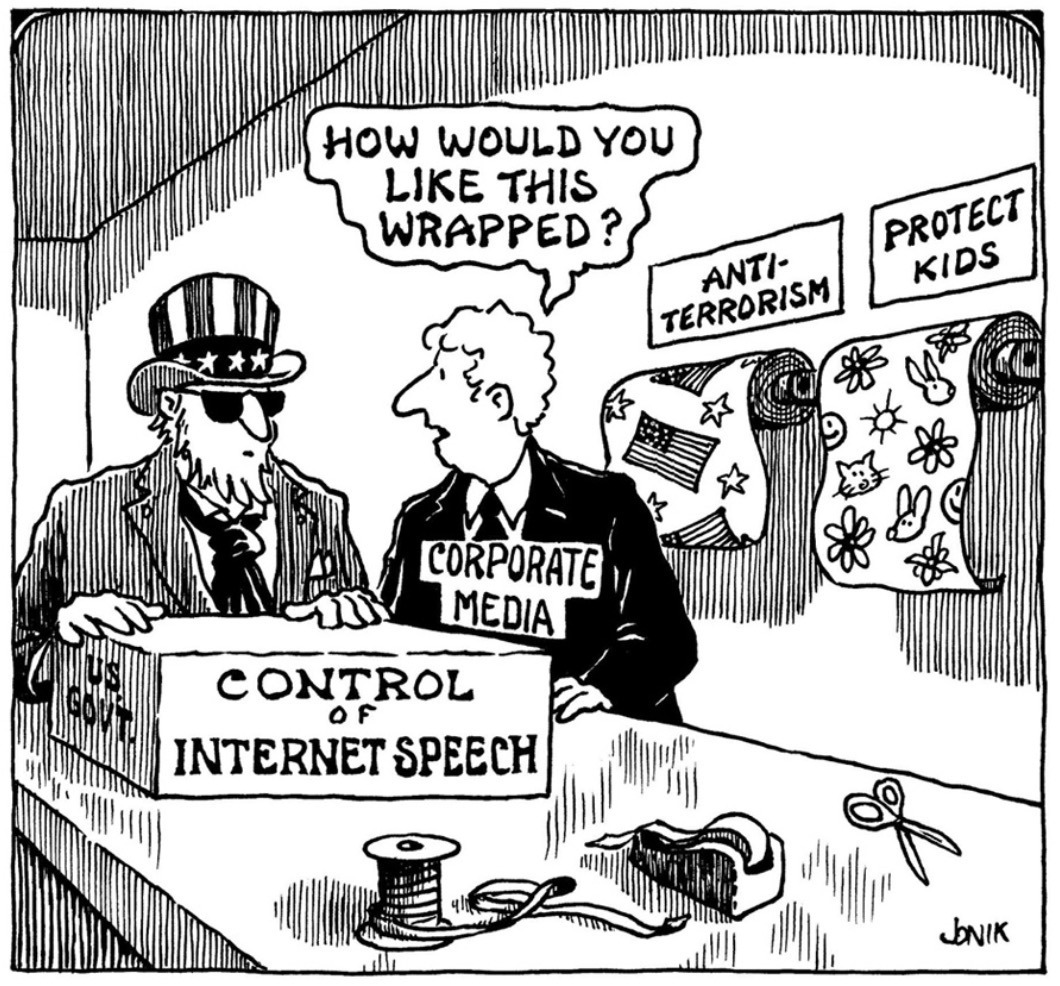
Michael Krieger of Liberty Blitzkrieg has written a post about US Attorney General William Barr who has come out very much against the use of encryption by anyone but the government in recent weeks. The government wants full access to everything that you do and say wherever you are doing it, no matter how personal or private. As usual, it must be done “to save the children.”

William Barr Wants to Kill Privacy and Security…’For the Children’

U.S. Attorney General William Barr, along with co-conspirators in the UK and Australia, recently wrote a letter to Mark Zuckerberg requesting he not move forward with a plan to implement end-to-end encryption across Facebook’s messaging services. A draft of the letter was published earlier this month by Buzzfeed, and it’s worth examining in some detail.

What immediately strikes you is the letter’s emphasis on “protecting the children,” a talking point universally used by authoritarians throughout history to justify both a reduction of public liberty and a transfer of increased power to the state. Though this tactic is transparent and well understood by those paying attention, it’s nevertheless disturbing to observe Barr’s disingenuous and shameless use of it (the words ‘child’ and ‘children’ appear 17 times in the course of this brief letter).

Here’s just one example from the letter:

Companies should not deliberately design their systems to preclude any form of access to content, even for preventing or investigating the most serious crimes. This puts our citizens and societies at risk by severely eroding a company’s ability to detect and respond to illegal content and activity, such as child sexual exploitation and abuse, terrorism, and foreign adversaries’ attempts to undermine democratic values and institutions, preventing the prosecution of offenders and safeguarding of victims. It also impedes law enforcement’s ability to investigate these and other serious crimes. Risks to public safety from Facebook’s proposals are exacerbated in the context of a single platform that would combine inaccessible messaging services with open profiles, providing unique routes for prospective offenders to identify and groom our children.

Barr and the U.S. government feign deep concern regarding the ability of bad people to “identify and groom our children,” yet this is the same guy and government who allowed Jeffrey Epstein to be suicided in a Department of Justice prison just a few months ago. It’s the same guy and government who can’t find or doesn’t want to find Ghislaine Maxwell. And it’s same guy and government that can’t be bothered to raid Epstein’s New Mexico ranch despite known instances of child abuse there…

Click here to read the entire article at Liberty Blitzkrieg.

Canadian Prepper: NASA Engineer Discusses EMP and Grid Down Events

In this video posted by Canadian Prepper, NASA engineer and author Arthur T Bradley discusses some grid down and other SHTF events about which he is concerned. Dr. Bradley also has his own video channel (and website) where he discusses preparing for EMP and other preparedness topics. The video below is supposed to be the first of a three part series.

Doom and Bloom: Medical Uses for Baking Soda

The Altons at Doom and Bloom Medical have an article on the medical uses for baking soda, which most of us will have around the home in some quantity anyway.

Some folks in the preparedness community consider themselves ready for any disaster if they have some food, water, and a means of personal defense. Being prepared, however, is more than that. You have to be able to treat medical issues. And not just that: Attention to hygiene is equally important in preventing some of those issues.

Those concerned about a long-term event should know that the expenditure of various supplies over time will be a major problem. What will you do when you run out of one item or another? You have to find substitutes that can serve double (and triple) duty. The more versatile the item, the more useful it is to store.

Baking soda is one item you should have in quantity. Yes, baking soda. Many years ago, one of our readers wrote an excellent article on baking soda in survival settings. He opened our eyes to its many uses.

WHAT IS BAKING SODA?

Baking soda (also known as sodium bicarbonate or bicarbonate of soda) is a popular and inexpensive household product. You can actually mine deposits of it if you live in parts of California, Colorado, and Mexico (as well as Botswana). It has been historically used as a leavening agent for baking bread and does a fine job absorbing odors in your refrigerator.

Baking soda is not the same as baking powder. Baking powder contains baking soda, but it also contains an acidifying agent and starch.  Both produce carbon dioxide which causes baked goods to rise and, indeed, you can substitute baking powder in place of baking soda (usually, you’ll need three times more baking powder), but you can’t use baking soda when a recipe calls for baking powder.

MEDICAL USES FOR BAKING SODA

Are there medical uses for baking soda? The answer is yes. So many, in fact, that you might want some around even in normal times.

You can treat insect bites and itchy skin with it. Some find it effective for poison ivy. Make a paste out of baking soda and water, and apply like a balm onto the irritated area. You could shake some baking soda into your hand and rub it onto wet skin.

Baking soda can help unblock nasal congestion by adding a teaspoon to some hot water and inhaling the vapors.

For those who suffer from acid reflux (heartburn), eventually the Tums and Rolaids will run out. Baking soda was what they used before these products came into being.  Just add a teaspoon of baking soda in a glass of water after meals.

Recent medical studies, including one published in the Journal of the American Society of Nephrology, suggest that sodium bicarbonate tablets may help slow progression in those with chronic kidney disease. The researchers concluded, “This study demonstrates that bicarbonate supplementation slows the rate of progression of renal failure to ESRD and improves nutritional status among patients with Chronic Kidney Disease (CKD).”

Baking soda has mild antiseptic and drying properties, and helps keep a wound clean. When a wound is healing, repeated cleaning of the area can result in dry skin and a hard, itchy scab. Baking soda can help soften and remove the scab once the wound is no longer painful or draining. One treatment regimen uses 2 to 3 tablespoons of baking soda with a half cup of water. Leave the paste on the wound for 15 minutes and then rinse thoroughly (be aware that it might burn a little).

You’re not medically prepared until you’re dentally prepared. In long-term events, the family medic will have to deal with a number of dental problems that crop up. Baking soda can be a replacement for toothpaste. Add a little 3% hydrogen peroxide to it and use it as a rinse for bad breath…

Click here to read the entire article at Doom and Bloom Medical.

Organic Prepper: Six Warning Signs that Civil Unrest Is Imminent

Jose Martinez, who escaped the unrest in Venezuela, writes this article for The Organic Prepper about the current unrest in Ecuador and signs of unrest in general.

Six Warning Signs that Civil Unrest Is Imminent

…A couple of weeks ago, everything was so quiet in Ecuador that it was even boring. Don’t believe me? Watch the news. A few days ago, a violent mob kicked out the police out of their way and invaded the National Assembly (something very similar, indeed to what happened in Venezuela).

A very volatile situation is brewing in all of South America.

Countries that had been relatively peaceful are now (thanks to the hidden terrorists sent by the Maduro regime) a powder barrel. The timing could not be worst for me and my reduced family group. An old illness has come back and I´m struggling to recover at least partially before things get worst. Fortunately, we are in a popular neighborhood where there are lots of Venezuelans, and the people renting me have no complains because I´ve been quite a good tenant: no noises, paying on time (thanks to my extreme frugality and the generosity of a few readers, I have to acknowledge). They are a senior couple and hardly would allow me to get hurt by an angry mob or someone of my family. However, I´m ready to defend myself and mines.

OK, here´s the thing. Maybe you can have some indications in the nearby days about how bad things can get, all of a sudden. You won´t even notice it until you´re in the middle. If you don´t believe me just ask to Ecuadorians. They were caught in the middle of a geopolitical storm stirred from abroad. Looting, empty shelves as a result, and half of the country blocked because of the mobs. Tear gas, and shootings. Three young men thrown from a bridge by other angry enemies. Things like this happen when people are exposed, and unaware.

I want to tell you something. I’m not in my better moment these days. But every time I need to go outside for some reason, I do it with the firm, strong idea in my mind, of defending myself and my family (and the means to do it). Being partially impeded, defense will have to be lightning quick and disabling. No mercy and I am sorry about this, but it’s true. It’s the survivor’s mind setup clicking in since I saw the chain of events. Facing the law afterward? Sure, as much as the taken down predators face it too. There is footage of an angry mob (identified with leftist guerrilla colors by the way) beating with batons innocent people inside a building. Same as Germany in the 30s. Jeez.

If for some reason in the future these few paragraphs save your life or someone’s you love, I will feel rewarded.

Although our exposition to xenophobic behavior has been minimal, I´m pretty aware how bad things can get under the current social climate. Therefore, signals definitely can´t be ignored. Every society of the world, unfortunately, seems to have the potential for civilian turmoil, and the possibility of the appearance of more or less organized gangs of marauders NEVER can be dismissed. (I´m sorry Canada, never been there but maybe even you have some percentage of this happening somewhere in the future).

Here are 6 signs that civilian unrest is impending or already occurring.

The first sign, of course, is bad looks when you walk on the street. Small groups of people (especially young men) staring at you? Don´t show fear, but leave the place fast, and find a safe spot. A shop, a restaurant, someplace with guards, preferably. If you´re classified as a “vulnerable” inhabitant (a migrant, ethnical minority, etc.) you know what I´m talking about. Don´t expose yourself and become gray. No one will open an investigation until much time afterwards an attack under these circumstances. And what we want to avoid is an attack…

Read the entire article at The Organic Prepper by clicking here.

AmPart: An SHTF Perspective on Commo

NC Scout at American Partisan sends some communication insights from someone on the ground in the Ecuador civil unrest – A SHTF Perspective on Commo.

In a real deal SHTF situation, such as a nation in turmoil and civil chaos, how would you fare? When the infrastructure goes down and there’s dead in the streets, what will you do?

That’s a reality for one of AP’s readers living in Ecuador, who’s been giving me steady updates on the deteriorating situation there. He first contacted me over a year ago trying to get their communications up to speed at the local Red Cross chapter. Years of neglect and a focus on more convenient systems caused their antennas to deteriorate and a lack of any knowledgeable operators. If that was bad enough, Simply getting equipment into the country is a challenge…

Click here to read the entire article at American Partisan.

Basic Pistol and Trauma First Aid Classes Coming in NOV and DEC

Stealth Defense is teaching a few Basic Pistol classes in November and a Trauma First Aid class in December of 2019.

Ladies Basic Pistol Shooting

Tue Nov 5, 5:00 PM – Sat Nov 9, 12:00 PM (PST)
Stealth Defense Firearms Training, 2732 Katie Rd, Kennewick, WA

This course includes a FREE Initiative 1639 required firearms safety training lesson and certificate

Topics covered in this class include: gun safety rules, proper operation of semi-automatic and revolver pistols, ammunition knowledge and selection, selecting and storing a pistol specific to you (the user), safe and correct storage of firearms when not in use, the fundamentals of shooting, the three (3) secrets of accurate shooting, pistol inspection and maintenance, stoppage clearances, shooting positions, and a qualification marksmanship shooting test. A light snack is provided, but you will need to bring a lunch.

This course meets the pistol safety requirements for obtaining an Oregon Concealed Handgun License, and an Idaho Standard Concealed Weapons License. WA has reciprocity in ID, but having a non-resident ID license gives a person reciprocity in the same states as Utah at a lower cost. Students will be responsible for following the state’s requirements for obtaining their concealed carry licenses.

Course fee includes all student materials – NRA Book, Exam, NRA Associate Membership, downloadable exam prep materials, range fees, targets, and certification fees.

Co-Ed Basic Pistol Shooting

Thu Nov 7, 5:00 PM – Sat Nov 9, 5:00 PM (PST)
Fredricks Arms and Smiths, 1904 Airport Way, Richland, WA, USA

This course includes a FREE Initiative 1639 required firearms safety training lesson and certificate

Topics covered in this class include: gun safety rules, proper operation of semi-automatic and revolver pistols, ammunition knowledge and selection, selecting and storing a pistol specific to you (the user), safe and correct storage of firearms when not in use, the fundamentals of shooting, the three (3) secrets of accurate shooting, pistol inspection and maintenance, stoppage clearances, shooting positions, and a qualification marksmanship shooting test. A light snack is provided, but you will need to bring a lunch.

This course meets the pistol safety requirements for obtaining an Oregon Concealed Handgun License, and an Idaho Standard Concealed Weapons License. WA has reciprocity in ID, but having a non-resident ID license gives a person reciprocity in the same states as Utah at a lower cost. Students will be responsible for following the state’s requirements for obtaining their concealed carry licenses.

Course fee includes all student materials – NRA Book, Exam, NRA Associate Membership, downloadable exam prep materials, range fees, targets, and certification fees.

Trauma First Aid (part 1)

Tue Dec 10, 5:30 – 9:00 PM (PST)

Prosser, WA

  1. Performing a patient assessment.
  2. Traumatic emergencies.

Trauma First Aid (part 2)

Thu Dec 12, 5:30 – 8:30 PM (PST)

Prosser, WA

  1. Medical and environmental emergencies.
  2. Creating your own emergency first aid kit.

California Power Outage Commentary

Canadian Prepper has a video up discussing some of the aspects of the planned power outage of many Pacific Gas and Electric (PG&E) customers in California – around 800,000 customers out of power by my last reading of the news. Many people are unprepared for the outage, and news sources show that many are unaware of how much in their daily life relies upon the power grid operating. Canadian Prepper discusses a little bit about why outage is happening as well as addressing the various “theories” floating around about it being a government test or a grid down test.

CalFire recently updated their communication plan and excluded amateur radio as a resource with the belief that other technological solutions have made amateur radio obsolete as an auxiliary service. As a result, many amateur radio repeaters will probably start to disappear as the financial support for them to remain in the antenna sites where they are currently located dries up. While this outage is relatively short, it will be interesting to see how communications are or are not affected and, if these planned outages continue into the future, whether any degradation of emergency support communications becomes apparent.

Amateur radio operator and off grid communications blogger/vlogger Julian/OH8STN also has some commentary on the outage and Canadian Prepper’s video.

I spend an enormous amount of time talking about off grid Communications, and Communications in a grid down scenario. Today many Californias find themselves, in an artificial grid down scenario. These Californians are without grid power, after PG&E shut down the grid for liability and safety concerns. These type of things can happen anywhere in the world. One positive aspect of situations like these is what the rest of us around the world, can learn from them.

The last video I did in the grid down Communications for preparedness series, was focused on emergency backup power for communications. It seems only fitting that I’ll share that video at the end of this post.

The Canadian prepper just published an excellent video, discussing the California Power Outages. I’m sharing that video here: Nate discussing the Massive California Power Outage: What’s Really Going On?

I often “feel” no matter how many videos we make on this topic, or how ever often we try to spread the word, people still believe they won’t find themselves in a grid down scenario. People say it’s too expensive, too complicated to this or that. Perhaps you’ll simply start with a renewable power source for your Communications gear.

San Francisco Chronicle: ‘I’m Overwhelmed’: PG&E Power Outage Leaves the Ill and Disabled Struggling

CBS: This is ridiculous: Residents Fume Over Power Outage

In an unprecedented move, nearly a million people have had their power cut in Northern California. The state’s largest utility, Pacific Gas and Electric or PG&E, is trying to prevent its wires from sparking wildfires, but that move is sparking anger.

The power outages began early Wednesday as California residents loaded up on essentials for what they say is a “man-made disaster.”

PG&E has been forced to shut off electricity to customers because a forecast of high winds and bone dry heat is expected to put pressure on its aging and faulty infrastructure. It is a desperate attempt to avoid what happened in November when sparks from power lines ignited the fire that tore through the town of Paradise, killing 86.

Ron Blasingame lost his power at 2 a.m. and he could be in the dark for days…